Robin Pecknold brings light to the bleakest of winters with Fleet Foxes' 'A Very Lonely Solstice,' a 13-track career spanning collection recorded in December 2020, at Brooklyn, NY's St. Ann & the Holy Trinity Church. Now being released for the first time on vinyl, CD and digital formats, 'A Very Lonely Solstice' captures a poignant moment in time. The recording was originally broadcasted as a live-stream event on the winter solstice of 2020, just days after New York declared a state of emergency tightening restrictions again in response to increasing COVID-19 cases. Pecknold describes the set as "me by myself on the longest night of the year... honoring the loneliness of 2020 with a nylon string and some songs new and old." Fans worldwide tuned in while quarantined at home, finding solace and a sense of community in a period of extreme isolation. Much of 'A Very Lonely Solstice' showcases a solo focus on Pecknold who offers up acoustic arrangements of fan-favorite songs spanning Fleet Foxes' catalog. Selections cover all four of the band's studio albums, including their 2008 self-titled debut album ("Tiger Mountain Peasant Song") to 2011's Helplessness Blues ("Blue Spotted Tail") and 2017's Crack-Up ("If You Need To, Keep Time On Me"), all the way to their latest release, Shore. Resistance Revival Chorus joins Pecknold on Shore tracks "Wading In Waist-High Water" and "Can I Believe You." Also featured: a cover of Nina Simone's "In The Morning" and a rearrangement of the traditional "Silver Dagger."
Cerca:record case
On 'Hurricane Clarice' stringband revolutionaries Allison de Groot &
Tatiana Hargreaves infuse centuries of matrilineal folk wisdom into a
soundtrack to environmental disaster
Produced by indie folk visionary Phil Cook, the duo's energetic sophomore album
features nine pieces, including two epic medleys (carefully selected from their
archival deep dives) as well as a few transcendent instrumental originals.
Recorded during an apocalyptic heat wave in Portland, OR, the album is a
testimony to the relation of community and climate in a dying world. The
Hargreaves- penned title track delves into the surreal world of Brazilian author
Clarice Lespector while the Canadian ballad "The Banks of the Miramichi"
references the "before times" of a polluted river used as a case study in the
environmentalist classic 'Silent Spring'. We turn inward in times of global or
personal crisis, seeking the wisdom of those before us — a human instinct
manifested literally on this record through the recorded voices of the duo's
grandmothers. Any artist unearthing old sounds takes traditional elements and
exaggerates here or there to fit a personal aesthetic or style–there is no authentic
rendition. With 'Hurricane Clarice', Allison and Tatiana propose a third way beyond
tradition and progress. Community might just save us all.
An absolutely legendary album from Lebanon by Issam Hajali’s group Ferkat Al Ard, “Oghneya” stands out as one of the great musical gems of the Arab world. A groundbreaking release from 1978 that represents the meeting point of Arab, jazz, folk and Brazilian styles with the talent of Ziad Rahbani, who did the albums arrangements. Filled with a variety of sounds and genres, from Baroque Pop to Psych-Folk to flashes of Bossa Nova, Tropicalia and MPB, “Oghneya” is like if Arthur Verocai took a trip to Beirut in the 70’s to record an album.
In 2015 we heard Ferkat Al Ard’s music for the first time, a Lebanese trio compromised of Issam Hajali, Toufic Farroukh and Elia Saba. It was a stunningly unique release that blends traditional Arabic elements, jazz and Brazilian rhythms hand in hand with poetic-yet-politically engaged lyrics. The band was active in the left-wing movement of Lebanon of the time and they communicated their political ideas candidly through their songwriting.
In our mind the idea was to see whether Issam was interested in re-releasing “Oghneya.” He was not opposed to it, but also made it clear that it was not his priority for a first project. He suggested we start with his first album, before Ferkat Al Ard was formed, “Mouasalat Ila Jacad El Ard,” which was recorded in 1977 in Paris together with his friend Roger Fakhr (whose work we have been privileged to re-release in the meantime as well.) “Mouasalat Ila Jacad El Ard” is melancholic, stripped-down, guitar-based folk intertwined with jazz-fused breaks, and the unique sound of the santour glistens through. While the music is very accessible, some song structures are rather atypical, neglecting common patterns of verse, hook, verse, hook. The lyrics mostly trace back to the poetic work of Palestinian author Samih El Kasem, with one song also written by Issam, who composed the music for the whole album.
We re-released Issam’s “Mouasalat Ila Jacad El Ard” in 2019 to a great reception, with positive reviews all over the place and an ongoing appreciation for the album. This meant it was time for us to undertake an “Oghneya” re-release again!
If you compare “Mouasalat Ila Jacad El Ard” and “Oghneya,” one apparent distinction is the strong Brazilian influence in the music. Issam Hajali explained that you can already hear traces of this influence on his debut, but it’s “Oghneya” where this musical relationship really peaks. Lebanon and Brazil have had a strong connection for nearly a century due to the continuous flow of immigrants from one country to the other. Today, Brazil has the largest Lebanese diaspora in the world, the “Brasilibanês”. The migratory route was not a one-way street, however, and some Lebanese returned to their home country, taking recordings of the music they learned to love in Brazil with them. They were followed by Brazilian musicians who visited primarily Beirut during the 1960’s and the first half of the 1970’s, just like many other musicians from around the world. In these years between the independence and the beginning of the civil war, Beirut became even more of a cultural center and regional hub than it already was.
Bossa Nova, at that time, was one of the defining sounds of Brazilian popular music. Issam Hajali remembers hearing it at a bar in Beirut’s Hamra district in 1974, which hosted musicians from Brazil playing the occasional gig. When Issam had returned from Paris in 1976 he got to know Ziad Rahbani, son of Fairouz, who had a shared passion with Issam for a lot of things, among them Brazilian music. Issam showed him some of the tracks he was working on, and Ziad agreed to help with arranging. The music that evolved from this cooperation between Ferkat Al Ard and Ziad Rahbani’s arrangement is, to put it lightly, outstanding. Issam’s singing is embedded into the uniquely beautiful string arrangements backed by the band’s poignant, swinging groove. The lyrics of the songs on “Oghneya” are based on poems by Mahmoud Darwish, Samih Al Qasem and Tawfiq Ziad, three pillars of Palestinian poetry within the last century, and their influence on “Oghneya” was itself a strong political statement during the Lebanese war.
“Oghneya” was eventually released in 1978 by the band themselves on cassette tapes. Finding a blank tape that fit the playing time proved to be impossible during the war so they needed to open up the case of each cassette to physically cut down the tape and customize it to the playing time. The album was well received, though some cultural critics deemed it too “occidental” in its sound. While the cassette was circulating, Ziad Rahbani started a label called Zida, together with Khatchik Mardirian. They decided to help the band with a re-release on vinyl in 1979, a year after “Oghneya” was originally released on cassette.
Sadly, there are two tracks from the original release of “Oghneya” that did not make it onto the reissue. “Ghfyara Ghaza” was replaced by the song “Juma’a 6 Hziran.” while “Huloul” was taken off without a replacement. This happened as a precondition from the band for this reissue to happen. We would have loved to include all tracks, but the decision ranged between having either a reissue like the one we put out or no reissue at all. Thus, an easy choice for us.
As always both vinyl and CD come with an extensive booklet with an interview with Issam as well as unseen photos from the recording sessions.
- A1: Alberto Radius - California Bill
- A2: Mario Lavezzi - In Alto Mare
- A3: Beppe Cantarelli - Se Il Mio Canto Sei Tu
- B1: I Ricci - Vienimi A Pigliare
- B2: Eduardo De Crescenzo - Alle Sei Di Sera
- B3: Im Porto - Smettila (Po-Para) (Po-Para)
- B4: Barnaba - Bianco E Nero
- C1: Enzo Cervo - Solo Mo
- C2: Peppino Di Capri - Mo
- C3: Franco Camassa - Non Andar Via
- C4: Stefano Pulga - La Mia Nave
- D1: Massimo Stella - C'e Una Donna Sola
- D2: Gino D'eliso - Ti Ricordi Vienna?
- D3: Enzo Carella - Contatto
- D4: Serafini - Serafini
Between the late 70s and the early 80s, pop music was in a transitional phase. After a return to the roots of punk, rock was morphing into new wave, while disco was rapidly declining and the electronic revolution, already on the rise, was ushering in the transition from analog to digital. This period also saw the emergence and relatively brief flowering of a commercially dominant style that mixed soul influences (especially Stevie Wonder and Ear th Wind & Fi re) , folk/pop songwriting and jazz sensibilities in equal measure, creating a hybrid easy on the ears but also emotionally and musically rich. It was the style represented by artists like Christopher Cross, Michael McDonald, Gino Vannelli and Kenny Loggins, who were all influenced by black music. They belonged to a larger trend that took place in all major music producing countries, including Italy where, like so many other things, the style was not merely imported or copied, but reshaped into a specifically local version based on the nation's tastes and cultural traditions. In Italy, a soulful and sophisticated approach to pop music was embraced not only by established names like Mina, Alan Sorrenti and Loredana Berté, but also, and perhaps most importantly, by an entire generation of writers, arrangers and musicians who had grown up listening to early fusion, to Steely Dan's refined recordings, and to Quincy Jones's productions. So, with this compilation we hope to give new exposure to artists and songs that, despite having moderate or little success when first released, must be regarded as among the creative peaks of Italian pop music. "Paisà Got Soul" features pop veterans Peppino Di Capri, Mario Lavezzi and Alberto Radius alongside atypical singer-songwriters (Enzo Carella, Enzo Cervo, Gino D'Eliso), Italo-disco heroes (Stefano Pulga), international hit composers (Beppe Cantarelli, who has co-written for Aretha Franklin and Mariah Carey), Brazilian-born naturalized Italians (Jim Porto) and complete unknowns (Franco Camassa, I Ricci, Massimo Stella).It brings together little gems that in most cases are no longer available on the market, or only available in their original and now very rare vinyl format. We believe they all deserve to be rediscovered today, partly because of the recently renewed interest in "yacht rock", as this music style has been retrospectively named, and partly because they provide further evidence that Italian artists rework international music styles in creative and original ways.
Compiled and conceived by David Nerattini partnered by Pierpaolo De Sanctis
- 1: Maybe As His Skies Are Wide
- 2: Herr Und Knecht
- 3: (Entr’acte) Glam Perfume
- 4: Cogs In Cogs, Pt. I: Dance
- 5: Cogs In Cogs, Pt. Ii: Song
- 6: Cogs In Cogs, Pt. Iii: Double Fugue
- 7: Tom Sawyer
- 8: Vou Correndo Te Encontrar / Racecar
- 9: Jacob’s Ladder, Pt. I: Liturgy
- 10: Jacob’s Ladder, Pt. Ii: Song
- 11: Jacob’s Ladder, Pt. Iii: Ladder
- 12: Heaven: I. All Once – Ii. Life Seeker – Iii. Würm – Iv. Epilogue: It Was A Dream But I Carry It Still
‘Mehldau can truly translate his thoughts and feelings into complex and lasting music. He is one of those people whose brain and fingers and musical ability is all one beautiful entity.’ – Jamie Cullum
Nonesuch Records releases Brad Mehldau’s Jacob’s Ladder on 2 x 140g black vinyl on June 17th . The album features new music that reflects on scripture and the search for God through music inspired by the prog rock Mehldau loved as a young adolescent, which was his gateway to the fusion that eventually led to his discovery of jazz. Featured musicians on the album include Mehldau’s label mates Chris Thile and Cécile McLorin Salvant, as well as Mark Guiliana, Becca Stevens, Joel Frahm, and others. The album’s first single, ‘maybe as his skies are wide’, builds off an interpolation of one portion of Rush’s classic ‘Tom Sawyer’.
Mehldau explains, “We are born close to God, and as we mature, we invariably move further and further away from Him on account of our ego. Jacob’s Ladder begins at that place closer to God with the voice of child, and then moves into the world of action. God is always there, but in our discovery and conquest, and all the joys and sorrows they bring, we may lose sight of him. He sets a ladder before us though, like in Jacob’s dream, and we climb towards him, to find reconciliation with ourselves, to stitch up all those worldly wounds and finally heal. The record ends with my vision of heaven – once again as a child, His child, in eternal grace, in ecstasy.
“The musical conduit on the record is prog,” Mehldau continues. “Prog – progressive rock – was the music of my childhood, before I discovered jazz. It matched the fantasy and science fiction books I read from C.S. Lewis, Madeleine L’Engle and others at that time, aged ten through twelve. It was my gateway to the fusion of Miles Davis, Weather Report, Mahavishnu Orchestra and other groups, which in turn was the gateway to more jazz. Jazz shared with prog a broader expressive scope and larger-scale ambitions than the rock music I had known already.
“The prog from Rush, Gentle Giant, and Emerson, Lake and Palmer here only hints at the genre’s conceptual, compositional and emotional range. These bands and others have continued to influence newer groups that bring prog impulses into the arena of hard rock and screaming math metal, like Periphery, whose music is included here, and also inspired the screaming vocals on ‘Herr und Knecht.’ I tried to avoid a direct tribute approach to all the songs, and opted in some cases for excerpts, or reworking of themes.”
Although Brad Mehldau is best known as a jazz composer and improviser, he has made several albums that fall outside of the mainstream jazz genre, including his 2001 Largo, produced by Jon Brion. Wide-ranging in texture and big in scale, it features woodwind or brass ensembles are on several tracks, as well as a heavy emphasis on powerful drums. In 2010, Nonesuch released his second collaboration with Brion, Highway Rider, which includes performances by Mehldau’s trio – drummer Jeff Ballard and bassist Larry Grenadier – as well as drummer Matt Chamberlain, saxophonist Joshua Redman, and a chamber orchestra led by Dan Coleman. Mehldau also orchestrated and arranged the album’s fifteen pieces for the ensemble.
Mehldau’s 2014 collaboration with Mark Guiliana, Mehliana: Taming the Dragon featured Mehldau on Fender Rhodes and synthesizers and Guiliana on drums and effects, playing twelve original tunes – six by the duo and six by Mehldau. His 2019 album Finding Gabriel featured performances by him on piano, synthesizers, percussion, and Fender Rhodes, as well as vocals. Guest musicians included Ambrose Akinmusire, Sara Caswell, Kurt Elling, Joel Frahm, Mark Guiliana, Gabriel Kahane, and Becca Stevens, among others.
If you check the credits of The Rolling Stones' Goats Head Soup LP from 1973 you'll find a certain "Pascal" listed on the percussion section. That is none other than Los Angeles based artist Nicolas Pascal Raicevik (1933-1994), aka 107-34-8933, aka Head, aka Nik Pascal, aka Nik Raicevic. Besides his hitting the bongoes on the Stones album, Nik was a great artist on his own, both as a painter and as a musician. As a musician, he was a pioneer in the use of synthesizers, preceeding the Berlin school by some years when his Head LP was released on on Buddah in 1970. Buddah probably saw in Head the opportunity to cash in some money from the remains of the psychedelic scene - the three tracks on the LP are named after drugs used in the late sixties. The sounds, however, are accomplished works that show Raicevic as one of the most interesting pioneers in the use of synths. The album probably didn't do too well, since Buddah didn't renew the contract with Raicevic, who instead took his own way releasing his works on his very own Narco Records and Tapes label. Between 1968 and 1975 Narco would issue 4 LPs credited either to Nik Raicevic (Beyond The End... Eternity) or Nik Pascal (The Sixth Ear, Magnetic Web and Zero Gravity) plus one credited to 107-34-8933 (Numbers, which is in fact the same LP as Buddah's Head, albeit with different cover art). Copies of these LPs came with an ironic sticker over the shrinkwrap that read "Do not listen to this LP if you are stoned".
Numbers was the first reference in the Narco catalogue (NR101), each of the three tracks it contains is named after a drug: Cannabis Sativa, Methedrine and Lysergic Acid Diethylamide. The album was credited to 107-34-8933, there is no date of release on the disc, some sources take it as back as 1968 - in any case, this is the same record that was issued on Buddah in 1970 credited to Head and eponymously-titled. The Wah Wah reissue features the original cover artwork from the Narco edition.
Besides his musical explorations, Nik was also an interesting painter. His paintings are auctioned from time to time, and are consciousness expanding works influenced by abstract cubism and surrealism, some kind of Salvador Dalí on drugs exploring the outter and inner space. All the artwork on the sleeves of his LPs is done by himself. Spacey landscapes and psychedelic colours that fit perfectly to the music they contain.
"Nik Raicevic's music is at the intersection of radical psycho-electronic weirdness and kraut kosmische music (in particular the scifi-hypno-minimal modules of Conrad Schnitzler in Grun, Rot and Blau). It presents mega epic & tripped out electronic improvisations.
"This is an absolute must for collectors and fans of visceral, neurotic soundscapes."
"As far as late-60s / early-70s American Bedroom' Electronic Music goes, these LPS have to be among the first transmissions from this sector, made all the more attractive when coupled with Raicevic's alien topographIes - the covers are high-color portrayals of Venusian lanes, knotted growths, & future-past architecture in a style you might equate with Vintage' sci-fi pulp-novel covers - & copious Downer' sentiment. This music is imbued with a sort of lonely, anti-social sensibility that's about as far as you can get from the Academic' Early Electronic vector. I will say that if the Steve Birchall, Cellutron & the Invisible, and/or Pythagoron™ seed your garden, this will likely do the same."
Never reissued before on vinyl format, the Wah Wah reissue features original sleeve artwork made of paintings and drawings by Nik himself and reproduction of the famous ironic "Do not listen if you are stoned".
Limited edition, 500 copies only.
- A1: California Girls
- D3: Wild Honey
- D4: Darlin
- D5: I Can Hear Music
- D6: Good Vibrations
- A2: I Get Around
- A3: Surfin' Safari
- A4: Surfin' Usa
- A5: Fun, Fun, Fun
- A6: Surfer Girl
- A7: Don't Worry Baby
- A8: Little Deuce Coupe
- B1: Shut Down
- B2: Help Me, Rhonda
- B3: E True To Your School (Single Version)
- B4: When I Grow Up (To Be A Man) (To Be A Man)
- B5: In My Room
- B6: God Only Knows
- B7: Loop John B
- B8: Couldn't It Be Nice
- C1: Getcha Back
- C2: Come Go With Me
- C3: Rock & Roll Music
- C4: Dance, Dance, Dance
- C5: Barbara Ann
- C6: Do You Wanna Dance?
- C7: Heroes & Villains
- C8: Good Timin
- D1: Kokomo
- D2: Do It Again
Expanded Edition[176,43 €]
Black Vinyl[9,12 €]
Blue Vinyl[10,29 €]
Black Vinyl[34,24 €]
Translucent Blue vinyl[35,92 €]
"To kick off the yearlong celebration and provide the perfect summer soundtrack, Capitol Records and UMe will release a newly remastered and expanded edition of The Beach Boys career-spanning greatest hits collection, Sounds Of Summer: The Very Best Of The Beach Boys, on June 17. Originally released in 2003, the album soared to no. 16 in the US and stayed on the chart for 104 weeks. Now certified 4x platinum for sales of nearly four and a half million albums, the collection has been updated in both number of songs and audio quality, expanding the original 30-track best of with 50 more of the band’s most beloved songs for a total of 80 tracks that span their earliest hits to deeper fan-favorite cuts and from their 1962 debut album, Surfin’ Safari through to 1989’s Still Cruisin’.
Assembled by Mark Linett and Alan Boyd, the team behind 2013's GRAMMY® Award-winning SMiLE Sessions and last year’s acclaimed boxed set, Feel Flows – The Sunflower and Surf's Up Sessions 1969-1971, Sounds Of Summer features nearly every US Top 40 hit of The Beach Boys’ incredible career, including “California Girls,” “I Get Around,” “Surfer Girl,” “Surfin’ U.S.A.,” “Fun, Fun, Fun,” “God Only Knows,” “Good Vibrations,” “Be True To Your School,” “Wouldn’t It Be Nice,” “Kokomo,” “Barbara Ann,” “Help Me, Rhonda,” “In My Room,” and many others. Fifty additional tracks showcase a broad mix of songs from across their wide-ranging catalog with some of the many highlights including “All Summer Long,” “Disney Girls,” “Forever,” “Feel Flows,” “Friends,” “Roll Plymouth Rock,” “Sail on Sailor,” “Surf’s Up,” and “Wind Chimes.”
The collection boasts 24 new mixes including two first-time stereo mixes, plus 22 new-and-improved stereo mixes, which in some cases feature the latest in digital stereo extraction technology, allowing for the team to separate the original mono backing tracks for the first time.
The expanded edition of Sounds Of Summer will be available in a variety of formats, including a 3CD softpack, and as a Super Deluxe Edition 6LP vinyl boxed set on 180-gram black vinyl in two options – a standard set or a numbered, limited edition version featuring a rainbow foil slipcase and four collectible lithographs. Both versions will feature color printed sleeves that replicate the original “Capitol Catalog” sleeves that highlight the entire Beach Boys discography, and all formats will include a booklet with new liner notes and updated photos. The original 30-track version will also be available in its newly remastered and upgraded form on single CD or double gatefold LP on standard weight vinyl or as a higher-end limited edition numbered version pressed on 180-gram vinyl with a tip-on jacket and a lithograph. "
Propulsive tabla percussion and meditative drones collide in deep instrumental conversation on Shruti Dances, the debut collaborative album between UK heavyweights Auntie Flo and Sarathy Korwar, forthcoming on the newly relaunched, Make Music imprint.
Across six exchanges of dynamic electronic production and richly layered Indian classical percussion, Shruti Dances discovers two architects of rhythm and movement on an explorative journey through South Asian tonality and diasporic identity.
One an elemental force on drums, the other on the decks, London-based, Indian-raised drummer/composer, Sarathy Korwar and Scottish-Goan producer/DJ, Auntie Flo first connected back in 2019, unaware both were navigating opposite ends of the beat equilibrium. Where Auntie Flo (aka Brian D’Souza) was new to Korwar’s reimagining of jazz, Indian classical music, electronics and spoken word, Korwar was already a big admirer of Auntie Flo’s intl-facing club output, having first discovered D’Souza’s Rainfall On Red Earth off his Soniferous Garden 12” and 2019 SAY award-winning (Scottish Album of The Year), Radio Highlife. Once properly acquainted, Korwar invited Auntie Flo to remix a track off his landmark 2019 album, More Arriving, described by The Guardian as “a stylistic leap from jazz to hip-hop to spoken word…a protest record encompassing the breadth of immigrant experiences”.
The seeds of an unlikely yet powerful musical bond had been sown and when mutual friend, co-founder of Mixcloud, and Make Music label organiser, Nikhil Shah, asked the duo to inaugurate the label’s new live/electronic direction (previously home to Leon Vynehall, U and George Fitzgerald), Korwar and D’Souza hit the studio. Expanding on early conversations around traditional Indian instrumentation, practicing meditation and improvisation, Shruti Dances (a riff on free dance movement, Ecstatic Dance) was born. Meaning 'that which is heard' in Sanskrit, shruti refers to a note in musical terms, but in this case also references the album’s most prominent influence and instrument, the shruti box.
“The shruti box formed the basis of the sound of the project. It’s a drone instrument, similar to a harmonium, and it makes an amazing sound. I’ve spent the last two years studying sound therapy, and immersing myself in ambient and drone through the Ambient Flo project, and am particularly interested in how they can induce meditative states of consciousness. I was really excited to hear what the Shruti box could do with this EP.” Auntie Flo
Across six tracks, (each named after 6 of the 7 main musical notes in the Indian solfege system), Shruti Dances draws on a celestial mix of traditional percussion and processed digital effects. On opening track Dha, Korwar’s sparse tabla rhythms hop across D’Souza’s scattered, arpeggiated synths, where as on Pa, a Balearic shuffle channels Moroccan Gnawa music and Senegalese sabar meets Mark Ernestus’s Ndagga Rhythm Force. Harmonic speed tabla and roaming drones provide a sense of the ethereal and fourth-worldly on Ma, a track that’s resplendent, curious atmosphere would fit snug into the deep listening-focused programming of Auntie Flo’s Ambient Flo online radio station, a curatorial platform and avenue exploring his interest/promotion of mental health, launched over the UK’s first lockdown. Ni sees Korwar pick up the sticks, thrashing toms in a spirited frenzy, whilst downtempo album closer Sa offers some room for reflection, its slow, swirling chords cloud our focus, leaving us with all but the distant sound of birdsong.
140g Black vinyl LP – Printed inner sleeve – Sealed plastic sleeve
In Trux We Pux is an editorial project organized by the Porto based label and collective Favela Discos. Focusing on the city’s thriving experimental and improvised music scene, it sets out to portrait in a series of four volumes some of the characteristic sounds and collaborative practices that have been in development in Porto during the last few years.
In Trux We Pux 02 contains the first of Favela Discos’ collective pieces to be published, and it was chosen to represent a long series of site-specic pieces developed by the collective since its formation. Most of the time these pieces remain lost in time or in the label’s archives.
Desilusão Óptica is an audiovisual piece developed for the festival Serralves em Festa 2017 and was recorded between the concert and rehearsals. The piece is influenced by the book Musicophilia by Oliver Sacks, and tries to explore the notion of auditory hallucination, in this case based on the idea of a phantom sound unconnected to its object.
Starting quietly with a single flute note, Desilusão Óptica slowly grows fuller but more uncomfortable as the pitch rises gradually in a hypnotic effect. The sound we hear is a mix of the sound produced live, its manipulation and repetition, thus the piece exists between the time when it happens, its immediate repetition and ghosts of past sounds.
The flute, delayed and sampled, embodies both the sounds it produces and memories of past sounds, creating a confusion between objecto and sound. The sound is produced by an object but is at the same time separated from it, like in Mulholland Drive when we watch a singer emotionally dedicated to a performance and whose voice keeps on singing even when her body collapses.
Like in Dub Music, the musicians are divided into two groups: those who play, in this case divided by winds, percussion and electric guitars, and the dub master / sound manipulators who launch samples of previous recordings and manipulate the sound that is produced live, through loopers and delay pedals.
- A1: Who You Gonna Hoo-Doo Now
- A2: Ice Cream Man
- A3: Wonder Why I Feel So Bad
- A4: Going Back To Bed
- A5: Down By The Border
- B1: More To This Than That
- B2: Drifter
- B3: Rebellion
- B4: Rich Woman Blues
- B5: Raining On My Life
Tony Joe White's, The Beginning was originally released on CD in 2001,
Stripped down and recorded without any bells and whistles, this is Tony
Joe recording himself playing his classic swamp blues sound
This album is regarded as the first album where Tony Joe controlled all elements
of the studio. Until 2020, Tony Joe White's 29th album had been long out of print.
New West Records released a limited edition color vinyl pressing that was the
first and only vinyl pressing of this record. This record was remastered and resequenced for that specific pressing. Due to popular demand, New West is
bringing this title back on vinyl and CD. The CD is packaged in a jewel case with a
booklet of lyrics and photos.
Available for the first time on 180 Gram 45rpm Double Vinyl! One of Diana's most sought after albums!
The first-ever live concert recording from Grammy®-winning vocalist/pianist Diana Krall was Recorded at the Paris Olympia Theatre. Here finally, captured in amazing audio quality, is an album showcasing the magic of Krall’s concert performances.
Krall and her band – perform some of the tunes from Krall’s studio recordings, such as "East of the Sun (West of the Moon)" and "Devil May Care." They are joined by special guests John Pisano (acoustic guitar) and Paulinho DaCosta (percussion) for several tracks, including the Gershwin’s "S’wonderful." The Orchestre Symphonique European, conducted by Alan Broadbent with special guest conductor Claus Ogerman, is featured on the upbeat "Let’s Fall in Love" and a haunting interpretation of "I’ve Got You Under My Skin."
Audiophile Audition / audaud Rated 4 1/2 stars
"ORG has remastered the tapes for audiophile 45 rpm vinyl. The results are flawless. There is warmth in the tones that reflect the acoustic sound of the band. The separation is precise, especially in the mixes with the orchestra. The intricate registers and suppleness of Krall’s voice are presented with impeccable clarity." - Audiophile Audition, audaud, September 2011
Soundstage Rated 5 out of 5 for Recording Quality!
"A favourite of audiophiles because her music and voice lend themselves to purist recording techniques, Diana Krall perpetually sounds in great form on her recordings... The sound, remastered by Bernie Grundman, is clear, spacious and well defined -- outstanding in every way, the backing players as vivid as Krall's voice and piano..." - Marc Mickelson, soundstage, May 2009
"One of Diana Krall’s most beloved CDs, Live in Paris, has been given a loving audiophile LP remastering treatment by ace engineer legend, Bernie Grundman and produced by an audiophile label new to us, Original Recordings. The shimmering string arrangements on Let’s Fall in Love and I’ve Got You Under My Skin, are testament alone to the real life power of vinyl..." - Audiophile Audition
"Bernie Grundman’s remastering for vinyl puts Live in Paris in the gold plated category for the legions of Krall aficionados. This two-LP audiophile edition would make an ideal late night listening experience, or the perfect background soundtrack for a special dinner party." - Audiophile Audition
Also on this recording is a special bonus studio track, a rendition of Billy Joel’s "Just The Way You Are" featuring Michael Brecker's beautiful tenor sax solo.
- A1: The Incomparable Mr. Flannery
- A2: Burning Beard
- A3: Gullah
- A4: Mice And Gods
- B1: Pulaski Skyway
- B2: Never Be Moved
- B3 10: 001110101
- B4: Small Upsetters
- C1: Circus Maximus
- C2: Tripping The Alarm
- C3 10: 000 Witnesses
- C4: Land Of Pleasant Living
- D1: Gravel Road
- D2: Who’s Been Talking?
- E1: What Would A Wookie Do?
- F1: Bottoms Up, Socrates
"Robot Hive/Exodus" is the second of initially four albums reimagined and individually curated by a band member, in this case Dan Maines, and reissued as part of the Clutch Collector's Series. The first album in this new series was Blast Tyrant, curated by Jean-Paul Gaster. TheRH/E artwork is in the vein of the original "Blast Tyrant" yet strikingly different. The vinyl release is remastered and manufactured on 180-gram colored vinyl which in turn is stored in extra heavy sleeves. The gatefold jacket is printed on metalized polyester paper, and each album includes a numbered insert autographed by the band. As an extra special element this 2xLP includes a 7" with two tracks: "What Would a Wookie Do?" and "Bottoms Up, Socrates". These two songs were originally among the 16 songs written and recorded for Robot Hive/Exodus back in 2005 but were left off the final album for time purposes. We are glad to have these recordings return home as part of the RH/E Collector’s Series limited to 7,500 units worldwide.
Robot Hive/Exodus (Ltd. Collector's Series/2LP+7"):
- The 12" colors are "Metallic Silver" with "Metallic Gold"
- Bonus 7" with two additional tracks
- Remastered Audio
- Limited Edition
- 2xLP 180g Colored Vinyl
- Artist Autographed Numbered Insert
Here is a quote from Dan, who quarterbacked this project re the two tracks on the 7" (the 7" is black vinyl in its own sleeve):
"What Would a Wookie Do?", and "Bottoms Up, Socrates" were among the 16 songs written and recorded for Robot Hive/Exodus back in 2005. For time purposes these two were left off the final album. We are glad to have these recordings return home as part of the Robot Hive/Exodus Collector’s Series.
Kavinsky is a zombie who came back from the dead after his Testarossa crashed in 1986.
His first song, "Testarossa Autodrive", was an instant success, and was followed by two singles. In 2007, he was chosen by Daft Punk to open their now legendary "Alive" tour.
In 2011, his track "Nightcall", produced with Guy-Manuel de Homem-Christo, became the theme song for the film "Drive", and consequently a worldwide success.
Kavinsky's first album, "Outrun", was released in 2013, followed by a collaboration with The Weeknd on the song "Odd Look".
‘Cameo’ is the third and last stepping stone which lead to Kavinsky’s long-awaited new album ‘Reborn’, out on June 3rd. Its raging funky beat and syncopated synths offer the most perfect case for American sensation Kareen Lomax to deliver a warm though exhilarating vocal performance. Robot disco guitar bumps all along and that secret recipe everyone knows was invented in Paris. Yet another humongous track by the and only dead & alive 88.1 to 107.9 FM fiend.
Black Truffle is pleased to announce World in World, the latest solo offering from prolific Berlin-based guitarist-composer Julia Reidy. Where the recent trilogy of LP releases – brace, brace (Slip, 2019), In Real Life (Black Truffle, 2019), and Vanish (Editions Mego, 2020) – focussed on increasingly lush electronic settings for Reidy’s propulsive fingerpicking and auto-tuned vocals, arranged into wide-ranging side-long epics, World in World finds Reidy refocusing on the core elements of their approach while simultaneously pushing into challenging new areas. Comprising nine pieces ranging between two and seven minutes in length, the album’s opening title track promptly introduces the distinctive palette of just-intoned electric guitars, subtle electronic processing, and voice that is rigorously explored throughout. Where much of Reidy’s guitar work on previous recordings explored rapidly pulsed cycling figures, here notes often hang in the air in a more spacious, lyrical fashion. The elasticity of rhythm and non-linear repetition of pitches initially suggests improvisation until the listener becomes aware of the precise arrangements of spatialised lines. At times, World in World suggests classic bedroom electric guitar works of the 1990s such as Loren Connors’ Airs or Roy Montgomery’s Scenes from the South Island; like those works, Reidy’s possesses a wonderfully live ambience, with frequent pedal clicks adding to the music’s powerful sense of intimacy. In Reidy’s case, however, the yearning, melancholic mood of Connors or Montgomery is tempered by the unorthodox guitar tuning, which at points produces a unique and uncomfortable effect somewhere between the hyper-precision of Harry Partch or Lou Harrison and Jandek’s slack-stringed descent into the void. While World in World plots out its terrain with a bold single-mindedness that allows some pieces to appear almost as variations on a common theme, subtle changes in emphasis distinguish each track. Tactile percussive interjections skitter across the tremolo tones of ‘Paradise in Unrecognisable Colours’, while ‘Ajar’ ramps up the role played by the electronics, with glitching pitch-shifted and back-masked textures threaded through the guitars and thickly harmonised vocal layers. Ranging from autotuned melodic lines to buried murmurs, Reidy’s voice is a frequent presence throughout these nine pieces, at times creating the impression that a more conventional series of songs lurks underneath the chiming microtonal guitars. On the stunning ‘Poised’, whispers and distant, ghostly wails surround the layers of guitars, at times suggesting the foggiest outer reaches of Liz Harris’ Grouper. Both rigorously experimental and emotive, World in World is undoubtedly Julia Reidy’s finest work yet.
- A1: Sudden Reverb - Sound Tlakotli (Deadbeat Remix)
- A2: Pitch Black - Transient Transmission (Adrian Sherwood's Delta B(0)=B Remix)
- A3: The Orb - Say Cheese (Gaudi's Dubble Mozzarella Mix)
- A4: David Harrow - In My Head (Inside My Head Mix)
- B1: Subset - The Astrogator (Sub Signals Mix)
- B2: 3Head - Afnaz (Dennis Bovell Dub Mix)
- B3: Groove Armada - Oh Tweak To Me (Gaudi Remix)
- B4: Shpongle - How The Jellyfish Jumped Up The Mountain (Cosmic Trigger Remix)
- C1: Aux25 - Passing Through
- C2: Simm Feat Phelimuncasi - Cracks
- C3: Alpha Steppa - Colour
- C4: Radikal Guru - Badman Skank
- C5: Paolo Baldini Dubfiles - Ethiolò Dub
- D1: African Head Charge - Disciplined And Dignified
- D2: Gaudi Feat Steel Pulse - Cry Dubber
- D3: 100Th Monkey - Fly Higher Dub
- D4: Dub Fx - Dub Everyday (Gaudi's Sub Signals Remix)
- D5: Phonolab Feat Bill Laswell - Where Do Comets Come From
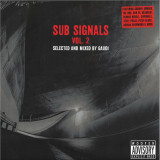
Sub Signals Vol.2 is a deep dive into underground bass, guided by artist and producer Gaudi. Featuring predominantly unreleased originals and versions by some of the biggest names in the worldwide dub collective, it intricately combines analogue elements with digital grooves to stunning effect.
Much more than just a compilation, the Sub Signals series is a celebration of the evolution of the sound of dub, from its original roots in reggae to its fusion with a much wider spectrum of sounds and influences. Gaudi curated the first volume back in 2006 for the cult Canadian label Interchill, sourcing tracks and dubs from High Tone, Zion Train, Manasseh, Almamegretta, Noiseshaper, Creation Rebel, Greg Hunter, Dubadelic and more.
15 years on, Gaudi has created the second volume, blending contributions by established reggae names Steel Pulse, Dennis Bovell and African Head Charge with next generation dub producers Alpha Steppa, Radikal Guru and Paolo Baldini Dubfiles, headline acts Groove Armada, Dub FX and The Orb with underground artists Deadbeat, Pitch Black and SUBSET, to create a seamless 75 minute mix.
“With Volume 2, I wanted to create a deep vibrational experience by shaping an aural trajectory that encompassed the many aspects of dub and its related sub-frequencies. To achieve my goal, I reached out to the artists I regularly work with to ask for contributions, in some cases digging in their archives to find what I was looking for.”
As a solo artist, Gaudi has recorded over 20 albums, while as a producer he has hundreds of productions under his belt. He has worked with legends of the reggae and electronic music worlds including Lee "Scratch" Perry, Horace Andy, Dub Pistols, Hollie Cook, Youth, Mad Professor, Prince Fatty, Lamb, Trentemøller and Nusrat Fateh Ali Khan.
Dedicated to the sound of dub in its many forms, Gaudi’s latest excursion of his Sub Signals series is pure bass therapy, designed to excite your eardrums and worry your woofers.
Beach House release their eighth album, titled ‘Once Twice Melody’.
‘Once Twice Melody’, the first album produced entirely by Beach
House, was recorded at Pachyderm studio in Cannon Falls, MN,
United Studio in Los Angeles, CA, and Apple Orchard Studios in
Baltimore, MD.
For the first time, a live string ensemble was used, with arrangements
by David Campbell.
‘Once Twice Melody’ was mostly mixed by Alan Moulder but a few
tracks were also mixed by Caesar Edmunds, Trevor Spencer and
Dave Fridmann.
2CD in wide spine sleeve with silver and black print, inner CD wallets
and a 9.5” x 14.5” pull-out poster.
Standard 2LP format features 140g double vinyl in wide spine outer
sleeve with silver and black print, inner sleeves and 24” x 36” pull-out
poster.
Double cassette format (tape 1 - gold, tape 2 clear) features O Card
outer sleeve with silver and black print, two cassette cases and five
panel J Card insert
Recorded back in 1999, 'Half a Dove in New York, Half a Dove in Buenos Aires' is the recorded debut of a NetCast improv between deep listening pioneer Pauline Oliveros and Argentinian free music trio Reynols >> a fascinating early example of the internet’s capacity to foster remote creativity in-the-moment that deploys the slowest electronics, accordion, voice, trombone and computer sounds on a next level ritual drone incantation recorded in another era, but made for our time.
As the story goes, Oliveros first met Reynols in the mid ‘90s at a Deep Listening workshop she held in their home city, Buenos Aires, where they impressed her with an improvised brass serenade. Years later, in 1999, they met again via NetCast - a series of very early online live improvisations - to explore the Internet’s potential for collaborations between artists thousands of miles apart. Finally mixed down in 2021 and mastered by Helge Sten (aka Deathprod) after marinating in the archive for 22 years, the album resonates with the late, great Oliveros’ legendary work in exploring alternate tunings, spatial dynamics and methods of intuitive performance - a remarkable slab of omnidirectional drone bearing traces of Miguel Tomasin's vox and Oliveros’ just-intoned accordion embedded in its cosmic roil.
Broadcasting from fabled record shop The Thing in NYC, with Oliveros (Accordion) joined by Jennifer McCoy (ICR), Kevin McCoy (Computer processing), and Monique Buzzarté (Trombone), and Reynols revolving Miguel Tomasin (Electronics, subliminal voice & Alclorse drums), Rob Conlazo electronics, leather gloves & e-gtr), and Anla Courtis (electronics, rubber foot & e-gtr) and dialling-in from Florida 943 in Buenos Aires, the results are an incredibly absorbing and consistently surprising testament to vanguard, experimental spirits prizing the internet’s nascent, unprecedented ability to connect minds and art across continents, language barriers, and modalities.
The album's first side, titled 'Micro Macro Wind Dance', puts Oliveros' accordion under a microscope, enhancing it with lower case rumble and noise from Reynolds' arsenal. Shifting glacially over 22-minutes, Oliveros plays subtly and slowly at first, letting the accordion breathe in-and-out like a sleeping mythical beast, before she transitions to fluttering bird-like phrases by the end of the side.
'Astral Netcast Pigeon' expands the dissonant drones to widescreen, submerging Oliveros' trills and drones beneath layers of dirt and grit. It's time-altering music that dissasembles yr head before you've completely worked out what's happening >> basically the perfect mid-point between Oliveros' deep listening practices and Reynols' wildly inspirational free-noise-drone freakouts.
Bear’s Den have today announced the release of their eagerly anticipated fourth studio album, Blue Hours.
Set for release on May 13th via Communion Records, the album sees the much-loved folk-rock duo – made up of Andrew Davie and Kevin Jones – once again team up with producer Ian Grimble on what is one of their most personal records to date.
Speaking about the new album, Davie says: “Blue Hours is a kind of imaginary space you get into at night, a place where you process difficult things or where you try to figure everything out.”
Themes on the album include both self-reflection and mental health after both struggled with the latter in recent years. “It’s the main over-arching theme with this record,” Davie explains. The group, who have worked with mental health charity CALM (Campaign Against Living Miserably) previously added: “It probably speaks to our struggles and hopefully many other people’s too. Men are not very good at talking. We’re not really taught how to – men have no idea how to talk about this stuff, certainly to each other.”
The pair describe the conceptual blue hours headspace that gives the new album its title as being “somewhere between a hotel, a mental health hospital, a bar that stays open later than anywhere else, a paradise, a dream, a nightmare and an endless sea of corridors and staircases leading you to rooms that represent memories – good, bad, happy or difficult.”
Despite the album’s challenging themes, it’s an album drenched in hope too. “We wanted this to be a celebration of music,” Jones continues. “I think that informed some of the bolder decision making on this record. At a time when music was so distant, it felt important to make an album that sounded hopeful, celebratory, ambitious and beautiful in spite of the heavy subject matter in some of the songs.” Jones adds: “It was almost like we needed to shout louder than before because we felt that there were more barriers between the audience and us. We needed something to transcend that.”
Following on from the album’s lead single, ‘All That You Are’, which was released late last year, the group have also given a further taster of what to expect from the new album with the release today of their bold, electronic-driven latest single, ‘Spiders’. Stream the new single here.
Speaking about the song, Davie says: “I started writing ‘Spiders’ around the time we left London. In my head, I thought moving would solve lots of problems, like everything will be better – almost like this Neverland vibe,” he laughs. “‘Spiders’ is a song dealing with the fact that this absolutely wasn’t the case. I had this vision in my head that I’d be at one with nature, that I’d be calmer – but all the things that were rattling around in my brain before were still there after the move. The song is about the fact you can’t run away from the things that are bothering you.”
Adding, “While making the record we wanted to get across a kind of simmering intensity with the song and the idea of someone trying to keep their shit together while wrestling with these darker thoughts and feelings. We wanted to get across a sense of bravery & triumph in saying, “sometimes I can’t pull myself out” of these difficult situations. To celebrate the difficult moments because we all have them. They are a universally shared experience even if it feels sometimes like they’re not and you’re the only one who feels them.”
Melodically, the song is a gentle Wurlitzer and guitar-driven track filled with hope thanks to the electronic elements added by long-term producer, Ian Grimble. “This song maybe sparked a lot of detail that ended up coming out on other songs on the album,” Davie says. “The sound of this felt exciting to us both,” Jones adds.
Bear’s Den have today announced the release of their eagerly anticipated fourth studio album, Blue Hours.
Set for release on May 13th via Communion Records, the album sees the much-loved folk-rock duo – made up of Andrew Davie and Kevin Jones – once again team up with producer Ian Grimble on what is one of their most personal records to date.
Speaking about the new album, Davie says: “Blue Hours is a kind of imaginary space you get into at night, a place where you process difficult things or where you try to figure everything out.”
Themes on the album include both self-reflection and mental health after both struggled with the latter in recent years. “It’s the main over-arching theme with this record,” Davie explains. The group, who have worked with mental health charity CALM (Campaign Against Living Miserably) previously added: “It probably speaks to our struggles and hopefully many other people’s too. Men are not very good at talking. We’re not really taught how to – men have no idea how to talk about this stuff, certainly to each other.”
The pair describe the conceptual blue hours headspace that gives the new album its title as being “somewhere between a hotel, a mental health hospital, a bar that stays open later than anywhere else, a paradise, a dream, a nightmare and an endless sea of corridors and staircases leading you to rooms that represent memories – good, bad, happy or difficult.”
Despite the album’s challenging themes, it’s an album drenched in hope too. “We wanted this to be a celebration of music,” Jones continues. “I think that informed some of the bolder decision making on this record. At a time when music was so distant, it felt important to make an album that sounded hopeful, celebratory, ambitious and beautiful in spite of the heavy subject matter in some of the songs.” Jones adds: “It was almost like we needed to shout louder than before because we felt that there were more barriers between the audience and us. We needed something to transcend that.”
Following on from the album’s lead single, ‘All That You Are’, which was released late last year, the group have also given a further taster of what to expect from the new album with the release today of their bold, electronic-driven latest single, ‘Spiders’. Stream the new single here.
Speaking about the song, Davie says: “I started writing ‘Spiders’ around the time we left London. In my head, I thought moving would solve lots of problems, like everything will be better – almost like this Neverland vibe,” he laughs. “‘Spiders’ is a song dealing with the fact that this absolutely wasn’t the case. I had this vision in my head that I’d be at one with nature, that I’d be calmer – but all the things that were rattling around in my brain before were still there after the move. The song is about the fact you can’t run away from the things that are bothering you.”
Adding, “While making the record we wanted to get across a kind of simmering intensity with the song and the idea of someone trying to keep their shit together while wrestling with these darker thoughts and feelings. We wanted to get across a sense of bravery & triumph in saying, “sometimes I can’t pull myself out” of these difficult situations. To celebrate the difficult moments because we all have them. They are a universally shared experience even if it feels sometimes like they’re not and you’re the only one who feels them.”
Melodically, the song is a gentle Wurlitzer and guitar-driven track filled with hope thanks to the electronic elements added by long-term producer, Ian Grimble. “This song maybe sparked a lot of detail that ended up coming out on other songs on the album,” Davie says. “The sound of this felt exciting to us both,” Jones adds.