Voodoo 5 brings Exotica to Alternative Tentacles with “Moon Over Marin”! In a genre where most bands are content to imitate old records, Voodoo 5 are making new ones—brave, bold, and unlike any exotica record you’ve ever heard. Led by composer/guitarist Skip Heller—producer to/protege of Robert Drasnin, orchestrator for Elisabeth Waldo, bandleader for Yma Sumac—and vocalist Lena Marie Cardinale, an operatic Sumac acolyte and former El Vez Elvette, Voodoo 5 has established themselves as a blistering live act not only at exotica festivals like Tiki Oasis and Tiki Caliente, but also such jazz venues as the Century Room (Tucson), Carousel (Palm Springs), and at various clubs in Los Angeles, their home base. Cardinale and Heller are rounded out by an all-star ensemble (Jay Work, flute, Mark Riddle, vibraphone, Connor Gallaher, steel guitar, Paul Eckman, upright bass, and Cesar Ventura, congas) who groove harder than do most exotica groups, all the while spotlessly executing some of the most interesting arrangements the genre has to offer.
"I Became Birds feels like emo once again flipping the switch on its eternal energy source." - PITCHFORK // "One of the most arresting and interesting rock albums in recent memory." - SPIN // "Composed of self-deprecating wails, crashing guitar riffs, and a flicker of lyrical hope that almost feels naive _ in other words, the perfect foundation for classic emo catharsis." - STEREOGUM //// With I Became Birds, Florida's Home Is Where push their unique blend of whirlwind hardcore aggression and warm, open-hearted folksy melancholy to even further heights. Frontperson Brandon MacDonald's Dylan-esque eccentricities are on full display here, from the occasional blast of harmonica (like on early standout "Long Distance Conjoined Twins" or the disaffected, despondency-soaked closer "The Old Country") to their knack for abstractly evocative neurosis-as-poetry. But far from being a copycat act, Home Is Where's wearily raw-throated aesthetic and dynamically vivid compositions feel idiosyncratic and vital. The bittersweet folk melodies seep deeply into the band's DNA, adding an element of accessibility and immediate nostalgia to otherwise churning and angular song structures and sonic assaults. Vocals range from an intimate, gentle, and disarming croon to a full-bodied expectoration of the soul, oftentimes in the same song (like "Sewn Together from the Membrane of the Great Sea Cucumber," which splits the difference between mournful, gothic post-punk and staccato-heeled screamo with aplomb). A devastating rhythm section and nimble, versatile, yet powerful guitar work assist with the record's genre-bending, which ranges from maniacal chemical mixtures to gymnastic flips, twists, and turns. And yet, even amid the din, Home Is Where find ample time for hooks-- the oddball effervescence of lead single "Scientific Classification of Stingrays" and the shimmering, propulsive, delightfully off-kilter late-album stunner "Assisted Harakiri" are more than proof of that. Ultimately, I Became Birds shows Home Is Where hitting an early high-water mark. A brisk record-- six songs in roughly 17 minutes-- it never takes a dip in enthusiasm and inventiveness. Home Is Where's inexhaustible creativity and restless energy is bound to serve them well, and I Became Birds is all the proof anyone needs.
On 2018’s “Folk”, New Orleans songwriter and singer Sabine McCalla presents her own interpretation of grass-roots southern music. Combining elements of jazz, country blues, calypso, New Orleans R&B and Haitian creole compas, Sabine spins stories of heartbreak and hope through intimate arrangements and honest inflections. Recorded by Sam Doores (the Deslondes) and Duff Thompson (Mashed Potato Records), “Folk” exposes Sabine’s love of laments and folk spirituals, her penchant for simple truths and her interest in divining fundamental wisdom about love and loss from a small tangle of words. Commanding in its simplicity, with most songs sung a capella or with minimal guitar or vocal accompaniment, the EP’s five songs tell the stories of lost souls and broken hearts, embedded with painful truths that come to us calmly, the ones that are physically and psychically impossible to ignore.
In the mid-1970s, a force of nature swept across the continental United States, cutting across all strata of race and class, rooting in our minds, our homes, our culture. It wasn’t The Exorcist, Goodbye Yellow Brick Road, or even bell-bottoms, but instead a book called The Secret Life of Plants. The work of occultist/former OSS agent Peter Tompkins and former CIA agent/dowsing enthusiast Christopher Bird, the books shot up the bestseller charts and spread like kudzu across the landscape, becoming a phenomenon. Seemingly overnight, the indoor plant business was in full bloom and photosynthetic eukaryotes of every genus were hanging off walls, lording over bookshelves, and basking on sunny window ledges. The science behind Secret Life was specious: plants can hear our prayers, they’re lie detectors, they’re telepathic, able to predict natural disasters and receive signals from distant galaxies. But that didn’t stop millions from buying and nurturing their new plants.
Perhaps the craziest claim of the book was that plants also dug music. And whether you purchased a snake plant, asparagus fern, peace lily, or what have you from Mother Earth on Melrose Avenue in Los Angeles (or bought a Simmons mattress from Sears), you also took home Plantasia, an album recorded especially for them. Subtitled “warm earth music for plants…and the people that love them,” it was full of bucolic, charming, stoner-friendly, decidedly unscientific tunes enacted on the new-fangled device called the Moog. Plants date back from the dawn of time, but apparently they loved the Moog, never mind that the synthesizer had been on the market for just a few years. Most of all, the plants loved the ditties made by composer Mort Garson.
Few characters in early electronic music can be both fearless pioneers and cheesy trend-chasers, but Garson embraced both extremes, and has been unheralded as a result. When one writer rhetorically asked: “How was Garson’s music so ubiquitous while the man remained so under the radar?” the answer was simple. Well before Brian Eno did it, Garson was making discreet music, both the man and his music as inconspicuous as a Chlorophytumcomosum. Julliard-educated and active as a session player in the post-war era, Garson wrote lounge hits, scored plush arrangements for Doris Day, and garlanded weeping countrypolitan strings around Glen Campbell’s “By the Time I Get to Phoenix.” He could render the Beatles and Simon & Garfunkel alike into easy listening and also dreamed up his own ditties. “An idear” as Garson himself would drawl it out. “I live with it, I walk it, I sing it.”
But as his daughter Day Darmet recalls: “When my dad found the synthesizer, he realized he didn’t want to do pop music anymore.” Garson encountered Robert Moog and his new device at the Audio Engineering Society’s West Coast convention in 1967 and immediately began tinkering with the device. With the Moog, those idears could be transformed. “He constantly had a song he was humming,” Darmet says. “At the table he was constantly tapping.” Which is to say that Mort pulled his melodies out of thin air, just like any household plant would.
The Plantae kingdom grew to its height by 1976, from DC Comics’ mossy superhero Swamp Thing to Stevie Wonder’s own herbal meditation, Journey Through the Secret Life of Plants. Nefarious manifestations of human-plant interaction also abounded, be it the grotesque pods in Invasion of the Body Snatchers or the pothead paranoia of the US Government spraying Mexican marijuana fields with the herbicide paraquat (which led to the rise in homegrown pot by the 1980s). And then there’s the warm, leafy embrace of Plantasia itself.
“My mom had a lot of plants,” Darmet says. “She didn’t believe in organized religion, she believed the earth was the best thing in the whole world. Whatever created us was incredible.” And she also knew when her husband had a good song, shouting from another room when she heard him humming a good idear. Novel as it might seem, Plantasia is simply full of good tunes.
Garson may have given the album away to new plant and bed owners, but a decade later a new generation could hear his music in another surreptitious way. Millions of kids bought The Legend of Zelda for their Nintendo Entertainment System back in 1986 and one distinct 8-bit tune bears more than a passing resemblance to album highlight “Concerto for Philodendron and Pothos.” Garson was never properly credited for it, but he nevertheless subliminally slipped into a new generations’ head, helping kids and plants alike grow.
Hearing Plantasia in the 21st century, it seems less an ode to our photosynthesizing friends by Garson and more an homage to his wife, the one with the green thumb that made everything flower around him. “My dad would be totally pleased to know that people are really interested in this music that had no popularity at the time,” Darmet says of Plantasia’snew renaissance. “He would be fascinated by the fact that people are finally understanding and appreciating this part of his musical career that he got no admiration for back then.” Garson seems to be everywhere again, even if he’s not really noticed, just like a houseplant.
out of Stock
Last delivered 10 months ago available to reorder, subject to availability
"Chasing the funky symphonies that filled my head and my dreams..."
December 25th, 2023 - an Instagram post. Stimulator Jones shared half a dozen FIRE tracks from his beat tape archive. We were immediately drawn to the rough hewn boom bap.
"I'd release that", Rob commented.
Hours of material was shared and the result is this: Cool Green Trees (1999-2005). A collection of beats and loops Stimulator Jones created between the ages of 14-20 at home in his basement, bedroom and computer room in Roanoke, Virginia.
You will not believe the profound soulful genius contained within these naive schoolboy melodies.
December 25th, 1998 - 25 years ago to the day and his much-coveted Yamaha SU10 sampler was finally bestowed upon young Stimmy AKA Sam Lunsford: "I immediately hooked up a CD Walkman to the input jack and looped the beginning two bars of Grover Washington Jr.'s "Mercy Mercy Me". I don't know what exactly was so thrilling about hearing two measures of music repeating over and over but it was so infectious and hypnotizing and enthralling to me. I'll never forget that ecstatic rush of making my first loop - an uncontrollable, gleeful smile plastered all over my face." When you hear the pocket breakbeat symphonies featured here on Cool Green Trees, you'll feel the same sense of frisson.
In the wake of his Stones Throw breakthrough - Exotic Worlds & Master Treasures - Stimulator Jones was pegged by many as a 90s throwback artist. However, he literally IS a 90s artist. He's been recording music most of his life and he's now 40. He created the bulk of Cool Green Trees as a teenager. Everything before 2004 was recorded when Sam was still in school. He was in 8th grade when he made the 1999 tracks - he didn't even have his learner's permit. This album is a snapshot of a young man in a simpler time. Things were still mysterious back then and he was flying blind, relying on his ears and having to figure things out for himself: "I had no road map for becoming a beatmaker. I have been collecting music since I was a kid, I am a lifelong digger and seeker of cool and interesting sounds. I was there in the golden age of Hip Hop, and while I may have been a suburban white kid in Roanoke, Virginia, I was tuned in and I bought so many classic albums when they came out. I was attracted to Hip Hop because of the musical and poetic quality. I was hypnotized by the rhythms, partially because I was a drummer. I didn't brag about collecting my breakbeat records or making beats - it was something I did in isolation. It wasn't something I generally wanted to bring attention to and it didn't really score me any cool points. I certainly wasn't flexing on social media about it."
Hell, he can do that now!
Opener "Pharoah Jones" was inspired by Yesterday's New Quintet and Madlib's ability to capture that classic 70s sound whilst playing all the instruments. Sam created this one stoned afternoon by laying down a 2 bar loop and a shaker loop on his Yamaha SU700 sampler. He hung a microphone from the ceiling and played his Yamaha Stage Custom drum kit over the top before adding ender Rhodes and playing his dad's Selmer tenor sax through an Electro Harmonix Memory Man echo pedal. Yes! Up next, "Ghost Gospel" utilises a dope loop from a gospel record and adds some soul-funk drums overtop, whilst working that filter knob. Says Sam: "The loop reminded me of something Ghostface would rap over. The sample was in 3/4 waltz time but I flipped it for a 4/4 groove, a technique I picked up from RZA. "Ill Feeling" uses sped-up pieces from a dusty old funk record and putting them over a classic NOLA drum loop; gain chopping up a slow, bluesy 3/4 time signature and bending it to a 4/4 groove. Classy shit. "Capital Punishment" features drums tapped in live, inspired by MF Doom's Special Herbs series. "Do Not Adjust" consists loops found on a compilation of 70s French music at Happy's Flea Market, a classic Roanoke digging spot.
The sublime, evocative title track, "Cool Green Trees" was created when Sam was still living at home. He dumped samples off his SU10 into the family desktop and arranged them in a demo version of Pro Tools: "This track was sort of my ode to the DJ Shadow style of sample based production. Super spacey, slow, and moody. The heavily filtered drums were inspired by Alec Empire's 'Low on Ice' album. I later added some scratches and sounds from a Spider Man storybook record." "Chill Scratch" snags the final bit of a bossanova record and pairs it with a drum loop before adding experimental scratching run through an Electro Harmonix Memory Man echo pedal. "Poisonous Fumes" was made using a sampler, mixer and a turntable; a kind of mixtape beat collage with added scratches and sounds from various records. Using dialogue from superhero records was a nod to Madlib. "Welcome Aboard The Starship" is dark, downtempo trip-hop with a spooky bent. Sam paired a slow, hard drum loop with a guitar sample grabbed off a psychedelic rock record. To finish, he added various backwards sounds and weird atmospheric effects and a little scratching. Swoon.
Side B opens with "Keep On Runnin", made on a borrowed Roland SP202 sampler. Having always loved the sound of the Lo-Fi filter on those machines, reminiscent of the Emu SP1200, Sam always imagined Del or another of the Hieroglyphics crew rapping over this beat. You can certainly hear why. "Sounds Impossible" sees Sam experimenting with layering multiple kick samples at different volumes to create patterns similar to those heard by Showbiz and Lord Finesse during their God-level 1995 period. "Painted Faces" was made by chopping up a REDACTED record which he had gotten from Happy's Flea Market and paired it with a REDACTED drum loop. By the time Sam recorded "The Knew Style", he had acquired a shitty old 1960s portable turntable off eBay. It didn't function properly when he bought it but his brother opened it up, cleaned it out and got it working: "I remember he told me that there was a bunch of sand inside of it when he opened it up, as if its previous owner had taken it to the beach. I would take that turntable on my Happy's Flea Market digs so I could preview records...that's how I found this loop."
"Chicken Wing Blues Sauce" loops up a classic blues joint and pairs it with some REDACTED drums. A bit of filtering and arranging et voilà! "Kool Breeze", from 1999, is one of Sam's oldest surviving beats, as is "Sexx Bullets". The Roots sampled the same record, leaving Sam frustrated yet vindicated. "Soul Child" was an early SU10 creation, looping a dusty old Soul Children 45 and pairing it with 70s rock drum loops to great effect. "Take Off Runnin" was another loop found digging with a portable turntable. Paired with some boom bap drums it makes for a hypnotic head-nod groove. "Centurian" was intended to be a little beat interlude a la Pete Rock. The sample is from a sun-dappled soft-psych record and it's paired with a Robin Trower drum loop that just happens to fit perfectly. Sometimes you slap things together kind of haphazardly and magic happens. "Bozack" was the first beat Sam made using Pro Tools, his first foray into using chopped sounds instead of loops, an exciting new world. "Church" is beat interlude using a Phil Upchurch loop with the "Long Red" drums - a favourite break of Dilla et al. Sam was really on a tear in late 2004, probably because he was unemployed and phoneless and able to just make beats all day. He made "Splash One" on a borrowed Yamaha SU700 and again was experimenting with tapping the drums in live with his fingers, instead of using a loop or sequenced pattern. Channeling 9th Wonder, Sam used a water splash sound effect from a Batman record as a percussive element, hence the title (also a 13th Floor Elevators reference). The main loop is a backwards portion of one of his favourite Roy Ayers songs.
"Hank" is another fun little beat interlude thing, created on a borrowed Roland SP202 sampler with the fantastic Lo-Fi effect that resembled the Emu SP1200 at a fraction of the price. "73 goatee", from 99, is another of his oldest surviving beats, created in his bedroom with his Yamaha SU10 and his brother's Vestax MR-300 4-track recorder: "This one will always feel special. I can remember having a feeling all the way back then on the night that I created it that this was a solid beat with a catchy loop. There was something in the Fender Rhodes melody that resonated with me emotionally, and I had never heard a producer sample that portion before. I felt like I had found my own unique sound, my own unique loop. It came from an Ahmad Jamal '73. I actually even recorded myself rapping and scratching over this beat way back then, I still have that version in all its imperfect sloppy glory."
Sam explains just how much these tracks mean to him: "They all have immense historical and sentimental value and I'm proud of them. These beats come from an innocent, simple time when I was just figuring out how to craft these sounds. They're something very personal to me. They are the initial part of a journey that I really was taking *alone*. There was no YouTube. I couldn't Google shit. I didn't even know any other beatmakers, producers or DJs in my town that could teach me anything. It was always just me, alone, in a room with some equipment - chasing the funky symphonies that filled my head and my dreams. What I was doing wasn't cool. Most of my peers thought I was a weirdo and couldn't care less. Creating these sounds was an anti-social endeavour. In a sense, I felt like it was me against the world, and all I had to instruct and assist me were the recordings produced by my heroes - RZA, DJ Premier, Erick Sermon, Beatminerz, Showbiz, Diamond D, Beatnuts, Prince Paul, The Bomb Squad, Pete Rock, Q-Tip, E-Swift, Mista Lawnge, DJ Shadow, Cut Chemist, Peanut Butter Wolf, El-P and so many more...I dedicate this collection to them, and to my older brother Joe who has always been a musical and technical guiding light for me.
This was a time before every kid was a self-described producer and beatmaker, before everyone had a DAW, before Kanye and "chipmunk soul", before Red Bull beat battles, before there was any social media beyond chat rooms and AOL Instant Messenger, before Soundcloud, before SP-404 mania, before lo-fi beats to study to, before Splice, before targeted ads for MIDI chord packs, etc. In 99 when I told people that I had a sampler and made beats I was mostly met with bewildered confusion and indifference. Kids and adults alike would wonder why I got this weird machine for Christmas instead of something worthwhile like a Playstation or a mountain bike or even a guitar for that matter because at least that could be used to make "real music". Back then, sampling was still not widely respected as an art form - it was seen as lazy, talentless and unoriginal at best and outright criminal theft at worst. I had gotten respect for playing drums and guitar and things of that nature but this was a step in the wrong direction in the eyes of many."
The cover photo is a picture of Sam standing on his back porch in the latter part of 1998, just before he got his first sampler. He was 13 years old, in 8th grade. His dad took the picture with his 35mm film camera: "I actually wanted to be pointing my dad's .22 pistol at the camera lens but he wouldn't let me. He gave me an old walking cane to use instead. The Tommy Hilfiger puffer jacket came from the lost and found at William Fleming High School where my mom worked as a secretary. I was thrilled when she brought it home because we never spent money on expensive name brand clothing like that - we were for the most part strictly a sale rack, bargain bin, thrift store, yard sale, flea market kind of family when it came to clothes. My watch is some cheap off-brand fake gold department store watch." Mastering for this vinyl edition was overseen by Be With regular Simon Francis and it was cut by the esteemed Cicely Balston at Abbey Road Studios to be pressed in the Netherlands by Record Industry.
out of Stock
Last delivered 15 months ago available to reorder, subject to availability
Compiled by Philip King
“And then came the rise of synth pop : blokes with dodgy haircuts hunched over keyboard-operated
machines stuffed with wires and do-it-yourself tone oscillators making sounds like a brood of geese
passing gas in a wind tunnel. Whoopee! This is the way the ‘70s ended : not with a blood-curdling bang
bang but with a cheap, synthesized, emasculating whimper.”
NICK KENT, NME.
All The Young Droids: Junkshop Synth Pop 1978-1985 is a new compilation that charts the
underbelly of the epoch-defining sound of the synthesiser in 80s popular music. Compiled by Philip
King (previously seen compiling All The Young Droogs, Glitterbest and Boobs - The Junkshop
Glam Discotheque), the music here connects the dots between DIY synth enthusiasts grappling with
new, cheap synthesisers at the tail-end of punk and wannabe, jobbing songwriters enthral to the new
music pioneered by Gary Numan, Depeche Mode and Daniel Miller’s Mute Records. Featuring rare
tracks of auto-didactic progressive pop music, proto-techno punk, shoot-for-the-stars-land-in-the-gutter
chart flops and heralded, underground synth classics, School Daze paints a picture of beautiful failure.
Complete with extensive sleeve notes written by King and never before seen imagery, all 24 tracks
were remastered by RPM in-house engineer Simon Murphy, many from vinyl copies due to lost master
tapes. The story told on All The Young Droids is one of the dawning opportunity presented by both the
emergence to the market of cheaper analog synthesisers and the distribution networks plus indie labels
that exploded with the advent of punk music in 1976. While the music that sprouted out all over the
globe in the wake of these factors was decried as fake, plastic, a refutation of punk’s guitar-led
revolution, it’s telling that much of the music on All The Young Droids.. was created in bedrooms,
ramshackle studios and home-made set ups with often borrowed equipment. In the era of record labels
jumping to capitalise on the success of The Sex Pistols, The Clash (both on major labels, of course)
these artists struggled to stand out from a new gold-rush with next to no budget or PR team. With radio
and labels desperate for the new Yazoo, what resulted was a testament to necessity being the mother
of invention.
At the time, the synthesiser was the music of the future, a shiny new machine that could paint like an
orchestra with a single finger and a 4-track. In the hands of Manchester avant-pranksters Gerry & The
Holograms it’s a pulsing, sardonic weapon.. the only instrument on the Messthetics classic lampooning
of New Wave fashion. In Hamburg, a 16 year old Andreas Dorau used it to write and record (with his
female classmates on vocals) a global smash in Fred Vom Jupiter (later licensed to Mute Records).
The hard-to-find English version (Fred From Jupiter, natch) is included here. Many artists with alreadystoried careers caught the bug and recorded synthesiser-fuelled peons to space, computers, the future
and, of course, love-interests. Harry Kakoulli, late of Squeeze, recorded a solo album in 1979 that
included the incredible power-synth-pop smash-that-never-smashed I’m On A Rocket. Similarly, Ian
North of Neo and American Power Pop stalwarts Milk ’n’ Cookies bought a Korg MS20 and used a
tape machine to record We’re Not Lonely, an absolute lost-classic of minimal synth pop. We’re Not
Lonely also features on the Junkshop Synth Pop sampler 7” twinned with John Howard unreleased
track You Will See, released April 12th 2025.
There are plenty of compilation debuts in evidence. Sole Sister were a mysterious trio who were
featured on the Scaling Triangles compilation of female-fronted, queer-adjacent post-punk /
underground music that also featured The Petticoats. Selwin Image were from San Francisco and
featured members of the recently defunct power pop/punk group The Pushups. Their stupidly catchy
The Unknown fizzes with New Wave energy - think XTC to Sparks but remains unreleased until now.
Dream Unit’s A Drop In The Ocean is an early synth wave cut, positively teaming with Joy Division
instrumentation, previously only released on a long-forgotten and super rare, self-released EP.
Incandescent Luminaire’s Famous Names belies an archetypal struggle of a small-town trying to
make it in a cruel industry but is a thrilling New Romantic-Synth Wave cross over with a OMD
gloominess that’s a joy to hear. Feminist Minimal Wave track I Am A Time Bomb by performance artist
Peta Lilly and Michael Chance is a revelation destined for new found cult status. It was released on 7”
and lost until now.
The flipside to the subterranean, never-made-it synth pop mentioned above are the ambitious, even
fruity attempts at success that have a perennial elegance to their confidence. New Jersey-ite Billy
London (real name Ed Barth) tried to cash in on the synth boom with Woman, released by a major
label, a lurching new wave track built on the Louie Louie rhythm and a wonderfully camp Lou Reedstyle sleazy vocal before exploding in the synthesised chorus. The song bombed but with a chorus like
this, you have to wonder why? Ex-Glitter Band member John Springate’s My Life is truly epic, with
doomed chord progressions and massive sounding drums turning into at least 3 different songs in the
course of the track. Before you wonder what’s going on the song resolves with a glorious return to the
main refrain.
The dry-ice-dressed dance floor is well catered for too. Design’s Premonition and Vision’s Lucifer’s
Friend are stone-cold minimal synth bangers, well loved but given a new lease of life here. The
Warlord’s The Ultimate Warlord was released in 1978, a homespun proto Hi NRG banger that was
later re-recorded by The Immortals in Canada who had a club hit with it. One-man- band Disco
Volante’s No Motion was re-issued by Synth wave label Medical in 2012 but makes its first vinyl
compilation appearance here. Close your eyes and you can imagine what Lawrence of Felt would have
sounded like with some cheap Korgs a little earlier in his career. Gibraltar-based trio The Microbes
imagined a computer programming people to dance - how prescient - and ended up with a propulsive,
robo-funk track with splendid rubbery bass playing over a tectonic drum machine. Previously picked up
by Belgian label Stroom TV, Dee Jay Bert & Eagle’s heavily Euro-accented I Am Your Master
demands the listener to “come to paradise!” In a frankly terrifying manner.
All The Young Droids is the first compilation to peel away from the narrative that dour, Minimal Synth
and Cold Wave were the only musical children of the first rush of synth pop. Philip King and School
Daze Records describe a much more complicated world: along with the austere, Brutalist children of
Daniel Miller (who produced Alan Burnham’s Bowie-Low-influenced Science Fiction here) was a
plethora of desperate cash-ins, accidental mainstream hits, ambitious pop dramas and major label
punts that went nowhere. Crucially, the compilation blurs the line between junk and treasure. What if the
two things are interchangeable. What if it’s all science fiction?
out of Stock
Last delivered 10 months ago available to reorder, subject to availability
Grade 2 is a UK punk band from the Isle of Wight, formed in 2013. The young three-piece is made up of Sid Ryan - Bass & Lead Vocals, Jack Chatfield - Guitar & Vocals and Jacob Hull - Drums. Their music can be described as a classic punk sound, hard and fast whilst also including melodic guitar and vocal parts. Influence taken from classics such as The Clash, The Jam and The Stranglers. While touring, the band met Lars Frederiksen (Rancid) who took an interest in Grade 2 and ultimately played some of their music videos to his bandmate Tim Armstrong. Armstrong liked what he saw and not only agreed to produce the band"s forthcoming record but signed them to his label, Hellcat Records. Last December, Grade 2 flew to Los Angeles, and over the course of two weeks, tracked the dozen songs that comprise Graveyard Island. "He"s one of the most efficient people we"ve ever worked with. He knows exactly what he wants. In the studio, he wanted to capture how we sound onstage, so we were tracking songs live with a scratch vocal," vocalist/bassist Sid Ryan said on working with Armstrong.
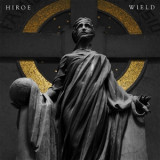
The new darlings of the American post-rock underground present a collection of well-wrought bangers on their debut full-length album. Powerfully melodic and heavy at the same time, Wield shows the Philadelphia-based quintet mastering their game of creating compelling melodies that sound larger than life. 2022 saw HIROE burst onto the scene with an explosive debut minialbum "Wrought" full of soaring anthems and sublime soundscapes. Combining the sonic expansiveness of Deftones with the dynamic heaviness of bands like ISIS and Caspian, HIROE already figured out how to make the most majestic sounding post-rock early in their career. "Our first, Wrought was a statement of creation," explains principal songwriter EricKusanagi about the intent behind their debut. "This second record is about what to do with that creation. The thought was, we've created this, now how do we wield it?" "We wanted to show a larger range of musical themes on this record," continues Eric. "You'll hear us dive into some synth work, some piano work, some really interesting effects that Mario helped us dial up." Wield packs a lot of details, which are fun to uncover over repeated plays. «Collider» is almost completely driven by high precision tapping leads, which are ingeniously mirrored by the chords on the final climax. «The Crush» sees the band's three guitarists chugging away happily over a clever 7/8 rhythm subtly exchanging thrashy, sludgy and prog-inspired stylings. Nevertheless, Wield is still an affair of instant gratification for fans of guitar driven post-rock. From the soaring leads of «Tides» to the epic finale of «I've Been Waiting For You All My Life», HIROE show they've upped their game in every department, but especially the one that tugs at your heartstrings. Wield presents the brave new future we all need in these confusing times. A new American frontier on which we can build our wildest dreams and our most daring ambitions! FOR FANS OF Caspian, Isis, pg.lost, Red Sparowes, If These Trees Could Talk, Shy Low, Ranges, Pray For Sound
The new darlings of the American post-rock underground present a collection of well-wrought bangers on their debut full-length album. Powerfully melodic and heavy at the same time, Wield shows the Philadelphia-based quintet mastering their game of creating compelling melodies that sound larger than life. 2022 saw HIROE burst onto the scene with an explosive debut minialbum "Wrought" full of soaring anthems and sublime soundscapes. Combining the sonic expansiveness of Deftones with the dynamic heaviness of bands like ISIS and Caspian, HIROE already figured out how to make the most majestic sounding post-rock early in their career. "Our first, Wrought was a statement of creation," explains principal songwriter EricKusanagi about the intent behind their debut. "This second record is about what to do with that creation. The thought was, we've created this, now how do we wield it?" "We wanted to show a larger range of musical themes on this record," continues Eric. "You'll hear us dive into some synth work, some piano work, some really interesting effects that Mario helped us dial up." Wield packs a lot of details, which are fun to uncover over repeated plays. «Collider» is almost completely driven by high precision tapping leads, which are ingeniously mirrored by the chords on the final climax. «The Crush» sees the band's three guitarists chugging away happily over a clever 7/8 rhythm subtly exchanging thrashy, sludgy and prog-inspired stylings. Nevertheless, Wield is still an affair of instant gratification for fans of guitar driven post-rock. From the soaring leads of «Tides» to the epic finale of «I've Been Waiting For You All My Life», HIROE show they've upped their game in every department, but especially the one that tugs at your heartstrings. Wield presents the brave new future we all need in these confusing times. A new American frontier on which we can build our wildest dreams and our most daring ambitions! FOR FANS OF Caspian, Isis, pg.lost, Red Sparowes, If These Trees Could Talk, Shy Low, Ranges, Pray For Sound
The third installment of To Pikap's retrofuturistic series entitled ''Remember the future''. A compilation of various styles with heavy 90â??s influences. From the euphoric Rave tunes of Quazatron and Dj Tsoug to the dystopian Electro of BufoBufo and NOT_MDK and from DimDj's leftfield House to the quirkiest IDM of Damage Per Second. Limited pressing, including download code and sticker. No re-press!
out of Stock
Last delivered 10 months ago available to reorder, subject to availability
Neo Gibson, born in Virginia and based in New York City, records, performs, and produces as 7038634357. This numerical alias, under which Gibson has been releasing work since 2016, offers a window into the careful ambivalences of the musical project. It conjures the impersonal_the opacity and randomness of data, a number that is hard to remember or even say out loud_while also suggesting a direct line of communication with the artist, down to an area code indexing their biography. 7038634357 uses a restricted palette to achieve music that is formally precise and emotionally direct. Their digital-native approach to production, in which frank melodies cross paths with heavy distortion, contains traces of both trance's maximalist arcs and a songwriterly intimacy. Expressive details may appear submerged or abraded, subjected to a canny sense of dynamics and textural specificity. Waterfall Horizon, Gibson's second vinyl record with Blank Forms Editions under the moniker 7038634357, was written for live performance and workshopped over successive shows during their 2022 European tour. Here, hallmarks of their earlier, studio-crafted recordings_digital distortion that obfuscates their lyrics and a slow-burning ambience_are noticeably pared back. Instead, Waterfall Horizon takes on a pop inflection, adopting more traditional lyric scaffolds so that the interstices from verse to chorus or track to track can flourish within their limited tonal range.Across recordings and performances, Gibson activates wide-ranging mechanisms of audience connection: from the relative anonymity of internet platforms to live experiments with the spatial effects of amplification. They have a particular interest in site-specific performances in non-musical spaces, and have performed in a variety of contexts, including the mezzanine of the West 4th Street subway station in New York City and INA GRM/Radio France's Présences électronique festival. Under their own name, Gibson has maintained a longstanding collaboration with the artist Charles Stobbs, working primarily with FM transmission and techniques derived from the early-seventeenth-century English tradition of change-ringing bells. The first 7038634357 vinyl record, Neo Seven, was released on Blank Forms Editions in 2023; previous releases include self-released cassettes and CD-Rs, as well as a pair of EPs on Genome 6.66 Mbp (2018, 2019).
In May 1981 B-Movie and Soft Cell went into Advision Studios in London with the same producer, Mike Thorne (Wire, Bronski Beat, China Crisis, The Communards) to record singles for the label they were both signed to. Phonogram had really wanted to sign B-Movie but had also committed to Soft Cell, having been coerced into it by Stev0, who managed both artists and wouldn’t let them have one without the other. B-Movie commenced recording the dark moody anti-fame anthem ‘Marilyn Dreams’, whilst Soft Cell got underway on a cover of an obscure Northern Soul classic. When both songs were released in July 1981, ‘Tainted Love’ became a worldwide hit and shot Soft Cell to international fame, making them the biggest stars of 1981. B-Movie had formed in 1979, in Mansfield, a typical northern town in the middle of the Nottinghamshire coalfield. Originally a three piece featuring, vocal / bass, guitar and drums, they expanded by adding a keyboard player to broaden their initial post punk sound. Local Lincoln independent record label, Dead Good Records, firstly put them on the compilation LP ‘East’, followed by 7" inch EP and then a mini-album releases, which led to an appearance on the legendary Some Bizarre label (alongside the likes of Blancmange, Depeche Mode, Soft Cell and The The)
Major label interest followed, from which came the deal with Phonogram, B-Movie initially re-recording the track ‘Remembrance Day’, which reached No61 in the UK chart in early 1981 and, more importantly, was played by BBC Radio 1 DJ John Peel, and appearing in his Festive 50 for that year. All of the recordings the band made during their Phonogram period have been consigned to the Universal Music vault for several decades, with the band finally managing to have these returned in 2024. The various tapes have been digitised and restored, resulting in the creation of what would have been their 1982 debut LP ‘that never was’. Ten tracks including the three singles plus seven previously unreleased recordings. The CD version contains a further seven recordings including the 12” versions, single B-sides and the track “Moles’” from the Some Bizarre compilation.So “Hidden Treasures” from B-Movie, is only four decades late but still able to sit seamlessly alongside contemporaries like The Chameleons and The Sound. The LP is a darker, more brooding and psychedelic affair, more akin to the gothic elements of the Bunnymen or Joy Division, than the ‘pop sensations’ Phonogram wanted them to become. By both opening and closing this chapter of B-Movie, it puts them firmly in the same bracket as their new wave and post-punk contemporaries, which is the least they deserve, as one of the great ‘lost’ bands of the early 1980’s. "It’s nice to hear B-Movie are finally getting a chance to release their forgotten gems’” Matt Johnson (The The) Vinyl
After 45 years, Trigger’s never-released second album, Second Round, invites listeners to rediscover the hard rock sound that made the band a standout act of the 1970s. In early 1979, Trigger walked out of Electric Ladyland Studios with a completed second album. Mere months had passed since their self-titled debut came out on Casablanca Records, home to KISS and Parliament. The band had toured with Cheap Trick and The Godz, met Bruce Springsteen and Joni Mitchell, and things were looking bright. But Casablanca unexpectedly went bankrupt, and the label’s artists went into freefall. Trigger unsuccessfully sought interested parties, shelved the recordings and disbanded; a disappointing end for a band who dominated the Jersey Shore club scene on their way up with fiery, kick ass live shows. RIP Trigger: 1973-1979. Jump to 2024. Guitarist Richie House is living in Northern New Jersey with his wife, enjoying a relaxing afternoon at the community pool with neighbors. One of them, Andrew Wexler is shocked to discover his friend had a band in the ’70s. He listens to their recordings, and as an avid record collector, assumes the mission of getting that unheard second album released. He writes to Ba Da Bing, a label with Jersey roots. Much excitement ensues. Second Round’s long-awaited release will now be available. All original members—Derek Remington (vocals/drums), Jimmy Duggan (guitar/vocals), Tom Nigra (bass guitar/backing vocals), and Richie House (lead guitar/vocals)—are present on the recordings. Sadly, Duggan and Nigra have passed away, but Remington and House have overseen this reissue, with songs sourced directly from the analog masters.. The Trigger of today maintains a high level of quality, albeit with a bit less flair, and even less hair. And there’s more going on here than at first listen. While the band carries the earmarks of their era—melodic hard-rock fashioned for Saturday night parties—they override the cliché with incredibly catchy songs. How would a ripping song like “Back Talk” have been received in 1979? It’s a question we’ll never be able to answer, but the raw energy of the track spans generations. “One In A Million,” however, with its full harmonies and forceful chorus, could have easily made the soundtrack for Fast Times. Celebrate the discovery of this lost gem by giving it a listen. You’ll be Trigger happy…
Cindytalk is the mercurial, expressionist outlet of Scottish artist Cinder, inspired by the crossroads of exploratory UK post-punk and early European industrial. Her work thrives on chance and transformation, collaging elements of noise, balladry, soundtrack, catharsis, and improvisation. "We were trying to find our own space," says Cinder of the formative period Camouflage Heart emerged from, amidst a move from Edinburgh to London and Cinder's evolving exploration of gender identity, well before culture at large was equipped to understand. With contemporary discourse we see that the project manifested her transgender ideas as visceral music. The guttural, feral sound marked a notably darker turn from The Freeze's sixyear run on the fringes of punk. Changing the project's name became vital, not just because they kept hearing the former was already taken, but the desire to embody the spiritual and sonic shift, "to uncover new pathways_to feminize it," she says. Cinder, with bandmates David Clancy and John Byrne, arrived at Cindytalk, a winking nod to Sindy, the British fashion doll rival to Barbie known then for its pull-string talking mechanism. "The goal was to have a more interesting narrative, more interesting dialogue. Music was ultimately my only way of talking to people. That was my conversation with the world, an abstracted conversation_an attempt to make some kind of tiny, tiny mark, if possible, you hope somebody will notice." Over the years, Cinder has heard from fans who did pick up on the signals and find refuge in Camouflage Heart. Camouflage Heart plays with tension and pace, from creeping to feverish to claustrophobic. The percussion moves between restless marches and barely-there pulses; for some parts, they scratched and hit a tin bath, among other objects. Guitar lines vibrate and stab as Cinder contorts her voice freely. She pulls poetry from a cerebral abyss, like "make the snake in your eye, pierce the camouflage heart" on the slow-droning centerpiece "The Spirit Behind the Circus Dream." In that register is raw power, both vulnerable and menacing, an ability to locate something deep and emotionally charged within. "I still remember that person who was way too intense for their own good," Cinder reflects. "I couldn't make a record like that now, certainly not vocally, while that anger hasn't dissipated; there's still a kind of warrior." For all the destruction and disintegration of Camouflage Heart, Cinder maintains the objective was never full-on fatalistic; these songs seek not to destroy but to poke and provoke, to transform and heal, to find cracks of light in a crumbling world. She points to the last lines of the opening track, "It's Luxury": "Don't look down," the lyric pines through static and rhythm. Cinder extrapolates, "I'm essentially saying, just keep fucking going. As time went on, for me, that falling became flying. Camouflage Heart is the beginning of believing in flight."
K.K. Hammond is a slide guitar playing songstress living in the backwoods of the UK. She takes her influence from the Delta Blues players of the 1930s, the roots music of Appalachia and its ancestors fusing the vibe of the swamp with a sprinkle of Southern gothic horror, K.K. writes traditionally inspired roots music but twists it her own unique way for an untapped sound that appeals to contemporary music listeners as well as classic blues fans.
K.K's music has garnered critical acclaim worldwide as well as airplay on a multitude of blues radio shows internationally. This includes the Cerys Matthews BBC Radio 2 Blues Show and the award winning Gary Grainger Blues Show.
A video of K.K. playing a slide guitar cover of "Nothing Else Matters" with her good friend Kaspar "Berry" Rapkin accompanying her on banjo was shared by Metallica on their official TikTok and described by them as "Incredible"!
K.K.’s biggest success to date arose from the release of her debut album Death Roll Blues. The vinyl and CD run sold out via pre-order prior to the album's official release date. Upon its release, the album hit the #1 spot in the UK iTunes Blues chart and subsequently bagged another #1 spot in the US iTunes Blues chart. It also exceeded her expectations by breaking into the #12 spot in the mainstream iTunes charts (across all genres) and the #18 spot in the UK iTunes mainstream chart. It was also the #3 best seller of all time for an iTunes Blues album pre-sale. Death Roll Blues also enabled K.K.’s first breakthrough into the Billboard Blues Charts with a #7 position.
K.K.'s has also had some great successes with her self produced and directed music videos. The music video for Heart Shaped Box winning a multitude of awards including wins at the Video Nasties Genre Film Festival, the David Film Festival in Turkey, the Euro Music Video Song awards, the Anatolia Film Festival, The Golden Wheat Awards, as well as K.K. receiving an honorable mention at the London Director Awards.
U.K. born, K.K. took an interest in guitar, Americana and roots Blues from an early age. She spent some years exploring the back roads of the USA eventually settling in the remote, forested English Countryside, where she works her farm. A self-professed hermit living in an isolated spot in the woods, K.K. enjoys exploring the wilderness surrounding her home to seek inspiration for her song writing.
At a time when post-ambient electronica and bedevilled folk music are co-habiting, and the public’s interest in Pagan rites and rituals has been sparked by a new generation of fans. The bizarre storyline of Whistle And I’ll Come To You seems even more pertinent… and strangely haunting.
The Jonathan Miller-adapted 1968 ghost story was originally part of BBC’s Omnibus series and featured Michael Horden as a fussy professor who discovers an ancient whistle which summons up the spirits. A black and white folkloric tale in the style of The Wicker Man, the original TV programme received rave reviews.
The esoteric live score was recorded at the Hypnos Theatre in Malmö. The 42-minute soundtrack utilises stuttering tape loops on ‘Intro’ before breathing new life into the primitive John Carpenter-like drum machine on ‘Supernatural Breakfast’, while ‘Walk On The Beach 2’ sounds like a hauntological rendition of a Broadcast classic. Indeed, that effect is amplified on ‘Nightmares’, with its swirling wind and other-worldly choral effect, before the feeling of some supernatural presence is suggested on the penultimate cut ‘Evidence Of Spiritualism’
''Stop'' is the emblem of Italo-Disco par excellence even if in 1983 it was inserted by Carlo Favilli and Stefano Zito on the B-side of the 12''of the nascent label House of Music. However, the song, although recorded in a hurry and with evident sound defects, is the perfect example of the musical genre that was developing in Italy in those very early 80s. ''Stop 4 Remixes'' is long-awaited answer that followers have been waiting for over 4 decades and now it lives with its own light with 4 new versions that testify how the piece was a driving force for the entire Italo-Disco movement."Pushed Up'' is the remix by Woody Bianchi, who according to Claudio Casalini (who does not allow any discussion on this matter) is the best Italian disc-jockey for the technical quality of the mixes and the artistic choice of the pieces to play. It would take a book to retrace the stages of his prestigious career. So here just a bravo' to Gino (Woody Bianchi). Ditto with potatoes for Danilo Braca who works assiduously in the clubs of the Big Apple, spinning only tracks by Italian composers and arrangers. Once again this Italian DJ-producer (Danyb is his old nickname), author of two very pregnant extensive versions: ''The Remix'' and ''Re-Visited'', shows his ability as a 'remixer', known everywhere, but especially in Ibiza especially where the DJs ((DJ Harvey included) often use his ''edits' existing only on pen drive. Among those who have madly loved ''Stop'' near Florence there are certainly Luca Pardini (Dirtyelements), Guido Sonato and Edoardo Guccione (Drunkdrivers) who when they are together form the renowned they Tuscan trio of DJ-producers Dirtyelements & Drunkdrivers with very interesting and successful experiences on Pusic Records, Masterworks Music, Samosa Records and Lego Funk. The approach to sounds in their ''Acid Re-Solution Remix'' is absolutely decisive. Here too, skill and passion seasoned with a pinch of art and... why not?... madness !!!
out of Stock
Last delivered 12 months ago available to reorder, subject to availability
Claire Chicha aka Spill Tab is feeling more free than ever before. The LA-based, French-Korean songwriter and producer,has spent the past five years as spill tab honing a sound that is as raw-edged as it is refined, channelling low-slung guitar-strumming confessionals as well as the earworming melodic hooks of anthemic pop to produce a heady and distinctive mix.
Following the 2019 release of her intimate and infectious debut single “Decompose”, Spill Tab has evolved her spill tab project through three EPs: 2020’s synth-pop influenced Oatmilk, 2021’s playful, uptempo Bonnie, featuring Gus Dapperton and Tommy Genesis, and 2023’s co-produced, sonically-intricate Klepto, which gleefully meanders from the Hiatus Kaiyote-influenced jazz freakouts of “CRÈME BRÛLÉE!” to the guitar-chugging thump of “Splinter”. Live, meanwhile, Spill Tab has been tapped for her explosively energetic presence to open the North American leg of popstar Sabrina Carpenter’s tour, as well as touring through Australia with alt-rock trio Wallows.
With “PINK LEMONADE”, opening single from her forthcoming debut album “ANGIE” , spill tab’s freewheeling sound finds its fullest expression, harnessing this onstage experience and recorded experimentation with her bass-weight and pitched-up vocals. Here we find Chicha only ever chasing that “weird thing”, fizzing with an infectious enthusiasm and intricate musicianship. “The best songs come from writing the main idea in a day, as it’s so instinctual,” she says, such as “PINK LEMONADE” recorded “from a clip taken out of a 40-minute jam that we then chopped and spliced”.
Born to her French Algerian composer father and Korean pianist mother, Claire Chicha spent her early childhood in the mixing room of her parents’ LA post-production studio, bringing coffees to artists as they tracked scores for exciting new projects. “I hung out in that studio all the time until I was around 10 years old, absorbing jazz music my dad was into and classical music that my mom loved,” Chicha says. “My mom had a big hand in making me an adventurous kid, always trying new things from piano to harp and violin, forever soaking up new sounds.”
At 12, Chicha’s life was uprooted as she relocated to Thailand to live with her mother’s family following the collapse of her parents’ business after the 2008 recession. What followed was an unstable and formative few years of early teenagedom, navigating new cultures and life changes. In Thailand, Chicha began learning guitar to cover the Paramore and Green Day tracks she had grown to love while also becoming immersed in Thai traditional music. After a year, she moved once more to live with her aunt in Paris and there she was introduced to the classic sound of Serge Gainsbourg and Édith Piaf before ultimately returning to LA following the untimely death of her father.
“I had to become a real people person to fit in everywhere I was moving, and it immersed me into so many different styles of music,” she says. “I went from listening to the nasal singing of Thai traditional music at muay thai fights in Bangkok, to emotive classic French songs. It definitely informed the need to experiment with my sound as I became more interested in making music.”
At high school in LA, Chicha joined one of the country’s foremost show choirs and realised a natural aptitude for stagecraft and performance as she sang medleys in competitions throughout the US. Going on to study Music Business at NYU, Chicha found a love for the alternative soul and singer-songwriting of the likes of Moses Sumney and Bon Iver, as well as developing her own sound while spending summers interning as an A&R at Atlantic Records and being exposed to the gamut of New York’s live music scene.
“I was going to so many shows as an A&R intern and seeing just how much a lot of music sounded alike,” she says. “It made me realise I wanted my music to feel different, to cut through the noise but still make something that felt honest to me.”
Beginning to independently release tracks, Soill Tab gradually built a loyal fanbase with the release of wistful early numbers “Calvaire” and “Cotton Candy” and soon found herself signed to a major label. Yet, as her career progressed through the COVID pandemic the demands of a corporate major began to conflict with her own searching style. “My last two EPs were under contract and it felt like I was always chasing the carrot,” she says, “I felt a certain pressure to put out tracks quickly and find that ‘hit’. It wasn’t the right environment to truly make what I wanted.”
Ultimately parting ways with her label, Chicha began work on a new album, exploring new sounds and ideas with her LA-based community of collaborators like producer David Marinelli, Solomonophonic, Wyatt and Austin and John DeBold, without expectation. “It became this beautiful experience of only following ideas that I really believed in and exploring all the musical avenues I hadn’t before,” she says. “I’ve never been more excited about songs and I’ve never felt like a project is more mine.”
Writing and recording while touring with Sabrina Carpenter and Wallows, Chicha road-tested her new tracks to see what might land best with an audience who had likely never heard her music before. “You have to win people’s hearts as an opener and you can see what resonates and what doesn’t,” she says. “I would watch people fall in love or not and it’s usually always the song you’re having the most fun with that does the best. That’s what I put on the record.”
« Angie », Spill’s Tab debut album is relased on because Music and expected for May 16th release.
out of Stock
Last delivered 16 months ago available to reorder, subject to availability
ULTRA LIMITED EDITION - WHITE VINYL - 4 DIFFERENT ARTWORKS (BUY, OBEY, WATCH TV, SLEEP) - NO REPRESS!
FULL soundtrack of John Carpenter's cult sci-fi/action/horror cult film They Live (1988) in never released on vinyl before expanded edition from legendary composer Alan Howarth.
Blues riffs surf on ambient synth, saxophone and harmonica mingle with sparse alien electronics and abstract soundscapes - Alan Howarth's score perfectly matches the eerie paranoid urban Western meets corporate sci fi vibe of John Carpenter's iconic movie.
This version, officially licensed from Alan Howarth, includes all 29 tracks from the soundtrack - the true complete music scores of They Live!
Points of interests
- For fans of soundtracks, horror, cult, sci fi, synth, Western, VHS, John Carpenter, bubble gum, conspiracies, cowboy boots, sunglasses, very rare editions of vinyl records.
- Full EXPANDED version of the They Live soundtrack on vinyl for the first time!
out of Stock
Last delivered 17 months ago available to reorder, subject to availability
'Trá Pháidín are an Irish nine piece collective from Conamara, Galway, a wild coastal region of West Ireland where Gaeilge remains the first language. The group are currently lighting up Ireland's underground with their joyful noise, a unique and unpredictable blend of traditional Irish folk, post-rock, jazz, and Dadaist absurdity. The glorious album An 424 takes us on a psychogeographical journey along the 424 bus route which follows this remote stretch of coastline, introducing us to the landscapes and the characters who depend on the buses. Expect wild improvisational flights filled with brass, woodwinds, harp and fiddles alongside relentless grooves.
Here's what the band themselves have to say about the album:
Psychogeography is a funny aul term......the effect geography and landscape of a certain area has on the psychology, identity and nature of the local people...........I suppose
Notoriously, Conamara is famous place for psychogeoraphy due to the work of the great Tom Robinson. He walked every coastline in every area contemplating the geography, culture, history, Gaelic language, English language and folklore of the area while he was drawing it's best map with great depth and detail.
Right, so I've given context, a few buzzwords and some interesting names, now it's time for the absurd stuff....
"Bóthar Chois Fharraige" (the R336 and whatever anglicized name they call it) is well known by everyone in the South Conamara Gaeltacht (Gaeltacht is an area where Irish/Gaeilge is the dominant language, there aren't many because we were colonized by the British and our government doesn't care about its own language). The people of Conamara travel this road almost every day by car, by bike, on Peadar Óg's buses or of course, through the medium of the 424 (the bus service provided by Bus Éireann, Ireland's public-private bus company). From Bearna to Carna (maybe sometimes a detour in Casla going as far back as an Cheathrú Rua and/or Leitir Mealláin)
Every passenger is well versed of gorgeous views of the landscape that is on offer on this journey. Included are Cuan na Gaillimhe/Galway Bay, An Bhoirinn/the Burren, na hOileáin Árann/the Arann Islands,Aillte an Mhothair/the Cliffs of Moher, Portach Mhaigh Cuilinn/the bogs of Maigh Cuilinn, Bóthar Loch an Iolra/Eagle lake road, Cuan Casla/Casla Harbour, Cuan an Fhir Mhóir/Greatman's Bay, Cnoc Mordáin/Mordáin hill, Sléibhte Mhám Toirc/the Maamturk Mountains and Na Beanna Beola/the twelve pins. Passengers would also be well used the unique character of the bus. Depending on the day, you will get a unique perspective of the "complicated identity" of the Gaels as the bus travels from the Gaeltacht into anglophone Ireland, or maybe going the other way.
This is a topic you could write a PhD about (and maybe someone already has). But, if you are someone who grew up or lives in this region, you have a particular understanding at this stage of how complicated Gaelic psyche is and the kind of spectrum of identity along bóthar Choise Fharraige. With the landscape in mind, this bus journey is a great meditation of the various topics of life.
‘Bhfuil tionchar ag an mbus ar nádúr na ndaoine?
Nó an bhfuil tionchar ag na daoine ar nádúr an bhus?'
'Does the bus effect the nature of the people?
Or do the people affect the nature of the bus?'
Le gach dea-ghuí,
TP.
(translated from Gaeilge by Peadar-Tom Mercier)'
out of Stock
Last delivered 14 months ago available to reorder, subject to availability
We are proud to present the Singapore-based artist Case Woo. Yet unknown here in Europe he started his musical career 10 years ago with 80's New Wave synthetic sounds. Originally released on the Muller offshoot Lifetime Music in 2002, we are happy to offer some original 2004 Muller press copies! Some of these tracks represent a sound that is looked for by DJ's with great interest again today. From more straightforward synth-led Techno to the more Electroclashy sound, it's all in there!
Luke's Anger (real name Luke Sanger) delivers his first outing on Love Love, Ceiling Walker. Sanger is a relentlessly interesting hero of the underground, probably best known as a techno and electro producer and an active player in the live experimental techno scene across Europe, notably including multiple appearances at Berghain/PanoramaBar. Based out of Norwich, UK, Luke has put out a plethora of banging records for two decades in styles from across the rave spectrum on some of our favourite record labels like Tigerbeat6, Don't and Sneaker Social Club, as well as an increasing amount of more ambient-leaning releases under his real name in recent years. Recognised as a true techno stalwart, Luke has received support from the likes of Surgeon, Dave Clarke, The Advent and Jerome Hill.
This EP fits firmly into the 'banging' camp - more than a nod to classic stateside sci-fi electro stylings as well as UK dance music's bleep techno bass foundations, this is popping, caustic, mechanical phunk expertly engineered to make you shake and wiggle. Particle Swarm kicks the EP off with strung-out synth chirps and plenty of latex squelch before moving onto the bounciest number, Threshold Rider, with buoyant bassline droplets poking through a solid 808 framework. On the flipside, title track Ceiling Walker utilises rushing crescendos and fluttering analogue rhythms to keep the dancefloor in rapture while closer, Silicon Boogie, achieves maximum levels of funk by aptly juxtaposing digi vocal snippets against square wave bass.
out of Stock
Last delivered 7 months ago available to reorder, subject to availability
Norman Westberg (guitar), Giridhar Udupa (ghatam, konnakol, khanjira, percussion) and Jacek Mazurkiewicz (double bass, electronics)An extraordinary meeting of three artists from three different musical worlds and three different continents. Norman Westberg (ex-Swans) and Jacek Mazurkiewicz have already released one album together "First Man In The Moon" in 2021 (published by the Swiss label Hallow Ground).In the new project, they are accompanied by Giridhar Udupa, an Indian master of ghatam (a clay percussion instrument that looks like a jug). The album will feature 3 long trance compositions, referring to ambient, krautrock, free jazz and Indian music.Jacek Mazurkiewicz describes the creation of this album as follows:"I met Norman Westberg while supporting the Swans tour in Poland as 3FoNIA. A few years later, during Norman's tour with Gira, we recorded a duet.The trio session took place similarly to the previous duet session during Norman's solo concert in Warsaw on the Swans tour.Recorded with Adam Toczko, a quick meeting on a day off from work.I invited Giridhar Udupa to the trio, whom I had met earlier during the period when I co-founded the band Limboski. I once invited Wacek Zimpel to play a few concerts with Giridhar. Wacek later created Saagara and I was wondering about some unusual musical context in which I would find myself with Giridhar. I was looking for an interesting sound configuration, but also a cultural one, with a different approach to creating music. I got the impression that for both Norman and Giridhar it was a fairly fresh meeting, not obvious. And on the other hand, ordinary - everyone did their own thing."Detroit guitarist Norman Westberg moved to New York in 1980 and became a part of the experimental music scene that was experiencing its golden age. Westberg himself became a permanent fixture when he joined the iconic avant-rock band Swans in 1983, and was the only member other than frontman Michael Gira to play with them for most of the band's run, both until their 1997 disbandment and his return in 2010. Westberg has also been involved with other legendary New York noise-rock acts, including Jim Thirlwell's Foetus and the post-Swans Heroine Sheiks, in which he played with Cows frontman Shannon Selberg; and in 2014, he joined the noise-rock supergroup Hidden Rifles, whose members included Mike Watt of Minutemen and Mark Shippy of U.S. Maple. Westberg's solo compositions, most often for solo guitar and a set of effects, draw on drone and post-minimalism, bringing to mind dark ambient passages from Swans albums.Giridhar Udupa is an extremely valued teacher and world-renowned artist, an Indian master of ghatam (a clay percussion instrument that looks like a jug). He was born into a family with long musical traditions. He began learning to play at the age of four, guided by his father. At the age of twelve, he already had his first performances behind him. He currently gives concerts alongside the greatest masters. He has received many prestigious awards. He performs in the USA, Spain, Canada, France, Switzerland, Germany, Oman and Kuwait. Giridhar Udupa is a member of the band of the Indian vocalist Bombay Jayashri, nominated for an Oscar for the best song for the film Life of Pi. He is one of the founders of the Layatharanga band. He also plays virtuoso other traditional instruments of South India, such as mridangam and kanjira, and is excellent at using the konnakol technique (a type of rhythmic vocalization).For three decades, the artist has been a global ambassador and icon of Carnatic music. He is the founder of The Udupa Foundation, a charity organization established in 2015 to promote Indian music, performing arts and culture. He has participated in recording dozens of albums. He is also well-known in our country thanks to his cooperation with Polish performers, which resulted in excellent artistic effects, such as the famous Indialucia - Michał Czachowski's group / project or the Saagara formation, led by Wacław Zimpel. Udupa also played on the album Lechoechoplexita, released by Leszek Hefi Wiśniewski, and on the album of the band Layatharanga, released in our country.Jacek Mazurkiewicz is interested in music in the broad sense. He puts his sounds together based on emotional impressions and pulse. Combining acoustics with electronics, he is constantly looking for a new sound. Solo as 3FoNIA, in a duet with Mikołaj Trzaska or Tomek Dąbrowski, the JMB trio with Wojtek Jachna and Jacek Buhl, in the Modular String Trio quartet, the Afrobeat quintet Faso Tamala are just some of his musical incarnations. With Patryk Zakrocki, as part of an audio mission, he massaged hundreds of pairs of ears in the Inner Ear Massage Office. He also deals with sound design, composing and producing music for films and theatre performances. He collaborated with many Polish and foreign artists.
Cool Up Records presents Music is the Right Way, their latest 7-inch vinyl release. A unique featuring of two soulful singers of the label, Paulinho and Payoh SoulRebel. In this song, these tasteful singers show their skills with determination, resulting a positive song with a crafted result.
Music is the Right way bring a strong message about the importance of music in our lives. Paulinho invites Payoh to join this wonderful tribute to music and how important is to be creative and express your feelings through music. Cool Up provides a Deep Roots track with a solid one drop, sweet vocal harmonies and interesting piano arrangements.
As usual, this release includes a notable dub version on the B-side, highlighting Cool Up's cleverly produced work, resulting in a great final product.
The design is another example of Mr. John Vanilla's unmatched skill. It keeps the look of the earlier singles and shows off his great work again.
Certainly, Reggae collectors will enjoy Music is the Right Way. It's the eight 7-inch release from Cool Up Records, which keeps active releasing music on vinyl.
If Hawalat sounds like a world tour that’s because it essentially is. “As much as Marzipan is a picture of Lebanon from the inside, Hawalat kind of picks up from where Marzipan finished but more looking to the outside, the diaspora, to the notion of exile.” Megarbane says he is interested in the connections between the global and the domestic, the mundane and the cosmic, and wanted to create space for non-linear progression.
Hawalat is based on the idea of hawala, informal money transfers that you can make to certain countries impacted by a lack of currency or unstable political and economic contexts. His use of the term on this album is not a financial one, Megarbane explains, but a nod to notions of creative exchange between “places, persons, generations.” It is the first time Megarbane called on other musicians in this way to inform his sound, including a collaboration with Sven Wunder on the song Helia featuring strings by the Stockholm Studio Orchestra.
The album opens with first single Hanadi, a punchy Somali-inspired track with warm non-lexical vocals and saxophone. It immediately pivots to the Dreams of an Insomniac, which balances soft, effortless vocals and keys with urgent violin intrusions. Al Dollarji feels like Megarbane’s bread and butter, that is Mediterranean sounds with intricate strings, while Al Bahriye takes this staple and introduces hip hop inflections. The result is a rich 17 track album that effortlessly blends genres and styles.
Including 8 page, 12" sized booklet with unseen photos and liner notes by Armani Syed.
out of Stock
Last delivered 10 months ago available to reorder, subject to availability
‘The Return of Pachyman’ is a supernatural force
from a brave new world that’s a little bit San Juan,
a little LA, and a whole lot of Channel One in
Kingston, Jamaica. Designed to be a resurrection
of sound systems from the past through which we
can celebrate a post-Trump future, the record
shows that blasting off into reggae’s deep space
has never gone out of style.
Pachy García (aka Pachyman) is perhaps best
known as the drummer / vocalist for the LA-based
band Prettiest Eyes, a unique pop-noise project
that reflects his other formative interest, synth
punk. He thinks of ‘The Return of Pachyman’ the
same way King Tubby might - an ‘X-ray’ of reggae
music, breaking it down to its bare bones.
Originally a guitarist, he moved to Los Angeles in
the early 2010s and developed his passion for
dub. From there, he started recording bass, drums
and piano and collecting recording equipment in
his basement studio, which he calls 333 House.
With ‘The Return of Pachyman’, García wants to
show how the Caribbean flow is transnational, a
vibe that resounds from Jamaica to San Juan to
Southern California. “With this project, I was
looking to make positive music and radiate good
energy; something to kinda disconnect from the
negative things that were happening at the
moment,” Garcia explains. “I am trying to make this
project a service for humanity in the sense that I
just wanted to shine a positive light.”
out of Stock
Last delivered 18 months ago available to reorder, subject to availability
As a founding member of Dublin experimental folk group Lankum, Ian Lynch explores submerged leylines of music and song. Forging a musical path that is all at once dark, mysterious and foreboding, but ultimately transcendental. His new solo project One Leg One Eye sees him taking a fresh approach to musical arrangement culminating in a sound that is more rooted in the raw aesthetics of second wave black metal than contemporary folk. The project was born across 2021, a period in which Lynch was able to enjoy the freedom of experimenting and exploring different paths of sound design without expectation or pressure. Seeking out interesting settings to record music and gather field recordings, there are several environments, external and interior, whose respective essence have seeped into the spirit of the music and come to represent Lynch’s artistic approach and development with this singular debut album, …And Take The Black Worm With Me. Rediscovered spaces in Dublin and the familiar enclave of his bedroom are intrinsic to the distinct and sometimes harrowing atmosphere conjured throughout the album’s five enveloping compositions. One particular location, an abandoned factory where his father worked when Ian was a child, provided a space of great inspiration and intrigue during this time. Lynch frequently visited the large abandoned warehouse and sang with his shruti box, contented in his solitude. ‘I’d Rather Be Tending My Sheep’, grew into existence from those initial sessions, eventually finding a home as an emotive centrepiece to the album. Reflecting on the overall recording of …And Take The Black Worm With Me, Lynch says, “Everything I was doing with these songs was all kind of new to me; experimenting with different sounds, textures and palettes and seeing what I could come up with by piecing it all together. I spent about a year making the album. I loved the whole process because it was basically just me in my bedroom recording everything. The experience of recording like this and having my own time to do it was amazing. I could focus on recording a specific element and happily spend all day working on that one part, doing it as many times as I wanted. At the end of the day if it didn’t feel right, I could just try it again the next day. When you’re on your own you can spend as much time as you want on particular parts until you feel that it’s absolutely perfect. I found that to be a really liberating experience. It was probably my favourite experience recording music.” The collection of songs (and their chronology) featured on …And Take The Black Worm With Me tell a story unique to Lynch’s experiences with anxiety and recognising his shadow self. Whilst the album became an outlet of personal expression for Lynch, the overarching themes and subsequent journey to confront one’s internal dichotomy of light and dark before accepting this inherent duality is universally shared. The eerie and often unsettling world contained within the album’s texturally dense opener ‘Glistening, She Emerges’, driven by the captivating drone of distorted uilleann pipes, immediately immerses the listener in this transportive work. It descends with a great heaviness, yet woven throughout the arrangement is a fascinating and indescribable entity that draws you further into this otherworldly dimension. This mood continues as the tracklist progresses and transitions into Lynch’s haunting realisation of ‘Bold and Undaunted Youth’ which further demonstrates a cinematic influence to Lynch’s compositional style. Sonically, Lynch effectively builds an impressively vast terrain with brilliantly murky lo-fi recording techniques and an unshakable curiosity to move beyond conventional structures and play with the timbre of the instruments available to him. From recording hurdy-gurdy or concertina to tape and experimenting with loops and effects pedals to stitching field recordings together, there’s an intimacy established between Lynch and his audience established through the simultaneously eerie and beautiful tones courting through …And Take The Black Worm With Me. This culminates in ‘Only the Diceys’, the extraordinary closing track in which we reach a place of resolution mapped into the album’s narrative structure. Mixed by longtime collaborator John ‘Spud’ Murphy in his Dublin-based Guerrilla Sounds Studio and mastered by Harvey Birrell …And Take The Black Worm With Me features contributions from Ruth Clinton (Landless) on church organ and vocals by Laurie Shanaman (Ails, Ludicra). Of Shanaman’s participation, in particular, which further illustrates the lo-fi and DIY ethos to the recording, Lynch says, “Laurie is my favourite black metal vocalist of all time and so I reached out to her hoping to have her involved in some way. She did, and she features on the opening track by providing some incredible screams. She recorded them into her phone and sent them over to me; what appears on the album is literally a phone recording of her screaming in her kitchen!” …And Take The Black Worm With Me continues Ian Lynch’s groundbreaking work with Lankum; recontextualising traditional forms and generating new spheres of music in his wake, confirming his status as one of the most interesting and innovative artists working in Ireland today.
Cross Record's new album, Crush Me, is steeped in the pressures and wonders of existence—a profound statement, especially coming from artist and death doula Emily Cross. A two-and-a-half-year gestation period offered challenges, disappointments, and joys reflected in the cramped space of the album, which explores how we handle the weights we carry. Emily Cross had held hundreds of Living Funerals and was as many episodes deep into her podcast, What I’m Looking At. She was five years into serving clients as a death doula and fresh off a tour with Loma, her band with Jonathan Meiburg (Shearwater) and Dan Duszynski, when she began work on her fourth album. After moving from Austin, TX to Dorset, UK, she established the Steady Waves Center for Contemplation (named after a track from her second record, Wabi-Sabi ), where she hosted Living Funerals, met clients, scheduled mindful tea sessions, and showcased experimental music nights. All the while, she was scribbling down song ideas. Cross’s Tascam four-track demos finally reached readiness, and she sent them to an interested major independent label. She was encouraged to push her imagination to the limits of what a record could be. So, unlike her usual process of recording as inexpensively as possible, she prepared a two-week recording session in Germany with a group of skilled musicians from around the world. True to her previous work, Cross left plenty of room in her demos for experimentation, collaboration, chance, improvisation, and complete obliteration, then resurrection when necessary. Comfort and traditional structure were eschewed in favor of unaccountable magic, prayers whispered into The Void. Cross is comfortable with the chaotic and unpredictable, a perspective demanded by her work and writing style. The Berlin Airbnb was packed with people, instruments and luggage. During a ride down in a tiny elevator to the studio, Cross realized how central the sense of being crushed was to the album. “I thought of it later and it dawned on me that ‘Crush Me’ perfectly embodied the record,” says Cross. Yes, the weight of a body laying limply atop yours, or the tight squeeze of a hug, can be pleasant. Go too far, and you’re in the hands of a cruel, adolescent god. Upon leaving Germany, the record was unfinished, and without a roadmap. As passages were recorded as isolated parts, Cross and musician Marcin Sulewski collaborated, facing a haphazard brick pile, waiting to be assembled. Work dipped in and out of view like a buoy bobbing in a violent sea over many months. During that time, the aforementioned interested label went radio silent, suddenly not seeming so sure of a thing. Collaborators disappeared, continuing the themes of abandonment, surrender, and disarray that followed the project. Cross physically felt her entire body go numb: In a twist of fate, the record was rescued by long-time friend and supporter Ben Goldberg at Ba Da Bing Records who was eager to help realize the project. Cross worked for months on the album, all the while nursing a pregnancy and continuing her full-time funeral work. The last minute participation of Seth Manchester of Machines with Magnets, who mixed and mastered, was an essential liferaft. He gave true final form to the abstracted songs. Crush Me has the effect of a spell being cast, with songs balancing heaviness and levity. Vocals, guitars, and keyboards float above, as drums and upright bass (often bowed) lurch beneath. On “Rolling Backwards” percussion wanders about while feedback squeals and persists in the distance. “Dorset Area Of Natural Beauty” starts with a thick, unhinged church organ progression punctuated by the disquieting sounds of laughter reaching the point of hysteria. “God Fax” is a slow-moving panic attack, with shallow breaths in and out framing a guttural cacophony like a wooden freighter encountering increasingly turbulent waters and vocals struck emotionless by autotune. The album ends with “Twisted Up Fence,” a reflection on life from outside the wall--wistful, warm, and comforting. Cross, likely with a smile on her face, sings: “You say it’s an endless abyss” “And I say the abyss is the best”
It's hard to imagine El León Pardo, a loyal advocate of some of the most advanced projects in which folklore is the road map and the destination itself, without his kuisi. It's hard to see him with his hands free. Always holding on to that ancestral instrument, that pre-Colombian flute that survived the conquest and has become a symbol of resistance, overcoming the ravages of time, the imposition of ideologies, dogmas and religions. Despite all that, the kuisi continues with its liberating sound, the power of its cry, its invitation to dance, its sound a cure and a blessing. That's why it leads the way in this Viaje Sideral ("Space Voyage"), an astral journey in which the kuisi is the vehicle and the life force of the rhythm. Viaje Sideral feels like floating eternally in the infinite cosmos. This second long player from El León Pardo is inspired by humanity's relationship with the stars, escaping to mythical planes and led into a trance by Caribbean percussions, analog synths, deep bass, electric guitars and the hypnotic vibrations of the kuisis and trumpets that complete the soundtrack of this voyage. Through these nine songs, El León Pardo continues to create a sound of his own, evolving in his intention to pay tribute to the psychedelia of the tropical world of the Caribbean in the 1970s and 80s, but this time also taking as reference artists like Terry Riley, Kraftwerk and Mad Professor, including the roots of ambient and electronic music with the characteristic sound of the kuisi, an encounter of dreamlike and astral sounds, with the music of the bandas pelayeras of the tropics and figures like Pedro Laza and Juan Lara. In this new universe the Cartagena trumpeter dialogs with the past, processing the ideas that have emerged over the years and morphed into his personal search that gives an identity to his ideas, nurtured by figures like producer Diego Gómez (Llorona Records, Discos Pacífico, Cerrero) who awoke his interest in electronic instruments, Edson Velandia and kuisi maestros like Juan Carlos Medrano and Fredy Arrieta. In his sound there is a particular feature, one that contains histories of personal experiences, accompanied by the kuisi, including ancient Zenú flutes dating from between 600 and 800 AD and which helped create the atmosphere of "Invocación." "Viaje Sideral," the song that gives the album its name, was born from a dream in which two stars speed towards the earth and an imminent collision. As the record continues, the stellar connection becomes clear with songs like "Urmah" with Edson Velandia, inspired by an article about extra-terrestrial races and how the Urmah were a race of hominid felines, the greatest geneticists of the universe; and "Cumbia espacial," featuring rapping from N. Hardem, seeking to create that aura of immensity and consciousness of the infinity of the universe.
White LP. Born out of the early 1980's Austin noise punk scene, Scratch Acid deliberately eschewed the loud, fast rules of hardcore as everything they didn't want to be and embraced a weirder, artier sound. Prior to the release of their 1984 debut S/T EP, someone gave Touch and Go Records owner Corey Rusk a cassette of the recording, and he was instantly a huge fan. Rusk was immediately interested in releasing the EP and contacted the band to express his admiration. At the time, Scratch Acid had already committed to working with Rabid Cat Records, who released the band's debut release S/T EP (1984) and their only full-length album, Just Keep Eating (1986). The group quickly developed a riveting performance aesthetic, and, as the debut S/T EP made its way around the country via fanzines, college radio, and word-of-mouth, the band mounted short tours to the Midwest and the East Coast. After playing a total of 146 shows, Scratch Acid broke up after the long tour that followed the release of the Berserker EP (Touch and Go Records, 1987). Since that time, the band have had many imitators, and many alternative bands have cited Scratch Acid as one of their influences.
Born out of the early 1980's Austin noise punk scene, Scratch Acid deliberately eschewed the loud, fast rules of hardcore as everything they didn't want to be and embraced a weirder, artier sound. Prior to the release of their 1984 debut S/T EP, someone gave Touch and Go Records owner Corey Rusk a cassette of the recording, and he was instantly a huge fan. Rusk was immediately interested in releasing the EP and contacted the band to express his admiration. At the time, Scratch Acid had already committed to working with Rabid Cat Records. The group quickly developed a riveting performance aesthetic, and, as the debut S/T EP made its way around the country via fanzines, college radio, and word-of-mouth, the band mounted short tours to the Midwest and the East Coast. While he was not able to work with Scratch Acid directly through Touch and Go, Rusk had begun booking shows with Scratch Acid in Detroit, so he could see them live and meet them. A friendship formed, and Touch and Go Records would eventually release the band's second EP, Berserker, in 1987.
Ltd Classic Black Vinyl with bonus 7inch, DL card. Monde UFO, LA-based duo of Ray Monde and Kris Chau, are a monochromatic sunset for the senses. A sonic journey through psychedelia, space rock and jazz. A cosmic space where Spacemen 3 meets Vanishing Twin, by way of Sun Ra. 7171 perfectly embodies the framework of lo and hi-fi sounds which have helped define the band. Included in this expanded package is Four Songs, Monde UFO's radical interpretation of Fugazi's music, housed for the first time on LTD 7" with new artwork. In a downtown Los Angeles warehouse, on 7th Street, Ray Monde began writing songs on an old Yamaha church organ for a project that eventually became Monde UFO. Utilizing the organ as a bass, alongside keyboards and a drum machine, he began making demos on a four-track cassette recorder. Heavily influenced by the musician Sandy Bull, sonically landing in a similar no-man's land of Worldly Jazz and Psych Folk. Monde experimented with the themes mostly of meditation and UFO lore. In time Ray moved in with the artist Kris Chau. With little crossover in musical tastes, they exclusively started listening to jazz, ambient and new age music in the house. Increased interest in sound baths and experimental music led to seeing music in a different light. Envisioning something that would sound like Don Cherry making a record with Yo La Tengo. '7171' is an amalgam of influences, interpretations and otherworldly sounds channeled through genre bending experimentation. This expanded edition of '7171' includes the sought after 'Four Songs' EP, a reimagining Fugazi's early classics, songs that take on a life of their own, lost amongst the haze and sugar sweet psych. Ray Monde explains, "Long Division was one of my favorite tracks off 'Steady Diet of Nothing' the first Fugazi record I ever owned; more than ever, it also feels truly poignant in the times we live in.Version 2 is our interpretation of Version from 'Red Medicine', my favorite Fugazi Record." "A slice of low-key bedroom pop-psychedelia in the vein of Syd Barrett." Aquarium Drunkard "Monde UFO wander through a humid mist of exotic samba shuffles, shamanic whispers, and reverberating laser beam synthesizers." New Commute
out of Stock
Last delivered 19 months ago available to reorder, subject to availability
Since the first release 5 years ago, Jazz Room Records has released an eclectic and interesting selection of releases.
From the Jazzy commercialism of the Take Vibe version of The Stranglers "Golden Brown" (5,000 vinyl single sales) to the 1960's Headshop Sounds of West Coast Fluteman Eric Ghost.
Other notable releases on Jazz Room include the critically lauded album by Vibraphonist Khan Jamal "Infinity", a compilation of Japanese tough funk fusionists indigo jam unit put together by DJ Colin Curtis, Nuyorican Latin House from Tata Vasquez, Jazz Dance Madchester Rave from Cruisic and some South African Holy Grail grooves from Abacothozi! The latest release is the Underground Latin J-Jazz of Copa Salvo, first introduced to London by DJ & Music Legend Jean-Claude.
Next up is an in demand Jazz Funk Obscurity from Educator and Trumpet Player John Lamkin whose self released album "Hot" saw the light of day in 1984 then disappeared into the Rare Jazz ether.
Currently changing hands for €300 and upwards it's again about to see the light of day in 2025!
This is an album that is aptly named with all the elements we love: Latin, Funk, Soul, Jazz and all round Double Hipness. What a Hot item it is too. From the Funky as it gets opening bars of "Ticket" through the Rio bound flight "722", taking in a visit to Wonderland with some Soul Jazz Vocal stylings on "Flower Power" and the Funkiest 17 minute Journey to Trumpet Enlightenment in the Title track "Hot" which is, true to its name, Scorching by the finish line is reached.
Already getting Big Ups on UK Jazz Funk Scene Founder Colin Curtis's Cult Radio Show "Jazz Dance Fusion" it's gonna be getting plenty of plays worldwide at the "Hottest" radio stations and funkiest jazz dance nights near you soon!
Ross Allen: It's brilliant!! Perry Louis: Massive! Dr Bob Jones:I Love Big Time!Colin Curtis: Killer!
out of Stock
Last delivered 19 months ago available to reorder, subject to availability
Crafted from solo recordings of 42 top-notch improviser musicians mostly drawn from Berlin’s multi-layered experimental scene, the monumental Phantom Orchestra project by Raed Yassin is finally getting released on Morphine Records. More than 1000 minutes of source material, recorded at the Morphine Raum during the fall of 2021, is distilled into a cogent work marked by a dazzling display of editing and blending, and packed into a double LP containing 7 “movements” of the Phantom Orchestra composition.
Crafted from solo recordings of 42 top-notch improviser musicians mostly drawn from Berlin’s multi-layered experimental scene, the monumental Phantom Orchestra project by Raed Yassin is finally getting released on Morphine Records. More than 1000 minutes of source material, recorded at the Morphine Raum during the fall of 2021, is distilled into a cogent work marked by a dazzling display of editing and blending, and packed into a double LP containing 7 “movements” of the Phantom Orchestra composition.
The Lebanese composer, musician and visual artist Raed Yassin has built a career straddling artistic mediums and communities, his devotion to improvisation, his connection to experimental electronic music, and his interest in the archive distinguishing a progressive impulse rooted in historic exploration. In 2020 Morphine Records released his wildly ambitious Live in Sharjah, made by a kaleidoscopic expansion of Praed, his duo with clarinetist Paed Conca. He resumes his interest in large-scale projects with Phantom Orchestra, conceived during the pandemic when most European improvisers were forced to redirect their energies into solo work, Each set of the Phantom Orchestra’s solos was cut on a Dubplate, ready to be performed on 12 turntables routed to a six-channel setup, to create a unified and breathtaking composition from the spontaneous material. The resulting material was then edited and prepared to be cut on a Double LP format, marshalling a staggering variety of improvised footage into an air-tight collage that locates abstract consonance, stunning sonic rhymes, and unusual harmonies without shutting out the sort of exhilarating collisions and fraught tensions inherent in collaborative improvisations. With this final stage of the composition, Yassin offers a vibrant testimony to the diversity of Berlin’s community of improvisers, to say nothing of his own refined artistic sensibility in achieving such a remarkable feat of blending so many contrasting voices into a truly unified piece of music. “For me it's about how to learn to be a community again,” he says. “And how to live in a world together again, which is a very difficult question for me.”
“This Album was published with the support of the Arab Fund for Arts and Culture – AFAC”
Split Evolution from Chicago and released two singles. The first "Jumpstreet" (vocal/instrumental) on Wasp in 1978 (although copyright on the label states 1974 whilst publishing states 1978) followed by "If Only You Would Say (I Love You)" (vocal/instrumental) on Jumpstreet in 1984 as The Three Phases Of Evolution. Both pretty hard records to find and not even listed on 45Cat but appear to have been reissued by Magnetic Recordings in 2014 (both included below). Interestingly, on the label for the latter it states that it is from the LP "Jumsptreet" so perhaps an album was in the pipeline? They recorded a third single which only made it to a test pressing stage, as the full run was cancelled later on. This unreleased third single "Bedroom Eyes" / "Let Me Do It" is the one out in March on Canonnball Records. The only surviving copy was found by rare soul DJ Dave Thorley on a record hunting trip to the States in the early noughties.
Our 8th Anniversary release is totally, completely, wholeheartedly dedicated to LOVE. Written not to be a ballad neither to be a dancer “Bedroom Eyes” inevitably ended up being both, turning out in what I consider the definitive love song, up there with Sly, Slick and Wicked's Sho' Nuff. It just melts my heart. Warm basslines laying on a catchy drumming which anyone would likely mistake for an Enchantment groove. A man and a woman dueting like if they were actually laying in bed after a consuming day out, and finding relief in each other’s presence. The man, desperate for love, makes questions to which the woman answers in the choruses with a hidden prayer to stay together forever. All with mutual background voices and brass crescendos and strings pizzicatos counterpointing each others to make it a beautiful yet rough arrangement. Just pure Soul love heaven.
out of Stock
Last delivered 19 months ago available to reorder, subject to availability
The award-winning film Vengeance Is Mine, All Others Pay Cash (2021) is romantic drama set in a working-class neighbourhood of Indonesia’s West Java. Although the story was set in the 1980s, the film’s music director Dave Lumenta doesn’t really want to use music from that period. He doesn’t want to automatically go with dangdut, the musical genre, a mix of Malay, Indian and modern pop music, the music of choice for majority Indonesia’s working class. He simply doesn’t want the film to be stuck in the time setting and the social class. The scoring is richer, not only was it inspired by dangdut, but it was also inspired by rock as well. In order for his imagination to be free of that time and social context, he decides to make music that was based on the characters, otherwise known as leitmotif.
Lumenta is interested in vulnerability, because it is something that the audience can find in the main character Ajo Kawir, an impotent who is unable to have an erection. Another main character Iteung is someone who is very liberal in terms of her sexuality, but she also struggles with an issue as well, which is their issues, a traumatic past. The film successfully portrays the clash of these two characters. And from identifying these two characters, the composer creates a melody or leitmotif that represents each character. The use of analogue instruments is also consistent with the film’s spirit, which is also shot using analogue camera. Lumenta created the music using acoustic instruments, such as the recorder, along with other sounds from an analogue synthesizer.
The sound produced may not be perfect, just like the are grainy quality of an analogue film, due to limitation of the medium. But it is precisely due to that limitation that the eyes and ears are compelled to watch and listen actively; we must squint to catch something more perfect, or listen closely to filter out imperfections in the sound. Consuming art created with analogue tools requires a different method of listening, watching, and working process.
Second installment of this wonderful compilation of gems from the 60s and 70s Singapore music scene, focused on the amazing ladies that helped make it so vibrant. 14 gems of female fronted Pop Yeh Yeh, another eye-opening collection of amazing Singapore treasures. A new collection of female fronted Singapore recordings from the 60s and 70s, documenting one of the most vibrant music scenes during those incredible years. Be it as solo singers, backed by other bands or as band leaders, women had a huge presence on the Singapore music scene, and here's another 14 tracks to celebrate their legacy. All under the idiosyncratic Pop Yeh Yeh umbrella and each with her strong personality and musical tendencies, the music contained in this beautiful record is an absolute trip for anyone interested in 60s and early 70s music.
WRWTFWW Records is very excited to announce the first ever release of the highly-sought after original soundtrack from 1987 cult horror movie Dolls by multi-instrumentalist, composer, producer, music man extraordinaire Fuzzbee Morse. The limited-edition LP is a miracle of lostthen-found VHS era film scores and is housed in a heavyweight 350gsm sleeve with a bloody cutout sticker and exclusive composer notes.
Directed by Stuart Gordon (Re-Animator, From Beyond, Robot Jox...) and released by Charles Band’s infamous Empire Pictures (which later morphed into Full Moon Productions), Dolls is 80s campy VHS horror in all its glory, a fan-favorite with all the attributes needed for a frightening popcorn night, including one hell of a soundtrack with a very welcomed heavy dose of menacing synths, thunderous orchestrations, and quirky interludes.
The haunting score comes from master Fuzzbee Morse who composed it in Richard Band’s garage with a Yamaha QX-1 sequencer, an arsenal of vintage synthesizers, and a wide array of instruments. The result is a must-have (and never released before!) soundtrack that blends horror tropes with influences ranging from Igor Stravinsky’s The Rite of Spring to Bernard Herrmann, Frank Zappa, Beethoven, Charles Ives and Eleanor Rigby!
Dolls follows the WRWTFWW release of Fuzzbee Morse’s Ghoulies II (1988) as well as 3 other soundtracks from the Empire Pictures vaults: Richard Band’s Ghoulies (1985), TerrorVision (1986), and Troll (1986). All still available – complete the collection now!
Points of interests
- For fans of soundtracks, horror, cult, synth, ambient, classical, 80s, VHS, Charles Band, Full Moon Productions, Stuart Gordon, John Carpenter, b-movies, sci-fi, Gremlins, toys, evil toys, Toys R Us, the good old days, toys you can play with at 33rpm, Christmas presents.
- First ever release for the soundtrack of cult horror movie Dolls (1987), with cut out sticker and composer notes.
Alternative Tentacles Records is thrilled to announce the first-ever vinyl release of two long-awaited tracks, previously available only in digital format. This highly anticipated split 7" features Jello Biafra & The Guantanamo School of Medicine and The November 3, with two explosive songs: "Blunder Blubber" and "IFAR." "Blunder Blubber," originally released as a digital single to mark Rush Limbaugh's passing and was recorded during the TEA PARTY REVENGE PORN recording sessions, highlights everything iconic about Jello Biafra & The Guantanamo School of Medicine. The song critiques the rise of right-wing extremism, tracing its roots back to Rush Limbaugh's influence and the repeal of the Fairness Doctrine under President Reagan in 1987—a policy change that allowed one-sided political commentary on public airwaves. Biafra argues that this set the stage for the toxic media landscape, fueling figures like Limbaugh and the current wave of ""MAGA"" rhetoric. Reflecting on the political climate, Biafra notes, "I wrote the song back when Clinton was president, seeing the writing on the wall. I was hoping never to use it, but we had no choice but to update and perform it now." On the flip side, The November 3 delivers "IFAR," a fiery debut track that first dropped during the 2020 Republican National Convention. Blending punk rock energy with raw political outrage, lead vocalist Billie O' Rights unleashes a bold, biting rant, backed by Tom Pain’s searing guitars. Pat Triotte and Justice Ferrall add their creative touches to this electrifying anthem, capturing the chaotic spirit of the times. "IFAR," is a raucous, tongue-in-cheek commentary on partisan divides, clocking in at just two minutes of catchy, irreverent fun. Interestingly, the song was reportedly conceived during a mundane moment: Pat Triotte was baking blueberry muffins one Saturday afternoon when the idea hit, and within hours, the track was recorded— and the muffins were supposedly amazing. Despite the humorous and often provocative tone of both songs, the core message of this release is clear: a call to action to vote. With this limited 7" vinyl, Alternative Tentacles Records urges everyone to make their voices heard in the 2024 election and beyond! Don't forget to VOTE!
Koldbrann's 4th album black vinyl repress. After an almost decade-long period of dwelling in the shadows, Koldbrann returned with a series of select festival appearances in 2022/23, premiering new material and proving that they're still full of cold grimness and misanthropy, and completely void of compromise. After last year's 2-track 7" single "Den 6. Massedod (Manna fra en annen himmel)", their long-awaited 4th album "Ingen Skånsel" is ready to be unleashed - and Koldbrann is sounding rawer, harsher and better than ever. Even though deeply rooted in the True Norwegian Black Metal tradition, Koldbrann has carved out their own sound within the genre confines and it sounds fresh, raw and different. There's a fierce nerve running through the album, and the songs stand out from today's typical black metal sounds. You can feel the aggression throughout the whole album. "Ingen Skånsel" is one of the most interesting, aggressive and fierce Norwegian black metal albums in modern times!