dub & detroit techno-inspired tracks for the dancefloor
The A-side features two timeless tracks by label founder Sub Semantics. "Stay" captivates with melancholic pads, while 'Dub Revolver' is a gentle yet energetic track for situations away
from main time.
The B-side features solo productions by Session Restore and Bernhard Hudalla. The two are known from joint productions on
rauh and soon on Mojuba/ a.r.t.less. With "Jelly", Session Restore delivers reduced, Detroit-inspired techno with highly effective 909-drumming. "Influx" by Bernhard Hudalla rounds off the EP with playful drum clusters and insistent leads.
quête:red 5
Oro Azul‘s debut offering, ‘Water Seeds,’ takes us through 4 shades of an aquatic garden. Dembow floats underneath the waves while woodblock melodies bubble up through the weeds. Sub bass shifts the tide. Some sounds are moss-like, a protective balm. Other tones come through as minerals and metals, shining in the refracted light from above.
A collaboration between Ultima Esuna and Michael Red, the music of Oro Azul took shape over the course of a year of purposeful and transformative studio sessions. This release follows the pair’s solo releases on DJ Python’s Worldwide Unlimited, Nervous Horizon, and Isla.
microCastle’s first offering of 2024 welcomes Adrian Roman back to the label for his second artist showcase. Hailing from Spain, Adrian Roman first rose to prominence in 2021 with a string of superlative releases which redefined his sound, resulting in an aesthetic that was both cutting edge and effortlessly cool. F, nmully formed within the creative confines of his Castello studio, Adrian’s first microCastle project, 2022’s‘ Disturbing the Perception’ succeeded in showcasing his inventive approach to composition, while remaining club-effective, and in turn earning play from Aera, Fideles and Jimi Jules, amongst others. Moving forward the next eighteen months have proved to be impactful for the young Spaniard, recording standout projects for AZZUR and Sum Over Histories, releases which continued to build on his creative acumen, while remaining in the playlists of underground tastemakers Ame and Dixon. With 2024 beginning with Adrian’s latest Sum Over Histories vehicle ‘Oratorical Ability’, the Spaniard now makes a welcome return to microCastle with a six-track showcase entitled ‘This Is What I Was For A Moment’.
From the opening monochromes of ‘Le Sabbat’ Adrian’s craftsmanship reveals itself across this slow-burning piece, one where grating growls, granular flares and panoramic arps ultimately set the pace for the groove-centric ‘Customized Reality’. It’s here where Adrian puts a greater focus on the dancefloor, marrying hopeful vocal phrasing and silky chord stabs for a rejuvenating experience, while a drum-driven drop ultimately charts the course for a finale of deconstructed sonics and post-rave bliss. The haywire electricity of ‘Faces of Belmez’ finds the Spaniard once again flexing his creative muscles, as corrugated bleeps and cataclysmic rhythms provide a vast sense of space, creating the ultimate backdrop for distorted synths to propel choppy rhythms into dark underground passages, and perhaps onto some of the world’s most adventurous dancefloors.
The collection’s midway point is marked by the hypno-architecture of ‘Mind Design’. Trickling reverberations and long sighs of tonal tension wade through its pulsating framework, with frayed effects and thumping rhythms submerged beneath a buzzing panoramic glow. Played by Ame and sitting as one of the project's most enigmatic tracks is ‘TAGDI’ (They Are Gonna Do It). Tinted with contemplative synths and guttural vocals, Adrian’s unique emotionality peaks here, as he crafts a low-slung, slow-building dystopian romance, all while weaving in cerebral manipulations for an unforgettable ride. The mist breaks instantly on the collection’s final piece, as your thrusted into the muscular grooves of ‘Fear Track’. Horrifying vocal stabs strike, leaving the gauzy purple skies of ‘TAGDI’ behind for a more robust romp, one where anabolic bassline, retro-arps and off kilter percussion bring the release to a feverish peak. A fitting conclusion to a diverse collection of music, one where Adrian creates a journey that speaks to the complexities of life against an immersive and challenging backdrop.
Artwork: Maurcio Seidel
Dominik Krammer's EP, "The Fields As She Left Me," stands testament to his unique style and profound grasp of electronic music and each track within this collection serves as a portal to the human experience. In this musical journey, Dominik Krammer takes the listener on a relentless ride through the depths of longing and the ecstasy of fulfillment. The EP's four tracks, though diverse in their individual flavors, are interwoven by an undeniable red thread—an overarching conceptual foundation consisting of the complex realm of human emotion, ranging from heart-pounding energy and bittersweet melancholy to raw passion and intense rage.
The EP kicks off with its main track, "The Fields As She Left Me," a sonic journey initiated by ecstatic synths and heavy drumworks that set the pace for what follows. The driving arp and caressing lead of "Nocturnal Desires" embody the ambiguity of being lost and simultaneously feeling at home in the night. "Ketaigel" follows suit, featuring a memorable melody that etches itself into your memory, guiding you through a sinister journey of joy and fulfillment. The remix by David Heine for "Ketaigel" introduces a different sonic sphere compared to the rest of the EP, yet excels in capturing and releasing the fundamental emotional world that defines this musical exploration.
As you immerse yourself in the emotional, melodic, and at times, disorderly soundscape of 'The Fields as She Left Me,' Dominik Krammer's prowess becomes evident. His EP not only resonates on a visceral level but also leaves the audience craving for more.This sonic journey is destined to linger in your memory long after the final note fades away, creating an enduring impact that transcends whatever boundaries of electronic music.
- A1: Sungu Lubuka - Petelo Vicka Et Son Nzazi
- A2: Mfuur Ma - Groupe Minzoto Ya Zaïre
- A3: M.b.t's Sound - M.b.t's
- A4: Musique Tshiluba - Abeti Et Les Redoutables
- B1: Lalia - Trio Bydoli
- B2: Adeito - Tabu Ley Et L'orchestre Afrisa
- B3: Ngantsie Soul - Les Bantous De La Capitale
- C1: Nganga - Les Frères Soki Et L'orchestre Bella-Bella
- C2: Tembe Na Tembe Ya Nini - Orchestre Celi Bitshou
- C3: Lolo Soulfire - Lolo Et L'orchestre O.k. Jazz
- D1: Femme Ne Pleure Pas - Zaiko Langa Langa
- D2: Kiwita Kumunani - Orchestre O.k. Jazz
- D3: Fiancée Laya - G.o. Malebo
- D4: Ah! Congo - Orchestre National Du Congo
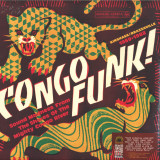
The making of Congo Funk!, our long-awaited journey to the musical heart of the African continent, took the Analog Africa Team on two journeys to Kinshasa and one to Brazzaville. Selected meticulously from around 2000 songs and boiled down to 14, this compilation aims to showcase the many facets of the funky, hypnotic and schizophrenic tunes emanating from the two Congolese capitals nestled on the banks of the Congo River.
On its south shore, the city of Kinshasa – capital of Democratic Republic of the Congo, the country formerly known as Zaïre – is often seen as Africa’s musical Mecca, the city that spawned such immortal bands as African Jazz, O.K. Jazz and African Fiesta, and the place to which aspiring musicians from throughout the continent would go to make a name for themselves.
But the city of Brazzaville on the north shore of the river – capital of the Congo Republic – played an equally important role in spreading Congolese sounds continentally. In addition to producing legendary bands such as Les Bantous de la Capital, it was the powerful transmitters of Radio Brazzaville that allowed the unmistakable groove of Congolese Rumba to be heard as far away as Nairobi, Yaoundé, Luanda and Lusaka thus turning the electric guitar into the continent’s most important instrument!
Although the musical landscape of these cities had been defined by a core group of bands in the late 1950s, the modernisation of Congolese music has been steadily evolving until the events surrounding the Muhammad Ali vs George Foreman boxing match marked a turning point. The promoter of that event known as “Rumble In The Jungle” was none other than the notorious Don King who needed 10 millions dollars to get Ali and Foreman into a boxing ring. The only candidate willing to put this kind of cash on the table was Mobutu Sese Seko, President of the Democratic Republic of the Congo.
Mobutu - the megalomaniac dictator who got to power with the support of the United States and Belgium in exchange for unlimited and affordable access to the riches of the country - had a soft spot for music and it doesn’t come as a surprise that he agreed to a three-day live music festival being organised prior to the “Rumble”. Zaïre 74 - as the festival was dubbed - was meant to hype the boxing match and many stars were invited.
Although a myriads of artists flocked in for the occasion, it was the performance of James Brown on Zairian soil that caused havoc among the younger generation, inspiring hundreds of would-be musicians to take up their electric guitars and reverbs cranked to the max in search of a new sound in which hyperactive Rumba was blended with elements of psych and funk. While the results were very different from the popular music of the three Musketeers - as Tabu Ley, Franco and Verckys were known - they weren’t a complete break with tradition.
These new sounds emerged at a time when the Congolese record industry – previously dominated by European major labels – was experiencing a period of decline due to rising production costs and needed a radical change. The void was filled by dozens of entrepreneurs willing to take chances on smaller scale releases. It was the beginning of a golden age for Congolese independent record labels, and the best of them – Cover N°1, Mondenge, Editions Moninga, Super Contact – preserved the work of some of the region’s finest artists, while launching a generation of younger musicians into the spotlight.
The movement was greatly helped by legendary radio shows but it was the dynamic productions of Télé-Zaïre that set the dynamite on fire. Legend has it that TV shows were so huge that president Mobutu himself ordered RTV du Zaïre to put on daily concerts since it halted criminal activities for the duration of the evening.
Congo Funk! is the story of these sounds and labels, but most of all it is the story of two cities, separated by water but united by an indestructible groove. The fourteen songs on this double LP showcase the many facets of the Congolese capitals, and highlight the bands and artists, famous and obscure, who pushed Rumba to new heights and ultimately influenced the musical landscape of the entire continent and beyond.
Überkeine sets the tone of his own record label with four esoteric tracks, designed for the club. An obvious intention to establish a radical style with conceptualized sonorities, is revealed throughout the Ep. The sound materials are elaborate, and go straight to the point. Obsessing over the flow of creativity offered by his modular synthesizer, he delivers a very dense techno and already affirms a well-marked identity. Powerful and textured kicks, intricate synthetic sounds contained in an arrangement reduced to the essential. The tracks come to life as the forthright reflection of the thoughts of the producer. Guillotine Whistle instantly plunges into the unbridled world of the Ep. An ominous atmosphere hovers over our heads as it reveals organic and disconcerting tones. A gentle brutality emanates from this whistling guillotine that awaits to cut you up in two. Leading the way towards Drifting Data, a track inspired directly from Jungle Patterns. Überkeine is humbly trying to render DnB to a techno format. The dense, saturated Bassline sustains the idea of breaking the dancefloor in pieces. A hard hitting, broken beat environment accompanied by heavily filtered synthetic chaos. Third track’s the charm, the B side starts with Mirror Moist. A drop-down, wet and straightforward techno track with a carnal Bassline. As sensual as it gets, this track conveys a kinky loop urging intimacy and blasting heat throughout the club. Last but not least, Shaney’s remix of Mirror Moist. Picking up core elements of the original vibe and translating it into the off-beat techno nightmare it deserved to be. Full-on obscure dancefloor piece of equipment.
In Zeiten, in denen Alle Mainstream sind, ist es nicht leicht ein Underground-Musiker zu sein. Vor allem, wenn man davon leben wollen muss. Der Leipziger Musiker Josen Bach ist so einer. Seit Jahren erfolgreich unter dem Radar!
Er verdient seine Brötchen als Schlagzeuger, als Theatermusiker und jetzt neu: Als Bandleader seiner eigenen Band DIE QUITTUNG. „Einfrieren“, so lautet der Titel des am 24.11. erscheinenden Albums, ist bereits das zweite Album von DIE QUITTUNG, allerdings das erste auf dem Berliner Label staatsakt.
Die Produktion für „Einfrieren“ ging während der Pandemie los und ist nun endlich pfannenfertig gemischt und gemastert. Selbstverständlich wird sein neues Label nun alles dafür tun, DIE QUITTUNG so breit wie möglich im Mainstream zu etablieren! Bald ist es vorbei mit dem Untergrundlegendenstatus. Nur noch mit Sonnenbrille zum Bäcker.
repressed !
Office 04 circles in memories: The record is about Johannes 'Iron Curtis' Paluka's time at Karl-Marx-Straße Berlin where he used to live next door to label head Baaz and graphic designer Chris Fladung.
A1 track 'Magnet' is an ecstatic piece of house music holding all elements IC's production is esteemed and loved for : Heavy, unrelenting kicks, rolling bass lines, shimmering pads, topped with searing hot yet gamelan-like synts and an icing of slightly loose, detuned organ stabs predesting grand emotions on any dance floor. 'What happened happened' surely marks up as another proof of Curtis' fearless takes on house music: distorted field recordings and blurred spoken words, a web of gossamer melodies and subtle clicks and cuts, all cohered by the louche bassline and the reshuffled groove in a true dilla-ish vein.
Adapting elements to their own agenda, clandestine groove explorers Berg turn 'What happened' into a true midnight roller: razor-sharp hihitas join forces with a steam-maschine like percussion, whipping relentlessly in-between kick drum and kick drum. Berg cools off their take with prancing melody motifs and strung out pads of the original track, though never loosing focus of the 'reductions' aim: keep the dancer dancing.
Rødhåd presents: CRIMSON RUBEUS - the first ever compilation on WSNWG - BACK TO ZERO will be released on April 3rd
Under the leitmotif "WE SEE NEW WORLDS GROWING", the release marks a progression for the imprint to open up for solo releases from new artists and and long term collaboraters.
The compilation features 8 tracks handpicked by Rødhåd, each characterized by a vigorous commitment to the dancefloor while staying true to the label's signature - hard-to-resist sound with a pinch of mystery.
While every contribution has its distinct magnetic pull, marking the way to a nascent world, the crimson red thread running through this compilation is perpetuating, swirling techno with an acute fit for the dancefloor. As with previous releases Rødhåd crafted the artwork for the compilation, this time drenched in crimson hues echoing the energy of the music.
g D1 Ø Phase - Exiting The Delusion
Repress.
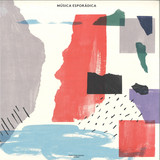
MFM044 sees the reissue of the cult Spanish studio project Música Esporádica with their incredible one off, self-titled album.
Another Suso Saiz side project, this one grew out of his work with his band Orquesta De Las Nubes, who were themselves the subject of a Music From Memory compilation last year.
The idea of getting Orquesta De Las Nubes to collaborate with Glen Velez and Layne Redmond arose after the two American musicians visited Spain during a series of seminars on frame drum techniques in 1985. Having met Glen Velez some years before in Madrid whilst Glen was performing with the Steve Reich Ensemble, Suso Saiz and Glen Velez quickly formed a strong friendship over their mutual love of non-Western music and the potentials of repetition within music. The two would play, talk and drinks for many hours in Suso’s studio space whenever Glen was in Madrid.
During one such session in 1985, Glen and Suso would be joined by Orquesta De Las Nubes and Spanish friend and musician Miguel Herrero. With exciting new ideas flowing quickly and easily, Suso decided to immediately call Track Studios in Madrid to see if they might have a space to record some of the material. With just a few days available the group would record for about 12, with what Suso would describe as ‘incredible fluency’, by which time they would have recorded the album they would later title Música Esporádica.
After its release 34 years ago Música Esporádica sounds as stunning as ever and Music From Memory are delighted to be able to share the fluency, spontaneity and close friendship which fuelled the recording of this amazing album.
Mad-heads, rave veterans and lovers of having their brains rewired by previously unexplored sonic realms unite, because here comes the first of four, yes four, new albums from the fantastic freak of nature that is Special Request. His 'What Time Is Love? Sessions' arrives in several different formats this month and across six sizzling tracks that re-wire the KLF's hit of that name, he taps into everything from "ephemeral ambiance to barnstorming hardcore, pummelling house to pointillist trance" and does so with a mix of the surreal and the psychotic, the psychedelic and the downright ridiculous. It's mental, and we love it.
Montenegrin born in Istanbul, precocious pianist growing up in an embassy, brilliant musician. Prolific composer speaking eight languages, he arranged music for jazz, pop music, adopting multiple identities.
For one label, he is Andy Loore; for another, Emiliano Orti. For others, he is called Alan Blackwell or Johnny Montevideo, but behind all these aliases, there is only one man: Janko Nilovic.
Exploring the shelves of musical production, venturing into the less-illuminated corners of library music, Janko Nilovic's name lights up dozens of shelves on which his soundtracks, his records for Editions Neuilly or Sforzando, but above all his twenty albums for Editions Montparnasse, are stored. A considerable and imposing work, rich in orchestrations of keyboards, strings and brass instruments, themes, atmospheres and melodies. A repertoire in which the cinema, television and advertising have come to find their delight ...
Subjected to the sharp blades of samplers, reduced to a few effective seconds, joined with rhythmic beats, some of his tracks have infiltrated hip hop for a long time , leading the most curious to go back to the source to get the complete albums from which the precious loops had been taken.
Almost unknown to the general public, Janko Nilovic is a master for the initiated, whether they are at his side in the studio or comfortably seated in their armchair savouring the final result on their turntable. His discretion combined with his long years of silence on the record could lead one to believe that he had cleverly arranged his disappearance from the radar to make Janko Nilovic a mystery that has never been completely solved.
Until this message from The Soul Surfers.
A few miles away, in their studio fired up by analog funk, the Muscovites had been put back on the Nilovic track by multi-instrumentalist Shawn Lee. A few passionate discussions later, and the desire for a joint album was already lighting up the amps, making the bass strings shiver and the drum skins tighten.
Initiated by the coming and going of scores, the collaboration finally continued in studio for a real exchange, instantly bouncing off proposals, developing ideas in a live group dynamic that distance would have made impossible.
To feel the vibrations accumulated for decades at the CBE studio (like Chatelain Bisson Estardy), a mythical place founded in 1966, in which many albums, especially library, were immortalized. A place where consoles, equipment and instruments were kept as they were, accumulating in their wiring, meters and speakers, endless hours of experimentation and recording.
A place that Janko knew well and where an old acquaintance was waiting for him. A Hammond organ with a Leslie booth whose keys he had already flattered in the past and behind which an improvisation and a single take were enough to complete the eponymous title.
Together, Janko Nilovic and The Soul Surfers have built Maze Of Sounds, a musical labyrinth paved by the master's keyboards where the soul-funk groove of the fiery Russians is the listener's thread, his point of reference in this maze of atmospheres and emotions, at once cinematic, nostalgic, dancing, dreamlike and contemplative.
An album where, however, nothing is compartmentalized. Where, blown by the whirlwind strung by a violin quintet, the barriers move preparing the entrance of a Slavic choir, letting a screaming guitar come and go alongside the crystalline liveliness of the Fender Rhodes, organize some rhythmic aerations at the disposal of the samplers.
A fusion between the cleverly blackened scores, between the science of precisely written arrangements and the soul-funk feel of The Soul Surfers. An album such as Janko Nilovic has been dreaming of making for years.
Ghastly and hallucinatory – 'last liasse' is a sign of the times, alternative pop record by helen island. Within this debut album, the artist captures the saccharine gaze of digital escapism through characteristic filtered high notes, cut-up genres, and processed vocals. Providing a comprehensive overview of helen island’s self-distributed initiatives, with the ethos of the Parisian Simple Music Experience collective, the twelve tracks set a solid musical score that resonates with the age to come.
- A1: Ww3 Freestyle (The Yodfather - Freestyle)
- A2: Tony Touch Freestyle (Freestyle)
- A3: David Bowie Freestyle (Freestyle)
- A4: Francis Ford Coppola
- A5: Droogie-La
- A6: Zubin Mehta/Munchos (Freestyle)
- A7: 90 From The Line (Part 3)
- A8: North Face With The Acgs
- B1: Fresh Direct (The Shining)
- B2: Brinks Truck
- B3: We On The Tarmac
- B4: Room 237
- B5: Red Rum
- B6: Here's Johnny
- B7: The Hedge Maze
Your Old Droog recently delivered one of the most impressive runs hip-hop has ever seen, releasing seven expertly crafted, thematically distinct projects over a span of only thirteen months. Now, the final two albums in this historic creative flurry are available in physical form for the first time ever, with this unique joint release of "The Yodfather" and "The Shining". With both collections inspired by classic films, this physical release is being presented as a "double feature" in the style of vintage movie screenings, with "The Yodfather" on the front cover and "The Shining" on the back. Originally released only on digital outlets, these deeply cinematic collections strike a perfect balance of soulful and sinister, with beats supplied by the likes of Madlib, SadhuGold, Fortes, Wino Willy, and more. While Droog’s mind-bending wordplay takes center stage, the set also features appearances by Che Noir, Tha God Fahim, and Rockness Monsta, along with the unreleased bonus track “North Face With The ACGs”.
Archeo Recordings is a record label. Old, lost, obscure and forgotten gems and a boundless focus on the new Balearic scene for a wider audience of collectors, DJs and music lovers. All releases are limited edition.
This release is 350 copies limited edition: 12"" with 4 new special Remixes by Hear & Now, Manu Archeo, Mushrooms Project and Ocean Moon + CD with 6 previously unreleased Original songs + Insert.
For the latest essential offering from Archeo Recordings, Infradisco harness the power of the Po, serving a six-part suite inspired by the life giving power and natural beauty of water. An immersive journey through balmy downbeat, Balearic melancholy, smooth jazz and subtle house, the ‘Aqua Cheta’ CD comes accompanied by a diverse 12" of remixes from Hear & Now, label head Manu Archeo, Mushrooms Project and Ocean Moon. Album opener “Caduca” evokes the energy of an Umbrian waterfall, its spheric bassline growing ever more acidic before falling away as focus shifts onto the misty pads and plangent guitar.
The gentle bossa rhythm of “Dulcis” transports us to the confluence of the Rio Negro and the Amazon, where a snaking bassline underpins beguiling horns and subtle Sade-sque chords progressions. On “Fluminea”, the trio return to the heart of Reggio Emilia, following the fluctuation of the river Po, which runs past their studio, in an exquisite example of tension and release. Awash with emotion, both via the piano and redolent woodwind, this heady track intersects melodic house and Balearic trance, prompting horizontal dancing and skyward gazes. The tone shifts through the pensive and propulsive “Marina”, a sax led masterpiece accented with gorgeous acoustic guitar, before the tabla beat and emotive sitar of “Pluvia” add intensity to a slow-flowing piece of progressive house.
The CD closes with the cinematic splendour of “Surgiva”, an expansive ambient composition which sees delay-drenched fretwork tug at our heartstrings.
Saeko Killy, Jamie Paton, Andrei Rusu and Anastasia Zems remix “Kraus is the Limit” by the Zurich electronic-wave duo Dâdalus & Bikarus and take the original to new dimensions.
“Kraus is the Limit (Remixes)” preserves the raw energy and emotion of Dâdalus & Bikarus’ live performances while introducing new textures. It is not merely a collection of remixes but an intimate experience that invites listeners to rediscover the original tracks through the lenses of Saeko Killy, Jamie Paton, Andrei Rusu and Anastasia Zems.
Saeko Killy translates Voran into a mesmerizingly timeless journey that is even more kraut-y and space-y. Jamie Paton brings his distinctive style to the table by adding laidback and dubby vibes to Gone and Youri Gagarine. Andrei Rusu strippes down Tous Tes Mensonges, creating a sonic whirlwind that takes the listener on an thrilling and hypnotic ride. Anastasia Zems’ take on Voran lets us wallow in the depths of an acid abyss. A tripped-out experience is guaranteed.