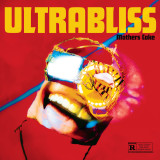
After the recent release of the first pre-single, "One Of These Days," the new and fifth studio album by Mother’s Cake, titled “Ultrabliss”, will be released on October 18, 2024, via Embassy of Music (available for pre-order starting July 17).
Inspired by Stanley Kubrick's cult film “A Clockwork Orange” (1971) and largely free from structural constraints of traditional songs, the Austrian band unleashes their musical imagination with the finest jams and dancefloor fillers. “Ultrabliss” unites nine extremely varied tracks with elements of classic rock, krautrock, and prog-rock that are sure to please fans of Jimi Hendrix and Pink Floyd, as well as followers of the Red Hot Chili Peppers or British indie icons like Franz Ferdinand, the Arctic Monkeys, or Kasabian. Like its predecessor “Cyberfunk!”, “Ultrabliss” was recorded at Sevenarts Studio, Überlärm Studio, and Moonwalker Productions Studio, and once again sonically brought to life by singer, guitarist, and songwriter Yves Krismer in collaboration with Manuel Renner and Raphael Neikes. Neikes, who plays guitar and keyboards live, has become the fourth band member. Founding drummer Jan Haußels has amicably left the band after the album sessions and will be replaced by Alex Kerbl on drums from now on.
After the recent release of the first pre-single, "One Of These Days," the new and fifth studio album by Mother’s Cake, titled “Ultrabliss”, will be released on October 18, 2024, via Embassy of Music (available for pre-order starting July 17).
Inspired by Stanley Kubrick's cult film “A Clockwork Orange” (1971) and largely free from structural constraints of traditional songs, the Austrian band unleashes their musical imagination with the finest jams and dancefloor fillers. “Ultrabliss” unites nine extremely varied tracks with elements of classic rock, krautrock, and prog-rock that are sure to please fans of Jimi Hendrix and Pink Floyd, as well as followers of the Red Hot Chili Peppers or British indie icons like Franz Ferdinand, the Arctic Monkeys, or Kasabian. Like its predecessor “Cyberfunk!”, “Ultrabliss” was recorded at Sevenarts Studio, Überlärm Studio, and Moonwalker Productions Studio, and once again sonically brought to life by singer, guitarist, and songwriter Yves Krismer in collaboration with Manuel Renner and Raphael Neikes. Neikes, who plays guitar and keyboards live, has become the fourth band member. Founding drummer Jan Haußels has amicably left the band after the album sessions and will be replaced by Alex Kerbl on drums from now on.
Transparent Curacao Vinyl. Award-winning composer for video games and Scottish artist, Barry "Epoch" Topping (PARADISE KILLER, SENTRY, THATCHER'S TECHBASE, ENCOUNTERS) returns with "The Needs", 11 songs of lavish reflection in a modern city pop style. The album takes the listener through an emotional exploration of identity and change set against the backdrop of late summer. It fuses city pop, rock and dance music into a rich, dreamy blast of video game-tinged modern pop music. But "The Needs" is more than just an album title, like Barry explains: "It's a new ensemble built around a core of the musicians that worked with me on Paradise Killer: Fiona Lynch, Fabian Hernandez, Thomas Temple and Kyle Murray-Dickson. A new trio of horns Elin Andersson, Nicklas Dahlin and Simon Fransman round out the full lineup. Having such talented musicians involved in a much bigger way has allowed us to challenge ourselves and make the best, most over the top music we've made yet. 'The Needs' was created as a vehicle for my own reflections and is intended to help listeners reflect and find solace too. No album can be universal but if 'The Needs' can help people feel seen or understood then I'll feel like it's been a success. Getting to make the album has been an extremely rewarding experience."
Blue and orange Stardust vinyl, limited to 500 copies. Since 2016, Indiana's Wraith have been emitting their incendiary brand of blackened thrash and speed metal into the world. Summer 2024 will see them release their debut full length under the Prosthetic Records label banner; prepare for Fueled By Fear. What started as a one-man band many moons ago has evolved into a propulsive beast of a band. Channeling a reverence to classic metal from a bygone era, Wraith incorporate their distinctively blistering sonic signature to create something urgent and contemporary. The band have previously described their collective mission as follows: a war of aggression on the dour confines of the modern metal scene and total sonic annihilation. Fueled By Fear captures the raw punk edge of their previous releases; a sound that will already be familiar to converts who have caught the band live in all their full-throttled abrasive glory. The album was self-produced by the band in Griffith, Indiana -, with engineering, mixing and mastering handled by CJ Rayson. Each member brings their own influences and stylistic flourishes to the table, combining to create a tightly wound, cohesive collection of scorching tracks that reflect their individual personalities and tastes.
out of Stock
Last delivered 22 months ago available to reorder, subject to availability
Just a little over two years since the release of his debut album Opening the Door, Jack re-emgerges with a new full length album. On Blue Desert, the Australian-born Vancouver-based multi-instrumentalist, singer, songwriter and producer wades deeper into the stylistically prismatic pool of his own creation: melancholy dub-funk, jangling psychedelia, moon-burnt sophisti-pop and stained glass folk mutations float freely together.
Just a little over two years since the release of his debut album Opening the Door, Jack re-emgerges with a new full length album. On Blue Desert, the Australian-born Vancouver-based multi-instrumentalist, singer, songwriter and producer wades deeper into the stylistically prismatic pool of his own creation: melancholy dub-funk, jangling psychedelia, moon-burnt sophisti-pop and stained glass folk mutations float freely together.
Entirely self-produced at Mood Hut Studios in Chinatown, Vancouver between 2022 and 2024, the album picks up where Opening the Door left off; the songwriting concise and refined, the voice front and centre on almost every song, the pensive mood irresistible and dense.
The apparently effortless melodic interplay of voice, guitar, synthesizers and bass that Jack is well known for is ever present but despite the clear-eyed harmonies and energetic rhythms there is a shadow that quietly haunts the album. The lyrical buoyancy of his early EPs and even some of the more explicitly sunburnt instrumental moments of his last record have continued to fade and peel like paint. Regret, remorse and melancholy are woven into almost every turn of phrase; the self-deprecating longing of Tracey Thorn and Sade Adu can be heard alongside the plaintive echos of Mark Hollis and Arthur Russell. The Mood Hut Records founder and NTS host digs deeper in all the directions that he only brushed upon on Opening the Door, creating a kaleidoscopic index of his omnivorous listening habits: from Underworld to Kate Bush, Disco Inferno to Bryan Ferry, Julian Cope to Arthur Verocai.
The LP will be released on Jack’s own Mood Hut Records on November 1st and will be followed by a live tour in the UK and Europe in November and December, featuring a string of dates opening for revered Los Angeles artist Jessica Pratt.
- Mood Hut Records, Vancouver
Produced by Jack Jutson at Mood Hut Studios, Chinatown Vancouver
Mixed by Jack Jutson and CZ Wang
Saxophone by Linda Fox
Strings on Falling Down a Well by Aiden Ayers
Bass on Down the Line by Diego Herrera
Additional synth on Red Cloud by Liam Butler
Artwork by Mela Melania + Jack Jutson
e A5. Pink Shoes Part I
Part II
out of Stock
Last delivered 3 months ago available to reorder, subject to availability
The seeds of composer Rafael Anton Irisarri’s latest LP were first planted during his 2016 tour in Italy, months before that Autumn’s unexpected presidential election. The linguistic glitch of an innocuous diner in Milan named “il Mito Americano” – meant as “The American Dream” but translated literally to English as “The American Myth” – sparked a series of ideas, both conceptual and musical.
Amid the chaos of 2020, while exploring the stark world of brutalist architecture and inspired by the false fronts of Potemkin villages, a vision started to take shape: FAÇADISMS. Composed over three years, it’s a late capitalist lament of simmering electric despondency.
Irisarri’s obsession with repeating motifs mirrors the cyclical nature of our tumultuous political history. The album’s eight tracks heave and storm like a tempest being drained of its rage. This is the sound of majestic dissipation, of morning afters, fashioned from a mournful haze with cavernous guitars and granular twilight. A euphony of a receding tide as one sifts through the remnants of what remains: dust, delusion, and memory.
Opening with the somber gauze of “Broken Intensification," FAÇADISMS moves fluidly between moments of absence and abandon. Ashen swaths of electronics billow above smoldering embers of melody, guitar, and scattered streaks of processed strings and voice, as on the rapturous doom of “Control Your Soul's Desire for Freedom,” featuring Julia Kent on cello and Hannah Elizabeth Cox on vocals. "The impoverished peoples of the Americas have known all along that 'freedom' is a cruel illusion crafted by the elites, akin to Potemkin's fake villages designed to impress Catherine the Great," Irisarri indicates. "FAÇADISMS illustrates a twisted inversion where the rulers deceive their subjects with illusions of safety, democracy, and free speech to create a grotesque mirage of control over their own lives.”
Elsewhere, Irisarri leans into passages of hushed oblivion (“Hollow,” “Dispersion of Belief”), while ragged drones rumble and disintegrate into wind-battered ambient wreckage. One has the sense that it’s all too late. The hour of fury has passed. The beauty has come and gone. Irisarri’s muse has become the crack in the façade of the unraveling myth.
The record closes with a climax of grand departure. Co-written with Kenyan sound artist KMRU, “Red Moon Tide” surges from flickering elegy to celestial disquiet, roiling waves of hymnal descent, and bristling noise. The effect is unsettling and unmooring: a soundtrack for the soul leaving the body, only to discover a void. It’s the sound of the center not holding, of shared illusions being dissolved in a tunnel of white light.
The cover photograph captures a profound sense of desolation. Taken in the historic shanty town of La Perla, Puerto Rico, where Irisarri spent his childhood, brutal colonial mysteries are lost to time. A skeletal concrete structure decays against an expansive blue horizon. Only the shadow of its shell ripples on the empty sea.
Has the American myth finally run its course?
out of Stock
Last delivered 23 months ago available to reorder, subject to availability
The seeds of composer Rafael Anton Irisarri’s latest LP were first planted during his 2016 tour in Italy, months before that Autumn’s unexpected presidential election. The linguistic glitch of an innocuous diner in Milan named “il Mito Americano” – meant as “The American Dream” but translated literally to English as “The American Myth” – sparked a series of ideas, both conceptual and musical.
Amid the chaos of 2020, while exploring the stark world of brutalist architecture and inspired by the false fronts of Potemkin villages, a vision started to take shape: FAÇADISMS. Composed over three years, it’s a late capitalist lament of simmering electric despondency.
Irisarri’s obsession with repeating motifs mirrors the cyclical nature of our tumultuous political history. The album’s eight tracks heave and storm like a tempest being drained of its rage. This is the sound of majestic dissipation, of morning afters, fashioned from a mournful haze with cavernous guitars and granular twilight. A euphony of a receding tide as one sifts through the remnants of what remains: dust, delusion, and memory.
Opening with the somber gauze of “Broken Intensification," FAÇADISMS moves fluidly between moments of absence and abandon. Ashen swaths of electronics billow above smoldering embers of melody, guitar, and scattered streaks of processed strings and voice, as on the rapturous doom of “Control Your Soul's Desire for Freedom,” featuring Julia Kent on cello and Hannah Elizabeth Cox on vocals. "The impoverished peoples of the Americas have known all along that 'freedom' is a cruel illusion crafted by the elites, akin to Potemkin's fake villages designed to impress Catherine the Great," Irisarri indicates. "FAÇADISMS illustrates a twisted inversion where the rulers deceive their subjects with illusions of safety, democracy, and free speech to create a grotesque mirage of control over their own lives.”
Elsewhere, Irisarri leans into passages of hushed oblivion (“Hollow,” “Dispersion of Belief”), while ragged drones rumble and disintegrate into wind-battered ambient wreckage. One has the sense that it’s all too late. The hour of fury has passed. The beauty has come and gone. Irisarri’s muse has become the crack in the façade of the unraveling myth.
The record closes with a climax of grand departure. Co-written with Kenyan sound artist KMRU, “Red Moon Tide” surges from flickering elegy to celestial disquiet, roiling waves of hymnal descent, and bristling noise. The effect is unsettling and unmooring: a soundtrack for the soul leaving the body, only to discover a void. It’s the sound of the center not holding, of shared illusions being dissolved in a tunnel of white light.
The cover photograph captures a profound sense of desolation. Taken in the historic shanty town of La Perla, Puerto Rico, where Irisarri spent his childhood, brutal colonial mysteries are lost to time. A skeletal concrete structure decays against an expansive blue horizon. Only the shadow of its shell ripples on the empty sea.
Has the American myth finally run its course?
out of Stock
Last delivered 22 months ago available to reorder, subject to availability
The seeds of composer Rafael Anton Irisarri’s latest LP were first planted during his 2016 tour in Italy, months before that Autumn’s unexpected presidential election. The linguistic glitch of an innocuous diner in Milan named “il Mito Americano” – meant as “The American Dream” but translated literally to English as “The American Myth” – sparked a series of ideas, both conceptual and musical.
Amid the chaos of 2020, while exploring the stark world of brutalist architecture and inspired by the false fronts of Potemkin villages, a vision started to take shape: FAÇADISMS. Composed over three years, it’s a late capitalist lament of simmering electric despondency.
Irisarri’s obsession with repeating motifs mirrors the cyclical nature of our tumultuous political history. The album’s eight tracks heave and storm like a tempest being drained of its rage. This is the sound of majestic dissipation, of morning afters, fashioned from a mournful haze with cavernous guitars and granular twilight. A euphony of a receding tide as one sifts through the remnants of what remains: dust, delusion, and memory.
Opening with the somber gauze of “Broken Intensification," FAÇADISMS moves fluidly between moments of absence and abandon. Ashen swaths of electronics billow above smoldering embers of melody, guitar, and scattered streaks of processed strings and voice, as on the rapturous doom of “Control Your Soul's Desire for Freedom,” featuring Julia Kent on cello and Hannah Elizabeth Cox on vocals. "The impoverished peoples of the Americas have known all along that 'freedom' is a cruel illusion crafted by the elites, akin to Potemkin's fake villages designed to impress Catherine the Great," Irisarri indicates. "FAÇADISMS illustrates a twisted inversion where the rulers deceive their subjects with illusions of safety, democracy, and free speech to create a grotesque mirage of control over their own lives.”
Elsewhere, Irisarri leans into passages of hushed oblivion (“Hollow,” “Dispersion of Belief”), while ragged drones rumble and disintegrate into wind-battered ambient wreckage. One has the sense that it’s all too late. The hour of fury has passed. The beauty has come and gone. Irisarri’s muse has become the crack in the façade of the unraveling myth.
The record closes with a climax of grand departure. Co-written with Kenyan sound artist KMRU, “Red Moon Tide” surges from flickering elegy to celestial disquiet, roiling waves of hymnal descent, and bristling noise. The effect is unsettling and unmooring: a soundtrack for the soul leaving the body, only to discover a void. It’s the sound of the center not holding, of shared illusions being dissolved in a tunnel of white light.
The cover photograph captures a profound sense of desolation. Taken in the historic shanty town of La Perla, Puerto Rico, where Irisarri spent his childhood, brutal colonial mysteries are lost to time. A skeletal concrete structure decays against an expansive blue horizon. Only the shadow of its shell ripples on the empty sea.
Matter-of-factly, Lycox exclaims "Yaaahh" right at the beginning. That's an affirmation but in times of distress it can also mean resignation, something like "Yeah, whatever". Lycox says he was only freestyling though. Then the bassline appears. Elastic, expressive, full-bodied. And it's not even present the whole time. He was "trying to develop a new formula for the Kuduro beat."
Songs for the club? Most certainly. Different sensibilities, one same focused mind. Lycox evolves within tradition, he has mastered the groove, the ambience, the right tones. Simply called "Energia", the last track circles above wistfully, menacing but maybe just promising some sort of action. With a few drops one could almost switch over to a parallel universe of old school Trance, a reference that feels as alien here as maybe this track feels to someone for whom the standard Afro House sound represents modern African music.
These songs pile up in a threshold balanced between styles, sensations, maybe in the middle of life itself. Such a concentration of energy is bound to need release and that comes figuratively through details in the music reaching out to receptive ears. "To Bem Loko" explicitly tries to "literally drive everyone crazy on the dancefloor." Once again Lycox provides vocals, as in "Edson no Uige", about a friend who embarked on a trip to the Angolan province of Uige and came back speaking only the local dialect known as lingala. A nod to tradition, very emotional, without compromising complex arrangements. Consequently, we the listeners are kept believing there is still enough space for a bright future. To ears accustomed to Lycox productions the title "Contemporaneo" (opening of side B) reads like a redundancy, then.
Maybe this music can never be quite as massive as other Afro styles. Without sounding pretentious, it avoids simplistic patterns, it demands a bit more mental processing while it certainly aims to loosen the limbs. Universal in vocation, underground at the core, Lycox definitely calls it Batida but for some it is still Ghetto Music. Like DJ Veiga said when describing a previous release for Príncipe, Ghetto is home, though. Lycox adds it is a foundation of personality. "Few in our community will recognize your work when you come from the same environment, but once you establish your reputation outside of the neighbourhood and even outside of the country, people will look at you differently, as if you were a star."
out of Stock
Last delivered 22 months ago available to reorder, subject to availability
Camelot, the legendary seat of King Arthur's court in Early Middle Ages Britain, was probably not a real place. A corruption of the name of a real Romano-Briton city, the word "Camelot" accumulated symbolic, mythic resonances over centuries, until achieving its present usage as a near-synonym of "utopia." In the mid-20th century alone, Camelot inspired an explosion of representations and appropriations, among them the violent, affectless Arthurian court of Robert Bresson's 1974 film Lancelot du Lac and the absurdist iteration of Monty Python's 1975 Holy Grail, both of which feature armored knights erupting into fountains of blood; the mystical Welsh world of novelist John Cowper Powys's profoundly weird 1951 novel Porius, with its Roman cults, wizards and witches, and wanton giants; and the nationalist nostalgia of President John F. Kennedy's White House. Unsurprisingly there are fewer Camelots in more recent memory. Camelot, Canadian songwriter Jennifer Castle's extraordinary, moving 2024 chronicle of the artist in early middle age, charts a realer, more rooted, and more metaphorical place than the fabled Camelot of the Early Middle Ages (or its myriad depictions), but it too is a space more psychic than physical. In Castle's Camelot, the fantastic interpenetrates the mundane, and the Grail, if there is one, distills everyday experience into art and art into faith, subliming terrestrial concerns into sublime celestial prayers to Mother Nature, and to the unfolding process of perfecting imperfection in one's own nature. Co-produced by Jennifer and longtime collaborator Jeff McMurrich, her seventh record is at once her most monumental and unguarded to date, demonstrating a mastery of rendering her verse and melodies alike with crisply poignant economy. For all their pointedly plainspoken lyrical detail and exhilarating full-band musical flourishes, these songs sound inevitable, eternal as morning devotions. "Back in Camelot," she sings on the lilting, vulnerable title track, "I really learned a lot / circles in the crops and / sky-high geometry." The album opens with a candid admission of sleeping "in the unfinished basement," an embarrassing joke that comes true. But the dreamer is redeemed by dreaming, setting sail in her airborne bed above "sirens and desert deities." If she questions her own agency_whether she is "wishing stones were standing" or just "pissing in the wind"_it does not diminish the ineffable existential jolt of such signs and wonders. This abiding tension between belief and doubt, magic and pragmatism, self and other, sacred and profane, and even, arguably, paganism and monotheism, suffuses these ten songs, which limn an interior landscape shot through with sunstriped shadows of "multi-felt dimensions" both mystical and quotidian. The epic scale and transport of "Camelot," with its swooning strings, gives way dramatically to "Some Friends," an acoustic-guitar-and-vocals meditation in miniature on Janus-faced friends and the lunar and solar temperatures of their promises_"bright and beaming verses" versus hot curses_which recalls her minimalist last album, 2020's achingly intimate Monarch Season. (In a symmetrical sequencing gesture, the penultimate track, the incantatory "Earthsong," bookends the central six with a similarly spare solo performance and coiled chord progression, this time an ambiguous appeal to _ a wounded lover? a wounded saint? our wounded planet?) Those whom "Trust" accuses of treacherous oaths spit through "gilded and golden tooth"_cynics, critics, hypocrites, gurus, scientists, doctors, lovers, government, the so-called entertainment industry_sow uncertainty that can infect the artist, as in "Louis": "What's that dance / and can it be done? What's that song / and can it be sung?" Answering affirmatively are "Lucky #8," an irrepressible ode to dancing as a bulwark against the "tidal pools of pain" and the "theory of collapse," and "Full Moon in Leo," which finds the narrator dancing around the house with a broom, wearing nothing but her underwear and "big hair." But the central question remains: who can we trust, and at what cost faith, in art or angels or otherwise? Castle's confidence in her collaborators is the cornerstone of Camelot. Carl Didur (piano and keys), Evan Cartwright (drums and percussion), and steadfast sideman Mike Smith (bass) comprise a rhythm section of exquisite delicacy and depth. This fundamental trio anchors the airiness of regular backing vocalists Victoria Cheong and Isla Craig and frames the guitars of Castle, McMurrich, and Paul Mortimer (and on "Lucky #8," special guest Cass McCombs). Reprising his decennial role on Castle's beloved 2014 Pink City, Owen Pallett arranged the strings for Estonia's FAMES Skopje Studio Orchestra. On the ravishing country-soul ballad "Blowing Kisses"_Pallett's crowning achievement here, which can be heard in its entirety in the penultimate episode of the third season of FX's The Bear_Jennifer contemplates time and presence, love and prayer_and how songwriting and poetry both manifest and limit all four dimensions: "No words to fumble with / I'm not a beggar to language any longer." Such rare moments of speechlessness_"I'm so fucking honoured," she bluntly proclaims_suggest a state "only a god could come up with." (If Camelot affirms Castle as one of the great song-poets of her generation, she is not immune to the despairing linguistic beggary that plagues all writers.) Camelot evinces a thoroughgoing faith not only in the natural world_including human bodies, which can, miraculously, dance and swim and bleed and embrace and birth_but also in our interpretations of and interventions in it: the "charts and diagrams" of "Lucky #8," a daydreamt billboard on Fairfax Ave. in LA in "Full Moon in Leo," the bloody invocations of the organ-stained "Mary Miracle," and all manner of water worship, rivers in particular. (Notably, Jennifer has worked as a farmer and a doula.) The album ends with "Fractal Canyon"'s repeated, exalted insistence that she's "not alone here." But where is here? The word "utopia" itself constitutes a pun, indicating in its ambiguous first syllable both the Greek "eutopia," or "good-place"_the facet most remembered today_and "outopia," or "no-place," a negative, impossible geography of the mind. Utopia, like its metonym Camelot, is imaginary. Or as fellow Canadian songwriter Neil Young once sang, "Everyone knows this is nowhere." "Can you see how I'd be tempted," Castle asks out of nowhere, held in the mystery, "to pretend I'm not alone and let the memory bend?"
. For Fans Of: The Weather Station, Weyes Blood, Adrianne Lenker, Phoebe Bridgers, Joan Shelley, Lana Del Rey, Cass McCombs, Angel Olsen & Neil Young. Camelot, the legendary seat of King Arthur’s court in Early Middle Ages Britain, was probably not a real place. A corruption of the name of a real Romano-Briton city, the word “Camelot” accumulated symbolic, mythic resonances over centuries, until achieving its present usage as a near-synonym of “utopia.” In the mid-20th century alone, Camelot inspired an explosion of representations and appropriations, among them the violent, affectless Arthurian court of Robert Bresson’s 1974 film Lancelot du Lac and the absurdist iteration of Monty Python’s 1975 Holy Grail, both of which feature armoured knights erupting into fountains of blood; the mystical Welsh world of novelist John Cowper Powys’s profoundly weird 1951 novel Porius, with its Roman cults, wizards and witches, and wanton giants; and the nationalist nostalgia of President John F. Kennedy’s White House. Unsurprisingly there are fewer Camelots in more recent memory. Camelot, Canadian songwriter Jennifer Castle’s extraordinary, moving 2024 chronicle of the artist in early middle age, charts a realer, more rooted, and more metaphorical place than the fabled Camelot of the Early Middle Ages (or its myriad depictions), but it too is a space more psychic than physical. In Castle’s Camelot, the fantastic interpenetrates the mundane, and the Grail, if there is one, distills everyday experience into art and art into faith, subliming terrestrial concerns into sublime celestial prayers to Mother Nature, and to the unfolding process of perfecting imperfection in one’s own nature. Co-produced by Jennifer and longtime collaborator Jeff McMurrich, her seventh record is at once her most monumental and unguarded to date, demonstrating a mastery of rendering her verse and melodies alike with crisply poignant economy. For all their pointedly plainspoken lyrical detail and exhilarating full-band musical flourishes, these songs sound inevitable, eternal as morning devotions. “Back in Camelot,” she sings on the lilting, vulnerable title track, “I really learned a lot / circles in the crops and / sky-high geometry.” The album opens with a candid admission of sleeping “in the unfinished basement,” an embarrassing joke that comes true. But the dreamer is redeemed by dreaming, setting sail in her airborne bed above “sirens and desert deities.” If she questions her own agency whether she is “wishing stones were standing” or just “pissing in the wind” it does not diminish the ineffable existential jolt of such signs and wonders. This abiding tension between belief and doubt, magic and pragmatism, self and other, sacred and profane, and even, arguably, paganism and monotheism, suffuses these ten songs, which limn an interior landscape shot through with sunstriped shadows of “multi-felt dimensions” both mystical and quotidian. The epic scale and transport of “Camelot,” with its swooning strings, gives way dramatically to “Some Friends,” an acoustic-guitar-and-vocals meditation in miniature on Janus-faced friends and the lunar and solar temperatures of their promises—“bright and beaming verses” versus hot curses which recalls her minimalist last album, 2020’s achingly intimate Monarch Season. (In a symmetrical sequencing gesture, the penultimate track, the incantatory “Earthsong,” bookends the central six with a similarly spare solo performance and coiled chord progression, this time an ambiguous appeal to … a wounded lover? a wounded saint? our wounded planet?). Those whom “Trust” accuses of treacherous oaths spit through “gilded and golden tooth” cynics, critics, hypocrites, gurus, scientists, doctors, lovers, government, the so-called entertainment industry sow uncertainty that can infect the artist, as in “Louis”: “What’s that dance / and can it be done? What’s that song / and can it be sung?” Answering affirmatively are “Lucky #8,” an irrepressible ode to dancing as a bulwark against the “tidal pools of pain” and the “theory of collapse,” and “Full Moon in Leo,” which finds the narrator dancing around the house with a broom, wearing nothing but her underwear and “big hair.” But the central question remains: who can we trust, and at what cost faith, in art or angels or otherwise? Castle’s confidence in her collaborators is the cornerstone of Camelot. Carl Didur (piano and keys), Evan Cartwright (drums and percussion), and steadfast sideman Mike Smith (bass) comprise a rhythm section of exquisite delicacy and depth. This fundamental trio anchors the airiness of regular backing vocalists Victoria Cheong and Isla Craig and frames the guitars of Castle, McMurrich, and Paul Mortimer (and on “Lucky #8,” special guest Cass McCombs). Reprising his decennial role on Castle’s beloved 2014 Pink City, Owen Pallett arranged the strings for Estonia’s FAMES Skopje Studio Orchestra. On the ravishing country-soul ballad “Blowing Kisses” Pallett’s crowning achievement here, which can be heard in its entirety in the penultimate episode of the third season of FX’s The Bear Jennifer contemplates time and presence, love and prayer and how songwriting and poetry both manifest and limit all four dimensions: “No words to fumble with / I’m not a beggar to language any longer.” Such rare moments of speechlessness “I’m so fucking honoured,” she bluntly proclaims suggest a state “only a god could come up with.” (If Camelot affirms Castle as one of the great song-poets of her generation, she is not immune to the despairing linguistic beggary that plagues all writers.) Camelot evinces a thoroughgoing faith not only in the natural world including human bodies, which can, miraculously, dance and swim and bleed and embrace and birth but also in our interpretations of and interventions in it: the “charts and diagrams” of “Lucky #8,” a daydreamt billboard on Fairfax Ave. in LA in “Full Moon in Leo,” the bloody invocations of the organ-stained “Mary Miracle,” and all manner of water worship, rivers in particular. (Notably, Jennifer has worked as a farmer and a doula.) The album ends with “Fractal Canyon”s repeated, exalted insistence that she’s “not alone here.” But where is here? The word “utopia” itself constitutes a pun, indicating in its ambiguous first syllable both the Greek “eutopia,” or “good-place” the facet most remembered today and “outopia,” or “no-place,” a negative, impossible geography of the mind. Utopia, like its metonym Camelot, is imaginary
Following his most commercially and critically successful year to date, Conway the Machine returns with his first full length offering of 2024, “Slant Face Killah.” Long teased as the second half of the chart-topping 2023 album, “WON’T HE DO IT,” fans see Conway the Machine embracing his killer instincts on the mic, and doing so with versatility - rapping over the familiar gritty, dark beats fans remember discovering him on during his come up (Milano Nights, Pt. 1) to more unconventional beats, showcasing his ability to adapt and grow (Raw!). With an impressive feature list including Method Man, Raekwon, Joey Bada$$, Larry June, Key Glock, Jay Worthy & more, and production from heavyweight producers such as The Alchemist, Daringer, Conductor Williams, Cardo, Swizz Beatz & more, The Machine illustrates both his reach in today’s rap game, as well as his ability as a tastemaker. Known for consistently delivering quality music for his die-hard fans, The Machine is back to put his stamp on 2024. 2xLP Vinyl, includes Gatefold Jacket.
out of Stock
Last delivered 23 months ago available to reorder, subject to availability
Diving deeper into the story of Japanese reggae pop, Tokyo Riddim Vol. 2 explores an electronic, new wave and often experimental sound unlike anything Japan or Jamaica had ever heard before.
The first time Ryuichi Sakamoto left Japan, he did not go to the United States or Europe - he went to Jamaica. It was 1978, YMO were about to release their debut album, but Sakamoto was in Kingston, invited to play synths for Japanese idol singer Teresa Noda at Dynamic Sound Studios in a band alongside Neville Hinds and none other than Rita Marley. It’s not a story many know, but one which would spark Sakamoto’s fascination with dub and mark a new chapter in the ongoing Japanese love affair with reggae.
The Teresa Noda tracks they cut - ‘Tropical Love’ and ‘Yellow Moon’ - bookend this second volume of Time Capsule’s Tokyo Riddim compilation, which tells the wider story of how a fascination with Jamrock swept Japan, adding a dash of lime to that sweet city pop sound, embracing a globalised musical palette and creating a whole new genre in the process.
For some, like Sakamoto, a diversion into reggae was part of broader fascination with new sounds and styles, tipped into the global disco of homage and appropriation that made Japanese music of the late ‘70s and early ‘80s some of the most creative and undefinable in the world.
You had iconic shape-shifter Yosui Inoue, who toyed with reggae, afro-beat and electro-Balearic, (and whose For Life Records released several tracks on this comp), and Kay Ishiguro, who enlisted J-reggae originator Pecker on the ambitious Stevie Wonder-esque ‘Red Drip’.
Then there were the Compass Point devotees - producers and musicians alike who were enthralled by the sound of the Bahamas studio and drew on the detached cool of Grace Jones - as heard in the music of Juicy Fruits, and the disco noir of Casablanca-signed femme fatale Yuki Nakayamate. Sometimes, as was the case with Risa Minami, the J-reggae influence said more about Japan than it did about Jamaica.
But where Tokyo Riddim Vol. 1 focused on the city pop sound, this compilation goes further, digging out the more experimental collaborations and hybrids exemplified by Tomoko Aran, who in working with Yusuaki Shimizu and Mariah emphasised just how far reggae had travelled to be recast into something entirely new on the other side of the world.
Perhaps more than anything, in connecting the dots between Tokyo and Kingston, between Jamaica and Japan, the Japanese reggae was building a musical language that existed outside of the paradigms of US and European cultural hegemony - an encounter shaped by commerce, capital and creativity that is now being recognised more broadly for the first time.
out of Stock
Last delivered 16 months ago available to reorder, subject to availability
Moon White Vinyl. All her life, Emma Hardyman has wrestled with contradictions. After all, she was practically rendered a living, breathing contradiction the moment she was born into her half-Peruvian, half-white working-class Mormon family. In young adulthood, Hardyman became increasingly disillusioned with Mormonism's righteous black-and-white thinking, as well as its exclusionary elitism, and decided to leave the church. But she also acknowledged that the institution's all-or-nothing philosophy had become a part of her, resulting in a considerable test of grace and unlearning. As the singer-songwriter behind Little Moon, the Tiny Desk Contest-winning, Utah-based avant-folk project, Hardyman uses music as an outlet to illuminate contradictions of all kinds. Following the release of her 2020 debut LP Unphased, Hardyman set out to write a romantic album about her newlywed husband Nathan (who also sings and plays guitar in Little Moon), but the universe had other plans. After Nathan's mother tragically passed away, Hardyman recalibrated her vision and started work on a love-as-grief, grief-as-love album titled Dear Divine. The record serves as a mirror for the darkest parts of ourselves, allowing us to examine our ego_not to dismantle it, but to better understand how we love, process adversity and move through the world. Centering the classical music, folk, video game soundtracks and Tabernacle Choir hymns she grew up with, as well as ephemeral snapshots of personal significance, Dear Divine is an abundant tapestry of Hardyman's life. As enlivening melodies radiate from a string trio, you can envision the classical music that thrums from her parents' radio 24/7, as Hardyman sings in an otherworldly coo, you can imagine her younger self swooning over the tranquil records of Vashti Bunyan and Joan Baez, and as arpeggiated synths twinkle, you can visualize the enchanting kingdom of Hyrule from The Legend of Zelda: Ocarina of Time that she still adores. Songs like "now" and "messy love" embrace the gloriously jumbled stew of life, with the former chronicling Hardyman's arduous quest for love and trust and the latter patiently navigating the ways romantic partners can mirror each other's shortcomings. As Dear Divine attests, Emma Hardyman may not have it all figured out, but that's kind of the point. Through grief, faith crises and all-encompassing love, she's found the most wisdom in life's maddeningly consistent inconsistencies, as well as the subtle ways one can cultivate a feeling of home. Dear Divine doesn't take a red pen to life, it brings an open heart, an open mind and achingly beautiful, opulently weird folk songs.
“Friends, they are my ticket out of this place I am in… feels like nothing more than a dirt bike vacation stop between Phoenix and San Diego.” Dirt Bike Vacation—for Worried Songs Records—explores the sonic world of the late amateur guitar player, Charles ‘Poppy Bob’ Walker, through a captivating set of instrumental songs made in the mid-1980s. Recorded on a single-track, Marantz field recorder, the project is a transportive document of Walker’s days spent as a meatpacking employee in Yuma, Arizona and the dailiness of that existence: driving to work, sitting in his backyard, walking around drunkenly, unwinding on the couch with a friend. These sketches, showing an experimental tendency, are surprisingly ahead of their time; some exhibit ad hoc tape delay (“Granite Bluffs,” “Goodbye YMCA”), while others make use of primitive overdubbing (“Continuation to Moon Doctor”). Not dissimilar to works such as Bruce Langhorne’s The Hired Hand soundtrack, Walker’s guitar playing is melodic, texturally rich and beautifully sober. On a musical tour from Nashville to Los Angeles, musician-archivist, Cameron Knowler, uncovered these songs from a series of dusty cassette tapes housed at a branch of the Yuma County Library. Originally tipped off by cryptic metadata entries found through an online finding aid, Knowler requested a sound sample and was immediately drawn in by their eerie, yet hopeful nature: “I didn’t care what they sounded like at first, but once I heard just a few seconds, I had to find out everything I could about Charles, who he was, and if he was still alive.” As it turns out, the two had miraculously crossed paths over 20 years prior when Cameron was a young boy accompanying his mother, a gem trader, on a biyearly sojourn to Quartzsite, a town 80 miles north of Yuma: “Charles, sitting down and smoking in a recliner, withdrawn, held what I now understand to be a mid-1990s Martin D-28 guitar. Unlike other old-timers, his instrument was sharply tuned and had a nice sound, even to my young and uncalibrated ears. Though his left hand showed signs of highly developed arthritis, his musical ideas were animated by a palpably deep understanding of fretboard anatomy, arrangement and harmony.” Sorting through the index cards associated with these tapes, Knowler was able to gain a detailed sense of most recording’s provenance, whereabouts and time: Walker’s Datsun pickup truck chugging along boiling hot Interstate 80, the Marine Corps Air Station parking lot, the Eastern Wetlands on the banks of the Colorado River, a fishing trip to Martinez Lake. Trying to reduce the amount of his own subjectivities coloring the work, Cameron constructed titles and track sequences by borrowing information gleaned from Charles’ handwritten notes: “I tried to organize everything by time of day, giving the listener the sense of how a Yuma day might sound and feel like, and each song title—even the record itself—is borrowed from his own words.” This proved no small task, as many notecards had to be deciphered and then coupled with their native tapes which needed extensive restoration treatments. The result is a project very much out of the blue, and one that is intensely personal to Knowler, having grown up in the same town under similar circumstances. “It feels like a part of my own journey as a guitarist reckoning with the defining marks of a gothic border town,” he remarks. “At the time I would’ve met Walker, I didn’t have much outside influence, but he has been in there all the while.” In their current form, the tracks combine to create a sonic journey that boldly contributes to the traditions of acoustic guitar soli, archival digs and field recordings all the same; most importantly, it is a creative document which shows a day-in-the-life of a man grappling with the human experience under a ubiquitous Yuma sun.
Upper Space is the new album from beloved Hip Hop DJ/Producer/turntablist, Rude One. Upper Space was sparked when Rude suffered a serious burn out from his day job in NYC's ultra high-end interior design world. Moonwalking out of that life, and away from a $250k income, he retreated to a small apartment in downtown Cincinnati where he attended every Cincinnati Reds home game for a full baseball season. The remainder of his time was spent utilizing hallucinogens, running long distances, talking to his cats, writing short stories, and making beats that would ultimately pave the foundation for this project. Upper Space is comprised of 9 songs featuring Rude's hand-crafted production specifically tailored for a select list of collaborators such as Valee, Stove God Cooks, Jeremiah Jae, Roc Marciano, RXKNephew, YNOT DUSABLE and more. Upper Space is the official follow-up to Rude’s 2016 LP, ONEderful, which featured Your Old Droog, Westside Gunn, Roc Marciano, and Conway The Machine ahead of their stints as leaders of a stylistic shift in Hip Hop. Upper Space will be out via Closed Sessions on October 18th, 2024.
Back in print! Dead Moon's final album remastered with VERY radically improved sound and reissued here for the first time ever. 'Dead Ahead' is filled with all time great rockers and ballads. Some of the legendary band's heaviest work. The world's greatest rock band's swan song is not wasted - dark corridors are explored and conquered. Remastered from the original tapes with amazing new dynamics and the murk reduced to the noise layer it was meant to be.
Kreaturen der Nacht sehnen sich in die 80er Jahre des letzten Jahrhunderts zurück. Post-Punk und New Wave stiegen zu glorreichen Höhen auf und diese epische Erforschung dunkler Klangwelten auf der Basis von harten Gitarren und treibender Elektronik fand auf allen alternativen Tanzflächen statt. Klangvolle Namen wie SISTERS OF MERCY, FIELDS OF THE NEPHILIM, DEPECHE MODE, JOY DIVISION, THE HUMAN LEAGUE, ULTRAVOX und viele andere funkeln noch immer in einem magischen Glanz. Zum Glück sind all die subtile Erotik, elektrisierende Spannung und die düstere musikalische Leidenschaft nicht für alle Zeiten verloren gegangen: Die Rettung naht mit SOROR DOLOROSA auf schwarzen Schwingen. Das vierte Album der Franzosen mit dem vielsagenden Titel "Mond" hat musikalische Reißzähne, die schon beim ersten Durchgang köstliches Klangblut sprudeln lassen. Der klassisch-dunkle Post-Punk findet sich ebenso wieder wie Wave-Elemente und ein überwältigender Drang, die Füße in ekstatischen Tänzen unter dem namensgebenden Mond bewegen zu müssen. Doch SOROR DOLOROSA gehen dabei keineswegs mit abgestandenem Nostalgie-Schlangenöl hausieren. Die nach Paris umgezogenen Veteranen haben das klassische Feeling mit dem massiven Sound des neuen Jahrtausends für einen neuen Höhenflug aufgerüstet. Die Idee, den Mix und das Mastering von "Mond" James Kent anzuvertrauen, erweist sich als hervorragender Schachzug. Der PERTURBATOR-Vordenker hat die üppige Produktion dieses epischen Albums mit einer vibrierenden Power und wohltuenden ätherischen Kühle aufpoliert. Textlich bleiben SOROR DOLOROSA dem seit ihrer Gründung im Jahr 2001 in der südfranzösischen Stadt Toulouse eingeschlagenen Weg treu. Die erstmals mit der "Severance" (2009) Debüt-EP manifestierten dunkel-romantischen und kathartischen Gefühlslandschaften lassen noch immer das Herz der Band schlagen. Die Inspiration für "Mond" stammt unter anderen aus den Federn von Dichtern und Schriftstellern wie William Blake und Edgar Alan Poe.
Das Debütalbum des für einen Grammy nominierten R&B/HipHop-Künstlers Blxst, der zu den heißesten Newcomern im Hip Hop gehört.
Produziert von Grammy-Preisträger Sounwave (Kendrick, Taylor Swift, Beyonce, Baby Keem, Kali Uchis), ist I'll Always Come Find You das bisher
klanglich vielfältigste und introspektivste Projekt von Blxst. Das 20 Tracks umfassende Konzeptalbum besteht aus vier Akten, in denen Blxst in die
Rolle von "Birdie" schlüpft, einem jungen Mann, der den Chauffeurservice Evgle & Son" seines Vaters erbt.
2022 erklärte die LA Times: "Blxst führt die neue Welle des L.A.-Hip-Hop an", und wir bereiten uns jetzt darauf vor, dass er mit der Veröffentlichung
seines Debütalbums I'll Always Come Find You erneut die Führung übernimmt.
Within the quiet, cascading corners of Pittsburgh lies a community - essentially one large family - that spans neighborhoods and generations. Upon this foundation, Merce Lemon built her latest album: Watch Me Drive Them Dogs Wild. These are earnest songs, of belonging and longing, in which romantic and familial love rip into and out of themselves in a flurry of reckoning. There is a fierceness, a persistence in this vulnerability, that is matched by the wildness of her band. Merce took a step back from music in 2020, after releasing her debut album Moonth, to reassess. "Music was just something I'd always done, and I didn't want to lose the magic of that - but I was just having less fun." In this time of restless confusion, she got back to her roots. "I got dirty and slept outside most of the summer. I learned a lot about plants and farming, just writing for myself, and in that time I slowly accumulated songs." A creative hunger, supported by her community, had been newly fertilized. From this rediscovery, imbued with the vitality of earth's green magic, Watch Me Drive Them Dogs Wild sprouted forth.
Limited Bubblegum Pink Vinyl. Within the quiet, cascading corners of Pittsburgh lies a community - essentially one large family - that spans neighborhoods and generations. Upon this foundation, Merce Lemon built her latest album: Watch Me Drive Them Dogs Wild. These are earnest songs, of belonging and longing, in which romantic and familial love rip into and out of themselves in a flurry of reckoning. There is a fierceness, a persistence in this vulnerability, that is matched by the wildness of her band. Merce took a step back from music in 2020, after releasing her debut album Moonth, to reassess. "Music was just something I'd always done, and I didn't want to lose the magic of that - but I was just having less fun." In this time of restless confusion, she got back to her roots. "I got dirty and slept outside most of the summer. I learned a lot about plants and farming, just writing for myself, and in that time I slowly accumulated songs." A creative hunger, supported by her community, had been newly fertilized. From this rediscovery, imbued with the vitality of earth's green magic, Watch Me Drive Them Dogs Wild sprouted forth.
Celebrating the 10th Anniversary of “Unorthodox Jukebox”, a limited Dark Red Vinyl edition will be released on the 17th June, with the pre-order going live on the 19th May. “Unorthodox Jukebox” is the second studio album by American singer and songwriter Bruno Mars. It debuted at #2 on the US Billboard 200, The record also reached #1 in Australia, Canada, Switzerland, and the U.K.. It became Mars's fastest-selling album in the latter country in 2012, the third best-selling album in Australia in 2013, and the fifth best-selling in the United States in 2013. The International Federation of the Phonographic Industry (IFPI) reported that Unorthodox Jukebox was globally the fourth best-selling album in 2013. “Unorthodox Jukebox” also won the Grammy Award for Best Pop Vocal Album at the 56th Grammy Awards.
Bruno Mars is a 21-time GRAMMY Award nominee and multi-GRAMMY winner. The celebrated singer, songwriter, producer, musician has sold over 171 million singles worldwide, making him one of the best-selling artists of all time. His most recent critically acclaimed and RIAA certified platinum album, “24K Magic,” made an impressive debut atop the Top Digital Albums and R&B/Hip-Hop Albums charts. Additionally, the album and its lead single, “24K Magic,” simultaneously hit No. 1 on the iTunes Overall Albums and Overall Songs charts week of release. The single has since climbed to No. 4 on the Billboard Hot 100 and has also officially been certified Platinum by the RIAA.
out of Stock
Last delivered 2 years ago available to reorder, subject to availability
Limited Edition of 1000 Opaque Pink 180 Gram Vinyl LP. Kiss Each Other Clean, Iron & Wine's fourth full length record was originally released in 2011 and came three years after his biggest selling record up to that point, The Shepherd's Dog. The bands two earlier albums had been sparse, intimate solo affairs that offered no hint of the direction he would take with records three and four. Like The Shepherd's Dog, Kiss Each Other Clean is layered with textures, poly-rhythmic sounds and a more is more approach. His lyrics sprung to life in ways initially unimaginable to early fans and critics helping each song tell its story and build to climaxes thru various sounds and editing techniques. However what remained at the core of KEOC, and what fans of the band had come to love, was the song writing and singing of principle songwriter Sam Beam. Beam's ability to invite you in with his hushed singing tone and knack for a melody remained front and center even in his drive to replicate something in the vein of Waits' Swordfishtormbones Principle recording for KEOC was at home in Dripping Springs, Texas where Beam resided at the time. After laying down the bulk of the record Beam moved recording to Chicago to work with Brian Deck. A cast of musicians helped Beam find his sound and see his vision for KEOC including Joe Adamik (Califone), Jim Becker (Califone), Thomas Bartlett (Doveman), Stuart Bogie (Antibalas), Rob Burger (Tin Hat Trio), Benny Massarella (Red Red Meat/Califone), Chad Taylor (Chicago Underground Duo) and Matt Lux (Isotope 217). With KEOC Beam and company brought in soft rock smoothness, dub reggae textures, and instruments that hadn't been featured on previous records. The vintage synths on 'Monkeys Uptown', the Stevie Wonder funk on 'Big Burned Hand,', the strum and drang of 'Walking Far From Home' all give the otherwise very organic-sounding arrangements a welcome cheesy kick. The record also produced the biggest radio single of the bands career with the vintage AM friendly vibes of 'Tree by the River.' It was an adventurous period in the career in Iron & Wine and one in which Beam was defying categorization.
The concept for this remix album evolved gradually through various encounters and exchanges. Despite its complexity, the project would not have come to fruition without the firm dedication of each artist involved.
Artists were given the freedom to select any track from my discography for their remix. With no directives, the LP's magic emerged from their unique styles and creative visions, resulting in a diverse palette of tones and rhythms.
The first record opens with Stephen Brown's electrifying remix of Blunt's "Later For It," originally released on Bright Sounds. Stephen's reinterpretation infuses the track with dark, captivating techno.
On the B-side, Markus Suckut presents his masterful adaptation of "Thrust It," a track marking my first release. Following this, Sawlin transforms "The Venue" from The Cruiser series, infusing it with his signature 'Made by Sawlin' style.
The second record continues with two compelling versions of "Moon, Sea and Waves" by Alek S. These reinterpretations—one dub techno and the other Detroit-oriented—offer a unique and immersive vision of the B+A+D tracks, originally released on Newmont.
On the flip side, Joe Metzenmacher delivers a daring electro remix of "1NON1" on D1, followed by Sicaa's bass music rendition of "Archensweet" on D2.
The third record is entirely dedicated to remixes of the Ashppe series, which I hold dear. Drexl provides a powerful breakbeat cut of "Flexit," a true bomb. Simon Ferdinand from Polycarp Records, with whom I had the pleasure of working, captures the punch and melancholy of "Fudge It". The LP concludes with two Dub 3.0 adaptations of "Let's do it" by Anthony Cacharron, using the aliases Alpha GPC and Redrop, ending on an exploratory high note.
A heartfelt thank you to all the remixers for their boundless creativity and commitment to this project
out of Stock
Last delivered 2 years ago available to reorder, subject to availability
Isik Kural returns with Moon in Gemini, a luminous scrapbook of slow-flowing narratives couched in intuitive and symbolic storytelling. Bending a playful take on environmental music to the folk song form, Isik's vocals coo atop pastoral field notes, airy chamber instrumentation and archival recordings culled from a curious musical life. A tender pastiche coalesces across the suite of Moon in Gemini's fourteen pieces, and Isik invites the listener to daydream as-deep-as-possible. "The songs on Moon in Gemini don't mind being slower or taking their time to reach the listener," says Isik, who wanted the title to speak to the album's dreamy, liminal nature. "I enjoyed how the phrase could be used to describe an object, a time or a place simultaneously," he explains. Similarly and subsequently, these songs contain a multiplicity of sonic artifacts, moments and spaces that span Isik's rich musical career to date. With the bulk of the album realized between Amasya, Turkey and Isik's current home in Glasgow, in both domestic and studio recording environments, additional tracks unearthed from his personal recording archive lend their lush patina. The record emerged as a fertile space to reimagine a handful of previously unreleased songs and unfinished ideas spanning the past fifteen years of his life and work, including streetside sounds documented while growing up in Turkey and recordings made while studying music engineering in Miami, Helsinki and Glasgow. Looking to the more recent past, Isik found himself wanting to build upon some of the methodologies and textures explored on his 2022 album in february, seeking a newly intimate, vocal-forward sound. He points to the track "film festival" from that album as a door through which to enter Moon in Gemini, where sample-based arrangements are presented in the context of asymmetrical "build ups and progressions" and ambience and vocals intertwine. Inspired in part by listening to iconic, if not sometimes misunderstood, singers such as Nina Simone, Aldous Harding and Ed Droste of Grizzly Bear, Isik aimed to carve out a new space for his voice on Moon in Gemini, experimenting with novel recording and mixing techniques. Captured at his aunt's farmhouse in Amasya during an extended three week recording session, we find Isik's vocal high in the mix, front-and-center and on newly expressive terms. As a songwriter, Isik is an intuitive and playful lyricist who allows his deep love of literature to flow through his off-kilter texts. Here, echoes of Silvina Ocampo's poem "Dialogues of the Silence" reverberate from the margins of "Most Beautiful Imaginary Dialogues". Likewise, Elliott Smith and Virgina Astley shapeshift through "Behind the Flowerpots," some lines of which were based on misheard lyrics from Smith's "Stickman" and Astley's "Some Small Hope." Attuned to the magic of happy coincidences, other unexpected "themes and connections between tracks flourished" during the recording process, resulting in some songs being more "thematically and lyrically connected to each other compared to previous records." The duos "Prelude" and "Interlude" as well as "Grown One Iota" and "After a Rain" explore connected stories, while "Almost a Ghost" and "Behind the Flowerpots" serendipitously emerged out of a conversation with Stephanie "Spefy" Roxanne Ward, whose balmy vocals heard highlighting in february return and call out to Isik's in sweet dialogue. Plumbing these new potentials of structure and songwriting, Isik also developed a taste for an expanded sonic palette, one enriched by the lulling undertones of live woodwinds and strings. The resulting collaborations with flutist Tenzin Stephen, harpist Kirstin McCarlie and clarinet player Giulia Tamborino envelop the record in an altogether "dreamier sound," swaying pastel and awash in lunar light. Moon in Gemini, brimming with natural imagery and lullaby-inflected tones, tunes into states of being where the wonder filled sound of everyday is heard and felt, perfectly imperfect in its poetry; where the invisible steps forward; where dauntless ghosts wait around every corner and play enriches the soul; where bird song fills sun-soaked afternoons and carries us on its wings into each enchanted evening. Isik Kural's Moon in Gemini will be released on vinyl, Japanese import CD, and digital editions on September 6, 2024. On behalf of Isik and RVNG, a portion of the proceeds from this release will benefit Mor Çaty Women's Shelter Foundation, whose social work at their solidarity centers and shelters supports women building lives unhindered by gender-based discrimination and male violence under free and equal conditions.
Pour Un Homme Seul, the debut EP from Pete Beardsworth, is a cathartic exploration of the spiritual world of jazz and the healing force within. Originally just simple melodies jotted down in the back of a small leatherbound notebook, the songs were written during a long period of solitude in the year following a traumatic accident that left Pete without the bottom parts of his legs. Charting a journey of hope and rediscovery, the tracks are aural fragments of a voyage through a harsh, personal wilderness, and back again to civilization and consciousness. This voyage is painted with woodwind, electronics, vocals, found sounds, and synthesizers provided by Pete.
Accompaniments by renowned Erhu player Ling Peng, Yazmin Lacey's drummer Tom Towle, guitarist Roshan Gunga, bassist George Butt, and vocalist Daisy Godfrey. It follows long-standing collaborations with Yazmin Lacey, for whom Pete produced EPs Black Moon and When The Sun Dips 90 Degrees, the genre-crossing Invisible Orchestra, Brooklyn's own Chris Rock, and work as part of free-jazz inspired electronic outfit Three Body Trio.
Alliyah Enyo’s genius 2022 ‘Echo's Disintegration’ album infused William Basinski's "Disintegration Loops" with choral smoke, and she now returns with an even more immersive followup alongside ambient enigma and Kelela producer Florian T M Zeisig, making heady and translucent loop-finding vocal soundscapes.
In 2022, Enyo worked with the Edinburgh Sculpture Workshop on an epic two-hour composition made from tape loops inspired by selkies, mythical creatures in Celtic folklore. Contemplating memory, grief and time itself, Enyo devised a "sonorous myth" installation and performance that drowned her voice in the deep sea, using echo to help parallel the communication of humpback whales. It was powerful enough for her to net the award for Sonic Arts at the Scottish Awards for New Music last year, and it's this material that she revisits here, entering into a dialog with Berlin-based producer Florian T M Zeisig, here adopting a new avatar - Angel R.
On the A-side, Enyo distills two hours of the original composition into 11 haunted fragments that ooze in and out of each other like a dream. Reworked at Glasgow's Green Door studio, she sculpts her voice into weightless Radigue-style incantations, leaning into the tape loops' corroded inconsistencies. Enyo's voice becomes the selkie's song: wordless echoes that sound as if they're being dragged slowly towards the sea bed. There are remnants of folk forms in there; we hear traces of church music and Celtic ballads - but she obscures her influences with dubbed reverb, distortion and repetition. Phrases disappear and re-appear, time becomes a loop, best absorbed in a single sitting to properly perceive its graceful, sinking bliss. By the end of the side, Enyo’s vocals are completely waterlogged, dimmed against Robin Guthrie-like shimmers, all brassy, blurred incantations emanating from the depths of a floatation tank.
Florian T M Zeisig responds on the B-side with three flooded, longer-form pieces that will appeal to anyone who devoured his album of corroded Enya loops a couple of years ago. Enyo's voice is now reduced to a whisper, blistered and gauzy expressions that float over dense pads on 'Untitled I' before getting lost in the weeds completely on the muggy 'Untitled II'. On the closing 'Gates of Heaven', he sculpts Enyo's voice until it's just an illusory, hypnotic reflection, slow-fading into the aether.
Red in Clear Vinyl. First compiled as a double CD in 2002, Moon's Milk (in Four Phases) is a suite of four EPs that Coil released seasonally via their in-house Eskaton imprint across 1998. The line-up for these sessions were John Balance, Peter "Sleazy" Christopherson, Drew McDowall, and William Breeze. Recorded primarily at their home studio in Chiswick, London on the eve of a permanent relocation to the small seaside town of Weston-super-Mare, the collection has long loomed as a pivotal and pinnacle work in the group's discography, but has never been officially reissued, or repressed on vinyl. Time has only ripened its tapestry of regal strangeness.Arranged sequentially in tribute to the equinoxes and solstices, Moon's Milk captures Coil at a revelatory crossroads, leaning deeper into improvisation, spontaneity, and sound design. "Moon's Milk or Under an Unquiet Skull" initiates the proceedings on Spring Equinox, a two-part netherworld organ séance woven from vocal drones, cathedral keys, seasick strings, and opiated undertow. From there, Summer Solstice skews lighter but no less incantational, with Balance embracing his voice-as-instrument across lucid dream torch songs ("Bee Stings"), purgatorial spoken word ("Glowworms/Waveforms"), sultry chamber pieces ("Summer Substructures"), and falsetto ravings ("A Warning From The Sun (For Fritz)").Autumn Equinox exudes more of a pensive and twilit mood, from the Rose McDowall-sung folk ballad "Rosa Decidua" ("I hear your voice sing near to me / I've put away the poisoned chalice (for now) / And lie down amongst the flowerbeds") to hall-of-lords hallucination "The Auto-Asphyxiating Hierophant" to the liminal string-plucked classic "Amethyst Deceivers," featuring excellent alien guitar by Breeze layered with Balance's oft-quoted couplet: "Pay your respects to the vultures / For they are your future."The album's final chapter, Winter Solstice, is its most swooning, remote, and ceremonial. Opener "A White Rainbow" stirs strings, layered choral vocals, and shivering rhythm into an imploding burial hymn. "North" oscillates bleakly, a ghost in the machine murmuring opaque prophecy ("This black dog has no owner / This black dog has no odour"), while "Magnetic North" is its inverse, a guided meditation of gently flickering software and surreal chakra poetics ("Red rose filling the skull / Yellow cube in the lower pelvis / Silver moon crescent below the navel"). The suite fades to grey with a traditional English carol ("Christmas Is Now Drawing Near"), rendered like an executioner's song by Rose McDowall's doomed, beautiful voice.The Dais box set includes the entirety of the rare Moon's Milk Bonus Disc CD-R / 2019 Threshold Archives CD, which includes three collaborations with Thighpaulsandra. This material is as rich and intoxicating as the previous four phases, ranging from electro-acoustic singing bowl rituals ("Copal") to dissonant electronic recitations of visionary Angus MacLise poetry ("The Coppice Meat") to ominous classical melancholia ("Bankside"). Once again, Coil confirm the vastness of their confounding, infinite alchemy, explored and refined across decades of experimentation - both sonic and bodily. From post-industrial to post-everything, theirs is an art untethered, in the wilds of its own design.
out of Stock
Last delivered 14 months ago available to reorder, subject to availability
The very first Buchla synthesiser performance by revolutionary composer Suzanne Ciani finally makes its fifty year journey from its switch-on New York art gallery to its long deserved and discerning global phonographic audience.
With this previously unheard vinyl pressing, Finders Keepers Records are proud to present an archival project of ‘art music’ that not only redefines musical history but lays genuine claim to the overused buzzwords such as pioneering, maverick, experimental, groundbreaking and esoteric, while questioning social politics and the evolution of music technology as we have come to understand it. To describe Italian-American composer Suzanne Ciani’s resurrected Buchla concert records as genuine gamechangers would be a gross understatement. These records represent a musical revolution, an artistic revelation, a scientific benchmark and a trophy in the cabinet of counterculture creativity. This sonic installation album, alongside her recently liberated WBAI/Phill Niblock 1975 sessions (FKR082), are triumphant yardsticks in the synthesiser space race and the untold story of the first woman on the proverbial musical moon. While pondering the early accolades attached to these golden era New York recordings it’s daunting to learn that these records were in fact not even records at all.
What exists on this disc now was a manifesto and a one-time gateway to a new world, which somehow was only partially pushed ajar. Captured here is a genuine live act exploring new territories with a fully performable music instrument. If the unfamiliar, modernistic, melodic pulses, tones and harmonics found on these 1970’s artistic gallery collaborations/ live presentations (then soon to be followed by academic grant applications and educational demonstrations) had been placed in a phonographic context alongside the widely marketed work of Morton Subotnick, Walter Carlos or Tomita, then the name Suzanne Ciani and her infectious influence would have already radically changed the shape, sound and gender of our record.
With the light of Buchla and Ciani’s initial flame Finders Keepers continues the journey through the vaults of this increasingly celebrated music legacy, illuminating these ‘non-records’ that evaded the limelight for almost half a century. You can’t write history when you are too busy making it. With fresh ink in the bottomless well, let’s start at the beginning. Again
SWASTIKAS FOR NODDY is possibly, probably, maybe, or not, a seminal and sidereal masterpiece, the inspiration for 93,000 Masks On Nothings, none of which were Groovy. For me, well, it was my first Hallucinatory PickNick, and the skies turned Pixie Red for it.
I was given the album’s title during an Acid Trip: seeing Noddy Crucified In The Sky, I asked God what the most inappropriate BirthDay present for Noddy might be. God answered me from the Acid Whirlwind: “Swastikas!”
I recorded her in a run-down basement studio in West London, whilst I was simultaneously recording IMPERIUM. On playing the finished album to certain well-chosen friends, I was told by them that I had “destroyed Current 93”, and that it sounded like “demented children on drugs singing Simon & Garfunkel in a playground”. I then knew the album sounded exactly as I had dreamed it to sound, and as God had intended it to sound. Had I ditched the earlier darkness, and skipped into flowered fields? Great Black Time had already told me “NO!—GO!”
Remastered by The Bricoleur at Bladud Flies!, and with the original artwork refreshed and reborn by Rob Hopeye, this 12” vinyl picture-disc comes in a full-colour die-cut sleeve, which is printed on both the outside and inside.
This is one of the first 4 reissues of the entire back catalogue of C93 on picture-disc and standard vinyl, in the lead-up to the publication of my autobiography at the end of 2025, whilst I also work on many other recording, publishing, and painting projects, and Watch And Pray! Each release in the picture-disc vinyl reissues series is limited to 1,000 copies, and the titles will not be repressed as picture-discs once they have sold out.
This album was a self imposed ambitious project for us. Something to kick in the creative flow. The last few years, having been a challenging time in general, felt like a good time for a pivot. The last two albums were so guitar and keyboard centric, I wanted a weird and fun set of parameters for us to work with. I demo’d everything at home on cassette 4 track (harkening back to simpler times) using drum loops, and just had at it 'til I had a pile of “songs”. Tom and I chose one sound each using synths and created a range of 3 octaves of that sample, then loaded them into Roland SPD-SX samplers and learned the transcribed songs using drum sticks. The idea was to change the way we wrote and to have 4 people along the front of the stage essentially playing percussion. So no guitar, no keys. As we were recording I kept thinking how the sounds, when paired up, sounded a bit like brass. So, we added a saxophone horn section to round out the horniness of the sound with a bit of reedy bell tones. Thanks to Cansfis Foote & Brad Caulkins on tenor and Baritone saxophones :) Sort of a Dexy’s Midnight Runners meets Von LMO meets The Flesh Eaters meets the Screamers kinda punk junk. Poppy and hooky, heavy at times.. Sort of vacuous and maybe a bit sci-fi in sound. Boneheaded in riff and heady in lyrics. Recorded at Stu-Stu-Studio by me on 8 track 1/4” tape . So pretty hot and raw. Lots to write about today. A lot of these lyrics were taken from things people said in passing about taking on life right now that stuck with me. Things that made me reflect. Things that made me laugh. Things that made me WTF. Some folks are kind, genuine & give you love and energy. Some are greedy manipulative ghouls who hang off your veins. You must be strong, composed and take care of yourself. Be self aware and check your mind for cracks. Learn to relax and be well. There are moments of beauty and redemption. Its not all bad news and there’s always hope. People continue to surprise me one way or another. Anyhow, Hope you enjoy and good luck out there. — John Dwyer
ohn Fahey’s Takoma label is best known for pushing the envelope when it comes to acoustic guitar playing, but in 1967 it released a record that has become one of the true cult classics of the ‘60s free jazz movement. Charles Martin Simon was an aspiring writer whose artist wife died in 1965. When he tried to pick up the torch and become an artist using her art supplies, he was, in his words, “reduced to nothing,” and thus created an alter ego or “psyche fragmentation,” Charlie Nothing. Under that moniker he became most famous for creating “dingulators,” working guitar sculptures made from parts of American cars; in 1967, though, he recorded The Psychedelic Saxophone of Charlie Nothing/In Eternity with Brother Frederic, an album consisting of two separate saxophone improvisations accompanied only with gong, tabla, and ukelele. Its cover adorned by Nothing’s own hand-drawn art, this record has since become not only something of a “secret handshake” among free jazz fans, but also a classic of outsider art, fitting right next to your Moondog records if not in sound than in spirit. For its first ever reissue in any format, we’ve gone back to the original tapes to present an all-analog release of The Psychedelic Saxophone of Charlie Nothing/In Eternity with Brother Frederic on black vinyl with the original art intact, offering an unfiltered experience of this man’s cracked genius. A memorable look ‘n’ listen to say the least.
Finders Keepers invite you to witness the incredible first ever Buchla synthesiser concerts/demonstrations providing a distinctive feminine alternative to The Silver Apples Of The Moon if they had ever been presented in phonographic form. This is history in the remaking.
This spring Finders Keepers Records are proud to release an archival project that not only redefines musical history but boasts genuine claim to the overused buzzwords such as pioneering, maverick, experimental, groundbreaking and esoteric, while questioning social politics and the evolution of music technology as we've come to understand it. To describe this records as a game-changer is an understatement. This record represents a musical revolution, a scientific benchmark and a trophy in the cabinet of counter culture creativity. This record is a triumphant yardstick in the synthesiser space race and the untold story of the first woman on the proverbial moon. While pondering the early accolades of this record it's daunting to learn that this record was in fact not a record at all... It was a manifesto and a gateway to a new world, that somehow never quite opened. If the unfamiliar, modernistic, melodic, pulses, tones and harmonics found on this 1975 live presentation/grant application/educational demonstration had been placed in a phonographic context alongside the promoted work of Morton Subotnick, Walter Carlos or Tomita then the name Suzanne Ciani and her influence would have already radically changed the shape, sound and gender of our record collections. Hopefully there is still chance.
In short, Suzanne was a self-imposed twenty-year-old employee of the Buchla modular synthesiser company, San Francisco's neck and neck contender to New York's Moog. Buchla was run by a community of festival freaks and academic acid eaters whose roots in new age lifestyles and the reinvention of art and music replaced the business acumen enjoyed by its likeminded East Coasters. In the eyes of the consumer the creative refusal to adopt rudimentary facets like a piano keyboard controller rendered the Buchla synthesiser the more obscure stubborn sister of the synth marathon, steering these incredible units away from the mainstream into the homes and studios of free music aficionados, art house composers and die-hard revolutionaries. Championed and semi-showcased by composer Morton Subotnick on his albums The Bull and Silver Apples Of The Moon, Buchla's versatility began to open the minds of a new generation, but the high-end design features and no-compromise modus operandi was often confused with incompatibility and, in the pulsating shadow of Moog's marketing, the revolution would not be televised nor patronised. Suzanne Ciani, as one of the very few female composers on the frontline (and also providing the back line) did not lose faith.
These concerts' are the epitome of rare music technology historic documents, performed by a real musician whose skills and academic education in classical composition already outweighed her male synthesiser contemporaries of twice her age. At the very start of her fragile career these recordings are nothing short of sacrificial ode to her mentor and machine, sonic pickets of the revolution and love letters to an absolutely genuine vision of and 'alternative' musical future. In denouncing her own precocious polymathmatic past in a bid to persuade the world to sing from a new hymn sheet, Suzanne Ciani created a bi-product of never before heard music that would render the pigeon holes ambient' and futuristic' utterly inadequate. Providing nothing short of an entirely different feminine take on the experimental records' of Morton Subotnick and proving to a small, judgmental audience and jury the true versatility of one of the most radical and idiosyncratic musical instruments of the 20th century. These recordings have not been heard since then.
The importance of these genuinely lost pieces of electronic musics puzzle almost eclipses the glaring detail of Suzanne's gender as a distinct minority in an almost exclusively male dominated, faceless, coldly scientific landscape. Those familiar with Suzanne's work, a vast vault of previously unpublished non-records', will already know how the creative politics in her art of being' simultaneously reshaped the worlds of synth design, advertising and film composition before anyone had even dropped a stylus in her groove. Needless to say this record, finally commanding the archival format of choice, courtesy of the Ciani and Finders Keepers longstanding unison, was not the last first' with which this hugely important composer would gift society, and the future of a wide range of exciting evolving creative disciplines.
You have found a holy grail of electronic music and a female musical pioneer who was too proactive to take the trophies. With the light of Buchla and Ciani's initial flame Finders Keepers continues to take a torch through the vaults of this lesser-celebrated music legacy shining a beam on these non-records' that evaded the limelight for almost half a century. You can't write history when you are too busy making it. With fresh ink in the bottomless well, let's start at the beginning. Again. You, are invited!
out of Stock
Last delivered 6 years ago available to reorder, subject to availability
This album was a self imposed ambitious project for us. Something to kick in the creative flow. The last few years, having been a challenging time in general, felt like a good time for a pivot. The last two albums were so guitar and keyboard centric, I wanted a weird and fun set of parameters for us to work with. I demo’d everything at home on cassette 4 track (harkening back to simpler times) using drum loops, and just had at it 'til I had a pile of “songs”. Tom and I chose one sound each using synths and created a range of 3 octaves of that sample, then loaded them into Roland SPD-SX samplers and learned the transcribed songs using drum sticks. The idea was to change the way we wrote and to have 4 people along the front of the stage essentially playing percussion. So no guitar, no keys. As we were recording I kept thinking how the sounds, when paired up, sounded a bit like brass. So, we added a saxophone horn section to round out the horniness of the sound with a bit of reedy bell tones. Thanks to Cansfis Foote & Brad Caulkins on tenor and Baritone saxophones :) Sort of a Dexy’s Midnight Runners meets Von LMO meets The Flesh Eaters meets the Screamers kinda punk junk. Poppy and hooky, heavy at times.. Sort of vacuous and maybe a bit sci-fi in sound. Boneheaded in riff and heady in lyrics. Recorded at Stu-Stu-Studio by me on 8 track 1/4” tape . So pretty hot and raw. Lots to write about today. A lot of these lyrics were taken from things people said in passing about taking on life right now that stuck with me. Things that made me reflect. Things that made me laugh. Things that made me WTF. Some folks are kind, genuine & give you love and energy. Some are greedy manipulative ghouls who hang off your veins. You must be strong, composed and take care of yourself. Be self aware and check your mind for cracks. Learn to relax and be well. There are moments of beauty and redemption. Its not all bad news and there’s always hope. People continue to surprise me one way or another. Anyhow, Hope you enjoy and good luck out there. — John Dwyer
Born out of revelry and resolution in a redwood cabin tucked into the California coast, endowed with a spirit simmering in wanderlust, and ornamented with the rich traditions of the Louisiana bayou, 'Lonesome Highway' marks the resilient return of Irena Eide, aka Rainy Eyes. These are eleven songs of triumph, punctuated with perseverance and perspective, here to sober up the soul and send it back stronger onto the blacktop. If Rainy's 2019 folk-infused debut, 'Moon in the Mirror', revealed the truth, 'Lonesome Highway' tells poignantly and poetically of the consequences.
'Lonesome Highway' was written as Rainy reflected on the juxtaposition of her circumstances. While she basked in the joy of her recent entry into motherhood, she was simultaneously confronting a troubled relationship that had turned toxic. "Songwriting was my therapy. It was basically how I dealt with the pain and the trauma. The music helped me heal," says Rainy. "This album is about how I had to help myself. To take that pain and use it. For it not to destroy me, but to make me who I am."
An exciting new collaboration between New Mastersounds Hammond organist and Madrid based guitarist Lucas De Mulder plus drummer Luke Flowers (Cinematic Orchestra). Recorded at Joe's home studio on his cherished C3 Hammond (where The New Mastersounds' latest album "Old School" was recorded Galáctico will delight vintage jazz-funk fans with nods to Jimmy Mcgriff, Dr Lonnie Smith,George Benson etc etc. Joe and Lucas worked together on Lucas's album "Feel the spirit" in 2019 on Color Red label based in Denver.
The trio will be launching the record at the Saint Paul Soul Jazz festival in the south of France on 7th July and continue to play a series of other fgigs through-out the summer
The album starts with the frenetic James Brown groove of Double Take - a catch jazz guitar head that builds moving up in key to a frenetic hammond solo punctuated by The Haggis Horns.
Track 2 is the Meters-esque "Hey!" The only English language vocal track on the record and at that only one word
Next up is "El Gato" featuring Sam Bell on Congas and Atholl Ransome and Malcolm Strachan from the Haggis Horns a latin four to the floor vibe with solos traded throughout
Guinnee Drop is a swaggering funk jam with Luke Flowers funk drums breaks a feature
The only cover on the album is Sixto Rodriguez' Sugarman - Lucas and Joe were both inspired by his story and loved the song so much it had to go on the album with a mellow instrumental twist
The title track "Galáctico" is has funky soundtrack tune - the horns are back and take the track out with some blistering solos
"Retiro" inspired by the park near Lucas's pad in Madrid is a laid back boogaloo vibe and has Sam Bell on Congas and an upright piano solo from Tatton
"Dame Lo Que Tienes" - The first single from Joe Tatton's second album "Give me what you got!"- led by a funky guitar riff followed by a cutting hammond melody - a little "Meters, Booker T, The Crusaders "!
"Moonbow" a hypnotic slower tune with a nod to Khurangbin
The final track on the album is "Lost on You" A Breezy George Benson nod along
Out on vinyl, CD and digital on 5th July !
"80s Pop Stars Collected is the new electrifying compilation featuring the hits from legendary pop stars and bands who defined the 80s era. Unforgettable tracks included are by iconic bands, which produced a string of numerous hits, Tears For Fears ""Head Over Heels"", Culture Club ""Victim"", Duran Duran ""New Moon On Monday"", ABC ""The Look Of Love Pt.1"", The Human League ""Human"", and artists such as Paul Young ""Come Back And Stay"", Climie Fisher ""Love Changes Everything"", Rick Astley classic ""Never Gonna Give You Up"". 80s Pop Stars Collected is available as a limited edition of 2000 copies on red (LP1) and silver (LP2) coloured vinyl and includes an insert. "
LIMBONIC ART kehren mit "Opus Daemoniacal" zurück! Das neunte Album der norwegischen Black Metal Pioniere ist schwarz wie ein Rabe, grimmig wie ein Wolf, majestätisch wie ein Adler und so mächtig wie die frühen Werke der legendären Band, die Sänger und Multi-Instrumentalist Vidar "Daemon" Jensen im Jahr 1993 gegründet hat. Auf "Opus Daemoniacal" bleibt der Norweger seinem geradlinigen schwarzen Kurs treu, den er zuletzt eingeschlagen hatte. Doch das Album lehnt sich gleichzeitig auch bewusst an die atmosphärische Dichte und das cineastische Gefühl von LIMBONIC ARTs bahnbrechenden Frühwerken an. Nach dem Anwachsen zu einem Duo erschien das Debütalbum "Moon in the Scorpio" im Jahr 1996 bezeichnenderweise über Nocturnal Art Productions - dem Label von EMPEROR-Gitarrist Samoth alias Tomas Thormodsæter Haugen. Die einzigartige Kombination aus hartem nordischen Black Metal mit erhabenen Kopfkino-Elementen, die ihre Inspiration aus romantischer und klassischer Orchestermusik bezogen, erwies sich in den folgenden Jahren als äußerst einflussreich. Mit dem Nachfolger "In Abhorrence Dementia" (1997) und dem dritten Album "Epitome of Illusions" (1998) reduzierten LIMBONIC ART allmählich die symphonischen Elemente in ihrem Sound. Im Februar 2003 löste sich das Duo auf, aber Daemon reformierte die Band im Jahr 2006. Es folgten die LIMBONIC ART Alben "Phantasmagoria" (2010) und "Spectre Abysm" (2017). "Opus Daemoniacal" verbindet die Gegenwart mit dem frühen Klanggefühl der norwegischen Kultband, was sowohl Freunde der ersten Werke als auch eine neue Generation von Liebhabern des klassischen nordischen Black Metal ansprechen wird.
An exercise in control of auditory limitations and possibilities, GAEL redefines techno production with their comprehension of cold atmospherics and meticulous world building. Exemplified in their first solo EP ‘Frozen White Horse’ released on BITE Records, fervent, hurtling drums are underpinned by hopeful euphorics and circulating, breathy cybernetics. A culmination of sophisticated sonic dialects reared from the intersections of soundscaping and electronic music, the berlin-based DJ/Producer from Dagestan (by-way-of Kyiv and Odesa) commits their practice to the inclusivity of borderless, capricious and emotive dance- floor synergy. This energy was previously captured on BITE last year with their appearances on the Shedding Skin VA and The Soft Moon’s Exister Remixed. GAEL’s harmonic and organic approach to techno production echoes the heartbeat of dancefloor resistance,captivating audiences across venues from Berlin’s Berghain to Kyiv’s ∄ as a resident at the queer event series XITb. Delivering thunderous feeling through experimental sounds and masterful pacing, the 4-track-EP blurs the margins of moody techno exploration with remarkable attitude and a foreboding sense of uphill struggle. For the opening title track, a procession of stacked chords,synths and snares are met with a cyclone of galloping percussion building to maximum intensity until dispersing into echoey chimes. As the listener is able to catch their breath, the second track ‘prpttcxsstnc’ reignites - this time with trepidatious yet ethereal vibration, as the track continues to inject GAEL’s post-punk style of galvanised energy, rich layered drums maintain the undercurrent of resolute chaos into the following track ‘there is nothing left’. Sombre track titles are off-set by triumphant vigour for the third instalment, pushing through gale force drums and the clanging zaps and bleeps of electronic debris. Concluding with the final cacophony of collaged beats and drums, bellowing siren-like cold wails meld with GAEL’s calamity crescendo of crashing cymbals, the procession of rapturous drums slipping into a distant echo of warped hollow gleams.
out of Stock
Last delivered 20 months ago available to reorder, subject to availability