Skyjack is what happens when a heavyweight South African jazz trio meets a pair of Swiss reed and brass hotshots. Over the course of a decade, this all-star quintet has forged a reputation as an innovative and adventurous force in contemporary African and European jazz. Combining deep grooves with thrilling rides and avant-garde experimentation, Skyjack is a powerhouse both on stage and in the studio.
Light Cycle is the band's third recorded outing and documents a seasoned outfit at its most ambitious and accomplished. Featuring compositions from all members of the group, the album is a multidimensional creature with a big heart and a powerful imagination. Part science fiction adventure, part sentimental journey, Light Cycle reconciles expansive cosmic soundscapes with a deep grounding in memory and folklore.
Issued as a double-LP on the As-Shams/The Sun label, Skyjack joins both a catalogue and tradition of groundbreaking South African jazz dating back to the 1970s. The album's cover features the work of esteemed Cape Town artist Igshaan Adams.
Поиск:ree
Все
• The first up to date, post-pandemic, no-borders era book to cover Berlin’s role as an electronic music and cultural capital. Coming To Berlin breaks the tradition of Berlin’s perception as techno ground zero and shows the true diversity and richness that make up the city.
• Connects musical and cultural dots over a 120 year timeline, including the Weimar era, krautrock, the 80s art scene that involved Einsturzende Neubauten and Nick Cave, the East Berlin punk movement, through to Berlin’s role as a techno capital with the Love Parade, Tresor and Berghain, and into the post-techno, post-genre, post-gender future that takes in the refugee crisis, gentrification, ambience and lockdown.
• Written by a former Londoner who made Berlin his home, the book captures nuances and details of living in Berlin that will be immediately relateble to fellow Berliners yet at the same time captures the city’s creative, free-living essence to anyone with a curiosity for Berlin and a love of electronic music.
Coming To Berlin reflects, through the lives and music of migrants, settlers and newcomers, how a constantly in flux city with a tumultuous history has evolved into the de facto cultural capital of Europe. And how at the heart of this, electronic music and club culture play a unique role. A plea for multiculturalism and a love letter to the borderless potential of music, the book breaks the tradition of Berlin’s perception as techno ground zero and shows the true diversity and richness that make up this city.
Told through Paul Hanford’s novelistic narration, Coming To Berlin mixes imagination and interview, psychogeography and narrative, humour and horror. Each chapter follows encounters with people who have made the city their own. Club legends Mark Reeder, Danelle DePicciotto and Monika Kruse. The journey of a young Syrian refugee who has immersed himself in DJing and UK Drill. Ferruccio Busoni, an Italian Weimar era composer whose influence has echoed subliminally for over a century.
We catch glimpses of the 1980s punk and art movement, the Genialle Dillentanten, and how it led towards the birth of modern club culture in the city. We follow the Turkish hip-hop scene on the streets of Kreuzberg. And under threat from gentrification, into the post-pandemic world where clubs, a thirty-year long pulse stopped, we hang out with artists reshaping electronic music into new genres and even new genders.
- A1: Passage Through The Spheres
- A2: All Life Long (For Organ)
- A3: No Sun To Burn (For Brass)
- B1: Prisoned On Watery Shore
- B2: Retrograde Canon
- B3: Slow Of Faith
- C1: Fastened Maze
- C2: No Sun To Burn (For Organ)
- D1: All Life Long (For Voice)
- D2: Moving Forward
- D3: Formation Flight
- D4: The Unification Of Inner & Outer Life
Kali Malone's anticipated new album "All Life Long" is a collection of music for pipe organ, choir, and brass quintet composed by Kali Malone, 2020 - 2023. Choral music performed by Macadam Ensemble and conducted by Etienne Ferschaud at Chapelle Notre-Dame-de-L'Immaculée-Conception in Nantes. Brass quintet music performed by Anima Brass at The Bunker Studio in New York City. Organ music performed by Kali Malone and Stephen O'Malley on the historical meantone tempered pipe organs at Église Saint-François in Lausanne, Orgelpark in Amsterdam, and Malmö Konstmuseum in Sweden. Kali Malone composes with a rare clarity of vision. Her music is patient and focused, built on a foundation of evolving harmonic cycles that draw out latent emotional resonances. Time is a crucial factor: letting go of expectations of duration and breadth offers a chance to find a space of reflection and contemplation. In her hands, experimental reinterpretations of centuries-old polyphonic compositional methods become portals to new ways of perceiving sound, structure, and introspection. Though awe-inspiring in scope, the most remarkable thing about Malone's music is the intimacy stirred by the close listening it encourages. Malone's new album All Life Long, created between 2020 - 2023, presents her first compositions for organ since 2019's breakthrough album The Sacrificial Code alongside interrelated pieces for voice and brass performed by Macadam Ensemble and Anima Brass. Over the course of twelve pieces, harmonic themes and patterns recur, presented in altered forms and for varied instrumentation. They emerge and reemerge like echoes of their former selves, making the familiar uncanny. Propelled by lungs and breath rather than bellows and oscillators, Malone's compositions for choir and brass take on expressive qualities that complicate the austerity that has defined her work, introducing lyricism and the beauty of human fallibility into music that has been driven by mechanical processes. At the same time, the works for organ, performed by Malone with additional accompaniment by Stephen O'Malley on four different organs dating from the 15th to 17th centuries, underscore the mighty, spectral power that those rigorous operations can achieve. All Life Long simmers in an ever-shifting tension between repetition and variation. The pieces for brass, organ, and voice are alternated asymmetrically, providing nearly continuous timbral fluctuation across its 78-minute runtime even as thematic material reiterates. Each composition's internal framework of fractal pattern permutations has the paradoxical effect of creating anticipated keystone moments of dramatic reverie and lulling the listener into believing in an illusory endlessness. On an even more granular level, the historical meantone tuning systems of each organ used, and the variable intonation of brass and voice, provide further points of emotional excavation within the harmony. The titular composition "All Life Long" appears twice on the album, first as an extended canon for organ and again in the final quarter, compactly arranged for voice In the latter, Malone pairs the music with "The Crying Water" by Arthur Symons, a poem steeped in language of mourning and eternity. For organ, "All Life Long" moves with a patient stateliness, the drama concentrated in moments when shifting tonalities generate and release dissonance and ecstasy. For voice, each word is saturated with feeling, the singers swooping gracefully downward to capture the melancholy of the narrator's relationship to the timeless tears of the sea. "Passage Through The Spheres," the album's opening piece, contains lyrics in Italian pulled from Giorgio Agamban's essay In Praise of Profanation. In it, Agamban defines profanation as, in part, the act of bringing back to communal, secular use that which has been segregated to the realm of the sacred, a process Malone enacts each time she performs on church organs. This is not music of praise, or of spiritual revelation, but it is an artistic enactment of translating the indescribable. It carries the gravity of liturgical chant, and its fixation on the infinite, but draws its weight from the earthly realm of human experience. A music that draws the listener into the present moment where they can discover themselves within the interwoven musical patterns that can come to resemble the passage of days, weeks, years, a lifetime.
Das 1984 erschienene Debütalbum von Run DMC (eine Vereinigung der beiden Rapper Run und DMC, die von Jam Master Jay mit Scratches und Samples unterstützt wurden) feiert
seinen 40. Die Neuauflage auf Vinyl bietet die Gelegenheit, dieses Werk einer der wegweisenden Gruppen des East-Coast-Sounds und Pioniere der Rap-Rock-Fusion (wieder) zu
entdecken, das zahlreiche Künstler inspirierte, die nach Run DMC kamen, wie die Beastie Boys, Public Enemy oder später Rage Against the Machine. Rotes 140g-Vinyl.Sorti en 1984, le
premier album de Run DMC (association des deux rappers Run et DMC backés par Jam Master Jay aux scratches et samples) fête ses 40 ans. Il est réédité en vinyle, l'occasion de (re)
découvrir cet opus d'un des groupes séminaux du son east-coast et pionniers de la fusion rap-rock qui aller inspirer nombres d'artistes qui viendront après Run DMC comme Beastie
Boys, Public Enemy ou plus tard Rage Against The Machine. Vinyle 140 g de couleur rouge.
Christmas comes early, at least for Wu-Tang fans! Vinyl version of 2022s Killah Christmas! Wu-Tang Clan legend Ghostface Killah released his first-ever Christmas album digitally two Christmas' ago. The project features six exclusive tracks with guest appearances from longtime partner-in-rhyme Raekwon, as well as Reek Da Villain, Nizzle Man and Billy Ski-Mask.Ghostface Killah is critically acclaimed for his loud, fast-paced flowand his emotional stream-of-consciousness narratives containing cryptic slang and non-sequiturs. In 2006, MTV included him as an "honourable mention" on their list of the "Greatest MCs of All Time",while the editors of About com placed him on their list of the "Top 50 MCs of Our Time (1987-2007)", calling him "one of the most imaginative storytellers of our time." Q magazine called him "rap's finest storyteller." Pitchfork Media has stated that "Ghostface has unparalleled storytelling instincts; he might be the best, most colorful storyteller rap has ever seen." NPR has called him "a compulsive storyteller", and asserts that "his fiction is painterly." "Ghostface Killah is spreading Christmas cheer to his fans with a new holiday-themed album that comes with some perks" _ Mark Elibert, Hip-hop DX
You’d think a guy like Butch Walker (producer/ writer for such artists as Pink, Fall Out Boy, Avril Lavigne, Weezer, Green Day, Katy Perry, and Taylor Swift) wouldn’t be particularly unlucky in love, but on Readysexgo the torture never stops, as Butch recounts one failed affair after another in exquisitely painful detail. All set to Marvelous 3’s never less than hooky power pop/glam metal stylings, often placed in seamless segues from one song to another...Readysexgo is the catchy soundtrack to the love life of a hopeless but somewhat embittered romantic. We worked with the band to create a special Expanded Edition for the album’s first-ever vinyl release at music retail, adding the non-LP side “Fastboat” plus two covers from the album sessions, one of Naked Eyes’ “Always Something There to Remind Me,” and one of Steely Dan’s “Reelin’ in the Years,” which ended up in the Jim Carrey flick Me, Myself and Irene. And after looking at the red, white, and blue artwork (faithfully reproduced here on a gatefold album jacket with lyrics), we figured if you blend those all together, you get purple, so purple vinyl it is for this 2-LP set!
The deep and swinging groove is what makes Buddy Guy’s Slippin’ In so wonderful. The album earned Guy the Grammy Award for Best Contemporary Blues Album. Slippin’ In was produced and engineered by the great Eddie Kramer, who manned the board for Jimi Hendrix and many others. Guy finds his way back to the blues, with some incredible electric guitar sounds. He was backed by a stellar cast of musicians that included Stevie Ray Vaughan band mates Tommy Shannon, Reese Wynans, and Chris Layton. Some absolute blues classics and up-tempo rockers found their way to Buddy’s tracklist. He uses the blues in such a fantastic way that everything turns out to be positive. Just listen and you’ll hear what the master of blues is doing.
What Do We Do Now is the fifth solo studio LP recorded by J Mascis since 1996. This is obviously not a very aggressive release schedule, but when you figure in the live albums, guest spots, and records done with his various other bands (Dinosaur Jr., The Fog, Heavy Blanket, Witch, Sweet Apple, and so on), well, to paraphrase Lou Reed, "J's week beats your year." What Do We Do Now began to come together during the waning days of the Pandemic. Utilizing his own Bisquiteen Studio, J started working on writing a series of tunes on acoustic with a different dynamic than the stuff he creates for Dino. "When I'm writing for the band," he says, "I'm always trying to think of doing things Lou and Murph would fit into. For myself, I'm thinking more about what I can do with just an acoustic guitar, even for the leads. Of course, this time, I added full drums and electric leads, although the rhythm parts are still all acoustic. Usually, I try to do the solo stuff more simply so I can play it by myself, but I really wanted to add the drums. Once that started, everything else just fell into place. So it ended up sounding a lot more like a band record. I dunno why I did that exactly, but it's just what happened." Two guest musicians are playing this time out; Western Mass local Ken Mauri (of the B52s) plays piano on several tracks. Since J himself has some experience with keys, when asked why he needed a hired gun, he says, "Ken is great, and he plays all the keys. I tried playing some keyboards on the first Fog album, but I'm really only comfortable playing the white notes, so it's kind of limiting. laughs Nowadays, I could just turn the pitch on a mini Mellotron to play different sounds, but black keys just seem hard. For whatever reason, I just like banging on the white ones. Seems like it's harder to figure out how to stretch your fingers around the other ones." Mauri has no such qualms and plays all the keys very damn well. He sounds especially great on "I Can't Find You," where he is Jack Nitzsche to J's Neil Young, creating one of the album's loveliest tunes. The other guest musician, Matthew "Doc" Dunn, is also prominent on this track. Dunn's steel guitar manages to both widen and soften the musical edges of the music, giving it a full classicist profile. Dunn is an Ontario-based polymath who J met through Matt Valentine. After J played on Doc's great 2022 Sub Pop single, "Your Feel," he figured it was time for payback. Both Dunn and Mauri add beautifully to the songs here, helping to transform them from acoustic sketches into full-blown post-core power ballads. What Do We Do Now is the finest set of solo tunes J has yet penned, and the way they're presented is just about perfect. Asked if he would be touring to support the album, J says he'll be doing some weekend dates, but he probably won't be putting a band together. And I'm sure these songs will sound great solo and acoustic, but the arrangements on this album are truly great and put a cool, different spin on Mascis' instantly Recognizable approach to making music. So, what do we do now? Not sure. But apparently, what J does is to make one of his most killer records ever. Hats off to him. - Byron Coley
Red Vinyl[22,65 €]
Bob Balch hier. Diese Aufnahmen gehen in das Jahr 2021 zurück. BIG SCENIC NOWHERE spielten eine Show in Joshua Tree, und da wir alle am selben Ort waren (Tony, der Sänger, wohnt etwa 20 Stunden entfernt), dachten wir, wir sollten zwei Tage lang im Studio jammen. Normalerweise produzieren wir unsere Aufnahmen, indem wir frei jammen und diese Jams dann in Songs umwandeln. Der Song "The Way Down" war der letzte Jam dieser Session. Wir wollten gerade einpacken, als Tony Reed anfing, das Hauptriff zu spielen. Manchmal ist das alles, was es braucht, um in einen 25-minütige Jam einzutauchen.
Black Vinyl[19,96 €]
Bob Balch hier. Diese Aufnahmen gehen in das Jahr 2021 zurück. BIG SCENIC NOWHERE spielten eine Show in Joshua Tree, und da wir alle am selben Ort waren (Tony, der Sänger, wohnt etwa 20 Stunden entfernt), dachten wir, wir sollten zwei Tage lang im Studio jammen. Normalerweise produzieren wir unsere Aufnahmen, indem wir frei jammen und diese Jams dann in Songs umwandeln. Der Song "The Way Down" war der letzte Jam dieser Session. Wir wollten gerade einpacken, als Tony Reed anfing, das Hauptriff zu spielen. Manchmal ist das alles, was es braucht, um in einen 25-minütige Jam einzutauchen.
"Phoenix" is the highly-anticipated, expansive next album in the musical evolution of alto saxophonist and composer Lakecia Benjamin, and first for Whirlwind. The album was produced by the multi- Grammy- award winning Terri Lyne Carrington and featuring a star- studded line up of specially curated guests; Dianne Reeves, Georgia Anne Muldrow, Patrice Rushen, Sonia Sanchez, Angela Davis and Wayne Shorter. The band comprises trumpeter Josh Evans, Victor Gould on keys, Orange Rodriguez on synths, drummer Enoch (EJ) Strickland, percussionist Negah Santos and bassist Ivan Taylor. Trumpeter Wallace Roney Jr., Rhodes organist Anastassiya Petrova and bassist Jahmal Nichols all join for one track each.
Ashara is a deeply personal and generational body of work, showcasing Jason's innate aptitude for storytelling through poetic lyrics and beautiful imagery. The award- winning musician, who is renowned for his stellar vocals and inimitable skill on acoustic guitar and piano, brings together an exceptional lineup of musicians for this album. His band Ashara, after which the album is named, includes legendary Jamaican- Canadian guitarist Carl Harvey (Toots & The Maytals), woodwind specialist Marcus Ali, vocalist Laurel Tubman, drummer Vince Reel and bassist Michael Shapinko. The album also features the musical contributions of Scottish talents including Ross Ainslie and Ali Hutton on whistles, Jack Smedley on fiddle, and John Somerville on accordion.
Ashara was recorded over a ten- month period and captures the essence of the band's chemistry. The initial recordings took place at Toronto's renowned Canterbury Music Company, allowing them to capture the authentic magic of live performances. The contributions of the Scottish musicians were recorded in their own respective locations, adding another layer of diversity to the album's sonic tapestry. The album features predominantly original compositions by Jason, with notable exceptions being a heartfelt rendition of Roy Harper's "When an Old Cricketer Leaves the Crease" and an inspired musical interpretation of Alexander Montgomerie's sixteenth-century poem "The Night is Near Gone".
FOLLOWING THEIR RECENT REUNION, THE DELGADOS REISSUE THEIR FOURTH STUDIO ALBUM HATE ON COLOURED VINYL AND CD TO MARK ITS 21st ANNIVERSARY
Ushering in a new era of emotionally vulnerable and cinematic songwriting for celebrated Glasgow group The Delgados, 2002’s Hate is the group’s most ambitious recorded statement to date. Recorded amidst a backdrop of personal change and international crisis, Hate’s internal alchemy transmogrifies darkness into light. It’s an enclosed universe full of tragedy and magic, a swirling galaxy of lush orchestration, misanthropy dealt with kindness and black humour. Above all it showed a band coming to terms with their fragility with a new power and grace.
In Hate, the band’s ambition saw them striving to reflect the breadth of human experience, both the joy and tragedy of living in tumultuous times. Initially commissioned by The Barbican in London to compose music for a film about artist Joe Coleman, the instrumental music that instigated Hate was laden with darkness from the outset. The Delgados’ worldview has always been informed by nuance, an oblique but incisive lyrical perspective but on Hate a new rawness is woven throughout the songs. Coleman’s original subject matter - portraits of troubled historical figures like Ed Gein, Mary Bell and Jayne Mansfield - influenced the tonality of the music but the songs were written against a backdrop of international tumult and personal life changes for the band members. Beginning writing sessions following a family bereavement in drummer Paul Savage’s family, Hate was then recorded while both Alun Woodward and co-singer/guitarist Emma Pollock were expecting new additions to their young families, the latter with drummer Paul Savage. In the background to the recording process were the attacks on the World Trade Center of September 2001 and their aftermath. In this context, it’s remarkable that an album was made at all, let alone one so grand and compassionate. It’s a masterclass in restraint and imagination.
Hate sounds like the world in all its ugly glory. Recorded in Glasgow and New York with Tony Doogan, Dave Fridmann and the band as producers and using over 20 additional musicians, Hate grabs the baton from the group’s breakthrough critical and commercial success The Great Eastern. Bolder, broader and more all-encompassing than anything the band had previously attempted, the album’s palette is furnished by a string section, brass and reed instrumentation, a choir and electronic elements augmenting the core group of Emma Pollock, Alun Woodward, Paul Savage and Stewart Henderson. Far from being over the top, the group’s skill is in attention to detail, in honing and refining each arrangement, allowing each element its space.
It’s a fine balancing act that pays massive dividends. Woodward’s new lyrical vulnerability is spotlighted on tracks like The Drowning Years, which throws elegiac string arrangements against the narrative of characters living in darkness, punctuated by couplets that bring a real-life documentary feel to the narrative. All Rise brings a black comedy to the idea of a confessional before a transcendent, choir-led refrain brings ecstatic resolution to Woodward’s vocal in its highest register. On the single All You Need Is Hate, Woodward’s trick of subverting the Beatles standard showcases the dark humour at the centre of Hate. Here The Delgados’ perversity is in full flow, nurturing a glowing light from darkness, the resolving melody and Fridmann production recalling contemporaries The Flaming Lips (whose Michael Ivins assisted in mixing) or Mercury Rev. The perversity is the surging serotonin induced by the group while singing the lines “Hate is everywhere, inside your mother’s heart and you will find it there. You ask me what you need? Hate is all you need.”
It’s a dark magic that pervades Hate, indeed it’s almost the driving force throughout the album. Flipping minor to major and back again, Favours is fuelled by fear and violence before blasting into the heavens with the gauche line “and you’re feeling fine,” operating in stark contrast to the verses’ tone. Album opener The Light Before We Land finds Emma Pollock in the aftermath of recent family trauma. Her vocal is effortless; a study in steady restraint against the massive, Fridmann-patented drum sound powering Savage’s playing and Henderson’s instantly recognisable melodic basslines. Coming In from the Cold is Pollock in full flight, lifted to the heavens by wide-screen, instrumental texture. Her presence on Hate highlights her knack for lyrical impressionism, the timbre of her voice lending itself to drama while always retaining a mystique. Never Look At The Sun, inspired by the Coleman painting The Big Bang Theory (itself an explosives-themed study), revels in paranoia, her performance ringing out in the eye of the storm conjured by the swirling arrangements. It reaches the peak of a redemptive arc while seemingly parodying the very idea of redemption.
Hate was the sound of The Delgados completely fulfilling their potential, a fully realised vision buoyed by the weight of coming through a darkness into light. For its 21st anniversary, the album is being reissued on the band’s own Chemikal Underground on coloured vinyl and CD. Hate is all you need
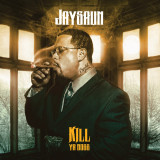
- A1: Anything Ft. Slaine (Produced By Marco Polo)
- A2: Kill Ya Boss (Produced By Teddy Roxpin)
- A3: Bad Luck Ft. Wris P & Larry Cheeba (Produced By Nox Beatz)
- A4: Hitg (Produced By Stu Bangaz)
- A5: Strawberry (Produced By Marco Polo)
- A6: It Don't Matter Ft. Rex X Edo.g (Produced Supa Dave)
- B1: Voltron Ft. Edo.g X Slaine (Produced By Teddy Roxpin)
- B2: Suicide (Produced By Falside)
- B3: Boston/Ct/Philly Ft. Blacastan & Reef The Lost Cauze (Produced By David Gunkel)
- B4: Part Of The Game (Remix) Ft. Craig G & Larry O/Lo (Produced By Skip Whitman)
- B5: Divorced (Produced By Audible Doctor)
- B6: Kings (Produced By Statik Selektah)
* Lou Reed's final solo album finally available again * First time on vinyl * Produced in partnership with Laurie Anderson and the Lou Reed Archive * Booklet features unseen photography by Lou, Q&A with Laurie Anderson & Jonathan Cott, essay by Eddie Stern, and archival interviews with Lou and Hal Willner * Remastered by GRAMMYr-nominated engineer John Baldwin * Package designed by multi-GRAMMYr-winning artist Masaki Koike // "I first composed this music for myself as an adjunct to meditation, Tai Chi, and bodywork, and as music to play in the background of life, to replace the everyday cacophony with new and ordered sounds of an unpredictable nature. New sounds freed from preconception. ...over time, friends who heard the music asked if I could make them copies. I then wrote two more pieces with the same intent: to relax the body, mind, and spirit and facilitate meditation." - Lou Reed Light in the Attic Records in cooperation with Laurie Anderson and the Lou Reed Archive, proudly announces a definitive re-release of Hudson River Wind Meditations, the pioneering artist's final solo album. Originally released in 2007, the deeply personal project combines Reed's love of creating drone music with his passion for Tai Chi, yoga and meditation. The album's ambient soundscapes have been described as a counterpoint to his intense Metal Machine Music album-but they are similar outliers in Reed's 40+ year exploration of drone music and feedback harmonics. The album has been remastered by the GRAMMYr-nominated engineer John Baldwin with vinyl pressed at Record Technology Inc. (RTI). The Double LP set is presented in a gatefold jacket designed by GRAMMYr-winning artist, Masaki Koike and features new liner notes by renowned Yoga instructor and author, Eddie Stern, who guided Reed's practice for years. Also included in the physical editions is a fascinating conversation conducted earlier this year between author/journalist Jonathan Cott (Rolling Stone, The New Yorker) and Reed's wife, artist Laurie Anderson, who discusses the album, as well as her husband's devotion to Tai Chi - one of the album's primary inspirations. Hudson River Wind Meditations marks the latest release in LITA's Lou Reed Archival Series. Launched in 2022 in tandem with the late artist's 80th birthday, the ongoing series has celebrated one of America's most influential songwriters through such acclaimed collections as Words & Music, May 1965 featuring many of Reed's earliest (and previously-unreleased) recordings, including the earliest-known versions of "I'm Waiting for the Man" and "Pale Blue Eyes."
At the dawn of 2024, Earth Boys, the collaborative force of Michael Sherburn and Julian Duron, reemerges on Public Release with their latest EP, 'In the Sun.' Their signature raw and smoke-infused sound is as rugged as ever, reaffirming the unmistakable Earth Boys touch. The lead single gets a hypnotic tweaky groove courtesy of an Eden Burns remix—perfect for setting the stage for a peak-time build—while Tokyo's Mayurashka offers a deep and contemplative atmospheric chugger. This 5-track EP is perfect for a spectrum of cheeky activities on and off the dance floor.
In January 1983, Minor Threat went into Inner Ear Studio for the first time as a five - piece (Brian Baker had moved from bass to second guitar and Steve Hansgen was now playing bass).
They had six new songs that would end up being the centrepiece of what became the ‘’Out of Step’’ 12" EP. The band had also decided to re-record the song "Out of Step" with some extra language to try to clarify the lyrics, as well as "Cashing In", a tongue-in-cheek song about the DC punk scene which they had only played live once.
After much debate, "Cashing In" was added as a hidden track on the original vinyl release though not listed on the cover or label. There was still blank tape on the reel, so they decided to record an instrumental with the working title, "Addams Family" and then recorded new versions of "In My Eyes" and "Filler" to hear what they sounded like with two guitars.
"Addams Family" ended up being used as a coda to "Cashing In", but the other two songs were never mixed and largely forgotten for over 35 years until the multitrack tapes were taken into the studio to be digitized in 2021.
Surprised by the discovery, Ian and Don Zientara mixed the two songs along with the complete take of "Addams Family". These outtakes are now being released on a 7" to mark the 40th anniversary of the release of ‘’Out of Step’’.