Outer Order presents his debut EP on his own imprint with a journey through his sonic vision with 5 tracks that suit different moments on or off the dancefloor.
Heavily inspired by late 80s and early 90s UK, Detroit and Chicago productions that were brought to his knowledge by his father, Outer Order set out to recreate his own view on this era by indulging in the hardware and techniques used at the time, setting a timeless tone to this 5 track EP.
Recorded, produced and mixed by Reece Ashibende-Dunn aka Outer Order at his home studio in Mallorca, Spain.
Cerca:ree
Cybotron has re-emerged in our contemporary cybercultural age when artifactual futures begin a transition into a new era of "Meta".
By combining their knowledge of philosophy, science fiction, and mechanical engineering, at a time when electronic instrument companies were only just beginning to distribute their products to the masses, two prosumer audio technicians named Juan Atkins and Rik Davis were able to re-engineer Cybotron – a combination of the words “Cyborg” and “Cyclotron” (an atomic particle accelerator) – to be used as a home studio performance music that would change the course of independently produced and distributed electronic music.
Dissolving the boundary between singer, songwriter, and producer, Juan Atkins named Cybotron’s future forward funkadelic sound “techno” in reference to Alvin Toffler’s concept of unlikely “techno rebels” against technocracy. Techno is music that sounds like technology, and its purpose was to help society survive our collision with a universally felt “future shock” by inserting an audio virus into the cultural matrix.
Techno’s blueprint spread across the Detroit-Berlin Axis between Metroplex and Tresor. As human society began its transition from a post-industrial to an information-based market economy, Cybotron enabled a thorough system override of the human senses towards a tangible man-machine hybridity and showed the world how to channel their emotions and imaginations into new sound technologies and create new ‘sonic’ spatialities where listeners can transport themselves out of the physical world into the future. The cover of their debut album Enter (1983) transmitted a fragmented view of a body in motion being digitized mid-stride, dissolving physical and virtual reality into sonic fiction.
Today, the man-machine hybridity of Cybotron is still the truest form of techno, coevolving in conversation with the technological music they created and inspired. The latest data disk marks a new chapter that reflects a techgnostic musical expression of the knowledge acquired during their decades-long hiatus. Unlike the dance music industrial replications of the Model 500 formula, acknowledging the content marketing expectations that segments music into specific, sellable genres, this techno music is self-aware. Cybotron processes dance music tropes spawned from its very own blueprint with a meta-tactical precision out of sync with our current rave new world.
Cybotron’s return demonstrates a studied engagement with what techno was and should be with a peerless update of Juan Atkins’ initial inventive idea of do-it-yourself electrically reengineered music xeroxed onto both sides of the 12” – uploaded directly into the alleys of your mind.
- The Rhythmanalyst
Second Second Coming', Mary Vision’s sophomore LP, is a pastiche of many of Alex Fippinger’s influences, from Lou Reed to Spacemen 3. It is an effort to maximalize the minimal, and to create sound that is at once layered and clear. With that, the lyrics also touch on many subjects with an overarching general thesis: the exploration of self and culture under duress. The album allows you to tune into these explorations via different sonic sounds. You’ll find the pop sound in the first single, 'Fantasy (Ba Ba Ba)', for instance, right before you find yourself indulged in the psychedelic swirl of 'Love Drone'.
The writing experience was one initially based in home recordings. Alex Fippinger would manifest these recordings in his Brooklyn apartment and show them to the 7-piece band who always added a flavor not imagined by Alex himself. Yukary Morishima, who played bass on the record, is very prominent throughout. Aaron Peart found himself to be an integral piece to the writing as well, providing a specific flavor to the songs via lead guitar. Jack Dawson played keys for the first time on a Mary Vision record, adding a playful vibe that Mary Vision fans haven’t heard before. Guido Colzani added drums that are full, yet simple, giving the simple song structures a meaningful foundation. Max Braun held it down on the rhythm guitar, the crux of the songs. Mark Perro was a utility man, adding major guitar licks throughout as well as playing harmonium and providing next level backup vocals. Paul Blackwell engineered and produced this record to where it is now. From the opening chords of 'Window Pane' all the way to the come down of 'Riding Into the Sun', the album is a novel, an unforgettable night out on the town that you won’t forget. If a record could have a character-arc, 'Second Second Coming' would be the textbook example.
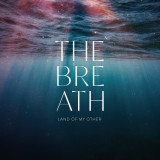
Land Of My Other is a place of memories and melodies, lyricism and lore. A place of sunlight, faerie-tales and rowan trees; of grief, incarceration and thunder in darkness. A place where ancestral trauma and colonial injustice meet blazing pride, romantic self-rule and hands held in a circle in the sea.
Where songs are sung with feeling, instruments are everywhere and music lives deep in the bones.
Land of My Other. The third studio album by The Breath.
Produced by renowned composer/pianist Thomas Bartlett, and with the wildly acclaimed duo that is singer Ríoghnach Ree-uh-na Connolly and guitarist Stuart McCallum at its core, it's a project that grabs you by the scruff from the off.
Ten original tracks. Raw, gorgeous, acoustic-minded music. Synths and effects so subtle they might be invisible. Negative space created, shaded, created again. Lyrics with meaning, power and an often terrible beauty. Songs that tell stories in ways that soothe, thrill and hit like a sucker punch.
credits
releases October 13, 2023
All tracks written by The Breath
Except ‘Don’t Rush It’ and ‘Without You in it’ written by The Breath and Thomas Bartlett
Produced and arranged by Thomas Bartlett
Ríoghnach Connolly - vocals, flute, shruti
Stuart McCallum - acoustic and electric guitars
Thomas Bartlett - piano, mellotron, op-1, rhodes bass, programming
The first track of Godcaster's fervid self-titled album, Diamond's Shining Face, is a reentry, a display of a band metamorphosed into a harder, more devastating form.
Their previous releases and euphoric live demonstrations have established Godcaster as an unstoppable Promethean force, always moving towards their next conquest. For their self- titled second full- length, they have set out, armed with a new certainty, to communicate the feeling of overwhelming light they experience while performing "a brightness that moves beyond its common properties of health and guidance to become a force that burns and ravages.
There is a clear maturation from the group on Godcaster. Many of the brighter, bouncier elements fiercely executed on Long Haired Locusts and the Saltergasp EP have been all but buried and traded in for something heavier. The angular sass and joviality in the troupe's past have been stripped of frivolity, rounded out, dirtied, and stretched to create a more expansive, full-bodied practice.
Each of the songs are emotional, narrative vignettes showcasing a more deliberate and sincere lyrical and sonic turn. Nowhere is Godcaster's newfound immensity better demonstrated than on the album's two anchoring, ten- plus minute epics "the relentless Didactic Flashing Antidote, and the kinetic Draw Breath Cry Out.
The shorter pieces further demonstrate the dynamism and versatility of the group, with equally hypnotic and roaring pieces (Vivian Heck and Death's Head Eyed Hawkmoth), alongside gentle, welcome respites (Albino Venus and Pluto Shoots His Gaze).
It requires significant confidence in the work to release an eponymous album.
Trust that Godcaster is an immense declaration of self- actualization by the magnificent juggernaut known by the same name.
- New Shadows (Featuring Steve Berlin)
- Manzanita Bay (Featuring David Hidalgo, Rosali)
- Lost Days (Featuring James Brandon Lewis)
- Angelina (Featuring Aquiles Navarro)
- These Blues / When You Needed My Help
- 97: Nights (Featuring Steve Berlin, Rosali)
- Walking Stick (Featuring Aquiles Navarro)
- Sing (Featuring David Hidalgo)
- Ivory Tower (Featuring Aquiles Navarro, Jeff Parker)
New Shadows peaks into corners where interior and exterior worlds collide, where miniscule revelations can be found in the darkness of ourselves and our community: lost children, unheard prayers, bugs, money, depression, romantic relationships, regret, and Zoom funerals, all become a lens for self-reflection.
The production (by Don Cento and JDD) is modeled after DeCicca's favorite early 80's albums (Lindsey Buckingham's Law & Order, ZZ Top's Afterburner, Robert Palmer's Clues, Lou Reed's New Sensations,) while the songs' architectures and pathos lean more towards Warren Zevon, Townes Van Zandt, and John Prine - all these record- makers and songwriters are embedded in DeCicca's DNA, having seen them, and in some cases met them after gigs, when his brain was still developing between the ages of 13-19 years old.
The virtual collaborators are the musicians whose kept him company while isolated in his rural town, Bulverde, TX: Brian Harnetty's Many Hands, Rosali's No Medium, Irreversible Entanglements' Who Sent You?, James Brandon Lewis's Jessup Wagon, Jeff Parker's JP's Myspace Beats and Suite for Max Brown, and the Los Lobos discography.
New Shadows isn't so much about DeCicca's new discoveries, as it is the penumbrous reminder of what's always been there.
Zwei Jahre nach der Veröffentlichung ihres Hit-Singles "bad grades" und ein Jahr,
nachdem sie es auf eine Times Square-Billboard als Spotify Equal-Künstler geschafft
haben, kündigen Kids With Buns ihr Debütalbum "out of place" an. Ein Album über das
Erwachsenwerden und das Gefühl, ein Außenseiter zu sein, in eine Sammlung von
traurigen Songs übersetzt.
Einerseits enthält die Platte eine Sammlung von Dingen, die du dir einfach gewünscht
hättest, rückblickend auf einen bestimmten Moment, den du jedoch irgendwie nicht
ausgesprochen hast. Andererseits enthält sie auch starke introspektive und selbstkritische
Passagen. Obwohl das zentrale Thema des Albums das Erwachsenwerden ist, berührt es
viel mehr als nur das Erwachsenwerden, einschließlich Themen wie Trauer (was in
deinem Gehirn passiert), queer sein (wie schlimm, nichts Neues) und sich in seinem
eigenen Kopf festgefahren fühlen (Unordnung, das Gleichgewicht).
In einem improvisierten Heimstudio, in dem Amber und Marie praktisch den ganzen
Sommer über lebten, wurde "out of place" von Mathias Stal (1712, bad grades)
aufgenommen und produziert. Unter Beibehaltung ihres unverwechselbaren Sounds, der
aus Maries androgyner Stimme und Ambers eingängigen Gitarrenhooks besteht,
markieren die neuesten Singles eine Entwicklung hin zu einem lebhafteren und
extrovertierteren Sound. Ihre persönlichen Probleme und Unsicherheiten in
Ohrwurm-Refrains zu verwandeln, führte zu sofortigen Erfolgen bei Live-Auftritten mit
ausverkauften Konzerten an Orten wie AB (Brüssel), Vooruit (Gent), Ekko (Utrecht) und
Merleyn (Nijmegen). Dennoch ist "out of place" auch ein herzlicher Soundtrack zum
Cruisen oder für eine spätabendliche Wein-und-Weh-Sitzung.
Nach einem erfolgreichen Auftritt beim ESNS, der ihnen einen Platz in den Top 25 der
Acts des Festivals von 3voor12 einbrachte, erweitern Kids With Buns ihren Horizont. Mit
einem neugewonnenen größeren Sound kommt auch ein beeindruckender internationaler
Tourneeplan: von Slots in der Line-up von Down The Rabbit Hole (NL), Pukkelpop (BE)
und Reeperbahn (DE) bis hin zu ihren eigenen Release-Shows im Hauptsaal der
Ancienne Belgique und De Helling in Utrecht. Mit "out of place" fangen Kids With Buns
gerade erst an.
- A1: Paranoid 2:49
- A2: Iron Man 5:56
- A3: Children Of The Grave 5:15
- A4: Sabbath Bloody Sabbath 5:45
- A5: Back Street Kids 3:46
- B1: War Pigs 7:56
- B2: Black Sabbath 6:17
- B3: Sweet Leaf 5:05
- B4: Snowblind 5:28
- C1: Hole In The Sky 4:00
- C2: N.i.b. 6:04
- C3: Planet Caravan 4:30
- C4: Never Say Die 3:49
- D1: The Wizard 4:21
- D2: Fairies Wear Boots 6:14
- D3: Supernaut 4:43
- D4: Changes 4:44
Black Sabbath wurde 1968 in Birmingham von Ozzy Osbourne (Leadsänger), Tony Iommi (Gitarre), Geezer Butler (Bass) und Bill Ward (Schlagzeug und Percussion) gegründet. Ursprünglich als Heavy-Blues-Rock-Band namens Earth gegründet, begann die Band, okkulte und Horror-inspirierte Texte mit heruntergestimmten Gitarren einzubauen, änderte ihren Namen in Black Sabbath und veröffentlichte in den 1970er Jahren mehrere Gold- und Platinplatten.
Die Ultimate Collection wurde von den Bandmitgliedern zusammengestellt. Das Ergebnis ist eine 17-Track-Sammlung mit den Klassikern der Band wie "Paranoid", "Iron Man", "War Pigs", "N.I.B." und "The Wizard" sowie ausgewählten Ausschnitten aus ihren klassischen Alben. Remastered von dem renommierten Toningenieur Andy Pearce (Motörhead, Deep Purple, Lou Reed, Iggy & The Stooges) im Jahr 2009.
Die Sammlung ist die ultimative Begleitung für alle Sabbath-Fans und alle, die Hardrock lieben.
Lucky number 17? You better believe it. We here at Brown Acid have been scouring the highways and byways of America for even more hidden stashes of psych/garage/proto-punk madness from the so-called Aquarian Age. There’s no flower power here, though—just acid casualties, rock stompers and major freakouts. As always, the songs have been officially licensed, and all the artists get paid. Kicking off this trip, Grapple’s “Ethereal Genesis” is a heavy psych gem from 1969 written by J. Bruce Svoboda, a.k.a. Jay Bruce, formerly of The Hangmen and The Five Canadians (who were actually the same San Antonio band). The latter’s 1966 garage favorite “Writing on the Wall” has been endlessly covered, but Grapple were never heard from again. With a guitar riff that blatantly rips off Sabbath’s “Black Sabbath,” Image’s mostly instrumental lysergic obscurity “Witchcraft ’71” (originally unveiled that very year) also boasts a horror-movie organ intro, a voodoo drum break and some championship chanting. Private press heads might recall late Image drummer John Beke from his ’80s reemergence with country rockers Crossfyre. Stone Hedge were a seven-piece rock band out of Michigan with a penchant for Creedence and anthropomorphism. “Smokey Bear” is their 1972 tribute to the official mascot of the U.S. Forest Services—not to mention the A side of their sole single—and it recalls the kind of organ-drenched swamp jam that soundtracked many a Burt Reynolds flick back in the day. If you think being a Southern rock band from Milwaukee doesn’t make much sense, that’s probably why Crossfire changed their sound along with their name—to Bad Boy—after signing with United Artists. Bad Boy’s severely underappreciated second album, Back To Back, is a 1978 hard rock jewel, but you can hear their boogie-woogie roots on this rare 1975 single. With a band name like Primevil and song title like “Too Dead To Live,” you probably expect some gnarly proto-metal riffage. Instead, you a get a harmonica-drenched, soul-infused rock rave-up from 1972. Primevil would release their sole LP two years later: Entitled Smokin’ Bats at Campton’s, it’s a reference to their trusty singer, harp player (and bat smoker?), Dave Campton. Brown Acid regulars already know Pegasus from their appearance with “The Sorcerer” on our Seventh Trip. “Ready to Rave” is the flipside to that 1972 single, in which they explain how they like their whiskey cold and their women hot. It’s another killer glimpse of what might have been if these one-and-done Baltimore hard rockers had been able to keep it together. One of two obscure singles released by Texas musician Bobby Mabe in 1969 (the other appears under the name The Outcasts), “I’m Lonely” delivers a heavy dose of vocal soul to the otherwise psych-garage presentation. Fans of fellow Houstonians the Moving Sidewalks—whom Bobby and his Outcasts may well have gigged with—will especially dig this one. Cedar Rapids, Iowa, may not be known as a cultural mecca, but they did give us Truth & Janey. This deadly hard rock trio delivered their holy grail full-length, No Rest for the Wicked, back in 1976. “Around and Around” is a Chuck Berry cover that originally appeared on a 1973 single the band released under the earlier name Truth. Originally released in 1973, “High School Letter” is the debut single from San Diego rock squad Glory. This infectious bonehead cruncher features future Beat Farmer Jerry Raney and the original rhythm section of Iron Butterfly in bassist Greg Willis and drummer Jack Pinney. Glory is what they got up to after their former bandmates left for L.A.’s garden of Eden. “Jack the Ripper” is a mercilessly bootlegged Cleveland classic from 1978 with a serrated punk edge and vocals that recall Mick Blood of Aussie savages the Lime Spiders. Or maybe it’s the other way around—the Lime Spiders formed the year after Strychnine carved off this lethal paean to the infamous Whitechapel slasher of olde.
Rob Mello really needs no introduction, but you're getting one anyway.
Rob has been instrumental in putting UK House music on the map since the early 90's. Numerous legendary projects and collaborations, including the enormous Disco Elements series with Zaki Dee, Reel Houze & the exceptional, way-ahead-of-their-time psychedelic Disco / House jams via Sensory Productions, not forgetting his later, superb work for Classic.
Oh and did we forget Black Science Orchestra ?
Yeah, he was there too.
We helped out with some of Rob's early noughties DISCO45 releases (still sound absolutely amazing)
As well as the slo-mo sleaze (and a secret weapon) of Beulah Heights.
So what do we have here ?
Rob revives his No Ears moniker for a duo of perfectly crafted dancefloor delights.
Pieced together with diligence and more than a little trademark Mello funk, this is up there with his best work.
House hero, master craftsman and absolute gentleman.
Get on it !
Dogstar – guitarist/vocalist Bret Domrose, drummer Robert Mailhouse and bassist Keanu Reeves – epitomize the quintessential Southern California storytelling rock band they’ve always been in their hearts, making deeply resonant music that literally comes from Somewhere Between the Power Lines and Palm Trees. Nearly a quarter century after what seemed to be their final album, Happy Ending (released in 2000), Dogstar has reformed and taken a great creative leap forward, establishing an entirely new path. “Our earlier records were almost in the wrong decade,” says Robert Mailhouse. “Looking back, it’s almost like we started a Seventies band that somehow got lost in the Nineties. When everybody else was shouting, we were trying to tell stories because in Bret, we’ve always had a singer-songwriter in the Jackson Browne tradition. But people kept saying `grunge’ because of the times we were in – or maybe because of the clothes we were wearing.” “This music just sounds like us,” says Bret Domrose with a smile. “One of the things I love about this album is the variety of feel,” says Keanu Reeves. “Every song is not the same – you can hear our diverse influences and a lot of different tones here. And I feel like finally on this album, we’ve managed to take all those influences and our passion for playing together and once and for all turned it all
into Dogstar.”
Dogstar – guitarist/vocalist Bret Domrose, drummer Robert Mailhouse and bassist Keanu Reeves – epitomize the quintessential Southern California storytelling rock band they’ve always been in their hearts, making deeply resonant music that literally comes from Somewhere Between the Power Lines and Palm Trees. Nearly a quarter century after what seemed to be their final album, Happy Ending (released in 2000), Dogstar has reformed and taken a great creative leap forward, establishing an entirely new path. “Our earlier records were almost in the wrong decade,” says Robert Mailhouse. “Looking back, it’s almost like we started a Seventies band that somehow got lost in the Nineties. When everybody else was shouting, we were trying to tell stories because in Bret, we’ve always had a singer-songwriter in the Jackson Browne tradition. But people kept saying `grunge’ because of the times we were in – or maybe because of the clothes we were wearing.” “This music just sounds like us,” says Bret Domrose with a smile. “One of the things I love about this album is the variety of feel,” says Keanu Reeves. “Every song is not the same – you can hear our diverse influences and a lot of different tones here. And I feel like finally on this album, we’ve managed to take all those influences and our passion for playing together and once and for all turned it all
into Dogstar.”
If you were to ask for a defining Habibi Funk track, there are a few that come to mind: from Fadoul’s “Sid Redad,” Dalton’s “Soul Brother” to Ahmed Malek’s “Omar Gatlato.” However, none are as widely connected with us at this point as Hamid Al Shaeri’s “Ayonha.” We heard the track for the first time when we were working on selecting tracks for your first compilation and we instantly loved it. We obviously had heard of Hamid El Shaeri’s music before, but only material from his Al Jeel phase when he was already the full-blown
superstar he is now.
Listening to his releases from the early 1980’s opened a whole new door for us. At the time, Hamid had just left Libya to pursue his career in Egypt via a detour in London, where he recorded his
first album. Hamid’s distinct sound of the sound is quintessentially reliant on heavy synths and so it was particularly important to purchase these synths in a timely manner. “Whenever a new one synthesizer would come out, we would have to buy it immediately, otherwise someone else would get their hands on that sound.” London also played an important role for Hamid as a musical epicenter.
He fondly reminisces about the many live shows he attended there, including some of the biggest international musicians like Freddie Mercury and Michael Jackson. After returning to Cairo where he also recorded his following albums, he connected with SLAM! for the
release of his debut, laying the foundation of a collaboration that lasted for 5 albums. Luckily, we were able to connect with Hamid through our friend Youssra El Hawary, whose extensive network has opened many doors for us within the Egyptian music scene. We met Hamid for the first time probably in 2016 at his office / rehearsal studio in the outskirts Cairo. We were expecting a larger-than-life
character in-line with his status as a certified superstar, yet the actual person turned out to be very approachable and super easy to connect with. He liked the idea of an effort to amplify his early works again,
which, when originally released, were far from an economic success.
While he was down to assist with an interview and his blessing for the project he also told us that for any license we needed to speak with the original label SLAM! who released these songs, still held the rights and also remained in business over the decades though they didn’t actively release any new music. Hany Sabet had started SLAM! records in the early 1980s and focused on cassette tape releases, the
format that expedited the success of a new generation of record labels in Egypt. By the mid 1980’s, SLAM! had become one of the most successful and economically dominant record labels in Egypt, with Hamid El Shaeri being just one of their key artists, alongside Mohamed Mounir, Hanan, Hakim, Mustafa Amar and many more. Luckily, Hany Sabet turned out to be a friend of our colleague Malak Makar’s father, which probably helped to warm him to the idea of licen- sing “Ayonha” to this - in the scale of his world - tiny label
from Germany. Eventually “Ayonha” ended up becoming a widely successful release and either Hany or we brought up the idea of a full album dedicated to Hamid El Shaeri’s work on SLAM!.
"Maktoub Aleina” is the first single and will be released January 14th. Following the massive success of "Ayonha,” “Maktoub Aleina” is another mid-tempo groover with a beautiful, synth-forward melody, that brings together a lovely combination of soul, disco and Arabic pop music of the highest order, giving a taste of full album. The second single, “Yekfini Nesma Sotak” will be released January 28th and combines Hamid’s unique formula of soul and pop, held together by a catchy synth melody. “Yekfini Nesma Sotak” picks up the
pace a bit, making the uplifting mood of the track even more powerful. Third single, arriving February 11th, is “Dari Demou’ek,” one of the stand out tracks of Hamid’s early recordings done for SLAM! in the early 1980s. Dominated by a disco infused bassline, the track offers a lot of space of the funky production to shine while Hamid inserts his vocals at all the right moments. A masterpiece of disco touched by Arabic pop music.
Full album arrives February 25th. This release is dedicated to Hany Sabet, the founder of SLAM! and his wife Rosemary Jane Sabet (who
took the photos we used for the cover and the booklet), who sadly passed away during the time it took us to prepare the release.
Vinyl comes with an extensive booklet with an interview with Hamid as well as unseen photos
Hot on the heels of TN EDITS 01 - featuring Lotte Kaersa's: "Prov og gor li'som jeg" (Bjorn Svin Remix), this marks the second release of the reborn danish label Tech-nology, and it's truly an exceptional release. Every track, in its unaltered state, has been extensively club tested by label owner & DJ Mester Jakobsen and is now reedited with finesse of love to be played loud on a wide selection of dancefloors.
It is with great fanfare that we proudly announce the return of the esteemed improvisational chainsaw blues trio Young James Long. Young James Long formed in Dallas in 2003 with a weekly residency at a local (and appropriately named) dive bar called Muddy Waters. PW Long (guitar, vocals) and Kirkland James (guitar) had known each other socially since the 90s when Long was fronting Quarterstick Records’ Mule, and James was playing with Tenderloin. Long would go onto make a series of incredible solo records under his own name and that of PW Long’s Reelfoot and James would play with Alejandro Escovedo (among many others) before their paths finally crossed again. They recruited Taylor Young (Hi-Fi Drowning, Young Heart Attack, The Polyphonic Spree) on drums and a raw, blues-punk-rock-and-roll band emerged fully formed, songs flying out of them with enthusiasm and ease. They recorded the You Ain’t Know The Man EP with their friend (and eventual Grammy winner) Stuart Sikes not long after. The EP came out via Southern Records in 2007, and thanks to the tasteful ears of the people this side of the pond, a European tour followed. If you saw that tour, you’ll agree that it felt like the band were really hitting their stride. However, here we are in 2023, so what happened? Answer: geography - the age-old enemy of creativity. One member left Texas and the others (being the extremely able and skilled musicians that they are) were perpetually wooed away to play in other bands. Everyone’s got bills to pay, right? And with that, things just kind of fizzled out. Long even insists he quit playing music around 2010. One of the most recognisable voices in underground music: out of the game. Incredible. Inconceivable.
Then, last year we at Wrong Speed got an email asking if we’d be interested in some new music Young James Long had been working on. We thought it might be a joke. They sent some mixes through, and it became very quickly apparent that it was anything but. Turns out the trio had started chatting about music again in 2020 (before the world had other plans) and had finally made their first full-length album Orogeny in the summer of 2021. Orogeny sounds live and thrillingly immediate, as though all obstacles between their delivery and your ears have been removed and discarded as irrelevant. There is no filler, no treading of water at any point. Amps buzz, songs teeter on the edge of collapse, you feel like you’re sitting in the middle of the band as they play and it’s a pretty sweet place to be. The album contains a whopping 17 songs, most under 2 minutes long. They don’t want to waste your time, or most importantly (after sixteen years away), theirs. If you’re familiar with Long’s previous bands, you’ll know he has a rare gift for pairing extreme volume with extreme tenderness and it’s thrilling to find that gift present and correct after over a decade away. And that voice – holy shit, that voice. He can go from a Beefheart howl to the sweetest country baritone in the space of a single line. In James and Young he’s found the perfect foils, a power trio of instinctive and soulful musicians able to conjure shining gems of magic out of the grit and the dirt. Young James Long is risen from the ashes – it’s a miracle!
Foliage Records introduces Volume 2 of the new 12” Sampler Series.
Volume 2 offers four stunning cuts from the Foliage Records back catalogue for the first time on vinyl. The A side of the sampler features Jimpsters bumping Deep House rework of South African electronic producer, Thakzin and songstress Ray T’s ‘Don’t Let Me See’. Fresh from remixing Solomun, Kerri Chandler & Joey Negro, Jimpster picks up the pace, adds layers of Afro inspired percussion and creates an ethereal effect on the vocals, resulting in a club ready classic. Side A also features the stunning ‘Addicted’ by Richard Earnshaw & Kholi, a Deep House, bass heavy groover.
The B side of the sampler has the Afro anthem ‘Unification Vibration’, remixed by legendary producer Atjazz. A prolific remixer with a career spanning 20 years, Atjazz has worked with the likes of Bob Sinclar, Gilles Peterson & Jazzanova. The track is an ode to coming together in ‘our house, our only home’. The B side also contains the heavy talents of Turbojazz & Sean McCabe with their deep & dope remix of Diephuis feat. Ursula Rucker – Listen To This Drum. This remix takes things down a deeper path to the original, with a focus on the bassline and extra percussion.
A pungent ooze emanates from the subway. As a sticky drum machine sequence rolls out like thick dark fog, ice cold synth swirls rise from the depths.
Since the debut album Europe By Night, one of the main references associated with Henrik Stelzer and his Metro Riders project has been that of cinema, and particularly the European genre films of the 1980s. With its seedy subject matters manifesting both in visual style and music, the vibe of that era has crystallized over time. Passed down to us from deteriorating video cassettes, it became an invaluable key to decoding our present day reality.
And this is true for this album as well; Stelzer does not hide the fact that he builds heavily on that vibe; referencing it through track titles and utilizing a particular recording setup consisting of a Fostex and a reel to reel in order to achieve and recreate the feeling of those soundtracks — as heard on magnetic tape rather than vinyl.
The motion picture soundtrack as an arbitrary genre definition becomes, in the hands of Stelzer, a pair of X-ray specs for him to envision a kind of music that deals in grains and contrasts rath- er than hooks and choruses. And like Roddy Piper in John Carpenter's 1988 film They Live, he hands those glasses over for us to see the true face of our times.
On Lost In Reality Metro Riders maps out an emotional geography of the cities at night, wherein the cinematic haze becomes a tool by which we can view the cities with new eyes. Not steering away from the darker alleys nor the harsh realities of modern day politics masquerading as progress. Yet escapism, in the end, seems the only viable option. But not as an endgame, but rather a stepping stone for building a new vocabulary for an utopian language.
180gr./4p Booklet/Ft. Lou Reed/3000 Cps On Red Vinyl
Bright Red (Ltd. Red Vinyl) is an album by Laurie Anderson, released in 2022. Bright Red (Ltd. Red Vinyl) includes a.o. the following tracks: “Speechless”, “The Puppet Motel”, “Love Among The Sailors”, “Poison” and more. The album is a Coloured Vinyl, High Quality, Insert pop LP.
- A1: The Allman Brothers - Dreams
- A2: The Allman Brothers - Revival
- A3: The Allman Brothers - Midnight Rider
- A4: The Allman Brothers - In Memory Of Elizabeth Reed
- A5: The Allman Brothers - Statesboro Blues
- B1: The Allman Brothers - Melissa
- B2: The Allman Brothers - One Way Out
- B3: The Allman Brothers - Ramblin' Man
- B4: The Allman Brothers - Jessica
- B5: The Allman Brothers - Win, Lose Or Draw
- C1: The Allman Brothers - Crazy Love
- C2: The Allman Brothers - Just Ain't Easy
- C3: The Allman Brothers - Angeline
- C4: The Allman Brothers - Straight From The Heart
- C5: The Allman Brothers - Good Clean Fun
- C6: The Allman Brothers - All Night Train
- D1: The Allman Joys - Crossroads
- D2: The Hour Glass - Ain't No Good To Cry
- D3: Duane Allman - Goin Down Slow
- D4: Gregg Allman - These Days
- D5: Gregg Allman - The Dark End Of The Street
180gr./Gatefold/Pvc Sleeve/Black Vinyl
The Allman Brothers Band was one of America’s greatest Southern rock bands. Both their massive hits as the hidden gems are now all available on the exclusive 2LP Collected release. It covers the music from their late ‘60s to the ‘90s, including hits like "Ramblin' Man", "Jessica" and "Melissa". Besides tracks from the band The Allman Brothers Band Collected also includes songs by the related projects The Allman Joys, The Hour Glass and solo work from Duane & Gregg Allman.
After the famous 1971 live release At Fillmore East, The Allman Brothers Band represented an artistic and commercial breakthrough. With their extended live jam improvisations they became famous all over the world. As one of the pioneering bands in the Southern rock they recorded several successful albums and singles. The group largely infused hints of the blues, jazz, and country into their music.