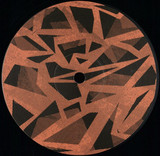
Lucrecia Dalt's Anticlines is a volume of bodily and geological substrates within poetic theory and sound. It is a place where skins and minerals dissolve and commingle, where gaseous subterranean leaks inflate lungs, where brain cavities echo interplanetary waves bent from passing through atmospheres.
A former geotechnical engineer from Colombia currently residing in Berlin, Dalt's concern with boundaries and edges shape the lyrics and music of Anticlines, her sixth album. Paying careful attention to pace, breath, and texture, Dalt microtonally shifts the distance between speech and song while using traditional South American rhythms to support her contemporary electronic composition.
Lucrecia arrived at the atmosphere of Anticlines after several months of studying and creating new patches for the Clavia Nord Modular, forming a rhythmic feedback flow with it, a Moogerfooger MuRF, and her voice. The overall effect of cavernous space backdroping Dalt's intimate vocal phrasing rewards contemplation, supported in the physical formats of Anticlines by a lyric booklet documenting Lucrecia's collaboration with Australian artist Henry Andersen.
The album opens with Edge,' bordering on a pathological circlusion of self upon other. The lyrics depart from the Colombian myth of El Boraro, an Amazonian monster who turns its victims insides to pulp before sucking them dry and inflating their bodies like balloons to lifelessly float away. Tar' ponders human dependence on earth at the boundary of the heliopause, where to inhale might be like breathing tar. Dalt's distant and obscured vocals end with, we touched only as atmospheres touch.'
The sonic rise and fall of Analogue Mountains' is inspired by martian traces found in Antarctica embedded by meteorite ALH84001, suggesting that we might well be living in mountains transferred from Mars.' The steadily winding music on Concentric Nothings' descends with the lyrical exercise of dissolution let my touch be indistinct and instinctive.'
Interspersed with the lyrical pieces of Anticlines are instrumental interstitials that demonstrate preceding concepts — as if to say, this is what antiforms sound like, and this is what the universe's indifference sounds like.' Dalt's ongoing experiments with visual artist Regina de Miguel support these ideas, their practice allowing the objects of their attention to slip in and out of being.
Mystic of matter, Lucrecia Dalt has previously performed and worked with Julia Holter and Gudrun Gut, her slippery spoken word and performative nature recalling the work of Laurie Anderson, Robert Ashley, Asmus Tietchens, or Lena Platonos. While touching stones, The Thing by Dylan Trigg, Cascade Experiment by Alice Fulton, and Wretched of the Screen by Hito Steyerl are but a few formative scripts that support Dalt's exploration of the betwixt and between.
In preparing a live set for Anticlines, Dalt plans to stage an uninterrupted configuration, like a kind of alienated lecture, aiming for gestures that create tensions with non-existent objects.' Dalt intends to provide meaning and a place for the listener to meditate or relate to the concerns and ideas' she presents.
- Lucrecia Dalt is a Colombian recording artist, songwriter, and producer.
- After studying civil engineering in Colombia, Dalt worked at a geo-technical company for two years and has since lived in Barcelona and Berlin, where she currently resides.
- She has released five solo albums and has collaborated with musicians Julia Holter, Laurel Halo and Rashad Becker, to name a few.
- Dalt has composed for sound design installations and performance pieces for institutions such as the Santa Monica Art Centre, Reina Sofia Museum and the Maisterravalbuena gallery of Madrid, in collaboration with visual artist Regina de Miguel.
- Anticlines is Dalt's sixth solo record, and her first on RVNG Intl., following the release of 2015's Ou.
- Anticlines explores the boundaries and limitations of human consciousness. The album's poetic lyrics were written collaboratively between Dalt and Henry Andersen during a weekend in Brussels, Belgium.
Buscar:regina
The legendary 1972 album from Celia, arranged by Arthur Verocai.
Célia Regina Cruz recorded four self-titled albums for Continental between 1971 and 1977, 'Amor' in 1982 plus several more before she sadly passed away late in 2017. Célia was a Brazilian vocalist who worked frequently with master arranger-composer Arthur Verocai in her early years and many other heavyweights
over the course of her extensive career.
This, her second self-titled LP from 1972, features an all-star line up, including Arthur Verocai, Erasmo Carlos, Roberto Carlos, Marcos Valle, Antonio Carlos Jobim, Nonato Buzar and Vinicius de Moraes, among others.
Célia's version of 'Na Boca do Sol' - taken from this album - is arguably her most well-known and well-loved song. An incredible take on Verocai's original, featuring waling fuzz guitars, strings, piano, horns and drums.
Needless to say clean, original versions of this record now change hands for
silly money.
Official reissue in replica of original gatefold artwork.
A quartet of heavy reworks. Reginald Omas Mamode IV truly does what he does best, bringing a percussive, low-slung funk to one of the most ethereal and beautiful pieces of soul on the album, Sunshine. Glenn Astro, elevates Bossa B to a jostling, bouncing shuffler that eventually turns around and heads skyward with uplifting chords and irresistible bass.
Deoke heads into the darker regions of the original for his huge remix of Bossa B. Finally the ever exceptional Mr Beatnick simply took the stereo track for Kalimba 2 and edited it into a mind-opening dub. Handling bass and harmonics as only he can, a true highlight of this high quality remix package.
Rauch is a sonic interpretation of the work of photographer Friederike von Rauch, composed collaboratively by Berlin-based producers Felix K, Marcel Dettmann, Sa Pa and Simon Hoffmann. Arranged and mixed by Marcel Dettmann, the recording stands in dialogue with von Rauch's architectural images of post-World War II European monasteries, including La Tourette by Le Corbusier and Iannis Xenakis near Lyon, Roosenberg Abbey near Ghent and Maria Regina Martyrum in Berlin. The images were first exhibited together with the music on this LP as part
of an installation for von Rauch's solo show insgeheim ('in secret'), held at the Goethe-Institut Paris during the international Paris Photo art fair in November 2017.
While the complimentary relationship between the sounds of Rauch ('smoke') and the images exhibited in Paris invites interpretation, both can also be experienced as separate artistic entities. On the 42-minute-long LP, drones, modulating harmonic soundscapes and implied rhythms maintain an abstract emotional core while occasionally taking on vaporous, amorphous qualities. Similarly, von Rauch's images - often borderline abstract in composition - resist being identified by location or spatial context. Nevertheless, they also hint at their spiritual origin.
Rauch is part of an ongoing artistic collaboration between Marcel Dettmann and Friederike von Rauch, which includes 2011's Ash installation and three photographic works for Dettmann releases on Ostgut Ton.
(de) Rauch, geschrieben und produziert im Kollektiv von den Berliner Producern Felix K., Marcel Dettmann, Sa Pa und Simon Hoffmann, zusammengestellt und abgemischt von Marcel Dettmann, ist als ku¨nstlerische Anna¨herung und Dialog zu den Fotografien von Friederike von Rauch zu verstehen. In ihrer Ausstellung insgeheim im Goethe-Institut Paris, anla¨sslich der Paris Photo 2017, zeigt die Ku¨nstlerin Arbeiten, die in verschiedenen Klo¨stern der Nachkriegsmoderne - von La Tourette von Le Corbusier entworfen u¨ber Roosenberg Abbey nahe Gent zur Klosterkirche Maria Regina Martyrum in Berlin - entstanden sind und klanglich untermalt werden durch die Musik von Rauch.
Die Musik und die Bilder menschenleerer Ra¨ume stehen in unmittelbarem Bezug zueinander, suchen die Auseinandersetzung durch Begleitung und Interpretation. So entstand die 42-minu¨tige Komposition modulierender Klangschleifen und angedeuteter Rhythmik, den Namen von Rauchs beim Worte nehmend, musikalisch abstrahierend und doch im Detail ergreifend. Die Arbeiten Friederike von Rauchs lassen dabei kaum Ru¨ckschlu¨sse zu, welcher Ort sich dem Betrachter offenbart, der ra¨umliche Kontext bleibt verborgen und dennoch transportieren die konzentrierten und beinahe abstrakten Kompositionen, etwas von ihrem spirituellen Ursprung.
Rauch ist auch die Fortsetzung der ku¨nstlerischen
Kollaboration zwischen Marcel Dettmann und
Friederike von Rauch. Die beiden in Berlin
lebenden Ku¨nstler arbeiten hier nach Ash (2011)
zum zweiten Mal an der Schnittstelle Fotografie-Musik, daru¨berhinaus pra¨gten Friederike von Rauchs Fotografien drei Dettmann-Vero¨ffentlichungen auf Ostgut Ton.
Having made her mark on Brazil's rich musical legacy with three best-selling albums to date, Rio's original nu-bossa queen returns with a tour de force of golden-era Brazilian soul music. From the spiritual swing of the early pioneers of modern Samba, to the dizzying hedonism of Brazil's eighties disco/boogie craze, Clareia is a life-affirming journey through the rich and varied sounds Sabrina Malheiros has been immersed in since she can remember. For her most up-lifting and danceable album to date, Sabrina has (as always) enlisted her father Alex Malheiros - bassist of samba jazz-funk legends Azymuth - and visionary London based producer Daniel Maunick (aka Dokta Venom), son of Incognito's Bluey.
Sabrina Malheiros' career has often been characterised by her place in the succession of those special Brazilian women who, with unmistakable talent and effortless grace, have encapsulated the magical energy of Brazil with their voices. Elis Regina, Astrud Gilberto, and Joyce all had it, and Sabrina Malheiros has it in spades.'(MOJO) With her debut album Equilibria in 2005, Sabrina arrived on a wave of instant acclaim, carving out her place as the pioneering voice of a new brand of Brazilian soul music, rooted in the traditions of samba and bossa, but with an edge of contemporary electronic sophistication. Sabrina's innovative nu-bossa sound would continue with the 2006 remix album 'Vibrasons' followed by sophomore 'New Morning' - declared the best album of summer 2008'(Evening Standard), before 2011's best-seller Dreaming.
Six years on, Sabrina returns with Clareia. Itmeans to clear, light, brighten or illuminate, which, after seeing Brazil and the rest of the world go through some very difficult times, is exactly what the writing of this album brought to my life.' All tracks are written by either Sabrina, or in collaboration with her father Alex Malheiros and producer Daniel Maunick. Written and recorded in Niteroi, Brazil, overlooking Gunabara Bay and Rio's beaches, mountains and forests, the music basks in its surroundings and sings of ecological beauty, peace and sanctuary. Echoing Sabrina's emphasis on clarity, Alex notes that the album's title represents an appeal to the minds of our civilization today, to clear our thoughts for good and for peace.'
This pursuit of clarity continued into the studio: It took a little longer than usual' notes Sabrina, which was good in way, as all my previous albums were recorded in rush and we usually had a week for pre-production and another week in the studio, which always gave me the feeling that I could do better. With this album it was different... we took our time.'
Sabrina's unmistakable voice has never sounded better. Packed out with high-octane swinging samba-soul, like the title-track and 'Salve O Mar', the album also features some bottom-heavy Brazilian boogie cuts, like rejoicing album opener 'Celebrar' which harks back to some of Marcos Valle's cult '80s disco output, and 'Sol Ceu E Mar' is a Tania Maria-esque future classic of scorching latin-funk. Mellower moments are found in 'Em Paz', on which Sabrina's beguiling harmonies find an anchor in the rhythmic acoustic guitar of Ze Carlos', who Sabrina heralds as being the best guitarist I have ever worked with'. Azymuth's keyboardist Kiko Continentino's deft Rhodes, piano, organ and synth playing, add ever more textures of distinctly Brazilian brilliance throughout, while tropical brass and flute arrangements on cool bossa-jazz movers 'Vai Maria' and 'Sandore', come from Brazilian saxophone legend Leo Gandleman, a man who has worked with everyone from Gal Costa to Gilberto Gil. The rhythm section combines Daniel Maunick's seamless drum programming and the organic polyrhythms of Brazilian percussion legend Jakare, all punctuated by Alex Malheiros' inimitable (occasionally slapped) jazz-funk bass, giving the album its irresistibly danceable pulse.
Set for release at the height of summer this year, Clareia is an intergenerational masterclass of Brazil's soulful spectrum, led by a pioneering voice of today's scene on the very top of her game. The up-lifting compositions, which take inspiration from the stunning natural beauty amongst which the album was made, and the call for the clarity of mind needed to preserve it, are enriched by this special team of some of Brazil's most established musicians. Like the sun breaking through tropical storm-clouds, Clareia is a vessel of joy, as Sabrina puts it simply, I hope Clareia brightens the soul of whoever listens to it. That's the spirit of this album.'
Krishnanda is an album in the truest sense of the word - a spiritual, psychedelic Brazilian masterpiece from start to fnish - celebrated by everyone from Seu Jorge and Kassin to Floatng Points, Madlib and DJ Nuts. These days, originals change hands for thousands of dollars. Pedro dos Santos, born in Rio in 1919, was a percussionist virtuoso, composer and inventor of instru-
ments that apparently included oddites such as the 'Tamba' (electrifed bamboo drum) and the mouth berimbau whistle. Nicknamed Perdo 'Sorongo' afer the rhythm he invented, that features throughout 'Krishnanda'. A highly spiritual man who was regarded as a philosopher by many. He worked with greats including Baden Powell, Elis Regina, Maria Bethany, Elza Soares, Sebastão Tapajós, Roberto Ribeiro, Milton Nascimento, Clara Nunes, Paul Simon and Arthur Verocai, playing on
his legendary self-ttled LP. In the same vein as Verocai and his self-ttled LP, 'Krishnanda' was Pedro's chance to shine with his own, and only, solo recording. Krishnanda was produced by Hélcio Milito, the drummer of Tamba Trio, and arranged by conductor Joppa Lins, and originally released in 1968 on CBS (Brasil). Musically, the album touches folk, samba,
afro-brazilian and psychedelia plus added efects, with a lyrical depth and diversity to match; themes including morality, percepton, existence and ego. Despite the genius of the record and the infuence that it had on musicians at the tme of release, it
disappeared into obscurity. We frst discovered the record around 2003, through a friend Julio Dui. Around that tme Brazilian funk and bossa was the favour of the day, so didn't catch our ear immediately, however it contnued improve with age and now we consider it to be one of the best albums ever made, regardless of genre or origin.
We have released several of Brazilian jazz legend Dom Salvador's records on Mr Bongo. He worked with artists including as Elis Regina, Jorge Ben and Edu Lobo and led Salvador Trio, as well as releasing under his own name. Dom lives in New York and plays a Hotel piano bar daily.'Barumba' is an uptempo funk-jazz monster with heavy drums and piano right from the off. Soaring horns add to the drama.Originally released on his self titled LP on CBS Brazil in 1974.
'Morre o burro, Fica o Homem' is the third Osmar Milito track to feature in our Brazil 45's series. A classic samba-rock track; funk drums fills and punchy horns underpin the MPB vocals, building in tempo slightly over the track. The song was originally written by Jorge Ben.Taken from his expensive and hard to find 'Nem Paletó, Nem Gravata' LP released on ATCO Brazil in 1973.r
Sao Paulo born Toni Tornado was considered the Brazilian James Brown by many.
His career began as 'Tony Checker', lip syncing to rock 'n' roll hits and touring extensively outside of Brazil. Whilst in New York he met Tim Maia and became involved in the 'Black Rio' movement. Toni also worked with Ed Lincoln and Antonio Adolfo amongst many others. He had a successful acting career and starred in many soap opera's.
'O Journaleiro' is a tearing funk track with tough drums and big vocals. Taken from his hard to find and expensive to acquire debut LP, 'BR-3', released by Odeon Brazil in 1971.
This track has never been released on 7".
Som Tres was a jazz ensemble formed by legendary Brazilian musician César Camargo Mariano, who also formed Sambalanço Trio.
Cesar's collaborations with many of Brazil's most important singers, notably Wilson Simonal and Elis Regina, have brought him worldwide acclaim; the historic 1973 album Elis and Tom, made with Antonio Carlos Jobim, features Cesar as arranger, pianist and musical director.
Som Tres recorded eight albums between 1966 and 1971. 'Homenagem a Mongo' is taken from the sought after 'Som 3' LP from 1969 on Odeon Brazil. It has never been released on a 7".