
out of Stock
Order now and we will order the item for you at our supplier.
Last In: 6 years ago
8,03 €
Order now and we will order the item for you at our supplier.

Calling Marcelle a DJ doesn’t wholly represent what she’s doing. (Three) turntables and a mixer is more the medium that she uses to create and share sounds, ideas and moments.
The same goes for her own productions. They don't have a fixed style, as can be heard on all five EP's released by the Munich label Jahmoni since 2016. They are free in attitude and music and cross boundaries between genres. Most tracks are a collision of ideas, a magically gritty, self-aware car crash as if Muslimgauze grew up in sunny Lisbon with the Principe crew as opposed to the grim North of England.
On her new LP 'One Place For The First Time' we find nine tracks brimming with ideas that ignore stale production norms. Sure, the pulsing drum 'n' bass-esque 'Hippies Use Side Door' is weirdly danceable, just like the cackling stomp of 'Respect Caged Animals', but can we dance to 'Technicians And Their Smoke Machines'? (Answer: We’d certainly enjoy trying). It's almost a jazz song, but like with everything Marcelle does, it's jazz from a different world and has proven to be a dancefloor smash when she’s played out the dubplate over recent months.
Marcelle's life-long love for far-out dub is clear in 'Dub (Dub)' and 'Respect My Snack Foods' is in the same 'educational' tradition as was the song about how to deal with constipation (olive oil!) from the 2018 'Psalm Tree' EP. Now we learn how to apologise. 'The Mother Of All Messes' (a UK newspaper headline about Brexit) introduces perhaps a more tender side, a comforting nursery rhyme plays while a muffled kick occasionally growls with distortion - as if it knows the importance of its place in the dance.
By the time the refrain of the intro track returns it seems to carry more significance, Marcelle has made her point quite clear. Defiant til the end… ‘Don’t touch the table!’ This particular sample is taken from Marcelle's legendary Boiler Room performance at 2018's Nyege Nyege Festival in Uganda where the MC of the event repeatedly declares that 'She Plays Vinyl' and therefore asks 'Don't Touch The Table!'. It goes without saying that the latter song is full of banging on the table noises.
The sleeve - as always with Marcelle - is very colourful and features photos of knitted egg cosies and images related to individual songs. It's a bit of a puzzle to find out which photo connects to which song, an enjoyable challenge, just like the LP itself.
Shining on lineups whether they’re cutting edge festivals, big clubs, touring circus shows or DIY garage venues comes naturally given she approaches all with the same mindset ('always the same, always different'), these causes are adopting her rather than the other way round.
Marcelle is a genuine innovator who remains inherently relevant by not following trends, not focusing on technicalities, having a sense of humour, dissolving obsolete structures, being excited, defying others rules while creating new ones, eschewing #tagline posers and ‘tasteless A&R wankers’, supporting artists that need it, supporting places that need it, supporting people who need it and not giving a fuck for as long as possible.
And HUGELY welcome living proof that you can excel in doing things differently and having a bloody good time n all.
James Marrs, London, March 2019
Order now and we will order the item for you at our supplier.

History of Heat is an eroto-intellectual retelling of a love story. It is the scholarship of heat, and the sources of its production in the body: desire, exaltation, anticipation, fear, rage and mourning . It is a fable circulating through the nerves, pumped and distributed by its own mythologies. Through different chapters, we follow the heroine of our story from the initial desire to love, the sensual pull which oscillates between the grotesque and sacred longing of the flesh (‘L’Enfer en pleine lumière’ translates to ‘Hell in plain sight’)...to the sudden ghostlike appearance of the Other (Apparition) as a projection of the dream. We enter into the spiritual, the seeing visions and the blindness of love. ‘Animal’ speaks of instinct, the smell of the beloved, already the deconstruction of the divine back into the realm of the physical. The title track ‘History of heat’ sings the hesitation of love, the precipice of openness and the invitation of the contract: Dance with me... (This is where the metaphoric marriage is forged). In ‘Perfection’, the pressure which keeps the relationship on the pedestal of the absolute stunts and paralyses love. Unrealistic expectations of the self and the other person creates the push and pull of the not wanting what one wants and the fear to get what one has been asking for. ‘Tiny engine’ speaks of mechanical attachment, attachment to the lover as habit, as a second nature, and the call to the other person as a magnet. In ‘Ditectrice’, the madness and the folly of separation spawns war and confusion. It is the violent refusal to live without the other... the pleading with god. ‘Feed him’ follows with resignation and exhaustion. Love has become the beast of burden who eats away at itself insatiably. ‘War text’ brings forth the devastation, the peace treaty and finally the metaphysical Divorce. In ‘Guttermoon’, the vita contemplativa begins, the blood starts to cool, the scene is a ghost town. ‘Wrong god’ similarly winds down as an ode to remorse and mourning. Finally, ‘Cinema Verité’ closes out the album with a mistrust of ‘reality’: the heroine becomes a philosopher, she becomes an artist... did the relationship ever exist or was it a projection “In front of a movie screen” ?
History of Heat is an experimental narrative and cinematic pastiche of all original and self recorded material. A chaotic mix of sounds both analog and digitally produced recalls a warlike interpersonal breakdown. The mood established by the lyrical content of the piece is meant to be demanding, enclosing the listener within a unique and compelling cocoon of otherworldly sound. the Album is framed within a discursive love story which reflects larger relational problematics and interpersonal traumas. looped vocals act as incantations woven in and out of lyrical singing and spoken word. The instrumentals embrace chaos and intensity. Improvised violin and broken down beats compliment and balance the melancholic overtones which flutter above off the grid rhythms in this charged ficto-personal account.
Order now and we will order the item for you at our supplier.

Exciting new electronic project E&D burst onto the scene in stunning style with the exhilarating ‘Not Enough’ and ‘Runaway’, released on FCR on 14th June and backed by remixes from acclaimed electronic producers Mall Grab and Ali Berger.
London based E&D have unleashed two scintillating vocal cuts which have UK clubbing culture at their very core, featuring classic Garage influences. The theme of heartbreak runs throughout both ‘Not Enough’ and ‘Runaway’ with an emphasis on harmony and melody which will be integral to the identity of the E&D project.
The deep and atmospheric ‘Not Enough’ presents a beautiful yet powerful female vocal whose tone and expression perfectly emphasises the message of lost love. E&D perfect balance this with contrasting shimmering and stabbing beats to produce a track that already has the hallmarks of a classic.
‘Runaway’ is an up-tempo, vintage-sounding UK Garage themed cut with poignant undertones, as the gorgeous female vocal again mourns a relationship which has moved on.
For the remixes, E&D have called upon two of electronic music’s most respected producers – Mall Grab and Ali Berger. Both offer a completely fresh perspective to the originals. With his remix of ‘Not Enough’ celebrated Australian Producer Mall Grab takes the original into deeper, tougher territory, stripping back and lowering the vocal and adding intense, almost tribal, percussion alongside vintage acid house beats.
FCR favourite Ali Berger also takes his working of ‘Runaway’ deep into the underground, emphasising the bass, cleverly layering the vocal and building to a peak-time floor-filler.
Order now and we will order the item for you at our supplier.

Primarily based in Leeds, The Lewis Express is comprised of many of the musicians that have graced previous ATA releases: George Cooper, Piano (Abstract Orchestra) Neil Innes, Bass (The Sorcerers, The Magnificent Tape Band, Tony Burkill), Sam Hobbs, Drums (Dread Supreme, Tony Burkill, Matthew Bourne) and Pete Williams, Percussion (The Sorcerers, The Magnificent Tape Band, Tony Burkill).Recorded over an intense two-day session, 'Clap Your Hands' is heavily influenced by the classic soul jazz recordings of The Young Holt Trio / Young Holt Unlimited, and Ramsey Lewis, from who this group take their name. As with many of the classic Ramsey Lewis cuts this album was recorded live, capturing the rich inter-relationship between the players and leaving in some of that chunky room noise.
Claps your hands/Stomp Your feet was recorded during the sessions for the upcoming Album 'Clap Your Hands'. building on the template set by their eponymous debut album these tracks further explore the 60's soul-jazz of Ramsey lewis and Young-Holt and the latin boogaloo of Eddie Cano and Pete terrace. A-side 'Clap your Hands' opens with cowbell, handclaps and bass before drums and electric piano enter to carry the track onto the dancefloor. This is one for the Djs and it'll do the business in the clubs for sure, but, also perfect for a late night, sweaty house party - shoes off and beer in the sink. B-side 'Stomp Your Feet' is much more in the classic mod-jazz frame with a faster pace and funkier drums, but still with handclaps and electric piano to the foreground. Drummer Hobbs opens up 'Stomp Your Feet' in fine style, and The Lewis Express start to swing with a Ramsey-esque groover that's just made-to-measure for dancers. Everything comes together here, with a mid-60s Cadet record feel throughout. Both tracks were recorded live to tape and were recorded and mastered for a tougher sound perfectly suited for djs to fill a dancefloor.
Order now and we will order the item for you at our supplier.

Parasian fellow Stephane Laporte joins the Antinote crew with a very introspective and dreamy full length record. kraftwerk gone ambient will be the best discription..TIP
Order now and we will order the item for you at our supplier.

Club Soul are proud to present the first ever reissue of this cult album, now complete with the, previously unreleased, instrumental. It is presented on
180gm heavyweight audiophile vinyl in a single sleeve featuring a Club Soul insert with new sleeve notes.
Dancin’ joins a growing catalogue of premium music on the Club Soul imprint - including crossover hits compilation ‘Shades of Soul’, the ‘All-Dayer’ LP, and
newly compiled albums that celebrate the clubs of the original Northern Soul Scene - ‘The Scene Club’, ‘The Twisted Wheel’, ‘Wigan Casino Soul Club’,
‘Catacombs’ and the forthcoming ‘The Golden Torch’. To the pop buying public Van McCoy is known for his 1975 Grammy Award
chart-topper “The Hustle”, after which he sadly died of a heart attack in 1979 at the age of only 39. To rare soul fans Van McCoy is a hero: THE most prolific
writer and producer of Northern Soul of all time, working with a host of legendary artists including Kendra Spotswood (aka Sandi Sheldon) with whom he had
a five-year relationship. ‘Dancin’ ‘ was originally released by Shelby Singleton in 1976 on his SSS International label, although all the ten original songs were recorded much earlier,
circa 1968-69. With its kitsch cover and out-of-kilter track list, copies soon filtered through to the UK and into the hands of club DJ’s at Wigan Casino with
perhaps “Help Is On The Way” becoming the stand-out track. Richard Searling played the mid-tempo “Just Another Dress Rehearsal” in the latter days of
the club while an unreleased instrumental version of “Ain’t Got No Love” was played post-Wigan from a studio acetate.
expected to be published on 12.07.2019
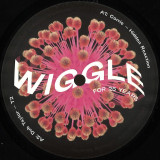
Repress!
Wiggle celebrate 25 years and relaunch their iconic label with a releases including co-founders Terry Francis, Nathan Coles and Eddie Richards, as well as artists like D’julz, Silverlining, Mihai Popoviciu, and more.
Wiggle, the brand that gave birth to tech house a sound that would power London’s club music community for over two decades, step out into their 25th year. To mark reaching this remarkable milestone, they plan a special series of international shows and a relaunch of their influential and ground-breaking label.
Taking their lead directly from the acid house movement, Nathan Coles and Terry Francis first brought Wiggle to life through their heady warehouse parties in the early 90s. Unpretentious to their core, these now infamous events were known for their purist values – community and a sound that booms. Finding a kindred spirit in another new face, Eddie Richards became resident from early sets and was a key figure from the off.
Through these now historic events, they embedded themselves deeply into London’s party landscape becoming familiar faces at cultural institution fabric. Heavily based around the core residents they also invited parts of the international and local world from Richie Hawtin, Jay Tripwire, Abe Duque and Colin Dale.
It’s about here we acknowledge Wiggle’s place in originating tech house - working the hard line swagger of techno together with the depth of feeling of house, matching rhythm with bass in a way perfectly aligned with endless hours of hedonism. This potent mix of musical elements is where it began and set down the foundation of London’s rich and active community of DJs, producers and ravers.
The label was founded close to the parties, sourcing tracks from the ever building network of producers who were fuelling this sound evolution. For their 25th birthday you can expect to see the Wiggle imprint coming back in strength - returning to cutting tracks to wax and continuing its legacy for bass fuelled party sounds and pioneering new talent.
2019 will see a series of international shows and a quarterly London party bringing the much loved Wiggle sensibilities and celebrate what they are and have achieved.
Order now and we will order the item for you at our supplier.

Following the reissue of ZiadRahbani's "Abu Ali" album, Wewantsounds is pursue its exploration of great Lebanese music with the reissue of "Wahdon," released in 1978 by legendary Middle Eastern diva Fairuz and recorded during the Abu Ali sessions and including the Lebanese dancefloor cult classic “Al Bostah“. 1978 is a turning point for the Lebanese Diva. The 70s had seen her rise as an international star, playing sold out concerts in the US and in Europe, and appearing on national TV in France. She had had a long-lasting artistic collaboration with her husband AssiRahbani and his brother Elias (aka The Rahbani Brothers) who, together, had penned most of the singer's classics. In 1978, Assi who had suffered a brain haemorrhage in 1972 got weaker and the collaboration finally ended (together with their personal relationship). Their 22 year old son Ziad took over Fairuz's musical reins and set to work on their first album together, "Wahdon" ("Alone"), serving as her mother's producer, composer and musicaldirector. Wahdon typifies this key moment in Fairuz's career when she switched from traditional to more modern arrangements. The first side of the album encapsulates the more traditional side of the singer with such mesmerising songs as "Habaitak Ta Neseet Al Naoum" ("I loved you so much i forgot to sleep") or "Ana Indi Haneen" ("I'm Nostalgic"), filled with gorgeous arabic strings and percussion. The Second side though is a whole different affair. Recorded in Athens at the EMI Greece studio at the same time as the Abu Ali sessions, the two long tracksbrings a hipper, contemporary funk and disco feel that has made the album such a collector's item with DJs and diggers around the world. Clocking at almost nine minutes "Al Bostah" ("The Bus") tells the story a woman in love remembering a bus journey with her lover under a scorching heat, enhanced by an hypnotic uptempofunkified disco beat, while "Wahdon" brings a slower and jazzier underlay to Fairuz's superb singing. These tracks shocked some of the diva's fans at the time but they've since passed the test of time and have become highly sought after. Whadon has since become both aclassic Fairuz album and a cult ZiadRahbani production that Wewantsounds isdelighted to bring to a wider audience for the first time.
Order now and we will order the item for you at our supplier.

Where To Now? Records present the debut release from Akiko Haruna. Akiko’s world is one where cacophonic distress lingers, shuffling itself over scapes of percussive damage and driven groove. Akiko presents a fresh take on the current Technoid function through her use of emotive and intentionally disruptive vocal chops and a dizzying ‘wall of sound’ approach to the dancefloor, consuming all yet somehow keeping vibes alive.
Akiko’s artistic background is primarily in Dance, and undoubtedly this performance led background has had an acute impact on her approach to melodic detail & storytelling. Akiko’s tracks rapidly shift & morph states, always restless and searching with fluidity and intent. From the ever present Micro Electronic details to sweeping swathes of Bass flutter the notion of progressive movement remains at the forefront of her sound, minute elements of detail become briefly isolated, intentionally directing the listener to their subtle presence.
‘Delusions’ Leads with ‘A Mother’s Love’ and begins a theme of resentment and dissonance. The Japanase vocal cuts throughout the track roughly translate to “you should die”, here obviously flipping assumed and supposed relationship rules and roles and exposing an inner turmoil, reflected through a continuous anxiety ridden, almost panicked siren detail which pulses over Akiko’s heads down, deep and uniform forward march.
‘Husband Established’ and the opens with the emotive vocal line “I just hate your Voice”. This is the sound of a poisonous & damaging relationship hurtling towards combustion, where Akiko’s elements gather momentum and impact as layer upon layer of detail pummel and puncture this heightened state, pausing and spiralling to evoke a standoff of aggression and imminent outburst. ‘Husband Established’ stands as a frankly stunning piece of sound design, which manages to capture a raw human emotion, and provide release for the associated junk, stress, and occasional banality of Relationship angst.
‘Hetero’ picks up where ‘Husband Established’ finished, further exploring societal character types and submissive gender tropes that are thrust into our sub consciousness from day to day. The concept of Hyperreality and its themes are continuously explored within Akiko’s practice and It would perhaps be fair to say that these themic explorations within her Music are Akiko’s own outlet for traversing human relationships within a complex, heightened, & layered reality, and it is certainly Akiko’s intention for her audience to feel some kind of relief and release within her sound world. Sonically ‘Hetero’ is a much sparser, subtler affair, where swathes of sampled voice & machine swing in and out of focus, against a weightless backdrop of affecting isolated electronics.
The EP closes with ‘Ripehus Alley’, seemingly void of any deeper meaning or message this serves more as a dreamlike parting song to what is otherwise a highly charged collection. Floating itself away from a frantic & incomprehensible world into a calmer space for final thought and reflection. ‘Delusions’ is a complex, exploratory trip, one which fans of Logos, Fis, Alva Noto, Jlin, Jesse Osborne-Lanthier etc will relish exploring.
Order now and we will order the item for you at our supplier.

Hoga Nord Rekords have had the opportunity to work with Al Lover twice before during the last four years and now it's time for the next step in the relationship between them, this time with the 7'' single 'Dark Matter Discotheque / Mark E. Moon'. In these tracks, Lover's influences mainly stems from a decadent eighties New York or Paris and you can almost smell the heavy perfume mixed with indoors smoking get the feeling of sitting in a room with mirror walls.
Order now and we will order the item for you at our supplier.

Milan-based imprint Just This present Cristalli Ionici, a four-track EP from Italian duo Abstrakt featuring a Marcel Fengler remix.
Abstrakt is a collaborative project from Luca Rambelli and Filippo Scorcucchi concerned with the intense study of spatial timbres - a psychedelic trip represented as a sonic aesthetic.
A relatively new endeavour, their debut on Just This offers an expertly crafted voyage into the outer reaches of the imagination. Sonically, the EP files under ambient techno, brandishing swirling textures and tangible effects to create a blissful meditative state.
For his remix of the title track, Marcel Fengler places the subtle complexion of the original and places it inside a driving rhythmic pattern of syncopated percussion and unrestrained energy.
Order now and we will order the item for you at our supplier.

* Another brand-new hot-shot from the ever-active Partial Records label, arriving in the shape of a production from Dreadsquad aka Marek Bogdański, who has been active on the reggae / dub / digital / dancehall scene for almost 20 years, collaborating with the likes of Tenor Fly, U Brown, Ward 21, El Fata, YT, Radikal Guru and more.
* This `real instruments’ steppers riddim features Dub Princess on vocals who although a relative newcomer, has already made her mark over the last few years, with a number of collaborations.
* Mixed in fine style by Dougie Wardrop at Conscious Sounds studio, London.
Order now and we will order the item for you at our supplier.

Last year, we got together with The Netherlands Institute for Sound and Vision’s RE:VIVE initiative for the second time, inviting four local artists to breathe new life into four archival films from the Sound and Vision and EYE Filmmuseum archives. Jordan GCZ, Suzanne Kraft, Parrish Smith and Upsammy were all assigned short animated films dating back to 1921. The films and their new scores debuted at EYE on August 2nd as part of Dekmantel Festival 2018. Unsurprisingly, each artist imparted their unique styles onto the films that they previously had no relation with. From Suzanne Kraft's sparse atmospherics that have become more apparent in his new SK U KNO project to Jordan GCZ’s free flowing hardware jams. Parrish Smith showed his contemplative side and sparse orchestrations that he demonstrated on his RE:VIVE release, Genesis Black, a sonic departure from his bombastic releases and DJ-sets while upsammy showed yet again her deft hand for melody and texture, a style that dominates all her releases to date.
These four scores can live apart from their films, fitting seamlessly into each artists' growing catalogs of work. But when combined, it’s as if the films and music were made simultaneously with the artist and filmmaker together in the same room. Dekmantel and RE:VIVE are proud to present these new works as the electronic music scene in The Netherlands continues to show its multifaceted talent that continues to expand far beyond the dance floor.
Order now and we will order the item for you at our supplier.

Dub echo, hip-hop lyricism and heavy guitar fuzz are boiled down into a heady, characteristic musical brew.
On “Dreaming Is Dead Now”, multi-talented wonder Skinny Pelembe meditates on grief, heartache, stunted aspirations and fresh possibilities in post-recession Britain. For his debut album, the Johannesburg-born, Doncaster-raised artist weaves together a patchwork of personal and musical touchstones; memories and observations are dreamily laced together, sun-dazzled California folk diced with the murkier corners of the UK dance lineage.
Tipping a hat to West London broken beat as much as My Bloody Valentine, the album was co-produced by Malcolm Catto (of The Heliocentrics, who’s previously worked with Yussef Kamaal, DJ Shadow, and Madlib), who helped to distil down its bounty of ingredients into the record’s distinctive flavour. Tough, tight-programmed rhythms are washed over with fuzzy overtures, and the title track is the product of a studio session with a foundational drum & bass duo (credited under the covert alias of The Bleeding Edge). It’s the rare kind of record where the messy, in-between musical spaces are given a light to shine.
First discovered through the Gilles Peterson- and Brownswoodfounded Future Bubblers programme, Skinny has since made it onto Peterson’s iconic Brownswood Bubblers compilation series, performed and collaborated with fellow Future Bubbler Yazmin Lacey, and been tipped by the likes of Ghostpoet and James Lavelle. Praise has also come from The Observer, The Quietus and Huck, with previous singles “Spit / Swallow” and “I Just Wanna Be Your Prisoner” bumped up onto heavy rotation on BBC 6 Music’s A-List. He’s also been in demand for live sessions with The Vinyl Factory and Worldwide FM, and supported Nightmares on Wax and Maribou State.
Order now and we will order the item for you at our supplier.

Number Five is alive! Red Ember Records presents nothing short than another subaqueous house odyssey on its ‘Deepsounds’ imprint. On in the wax, number five sees its first duo appearance with Sauco & Prakash, alongside Frankie Soukal, Erell Ranson and ‘TH pressing’ boss Tominori Hosoya.
Continuing the noble pursuit of underground electronic deepness, house music and beyond, from all corners of the globe.
Order now and we will order the item for you at our supplier.

The record’s structure was inspired by the study of the fusion of two galaxies. During this process, the two celestial bodies are drawn to each other, but also risk being destroyed if they combine inharmoniously - as can be the case with human relationships. The result is a powerful, organic and sometimes dreamy music where rhythms and textures embrace; a record of a touching singularity, beautifully sublimated by Léa Desirolle’s album art.
Order now and we will order the item for you at our supplier.

Bigwax Records is proud to launch its label, Les Masques, with the reissue of the only album of the obscure band from Marseille, The Students. Released in 1985 in relative confidentiality, "Students In Summer" reflects the carelessness of a bourgeois youth cradled in FM hits, new wave, Sade and Stranglers, and the way of life of these medical students who left regularly Mediterranean shores to surf the Basque coast. Lo-fi, sunny and ultra-cool, this rarity of French pop eighties is here remastered from the original tapes.
Order now and we will order the item for you at our supplier.

Order now and we will order the item for you at our supplier.

“Ta Da” is the debut full length from J. McFarlane Reality Guest, the collective name for the trio headed by the eponymous McFarlane. As a member of the group Twerps, McFarlane has traversed guitar-centric, melodic pop music for some years while honing a highly unique, personal musical language. Ta Da is the first recorded unveiling of McFarlane’s affecting, oblique songwriting panache. Originally released in her native Australia on Hobbies Galore, Ta Da will be released worldwide by Night School in June 2019.
Wheezing into view with a troubled reed instrument set against a s of whoozy synth lines, Human Tissue Act is a foggy curtain the listener is invited to peel back. The dissonant notes are left to dance entwined, with clarinet heralding a Harry Partch-esque mallet percussion interlude. It’s a mood. With no resolution in sight, an audience dragged closer into uncertainty is suddenly drenched with the light of inter-weaving wah wah synth and saxophone. I Am A Toy introduces us to McFarlane’s vocal, an effortless and matter-of-fact, accented statement that quietly takes the reins. While McFarlane’s previous work in Twerps might reference 80s UK and antipodean guitar pop, Ta Da showcases a different influences immersed in psychedelic music and synths. It’s a brilliant, deft concoction swimming in Young Marble Giants-type minimalism washed with bare pop and harmony similar to Kevin Ayers making sense of a Melbourne suburb full of faces half-recognised in the blanching sun.
What Has He Bought begins with a Casio-keyboard rhythm pattern, palm-muted guitars and immaculately enunciated vocal give way to a burnt melodica part that elevates the spirits. Simple patterns repeated, like a well-tempered pop song that does what it needs to do and no more, build into the sound of summer leaking orange juice. They’re moments of joy, layered on top of each other like a melting cake. Do You Like What I’m Sayin’ recalls Marine Girls covering a classic ‘66 Garage nugget, organ lines fighting funk with guitar chords played just behind the percussion. “In a talking world, meanings are the same. Words want to hold on to the people they contain. Do you like what I’m sayin’?” We’re in a Beckett play perhaps, obtuse absurdities rendered pretty. Alien Ceremony is a heart-melter, given a melancholic timbre by bowed double bass it’s a tragi-comic piece that almost reeks of Robert Wyatt at his mid-whimsical twisting a fugue completely out of shape. Beneath the layers of harmony and twinkling instrumentation you sense there’s a genuine sadness somewhere even if it remains veiled.
Through out Ta Da, McFarlane plays with counterpoint and contrast to sometimes delirious effect. On Your Torturer, a simple, upbeat chord progression is hard panned, underpinning a flute solo which seems out of place, hence making it completely in place on this warmly surreal album. My Enemy is a slowly swinging eulogy to a failed relationship punctuated by analogue synth burbles, with our protagonist simply asking, in the aftermath, “can we be nice?” Here McFarlane’s vocal is straight forward, lyrically conversational but still not completely in focus, a surreal kitchen sink drama filtered through a dream where everything is in the wrong place. It’s a fine precursor to Heartburn, which similarly borrows BBC Radiophonic Workshop-style noise synths and the use of space to carve up the simple “You Will Make My Heart Burn” line. At this point, the listener has been in such close proximity to McFarlane’s show, the reality guest in a performance where they’re the sole audience member, that when Where Are You My Love rises on the horizon as a sleepy, psychedelic send off it’s uplifting. The vocal drifts away into the sunset, simple and direct. It leaves the listener slightly confused, perhaps, but grateful for the gentle surprise.
expected to be published on 14.06.2019

Order now and we will order the item for you at our supplier.

All aboard the Beyond Paradise escape capsule, as they throw down with a four-track trip of cosmic chuggers from The Local Beatnik.
‘Mountain Walk’ opens up proceedings, a weighty chugfest that stomps through the undergrowth. Tripped out vocals, throbbing bass synths and mystic wobbles, all venturing out of the interstellar jungle. Turning the corner, psychedelic new wave guitars, entrancing drum loops and lustful French phrases meld together for ‘Eskase’, causing kaleidoscopic swirls as far as the eye can see.
Flip it to take a trip to the Far East for ‘Travel’, getting lost along the way and wandering into a parallel universe where sci-fi, synth wielding robots dominant the dancefloors, drum machines are fed acid and disorientated travellers are captured for their musical knowledge. Out of their grasp and heading to relative safety, you stumble across a delectable ‘Eastern Dish’. One fork full, then two, spiced just right and you’re hallucinating to the space-age synths and percussive treats that follow. Sitars flow with steelpans offering a suitably immersive closer for this standout E.P. from The Local Beatnik.
Order now and we will order the item for you at our supplier.

Native Cruise’s new release is just in time for the summer, bringing a relaxed take on house that laps at your ears like a warm sea. We’re happy to have got some of his time - he’s been releasing on No Bad Tapes, Fruit Merchant and YAM Records. He pitches the release as “a mixture between house, tribal and balearic not sure what else”,so it’ll be hard to file neatly, but we are glad he’s made this lovely EP.
Order now and we will order the item for you at our supplier.

Hinter Chocolate Hills steckt niemand geringeres als The Orb-Legende Alex Paterson, der samt Co-Piloten Paul Conboy (Metamono) zu seinen 1990er Ambient-Wurzeln zurückkehrt und mit "A Pail Of Air" ein analoges Meisterwerk abliefert, einen visionären beatlosen Trip voller holografischer 3D-Klangkulissen und weirder, wundervoll analoger Tangenten, unvorhersehbar und glückselig zugleich.
Order now and we will order the item for you at our supplier.

In her varied career that would combine art gallery installations, major film soundtrackings and commissions for Atari, Suzanne Ciani’s earliest experiments remain some of her most challenging, beguiling and timeless... Flowers Of Evil ticks all the above boxes and flicks switches that would power-up a new uncharted universe of her own musical modernité. Finders Keepers present the first-ever release of these vital archive recordings.
As a genuine vanguard of electronic music composition at the forefront of the modular synthesiser revolution in the late 1960s, Suzanne Ciani’s forward-thinking approach to new music would rarely look to the past for inspiration, which makes this unheard composition from 1969 a rare exception to the collective futurist vision of Ciani and synthesiser designer Don Buchla. In choosing to adapt the controversial prose of French poet Charles Baudelaire, Suzanne would join the ranks of ongoing generations of pioneering musicians like Olivier Messiaen, Karlheinz Stockhausen, Serge Gainsbourg, Etron Fou Leloublan, Celtic Frost and Marc Almond (not forgetting Star Trek’s William Shatner!), all equally inspired by the 19th century writer’s works of “modernité” (modernity), a self-coined term dedicated to capturing the fleeting, ephemeral experience of life in an urban metropolis, best exemplified in his symbolic, erotic and macabre ode to Parisian industrialisation, Les Fleurs du mal (Flowers Of Evil).
In her varied career that would combine art gallery installations, major film soundtrackings and commissions for Atari, Suzanne Ciani’s earliest experiments remain some of her most challenging, beguiling and timeless... Flowers Of Evil ticks all the above boxes and flicks switches that would power-up a new uncharted universe of her own musical modernité. For the many enthusiasts that have already drawn the parallels between Baudelaire’s writings and experimental/electronic music (a relationship rivalled only by the likes of J. G. Ballard and Aldous
Huxley) some might instantly recognise an unconscious sistership between this recording and another 1969 electronic adaptation of Flowers Of Evil by celebrated female electronic composer Ruth White. An interesting distinction of White’s excellent version of Flowers Of Evil (released via Limelight records, home to the likes of Fifty Foot Hose and Paul Bley) is that its dark tone generation and vocal manipulation was created with a Moog synthesiser, the commercially triumphant
rival to Suzanne and Don’s Buchla Systems (Buchla and Moog’s historic, simultaneous, neck-and-neck synth developments are well documented.) The fact that Ciani’s version was never intended for commercial release (not unlike her 1975 Buchla concerts, which could easily have taken Morton Subotnick’s Bull by the horns!) is also poetically reflective of the nature of Ciani and Buchla’s alternative perspective. The choice to present this extract from Flowers Of Evil in its intended French language further distances Ciani’s faithful reaction from some of its better-known variations. Having attempted to voice the poem herself, the multilingual Italian-American composer’s French accent did not meet her own standards, resulting in the request for a fellow unnamed French student who lived on campus at Mills College in Oakland to accurately verbalise the section of Baudelaire’s collection entitled Élévation.
Order now and we will order the item for you at our supplier.

Black Truffle is honoured to announce the first ever vinyl reissue of David Rosenboom’s legendary Brainwave Music, originally released on A.R.C. Records in 1975 and here expanded to a double LP with the addition of over 40 minutes of contemporaneous material. Pioneer of live electronics, innovator in music education, collaborator with artists as diverse as Jon Hassell, Jacqueline Humbert, Terry Riley and Anthony Braxton, Rosenboom is renowned for his ground-breaking experiments with the use of brain biofeedback to control live electronic systems.
Each of the three pieces that make up the original Brainwave Music LP integrates biofeedback with musical technology in different ways. In the side-long opening piece “Portable Gold and Philosophers’ Stones”, four performers have electrodes and monitoring devices attached to their bodies to receive information about brainwaves, temperature, and galvanic skin response. This information is analysed and fed into a complex set of frequency dividers and filters, manned by Rosenboom, but essentially played by each of the performers through their psychophysiological responses to the situation. The result is a slowly unfolding web of filtered electronic tones over a tanpura-esque fundamental, possessing the unhurried, stately grandeur of an electronic raga. In “Chilean Drought”, three different variations of a text about a drought in Chile, each read by a different voice in a different style, are associated with the Beta, Alpha, and Theta brainwave bands. Alongside an insistent piano accompaniment, we hear a constantly shifting combination of the three vocal recordings controlled by the relative preponderance of each of the brainwave bands in the soloist whose brainwaves are being monitored. “Piano Etude I (Alpha)”, the earliest piece included here, is based on research into the link between Alpha brain wave production and the execution of repetitive motor tasks. As Rosenboom plays a very rapid, incessantly repeated pattern in both hands – deliberately designed to be difficult to execute without being in an alert, non-thinking state similar to that associated with strong Alpha brainwave production – two filters controlled by monitoring his brainwaves process the piano sound, moving gradually higher in frequency as the average Alpha amplitude increases, resulting in a hypnotic, constantly shifting blur of repeated notes reflected through the shimmering, watery lights of the filters. For this reissue, the original LP is supplemented with an additional LP containing an unreleased 1977 live recording of Rosenboom’s “On Being Invisible”, in which the composer himself performs on an array of electronics that are fed information from his brainwaves. Stretching out over 40 minutes, the piece begins in similar territory to “Portable Gold and Philosophers’ Stones” but eventually becomes far wilder, building up to pointillistic bleeps and dense layers of electronic fizz that unexpectedly cut to near-silence. As Rosenboom explains, the piece creates a situation in which the ‘performer’s active imaginative listening became one of the ways to play their instrument, as well as an active agent in how self-organizing musical forms might emerge.’ Enriched with archival images and new notes from the composer, this expanded reissue of Brainwave Music is essential listening for anyone interested in the history of live electronic music and alive to the possibilities it might still contain.
Order now and we will order the item for you at our supplier.

Celebrating its 25th anniversary, Far Out Recordings proudly presents two albums of previously unheard Azymuth demo recordings from 1973-75
Since their debut album release in 1975, Azymuth have risen to rank alongside the world’s greatest jazz, funk and fusion artists. As young men in Rio de Janeiro, they stood out for both their exceptional talent as musicians, and their wild rock ‘n’ roll antics in the predominantly middle-class worlds of bossa nova and jazz. Their signature ‘Samba Doido’ (crazy samba) sound ruptured the tried and tested musical structures of the day, resulting in what can only be described as an electric, psychedelic, samba jazz-funk hybrid.
Before they became Azymuth, José Roberto Bertrami (keyboards), Ivan ‘Mamão’ Conti (drums), Alex Malheiros (bass) and Ariovaldo Contesini (percussion) played backing band to just about every major artist in Brazil. Bertrami was also contracted as an arranger and songwriter at some the biggest labels of the era: Polydor, Philips, Som Livre, and EMI being just a few. Azymuth’s name can be found on record sleeves by the likes of Jorge Ben, Elis Regina, Marcos Valle, Ana Mazzotti and countless others. But at the dawn of the seventies, fascinated by developments in improvisational music - from jazz in the US, to progressive rock in the UK and of course samba, bossa and tropicália on home turf - the energetic young group were inspired and ready to move forward. Any spare moment in which they weren’t in sessions and writing music for other artists, they would be carving out their own sound.
These previously unheard recordings took place between 1973-75 at Bertrami’s home studio in the Laranjeiras district of Rio de Janeiro. At the time of recording, there was nothing in Brazil, less the world that sounded anything like them, so perhaps it’s unsurprising that when Bertrami presented his demos to the record companies he had been working for, he was turned away, and told in effect that the music was ‘wrong’.
One of the demos ‘Manhã’ would be picked up by Som Livre and Azymuth released their seminal debut album in 1975. Throughout the late seventies and eighties, the group released a series of now classic albums for Milestone Records, before taking an indefinite hiatus to pursue their individual careers.
When English producers Joe Davis and Roc Hunter arrived in Brazil in 1994 to record the first Azymuth album in over a decade, Bertrami dug out the demos which had sat virtually untouched for over twenty years. Joe recalls how he was “blown away by the freedom and intensity of the music, as well as the genius of the ideas musically.” Beginning a long and fruitful relationship, ‘Prefacio’ would be the first track Azymuth recorded for Far Out Recordings and was released on the Carnival album (1996).
Along with ‘Manhã’ and ‘Prefacio’, only a handful of these demos were ever professionally recorded and released, making this the first opportunity to hear many of these early Azymuth compositions in their raw, original form.
On every track the frenetic energy in the studio is palpable, giving the recordings a beautifully personal feel and a sense of the phenomenally creative vision Bertrami, Malheiros and Conti were realising at the time. Fifty years on, Azymuth’s earliest recorded music retains an ineffable, futuristic quality, standing amongst their most captivating and moving work.
Credits:
Keyboards: José Roberto Bertrami (Mini Moog Series One, Arp Omni, Arp 2600, Arp Solina Strings, Fender Rhodes 88, Hammond B3 with box speaker, Clavinet with Wah Wah)
Drums: Ivan ‘Mamão’ Conti
Bass: Alex Malheiros
Percussion: Ariovaldo Contesini
Produced by Azymuth and Jose Roberto Bertrami
Recorded at José Roberto Bertrami’s home studio in Laranjeiras, Rio De Janeiro, Brazil between 1973–1975.
Issue and project co-ordinator: Joe Davis
Tape transfers by Roc Hunter (thanks to Simon Hitner)
Mastered by Daniel Maunick at the Sugar Shack, Lanark, Scotland
Mastered by Frank at Carvery Cuts
All tracks published by Far Out Music Publishing/Westbury Music LTD
Order now and we will order the item for you at our supplier.

Celebrating its 25th anniversary, Far Out Recordings proudly presents two albums of previously unheard Azymuth demo recordings from 1973-75
Since their debut album release in 1975, Azymuth have risen to rank alongside the world’s greatest jazz, funk and fusion artists. As young men in Rio de Janeiro, they stood out for both their exceptional talent as musicians, and their wild rock ‘n’ roll antics in the predominantly middle-class worlds of bossa nova and jazz. Their signature ‘Samba Doido’ (crazy samba) sound ruptured the tried and tested musical structures of the day, resulting in what can only be described as an electric, psychedelic, samba jazz-funk hybrid.
Before they became Azymuth, José Roberto Bertrami (keyboards), Ivan ‘Mamão’ Conti (drums), Alex Malheiros (bass) and Ariovaldo Contesini (percussion) played backing band to just about every major artist in Brazil. Bertrami was also contracted as an arranger and songwriter at some the biggest labels of the era: Polydor, Philips, Som Livre, and EMI being just a few. Azymuth’s name can be found on record sleeves by the likes of Jorge Ben, Elis Regina, Marcos Valle, Ana Mazzotti and countless others. But at the dawn of the seventies, fascinated by developments in improvisational music - from jazz in the US, to progressive rock in the UK and of course samba, bossa and tropicália on home turf - the energetic young group were inspired and ready to move forward. Any spare moment in which they weren’t in sessions and writing music for other artists, they would be carving out their own sound.
These previously unheard recordings took place between 1973-75 at Bertrami’s home studio in the Laranjeiras district of Rio de Janeiro. At the time of recording, there was nothing in Brazil, less the world that sounded anything like them, so perhaps it’s unsurprising that when Bertrami presented his demos to the record companies he had been working for, he was turned away, and told in effect that the music was ‘wrong’.
One of the demos ‘Manhã’ would be picked up by Som Livre and Azymuth released their seminal debut album in 1975. Throughout the late seventies and eighties, the group released a series of now classic albums for Milestone Records, before taking an indefinite hiatus to pursue their individual careers.
When English producers Joe Davis and Roc Hunter arrived in Brazil in 1994 to record the first Azymuth album in over a decade, Bertrami dug out the demos which had sat virtually untouched for over twenty years. Joe recalls how he was “blown away by the freedom and intensity of the music, as well as the genius of the ideas musically.” Beginning a long and fruitful relationship, ‘Prefacio’ would be the first track Azymuth recorded for Far Out Recordings and was released on the Carnival album (1996).
Along with ‘Manhã’ and ‘Prefacio’, only a handful of these demos were ever professionally recorded and released, making this the first opportunity to hear many of these early Azymuth compositions in their raw, original form.
On every track the frenetic energy in the studio is palpable, giving the recordings a beautifully personal feel and a sense of the phenomenally creative vision Bertrami, Malheiros and Conti were realising at the time. Fifty years on, Azymuth’s earliest recorded music retains an ineffable, futuristic quality, standing amongst their most captivating and moving work.
Credits:
Keyboards: José Roberto Bertrami (Mini Moog Series One, Arp Omni, Arp 2600, Arp Solina Strings, Fender Rhodes 88, Hammond B3 with box speaker, Clavinet with Wah Wah)
Drums: Ivan ‘Mamão’ Conti
Bass: Alex Malheiros
Percussion: Ariovaldo Contesini
Produced by Azymuth and Jose Roberto Bertrami
Recorded at José Roberto Bertrami’s home studio in Laranjeiras, Rio De Janeiro, Brazil between 1973–1975.
Issue and project co-ordinator: Joe Davis
Tape transfers by Roc Hunter (thanks to Simon Hitner)
Mastered by Daniel Maunick at the Sugar Shack, Lanark, Scotland
Mastered by Frank at Carvery Cuts
All tracks published by Far Out Music Publishing/Westbury Music LTD
Order now and we will order the item for you at our supplier.

Order now and we will order the item for you at our supplier.

Cochemea Gastelum is coming home to connect with his roots. After nearly 15 years of touring the world with Sharon Jones and The Dap-Kings, the saxophonist offers a deeply personal album of jazz and indigenous-influenced rhythms. All My Relations¸ out February 22 on Daptone Records, is 10 tracks of mesmerizing and spiritually ascendant instrumentation. The first single 'All My Relations' is available now.
'All My Relations is a way for me to explore my roots through music. Some of it is a memory that is imagined from a time and place I've never been ('Sonora') or a musical impression of ritual ('Mitote'),' Cochemea says. 'I felt compelled to add the way I feel when I go to ceremony, when I feel connected with my ancestors, to the musical narrative.'
A California native with Yaqui and Mescalero Apache Indian ancestry, Cochemea grew up surrounded by music but without knowing much about his heritage. Both his parents were musicians, and they gave their son a heavy name meaning 'they were all killed asleep.' Cochemea has spent much of his diverse musical career - as a soloist, musical director, composer and ensemble player - exploring and iterating on roots music, and All My Relations is a capstone meditation on his own ancestry.
Originally conceived during Sharon Jones and The Dap-Kings' final year of touring, Cochemea and Daptone's Gabe Roth cast a varied but familial set of New York musicians to bring All My Relations to life. A large portion of the album was created through improvisation and collective writing, where its 10 musicians created a melodic, percussive conversation. 'It was a beautiful experience - people would start playing and we'd work up these arrangements on the spot, then record it.'
'In a sense, this record is a prayer for unity, love and the recognition that we are all part of a web, and everything we do effects everything else,' Cochemea says. 'These days there's so many lines being drawn, I wanted to focus on what unites us.'
Cochemea has a long history of uniting multiple genres with his powerful polyrhythmic sensibilities. His roots in jazz, Latin, funk and rock led to multiple tours with funk-jazz organist Robert Walter's 20th Congress, and connected him with Sharon Jones & the Dap-Kings for their 2005 Naturally tour. Cochemea also played tenor sax with The Budos Band and Antibalas, and Baritone sax on the Amy Winehouse sessions, before becoming a full-time Dap-King in 2009.
In between marathon tours, Cochemea recorded a critically acclaimed solo album of soul, funk, and afro-Latin jazz, The Electric Sound of Johnny Arrow, all while doing session work for the likes of Mark Ronson, Rick Rubin and Quincy Jones. He's performed alongside Archie Shepp, Beck, David Byrne, Public Enemy and The Roots. Cochemea was also a featured soloist in the award-winning Broadway play Fela!, which led to historic performances in Lagos, Nigeria.
Order now and we will order the item for you at our supplier.

'Boomerang' was first recorded in 1979, when the Broomfield Corporate Jam leader was attempting to plot a solo career. It was the first cut Aaron Broomfield recorded under his own name - Initially, at the family band's home studio, Kilimanjaro, and later at professional studios in L.A and Miami - but it was never released.
'I always wanted to be able to share 'Boomerang' with my fans some day - I didn't release it back then because I thought the time wasn't right,' Broomfield explains. 'It was so different to what was considered commercial then and felt ahead of its time.'
Before deciding against releasing it, Broomfield had two test pressings made. It was the accidental discovery of the
one remaining record by digger Arun Brown (the other perished when Broomfield's Kilimanjaro studio was damaged by a fire in 1996) that set in motion the chain of events that finally led to its release.
The jacket boasts a written essay by Broomfield himself, telling the remarkable story behind the song. The wax
features the two versions of Boomerang, of which both were meticulously restored and re-mastered by celebrated
Australian sound engineer, Dan Elleson.
Head to side A for the 'test press' version, a cosmic, starry-eyed chunk of elastic Miami disco-funk where the
Broomfield family's killer instrumentation - all rubbery bass, deep space synths and crunchy Clavinet motifs - arcs
around the sound space like a boomerang in flight. The vocal arrangement, in which Aaron Broomfield's conscious
lyrics come through loud and clear, brings it home. On the flipside, you'll hear how dynamic the band was through the
'Demo Version' - a relaxed, loose and spacey groover that sounds as ahead of its time in 2018 as it would have when it was recorded in 1979.
Order now and we will order the item for you at our supplier.

This is the companion to Disco 3000, made on the same classic Italian quartet tour with John Gilmore, Michael Ray (trumpet) and the minimal but perfect Luqman Ali (drums). Ra himself plays piano and electronic keyboards, including the mysterious Crumar Mainman, which Ra describes as 'like a piano, organ, clavichord, cello, violin and brass instruments' and which also, importantly, has a facility for pre-programmed bass-lines and electronic percussion, which Ra uses constantly and to great effect in this small ensemble setting and seldom, if ever, elsewhere. The best of this collection (most of CD1) is luminous: very electronic, often rhythmical and melodic, always economical and making every sound count. These tracks are like no other jazz ensemble and, although recognisable as Ra - who else could think of, and then get away with, this - unlike any other Ra ensemble either. Ra makes the machines do amazing, visionary things while the band exercises restraint, remaining always in focus. In between, there are piano, saxophone, trumpet and drum vignettes, fresh and perfectly judged; this real was a fine band. This places the original vinyl release (and related releases, Sound Mirror and Disco 300) back into the context of the concerts, from which they were drawn. An important addition to the Sun Ra canon, since it is a rare document of an unusual Ra project that produced three classic late '70s LPs. Beautifully packaged and well annotated.
Order now and we will order the item for you at our supplier.

Italo-disco inspired house music, IN MY DREAMS is the latest single from New York/Moscow duo IPF aka INTERNETPOWERLIFTINGFEDERATION. A warm, galloping bass line fuses with razor-sharp synth stabs, creamy pads and late-80’s house drums. A dual-vocal exchange explores self-delusion, obsession and a single-sided relationship between girl and the boy who lives in her head. Melancholic yet pop-y, IN MY DREAMS wouldn’t be out of place in club run by Erasure, Depeche Mode or Human League at their most soulful and dancefloor-ready. In the spirit of classic 80’s dance music traditions, the original mix gets three additional reworks: a classic Electro version, a “big room” friendly HI-NRG version and stripped down version. This is the first release from New York city based label Daddy Issues, limited pressing 150 copies only.
Order now and we will order the item for you at our supplier.

'Buntús Rince' translates from Irish as 'basic rhythms', and this new compilation explores how Irish musicians were influenced by strands of different genres of music from around the world, merging them to create their own unique sounds. The compilation features some of the most innovative and talented figures in the history of Irish music and includes rare Irish jazz, fusion and folk outliers from the 1970s and early 1980s from musicians relatively unknown outside of Ireland.
Often regarded as a musical backwater, the 1970s finally saw Ireland begin to make its mark on international music. The nature of this feat is all the more commendable, considering how isolated and conservative the country still was in the middle of the last century. The emergence of acts like Skid Row, Thin Lizzy and Van Morrison instilled in budding young Irish musicians the belief to dream big.
Unlike many other European countries, Ireland had not benefited from the cultural impact of immigration. Pioneering Irish musicians did not have access to the type of vibrant music scenes ubiquitous to most European cities at that time. With no talented players or even in some cases recordings of the music, they had to cultivate and invent their own small scenes.
A jazz scene had begun to blossom in Dublin in the late 1950s. Self-taught players like Noel Kelehan and Louis Stewart emerged as the Irish standard-bearers. Their level of musicianship saw them play with some of the world's most renowned artists. The 1960s would see the emergence of the 'beat' scene in Ireland, with groups like Granny's Intentions, Taste and Eire Apparent finally challenging the hegemony of Irish Showbands. Change was in the air.
The late 1960s also saw many Irish emigrants returning home, bringing with them inspiration from the new styles and sounds of London and further afield. The arrival in the late 1960s of pirate radio stations like Radio Caroline, new music magazines and the availability of music on vinyl meant that different genres were now becoming more accessible. The musical landscape of the country began to transform and evolve, influencing a new generation of musicians in the process.
The 1970s saw advancements in studio technology. 8-track studios began appearing in Dublin, offering more opportunities for groups to record singles and albums. Synthesizers and other instruments were also becoming easier to acquire as the younger generation turned to electric jazz and fusion music.
While the level of musicianship was high, the levels of opportunities in Ireland were still very limited. Many groups and solo musicians had to emigrate to try and succeed.
Thankfully for those who remained, this new emerging scene didn't go totally unnoticed and local labels began to take a chance on more obscure Irish groups. Labels like Mulligan and also producers like John D'Ardis and Terri Hooley championed and documented music from the Irish underground of the 1970s.
Their valuable work is a common thread which connects many of the tracks on this compilation. From the soaring flute playing of Brian Dunning, to the swinging piano of Noel Kelehan and the sonic force of Jolyon Jackson's synthesizers; 'Buntús Rince' lifts the lid on a vastly underappreciated period of Irish music history.
One for the collectors.
Order now and we will order the item for you at our supplier.

180g Limited
Life is but an Empty Dream is the seventh full length from long-form ambient composer OKADA.
By pressing play, Gregory Pappas, the man behind the moniker, requires your full attention. Waves of crashing sound swirl around viscus beats and cavernous staccato piano. Sound becomes broken to be reconstructed many times over. This is not the lovesick nor heartbroken OKADA we've witnessed before. This is a cathartic, disillusioned, OKADA, out the other side, worse for wear but building anew.
The proximal six-minute opening to the album expounds destruction and disintegration, chaos and rebirth. The eye of this storm then disseminates wide allowing a female vocal breath to imply "again." Have these destructive waves ultimately lead to pleasure? Or moments of rage that have eventually lead to acceptance? It is evident that there is a need, a yearning, an ache, that percolates to the surface on Life is but an Empty Dream. This, mind you, has all happened in the first ten minutes of the album.
Pappas, as with all OKADA albums, has put every fiber of his being into the creative process. Such focus and shroud that hangs over the album lead us to assume Pappas' is in an antithetical state than the one apparent on 2016's ode to the blossom- ing relationship Love Telepathic.
Life is but an Empty Dream features four long from tracks that effortlessly progress through extended vignettes encompassing ambient, post-industrial, chillwave and even IDM. Life is but an Empty Dream also has the distinction of being the first OKADA album to be pressed to vinyl and will be available on May 24th
Order now and we will order the item for you at our supplier.

A Quest Called Tribe begins with a series of portraits drawn by Stéphane Carricondo in
2017 dedicated to Hip-Hop legends. As close partner in art Medline proposed to create a
soundtrack for them, and first interpreting ATCQ's classics with elements of the past,
present and future. The best way to materialize this multidimensional tribute was obviously
a vinyl. And it's the one we unveil today.
On the visual side, ATCQ's portraits are composing the front cover and, assembled into a
great scene, are printed on a colorful A2 poster. Stéphane Carricondo's natural lines are
highlighting each member's soul map. The alchemy of the dark ink on emptiness gives to
them an impressive sparkle of life.
On the musical side, the classic themes are transformed into a polymorphic fusion, were
jazz, funk and soul from the original sample sources converse with Tribe's characteristic
beats. Medline added a hint of his magic, unique rhythms, improvisations, arrangements,
original orchestration and inspired melodies.
The album is an ode to the band that marked both artist's life and mind. A cultural print and
school of sound that designed Hip-Hop foundations. With a blooming expression Medline
and Stéphane Carricondo are going to the roots of ATCQ in a quest for the tribe.
Order now and we will order the item for you at our supplier.

Almost four decades since it’s domestic release, Karen Marks’ 1981 single Cold Café has finally reaped it’s deserved international credit to become one of Australia’s most recognised minimal wave recordings. Efficient Space now showcases the Melbourne artist’s brief but entire discography, including two previously unheard demos, all produced with experimental synthesist Ash Wednesday (The Metronomes, Modern Jazz, Thealonian Music). A rarity in the then male dominated industry, Marks found her footing in music, first through rock journalism and then in band management. Formally of Adelaide, newly arrived synth-punks JAB (Johnny Crash, Ash Wednesday and Bodhan X) approached her for representation, subsequently contributing tracks to seminal 1978 snapshot Lethal Weapons and playing the Crystal Ballroom’s opening night. Wednesday and Crash would soon dissolve JAB, enlisting Mark Ferry and Sean Kelly to create Models. Still under Mark’s management, Models became one of the fastest rising new bands of the punk movement, playing to full houses of dedicated and frenzied fans everywhere. Sadly, internal frictions forced Wednesday and Marks to leave after two years, with Crash following three months later. Her creative relationship with Wednesday fortified with the co-production of his 1980 machine-pop prank Love By Numbers, her swooning chorus uplifting his deadpan count to 100, before the two collaborated on Marks’ own recording persona. Immortalised by the icy Oz wave of Cold Café, her Astor issued 7″ also boasted the caffeinated flip Won’t Wear It For Long - a should be hit with guitar from future Icehouse member Robert Kretschmer.
Order now and we will order the item for you at our supplier.
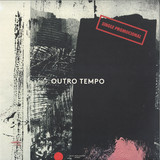
In the lead up to part two of the highly anticipated Outro Tempo compilation, MFM drops this teaser EP with the never before heard cassette madness of São Paulo's Bruhahá Babélico and Individual Industry's ethereal electro pop on the flip.
Music From Memory announces a series of Brazilian releases for this Spring that pick up where their 2017 Outro Tempo compilation left off. Circling around the musical projects that emerged out of the art world in Brazilian cities during the late 1980s and 1990s, 'Outro Tempo II: Electronic and Contemporary Music from Brazil, 1984-1996' takes anotherdive into the depths of the Brazilian underworld, exploring the rhythms that lurk beneath the Ipanema sunset. It shines light on more illustrious unknowns and on the genre-defying music that maintained asymbiotic, yet uneasy, relationship with mainstream popular culture.
Order now and we will order the item for you at our supplier.

Echocord sub-label Echo Echo returns with its first release of 2019 this May, coming courtesy of son.sine with his ‘Variable States’ EP. Leyton Glen aka son.sine is a relatively new name to most having only released a handlful of EP’s to date, initially in 2000 he released ‘Upekah’ via the Nurture imprint before Delsin recognized its timeless quality and re-issued it in 2013, a testament to Glen’s sole work. Here though we see Echo Echo mark a return for son.sine with a new EP of original material, his first in four years. The thirteen minute ‘Uncertainty’ opens, driven by hazy atmospherics, pulsing acid bass tones and murky sub bass while glitched out percussion subtly carries the cinematic groove. ‘Evident Topology’ follows, taking a more robust approach with jittery low-end chops, expansive dub chords and an amalgamation of emotive strings and jazzy bass licks ebbing and flowing within. ‘Three Linear Decay’ then rounds out the package via skippy organic drums, ethereal pad swells and metallic bleeps.
Order now and we will order the item for you at our supplier.

Consisting Neither Of One Lone Woman, Nor Hailing From Either The Eurasian Country Or The North American State, This Georgia Is In Fact Comprised Of Two Human Males Working Out Of China Town, N.y.c., Namely Brian Close And Justin Tripp. Together They Form A Creative Partnership Responsible For Not Just A Slew Of Output Upon Such Highly Regarded Imprints As Meakusma, Palto Flats And Emotional Response, But Also For A Kaleidoscopic Variety Of Multimedia Work With A Whole Host Of Clients, From The Corporate To The Counter Cultural. With An All Embracing, Freeform And In Some Ways Contradictory Approach To Production, Their Sound Is At Turns Stimulating, Terrifying, Comforting And Confounding. Separated From Any Visual Representation, The Audio On Its Own Becomes A Soundtrack For The Listeners' Own Intense Internal Projection Screen.
With 'time', Georgia's Vision Is Especially Well Realised As Here, In Collaboration With Fellow Intuitionists Firecracker Recordings, They Release Into This World An Album Which, With Any Luck, Shall Help You Unlock Your Inner Portals - Should They Need Assistance In That Regard Anyway. Unquantisable Polyrhythms Knock Against One Another In An Uncannily Externalised, Conflicting Collage Of Half Remembered Dance Ritual Memories. Fragmented Melodies, Disembodied Vocal Snippets, A Hint Of Ethnomusicality In Places All Give Deep Nods Simultaneously To Ancient Experience And To Post Human Intelligence, Condensing Past Present And Future Into One Eternal Instant.
'time' The Album Asks Us: What Happens When One Removes Ones Expectations Of Where In Time A Piece Of Music Or Art Must Sit And What Of Time Itself As A Construct, Now That We Have Myriad Ways Of Measuring It, Even At The Atomic Level; But Still Its Passing Is Completely Relative According To The Observer, And Indeed May All Be In Our Minds Anyway Equally, You Can Always Just Put It On - Again, And Again - Empty Your Mind Of Such Thoughts Completely, And Allow All Of Your Particles To Move Around Freely To This Joyful Noise... After All, That's The Point, Isn't It We're Gonna Have To Stop Asking Questions Eventually.
Order now and we will order the item for you at our supplier.