Michael Mayer albums don’t come round too often, which is one of many reasons why his fourth collection, The Floor Is Lava, is a genuine event. It’s been eight years since his last one, the collaborative & released on !K7; its predecessors, Mantasy (2012) and Touch (2004), took their sweet time, too. It’s no real surprise, given the many hats Mayer wears – globetrotting DJ, revered remixer, inveterate collaborator, and boss of both Kompakt and Imara – that his solo productions are relatively sparing. But this also speaks to their quality: Mayer’s name on a record sleeve is a sign of quality, of music that’s both looking to the future and calling back to the past, that balances the imperatives of the dancefloor and the loungeroom, that’s as exploratory as it is functional.
On The Floor Is Lava, Mayer seems to be taking the temperature of both the music that surrounds him (past and present), and the ides of the industry he works within. There’s that iconic album title, for a start. “The album’s mindset,” he says, reflecting on those four words together. For Mayer, it’s partly a critique of the way the industry boxes in both producer and listener, focuses them on genre, on market, on the next new thing: “Being a free minded spirit that transcends genres has become an uphill battle.” A battle worth fighting, though, and with The Floor Is Lava, the result is an album that’s varied, quixotic, idiosyncratic, charming, and deeply, addictively listenable.
Throughout, Mayer finds thrills in exploration and juxtaposition, allowing unexpected things to blossom and giving them their life, their platform, throwing the listener exciting curveballs: “It’s a DJ album by a DJ that’s easily bored.” Either easily bored, or endlessly curious, The Floor Is Lava is rich with ideas. It opens with “The Problem”, which looks back to look forward, embracing the rickety way early house productions threw samples together with gleeful abandon. Mayer mentions Pal Joey, and the scene around Rockers Hi-Fi and their Different Drummer imprint, as reference points, and you can hear that freewheeling spirit throughout.
It’s followed by “Vagus”, a slinky, sensual minimal house number that Mayer describes as his “musical catnip”. The flow of these two opening cuts defines the dynamic of The Floor Is Lava, defining the dialectical drive at its core: thesis and antithesis leads to synthesis, but with a welcome prickliness that means you’re always excited, always engaged. It’s also productive in the way it derives energy from rubbing genres and sounds against each other, in unexpected ways, for maximum musical frisson. There’s psychedelic techno on “Feuerstuhl”, more minimal techno with “Ardor” (Mayer mentions ‘Immer 1’ era 90s minimal as inspiration), slippery, Shepard-tone breakbeat through “Sycophant”, a lovely, lush vocal turn on the poppy “The Solution”.
The album closes with the melancholy “Süßer Schlaf”, where Mayer sets a poem by Goethe to one of his most haunted, moving pieces of music yet, in abstract tribute to a lost friend. It’s one of the most affecting moments on The Floor Is Lava. There’s also an update on 2020’s wild Brainwave Technology EP, with the surrealist glitter-stomp of “Brainwave 2.0” (check out those handclaps!),where Mayer’s thinking about the socio-political precipice of the now: “I’m reading with great interest about this whole complex of how humanity is about to cross so many lines and the implications that the resulting financial and educational inequality will bring.”
That’s The Floor Is Lava: then and now, brainwaves and nerve structures, problems and solutions, genres on fire; the real, the unreal, and the surreal. An album for the easily bored and the endlessly curious. Mayer has the last word, telling us all you need to know about the album’s spirit: “Burning for the cause, being zealous, being addicted to the heat of the night, the exuberant powers of music.”
Michael Mayer veröffentlicht nicht oft Alben, was einer von vielen Gründen ist, warum ‘The Floor Is Lava’ ein echtes Ereignis ist. Es sind acht Jahre vergangen seit seinem letzten Werk, dem Kollaborationsalbum &, das auf !K7 erschien; seine Vorgänger, Mantasy (2012) und Touch (2004), ließen ebenfalls auf sich warten. Es überrascht nicht wirklich, da Mayer viele Rollen gleichzeitig erfüllt – weltreisender DJ, vielbeschäftigter Remixer, unermüdlicher Kollaborateur und Chef von sowohl Kompakt als auch Imara – weshalb seine Solo-Produktionen eher sparsam ausfallen. Doch das spricht auch für deren Qualität: Ein Album mit Mayers Namen auf dem Cover steht für Qualität, für Musik, die sowohl in die Zukunft blickt als auch auf die Vergangenheit verweist, die das Gleichgewicht zwischen den Anforderungen des Dancefloors und des Wohnzimmers hält, die genauso erforschend wie funktional ist.
Auf The Floor Is Lava scheint Mayer sowohl die Musik um ihn herum (vergangen und gegenwärtig) als auch die Strömungen der Branche, in der er arbeitet, zu reflektieren. Da wäre zunächst der ikonische Albumtitel. „Die Grundhaltung des Albums“, sagt er, drückt sich in diesen vier Worte aus. Für Mayer ist es teilweise eine Kritik daran, wie die Industrie sowohl Produzenten als auch Hörer in Schubladen steckt, sie auf Genres, auf den Markt und auf das nächste große Ding fokussiert: „Ein freier Geist zu sein, der Genres überschreitet, ist zu einem steinigen Weg geworden.“ Ein Kampf, der sich jedoch lohnt, und mit The Floor Is Lava ist das Ergebnis ein Album, das vielfältig, eigenwillig, charmant und tiefsinnig, aber auch süchtig machend ist.
Im gesamten Album findet Mayer Freude an der Erforschung und Gegenüberstellung von Stilen, lässt unerwartete Dinge erblühen und gibt ihnen Raum, überrascht den Hörer mit spannenden Wendungen: „Es ist ein DJ-Album von einem DJ, der sich schnell langweilt.“ Entweder langweilt er sich schnell oder er ist unendlich neugierig – The Floor Is Lava ist reich an Ideen. Es beginnt mit „The Problem“, das in die Vergangenheit blickt, um nach vorne zu schauen, und die wilde Art, wie frühe House-Produktionen Samples mit fröhlicher Unbekümmertheit zusammenwarfen, aufgreift. Mayer nennt Pal Joey und die Szene um Rockers Hi-Fi und ihr Label Different Drummer als Referenzpunkte, und dieser freie Geist zieht sich durch das gesamte Album.
Es folgt „Vagus“, eine sinnliche Minimal-House-Nummer, die Mayer als seine „musikalische Katzenminze“ beschreibt. Der Fluss dieser beiden Eröffnungstracks definiert die Dynamik von The Floor Is Lava und den dialektischen Antrieb im Kern: These und Antithese führen zu einer Synthese, jedoch mit einer willkommenen Schärfe, die dafür sorgt, dass man immer aufgeregt und engagiert bleibt. Zudem gewinnt das Album Energie, indem es Genres und Klänge auf unerwartete Weise aneinanderreibt, um maximalen musikalischen Nervenkitzel zu erzeugen. Es gibt psychedelischen Techno in „Feuerstuhl“, mehr Minimal Techno mit „Ardor“ (Mayer erwähnt ‘Immer’ Ära Minimal als Bezugspunkt), gleitenden Shepard-Ton-Breakbeat in „Sycophant“ und einen lieblichen, üppigen Vocal-Auftritt im poppigen „The Solution“.
Das Album schließt mit dem melancholischen „Süßer Schlaf“, in dem Mayer ein Gedicht von Goethe vertont und eine seiner bisher eindringlichsten und bewegendsten musikalischen Kompositionen schafft, als abstrakten Tribut an eine verschiedene Freundin. Es ist einer der ergreifendsten Momente auf The Floor Is Lava. Ebenfalls gibt es ein Update der wilden Brainwave Technology-EP von 2020, mit dem surrealistischen Glitzer-Stampfer „Brainwave 2.0“ (hör dir diese Handclaps an!), in dem Mayer über den sozio-politischen Abgrund der Gegenwart nachdenkt: „Ich lese mit großem Interesse über diesen ganzen Komplex, wie die Menschheit dabei ist, so viele Grenzen zu überschreiten und welche Auswirkungen die daraus resultierende finanzielle und bildungstechnische Ungleichheit haben wird.“
Das ist The Floor Is Lava: Damals und heute, Gehirnwellen und Nervengeflechte, Probleme und Lösungen, brennende Genres; das Reale, das Unreale und das Surreale. Ein Album für die schnell Gelangweilten und die unendlich Neugierigen. Mayer hat das letzte Wort und sagt uns alles, was wir über den Geist des Albums wissen müssen: „Brennen für die Sache, leidenschaftlich sein, süchtig nach der Hitze der Nacht, den überschwänglichen Kräften der Musik.“
Suche:rela
After solidifying its presence in the electronic music scene, 'Anva' returns with its fourth release, featuring a collaborative effort from Tagir & Indigo Minds. Meditation Dance EP explores the balance between minimal house and tech house, offering four original tracks that traverse atmospheric soundscapes and punchy rhythms.
'Meditation Dance' opens the EP with a deep, rolling bassline that gradually unfolds into a hypnotic groove. Layered with subtle textures and rhythmic nuances, it invites dancers into a meditative state while keeping the energy moving forward. 'Bandit' shifts the momentum with tighter percussion and playful melodic accents, creating a steady groove that’s both engaging and dynamic.
On the B-side, 'Donut' introduces intricate sound design and spaced-out synth work, maintaining a relaxed yet detailed rhythm that adds depth to any set. Closing out the release, 'Jack' brings a bouncy and upbeat vibe, with sharp beats and a syncopated groove that injects playful energy into the dancefloor.
The Meditation Dance EP offers a versatile selection of tracks, perfect for DJs who seek to mix minimal precision with engaging rhythmic flow.
Purple Marbled Vinyl[26,47 €]
Building on the foundation of his two EPs for Samurai Music, we proudly present Urmah, the first LP exploring the 170 tempo from acclaimed Techno/Electronic producer Juan Rico aka Reeko, aka Architectural.
Reeko has now become an integral part of the overall Samurai Music sound. His work resonates deeply within the label's ethos, and Urmah exemplifies this synergy, highlighting his ability to enrich and expand Samurai Music's vision and push the boundaries of his own artistic expression.
For Urmah, Reeko delves even further into sound and psyche with a richer, more enveloping exploration into his distinct interpretation of the tempo. Reeko's production prowess shines brightly on Urmah with the warmth and weight of each track leaving an indelible impression.
Urmah focuses on heady fathomless grooves that tease shards of breakbeats like delicious icing, binding themselves to a gentle psychedelia with celestial textures. This is dexterous, meditative journey music from a producer who has an intimate relationship with groove creation.
As one of the most respected Techno producers in the genres long history, Reeko's influence and mastery are undeniable. With Urmah, he further showcases his expertise, expanding his palette to display a refined command of the 170 BPM tempo. The LP is a testament to his ability to innovate and redefine, solidifying his reputation as a pioneering force in electronic music.
Lose Endz is back on Zingiber Audio with No Stress ep, a relaxing happy feeling 2 club tracks and 2 remixes, the first one by Berghain’s anthem producer and legend of deep house music : sir Tony Lionni and the other one by the label boss COR100.
Very limited copies of this exclusive vinyl release. Be quick !"
Nottetempo are welcoming a new artist into their fold. Caramel Chameleon will be known already to many, his fluid brand of braindance having graced imprints like 030303 and Undersound’s NOUN sublabel. The sonic shapeshifter, Francesco Pio Nitti, arrives at the Milan label with Compact Demons.
Distorted beams and a steady kick introduce “…And You Feel So Lucky.” Drums descend into a glitchy soup of snare rolls before gentle notes take hold, a melody of soft synth warmth is dappled with breathy samples. Pound and thump are given a full workout in “Monologue Duetto,” echoes of glowsticks glimmer before the floor is calmed by silken keys. “d-_-b Future Is Blind” opens with oozing basslines and skittish beats. Tender pads and playful melodies bob and weave, breaks creating generous spaces for string-filled meditation to bloom in this absorbing work. Kicks return for “Inter27wined (cottage mix)”, a nervous energy soothed by globular synth-lines. A late evening feel permeates the piece, a comfort countered by Nitti’s bending and stretching of percussive patterns. For those needing a little more, Nottetempo have drafted in Legowelt for a remix of “…And You Feel So Lucky.” The track, available digitally, sees Wolfers sideline his own trademark sound to focus on the essence of the original. The result is considered interpretation, beats are relaxed and steady with a touch of analogue dreaminess coming to the fore.
There’s a sense that Caramel Chameleon is building up a head of steam. With each release, the Italian artist is further honing his sound as he crafts ever more intricate melodies and structures. Compact Demons is proof of this. In the same breath, Nottetempo continue to fortify their catalogue and roster with a release of excellent electronics. Quality cuts from Milan.
Uniquely personal, yet gently relatable…
Istanbul-based drummer and composer Danae Palaka’s first album “Velox” is a retrospective journey into the artist’s own roots.
Born in Athens to a musical family partially hailing from Istanbul, Danae’s relocation to the city of her ancestry in 2021 became a key influence in the creation of Velox.
Produced in a collaborative effort with producer Nikos Dervisis, Velox showcases Danae’s dense and energetic drumming style, influenced by Afrobeat and Anatolian rhythms, contemporary jazz and electronic music.
Developed by Palaka’s necessity to perform solo with a drum-kit and a sampler, the album wraps you with complex rhythms, evolving textures and polyphonies that resemble some vaguely remembered childhood memories, tales told by the elders and Danae’s exploration of her family roots, as well as her own personal experiences with Istanbul’s multi-layered structure intertwining past and present throughout its 8 track course.
In Danae’s own words: “This album is built on feelings and thoughts about places, memories, animas and circumstances and aspires to transmit certain feelings to the listener; a superpower I wish I had since I was little. Each song is a small universe of its own but also part of a whole. Velox is a sphere, a glowing warm star that I hold in my palms, whose energy expands when loved and supported.”
Adam Beyer shares his first collaboration with Brazilian superstar Vintage Culture, ‘Lift Me Up’ feat. Kyozo.The track has been brewing ever since the two artists crossed paths while touring and discussions soon turned to a potential collaboration. Passing ideas back and forward, ‘Lift Me Up’ took shape, before Kyozo’s signature vocals were added, with the British vocalist on their radar after link ups with Prof & Fitch, Aiken and Made by Pete. The final work is a pristine slice of dance music built for the summer festival season and reinforces Beyer’s continuing expansion and maturation of his sound palette, following the runaway success of his remix of Sharam’s PATT (Party All The Time) with Green Velvet and Layton Giordani and recent EP on Drumcode ‘Ghost Kiss’.‘Lift Me Up’ has soldered the relationship between Beyer and Vintage Culture, with the Drumcode boss playing the Brazilian’s So Track Boaevent earlier this year, with an anticipated B2B coming before the end of 2024.
New on Outta Sight, an official reissue of the Gloria Jones classic “Tainted Love”. The song originates from 1964, then made a household favourite from 1981 when made a hit by Soft Cell. Gloria’s 1965 release in the USA was originally a B-side to a non-hit, and it took ten years for it to be discovered in the UK where it was played on the Northern Soul scene. It’s the Motown-like rhythms and arrangements that made it relevant. Gloria re-recorded it herself in 1976, and while still not a hit, the song in NME’s Top 500 greatest of all time and Gloria dubbted ‘The Queen Of Northern Soul’. She was in a relationship with Marc Bolan at the time of his fatal accident. This single is coupled with another northern soul favourite, the Holland/Dozier/Holland song “There’s A Ghost In My House” by Motown artist R. Dean Taylor. It was originally recorded in 1966 and reached No.3 in the UK Charts (1974)
- A1: Annihilated(Force Of Gravity)
- A2: Shafted(Laws Of Attraction/Repulsion)
- A3: Sickness(Slowly Dying)
- B1: Vertical(Never See You Again)
- B2: Floored(Point Of Impact)
- B3: Drop(Machine Sex)
- C1: Hypnotised(F-Cked Up)
- C2: Inhuman(Let Machines Do The Talking)
- C3: Departed(Left The Body Behind)
- D1: Buried(Your Life Is Short)
- D2: Bodied(Send For The Hearse)
- D3: Exit(Wasteman)
Maverick UK producer Kevin Richard Martin (Zonal / Techno Animal / King Midas Sound) joins Relapse for the release of his devastating new double album Machine, his first solo instrumental record as THE BUG.
Machine started life as a series of self-released "floor weapons" (to use Martin’s description), landing in installments between 2023 and 2024 on the Bandcamp page of Martin’s own PRESSURE label. And now - always his intention - Martin has collated a single, powerful, unified statement from those EPs. The album detonates apocalyptic dread-tech mutations of crushing intensity, fusing a unique new strain of futuristic dub with deadly deep electronics and killer bass riffs worthy of the heaviest metal. It is, writes Martin, “ice cold and dystopian.” It celebrates “atmospheric pressure, and the joy of full body assaults, via oversized sound systems in undersized club rooms.” Machine also represents the latest metamorphosis of the "Macro Dub Infection" philosophy Martin germinated with the groundbreaking series of compilations he began curating for Virgin Records as early as the mid 90’s.
An obscure bit of Brazilian folk rock from the early 70s - recorded with an easygoing, laidback style that's really wonderful! The group's working mostly here in a blend of acoustic guitar and percussion and some of the guitar work is done by Jorge Amiden of O Terco, using a strange three-necked guitar that looks mighty weird in the picture! This instrument seems to be played using a bow at times - creating a "guitar strings" sort of feel that gives the record a bit more class than you might expect from its relatively rootsy setting and there's also some great subtle production on the vocals that compresses them slightly, in a way that links the record to some of the other South American rock of the time. Titles include "O Jogo", "Tributo Ao Sorriso", "Blusa Le Linho", "Voce Pole Ir Alem", "Do Zepo Adiante", "Transe Uma", "Cara Ou Coroa", and "Venha Pisar Na Grama".
- A1: Flore
- B1: John Iii
- B2: Us
- C1: Just-Test
- D1: We The Blessed
- E1: Mother Africa
- F1: Sweet Evil Miss" Kisianga
- F2: Virginia
- G1: C Marianne Alicia
- G2: Dr Oliver W. Lancaster
- H1: Palm Sunday
- H2: Prima - Mr A.a
- I1: Keno - Exactement
- I2: Providence Baptiste Church
- J1: Just Test
- J2: Work And Pray
- J3: Rib Crib I
- K1: Rib Crib Ii
- K2: Loving Kindness
- K3: Dogtown
- L1: Love Always
Souffle Continu records presents Byard Lancaster – The Complete Palm Recordings 1973-1974, the definitive package of Philadelphia-born jazz wizard Byard Lancaster including his 4 legendary albums released on Jef Gilson’s Palm Records in the 1970s, Us, Mother Africa, Exactement and Funny Funky Rib Crib, along with the first ever standalone edition of Love Always, a fifteen minute modal jazz beauty plus a 20 page booklet with rare photos and in-depth article about Byard Lancaster’s Parisian years by Pierre Crépon.
At the beginning of the 1960s, at the Berklee College of Music, Byard Lancaster met some feisty friends: Sonny Sharrock, Dave Burrell and Ted Daniel. It is easy to see why he rapidly became involved in free jazz. Once he was settled in New York, he appeared on Sunny Murray Quintet, recorded under the leadership of the drum crazy colleague of Albert Ayler.
In 1968, the saxophonist and flutist recorded his first album under his own name: It’s Not Up To Us. The following year he came to Paris in the wake of... Sunny Murray. He would come back to France in 1971 (again with Murray) and in 1973 (without Murray for a change). This is when he met Jef Gilson, the pianist and producer who encouraged him to record under his own name again. On Palm Records (Gilson’s label), he would release four albums: Us, Mother Africa, Exactement and Funny Funky Rib Crib.
“Us”, the first of the four records was recorded on November 24th, 1973 with Sylvin Marc on electric bass (a Fender... Lancaster?) and the evergreen Steve McCall on drums.
On the album, the trio works from the John Coltrane model; free jazz shook up by the timely contributions of the bassist, followed by a mesmerizing atmospheric music. Then, Lancaster delivers a sinuous solo path, which is a reminder of his unique tone. On the album’s companion single, the trio launches into great black music of a different genre which would lead the clairvoyant François Tusques to claim that Byard Lancaster is an “authentic representative of soul/free jazz”, to sum up this is Great Black Music! A few months after recording “Us”, Lancaster recorded “Mother Africa” along with Clint Jackson III, a trumpeter, partner of Khan Jamal or Noah Howard on other recordings.
On march 8th, 1974, Lancaster and Jackson headed up a group composed of Jean-François Catoire (electric and double bass), Keno Speller (percussion) and Jonathan Dickinson (drums). Together, they create an immediate impression. From the first seconds of “We The Blessed”, they develop a free jazz which rapidly abandons any virulence under the effect of blues and soul based interventions. When Gilson’s composition “Mother Africa” begins, listeners are transported into the studio, listening to the musicians setting up: chatting and joking... Then comes the melody: a dozen or so notes of a repeated theme which is accelerated and deformed according to their whims... The jazz played by the association Byard Lancaster / Clint Jackson III is rare: creative AND recreational. “We the blessed”, is apt listening to this again today!
The recording of “Exactement” required two sessions in the studio: February 1st and May 18th 1974 – in between the two dates, Lancaster recorded, alongside Clint Jackson, the excellent Mother Africa.
Two names appear on the cover of “Exactement”: Lancaster (Byard) and Speller (Keno). Byard Lancaster wanted to be precise, moving regularly from one instrument to another: first on piano, which was the first instrument he learned. On “Sweet Evil Miss Kisianga”, his inspiration is first and foremost Coltrane (even if leaning more towards Alice than John), this announces the storm to follow.
It is Lancaster’s horn-playing which really stands out: on alto (the sound of which is transformed by an octavoice on one track, "Dr. Oliver W. Lancaster") or soprano saxophones, as well as on flute or bass clarinet, the musician walks a tightrope making the most of all the risks he takes. Using the full register of his instruments, he has fun with the possibilities.
Then, Lancaster invokes or evokes Ornette Coleman, Eric Dolphy and even Prokofiev, before going into a danse alongside Keno Speller on percussion. Above all, he has a unique sound. Byard Lancaster, on whatever instrument he plays and by continually seeking, always ends up hitting the right note... ends up by playing exactement the note he had to play.
“Funny Funky Rib Crib” is an unforgettable recording (made up of several sessions dating from the middle of 1974) of creative jazz overwhelmed by funk and soul. If Lancaster had already made successful albums in the same genre – notably New Horizons, under the name Sounds Of Liberation which he co-led with Khan Jamal –, this one is an homage to James Brown and Sammy Davis enjoying the company of a host of guests including François Tusques (electric piano), Clint Jackson III (trumpet), François Nyombo (guitar), Joseph Traindl (trombone)...
Funny Funky Rib Crib’s cover is a three-quarter profile portrait of the saxophonist (who can also be heard on flute, piano and even vocals), however, on the record, it is the whole group, inspired and frenetic, that tests the melodies of “Just Test”, “Dogtown” or “Rib Crib” – the two versions of which display leader Lancaster’s art of nuance. On both sides of the album, the group also moves into a calmer groove, infused by blues and soul, “Work And Pray” and “Loving Kindness” are meditative tracks where listeners can lay back and relax before asking for more: Funny Funky Rib Crib!
The magnificent “Love Always” was originally released on the fourth (and last) volume of the Jef Gilson Anthology series released in 1975.
Recorded on 8th March 1974, it is a beautiful 15-minute-long modal jazz piece. Four notes from the bass (the relentless Jean-François Catoire, who makes up the rhythm section alongside drummer Jonathan Dickinson and percussionist Keno Speller), and the group is up and running!
On piano, Gilson shows the subtle tact of a sideman, leaving the lions’ share of the place to the horns. This allows us to hear the trumpet of Clint Jackson III and the alto (which sometimes sounds almost flute-like) of Byard Lancaster each staking their claim in a long hallucinatory march which moves from moments of direct exaltation to profoundly sensitive collective playing. And if further proof was required of the confidence that Byard Lancaster and Jef Gilson inspire, “Love Always” provides it on this one sided release exclusive to the box set.
A sense of destiny hangs over Sentir Que No Sabes, Mabe Fratti’s fourth solo-credited album released in a five year span. Her work has always possessed a finely tuned sense of drama capable of expressing a range of emotional states, and across this new album, she conveys the struggle to process various relationships or situations–and the actions that come next. Sentir Que No Sabes is urgent and clear, poppy, generous and approachable, while showcasing a considerable emotional hinterland. It is also, as Fratti is quick to mention, “groovy.”
Written and recorded with her partner, multi-instrumentalist, and co-composer Héctor Tosta (I.La Católica, Titanic), Sentir Que No Sabes is the result of an intense, detail-oriented process. Fueled by a new confidence gained in their collaborative project, Titanic, and its critically acclaimed 2023 LP, Vidrio, the two hunkered down in the familiarity of their studio (aka Tinho Studios) to bash out the initial sonic coordinates of her new record. “We talked and talked, and discussed ways of playing and recording, until things became inevitable,” Fratti explains. “We recorded a bunch of demos at our home studio and that meant we had a lot of time to re-edit and experiment. We really dug in. We were super focused on detail.” Tosta also took up the controls as producer and arranger-in-chief for all additional instruments. The album was later completed at Willem Twee Studios in Den Bosch in the Netherlands, and Pedro y el Lobo Studios and Soy Sauce Studios, in Mexico City.
For the final studio recordings, the pair were joined by drummer Gibran Andrade and trumpetist Jacob Wick to fill out and expand on Tosta’s percussion and brass arrangements. This small group of friends were able to work quickly and openly, and without fear: a testament to the exhaustive groundwork put in at Tinho Studios. This can be heard in three short, intermediary tracks that also manage to be the most aggressive on the record: “Kitana” (a scratch-laden instrumental that acts as a strange prelude for the last track, “Angel nuevo”) and a pair of two-minute instrumental interludes, “Elastica” I and II. None are throwaway mood pieces; rather they act as emotional cue cards, and hint at the way Fratti and Tosta created the overall atmosphere of Sentir Que No Sabes.
A strong sense of rhythm irrigates the sound from the jump, as heard on the glorious opening track, “Kravitz.” Here, the brilliant plucked cello line acts as a bassline and props up the steady thump of the kick drum. The cello’s growl serves as a conduit for a set of slightly paranoid lyrics that tell us “Quizás haya oídos en el techo” (“maybe there are ears in the ceiling”), while the song also introduces another staple of the record: the clever brass stabs, whistles, parps, and other interjections that paint a canvas of traffic in a city. It’s a postmodern, widescreen sound that for some might recall The Blue Nile’s Hats.
Sentir Que No Sabes is a record full to the brim with a modern pop sensibility, invoked by the sort of magpie spirit that ensnares anything it can find, repositioning sounds for the here and now. The keys and melody on the melancholy “Pantalla azul” (“Blue screen error”) transport us back to the glossy mid-1980s. “Oídos” (“Ears”) is a beautiful slice of contemporary, hybrid pop, in which Fratti’s vocal lines delicately spin themselves around the lean structures erected by the brass and drums, and the descending “plink” of a set of piano chords. Then we have a gloriously strong ending with the swell of “Angel nuevo” (“New angel”), another cinematic track full of gentle, instrument-rich swells and eddies that manages to be almost endless in its range–and yet intensely personal, as Fratti’s voice is close, almost whispering in your ear. A much needed lullaby for our fractious times.
The lyrics, for their part, have a stop-start quality to them, and hint at the small, incremental emotional taxes we pay through just living our lives. They circle around the music like birds waiting to swoop. There is something of the spiritual in all of Fratti’s work that expresses itself in a form of yearning: she looks to new horizons while personal dramas find themselves internalized, contextualized, and then dealt with through metaphor. Here, she was keen to mention Tosta’s constant encouragement in her finding a path to best sing or phrase her words to impart their maximum effect. “Hector was super inquisitive about my lyrics and asked me questions about what I meant, which sometimes is something you don't wonder so much about in isolation,” Fratti explains. “Besides, he is a great poet, and you can see that in what he did on the Titanic record. This made me go deeper into my lyric writing and definitely transformed it into something that I feel super happy about now.”
Take “Enfrente” (“In Front”), a track that initially comes across as a languid, glossy number, with plucked cello strings standing in for a bass line and brittle synth parts. Soon we catch on to a brilliant minor chord switch, which mirrors the fear and doubt expressed in the lyrics as someone “trembles up to the podium” in a “search for meaning.” There’s also the startling introduction of a vocoder in “Quieras o no” (“Whether you want it or not”); it comes precisely at the point Fratti sings “Quieras o no es un desastre” (“Whether you want it or not, it's a disaster”). Moments like these leave room for interpretation and, over time, create a strong bond between the listener and the record.
In fact, across Sentir Que No Sabes, each phrase–whether instrumental or vocal–becomes at some level emblematic of acts and moods that impart deep emotional significance. We see this best on “Intento fallido” (“Failed attempt”), which could be the score to feeling trapped in self-doubt, only to suddenly be sprung free by the song’s gloriously upbeat ending. On “Márgen del índice” (“Index margin”), the quicksilver switch between initial disharmony and a beautiful melody is breathtaking, all augmented by evocative arrangements, textured production, and the slightly playful, gnomic lyrics. The track’s emotional ecosystem allows another brilliant ending, which uses the simple repeated phrase, “Cómo lo va a ver?” (“How are you going to see it?”).
So what to make of Sentir Que No Sabes? High gloss Pastoralism? The sound of a city-bound, post-post modern soulscape? No matter the emotions evoked, it's the work of an artist coming into their own, and creating a benchmark record.
Exploration, collaboration and curiosity define the rhythm at the beating heart of Mehmet Aslan’s exemplary compositions. The Swiss-born producer of Turkish heritage has already forged a singular path through production, DJing and full-band performances, navigating the more esoteric corners of Berlin’s club culture without sacrificing his musical heritage or innate creativity.
A conceptual new LP ‘Auguri’ follows on from 2021’s gnomic, ornate ‘The Sun Is Parallel’, which saw Aslan musically associate with the likes of Valentina Magaletti and Niño De Elche. ‘Auguri’ also has its foundations in collaboration, born out of a musical lab at Lyon’s annual
Nuits Sonores, the forward-thinking festival with whom Aslan has maintained a lengthy creative relationship.
The resulting audio-visual performance, ‘Bird Signals For Earthly Survival’ introduced Aslan, to the Greek filmmaker Stratis Vogiatzis. Drawing on the philosophy of Donna Haraway and envisioning new ways of being, of living on earth, Aslan and Vogiatzis crane their necks to the sky to witness flocks of birds performing spectacular movements in unison. Fluid and ancient, their organic waltz provides inspiration for Aslan’s extension of the project, spanning sonic shades of electro, ambient and modern folk psychedelia.
On the coastline of Vogiatzis’s home country of Greece, as in many places across the world, climate change threatens to effect the ancient migration pattern of millions of birds, just as their fellow beings on terra firma become increasingly entangled in a man-made disaster of their own creation. In unison, ‘Auguri’ is adorned by artwork from designer Xavi Bou. Known for his ‘ornithographies’, this striking visual captures avian life not only as a force, but a wry observer.
“We need to transform our connections with other living beings to protect the Earth and live together harmoniously”, reflects Aslan. “Personally, this project has made me more sensitive to this issue. I wanted to give back in return for the inspiration I've received."
Perhaps upending expectations of a more traditional ‘ambient’ album, Aslan commits some of his finest compositional work and understated songwriting to this urgent imperative, creating original music that nonetheless, has nature flowing through it. ‘Critters’ presents a spectral sound collage on which Aslan himself speaks from the texts composed at the residency, conjuring visions of “the birds flying… shape of the future”. Meanwhile, the undulating, psychedelic ‘Pigeon Blinks’ takes inspiration from more domestic scenes, charting the unexpected roosting and hatching of an egg on a kitchen window, while ‘Auguri’ gives the album it’s title in connecting to a higher plain, demonstrating Aslan’s ability to lure melody and catharsis from looping hypnosis.
Opener ‘Spectra’ provides a forceful, almost industrial breakbeat that establishes the exigency of the album as well as its sense of wonder, while ‘Euphoria’ reaches the potency of its promise slowly, with Aslan’s modular melodies meeting the flourishing percussion of guest player and multi-instrumentalist, POPP. Finally, ‘Aura’ delivers a cinematic conclusion, mixing an elegiac organ motif, haunting guitar chords and the prophetic sense of a scorched earth. Here, with patience and soaring production, Aslan once more makes the abstract and the unthinkable somehow tangible, mixing in sampled birdsong.
Accordingly, ‘Auguri’ is being released in accordance with EarthPercent, the music industry’s climate foundation, co-founded by Brian Eno. A portion of the album’s publishing will be credited as part of ‘The Earth As Your Co-Writer’ initiative, allowing artists to directly credit The Earth in their new compositions. Here, streaming and publishing from Aslan’s recorded sounds are automatically paid back to a number of vital initiatives worldwide.
Leaning into some of the most vital questions and anxieties of our time, ‘Auguri’ is not a project without a sense of hope. From studio to sea, Mehmet Aslan continues to look to the skies and beyond.
Eaux proudly announces a new collaborative mini-album from label boss Rrose and Polygonia. Containing six tracks and over 40 minutes of music housed in a fully printed sleeve with artwork by Jon-Paul Villegas, the record focuses squarely on the dancefloor while infusing it with the kinds of psychoactive drones, intricate polyrhythms, and relentless modulations that have come to identify both of their approaches to sound. Featured heavily are their shared interests in sonic shapes that resemble natural forms and conjure tactile feelings, in this case related to themes of skin-like surfaces and circulatory systems experienced simultaneously on a micro and macro level. While several of the tracks hover in a flexible tempo range between 125 and 130 bpm, "Stretcher" reaches up to 142, and the closing track "Vena Cava" trades the kick drums for spectrally processed percussion and endlessly diverging high-frequency pulses.
The story behind the release starts in 2022, when Rrose reached out to Polygonia after noticing that her tracks were appearing in their sets more frequently than any other artist. Never before had Rrose proposed a collaboration with someone they hadn't met before, but there was such an obvious connection in their approach to sound that it felt necessary. As it turns out, Polygonia had only become interested in techno after hearing Rrose perform at a festival in 2018. It all made sense, and they began sharing sketches and unfinished ideas with each other, trading them back and forth until they reached completion. Without any announcement of their collaboration, the two artists have since been asked to share the stage together several times. It seems there are other people out there sensing a connection...
Bios:
RROSE
Rrose is an alias of the multi-disciplinary artist Seth Horvitz, born and raised in California, and currently based in London. Active since 2011, the Rrose project explores the intersection of hypnotic techno, experimental composition and psychoacoustic phenomena with a meticulous touch. The first major breakthrough was 2012's "Waterfall" for Sandwell District which followed "Motormouth Variations," a collaborative project with composer, improviser, and activist Bob Ostertag. After the shuttering of Sandwell District, Rrose established Eaux, a home for further solo productions and collaborations. Building on his studies in electronic composition and history at Mills College, Rrose's electronic pieces blur the lines between thrillingly claustrophobic club tracks and destabilizing sound art explorations. In 2015, she released an extended version of James Tenney's postcard composition "Having Never Written a Note For Percussion" for solo gong, and in 2018 collaborated with Charlemagne Palestine on "The Goldennn Meeenn + Sheeenn" for two grand pianos. These works overlapped with the development of Rrose's singular techno: EPs like "Vanishing Pools," "The Ends of Weather" and "Arc Unknown" as well as 2019's debut LP "Hymn to Moisture" and last year's follow up "Please Touch." Rrose is also active as a touring DJ and live performer, equally comfortable commanding sweaty warehouse dancefloors and seated audiences in historic concert halls. Appearances include Unsound, Atonal, Semibreve, Dekmantel, Mutek, Sonic Acts, Nuit Sonore, Mostra, Parallel, Theatre Graslin, Nextones, and Berghain.
-----
POLYGONIA
Polygonia represents a multidisciplinary music and art project conceived by Lindsey Wang from Munich, Germany.
She draws inspiration from her many years of practicing various acoustic instruments and her keen interest for other cultural forms of expression, which she translates into the digital language of electronic music and art.
Her productions' soundscape exudes a mystical, organic quality, featuring intricate and compelling rhythms. Polygonia's sound palette ranges from energetic, groovy Deep Techno, Downtempo, Grey Area to textural and/or harmonic Ambient. Besides, she is not afraid to include influences from the genres House, Drum and Bass, Electro etc.. In addition inspiration from nature play a major role in many of her productions. Exemplary for her style are for instance her 'Otro Mundo' EP (2023) on Bambounou's Bambel Imprint, her 'Bloom' EP (2022) on the American record label Sure Thing, the release 'Deformed Human Nature' (2021) on her own label IO, as well as the album 'Abbilder einer vergessenen Welt' (2021) on the Korean label Huinali.
Her DJ and live sets too reflect her passion for different genres. Depending on the time of day and setting, Polygonia shows a different musical side. What unites all her dance music sets is the hypnotizing effect that invites to completely lose oneself in the world of sounds for a longer period of time. Several voices from the audience also confirm that the musician always tells a complex story within her mixes, allowing for very clear highs and lows. In the same set there can be very harmonic passages, which provide emotional moments and on the other hand extremely texture-heavy dark tracks, which establish a connection with the subconscious and put the listener in a kind of trance.
Polygonia has already visited numerous of prestigious venues. She is now a regular at Tresor or Berghain in Berlin and additionally started her residency in 2023 at Munich-based BLITZ club.
"A Seamless Symphony of Harmonious Electronica" - Jazziz
Emerging from over a year of creative hibernation following their debut album, Stavroz's upcoming EP "Kick Up the Dust" jolts them back into action. The EP flows gently, yet the overall mood of the journey isn’t always easy to pinpoint. There’s a certain vagueness to Stavroz’ sound which allows for bizarre experiments to seep through without interrupting the course. “We like to keep it lightly twisted, like a wink with a frown,” says the band.
In the title track however, Stavroz boldly steers towards the heart of the dance floor: efficient, remorseless, powerful, intense and most of all... elegant. Guiding you harmoniously through the club is a delightful duet of trumpet and saxophone, timed perfectly to heal you where it hurts most.
"Her Eyes Were Red" does what it says on the cover. There's melancholy - without sadness. Power - without force. Love - without lust. Stavroz's music possesses a distinct power that feels both natural and organic, never resorting to brute force or aggression. In their own way, the Belgian quartet offers an astonishing journey of saxophone & duduk, supported by broken beats and chopped vocals.
In Dae-El, a track featuring the Brussels-based producer and sound designer Poltrock, ethereal-sounding synths and duduk are combined with ghostly high-pitch distortions. Despite a backbone of muffled beats, the tune has vaporous qualities, reverberations that wobble and tinkle into space – it’s an easy listening experience but in a trippy, spaced-out way. “We’re trying to go for the sweet spot between the couch and the club”.
Adding further depth to their EP, Stavroz collaborates with Brazilian singer and composer Castello Branco in "Valente." Here, intimate Sade-like vocals harmonize with rubbery scratches, acoustic guitar, and horn segments, crafting a lush lounge piece that seamlessly balances both relaxation and empowerment, transparency and provocation. It's a testament to Stavroz's versatility and their knack for creating music that defies easy definition, leaving listeners eagerly anticipating the next twist and turn in their captivating musical journey.
DJ TEETH’s Tremendo Recordings proudly presents its debut release, Orion. Rescued from DAT archives by Belgian-based Holographic Hallucination, the release revitalises a selection of rare or previously unreleased tracks from the early/mid-90s golden era.
The title track never made it to release, with just 200 promo copies made in ‘94, reflecting an eye-watering price and a high want list count on Discogs. Now, after years of relative obscurity, this release aims to introduce this sought-after work to a fresh audience. Orion is a 14-minute-plus journey of nostalgic arpeggiated baselines, coupled with mirroring in and out synth lines and swirls, creating an almost ominous mood.
First on the B-side ups the pace with an unreleased dub version of Rumble, a head-down, arms-up, feet-stomping raver track which was released on their label Holographic in ‘93.
The EP closes with an unreleased track produced that same year, Horizon, whirling through your ears and leading to feelings of transcendence.
Theme: collaboration. Or how to remain creative in the modern world. Nanocluster started as a bespoke one off pop up gig that turned into an album series. Built around Colin Newman from acclaimed UK post-punk band Wire and his partner in life and sound Malka Spigel from Minimal Compact with various guests, they define collaboration. Colin met Malka when he produced her band in 1985.The collaboration started there. They became a couple and created their own projects like the instrumental electronic duo Immersion in 1994 and Githead in 2004 - spaces where they both 'feel really comfortable.' Growing out of Immersion, Nanocluster was birthed as a series of one-off gigs at the Rosehill in their new hometown of Brighton in 2017 with an added cast of influential and cutting edge musicians. These were not ad hoc jams. The songs had been written and rehearsed prior to each performance. This adventure led to a debut album, Nanocluster Vol 1, released in 2021 with Stereolab singer/guitarist Laetitia Sadier, German post-rock duo Tarwater, electronic musician Ulrich Schnauss and experimental artist Robin Rimbaud (Scanner). Released again as double 10 inch with each collaboration taking up each disc, the new album Nanocluster Vol 2 has further developed this idea with a stark beauty that sounds like a future pop with sleek lines and unexpected great melodies. Disc one is built around Thor Harris, the charismatic percussion player from Swans and many other projects, who they met and performed with at South By South West in Austin, Texas in 2023. Thor adds ideas, his tuned percussion instruments, clarinet and trumpet to the sessions. Disc two is built around Cubzoa (Jack Wolter from the band Penelope Isles) who brings his musical craft, beguiling voice, guitar and much more. Meanwhile Matt Schulz from Holy Fuck plays drums across both combinations helping the resulting music become a third entity. What results is a true collaboration that, enhanced via Immersion's production, merges its elements to develop a new harmony. Key to the process is Colin and Malka's radio show for Slack City radio, 'Swimming In Sound' with its entertainingly diverse playlist that has widened their horizons. It's also helped build relationships not only with these collaborators but also musicians like ambient country masters SUSS, with whom they plan an extended Nanocluster tour in the USA with in 2025 and Brighton via Falmouth's "jangly pop punk" Holiday Ghosts with whom they will perform the next Nanocluster event in their hometown, as well as many more in the pipeline. Malka: 'Nanocluster is collaboration but in a very specific form. We don't have rules. It's a series of creative snapshots. We start as the gig with our collaborators with tracks that we rehearse because this is not a jam and where it stops is an album.' Colin: 'It's chemistry & music. Malka & I operate as a team and now we've taken it to another level. Malka comes from a band where they would stand in a room together and work out the material. In Wire, I would present the songs, so when Malka and I first started working together, we had to find a third path, and that was the concept behind our collaboration.' Nanocluster Volume 2 is a 21st century collusion of shared ideas, creating a momentary extended musical family. It's about musical and personal relationships and the meeting place in the middle. A temporary band of house guests. The place where Immersion happens.
UK artist David Duncan recorded only one EP as Ability II and it recently got reissued and soon snapped up. Now, much to the delight of fans of the man behind the classic tune 'Pressure Dub' he is back. This album features an exclusive collection of tunes he made back in his heyday in the 90s, none of which were related at the time, and none of which you will have ever heard before anywhere. They feature his signature sound designs across seven cuts that sound as futuristic now as they ever could as they combine jacked-up house, techno and tech into scintillating and dub-weighted sounds for the club.
- A1: India
- A2: Child Of Nature
- A3: Anna Was Mine (Demo Version)
- A4: Nature Boy (Mantovani Orchestra)
- A5: Land Of Love (Come My Love And Live With Me)
- A6: Hey Jacque (Hey Jacque)
- A7: Palm Springs (The Ray Anthony Orchestra)
- A8: Umgowah
- B1: Wild Boy ( With Mort Wise & The Wisemen And Rocky Holman)
- B2: Surfer John (Nature Boy & Friends)
- B3: Eden’s Island (Arthur Lyman)
- B4: Monterey (With John Harris And Paul Horn)
- B5: Overcomers Of The World (With John Harris)
- B6: The Clam Man
Black Vinyl[26,85 €]
“Wild Boy …” is a reissue of the well-known 2016 release curated by Brian Chidester, renowned researcher and biographer of Eden Ahbez. Especially for this album, Brian wrote an interesting text about Abi’s life, which definitely became the decoration of the release.
With the new 2020 re-release, we went a little further and kept what is commonly referred to as studio cuts. It’s a few more minutes in the studio with ahbez himself, full of emotion and life. In addition, to the delight of fans, the edition includes an additional composition Nature Boy (Mantovani Orchestra).
Especially, it is worth noting the outstanding mastering prepared from practically decomposed tapes by the Grammy-nominated Jessica Thompson, which guarantees the deepest and warmth possible sound. Jessica a huge ahbez fan and we’re highly appreciated for what she has done to save his music for the future.
Eden Ahbez is definitely at the origin of psychedelic music and this release can be taken as further proof. Over the past twenty years, the iconic figure of the world’s first hippie Eden ahbez has become famous primarily for his 1948 song “Nature Boy”, praising universal love, and his amazingly solo album from the 1960s called “Eden’s Island” – one from the first concept albums in the history of music and probably the first psychedelic music album. “Wild Boy: The Lost Songs Of Eden Ahbez” deepens understanding of the origins of the psychedelic movement in the 1950s.
The disc contains a musical selection of works by Eden ahbez himself, written by him in the period after Nature Boy. The inclusion of songs such as “Palm Springs” – Ray Anthony Orchestra and “Hey Jacques” by Erta Kitt gives the listener the chance to discover for the first time the little-known recordings of world-famous artists composed by Eden ahbez. Through “Wild Boy” and “Surfer John” you can hear the author’s handling of absurd rock and exotic experimentation, as well as sweet psychedelic pop like Monterey (with Paul Horn on flute). Overall, Wild Boy: The Lost Songs Of Eden Ahbez offers an overview of the lost works of 1949-1971 with seven unpublished recordings and eight rare singles.
If in 2020 you are missing the hallucinogenic content in Eden Ahbez, it amazingly makes up for that deficiency with simple chords, expansive arrangements, and lyrics about travel, relaxation, free love, and spirituality. Thus creating the standard of psychedelic music. Eden Ahbez’s songs weren’t only fantasy and his personal philosophy was the real thing that he lived.
reviews:
“This carefully and extensively researched compilation culls covers by top notch mainstream artists juxtaposed with unreleased Eden recordings. What might sound like a mixed bag is actually more like a chronological, musical non-fiction novel about Eden Ahbez. While Eden was writing hundreds of songs and performing live and making recordings in various styles, his songs were also being picked up by popular artists like Nat King Cole and Eartha Kitt who recorded with a more polished mainstream style. There are also some early rock n roll style recordings here. Eden’s professionally recordings often end up as Novelty Pop records such as “Child of Nature” and “The Clam Man” but if you read between the lines and listen to the lyrics it is pretty eye-opening that he is singing about Eastern-religion-style and pre-hippie philosophies about being at one with the planet Earth.
All of this is explained in the lengthy liner notes inside the lp along with a few choice photos that establish Eden as a founding father of Southern California mystic/psychedelic music.” – Tiki_News
“Eden Ahbez’s life philosophy was summed up in the lyrics of his most famous song, “Nature Boy,” a 1948 hit for Nat King Cole: the song describes a “strange enchanted boy” who wanders the world in search of truth. “The greatest thing you’ll ever learn,” he concludes, “is to love and be loved in return.” Ahbez was a pre-cursor of California’s beatniks and hippies, and an exalted icon of ex-otica via his rare 1960 album Eden’s Island. Beyond “Nature Boy” and Eden’s Island, though, there were nu-merous lesser-known Ahbez record-ings. Ahbez biographer Brian Chidester has been doing an exemplary job of archiving and documenting that catalog of work. The Exotic World of Eden Ahbez (reviewed in UT#38) appeared a few years ago, gathering together 14 Ahbez-related rarities” – Ugly Things
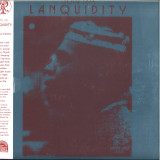
Strut proudly presents a special edition, deluxe repress of Sun Ra’s classic ‘Lanquidity’, for the 25th anniversary of the label. Housed in a tip-on sleeve with OBI strip, this new special editions features an A2 poster including a rare Veryl Oakland photograph of Sun Ra in his home, as well as liner notes by Tom Buchler (Philly Jazz), Michael Ray and Danny Ray Thompson (Sun Ra Arkestra) and Bob Blank. Originally released in 1978 on Philly Jazz, ‘Lanquidity’ was recorded overnight at Bob Bank’s Blank Tapes studio on 17th July 1978 following a performance on Saturday Night Live. “Most critics felt that it was more of a fusion-inspired record,” explains Michael Ray. “As the name suggests, the album is liquid and languid.” Bob Blank adds, “Musically, it was very ad hoc and freeform. There were horn charts but most tracks came out of improvised jams. Sun Ra just did his thing.”
The album 'Lanquidity' consists of five smooth tracks from the Sun Ra discography. It begins gently with 'Lanquidity,' a spontaneous composition by Sun Ra described by Danny Ray Thompson as reminiscent of an Ancient Egyptian Stargazing Ceremony, plotting the stars and planets. 'Where Pathways Meet' follows, featuring Sun Ra's funky interpretation of an Egyptian march, evoking the image of Pharaoh rallying his troops. 'That’s How I Feel' maintains a relaxed groove, featuring reflective trumpet lines from Eddie Gale and solos by John Gilmore and Marshall Allen, with Allen's oboe described as reminiscent of snake-charming. 'Twin Stars Of Thence' dances around Richard Williams' celebrated elastic bassline, while the haunting closer, 'There Are Other Worlds (They Have Not Told You Of),' epitomizes "space music," described by poet Mama Nzinga as 'The essence of light. Spirit takes a ride inside the deep dark space of just being.' Start to finish, Lanquidity remains an effortless, psychedelic pleasure and one of the strongest in the Ra 70's discography.
This new deluxe LP edition of ‘Lanquidity’ features the widely distributed version of the album originally released on Philly Jazz and reflects the album’s original packaging with a metallic foil / magenta sleeve, housed in a tip-on sleeve with OBI strip and featuring both liner notes and a limited edition poster, to celebrate 25 years of Strut records.