
4

Hanagasumi Records presents the fifth release, this time you will hear multi-genre electronic music in compilation format from wonderful artists who have their own unique and inimitable musical vision. Many of the artists previously released on labels such as Udacha, Rough House Rosie, Kimochi, Runout, Resonance, Faktura.
On the cover you see the numbered minerals of one large gem, the mineral number is also the track number. Minerals come together to create something beautiful, just like the tracks on this album.
The compilation opens with the instrumental track "Kamerton" by Shine Grooves, which combines classical piano playing with atmospheric synth sounds. The second track "Gods Gave" by Seal Bient & Jon'Smu is filled with mystery and melodic sequences that gently fall on electro rhythms. Continuing the journey, we come to the third track - "Caleidoscope" from the legendary band Bipolardepth, very fragile and thin sound matter, reminiscent of crystals, is connected with an ambient mood. The fourth track "The Sun Changed To Rain" is the work of two musicians - Michel and Shine Grooves, the composition is filled with house percussions and magical synth parts, but has a relaxing effect. The last track on side A is "Smelles" by Psor, you will hear house rhythms, lots of delay and vocals - first class dub! The second side is opened by the melodic IDM track "Muy Fragil" by Jon'Smu, atmospheric melodies are combined with broken rhythms and futuristic percussion. The second track "Fabrika" from the live improvisational band Ryabina is filled with crystal clear sounds, electro rhythm and cosmic chimes. The third track "Kwas" by Ronin combines a very slow and deep house groove that runs very smoothly through synth sequences. The fourth track "Lionwave" from the mysterious musician Phoboz, is an incredibly beautiful dub techno that slowly leads to hypnosis. The album closes with the ambient track "Runout 08.03" by X343 - a loop-shaped synth sequence that can run endlessly in your head.

St. Virus is a Covid-themed album born in Covid times. It processes the pandemic phenomenon from the aspect of the individual and sometimes of the pandemic itself on a philosophical level.
The opening track, "Isolation", takes the listener on a journey plagued by the sense of loneliness created by isolation. The ever-present melancholy slowly deepens into an overflowing anxiety without release. The eponymous "St. Virus" is a piece that considers the relationship between man and nature and the viruses that appear in it. They work in their own expected and, upon consideration, very honest way. Are we humans honest like this? Are human beings on some level similar to a virus? “Inherently Destructive” presents the idea of the unsustainability of the current situation. The events around us are fundamentally destructive for the individual person, for society and for the culture it carries. St. Virus is a personal soundtrack through Covid times. Record featuring artists are Tapani Rinne, Wimme Saari and Ville Kuukka.

Part 2[20,97 €]
he year 2020 saw NNHMN release two stellar EPs, Deception Island I & II. A fascinating vintage exposure with a true minimalist approach. The typical melodic strings, dry snares and icy sequences are reminiscent of the 80s.
Each EP is a solid work of incredible dark electronica teetering between cold-wave, post-punk, minimal-synth and other related genres. The nocturnal, synth-driven production is led by Lee’s captivating and compelling vocals, whose seductive and sardonic delivery is inescapably entrancing.
Deception Island as a whole taps into a variety of moods and is of course undeniably dance floor friendly. Physically released by Oraculo Records as two separate vinyl EPs, both vinyl editions again quickly sold out. LONG CUT vinyl by Connor Dalton.

After more than 20 years of studio work, it can be said that this album is the result of long hours of introspection and solitude. The inquisitive, investigative and analytical listening of the earliest works of artists such as Robert John Brown & Sean Booth, Mike Paradinas or Jochem George Paap influenced me a lot during the execution of this EP. The deconstruction or deconstructive process was something I needed to explore and put into practice, giving as a result naked periplos or sound spaces, in which the protagonism belongs solely and exclusively to sounds or textures that for my part deserved a thorough review and analysis, making these periplos a challenge in themselves, giving way to resulting works where the rhythmic section was in the background or simply disappeared. In relation to the cover design, thanks to Julian Schnabel and T?fol Cruz for the inspiration and the final artwork respectively.

“Sainen Hildo” is an album based on Miguel’s original compositions, recomposed and rearranged for accordion and voice by the two composers. Using the natural resonance and harmonics of these two instruments to influence their introspective interactions, resulting in evolving drones and tones and puzzling percussive outbursts. Unusual and at times unsettling, they manage to create a calibrated, deep and complex exploratory universe of ambience and drone where listening becomes a ritual. Highest recommendation for fans of Pauline Oliveros, Eliane Radigue or Phill Niblock.
Garazi Navas (accordion + voice). Original compositions by Miguel A. García. Recomposed and rearranged by Garazi Navas & Miguel A. García. Recorded by Ibon Rg at Azkuna Zentroa (Contemporary Art Centre in Bilbao) in June 2022, as part of the associated artists program. Mixing and mastering by Juan Carlos Blancas. Compiled by Mikel Acosta.
Acrylic painting on heavyweight paper by Maite Mugerza Ronse. Limited edition of 300 black vinyl LP’s housed in a coloured matt laminated cover. Released by Hegoa Diskak.
Dopelganger is the project in collaboration between classically trained accordion player and singer Garazi Navas (Usansolo, Bizkaia-Biscay, 1995) and Miguel A. Garcia (Vitoria-Gasteiz), an artist living in Bilbao with an extensive career in the fields of experimental music and sound art.
Garazi Navas / Classically trained at Musikene School of Music in San Sebastian with a masters in traditional music, Garazi, is a restless accordionist who, despite her young age, has taken part in a multitude of projects in theater, poetry, ballet, art installations and even playing with the Bilbao Symphony Orchestra. Her works are a personal interpretation of the close relationship which she feels exists between cutting-edge and traditional music.
Miguel A. García / Has performed extensively in Europe, America and Asia, both as a solo artist, improvising and in multiple ensembles. He has collaborated with dozens of artists (Al Karpenter, Jean Luc Guionnet, Sébastien Branche...) in studio and live, and appeared in more than a hundred albums. At the same time, he is organizer and curator of events, being founder of Club Le Larraskito, director of Zarata Fest, and part of the coordination of the cycle Hotsetan at Azkuna Zentroa itself

'Days of Glory' contains a relatable storyline, sweet soul vocals, and an up-tempo instrumentation flavored with a nostalgic soul scent'
No Kind of Pitiful is exemplary of 1960s soul with an important message! It is an upbeat song that will help you feel better
Brian Scartocci is a veteran soul singer and songwriter.
For more than a decade, the singer has been making a name for himself in the red-hot Austin music scene. The renowned vocalist has lent his voice to a series of popular local and regional bands including Austin Heat and Blind Lead The Blind.
In 2012 Brian Scartocci wowed an international audience as a contestant on the hugely popular competitive singing program, The Voice. Now based in Texas, the New Jersey native has established a reputation across the United States as a dynamic performer and gifted vocalist. Known for interacting directly with the audience, he can often be found offstage, getting down with the crowd.

“Owelle”: frenchified word derived from the English expression “Oh well”. Repurposed by Valérie Siron as her pseudonym to reflect her work ethos: serious, but without making a fuss.
Surfacing from Geneva’s club culture with a graphic design background, Owelle’s drive to synergise the audio and the visual power her expression of creative identity. Her compositions are imagined and built without boundaries, albeit replete with nods to previous genres ranging from early 2000s breakbeat, braindance and broken beat techno.
Intrigued by sensory immersion, Owelle further laces her art with interactive tools including programming, sound spatialisation and installation. Diving into a spatiotemporal journey, subtly incorporating their uses into her musical works. By blending her passion for diligent sound designing, field recordings and psychedelic vocals is how Owelle presents her approach to experimental music. Owelle’s creativity offers an intrinsic connection of her tailored rhythms and melodies to birth an original hybrid of sound and visual art.
The music within this record questions the importance of sound in relation to the individual’s environment. To blur the border between noise and aesthetically pleasing. To ride the waves between discomfort and delight and to find the potentially hidden role of situational awareness and relating it to musical endeavours derived from the emotions within.

A compilation of Hearn Gadbois' tracks, published here and there along the years (1983- 2020). Most of them are home recordings with very little or no diffusion, so this release tries to shed some light on these amazing compositions. A sound related to Hassell's 4th world, but developed in a very personal way (he even designs & makes some of his instruments) that feels different and goes far beyond. Using mostly acoustic instruments, Hearn combines a love of traditional trance/ecstatic rhythms with the sensibilities of an outsider artist, creating a music that is both archaic and post-modern. A really original and rare work, difficult to classify or explain... In Hearn's own words, included in the liner notes:
"The pieces compiled here tend to fall, with some overlap, into a few broad categories as near as I can tell: Mystery Psychedelic Crime Jazz (Tuba City, Flesh of the Spirit), Ayahuasca Hut Bachelor Pad Music (Night, Take the Waters, Wood), or Party Music that just fell from the sky or bubbled up through a crack in the earth (Flown Home, What the Goatherd Heard)"
As a percussionist, composer for dance and film, instrument designer/ builder, session musician and teacher, Gadbois worked with Meredith Monk, Sussan Deyhim, Gabrielle Roth, Yoko Ono, Patti Smith, Suzanne Vega, The Master Musicians of Jajouka, and Wim Wenders, to name but a few.

For our 7th release on Nocturbulous Records, the great Jacky Meurisse, make us the honor of working again with us with 4 lost treasures, previously unreleased on vinyl.
Typical Jacky’s dark and gloomy sounds, but more electronic and dancefloor oriented than his regular SA42 material.

Closely following a busy 2023, GiGi FM announces her brand-new record label, offering “Kiwi Synthesis Diary Vol. 2” to mark the debut. Sea~rène takes aim at dreamlike and ethereal electronic music to reconnect the subconscious and the cosmos through immersive storytelling. As the identity quote of the label says itself “We are Sea~rène swimming in-between supernatural tides, forever following the emotional waves of the universe”.
Already quite accomplished in her milieu through an acclaimed release on Bambounou’s Bambelabel, where she explored the relationship between bodily technologies and music, as well as through her residency on NTS Radio where she explores inter-dimensional sounds and shares her own musical palette, GiGi also continues to perform at strings of performances in the past years in settings like Berghain, Rural Japan, Draaimolen, Fabric, De School, Primavera, The Bunker New York, and Sustain Release. The French/Italian artist takes her productions further with this first release of her imprint. A continuation of her first self-released project, “Kiwi Synthesis Diary 21k,” in 2021, GiGi FM celebrates the exchange between her, as the owner of the journal, and its reader through euphoric soundscapes and vibrant psychedelia. Taking a step back from lockdown introspections, blurred lines between dream and reality like ambient and drony atmospheres, GiGi gives us a bent club record full of colors and life.
GiGi FM guides us through dreams of sonic environments and the adventures to be had through them. Some are characterized by evolving fractals and shifting landscapes like in the healing mushroom journey of ‘Amadamushies’ and the mythical Japanese Heron ‘Tsuru’. Combining steady rhythm and immersive ambiances, the result intends to soothe into a state of openness through kindly familiar territories. Sifting through the tracks, we find ourselves traveling fast through cosmic ecosystems like in the spiritual and cosmic teaching that “Tevora'' represents, as well as ‘Househopping (Keroppi)’ and “Sly Xupete Di Barcelona,” conveying the urgency to feel and create, even within difficult circumstances, while “Spazio Teletrasporto'' takes us on a hypnotic whirlwind trip into the depths of the cosmos and our inner consciousness. Through these chapters of a journey, a connection between the mind and the beyond is implied, and its importance is highlighted.
Deeply influenced by astrology, philosophy, and the cosmos; for GiGi, music is both a tool for expression and introspection. As a multi-hyphenate artist, she continues on her quest to push artistic boundaries and hold space for unique audience experiences. Whatever medium she may adopt, the result is a rich embodiment of the interconnectedness of sound, color, movement, and metaphysics.

T4T LUV NRG presents “Call Me G”, the new album by Brooklyn’s Russell E.L. Butler, their first full length LP since the release of 2018’s critically acclaimed “The Home I’d Build For Myself and All My Friends” on Left Hand Path. In the intervening years, Russell has experienced an accumulation of personal subjective experiences which are explored through captivating musical modalities and expressions on this sprawling, gorgeous, and deeply emotional album. Russell’s work on “Call Me G” can be described as a unique amalgam of early NY house music, dub techno and poetry. The album’s title track, as well as its instrumentals, are a kind of storytelling for histories that continue to exist without observation as well as for secrets and the power they hold in spite of their truth being obscured and sometimes lost.
Storytellers like Russell have the ability to collapse the past and future into discrete experiences of non-linear time through the emotional landscape of music and voice. Each song contains a palatable loneliness and hurt to which many in this modern world can relate, but each track also suggests the possibility of genuine connection and the formation of the self through communing and reintegrating with the natural world. These parallel concepts are the subject of “Accumulation”, a writing by Russell which accompanies the release of the album. The emotions, conflicts and resolutions that accompany Russell’s storytelling are felt acutely on tracks such as “I’m Dancing No One Is Watching” and “Stare Into The Light Beam”, among others.
On the title song, which closes the album, Russell sings “Can you call me? Will you call me? All that I want is for you to call me by my name...My name is G.” Context is part of interpretation and thus it is left to the listener to feel in the music and lyrics the concept that what may seem erased never truly dies, the traces still exist in the thing that takes its place. The T4T LUV NRG label is in part a continuing effort to facilitate the documentation of true stories that don’t get told—rather than representing a singular vibe or genre. Russell’s album is a stunning and profound entry in this evolving catalog of music and art. The beautiful cover of “Call Me G” is based on a hand drawn portrait of the artist by Diego Guzman.

Debut album of heavy Colombian salsa by the obscure and short-lived El Clan Antillano. Founded in 1975 by singer Jacky Carazo and radio personality / composer Mike Char and backed by a studio orchestra comprised mostly of Fruko Y Sus Tesos band members. The record has been remastered from the original tapes, with an additional three bonus cuts taken from two rare 45 singles, including the sought after track ‘Alma’. First time reissue. 180g Vinyl.
El Clan Antillano was an obscure, short-lived salsa group started in 1975 by singer Jacky “El Caballo” Carazo, originally from Cartagena, and radio host / song composer Mike Char, from Barranquilla. The band was active only until 1977, with a mere two albums to its name. Carazo and Char, “los amigos costeños” (friends from the Caribbean coastal area) created El Clan Antillano as a fresh start after the previous group Carazo had been the lead singer for, El
Afrocombo, had become inactive.
Char primary passion was music, especially songwriting. One of his skills in this area was adapting foreign songs, often in a different language, rhythm, arrangement or genre, and refashioning the tune in an uptempo Caribbean dance mode as a salsa or cumbia. This formula, as well as his own original compositions, soon brought him success not only with costeño friends like Carazo and Vicentini, but also with Medellín’s Fruko, allowing him to make a name for himself with record labels in that city. It was at this juncture, in 1975, that El Clan Antillano was born. This is their first album and was recorded with local studio musicians. It’s been said that most on the first album were from Fruko Y Sus Tesos (the voice of Joe Arroyo can be heard on coro) as well as others involved with various groups like La Protesta (de Colombia) and Juan Piña’s La Revelación.
The album kicks off with ‘Donde ‘sta? Donde ‘sta?’, a medley of costeño lyrical phrases quoting various popular porros. Gradually changing the vibe, this is followed by Enrique Aguilar’s ‘El baile del
ratón’, a humorous cumbia that changes into a salsa halfway through. As if El Clan Antillano were not entirely confident about featuring purely salsa from the start, the same cumbia/salsa hybrid formula is used in the third piece, a faithfully rendered version of Eddie Palmieri’s ‘Mi cumbia’.
‘Estás equivocada’ rocks hard like the best Venezuelan salsa of the time. ‘Esta mañana’ is a cover version of an obscure bolero from Curaçao’s Erwin Castaneer with Super Combo Castaneer. ‘En la oscuridad’ is an interesting mashup of Puerto Rican bomba and New York style pachanga. ‘El despertar’ is a sunny sounding pop song reinvented as a Nelson y sus Estrellas style salsa/cumbia hybrid with a fantastic ‘montuno’ section.
Up next is a hard salsa jam in the ‘pregón’ (street vendor’s cry) genre, written by Fruko Y Sus Tesos percussionist Álvaro Velásquez (composer of ‘El preso’). The original album track list closes out with a fantastic rendition of Puerto Rican singer/composer Bobby Capó’s classic ‘El negro bembón’ that the world first leaned to love through Cortijo y Su Combo. Three bonus tracks have been added to the album as it was originally very short. Interestingly, there were four songs from two 45 singles cut by the band that were never included on either long play. While the ephemeral El Clan Antillano may not be as well known as the groups it’s related to, namely El Afrocombo and Fruko Y Sus Tesos, it certainly deserves credit as a worthy participant in the historical evolution of salsa colombiana.

*Repress*
An artist as imaginative and unique as Ana Mazzotti doesn’t come around often. Dubbed a “super-musician” by fellow Brazilian virtuoso Hermeto Pascoal, Mazzotti’s short but rich musical career culminated in just two studio albums: Ninguem Vai Me Segurar (1974), and Ana Mazzotti (1977). Outside circles of Brazilian funk aficionados, these two gems of spellbinding samba-jazz, lysergic funk and trippy bossa have remained relatively obscure. This was partly as a result of Mazzotti’s premature death (she lost her battle with cancer in her mid-thirties), but also due to financial restraints and the prejudice she faced as a female songwriter in a fundamentally sexist society.
Born in Caixas, in Brazil’s Rio Grande do Sul municipality, Mazzotti began to play the accordion aged five, before moving with prodigious ease onto the piano. By the age of twelve she was already conducting her convent school’s choir, and at twenty-one she led her city’s premier chorus, the Coral Bento Goncalves. When rock and roll hit South America in the sixties, a young Mazzotti was one of the early adopters, fronting various guitar groups including an all female Beatles cover band, and an eclectic, eight-piece psychedelic group Desenvolvemento. Before moving to Sao Paulo to start her career proper, Mazzotti met drummer, producer and fellow music educator Romido Santos, who she would later marry. Romildo introduced Mazzotti to jazz, and music by the likes of Chick Corea and Hermeto Pascoal who she would later befriend and perform with.
In 1974 Mazzotti recorded her first album Ninguem Vai Me Segurar (1974), enlisting the in-demand arrangement talents of Azymuth’s original keyboard maestro Jose Roberto Bertrami who co-wrote several of the tracks and plays organ, piano and synthesizers on the album. It also features Azymuth’s bassist Alex Malheiros and percussionist Ariovaldo Contestini, with Romildo Santos who produced the album on drums. Recorded in Estudio Haway around the same time Azymuth recorded their debut album there, it’s no wonder the samba jazz-funk pioneer’s distinctive aesthetic is present throughout, and Mazzotti’s sensational compositions are made even more beautiful for it.
Kicking off with the swirling samba-jazz-dance masterpiece ‘Agora Ou Nunca Mais’, the album hosts several groove-heavy Brazilian cult-classics including ‘Roda Mundo’ and ‘Eu Sou Mais Eu’. Deeper moments come in the form of the alluring future soul synth sounds on ‘Bairro Negro’ and ‘Sou’, and Mazzotti’s tender, hallucinatory version of ‘Feel Like Making Love’ (made famous by Roberta Flack) perfectly reflecting the idiosyncratic genius Mazzotti achieved with Bertrami’s visionary arrangements, and Romildo’s impeccable production approach.
Far Out Recordings is proud to present the official reissue of this cult favourite Brazilian treasure. Remastered and pressed to 180g vinyl, Ninguem Vai Me Segurar (1974) will be available on vinyl LP, CD and digitally from 13th September.

Step into a cosmic journey with "Cocaine Kisses," an ethereal album that effortlessly blends spacey synthesizers, moody melodies, and loungey beats. This captivating musical expedition reflects the tumultuous emotions of love and trust issues, resonating with listeners on a profound level. Crafted during a period of personal transformation and isolation brought about by losing management and enduring the trials of quarantine for COVID-19, each track becomes a portal to both introspection and connection. From hauntingly beautiful melodies that mirror the depths of heartache to uplifting rhythms that evoke moments of hope, this album encapsulates the paradoxical nature of human relationships. As the celestial harmonies intertwine, listeners are reminded of the resilience of the human spirit and the power of forging meaningful bonds amidst adversity. Through "Cocaine Kisses," prepare to embark on an otherworldly sonic odyssey that transcends the boundaries of time, welcoming you to a universe where love, loss, and self-discovery collide in a symphony of emotions.

“Only those who will risk going too far can possibly find out how far one can go.” a sage modernist poet previously whispered. And here we go, far out and yet so near, the third edition of “Risks Issues Opportunities” brings frontier reverberations scratching at the edges of dance, pop, downbeat, and other trance- portive sectors. Eight fast/slow propelling tracks. Adventurous, full of grandeur, gratifying the dance floor while equally winning the relaxation zones. Pure emotions crafted by newcomers. There is Milan’s Tagliabue, trancing slow and insightful. Or Cologne’s Grischerr, eloquently Tolouse-Low-Traxing. Some go down the slow burning road, where rhythms hang low, and suspense is in full show. Like London’s Frank Rodas, Garnu Depot from Iran, or Xei Ju from the islands of Micronesia, striking all ears with ghostly transcendental percussive science. An autumnally global voyage, which likewise offers industrialized districts by Italian producer Federico Cassetta, Metropolis minimal wave pop by Japanese musician Saeko Killy, or odd swamp funk by Chilean/German duo 7697 Miles. They all show, how far you can go, without losing your distinct flow.
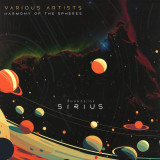
Following a masterful release from SWOY, Sounds of Sirius Music presents their first Various Artist Compilation SOSNZ007 – “Harmony of the Spheres”. Wrapping up 2023 with top notch underground music, joins the musical dots between talented and free-spirited artists working across the globe.
In this edition we have close friends and supportive artists from Sounds Of Sirius, including none other than Mihai Pol (Romania), rising Chilean talent Nibaaldo (Chile), brotherly duo Clay and Heath Ostrer aka Last Pines (UK) and Sevillian talent Alvaro Lamet aka Enzo Leep (Spain).
Harmony of the spheres is a philosophical concept highlighting proportions of the celestial bodies and their movements– the Sun, Moon and planets – as a form of music. These comic mathematical relationships express qualities or "tones" of energy which manifest in numbers, visual angles, shapes and sounds.
Early Support: Mihai Pol, userUNKNWN, Silat Beksi and Herman Saiz.

Aphrose reveals her sophomore album, 'Roses,' a captivating amalgamation of Neo-Soul and R&B, delving into the wellspring of ancestral strength and love.
Hailing from Toronto, Canada, Aphrose, also known as Joanna Mohammed, unveils her sophomore album, establishing her as one of Toronto's best-kept musical treasures. Known for her commanding vocal prowess within her hometown, this gifted songwriter and vocalist is rapidly garnering global acclaim and accolades from both fans and music critics alike. Signed to independent Soul label LRK Records, 'Roses' remains firmly rooted in Aphrose's signature style characterized by resounding R&B vocals. However, it also embraces a softer, more introspective aura that brilliantly showcases her remarkable versatility in navigating diverse genres, moods, and musical approaches with remarkable finesse.
This album offers a little something for everyone, catering to enthusiasts of Neo-soul, traditional Soul, Hip Hop, and R&B. Produced by her longtime friends/collaborators at SafeSpaceship Music (Scott McCannell, Chino De Villa, Ben Macdonald), the album serves as a compelling testament to the collective creativity of Aphrose and this exceptional production trio, delivering a kaleidoscope of soundscapes, textures, rhythms, and grooves. 'Roses' weaves together both lighthearted and profound elements as Aphrose explores her life journey, delving into her familial past and present, grappling with the challenges of new motherhood, and contemplating her relationships with herself, her partner, and her friends. Across the 35-minute LP, Aphrose draws inspiration from Neo-soul icons like Jill Scott and Erykah Badu, pays homage to Soul legends such as Aretha Franklin and MJ, and infuses contemporary R&B influences from artists like Frank Ocean, SiR, and SZA. The result is a sound that distinctly bears the 'Aphrose sound,' reflecting her deep admiration for her inspirations while imparting a refreshing twist to familiar genres.
The album commences with its title track, 'Roses,' which was released as a single on August 25th. This song sets the stage, invoking the strength of Aphrose's ancestors, particularly her late Grandmother Rose. Following suit is 'YaYa,' also released as a single on July 7th. This buoyant dance track whisks listeners back to the disco era of the late 70s and early 80s. The album's third track, 'Heavenly Father,' offers a brief interlude featuring a recording of Aphrose's Grandmother Rose engaged in prayer, setting the tone for the subsequent track, 'In The Time Of Sorrow.' This contemplative, chill piece captures Aphrose's musings on navigating a world often shrouded in fakery, while craving authenticity. 'Honey (Don't) Come Back' seamlessly transitions between two distinct musical personalities, commencing with a deep, almost Trap-like bass/drum beat before transforming into a spirited Funk/Soul jam—an anthem of empowerment encouraging the listener to leave a situationship that is no longer working. 'What You Don't See' strips the production down to its core, as Aphrose and guitarist/co-writer Heather Crawford craft an intimate ode to a friendship's sad ending.
The B-side opens with the evocative 'Weapons,' featuring a five-person choir including LRK label-mate Claire Davis, Nevon Sinclair (Daniel Caesar and LOONY), Kyla Charter (Aysanabee and Alessia Cara), Lydia Persaud, and Marla Walters. The track is adorned with a stirring string arrangement courtesy of Jessica Deutsch. 'Chop The Cake' acts as a breather, interlude-style, easing the intensity. 'Soft Nuclear' channels the spirit of the early 2000s R&B movement, bearing traces of influence from Lucy Pearl. 'Good Love,' released as the first single off this body of work on May 19th, transports listeners to the 70s with its soulful resonance, drawing inspiration from the likes of Michael Jackson and Teddy Pendergrass. 'Higher' stands as Aphrose's tribute to Prince, capturing the essence of his music within its hook and production. The album's culmination arrives with 'ZAG,' an acronym derived from Aphrose's daughter's name, commencing with the sound of her daughter's heartbeat in-utero from a sonogram taken when Aphrose was pregnant. This heartfelt composition serves as a dedication to her daughter and all parents navigating the rollercoaster of parenthood, emphasizing the imperative of nurturing love to shape the future.
'Roses' stands as Aphrose's homage to her history—her Grandma Rose and the ancestral trailblazers who paved her path to the present life she enjoys; her current experiences—her self-discovery, her relationships with her partner and friends; and her aspirations for the future—her daughter and the generations to come. This album crystallizes these temporal dimensions, prompting introspection, celebration, laughter, and tears. 'Roses' is a musical odyssey that scrutinizes the multifaceted beauty of existence, inviting listeners to partake in this thing called life.
The radio world has taken notice of Aphrose's talent, with national Radio Capital's Italy Massimo Oldani spinning her latest single "YaYa" for the entire month of July on his show "Vibe." And both singles getting to number 10 in the UK soul chart.Additionally, Aphrose has received national radio play on renowned stations such as BBC in the UK, RTVE in Spain, and Radio France FIP.
Aphrose has also made CBC's Top 100 finalist list for their Searchlight competition.
Huey Morgan played "YaYa" the second track off the album on his BBC radio six show

"Welcome To My World" is a collection of some of Daniel's most-beloved songs and is now available on vinyl for the very first time. These are the songs that built the legend...a must-have for the legion of devoted Daniel Johnston Fans as well as the perfect introduction for new listeners.
Welcome To My World serves as an introduction to Daniel Johnston, housing a number of his most acclaimed works. Johnston's music captivated fellow artists and fans with its childlike elements and lo-fi elements. The singer-songwriter and artist earned a cult following in the early '80s, sharing homemade cassette tapes of his music, and his prominence was established after Kurt Cobain was publicly seen wearing a shirt with Johnston's illustration.

I Talk To Water, the fifth album for Kompakt by Danish producer Kölsch, is the artist’s most personal statement yet. While all the trademarks that make his music so popular and powerful are still present – lush, melodic techno; swooping, trance-like figures; sensuous, shivery texturology – I Talk To Water is also a deep and intimate rapprochement with family and history, a beautiful, finely detailed document of loss and memory, and a tracing of the long, unbroken thread of grief that runs through our lives once we’ve lost those we loved.
The emotional core of I Talk To Water, then, is a cache of recordings by Kölsch’s father, Patrick Reilly, who passed away in 2003 from brain cancer. With time rendered elastic by the pandemic and its associated lockdowns, its sudden, alienating shifts in everyday living, Kölsch found himself reflecting on his father’s passing and ongoing spiritual presence, thinking about how best to memorialise such a significant figure in his own life. Those recordings opened a gateway, of sorts, for Kölsch to move through – a way to bring past and present together and entwine them in a sensitive, poetic manner.
Kölsch’s father was a musician – “touring in the sixties and seventies, in the Middle East especially, he was doing the whole hippy trail, playing guitar, and wrote some songs over the years,” he recalls. “But all in all, he decided to focus on family rather than pursue a musical career.” Reilly kept playing and writing music over the years, though Kölsch hadn’t listened to the material for some time: “I’d never had the guts to listen to it, because I just felt too fragile listening to his voice. It’s such a tough thing to go through.”
During the pandemic, though, Kölsch listened through the fragmented body of work that his father had produced over the years. “I decided I’m gonna finally release my dad’s music twenty years after his passing,” he reflects. “This whole album is about the process of loss, and for me it’s been one of my main driving forces in my musical life, the whole emotional aspect of whatever I’ve done has been based in that feeling that he’s not there anymore.”
Recordings of Reilly appear on three songs across I Talk To Water. His guitars drift pensively across “Grape”, offering a lush thread of melody that Kölsch wraps with clicking, driftwood rhythms and droning, melancholy bass. “Tell Me” is a lovely three-minute art song, a sadly beautiful reflection, minimally adorned with gentle keys and a muted pulse. And on the closing “It Ends Where It Began”, Kölsch lets his father’s acoustic guitar take centre stage for a lament that’s unexpectedly folksy, a guitar soli dream, which Reilly originally recorded in 1996. “He actually recorded it for my first album that never came out,” Kölsch reveals, “and I had it sitting around forever. That is purely him.”
These three imagined collaborations between father and son are poised and delicate. But their relationship also marks the gorgeous music Kölsch has made across the rest of I Talk To Water, from the itchy yet lush “Pet Sound” (titled in tribute to one of Reilly’s favourite albums), the flickering synths and yearning vocal samples that slide through “Khenpo”, the ecstatic shuddering that marks “Only Get Better”, or “Implant”’s slow-motion pans and subtle reveals.
There’s also the title song, where Kölsch is joined by guest Perry Farrell (Jane’s Addiction, Porno For Pyros), singing a mantra for internal reflection: “I talk to water / Searching for myself / Looking for answers / Oceans of you.” Farrell’s appearance brings another timbre, another spirit to the album, aligning neatly with his recent interest in electronic music. “He was completely taken by this idea of talking to water,” Kölsch says, thinking about the ways we collectively lean towards the natural world as a comfort and a listener, a guide through mourning, a way to map out the terrain of the heart. This mapping is something that Kölsch has proven remarkably adept at through the years; dance music for both body and mind, but also both for the here-and-now, and for the hereafter.
“I Talk To Water”, das fünfte Album des dänischen Produzenten Kölsch für Kompakt, ist zweifellos das persönlichste Statement des Künstlers bislang. Während alle Markenzeichen, die seine Musik so beliebt und kraftvoll machen, immer noch präsent sind – üppige, melodische Techno-Tracks; schwebende, tranceartige Elemente; sinnliche, fiebrige Texturen – ist “I Talk To Water” auch eine tiefe und intime Annäherung an Familie und Geschichte. Es ist ein wunderschönes, fein ausgearbeitetes Dokument des Verlusts und der Erinnerung, und es verfolgt den langen, ungebrochenen Faden der Trauer, der durch unser Leben läuft, sobald wir diejenigen verloren haben, die wir liebten.
Der emotionale Kern von “I Talk To Water” besteht aus Aufnahmen von Kölschs Vater, Patrick Reilly, der 2003 an Hirnkrebs verstarb. Durch die Pandemie und ihre damit verbundenen Lockdowns, die plötzlichen, entfremdenden Veränderungen im Alltag, fand Kölsch sich in Gedanken an den Tod seines Vaters und seine fortwährende spirituelle Präsenz wieder. Er überlegte, wie er eine so bedeutende Figur in seinem eigenen Leben am besten verewigen könnte. Diese Aufnahmen öffneten ihm sozusagen ein Portal, um Vergangenheit und Gegenwart miteinander zu verbinden und sie auf sensible und poetische Weise zu verweben.
Kölschs Vater war Musiker – “er tourte in den sechziger und siebziger Jahren, vor allem im Nahen Osten, auf dem Hippie Trail, spielte Gitarre und schrieb im Laufe der Jahre einige Songs”, erinnert sich Kölsch. “Aber alles in allem entschied er sich, sich auf die Familie zu konzentrieren, anstatt eine musikalische Karriere zu verfolgen.” Reilly spielte und schrieb jedoch im Laufe der Jahre weiterhin Musik, obwohl Kölsch das Material lange Zeit nicht angehört hatte: “Ich hatte nie den Mut, es anzuhören, weil ich mich einfach zu zerbrechlich fühlte, seine Stimme anzuhören. Es ist so schwer, das durchzustehen.”
Während der Pandemie hörte sich Kölsch jedoch durch das fragmentierte Werk, das sein Vater im Laufe der Jahre produziert hatte. “Ich beschloss, die Musik meines Vaters zwanzig Jahre nach seinem Tod endlich zu veröffentlichen”, reflektiert er. “Dieses ganze Album handelt von dem Verlustprozess, welcher für mich generell eine der Hauptantriebskräfte in meinem musikalischen Leben ist. Der ganze emotionale Aspekt von dem, was ich getan habe, basierte auf dem Gefühl, dass er nicht mehr da ist.”
Auf “I Talk To Water” sind Aufnahmen von Reilly in drei Songs zu hören. Seine Gitarren ziehen nachdenklich durch “Grape”, bieten einen üppigen Melodiefaden, den Kölsch mit klickenden, treibenden Rhythmen und dröhnendem, melancholischem Bass umwickelt. “Tell Me” ist ein schönes dreiminütiges Kunstlied, eine traurig-schöne Reflexion, minimal geschmückt mit sanften Tasten und einem gedämpften Puls. Und auf dem Abschlusstrack “It Ends Where It Began” lässt Kölsch die akustische Gitarre seines Vaters im Mittelpunkt stehen, ein überraschend folkiger Klagegesang, den Reilly ursprünglich 1996 aufgenommen hatte. “Er hat es tatsächlich für mein erstes Album aufgenommen, das nie veröffentlicht wurde”, enthüllt Kölsch, “und ich hatte es ewig liegen.”
Diese drei erdachten Kollaborationen zwischen Vater und Sohn sind ausgewogen und zart. Aber ihre Beziehung prägt auch die wunderschöne Musik, die Kölsch im Rest von “I Talk To Water” geschaffen hat, angefangen bei dem nervösen, aber üppigen “Pet Sound” (benannt als Hommage an eines von Reillys Lieblingsalben), den flimmernden Synthesizern und sehnsüchtigen Vocal-Samples in “Khenpo”, den ekstatischen Erschütterungen in “Only Get Better” oder den langsamen Schwenks und subtilen Enthüllungen in “Implant”.
Es gibt auch den Titelsong, in dem Kölsch von Gast Perry Farrell (Jane’s Addiction, Porno For Pyros) begleitet wird, der ein Mantra für die innere Reflexion singt: “I talk to water / Searching for myself / Looking for answers / Oceans of you.” Farrells Auftritt bringt eine weitere Klangfarbe, einen weiteren Geist in das Album, der gut zu seinem jüngsten Interesse an elektronischer Musik passt. “Er war völlig fasziniert von der Idee, mit Wasser zu sprechen”, sagt Kölsch und denkt darüber nach, wie wir kollektiv zur Natur als Trost, Zuhörer, Führer durch die Trauer neigen, um die Gelände des Herzens zu kartieren. Diese Kartierung ist etwas, in dem Kölsch im Laufe der Jahre erstaunlich geschickt war; Tanzmusik für Körper und Geist, sowohl für das Hier und Jetzt, als auch für das Leben danach.
