GAISTER (Olivia Salvadori, Akihide Monna and Coby Sey) release their self-titled LP.
The record captures the embodiment of an encounter, one moment of the trio’s ongoing relationship as artists who communicate with each other through sound, voice and music.
After orbiting in the same circles at each other's shows around 2016 in London, Sey and Salvadori eventually crossed paths. In 2017 Sey joined Salvadori’s artistic collective Tutto Questo Sentire on a residency in Capalbio, the southernmost part of Tuscany, Italy, and started working together. Down the line the pair ended up joining with Akihide Monna (of Bo Ningen), performing together in 2019 at Camden Art Centre on Cork Street in London.
When the trio come together something new is created, brought out after laying dormant, like an Icelandic Geysir. The setting of this particular encounter amongst the trio is essential in the album’s sonic palette, process and emotion. The album was recorded in Iceland at
Greenhouse Studios, where the trio formalised a set of intuitions; how nature can provide a guideline in the choices of the instruments, their materials and related rhythms; reflections on the voice as a sculptural element, pure sound and words.
As Akihide has said of the experience during their short and intense recording period: “The sound spontaneously spun out as if we were pulling at each other's hearts and minds with a strange internal connection and sensation. Something pure was brought out.”
‘Gaister’ itself is a made up word, sprung from the German ‘Geist’ to mean ‘spirit’, and made into a sound of its own. A purity, spirit and essence is pulled from the trio, in spite of their varying mother tongues (Italian, Japanese and English), musical genres and identities to create something new. Olivia Salvadori’s operatic vocals run free, flowing and moving in
synergy with Monna’s rhythmic drumming. Sey sings freely with Salvadori, their voices braided together like a waterfall.
This flowing nature is reflected in the album itself, its timestamps and scores are marked by encounters rather than tracks themselves. This album can be considered as one constant piece and a journey of its own that is not foreclosed, in keeping with the band’s ethos of
constant conversation and collaboration.
As Sey speaks of the trio’s relationship: “Olivia, Monchan and I had performed live together once before, several years before this song and this album came to be… and yet, we fully trust each other’s intuition when performing and creating music together because of our unified belief in the ability of sound and music to communicate and connect.”
credits
releases November 1, 2024
Olivia Salvadori: voice
Akihide Monna: voice, drums, percussions
Coby Sey: voice, percussions, synths, wurlitzer
Recorded at Greenhouse Studios in Reykjavik, Iceland
Recorded and producer: Sandro Mussida
Sound engineer: Francesco Fabris
Studio assistant: Domiziano Maselli and Jakob Vasak
Mixing engineer: Kristian Craig Robinson at Total Refreshment Centre, London, UK
Cerca:rela
- 1: Brave
- 2: Pass The Salt Feat. Vince Staples
- 3: Carmen
- 4: Perfect Crime
- 5: Mathematics Feat. Kano
- 6: House With A Pool
- 7: I Know You’d Kill
- 8: First Last Dance
- 9: Mother
- 10: Somebody To You
- 11: Forever
- 12: Paris
South London singer, songwriter and cultural powerhouse Joy Crookes has today unveiled the news that her worth-the-wait second album Juniper will be released on September 26th ahead of a full UK & EU headline tour.
A stunningly candid and fearless body of work, the album reaffirms Joy as one of the UK’s most vital and original voices. A once-in-a-generation talent, Crookes delivers a record that is both emotionally raw and sonically rich; humorous, heartbreaking and profoundly human.
Following the success of her 2021 debut Skin, which earned BRIT and Mercury Prize nominations, went Top 5 in the UK charts, and drew acclaim from The Guardian, NME and many more, Joy set out to make an album that pushed her further both musically and personally.
Juniper is the result: a project defined by its depth and dynamism.
Written with a stripped-back approach and produced by long-time collaborators including Blue May (Kano, Jorja Smith), Tev’n (Stormzy) and Harvey Grant (Arlo Parks),
Juniper features standout guest appearances from Vince Staples on the incendiary ‘Pass The Salt’ and Kano on the bittersweet confessional ‘Mathematics’.
Crookes describes the record as “more nuanced” than Skin: “With Juniper, every situation is visceral and I’m very much in it. It’s me in the centre of it all.”
The title itself nods to resilience (an evergreen that thrives in harsh conditions) and the album dives deep into themes of body politics, mental health, queer love, anxiety, industry hypocrisy and the ecstasy (and terror) of falling in love.
Lead singles like ‘Pass The Salt’ and ‘I Know You’d Kill’ showcase Crookes’ lyrical agility – blending poetic detail with razor-sharp wit. Meanwhile, the euro-pop inspired ‘First Last Dance’ channels euphoric melodies to mask deep emotional struggle, and the cinematic ‘Perfect Crime’ sees Joy fully self-actualise in the style of a Western showdown.
On ‘Paris’, the closing track, Joy reflects on a formative queer relationship: “Something I feared so much finally, actually felt like love.” It’s a sentiment echoed across Juniper – a record that captures the beauty and brutality of emotional openness.
The album arrives after a period of personal upheaval for Crookes, including a mental health crisis that shadowed the album’s creation. “I was in the trenches,” she says. “But the studio became my solace. What you hear is live and direct from that time.” Despite the darkness, Juniper radiates warmth, levity, and life, powered by Crookes’ ever-restless creativity and artistic excellence. Ahead of her performance this weekend at BBC Radio 1’s Big Weekend event in Liverpool, followed by a slot at Glastonbury, Joy is pleased to announce a full UK & EU headline tour for the backend of the year.
In celebration of Juniper's release, Joy will head out to all major cities including Dublin, Manchester, Bristol and London where she’ll play the much coveted 02 Academy Brixton for the first time. See below for full routing and ticket info.
- An Ephemeral Radiant
- Savonarola's Insight
- Ocular Creature
- The Elusive Beings
- Neri
- Afterglow Apprehension
- The Gulf
- Ladder Of Meaning
- Evade The Swirling Mimicry
- Inscape
- Veiled Grammar
- Iron Staircase
- Luminous Seeping Through The Crevices
- A Subdued Longing And Gentle Ache
- In Bethulia
- Deep Sea's Rainbow Part1
- Deep Sea's Rainbow Part2
- Deep Sea's Rainbow Part3
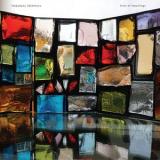
Nobukazu Takemura"s music is singular in its ability to create a musical sense of childlike wonder and curiosity, with gracefully executed yet complex compositions. His pieces embody an innocence and the intricacies of self discovery that every human is faced with as their worlds become more complex. An acclaimed producer and composer, Takemura is known for his idiosyncratic music and video artistry as well as his prolific collaborations including those with Tortoise, Yo La Tengo, DJ Spooky and Steve Reich. knot of meanings, Takemura"s first proper album in a decade, finds the Japanese artist wrestling with the rise of technological influence on art and culture in the modern era, in tandem with his own relationship to religion, and where those struggles meet. Like the colorful, irregularly shaped glasses on the cover, the album is a mosaic of technicolor elements that come together to form a complete picture, a dense portrait of interconnected struggles and triumphs.
- 1: Abandon
- 2: To The Bone
- 3: Descartes
- 4: Need
- 5: Beg
- 6: Rage
- 7: Something's Gonna Happen
- 8: Pieces
- 9: Better
- 10: Coming Alive
- 11: Desire
Den Grundstein für ihre musikalische Karriere legten SPRINTS zweifelsohne mit ihrem Debütalbum 'Letter To Self' im Jahr 2024. Allein in diesem Jahr tourte die Band um Frontfrau Karla Chubb zwei mal durch Europa, UK und die USA. Das neue Album 'All That Is Over' ist ein bemerkenswertes zweites Werk, das die Dynamik der Band noch weiter vorantreibt, noch nuancierter klingt, aber nichts an Rohheit einbüßt.
Während viele Bands nach einer solch hektischen Anfangszeit ausgebrannt wären und eine Pause bräuchten, wurde Karla umso produktiver und kreativer. 'There was just so much happening and so much to process,' erklärt sie. 'I was going through a big break up with my partner who I’d been with for eight years; Colm had left the band; we’d really progressed into being professional musicians, and I was at the start of a new relationship. But then you’d look outside and it’s like the world has never been uglier. I was writing every day because there was so much going on.' In diesem Spannungsfeld aus Wut, Ambitionen und tausend weiteren Gefühlen dazwischen legt 'All That Is Over' die Karten auf den Tisch. Das Album wurde in Tourbussen, bei Soundchecks und in Echtzeit geschrieben. Vor dem Hintergrund einer Litanei von Grausamkeiten - dem Krieg in Nahost, den Waldbränden in Los Angeles, Trumps Executive Order, die die Rechte von Trans-Personen schneidet - versuchen SPRINTS, einer verrückt gewordenen Gesellschaft einen Sinn zu geben.
Das neue Album 'All That Is Over' der irischen Band SPRINTS erscheint am 26. September 2025 via CITY SLANG (in den USA über Sub Pop Records). Im Sommer ist die Band mit Fontaines D.C. bei einigen Konzerten in Deutschland live zu sehen.
- A1: Abandon
- A2: To The Bone
- A3: Descartes
- A4: Need
- A5: Beg
- A6: Rage
- B1: Something's Gonna Happen
- B2: Pieces
- B3: Better
- B4: Coming Alive
- B5: Desire
Den Grundstein für ihre musikalische Karriere legten SPRINTS zweifelsohne mit ihrem Debütalbum 'Letter To Self' im Jahr 2024. Allein in diesem Jahr tourte die Band um Frontfrau Karla Chubb zwei mal durch Europa, UK und die USA. Das neue Album 'All That Is Over' ist ein bemerkenswertes zweites Werk, das die Dynamik der Band noch weiter vorantreibt, noch nuancierter klingt, aber nichts an Rohheit einbüßt.
Während viele Bands nach einer solch hektischen Anfangszeit ausgebrannt wären und eine Pause bräuchten, wurde Karla umso produktiver und kreativer. 'There was just so much happening and so much to process,' erklärt sie. 'I was going through a big break up with my partner who I’d been with for eight years; Colm had left the band; we’d really progressed into being professional musicians, and I was at the start of a new relationship. But then you’d look outside and it’s like the world has never been uglier. I was writing every day because there was so much going on.' In diesem Spannungsfeld aus Wut, Ambitionen und tausend weiteren Gefühlen dazwischen legt 'All That Is Over' die Karten auf den Tisch. Das Album wurde in Tourbussen, bei Soundchecks und in Echtzeit geschrieben. Vor dem Hintergrund einer Litanei von Grausamkeiten - dem Krieg in Nahost, den Waldbränden in Los Angeles, Trumps Executive Order, die die Rechte von Trans-Personen schneidet - versuchen SPRINTS, einer verrückt gewordenen Gesellschaft einen Sinn zu geben.
Das neue Album 'All That Is Over' der irischen Band SPRINTS erscheint am 26. September 2025 via CITY SLANG (in den USA über Sub Pop Records). Im Sommer ist die Band mit Fontaines D.C. bei einigen Konzerten in Deutschland live zu sehen.
This is Music: The Singles, ist ein Kompilationsalbum der englischen Alternative-Rock-Band The Verve:
Richard Ashcroft (Gesang), Pete Salisbury (Schlagzeug), Simon Jones (Bass) und Nick McCabe (Gitarre).
Ursprünglich wurde das Album im November 2004 veröffentlicht und enthielt zwei Nicht-Singles, die aus
den Aufnahmen zu ihrem dritten Album Urban Hymns stammten: „This Could Be My Moment“ und
„Monte Carlo“.
2024 markiert den 20. Jahrestag der Veröffentlichung eines Albums, das nie auf Vinyl gepresst wurde,
und unter der Leitung der Gruppe ersetzt diese längst überfällige Neuauflage die Bonustracks durch die
kraftvollen Singles aus dem 2008er Reunion-Album Forth - ’Love is Noise’ und ’Rather Be’ - und enthält
auch die zweite Single ’She’s A Superstar’ (1992) in ihrer ursprünglichen, achteinhalbminütigen Form (statt
der fünfminütigen Bearbeitung). Somit repräsentiert das Album nun die komplette Geschichte der Singles
von The Verve.
Benannt nach der sechsten Single der Band, der ersten aus ihrem zweiten Album A Northern Soul, dokumentiert es auf brillante Weise die Kraft der relativ kurzen, aber epochemachenden Reise von The Verve
durch den musikalischen Kosmos.
- Elby "Bee" Deshotels - Dessus Le Natchitoches
- Alma Barthélémy - Jamais Je T'oublierai (La Claire Fontaine)
- Alma Barthélémy - Ma Bonne Créole
- Alma Barthélémy - Tu Peux Pas Mettre Ce Macaque Dessus Mon Dos
- Caesar Vincent - Vive Le Vin
- Caesar Vincent - Travailler C'est Trop Dur
- Caesar Vincent - La Chanson De Ma Jolie Maîtresse
- Caesar Vincent - Oh Les Trains Quand Ils Jubutaient
- Raywood Morvant - La Cravate
- Chalvin Godar - Ma Négresse M'a Quitté
- Chalvin Godar - Allons Au Bal, Colinda
- Raywood Morvant - J'ai Passé Devant Ta Porte
- Burton Lemaire - La Marseillaise
- Clifton Chenier - Laissez Les Bons Temps Rouler
- Clifton Chenier - Les Haricots Sont Pas Salés (Zydeco Sont Pas Salé)
- Clifton Chenier - Jolie Blonde
- Isome J. Fontenot - J'ai Traversé La Mer Et Les Montagnes
- Isome J. Fontenot - La Banane À Nonc Adam (Club 73 Special/Acadian Two-Step)
- Isome J. Fontenot - Rythmes De Triangles
- Gabriel Broussard - Train À Vapeur
- Gabriel Broussard - Train À Vapeur Avec Un Chien Qui Essaie D'attraper Un Prisonnier Qui S'est Échappé Du Train
- Chalvin Godar - Oh Oui, Dans La Triste Vise
- Gabriel & Emeline Broussard - J'ai Engagé Ma Promesse Au Baptême
- Cyril Cyril - Evangelione Bebop
- Radio Hito - Bonne Créole
- Yama Warashi - Librement
- Herandu - Jungle Blonde
- _Thesmoothcat - Systems Everywhere
- Juu - Ride Out
- Nappynappa - Fear Of Freedom
- Deafkids - A Travessia
- Madteo - From The Boot To Tap (Foot Version)
- Chimère Fm - Train À Vapeur Avec Un Chien (Hobo Des Limbes Retouche)
- Tanz Mein Herz - Le Natchitoches 06:11
Vinyl + Book[48,32 €]
The songs of Louisiana's Francophone and Creole heritage have flowed through the bayous for centuries, shaped by African, Native American, French, and Caribbean influences. Combining a vinyl record and a bilingual book, Pasé Bél Tan: Francophonies and Creolities in Louisiana celebrates this cultural legacy. It pairs historical recordings with contemporary reflections, inviting artists and scholars to explore this ever-evolving soundscape. Bridging a vibrant present with a painful past, it creates a space for dialogue around identity, memory, and the ongoing transformation of Louisiana’s musical traditions.
The double vinyl compilation and its OBI strip features a staggering 34 songs, ranging from French ballads and Creole renditions to zydeco hooks and reinterpretations by a wide array of contemporary artists such as Madteo, Tanz Mein Herz, Radio Hito, Cyril Cyril, and Deafkids, among others. With archival recordings and contemporary creations side by side, it serves as a bridge across the vast bayou of Louisiana music.
The book is a 272-page bilingual (French/English) publication that seeks to encapsulate the far-reaching implications of Louisiana’s musical heritage within both Louisianan and American society. It explores how this culture has shaped—and been shaped by—its surroundings. With contributions from many key figures of the scene—musicians, researchers, club owners, and other vital witnesses—it aims to present the intricate and singular relationship that exists between Louisiana and its music.
The book only is not available through distribution but only as a bundle with the 2LP version.
- Elby "Bee" Deshotels - Dessus Le Natchitoches
- Alma Barthélémy - Jamais Je T'oublierai (La Claire Fontaine)
- Alma Barthélémy - Ma Bonne Créole
- Alma Barthélémy - Tu Peux Pas Mettre Ce Macaque Dessus Mon Dos
- Caesar Vincent - Vive Le Vin
- Caesar Vincent - Travailler C'est Trop Dur
- Caesar Vincent - La Chanson De Ma Jolie Maîtresse
- Caesar Vincent - Oh Les Trains Quand Ils Jubutaient
- Raywood Morvant - La Cravate
- Chalvin Godar - Ma Négresse M'a Quitté
- Chalvin Godar - Allons Au Bal, Colinda
- Raywood Morvant - J'ai Passé Devant Ta Porte
- Burton Lemaire - La Marseillaise
- Clifton Chenier - Laissez Les Bons Temps Rouler
- Clifton Chenier - Les Haricots Sont Pas Salés (Zydeco Sont Pas Salé)
- Clifton Chenier - Jolie Blonde
- Isome J. Fontenot - J'ai Traversé La Mer Et Les Montagnes
- Isome J. Fontenot - La Banane À Nonc Adam (Club 73 Special/Acadian Two-Step)
- Isome J. Fontenot - Rythmes De Triangles
- Gabriel Broussard - Train À Vapeur
- Gabriel Broussard - Train À Vapeur Avec Un Chien Qui Essaie D'attraper Un Prisonnier Qui S'est Échappé Du Train
- Chalvin Godar - Oh Oui, Dans La Triste Vise
- Gabriel & Emeline Broussard - J'ai Engagé Ma Promesse Au Baptême
- Cyril Cyril - Evangelione Bebop
- Radio Hito - Bonne Créole
- Yama Warashi - Librement
- Herandu - Jungle Blonde
- _Thesmoothcat - Systems Everywhere
- Juu - Ride Out
- Nappynappa - Fear Of Freedom
- Deafkids - A Travessia
- Madteo - From The Boot To Tap (Foot Version)
- Chimère Fm - Train À Vapeur Avec Un Chien (Hobo Des Limbes Retouche)
- Tanz Mein Herz - Le Natchitoches 06:11
Vinyl[28,15 €]
The songs of Louisiana's Francophone and Creole heritage have flowed through the bayous for centuries, shaped by African, Native American, French, and Caribbean influences. Combining a vinyl record and a bilingual book, Pasé Bél Tan: Francophonies and Creolities in Louisiana celebrates this cultural legacy. It pairs historical recordings with contemporary reflections, inviting artists and scholars to explore this ever-evolving soundscape. Bridging a vibrant present with a painful past, it creates a space for dialogue around identity, memory, and the ongoing transformation of Louisiana’s musical traditions.
The double vinyl compilation and its OBI strip features a staggering 34 songs, ranging from French ballads and Creole renditions to zydeco hooks and reinterpretations by a wide array of contemporary artists such as Madteo, Tanz Mein Herz, Radio Hito, Cyril Cyril, and Deafkids, among others. With archival recordings and contemporary creations side by side, it serves as a bridge across the vast bayou of Louisiana music.
The book is a 272-page bilingual (French/English) publication that seeks to encapsulate the far-reaching implications of Louisiana’s musical heritage within both Louisianan and American society. It explores how this culture has shaped—and been shaped by—its surroundings. With contributions from many key figures of the scene—musicians, researchers, club owners, and other vital witnesses—it aims to present the intricate and singular relationship that exists between Louisiana and its music.
The book only is not available through distribution but only as a bundle with the 2LP version.
- A1: Sonic The Hedgehog 2 - Sky Chase Zone
- A2: Pokémon Blue/Red - Pallet Town
- A3: The Legend Of Zelda: Ocarina Of Time - Song Of Storms (Hymne À Mr. Pichon)
- A4: The Colonel's Bequest
- A5: Super Mario 64 - Piranha Plant Lullaby
- A6: The Legend Of Zelda: Majora's Mask - Final Hours
- B1: Super Mario Galaxy - Gusty Garden Galaxy
- B2: Wario Land 3 - Golf Minigame Entrance
- B3: Final Fantasy 7 - Cait Sith Theme
- B4: Chrono Trigger - Delightful Spekkio
- B5: Street Fighter 2 - Balrog Theme
- B6: Mario's Picross - Mushroom Picross
- B7: Simcity - Village
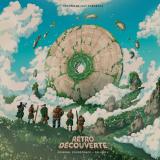
These albums are the end result of a collaboration between Cartridge 1987 and the YouTuber Edward who created the YouTube channel "Retro Discovery". With over 200,000 subscribers, this YouTube channel aims to highlight everything related to the "Retro Gaming" culture and the nostalgia that surrounds it.
These albums put together all the musical credits of the 3rd and 4th seasons of Edward's YouTube channel. All the remixes come from the games featured in Edward’s videos.
This is like a tribute to the original composers of these tracks, who have carried these videogames even further than expected, thanks to their musical talents.
- An Argument With Myself
- Waiting For Kirsten
- A Promise
- New Directions
- So This Guy At My Office
In der Symbolik von JENS LEKMAN ist Bewegung ein Mittel, um den Wahnsinn abzuwenden - oder sich ihm hinzugeben. Die Songs auf der ,An Argument With Myself"-EP befassen sich mit vielen Arten der Fortbewegung, sowohl klein als auch groß, warum er nach einfachen Vorgaben der Landkarte von Melbourne samt gesellschaftlicher Veränderung zurück in seine alte Heimat Göteborg zog. Der Titeltrack beginnt mit einer typischen LEKMAN Geschichte, in der er sich an einen innerlichen Disput auf dem Heimweg in Melbourne erinnert. ,Waiting For Kirsten" behandelt auf der Oberfläche die am Ende erfolglose Suche nach Kirsten Dunst während eines Filmdrehs in Göteborg, ist aber am Ende doch der Versuch, die komplizierte Beziehung zur eigenen Heimatstadt zu durchleuchten. Passend dazu liefert das von Bläsern dominierte ,New Directions" eine verrückte Straßenkarte mit Hinweisen dazu, wie man jeden anderen Ort als das Hier und jede andere Zeit als das Jetzt erreicht. Die Songs sind geistreich, wörtlich zu nehmen und an ihren Ort gebunden; sie alle sind unterwegs, um entweder verrückt zu werden oder sich seine Zurechnungsfähigkeit zu bewahren. Mit Hörnern, Flöten, Streichern und Arpeggio Gitarren bleibt JENS auch musikalisch in Bewegung. Am Ende wird ,An Argument With Myself" immer relaxter, angehaucht mit Reggae, so wie eine Musikbox, die langsam zur Ruhe kommt. Für einen Moment hört die Bewegung beinahe auf. Bis auf weiteres.
Unearthing old gems, remastering and bringing them back to the forefront is what Private Parts are up to for release number 07 in the catalog. Original London Tech masters Rob Pearson & Dave Mothersole originally released Wanting You in the early 00’s, but with the extreme prices on Discogs it seemed like the right choice to get this re pressed for your pleasure.
Wanting you is everything you ever wanted from those timeless sounds of London Tech. Dubbed out vocals, tribal rhythms, pulsating acid lines and a groove to keep you locked right in.
Flipping to the B, and the biggest thank you to Rob himself for spending weeks searching old DAT tapes in his loft to find the original pre master of the driving remix from the late Iteration X. They don’t come more heads down, and hypnotic than this. Throbbing bass stabs, luscious chords and in true Iteration X style, a roller that you could keep you shaking for days on end.
It only seems fitting to dedicate this re issue to Simon Copleston, Mr Iteration X. Thank you for the music!
- A1: Joon - Papa Don't Preach
- A2: Desire - Angel
- A3: Sally Shapiro - Holiday
- A4: Dlina Volny - Hollywood
- A5: Farah - Gang Bang
- B1: Mothermary - Like A Virgin
- B2: Club Intl - Lucky Star
- B3: Love Object - Frozen
- B4: Orion - Into The Groove
- B5: Number One Pop Star - Hung Up
- B6: Double Mixte - La Isla Bonita
- C1: Juno Francis - Beautiful Stranger
- C2: Glüme - Material Girl
- C3: In Mirrors - I'm Addicted
- C4: Causeway - Crazy For You
- C5: Mothermary - Like A Prayer
- D1: Jorja Chalmers - Justify My Love
- D2: Pink Gloves - What It Feels Like For A Girl
- D3: Lou Rebecca - Burning Up
Since 2006, listeners have been curious about the origin of the label name Italians Do It Better. Some say it's an homage to Italo Disco, others guess it's related to ancestry, but in fact it's a nod to the iconic T-shirt Madonna wears in the "Papa Don't Preach" video circa 1986.
Fast forward to a world pandemic... To encourage creativity & lift spirits, Italians Do It Better President, Megan Louise asked every artist “If you could cover your favourite Madonna song…What would it be?”
As a tribute to their label muse & the impact Madonna’s music has had on the world around us, Italians Do It Better are sharing a compilation of covers simply titled “Italians Do It Better”. One of the tracks (“Lucky Star” by Club Intl) is even produced by Max Kamins, the son of Mark Kamins, the New York DJ who helped break Madonna in the early 1980's. From the experience he says “Dance music was the soundtrack of my early childhood. Working on "Lucky Star" reconnected me not only to my father, but also reminded me that a good song is timeless".
Executive produced by Johnny Jewel, the compilation is a passport to 20 covers from the bedrooms of 19 artists across 10 different countries.
- A Refugee
- Refuge
- Blood
- Occupied
- At The Diner 2
- At The Penitentiary
- A Beggar
- People!
- A Generic Breakup Ballad
180g, turquoise vinyl. Perhaps the hardest thing about Soul music is convincing. If the place and the experiences don't somehow shine through and meet us, we risk missing out on what's on offer completely. "But first_ are you experienced?" as Jimi Hendrix asked. That's precisely why Soul music is difficult in Sweden. There are few who can portray their experiences in music in a way as convincing as in the Black US Soul tradition. This however seems almost provocatively easy for Bror Gunnar Jansson to do. On the album People, it's as if he pours both lyrics and melodies that have grown slowly in life and that come naturally if you grow up on the right soil. And on almost every song, it only takes a few bars for Bror Gunnar Jansson & The Escapism to show who their musical relatives are. Although Gunnar seems to move freely in musical landscapes ruled by the greats of seventies soul from Al Green, Curtis Mayfield and Aretha Franklin, as well as in some of the fringes of blues and jazz territory, both he and drummer and producer Christopher Cantillo explain that the album has took a long time brewing. And that what may appear obvious and simple has sprung out of a friendship that spans more than half of their lives.
- 1: Happy New Year
- 1: 2That's The World To Me
- 1: 3Take Heart
- 1: 4Humdrum
- 1: 5Only With You
- 1: 6To Play
- 1: 7Everyone You Know Is Asleep
- 1: 8Play With My Heart
- 1: 9They Are Coming For Me
- 1: 0Out Of My Heart
Singer-songwriter and cult anti-folk troubadour Stanley Brinks returns with Happy New Year, a 10-song collection of lo-fi gems recorded in Berlin. Happy New Year is a warm and celebratory record. Over simple rhythms and minimalist arrangements, Brinks delivers lyrics that oscillate between surreal humour, earnest wisdom, and playful melancholy. Happy New Year features contributions from longtime collaborator Clemence Freschard, plus appearances from Jyoti Sekhawat, Monica Kremidi, Rachel Lipson, Irma Ignataviciute, and Elisa Aseva, weaving together voices from across Brinks' musical community. Their harmonies lend the songs a communal intimacy. Stanley Brinks is renowned for his unique anti-folk style: both playful and suggestive, insightful and entertaining. Brinks was born in Paris, France, in 1973. He studied a bit of biology and worked as a nurse for a while. Half Swedish, half Moroccan, strongly inclined to travel the world, he soon began spending most of his life on the road and developed a strong relationship with New York. By the late 90s he'd become a full time singer-songwriter - Andre' Herman Düne - as part of three piece indie-rock band, Herman Düne. Several albums and Peel sessions later and after a decade of touring Europe, mostly with American songwriters such as Jeffrey Lewis, Calvin Johnson and early Arcade Fire he settled in Berlin. The early carnival music of Trinidad became a passion, and in the early 21st century he became the unquestioned master of European calypso, changing his name to Stanley Brinks. Under this moniker he has recorded considerably more than 100 albums, collaborated with the New York Antifolk scene on several occasions, recorded and toured with traditional Norwegian musicians, and played a lot with The Wave Pictures. The vinyl is of silvery color.
- A1: Malavoi - Te Traigo Guajira
- A2: Los Caraibes - Donde
- A3: Tropicana - Amor En Chachacha
- A4: Ryco Jazz - Wachi Wara
- A5: Eugene Balthazar - Dap Pignan
- A6: Roger Jaffort - Oye Mi Consejo
- A7: Les Kings - Oriza
- B1: Les Supers Jaguars - Tatalibaba
- B2: Super Combo De Pointe A Pitre - Serrana
- B3: L'ensemble Abricot - Se Quedo Boogaloo
- B4: Henri Guedon - Bilonga
- B5: Les Aiglons - Pensando En Ti
- B6: Los Martiniquenos - Caterate
In Guadeloupe, many people think that jazz and ka music are like a ring and a finger. To some extent, the same could be said about so called Latin music and the music played in the French West Indies.
Both aesthetics were born in the Caribbean and bear so many connections that they can easily be considered cousins. In constant dialogue, there are lots of examples of their fruitful alliance and have been for a while. The English country dance that used to be practiced in European lounges came to be called kadrille in Martinique and contradanza in Cuba. They both featured additional percussion instruments inherited from the transatlantic deportation. Drawing from shared feelings about the same traumatized identity – later to be creolized – it would be hard not to assume that they were meant to inspire each other. The golden age of the orchestras that graced the Pigalle nights during the interwar period further proves the point. As soon as the 1930s, Havana-born Don Barreto naturally mixed danzón and biguine music in a combo based at Melody's Bar. In the following decade, Félix Valvert, a conductor who was born and raised in Basse-Terre in Guadelupe, also worked wonders in Montparnasse with La Coupole, which was an orchestra made up of eclectic musicians. Afro- Caribbean performers of various origins were often hired on rhythm and brass sections in jazz bands, which used to enliven the typical French balls of the capital. In the 1930s and onwards, Rico’s Creole Band was one of them.
Martinican violinist-clarinettist Ernest Léardée, who would become the king of biguine music as well as the main figure of French Uncle Ben's TV commercials (a dark stigma of post-colonial stereotypes), had musicians from the whole Caribbean sphere play at his Bal Blomet – and they all enchanted "ces Zazous-là" (according the words of Léardée's biguine-calypso piece). In les Antilles (French for French West Indies), music history started to speed up in the 1950s, when trade expanded and radio stations grew bigger. The Guadelupean and Martiniquais youth tuned in their old galena radio sets to South American and Caribbean music. As for the women traders, les pacotilleuses, they bought and sold goods across different islands (the "passing of items through various hands" was thought to be most pleasurable) and brought back countless sounds in their luggage. Such was the case of Madame Balthazar, who once returned from Puerto Rico with the first 45rpm and 33rpm to ever enter Martinique.
Out of this adventure was created the famous Martinican label La Maison des Merengues, a music business she opened and undertook with her husband and which proved to be a major landmark. At the end of the 1950s, in Puerto Rico, Marius Cultier competed in the Piano International Contest playing a version of Monk's Round 'Midnight. He won the first prize and this distinction foreshadowed everything that was to come. Cultier, the heretic Monk of jazz, was quickly praised for writing superb melodies, always tinged with a twist that conferred a unique sound to his music. It didn't take long for the gifted self-taught musician to get to play with Los Cubanos, making a name for himself thanks to his impressive maestria on merengues.
The rest is history. Besides, in the late 1950s, Frantz Charles-Denis, born into the upper middle class in Saint-Pierre and better known by his first name Francisco, went back home after working at La Cabane Cubaine – a club located rue Fontaine where he had caught the Latin fever. Francisco's music was therefore heavily marked by his Cuban cousins' influence, which gave the combos he led a specific style and also led to renewal. Things were swinging hard in La Savane, located in the main square in Fort-de-France. He set up the Shango club close by and tested out the biguine lélé there, a new music formula spiced up with Latin rhythms. Soon afterwards, fate had him fly to Puerto Rico and Venezuela.
As for percussionist Henri Guédon (percussions were only a part of his many talents), he was born in Fort-de-France in May 22nd 1944, the day marking the celebration of the abolition of slavery. As an old man, he could remember that in " his father's Teppaz, a lot of hectic 6/8 music was constantly playing...". In the opening lines of his Lettre à Dizzy, a small illustrated collection of writings published by Del Arco, he highlighted the huge impact that cubop had on him as a teenage boy, around 1960. He eventually turned out to be the lider maximo in La Contesta, a big band steeped in Latin jazz. He was also the one who originated the word zouk to describe music which brought the sound of the New York barrio to Paris. It was the culmination of a journey that started in Sainte-Marie: "a mythical place for bélé, the equivalent of Cuban guaguancó". In the early 1960s, the tertiary economy developed to the detriment of agriculture. Yet rural life was where roots music emerged in Martinique and in Guadeloupe.
Record companies played a major part in the process of Latin versions sweeping across the islands – before reaching everywhere else. Producer Célini, boss of the great Aux Ondes label, and Marcel Mavounzy, both the head of Émeraude records - a firm which was founded in 1953 - as well as the brother of famous saxophonist Robert Mavounzy, were big names to bear in mind. Although there were many of them - all of whom are featured on this record - Henri Debs was definitely the major figure in the recording adventure. He proved to be so influential that he even got compared to Berry Gordy. In the mid 1950s, when he acquired his first Teppaz, he worked on his first compositions: a bolero and a chachacha. Then, he became the one man who made people discover Caribbean music, from calypso to merengue. He was among the first ones to rush out to San Juan, Puerto Rico, to buy records and distribute them through a store run by one of his brothers in Fort-de-France. He had members of the Fania All Star come and perform there, which he was madly proud about. He was also the first one to pay attention to Haitian music, such as compas direct and various other rhythms which would soon flood the market. As a result, many of the combos hitting his legendary studio would end up boosted by widespread "Afro-Latin" rhythms. However, he never denied his identity: gwo ka drums were given a major role, although they were instruments which had long been banned from the "official" music spheres. The present selection bears witness to such a creative swarming. Here are fourteen tracks of untimely yet unprecedented cross-fertilization: all types of music rooted in the Creole archipelago have found their way, whatsoever, to the tracklisting. Whether originating from the city or being more rural, they all go back to what Edouard Glissant, in an interview about the place of West Indian music in the Afro-American scope, called "the trace of singing, the one which got erased by slavery." "It is so in jazz, but also in reggae, calypso, biguine, salsa... This trace also manifests through the drums, whether Guadelupean, Dominican, Jamaican or Cuban... None of them being quite the same. They all point to the idea of a trace, seeking it out and connecting to each other through it. This is the hallmark of the African diaspora: its ability to create something new, in relation to itself, out of a trace. It may be the memory of a rhythm, the crafting of a drum, a means of expression which doesn't resort to an old language but to the modalities of it." The opening track features one of the emblematic orchestras of this aesthetic identity, criscrossing many music types from the archipelago. The 1974 Ray Barretto guajira – Ray Barretto was a major New York drummer influenced by Charlie Parker and Chano Pozzo – is magnificently performed by Malavoi, a legendary Fayolais group (i.e from Fort-de-France). Additionally, the compilation ends on a piece by Los Martiniqueños de Francisco. It symbolically closes the circle as it is a genuine potomitan of Martinique culture which also functions as a tireless campaigner for Afro-Caribbean music. Practicing the danmyé rounds (a kind of capoeiria) to the rhythm of the bèlè drum, it delivers a terrific Caterete, a kind of champeta of Afro- Colombian obedience which was originally composed by Colombian Fabián Ramón Veloz Fernández for the group Wgenda Kenya. The icing on the cake is Brazilian Marku Ribas, who found refuge in Martinique in the early 1970s, bringing his singing to the last trance-inducing track. These two "versions" convey the whole tone of a selection composed of rarities and classics of the tropicalized genre, swarming with tonic accents and convoluted rhythms. It is the sort of cocktail that the West Indians never failed to spice up with their own ingredients. For instance, the Los Caraïbes cover of Dónde, a famous Cuban theme composed by producer Ernesto Duarte Brito, has a typical violin and features renowned Martinique singer Joby Valente and his piquant voice.
The track used to be – or so we think – their only existing 45rpm. The meaningful Amor en chachachá by L'Ensemble Tropicana, a band which included Haitian musicians among whom was composer and leader Michel Desgrotte, also recalls how Latin music was pervasive in the tropics in the mid-1960s. They were the ones keeping people dancing at Le Cocoteraie in Guadelupe and La Bananeraie in Martinique. Around the same time, another "foreign" band, Congolese Freddy Mars N'Kounkou's Ryco Jazz, achieved some success on both islands by covering Latin jazz classics – such as their adaptation of Wachi Wara, a "soul sauce" by Dizzy Gillespie and Chano Pozo whose interweaving of strings and percussions can have anyone hit the dancefloor. How can you resist Dap Pinian indeed, a powerful guaguancó by Eugene Balthazar, performed by the Tropicana Orchestra and published by the Martinique-founded La Maison des Merengues? It also acts as a symbol of the maelstrom at work. Going by the name Paco et L'orchestre Cachunga, Roger Jaffory used to play guaguancó too: his Fania-inspired Oye mi consejo is one example of his style. Baila!!!!! Dancing was also one of the Kings' focus points. Oriza is a Puerto Rican bomba and a "classic" originally composed by Nuevayorquino trumpeter Ernie Agosto, which reserves major space for brasses, giving it a special sheen.
Emerging from the New York barrios crucible was also La Perfecta, a Martinique group originating from Trinidad, whose name directly references the totemic Eddie Palmieri figure as well as his own band, also called La Perfecta. Here they borrow Toumbadora from Colombian producer and composer Efraín Lancheros and interpret it by emphasizing percussions, which set fire to the track even more than the wind instruments. The same goes for Martinique's Super Jaguars, who use Tatalibaba – a composition by Cuban guitarist Florencio "Picolo" Santana which was made famous by Celia Cruz & La Sonora Matencera – as a pretext for sending their cadences into a frenzy. In a more typically salsa vein, the Super Combo, a famous Guadelupean orchestra from Pointe-Noire that was formed around the Desplan family and had Roger Plonquitte and Elie Bianay on board, adapt Serana, a theme by Roberto Angleró Pepín, a Puerto Rican composer, singer and musician also known for his song Soy Boricua. Here again, their vision comes close to surpassing the original. In the 1970s, L'Ensemble Abricot provided a handful of tracks of different syles, hence reaching the pinnacle of the art of achieving variety and giving pleasure. They played boleros, biguines, compas direct, guaguancó and even a good old boogaloo - the type they wanted to keep close to their hearts for ever, "pour toujours", as they sang along together in one of their songs. Léon Bertide's Martinican ensemble excelled at the boogaloo which had been composed by Puerto Rican saxophonist Hector Santos for the legendary El Gran Combo.
Three years later, in 1972, Henri Guédon, with the help of Paul Rosine on the vibraphone, tackled the Bilongo made famous by Eddie Palmieri. Such a classic!!!!! And so were the Aiglons, the band from Guadelupe: choosing to execute Pensando en tí, a composition by Dominican Aniceto Batista, on a cooler tempo than the original, they noticeably used a wonderfully (un)tuned keyboard in place of the accordion. On the high-value collectible single – the first one released by Les Aiglons under the Duli Disc label – there is a sticker classifying the track under the generic name "Afro". Now that is what we call a symbol. Jacques Denis
Second part of second album! Originating from Normandy, France, psychedelic noise-pop quartet You Said Strange presents a unique blend of indie rock that incorporates elements of psych pop-rock, shoegaze, and proto-grunge. Thousand Shadows volume 2, a second chapter was needed to highlight the many shadows that still linger everywhere. The shadows that linger on the borders, hiding the violence of the fights for them. The shadows that time has on the relationships and their persistence, because the shadows move. Plato's cave, modern version, would be the one of toxic relationships, antidepressants and the acceptance of the regression of freedom and/or the vision of a dying world... Between shoegaze, noise pop and psychedelic rock, You Said Strange absorbs its time to incant a music in which melancholy, love and the search for plenitude meet. The band recorded their first album, Salvation Prayer, in 2018 in Portland (USA), with Peter G. Holmstrom from The Dandy Warhols, which saw release via Fuzz Club Recirds. In 2022, the band shared their LP Thousand Shadows Vol. 1. Mythomaniac kings, the Mediterranean, the colors of mourning _ these are the detailed subjects, described against a backdrop of psychedelic pop, proto grunge, and shoegaze. The first part of a powerful, reverberant, melodious second album, drawing its inspiration and production stem from encounters during their 2022 European and North American tours, between Normandy, New York, and Oregon. Most recently, You Said Strange shared the second part of their sophomore release, a follow-up to Vol. 1 entitled Thousand Shadows Vol. 2.