Williams was one of the greatest jazz pianists of all time, but she was also a victim of geography. Her technical brilliance, complete control of the piano, creative imagination, wit, and constant desire to stretch herself put her at the top of her field although relatively few (beyond her fellow pianists) seemed to realize it during her lifetime. Born and raised in Baltimore, she recorded her first three albums in her hometown. But other than a few lesser-known sets in Europe, a handful of albums for Jazz Focus in Canada and her Red & Blue label in Detroit, and just two projects in New York for the Max Jazz label, all of her recordings were made on the West Coast where she lived starting in 1976. Jessica was reluctant to travel much, particularly in her later years, and her visits to New York were rare so she was largely overlooked by East Coast critics. Listeners who are only familiar with Jessica Williams’ later work where she is generally heard with a trio or as a soloist stretching out mostly on standards (although focusing more on originals on her own small label’s releases) will be surprised by Orgonomic Music. The pianist heads a septet, the largest group on any of her many recordings. While Jessica plays some stunning lines on the piano, the emphasis is as much on her writing as on her playing, and each of the other musicians get opportunities to have their say. Orgonomic Music, which was released by the small Clean Cuts label in 1981, has been out of print for decades. The original eight selections (six of the pianist’s originals, one piece by Stone, and John Coltrane’s “Dear Lord”) are joined by two previously unreleased performances.
Search:rela
Ben Webster was considered one of the ‘big three’ of swing tenors along with Coleman Hawkins (his main influence) and Lester Young. ‘Blue Saxophones’ is a studio album recorded in 1957 by Coleman Hawkins and Ben Webster. Accompanied by a rhythm section with Herb Ellis guitar, Alvin Stoller drums and Ray Brown on double bass led by Oscar Peterson. They just blend together beautifully, and with the great Oscar Peterson on piano, the approach is always very tasteful. This encounter shows the two veterans at the peaks of their powers. Most of the album is a relaxed meeting of old friends, though. Coleman and Webster duet beautifully on the heads of “La Rosita” and “It Never Entered My Mind”. Limited Edition on Cool Blue coloured vinyl.
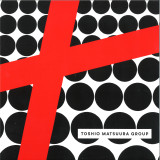
Brownswood Recordings are proud to present the reissue of Toshio Matsuura’s 2017 cult classic LOVEPLAYDANCE, issued for the first time as a complete album on limited edition red and white double vinyl.
The project focuses on covers, presenting classics & influential tracks in a new context. This new edition includes a cover of the Rotary Connection’s classic "Black Gold of the Sun'' featuring Afro-Cuban singer Daymé Arocena and her prodigious Havana-based players, as well as the high energy re-lick of Byron Morris and Unity’s ‘Kitty Bey’, a classic from Gilles Peterson’s seminal afternoon session at Dingwalls in the 1990s; neither included on the original vinyl LP.
On ‘LOVEPLAYDANCE’, legendary Tokyo DJ and producer Toshio Matsuura charted a new direction by casting musical cornerstones in a fresh light. The TOSHIO MATSUURA GROUP features Tom Skinner (drummer for Smile, Sons of Kemet, amongst others) as its musical director, as well as some of the UK’s most exciting jazz-influenced musicians. Drawing on years of surveying and curating different corners of music, Matsuura deftly combined this talented pool of players into one singular, wide-ranging album. A co-founder of Japan’s United Future Organisation (aka U.F.O.), this record sees Matsuura reconnect with longstanding friend and collaborator Gilles Peterson. Releasing the album via Brownswood Recordings in the UK, it’s a continuation of a relationship which started as a bridge between London’s then-blossoming jazz scene and Tokyo’s new musical vanguard of the early ‘90s. This album continues that two-way dialogue between Japan and the UK.
The scope of the music reflects the breadth of Matsuura’s interests; It ranges from Bugges Wesseltoft’s Detroit-influenced, dancefloor-minded jazz, stretched out into a more meditative contemplation, to Flying Lotus’ LA-rooted, Brainfeeder beatmaking, translated from laptop-to-live, given a new, equally idiosyncratic lease of life. Elsewhere, Carl Craig’s iconic ‘At Les’ is taken in a looser direction, the overtones of euphoria cast in a different hue.
They’re touchpoints which hint at interests in the different, diffuse corners of electronic music, and how they connect to jazz and improvisation. Featuring an all star line up of some of the best players London has to offer, line up includes Nubya Garcia, Yazz Ahmed, Yussef Dayes and more.
- A1: Sahar - Soul Work (Aera Remix) Mp3
- A2: Sahar - Different Days (Hardt Antoine Remix)
- B1: Presia - To Love (John Falke Remix)
- C1: Mironas - Get Movin (Tom Peters Remix)
- C2: Mironas - Adam (Argia Remix)
- D1: Ivory - Hyper (Upercent Remix)
- D2: Imeïa - Aleph Mim Iane (Auggië Remix)
- E1: Clavis - Art Of Duplicity (Dj Counselling Remix)
- E2: Alican- Floridiana (Gunce Aci Remix)
- F1: Alican - Stronger (Edone Remix)
- F2: Aldebaran - Volo Onirico (Colossio Remix)
As the beats echo through time, Isolate proudly marks its fifth anniversary with a resounding celebration of creativity. Five years of great music, unforgettable events, and unwavering support from our dedicated community have brought us to this momentous occasion.
With gratitude for the boundless talents of our artists, the steadfast support from our community, and the dedication of our team, Isolate reflects on this joyful journey. Building on the anticipation we shared earlier this year, we are excited to unveil the grand finale—a remix compilation that breathes new life into some of our most cherished tracks.
This compilation isn't just a retrospective; it's a heartfelt exploration of Isolate's history. From melodic transformations to rhythmic reinterpretations, this remix compilation stands as a tribute to the nuanced fusion of emotions and relationships intricately woven into the fabric of our musical community.
Isolate's fifth anniversary transcends being a mere marker of our past; it stands as a promise for the future. It's a strong affirmation of our dedicated commitment to supporting emerging talent, offering a platform for them to share their distinctive musical stories. In this celebration, we see not just where we've been, but where we're heading—a future that echoes with the distinct voices of those yet to be discovered.
Stay curious, join the rhythm, and come celebrate with us
In 2014, Wye Oak released Shriek, their fourth album. It was a necessary departure for Jenn Wasner and Andy Stack, who found themselves on uncertain ground after two years of constant touring for 2011's Civilian, living on opposite ends of the country and trying to revitalize their creative partnership. Wasner set aside her guitar for a bass. Stack took on the band's upper register, playing syncopated, meditative keyboard parts that interacted with Wasner's voice, which was newly freed from its call-and-response relationship to the guitar_what had been, until then, a signature of Wye Oak's sound. "This idea and the ensuing creative reworking of our band did what it was meant to do," Wasner writes in 2024. "It ended a long, painful period of creative stagnancy and reconnected me with the joy of making music." During that period, Wasner and Stack were introduced to William Brittelle, the Brooklyn-based composer whose 2019 LP Spiritual America featured Wye Oak, the Metropolis Ensemble, and the Brooklyn Youth Chorus. His orchestral reimaginings of five songs from Shriek (Shriek: Variations, if you will) are the centerpiece of this package, which serves not only to mark the tenth anniversary of a great album, but to demonstrate the richness of Wye Oak's compositions. Stack says of Shriek: Variations: "It's like looking at the songs in a funhouse mirror. The songs on Shriek can be stripped down or embellished_this is maximal embellishment. William took the album and blew it to smithereens, looking at it in a weird, prismatic way." Through Brittelle, Wasner and Stack found themselves at the intersection of classical, experimental, and pop music. Further collaborations, like the Brooklyn Youth Chorus- featuring No Horizon and Paul and Michi Wiancko's string arrangements on "My Signal" from The Louder I Call, The Faster It Runs, followed, as this connection fundamentally changed the way Wye Oak approached making records, incorporating an entirely new palette of sound into their work. That shift began here. Shriek: Variations may feel like a startling take on the material, something like light bursting into a room through drawn curtains, but Brittelle's arrangements are largely original to his first collaborations with Wye Oak a decade ago, suggesting that his maximalist arrangements have lived comfortably within the framework of Shriek the whole time, waiting for the right moment to emerge. It's a fitting reintroduction to the album, which upon its initial release was pigeonholed into the easy one-note talking point of being the "no-guitar" record. But even so, as that happened, Shriek quietly started to become a staple among Wye Oak's core fans. Here, with help from Brittelle's expansive compositions, the release draws attention back to the songwriting_how, regardless of the instrumentation, Wasner and Stack's uncanny musicwriting partnership at the core is what makes both Shriek and Wye Oak excellent. Joined by the Metropolis Ensemble, Paul Wiancko, and Lizzie Burns, Wye Oak turn songs like "Logic of Color" inside out, reaching towards a kind of pastoral bombast, Brittelle's aesthetic with Wasner and Stack as an anchor. In fact, "Logic of Color" in this iteration takes that "no-guitar" script and flips it, with Wasner playing the synthesizer ostinato on acoustic guitar at its center. If Shriek is a record that charts the depths of solemnity and inner space, its Variations, roiling in a sea of winds, brass, and strings, recolors that space and complicates it, a gorgeous, unexpected response to the original's siren call.
- A1: Thank You
- A2: Hello, Lakisha
- A3: Distractions I: The Opposite Sex
- A4: Age + Self Esteem: A Funhouse Mirror
- A5: Distraction Ii: The Dilemma Of Cool
- A6: Self Importance
- B1: Collected Views From Dinner
- B2: Fulfillment?
- B3: Taking Responsibility
- B4: Intermission
- C1: The Fears Of A Dilettante
- C2: Obsessing
- C3: Life, The Cruel Interlude (On God)
- C4: Frustrations + Solutions
- D1: Humans + Ants In Proportion
- D2: Existential Crisis Hour!
- D3: On The Mend
- D4: Relief!
- D5: Poem A
- D6: Outpatient Mentality
- D7: Memory Lane (Bonus)
Kilo Kish has always been in a league of her own. Constructing herself from the ground up, Kish’s career in music began over a decade ago, when she was relatively well-known for providing breathy, uninhibited guest appearances on songs with Childish Gambino, Vince Staples, and more.
Since then, she’s been equipped with creating her own multi-dimensional worlds. On her conceptually progressive 2014 EP Across, Kish took it one step further, taking a cross-country drive over dreamy, experimental soundscapes from producer Caleb Stone. Upon returning to New York City, Kish felt restricted by the environment that shaped her and looked to Los Angeles. Enter Reflections in Real Time, Kish’s debut album that acts as a sonic mood board where she is alone in her thoughts, whether probing her social media curiosities or meditating on her life’s purpose.
Based on David Nicholls’ globally best-selling book, the TV serialisation of One Day has already proved hugely popular with audiences and critics alike.
Multi award-winning screenwriter Nicole Taylor (Wild Rose, 3 Girls, The Nest) adapted the novel for Drama Republic and Netflix.
The story follows Emma (Ambika Mod - This is Going To Hurt) and Dexter (Leo Woodall - The White Lotus) who speak for the first time on their graduation day in 1988.
They go their separate ways but meet once a year on the anniversary as their relationship and lives evolve.
“We wanted to create a score that celebrates the love story between Dex and Em and also reflects the nostalgia for lost time and lost love that they feel, and viewers can relate to.
The music had to follow their journey as their relationship evolves over the years, but still feel like it was rooted in one place.
In other words, we needed to mirror the very different lives and emotions they experience over twenty years ranging from excitement, humour, anger and heartbreak.”
Composers Anne Nikitin, Jessica Jones, Tim Morrish
The score also features tracks from Jessica and Tim under their artist moniker Vanbur, widely acclaimed in their own right, including ‘Last Look’ and ‘Falling Colour’.
Ivy Falls, the alias of singer-songwriter Fien Deman, will release her first full album in the spring of 2024. 'Sense & Nonsense' sounds mature, with a clear vision and direction. Fien wrote the album after a breakup and leaving her home; she witnessed cracks appearing in her life and found herself in a whirlpool of insecurities. Writing turned out to be the way to reorient herself and discover what she could fill her empty 'house' with. Everything changed: a new life, a new place, new people, and a new view of herself as a musician and writer. Bram Vanparys, aka The Bony King of Nowhere, makes his debutas a producer on Ivy Falls' first release. This unreleased duo impresses with 'the best coda for the confusing time that your twenties can be.'
Sometimes hitting a wall is inevitable. This occurred, partly even literally, in 2020: a broken nose, a painful breakup, and a series of chaotic events shook Fien's foundations. Losing her job, ending her relationship, leaving her home, and returning to her parental home, she hit rock bottom and started her quest to rebuild everything from scratch. After the tumult, Fien decided to shed the oppressive norms and ideas learned as a child and wholeheartedly pursue her own choices and projects.
In the years that followed, each aspect of her life gradually fell into its right place. This extended to her musical identity, themes, and sound. Acquiring some guitars and an upright piano, she endeavored to master them as a self-taught artist. Devoting ample time to her self-made home studio, she returned to the essence, distancing herself from the polished pop sound of her initial work and reconnecting with her first musical love - the singer-songwriters who had colored her teenage years. This rediscovered inspiration marked the first time in her musical career that everything felt perfectly aligned.
The album's artistic approach aligns with a fresh, expansive outlook on life and the future. Fien aims to challenge rigid societal concepts, including the notion of 'golden years.' She questions what and when exactly should be considered the most significant, joyful, and vibrant moments of life. The album delves into topics like the perceived superiority of extroverts, narcotic materialism, and toxic positivity. It's not a lament but rather an ode to what truly matters-the essence, love, and beauty. Fien's perspective encourages finding your inner child and immersing yourself in timeless and profound feelings.
Musically, Fien discovered her perfect match in Bram Vanparys (The Bony King of Nowhere), her newfound love. She wrote the songs, and he took on the role of album producer and co-arranger. Together, they crafted a metaphorical space where every small musical idea has room to flourish, and each insight and effort carries significance. Influenced by indie folk luminaries such as Julia Jacklin, Amen Dunes, Feist, Sharon Van Etten, Sufjan Stevens, and Nick Drake, Ivy Falls has set a high standard for her sound.
The main constant? Fien's distinctive voice commands every song, now revealing greater depth and nuance than ever. In live performances, Ivy Falls is joined by a talented ensemble: Trui Amerlinck (Tsar B, Mayorga), Jasper Morel (Black Box Revelation), Simon Raman (Steiger), and Anton De Boes (Philemon).
In the past, Ivy Falls has launched two EPs, received airplay on Studio Brussels and Radio 1, and shared the stage as supportfor artists like Balthazar, Jessie Ware, Sigrid, and Mabel.
Engelchen literally translates as ‘little angels’ What’s more, for many in the febrile, dangerous era of the 1930s in Nazi-occupied Europe, as they wrote letters to arrange their paths out of danger as refugees,
these were Ida and Louise Cook. Ida and Louise spent much of their early years in Sunderland, and in adulthood lived in a suburb of London with their parents. They were enormous fans of opera and led
relatively quiet and unfussy lives. Yet secretly these resourceful and eccentric women were using their musical obsessions as a means to help dozens of refugees escape with their lives.
My Back Was A Bridge For You To Cross, ANOHNI"s sixth studio album, expresses a world view by shape-shifting through a broad range of subject matter. Through a personal lens, ANOHNI addresses loss of loved ones, inequality, alienation, acceptance, cruelty, ecocide, devastation wrought by Abrahamic theologies, Future Feminism, and the possibility that we might yet transform our ways of thinking, our spiritual ideas, our societal structures, and our relationships with the rest of nature. On her first full album since 2016"s HOPELESSNESS, she explains the creative process was painstaking, yet also inspired, joyful, and intimate, a renewal and a renaming of her response to the world as she sees it. "Some of these songs respond to global and environmental concerns first voiced in popular music over 50 years ago." ANOHNI"s approach since her last record has shifted from someone tasked with challenging global denial, to an artist seeking to support others on the front lines. "I learned with HOPELESSNESS that I can provide a soundtrack that might fortify people in their work, in their activism, in their dreaming and decision-making. I can sing of an awareness that makes others feel less alone, people for whom the frank articulation of these frightening times is not a source of discomfort but a cause for identification and relief. On "It Must Change," ANOHNI soulfully describes systems in collapse with a note of compassion for humanity: "The truth is I always thought you were beautiful in your own way // That"s why this is so sad." ANOHNI"s voice is sensual and smoothed, selectively reaching to the edges of what it can contain. "We"re not getting out of here // No one"s getting out of here // This is our world," she murmurs. A portrait of legendary human rights activist Marsha P. Johnson taken by Alvin Baltrop features on the cover, reflecting a 25-year relationship with the memory of Johnson that ANOHNI has held space for in the presentation of her own work. Elsewhere, the album artwork states "IT"S TIME TO FEEL WHAT"S REALLY HAPPENING". In some ways it feels as if she is reaching across her life"s expression, and has found a moment of unique composure, wearing her long exploration of disarming intensity, with the maturity of a painter carefully choosing her colors. "I want the work to be useful, to help others move through these conversations we are now facing, to move with dignity and resilience through this bitter dawning."
Auf dem 2002 erschienenen Album "Some Boots" lotete das Bostoner Indie-Rock-Trio Karate die Tiefen ihrer omnidirektionalen musikalischen Erkundungen weiter aus. Jeder Akkord und jeder Beat vertieft die Nachdenklichkeit von Geoff Farinas impressionistischen Texten, die die emotionale Komplexität der Nostalgie erkunden. Die LP mit acht Songs ist in einem Klappcover untergebracht und enthält eine Replik des Textblatts.
This is a repress of Tycho's second release with Ghostly International to celebrate the 10 year anniversary of this masterpiece, while Ghostly International celebrates its 25th year anniversary. For nearly a decade, Tycho has been known as the musical alias of Scott Hansen, but with the release of Awake - his second LP for Ghostly International - the solo project evolved into a three-piece band. Relating closer to post-rock than ambient soundscapes, the record is situated in the present, sounding more like Hansen than drawing from his influences. This is, in many ways, the first true Tycho record. Following 2011's Dive LP, the San Francisco-based designer toured extensively, and with a full band on stage, his sound coalesced into a percussive, organic whole. Zac Brown (guitars, bass) rejoined Scott on the road for this tour, but it was the particular addition of Rory O'Connor's live drumming that ultimately sent Hansen back to the studio with a more precise vision. "After the tour, I decided that I wanted to capture the more energetic, driven sound of the live show on the next album," Hansen recalls. Bringing musicians into Tycho's creative process was a step towards expanding his own songwriting and advancing the project beyond its current sound. In a cabin near Tahoe last winter, Zac and Scott began fleshing out the structure of the new record, but it wasn't until they set up shop in the hills of Santa Cruz with Rory that it all fell into place. "It crystallized the vision of how the drums would come to the forefront on this record," says Hansen. The sound was much more stripped-down and concise with more organic instruments in the fold. Songs like "Montana" and "Awake" are a departure from Tycho's previous material - unique to the group effort poured into the songs on the new record - while "See" and "Dye" echo ideas from previous works, bridging a middle ground between the old and new. Working with Count Eldridge, who also engineered Dive, the team could fixate on the pulses that Tycho might previously layer under synthesizers and exhume them with distinct bass and guitar patterns. Also known for his design work as ISO50, Hansen's visual and sonic efforts have dovetailed throughout the course of his career. "This is the first time in my life I've dropped everything to focus on one artistic pursuit," notes Hansen. Previous Tycho releases came to fruition when an amalgam of songs were nearing completion, but Awake is where music becomes the focus and true expression becomes the result.
DJ ROSS and ERIKA present “Who I Wanna Be”, an uptempo song inspired by Eurodance 2000, with both techno trance influences and sounds and an ethereal piano, all crowned by Erika's sweet voice.
This is not a tribute to the past, but a novelty that will make their fans dance again.
DJ Ross and Erika have collaborated on several musical tracks in the past, they have reached the top of the charts not only in Italy, but in many countries around the world and which has led them to perform from Brazil to the United States, in several European countries, from 'Egypt to Russia.
The first was "Relations", then "Save My Heart", "Ditto" and "I Don't Know", among the most representative of the 2000s. Subsequently, in 2015 they also collaborated on the song "I Think About You", published with Warner Music and which reached the official Italian top 50 airplay.
In general, the collaboration between DJ Ross and Erika has always been very positive and gave birth to some of the greatest hits in dance music which are still among the most danced to today together with the HITs of that time.
The vinyl containing the original version and the new remix by Rudeejay & Da Brozz who gave a more club/festival twist to the song, both in an extended version. Writers: Rossano Prini, Erika de Bonis, Andrea Mitidieri Published by: Briscolas Publishing Sas
Back in stock ! With his 1966 debut for Atlantic, jazz vibraphonist and marimba player Dave Pike and an all-star lineup produced a perfect blend of Jazz, Latin, Soul and R&B that stands the test of time. Produced by Pike’s frequent collaborator Herbie Mann, "Jazz for the Jet Set" featured a young Herbie Hancock on organ (an instrument he rarely played again), Clark Terry on trumpet, Billy Butler on guitar, Grady Tate on drums, and many other talented musicians. From an artistic perspective, the album marked a pivotal time in Pike’s career, where he began to move away from straight ahead jazz and forge a relationship with soul music, Latin rhythms, pop arrangements and more experimental styles. With this official re-issue courtesy of Nature Sounds, "Jazz For The Jet Set" is now back on limited-edition vinyl while supplies last.
Under the influence of his punk loving father and cabaret / comedy performing mother, Janek moved from singing in his school choir to learning to play drums and piano. Now, as well as producing music under his own name, Janek is also one of the founding members of the Neukolln based outfit Liquid Brain Orchestra, and one half of off-kilter duo Tutu Amuse with guitarist, vocalist and actor Rosa Landers. Janek"s debut solo album "Circle Of Madness" is a record that is best described by himself as a snapshot of "something at some point" and encourages the listener to "stay curious while trying to maintain a balanced and non toxic relationship with perfectionism on this discovery of new land through music, channelling self expression and learning".
Authenticity is important in music culture, at least to those whose relationship with it is a lifelong love affair. As listeners, we instinctively respond to artists whose musical output is an authentic representation of their inspirations, experiences and working methods.
By any measure, Guillaume Metenier’s collaborative Soul Sugar project oozes authenticity. It began in the late 2000s as an outlet for the virtuoso organist and producer’s updated takes on ‘60s and ‘70s soul-jazz and Hammond funk, but over the years it has evolved into something entirely different: a vehicle for classic dub and reggae inspired musical fusions made in collaboration with friends and like-minded musicians. As a result, Soul Sugar albums mix impressive musicianship with great grooves and untold nods to the sounds and artists that have helped shape Metenier’s musical outlook.
This authentic approach and soul-enriching sound is naturally in evidence on Soul Sugar’s firth studio set, Just a Little Talk, which is set to be released by Metenier’s own Gee Recordings label in March 2024. This time round, Metenier’s close circle of musical collaborators includes Blundetto, Samuel Isoard, Yvo Abadi, Jolly Joseph, Jahno, Shniece, Slikk Tim and Leo Carmichael. While many are old friends who have appeared on previous albums and singles, there are some first-time collaborators too.
This familiar-but-also-fresh approach is mirrored by the blend of tracks on offer on Just a Little Talk. New songs and instrumentals sit side by side with a small selection of on-point cover versions – something Metenier has been doing since the inclusion of Jimmy Smith and Dr Lonnie Smith covers on 2009 debut album Nothing But The Truth. Memorable covers since have included ‘Why Can’t We Live Together’, ‘I Want You’ and ‘Never Too Much’, all featuring the honeyed voice of Leo Carmichael.
This time round, the headline-grabbing covers are undeniably special. You’ll find takes on Curtis Mayfield’s ‘Makings Of You’, re-framed as a languid roots reggae song featuring voiced by the returning Carmichael, and Donald Byrd’s ‘Blackbyrd’, which Metenier has brilliantly re-imagined as a fabulous fusion of Studio One dub and Blaxploitation funk.
Yet it’s the album’s original compositions that arguably stand out. For proof, check lovers rock-influenced reggae-soul treat ‘The End of Your World’ (featuring heart-aching roots style lyrics and Junior Murvin-esque lead vocals by Jolly Joseph), the similarly conscious ‘Just a Little Talk’ and recent single ‘Top of My List’– an effortlessly emotive gem marked out by Metenier’s weighty dub bassline and Shniece’s incredible lead vocal.
The original instrumentals, in which Metenier often trades licks and solos with guitarists Slick Tim and Samuel Isoard, are similarly impressive – and, to return to our theme, as authentic as they come. Fittingly, one of these – ‘Tubby’s Ghost’ – was originally written and recorded in 1998 with bassist Patrick Bylebyl, who was then Metenier’s partner in a project called Seven Dub. It is, then, a new cover of one of Metenier’s own tunes – and a pleasingly heavyweight one at that. It delivers a genuinely pleasing conclusion to Soul Sugar’s most true and authentic album to date.
Le jazz homme is the 2nd album of Black To Comm related entity Mouchoir Ètanche. This time heavily influenced by French Jazz (?) as well as the usual suspects: Nurse With Wound, Luc Ferrari, JG Ballard, Surrealism. The human entity has finally been replaced.
"Program music, instrumental music that carries some extramusical meaning, some “program” of literary idea, legend, scenic description, or personal drama. It is contrasted with so-called absolute, or abstract, music, in which artistic interest is supposedly confined to abstract constructions in sound. It has been stated that the concept of program music does not represent a genre in itself but rather is present in varying degrees in different works of music." (Encyclopædia Britannica)
Prompt 1: Pascal Comelade's toy piano falling down the stairs , Hector Zazou pushing from behind, laughing
Prompt 2: Cool jazz played on antique mellotron, low in fidelity, and sad, Glenn Miller‘s grandma crying silently
Prompt 3: A hippie commune version of jazz as played by a cheap computer fed by Chat GPT with medieval buisine fanfare information and samples, trained on the entire Amon Düül II history, heavily looped yet unsynchronized
Prompt: 4: Same, but flutes and synths and trance and chants
Prompt 5: French female artist philosophizes about Shirley Temple, mysterious atmosphere, insensitive homme laughing nervously, heavily looped, hynotic 18th century orgue de salon underneath
Prompt 6: Cool jazz, Echoplex, strange rhythm, Blue Note daydreaming
Prompt 7: Hammond jazz with fake Cyro Baptista loop, Madagascar indri indri lemurs chanting fake sax solos in Malagasy language, electronic bells
Prompt 8: German jazz and artificial prayers, and Shirley Temple returning, with defect Publison recorded at GRM, destroying the voice recording
Prompt 9: Andrei Tarkovsky's moustache meets Johann Sebastian Bach's wig, a well gently lapping in the background, fifths, car crashing into a poor violent onsen geisha
Marc Richter records as Black To Comm for Thrill Jockey and under the Mouchoir Ètanche and Jemh Circs monikers (and solo) for his own Cellule 75 imprint. He collaborated with visual artists such as Ho Tzu Nyen, Jan van Hasselt and Mike Kelley. He also produces soundtracks and acousmatic multichannel installations for institutions such as INA GRM Paris, ZKM Karlsruhe and Kunstverein Hamburg.
Miles Davis created just one studio album with his original sextet: Milestones. And he made every moment count. Pairing with Cannonball Adderley, John Coltrane, Red Garland, Paul Chambers, and Philly Joe Jones, Davis not only laid the groundwork for the modalism that immediately followed but tailored a genuine modern-jazz masterwork laden with performances among the most explosive of his distinguished career. Sandwiched between the more famous 'Round About Midnight and the epochal Kind of Blue, Milestones remains a seminal work of art.
Sourced from the original master tapes and pressed on dead-quiet SuperVinyl, Mobile Fidelity's numbered-edition 180g LP grants each musician their own space amid broad soundstages. Afforded the benefits of a nearly non-existent noise floor and supreme groove definition, this vinyl reissue doubles as a time machine back to the February-March 1958 recording sessions.
Colors, shapes, and dimensions appear in the manner that resembles what you'd glean from behind a studio control room's window. Davis' burnished trumpet is rendered in three-dimensional perspective and seemingly coaxes the band to play with unburdened zest. Coltrane's trademark saxophone teems with lifelike tonality and images with specificity; his solos work in tandem with and against the driving rhythms. Garland's swaggering piano lines? Visualize the keys as he hits full stride, the chords and fills slithering around skeletal frameworks.
Inducted into the Grammy Hall of Fame and selected as a "Core Collection" record by the Penguin Guide to Jazz, Milestones is as famous for its title track – widely considered ground zero for modalism and bolstered by Jones' hallmark "Philly Lick" rim shot – as the players that produced it. The launching pad for many of Davis' improvisational flights, the album teases the explorations Coltrane would soon chase. Davis' own solo work broaches territories that far exceed what he had done in his bop-rooted past. Every song is a highlight.
Take the bravado "Dr. Jackle," featuring a hot-foot pace and bebop strains, or "Sid's Ahead," which continues the album's blues theme while juggling edgy harmonics and inside-out structures. On "Billy Boy," distinguished with an arco bass solo from Chambers, Garland gets a turn in the spotlight and channels the openness practised by one of his heroes, Ahmad Jamal. Even more instructive is the band's reading of Dizzy Gillespie's "Two Bass Hit." Three years removed from the version Davis and company recorded for the trumpeter's Columbia debut, this interpretation demonstrates the extent to which the group had jelled in a relatively short amount of time.
Then there's "Straight, No Chaser," the definitive rendition of Thelonious Monk's signature piece. Coltrane's marbled playing pulls at the tune's borders, Adderley takes liberty with solos, and Davis dances around his mates, at one point quoting "When the Saints Go Marching In" while demonstrating his knowledge of tradition and casting an eye towards the future.
About that future. Garland already had one foot out the door during the Milestones sessions to the extent Davis spells him on "Sid's Ahead." Jones would stick around for a bit longer but soon plot his exit. History proves Davis navigated the changes with visionary aplomb. Yet the chemistry, excitement, and beauty the sextet achieves on Milestones cannot be overstated. This reissue helps put the album in proper perspective – and presents the music the fidelity it deserves.