ED/MCL (pronounced Ed Michael) and IDN (Ibisazi Designers Nyabyo) have collaborated to create MOSH - both the title of the EP and its proposed genre. Mosh is music to mosh to, like dance is music to dance to. Jungle breaks are slowed down to the tempo of a metalcore breakdown. Super low 808s rumble below the beat. Sampled and recorded sounds are textured to evoke heavy metal guitars. And there are rhythmic shouted phrases, for shared chanting. This EP is being released on Interference Pattern because Tyler Pope saw ED/MCL playing on the street in Williamsburg.
IDN (Ibisazi Designers Nyabyo) is an artist collective based in Rwanda. Their vocals are shouted in a language of their own invention, yet they have crafted catchy vocal hooks designed for call and response. The vocals heard on MOSH were recorded with ED/MCL while they were visiting them in Kigali. The final track is a 10 minute long performance by IDN, from which ED/MCL remixed the preceding five mosh songs.
Buscar:remi
"Love Conquers All" is a collection of deeply moving songs by The Moody Blues’ John Lodge. All written during difficult times, yet reflecting the positive way in which John sees the world. As John explored his journey of healing, he invited different musicians to collaborate with him on each song, making each song unique, yet at the same time they all carry the same message... that love does conquer all. ‘Love will Conquer All’, ‘Whispering Angels’, and 'Sunset over Cocohatchee Bay’ were all written through personal health challenges, and 'In These Crazy Times’, and ‘The Sun Will Shine’, originally written in lockdown, have been reimagined and remixed for 2024, reflecting how this time is now firmly in the past. 'Whispering Angels' was written by John and his son-in-law Jon Davison, of YES, and Jon features on all the tracks on the release. ‘Love Will Conquer All’ isan almost Christmas song full of hope, plus there are guest appearances on the album by Geoff Downes of YES, Tim Maple, Dave Colquhoun, Ray Nesbit, John’s 10,000 Light Years Band, and also John’s wife, Kirsten and son, Kristian. As you journey with John through the songs, starting with the instrumental ‘Sunset Over Cocohatchee Bay’, and ending with the more anthemic ‘Whispering Angels’, you will be moved by these beautifully crafted songs, surrounded by the incredible musicianship, and feel the love brought to each song by John and his friends and family. This release truly is a journey of love and recovery and John is delighted to be able to share it with you today.
- Tout Tremblant De Fièvre (1969, Single "Tout Tremblant De Fièvre")
- Fac,On De Parler (1971, Album "Acte Ii")
- Annie, Christine Ou Patricia (1972, Single "Il Faut Rêver")
- A Bas Tous Les Privilèges (1973, Compilation "La Révolution Française")
- Les Indiens Du Dernier Matin (1974, Album "Acte Iii")
- Mon Premier Hold-Up (1975,Album "N°1 Usa Hits Of The 60'S")
- Disco Circus (François K Edit) (1978, 12" Single)
- Bains Douches (1980, Album "De Sang Froid")
- J't'ai Vu Dans Le Canoe' (1983, Single "Solange")
- Pourquoi Tu M'la^ches Pas? (1985, Single "Trop Sentimental")
As soon as Martin Circus was born in 1969, the band laid foundations for the French "Pop Musique" genre, deliberately turning its back on both French yéyés and rock'n'roll to better embrace psychedelia and the French language. In 1971, they were a pioneering, innovative group moving as fast as a speeding train, building upon everything they found on the way. However, faced with band members changing often, management issues and music evolution, Martin Circus ended up trying to fit in every style: soul, R&B, glam rock, disco, new wave, 80s mainstream music. To follow their journey is to listen to the world shifting along music charts. Behind the scenes, since the very first days of the band, one man had been pulling all the strings. Manager and artistic director Gérard Hugé used to work for both the band and the label - this has never been good news. What he cared about the most was getting records out, no matter who played on them. In the mid-70s, he registered the Martin Circus name, granting himself full power over the band. Deciding that it no longer had either a lyricist or a composer, he made the remaining musicians embark on a series of American 60s hits adaptations. As a result, they made tons of money : "Marylène" was a huge hit and gave them a new impulse. The Martins adopted a new look by wearing shiny Courrèges-style suits and platform boots, and on stage they performed dance moves choreographed by the eccentric Amadeo. They completely fit into the disco craze which was about to take over. Still, their music blended doo-wop and rockabilly with glam rock and funk music. They eventually hit disco with a soundtrack in the mannerof French disco groups such as Space and Voyage. Effortlessly, they released the epic 14- minute "Disco Circus", a track which was to become a real underground gem. DJ and remixer François Kevorkian then released it on the American Prelude label in a self-edited version, shortened to 7 minutes while retaining all the dazzling passages of the original track. It came to be a hit in the clubs of New York and Chicago, making a lasting impression on everyone who heard it. It got sampled on at least 40 tracks over the following decades and featured in dozens of bootlegs and prestigious compilations - by Laurent Garnier, Carl Craig, Juan Atkins, Joey Negro, The Beatnuts, The Rapture, and by Danny Krivit in the DJ culture film Maestro. As the 80s arrived, Martin Circus once again changed the way they looked and their style. Inspired by Devo and their cold dance music, by Buggles' synthpop and Plastic Bertand's postpunk. Throughout their career full of ups and downs, Martin Circus nonetheless managed to keep up with one stable element: contrary to what they seemed, the musicians never took the easy way out. Their playing and arrangements were consistently flawless and polished, they relentlessly dedicated themselves to playing quality music and this can only compel admiration. As Coco Chanel once said, "Fashion goes out of fashion, style never does."
- Prologue Amateur
- Sax Addict
- Otre Soleil Est Mort
- Tinder Surprise
- Igor Stravestit
- Amoureuse
- 5: Th
- Ok Boomer
- Ouais
- Je Cours
- Conversation
- Laura Palmer
- Yaourt A L'italienne
- T'es Ou?
Back in the day, when he was the drummer for Poni Hoax, Vincent Taeger would sing in French whatever came to his mind backstage after concerts, just for fun, to amuse his friend the late Nicolas Ker. Since then, time has flown by, undoubtedly bringing its share of ups and downs. Nonetheless, today, this artist with a long career is finally releasing his debut album as a singer, OK Crooner. It's indeed an album for a singer, but also one for a musician. For this part, Taeger doesn't come alone; he brings along the Jazz Kamasutra, a sexy sextet that knows how to play everything and will later accompany him on stage. To get to this point, Vincent Taeger had to stop playing around with big names like Air, Damon Albarn, Justice, Lenny Kravitz, Skepta, Tony Allen, Oumou Sangaré, Jeff Mills, Archie Shepp, Sampa the Great, Andrea Laszlo de Simone... More than half of the major artists with whom he once collaborated, contributing to their albums or simply laying down a drum, bass, or any other heavy instrument line. Before OK Crooner, he also transformed into Tiger Tigre. This roaring alias was used for a first solo album, instrumental and so deep that one might have thought the ghost of François de Roubaix had taken shape. But that was before, before this exceptional musician decided to dive into the vast ocean of French variety to give a sequel, a culmination to this project. During COVID, Vincent Taeger started frantically listening to Souchon, Chamfort, Gotainer, and Christophe. Inspired by his elders, while not renouncing his attachment to the meticulous arrangements reminiscent of Alain Goraguer's soundtracks, he picked up a pen to jot down snippets of songs to accompany his increasingly sophisticated compositions. And the worst part is that he enjoyed it! Coming from rap, he has a knack for punchlines. Throughout the album, he delivers just as many harsh or soft words as good ones, alternating between risqué humor, Gaulish wit, and poetry. Partially recorded at Studio Ferber, but mainly at home with his partner, known by the alias La Plongée, who co-produced the album for the occasion, OK Crooner is a key album in Vincent Taeger's discography. Besides being the one where he finally unveils his voice to the public, without pretense as it is prominently featured and minimally, if at all, retouched, Taeger also offers music that suits him perfectly. Sharp yet accessible, jazz, pop, baroque, classical, modern, and resolutely marked by Tony Allen's legacy, which he daringly mixes with Beethoven in the Fifth Symphony. His alter ego, Vincent Taurelle, with whom he has produced many albums, took care of mixing this one.
Poet, novelist, musician and academic, Anthony Joseph teams up with legendary UK producer Dave Okumu for forthcoming album, ‘Rowing Up River To Get Our Names Back’
Dave Okumu, known perhaps best as frontman for The Invisible, though digging deeper into his production credits, huge names emerge such as; Grace Jones, Amy Winehouse, Jesse Ware, Rosie Lowe and Eska. On this album, the magic and alchemy of Dave’s production style showcase subtle sonics and deep layering resulting in a contemporary sound to carry Anthony’s afrofuturistic metrical meanings.
Anthony and Dave first came across each other when working with Shabaka Hutchings during Covid broadcasts, and then after Anthony performed some poems on Dave’s 2023 album ‘I Came From Love’, the seeds of collaboration were sown.
With a little more psychedelia, a little more experimentation, Dave’s eclectic vision focuses on the actual sounds on these pieces. Anthony stated that “The best producers guide you, not push you” now add to that the fact that both these humans were born on the same day, a concoction of laid back attitudes in people with strong purpose, some real magic can happen, naturally.
Early writing sessions for this record took place in 2022, around Mount Blanc in France. Anthony was away touring with long-time collaborator, Jason Yarde. Ideas were a little thin and they found themselves somewhat repeating previous work resulting in Anthony rethinking things a little, and so entered Dave Okumu.
LP opener ‘Satellite’ is a fine example of how this new partnership pans out. New musicians have been enlisted; Dan See (Drums), Aviram Barath (Synths), Nick Ramm on Fender Rhodes and Byron Wallen (Trumpet). Add to that the mighty vocal power house of Eska and we have a whole new dimension of soul and depth, to carry Anthony’s statements. “You build a wall, we go under, you build it higher, we go higher, like a satellite” .
On the album's second single, ‘Tony’ - there’s a nod to all drummers and creators of African rhythms, from the point of view of Afrobeat legend Tony Allen. Highlighting this is drummer’s drummer Richard Spaven as Dave’s choice of skin beater. He successfully reminds us that Tony was someone who understood the real power of rhythm and how it is used to unite people.
As well as the new musicians on this LP, Dave Okumu played all the guitars and used the studio as his tool. On ‘A Juba for Janet’ - a poem to Joseph’s mother, and a track so bass heavy that it feels as though it could sit in a deep dubstep set in Plastic People days, - Anthony’s voice reaches straight down your ear canals next to dark drums, huge synths and delayed saxophone stabs from Colin Webster. Slightly more introspective verses on ‘An Afrofuturist Poem’ see Dave’s beats show off the real future sound of this record, kalimba, moog bass and guitars all played by the man himself.
Mellower and deeper moments are also present, Anthony’s cryptic yet informative storytelling is at its absolute best on ‘Churches Of Sound (The Benetiz-Rojo)’ - Caribbean and Windrush history reeled off alongside a linear musical timeline of Black music in the diaspora.
A reminder that this body of work is first of 2 volumes, ‘Rowing Up River To Get Our Names Back’ is not a follow up to Anthony’s previous album, but more a development of his 2006 novel, ‘The African Origins of UFOs’ a book where experimental elements of afro-futurism, metafiction, science fiction, surrealism, mythology are rewritten in Anthony’s innovative language. Look out for Volume 2 also coming in 2025.
Anthony Joseph releases, ‘Rowing Up River To Get Our Names Back’ (Vol. 1) via Heavenly Sweetness 7th February 2025 and he will play live at Ronnie Scotts in London on 14th March 2025, with Dave Okumu as a special guest.
CREDITS:
Vocals - Anthony Joseph
Additional vocals, vocal arrangements - Eska Mtungwazi
Producer - Guitars, Bass, Moog, Synthesisers, Programming, Percussion - Dave Okumu
Drums - Dan See
Drums on ‘Tony’ - Richard Spaven
Synthesiser - Aviram Barath
Fender Rhodes, Synthesisers, Nick Ramm
Trumpet - Byron Wallen
Saxophones - Colin Webster
Trombones - James Wade Sired
In 2000 and 2001 the original version of 6TH GATE raged over mainland Europe hitting top 10 in a dozen countries and becoming platinum and gold in Belgium, Holland, Denmark, Greece, Poland,….
In 2023 the track got 2 make-overs by Reinier Zonneveld and Quintino.
2 years on, 2025, the track gets the commercial make-over it deserves.
On the vinyl, besides the new 2025 remix, also the very sought-after ORIGINAL MIX and the, never-on-vinyl-before released QUINTINO Remix
Remix by Erik Hubo, the original producer/author of the 2023 worldwide clubhit METRO (Mau P/Kevin De Vries)
Armin Van Buuren absolutely loves the track and it made it’s debut on Armin’s show A State Of Trance on November 7th. Since A State of Trance has a 3 week exclusive, no other DJ-feedback for the moment.
Repress!
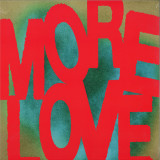
Moderat, the electronic music Voltron formed by Apparat and Modeselektor, released ‘MORE D4TA’ last year to critical acclaim, their first full-length album since 2016. Keinemusik’s Rampa & &ME put their spin on the Moderat albums’ third single ‘MORE LOVE.“ — the vinyl single of the remix will be out December 8th, 2023.
Ira James' Vessel Recordings Group is a go-to for soulful house sounds and that's just what we have here to kick off 2025 on good vibes only. Jaemus and Sen-Sei are the dup behind two new singles. The first is 'Never Come Down' and it features Hector Moralez on the vocals while the cuddly beats, gooey chords and sweet drums all melt you. The Nonfiction remix is more pumping and direct and 'Don't Keep Me Waiting' then swirls around with heady pads, incidental melodies and dusty drums for late-night wig-outs.
Repress
Sometimes it seems almost effortlessly, how Rampa is not only detecting, but shaping the zeitgeist of clubsounds. The man has done it on various occasions. Not only that. In a no less unerring fashion he
happens to find the best company to vocalize that very state of the art. It once again all comes together here on his „Les Gout“ single. He’s teaming up with Chuala, one of genre-defying’s most distinctive and
bright figures, to lay down „Les Gout“, a track perfectly balancing groove, elegance and irresistible floorappeal. The tune already has become a much requested standout in Rampa’s sets, designated to become a standout in everybody else’s sets over the coming weeks and months.
This new 12" on US label Season Limited brings together two of deep house's most accomplished and tasteful names in French legend Franck Roger plus Arnold Jarvis who he last collaborated with in 2007, while UK mainstay and Freerange label boss Jimpster remixes. It is one the label has been cooking up for a while but proves more than worth the wait. 'Living My Life' is the one original collab and is smooth, buttery deep house with lush vocal tones. Jimpster brings a little more bounce and a fat bassline on one mix, then dubs things out to prefect for the second. A timeless set of grooves that will level-up any collection.
King Street Sounds is on a mission to reintroduce timeless house classics to the dancefloor with another iconic release. Their aim, to educate a new generation about the sounds of the old school while also offering fresh remixes for everyone to enjoy.Kerri Chandler's 'Bar A Thym' is back on 12-inch vinyl, featuring the full original 7:24 mix. This track builds, keeping listeners at the brink of euphoria and inviting them to dance. It’s THE perfect groove.The original track is accompanied by a new version via South African producer Themba who adds his signature afro sound to the mix, infusing the song with swing, extra percussion, and heightened anticipation around the various drops.Then the classic Foremost Poet's version, which was a great alternative to the timeless bomb. If you’re a house head, you need this in your life.
002 - Remixes[15,93 €]
‘Ice Cream Dream Boy’ serves as a celebratory anthem, an ode to manifesting dreams into reality, and a testament to Shanti's knack for creating infectious and uplifting dance music as she explains: “I wanted to make a happy and uplifting vocal summer tune and I just so happened to be in the peak honeymoon romance period with my now partner (The Ice Cream Dream Boy). He had discovered my love for soft plush toys and decided to buy me a cute little fluffy Jellycat Ice Cream so when I made the instrumental I felt insecure and unsure about what lyrics to write, so I just decided to sing about what I was currently experiencing in my life. I had been a fan of Shivum Sharma for a while and I had just done a remix for his amazing song '7am', so after establishing a cute lil connection I thought I’d ask him to help me write the song as I was very new to writing lyrics!”
- A1: Progetto Tribale - The Sweep
- A2: Onirico - Echo Giomini
- A3: Open Spaces - Artist In Wonderland
- B1: Alex Neri – The Wizard (Hot Funky Version)
- B2: M C.j. Feat. Sima - To Yourself Be Free - Instrumental Mix Energy Prod
- B3: Mato Grosso - Titanic Expande
- C1: Dreamatic - I Can Feel It (Part 1)
- C2: Carol Bailey - Understand Me Free Your Mind (Dream Piano Remix)
- C3: The True Underground Sound Of Rome - Secret Doctrine
- D1: Don Carlos - Boy
- D2: Lazy Bird – Jazzy Doll (Odyssey Dub)
Vol 2[28,99 €]
Volume 1 of this expertly curated project of 90s Italian House - put together by Don Carlos.
If Paradise was half as nice… by Fabio De Luca.
Googling “paradise house”, the first results to pop up are an endless list of European b&b’s with whitewashed lime façades, all of them promising “…an unmatched travel experience a few steps from the sea”. Next, a little further down, are the institutional websites of a few select semi-luxury retirement homes (no photos shown, but lots of stock images of smiling nurses with reassuring looks). To find the “paradise house” we’re after, we have to scroll even further down. Much further down.
It feels like yesterday, and at the same time it seems like a million years ago. The Eighties had just ended, and it was still unclear what to expect from the Nineties. Mobile phones that were not the size of a briefcase and did not cost as much as a car? A frightening economic crisis? The guitar-rock revival?! Certainly, the best place to observe that moment of transition was the dancefloor. Truly epochal transformations were happening there. From America, within a short distance one from the other, two revolutionary new musical styles had arrived: the first one sounded a bit like an “on a budget” version of the best Seventies disco-music – Philly sound made with a set of piano-bar keyboards! – the other was even more sparse, futuristic and extraterrestrial. It was a music with a quite distinct “physical” component, which at the same time, to be fully grasped, seemed to call for the knotty theories of certain French post-modern philosophers: Gilles Deleuze, Félix Guattari, Paul Virilio... Both those genres – we would learn shortly after – were born in the black communities of Chicago and Detroit, although listening to those vinyl 12” (often wrapped in generic white covers, and with little indication in the label) you could not easily guess whether behind them there was a black boy from somewhere in the Usa, or a girl from Berlin, or a pale kid from a Cornish coastal town.
Quickly, similar sounds began to show up from all corners of Europe. A thousand variations of the same intuition: leaner, less lean, happier, slightly less intoxicated, more broken, slower, faster, much faster... Boom! From the dancefloors – the London ones at least, whose chronicles we eagerly read every month in the pages of The Face and i-D – came tales of a new generation of clubbers who had completely stopped “dressing up” to go dancing; of hot tempered hooligans bursting into tears and hugging everyone under the strobe lights as the notes of Strings of Life rose up through the fumes of dry ice (certain “smiling” pills were also involved, sure). At this point, however, we must move on to Switzerland.
In Switzerland, in the quiet and diligent town of Lugano, between the 1980s and 1990s there was a club called “Morandi”. Its hot night was on Wednesdays, when the audience also came from Milan, Como, Varese and Zurich. Legend goes that, one night, none less than Prince and Sheila E were spotted hiding among the sofas, on a day-off of the Italian dates of the Nude Tour… The Wednesday resident and superstar was an Italian dj with an exotic name: Don Carlos. The soundtrack he devised was a mixture of Chicago, Detroit, the most progressive R&B and certain forgotten classics of old disco music: practically, what the Paradise Garage in New York might have sounded like had it not closed in 1987. In between, Don Carlos also managed to squeeze in some tracks he had worked on in his studio on Lago Maggiore. One in particular: a track that was rather slow compared to the BPM in fashion at the time, but which was a perfect bridge between house and R&B. The title was Alone: Don Carlos would explain years later that it had to be intended both in the English meaning of “by itself” and like the Italian word meaning “halo”. That wasn’t the only double entendre about the song, anyway. Its own very deep nature was, indeed, double. On the one hand, Alone was built around an angelic keyboard pattern and a romantic piano riff that took you straight to heaven; on the other, it showcased enough electronic squelches (plus a sax part that sounded like it had been dissolved by acid rain) to pigeonhole the tune into the “junk modernity” section, aka the hallmark of all the most innovative sounds of the time: music that sounded like it was hand-crafted from the scraps of glittering overground pop.
No one knows who was the first to call it “paradise house”, nor when it happened. Alternative definitions on the same topic one happened to hear included “ambient house”, “dream house”, “Mediterranean progressive”… but of course none were as good (and alluring) as “paradise house”. What is certain is that such inclination for sounds that were in equal measure angelic and neurotic, romantic and unaffective, quickly became the trademark of the second generation of Italian house. Music that seemed shyly equidistant from all the rhythmic and electronic revolutions that had happened up to that moment (“Music perfectly adept at going nowhere slowly” as noted by English journalist Craig McLean in a legendary field report for Blah Blah Blah magazine). Music that to a inattentive ear might have sounded as anonymous as a snapshot of a random group of passers-by at 10AM in the centre of any major city, but perfectly described the (slow) awakening in the real world after the universal love binge of the so-called Second Summer of Love.
For a brief but unforgettable season, in Italy “paradise house” was the official soundtrack of interminable weekends spent inside the car, darting from one club to another, cutting the peninsula from North to centre, from East to West coast in pursuit of the latest after-hours disco, trading kilometres per hour with beats per minute: practically, a new New Year’s Eve every Friday and Saturday night. This too was no small transformation, as well as a shock for an adult Italy that was encountering for the first time – thanks to its sons and daughters – the wild side of industrial modernity. The clubbers of the so-called “fuoriorario” scene were the balls gone mad in the pinball machine most feared by newspapers, magazines and TV pundits. What they did each and every weekend, apart from going crazy to the sound of the current white labels, was linking distant geographical points and non-places (thank you Marc Augé!) – old dance halls, farmhouses and business centres – transformed for one night into house music heaven. As Marco D’Eramo wrote in his 1995 essay on Chicago, Il maiale e il grattacielo: “Four-wheeled capitalism distorts our age-old image of the city, it allows the suburbs to be connected to each other, whereas before they were connected only by the centre (…) It makes possible a metropolitan area without a metropolis, without a city centre, without downtown. The periphery is no longer a periphery of any centre, but is self-centred”.
“Paradise house” perfectly understood all of this and turned it into a sort of cyber-blues that didn’t even need words, and unexpectedly brought back a drop of melancholic (post?)-humanity within a world that by then – as we would wholly realise in the decades to come – was fully inhuman and heartless. A world where we were all alone, and surrounded by a sinister yellowish halo, like a neon at the end of its life cycle. But, for one night at least, happy.