'Garage bands suddenly obtain cult status and become the antithesis of their initial appeal'
Garage Class were a group of reluctant outliers who produced one of the finest contributions to the wave of UK DIY music that emerged during the late 70s and early to mid-80s.
Hailing from Alsager in North West England and comprised of Tim Shutt (vocals) Phil Murphy (lead guitar) Clive Williams (guitar) Lynne Sanders (bass) and Phil Bourne (drums / bass on studio recordings) Garage Class originally went by the name of The Pits before their then manager Steve Hurt imposed an alias which, though unpopular within their ranks, would nevertheless reflect the shambolic art they would eventually capture on their first and only single.
As The Pits the group offered a loutish inflection on glam-punk flamboyance, evoking Johnny Thunder hitting the north and remaining disowned yet undeterred in a dreary old boozer. But as Garage Class the group distilled a roughcast and homespun primitivism that felt quintessentially their own. In this they proved too unruly to be assimilated into any wider scene. Early gigs descended into acrimony and recognition proved elusive. Yet what they managed to make back then now sounds like an extraordinary article of underdog ambition.
Released in 1984, four years after it was originally recorded, the Terminal Tokyo single is an unlikely triumph of exceptional messthetic punk. Though raw and unpolished the songs here are precariously pop-minded and indisputably anthemic. The titular A-side reveals the dry and detached drawl of Shutt aka The Subliminal Kid, a sharp, jaded and poetic voice that has some of the most iconic lines never heard in punk. Accompanied by second-hand guitars, on-the-fly handclaps and a chorus like a terrace chant this is the cult hit that never was, a heroically artless masterpiece that has all the ragged character and misfit euphoria of Swell Maps and The Buzzcocks if they were more impulsive and boisterous, and left to their own devices in the remote margins of a Cheshire town. The original B-side is here substituted for I Got Standards, a track that, until now, has somehow remained unreleased. An ideal twin to Terminal Tokyo there's the same brusque and dog-eared quality to the band's delivery, as well as the same upfront emphasis on strong hooks and insistent momentum. Yet again, Shutt is on impeccable form, perfecting an inflated, adolescent antagonism that has all the sardonic, malcontented charm of similarly 'shirty' buggers like Dan Treacy (Television Personalities), Patrik Fitzgerald and Mark Perry (Alternative TV).
Although never accepted in their own time both tracks represent a brief but inspired moment of fervent imperfection, one that epitomized the best of a diffuse and autonomous underground movement spearheaded by The Desperate Bicycles and built upon by the likes of Amos & Sara, The Homosexuals, The Cleaners From Venus and Family Fodder. Like them Garage Class were situated at a point where punk, art, humour and a sense of stubborn independence all intersected.
In the years since Terminal Tokyo has accumulated a retrospective appeal among certain trusted circles, with Jon Dale celebrating the single in his exhaustive and essential Story of UK DIY for Fact Magazine, and original copies regularly changing hands for a foolish forty quid or so. With this inaugural release on the Outer Reaches label Terminal Tokyo is not only restored for the very first time but given a worthy expansion courtesy of JD Twitch (Optimo).
Continuing his own fascination with the fringe history of UK DIY - documented on his own outstanding compilation Cease & Desist: DIY! (Cult Classics From The Post Punk Era 1978-1982) and in his re-edits of Crass Records classics for an early release on RVNG INTL - Twitch reinterprets I Got Standards as an incisive, dubwise outing that pictures Jaki Liebezeit and Muslimgauze on a bender in England's provinces, tasked with remixing the raw product of local punks. A new slant on Garage Class' crude magnificence, built to play loud on contemporary soundsystems.
Although the latter part of 1980 spelled the end for Garage Class with members moving on to other projects (Bourne fell in with The Colours Out of Time, Murphy went on to front The Regular Guys and Shutt eventually left to form Happy Refugees) this reissue attempts to give their fleeting time together and the unique single statement they made the treatment it deserves. If this means Garage Class have obtained cult status, their initial appeal remains. Just listen for yourself.
Search:remote pl
Detroit label My Baby focusses on letting underground local talent shine, and that is the case with the second EP, a various artists affair featuring label boss Mister Joshooa, plus Remote Viewing Party and Tammy Pickle with a remix from My Baby.
The acts featured on this release are all residents of the famous TV Lounge/TV Bar venue in Detroit. The 12" includes Eddie C along with My Baby boss and TV Bar booker Mister Joshooa-who work together here as Tammy Pickle-plus Rickers, who is one half of ATAXIA, and How to Kill Detroit co-founders Remote Viewing Party, while Rickers and Joshooa also link as My Baby to remix one of the tracks.
First up are Remote Viewing Party with the superb '410'. It's five bumping minutes of silvery tech with whirring machines and gurgling synths all weaving around well programmed and punchy drums. Sure to infect real energy and freakiness into any club set.
Mister Joshooa makes his first appearance with the alluring 'Alright Fine', a slow and absorbing track of gloopy bass, percolating drums and unsettling vocals. Subtle acid lines and prickly hi hats all make this one really jump out of the speakers.
Next up, Mister Joshooa links with Rickers for a standout remix of '410' that is even more physical and driving. The metallic groove is run through with alien sounds, shooting synths and ghoulish voices that are filled with paranoia and will make a great atmosphere in the club.
Joshooa and downtempo disco don Eddie C then collaborate as Tammy Pickle for 'Indifference,' which is a perfectly slow and sensuous number with elastic synths and bass. Crisp hits drive it along and encourage you to sink deep into the groove.
This record is jam packed with talent and original ideas, and one that marks out this label as one to watch.
Pseudocode in a kind of free form minimal electronique concrete mood. There`s even the odd suggestion of a pop tune here and there, maybe even some danceable beats, if you`ve got one leg shorter than the other. While Xavier S. contributes most of the lyrics and vocals, Guy-Marc Hinant plays often the core melody on guitar or electric piano, Neffe's contributions are particularly noteworthy throughout, as he weaves together the bulk of the sonic cloth through overdubbing and mixing.one of his parts are remotely virtuosic (hence his self-identification as a non-musician), but they are always unexpected and perfect in and of themselves, emotionally and sonically, and in that sense they are deeply musical.This could be seen as the missing link between Slaughter In Tiny Place and Europa - third and final LP by Peudocode.All songs are unreleased. Recorded and mixed between 1980 and 1981.
"Emotional Response returns to the SchleiBen series, with another offering of 4 split albums. Again artists are given free reign, encouraged to push the boundaries of their studio and live experimentation in form and texture.For parts 5 - 8 the net is cast wide, from the psychedelic moons of Tomaga to Matthewdavid's meditative live improvisation, a collection of A Man Called Adam's commissioned sound-works to Jon Keliehor's new age visions.
First Tomaga, a duo that grew out of engine of psychedelic rock outfit, The Oscillation, to become a respected entity of it's own. Featuring long time friend of the label, Tom Relleen and drummer extraordinaire Valentine Ma, the project has grown to become greater than the sum of its parts. With 4 albums in 3 years and one more upcoming - plus their ridiculously overlooked solitary remix of Not Waving for the label - the output doesn't come close to matching their live "events", from almost constant touring.
The 2 pieces were recorded in an improvised session as an interzone between their last album, which was recorded entirely in non-studio spaces and their newer material. Featuring heavily processed long form studio recordings, the pieces, with Tom's bass and audio manipulation set over Valentine's exemplarily, intricate percussive interplay, provide a perfect, brooding introduction to the second series of SchleiBen.
This is contrasted with the first 'official' solo output of Neil Tolliday. As Nail, he has gained respect for over 25 years crafting deep, bumpin' House music on labels like DiY Discs, Remote and Classic, including the sought after Big D's Lounge album. After a sojourn as one of half of off-kilter pop duo, Bent, the Nail moniker has been recently resurrected for a new generation of followers.
Throughout this time Neil has recorded more personal music, initially for his own consumption, however some recently starting surfacing under various pseudonyms via digital portals. No press, no information about who was really behind the music was given before being deleted soon after. After some encouragement, here then marks the first appearance of Neil Tolliday.
On the two tracks included, these drawn out, eastern influenced, drone ragas are pure meditation from Tolliday's 4/4 output. With an upcoming album on Emotional Response, more is to come.
A welcome return to SchleiBen then, due course to pause and reflect, emptying the moment to (un)listen.
Do you like Love songs After spending a lifetime spent avoiding this subject in song, Joel Sarakula finally admits that he does. On his new album "Love Club" Sarakula relives the golden age of Soulful and Romantic Pop music and connects it with a modern aesthetic. While a deeper message of love and peace flows through the record, Joel Sarakula is no old fashioned hippie: ",Love Club' is about connecting to reality and re-framing the idea of romantic love and loss in the present, loveless age ". Featuring eleven songs touching all genres from disco to blues, from soul to soft-rock, Joel Sarakula's "Love Club" is a profound pop statement.
Joel Sarakula has travelled the world in search of his muse, experiencing everything from being a victim of Caribbean carjackings to performing in the remote fishing villages of Norway, via the dive bars of Europe and the US. It was the hodge-podge musical tapestry of England's capital that finally drew him to a settling point, in the wake of seemingly never ending run of shows. With personal tastes that span from the more avant-garde to soul and pop greats like Sly Stone, Todd Rundgren and Hall & Oates, there are clear nods to contemporaries like Unkown Mortal Orchestra, Erlend Oye and Toro Y Moi in terms of ambition and style.
With his last two albums "The Golden Age" and "The Imposter" collecting strong radio plays at BBC Radio 2, BBC 6, BBC London, XFM Joel Sarakula has been play-listed nationally in Europe including Flux FM, WDR 5, Radioeins, Bayern 2, Deutschlandfunk and Deutschland Kultur Radio in Germany as well as in Benelux and Italy and Spain. He is a regular fixture on the live festival and club circuit in the UK, Europe and internationally including appearances at SXSW, Primavera Sound, Glastonbury, The Great Escape, Liverpool Sound City, Scala London, Tallinn Music Week, V-ROX (Vladivostok) and Reeperbahnfestival Hamburg.
"Love Club" is Sarakula's bold and unashamedly emotional next step. In essence the album is a homage to the soulful singer & songwriter artistry of the Seventies filtered through a darker contemporary lens - fitting for these uncertain times. "I always shied away from generic love songs," the Sydney, Australia born songwriter admits, "but on this record I embraced the subject wholeheartedly... and intellectually, looking at themes of love, lust, loneliness and everything in-between." Take the first single "In Trouble", co-written with Michele Stodart of The Magic Numbers, as the best example for Joel Sarakula's unique, and honest approach to making music. "We Used To Connect" questions the changing nature of relationships in our social-media addicted world: 'We used to connect in the real world too, now the touch of your hand is a digital cue'.
"Coldharbour Man", on the other hand, examines the identity of the song's narrator and the artist vs. fan dynamic all wrapped up in a disco love song: "There's a lot going on in this particular track. I feel my writing has grown emotionally...", explains Joel Sarakula. "Just best to listen yourself and make up your own interpretation!: 'We met in a song come to life like some fantasy cliché, though I'm known for my moves in the dark you flooded sunshine on my day'. Then there's "Baltic Jam", capturing romantic love and loss in authentic 70s confessional singer & songwriter style and of course "Dead Heat", a song about how there is struggle in the most perfect relationship pairings as the match is so even: "I recall an ex-girlfriend of mine... when we first met, we thought we hated each other but we eventually flipped that emotion and realised we had a deep passion and love for each other, there just was a lot of underlying sexual tension!" : 'It's a battle we could only win, if we lose. We'd be stronger if these lonely ones became two'.
More than a year in the making, Joel Sarakula recorded "Love Club" in various studios around London and Berlin capturing soulful performances from his many musical comrades on vintage analogue equipment. "This record has truly been a labour of love. Recording and privately sharing these performances amongst my collaborators started to feel like a bit like a club - I guess that lead to the album title! I was surprised how much I actually enjoyed the 'love-making process' and I look so much forward to playing these new songs on stage with my band." We can't wait, Joel Sarakula.
Belgium-based Composer Christina Vantzou's Fourth Full-length For Kranky Ventures Further Into The Uniquely Elusive And Evocative Mode Of Ambient Classical Minimalism Which Has Become Her Signature: A Fragile Synthesis Of Contemplative Drift, Heady Silences, And Muted Dissonance. In Regards To The New Album She Speaks Of Focusing Particular Attention On The Effects Of The Recordings On The Body, And Of 'directing Sound Perception Into An Inner Space.'
No. 4 Took Shape Across Roughly Two Years, Incorporating A Diverse Array Of Musical And Conceptual Collaborators, Including Fellow Kranky Artists Steve Hauschildt And John Also Bennett (of Forma) As Well As Angel Deradoorian (ex-dirty Projectors), Clarice Jensen, Beatrijs De Klerck, And Members Of Belgium's Echo Collective. During The Creation Process Vantzou Wanted To 'blur Lines Of Hierarchy,' And Thus Allowed All Ensemble Members And Technical Assistants To Add Or Delete Elements. Despite Such A Spectrum Of Input The Eleven Tracks Feel Distinctly Cohesive, Weaving Elegant Textures And Resonant Open Spaces Within A Twilit Landscape Of Eclectic Instrumentation: Piano, Harp, Vibraphone, Voice, Strings, Marimba, Synthesizers, Gong, And Bells.
Vantzou Describes The Recording Process As One Of Prepared Spontaneity: That Is, 'having Plenty Of Ideas Ready To Explore Going Into The Session, But With Enough Time To Depart From Those Ideas And See What Happens.' This Mindset Of Premeditated Exploration Informs The Album's Emotive Textural Intuition, With Hushed Drones And Delicate Gestures Eliding In The Periphery Of The Mix. She Cites Sleep And 'the Loosening Of Time' As Two Formative Practices In Her Private And Professional Life, Which Manifests In The Quietly Hallucinatory Properties Of Vantzou's Music. No. 4 Feels Both Endless And Ephemeral, Immersive And Immaterial. It's A Music Of Horizon Lines And Half-light, Mapped With Feeling And Foresight.
Recorded In New York City And Brussels. Mixed In Berlin.
A Portion Of This Work Was Funded By A Generous Grant From The Flemish Community In Belgium.
Having recently relocated to the remote redwood forests of Northern California in order to set up a satellite mixing studio for his old stomping ground, Glasgow's Green Door Studio, Sordid Sound System returns to Invisible Inc with 4 cuts of Psychedelic Dungeon Disco.
The EP opens with his most blissed out track to date 'Die Ewige Nacht', an eight and a half minute inverted sun ritual based around shimmering cascades of dubbed up electronic percussion and an overdriven tintinnabulated FM arp.
Hi-NRG meets 80s B-Boy electro on 'Crescent City' with a careering off-road excursion into tripped out mutant carnival cavalcade territory.
Dia De Muertos's offbeat eerie percussion and driving low frequencies are met with spectral buzzing melodic refrains from the furthermost reaches of a decaying Oaxacan cemetery.
The acid drenched ambient lullaby 'You & Me' brings proceedings to a fittingly fucked up close.
Sordid Sound System's last release on Invisible Inc, 2017's 'Fear Eats The Soul', received plays and praise from the likes of Manfredas, Trevor Jackson, Sascha Funke, Optimo's JD Twitch and Thomas Von Party.
- A1: Tactics Is Hench
- A2: Activator, The Actualizer
- A3: We Lack The Clout The Decision Isn't Ours To Make, There Was No Crusade After All
- A4: The Story Of Our Salvation
- B1: Magnitude Of Oblivion, Refrain Of Pacific Calm
- B2: Aerosol Tropics
- B3: Perfect Lung Polymer Earth
- B4: We Were Big They Were Small, We Used To Be Crucial
The third and final release from Halocline Trance for the calendar year is Perfect Lung, a collaborative album from Istanbul-based composer Ipek Gorgun and Ceramic TL aka David Psutka (Egyptrixx, Anamai, Limit). A decadent yet durable offering of material sound, recorded remotely during 2016 + 2017 in Toronto, Ankara and Istanbul. Seven songs of original, accidental music that span colour and feeling; the petroleum psychedelia of Ceramic TL framed by Gorgun's precise and emotional landscapes. Inhaling/exhaling full register slabs hint at the multi-dimensionality of optimism and voicelessness...multiple things in multiple ways. Chill melodies plod then dissolve entirely like a casual toil. Whatever you like. All creative output is eco-political in nature but this record avoids directive and cliche. Moments of clarity glint through piles of junk; total quantity mimics eruptions of precious material - an unrealistic examination of the concept of material value as defined by its relative scarcity...this album is a lot. A fixation with excess contrasts the corporeal impermanence of humans with the material half-life of their consumer existence. Our legacy is trash - stray objects inside the perfect lung.
Boris Bunnik is no stranger in the worl d of electronic music. He released several albums and ep's under a variety of monikers since 2007 on labels like Delsin, Shipwrec, Frustrated Funk and his own Transcendent imprint. Fauxpas Musik welcomes him for a new project called Severnaya. Originally hailing from the Island of Terschelling, the most Northern and remote part of the Netherlands he now made a piece of music dedicated to this special place. Severnaya means north in Russian and refers to the bright frozen landscapes of the northern archipels. Boris often plays with the influences and elements of ambient in his music. If we have to believe the man himself, Polar Skies is his most personal sound trajectory to come from his mind. Drum programming is scarce and what remains is a lush and profound listening experience floating on scapes and melodies. We clearly hear his roots and intentions represented in the airy, tranquil sound design of this new album project. Things sound spacious, and life is at ease in these melancholic compositions. Crispy crackling percussions and icey pads place you in the midst of a resonant arctic landscape. You can hear influences drawn from producers like Biosphere, Pub, Brian Eno but we also hear more contemporary influences from modern day film composition but most of all we here Boris his own signature. The tracks were composed over a couple of years (2015-2017) in a more contemplative mindset. At some point this selection formed a consistent piece of music and as a result you hear his most personal and fragile works to date. Fauxpas Musik is proud to release this new project in 2018. written and produced by Boris Bunnik aka Conforce at the PasadenaOceanlab Studios Special thanks to family, friends and Fauxpas
- A1: Po'ore Ye La Be De Geta Gurego
- A2: Bangere Tomme
- A3: Ete Songo
- A4: N'yella Be Bobere
- B1: Everything You Do, You Do For Yourself
- B2: Yelmengere De La Gu'usi
- B3: Nongre, Nongre - Sugre, Sugre
- B4: Sella N'de Hu Dene
Releasing an album into the world is a special moment for any artist but when you're an artist who grew up in remote northern Ghana with no schooling, spending a life herding cows and goats, building your own instruments and teaching yourself to sing, then there's a particular sense of occasion and celebration in finding recognition and an audience for that music.
This is the case for Guy One, an utterly unique artist who is writing and performing Frafra music, a style that originates from a small area in the north of Ghana. Whilst Guy One is already loved and adored locally by now - building up a fervent following in local villages in which no funeral or wedding would take place without his soaring voice and deeply rhythmic playing, before then transforming into an award-winning, TV appearing artist in Ghana - his music is now to find a much wider audience through Max Weissenfeldt's Philophon label (Jimi Tenor, Hailu Mergia, Alemayehu Eshete) on this Berlin meets Bolgatanga release.
Guy One's international debut #1 is an album rooted in tradition as much as it is the contemporary ("Frafra music Made in Germany" says drummer producer Max Weissenfeldt if he's forced to put a label on it) but given the fact that the traditionalism of Frafra music itself is a largely unknown force, the results are more even more potent and stirring in their creations. Choirs, trumpet, organ, bass, drums, synthesiser, vibraphone, saxophone and piano, the album is as bursting with instrumentation as it is ideas and innovation.
The album's perfect positioning between the old and the new and in taking that middle ground and launching it into completely new territory is enough to completely unglue the definitions of what music can be.
The album is the fourth LP from FM Belfast. Broadcasting from their home on a remote island you can sense that the tracks are personal. The album has 11 tracks, 11 intimate stories to dance to. It's like you've been invited to a Cabin Fever Dance Party in their living room. The lyrics are about bliss, euphoria, trying to be a human in this strange world, friendship, of loss and growing up.
ALL MY POWER The first song of the album deals with guilt. When you're surrounded with people who wake up early and do everything they are supposed to do but you can't get out of your own bed. This will make you feel guilty. The others don't need to rub it in since you already have bad feelings about yourself. There are two characters in the song. One is a blamer while the other one is being blamed. FOLLOW ME I'm not longer blind, you can follow me". The song is about a person who is no longer blind to the world around her. It's about taking responsibility for your choices. We are not just a group of individuals, we are citizens of this planet and we can't stand idly by when powerful people are destroying it in front of our own eyes. We have ways to connect and we can band together against the hatred and violence. The rich and the greedy are taking everything and ruining it for the rest of us. Being kind is not the same as being naive, it's a choice everyone can make.
ENJOY
Enjoy life while it last. Don't watch the world go by without having a good time. "Here's to feeling alive, everywhere, all of the time".
UP ALL NIGHT
Sometimes you just postpone everything you're supposed to be doing and run away from your problems. The night is the best time for procrastination, you can hide in the dark and nobody can see you waste your life.
AGENT
Like many songs on the album, this one is about holding your head above water in this strange world we live in. It's easy to get blindsided and lost but who's going to speak up for the weak if you don't do it.
YOU'RE SO PRETTY
The lyrics for You're so Pretty originally come from a short story written by Lóa. They are about getting old without maturing. The song is about being restless and broke. Sometimes you feel like there is nothing left to do but shout.
STREAMERS
Streamers is a quiet love-story about having found the person you want to sit next to for the rest of your life and watch crappy TV together. Lyrics are by Árni and Lóa.
LEAVE A MARK
Even if things are not great today, there is always tomorrow. Leave a Mark is a personal reminder to do something about the life you are given and not waste time. It doesn't have to be important, it could just be writing your name on a wall. I little bit of "I was here" for the people who come after you.
FEARLESS YOUTH
It's a nostalgic song about being a fearless adolescent and the friends you used to have. The lyrics are written by Örvar who's also a founding member of MúM.
STROBE
The Strobe is an atmospheric track. It's made for people who want to dance in a euphoric bliss. The lyrics are like a mantra: It's getting dark so turn on the strobe. Don't think, just get lost in the dance.
THE GAME
The Game tells you to resist the power of bad people and bad governments. There's a big game being played and you don't need to participate, you can resist. The power hungry people of this world will never be satisfied but you don't have to support them.
Written and recorded at Cats Abbey in November 2016 by Anthony Child and Daniel Bean.
Anthony and Daniel played the Buchla Music Easel, harmonium, shruti box, bass guitar, hurdy gurdy, symphonie, glockenspiel, hand bell, Electro Harmonix 45000, Strymon Blue Sky, Strymon DIG, and Roland RE 101 Space Echo.
Front cover image by Ali Wade
Rear cover image by Cathrin Queins
Design by SOMA
The title of the debut lp from The Transcendence Orchestra outlines the modus operandi of this pairing of Anthony Child and Daniel Bean. Recorded in a remote English rural setting over a period of 24 hours this is an apt location for a recording that eschews time and space in favour of methodological displacement and deep psychological navigation.
Modern Methods For Ancient Rituals is an experiment in acoustic and synthetic symbiosis which is deeply influenced by the atmosphere and acoustics of the rural location of Cats Abbey resulting in a set of recordings which can aid to the transformation of consciousness. Deploying a range of ancient and modern instruments and effects including Buchla Music Easel, harmonium, shruti box, bass guitar, hurdy gurdy, Electro Harmonix 45000, Strymon Blue Sky and Roland RE 101 Space Echo among others, Child and Bean conjure an audio experience which encapsulates elements of drone, trance, pulse, rhythm and melody subtly shifting all into a psychologically penetrating experience beyond the aesthetic and into the comforting unknown.
The latest release from Bjarki Runar's bbbbbb label sees Bjarki delving back into his vast archives and shines a light on a bizarre detour during the early days of the label that involved
a peculiar commission from the Icelandic state. Bjarki introduces the story; 'It was back in 2015 and we were only just putting together the original plans towards making bbbbbb a label. While this was happening, I got a call from a friend who was
working for a local tech start-up and marketing company. They'd been contacted by the Icelandic Ministry of Fisheries and Agriculture who came to them with a weird proposition.
They were looking at the idea of marketing Icelandic lamb as this user-exclusive commodity for high end restaurants, the same way they do with Kobe beef in Japan. His marketing company was going all in with this idea of creating an elite herd of sheep that would get the 5-star treatment - fresh food and beer, shampoo and geothermal baths for their fleece, and entertainment such as TV and music for when they were in the hills. That's where I came in'. The initial meeting between Bjarki and the marketeers however didn't go as smoothly as they hoped; 'When I met my friend and his team, they were going to have music pumped through a series of remote speakers across the hillside' Bjarki explains. 'But when they showed me what they were going to play to them, I almost fell of my chair laughing! It was all this
cheesy, easy listening, orchestral Icelandic bullshit. I said to them 'This is nonsense! Why are you bringing me into this project if that's all you're going to be playing' In the end, I told
them I would completely redo all the sounds and music they were going to be using. I was going to drag the Icelandic sheep into the 21st Century'. Bjarki was as good as his word. Over the summer of 2015, he spent several weeks at farm
locations near Kirkjubæjarklaustur and Reykholtsdalur, walking the hills and playing a variety of sounds and beats to various flocks of sheep to see what the best approach was. It
was tough going at first; 'At the beginning, I was working totally blind', Bjarki explains. 'Imean how can you possibly know what sort of modern music and sounds Icelandic sheep
would go for' But Bjarki persevered and he found certain sounds and tones made the sheep more active and engaged.
From this point, he began to make tracks that would encapsulate what the lambs were drawn to the most. 'A track like Soda 'Sugarlicious' for example, came about when I started
playing Candy Crush on the hillside. As I kept playing, the sheep began to gather around me showing interest in the bright chintzy sounds coming from my laptop and that deep voice that
would keep speaking to you. I simply put together a track that was all shiny colours and heavy on the chimes. The sheep fucking loved it!' A track like 'Drab' meanwhile was suited
for less sunny moments. 'I got caught in a nasty rainstorm, so I started playing these synth lines I had made, along with an improvised kick drum. The mix of the softness of the tones
along with the hit of the bass cased the sheep to follow me all the way back to the farm I was staying at. The farmer wasn't too impressed with that, but the flock was completely
hypnotized'. In the end Bjarki, amassed several tracks ranging from soft ambient to gnarly hardcore bangers to present to the Ministry. But in the end, they decided not to go with the whole
proposal. 'These people were fools', Bjarki says. 'They just couldn't get their heads around doing something completely different, that was a bit of fun yes, but was completely done in a
serious manner. We all spent weeks doing this stuff so yeah, it was a bit gutting'. In the end though, there is a silver lining to this story as these efforts were not wasted for we can now hear the best of Bjarki's efforts from this admittedly weird project on a limited 12'release that marks a storming 2017 for the bbbbbb label.
The third release in Danse Club's Black Series is a collaborative effort between Dutch tech house hero Lauhaus and countryman Rik Woldring with a standout remix from Boris Werner. Lauhaus has long been at the heart of the underground electronic music scene, releasing on go-to imprints like 100% Pure and Area remote as well as his own Soweso and We Dig. labels, whilst Rik Woldring is very much a talent on the rise who has impressed in Amsterdam with his unique after hours DJ sets. Together the pair crafts some infectious and charismatic grooves that fit perfectly with the increasingly essential Danse Club . Opening track 'Context' is a tight arrangement of looping bass, silky and silvery percussion and myriad sonic effects that create intrigue from start to finish. It's the sort of thing that makes you sweat on the floor but has enough detail to keep your mind occupied, too. Boris Werner, another stalwart of the Dutch tech scene, turns in a superb mix of 'Context'. His remix is deeper and more stripped back, with bobbling drums and perfect claps driving the thing along. Subtle pads warm things through and shadowy voices bring a sense of light night mischief to proceedings. Lauhaus & Rik Woldring then turn in 'Aint No Time', a liquid bit of shape shifting tech house funk that is rich with colourful melodies and well placed spoken word musings. It's music for the floor that is fun as well as functional and last track 'Spearmint' is just the same. This ones a bit tougher and more taught with rubbery synth and basslines wrapping round each other for 9 heady minutes as delightful synth patterns slowly smear and spread in the skies up top. Another cultured release from the Danse Club label that proves tech house, when done well, is still a hugely rewarding genre.
Don't shoot me, I'm only the piano player.
The Scene: The Welsh mountains, remote and harsh, a special place. A good place to produce a special album. The characters: Volker Bertelmann in his friend Adam Fuests' studio, equipped with only a piano and a laptop. The Project: To record a album of piano music. Title: Hauschka.
Piano music is highly personal music, which is the reason why piano solo albums occupy a particular place of importance in a musician's work - not that Volker Bertelmann wants to hype his first foray to that extent, hence the pseudonym. Nevertheless Hauschka is personal music, simply because it has accompanied him for so long, because it has always been there in some shape or form, because it has always been important. The title points to the fact that it is dealing with something of import, not just a few finger exercises or background ivory-tinkling.
Substantial' is a snapshot of a life spent with the black and white keys, and is simultaneously both moment and history, thought and feeling, yet without turning into a unduly meaningful concept album. Rather, Substantial' is based upon the least conceptual of all concepts: Improvisation. Each track is based upon an opening sequence, the theme of which is extended, modulated and varied with, as far as form or length is concerned, no specific objective in mind. What has come out is music of a differing, well, substance: Eleven atmospheric pieces in which a variety of different techniques overlap and rhythmical images with narrative depth unfold, in which further instruments, such as double bass or vibraphone make a fleeting appearance, at once lending a hint of pop, but at no time detracting from the piano as central instrument, in which experimental and electronic music is accessed without compromising the directness and ease of the improvisational approach.
The confluence of Bertelmann's multiple musical personality can be apprehended here: Whilst the pop-oriented musician plays the melody, the electronic producer gently experiments with sounds, leaving the pianist quite literally to manipulate the piano, - plucking the strings with a plectrum, dampening them or bowing them lengthways to achieve a variety of percussive effects. Following the recording, the tracks were adapted, supplemented and finalized. Using multi-tracking, up to four piano tracks were superimposed, electronic sounds from the laptop added, as well Stefan Schneider's bass (Mapstation, To Rococo Rot, Music A.M.) on three tracks.
Post Scriptum is the latest artist to join the Sonic Groove Records roster.
Previously releasing on Function's legendary Infrastructure imprint, Post Scriptum changes gears stylistically in a very big way with his latest release entitled Until You Drop. Leaving his previous looped based purist Techno behind, Post Scriptum takes his sound exploration into the much darker cavernous world of Industrial Techno.
Dark As You Like starts off this musical odyssey with a fierce mid tempo, broken beat groove. The rhythm emits the real feel sensation of live played drums with its hard smashing snares and deep booming bass kicks which surely will have you play the air drums! Layered on top of this beast of a rhythm track, Post Scriptum provides the perfect lyricism with a smooth spoken narrative. Very forward thinking sound design curves its way in and out of the dark negative space the rhythm and vocals provide. Without imitation or sounding even remotely retro this evokes the feel of early Nine Inch Nails and Ministry.
Drop Zone is a highly intense workout with it's pulsing staccato bassline and crackling filtered out lead line which builds into a growling beast of riff that will completely consume the listener. You Won't Find Me (Short Mix/Long Mix) takes things further into the post contemporary realm of present day Industrialized Techno with complex, bass heavy drum rhythms, slicing and dicing their way through a darkened acidic atmosphere of time, space and sound.
The joining of Post Scriptum and Sonic Groove Records is the perfect match with this beautifully crafted Techno-Industrial hybrid EP, a banger for the dance floor but also a delicious delicacy for your home turntable or music player.
Spiros Kaloumenos has been one of the key artists of Planet Rhythm at an earlier stage. This time he's back with a completely recrafted style that perfectly fits the label's current state of mind. Adventurous Techno with thumping beats and at times a little acidic touch. The Greek artist comes up with a killer four track EP that goes from the sturdy beats of 'Introvert Shadow', through the acid tainted '101 Reasons'to the rave inspired anthem called ''De Forme''. We're happy to welcome Spiros back to Planet Rhythm. A bonus track named 'Intensity Game' is included in the digital release
Awa Poulo is a singer of Peulh origin from Dilly commune, Mali, near the border with Mauritania. Largely pastoral and often nomadic, Peulh- (or Fula-)speaking peoples are found from Senegal to Ethiopia but predominate in the Sahel region of West Africa. Awesome Tapes From Africa is proud to release Poulo's newest recording of highly virtuosic folk-pop, fresh from the studio, broadcasting her vision of Peulh music beyond the grazing grounds and central markets of her remote home region in southwestern Mali. It's not very common to find a female singer performing publicly among the Peulh. But Poulo's mother's co-wife is Inna Baba Coulibaly, who is a celebrated singer most Malian music fans know. Coulibaly herself was brought into music by forces outside her control when a regional music contest required an entry from her village and she was chosen to be a singer. So, set in motion by a surprising series of events, young Poulo's entree into the music world was auspic ious as she gained popularity across the region. After several locally released tapes and CDs, this record is Poulo's first internationally-distributed record. On Poulo Warali, she and her band combine the hallmarks of Peulh music—warm flute floating over cross-rhythmic n'goni (lute) riffs and resonant calabash gourd hand percussion—with broader Malian sounds like lightly-distorted guitar and a heavier, rollicking inertia. Shapeshifting layers of rhythm and woody overtones match Poulo's commanding voice in a jocular yet deliberate dance. This is a relatively rare example of Malian Peulh music played in a modern, cosmopolitan context, reflecting the mixed society of Dilly, where Bambara, Soninke and Peulh-speaking people live among each other. Poulo's conscious lyrics about community concerns speak to the distinctive identity of her broadly-flung people. While Peulh represents less than 10% of Mali's melting pot of languages, the dynamic music here powerfully resonates well beyond the linguistic borders.
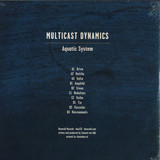
"Aquatic System"" is the second installment of the series, written and composed in two remote geographical places - namely at waters in Finland and Fuerteventura. Inspired by the complexity of water, its movement, various forms, inhabitants and hidden energy, the album was assembled mainly using synthesizers and processed field recordings of the ponds, streams, lakes and oceans of the different locations. With a vibrant story and conceptualization the focus lies in taking the listener on a observing, thoughtful and reflective journey through the aquatic system of our waters. Aquatic System opens with an impression of a frozen surface imagining icy and calm underwater movements underneath. Soon a slow process of melting begins and while the water starts to move in tiny streams of sound, small lifeforms evolve, curiously sending out small pulses in their flowing and constantly moving habitat. The aquatic nature awakens. Zooming out to larger waters high frequencies arise and colliding forms become audible. Larger marine life forms can be faintly heard when entering a much wilder environment, sensing sound-swirls of wind, foaming water tops and impressive large waves crashing on dark rocks. Finally ending at the shore, where the great ocean appears on the horizon, the environment is surrounded with moisture. From the calm reflective landscape derives an inward moment, recalling the organic and atmospheric quality of the sound journey. ""Aquatic System"" has been developed into an audiovisual performance together with visual artist Emilia Kwiatkowska and was performed several times in Spain and Finland, before the music has been finalized for the tracks.