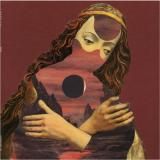
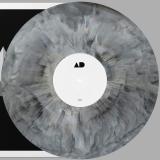
Nicaraguan-American artist Dagmar Zuniga makes music that feels both intimate and expansive: songs drift like disrupted signals, carried by harmony, tape hiss, and a strong sense of touch. Her debut solo album in filth your mystery is kingdom / far smile peasant in yellow music — written and recorded in New York, Norway, and Athens, Georgia over a period of five years on her longtime companion, the Tascam 424 — was uploaded to Bandcamp and YouTube in January 2025, quickly garnering over two hundred thousand views and the attention of artists such as Mount Eerie, who invited her to tour with them that summer. This year, what was once a jewel of tapped-in algorithms and message boards will meet the world at large, with in filth arriving digitally on March 4, and physically on April 10, via AD 93.
in filth is an atmospheric, devotional collage where one voice multiplies into a chorus of selves, sometimes delicate, sometimes severe; an effect created by Zuniga’s masterful layering of texture and complex harmonies. Synths glitter out like spears of sunlight from beneath clouds of moody, time-distorted guitars, and songs spin about themselves like tightly-wound music boxes, making use of a kind of hypnotic repetition, before melting apart into their components or slipping into the following track.
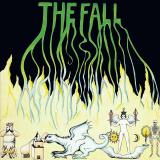
Zuniga began recording to tape as a teenager, drawn to the physicality of the medium — how a tape recording is fragile, mutable, and alive. Though her ethereal sound may draw easy comparisons to other female pioneers of psychedelic folk, she is influenced just as much by the darker sounds of Syd Barrett and The Fall. Like Barrett, Zuniga is a painter, and she is interested not only in recording music but in creating a full, self-contained artistic universe: she creates her own artwork, merchandise, music videos, and bootleg tapes of new and unfinished music that she exclusively sells at live shows (“If something is not material, it does not exist,” she insists). Her world has not gone unvisited, garnering her a monthly show on NTS Radio ‘World of Pain’, as well as a forthcoming appearance at Rewire Festival in April 2026.
Though Zuniga’s work explores themes of solitude and suffering, the suffering in her songs is not borrowed or displayed; it is held, then opened outward through empathy — an exacting practice of attention that insists on shared ground. Solitude, in her work, is not withdrawal but a starting point for connection. Likewise, over time, her recording process has become increasingly communal, with in filth featuring musicians Hayes Hoey, Austyn Wohlers (Tomato Flower), and Zach Phillips (Fievel Is Glauque). Newer recordings widen the circle even more. For Zuniga, collaboration is a way to “find a place between worlds,” echoing Badiou’s idea of love as a vision refracted through the prism of difference. Meaning emerges there — in the space between voices, between artist and listener. “I hope my music helps people work through difficult experiences,” she says. “The same way it helps me.”
Search:repetition
Since first forming in 2016, London's High Vis have steadily polished their palette of progressive hardcore with shades of post-punk, Brit pop, neo-psychedelia, and even Madchester groove, mapping a middle ground between hooks and fury, melodies and mosh pits. Singer Graham Sayle describes their third album 'Guided Tour' as an axis of competing forces: "It's trying to be a hopeful record, while also being incensed." Rounded out by drummer Edward 'Ski' Harper, guitarists Martin MacNamara and Rob Hammaren, and bassist Jack Muncaster, the band's deep roots in the UK and Irish DIY hardcore scenes have kept them grounded but growing, inspired equally by restlessness and righteous anger. As Sayle puts it, "Everyone's scratching, everyone's working all the time, and their idea of relaxing is just getting fucked and avoiding reality. This album is an escape from that."From its opening seconds of a cab door slamming, a car revving away, and a baggy rhythm swinging to life, 'Guided Tour' sounds like a band reaching for new heights, bristling with energy. Recorded across a few weeks at Holy Mountain Studios in London with producer Jonah Falco and engineer Stanley Gravett, the results feel dynamic and dialed-in, like anthems burned into sense memory through sweat and repetition. Harper cuts to the chase: "We had a clear idea going in, every moment got used. Maybe when we're 60 we can sit around and get a drum sound right, but for now it's about getting things done."The album's 11 songs span the spectrum of contemporary guitar music, sharpened by experience, camaraderie, and societal frustrations. From swaggering street punk ("Drop Me Out," "Mob DLA") to jangling indie sneer ("Worth The Wait," "Deserve It") to heavy alt ("Feeling Bless," "Fill The Gap") to shoegazey spoken word ("Untethered"), the group's chemistry transmutes any style to their unique intensity. Sayle champions this evolving fusion: "For years coming from hardcore, we had pretty clear boundaries - other scenes were separate worlds. Now things are getting more blended, drawing from different places."Nowhere is this sentiment flexed more boldly than on "Mind's A Lie," a dance- punk anthem inspired by Harper's love of house, garage, and pirate radio. Stabs of sampled female vocals (by celebrated South London singer and DJ Ell Murphy) build into a razor wire rhythm of low-slung bass, tense drums, and sparkling guitar before Sayle's staunch voice starts barking harsh truths ("Face to face with all I've known / I can't call these thoughts my own"). After a sudden breakdown, the track regroups and takes off, cruising into the horizon in a haze of chiming guitars and Murphy's ascendant voice, from the streets to somewhere beyond.
Niagara return to Discrepant with Buxtehude, a new work bending the legacy of Dietrich Buxtehude into their own fractured, electro-organic language.
Rather than a tribute, Buxtehude feels like an abstract dialogue with the Baroque composer’s sense of structure and flow—reimagined through Niagara’s raw synth work, off-grid rhythms and subtly warped melodic cycles. The trio let the music grow from the inside out: patterns expand and contract, harmonies tilt slightly off their axis, and small details accumulate until each piece reveals its own internal gravity.
There’s a clarity to Buxtehude that feels carved rather than composed. Tracks move with a quiet insistence, like mechanical organisms finding coherence through repetition and drift. Melodic fragments surface briefly, disappear, then return transformed, lending the album a strange balance between austerity and warmth.
With Buxtehude, Niagara continue to refine their unmistakable approach—playful yet rigorous, minimal yet full of life— remaining entirely their own.
Ruby My Dear returns to Analogical Force with Iterations EP -- five cuts of precision-engineered electronica forged from repetition and control. Originally conceived for a videomapping project by Barcelona-based studio VPM and premiered at SIGNAL and MIRA festivals the music quickly evolved beyond its audiovisual origins into a fully independent sonic work. Razor-edged IDM, glitched breakcore and high-velocity drum programming collide with dark harmonic pressure and microscopic detail. Brutal yet deliberate. Chaotic yet exact. This is Ruby My Dear operating at full resolution.
With Severance, IGLO returns to Figure with a focused yet exploratory EP that reflects his open-ended approach to contemporary techno. The release moves fluidly between restraint and expression, combining functional structures with subtle, unconventional elements that give the tracks a distinct sense of character. Rather than settling into a fixed formula, Severance highlights IGLO's curiosity and willingness to push his sound forward while remaining grounded in precision and control.
Connection opens the release with a restrained, heads-down groove. A firm low-end foundation and sparse percussion lock into a steady momentum, while understated melodic elements add depth without breaking the track's linear drive.
On Kauriraris, the energy tightens. Nervous synth motifs and crisp rhythmic details create a sense of urgency, pushing the track forward through constant micro-variation. It's a lean and effective tool built for sustained pressure.
Flipping the record, Blink Twice moves into darker, denser territory. Murky textures and a weighty groove unfold gradually, building tension through repetition and space. The track thrives on its slow burn, making it well-suited for late-night transitions.
Alive introduces a more open and flowing feel. Warmer tonal elements and a subtle swing soften the edges, while the groove remains firmly anchored and forward-moving.
Digital-only track Forlornly closes the EP with a spacious and introspective mood. Reduced rhythms and airy melodic layers create a calm, drifting atmosphere that rounds off the release with control and restraint.
With Severance, IGLO delivers a tightly structured EP that emphasizes clarity, tension and functionality - a confident addition to the Figure catalogue.
SAM GOKU (Permanent Vacation / Dekmantel / Atomnation)
Paryìa marks its eighth release with Sam Goku, whose contribution showcases not only the creative depth of his dreamy side but also just how club-ready his tracks can be. Rooted in shimmering house and techno yet fluid across a wider spectrum, both Sam Goku’s sets and productions strike a balance between effortless buoyancy
and intricate depth. A distinctive sound that seamlessly blends elements of his roots with everything dance music lovers cherish: richly textured layers, hypnotic repetition, and a subtle sense of unpredictability. This balance is also reflected in his EP on Dekmantel (2024) and Permanent Vacation (2025), shaping a sound that is instantly recognisable and quietly enduring.
For its third release, Honey Trap turns toward the instinctual. Ritmo Animal is a record driven by body memory, where rhythm becomes language and movement becomes communion. Vancouver- and Colombian-rooted duo Dosis weave club music with lived histories, drawing from punk ethics, soundsystem culture, and a deep commitment to collaboration.
Formed by Daniel Rincon and Zachary Treble, Dosis operates in the space between structure and looseness, where grooves feel hand-built and edges remain intentionally rough. Across five tracks, Ritmo Animal resists clean categorization. House mutates into dub-soaked psychedelia, vocals surface and dissolve, and percussion swings between discipline and abandon.
The A-side opens with “I Want To Be Your Dog”, a low-slung, hypnotic burner featuring Alien D, setting the tone through repetition and restraint. The title track, “Ritmo Animal,” anchors the record in motion, with saxophone lines from Dave Biddle threading through percussive momentum and grounding the track in something tactile and human.
On the flip, “Malibu” offers a softer pull, with Hannah Acton’s vocals drifting through warm, unhurried rhythm. “Humo,” featuring Hashman Deejay, leans deeper into smoke and sway, while closer “Sancocho” stretches time entirely, favoring communal simmer over destination.
Ritmo Animal is music made for shared space. It is not concerned with polish or purity, but with connection, between scenes, cities, and bodies on a floor. Another chapter in Honey Trap’s ongoing exploration of intimacy, pleasure, and rhythm as refuge.
Following the release of Blue Lava on Houseum Records, B From E returns with Apocalypsex, an EP that dives deeper into darker and more club-oriented territory. Released on Ellipse Records, the sub-label dedicated to rawer and more experimental expressions, this new chapter explores tension, hypnosis and late-night energy, while preserving the melodic sensibility that defines the Danish producer’s sound.
We begin with the A1 “X-perience”, a track firmly rooted in 90s trance aesthetics, blending acid lines, sharp trance-style synths and vocal elements into a direct, club-focused structure with a progressive, hypnotic drive.
The A2 “Dream Mania” shifts towards a more melodic and expansive direction. Less centered on pure club impact, it unfolds as a sun-soaked journey, led by evolving melodies and a smooth, flowing progression.
On the B-side, “Apocalypsex” dives into deeper territory. The title track builds a sustained state of trance through repetition and gradual tension, combining floating atmospheres with an intense, forward-moving groove.
The EP closes with “In Orbit”, a more break-driven and spacious piece where airy pads and open textures take the lead, offering a lighter, atmospheric conclusion.
‘White Series #4’ marks the debut EP of Marc Feldmann and Dominik André as a producer duo. The record opens with ‘Natural Oscillation’
, a hypnotic techno piece where flowing percussion meets subtle trance influences. ‘A Breeze of Mistral’ builds on this energy with layered repetition and a deep pulse that unfolds gradually, drawing the listener further in. On the flip side, Audrey Danza reinterprets Natural Oscillation with a direct, dancefloor-focused approach. She sharpens the groove, raises the tempo, and pushes the track forward with her signature, driving drums and a tightly locked kick, transforming the original’s hypnotic flow into a no-frills cut. The EP slows the pace with ‘Discernible Rhythms’, a reflective, 80s-influenced synth chugger that adds warmth and restraint to the record. Released as a hand-stamped white label on Subject To Restrictions Discs, White Series #4 reflects and continues the label’s contribution to the more understated forms of electronic club music.
- 01: Devotional Fade
- 02: Clown Car
- 03: Morocco
- 04: Cool Whip
- 05: Soft Hold
- 06: Seven On The Floor
- 07: Arpeggio
- 08: End Of The Horn
Matt Gold and Dustin Laurenzi present Devotional Fade, a collaborative record of electroacoustic rhythmic improvisations – equal parts meditation and dance, released on We Jazz Records, 24th April. Laurenzi and Gold, key collaborators in the Chicago creative scene and with genre spanning artists such as Bill Callahan and Makaya McCraven, step forward here with a major artistic statement, a product of extended improv sessions capturing the duo's hypnotic interplay. This is the sound of two of Chicago's most vibrant instrumental voices listening deeply, communing in sound.
Recorded in Laurenzi's attic studio, Devotional Fade emerged from a series of weekly sessions over the course of a single month. The duo kept the tape rolling continuously each day and selected a number of immersive sonic worlds to present, oscillating between patient, sacred minimalism and wild, dancefloor-worthy combustion.
The pair set two parameters to heighten the sessions' stakes: editing would be kept to a minimum, and a rule of "no pitched overdubs" was put in place – ensuring that all melodic and harmonic gestures would have to be committed in real time. Laurenzi and Gold held true, only sparingly adding a stray shaker or brush to these already largely complete improvisations. Devotional Fade is imbued with quiet propulsion and ecstatic repetition.
Matt Gold is a guitarist, multi-instrumentalist, songwriter, and producer based in Chicago, IL. His work pulls from diverse traditions of electric and acoustic music. Matt has performed across six continents and contributed to over fifty recordings as a collaborator and instrumentalist, garnering critical praise from Pitchfork for playing "one of the most exhilarating guitar solos of recent memory, in any genre." Gold has several long-running collaborative bands spanning jazz, folk, experimental, and chamber music including Sun Speak, Storm Jameson, and Tin. He performs and records with an array of creative artists including Makaya McCraven, Marquis Hill, Jamila Woods, Natalie Merchant, and Greg Ward. Gold co-curates the record label and concert series Flood Music.
Chicago saxophonist/multi-instrumentalist Dustin Laurenzi has developed a personal approach to improvisation and composition that has garnered the attention of the city's creative music community. Laurenzi's music is inspired and informed by jazz, folk, and improvised music. His inventive improvisational sensibilities have made him a sought-after musician in many circles of Chicago's vibrant music scene and beyond. Laurenzi has toured extensively with songwriter Bill Callahan and is featured on Callahan's 2024 release Resuscitate! He has toured with Grammy award-winning artist Bon Iver and appears on the band's critically lauded 2016 release 22, A Million. Laurenzi has also performed with Jeff Parker & The New Breed, Marquis Hill, Makaya McCraven, Matt Ulery, Japanese Breakfast, and This Is The Kit.
Nitai Hershkovits and Daniel Dor return with Found & Found, their second collaborative album and a natural continuation of the musical dialogue initiated with The Garden Suite.
Born out of pure curiosity - "there was more to say, more to explore," explains Dor - the album expands the duo's sonic language beyond the synth-only framework of their previous work. While the Moog remains central, Found & Found introduces clarinet and acoustic guitar, gently dissolving the boundaries between electronic and acoustic sound.
Each composition unfolds through interlocking, mantra-like patterns. Repetition becomes a space for transformation: melodies circle, textures shift, and subtle harmonic movements invite the listener inward. The music is structured with care, yet it feels open and fluid. intimate, spacious and quietly immersive. If their previous record explored orchestral depth through synthesizers, this new chapter embraces air and clarity. Acoustic gestures emerge within electronic landscapes, creating a sound world that is both grounded and weightless.
Nitai Hershkovits brings with his fellow partner Daniel Dor a refined harmonic sensitivity shaped by both jazz and classical traditions. Together they continue to refine a shared language that moves between structure and freedom, precision and emotion.
Fresh Hold Releases presents Helen Ripley-Marshall's mysterious Australian ambient electronic album "Green Chaos", reissued for the first time on vinyl LP. Originally released in 1988 on Sydney based private press label Freefall, "Green Chaos" marks the sole release from Ripley-Marshall.
In the late 80's Ripley-Marshall lived a Bohemian lifestyle in inner city Sydney; "surrounded by musicians, actors and artists, there was an amazing creative experimental vibe going on". While playing in new wave/art rock band "D Face" she began Green Chaos as a personal project to counteract the creative friction sometimes experienced within a group dynamic, heavily inspired by Arnold Frolows' "Ambience" radio show on Australia's Triple J and particularly the music of Tangerine Dream, Harold Budd and Brian Eno.
Initially a solitary endeavour, once she decided to record in a studio Green Chaos morphed into a somewhat collaborative, improvisational project with other musicians invited into the studio to improvise and add their own interpretations and ideas, additional layers and dimensions, resulting in a work that combines a clear influence from the electronic repetition of the Berlin school with a meandering, futuristic lyricism. Although influenced by the long form sonic journeys of artists like Tangerine Dream, Ripley-Marshall's background in art rock and new wave brings a more concise approach, each song a self-contained universe that says only what is necessary in the arrangement.
After completing a sound engineering course Ripley-Marshall recorded the album at Sydney's Exeter House Studio over several months alongside studio engineer Andrew Knight, met through a fellow member of D Face. Knight ran Freefall, a private press recording label releasing folk and bluegrass music, which had Green Chaos as its sole ambient release. Ripley-Marshall self distributed the album to local inner city record stores and dropped a copy to Triple J, where it became a regular staple of Arnold Frolows' show.
These days Ripley-Marshall has moved away from music and is predominantly focused on visual art. "Green Chaos" stands as the only released product of her musical years, both a personal window into the vibrant experimental art scene of late 1980s Sydney and a deep, timeless anomaly of Australian electronic music.
Rave At Your Fictional Borders is not beyond borders. The band simply denies any notion thereof. Driven by a sense of community, it defines human existence as one bio-organism with planet Earth. Now comprising members Dave De Rose, Marius Mathiszik, and Salim Akki, this incarnation of Rave At Your Fictional Borders first released the 'Entanglement' and 'Utopia' tracks in March 2025. Analogue Nomadism is the project's first album release. Recorded in Morocco and then co-produced and mixed by Dan Nicholls, it is an album of dizzying, trance-inducing scope. Rave music stripped of all external signifiers. Repetition, noise, krautrock, avant-garde sensibilities. This is a search for a groove that both connects and interlocks. The soul of improvisation and exploration runs through all seven pieces on Analogue Nomadism. Genres are referenced and transcended. The open-ended is perpetually embraced.
It is neither night nor day, but there is a half-light all the time. What used to be disconcerting is now not alien anymore. The sky boasts a faint light. Certain shapes are laid out, but get changed through communal ritual. Analogue Nomadism is the music of a feeling of community. It builds and breaks down. It is accepting of the psychedelic standards of the groove. Transportative and vertiginous. Endless.
Over a decade has past since this was released, and it has truly aged like fine wine. This release features 2 timeless cuts from the mind and soul of cv313 mixed and recorded near the heart of Detroit. This was beautifully remastered by dub innovator and pioneer, Stefan Betke POLE @ scape mastering in Berlin, DE. The recordings were pulled from the session masters conducted by Bazza @ Alchemy Mastering in London to ensure a perfectly balanced mix and preserving the soul and spirit of the original tape masters. This EP features two equally seductive cuts opening with "Fading Lights" which finds its pulse in the rhythmic elements while floating in a world of vaporous mist and resynthesized stardust. On the B side "Magenta" fills the space with ghostly apparitions and a rather hypnotic hook; pushing the boundaries of the spiritual principles found in the power of repetition. Close your eyes and drift into 14 minutes of endless flotation as modulating low frequencies massage your brain and mind, dive deep into a fathomless analogue world!
Certain paths necessitate and call for one singular long sequence in order to arrive at a fully formed conversation or reasoning. Nothing seems to broadcast it more clearly than the trajectory Brussels based Italo-Vietnamese artist Nguyễn Zen Mỹ embarked on during the last decade as Radio Hito.
After a string of highly cherished and sought out tape releases, Radio Hito’s new album ‘L’uso e gli attributi del cuore’, co-released by Maple Death & Meakusma, unfolds with devastating
clarity, a profound balance of depth, minimalism and emotional grounding. A ten-sequence song cycle for voice and MIDI soundfonts adapted from the 2021 book by French poet Claude
Royet-Journoud.
Written and recorded between January 2023 and August 2025, the cycle evolved through nearly 80 live performances from Galicia to Kazakhstan before arriving at its recorded form. Set to an Italian libretto adapted from Royet-Journoud’s text ‘L'usage et les attributs du cœur’ (POL, 2021), the work revisits the tradition of the 19th-century Lied — art song built on existing poetry— transposed into a radically economical contemporary setting: voice and Casio CTK workstations.
"I was interested by this incompleteness CRJ mentions - by the ‘suspension’ of meaning questioning readability and intelligibility. I ‘resisted’ to CRJ’s texts since I met him and got to know his work. … It seems to me that when playing the songs, I submit an object to be completed by the audience."
Radio Hito’s distinctive approach to setting poetry to music — spare arrangements, strophic repetition, and a voice suspended between recital, fm transmission and canzone — creates a language of its own, reaching new heights on ‘L’uso e gli attributi del cuore’, songs that are formally rigorous, emotionally restrained, and shaped by the discipline of sustained live performance, interlocking into a coherent cycle.
Rather than illustrating the poem, Radio Hito approaches it as a space of suspension. Royet-Journoud described poetry as a “profession of ignorance” where meaning remains incomplete; these songs extend that trembling state, allowing repetition, digital timbre, and restraint to hold the text open.
Often misread as minimal synth or romantic chanson, Radio Hito’s practice is rooted instead in the lineage of the art song and song cycle: open structures, close attention to language, and a live performance economy that pushes the voice at the heart of the stage. The choice of accessible keyboard workstations — light, portable, and embedded in contemporary popular culture — replaces the historical piano.
Radio Hito creates fantastical, mirage-like songs, intimate yet elusive. Her music is forlorn chanson for the digital age; bringing her haunting and beautiful vocalisations into conversation with MIDI soundfonts and humble-yet-deep casio compositions. Music that strides for simplicity, yet lands miraculously within an entire new universe, a uniqueness achieved from like-minded spirits such as Ghedalia Tazartès, Savina Yannatou & Lena Platonos, Dorothy Carter, cycles that trickle down into estuaries.
“Radio Hito's set is superb. Sitting on the altar steps with a synth, her fabulously expressive vocals colour sparse, pensive compositions.” The Wire
For Metro Beirut’s latest release, Cem Mo steps forward with his debut vinyl EP, a record that bridges the roots of Chicago and Detroit house with his own deep and textured approach to groove.
Born in Ankara and having taken piano lessons at an early age, Cem drifted from classical into jazz, re-teaching himself harmony and improvisation before finding his way into production. After moving to Amsterdam in 2016, the city’s community and music scene expanded his horizon, shaping a sound that treats producing like improvising, with curiosity for grain, color, and repetition, where subtle shifts make all the difference. Along the way, Cem has released on Handy Records and Rhythm Section, while his project Nowhere People has appeared on Artisjok Records.
This EP brings together a tight circle of artists who deepen its character. Saxophonist Moritz Schuster, known for his work across electronic music and past work with Cem and Malik Kassim, formerly known as Retromigration, delivers a striking, free-flowing performance charged with raw intensity. On “The Hard Way”, Franco Corica joins Cem for a deep, soulful, jazz-leaning moment that feels both reflective and quietly defiant. Finally, longtime friend Malik pulls up with a dancefloor remix that preserves Cem’s melodic sensibility while adding his own loose, resulting in a circular dialogue between two artists who’ve grown side by side.
Artwork: Shahd Issa
Alien Tropical: the perfect title for the second album by Servicio Al Cliente (Customer Service), the project of Colombian-born, Berlin-resident Juliana Martinez. If you were cannily seduced by the debut self-titled Servicio Al Cliente album, from way back in 2021, the wait for a follow-up has felt long, but Alien Tropical was worth the wait. Indeed, it feels like the perfect way for Michael Mayer’s Imara imprint to introduce itself to the new year: an album full of play and spirit, verve and sparkle, rich with pop spirit and with one eye smartly cocked toward the dancefloor.
That first Servicio Al Cliente album was a smart statement of intent, and a wonderful, unexpected turn from Martinez, who’d already been through plenty: being expelled from private music lessons,
training in law, joining a group named Las Palabras Correctas. 2021’s Servicio Al Cliente landed on the turntables of anyone with discerning radar (Ada included “Romántico” on her Connecting The Dots mix for Kompakt, for example). With Alien Tropical, Martinez works the sensual sway of her music even harder, building six luscious songs that twist chant-like repetitions into hypnotic mantras, each song the perfect confluence of melody and mystery.
When asked about Alien Tropical, Martinez pieces together fragments of memory: winter explorations, long road trips, navigating the highways and the heart. “I had been driving a lot at the time on the highway,” she recalls. “I depended on music I played in the car to manage my emotions and my thoughts on those long drives. Everything felt strange and unfamiliar on the highway, and I realised music was so psychological and my only tool to influence my feelings between highways and new places.”
So, the music becomes the narrative for where the body and the heart wants to go. That might explain the gentle yearning in Alien Tropical, and its eternal hypnotic, its sense of forever forward-motion, as though the music is flickering like the highway strip reflected in the rear-view mirror. But there’s also the skyward movement of the melodies, the way their loveliness lifts these six songs up through the clouds, like the helium balloons on the cover. From the sensual swelt
James Ruskin's Blueprint Records celebrates its 30th anniversary in 2026. Kicking off the festivities Vinicius Honorio returns to the label but this time it's alongside R.M.K who makes his Blueprint debut.
Vinicius Honorio is a Brazilian-born, London-based DJ and producer whose vision of techno is built on hypnotic repetition, gritty textures and emotional weight. With a career spanning over 2 decades, Vinicius has emerged as a powerful voice in contemporary techno - raw, focused and unflinchingly honest. His productions blend relentless drive with intricate groove, often laced with haunting melodic undertones and has released music on the likes of Figure, Token, Mord andSK_eleven, as well as Blueprint.
Hailing from London, R.M.K is the alias of Fossil Archive label head Roberto, representing a faster and more intense take on his unique brand of Techno. During his 20+ year career in music, he has formed friendships and worked in partnership with other respected artists such as Trevino (Marcus Intalex), Jamie Anderson, Robert Owens, Goldie and Nastia. Although the focus is always on the very heart of the most raucous of raves, R.M.K never shies away from groove and funk
With Black Koyo, Mattias De Craene enters a sound world at once intimate and vast. Born from journeys in Morocco and Brussels, the project traces the rhythms, chants, and spirits of the Gnawa tradition, revealing a quiet resonance that echoes De Craene's own search for depth and presence. Guibri, qraqueb, call-and-response chants, saxophone, loops, and electronics come together in a trance-induced dialogue - ritualistic, elemental, and dreamlike - creating a space where listening becomes immersion, tradition meets imagination, and music unfolds as a shared act of reflection and wonder.
About Mattias De Craene
Mattias De Craene's artistic path is marked by rare coherence. As a central voice in Nordmann and MDC III, he developed a physical, rock-inflected jazz language driven by propulsion, volume, and trance-like collective energy. Over time, a period of personal rupture - burnout, tinnitus, depression - shifted his focus inward. The saxophone became a breathing, textural presence, and in his solo work, he weaves saxophone, electronics, loops, and minimal forms into a cinematic, hushed world where repetition, resonance, and silence slow perception. Rooted in ambient and introspection, his music prizes attention over impact, precision over excess - a quiet intensity recognized with a nomination as Musician for the Music Industry Awards (MIA's).
About Black Koyo
Black Koyo is a Brussels-based ensemble and one of the most compelling voices of the Gnawa tradition outside Morocco. Led by maalem Hicham Bilali, the group brings guibri, qrraqueb, and call-and-response chants to life with trance-like intensity and ritual precision. Their music is both rooted and contemporary, weaving earthbound rhythms and vocal invocations into ecstatic, immersive soundscapes, creating a space where ancestral resonance meets present-day imagination.
About Jan Bang
Jan Bang is a pioneering Norwegian producer and musician, celebrated for his mastery of live sampling and his ability to merge electronics with improvisation, rhythm, and texture in real time. He mixed the album and occasionally joins live performances, bringing his signature approach to sound as co-founder of the influential Punkt Festivaland collaborator with artists such as Jon Hassell, David Sylvian, Arve Henriksen, and ECM Records' roster. As a performer and sound architect, Bang creates immersive, trance-like sonic textures where silence and sound carry equal weight. Within Mattias De Craene ftBlack Koyo, his live sampling becomes an organic instrument, weaving saxophone, electronics, and Gnawa rhythms into hypnotic, physically charged soundscapes.
Line-up & credits
Mattias De Craene - sax, electronics | Hicham Bilali - guibri, vocals, qraqueb |Ismael Akhraz - vocals, qraqueb | Marwan Abantor - vocals, qraqueb
All tracks are original gnawa traditionals played by Black Koyo and arranged by Mattias De Craene.
Album produced & recorded by Mattias De Craene in Essaouira, Morocco and hometown Ghent, Belgium 2025.
Text by Hicham Bilali.
Mixed by Jan Bang at Punkt Studio
Mastered by Lieven Van Pee
Artwork by Marina Sviridova
Design by Benoit Van Geel
Manufactured and distributed by N.E.W.S.
Executive production by W.E.R.F. records
Supported by Flemish Government, Jazzlab, nona, HA Concerts, Aubergine artist Management,
KAAP, La Bestia (Wout Van Putten) & mdcmu.sic vzw.
2026 (c) W.E.R.F. records
BLACK VINYL[25,84 €]
Following the reissue of The Pocket of Fever, Ambient Sans presents the second chapter in Masahiro Sugaya’s visionary work for the avant-garde performing arts company Pappa TARAHUMARA.
Founded by Hiroshi Koike in 1982, Pappa TARAHUMARA blended dance, theater, music, and visual art into abstract, immersive stage worlds. Sugaya’s compositions became the sonic counterpart to this radical aesthetic—minimal yet deeply evocative, combining electronics, ambient textures, and delicate melodic gestures into a sound language both intimate and expansive.
Music From Alejo marks his first original stage score for the company: a work where repetition and silence intertwine with shimmering synthesizers and dreamlike motifs, conjuring atmospheres that feel suspended between reality and reverie. More structured than The Pocket of Fever yet equally poetic, the album reveals Sugaya’s gift for translating movement into sound, balancing modern composition with subtle echoes of Japanese tradition.
Reissued for the first time on vinyl, Music From Alejo includes a printed insert featuring an exclusive interview with the artist, alongside photographs from our visit to his home in Japan. Essential listening for anyone drawn to the ambient minimalism of Hiroshi Yoshimura, Midori Takada, or Brian Eno—reimagined here through the lens of Tokyo’s experimental scene of the 1980s.
Euphoric State welcomes Reformed Society for its eighth release: a four-track EP that drifts through shades of melancholy and movement. Built on deep, evolving rhythms and subtle emotional tension, it reveals a producer with a refined sense of space and storytelling. Each track unfolds patiently, finding beauty in restraint and warmth in repetition.
The B2 features a remix from Cristi Cons, adding his own textured, hypnotic touch to the record. It’s music that feels deeply personal, echoing the timeless spirit that defines Euphoric State.
Two Lisbon mainstays from contiguous generations join forces as Scam Dust for the new Paraiso record: Tiago, Lux Fragil resident, world-renowned DJ's DJ and all-round music whizz plus Shcuro, Paraiso's co-founder, scene documenter and impeccable selector & producer. Funnily enough they also live in contiguous beach towns in the outskirts of the capital, Parede and Carcavelos. That's where they zig-zagged amid home-studios and, four hands in various machines, concocted this refreshingly to-the-bone record. Like a non-local entanglement between Lisbon, Sheffield, The Hague and somewhere in the American Midwest, 'Gastric Pulse' EP opens with a saturated, modulated acid line over a tight, industrial-tinged techno beat, peppered with sonic dirt of the highest order. It sounds like music projects like Downwards and Mathematics would put out. 'Enzyme Breaks' follows suit with a comparably raw spirit, adding some mysterious atmospheric scintillation and drum variations. A certain recluse techno (is that a thing?) comes to mind (and heart), Unit Moebius style. Toms abound in 'Pepsin Drive' - always a promising sign in our book - and the playfulness continues in the cheeky bassline and the intricate clap work. Soulful stabs give the tune extra magic via the mantra-like structuring power of repetition. The final track in the record comes from Pacific North-West transplant Doc Sleep and her collaborator Elias FS step in for remix responsibilities and flip the B1 into a hypnotic, dubby - and yes, jazzy - piece complete with a dive into glitchy, sonic sculpture territories towards the end of the arrangement. Quite the brilliant take. Music still counts (and always will), after all is said and done - and nothing like two hard-working music-makers to remind us of that.
Convergence is an ambient album formed through a series of morning rituals during rehabilitation following a severe medical event and an extended hospital stay. After weeks immersed in the constant alarms, beeps, and environmental signals of medical equipment, the act of listening itself became recalibrated. The music was performed and assembled using glass marimba, flute, and analog synthesizers, with each instrument treated as a source of resonance and gradually dissected through spectral analysis—allowing melody to emerge from fragments through repetition, attention, and daily practice, where synthesis functions not as traditional composition but as an exchange of signals.
Working slowly and intuitively, Stardust Multiplier approaches sound as a communicative medium between humans, the natural environment, and non-ordinary states of perception. Motifs evolve through repetition and subtle variation, informed by ceremonial music, mythic structures, and speculative communication frameworks associated with non-human intelligence—not as narrative devices, but as metaphors for attuned listening and pattern recognition.
Rather than moving toward resolution, Convergence documents moments of alignment—instances where intention, system, and environment briefly synchronize. The result is a restrained, deeply focused record, less concerned with atmosphere than attention, where synthesis functions as both a grounding practice and a method of inquiry.
Over the last two decades, The Field has refined a language of repetition that feels not assembled but uncovered. His loops don’t just cycle; they gather weight over time, so the tracks seem set in motion rather than composed – patterns established early, then
gently altered, their emotional temperature shifting almost imperceptibly.
On this five-track EP for Studio Barnhus, the Swedish producer’s first solo release in 8 years, The Field returns to the sonic architecture that defined his seminal debut From Here We Go Sublime, but with a (dare we say
Studio Barnhus-esque) looseness that allows the structures to breathe.
Tracks like In Our Dreams and 333 706 move forward on meditative chords, harmonies stretching their reach until the tracks feel elated by their own momentum.
The B-side tilts the frame. Another Day introduces some melodic immediacy, folding a tender vocal presence into The Field’s glittering matrix of sound, softening the grid without dissolving it. Now You Exist is a grand finale radiating with restrained euphoria.
The Field’s music never insists, it just draws you in and keeps you there. In a landmark crossing of paths for the Stockholm label, Studio Barnhus proudly presents Now You Exist, out May 15 on vinyl and all digital platforms.
RED VINYL VERSION[29,37 €]
Following the reissue of The Pocket of Fever, Ambient Sans presents the second chapter in Masahiro Sugaya’s visionary work for the avant-garde performing arts company Pappa TARAHUMARA.
Founded by Hiroshi Koike in 1982, Pappa TARAHUMARA blended dance, theater, music, and visual art into abstract, immersive stage worlds. Sugaya’s compositions became the sonic counterpart to this radical aesthetic—minimal yet deeply evocative, combining electronics, ambient textures, and delicate melodic gestures into a sound language both intimate and expansive.
Music From Alejo marks his first original stage score for the company: a work where repetition and silence intertwine with shimmering synthesizers and dreamlike motifs, conjuring atmospheres that feel suspended between reality and reverie. More structured than The Pocket of Fever yet equally poetic, the album reveals Sugaya’s gift for translating movement into sound, balancing modern composition with subtle echoes of Japanese tradition.
Reissued for the first time on vinyl, Music From Alejo includes a printed insert featuring an exclusive interview with the artist, alongside photographs from our visit to his home in Japan. Essential listening for anyone drawn to the ambient minimalism of Hiroshi Yoshimura, Midori Takada, or Brian Eno—reimagined here through the lens of Tokyo’s experimental scene of the 1980s.
a1. Straight Line Floating In The Sky
a2. Oldfashioned
b1. An Afternoon When Fish Appeared
b2. Mistral
b3. Alejo's Theme
- A1: Wasting Your Facelift
- A2: Die Infektion
- A3: Knebelfreunde (Feat. Das Kinn)
- B1: Free Cigarettes
- B2: Going In Circles (Ft. Rosaceae)
- B3: Totengräber (Ft. Felix Kubin)
- C1: Beiss Mich! (Ft. Rosaceae)
- C2: Leaves Casting Shadows
- C3: Hell Was Boring
- D1: Ironsight
- D2: Deutschland Verreist (Ft. Konstantin Unwohl)
- D3: Second Thoughts (Ft. Children Of Leir)
Between 2023 and 2025, L.F.T. split his time between Hamburg and Berlin, slowly piecing together what would become his most ambitious work to date. The result is Hell Was Boring - a double album that plays like a fever dream, unfolding as a dark, mythical tale about life, death, and the strange spaces in between.
L.F.T. - the alias of German producer and multi-instrumentalist Johannes Haas - has always thrived on tension: between punk urgency and electronic precision, between raw emotion and mechanical repetition. On Hell Was Boring, those tensions are amplified. Drawing on the spectral drama of Bauhaus, the melancholic minimalism of Linear Movement, the futuristic romanticism of Gary Numan, and even the sly swagger of Falco, the album feels at once deeply personal and part of a much older musical lineage.
The sound is stripped down to its bones: drums snap and rattle from a Roland TR-808, TR-707 and Korg KR-55; basslines growl from a Roland SH-101 and Korg MS-20; shards of guitar cut through clouds of tape hiss. Everything was tracked to a Teac Tascam 80-8 reel-to-reel, giving each track a lived-in, imperfect warmth. Nothing is overpolished - L.F.T. wanted the listener to hear the edges, the grit, the moments when the music almost comes apart.
Along the way, he invited friends and long-time collaborators into the fold - Das Kinn, Rosaceae, Felix Kubin, Children Of Leir, and Konstantin Unwohl - each leaving their own fingerprints on the record’s world of shadows and static.
Hell Was Boring isn’t a mere collection of songs; it’s a narrative that drags you into its orbit and doesn’t quite let go. It’s music for the late hours when reality feels porous, and for those moments when you’re not sure if you’re waking up or still dreaming.
Shaped from fragile, emotionally charged piano motifs that distort, disappear and transform into dense, cinematic textures, 'CANALS' is a debut that's finely matured, the result of years of friendship and growth. Italian artist Vanja Sturno and Montréal-based Belgian-Spanish composer Pablo Geeraert (aka Sanea Ima) have worked together extensively on various projects up until now, but 'CANALS' is their first official release as a duo. Having both studied music academically, the pair were eager to work more intuitively, so applied their well-honed set of skills to sound that, instead of fitting into a conceptual box, reflected more personal experiences.
Back in 2023, Geeraert travelled to Rome to support his friend at a difficult time and, during the trip, received some bad news of his own. The complicated feelings unconsciously surged through a series of delicate Ryuichi Sakamoto-inspired piano improvisations and a new project began to coalesce. They didn't realize it at the time, but once the record was finished, Sturno and Geeraert began to understand that the entire process had been a form a joint catharsis - a release of pressure. They were able to function so effortlessly and swiftly because they had already provided the space for each other to resonate emotionally and the music flowed from that point.
So the album's title, while remaining ambiguous, suggests its formation: a sequence of eight interconnected channels that feed a creative whole. On the first segment, Sturno and Geeraert's initial recordings can be perceived most nakedly, the melancholy, Satie-like phrases floating peacefully for a moment before the tranquility is agitated by stormy distortions and swelled into thick waves of harmony. The piano provides the record with its emotional anchor, offering focus and clarity as multi-dimensional noise wells up around it before inevitably dissipating, leaving gentle, unadorned sounds once again.
And the familiar instrument is reshaped into a wheezing artificial organ on the animated 'CANALS III', punctuated by percussive, tape-warped pitch fluctuations that seem to bite into its very essence. Gauzy acoustic granulations snowball into a powerful, bass-heavy crescendo on the fourth part, setting the tenor for the album's second half. But after the crushing 'CANALS VI', possibly Sturno and Geeraert's heaviest track, a brief tremolo-heavy vignette that ripples through experimental rock and ambient music's braided history, the duo clear the air with a jazzy diversion, introducing soft woodwind blasts as a palate cleanser before an epic, widescreen finale.
It's an album that's best absorbed as a whole, a vortex of ritualistic, rhythmic repetitions that Sturno and Geeraert appropriately refer to as "spiral listening".
For our 30th anniversary, we reissue three absolute minimal techno statements by Robert Hood. These tracks define the birth of minimal techno — reduced to rhythm, pressure and repetition. No ornament. No compromise. Just structure, tension and movement. Originally released on Logistic Records, they remain as powerful and modern today as they were in the early 90s. Functional. Spiritual. Underground.
- A1: Any Sof
- A2: Baphomet
- A3: Black Ny
- A4: The Smiling Knife
- B1: Thelema
- B2: The Name Will Be Adrian
- B3: Do The Mussolini (Headkick)
- B4: Mega Therion
- B5: Leather Mask
- C1: Aiwass
- C2: Scarlet Woman In Disguise
- C3: Suburban Ritual
- C4: We Are Stars
- D1: Stuck In Malkhut
- D2: Triad Of Gods
- D3: The Book Of Law
- D4: White Stains
- D5: Unveiled
Possibly one of the best Mental Groove releases to date. Symbols & Sacrifice is raw, beastly, and savage — a cinematic and esoteric journey from the depths of Sindaco’s universe. A masterfully crafted experience across four sides, this release blurs the lines between ritual electronics, hypnotic repetition, and uncompromising raw techno. A powerful and immersive statement, pressed on audiophile-grade vinyl for full heavy sonic impact.
Under the name of Sindaco is hidden a complex yet mysterious project where different styles and cultures live together.Obscure kraut rock, no wave, black metal and Detroit techno collide in what can be considered songs more than simple tracks. All is played by Sindaco with analog equipment without the help of computers. All is driven to create the best soundrack possible. The idea is to avoid all the typical cliches of the contemporary electronic productions and push the boundaries into a new way of tropical futurism. Be involved by the unespected waves of sounds coming from another world!
10” EP, 50 COPIES LIMITED EDITION, (25 BLACK, 25 TRANSPARENT)
Dubblack closes its 2025 vinyl series with DBB010, a rare 10” edition limited to only 50 copies — 25 black, 25 transparent.
The release introduces eoobe, the Amsterdam-based duo of Elina Tapio and Marco Segato, known for their immersive sound design and instinctive approach to rhythm. Across two downtempo analog compositions, they explore the intersection of ritual and circuitry, sound as both matter and movement.
Recorded live with analog synths, stomp boxes and drum machines, DBB010 unfolds through tactile tension and subtle repetition. On the B-side, Louis Bataille (Low Bat, Trystero, AnDerMole, Jean-Luc) joins with his voice, adding a spectral presence that drifts through the mix like a forgotten transmission.
Marking the final chapter of the 2025 vinyl series, DBB010 distills the raw and introspective spirit of Dubblack, deep, reduced, and emotionally resonant.
Australian producer Mike Buhl returns to Denude with Modern Explorer II, a four-track meditation on movement, memory and the spaces in between. Techno, downtempo and atmospheric sound design become tools of enquiry here: rhythms are less about function than about asking how far repetition can carry a feeling. From the searching lift of “Voyage Return” and the focused pulse of “Focal” to Vril’s dubbed, peak-time reimagining and the gently dissolving closer “They Were Always”, the record traces a quiet arc from momentum to reflection. Modern Explorer II feels like a small philosophy of the night: music for travelling without arriving, for dancers who know that the journey on the inside is at least as important as the one on the floor.
Andreas Tilliander returns to Kontra-Musik in a grand style with his second TM404 album. Titled 'Acidub', this highly anticipated release is much more of an evolution than a repetition of the first superbly self-restricted album, where Tilliander even decided to use only one of the two Roland TB-303 waveforms. Acidub is a more playful and open listening experience, no doubt inspired by his extensive live touring with the TM404 concept. In fact, you can almost hear Tilliander's flock of acid machines breaking free from the restrained modus operandi. Every sound is like a migratory bird with a heart yearning for high altitude and favourable winds. The opening track Alinge paints a lucid picture of these acid birds leaving a cold industrial landscape behind, the flickering black shadows from their wings against the white smoke rising from a forest of chimneys below. The very last seconds of Alinge even echo of the place the silver birds are longing for, but that will remain a secret between Kontra-Musik and the avid listener. Sufficient to say, we can follow these birds of passage as they're heading south towards a warmer climate, fleeing the cold discipline of the North. Mutron Mantra, for instance, brings us to a rainforest full of serpentine lianas, giant leaves dripping with moist and green pools of water bubbling with organic life. Don't Defend Mascot guides us through a steaming savannah at dusk with hundreds of yellow eyes following our every step while Pade vividly describes the perils of the flight and the pace and courage needed to press on. In all, Acidub is a surprisingly exuberant follow-up to the more introspective TM404 album. But while the musical journey of this second album is quite different, the experience of sheer aural eminence remains the same. Andreas Tilliander has done it again, and Kontra-Musik couldn't be prouder.
Mole Audio 08 is coming up, and we’re proud to welcome RSCA with their debut release.
RSCA is a collaborative project by Eduardo de la Calle and Aureal, born from a shared vision to expand the boundaries of techno into a more minimalist, abstract, and experimental territory.
Driven by the use of analog machines, the duo delves into hypnotic repetition, rich sonic textures, and the pursuit of both a physical and emotional experience through sound.
RSCA invites listeners into a deep, sensory journey, where rhythm transforms into a medium for introspection and connection.
No stranger to the music world, but making his first appearance on Riotvan and what a debut it is. We talking about Man Power. Deep, Detroit-tinged, and playfully intricate, this EP delivers anything but a repetition of his previous work Iteration. Adding even more dimension, two outstanding artists also make their Riotvan debut, elevating the release with their remixes. Jordan Nocturne shows what true club music can be — no bigroom theatrics, but perfectly tuned for the warehouse. Meanwhile, Inigo Vontier takes things into a trippy orbit of his own, sending dancers spinning off to another planet.
From start to finish: serious entertainment with that touch of playfulness we love!
- A1: The Bug – Hooked (Hyams Gym, Leytonstone)
- A2: Ghost Dubs – In The Zone
- A3: The Bug – Believers (Imperial Gardens, Camberwell)
- B1: Ghost Dubs – Hope
- B2: The Bug – Burial Skank (Arches, Vauxhall)
- B3: Ghost Dubs – Dub Remote
- C1: The Bug – Alien Virus (West Indian Centre, Leeds)
- C2: Ghost Dubs – Down
- C3: The Bug – Militants (The Rocket, Holloway)
- D1: Ghost Dubs – Into The Mystic
- D2: The Bug – Dread (Mass Brixton)
- D3: Ghost Dubs – Midnight
When Chuck D proclaimed "Bass, how low can you go?" on Public Enemy's anthemic 'Bring the Noise,' maybe he was pre-empting or inciting the 10,000 fathoms-deep, spine-bending basslines and sub-quake tremors of 'Implosion.'
Implosion is a crushing split album, appropriately released on The Bug's own PRESSURE label. Mapping out a new form of spectral dub, the sound is deliberately immersive, introverted, and yes, definitely implosive. In pursuit of heavy lids, blurred vision, and merciless bass bin punishment, it’s one part meditation, two parts low-end theory, and essentially a confession of devoted sound system addiction.
As expected from a tag team featuring British soundlab explorer and 'London Zoo' composer Kevin Martin, aka The Bug, and Michael Fiedler, aka Jah Schulz—a long-time graduate of Germany's new school of sound system reggae culture—the duo approaches their target differently yet share the goal of keeping their sound "raw" (Fiedler) and "brutally minimal" (Martin). This proves that opposites can attract, even if their tools are different and their methods sometimes diverge.
From such a disparate combo, hailing from different geographical and aesthetic backgrounds, contrasts are certainly on display, even within each artist's own contributions. From the melancholia and transcendence of 'Alien Virus (West Indian Centre, Leeds),' to the duality of ascension and descension on 'Hope,' or the Sunn 0))) in dub, visceral drone of 'Dread (The End, London),' to the tripped-out repetitions of 'Midnight,' which reinvents Chain Reaction for post-millennials, the result is both sacred and narcotic. Each track illuminates the emotional impact and atmospheric pressure being explored across this deceptively sparse album—a mastery of tone and texture.
This collection might be as reduced, minimal, and deep as The Bug has ever gone, perhaps echoing the solemnity of his recent Kevin Richard Martin Black release and invoking the futurist steppas self-pioneered on his previous Pressure album. Alternatively, Fiedler‘s Ghost Dubs project ventures into his most heavyweight direction yet, which is no mean feat considering his previous, the critically acclaimed album Damaged, was a monstrously massive triumph of analogue weight and enviable sound design.
Implosion is ice-cool, a stark contrast to the warmth and sociability of traditional Jamaican roots and the current trends in digi-dub. Instead, the mood is soaked in tension and intense dread, finding an unexpected melting point where classic dub's stark rhythm attack, isolationist ambience's eerie drift, dub techno's floatation strategies, and even the relentless riffs of doom metal collide. As the bass-obsessed pair drop what is arguably the heaviest ambient dub album to emerge from any electronic sector—a moody counterpoint to The Orb's fluffy clouds, etc, Martin has cited The Roots Radics, Black Jade, and On U Sound's Pounding System as heavily influencing his approach to the album, while Fiedler has expressed his admiration for Adrian Sherwood's productions and Rhythm & Sound's enchanting soundscape. Yet, the super heavyweight pulsations, emotive resonances, and bone-rattling vibrations detonated here effortlessly go far beyond these influences.
Shadowy and elusive, there’s a mysteriousness at this record's core. A haunting moodiness oscillating between nostalgia and future shock. Despite the deadly fixation with SLOW and HEAVY, the album maintains a totally hypnotic swing throughout. Implosion and its lead single 'Imploded Versions' are testaments to being enveloped in bass, seduced by bass, submerged in bass, and utterly crushed by bass, as The Bug and Ghost Dubs seek to craft a new form of dub for zonal headz and Babylon seekers.
Mastered by Stefan Betke (a.k.a. POLE) at Scape Mastering studio, this record is heavy as f-ck without resorting to continuous distortion. It’s low-end worship taken to an absolute extreme, yet remains highly listenable and definitely danceable, albeit at the slowest of paces. Sacred and narcotic, this is low-end worship amplified to the max. Dive in if you dare.
Primediv.space presents Hypnosis, the latest statement from New York producer Vincent Fiore. A stripped two-tracker built for late-night floors, the EP dives into hypnotic techno pressure with precision and force. Waves of repetition and drive unfold across the title track, while the included locked groove distills Fiore’s vision into a raw, endless loop. Pure, functional, and deeply entrancing - this is techno at its most focused.
Silat Beksi is back on Afterhours. with Infinite O’Clock, the labels eighth release — an assured statement where minimal house, tech-house, and groove converge. Over recent years, the label has consistently delivered stripped-back club tools with subtle depth, and Beksi’s latest reinvigorates that tradition with fresh energy rather than repetition.
The EP opens with Infinite O’Clock, a hypnotic minimal-house piece built from syncopated rhythms, deep, lush pads, ambient vocal samples, and a groovy low-end that perfectly fits the early club hours — those moments when the light begins to cut through the windows. On the Flip Side, Beksi shifts into early-00s micro-house mode: shuffled hi-hats, crisp claps, and playful, wonky grooves take the lead, while warm aerial pads reminiscent of 90s video games and acid-tinged basslines elevate the track with sophistication. Closing the record, Godbrother turns up the jacking energy — metallic and robotic samples, an infectious bassline, spatial pads, and delayed vocals give it a menacing, dancefloor-ready drive that ends the EP in full swing.
With Infinite O’Clock, Silat Beksi builds on Afterhours.’ reputation for club-focused minimalism and sound-system fidelity — a release that reaffirms the label’s consistent quality while confidently steering its sound forward.
Spulenmusik proudly presents its debut release SPL001 – Spule/Eins. A deep dive into modular techno crafted by Idu Berg, Ranya Hilgert and Franco Rossi, three artists united by their fascination for raw voltage and hypnotic repetition. Driven by analog circuitry and precision sequencing, Spule/Eins unfolds as a sonic sculpture of tension, groove, and pulse. From warehouse floors to late-night sessions, this record embodies the pure essence of modular techno: stripped, dynamic, and alive. Spulenmusik, handcrafted frequencies for the underground.


![Cv313 - fading lights [remastered]](https://www.deejay.de/images/l/1/6/163616.jpg)