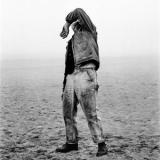
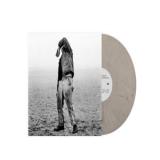
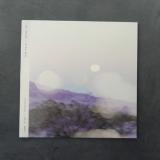
Goettingen’s finest XDB is proving once again that he’s not just an incredible DJ and vinyl collector but also a great, forward thinking producer. The original version of Cagomi was first introduced on XDB’s Metrolux Music back in 2009 and here is getting a new reshape and an exciting remix by Detroit living legend - Delano Smith!
UK-based Natural Expressions latest 4 tracker offers pure primetime examples of dub and deep techno. 2 from beloved fixtures in the scene along with 2 that are on the rise. The universally recognized Gradient, gives us 'Flight Above the Fog' and like the title alludes to, it accomplishes. Known for his intricate and classic dub techno rhythms, this hypnotic standout builds the atmosphere to a goosebump crescendo. Collogne follows up with 'West District'. A mesmerizing chord anthem that hangs around in the sweet spot, never over-extending its' welcome.
The second side hosts the ever-talented veteran Merv and his wicked contribution titled 'Serpent'. This attention grabber is standout dub techno in the upmost. Elegant and tempered, it chooses the smoothest route, washing over the listener with absolute dream-like euphoria. Vapnik closes the 12" with a fantastic reinterpretation of the Marco Hessler track 'Spacewaves'. The scintillating chord work is an audible thrill while the subdued drop towards the middle is pure magic. Another strong artist who really brings the heat. NEXV002 is the ideal example of a 4 track EP that features no holes. All killer and no filler.
Featuring music from a lost tape of devotional keyboard jams, field recordings of migrating birds, mysterious bells, meditative noise and crooked new beat/EBM, made god-knows-when and subsequently discovered in a Thessaloniki charity shop years later. It now somehow finds its way to vinyl, newly mastered by Rashad Becker, and sounding like a lost Hype Williams x Muslimgauze madness.
Originally discovered in a musty charity shop by Live Adult Entertainment, and issued in minuscule numbers on CD in ’21, Christian Love Forum’s raverential debut ‘Naked Light’ documents the fraternal post-church jams of siblings, Scott, Kiro and N•X, plus their mate Steve, who would regularly channel the light and pain of Sunday mass sermons into their ecclesiastic crud.
As previously heard on their blink ’n miss ‘Unconditional Love’ tape, the trio express their higher purpose thru ribboning microtonal keyboard jams that sound like Gurdjieff with a Casio and a knackered drum machine after too much sacramental wine. They hit the strangest, most affective seam of religious cinematic epic soundtracks, gnarled noise and clandestine Belgian new beat that seriously pushes our buttons, sounding quite unlike anything in the contemporary sphere, but eerily also echoing sentiments explored on record by James Leyland Kirby or Bryn Jones.
Now reshuffled and clad in custom artwork, ‘Naked Light’ is unveiled to believers and skeptics as a definitive article of faith. The lord works in mysterious ways within, manifest in stages of sun-bleached post-church field recordings, whirligig melodies, blown-out bouzouki and choral tape howls and a Béla Tarr soundtrack-like campanology on the A-side, before letting their passions flow in ‘Wicked City (Parts I-IV)’; a spellbinding side-long collage of slurred synths, neo-noir hardbeat rhythms and speaking-in-tongues vox recalling V/Vm’s new beat apocrypha as much as bits from Hype Williams’ hypnagogic ‘One Nation’, thee dustiest gooches of Dirk Desaever’s archive, or even aspects of Rat Heart at his cruddiest.
‘Naked Light’ rarely fails to induce uncontrolled eye movement in susceptible skulls, destined to become an occult hit with lapsed churchgoers, new beat fiends and anyone missing the enigma and ineffable flavour of ‘00s underground noise tapes in this auspicious year of AD2023.
Firescope are always on the lookout for new music, searching and sieving with headphones clamped over ears. GGGG, a recent discovery, unveils a stunning debut release. The co-founder of D.Ko Records may be a fresh face when it comes to releasing, but he has a wealth of both experience not to mention talent. His album, Gazé, is testament to this.
A spread of styles and influences coalesce to create GGGG’s unique sound. Ambient. Braindance. Electronica. Techno. All are melted and forged into the new. Processed percussion is the shifting sands from which a swooping melody takes flight, a melody that bends and soars as “K-Robot OG” ascends. Crystalline chords are shaven with fizzing drums in the frenzied elation of “Cas Contact.” And this is what lies at the heart of the collection, a rapturous joy that permeates the entire record. From the complexity and grandeur of “Chien Flûte 5.1” to the considered and subtle “Mudla 2”, the brightness of the audio palette chosen gives tracks an incandescence. This “joi de vivre” glistens and glows in the more playful tones of “Broutine Lamé” and “Cat Intro.” Textures are another area of interest for GGGG. Pieces like “Slowdry” and “Trip 2 Delinc” reshape and ruffle rhythms to bring a counterpoint to form and harmony. Beats are replaced by gentle waves of sound as the twelve-work collection culminates in “Sac Ala Blofel.”
Gazé tracks a course. From the energy and frenetic rhythms of first encounters to the atmospheric embrace of the latter part of the album, there is the sense that GGGG is celebrating the astounding of the ordinary, the amazing that is contained from the routine of dawn to dusk.
Here's a brand new EP for the italo lovers. Released for the first time
in 1982 on Full Time Production off-shoot Good Vibes, 4 M
International's "Space Operator" is repressed on hand-numbered limited edition vinyl on Mr Disc Organization!
This special EP includes the Techno producer Donato Dozzy cadillac
rhythms reshape and the vocal and instrumental versions of the record.
Spaced out disco electro. The mysteriously named 4M International was a side project of the production team behind the Italo group Trilogy ("Not Love", "Black Devil" etc). "Space Operator" is the only record the outfit recorded and is an ultra spacey, pitched down, cosmic anthem with a wealth of killer sound FX, synth washes and sinister vocoded voices inviting us to join them in some intergalactic space travel!
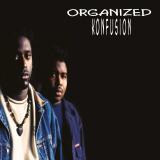
Among the most influential hip-hop artists to emerge in the rapid creative expansion of the early 1990s, Queens duo Organized Konfusion helped reshape rap's aesthetic horizons with the 1991 release of a groundbreaking self-titled album. A dizzying display of lyrical dexterity and forward-thinking production, Organized Konfusion helped lay the foundation for what would become underground hip-hop, with intricate wordplay and cerebral rhyme structures. Both Pharoahe Monch and Prince Po shine throughout the album, revealing
the immense talent that would later establish Monch as one of hip-hop's most revered voices and spark Po's collaborations with producers like Danger Mouse, Madlib, Large Professor, Oh No, and more. From playful nostalgia to sharp social commentary to surreal linguistic explorations, the duo navigates chaotic drum breaks with dense rhyme patterns, vivid imagery, and ever-shifting narratives. After decades of limited availability and unofficial bootlegs, this is the first official vinyl reissue of Organized Konfusion since its1991 release. Featuring three rare bonus tracks, this 35th anniversary edition is available on 2LP and CD, giving a long overdue spotlight to one of hip-hop's most important albums.
VUO14 delivers a journey through spacey deep techno moods, guided by Kirill Matveev. Side A features two tracks seamlessly blended into one continuous flow, inviting you to either focus on each part individually or let the narrative unfold as a whole.
On the flipside, Rasmus Hedlund takes the listener further into the night, raising the tension with a hypnotic dub excursion. Closing the record, Tm Shuffle reshapes the atmosphere into a bass-heavy, reverberated and house-tinged version - best experienced in front of a powerful sound system.
A versatile record for deep techno selectors and sonic explorers alike.
out of Stock
Last delivered 2 days ago available to reorder, subject to availability
Verdad Y Error (2026) resides in the tension between the thrashing of external noise and beating centred internal calm. Gibrana Cervantes is known for her work across experimental music and contemporary performance, a practice with focussed intensity and surging physicality, often pushing the limits of endurance, presence, and embodiment. A central axis of her performance practice is her ongoing collaboration with acclaimed choreographer Florentina Holzinger, including composing the music for SEA WORLD (2026), Florentina Holzinger’s critically acclaimed installation for the Austrian Pavilion at the Venice Biennale. Alongside this, she is a core member of the experimental ensemble Amor Muere (Mabe Fratti, Concepción Huerta, and Camille Mandoki). Cervantes maintains an active recording practice that directly informs her live output including her collaboration Memoria (2025), with Colombian Drone Mafia (Nyksan) for Ambie-Tón (Tratratrax),
Verdad y Error is a record of her artistic approach which expands her body and the violin’s horizon of possibility to near breaking point. Cervantes uses a register closely associated with Metal, yet buried deep in the alchemy of these pieces are motifs which hark back to her classical background. Across these pieces the violin is used as an instrument with a fragmented and shifting voice — blurred, repeated, and reshaped through distortion. “Many of these pieces come from images, memories, and sensations that have stayed with me for years. I'm interested in the blurring of what actually happened and what time transforms.” The recordings are built with layers of violin tones which oscillate between recognisable, processed, stretched and shifted, and lay embedded in a frequency stratum of volatile static and noise. “The violin on this album doesn't appear as a clean instrument. I process it, repeat it, distort it, and multiply it until it begins to feel more like memory than melody. Something blurry, shifting, difficult to grasp.” The origins of the album were born at a time when Cervantes was seeking inner calm amidst a relentless external noise, questioning the validity or possibility of memory and its radically changing perception in relation to experience. Subsequent reflection on this contemplative moment allowed her to develop a relational music which moves through memory, erosion, repetition, and emotional ambiguity. Creating a space that feels both intimate and unstable, mercurial with the patina of lived imperfection.
Akin to the unreliable narrator and linguistic instability, each piece functions as an emotional landscape suspended between clarity and confusion. An album which balances melody, brutality, fragility and noise
throughout its sprawling recordings and artwork, which operates as an analogue to the music. The visual world of the album developed in collaboration with Mauro Ventura was compiled across various media with a mix of handwritten texts, burned typography, metallic textures, and fragile physical materials. “I wanted the record to feel tactile and imperfect — something emotionally direct but physically worn.” says Cervantes. More than offering explanations, verdad y error exists as a conversation between memory and disappearance, noise and stillness, truth and error.
Discrepant presents Fantarombo, a new album by Giovanni Lami.
While his previous works often moved through memory, residue, degradation, and dialogue with existing materials, Fantarombo takes shape as an unstable, bodily gesture.
Sound is not recalled or reconstructed, but triggered, pushed, and set in motion as an active force. Lami approaches modular synthesis as a physical, hands-on practice rather than a technical exercise or display of system mastery. The modular setup becomes a responsive body: something to be nudged, listened to, and occasionally resisted.
The pieces unfold through slow accumulations, unstable feedback paths, and carefully misaligned sequences. Rather than driving toward resolution, the music lingers in states of suspension, allowing small shifts in voltage, timing, and texture to reshape the whole. Chance and duration play a central role, with structure emerging gradually from repetition and drift.
There is an unmistakably organic quality to the sound: porous, tactile, and quietly resonant. A sensitivity to space, grain, and micro-movement, where subtle changes carry as much weight as overt gestures. On Fantarombo, process takes precedence over control, and the circuitry is allowed to speak back, resulting in music that feels intimate, unstable, and quietly insistent, revealing itself slowly through sustained attention.
A music of unresolved behaviours, suspended somewhere between obsolete digital optimism, imaginary systems and malfunctioning computational folklore.
In their own words, it's "more focussed, paced and thought-out." Over 13 tracks that explore the horrors of the outside world and the internal minefield of the brain, Mould's debut also hits with the thrills of a brilliant live band who've distilled that energy to tape. The title comes from a line taken from the time signature-warping 'Emotive Language' that distills what it means to be a band in 2026 down to one concise sentiment. "This has always been the dream, playing with your mates and making good songs and getting to tour and make records," says Kane. "But the realities of trying to start a band now, when you're 30 and also have other goals at the same time are hard. We'd be doing it regardless, but you have to learn a lot. " This duality runs throughout the record, where tracks like lead single 'Float' speak of "strolling through hellscapes" of social media yet surround their frustrations with the sort of barbed, visceral musicality that sounds like if Interpol had grown up in gloomy, rain- soaked Britain. "You're endlessly doom scrolling, past a funny video of a sausage, and then there's Farage and then there's an ad for something," Joe says of the track. "That mindnumbing flashy distraction turns you into idiots."
In their own words, it's "more focussed, paced and thought-out." Over 13 tracks that explore the horrors of the outside world and the internal minefield of the brain, Mould's debut also hits with the thrills of a brilliant live band who've distilled that energy to tape. The title comes from a line taken from the time signature-warping 'Emotive Language' that distills what it means to be a band in 2026 down to one concise sentiment. "This has always been the dream, playing with your mates and making good songs and getting to tour and make records," says Kane. "But the realities of trying to start a band now, when you're 30 and also have other goals at the same time are hard. We'd be doing it regardless, but you have to learn a lot. " This duality runs throughout the record, where tracks like lead single 'Float' speak of "strolling through hellscapes" of social media yet surround their frustrations with the sort of barbed, visceral musicality that sounds like if Interpol had grown up in gloomy, rain- soaked Britain. "You're endlessly doom scrolling, past a funny video of a sausage, and then there's Farage and then there's an ad for something," Joe says of the track. "That mindnumbing flashy distraction turns you into idiots."
He's back once again is Monsieur Van Pratt with more of his so-wrong-they're-right disco edits. This fight volume has two edits reshaping source material with the usual deft touch. His opener 'Linda' runs on clipped drums, tight bass loops and bright string stabs then 'Oye Un Momento' keeps its original vocal but reinforces the groove with heavier kicks and 'El Ritmo Que Te Atrap' has a kitsch Europe feel. On the flip, Disco 86 shifts towards something classier with 'Crees Que Soy Sexy' riding lush chords and plenty of glistening melodies drawn from the Rod Stewart original and 'Tu Amor' is packed with electric vocals and retro future keys for a full send finish.
out of Stock
Last delivered 5 days ago available to reorder, subject to availability
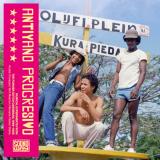
Between the late 1960s and the mid-1980s, musicians across the Dutch Caribbean islands of Aruba, Curaçao, and Sint Maarten created music that crossed stylistic boundaries, forming a close-knit network shaped by common histories and identities, while rarely receiving wider recognition.
From the psychedelic funk of local stars Sugar Ice Tea and Cryptus Confession to the Latin influences of visiting musicians like Puerto Rican star Mon Rivera via Surinamese-influenced soul and the garage rock of Los Honda, the islands nourished a huge array of styles and talent.
Antiyano Progresivo unfolds against the backdrop of a rapidly transforming Caribbean. During the twentieth century, oil industries, migration and tourism reshaped the islands, creating unparalleled cultural exchange while deepening social divisions. African, Latin American, North American and European musical traditions intertwined with local forms, producing a rich and distinctive musical landscape. Tambú, tumba, calypso and Caribbean dance music coexisted alongside soul, funk, psychedelic rock, reggae, Latin music and American and British pop. Musicians moved fluidly between these styles, developing sounds that were unmistakably local while remaining connected to wider currents across the Caribbean and beyond.
The period also coincided with growing movements for cultural and political self-determination. Events such as Curaçao's Trinta di Mei uprising in 1969, the emergence of Black Power movements and increasing calls for greater autonomy fostered renewed pride in African heritage, local languages and cultural expression. These ideas resonated through music, inspiring artists to challenge conventions and create work that reflected changing identities.
out of Stock
Last delivered 7 days ago available to reorder, subject to availability
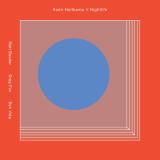
Composer and multi-instrumentalist Koen Holtkamp has spent more than two decades shaping a body of work at the intersection of ambient, experimental, and electroacoustic music. Known for his role in the influential duo Mountains, as well as a solo catalog defined by texture and spatial awareness, Holtkamp has long explored how sound interacts with environment and perception. With Nightlife, he enters a new phase of that inquiry, one shaped as much by physical relocation as artistic evolution.
After leaving Brooklyn for the relatively rural setting of New York’s Hudson Valley, Holtkamp found himself immersed in nature and embracing a slower way of life, a shift that directly informed the album’s creation. Rather than rushing into a new project, he allowed the space itself to guide him, focusing on experimentation and play instead of a fixed outcome. Over time, a new instrument emerged from his modular system, built around physical modeling techniques that emulate plucked string sounds. Drawing on a deep affinity for acoustic traditions, from guitar soli to the kora and other chordophones, he began translating those influences into an electronic language, creating music that feels tangible, effusive, and even intimate, despite its synthetic nature. As the pieces took shape, Holtkamp expanded the project into a kind of imagined ensemble. Composed with specific collaborators in mind, the album features extensive contributions from drummer Greg Fox and saxophonist and flutist Matt Bauder, whose performances subtly reshape the material and draw it toward more fluid, song-like forms, alongside a guest appearance from Ben Vida on synth bass. Yet even as Nightlife occasionally resembles a band in motion, its construction resists traditional cohesion. Acoustic and electronic sources coexist to create a hyper-dimensional sense of space, with each element deliberately placed in its own distinct environment, yielding a complex yet inviting setting that feels both otherworldly and completely natural.
Much of the album was created during late-night sessions, which became a kind of personal ritual and ultimately inspired its title. Nightlife unfolds as a series of finely detailed environments, where stillness, texture, and subtle interplay take precedence over momentum. Each piece invites close listening while remaining open and unforced, reflecting both a change in pace and a deepening of focus. The result extends Holtkamp’s ongoing interest in how sound can shape, and be shaped by, the spaces we inhabit.
The third chapter of The Third Room's curator-led series is shaped by Verraco, one of the key voices behind a new generation of artists reshaping contemporary club music. Through his productions, DJ sets and his work with TraTraTrax, he has helped define a sound where hybrid forms, rhythmic experimentation and cross-cultural influences are pushing the genre into new territory. Structured across two distinct sides, the release draws a clear connection between past and present. The A-side leans into a deeper, more classic space, while the B-side moves towards a more forward-facing, hybrid sound. It opens with Libration (Stone Version) by Substance & Vainqueur, a revisiting of their landmark 2007 release, a track that helped define the language of Dub Techno as it is understood today. Reduced, deep and spatially precise, it established a blueprint for how rhythm, delay and tone could function together. It's presence here acts less as a nod to the past and more as a reminder of a foundation that continues to shape the genre. Skee Mask's Clear Sky 909 continues this thread, softening the edges without losing depth. Warm, enveloping textures and fluid movement give the track a sense of openness, balancing clarity with emotional weight. The B-side shifts perspective. On Untitled (Teamgeist Mix), Verraco, joined by Tils, delivers the record's defining moment - a dense, intricately designed piece built on a driving low-end and evolving rhythmic patterns. Elements from Techno, Bass and Leftfield House converge into a detailed, forward-moving structure that actively bridges cultural contexts. It results in a form of dance music shaped by technical precision, but drive.n by a clear sense of intent, marking a distinct expression of Verraco's current sound. Untitled by 1morning introduces a rolling, tribal-infused groove with a strong sense of depth, while PatumPa by Regal86 closes the record with a bright, loop-driven energy that leans into pure motion. Across both sides, the release moves between reference and progression. Rather than separating old and new, Verraco connects them - tracing a line from foundational Dub Techno to a more fluid, contemporary club language. Copyright 2026 The Third Room A1 Written and Produced by Peter Kuschnereit & Rene Loewe | A2 Written and Produced by Bryan Mueller | B1 Written and Produced by JP Lopez & Jakob Ferdinand Tils and mixed by Lurka | B2 Written and Produced by 1morning | B3 Written and Produced by Regal86 Mastered by Andreas Kauffelt (Schnittstelle Berlin) Artwork by Charlotte Ernst Design by Daniel Bornmann (STUEDIO.XYZ) Distribution by Clone Pressing by Matter Of Fact
out of Stock
Last delivered 12 days ago available to reorder, subject to availability
The title of Ghost Bridge, the East-Coast-spanning chamber ensemble Hour's fifth record, is less metaphorical than one might expect. Bandleader Michael Cormier- O'Leary repurposed it from an unrealized movie concept about a bridge that inexplicably starts disappearing. On the nearly-ten-minute title track of this richly imaginative suite of songs_written for a 13-piece ensemble that includes woodwinds, strings, and vibraphone as well as a rock rhythm section_Hour conjures up this central image with spectral string harmonics and free-time percussion gestures. While writing the keyboard pieces that became the takeoff point for the album, Cormier-O'Leary also found himself reflecting on the loss of loved ones or even his own mortality. The six kaleidoscopic instrumental pieces on Ghost Bridge, though, feel more cosmically inquisitive than straightforwardly elegiac, sketching a progression from existential doubt toward understanding and acceptance. Ghost Bridge forms a contrast with Hour's art-rock-informed, more improvisatory early releases, representing a step further into intricate chamber orchestration. Known for his work with Friendship, Wendy Eisenberg, and 2nd Grade, Phillybased multi-instrumentalist and Dear Life Records founder Cormier-O'Leary has made Hour a home for increasingly cinematic instrumental compositions since the mid-2010s. With dazzling production by Lucas Knapp, Ghost Bridge delivers plenty of the live ensemble's trademarks, especially cyclically developing guitar and keyboard melodies. However, even more than on Hour's last studio album, unconventional harmonies and sophisticated counterpoint take center stage here. These emotionally multifaceted compositions feel as rooted in contemporary classical and film soundtrack music as in indie rock. One of the most striking elements of Ghost Bridge is the more significant developmental role the orchestral instruments assume in each piece. Instead of underscoring Cormier-O'Leary's central hooks, there is a new mesmerizing level of detail to the group's conversational interactions and kinetic energy. "Centralia" is a stately and idiosyncratic fugue built from repeated and overlapping phrases, while Ghost Bridge's compositions are full of unexpected pivots in harmony that allow recurring melodic motifs to sound continually reshaded. On "Pearls," the chords modulate drastically around Cormier-O'Leary's inviting central melody in a way that emulates cuts in a film telling several parallel stories. There is an unsettled quality to the chords on Ghost Bridge, with Cormier- O'Leary's progressions avoiding firm grounding in either clearly sunny or melancholy tonalities. This mood is made more concrete by the record's sole vocal track, the jazz-inflected "Sky is Blue," featuring an uncannily gorgeous performance by Heeyoon Won. The song seems to be a communication from a person who has departed, offering consolation or perspective to someone left behind. Though its sonic palette is often tranquil, Ghost Bridge explores heartbreak, grief, anger, and helplessness in a distinct and pretense-free way. The project represents a bold step forward for Cormier-O'Leary as a composer and arranger, and on Ghost Bridge Hour reaches its most fully realized form to date, connecting soaring themes with an inventiveness that perfectly suits the searching nature of the subject matter.
For nearly twenty years, Swedish singer-songwriter Kristian Matsson has played his way around the world as The Tallest Man on Earth, carving out a singular place in contemporary folk music. His discography has long been heard through the lens of the American folk tradition. But Just Beyond Endless Mountain, out October 9th on Anti- Records, quietly turns that perspective on its head. After returning to his native Dalarna in central Sweden, Matsson found himself listening to the music he had spent years trying to leave behind: the polskas, the old field recordings and the sounds of the local traditions that had surrounded him since childhood. The result is not a return to the past, but a step into new musical territory. Swedish folk music has reshaped his melodies, his voice, and the way he writes songs. The Tallest Man on Earth is back with his most deeply rooted album to date. Just Beyond Endless Mountain opens an unexpected new chapter in a career that has never settled for familiar ground.
For nearly twenty years, Swedish singer-songwriter Kristian Matsson has played his way around the world as The Tallest Man on Earth, carving out a singular place in contemporary folk music. His discography has long been heard through the lens of the American folk tradition. But Just Beyond Endless Mountain, out October 9th on Anti- Records, quietly turns that perspective on its head. After returning to his native Dalarna in central Sweden, Matsson found himself listening to the music he had spent years trying to leave behind: the polskas, the old field recordings and the sounds of the local traditions that had surrounded him since childhood. The result is not a return to the past, but a step into new musical territory. Swedish folk music has reshaped his melodies, his voice, and the way he writes songs. The Tallest Man on Earth is back with his most deeply rooted album to date. Just Beyond Endless Mountain opens an unexpected new chapter in a career that has never settled for familiar ground.
His discography has long been heard through the lens of the American folk tradition. But Just Beyond Endless Mountain, out October 9th on Anti- Records, quietly turns that perspective on its head. After returning to his native Dalarna in central Sweden, Matsson found himself listening to the music he had spent years trying to leave behind: the polskas, the old field recordings and the sounds of the local traditions that had surrounded him since childhood. The result is not a return to the past, but a step into new musical territory. Swedish folk music has reshaped his melodies, his voice, and the way he writes songs. The Tallest Man On Earth is back with his most deeply rooted album to date. Just Beyond Endless Mountain opens an unexpected new chapter in a career that has never settled for familiar ground
The pairing of two fiddles is a familiar sound in many folk traditions, but it has been heard less frequently in English traditional music. Morning of May, a new album from Sam Sweeney and Grace Smith, sets out to discover what happens when two fiddlers meet with this repertoire: taking turns carrying the melody, as the other takes a "seconding" role, weaving harmony and rhythm around the tune, elevating it and subtly reshaping the ground beneath it. Sweeney and Smith immersed themselves in a wide range of manuscripts and tune collections, delving into some of the more obscure sources. Within these archives, they found tunes that felt unexplored and rich with possibility. Some tunes arrived as complete hidden gems. Others required some restoration, their rough edges gently smoothed through the process of playing. Others were tiny fragments, inspiring almost total reimaginings. Alongside these old tunes sit a few original compositions by Sam Sweeney and Grace Smith, written in the same spirit of curiosity and continuity that informs their approach to archive material.
The pairing of two fiddles is a familiar sound in many folk traditions, but it has been heard less frequently in English traditional music. Morning of May, a new album from Sam Sweeney and Grace Smith, sets out to discover what happens when two fiddlers meet with this repertoire: taking turns carrying the melody, as the other takes a "seconding" role, weaving harmony and rhythm around the tune, elevating it and subtly reshaping the ground beneath it. Sweeney and Smith immersed themselves in a wide range of manuscripts and tune collections, delving into some of the more obscure sources. Within these archives, they found tunes that felt unexplored and rich with possibility. Some tunes arrived as complete hidden gems. Others required some restoration, their rough edges gently smoothed through the process of playing. Others were tiny fragments, inspiring almost total reimaginings. Alongside these old tunes sit a few original compositions by Sam Sweeney and Grace Smith, written in the same spirit of curiosity and continuity that informs their approach to archive material.
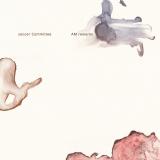
Since 2005, Mariska Baars aka soccer Committee, has quietly carved out a singular space where folk, ambient and experimental music dissolve into one another. Working with little more than her voice, an acoustic guitar and delicate loops, Baars creates songs of a remarkable intimacy. There's nowhere to hide in these arrangements, and that's precisely where their magic lies.
For Accidental Meetings, Baars revisits a selection of songs from across her catalogue, gently reshaping and reimagining some of her finest work. The result is a deeply personal, evocative listen that feels both familiar and newly discovered.
out of Stock
Last delivered 14 days ago available to reorder, subject to availability
In the early 90s, led by Nicola Conte, the Fez collective in Bari, Italy, reshaped contemporary jazz through groove, experimentation and a distinctly Mediterranean sensibility. Within this environment the earliest recordings associated with what would become Schema Records first appeared, released at the time through Right Tempo. With a series of three 45rpm releases Schema Records revisits some of its earliest productions, all newly remastered from the original masters. The first 7” in this series includes Quintetto X’s reinterpretation of Marcos Valle’s classic “Mentira”, here proposed in a completely new format, as a two-part composition, unfolding across both sides of a 45 rpm single. Originally released in 1994 on a rare EP, the track perfectly captures the musical identity of Quintetto X: sophisticated rhythms, refined jazz harmonies and melodic ideas shaped by both Brazilian influences and the vibrant acid jazz scene of the European club music.
out of Stock
Last delivered 16 days ago available to reorder, subject to availability
In the early 90s, led by Nicola Conte, the Fez collective in Bari, Italy, reshaped contemporary jazz through groove, experimentation and a distinctly Mediterranean sensibility. Within this environment the earliest recordings associated with what would become Schema Records first appeared, released at the time through Right Tempo. With a series of three 45rpm releases Schema Records revisits some of its earliest productions, all newly remastered from the original masters. This second 7” reveals two complementary sides of Quintetto X’s identity. On the A-side, “Senza Paura” reimagines a classic made famous by Ornella Vanoni with subtle jazz harmonies and elegant grooves. The B-side brings back Jorge Ben’s “Balança Pema” reinterpretation; rich with Brazilian flavours, jazz improvisation and infectious rhythmic interplay, it remains one of the finest examples of the musical language that defined both the Fez collective and the early years of Schema.
out of Stock
Last delivered 8 days ago available to reorder, subject to availability
LUMINA marks a new chapter in C"mon Tigre"s evolution, where electronic music moves from the background to the core of the band"s sound. Across thirteen interconnected tracks, synthesizers, arpeggiators and club-inspired rhythms merge seamlessly with acoustic instruments such as oud, cello,vibraphone and percussion, creating an immersive, continuous listening experience. Rather than opposing tradition and innovation, LUMINA embraces their constant coexistence. The album explores how technology is reshaping not only the way music is created, but also how we experience sound, time and physical presence. Inspired by the rave as a space of collective ritual and temporary freedom, it treats repetition and rhythm as tools for communion rather than escapism, turning listening into a deeply physical experience. The music was first developed and tested live at Robot Festival (Bologna) and JazzMi (Milan) in late 2025. Those performances became a laboratory where the interaction between the music and the audienceultimately shaped the final record.
Interdance returns in 2026 with its fourth vinyl release, continuing a journey that began in 2023 and further strengthening a distinct sonic identity rooted in hypnotic club experimentation and meticulous sound design. This time, the spotlight falls on Dani Labb, a true architect of sound, delivering four original tracks, including one reimagined by Z@p. The EP is deeply focused on repetition as a language of its own, building groove through carefully layered textures and surgical precision. Music designed to be fully experienced on sound systems capable of embracing the entire frequency spectrum, where every detail reveals its purpose.
The journey begins with Phase Two, a restrained yet immersive acid cut that slowly draws the listener into Dani Labb’s universe. Its progressive structure unfolds gradually, revealing tranceinfused nuances and vocal passages that feel like moving through levels inside a parallel dimension. A2 brings Nordark, following the narrative established by the opening track. Heavy low-end pressure, resonant highs, and a sonic architecture where drums retreat into the background, sketching rhythmic contours while the synth work takes full command. The B-side opens with Enbad, where tension rises and the energy becomes more forceful. The drums gain weight and the sound leans further into techno territory, while acid remains the guiding thread throughout. Closing the record, Z@p reshapes Enbad with his unmistakable signature of mystery, tension, and hypnotic arpeggios that push the experience to the edge. A producer who needs no introduction.
out of Stock
Last delivered 21 days ago available to reorder, subject to availability
Radically exploratory, Raphael Loher’s Figuren is an album shaped by process and experimentation. Guided by intuition, listening, and a deliberate distancing from his primary instrument—the piano—, the LP marks a decisive step in the Swiss pianist and composer’s artistic development, expanding his sonic vocabulary while maintaining a distinct and personal language.
Figuren draws on ten intimate concert recordings from Keemuun—Loher’s debut for Three:four Records—created during the pandemic and performed in his studio for just one or two listeners. This source material was subsequently developed during a residency in the Blenio Valley, where Loher deconstructed melodic elements, isolated individual tones, and extracted resonances, reassembling them into new configurations. The process generated around 30 initial pieces and also informed his sophomore album, Hug of Gravity, released by Hallow Ground in 2025.
In a further stage of transformation, Loher processed these fragments through a Revox B77 tape machine, subtly altering their pitch before digitizing and reshaping them once again. This iterative cycle of manipulation and recombination forms the core of Figuren’s sonic language.
Departing from the more structured frameworks of his earlier work, Figuren foregrounds experimentation as both method and aesthetic. The compositions range from finely layered rhythmic microstructures to sparse, evolving melodic fragments, each unfolding with a precise sense of restraint.
Jim Legxacy's mixtape homeless n*gga pop music arrives on LP & CD for the first time via XL Recordings. The 3x BRIT Award nominated and MOBO Award winning artist broke through with the 2023 project to critical acclaim, with the South-Londoner grappling with his relationships, identity, and homelessness. The mixtape is an impressive collision of midwest emo guitar samples, UK drill, afrobeats, and Jersey club, not only reshaping what UK music can sound like, but what it can stand for — a bold, fully-formed record that could only have come from one mind.
Marcal has emerged as one of the most distinctive voices of a new generation of techno producers, combining rhythmic precision with an instinct for detail, tension and movement. On Four Small Escapes, he delivers four tracks built around subtle shifts and carefully placed moments of surprise, where intricate sound design and groove remain in constant dialogue. Opening with Smoke from Respawn, Marcal immediately establishes the record's character. Syncopated rhythms, intricate percussion work and subtle sound design details unfold within a streamlined framework, creating a groove that feels both spacious and forward-moving. Wooden rimshots and glassy textures interact across an open arrangement, giving the track a fluid and trippy quality. Arapuca shifts into darker territory while maintaining the same sense of control. Organic percussion, rolling low-end momentum and sharply placed accents continuously reshape the groove, creating a track that feels alive through movement rather than dramatic intervention. On Ultimamente, Marcal introduces one of the record's most immersive moments. Fleeting sonic details appear and disappear throughout the arrangement, while a carefully integrated vocal element adds depth and emotional weight without disrupting the flow. The result is a track that invites complete immersion while remaining firmly focused on the dancefloor. Closing the EP, The Surprise Test delivers its most direct statement. Rough and driving without leaning into industrial aesthetics, the track is powered by rolling energy, syncopated claps and a series of subtle electronic details that continuously animate its surface. The contrast between rawness and precision gives the record a powerful closing moment. Across all four tracks, Four Small Escapes highlights Marcal's ability to create tension through detail rather than excess. Reduced yet expressive, the EP balances functionality with a strong sense of character, allowing small gestures and unexpected shifts to leave a lasting impact.
A thought left unfinished.
A sentence waiting to be said.
One day dissolving into the next.
Akero returns to Moving Pictures with a five-track EP shaped by melodic tension, understated emotion and gently shifting club rhythms.
The record opens with "I Need To Say It" - a direct and emotional cut carried by a restless groove and a quietly luminous atmosphere.
"Ogninotte" unfolds with hypnotic movement with a soft melancholic pulse, while "Unagiornata" brings a brighter, more open-ended moment to the record.
On the remix side, Roman Rai reshapes "I Need To Say It" into a Complete Cosmic Rework, allowing the original to unfold across wider, more spacious terrain.
Täino closes the circle with his own interpretation, keeping the emotional core intact while bringing it closer to the label's warm and introspective dancefloor language.
out of Stock
Last delivered 41 days ago available to reorder, subject to availability
Originally released in 2012, 1999 is the definitive debut mixtape from Brooklyn MC Joey Bada$$ that helped reshape the modern underground rap landscape. Leaning heavily into the golden era sound, a 17-year-old Joey earned instant critical acclaim by paying flawless homage to the 90s. Beyond timeless standout tracks like “Waves,” “Survival Tactics,” and “Snakes,” the 15-track mixtape boasts production from icons like Chuck Strangers, Lord Finesse, MF DOOM, and J Dilla. It remains a crucial time capsule for the Pro Era collective, featuring memorable verses from Kirk Knight, CJ Fly, Nyck Caution, Rokamouth, Dessy Hinds, Dyemond Lewis, T’nah Apex, and the late Capital STEEZ. A classic that still sounds as fresh today as it did a decade ago. Pro Era Forever.
out of Stock
Last delivered 36 days ago available to reorder, subject to availability
Formed in Bahia in the late "60s, Novos Baianos became one of the most iconic groups in Brazilian music. Mixing samba, rock, choro, psychedelia, capoeira rhythms, and communal living, they embodied a new countercultural movement that reshaped MPB. Their albums, especially Acabou Chorare and Novos Baianos F.C., are now considered pillars of modern Brazilian music, inspiring generations of artists in Brazil and worldwide. Originally released in 1973, Novos Baianos F.C. captures the band"s communal lifestyle and fearless experimentation. After the success of Acabou Chorare, the group expanded their sound into a vibrant mix of samba, choro, folk, psychedelia, and electric street-soul. With the unmistakable chemistry of Baby Consuelo, Pepeu Gomes, Moraes Moreira, Paulinho Boca de Cantor,and Dadi, the album radiateswarmth and spontaneity. Recorded in the Baianos" legendary "football club" house, it stands as a joyful snapshot of Brazilian cultural freedom in the early "70s.
out of Stock
Last delivered 40 days ago available to reorder, subject to availability
Come Over Reshapes works because it never tries to smooth JdB's debut into something safe. It features seven artists from LA and the Midwest all taking his source material somewhere different as brooding, minimal jungle rubs up against dubbed-out weight and drifting psychedelic ambient. Despite the variety, the whole thing plays like a continuous narrative rather than a scattered remix comp. Some cuts are clearly built for the floor, others for the comedown room, and the sequencing respects both. Steffan Betke's mastering keeps everything sounding cohesive and like a thoughtful tribute record that expands on the original rather than just repackaging it.
Strut presents Nigeria 80, the next essential chapter in the legendary Nigeria 70 series, diving deep into the explosive sound world of 1980s Nigeria.
Following the global impact of 2001's Nigeria 70, which helped introduce rare Nigerian recordings to international audiences, Nigeria 80 continues the journey, unearthing a rich, restless, and wildly creative decade of music from Lagos to Enugu. Despite economic instability and restrictive political conditions in the 1980's, Nigeria’s music industry flourished, driven by a growing network of independent labels such as Tabansi and Phonodisk, which championed local artists and expanded creative freedom. The 1980s also marked a significant rise in visibility for female artists, with trailblazers like Onyeka Onwenu helping to reshape the landscape and open doors for a new generation of performers, writers, and producers.
Nigeria 80 showcases the extraordinary breadth of this era, with all tracks reissued here for the first time. The compilation brings together essential recordings from across Nigeria’s musical spectrum: highlife greats Victor Uwaifo and Nico Mbarga appear alongside Paulson Kalu, whose personal favourite “Akugbue Nwa Ewu” stands out as a prime example of the style. Prince David Bull’s “Soko Soko” (later reinterpreted in Starboy’s Afrobeats hit “Soco”) features as a key touchpoint between eras. Segun Adewale delivers a driving juju workout, while Lekan Animashaun, longtime bandleader of Africa 70, contributes a late-era Afrobeat classic produced in collaboration with Fela Kuti.
The compilation also highlights more experimental and hybrid sounds, from I.C. Rock’s proto–hip hop gem “Advice” to Evi-Edna Ogholi’s self-produced reggae statement “The World”. The set closes with “Apama” by Ibealaoke Chukwukeziri, the “Apama Boy” from Achi in eastern Nigeria, featuring hypnotic vocals and percussion from his Anaedeonu band.
Nigeria 80 is available as a black vinyl 2LP housed in a gatefold sleeve or CD digipak, which includes a 16-page booklet with artist photos and liner notes by Francis Gooding. Compiled by Duncan Brooker. Audio restoration by See Why Audio. Mastered by The Carvery.
out of Stock
Last delivered 42 days ago available to reorder, subject to availability
Die schwedische Künstlerin Sibille Attar kehrt mit ,Amor Fati" zurück, ihrem ersten englischsprachigen Album seit fünf Jahren. Attar, die bereits von Pitchfork, Stereogum, The Line of Best Fit, Clash und BrooklynVegan gelobt wurde, hat sich als eine der faszinierendsten und von Kritikern am meisten gefeierten Stimmen des alternativen Pop in Schweden etabliert. ,Amor Fati" - äußerst unabhängig und komplett in Eigenregie produziert - begann als Versuch, ein reines Liebesalbum zu schaffen - offenherzig, euphorisch und ungekünstelt. Doch während sich die Songs entfalten, beginnen sich emotionale Gewissheiten zu verschieben. Das Album, das in Schweden, Belgien, Deutschland und den Vereinigten Staaten entstanden ist, beschäftigt sich mit Intimität, Sehnsucht, Vertrauen und den seltsamen Wegen, auf denen sich Liebe im Laufe der Zeit neu formt. Es beginnt euphorisch, wird schnell kompliziert und weigert sich, sich für irgendjemanden der Einfachheit halber zu vereinfachen - vielleicht weniger beruhigend, aber dafür umso lebendiger. "madly wide-eyed, swooning songs" - Pitchfork "leaps out of the speakers so vibrantly that the band seems to be playing in the same room with you" - Stereogum "a masterpiece in artistic misery" - The Line of Best Fit "mournful and absolutely gorgeous" - BrooklynVegan ENG Swedish artist Sibille Attar returns with Amor Fati, her first album in English in five years. Previously praised by Pitchfork, Stereogum, The Line of Best Fit, Clash, and BrooklynVegan, Attar has established herself as one of Sweden's most fascinating and critically acclaimed voices in alternative pop. Fiercely independent and entirely self-produced, Amor Fati began as an attempt to make a pure love album -open-hearted, euphoric, and unguarded. But as the songs unfold, emotional certainties begin to shift. Written across Sweden, Belgium, Germany, and the United States, the album explores intimacy, longing, trust, and the strange ways love reshapes itself over time. It begins in euphoria, gets complicated fast, and refuses to simplify itself for anyone's convenience - less reassuring, perhaps, but far more alive. "madly wide-eyed, swooning songs" - Pitchfork "leaps out of the speakers so vibrantly that the band seems to be playing in the same room with you" - Stereogum "a masterpiece in artistic misery" - The Line of Best Fit "mournful and absolutely gorgeous" - BrooklynVegan