Search:reso

Styles
All
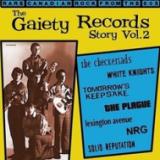
Various - The Gaiety Records Story Volume 2 LP
  • Checkerlads - The Dreamer
  • Checkerlads - Behind Ev'ry Man
  • White Knights - There She Goes
  • White Knights - Run Run Baby
  • Tomorrow's Keepsake - Eat Your Hot Dog Boy
  • Plague - Love And Obey
  • Plague - We Were Meant To Be
  • Lexington Avenue - Wendy Taylor
  • Lexington Avenue - Flowing Kind Of Feeling
  • Lexington Avenue - Good To Me
  • Nrg - It All Comes Back To Me
  • Solid Reputation - Things

Highlights include more terrific songs from the Plague and Lexington Avenue, bands whose members would be better known when they created the Jarvis Street Revue. Twelve tough tracks by the Checkerlads, White Knights, Tomorrow's Keepsake, NRG, and Solid Reputation . The Gaiety roster was rich in talent (the 49th Parallel, Jarvis Street Review, and Souls of Inspyration, not to mention the Checkerlads, White Knights, Dewline, Tomorrow's Keepsake, NRG, Merriday Park, and Portland Street South) -- but it was not rich in resources, which is why these singles are as relatively unknown as they are even today

pre-order now17.04.2026

expected to be published on 17.04.2026

33,82
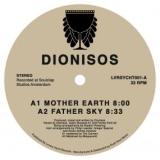
DIONISOS - TRILOGY

DIONISOS

TRILOGY

12inchLVRSYCHT001
LOVERS YACHT
17.04.2026

Amsterdam's Dionisos' (also known for his collaborations with Pete Blaker for LL & Hot Biscuit Recordings) debut 12" on his own Lovers Yacht imprint.

Dionisos, the project’s producer, possesses a solid foundation in live music, which is clearly reflected in the way the grooves evolve, resonate, and gradually heighten in intensity. The tracks “Mother Earth”, “Father Sky,” and “Bon Voyage” form an exciting trilogy—a daring journey into the musical universe. Captured in a single take, they were subsequently methodically overdubbed and layered, preserving the essence of musicians interacting in real time.

Instead of pursuing drops or studio glitz, the music focuses on capturing the spirit, interacting only with the original vibrations of the one take. These songs flow with the precision of musicians in a band. They develop organically, demonstrating their strength gradually; music for dancing that relies on emotion rather than spectacle.

out of Stock

Order now and we will order the item for you at our supplier.

12,56

Last In: 19 days ago
Inkswel - Resonance

Inkswel

Resonance

12inchITRLTD13
Inner Tribe
16.04.2026

Internationally acclaimed producer INKSWEL makes a vibrant return to his house and club foundations with a powerful new 7 track EP. Featuring reworks from ANTON ZAP & SEAN McCABE and a never heard before collaboration with the late great ERIK RICO.

out of Stock

Order now and we will order the item for you at our supplier.

15,34

Last In: 19 days ago
Christina Vantzou - The Reintegration of the Ear

Composed by Christina Vantzou between 2023 and 2025 after being commissioned by INA GRM, »The Reintegration of the Ear« defines listening as a radical, embodied act of attention: a slower kind of presence rooted in care, intimacy, and reflection. Performed with John Also Bennett, Oliver Coates, Roman Hiele, and Irene Kurka, the work moves through intuition, breath, and resonance, forming an acoustic ecology between perception and expression.

Paired with »Observations, Edits, a Cure for Restlessness«, a companion suite of domestic fragments and temporal drift featuring harp by Sissi Rada, Ben Bertrand's bass clarinet, and others, time here is embodied, a porous medium where sound floats, reforms, and reveals itself as both instrument and witness.

out of Stock

Order now and we will order the item for you at our supplier.

30,21

Last In: 26 days ago
Nicolas Remondino - Hìeratico LP
  • A1: Hìeratico
  • A2: Litho Non-Danse
  • A3: Blue Hymne (Feat Limpe Fuchs)
  • A4: Cuerda De Piedra
  • A5: Aranha
  • A6: Tombal (Feat Pierre Bastien, Massimo Silverio &Amp; Marco Baldini)
  • B1: Boku Ga (Feat Adele Altro)
  • B2: Meridiana (Feat Giuseppe Ielasi)
  • B3: Lode (Feat Natalia Rogantini &Amp; Jonas Torstensen)
  • B4: Sospire (Feat Roberto Musci)
  • B5: Muracetra (Feat Vipera &Amp; Dròlo Ensemble)
  • B6: Vessel (Digital Bonus Track)

Like its cover, Nicolas Remondino's Hìeratico plays in the rich shades of crepuscular spaces. A night-tuned, percussion led album where prepared drums are accompanied by flickers of spoken word, acoustic instruments and muted electronics,

The title translates to 'hieratic', for Remondino a "black and gold" term laden with dualities and complex connotations. A sense of teetering between sparkling light and richly coloured darkness imbues the music, the compositions simulating a sense of heightened acuity as they convey us through a spooky elemental soundworld. The opening title track begins with a metallic shimmer, a drum skin activated in a way that sounds like it's being smelted. A cushioned rhythm enters, a smothered timbre akin to hearing something lurking around the garden. On "litho non-danse", percussion cracks like branches and dried foliage under foot.

Remondino recorded initial outlines for the pieces at Giuseppe Ielasi's studio in Milan, before fleshing out these ideas with his own additional instrumentation and contributions from a globe-spanning network of collaborators. On "blue hymne", chiming percussion equal parts jubilant and sinister heralds spoken word from Limpe Fuchs. "Tombal" opens with Massimo Silverio whispering in the Carnic dialect, a minority language from the Carnic Alps. Around, Marco Baldini, Pierre Bastien and Remondino construct a somber soundscape that cranks and sighs in the crevices.

Hìeratico is an album of hybrids. Diverse voices, accents and dialects deliver its lyrics, the instrumentation underpinning it crosses idioms. The drumkit at its core is modified to amplify its resonant tones and harmonics. Inspired by natural substances and phenomena: stone, wood, wind, earth, metal, grass, rain, clouds and bark, Remondino explores how percussion could evoke their materiality, treating drums as lucid textural instruments as much as rhythmic timekeepers. It gives the album a finely shaded depth and clarity as it conjures the vibrancies that reside in darkened corners. Hìeratico dwells in a sensation that crosses borders, the speckles of light in the oblique night sky. Listening is an aural equivalent to stepping into a pitch black forest and waiting for your eyes to adjust, a lightless void turning into a spectacular tableau of shadows and glows. Daryl Worthington

out of Stock

Order now and we will order the item for you at our supplier.

25,17

Last In: 28 days ago
Hoavi - Architectonics LP

Hoavi

Architectonics LP

12inchPEAK28
Peak Oil
13.04.2026

Returning to Peak Oil for a second expedition, veteran Russian producer Kirill Vasin, aka Hoavi, explores an untrodden path on 'architectonics', drawing from his lifelong appreciation of Indonesian gamelan musics to mastermind a rhythmelodic hybrid sound that's sinuous, subtle and remarkably dubby. Over the last three and a half years, Vasin has used the music's methodologies and rhythmic forms to evolve his existing processes and signatures and transform his musical philosophy. To start the exercise, he knew he needed percussion, so used his phone and a contact microphone to pick up nearby sounds, drumming on various tables, railings, empty glasses and other objects to create a library of textured, tonally complex percussive sounds. But the work wasn't done yet - in fact, it was just the beginning of a long process of trial and error: Vasin created two full versions of the album before 'architectonics' was finished.

There are still echoes of the chrome-plated sci-fi atmospheres and complex, stuttering beatscapes that underpinned 2021's 'Invariant', but 'architectonics' asks very different questions, prompting fresher, more innovative responses. Leaning on his bank of organic percussive sounds, Vasin is able to concoct a tactile aura that he fills with eerie fluctuating repetitions that shift subtly, sometimes imperceptibly. The cavernous reverb and booming bass that supported his last few albums is still present, now employed as scaffolding for different architectures: skittering sequences and ornamented overlapping phrases that owe as much to Steve Reich's hallowed minimalist compositions as they do to Indonesian traditional forms. Lulling, almost hypnotic tessellations appear like fractals on the polished surfaces, morphing from jazz to techno and dub while retaining gamelan's haunting xenharmonic resonances and Vasin's concept becomes crystal clear. 'architectonics' isn't an attempt to make a gamelan album, it's Vasin's way of developing his own artistic process by looking far beyond the traditional boundaries of electronic music.

out of Stock

Order now and we will order the item for you at our supplier.

23,32

Last In: 28 days ago
ALEX ZHANG HUNGTAI - DRAS

ALEX ZHANG HUNGTAI

DRAS

12inchSPLP164
Shelter Press
10.04.2026
  • Erg
  • Dras
  • El Khela
  • Xilitla
  • Estado
  • Rub' Al Khali
  • Pulque
  • White Dwarf
  • Mazil

Alex Zhang Hungtai steht auf ,Dras" still da, aber es ist eine Stille, die jede Menge Möglichkeiten hat. Diese neun Stücke wurden 2019 in der Saint Joseph Oratory in Montreal aufgenommen (kurz bevor ein Klavier kaputtgemacht wurde) und lagen während der Pandemiejahre auf seiner Festplatte, bis endlich der Funke übersprang. Was jetzt entsteht, fühlt sich an, als würde man jemandem dabei zusehen, wie er die Konturen seiner eigenen inneren Landschaft nachzeichnet, wobei jede Melodielinie eine sorgfältige Auseinandersetzung mit dem Unbewussten ist. Dies ist nur im weitesten Sinne ein Saxophon-Album. Das Terrain hier ist taktil und unerbittlich. Im Titeltrack werden schwierige Melodien auseinandergerissen und zu emotionalen Drones geformt, wobei Dissonanzen ineinandergreifen, während Töne mit metallischem Glanz ihren Weg durch die Sinne bahnen. ,El Khela" bricht sich in spektrale Schichten, die mit ewiger Schwerkraft ziehen, während ,Estado" Trost in seiner eigenen Dunstglocke findet, mit Rhythmen, die kaum hörbar sind, aber mit ihrer Kadenz, die sich an grauen Wänden abzeichnet, vorwärts führen. Es sind kleine Momente, die zu kathartischen Klangatmen werden und jeweils neue Passagen durch die psychische Geografie offenbaren. Es liegt Schönheit in den subtilen Wiederholungen des Openers ,Erg" und in den leuchtenden Progressionen von ,White Dwarf". Zhangs Saxophon wird zu einer Wünschelrute für das Unbekannte, während Elektrizität durch die Adern des Albums fließt und sein Atem alles an etwas wortlos Menschlichem verankert. Die digitale Bearbeitung dieser Kirchenaufnahmen verdeckt nicht das menschliche Element von ,Dras". Sie verwandelt das Rohmaterial in etwas, das zwischen äußerem Raum und innerer Landschaft navigiert. Als der Schlusssong ,Mazil" kommt, lässt Alex Zhang Hungtai sein Saxophon seine volle Resonanz entfalten. Tiefe, kehlige Klänge öffnen sich wie Abgründe unter melodischen Konstellationen, die in dichter Schwerkraft schweben. Hier herrscht Endgültigkeit, auch wenn sich etwas in diesen Passagen schwerelos anfühlt. Diese Musik ist durchdrungen von innerem Dialog, einem wortlosen Zauber, der über dem psychischen Abgrund tanzt. Tonale Sequenzen zerfallen in betäubende Klänge, eine scharfe, elegante Kante, die schneidet, ohne Blut zu vergießen. Dieses einsame Werk der Erforschung wird zu etwas Gemeinschaftlichem. ,Dras" ist eine Karte, um den Raum zwischen dem, wo wir sind, und dem, wo wir hingehen könnten, zu durchqueren.

pre-order now10.04.2026

expected to be published on 10.04.2026

24,79
SILVIA TAROZZI - LUCCIOLE LP 2x12"
  • 18:
  • 2: Frutti Acerbi
  • 3: L'airone
  • 4: Brass On The Rocks
  • 5: Sun
  • 6: La Quercia
  • 7: Code
  • 8: Lucciole
  • 1: Un Motivo Per Partire (Vinyl-Only)
  • 2: Corallo E Perle
  • 3: River Phoenix
  • 4: Le Ossessioni
  • 5: Distratta
  • 6: Perdutamente
  • 7: Un Motivo Per Tornare
  • 8: Distratta (Reprise)

Lucciole ist Silvia Tarozzis leuchtendes Nachfolgealbum zu den intimen Reflexionen von "Mi specchio e rifletto" und den tief verwurzelten Folk-Dialogen von "Canti di guerra, di lavoro e d'amore" mit Deborah Walker. Hier bringt Tarozzi Stimmen, Erinnerungen und musikalische Traditionen zusammen, um ein Album zu schaffen, auf dem avantgardistische Kompositionen, persönliche Erzählungen und kollektive Resonanz frei miteinander verschmelzen. Das Album beginnt mit einem strahlenden Blechbläserensemble, das wegen seines populären, feierlichen und spirituellen Klangs ausgewählt wurde, und endet mit dem Piccolo Coro Angelico, dem Kinderchor, mit dem sie seit über fünfzehn Jahren zusammenarbeitet und den sie als ,meine beste Kompositionsschule und ständige Quelle der Hoffnung" bezeichnet. Zwischen diesen beiden Eckpunkten zeichnen Tarozzis Lieder mit seltener Zärtlichkeit die Übergänge des Lebens nach: von der Kindheit zum Jugendalter, von Gesundheit zu Gebrechlichkeit, von Anwesenheit zu Abwesenheit. Die Streicher, Stimmen und melodischen Konturen, die "Mi specchio e rifletto" prägen, tauchen hier mit neuer Wärme und Tiefe wieder auf. Produziert von Tarozzi in enger Zusammenarbeit mit Marta Salogni, die das Album technisch umgesetzt und abgemischt hat, strahlt Lucciole eine Klarheit, Intimität und klangliche Großzügigkeit aus, die ihre gemeinsame Reise durch den Aufnahmeprozess widerspiegeln. Im Kern ist Lucciole ein Album über kleine Lichter, die durch Momente des Übergangs tragen - eine Einladung, genau hinzuhören auf die Orte, an denen sich das Leben verändert, und auf die Menschen, die leben und in Erinnerung bleiben und den Weg erhellen.

pre-order now10.04.2026

expected to be published on 10.04.2026

32,35
Yoshio Ikeda Quintet - Sketch Of My Life LP

the first-ever reissue on studio mule of the debut album by japanese jazz legend and bassist yoshio ikeda.

having performed with such illustrious figures as sadao watanabe, masabumi kikuchi, and terumasa hino, ikeda’s first album as a leader features pianist and vocalist ichiko hashimoto—also known for her involvement with yellow magic orchestra—berlin-based jazz pianist aki takase, and leading japanese drummer motohiko hino.

avant-garde yet imbued with a distinctly japanese sense of melancholy, this is a work that resonates profoundly with the present moment.

the gem “whispering weeds,” highlighted by thrilling piano and hashimoto’s evocative scat vocals, was also included on a compilation by bbe.

remastered from the original master tapes by kuniyuki, the album has been revived with a richer, more lustrous sound in this definitive reissue.

pre-order now10.04.2026

expected to be published on 10.04.2026

25,17
Sugar Horse - Not A Sound In Heaven LP
  • 1-: Fire Graphics
  • 2: Secret Speech
  • 3: Ex-Human Shield
  • 4: History's Biggest T-Shirts
  • 5: Not A Sound In Heaven
  • 6: Company Town
  • 7: You Can't Say Dallas Doesn't Love You

Bristol experimental band SUGAR HORSE are delighted to announce that their third album, Not A Sound In Heaven, will be released on 10th April 2026 via Fat Dracula Records.

To celebrate the news, the band are sharing the bruising lead single ‘Secret Speech’, available to stream on all good digital service providers from 12th February 2026.

Also announced today are a run of April 2026 UK album headline tour dates and an appearance at StrangeForms Festival 2026, with tickets on sale now (see below for full listings).

“We are fortunate enough to live in what is generally known as ‘The West’,” says front man Ash Tubb of the lyrical themes behind the new track. “I say fortunate with gritted teeth, because I know—as I’m sure the reader knows—that living in the West isn’t always rosy. The vast majority of people struggle everyday to feed, clothe and house themselves. Let alone receive adequate healthcare, schooling and workers’ rights.”

“We are, however, where all the world’s wealth is hoarded. We are at the centre of Empire. The people outside of this empire—those of the Global South—have had their resources extracted and their populations exploited by our own governments, with very little given back in return. This won’t go on forever. It will inevitably end, as all great empires do.”

“We in The West have a choice to make in the meantime; either help create a new, fairer world, or let the greed of our ruling classes become the undoing of all of us.”

The first glimpse of new material from the quartet, ‘Secret Speech’ starts as Not A Sound In Heaven means to go on—a politically-charged wrecking ball of a song that smashes its way through the often unbelievable chaos and brutality of the 21st century with vitriolic malice.

How do you capture the machinations of the geo-political industrial war machine—and all the horrors that go with it—in the studio, without seeming trite or crass? That’s the question that Sugar Horse have posed themselves on their forthcoming third album Not A Sound In Heaven, and they must surely be one of the only bands in existence capable of delivering on just that premise with both musical substance and cutting philosophical insight.

“Ever since I was born I can remember visions of war, famine, and death being beamed directly into my living room via the magic of television,” says Tubb of the record. “These visions were accompanied by newsreader narratives designed to either humanise or dehumanise the people involved. We humanise our government’s allies and dehumanise their enemies. This is taken as common sense, or even wisdom to some degree. People watch the news and accept it as fact, simple and true.”

“As a person gets older they move in one of three different directions with this acceptance of reality; They embrace what they’re being told, they fall into a kind of trust free nihilism or they learn that there are deeper narratives at play.”

“Not A Sound In Heaven is an aged acceptance of the latter. An acceptance of sitting at the centre of a global empire of both military and economic dimensions. An acceptance that the stories we’re told as a nation, or what’s generally in the zeitgeist, isn’t necessarily reality itself.”

“How does a person cope with the weight—and, frankly, the guilt—of a society that perpetuates such distinct inequalities? A society that thinks a bit of killing abroad is fine, as long as it improves the lives of people at home. You can see why so many choose to embrace it. Hell, nihilism seems pretty sensible. Once a person decides upon pursuing a degree of truth however, things get a bit depressing. Beyond depressing...maddening.”

“This album explores this kind of breezy, frivolous subject matter in a manner that will no doubt be uplifting to the listener and massively financially rewarding for the artist.”

The new album follows on from their standalone AA single ‘What’s Your ETA? Let’s Have A Tear Up’/‘Would You Like Me To Be The Cat?’ which was released late last year as a surprise double drop.

pre-order now10.04.2026

expected to be published on 10.04.2026

24,79
BNNYHUNNA - PSALM FUNK LP

BNNYHUNNA

PSALM FUNK LP

12inchSDBANULP48
SDBAN ULTRA
10.04.2026

On Psalm Funk, Bnnyhunna deepens the artistic language he first articulated on his celebrated debut Echoes of a Prayer. Rather than retracing familiar ground, the Amsterdam-based composer and producer expands his palette, allowing rhythm and space to carry as much narrative weight as harmony and lyricism.

While Echoes of a Prayer felt personal and devoted, Psalm Funk opens things up. Gospel harmonies stay central to his music, but now they are energized by smooth funk rhythms and heightened by the flexibility of jazz improvisation. Bnnyhunna moves between styles effortlessly, in a way that nothing seems borrowed, but everything feels lived in.

At the center of the record is an understanding of space. Silence acts not as an absence but as a structure. Breath, restraint, and patience shape the music just as much as basslines and backbeats. This awareness of dynamics allows the album to grow without losing its focus. It signifies a subtle but important change in Bnnyhunna as an artist, moving from inward reflection to forward momentum, from prayer as personal dialogue to prayer as a physical expression. The clarity, discipline, and emotional depth that marked his debut remain, now directed into something more rhythmically confident and spiritually uplifting.

Fusing gospel, funk, jazz, and African rhythmic traditions, Psalm Funk serves as both a meditation and an outpouring. It invites deep thought while demanding a physical response.

The album includes collaborations with American saxophonist Braxton Cook, trumpeter Sheila Maurice-Grey of Kokoroko, 3DDY, and Reggie Dartey, among others. The singles "Sorry Not Sorry" and "Waiting For You" have already hinted at the project's range, while the latest single, "The Heart Part 2," further expands on the album's dynamic and emotional scope.

To celebrate the release, Bnnyhunna will tour the Netherlands in April, with performances in Amsterdam, Rotterdam, and Nijmegen before heading to the UK for a show at The Great Escape.

Released in October 2024, Bnnyhunna's debut album Echoes of a Prayer was created as a dialogue with God, a personal call expressed through sound. The record resonated both with fans and media, gaining support from platforms like 3voor12, Rolling Stone Africa, and Afromixx. It reached the airwaves of BBC Radio 1 in the UK, KEXP in the US, J-Wave in Japan, and 3FM in the Netherlands, and landed in playlists such as BUTTER, Morning Rhythm, and Vanguard.

In 2025, Echoes of a Prayer earned the Edison Pop award for Soul/R&B/Funk and received Grammy consideration for Best Alternative Jazz Album. On stage, Bnnyhunna established his presence with performances at festivals such as Lowlands, Couleur Cafe, Brick Lane Jazz Festival, Dour, and Super Sonic Jazz, as well as his first tour in Japan.


Upcoming live shows:
10/04/26 - BIRD, Rotterdam (NL)
11/04/26 - Doornroosje, Nijmegen (NL)
12/04/26 - Tolhuistuin, Amsterdam (NL)
13/05/26 - The Great Escape, Brighton (UK)

pre-order now10.04.2026

expected to be published on 10.04.2026

23,95
AMULETS - REM(A)INDERS

AMULETS

REM(A)INDERS

12inchPELV334
Pelagic Records
10.04.2026
  • 1: Former Shells
  • 2: Coiled (Ft. Patrick Shiroishi)
  • 3: Black Sheep
  • 4: Slow Motion Somnia
  • 5: Remain/Remind
also available

LAVENDER Vinyl[24,79 €]


Amulets is the solo project of Portland-based audio and visual artist Randall Taylor. Amulets employs handmade cassette tape loops and live processed guitar loops to create live, lush soundscapes and immersive drones. Through the recontextualisation of cassettes, sampling, field recording, and looping, these long-form compositions blur the genres of ambient, drone, noise, and electronic music. Amulets has steadily built a catalog defined by tactile intimacy and patient exploration. Deeply immersive, the album navigates the dreamy boundaries between the tangible and the ethereal, where sound behaves as memory itself: unstable, layered, and quietly transformative. Known for his ability to weave soundscapes that evoke powerful emotions with minimalistic instrumentation, Taylor's newest project is a masterful exploration of mood, atmosphere, and texture.Throughout the ambient soundscapes is introspection, melancholy, and an almost hypnotic calm. The album resists forward motion, instead inviting the listener to linger inside its evolving textures, to sit with what's left behind rather than rush toward resolution. Central to Amulets' identity is Taylor's insistence on working, quite literally, outside the box. While many contemporary experimental artists rely heavily on software, Taylor's process remains rooted in physical interaction with sound. "This album differs from previous albums because it's a lot of found sounds, song fragments, and other samples that I have that I wanted to fuse together. I also heavily relied on a lot of ambient guitar and live guitar recording to marry all the sounds together." (Randall Taylor) FOR FANS OF Tim Hecker * Ben Frost * Lawrence English * Alessandro Cortini * This Will Destroy You * Mono * Windy & Carl

pre-order now10.04.2026

expected to be published on 10.04.2026

22,65
TRUCKFIGHTERS - MASTERFLOW

TRUCKFIGHTERS

MASTERFLOW

12inch174823
FUZZORAMA
10.04.2026
  • 1: Old Big Eye
  • 2: The Bliss
  • 3: Carver
  • 4: Truce
  • 5: Masterflow
  • 6: The Gorgon
  • 7: Gath
  • 8: Bad Horse
  • 9: Goin' Home

Zum ersten Mal seit einem Jahrzehnt sind die lebenden Fuzz-Legenden Truckfighters mit brandneuem Material zurück und entfachen die Rockszene erneut mit ihrer rohen Energie.MASTERFLOW - das Gleichgewicht zwischen Disziplin und Freiheit. Eine vibrierende Resonanz auf mehreren Ebenen - Körper, Geist, Raum, Zeit und Publikum in perfekter Harmonie.Tauche ein in MASTERFLOW und lass dich von den donnernden Klanglandschaften mitreißen, die nur Truckfighters erschaffen können.Das neue Album entfesselt eine unerbittliche Welle aus fuzz-getränkten Hymnen, massiven Riffs und hypnotischen Grooves, die die Desert-Rock-Wurzeln der Band widerspiegeln und ihren Sound zugleich in neues, weitläufiges Terrain vorstoßen lassen.Ganz im klassischen Truckfighters-Geist ist die Musik auf MASTERFLOW sowohl dynamisch als auch reich an Variationen - sie wechselt mühelos zwischen erdrückender Schwere und ausgedehnten, psychedelischen Passagen. Von erdbebentiefem Bassfundament bis hin zu aufsteigenden, melodischen Spannungsbögen balanciert die Band meisterhaft rohe Kraft mit Feingefühl und Flow. Jeder Track atmet, entwickelt sich und trifft mit klarer Absicht - eine nahtlose Reise, angetrieben von Schweiß, Fuzz und dem rein verzerrten Geist des Rock 'n' Roll.Dieses Album ist gemacht für überfüllte Clubs, endlose Highways und Lautsprecher am Limit - ein klangliches Monolith, das noch lange nach dem Verklingen des letzten Tons nachhallt.Eine große Europa-Release-Tour startet Mitte April und zieht sich durch den gesamten Mai, bevor sie nahtlos in den Festival-Sommer übergeht. Ob im Studio oder live auf der Bühne: Truckfighters liefern ein unvergessliches, überwältigendes Klangerlebnis.

pre-order now10.04.2026

expected to be published on 10.04.2026

23,49
Aziz Balouch - Spanish Cante Jondo And It's Origin In Sindhi Music (BOOK)

66 pages, 175 x 129mm paperback w/ litho printed cover & french flaps.

The second outing for our short run book publishing imprint, The End books, takes the form of a reprint of Spanish Cante Jondo and Its Origin in Sindhi Music, originally published in Spanish in 1955 under the name Cante Jondo: Su Origen y Evolución and later in this English translation.

Aziz Balouch here presents his theory on the roots of flamenco's 'deep song' in modern-day Pakistan, a cultural journey that mimics the routes of his own life, having been brought up among the Islamic mysticism and devotional songs of Sindh before travelling to Gibraltar in the early 1930s and becoming transfixed with the cante jondo across the border in southern Spain. Positing this concept through personal accounts rather than solid theoretical backing, this text provides a valuable account of an extraordinary existence that crossed remarkable geographical, musical, and spiritual boundaries. Issued here with a new introduction from anthropologist of sound, the senses and Islam, Stefan Williamson Fa.

"It would be easy to place Balouch on the fringes, as an eccentric footnote in flamenco history. But that misses the shape of his life and work. He was a figure who moved intuitively across boundaries that our present categories of nation, genre, discipline tend to fix in place. His work predates the founding of the academic discipline of ethnomusicology, the global circuits of world music, and the marketplace logic of fusion projects by decades. He was not an ethnographer or a proto–world musician, but someone for whom the deep song of Andalusia and the devotional song of the subcontinent resonated along the same fault lines of feeling, and who spent his life trying to trace them.

This book is one of the few surviving traces of that attempt. To read it now is to encounter a perspective that resists tidy narratives of influence or origin, despite its title and what he claims to do. It stands instead as evidence of an idiosyncratic musical imagination, one that relied less on proof than on listening, and on the belief that certain echoes carry farther than history can easily explain."

— Stefan Williamson Fa

pre-order now10.04.2026

expected to be published on 10.04.2026

19,12
Esa Williams - Dala What We Must LP 2x12"

Esa Williams

Dala What We Must LP 2x12"

2x12inch199350128066
BBE Music
10.04.2026out soon
  • A1: Ita Ayelala
  • A2: Yanga
  • B1: Kwanini
  • B2: Nakupenda
  • C1: Summerskin
  • C2: Vanguard Drive
  • D1: Cruisin Kruga
  • D2: Dala What We Must

Marking twenty years since South African producer and DJ Esa Williams left Cape Town, Dala What We Must is a deeply personal and expansive debut LP, an exploration of movement, memory, and sound shaped by two decades of creative evolution.

Co-created with collaborator and multi-instrumentalist Robin G. Breeze, the album deftly combines field recordings, layered instrumentation, and emotionally resonant compositions into a nuanced, globally influenced body of work. It also stands as Esa’s most collaborative release to date, featuring contributions from musicians across London, Oaxaca, Nairobi, and Cape Town, each adding their own creative energy to a project built on openness, trust, and shared experience.

The album draws inspiration from Esa’s recent ventures into documentary scoring and soundtracking, with projects like Cursed (Audible) and The Invisible Hand teaching him to listen differently, to honour space, to serve the story. That sensibility permeates the album, resulting in music that breathes, lingers, and listens as much as it speaks.

The title, Dala What We Must, is a South African call to action: a reminder to do what’s necessary, even in uncertainty. Finalised in the months leading up to Esa’s transition into fatherhood, the record carries a sense of grounding, care, and quiet transformation.

Dala What We Must is a sonic reflection of journey and community, a deeply collaborative project rooted in connection and guided by intention.

pre-order now

This item has not yet been released. You can pre-order the product now.

36,35
Esa Williams - Dala What We Must (2x12")
  • A1: Kwanini
  • A2: Ita Ayelala
  • A3: Yanga
  • A4: Nakupenda
  • B1: Summerskin
  • B2: Cruisin Kruga
  • B3: Vanguard Drive
  • B4: Dala What We Must

Marking twenty years since South African producer and DJ Esa Williams left Cape Town, Dala What We Must is a deeply personal and expansive debut LP, an exploration of movement, memory, and sound shaped by two decades of creative evolution. Co-created with collaborator and multi-instrumentalist Robin G. Breeze, the album deftly combines field recordings, layered instrumentation, and emotionally resonant compositions into a nuanced, globally influenced body of work. It also stands as Esa’s most collaborative release to date, featuring contributions from musicians across London, Oaxaca, Nairobi, and Cape Town, each adding their own creative energy to a project built on openness, trust, and shared experience. The album draws inspiration from Esa’s recent ventures into documentary scoring and soundtracking, with projects like Cursed (Audible) and The Invisible Hand teaching him to listen differently, to honour space, to serve the story. That sensibility permeates the album, resulting in music that breathes, lingers, and listens as much as it speaks.

The title, Dala What We Must, is a South African call to action: a reminder to do what’s necessary, even in uncertainty. Finalised in the months leading up to Esa’s transition into fatherhood, the record carries a sense of grounding, care, and quiet transformation. Dala What We Must is a sonic reflection of journey and community, a deeply collaborative project rooted in connection and guided by intention.

pre-order now10.04.2026

expected to be published on 10.04.2026

32,35
Linnea Talp - Variations for Light Waves LP

With Variations for Light Waves, Swedish composer Linnéa Talp deepens the focus and intensity that shaped her 2022 debut Arch of Motion. Once again, the breath and hum of the pipe organ form the album’s core, but here she pushes further into deep listening and sonic nuance. Across seven pieces, she lingers on the instrument’s most resonant points, allowing its character to reveal itself slowly and patiently.
Talp’s path to this work has unfolded with similar steadiness. After first emerging with her project Deerest, she shifted toward improvisation and minimal composition, guided by an increasing sensitivity to sound and perception. Careful listening is now central to her practice, informing both her methods and her musical language.
The album was recorded over four years on pipe organs across Sweden, including a small funeral-chapel instrument in Lötsjökapellet—an environment Talp describes as an exceptional space for listening. Several pieces feature Christer Bothén (contrabass clarinet) and Mats Äleklint (trombone), whose playing blends seamlessly into her aerated organ tones. The improvisation “Air On Both Sides,” recorded in 2022 with Bothén, became the project’s starting point, an immersive bath in glowing harmonics. At times she interweaves Buchla recordings, setting electronic breath against acoustic resonance.
Talp’s fascination with quietness and delicacy is balanced by an interest in sonic brittleness. The closing title track gradually dismantles a downward chord progression, drifting into gentle collapse, while the brief opener pushes the organ’s pipes into gasping strain. These moments create a music open to chance, instability, and transformation.
Threads running through the album include an interest in chords, subtle improvisation, light, and memories of coastal landscapes. Talp also connects the work to the “thick white fog” surrounding her daughter’s birth. The result is music that envelopes like mist yet continually reveals new shapes—a world o

pre-order now10.04.2026

expected to be published on 10.04.2026

21,43
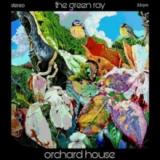
The Green Ray - Orchard Hosue LP

It seems almost inevitable that at some stage Blue Matter and The Green Ray would be working together, and we’re delighted to say that this is now about to happen. When Blue Matter co-boss, Nick Saloman, was living in Walthamstow, he sat in with The Green Ray many times at the late-lamented Plough Inn on Wood Street (now a mini-supermarket). In more recent times Nick’s band, The Bevis Frond has played live with them on several occasions, and without wishing to disrespect any former members, the current Green Ray line-up sounds as good as they’ve ever sounded, if not, dare we say, even better than before. The Green Ray was originally assembled in the mid-90s by Ken Whaley & Richard Treece, two key members of Walthamstow legends, Help Yourself. During the last 30 years or so, they have released 7 albums and one 12” single.

Sadly, the line-up has changed quite frequently due to the passing of several of their number. Ken & Richard passed away some years ago, and more recently bassist Jeff Gibbs departed this world. However, now under the all-seeing eye of guitarist Simon Whaley, the current line-up is continuing to fly the East London freak flag high. Not long ago Simon asked us if Blue Matter would like to issue their latest offering, and we came back with a resounding “yes please”. ‘Orchard House’ is a superb album, full of great playing and great songs. There are shades of Mighty Baby and Help Yourself (at their trippiest), plus a West Coast atmosphere which put us in mind of Quicksilver and The Grateful Dead. It’s taken some time to happen, but at last Blue Matter & The Green Ray have come together to issue an unmissable album. So don’t miss it.

pre-order now10.04.2026

expected to be published on 10.04.2026

23,32
Carlos Giffoni & Thurston Moore - IGUANA (TAPE)

Carlos Giffoni reconnects with Thurston Moore for two sides of loose-limbed axe noise, oscillator worship and hard-phased, Spacemen 3-style feedback.

Giffoni’s been on a roll recently. Since the No Fun founder returned to the scene with »Vain¡, a genius set of synth mutations that appeared in iDEAL back in 2018, he’s been slowly ramping up the activity, dropping the celestial »Dream Walker« on Stephen O’Malley’s Ideologic Organ in 2024 and following it with »Pendulum«, a bumper compendium of collaborations, just a few weeks back. For those who remember Giffoni’s first trip round the block, he was always able to hold his own chopping it up in person, not just by mail.

Just scrub through his early catalog and you’ll see collabs with Nels Cline and Chris Corsano, Merzbow, Jim O’Rourke and Lasse Marhaug, and of course, Thurston Moore. The two rekindle their thing on »IGUANA’« picking up where 2001’s fabled »4 Guitars Live« performance left off. Here, Giffoni straddles a tabletop synth and FX while Moore attacks his signature Jazzmaster with a drumstick and a screwdriver – vibes fully intact.

Moore is on blistering form, sounding as if he’s taken a step back to refresh his approach since the early ‘00s when he could be spotted moonlighting on any number of basement-adjacent noise sides. Sawing at his strings and turning the guitar into a shrieking resonator, he leaves only faint vapours of the classic Sonic Youth sound as opiating accents on his animalistic wails and rumbles. On the opening half, his whammy – assisted shreds are balanced out by Giffoni’s off-world whirrs and airlocked vibrations, building a dense wall of noise towards an unexpectedly elegiac conclusion. At some point, Giffoni’s rasping churr transforms into a simmering shudder and Moore’s into hymnal drones – squint a bit and you could almost call it pretty.

Of course, they ramp things up on the flip, dissolving the melancholia with smokey white noise and twangy, post-Derek Bailey chimes that Giffoni accompanies with aggy oscillations. Like every great taped noise set, the recording quality is crucial - »IGUANA« was captured from the pit by Guillermo Hernandez Avendano, the dad of Lia Miranda who provides the cover photo. It’s that kinda show.

pre-order now10.04.2026

expected to be published on 10.04.2026

19,75
Guilty Razors - Complete Recordings 1977 - 1978

UILTY RAZORS, BONA FIDE PUNKS.


Writings on the topic that go off in all directions, mind-numbing lectures given by academics, and testimonies, most of them heavily doctored, from those who “lived through that era”: so many people today fantasize about the early days of punk in our country… This blessed moment when no one had yet thought of flaunting a ridiculous green mohawk, taking Sid Vicious as a hero, or – even worse – making the so-called alternative scene both festive and boorish. There was no such thing in 1976 or 1977, when it wasn’t easy to get hold of the first 45s by the Pistols or the Clash. Few people were aware of what was happening on the fringes of the fringes at the time. Malcolm McLaren was virtually unknown, and having short hair made you seem strange. Who knew then that rock music, which had taken a very bad turn since the early 1970s, would once again become an essential element of liberation? That, thanks to short and fast songs, it would once again rediscover that primitive, social side that was so hated by older generations? Who knew that, besides a few loners who read the music press (it was even better if they read it in English) and frequented the right record stores? Many of these formed bands, because it was impossible to do otherwise. We quickly went from listening to the Velvet Underground to trying to play the Stooges’ intros. It’s a somewhat collective story, even though there weren’t many people to start it.
The Guilty Razors were among those who took part in this initial upheaval in Paris. They were far from being the worst. They had something special and even released a single that was well above the national average. They also had enough songs to fill an album, the one you’re holding. In everyone’s opinion, they were definitely not among the punk impostors that followed in their wake. They were, at least, genuine and credible.

Guilty Razors, Parisian punk band (1975-1978). To understand something about their somewhat linear but very energetic sound, we might need to talk about the context in which it was born and, more broadly, recall the boredom (a theme that would become capital in punk songs) coupled with the desire to blow everything off, which were the basis for the formation of bands playing a rejuvenated rock music ; about the passion for a few records by the Kinks or the early Who, by the Stooges, by the Velvet mostly, which set you apart from the crowd.
And of course, we should remember this new wave, which was promoted by a few articles in the specialized press and some cutting-edge record stores, coming from New York or London, whose small but powerful influence could be felt in Paris and in a handful of isolated places in the provinces, lulled to sleep by so many appalling things, from Tangerine Dream to President Giscard d’Estaing...
In 1975-76, French music was, as almost always, in a sorry state ; it was still dominated by Johnny Hallyday and Sylvie Vartan. Local rock music was also rather bleak, apart from Bijou and Little Bob who tried to revive this small scene with poorly sound-engineered gigs played to almost no one.
In the working class suburbs at the time, it was mainly hard rock music played to 11 that helped people forget about their gruelling shifts at the factory. Here and there, on the outskirts of major cities, you still could find a few rockers with sideburns wearing black armbands since the death of Gene Vincent, but it wasn’t a proper mass movement, just a source of real danger to anyone they came across who wasn't like them. In August 1976, a festival unlike any other took place in Mont-de-Marsan – the First European Punk Festival as the poster said – with almost as many people on stage as in the audience. Yet, on that day, a quasi historical event happened, when, under the blazing afternoon sun, a band of unknowns called The Damned made an unprecedented noise in the arena, reminiscent of the chaotic Stooges in their early adolescence. They were the first genuine punk band to perform in our country: from then on, anything was possible, almost anything seemed permissible.

It makes sense that the four+1 members of Guilty Razors, who initially amplified acoustic guitars with crappy tape recorder microphones, would adopt punk music (pronounced paink in French) naturally and instinctively, since it combines liberating noise with speed of execution and – crucially – a very healthy sense of rebellion (the protesters of May 1968 proclaimed, and it was even a slogan, that they weren’t against old people, but against what had made them grow old. In the mid-1970s, it seemed normal and obvious that old people should now ALSO be targeted!!!).
At the time, the desire to fight back, and break down authority and apathy, was either red or black, often taking the form of leafleting, tumultuous general assemblies in the schoolyard, and massive or shabby demonstrations, most of the time overflowing with an exciting vitality that sometimes turned into fights with the riot police. Indeed, soon after the end of the Vietnam War and following Pinochet’s coup in Chile, all over France, Trotskyist and anarcho-libertarian fervour was firmly entrenched among parts of the educated youth population, who were equally rebellious and troublemakers whenever they had the chance. It should also be noted that when the single "Anarchy in the UK" was first heard, even though not many of us had access to it, both the title and its explosive sound immediately resonated with some of those troublemakers crying out for ANARCHY!!! Meanwhile, the left-wing majority still equated punks with reckless young neo-Nazis. Of course, the widely circulated photos in the mainstream press of Siouxsie Sioux with her swastikas didn’t necessarily help to win over the theorists of the Great Revolution. It took Joe Strummer to introduce The Clash as an anti-racist, anti-fascist and anti-ignorance band for the rejection of old-school revolutionaries to fade a little.

The Lycée Jean-Baptiste Say at Porte d’Auteuil, despite being located in the very posh and very exclusive 16th arrondissement of Paris, didn’t escape these "committed" upheavals, which doubled as the perfect outlet for the less timid members of this generation.
“Back then, politics were fun,” says Tristam Nada, who studied there and went on to become Guilty Razors’ frontman. “Jean-Baptiste was the leftist high-school in the neighbourhood. When the far right guys from the GUD came down there, the Communist League guys from elsewhere helped us fight them off.”
Anything that could challenge authority was fair game and of course, strikes for just about any reason would lead to increasingly frequent truancy (with a definitive farewell to education that would soon follow). Tristam Nada spent his 10th and 11th unfinished grades with José Perez, who had come from Spain, where his father, a janitor, had been sentenced to death by Franco. “José steered my tastes towards solid acts such as The Who. Like most teenagers, I had previously absorbed just about everything that came my way, from Yes to Led Zeppelin to Genesis. I was exploring… And then one day, he told me that he and his brother Carlos wanted to start a rock band.” The Perez brothers already played guitar. “Of course, they were Spanish!”, jokes their singer. “Then, somewhat reluctantly, José took up the bass and we were soon joined by Jano – who called himself Jano Homicid – who took up the rhythm guitar.” Several drummers would later join this core of not easily intimidated young guys who didn’t let adversity get the better of them.

The first rehearsals of the newly named Guilty Razors took place in the bedroom of a Perez aunt. There, the three rookies tried to cover a few standards, songs that often were an integral part of their lives. During a first, short gig, in front of a bewildered audience of tough old-school rockers, they launched into a clunky version of the Velvet Underground's “Heroin”. Challenge or recklessness? A bit of both, probably… And then, step by step, their limited repertoire expanded as they decided to write their own songs, sung in a not always very accurate or academic English, but who cared about proper grammar or the right vocabulary, since what truly mattered was to make the words sound as good as possible while playing very, very fast music? And spitting out those words in a language that left no doubt as to what it conveyed mattered as well.
Trying their hand a the kind of rock music disliked by most of the neighbourhood, making noise, being fiercely provocative: they still belonged to a tiny clique who, at this very moment, had chosen to impose this difference. And there were very few places in France or elsewhere, where one could witness the first stirrings of something that wasn’t a trend yet, let alone a movement.

In the provinces, in late 1976 or early 1977, there couldn’t be more than thirty record stores that were a bit more discerning than average, where you could hear this new kind of short-haired rock music called “punk”. The old clientele, who previously had no problem coming in to buy the latest McCartney or Aerosmith LP, now felt a little less comfortable there…
In Paris, these enlightened places were quite rare and often located nex to what would become the Forum des Halles, a big shopping mall. Between three aging sex workers, a couple of second-hand clothes shops, sellers of hippie paraphernalia and small fashion designers, the good word was loudly spread in two pioneering places – propagators of what was still only a new underground movement. Historically, the first one was the Open Market, a kind of poorly, but tastefully stocked cave. Speakers blasted out the sound of sixties garage bands from the Nuggets compilation (a crucial reference for José Perez) or the badly dressed English kids of Eddie and the Hot Rods. This black-painted den was opened a few years earlier by Marc Zermati, a character who wasn’t always in a sunny disposition, but always quite radical in his (good) choices and his opinions. He founded the independent label Skydog and was one of the promoters of the Mont-de-Marsan punk festivals. Not far from there was Harry Cover, another store more in tune with the new New York scene, which was amply covered in the house fanzine, Rock News (even though it was in it that the photos of the Sex Pistols were first published in France).
It was a favorite hang-out of the Perez brothers and Tristam Nada, as the latter explained. “It’s at Harry Cover’s that we first heard the Pistols and Clash’s 45s, and after that, we decided to start writing our first songs. If they could do it, so could we!”
The sonic shocks that were “Anarchy in the UK”, “White Riot” or the Buzzcocks’s EP, “Spiral Scratch” – which Guilty Razors' sound is reminiscent of – were soon to be amplified by an unparalleled visual shock. In April 1977, right after the release of their first LP, The Clash performed at the Palais des Glaces in Paris, during a punk night organised by Marc Zermati. For many who were there, it was the gig of a lifetime…
Of course, Guilty Razors and Tristam were in the audience: “That concert was fabulous… We Parisian punks were almost all dressed in black and white, with white shirts, skinny leather ties, bikers jackets or light jackets, etc. The Clash, on the other hand, wore colourful clothes. Well, the next day, at the Gibus, you’d spot everyone who had been at this concert, but they weren’t wearing anything black, they were all wearing colours.”

It makes sense to mention the Gibus club, as Guilty Razors often played there (sometimes in front of a hostile audience). It was also the only place in Paris that regularly scheduled new Parisian or Anglo-Saxon acts, such as Generation X, Siouxsie and the Banshees, the Slits, and Johnny Thunders who would become a kind of messed-up mascot for the venue. A little later, in 1978, the Rose Bonbon – formerly the Nashville – also attracted nightly owls in search of electric thrills… In 1977, the iconic but not necessarily excellent Asphalt Jungle often played at the Gibus, sometimes sharing the bill with Metal Urbain, the only band whose aura would later transcend the French borders (“I saw them as the French Sex Pistols,” said Geoff Travis, head of their British label Rough Trade). Already established in this small scene, Metal Urbain helped the young and restless Guilty Razors who had just arrived. Guitarist for Metal Urbain Hermann Schwartz remembers it: “They were younger than us, we were a bit like their mentors even if it’s too strong a word… At least they were credible. We thought they were good, and they had good songs which reminded of the Buzzcocks that I liked a lot. But at some point, they started hanging out with the Hells Angels. That’s when we stopped following them.”

The break-up was mutual, since, Guilty Razors, for their part, were shocked when they saw a fringe element of the audience at Metal Urbain concerts who repeatedly shouted “Sieg Heil” and gave Nazi salutes. These provocations, even still minor (the bulk of the skinhead crowd would later make their presence felt during concerts), weren’t really to the liking of the Perez brothers, whose anti-fascist convictions were firmly rooted. Some things are non-negotiable.
A few months earlier (in July 1978), Guilty Razors had nevertheless opened very successfully for Metal Urbain at the Bus Palladium, a more traditonally old-school rock night-club. But, as was sometimes the case back then, the night turned into a mass brawl when suburban rockers came to “beat up punks”.

Back then, Parisian nights weren’t always sweet and serene.

So, after opening as best as they could for The Jam (their sound having been ruined by the PA system), our local heroes were – once again – met outside by a horde of greasers out to get them. “Thankfully,” says Tristam, “we were with our roadies, motorless bikers who acted as a protective barrier. We were chased in the neighbouring streets and the whole thing ended in front of a bar, with the owner coming out with a rifle…”
Although Tristam and the Perez brothers narrowly escaped various, potentially bloody, incidents, they weren’t completely innocent of wrongdoing either. They still find amusing their mugging of two strangers in the street for example (“We were broke and we simply wanted to buy tickets for the Heartbreakers concert that night,” says Tristam). It so happened that their victims were two key figures in the rock business at the time: radio presenter Alain Manneval and music publisher Philippe Constantin. They filed a complaint and sought monetary compensation, but somehow the band’s manager, the skilful but very controversial Alexis, managed to get the complaint withdrawn and Guilty Razors ended up signing with Constantin with a substantial advance.

They also signed with Polydor and the label released in 1978 their only three-track 45, featuring “I Don't Wanna be A Rich”, “Hurts and Noises” and “Provocate” (songs that exuded perpetual rebellion and an unquenchable desire for “class” confrontation). It was a very good record, but due to a lack of promotion (radio stations didn’t play French artists singing in English), it didn’t sell very well. Only 800 copies were allegedly sold and the rest of the stock was pulped… Initially, the three tracks were to be included on a LP that never came to be, since they were dropped by Polydor (“Let’s say we sometimes caused a ruckus in their offices!” laughs Tristam.) In order to perfect the long-awaited LP, the band recorded demos of other tracks. There was a cover of Pink Floyd's “Lucifer Sam” from the Syd Barrett era – proof of an enduring love for the sixties’ greats –, “Wake Up” a hangover tale and “Bad Heart” about the Baader-Meinhof gang, whose actions had a profound impact on the era and on a generation seeking extreme dissent... On the album you’re now discovering, you can also hear five previously unreleased tracks recorded a bit later during an extended and freezing stay in Madrid, in a makeshift studio with the invaluable help of a drummer also acting as sound engineer. He was both an enthusiastic old hippie and a proper whizz at sound engineering. Here too, certain influences from the fifties and sixties (Link Wray, the Troggs) are more than obvious in the band’s music.

Shortly after a final stormy and rather barbaric (on the audience’s side) “Punk night” at the Olympia in June 1978, Tristam left the band ; his bandmates continued without him for a short while.

But like most pioneering punk bands of the era, Guilty Razors eventually split up for good after three years (besides once in Spain, they’d only played in Paris). The reason for ceasing business activities were more or less the same for everyone: there were no venues outside one’s small circuit to play this kind of rock music, which was still frightening, unknown, or of little interest to most people. The chances of recording an LP were virtually null, since major labels were only signing unoriginal but reassuring sub-Téléphone clones, and the smaller ones were only interested in progressive rock or French chanson for youth clubs. And what about self-production? No one in our small safety-pinned world had thought about it yet. There wasn’t enough money to embark on that sort of venture anyway.

So yes, the early days of punk in France were truly No Future!
out of Stock

Order now and we will order the item for you at our supplier.

21,43

Last In: 32 days ago
Items per Page:
N/ABPM
Vinyl