It’s a tough call which is the bigger cult classic, the Tank Girl movie or its accompanying soundtrack, but on balance, we’d have to go for the soundtrack. Yeah, the film had a cast composed of some of the most colorful characters (Iggy Pop, Ann Magnuson) and character actors (Malcolm McDowell, Ice-T, and of course the almighty Lori Petty!) in show biz.
And, its dystopic, resource-starved desert setting, intense action sequences, and lead female character mark it as a feminist (albeit funnier) precursor to Mad Max: Fury Road. But check out the soundtrack’s bona-fides: assembled by Courtney Love herself, it features a Who’s Who of ‘90s female rock including Hole, Björk, L7, Veruca Salt, and Belly among others. Plus, it even has tracks that were exclusive to its release, like a unique version of Devo’s “Girl U Want,” “Mockingbird Girl” by The Magnificent Bastards (a side project of the late Scott Weiland of Stone Temple Pilots), and a duet of “Let’s Do It, Let’s Fall in Love” between Joan Jett and The Replacements’ Paul Westerberg. In short, if there ever was a score that needs to be on wax, this would be it. We’ve done it right, too, with a gatefold jacket featuring the trademark comic book art and stills from the film, and neon coral vinyl pressing for its 30th anniversary!
Like so many bands that cut their teeth playing basements, rental halls, and teen centers around the Puget Sound in the early '90s, the Olympia trio Lync may have had similar roots to the local rock heroes of the era but were conscientiously averse to the trappings of mainstream success. Lync kept the grit, the shouted vocals, and the rough-hewn choruses, but eschewed the machismo and metal swagger. Their song 'Cue Cards' is a perfect encapsulation of their overall approach-heartfelt melodies, bashed drums, hoarse throats, gritty bass lines, and fractured guitars. Lync's legacy was interwoven with fellow PNW artists like Modest Mouse, 764-Hero, and Red Stars Theory-bands that were crucial to the foundation of Suicide Squeeze Records. It only made sense for Suicide Squeeze to reissue Lync's lone LP, These Are Not Fall Colors back in 2023. And in conjunction with the reissue, Suicide Squeeze is proud to announce the second single featuring a choice cut from Fall Colors paired with a current artist's reinterpretation of the song. On their latest 7", Lync's original version of 'Cue Cards' is paired with a cover by Julia & The Squeezettes-a Suicide Squeeze-centric all-star line-up featuring Julia Kugel of The Coathangers and Julia, Julia, Staz Lindes of The Paranoyds, Bonnie Bloomgarden and Rikki Styxx of Death Valley Girls. On their rendition, Julia & The Squeezettes excise the half-time distorted bombast of the original in favor of up-tempo minimalist pop. Guitars are reduced to a few choice phrases, putting the song's luring vocals and lyrical charms at the forefront. Paired with the tasteful yet propulsive rhythm section, this new approach to 'Cue Cards' demonstrates the timeless songwriting of Lync while simultaneously showcasing the creative vision, timbral aptitude, and resourceful production savvy of four contemporary artists in the ongoing lineage of American indie rock. Suicide Squeeze is proud to release these two versions of 'Cue Cards' to the world on a pressing of 500 Ocean Blue-colored vinyl 7" singles.
The band says, We rerecorded our debut EP Grow Up to look back on our progress as musicians and revisit some very nostalgic songs after 5 years of VIAL. It’s like a little love letter to our younger selves. When we first recorded Grow Up, we had very limited resources during the recording process and didn’t even use our own cables. We feel very lucky we’re able to revisit this EP now that we have access to the funds, skills, and equipment we’d always wanted to allocate towards these eight songs. VIAL is a powerhouse trio, red-hot in DIY scenes after breaking out during unconventional times in 2020.
Their sound is a pressure cooker: Indie rock meets punk in soaring melodic hooks ready to sink teeth into all listeners alike. Bite marks burn hotter on the live stage, where they’ve supported acts such as FIDLAR, HUNNY, and Mal Blum. The jury’s in: The insatiable hunger for VIAL’s fresh genre blend will be plentifully satisfied with a steaming-hot sophomore record in 2024.
Dance and drama began for Paulo Alvarado in 1992 when Sabrina Castillo, Bettina Barckhausen, Joam Solo, Xavier Pacheco, and Alfredo Porras invited him to create the music for their choreographic and theatrical productions as an ethereal actor who is not seen but heard; a sound that is not merely an occasion to "musicalize" the stage production; music that does not merely adorn or incidentally accompany the movement and text, but that acts.
This is how he soon had the opportunity to work on the stage production of Sophocles’ OEDIPUS REX (Edipo Rey), the first of several plays for which Alvarado composed music at the request of Luis Tuchán one of the revered theatrical directors from Guatemala. With him, they also worked on Shakespeare’s Macbeth, which carried the subtitle "Asesino del Sueño" (Sleep Murderer). Later, as an example of another area of action, and at the request of Dennis Leder one of Guatemala's leading artists from the past three decades and Ana Asturias who had worked with the Guatemalan Dance Company, he created the music for a dance-installation called, fittingly, "Lederana" mixing both words from their name. Around that time, he also began composing and presenting music for productions by Guatemalan authors, such as the drama by Rubén Nájera, "Sacra Conversación", directed by Joam Solo.
These pieces, contained on Side A of the album, represent only a very brief sample of an era immersed in theatre and other performative projects where more than forty theatrical and choreographic pieces where created in a span of three decades, and consist of his valuable contribution to the soundtrack of dramatic theater and contemporary dance in Guatemala.
Separately, the title piece of this album, ANTIGUA, found on Side B, was designed for the exhibition of
engravings, lithographs, and digital prints by Roberto Godoy, Antigua Estampa de la Vida Mía. It gathers musical extemporizations for the dance we invented at the moment of inaugurating the photographic exhibition by Rocío Villanueva, Los Mutantes de los Apegos; the fifth movement of my String Quartet No. 5 (version for six cellos); Exiliados en Tierra Propia(introduction to my song Púrpura de Vida y Sentimiento); and Las 56 (from the film Después del Fuego), dedicated to the young women wounded and killed on March 8, 2018, in a so-called "safe home" in Guatemala City. This LP unites many of Paulo's most experimental works and serve as a small tribute to his life, trajectory and to all those who, without reservation, dedicated and invested resources in his music catalogued by himself as one of the main ways to celebrate human life: art.
UNRELEASED SOUNDTRACK BY BANCO DEL MUTUO SOCCORSO RECORDED IN 1981
AND UNVEILED FOR THE FIRST TIME EVER IN PHYSICAL FORMAT!
“Greggio e Pericoloso” is a 1975 novel written by the engineer and science communicator Roberto Vacca, which narrates an intricate story of fictional-economic and political intrigue arising from the possibility that a resource such as petroleum might turn out to be an inexhaustible resource on our planet. In 1981, that same book became material for the screenplay of four-episode mini-series, produced and broadcast by RAI in the autumn of that very year.
Despite the undoubted quality of the material, this soundtrack – along with others made by the group that have yet never seen the light of day – has remained completely unavailable until the present day, and for the very first time in over 40 years it is finally being released in physical format and made known to the many Italian prog fans who were probably completely unaware of its existence.
The album SABABU is a vibrant ode to the quest for the opportunities that shape our existence. We are invited to seize the infinite chances open to us, capable of leading us to unsuspected horizons if we know how to recognize them. SABABU is a captivating blend of haunting rhythms and deep ballads, combining traditional heritage with contemporary sounds.
Aboubakar Traoré's heartfelt cries are both passionate and demanding, and he takes on universal themes of injustice, love, heritage and the quest for freedom. Through powerful lyrics, he denounces the exploitation of African resources, political and economic domination, while celebrating the resilience of peoples and the richness of traditions.
But SABABU is also an ode to life, love and the strength of family and community ties. Carried along by a deep groove, the album takes the listener on a musical journey where intimate emotions and collective reflections mingle, creating a bridge between past and present where each rhythm resonates as an invitation to move, to come together, and to celebrate life.
Debut album "Tama Tama" was nomitad by Octaves de la Musique 2021 and the band was selected to showcase at Visa For Music (2023) in Morocco and Belgian Worldwide Music Night (2023) in Brussels.
Dark Evergreen VInyl. The odd couple of Kristian Dunn (El Ten Eleven) and Damon Che (Don Caballero) was the result of some clever musical matchmaking by Karl Hofstetter, founder and curator of Joyful Noise Recordings. Karl introduced Dunn and Che via email in April 2023 after Dunn's prolific output outgrew the resources and abilities of his instrumental duo El Ten Eleven. Less than a year later, after countless text messages and song sketches were exchanged, and one fateful meeting at a recording studio was organized, their nascent project's debut record, See You at the Solipsist Convention, was complete. Despite Che's initial unfamiliarity with Dunn's musical output, their personalities bridged any and all gaps_both Che and Dunn share a flair for the comically absurd and musically adventurous, a mindset that shines throughout See You at the Solipsist Convention. Che has become legendary for his calculated polyrhythms and undeniable physicality, while Dunn is known for relentless experimentation and productivity akin to a freight train. Quickly, the unlikely pair transformed into destined collaborators. Scaffolded around eight-string bass, knotty percussion, and intricate syncopation, See You at the Solipsist Convention is a carnival of delights for fans of the post-everything persuasion_uncategorizable yet reverent to the altar of instrumental rock. Beyond all measure, Yesness stands as a testament to the powerful dividends of friendship and collaboration. We are nothing without each other - our partners, our local record store clerks, our neighbors. Music, too, thrives on our entanglements. With twelve tracks, an upcoming tour, and an unexpected friendship stemming from one email, Yesness underscores the brilliant machinery of human connection.
Even as the obstacles to meaningful connection mount into an Everest-ian hurdle, artists nevertheless find ways to bend the technologies of our days to foster visceral human connection, rather than bereft isolation. Comprised of a West Coast bassist (Kristian Dunn of El Ten Eleven) and an Appalachia-adjacent drummer (Damon Che of Don Caballero), Yesness forges a friendship mediated through the language of collaboration, all formed through emailed song sketches and text exchanges of Van Halen demos. The odd couple of Kristian Dunn (El Ten Eleven) and Damon Che (Don Caballero) was the result of some clever musical matchmaking by Karl Hofstetter, founder and curator of Joyful Noise Recordings. Karl introduced Dunn and Che via email in April 2023 after Dunn's prolific output outgrew the resources and abilities of his instrumental duo El Ten Eleven. Less than a year later, after countless text messages and song sketches were exchanged, and one fateful meeting at a recording studio was organized, their nascent project's debut record, See You at the Solipsist Convention, was complete. "We were ships in the night of the musical variety until Karl found a way to merge our paths," Che said of his introduction to Dunn. "There are very few comparisons in the aesthetic approach to how we created the music. We worked remotely for eight months before physically meeting for the first time at the recording studio." Neck-deep in their own ambitions, Che and Dunn swapped musical ideas and quirky song titles throughout the summer, working at a breakneck pace. Star Wars references were intertwined with walloping bass lines ('If You Say So'); non-sequiturs were punctuated by Che's signature frenetic percussive jabs ('Horror Snuggle'). Scaffolded around eight-string bass, knotty percussion, and intricate syncopation, See You at the Solipsist Convention is a carnival of delights for fans of the post-everything persuasion—uncategorizable yet reverent to the altar of instrumental rock. Tearing through the record's evocative instrumentals is a delightful bolt of strangeness, felt as much as heard in the spontaneous chemistry between Che and Dunn. "Occasional Grape?" dances like a waltz played with a sledgehammer—delicate moments shattered by bursts of aggression, while still embedding a rhythmic earworm deep into your heart. 'Nice Walrus,' a string-studded panorama featuring Kishi Bashi, volleys between nervy hyperactivity and heartfelt grandeur. The album's closing track, "Non-incredible Visitor," contrasts Che's meticulous precision with Dunn's imaginative instrumentation, bonding bass and percussion like nesting dolls. Just as the track seems to settle, it drives off an uncharted auditory cliff—abruptly, without ceremony, leaving the listener grasping for meaning in the murk. Beyond all measure, Yesness stands as a testament to the powerful dividends of friendship and collaboration. We are nothing without each other – our partners, our local record store clerks, our neighbors. Music, too, thrives on our entanglements. With twelve tracks, an upcoming tour, and an unexpected friendship stemming from one email, Yesness underscores the brilliant machinery of human connection.
Lili Holland-Fricke and Sean Rogan’s debut album “dear alien” is a constellation of radiant improvised impulses, imagined in lucent fragments of cello, guitar and voice. Spacious, tender and glistening with rich electronic distortion, the record melds a spectrum of processed and natural sound as the artists invite listeners into their dreamlike world of synergetic introspections.
Cultivated through a shared spirit of resourcefulness and play, “dear alien” emerges as an organic meeting place in the compositional output of British-German experimental cellist Lili Holland-Fricke and Manchester-born guitarist and producer Sean Rogan. Having studied their respective instruments at the Royal Northern College of Music, both artists have flourished in eclectic solo and collaborative projects, creating intricate and intimate spheres of sound with a deep appreciation for songwriting and improvisation.
Holland-Fricke’s transition from the classical world to writing her own material, and later vastly expanding her palette with electronics, first converged with Rogan’s distinctive flair for production in 2022 on her EP “birdsong for breakfast” and single ‘draw on the walls’. Now, the duo present an album envisioned through true ‘50/50’ collaboration during the summer of 2023, written across two intensive weeks of improvising and experimenting at Rogan’s Greenwich home studio. A convergence of the artists’ sounds and influences, the music was fostered by the idea of making an album with ‘no plan’ and their shared recent discovery of Arthur Russell, to whom the final track is dedicated.
“dear alien” assembles eight compositions that emerged naturally as the duo created sketches with cello and pedals, guitar, tape loops and poetic vocal musings, forming songs that explore themes of waiting, circling back around, and glitchy communication. Moments of drifting through pillowy layers of sound contrast with saturated visions of electronic modification, where the record’s glowing instrumental contours are pushed to the extremes.
The plaintive shades of ‘half blue’ and meandering deliberations of ‘slow thing’ are teased by the friction of static signals and a sense of ever-mutating sonic mass – a sensibility most acutely realised in ‘dawning’, where cello-vocoder eruptions grow in magnitude, the absence of sound between them burdened with something sinister and unspoken. As the artists expand on this piece, ‘It’s the sound equivalent of squeezing your eyes shut to shield against the brightness of something you don’t want to see, only to find that each time you open them again the world is not softening but getting more relentlessly overwhelming, to the point of being totally blinding.’
Three tracks with lyrics – ‘at first’, ‘dear alien’ and ‘seem asleep’ – refract the album’s wistful and melancholic colours into poetic imagery and metaphors, ushering in reflections on relationship tensions and someone close feeling unknown, with hints towards wider unsettled feelings about climate change. In the spirit of lyrical improv, ‘seem asleep’ compiles lone lines from Holland-Fricke’s journals into a cut-and-paste collage around hopeful patience or futile lingering – either way conjuring a softness that welcomes the hazy ambience of ‘for a. r.’, the final composition which soundscapes the summer days spent making the album. As the artists describe of this track, ‘The music kind of leads somewhere, but then kind of leads nowhere, and just meanders around where it is, content to just be walking in a circle back to where it started.’
Over the last few years Theravada has been making a very strong name for himself, with a unique human touch and deep lyricism, the rapper-producer proved to be a man of many hats and is standing tall as a one of a kind artist in today's musical landscape, having collaborated with artists such as Evidence, Earl Sweatshirt, Yungmorpheus, Your Old Droog and Navy Blue just so name a few, as well as his 2000 Entertainment home team alongside Rob Chambers, TOP$ and Kluse. On his brand new full-length "Waste Management", he has teamed up with RRR Music Group representative Zoomo to produce the entire project. The two have crafted 10 killer joints, with Theravada handling all mic duties on his own and Zoomo's soulful productions providing the perfect soundscape for his transcendent bars to resonate and bring you on an epic journey.
Step inside the world of Ginger Root. Cameron Lew makes it easy to do so; every considered detail is his own manifestation, written, designed, and executed as an all-encompassing diorama of sound and sight. A multi-instrumentalist, producer, songwriter, and visual artist from Southern California, Lew has crafted his project steadily since 2017, inviting a fervent and growing legion of fans into storylines drawn across mediums: captivating albums with accompanying films and globe-spanning tours. The Ginger Root sound _ handmade yet immaculately polished synth-pop, alt-disco, boogie, and soul _ takes shape through Lew's lens as an Asian-American growing up enamored by 1970s and '80s music, specifically the creative and cultural dialogue between Japanese City Pop and its Western counterparts from French Pop to Philly Soul to Ram-era McCartney. He spins his retro-minded influences and proliferates savvily in the present, synthesizing a songwriter's wit, an editor's eye, and a producer's resource into something singular and modern. SHINBANGUMI, his long-awaited third LP, and Ghostly International debut set for physical release in 2024 with a visual album component, translates roughly to a new season of a show. It finds Lew more poised, idiosyncratic, and intentional than ever in a new chapter of life, unlocking "exactly what Ginger Root should sound and feel like," he says. "In terms of instrumentation and musicality, it's the first time that I felt very confident and comfortable with what everything should be comprised of. On the more personal side, I'm coming out of the last four years of writing, touring, and living as a different person; SHINBANGUMI is a platform to showcase my new self."
Step inside the world of Ginger Root. Cameron Lew makes it easy to do so; every considered detail is his own manifestation, written, designed, and executed as an all-encompassing diorama of sound and sight. A multi-instrumentalist, producer, songwriter, and visual artist from Southern California, Lew has crafted his project steadily since 2017, inviting a fervent and growing legion of fans into storylines drawn across mediums: captivating albums with accompanying films and globe-spanning tours. The Ginger Root sound _ handmade yet immaculately polished synth-pop, alt-disco, boogie, and soul _ takes shape through Lew's lens as an Asian-American growing up enamored by 1970s and '80s music, specifically the creative and cultural dialogue between Japanese City Pop and its Western counterparts from French Pop to Philly Soul to Ram-era McCartney. He spins his retro-minded influences and proliferates savvily in the present, synthesizing a songwriter's wit, an editor's eye, and a producer's resource into something singular and modern. SHINBANGUMI, his long-awaited third LP, and Ghostly International debut set for physical release in 2024 with a visual album component, translates roughly to a new season of a show. It finds Lew more poised, idiosyncratic, and intentional than ever in a new chapter of life, unlocking "exactly what Ginger Root should sound and feel like," he says. "In terms of instrumentation and musicality, it's the first time that I felt very confident and comfortable with what everything should be comprised of. On the more personal side, I'm coming out of the last four years of writing, touring, and living as a different person; SHINBANGUMI is a platform to showcase my new self."
out of Stock
Last delivered 2 years ago available to reorder, subject to availability
Ginger Root ist das Projekt von Cameron Lew aus Südkalifornien. Seit seiner ersten Veröffentlichung 2017 vermischt der Multi-Instrumentalist, Produzent, Songwriter und visuelle Künstler handgemachten, aber makellos polierten Synth-Pop, Alt-Disco, Boogie und Soul zu einem Sound, den er selbst als "aggressiven Fahrstuhl-Soul" beschreibt. Durch seine Linse als asiatischer Amerikaner, der mit der Musik der 1970er und 80er Jahre aufgewachsen ist, nimmt eine Musik Gestalt an, die insbesondere den kreativen und kulturellen Dialog zwischen japanischem City Pop und seinen westlichen Gegenstücken von French Pop über Philly Soul bis hin zu McCartney der Ram-Ära hervorhebt. SHINBANGUMI ist seine dritte LP und die erste für sein neues Label Ghostly International. Lew zeigt sich auf SHINBANGUMI gelassener, eigenwilliger und bewusster denn je und bringt genau das zum Vorschein, wonach sich Ginger Root anhören und anfühlen sollte. Die Leadsingle "No Problems" fungiert mit singbaren Basslines, schwungvollen Gitarrenriffs und cleveren Keyboard-Hooks als Eröffnungssequenz und als Brücke zu neuem Terrain. Für Fans von L'Imperatrice, Toro y Moi, Unknown Mortal Orchestra, Thundercat, Crumb, Khruangbin. ENGStep inside the world of Ginger Root. Cameron Lew makes it easy to do so; every considered detail is his own manifestation, written, designed, and executed as an all-encompassing diorama of sound and sight. A multi-instrumentalist, producer, songwriter, and visual artist from Southern California, Lew has crafted his project steadily since 2017, inviting a fervent and growing legion of fans into storylines drawn across mediums: captivating albums with accompanying films and globe-spanning tours. The Ginger Root sound _ handmade yet immaculately polished synth-pop, alt-disco, boogie, and soul _ takes shape through Lew's lens as an Asian-American growing up enamored by 1970s and '80s music, specifically the creative and cultural dialogue between Japanese City Pop and its Western counterparts from French Pop to Philly Soul to Ram-era McCartney. He spins his retro-minded influences and proliferates savvily in the present, synthesizing a songwriter's wit, an editor's eye, and a producer's resource into something singular and modern. SHINBANGUMI, his long-awaited third LP, and Ghostly International debut set for physical release in 2024 with a visual album component, translates roughly to a new season of a show. It finds Lew more poised, idiosyncratic, and intentional than ever in a new chapter of life, unlocking "exactly what Ginger Root should sound and feel like," he says. "In terms of instrumentation and musicality, it's the first time that I felt very confident and comfortable with what everything should be comprised of. On the more personal side, I'm coming out of the last four years of writing, touring, and living as a different person; SHINBANGUMI is a platform to showcase my new self."
Lukas de Clerck brings us the ancient greek instrument, the aulos, of which his new interpretation of long form expression is coaxed forth on this tremendous recording. Lukas de Clerck explores a niche of archaeological research in music; the aulos is a historical Greek instrument that Lukas analyzed and reinterpreted by a luthier in modern times_navigating this impression as an artwork or living sculptural object, as there is an absence of historical partitions or written information about how to recreate technique on the instrument. Lukas de Clerck has interpreted information from the rare archaeological resources and visual art of the classical Greek period to recreate both playing technique and possible sound timbres with the instrument. With his contemporary approach to drone, post-minimalist music, and contemporary folk, we find a deeply satisfying and compelling, even playful set of songs, timbral exercises and compositions. An important document of new music meets contemporary archaemusicological research via Stephen O'Malley of SUNN O)))'s label Ideologic Organ. _ The telescopic aulos is speculative: might it have existed? It takes on features from the historical aulos, a double-reed instrument of which we know how it looked but little about what music was played on it or how it would have really sounded. It's an instrument without the limitations of canon or manual, providing creative freedom and awakening curiosity. The new instrument featured on this album is ancient and futuristic at once. The aulos has no tone holes; instead, each of the two tubes consists of three parts that can slide into each other. In this sense, the metal pipes bear a certain resemblance to the principle of a trombone. However, since both hands are already in use to hold both tubes, the sliding has to be done by way of gravity and the help of a «phorbeia», a leather mask which helps keep the reeds in place. The aulos's material is metal (instead of wood), which gives it a certain electronic allure and intensity, as well as a variety of sonic possibilities and textures. It produces overtones efficiently and allows them to play with their microtonality. The aulos Lukas plays on this recording was developed at Brasserie Atlas, a temporary occupation of a former brewery in the heart of Brussels where Lukas lives. It is quite a poetic coincidence that the birthplace of the instrument is named after the Greek titan condemned to carry the sky, while this instrument needs to be turned skywards to lower its pitch with the help of gravity. At Brasserie Atlas, Lukas has found collaborators who have shared in the process of building this new instrument: the collective Noir Métal has constructed the tubes, in this way becoming instrument builders; the phorbeia has been manufactured by Jot Fau; a former water reservoir in the vast cellar of the building carried the instruments' resonance for its first sounds. The place has left an imprint on this new instrument. With all of the telescopic aulos' layers, its sonic, musical and extra-musical components are still unfolding their potential as a medium for discovery and research, next to being an instrument of great musical potential. The music on The Telescopic Aulos of Atlas reflects this spirit. In several miniature pieces, it presents an encyclopaedia of musical possibilities that the instrument offers while keeping an intense and corporeal sonic specificity. The short pieces are studies that reflect on the sonic possibilities of this instrument that are yet to be explored. It meanders, searches and interacts with itself and the space. It needs to answer common expectations of old instruments being harmonious or pleasing. It transports a kind of experimental archaeology that, by formulating hypotheses in the present, allows us to reflect on what might have been in the past and simultaneously questions concepts of beauty, harmony or virtuosity. However, in the end, this instrument might have never existed before. -Julia Eckhardt
Nightclub E is equipped with Special Elliptical diamond. Perfect for usage in clubs. Superb sound quality.
Club DJs and studio workers believe the Nightclub E to be an absolute high-end cartridge. It is indeed a no-nonsence performer with fascinating musical resources.
It's output is superb with a frequency responce rating high enough to compare the Nightclub E to any audiophile cartridge.
The special elliptical stylus guarantees sound with insignificant scratching.
Nightclub E Stylus Technical Data
Output voltage at 1000Hz, 5cm/sec. - 8 mV
Channel balance at 1kHz - 1,5 dB
Channel separation at 1kHz - 23 dB
Channel separation at 15 kHz - 15 dB
Frequency response - 20-20.000 Hz +/- 1.5 dB
Tracking ability at 315 Hz at recommended tracking force - 65 μm
Compliance, dynamic lateral - 20 μm/m N
Stylus type - Elliptical
Stylus tip radius - r/R 8/18 μm
Tracking force range - 2.0-5.0 g (20-50 mN)
Tracking force recommended - 3.0 g (30 mN)
Tracking angle - 20°
Internal impedance, DC resistance - 1000 Ohm
Internal inductance - 580 mH
Recommended load resistance - 47 kOhm
Recommended load capacitance - 200-600 pF
Concorde cartridge weight - 18.5 g
Following in the footsteps of the legendary Nightclub series, the re-engineered Nightclub MkII boasts numerous sonic improvements in both club and studio settings.
With a new cartridge body, the Nightclub MkII offers increased output voltage for powerful, energetic sound and enhanced performance from integrated phono preamps such as the ones found in DJ mixers. Superb sound quality!
Club DJ and studio workers believe the Nightclub MkII to be an absolute high-end cartridge. It is indeed a no-nonsence performer with fascinating musical resources. Its output is superb with a frequency response rating high enough to compare Nightclub MkII to any audiophile cartridge. The special elliptical stylus guarantees sound with insignificant scratching.
Nightclub MkII Stylus Technical data
Output voltage at 1000Hz, 5cm/sec. - 8 mV
Channel balance at 1kHz - 1.5 dB
Channel separation at 1kHz - 23 dB
Channel separation at 15 kHz - 15 dB
Frequency response - 20-20.000 Hz +/- 1.5 dB
Tracking ability at 315 Hz at recommended tracking force - 80 μm
Compliance, dynamic lateral - 20 μm/m N
Stylus type - Special Elliptical
Stylus tip radius - r/R 13/25 μm
Tracking force range - 2.0-5.0 g (20-50 mN)
Tracking force recommended - 3.0 g (30 mN)
Tracking angle - 20°
Internal impedance, DC resistance - 1.000 Ohm
Internal inductance - 580 mH
Recommended load resistance - 47 kOhm
Recommended load capacitance - 200-600 pF
Concorde cartridge weight - 18.5 g
Veiga lands straight on the dancefloor, no ambiguity about it. Spurred by the guys from RS Produções, he's been honing his DJ skills since he was 17 (currently 23), initially with partner Nunocoox, who gave him even more motivation. Production came naturally sometime in 2020. We venture: maybe one of the good things coming out of the lockdown? Summer of '22, his debut at Musicbox (at the Príncipe monthly residency) is recorded as a festive, lively set, punctuated by the kind of crowd shouts only heard when things go really happy and sweaty. Since then, Veiga's name has been spotted regularly in the afro club scene, growing in reputation
This side of kuduro, "Leandro" is as expressive as it gets, with percussive forces pulling in deceitfully different directions, much in the same style as the slower form of tarraxo. But we can call this house, yeah? No niceties, however: little over 3 minutes and the track abruptly cuts into silence, exuding the raw power of something made for the mix, not in the least "for the people". In a similar pragmatic mode, the stabs in "Sem Nome" get the party started unannounced. Full mode, for the duration. Minimal groove, broken beats and emotive highlights. "Boiler Room" may be wishful thinking, an interpretation of what is required to rock the place or, ultimately, just a title to wrap up the project. In any case, here's a feisty vocal-and-whistle driven stormer, building up to perfection over three and a half minutes. All elements exactly where they belong. Relentless pace in "X de Destroi", a dark side operation, unreal ambiance, breakneck beats, a purgation?
The title "Tudo É No Guetto" contains all the necessary theory. Everything happens in the ghetto. This uplifting house slab celebrates life as it is, freezing hardships for a moment, the ghetto seen as welcoming, a natural place to be. Vocals stashed away in his cell phone come from the animação crew Os Twinni (he joined them for a while). Clipped, repeated and manipulated to convey the very simple feeling of good times. Veiga himself talks about growing up with minimum resources but still happy. That is the memory he retains from being a kid in the ghettos of Amadora, just outside of Lisbon, born to a Cape Verdean father and Portuguese mother. Though the music sounds carefree and the message is chilled, let us not be tempted to rebrand Reality.
out of Stock
Last delivered 2 years ago available to reorder, subject to availability
redux packaging. aja monet's poems are a work of gravity. They are a fundamental for which all things are attracted, considered upon and enacted towards. Her work moves, constantly, between origin and outcome, allowing them to exist in converse. In her debut album when the poems do what they do, we glimpse her indefatigable commitment to speak. Those thematic origins of this album at times center around Black resistance, love and the inexhaustible quest for joy.In when the poems do what they do aja monet appears as a woman of letters and storm, her poems do not roar in pentameter - but rather in storm surge because, "Who's got time for poems when the world is on fire?!." And this work isn't one to pull apart into one liners, these are poems of things felt. There is a fullness here that can't be encapsulated in even the boundaries that language offers. aja monet is a griot, a storyteller, a chronicler, and your grandmother telling you about her first love all at once. These are baby making poems - literally the spring enacting upon the cherry trees. These are poems of urgency and want and the rallying cry to demolish the insidious systems from which our futures seem to be wrought, in other words, "If we had a sense of humor we'd be more radical. More migrant than citizen we'd breathe the air clean and ration our resources...we would melt ALL the guns." You will find yourself readying arms because of these poems, and simultaneously mourning the unstoppable loss of names already destined to be immortalized. aja monet crafts a work as she always does, that can be entered from many doors. These aren't poems for poets, but poems for everyone.She is joined in effort on this album by musicians Christian Scott (trumpet), Samora Pinderhughes (piano), Elena Pinderhughes (flute), Luques Curtis (bass), Weedie Braimah (djembe) and Marcus Gilmore (drums). Together creating music that is insistent and unrelenting. There are songs reminiscent of jazz club virtuosity and melee, others of a healing balm in gilead, and the chords of Castaway move like that of the call to intercessory prayer.
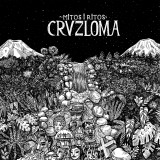
Mitos & Ritos, the debut EP by the Ecuadorian group Cruzloma, consolidates in its six songs a spirit of promoting traditional rhythms in contemporary styles, a process of reinvention and self-discovery in homage to the indigenous peoples of the Ecuadorian jungle and the riches of ceremonial music all in a mix featuring electronica, global bass and dembow. The hostile times humanity is going through have awoken a need to get back to our roots, reclaim ancestral knowledge, and question where the excessive exploitation of natural resources has led us. We have heeded that urgent call to care for everything that seems unlimited but which is increasingly scarce. And so we have looked to the past to understand our relationship with what surrounds us and establish a dialogue between the past, the present and the uncertain idea of the future. Applied to music, this has aroused the interest of artists and producers who use the rich folklore and traditions of Latin America to replicate that dialogue between what was and what will be. With this in mind, Mitos & Ritos ("Myths and Rites"), the debut EP by the Ecuadorian group Cruzloma, consolidates in its six songs a spirit of promoting traditional rhythms in contemporary styles, a process of reinvention and self-discovery in homage to the indigenous peoples of the Ecuadorian jungle and the riches of ceremonial music, based around the bambuco style from Esmeraldas on the northern coast, and the bomba del chota and the san juanito from Imbabura province. On this EP there are also sacred prayers of the Shuar nation, called Ujaj and Anets, including ceremonies like the taking of ayahuasca and of the tzan tza, all in a mix featuring electronica, global bass and dembow. It is a journey into mysticism, the jungle and the dancefloor, reflecting a search for musical identity that is at once contemporary and futurist.
It’s a tough call which is the bigger cult classic, the Tank Girl movie or its accompanying soundtrack, but on balance, we’d have to go for the soundtrack. Yeah, the film had a cast composed of some of the most colorful characters (Iggy Pop, Ann Magnuson) and character actors (Malcolm McDowell, Ice-T, and of course the almighty Lori Petty!) in show biz. And, its dystopic, resource-starved desert setting, intense action sequences, and lead female character mark it as a feminist (albeit funnier) precursor to Mad Max: Fury Road. But check out the soundtrack’s bona-fides: assembled by Courtney Love herself, it features a Who’s Who of ‘90s female rock including Hole, Björk, L7, Veruca Salt, and Belly among others. Plus, it even has tracks that were exclusive to its release, like a unique version of Devo’s “Girl U Want,” “Mockingbird Girl” by The Magnificent Bastards (a side project of the late Scott Weiland of Stone Temple Pilots), and a duet of “Let’s Do It, Let’s Fall in Love” between Joan Jett and The Replacements’ Paul Westerberg. In short, if there ever was a score that needs to be on wax, this would be it. We’ve done it right, too, with a gatefold jacket featuring the trademark comic book art and stills from the film, and a neon yellow vinyl pressing limited to 750 copies!
"Espontaneamente se Tenta: Aventuras Sonoras de Djalma Corrêa is an album of deeply exploratory pieces by legendary percussionist and composer Djalma Corrêa. This double-LP set features previously unreleased recordings that cover a wide range of sonic experiments, revealing an unknown side of the prolific and groundbreaking Brazilian artist. Most of the tracks on this album were digitized for the first time – directly from the original tapes – and were compiled in collaboration with Corrêa just before he passed.
The result is a wild and unsettling collage that shows us just how original and intense Corrêa could be: from the unorthodox electroacoustic piece Evolução (Para Fita e Filme), which channels ancestral African inspirations to create a sonic cosmogonical narrative, to the proto-mixtape Exemplo de Sintetizadores, in which he transitions from transcendental drones to astral cha-cha-chas.
While the compilation might seem disjointed at first listen, it is in fact the most accurate translation or representation of his central concept: spontaneous music. Djalma's relationship with sound was always guided by his fearless approach to listening, and by his audacious and dynamic interaction with both musicians and equipment, which enabled him to work across a wide array of genres: from jazz to completely abstract music, always through a personal DIY ethic.
Corrêa developed a strong bond with experimentalist and inventor Walter Smetak, with whom he shared a studio during his formative years at Universidade Federal da Bahia. Suite Contagotas, featured in this collection, is no less than a sonic materialization of that bond: an experiment revolving around dripping water and its randomness – a tentative exploration of the ideas and possibilities envisioned by Smetak for his audacious, albeit unrealized, Estúdio OVO.
Djalma, however, is best known for his studio work in historical albums, including many by Caetano Veloso, Gilberto Gil and Jorge Ben, and for his own polyrhythmic opus Baiafro. The last track is an early recording called Bossa 2000 dC, first performed by Djalma at the 1964 Nós, Por Exemplo concert, an event which is often cited as marking the beginning of the Tropicalia movement. At the time, he was the only artist in the lineup using electronic devices to create sounds, e.g. medical oscillators and contact mics to augment his percussive palette.
The artwork is an amalgamation of material found in the Djalma Corrêa Archive (currently managed by his son Caetano Corrêa) and other material created during the period in which the record was being put together. The intention is to guide the listeners through this possibly tempestuous soundscape, giving them additional resources so that they may draw their own meanings and make their own sense of this extremely immersive and original experience – which is like nothing we've ever heard before."
In a flurry of madcap sampling pitched towards the heat of the night, Pedro Zopelar builds on the premise of his 2022 electro- funk love letter Charme, shifting his approach towards a particular
90s flair and a method with a specific end result. Ritmo Freak took root in studio experiments for a momentous — and rare — live set at São Paulo festival Não Existe in 2023, where Zopelar was caught up in one of those right-place, right- time moments we carry with us through life. As he explains himself: “This album is dedicated to freaky club culture. While I was playing at the festival there was a crazy tropical storm outside and the room was packed with the freakiest crowd. I’ve tried hard to immortalize that feeling on this record.” With the intended energy in mind, Zopelar focused on a particular mode of production centred around 12-bit sampling from his ample record collection. Considering his background as a trained pianist, here his musical instincts are forced to work within the limitations of short, snappy cuts from dusty 12”s. The lo-fi sound sources and the resourceful ways Zopelar works them gives the record an unmistakable old-skool flavour which he applies to forthright house, techno and electro funk rhythms, always taking care to draw out the soul of the music.
The stylistic touchstones flow past thick and fast on Ritmo Freak. From the amped up fierceness of the title track with its gaudy, cut n’ paste, vintage techno flavour to the effervescent electro funk of ‘Gabriellinha’s Boogie’ on to the surreal Balearic inversion of ‘Distraction’, this is a high-velocity, endlessly charming record bursting with the musicality Zopelar has made his name on. As the driving force behind many warehouse parties in São Paulo,
Zopelar has been immersed in club culture for a long time, and his distinctive catalogue of jazz, funk, acid and techno has graced highly respected labels like Apron, Selva Discos and Mother Tongue. Throughout, he’s displayed an affinity for the tangled roots of the groove with an open-eared, big-hearted sound. That’s what comes through on Ritmo Freak
out of Stock
Last delivered 80 days ago available to reorder, subject to availability
Chelsea Wolfe has always been a conduit for a powerful energy, and while she has demonstrated a capacity to channel that somber beauty into a variety of forms, her gift as a songwriter is never more apparent than when she strips her songs down to a few key components. As a result, her solemn majesty and ominous elegance are more potent than ever on Birth of Violence.
There is a core element to Chelsea Wolfe’s music—a kind of urgent spin on America’s desolation blues—that’s existed throughout the entirety of her career. At the center, there has always been Wolfe’s woeful longing and beguiling gravity, though the framework for compositions has continuously evolved based on whatever resources were available. Her austere beginnings were gradually bolstered by electronics and filled out with full-band arrangements. The music became increasingly dense and more centered around live performances. Her latest album, Birth of Violence, is a return to the reclusive nature of her earlier recordings
“I’ve been in a state of constant motion for the past eight years or so; touring, moving, playing new stages, exploring new places and meeting new people—an incredible time of learning and growing as a musician and performer,” Wolfe says of the era leading up to Birth of Violence. “But after awhile, I was beginning to lose a part of myself. I needed to take some time away from the road to get my head straight, to learn to take better care of myself, and to write and record as much as I can while I have ‘Mercury in my hands,’ as a wise friend put it.“ Birth of Violence is the result of this step out of the limelight. The songs stem from humble beginnings—little more than Wolfe’s voice and her Taylor acoustic guitar. Her longtime musical collaborator Ben Chisholm recorded the songs on a makeshift studio and helped fill them out with his modern production treatments and the occasional auxiliary flourish from ongoing contributors Jess Gowrie (drums) and Ezra Buchla (viola).
The album opens with “The Mother Road,” a harrowing ode to Route 66 that immediately addresses Wolfe’s metaphoric white line fever. It explains the nature of the record—the impact of countless miles and perpetual exhaustion—and the desire to find the road back home, back to one’s roots. Songs like “Deranged for Rock & Roll” and “Highway” offers parallel examinations on the trials and tribulations of her journeys while the ghostly “When Anger Turns to Honey” serves as a rebuttal to self-appointed judges.
While the record touches upon tradition, it also exists in the present, addressing modern tragedies such as school shootings in the minor-key lullaby “Little Grave” and the poisoning of the planet on the dark wind-swept ballad “Erde.” But the record is at its most poignant when Wolfe withdraws into her own world of enigmatic and elusive autobiography. Much like Alan Ginsberg’s hallucinatory long-form poem Howl, the tracks “Dirt Universe” and “Birth of Violence” weave together specific references from her past into an esoteric overview of the state of mankind. Though the lyrical minutiae remain secret, the overall power of the language and delivery is bound to haunt the listener with both its grace and tension.
“These songs came to me in a whirlwind and I knew I needed to record them soon, and also really needed a break from the road,” Wolfe says. “I’ve spent the past few years looking for the feeling of home; looking for places that felt like home. The result of that humble approach yields Wolfe’s most devastating work to date.
European Headline tour confirming now for 2020. UK/EU Publicity handled by Lauren Barley at Rarely Unable. Immense support from Press, including coverage with NPR, Pitchfork, FADER, Vice, Revolver, Decibel, Under The Radar.
Repress
Dry mix only single LP edition, reverb mix of 2LP edition excluded.
Issued in 1975, this is the articulation of Zambia’s Zamrock ethos. Its' musicians were anti-colonial freedom fighters, it envelops Zambian folk music traditions, and it rocks - hard. Amanaz were serious, and they made a serious stab at an album. They titled their album Africa, according to original band member Keith Kabwe, “because of how it was shared and how its inhabitants were butchered and enslaved, its resources stolen... all the atrocities slave drivers committed. “ Thus, their “Kale,” a blues sung in Nyanja, that traced the continent’s arc from slavery to Zambia’s independence closes the album. Kabwe and rhythm guitarist John Kanyepa have a winsome softness to their vocals, which sit politely aside the feral growl of drummer Watson Baldwin Lungu, bassist Jerry Mausala and bandleader/lead guitarist Isaac Mpofu. Africa’s vibe ranges from anxious (“Amanaz”) to escapist (“Easy Street”) to straight-up pissed-off. On the “History of Man,” his voice whiskey-burned, his distorted guitar buzzing like swarming hornets, Mpofu indicts his species. There’s a darkness to Africa not found on any other Zamrock records, and a melancholy drifts throughout, specifically on Mpofu’s more restrained “Khala My Friend,” which stands as an effective, bleak situation for the Zambian everyman, the average citizen of a struggling, new nation, who might have had relatives in conflict-torn countries on the horizon, who might have been struggling to find his next meal, who might have seen a bleaker future than his president promised. Then there’s the clear Velvet Underground-influence on the nostalgic “Sunday Morning,” which, as Kabwe recalls, was the first song written for the album, back in 1968, when Velvet Undergound and Nico was a new release - and the underground funk of “Making The Scene.” The album also tackles traditional Zambian music and early-‘60s rock – punctuated, of course by Kanyepa’s wah-wah and Mpofu’s fuzz guitars. But every time Amanaz get too deep, too violent, they come back with an accessible song and woo their listener back to the groove. “Green Apple” is a civil song, featuring Kanyepa’s sighing guitar.
DEATH LENS relentlessly seeks a place in your consciousness, a persistent presence whispering in your ear. Concealing ferocity beneath a stylish veneer, their live shows unleash energy and chaos, leaving spectators disarmed and forever transformed. After successful tours with Militarie Gun and Together Pangea and hometown support, DEATH LENS is poised to release their latest album, Cold World, on May 3rd, through Epitaph Records. In recordings, DEATH LENS forges unyielding rock, blending West Coast surf punk with Britrock"s tight, bouncy rhythms. Despite their deceptive chill and vibe-focused portrayal, live performances brim with hardcore intensity. Rooted in slick guitar sonics and sugary backing vocal harmonies, reminiscent of indie punk and shoegaze, DEATH LENS channels the energy of bands like Turnstile and Militarie Gun on stage, creating soundtracks for indelible memories of high-energy, sweat-soaked singalongs. Hailing from La Puente, the self-described "five Brown boys" transition from showcasing explosive energy in recordings to embodying a refined representation of hard work and early influences gaining traction in their scene. Growing up as minorities east of Los Angeles amidst police harassment and gang violence, DEATH LENS faced risk factors that could have led them astray. Evolving from a party garage punk band, they now serve as a platform addressing life in heavily policed and immigrant-dominant areas, advocating for immigration reforms, and utilizing resources to support their community. Their experiences form a powerful narrative within their music.
We Release JAZZ is very happy to announce an exciting new body of work by Joseph Deenmamode aka Mo Kolours. The singular musical spirit’s new 21-track album Original Flow is available as a double LP housed in a heavy 350gsm sleeve with original artwork by Mo Kolours himself and the classic WRJ obi strip, as well as in digipack CD and digital formats.
A catalog of critically acclaimed records, including his self-titled debut (2014), ‘Texture Like Like Sun’ (2015), 2018 album ‘Inner Symbols’ and three companion EPs, established Deenmamode as a prodigious musician and vocalist. Pitchfork extolled his “hypnotic, tribal-infused dance grooves”, DJ Mag appreciated the “colourful celebration of soundsystem culture”, and Resident Advisor advocated that “no one sounds quite like Mo Kolours”. Musical analogies were drawn by The Guardian as “The best album Curtis Mayfield never made with A Tribe Called Quest and Lee Perry” and Mojo as “like Marvin Gaye produced by J Dilla”.
Five years ago, Deenmamode moved to the Japanese countryside. Far away from familiarity, he contemplated his place and further questioned his identity. “I had none of my ‘own’ people around. I had time to really find what makes me tick musically. Japan has helped me go back to those subconscious leanings, really go deep, and reflect the aspects that make up my story”.
The tracks on ‘Original Flow’ have been constructed from sessions, improvisations and soundbites captured around the world during this time; collecting contributions from musicians including Deenamode’s brothers Reginald Omas Mamode and Jeen Bassa plus Andrew Ashong, Charles Bullen, Dwaye Kilvington, Eddie Hick, Stefan Asanovic, Myele Manzanza, Ross Hughes, and Tom Dreissler. Deenamode says “I’m proud of this album’s creative process. Coming from a tradition of scouring through hours of records, I wanted to create my own samples, to find that perfect loop that no other producer could put their hands on. I decided to invite a group of friends and acquaintances, who also happen to be incredible musicians, to a studio in Crystal Palace to improvise based on some loose ideas I had. We spent all day, and recorded everything”.
‘Original Flow’ is an album of UK street-soul nouveau, future indigenous jazz fusion, Rasta Segga, Nyahbinghi jazz, Malagasy Hebrew hip hop. While retaining a spirit of exploration and improvisation, it sees Deenmamode grow and flex beyond beat tape brevity, expanding composition and stretching his musical muscle to play live with other musicians. Themes of empowerment, overcoming adversity, and mental liberation coexist with notes from ancient history, futurism, and science, as well as musings on family and togetherness.
‘Magik Momentum’ springs from a discussion that features at the start of the song, an inspiring mentor answering a question from Deenmamode about improvisation and what role it plays in life when planning and manifesting the future. ‘Rockets to Mars’ questions the lack of care for the billions of people with nothing, while governments plan to explore space. “This sparked a comparison in my mind to a Sonny Okuson song that I would reference when performing. Okuson’s song talked of the lack of resources in many communities in the world, while governments go to the moon”.
He says the music behind ‘The News These Days’ is “possibly my favourite on the album”. Looped like he would a late sixty jazz-fusion sample, there was nothing added and the track was complete within a matter of minutes. “It was the first and best moment from the entire Crystal Palace session”, he adds. The album’s contrasting title track with minimal instrumentation played solo by Deenamode. While frustratingly searching for gems in past recordings, he thought in a burst of ego, “I don’t need no-one else to make a dope beat!” picked up his ravanne, (the traditional frame drum of his fathers home-land of Mauritius), pressed record, and started to play. He says, “In my thoughts were the rhythms of the Nubians in Upper-Egypt and Sudan, the swing of the huge drums played by Mauritanian women, of-course the Sega beat of Mauritius, and the ever inspiring beat of James Yancey”.
Driven by UK broken beat, Cuban congas, Nigerian and Mauritian inflections, ‘Love Vibration’ follows the concept that all emotions carry a vibratory frequency and pays homage to the frequency of creation and the power of love. The two part ‘Tatamaka’ tells of the history of Deenmamode’s ancestors, the maroons of Mauritius. “We are people who managed to run from our oppressors and find refuge in a corner of the island called ‘Le Morne’ where they could not reach us. One bloody day they came in numbers to re-capture, to revenge. Many of us chose to jump to our deaths, rather than be taken back into subjugation. The poem by Creole Richard Sedley Assonne says; “there were hundreds of them, but my people, the maroons chose the kiss of death over the chains of slavery”. Tatamaka was the name of a famed maroon leader who was murdered for claiming his, and our people’s freedom. The song is the imagined journey of escape and freedom by an ancestor of the maroons of Le Morne”.
Born in the west midlands and raised on the traditional sega music of his father’s Indian Ocean homeland of Mauritius alongside records by the likes of Jimi Hendrix, Santana and Michael Jackson; his influences expanded with late 90s jungle and drum and bass nights in Bristol, experiments at art college in Camberwell, and the rich culture of Peckham, “at the time we called it the Afro Quarters of London” says Deenmamode, adding hip hop, dub, soul and soundsystem styles to his individual sound.
He explains, “I love drum music, from hand-drums to 808s. I love music from the ancient past, heritage music, indigenous music, traditional music passed down from the beginning of time. Music from the body, hand claps, grunts and foot stomps. Music with audible depth, busy, bustling, highly charged. Music from the soul, the music from beyond. I love music from the islands and the mountains. The music of the streets, hustle music, alleyway beats. Club music”.
He describes the creative process as thinking in images. “The visual world and the world of sound seem to intermingle in my thought process. When I play the drum with my eyes closed, a world of imagery dances and moves with beat. Improvised drumming feels like I am listening to what I want to hear, rather than trying to play what I want to hear. Following the rhythm and finding new pathways to walk within the patterns is what I experience. In this way I often feel I am just a listener, instead of the player”.
Original Flow is pressed on biovinyl, a sustainable alternative to traditional vinyl. Biovinyl replaces petroleum in S-PVC by recycling used cooking oil or industrial waste gases, resulting in 100% CO2 savings in bio-based S-PVC production. Furthermore, it is 100% recyclable and reusable, embracing the circular economy ideology.
out of Stock
Last delivered 2 years ago available to reorder, subject to availability
A delightful blend of 5 tracks reflecting the years on our 5 year anniversary celebration. 'The Dusk Hour EP' embodies the power and ritual potential of the night, making the Dutchman's new EP truly emerge in line with the label's output and the spirit it is intended. With the hallmarks of 00's pressure, he sweats his technique on new fundamental resources.
out of Stock
Last delivered 19 months ago available to reorder, subject to availability
Engelchen literally translates as ‘little angels’ What’s more, for many in the febrile, dangerous era of the 1930s in Nazi-occupied Europe, as they wrote letters to arrange their paths out of danger as refugees,
these were Ida and Louise Cook. Ida and Louise spent much of their early years in Sunderland, and in adulthood lived in a suburb of London with their parents. They were enormous fans of opera and led
relatively quiet and unfussy lives. Yet secretly these resourceful and eccentric women were using their musical obsessions as a means to help dozens of refugees escape with their lives.
"Brothers Jackie, Tito, Jermaine, Marlon, and Michael Jackson formed the R&B pop band The Jackson 5 in 196Originally released in 1979, Boogie is the compilation album of both previously released and unreleased songs by The Jackson Included on the album are ""ABC"" and Grammy Award nominated ""Dancing Machine"" (sampled by MC Hammer's in his hit ""Dancing Machine""), ""Never Can Say Goodbye"" and seven more songs. Boogie is considered as one of the rarest Jackson 5 albums, as it was released on the Motown subsidiary record label Natural Resources. Boogie is being reissued for the first time since its original release in 1979."
Boogie by Jackson 5, released 15 March 2024, includes the following tracks: "ABC", "One Day I'll Marry You", "Oh, I've Been Blessed", "Just Because I Love You" and more.
Route 50, colloquially known as "Bergslagsdiagonalen" slices through the central Swedish landscape, an area that for centuries supplied Sweden with timber and ore, thus propelling industrialization forward
But as the resources dwindled and mining companies moved on, the workforce had to seek opportunities elsewhere, in the cities. Enter: Bergslagsdiagonalen, the new rock band formed in 2022, writing thoughtful rock songs contemplating modern day life with a tongue in cheek nod to relationships dynamics and parenthood
"7 Estrelas | quem arrancou o céu?" ("7 Stars | Who ripped the sky down?") is the fourth album of the Sao Paulo-based artist Luiza Lian, and her third collaboration with French/Brazilian music producer Charles Tixier. Nearly five years after the celebrated "Azul Moderno", the duo returns to the scene they materialized before a period of darkness that rewrote Brazil's history. And this new visit pushes the boundaries even further with resources that the singer-songwriter had only started exploring on the previous record. The tracks, "Tecnicolor" (featuring the only guest appearance on the album, as Luiza is joined by singer Céu) and "Homenagem" (Homage), continue to explore this new horizon, which becomes increasingly bizarre and deceptive. In addition to layering noises and electronic elements over her musicality, Luiza also explores the range of her vocals by digitally distorting them. The first tracks are just the initial steps in this new work: a profound reflection on how we distort our lives based on false reflections we see both digitally in our use of social media and materially in an increasingly consumerist society. The new album recreates this artificial context in an almost caricatured way, deliberately exaggerated distortions to generate the estrangement we should feel towards the values we cherish and reject based on this false reality we force ourselves to believe in.
Reykjavík-born, Vienna-based Moff & Tarkin, prolific producer of highly inventive house music, debuts on Studio
Barnhus with the Stockholm label's first release of 2024. Undeniable grooves, dynamic arrangements and some
very resourceful sample flips indeed can be found aplenty across the four tracks on Mango Boy.
Artwork by Stefan Fält
out of Stock
Last delivered 2 years ago available to reorder, subject to availability
The Tables Will Turn EP marks the comeback of Senegalese singer Faada Freddy after a long recording silence since the release in 2016 of a first album The Gospel Journey, punctuated by some 300 concerts worldwide.
Tables Will Turn confirms an uncompromising musical approach where the only resources are human "My music is 100% organic and 0% technological" summarizes Faada to evoke a device, already proven on Gospel Journey that solicits the mouth and body to imitate the sound of instruments.
out of Stock
Last delivered 2 years ago available to reorder, subject to availability
All true improvisation involves an element of chance: the coming together of a nexus of influences impulses and actions that result in spontaneous creation. Often in the world of jazz these creative sparks blaze briefly in performance, and then disappear as the sonic vibrations fade from the air, but sometimes chance intervenes again, and moments thought to be gone forever can resurface in unexpected ways. As master drummer Jeff Williams sorted through his archive of cassette tapes from his extensive international career, he had no idea that hidden within it would be a recording of a 1991 evening when he joined storied NYC legend David Liebman for a set of spontaneous performances. Reunited together fifteen years after the breakup of their seminal band Lookout Farm in 1976, the two players reaffirmed their deep musical bond with a set of free-flowing exploratory dialogues in front of a receptive audience. Believed lost for many years, these performances can now be experienced again, with all their fearless freshness and pure committed musicianship undimmed by the passage of time.
Jeff Williams has established a formidable reputation as a drummer, composer, educator and bandleader on both sides of the Atlantic. His relationship with Liebman was forged in the exciting, expansive atmosphere of the New York scene in the early 70s: the meeting of Williams, the laid back Midwesterner, and Liebman, the mercurial, quintessential New Yorker, was an inspired coming together of opposites that always made the creative sparks fly. Williams remembers the journey that led to the Bar Room 432 on that 1991 evening:
“Just as I was leaving my home town of Oberlin, Ohio to move to New York City in 1971, I was given David Liebman’s phone number by someone who told me that Dave had started an organisation for jazz musicians there. I knew of Dave, from Ten Wheel Drive and John McLaughin’s My Goals Beyond, but I couldn’t have imagined what a significant role he would play in my musical life. Shortly afterwards, Dave would leave Elvin Jones and Miles Davis to start his own band, with Richie Beirach, Frank Tusa, and myself, (later adding Badal Roy), naming it Lookout Farm. We released two albums on ECM and one on A&M to wide critical acclaim, and toured across Europe, Japan, India and the US.”
“Following the dissolution of Lookout Farm, Dave and I embarked on a short duo tour opening for Gary Burton. That would be the last time the two of us would play until the occasion of this recording, fifteen years later.”
“Fast forward to 1991 when I discovered an attractive bar located on the far West Side of 14th Street in Manhattan. Bar Room 432 would become a six night a week jazz club for a few years, providing me, and many others, with the opportunity to perform our music. Catching wind of this, Dave suggested we do a duo performance there.”
“Luckily, I recorded it.There was no preparation, no set music to be played - we simply improvised, picking up where we’d left off. David’s mastery of the soprano saxophone is in full bloom here, as well as his incredibly resourceful musical mind.”
The performances are revelatory, moving in pure improvisation from clear, songlike melody to furious density, from ambience to pulsing groove, from light into darkness and back again. Cleaned up and remastered by Alex Bonney, the sound of the tape captures the warm, wood-lined ambience of the room, allowing the full power and dynamics of William’s drums and the warmth and fullness of Liebmans’ soprano sax to sing out, engaging the contemporary listener just as it engaged the hip Manhattan crowd thirty three years ago.
DirtybLends edition 9 is a Deep Concentration release…
if you’ve been really paying close attention Deep Concentration just dropped on LA Club Resource for their 6 track homage ep even though the text reads for the artists as The Kid n Cliff, put 1 & 1 together.
the A-side of ‘Don’t B Alarmed’ is truly definitive!! the musical journey speaks volumes..
the B-side is an instant BEATDOWN with ‘Heavy Thump beat dat shyt’ that is focused entirely on a CHICAGO style of GUTS, pianos and damage!!
out of Stock
Last delivered 2 years ago available to reorder, subject to availability
Given the vital importance of your contribuNon as a member of the music community in France, we would like to tell you about our new approach – which aims to miNgate the impact of the current lack of events and fesNviNes – and explain iniNaNves organized to provide the best possible response to both your needs and those of the clubbers you are helping during this extraordinary crisis. Pixadelic and E.enne de Crécy are working to make new tracks available and help to limit the gloom that has been furNvely emerging over this period with the producNon of a third release in the Commercial ep series.
Begun in 2006 and halted in 2007, the series achieved very promising results, encouraging fun on the dance floor all over the world. In view of recent events, we felt it was urgent to conNnue our efforts in that direcNon. The result is two tracks: JUNK and DRUNK, whose effects on the body sNmulate those rushes of communicaNve excitement that have become essenNal at this Nme. We will be supplying these resources to players in the sector in order to contribute to cultural and fesNve events in France and the other countries of the world.
out of Stock
Last delivered 19 months ago available to reorder, subject to availability
Delasi, the Koforidua-based producer, singer and rapper has released his new single ‘Amplifier’ featuring Nii Noi Nortey.
Prophetic, spiritual and frenetic, ‘Amplifier’ is Delasi’s testimony in musical form. A manifestation of Delasi emerging triumphant after many years in limbo as he searched for a long-awaited breakthrough in the music industry.
Produced by Delasi himself alongside Morgan Greenstreet, ‘Amplifier’ is underpinned by the texture of coastal rhythms indigenous to Accra and tightly ornamented with bustling drum breaks, electronic synth lines and jazz sensibilities.
Veteran Ghanaian multi-instrumentalist and sound designer Nii Noi Nortey appears on the track to deliver an explosive and rhythmically intense saxophone performance throughout as it tastefully builds to an emphatic crescendo.
Self-described as a prayer, the track’s maximalist and percussive instrumentation is cleverly juxtaposed with minimal lyrics where Delasi’s faint vocal repeats a series of repeated phrases like evoking the mood and semblance of a meditative chant and religious experience. Harkening to the work of afrofuturistic jazz musicians like Sun Ra and Pharaoh Sanders.
Speaking on the track’s meaning, Delasi said: “‘Amplifier’ is my prayer and like with other songs of mine it can scare me because I write things and then it’ll manifest in exact detail. The song is basically outlining how hard I’ve worked and how I need an amplifier to have my desires fulfilled. It's like a mantra and that’s why it's not so lyrical”.
‘Amplifier’ marks Delasi’s first release as a lead artist since his 2015 self-released project ‘#thoughtjourney’ which garnered support and praise from Rolling Stone, BBC6 Music, Worldwide FM, KCRW, Afropop Worldwide, Deutschlandfunk Kultur, NRK and legendary French DJ/Producer Laurent Garnier. Additionally parlaying into touring and festival gigs across Nairobi, Berlin, Morocco, Denmark and Sweden.
Delasi is an artist that has been quietly prolific for over a decade. Honing his musicianship exploring sonic possibilities with Ableton and Teenage Engineering. Eventually entrenching himself in the Ghanaian rap scene via collaborations with Hammer of The Last Two, Reggie Rockstone and Yaw P with whom he would release a joint project ‘Imperfections: The Break Up Vol 1’ in 2013.
He was musically raised on a diet heavily influenced by his father who exposed him to the sounds of Marvin Gaye, Bob Marley & The Wailers, Bobby McFerrin, Jim Reeves and Billy Ocean alongside the soundtracks for movies like Doctor Zhivago, The Sound of Music and La Bamba. Delasi’s own tastes would be heavily informed by linchpins of US Hip-Hop like Wu-Tang Clan, Nas, Onyx and M.O.P in addition to alternative R&B artists Frank Ocean and James Blake.
After many years of operating as a proudly independent and self-contained artist, Delasi has now partnered with Gilles Peterson’s Brownswood Recordings. One of the world’s leading indie labels, famed for their instrumental role in breaking the likes of KOKOROKO, Yussef Dayes, Swindle, Joe-Armon Jones, Shabaka And The Ancestors, Zara McFarlane and Ghostpoet.
With Delasi now being granted resources to give his music the grand and worthy footing, he is now on the cusp of the artistic breakthrough that was long out of reach. Speaking further on how the deal with Brownswood inspired the new single, Delasi said:
“The music I’ve created this go round is so strong that I can’t handle it all by myself. Though I had a lot of fun doing it all by myself with ‘#thoughtjourney’, this time around I needed it to be with a home who could properly amplify it.”
Superb funky-soul tune which was comped on the incredible "Natural Resources II" compilation album. The original 45 is tricky to find so most of the soul music aficionados out there should be pleased with this reissue.
Calibro 35 unleash the new OST for the second season of TV series BLANCA, to be released on limited edition LP on December 1st 2023.
Italian cinematic cult outfit CALIBRO 35 announces the release of the ORIGINAL SOUNDTRACK of the second season of BLANCA, the TV series produced by Lux Vide in collaboration with Rai Fiction, broadcast in prime time on Rai 1 starting from Thursday, October 5th 2023 and directed byJan Maria Michelini and Michele Soavi. The soundtrack will be released worldwide on limited edition, crystal clear LP next December 1st via Milan based label Record Kicks.
The new thrilling episodes of Blanca Season 2 follows the success of the first season, that was aired worldwide on Netflix, M6 France and Telecinco Spain. Accompanying the journey is once again the original music of CALIBRO 35 the Italian "cult" cinematic combo active for over 15 years and with a fan base that includes superstars such as Dr.Dre, Jay-z and Damon Albarn. Made up of 20 tracks in total, the OST was entirely composed by CALIBRO 35 that created the sound universe of BLANCA: an impressive and choral work, which has engaged all the components of the band for a long time, giving the them the opportunity to develop a very vast soundscape.
"It's the first time that we deal with the creation of a 'season 2' and we discovered that the creative process can be very different" Calibro 35 says. "In the first season, we had to build from scratch a sound and musical world consistent with the idea that Jan had (Michielini, director and showrunner of the series); this time, however, we had to develop that already existing world further, in order to describe the new stories and new different characters of the second season. There had to be undiscovered musical territories, that forced us to step out of our comfort zone." The result is that on the 20 tracks of the ost, the heavy dose of Calibro's signature funk grooves of tracks such as "Badanti, "Carignano", "Cambio di Stagione" or "Sampierdarena" is mixed with more moody and soulful tunes, world music, opera and atmospheres à la John Carpenter. Amongst the album's highlights worth definitely a mention the Opening and End titles that feature the voices of Arya, MEI and Tahnee Rodriguez. Essential contribution to the recordings were made by Francesca Biliotti - mezzo soprano of the Monteverdi Choir, Valeria Sturba - exceptional multi-instrumentalist of the avant-garde music group OoopopoiooO, Rahma Hafsi and Elisa Zoot.
Described by Rolling Stone as "the most fascinating, retro-maniac and genuine thing that has happened to Italy in the past few years", Milan-based Calibro 35 enjoy a worldwide reputation as one of the coolest bands around. Active since 2007, during their long career they were sampled by Dr. Dre on Compton ("One Shot One Kill" feat. Snoop Dogg), Jay Z ("Picasso Baby"), The Child of Lov & Damon Albarn ("One Day") and Demigodz ("The Summer Of Sam"). They played major venues and festivals all over Europe and as unique musicians they collaborated with, amongst others, PJ Harvey, Mike Patton, John Parish, Stewart Copeland and Rokia Traoré. The BLANCA OST is the latest of many activities concerning cinema for CALIBRO 35: the band has been completely immersed in the world of soundtracks since the very beginning and they have recently worked on other productions as well, both as Calibro and individually. Last June, the band released their 8th studio album, NOUVELLES AVENTURES, recorded in Naples at Auditorium Novecento. With the new LP the group has made full use of their knowledge and resources, refined and enriched over the years, back to making "Calibro's music": a unique mix of funk, progressive rock, alternative jazz and wide-spectrum cinematic music the public has known them for in fifteen years of career.
out of Stock
Last delivered 2 years ago available to reorder, subject to availability