A founder member of SOFT MACHINE, Kevin embarked on
a solo career in 1969, signing to EMI’s Harvest label, for
whom he would record a series of wonderful and
stylistically eclectic albums.
‘WHATEVERSHEBRINGSWESING’ was issued in November
1971 and saw contributions from David Bedford, Robert
Wyatt and Mike Oldfield.
Featuring such classic tracks as ‘Stranger in Blue Suede
Shoes’, ‘Song from the Bottom of a Well’ and
‘Whatevershebringswesing’, the album is regarded as one
of Kevin’s finest.
This new vinyl edition of this classic album has been
remastered from the original tapes and was cut at Abbey
Road Studios. It fully restores the original LP artwork.
Within the quiet, cascading corners of Pittsburgh lies a community - essentially one large family - that spans neighborhoods and generations. Upon this foundation, Merce Lemon built her latest album: Watch Me Drive Them Dogs Wild. These are earnest songs, of belonging and longing, in which romantic and familial love rip into and out of themselves in a flurry of reckoning. There is a fierceness, a persistence in this vulnerability, that is matched by the wildness of her band. Merce took a step back from music in 2020, after releasing her debut album Moonth, to reassess. "Music was just something I'd always done, and I didn't want to lose the magic of that - but I was just having less fun." In this time of restless confusion, she got back to her roots. "I got dirty and slept outside most of the summer. I learned a lot about plants and farming, just writing for myself, and in that time I slowly accumulated songs." A creative hunger, supported by her community, had been newly fertilized. From this rediscovery, imbued with the vitality of earth's green magic, Watch Me Drive Them Dogs Wild sprouted forth.
Limited Bubblegum Pink Vinyl. Within the quiet, cascading corners of Pittsburgh lies a community - essentially one large family - that spans neighborhoods and generations. Upon this foundation, Merce Lemon built her latest album: Watch Me Drive Them Dogs Wild. These are earnest songs, of belonging and longing, in which romantic and familial love rip into and out of themselves in a flurry of reckoning. There is a fierceness, a persistence in this vulnerability, that is matched by the wildness of her band. Merce took a step back from music in 2020, after releasing her debut album Moonth, to reassess. "Music was just something I'd always done, and I didn't want to lose the magic of that - but I was just having less fun." In this time of restless confusion, she got back to her roots. "I got dirty and slept outside most of the summer. I learned a lot about plants and farming, just writing for myself, and in that time I slowly accumulated songs." A creative hunger, supported by her community, had been newly fertilized. From this rediscovery, imbued with the vitality of earth's green magic, Watch Me Drive Them Dogs Wild sprouted forth.
Oxblood & Gold Vinyl. Light In The Attic präsentiert in Zusammenarbeit mit Laurie Anderson und dem Lou Reed Archive die erste offizielle Anthologie von Lou Reeds Arbeiten für Pickwick Records 1964-1965. "Why Don't You Smile Now: Lou Reed At Pickwick Records 1964-65"enthält Raritäten, Kultklassiker (The Primitives' "The Ostrich") und bisher unveröffentlichtes Material (The Beachnuts' "Sad, Lonely Orphan Boy") und ist eine Zusammenstellung von Popsongs aus Reeds Feder, die er Mitte der 60er Jahre als angestellter Songwriter für das längst untergegangene Label Pickwick Records schrieb. Die Zusammenstellung ist der neueste Teil der Lou Reed Archive Serie und folgt auf Lou Reeds "Words & Music, May 1965" (2022) und die Wiederveröffentlichung von "Hudson River Wind Meditations" (2023). Als eine der originellsten und innovativsten Persönlichkeiten der Musikgeschichte erlangte Reed (1942-2013) zunächst als Mitbegründer und Frontmann der einflussreichen Band Velvet Underground Anerkennung. Im Laufe seiner fünf Jahrzehnte währenden Karriere brachte der zweifache Rock & Roll Hall of Famer seine einzigartige Vision in eine eklektische Bandbreite musikalischer Unternehmungen ein, darunter epochale Alben wie "Transformer" (1972) und wild experimentelle Werke wie der avantgardistische Noise-Klassiker "Metal Machine Music" (1975). Doch bevor er sich als Sänger, Songschreiber, Musiker und Dichter etablierte, begann Reed als interner Songschreiber (und gelegentlicher Session-Gitarrist/Sänger) bei Pickwick Records, einem Label, das sich auf Sound-ähnliche Aufnahmen spezialisierte, die die großen Pop-Hits der damaligen Zeit nachahmten. Von Garage-Rock und Girl-Group-Pop bis hin zu Blue-Eyed-Soul und Teenie-Idol-Balladen bietet Reeds Schaffen für Pickwick einen faszinierenden frühen Einblick in sein sich ständig weiterentwickelndes und wahrhaft grenzenloses künstlerisches Schaffen, das vom GRAMMYr-nominierten Mastering-Ingenieur John Baldwin restauriert und remastered wurde. Sowohl die 2xLP- als auch die CD-Editionen enthalten ausführliche Booklets mit ungesehenen Fotos, Linernotes von Richie Unterberger (renommierter Musikjournalist und Autor von "White Light/White Heat: The Velvet Underground day-by-day") und ein Essay von Lenny Kaye (dem legendären Gitarristen, Mitbegründer der Patti Smith Group, Autor, Produzent und Kurator der bahnbrechenden Garage-Rock-Anthologie "Nuggets"). Die Doppel-LP-Verpackung wurde von dem mehrfach mit dem GRAMMYr ausgezeichneten Künstler Masaki Koike gestaltet. Eine spezielle farbige Vinyl-Edition wird auf "Oxblood"-Wachs (A/B-Seite) und "Gold"-Wachs (C/D-Seite) gepresst.
Light In The Attic präsentiert in Zusammenarbeit mit Laurie Anderson und dem Lou Reed Archive die erste offizielle Anthologie von Lou Reeds Arbeiten für Pickwick Records 1964-1965. "Why Don't You Smile Now: Lou Reed At Pickwick Records 1964-65"enthält Raritäten, Kultklassiker (The Primitives' "The Ostrich") und bisher unveröffentlichtes Material (The Beachnuts' "Sad, Lonely Orphan Boy") und ist eine Zusammenstellung von Popsongs aus Reeds Feder, die er Mitte der 60er Jahre als angestellter Songwriter für das längst untergegangene Label Pickwick Records schrieb. Die Zusammenstellung ist der neueste Teil der Lou Reed Archive Serie und folgt auf Lou Reeds "Words & Music, May 1965" (2022) und die Wiederveröffentlichung von "Hudson River Wind Meditations" (2023). Als eine der originellsten und innovativsten Persönlichkeiten der Musikgeschichte erlangte Reed (1942-2013) zunächst als Mitbegründer und Frontmann der einflussreichen Band Velvet Underground Anerkennung. Im Laufe seiner fünf Jahrzehnte währenden Karriere brachte der zweifache Rock & Roll Hall of Famer seine einzigartige Vision in eine eklektische Bandbreite musikalischer Unternehmungen ein, darunter epochale Alben wie "Transformer" (1972) und wild experimentelle Werke wie der avantgardistische Noise-Klassiker "Metal Machine Music" (1975). Doch bevor er sich als Sänger, Songschreiber, Musiker und Dichter etablierte, begann Reed als interner Songschreiber (und gelegentlicher Session-Gitarrist/Sänger) bei Pickwick Records, einem Label, das sich auf Sound-ähnliche Aufnahmen spezialisierte, die die großen Pop-Hits der damaligen Zeit nachahmten. Von Garage-Rock und Girl-Group-Pop bis hin zu Blue-Eyed-Soul und Teenie-Idol-Balladen bietet Reeds Schaffen für Pickwick einen faszinierenden frühen Einblick in sein sich ständig weiterentwickelndes und wahrhaft grenzenloses künstlerisches Schaffen, das vom GRAMMYr-nominierten Mastering-Ingenieur John Baldwin restauriert und remastered wurde. Sowohl die 2xLP- als auch die CD-Editionen enthalten ausführliche Booklets mit ungesehenen Fotos, Linernotes von Richie Unterberger (renommierter Musikjournalist und Autor von "White Light/White Heat: The Velvet Underground day-by-day") und ein Essay von Lenny Kaye (dem legendären Gitarristen, Mitbegründer der Patti Smith Group, Autor, Produzent und Kurator der bahnbrechenden Garage-Rock-Anthologie "Nuggets"). Die Doppel-LP-Verpackung wurde von dem mehrfach mit dem GRAMMYr ausgezeichneten Künstler Masaki Koike gestaltet.
Blonde Redhead melden sich mit 'Sit Down for Dinner' zurück, ihrem ersten Album seit sieben Jahren und Debüt bei section1. Der Titel ist eine Anspielung auf das oft zelebrierte kollektive Ritual, eine Mahlzeit mit den Menschen zu teilen, die man liebt. Dieses fesselnde, minutiös ausgearbeitete Album ist Ausdruck eines beständigen Miteinanders und ein Zeugnis der einzigartigen inneren Logik, die Blonde Redhead in den letzten drei Jahrzehnten verfeinert haben. Zurückhaltende, aber dennoch eindringliche Melodien tragen jeden Song und schaffen eine Kulisse für Texte über die unausweichlichen Kämpfe des Erwachsenseins: Kommunikationsprobleme in andauernden Beziehungen, die Frage, wohin man sich wenden soll, das Festhalten an Träumen. Letztendlich ist 'Sit Down for Dinner' das vielleicht stärkste Album in einem ebenso illustren wie abwechslungsreichen Katalog.
The Man With The Horn is the 1981 album by Miles Davis, which he recorded after persuasion by his nephew Vince Wilburn, a drummer in a Chicago group that played music that combined funk, soul, and fusion jazz. Miles also met the saxophonist Bill Evans, the bass guitarist Marcus Miller and called the drummer Al Foster. The studio result was a hybrid record, divided between the Chicago group’s pieces that he himself referred to as “bubble gum music” and a very free jazz-rock. However, it's less somber and dense than the damp jungles he wandered through without direction during the 1970s. The hit “The Man With The Horn” and its sugary-sweet refrain received a lot of airplay on FM stations. Jazz lovers, rejoicing in Miles’ return, delighted in the rest of the repertory. But it was Mike Stern’s incandescent solo on “Fat Time” that everyone relished. The Man With The Horn is available as limited edition of 1500 individually numbered copies on gold and black marbled vinyl.
39-Track-Sammlung mit allen A- und B-Seiten aus Dave Edmunds' Jahren bei Swan Song Records auf Doppel-CD und Doppel-LP. Mit Material von und mit Nick Lowe, Elvis Costello, Bob Seger, John Fogerty, Chuck Berry, Graham Parker, Huey Lewis, Rodgers & Hart und anderen. Mastering und Restaurierung durch den mehrfachen Grammy-Preisträger Michael Graves. Swan Songs: The Singles 1976-1981 ist der endgültige Blick auf Dave Edmunds: den Künstler - ob mit seinem unglaublichen Gitarrenton, seinem unverkennbaren Produktionsstil oder seiner Fähigkeit, jeden Song unverwechselbar und wahrhaftig zu seinem eigenen zu machen.
On October 4, 2024, Vel will make a splash with the release of her debut LP, MTY-011 «There is Always a Solution», through Anetha’s label, Mama Told Ya. After 3 exciting EPs and the recent rise of her Live performance, Vel made waves last year with the track «Velds1» on MTY-AIR «Mille Attaques, Les Vents Contrèrent» in collaboration with LDS. She is now ready to unveil her first full-length album.
«There is Always a Solution» flows with two slippery vinyl records and 10 immersive tracks. Nine tracks are produced solely by Vel, while one is co-produced by Vel and Anetha. Once again, Mama Told Ya returns with a valuable lesson: no matter the challenge, you will flow a way.
Vel is back with a mesmerizing new album featuring 10 tracks that draw you in with her captivating energy. Are you ready to heed the call? The High Priestess of Drums plunges us into a world of vibrant Techno and brisk Tribal rhythms, while her Ambient passages offer a calming retreat and her Mental influences are bound to stir your emotions. Rest assured, “there is always a solution.” Renowned for her expertise in rhythmic innovation and spatial soundscapes, Vel presents a revitalizing and dynamic release. MTY-011 promises to cleanse and rejuvenate—let yourself be immersed.
With a hint of irony, The Babe (A1) playfully teases, “Do you love me? Do you love my music?” But Vel’s real question is more reflective: you’re in deep water. Dive into the sound bath of Humans in Cafe (A2), close your eyes, and let the drums, the kicks, the bangs, and the buzz wash over you. One Xanax Introspection (A3) later, Vel is inviting us to explore the full spectrum of frequencies—a galloping race of deep bass and high treble in this ambient choreography.
« Don’t let the relentless BPM Anxiety (B1) drown you. Its tortured synth may try to hold you back, but you’re free. You’re in your Pop Tribe (B2), and nothing can stop you—DRUM BIG. »
Darling it's better down where it's wetter: joining Vel for a jam session « under the sea », it’s Anetha! Driving percussions are combining with a pulsating psytrance bassline, pure magic: « Ain’t We Mermaids (C1), dear? » Vel, ever the master of the salty beats, slows it down just enough to say, «I Don’t Care (C2),» as she deconstructs. A few moments later… She’s at it again—just when the BPMs are peaking, she draws us into a state of floating lethargy. That’s the absorbing power of Ambient Core (C3).
The current is strong with this one—prepare for a challenge. Deep Tracks Don’t Sell (D1) will drift you away in a swirl of intertwining undulations and dripping drums. It’s time to return to the surface: with a bubbly twist of whimsy, Oh La La (D2) pops in, full of new-wave energy. Vel gently swims us back to shore.
For this new LP, the artwork was crafted in-house under Vel’s artistic direction. The design was skillfully executed by Diplomatie Studio, while mastering was entrusted to In Aeternam Vale, Vel’s close friend and mentor.
out of Stock
Last delivered 19 months ago available to reorder, subject to availability
Dieses 2-CD bzw 2LP-Set mit dem Titel Early Home Recordings versammelt 27 alte Aufnahmen aus den 1960er Jahren (hauptsächlich 1966-67) der Vor-Fairport Convention Sandy Denny. Sorgfältig remastered, enthält dieses Paket ein exklusives neues Essay des Fairport Convention-Biographen Patrick Humphries - der Sandy persönlich kannte. Enthalten sind zwei verschiedene seltene Demos ihres Klassikers 'Who Knows Where the Time Goes' von 1967 (bevor sie ihn mit den Strawbs aufnahm) und ein weiteres von 1968. Sie hatte dieses unglaubliche Talent, diese unglaubliche Stimme - sie spielte 'Who Knows Where the Time Goes', und ich fiel fast vom Stuhl. - Linda Thompson. Außerdem gibt es eine Reihe von Liedern aus Sandys Feder, darunter 'Boxful Of Treasures', das später in den Song 'Fotheringay' umgeschrieben wurde (von Fairport Convention's What We Did On Our Holidays Album). Fotheringay" erscheint hier auch in Demoform. ,Sie muss neu bewertet werden. Sie hat eine Art von Song geschrieben, die heute nur noch sehr selten geschrieben wird - emotional, musikalisch interessant, wirklich gut gesungen - ernsthaftes Songwriting. Sie war dem Rest haushoch überlegen. Und das bleibt sie auch." - Ashley Hutchings (Gründer von Fairport Convention). Außerdem gibt es gefühlvolle Coverversionen von Jackson C. Frank, Fred Neil, Anne Briggs, Dylan und vielen traditionellen Folksongs. Die endgültige Sammlung von Dennys frühen Demos, die von ihrem Nachlass autorisiert wurden, mit Sandys Tochter Georgia Lucas' eigenen charmanten Zeichnungen ihrer Mutter, die zum ersten Mal auf einer offiziellen Denny-Veröffentlichung erscheinen, sowie bisher unveröffentlichten Bildern Sandys der 1960er Jahre. Linernotes von Reissue-Produzent Pat Thomas.
MICHELLE’s first project of buoyant R&B tracks was an ode to New York City, the city where all 6 members of the band grew up. But amid the success of that project, 2018’s HEATWAVE, and 2022’s AFTER DINNER WE TALK DREAMS, they left home and broadened their perspective. The band travelled across the U.S. and Europe opening for Gus Dapperton, Arlo Parks, and Mitski, headlining their own shows, and playing festivals.
While writing their new album, Songs About You Specifically, MICHELLE decided to rent out a house in Ojai, California. Surrounded by lizards, the smell of ripe cactus fruit, and endless expanses of sand, they experienced a sense of solitude and closeness they hadn’t before. It shifted the tone of their work. While their earlier music channelled the churning restlessness of the city, these news songs meander and expand into starry shoegaze reveries, slick funk riffs, and lilting 80s synth pop.
Their newfound closeness also helped them write more vulnerable music. On Songs About You Specifically, the band members express their complicated desires, voice their regrets, and own up to their moments of selfishness. By slowing down, cutting out any distractions, and fostering a sense of communal closeness that necessitated honesty, MICHELLE ended up with a collection of songs that feel like the truth.
A collection of 18 rare disco tracks from Yugoslavia. Compiled by Leri Ahel & Zeljko Luketic from original master tapes. Fox & His Friends label owners Ahel & Luketic selected obscure 7'' singles, b-sides, out-of-print releases and digged deep into the vaults of Jugoton to tell the story of how disco infiltrated clubs and pop music. This compilation is vinyl counterpart to their pioneering research and work in two major exhibitions tracing roots, influences and social significance of disco in music, fashion and design held in 2015 in Klovicevi Dvori Museum and HDD Gallery in Zagreb. "Socialist Disco - Dancing Behind Yugoslavia's Velvet Curtain 1977-1987" double gatefold LP with extensive liner notes contains tunes from KIM Band, Gabi Novak, Arian, Ljupka Dimitrovska, Ana Sasso, Moni Kovacic, Milka Lenac, Rok Hotel, Ivica Surjak, Grupa ST, Nano Prsa and many more in various sub-genres including classical orchestrated disco, dance reworkings of international chart hits and synth-filled italo-disco stompers performed by Yugoslavian music stars, fashion models and even sports and football heroes. Disco, a vital Trojan horse (in local notion: a pop music you can dance to), stayed quite a long time In Yugoslavia, refusing to be silenced and refusing to jump into the bandwagon of expected. It was influenced by American and European disco sound, for example, by the Boney M, Amanda Lear or Love Machine, who all visited Yugoslavia and had live concerts. The producers and the big record companies like Jugoton, PGP RTB, Diskoton or ZKP RTVL, noted the hype in music and they constantly probed the market with limited run of seven inchers or special performances. Some artists were quite successful, but the rest were in the 7'' single empire which was free enough to experiment with all things disco had to offer - genre hybrids, use of electronics, sexual innuendo, bizarre lyrics and most importantly, great musicians and major composers having fun. The no-restrictions policy of disco was there to evade the rules and surely it did.
out of Stock
Last delivered 22 months ago available to reorder, subject to availability
Digital digs deep into his dusty DAT box and his hard drives for DDD Vol. 2!
A1. Digital & Spirit’s rave banger, Remote Control, gets a sweet freshen up from heavy hitter Kiljoy
A2. Dubby, spaced out roller, Reflection, is intense, rough and rugged!
B1. Restoration, we all need it.
B2. X Nation has a heap of great jungle to his name and the Ras 78 remix doesn’t disappoint
out of Stock
Last delivered 20 months ago available to reorder, subject to availability
Influential industrial pioneers Skinny Puppy welcomed audiences into the embrace of the seminal Too Dark Park in 1990. One of the band’s most influential records, it includes “Tormentor,” “Spasmolytic,” and more. In addition to praise from Vice and many more, Metal Hammer fittingly named it one of the “10 Best Industrial Albums,” and Spin summed it up best as a “return to the bloodbath.” A menacing and massive pastiche of H.P. Lovecraft-style cosmic horror, addiction, mental disarray, and the disintegration of nature, Too Dark Park remains a cataclysmic and chaotic classic through and through. Now available on vinyl for the first time in 30 years to celebrate the 35th anniversary since relea. Legends of electronic industrial music. Restored to original art on classic black vinyl. “10 best industrial albums - metal hammer”
out of Stock
Last delivered 13 months ago available to reorder, subject to availability
Sometimes, we have the tendency to run away from distress because we do not want to deal with the feeling of pain, but the first step in spiritual healing is overcoming the fears and recognizing the pain. The sooner you address the cause of your difficulty, the sooner you’ll get freedom from the pain. Be aware of your situation.
Once you have faced the source of anxiety, you need to acknowledge the pain. Feel your emotions and question what their sources are. Be honest about your feelings. In this stage, it is normal to feel like situations are beyond your control, which can transfer the feeling of hopelessness. However, by allowing yourself to feel rage, it becomes easier for your wounds to heal. Honor your feelings.
Honoring your pain will teach you self-forgiveness. You should be able to feel the kindness within you and experience all the love you have for yourself. You will feel a conflict between the instinct to heal on your own, and the desire to accept the situation and seek support to get healed. You prove that you have an unwavering determination to get healed by choosing the latter. When you want spiritual healing, you have to place your faith in the universe, too.
Surrendering the pain means releasing the pain and seeking support from the universe. It will help you ease your sufferings.
The negative ego vanishes from within you and makes your heart feel lighter once you release your pain. This is a sign of spiritual wellness. You will start to feel a deep openness towards things and think with a peaceful mind. You will become whole again and you will develop the ability to deal with the disruptions of your life with tolerance. The inner peace will be restored. Feal.
out of Stock
Last delivered 15 months ago available to reorder, subject to availability
For the first time since its inception 36 years ago, Steve Hiett’s elusive Down On The Road By The Beach is finally made available outside of Japan. Most recognized in the fashion sphere as an English photographer and graphic designer, Hiett‘s transportive audio portraits amplify his serpentine guitar to the infinite blue, recorded across Paris, Tokyo and New York with no coastline in sight. Now widely celebrated as a desert island disc, very little is actually known of its unfathomable genesis.
A career devotee of Brian Wilson’s ground breaking harmonies, Hiett shot The Beach Boys for Rolling Stone - as well as The Doors, Miles Davis and Jimi Hendrix (in one of his final performances at the 1970 Isle Of Wight Festival) - while establishing himself as a fashion photographer. Decamping to Paris in 1972, he began what would become 20-year collaborations with Vogue Paris and Marie Claire, printing his signature warm, saturated and vibrantly hued snapshots.
In 1982, representatives from Tokyo’s Galerie Watari visited him to propose a solo exhibition. Asking if he could insert a 7” of original music into the back of the exhibition catalogue, Hiett laid down ‘Blue Beach - Welcome To Your Beach’ in a Parisian radio station, playing all of the instruments himself, and two more cuts in New York with Yoko Ono, The Doobie Brothers and Steely Dan hired-gun Elliot Randall. Once dispatched, the phone began ringing off the hook with requests for him to fly to Tokyo. Assuming these long-distance callers were wanting him to check proofs for the book, it wasn’t until he arrived that he discovered CBS/Sony had facilitated an entire album. Heitt hastily gripped some petty cash, bought a guitar and retreated to his hotel room to start writing.
Entering the studio the following day, he was further surprised by a waiting room of session players known as Moonriders - one of Japan’s most acclaimed rock bands of the 1980s. Intimidated by their indecipherable sheet music, Hiett suggested Randall join them and with money being no object for major labels at the time, his wingman was on the next plane out of New York to finalise the high production indulgence. Near-ambient arrangements that float in a space between The Durutti Column, Steve Cropper and Ashra, Down On The Road By The Beach also crowns Hiett the master of recontextualization with his zero-gravity blues visions of Roll Over Beethoven, Santo & Johnny’s Sleep Walk and the 1967 Eddie Floyd soul hit Never Found A Girl.
Produced in coordination between Be With, Efficient Space and the artist, this definitive reissue is restored from original masters with vivid reproductions of the Down On The Road By The Beach exhibition catalogue, intended to accompany its original release, and extensive liner notes penned by fellow Steve Hiett obsessive Mikey IQ Jones.
out of Stock
Last delivered 15 months ago available to reorder, subject to availability
Following on from his 2022 debut release on American Dreams Records, 'Choreographies of Decay', J. Doursou offers a critical reflection in 'The Deafening Veil' of the West's warped relationship with war in other regions.
The Deafening Veil has early support with reviews confirmed with MOJO Magazine, Headphone Commute (single premiere), A Closer Listen, and Noise Narrative. A writer from Quietus is also pitching to editorial with a review TBC. Doursou began the creative process of the album when Russia invaded Ukraine. The album's lead single, 'song for Elena', is a tribute to Doursou's close friend from Ukraine. The rest of the album critiques the silence that surrounds war in other regions.
No one has lived a life quite like Marcos Valle. He became an overnight international sensation, fled a military dictatorship, dodged the Vietnam war draft, had his music sung by Homer Simpson, made enemies with Marlon Brando, and became an unsuspecting fitness guru for multiple generations. But to truly understand the great Brazilian composer, arranger, singer and multi instrumentalist, one must listen to his music.
Lead Single (Life Is What It Is) : Between the release of his first album in 1962 and today, Marcos Valle has released twenty-two studio albums traversing definitive bossa nova, classic samba, iconic disco pop, psychedelic rock, nineties dance and orchestral music. He has also had his songs recorded by some of the all time greats, including Frank Sinatra, Sarah Vaughn, Sergio Mendes, Elis Regina, and (last but not least), Emma Button of the Spice Girls. He has also had his music sampled by Jay-Z, Kanye West, Pusha T and many more.
With his twenty-third studio album Túnel Acustico, Valle set out to bring it all together.
“I believe my music is many things. It goes in different directions. I have many different ways of writing music, sometimes it’s melodies and harmony, sometimes the groove is the focus. But all the music I have made over my sixty year career is unified. It is all natural and it is all sincere. And this is what I wanted to bring to my new album.”
A prominent feature of Valle’s career has been his dual residence between Brazil and the USA. Originally moving over in the mid-sixties on the back of bossa nova’s international proliferation, Valle toured with Sergio Mendes and became hugely in demand as a composer and arranger. But the Vietnam War loomed and the threat of being drafted saw him return to Brazil. He spent the following years in Rio writing music for TV and film, as well as four cult favourite albums in collaboration with some of Brazil’s most groundbreaking musicians including Milton Nascimento, Azymuth, Som Imaginario and O Terco.
By 1975, Brazil's military dictatorship was at its most oppressive, making living and working increasingly difficult. Valle moved back to the US where he would reside in LA, writing songs for, and collaborating with the likes of Eumir Deodato, Airto Moreira, Chicago, Sarah Vaughn and Leon Ware, amongst others.
Túnel Acústico features two songs originally conceived during Valle’s time on the West Coast: “Feels So Good”, a stirring two-step soul triumph written in 1979 with soul icon Leon Ware, and the sublime AOR disco track “Life Is What It Is”, composed around the same time, with percussionist Laudir De Oliveira from the group Chicago.
Built around an unfinished demo Marcos found on a shelf in his house 44 years after it was made, the “Feels So Good” demo was restored with the help of producer Daniel Maunick, who also utilised AI stem-separation to remove the placeholder vocal ad-libs. Valle added Portuguese lyrics to sit alongside Ware’s vocal hook, as well as extra keyboards and percussion.
Also written in late seventies LA, “Life Is What Is It” was co-penned by Laudir De Oliveira from the band Chicago and first released on the bands’ Chicago 13 album with lyrics by Robert Lamb. Another nod to his good times in LA, Valle recorded his own version for Túnel Acústico, upping the tempo and deepening the groove for a blast of irresistible summer soul.
On Túnel Acústico, Valle's core band features two members of the renowned Brazilian jazz-funk group Azymuth: Alex Malheiros on bass and Renato Massa on drums. The rhythm section is completed by percussionist Ian Moreira, with additional contributions from guitarist Paulinho Guitarra and trumpeter Jesse Sadoc.
The contemporarily composed music on Túnel Acústico features an impressive lineup of guest lyricists, including renowned Brazilian artists: Joyce Moreno (Bora Meu Vem), Céu (Nao Sei), and Moreno Veloso (Palavras Tão Gentis) as well as Valle's brother Paulo Sergio Valle (Tem Que Ser Feliz).
The album closes with "Thank You Burt (For Bacharach)", a tribute to the legendary composer who passed away in 2023.
Túnel Acústico will be released on 20th September 2024 via Far Out Recordings. Valle is set to tour Europe and America in support of the album.
out of Stock
Last delivered 19 months ago available to reorder, subject to availability
The unconscious and unknown must be really nice places. In any case, if you take the second album of Menelaos Tomasides under his given name as travelogue. A trip into dreamlike territory, yet concrete enough, a journey without target yet looking forward and looking back into familiar places, „dreamhike“ both continues and departs from the style Menelaos has found earlier, in “When the Moon Comes Through”, or his more conceptual-intentional “31 Minuten” works. As the album title - which roughly translates to “dream hiking” but also hints on “walkabout” and “songlines” – suggests, we are rambling between the real and the imaginary. From the bucolic border triangle of Belgium, Germany, and the Netherlands to the buzzing streets of the capital of Cyprus, where Menelaos has lived for many years, the tracks are about real places, about real experiences and emotions yet interwoven with a dreamlike fabric. Something that is just not tangible, yet substantial and palpable. Something concrete that manifests in the genuine and special sound design of this records - basically all of Menelaos’ works - his really special treatment of dynamics and loudness. It is one of the very few records where the established language of music making, specifically Techno, House, Dub, and early 2000’ Electronica, the clicks, thumps and plops from an earlier age of electronic music, transmogrify into slow movements of something new. Something that is gentle and truly personal, looking inwards. There are four-to-the-floor beats, there is wobbly bass, and dubby chords, even sublimated clarion calls. There is an immense energy in these tracks, the sheer materiality of low frequencies of a massive sound system manifested in a tiny room. Yet it is without any aggression, stripped bare of sonic pressure. It is quiet music no matter how high you turn up the volume. A rare treat, that requires exceptional skills and exceptional restraint and control on the technical side of music making. Probably it is a result of Menelaos specific combination of instinctual, intuitive approach to making music, which meets a genuine love for sound in seemingly endless loops of refinement that can lead to such a result as „dreamhike“. The elegant floating balance of control and playful experimentation manifests for example in a track that continues the ongoing collaboration with seasoned Cologne improviser Achim Fink on bass trumpet. Not only in this respect, the album can be described as a product of openness. It comes from a lot of taking in the world, of travel, of places and people met, of friendship and conversation (not necessarily with words). The deep trip of “dreamhike” further manifests Menelaos as one of the truly independent voices of electronic Cologne and beyond. Somewhat alike in character and attitude probably to what late Pete Namlook has established for Frankfurt with his label Fax +49-69/450464 (though ultimately warmer and much less uncanny) Menelaos has found his very own sound and vision. Music that answers to no one but speaks to everyone. Uncompromising yet gentle to the core: kind sounds from a kind spirit, arguably the most extraordinary and valuable quality music can have these days.
out of Stock
Last delivered 2 years ago available to reorder, subject to availability
Build Buildings is Brooklyn, New York, based Ben Tweel. He makes music with computers, instruments and household sounds. The sounds on “Ecotone” are sourced from acoustic guitars, lap harp, ukulele, mbira, and clarinet, and played through the gestural iPad program Samplr. He has released numerous albums since 2004, most recently 2022’s “Bring in the Lampstand and Light Its Lamps” on Audiobulb Records.
CO-OP REISSUE by NOT LOST RECORDS and RUGGER BUGGER !! ** Black Vinyl ** 500 Copies // The AK47's or the Tottenham AK47's formed in the late 80's / early 90's in North London. They turned up on the London squatting gig scene fully formed and ready to go, fusing punk, ska and reggae with a strong and simple political, socio-anarchist message. The band were instantly popular in London and sat very much next to Radical Dance Faction, Back to the Planet and Culture Shock. Their one and only release was the album "Don't call me Vanilla" which was originally released in 1991 by Rugger Bugger Discs. The album was recorded and produced at The Refuge studio in Reading by Jim Warren. Built around a solid dub-punk backdrop with some atmospheric flute squalls and FX's weaving in and out of the mix while lyrically remaining true to their anarcho roots. Over the years the album's legacy has grown and yet has never been reissued. Finally 32 years after its release the band, Sean from Rugger Bugger and Not Lost reissue this gem in an exact replica. No coloured vinyl - just black vinyl with the same Lyric Insert. This reissue has been remastered from the original tapes.
The second LP compendium of Emahoy Tsege Mariam Gebru's early solo piano works, recorded throughout the 1960s - finally available again. Emahoy Tsege Mariam Gebru is a true original - her compositions and unique playing style live somewhere between Erik Satie, Debussy, liturgical music of the Coptic Ethiopian Church, and Ethiopian traditional music. It is some of the most moving piano music you will ever hear! These original compositions, performed by Emahoy Tsege Mariam Gebru herself on solo piano, were originally self-released in Germany in small editions as fundraisers for orphanages, support organizations for widows of war victims, and other philanthropic causes. We are humbled and proud to present this album in collaboration with the EMAHOY TSEGE MARIAM MUSIC PUBLISHER and Foundation, and to assist in continuing her life-long mission of using music as a vessel to care for those who have been abandoned by society, or harmed by strife. Black vinyl LP comes in black inner-sleeves and heavy cardstock jacket with color printing and gold-foil stamping, and song notes by the composer herself. Restored and remastered by Timothy Stollenwerk.
They say you should never meet your heroes, but for Mike, meeting the legendary Adrian Sherwood has been a transformative experience, leading to creative collaborations that have benefited both of them.
Nearly 30 years after first being mesmerized by OnU Sound’s releases, a cheeky bit of radio ripping serendipitously led to Mike helping Pats Dokter, the label’s official archivist, with his work restoring master tapes, and eventually to him creating visual content for Adrian’s live shows.
A while after this collaboration began, Adrian offered to remix some of Mike’s music, either by his solo project @misledconvoy or our tunes, and it’s four cuts by us that grace this heavyweight platter.
From the dreamy dub of Transient Transmission to the rolling rhythms of A Doubtful Sound, our originals have been re-arranged and dubbed to $%># in Adrian’s signature style, with fluid melodies, pounding basslines and vocal samples awash in a wall of effects.
Trumpets by David “Ital Horns” Fullwood bookend the release, haunting in the first track and celebratory in the last, while Doug Wimbish (Tackhead) added an extra bassline to the heaving version of 1000 Mile Drift, which also features the voice of the iconic Lee “Scratch” Perry.
Reflecting on the collaboration, Mike says, “the whole experience has been slightly unreal, from working on Adrian’s videos to being in the OnU studio and watching him dub-mixing the tracks I’ve made, something I could never have imagined happening!”
Mike isn’t the only OnU fan, as a pivotal moment for Paddy was “watching Adrian mixing Tack>head at the Powerstation in 1995 and seeing the cause-and-effect of what he was doing and hearing the unbelievable sounds coming out of the speakers. It was the first time I’d ever seen somebody dub mix like that.”
The cover of Echoes of the Night is based upon an original artwork by Hamish Macaulay, while the vinyl has been pressed using a 100% recycled compound known as eco-mix, making each record totally unique as the colours subtly change across the pressing run.
out of Stock
Last delivered 3 months ago available to reorder, subject to availability
Die Musik ist tief in der DNA der Buddha-Bar verwurzelt und hat schon immer eine Schlüsselrolle in unserem Universum gespielt. Unsere musikalische Handschrift, die 1996 in Paris entstand, spiegelt die traumhafte Atmosphäre unserer Restaurants perfekt wider. Subtile und hypnotisierende Mixe, eine perfekte Mischung aus mystischen House- und elektronischen Rhythmen mit afrikanischen, asiatischen, indischen, lateinamerikanischen oder orientalischen Klängen... Buddha-Bar Music verbreitet seit 1996 seine guten Vibes in der ganzen Welt. Dieses dreifache Best Of zeichnet unsere Geschichte von 2014 bis 2024 nach und versammelt von Ravin sorgfältig ausgewählte Titel und Künstler, darunter Buscemi, Sahalé, Desert Dwellers, Kenneth Bager, Ali Kuru, Santi & Tugçe, El Bùho, Troels Hammer, ...
out of Stock
Last delivered 12 months ago available to reorder, subject to availability
Polido has been fantasizing with the idea of free music throughout his artistic career. Free from restraints, logos, musical genres, but also from this modern obsession with narratives, plans, business plans, algorithms and bubble wrapped ideas for comfort of those of you that can’t breathe without everything making sense.
“Hearing Smoke” has nothing of that. It has been four years since Holuzam released the double album “A Casa e os Cães / Sabor a Terra” and for four years I have been daydreaming about what would come next. This is it, eleven new pieces about the future of the future of music. It is the result of years of study, research and sound consolidation. Sound as matter, mutating, transforming, absorbing all around, a shapeshifting entity connecting with the principles of freedom.
"Polido has been researching Portuguese contemporary composition, its very own sounds and ideas. Its origins, the web of repression, tension and censorship before the April 25th revolution in 1974; secondly, as an afterthought, freedom, equality and a unique sense of community and belonging screaming through the music. He absorbed those states of mind and made an album that listens to the current world and presents globalization as a mental trap.
If the music that inspired him somehow comes from a post-colonial world, “Hearing Smoke” questions how we can create something new in this permanent state of cultural colonization, where new trends or forms of music only thrive if they are accepted by the dominant cultures. The physical world has been transformed, but ideas like “world music” or “ghetto music” still show that dominance, the Strange can only be accepted if it incorporates the rules and codes of that dominant force. What I am saying is that it is hard for Portuguese musicians to present themselves as original. They will never have that credit unless the music relates to something that exists in another
realm. Never for their benefit, but for the power of association. I may sound arrogant here, but Polido is unique, original, one of a kind (all those words, all those redundant synonyms). I knew it four years ago when I got lost in the way “A Casa e os Cães” is assembled and how he makes something memorable out of the most commonplace conversations. “Hearing Smoke” continues the flow and puts us in the centre of these ever evolving masses of sound.
Somehow his music finds you, it starts speaking with you until it asks you to be a part of it. Polido’s beats and harmonics are combined in such a tender way that you mellow out while listening to these beats - thinking of the brilliant “Saque”. Even when he exposes you to something more harsh - “Canto D’Amorte” or the closing moments of the last track “Custa A Crer” - there’s still a cradle effect.
But what keeps me returning to this album is how it seems to transform in my ears. Not every time I listen to it, but while I am listening to it. The sound seems to move, embracing me and controlling my inner thoughts. These start to move along at the same pace, with the same feeling of cloudiness. Nothing new here, the thing is how it feels different from time to time, how the music, because of something that changes or moves, comes as a catharsis/revelation. It drives me nuts how the beats come and go in tracks like “Fogo Firme (Encomendação)” or “The More I Think, The Less I Can Speak“, leaving everything suspended and, simultaneously, relieved. When dramatic - ”Prova De Existência“ - it is sad af and gorgeously epic.
Trap, bass music, dubstep, ambient, hauntology and contemporary music flow side by side here, no pushing around, free of interpretation, and you are free to feel or listen to whatever you want in “Hearing Smoke”. That’s free music for you. Not a hard concept, something for you to enjoy, feel, reflect about. This is what the future will sound like."
"Wir waren hier" heißt das neue Studioalbum von der Gruppe Die Nerven. Es ist das sechste Album des Trios. Die neuen Songs haben Kevin Kuhn, Julian Knoth und Max Rieger in einer vierwöchigen Session in einem ehemaligen Sterne-Restaurant am Stuttgarter Schlossplatz mit Blick auf die Oper aufgenommen. Und so nah wie auf "Wir waren hier" sind Die Nerven noch auf keinem Studioalbum der Aura ihrer Live-Auftritte gekommen - der musikalischen Spontaneität ihres Zusammenspiels auf der Bühne, dem Stop-and-Go ihrer Improvisationen, der Lust an der gegenseitigen Überraschung, und schließlich: der kollektiven Entäußerung in die Katharsis. Ihre Musik ist immer noch zornig, laut, dramatisch, vielleicht könnte man auch sagen: nihilistisch. Aber es handelt sich um einen reiferen Nihilismus, als man ihn von den Nerven bislang kannte. In ihrer Musik fliegt man immer noch über Halden voll Schrott, über dürre Heiden, wüste Länder und öde Städte. Aber es schillern nun auch schöne Klangtupfer über der Szene wie von den letzten Sonnenstrahlen vor einer ewigen Nacht oder von einem bunt schillernden Ölfilm auf einer verdreckten See.
"Wir waren hier" heißt das neue Studioalbum von der Gruppe Die Nerven. Es ist das sechste Album des Trios. Die neuen Songs haben Kevin Kuhn, Julian Knoth und Max Rieger in einer vierwöchigen Session in einem ehemaligen Sterne-Restaurant am Stuttgarter Schlossplatz mit Blick auf die Oper aufgenommen. Und so nah wie auf "Wir waren hier" sind Die Nerven noch auf keinem Studioalbum der Aura ihrer Live-Auftritte gekommen - der musikalischen Spontaneität ihres Zusammenspiels auf der Bühne, dem Stop-and-Go ihrer Improvisationen, der Lust an der gegenseitigen Überraschung, und schließlich: der kollektiven Entäußerung in die Katharsis. Ihre Musik ist immer noch zornig, laut, dramatisch, vielleicht könnte man auch sagen: nihilistisch. Aber es handelt sich um einen reiferen Nihilismus, als man ihn von den Nerven bislang kannte. In ihrer Musik fliegt man immer noch über Halden voll Schrott, über dürre Heiden, wüste Länder und öde Städte. Aber es schillern nun auch schöne Klangtupfer über der Szene wie von den letzten Sonnenstrahlen vor einer ewigen Nacht oder von einem bunt schillernden Ölfilm auf einer verdreckten See.
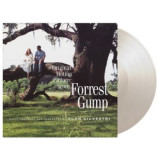
Forrest Gump was the surprise hit of the 1994 summer movie season. The film traces the life of a half-wit through the major historical events of the 1950s, '60s, and '70s. It features Tom Hanks as the loveable Forrest Gump and Robin Wright (Claire Underwood in House Of Cards) as Forrest's insecure girlfriend Jenny.
Forrest Gump won six Academy Awards for Best Picture, Best Actor in a Leading Role, Best Director, Best Visual Effects, Best Adapted Screenplay, and Best Film Editing.
The film garnered for seven Golden Globe Award nominations, winning three of them, including Best Actor - Motion Picture Drama, Best Director - Motion Picture, and Best Motion Picture - Drama. The film was also nominated for six Saturn Awards and won two for Best Fantasy Film and Best Supporting Actor (Film. The film also won the Outstanding Achievement in Special Effects award at the 1995 BAFTA Film Awards.
Forrest Gump received numerous other awards such as one win from the Screen Actors Guild Awards in its first year for Tom Hanks in a total of four nominations.
The film was selected for preservation by the Library of Congress in the United States National Film Registry in 2011, being deemed culturally, historically, or aesthetically significant'. The movie has made multiple American Film Institute lists including the quote Mama always said life was like a box of chocolates. You never know what you're gonna get.' ranking 40th on 100 Years...100 Movie Quotes. The film ranked 240 on Empire's list of the 500 Greatest Movies Of All Time. The chain of restaurants, Bubba Gump Shrimp Company opened based on the film, and has opened many locations since its founding.
The score was composed and conducted by Alan Silvestri and was nominated for Best Original Score in the 67th Academy Awards.
The legendary Score is now finally available on vinyl for the first time. The first pressing of 1.500 copies are pressed on 'Chocolate' coloured vinyl. You never know what you'rei
gonna get...
Forrest Gump was the surprise hit of the 1994 summer movie season. The film traces the life of a half-wit through the major historical events of the 1950s, '60s, and '70s. It features Tom Hanks as the loveable Forrest Gump and Robin Wright (Claire Underwood in House Of Cards) as Forrest's insecure girlfriend Jenny.
Forrest Gump won six Academy Awards for Best Picture, Best Actor in a Leading Role, Best Director, Best Visual Effects, Best Adapted Screenplay, and Best Film Editing.
The film garnered for seven Golden Globe Award nominations, winning three of them, including Best Actor - Motion Picture Drama, Best Director - Motion Picture, and Best Motion Picture - Drama. The film was also nominated for six Saturn Awards and won two for Best Fantasy Film and Best Supporting Actor (Film. The film also won the Outstanding Achievement in Special Effects award at the 1995 BAFTA Film Awards.
Forrest Gump received numerous other awards such as one win from the Screen Actors Guild Awards in its first year for Tom Hanks in a total of four nominations.
The film was selected for preservation by the Library of Congress in the United States National Film Registry in 2011, being deemed culturally, historically, or aesthetically significant'. The movie has made multiple American Film Institute lists including the quote Mama always said life was like a box of chocolates. You never know what you're gonna get.' ranking 40th on 100 Years...100 Movie Quotes. The film ranked 240 on Empire's list of the 500 Greatest Movies Of All Time. The chain of restaurants, Bubba Gump Shrimp Company opened based on the film, and has opened many locations since its founding.
The score was composed and conducted by Alan Silvestri and was nominated for Best Original Score in the 67th Academy Awards.
The legendary Score is now finally available on vinyl for the first time. The first pressing of 1.500 copies are pressed on 'Chocolate' coloured vinyl. You never know what you'rei
gonna get...
Forrest Gump was the surprise hit of the 1994 summer movie season. The film traces the life of a half-wit through the major historical events of the 1950s, '60s, and '70s. It features Tom Hanks as the loveable Forrest Gump and Robin Wright (Claire Underwood in House Of Cards) as Forrest's insecure girlfriend Jenny.
Forrest Gump won six Academy Awards for Best Picture, Best Actor in a Leading Role, Best Director, Best Visual Effects, Best Adapted Screenplay, and Best Film Editing.
The film garnered for seven Golden Globe Award nominations, winning three of them, including Best Actor - Motion Picture Drama, Best Director - Motion Picture, and Best Motion Picture - Drama. The film was also nominated for six Saturn Awards and won two for Best Fantasy Film and Best Supporting Actor (Film. The film also won the Outstanding Achievement in Special Effects award at the 1995 BAFTA Film Awards.
Forrest Gump received numerous other awards such as one win from the Screen Actors Guild Awards in its first year for Tom Hanks in a total of four nominations.
The film was selected for preservation by the Library of Congress in the United States National Film Registry in 2011, being deemed culturally, historically, or aesthetically significant'. The movie has made multiple American Film Institute lists including the quote Mama always said life was like a box of chocolates. You never know what you're gonna get.' ranking 40th on 100 Years...100 Movie Quotes. The film ranked 240 on Empire's list of the 500 Greatest Movies Of All Time. The chain of restaurants, Bubba Gump Shrimp Company opened based on the film, and has opened many locations since its founding.
The score was composed and conducted by Alan Silvestri and was nominated for Best Original Score in the 67th Academy Awards.
The legendary Score is now finally available on vinyl for the first time. The first pressing of 1.500 copies are pressed on 'Chocolate' coloured vinyl. You never know what you'rei
gonna get...
A Colourful Storm presents Effroyables Jardins, a soundtrack composed by Zbigniew Preisner for Jean Becker's eponymous film. Given limited distribution during its initial release, the soundtrack's lustre has only strengthened and it is now considered a lost gem of contemporary chamber composition. An understated triumph of the oeuvre of Preisner, who closely collaborated with Polish director Krzysztof Kie?lowski and was responsible for the film scores of Dekalog, The Double Life of Véronique and the Three Colours trilogy.
"Krzysztof and Zbigniew really found each other, as they were deeply complementary in their need of emotional expression," reflects actor Juliette Binoche upon her work in Three Colours: Blue. A Colourful Storm cites no other film leaving a greater impact on them than Three Colours: Red. These would be the last films the duo worked on together, before Kieslowski's retirement and untimely death.
Effroyable Jardins marks Preisner's post-Kieslowski era of solo composition, shifting from devotional harmonies into a beautifully restrained style of neo-Romanticism. It is his second soundtrack for Jean Becker, following Francis Ford Coppola's commission for The Secret Garden, the César-winning Élisa, and Edoardo Ponte's Between Strangers. Its leitmotif - a delicate, sparse melody for piano and organ, appears only during the opening sequence and, like Preisner's most powerful soundtracks, takes on a life of its own. Compositions for violin, harp and percussion are interspersed with haunting variations on a theme and a masterful use of silence. His music haunts the grieving Julie in Blue, soundtracks Valentine's epiphany in Red, and evokes the sublimity of moments in everyday life.
out of Stock
Last delivered 2 years ago available to reorder, subject to availability
Through X Scroll Era, Gabo Barranco, aka AAAA, conducts a rigorous overhaul of the aesthetics and statements of low-profile IDM, trance, and progressive-acid music typical of the early 2000’s. In addition to this inherent and undeniable veneration for the era, the pieces on this album — which originated from recordings and experimental exercises with gear and accidentally became an album — serve also as a kind of retrospective inspection of Mexico City's suburbs (Lomas de Sotelo), with landscapes full of indiscriminate concrete, highways of two and three levels, factories, and parking lots that have supplanted nature with their own detached beauty. It is a sound memory, a specific melancholy that praises skate squads of the area, friends from the past, parties, and substances. It reviews the decline of rave culture but also its resilience and capacity for transformation. What AAAA offers us with X Scroll Era is an almost multigenerational soundtrack, a memory that feels collective and recollects euphoria, ecstasy, and nostalgia.
After several LPs and EPs (Acid Test, Omnidisc, Janushoved) and several years active in the dance and contemplative electronic music circuit (MUTEK, BERGHAIN, iii Points, RBMA), X Scroll Era is the first album by Gabo Barranco, aka AAAA, published on the Mexican label Umor Rex.
"Electric Taal Band was a project that came out of the Covid pandemic, a necessity to work alone and some happenstance. I had stumbled on a box of Punjabi records for sale at Bollywood Music Center on Gerrard St. East in Little India -- a store where I had been buying hindi film records for years. I wasn't too familiar with Punjabi music beyond UK Bhangra, took a chance and loved the records; over some time I bought every Punjabi record in the store. I studied the records and bought a tumbi from Kala Kendar, a shop next to the music store that sold instruments. I learned the tumbi from Youtube videos and copying the sounds on the records.
Over time I acquired both a vintage Radel Talometer and electronic Tanpura locally via classifieds and experimented with integrating their sounds into the recordings as well. The basic idea was to take these machines designed for practice, which had their own incredible sound due to technological limitations and apply them to Indian music. Everything I had heard of these machines in recordings and videos only used them in an abstract electronic context. The main intent was and still is to use these sounds in collaboration with South Asian musicians and vocalists in the Toronto area, but this album came from both casual exploration and experimentation with the tools, as well as an inability to collaborate in-person due to pandemic restrictions at the time."
worlds greatest dad, the four piece of Maddie Duncan on vocals and guitar, Keagan Krogh on guitar and keys, Matt Hendler holding down percussion and Ben Etter on bass and backing vocals, recorded their sophomore album partially at Maze Studios in Atlanta, while filling in the rest in their respective homes in 2020. The band doesn’t shy away from the emo/pop-punk influences that permeate their earlier recordings, but on their second LP have embraced their roots and, as Duncan calls it, the redneck emo sound that is deeply influenced by their youth growing up in the backwoods of Florida.
Rain and experimental music have had an interesting connection for decades. Under the umbrella of American film music promotion, Hanns Eisler was already looking for "Vierzehn Arten, den Regen zu beschreiben” (fourteen ways to describe the rain) in 1941. A good 20 years later, The Cascades interpreted the periodicity of rain as a rhythm of mourning. For the Beatles ("If the rain falls, they run and hide their heads"), the precipitation inspired the band to use backward running tapes. However, it seems that there has always been a lot of rainfall in popular music. In the early seventies, David Toop and Paul Burwell even had a band project with the great name Rain In The Face...
That was a long time ago and today, rain, which in the age of climate catastrophe mainly occurs as heavy rain or an enervating endless loop, has lost a great deal of its inspiring quality. Perhaps as a reminder of the musical quality of rain, but knowing full well that it can only be enjoyed in theory, Razen call their new album "Rain Without Rain". In the music of the Brussels collective led by the two multi-instrumentalists Brecht Ameel and Kim Delcour, it certainly pours down on the roofs. In fact, the album opens with the sound of pouring rain before we hear the sequence of an oscillator played through a guitar amp on the first track „Lazy, Lazy Eye“.
The album is the captivating result of an one-night mobile studio field recording in an abandoned pedestrian tunnel in the centre of Düsseldorf, and it is finding beauty with brutal(ist) means: recorder, oscillator, guitar amp and reverberation, two musicians and four microphones, early electronics versus Early Music. “Suicide meet Hildegard von Bingen”, as Stefan Schneider, who recorded the session, admits. “Ghostly occurrences”, he adds.
Brecht Ameel states: “We do put a lot of weight and care on acoustics. On some of our recordings, the room acts as another band member, or as the main ‘mixing board’. Most of the albums we have recorded so far are not mixed in the traditional sense: they are simply „captured”, and we let the room decide what is left on the tapes. The studio recordings, then, give us the possibility of bringing other elements to the fore; precision of interplay, or tiny variations in breathing.”
The group Razen exists since 2010 and has since released numerous records on labels such as KRAAK, Marionette and Hands In The Dark. "Rain Without Rain" is their debut on the Düsseldorf label TAL. If there has been an increased international interest in experimental music from Belgium in recent years, this is not least due to musician collectives such as Razen. In terms of its electro-folkloristic intensity and instrumentation, Razen's music is quite unique worldwide. What does Razen actually mean? “We took the word from a poem by Paul Van Ostaijen, not specifically because of its meaning but because of the way it looked on paper”, Ameel explains. “But the meaning goes in the direction of ‘thundering / raging / speeding’ … although we prefer playing with a strong notion of restraint, building our world from (and with) silence.”
Olaf Karnik, Köln 2024
out of Stock
Last delivered 2 years ago available to reorder, subject to availability
Unequal cycles in search of synchronous experiences: On his new album »Pounding«, Frank Bretschneider tells of distance, convergence and congruence in a continuous, ever-changing flow of events. What is often regarded as an unquestionable dogma in club music (for which Bretschneider has provided significant impetus since the 1990s) – the groove – appears precarious, unstable, and in motion. Pulse and accent are volatile encounters and have to be found again and again for short, delightful moments. Music becomes a constant process of negotiation.
In search of new sound spaces, Bretschneider has recently worked a lot with modular synthesizers, both solo (for example on »abtasten_halten«, 2020) and in collaborations, including the project Beispiel together with Jan Jelinek. »Pounding« was created using similar means – conceived in 2020 for the Pochen Biennale in Chemnitz, subsequently developed further and recorded in March and April 2023 on a sample-based modular system. And in fact, Bretschneider is once again exemplarily scanning his own sound material, such as dub effects that listen to themselves disintegrate; but also the human voice, or more precisely: the stuttering of fragments of speech, far in the distance but omnipresent, like a mysterious narration. Aesthetically, the eleven pieces form part of a series of works with a focus on percussion. Bretschneider has already perfected this approach with albums like »Rhythm« (2007) and has been shifting the perspective ever since, for ever new results.
Shifting is the basic principle of »Pounding«. Bretschneider combines elements that are in different aggregate states, changing their relationship to each other and thus ensuring the complex overall movement. He lets one to two-bar loops run against each other and through small manipulations, develops a network of rhythms that creates a hypnotic state in the counterplay of repetition and mutation, between clearly recognizable meter and disorientation. There are comparable approaches in aleatoric music. Bretschneider combines them with sounds and patterns that are reminiscent of step sequencer logic and at the same time go far beyond it. The result is relational techno. Never obvious, always restless and exciting.
out of Stock
Last delivered 16 months ago available to reorder, subject to availability
You can never really pin down what the excellent Emotional Repose label does and that is exactly the sinking behind the title of its superb All Trades show on NTS. The sheer eclecticism of that show is now reflected in this new two-part compilation, also called All Trades, which offers up little morsels of what they do, something like a sonic tasting menu at a fancy restaurant. There is chugging electronic dub from Apiento & Tepper, industrial clatter from Black Bones, cosmic ambient breakbeat from Paperclip Minimiser and blissed out dub from Yamila & SoFa Elsewhere amongst many more highlights.
out of Stock
Last delivered 21 months ago available to reorder, subject to availability
Unter den Galionsfiguren der französischen Disco hatte Bernard Fèvre, besser bekannt als Black Devil, wahrscheinlich die kürzeste Karriere, aber er war der brillanteste und einzigartigste Kopf von allen. Sein erstes Album Disco Club, das 1978 erschien, blieb zwar zunächst unbeachtet, ist aber inzwischen ein Muss, ein Sammlerstück, das viele Hörer dazu veranlasst hat, sich mit seinem umfangreichen Werk zu beschäftigen. Von Rockmusik bis Music Hall, von Sound-Illustration bis Disco, von Pop bis Reggae, von Filmmusik bis Werbung - Bernard Fèvre hat mit so vielen Genres experimentiert, dass es schwer war, den Überblick nicht zu verlieren. Eines seiner besten Alben trägt sogar einen so eindeutigen Titel wie The Strange World of Bernard Fèvre. Machen Sie sich auf den Weg in eine kosmische Dimension, die an das Unbekannte grenzt. BERNARD FEVRE (BLACK DEVIL DISCO / MILLPATTE / SUSPENSE) SPACE ODDITIES ist eine Reihe, die sich der Library-Music französischer (und anderer) Elektronik-Pioniere widmet. Das Projekt wird von Alexis Le-Tan & Jess initiiert und kuratiert und von Born Bad Records veröffentlicht.
out of Stock
Last delivered 21 months ago available to reorder, subject to availability
Aki is an emerging jazz collective led by drummer Anke Verslype. The core of the group consists of guitarist Willem Heylen, bassist Ruben De Maesschalck and harpist Marjolein Vernimmen. They perform atmospheric jazz with at its base uncomplicated, restrained melodies whose boundaries are pushed during improvisations.
With two previous EPs, "Warm Days" and "Niobe," aki has already impressed. In the fall of 2022, they surprised their audience with the debut of their first full-length album,
titled "Nader," released under W.E.R.F. records. This album featured an exciting collaboration with Joachim Badenhorst on clarinet, who added a new dimension to their sound.
For theirlatest album and upcoming tour, aki once again joins forces with Joachim Badenhorst and asked Niels Van Heertum (euphonium) as a guest. This expansion enriches the color palette of their music and brings out a new depth. Together they create a unique sound that takes listeners on a journey of warmth and melancholy, somewhere between cinematic landscapes, jazz and minimalism.