Tuk Smith is the kind of rock'n'roll ambassador you didn't think existed anymore. Punk maverick from rural Georgia, Biters frontman, producer and solo artist, he's seen the best and worst of a music industry in constant flux. By turns it's left him critically acclaimed, poised for stadiums, dropped, burned out, back in the game and beloved by those for whom rock is still everything. Now based in Nashville, and with his own label Gypsy Rose Records, he creates from a more real place than most. The result is Rogue To Redemption, Tuk's second album with solo project The Restless Hearts. The sonic lovechild of Thin Lizzy, 90s power pop and melody-driven punk, it shows an artistic peak born from adversity. The sound of a man bottling a lifetime of experiences, stories and characters from working class America. Produced by Tuk and mixed by Chris Dugan (Green Day, Iggy Pop, U2), Rogue To Redemption was written over the last three years but recorded down to the wire - right up to the summer of 2024. Joined by long-term Restless Hearts compadres, drummer Nigel Dupree and bassist Matthew 'Ponyboy' Curtis, he cut the bulk of it at home. So if any of this resonates with you - if you crave rock'n'roll with substance, an edge, 21st century eyes and an old soul's heart - you've come to the right place.
Buscar:restless soul
Tuk Smith is the kind of rock'n'roll ambassador you didn't think existed anymore. Punk maverick from rural Georgia, Biters frontman, producer and solo artist, he's seen the best and worst of a music industry in constant flux. By turns it's left him critically acclaimed, poised for stadiums, dropped, burned out, back in the game and beloved by those for whom rock is still everything. Now based in Nashville, and with his own label Gypsy Rose Records, he creates from a more real place than most. The result is Rogue To Redemption, Tuk's second album with solo project The Restless Hearts. The sonic lovechild of Thin Lizzy, 90s power pop and melody-driven punk, it shows an artistic peak born from adversity. The sound of a man bottling a lifetime of experiences, stories and characters from working class America. Produced by Tuk and mixed by Chris Dugan (Green Day, Iggy Pop, U2), Rogue To Redemption was written over the last three years but recorded down to the wire - right up to the summer of 2024. Joined by long-term Restless Hearts compadres, drummer Nigel Dupree and bassist Matthew 'Ponyboy' Curtis, he cut the bulk of it at home. So if any of this resonates with you - if you crave rock'n'roll with substance, an edge, 21st century eyes and an old soul's heart - you've come to the right place.
In 1971, Atlantic Records released a pair of Dusty Springfield singles produced by the legendary songwriter/producer Jeff Barry (one-time songwriting and romantic partner of Ellie Greenwich, and author of too many hits to name): “Haunted”/”Nothing Is Forever” and “I Believe In You”/”Someone Who Cares.” A restless Dusty, freshly relocating to America from her native England, then departed the label and left an additional 9 songs recorded with Barry in the can, where they stayed until Rhino issued one track, “Faithful” (in mono), as a bonus track on the 1990s CD release of Dusty’s 1970 Atlantic album A Brand New Me. The other tracks didn’t surface until a subsequent deluxe reissue of Dusty’s landmark 1969 album Dusty in Memphis included them as bonus cuts.
Then, reissue producer Jim Pierson—who tracked down the missing masters after being lost for over two decades —assembled Dusty’s Barry-produced masters and put them together in a single package for the first time to create the third Dusty Springfield Atlantic Records album as planned in 1971. Real Gone Music’s release of Faithful on LP presents these historic Barry-Springfield collaborations exactly as they were originally intended to be heard, with the 12 tracks meant for the album release out on vinyl over 50 years later. All tracks are in stereo, while the liner notes on the new gatefold spread, penned by The Second Disc’s Joe Marchese, feature a number of rarely-seen photos of the legendary singer. These stunning pop, soul and gospel flavored selections showcase the iconic singer at the height of her vocal magic. A missing/ jumbled part of Dusty’s august recorded legacy, finally set right and available in its intended format. Out on metallic gold and purple “royalty” vinyl as befitting The Queen of Blue-Eyed Soul…limited to 1500 copies!
- Twiliters - Restless Love
- Harvey Scales & The Seven Sounds - Glamour Girl
- The Devils & The Devilettes - I'll Say "Yes
- Little Artie & The Pharaohs - It Puzzles Me
- Birdlegs & Pauline - Too Much At Stake
- Betty Moorer - The Long Hot Summer
- The Esquires - You Don't Care
- Supremes Four - I Lost My Job (And I've Got To Find Another)
- Harvey Scales & The Seven Sounds - Ten Thousand Years
- Betty Moorer - One More Time
- The Devils & The Devilettes - I'm Leaving You
- Supremes Four - I Love You, Patricia
- Twiliters - We Three
- The Devils & The Devilettes - Tell Me
- Step By Step - Time After Time
- Harvey Scales & The Seven Sounds - Independency
- Betty Moorer - My Man Lives
- Twiliters - Can't You Stay A Little Longer
- The Devils Ft. J. Watson Vance - Love And Understanding
- Step By Step - She's Gone
- Twistin' Harvey - Every Step Of The Way
- Twiliters - Girl Of My Dreams
- Fantastic Six - I Never Knew Love
- Artie & The Pharaohs - I'll Take Care Of You
- Birdlegs & Pauline - Mist Of A Dream
- Rex Swanigan And The Fabulous Troubadores - Tribute To Jimi Hendrix
OPAQUE RED COLORED LP[32,35 €]
Late night `60s R&B caught on tape at Jim Kirchstein's jack-of-all genres Cuca studio. Released on minuscule pressings into the Wisconsin wilderness, these 26 sasquatchrare tracks uncover the soulful paths between the Chicago, Milwaukee, Rockford, and Rockford scenes. Featuring Harvey Scales, Step By Step, Betty Moorer, Seven Sounds, Twiliters, Birdlegs & Pauline, Esquires, Artie & The Pharaohs, and Fantastic Six, this 2xlp tells an alternate history of soul music that could only happen in the Hinterlands on Highway 12.
- Twiliters - Restless Love
- Harvey Scales & The Seven Sounds - Glamour Girl
- The Devils & The Devilettes - I'll Say "Yes
- Little Artie & The Pharaohs - It Puzzles Me
- Birdlegs & Pauline - Too Much At Stake
- Betty Moorer - The Long Hot Summer
- The Esquires - You Don't Care
- Supremes Four - I Lost My Job (And I've Got To Find Another)
- Harvey Scales & The Seven Sounds - Ten Thousand Years
- Betty Moorer - One More Time
- The Devils & The Devilettes - I'm Leaving You
- Supremes Four - I Love You, Patricia
- Twiliters - We Three
- The Devils & The Devilettes - Tell Me
- Step By Step - Time After Time
- Harvey Scales & The Seven Sounds - Independency
- Betty Moorer - My Man Lives
- Twiliters - Can't You Stay A Little Longer
- The Devils Ft. J. Watson Vance - Love And Understanding
- Step By Step - She's Gone
- Twistin' Harvey - Every Step Of The Way
- Twiliters - Girl Of My Dreams
- Fantastic Six - I Never Knew Love
- Artie & The Pharaohs - I'll Take Care Of You
- Birdlegs & Pauline - Mist Of A Dream
- Rex Swanigan And The Fabulous Troubadores - Tribute To Jimi Hendrix
Black Vinyl[31,05 €]
Late night `60s R&B caught on tape at Jim Kirchstein's jack-of-all genres Cuca studio. Released on minuscule pressings into the Wisconsin wilderness, these 26 sasquatchrare tracks uncover the soulful paths between the Chicago, Milwaukee, Rockford, and Rockford scenes. Featuring Harvey Scales, Step By Step, Betty Moorer, Seven Sounds, Twiliters, Birdlegs & Pauline, Esquires, Artie & The Pharaohs, and Fantastic Six, this 2xlp tells an alternate history of soul music that could only happen in the Hinterlands on Highway 12.
Part 1[22,48 €]
Reality Hacked Part 2 collects together three more of the heavyweight remixes of key tracks from Lost Souls Of Saturn’s album ‘Reality’.
The second 12” in the Reality Hacked series features two radically different takes on the Lvv Gvn collab, 'Click’ – one of the fan favorites of the album, it's now molded into an epic melodic anthem by UNKLE and a restless techno workout by Hessle Audio’s Pangaea. Completing the package is a vinyl-exclusive heavy dubbed-out take on Scram City, by Brendon Moeller under his Echologist moniker.
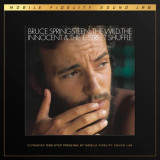
Released only eight months after his exhilarating debut, Bruce Springsteen's The Wild, the Innocent & the E Street Shuffle contains rousing dispatches from the boardwalk, the street, the beach, and the bedroom. It explodes with energy, dares to dream, teases with humour, crackles with tragedy, clings to hope, and overflows with discovery, youthfulness, and personality. It features an unforgettable cast of characters — corner boys, teenage hustlers, doomed lovers, jazz men, junk men, factory girls, fortune tellers, alley cats, pimps, escorts, and more — illuminated by vivid colour, breathtaking detail, and poetic action.
Musically, the heartfelt 1973 record is inhabited by sympathetic vignettes and cinematic arrangements steeped in rock 'n' roll, soul, jazz, and R&B. It finds the New Jersey native looking beyond the parameters of his preceding record and seeking to move on from environments he knows well (and chronicles here) by rushing headlong toward unknown territories, adventures, and people. Underpinned by the singer-guitarist's ambitious poetic enterprise and will to succeed, The Wild, the Innocent & the E Street Shuffle is the album on which Springsteen becomes the Boss.
Mastered on Mobile Fidelity's renowned mastering system, pressed at RTI on MoFi SuperVinyl, and strictly limited to 7,500 numbered copies, Mobile Fidelity's UltraDisc One-Step 180g 33RPM LP set is the definitive-sounding version of Springsteen's sophomore record. Benefitting from SuperVinyl’s nearly non-existent noise floor, superb groove definition, and dead-quiet surfaces, The Wild, the Innocent & the E Street Shuffle plays with a clarity, energy, presence, and openness that complement the expressiveness, dynamics, and scope of the seven restless songs that comprise a work Rolling Stone ranked the 345th Greatest Album of All Time.
Beyond the audiophile sonics that practically place you behind the console at 914 Sound Studios — listen to the separation between the instruments, natural decay of the notes, interplay within the widescreen soundstaging, and nothing-to-lose youthfulness of Springsteen’s voice — this reissue takes seriously this record’s influential merit by presenting it in packaging that underlines its status. Tucked in a beautiful slipcase, the LP is housed in a special foil-stamped jacket with faithful-to-the-original graphics. This reissue is made for listeners who prize sound quality and who want to engage themselves in everything involved with the invigorating set that busted Springsteen loose from the club circuit and landed him on the radio
Determined to liberate anyone within earshot and unafraid to come on strong, The Wild, the Innocent & the E Street Shuffle serves as the debut of the E Street Band — not only heard but seen for the first time by most of the public courtesy of the back-cover photograph. This is where saxophonist Clarence Clemons, organist-accordionist Danny Federici, and pianist David Sancious step out of the shadows — and drummer Vini Lopez and bassist Garry Tallent again stoke a fiery rhythmic engine that helps drive the untamed, reimagined big-band swing of “Kitty’s Back,” breathless R&B thrust of “Rosalita (Come Out Tonight),” and carefree dance steps of the funky “The E Street Shuffle.”
Of course, the main attraction remains a then-24-year-old visionary on the precipice of becoming a sensation and turning a then-bloated rock scene on its head. Recorded over three months while Springsteen and company were busy touring his debut LP, The Wild, the Innocent & the E Street Shuffle reflects the high-octane approach the vocalist embraced onstage and drifts away from the label-dictated acoustic-based frameworks of his debut. The set also witnesses Springsteen deepening his observational skills, with narratives such as the romantically tinged “4th of July, Asbury Park (Sandy)” and redemptive epic “Incident on 57th Street” mirroring changes taking place in the singer’s own life, small towns, and America at large.
A thrilling collision of memories, reflections, and composites — Sandy, Rosalita, and the latter’s parents are all based on actual people Springsteen knew, as is the community depicted in the opening track — the aptly titled The Wild, the Innocent & the E Street Shuffle resonates decades on due to its truths, authenticity, and spirit. Those characteristics — as well as the fact that many of its lengthy songs come on as the equivalent of sweaty, feverish soul revue that won’t stop until you’ve been exhausted — also explain how this now-iconic album triumphed over the reservations of industry “experts” that both demanded Springsteen re-record it and instructed deejays not to play it.
Yet there’d be no stopping a record that saw the past, present, and future, a band whose will would not be denied, and a phenomenon who was born to run. A never-ending invitation to act real cool and stay up all night, The Wild, the Innocent & the E Street Shuffle always feels alright.
Clear/Black Smoke Vinyl[38,87 €]
Svart Records are proud to release the long-awaited full length album "SÁLA" by Kati Rán in May 2024
If the most profound treasures are often the most deeply buried, the journey to uncover them is vital process of discovery. Five years after the 15-minute single “Blodbylgje” signaled the birth of a new, more primordial, and immersive vision after the dissolution of her band L.E.A.F., Nordic dark folk artist Kati Rán has expanded on its oceanic theme for her long-awaited full-length album, “SÁLA”. Embarking on a far-reaching musical and personal travelogue, it’s a reawakening of both the feminine narratives submerged and fragmented within Norse mythology, and the enduring, healing powers held within.
Named after the Old Norse word for ‘soul’ and ‘sea’, “SÁLA” is an act of ‘soul retrieval’, the shamanic art of trauma recovery, be it illness, death, heartbreak or loss, and the reintegration of a splintered self. Across its 13, wide-ranging, elegantly unfolding tracks, the album is an embodiment of different feminine voices and perspectives – from the Norse nine daughters of the sea, or ‘billow maidens’, through various historical and fictional figures to the late-night voices we hear in our most liminal states – all with tales to tell, riddles to solve, challenges to be accepted and guidance to offer. It’s a multiplicity that, like the ocean itself, belongs to a vast, restless dynamic: a matrix of mysteries, unfathomable depths and ever-shifting currents, accumulating into an elemental, regenerative source of power.
Recorded in a barn in Húsafell, Iceland – home to glacier ice caves and a rare lava stone marimba rediscovered for the track “Stone Pillars” – as well as Finland, Norway and at home in Kati’s native Netherlands, “SÁLA” is as much chronicle of Kati’s own perspective-shifting recording process as it as a pilgrimage through different viewpoints and internal states. That itinerate urge is also reflected in the use of different languages, ranging across Norwegian, Old Norse, Icelandic, and, for the first time, English, her combination of ancient texts, historical reimagining’s and unguarded personal reflection backed up by deep research into the most resonant recesses of Nordic lore.
Spun throughout every thread of “SÁLA” is a sense of communion - with the power of stories to offer moral guidance and the thrill of the unknown; with the element of water, recreated across the album both in field recordings and the agelessly organic nature of the music itself; with the archetypes whose qualities we are called upon to embody at our most critical moments; and with the internal hidden realms forever whispering at us from the far edges of our consciousness.
Appropriately, it’s a collaborative venture too. As well as working closely together with Finnish producer Jaani Peuhu, there are contributions from across the musical spectrum, including extreme metal vocalist extraordinaire Gaahl, the Icelandic female choir Umbra Ensemble, renowned Norwegian jazz musician Karl Seglem, Björk and Brian Eno contrabassist Borgar Magnason, members of pagan folk acts Völuspá, Gealdýr, Heilung and Theodor Bastard and even Napalm Death’s Mitch Harris on vocals.
For all the many sources “SÁLA” draws from, the result is a singular, intimately transformative rite of passage, and a retuning of the heart to the reverent continuity of the sacred. It will take you from the opening title track’s chest-pounding rhythmic pulse emerging from a traditional Norwegian bukkehorn (recorded by Karl Seglem), a galloping horse-rider and Kati’s glacial, velveteen chant, through “Kólga’s” recounting of female persecution through the ages borne on the most gossamer-light yet unbreakable of timbres and “Stone Pillar’s” gently percolating, deep wells of abandonment and incantations to recovery. “SÁLA” closes with the track “Sátta” - Old Norse for ‘peace’ and ‘reconciliation’ – ending the album as it began with the bukkehorn, as it weaves rich drones and experience-stamped poems and prayers, Kati’s vocals the most sensitively tuned of emotional barometers. An album made in dedication, and in thrall to, its own sense of destiny, “SÁLA” is, as all quests must ultimately be, a homecoming.
Album introduction written by Jonathan Selzer.
Black Vinyl[34,87 €]
Svart Records are proud to release the long-awaited full length album "SÁLA" by Kati Rán in May 2024
If the most profound treasures are often the most deeply buried, the journey to uncover them is vital process of discovery. Five years after the 15-minute single “Blodbylgje” signaled the birth of a new, more primordial, and immersive vision after the dissolution of her band L.E.A.F., Nordic dark folk artist Kati Rán has expanded on its oceanic theme for her long-awaited full-length album, “SÁLA”. Embarking on a far-reaching musical and personal travelogue, it’s a reawakening of both the feminine narratives submerged and fragmented within Norse mythology, and the enduring, healing powers held within.
Named after the Old Norse word for ‘soul’ and ‘sea’, “SÁLA” is an act of ‘soul retrieval’, the shamanic art of trauma recovery, be it illness, death, heartbreak or loss, and the reintegration of a splintered self. Across its 13, wide-ranging, elegantly unfolding tracks, the album is an embodiment of different feminine voices and perspectives – from the Norse nine daughters of the sea, or ‘billow maidens’, through various historical and fictional figures to the late-night voices we hear in our most liminal states – all with tales to tell, riddles to solve, challenges to be accepted and guidance to offer. It’s a multiplicity that, like the ocean itself, belongs to a vast, restless dynamic: a matrix of mysteries, unfathomable depths and ever-shifting currents, accumulating into an elemental, regenerative source of power.
Recorded in a barn in Húsafell, Iceland – home to glacier ice caves and a rare lava stone marimba rediscovered for the track “Stone Pillars” – as well as Finland, Norway and at home in Kati’s native Netherlands, “SÁLA” is as much chronicle of Kati’s own perspective-shifting recording process as it as a pilgrimage through different viewpoints and internal states. That itinerate urge is also reflected in the use of different languages, ranging across Norwegian, Old Norse, Icelandic, and, for the first time, English, her combination of ancient texts, historical reimagining’s and unguarded personal reflection backed up by deep research into the most resonant recesses of Nordic lore.
Spun throughout every thread of “SÁLA” is a sense of communion - with the power of stories to offer moral guidance and the thrill of the unknown; with the element of water, recreated across the album both in field recordings and the agelessly organic nature of the music itself; with the archetypes whose qualities we are called upon to embody at our most critical moments; and with the internal hidden realms forever whispering at us from the far edges of our consciousness.
Appropriately, it’s a collaborative venture too. As well as working closely together with Finnish producer Jaani Peuhu, there are contributions from across the musical spectrum, including extreme metal vocalist extraordinaire Gaahl, the Icelandic female choir Umbra Ensemble, renowned Norwegian jazz musician Karl Seglem, Björk and Brian Eno contrabassist Borgar Magnason, members of pagan folk acts Völuspá, Gealdýr, Heilung and Theodor Bastard and even Napalm Death’s Mitch Harris on vocals.
For all the many sources “SÁLA” draws from, the result is a singular, intimately transformative rite of passage, and a retuning of the heart to the reverent continuity of the sacred. It will take you from the opening title track’s chest-pounding rhythmic pulse emerging from a traditional Norwegian bukkehorn (recorded by Karl Seglem), a galloping horse-rider and Kati’s glacial, velveteen chant, through “Kólga’s” recounting of female persecution through the ages borne on the most gossamer-light yet unbreakable of timbres and “Stone Pillar’s” gently percolating, deep wells of abandonment and incantations to recovery. “SÁLA” closes with the track “Sátta” - Old Norse for ‘peace’ and ‘reconciliation’ – ending the album as it began with the bukkehorn, as it weaves rich drones and experience-stamped poems and prayers, Kati’s vocals the most sensitively tuned of emotional barometers. An album made in dedication, and in thrall to, its own sense of destiny, “SÁLA” is, as all quests must ultimately be, a homecoming.
Album introduction written by Jonathan Selzer.
Mr Lee Perry who in no uncertain terms defines the words musical genius, recorded some of the most inspiring, soulful, funny and weird / wild reggae music ever put down on tape. Working through all the manifestations of reggae from Ska to Roots and Dub, where his ground breaking 1973 ‘Blackboard Jungle’ LP, set the standards, he was an innovator. If this was not enough his recordings of THE WAILERS, many believe to be their finest work. Born Rainford Hugh Perry, 28 March 1936, Hanover, Jamaica. He began his career at the grand age of 16, working for Clement ‘Coxone’ Dodd’s sound system, rising quickly to the position of record scout and organising recording sessions during his 3 year period 1963-1966. Restlessness and unsatisfied with credit he felt due to him he moved on to work with Producers J.J. Johnson and Clancy Eccles, the later of which would help him set up his ‘Upsetter’ label in 1968,which would see his first of many recordings telling the injustices done to him by previous employees. ‘The Upsetter’ track itself pointed at Mr Dodd but reflected back to Perry when he inherited it as a nick name along side many others during the coarse of his career, including ‘Scratch’, again taken from one of his recordings ‘Chicken Scratch’ recorded in 1965/1966. Perry’s work in 1968 with producer Joe Gibbs was fruitful and resulted in many successfulreleases, but again lack of credit and itchy feet, it was time to move on. But not without leaving his trademark recording summing up his feelings at the time ‘People Funny Boy’ this time aimed at Mr Gibbs. Still not having a studio of his own, Perry recorded at the various Kingston establishments of the time, Randy’s Studio 17 on North Parade, Dynamics on Bell Road and Harry J’s on Roosevelt Avenue where the bulk of the aforementioned recordings with The Wailers were carried out. During this time and the years that followed Perry has built up a vast catalogue of backing tracks / instrumentals, he had cut over a 100 releases on his ‘Upsetter’ label alone. A library of music that he has an uncanny knack of reutilising to work into something new when put against a new song / singer. This collection of rare and unreleased dubs stems from his 1971-1974 period. We can here on tracks like ‘Perry’s Jump Up’ Ska-ish up tempo chopping guitar cuts leading through to organ laden tracks like ‘Roots Rock Dub’. The sound moving to a slowed down rhythm on ‘Perry in Dub’ which would predominate his sound, when in mid 1974 he’d open his own studio at his home in the Washington Gardens district of Kingston. We hope this selection of lost treasures will add to the jigsaw that makes Mr Perry’s output now spanning over 5 decades so remarkable.
RESPECT.... JAH FLOYD.
EP compilation of essential UK house cuts recorded between 1987 - 1990. TIP!
Before British house and techno found its’ distinctive groove at the turn of the 1990s, one act led the way: Bang The Party, a trio who emerged from London’s vibrant underground party scene in the mid 1980s and proved, beyond any doubt, that UK producers could make music every bit as magical as the pioneering productions put forward by their counterparts in Chicago, Detroit and New York.
By the time long-running DJs and party promoters Kid Batchelor and Leslie Lawrence joined forces with trained engineer Keith Franklin at legendary North-West London reggae studio Addis Ababa in 1987, they’d spent years as DIY dance music activists in Britain’s capital city. They channelled these experiences and their love of imported house and techno sounds into a new project, Bang The Party, in the process becoming the first British act to appear on Transmat, a reflection of the quality and authenticity of their music.
The latest Rush Hour Reissue Series release offers a snapshot of some of the numerous gems nestled in the Bang The Party catalogue, delivering a much-deserved celebration of one of Britain’s most significant early acid house collectives. It features four fully remastered cuts recorded and released between 1987 and 1990 – on-point and far-sighted club workouts that sound as fresh and timeless now as they did when Britain was sweltering under its infamous ‘second summer of love’.
Fittingly, the EP begins with ‘I Feel Good All Over’, the group’s ground-breaking debut single. Dedicated to their home city and one of the earliest UK interpretations of house music, the track exists in the grey area between Chicago house and New York ‘garage house’ – all jaunty organ stabs, jacking Windy City beats, restless bass and soulful vocalizations. ‘Jacques Theme’, which follows, originally nestled on the B-side of that single release. An early, acid-flecked expression of hip-house with a British twist, breakdance-friendly bongo patterns and a dose of Larry Heard-inspired deep house dreaminess, the track remains an under-appreciated classic whose rap verses reflect the popularity of hip-hop in London at the time.
1988’s ‘Release Your Body’, Bang The Party’s most celebrated early release, was reissued in the United States by Transmat, reflecting the strong working relationship between Derrick May and Kool Kat Records’ Neil Rushton. A hypnotising affair propelled forwards by sweat-soaked drum machine beats, jacking fills and an addictive bassline, the track offers another near perfect distillation of the band’s Black American musical influences while delivering something genuinely new and fresh.
Rounding off the EP is a choice cut from Bang The Party’s sought after 1990 album Back To Prison. Doused in the star-lit synth sounds of the Motor City with jaunty organ stabs inspired by the kind of New Jersey jams championed at East Orange institution Club Zanzibar, ‘Let It Rip’ is a superb slice of deep house soul featuring a lead vocal every bit as emotive as anything laid down by Robert Owens. Like the rest of Bang The Party’s output, it has stood the time better than anything laid down by their London contemporaries.
Limited Edition of 3,000 on Opaque Blue vinyl. - Includes 4 Bonus Tracks from the "Commitment" sessions. - Includes 12 Page Booklet with Liner Notes by Critically Acclaimed Writer, Michael Krugman. // Bobby Darin was, by any definition, a superstar - a chart-topping, multimillion-selling, Grammy Award-winning singer-songwriter, a Golden Globe-winning actor, visionary entrepreneur, and committed political activist. Restless and daring, his refusal to be constrained by genre, resulting in an endless string of top 10 hits, including "Splish Splash," "Queen of the Hop," "Dream Lover," "Beyond the Sea," and "If I Were a Carpenter." While his public persona was all bright lights and glamour, Darin was driven and inspired by the generational shifts and social upheaval of the 1960s. Despite his weakened health, Darin devoted nearly all of his free time towards multiple causes, tirelessly campaigning for his friend Robert F. Kennedy until his assassination in June 1968, after which Darin withdrew from the spotlight and embarked on an unlikely personal journey. He swapped his crooner's tuxedo for folk singer denim, his toupee for an outlaw mustache, a Beverly Hills mansion for a secluded trailer at Pfeiffer Beach in Big Sur. Commitment is grittier and more audacious than Darin's previous work. From the counterculture anthem "Me and My Hohner" (with its ironic reference to "The Star-Spangled Banner") and the soul-searching "Sausalito" to the wryly autobiographical "Distractions (Part 1)" and the tense funk of "Light Blue," the album's experimentation and free-wheeling songcraft affirm Darin as a generational talent uniquely capable of crossing the borders of age and politics.
"Fast Rate" blends echoes of nostalgia with futuristic innovation, crafting a sonic landscape. In the relentless rush of life's high-speed journey, it invites introspection, courageously urging listeners to delve into the intricate web of contemporary life.
This EP is inspired by deep reflections on the meaning of life in a fast-paced world filled with thoughts and emotions. It symbolizes a futuristic journey, mirroring the human struggle to gain an external perspective in our busy lives. Random Alias prompts users to contemplate their existence, offering a musical experience that transcends mere dance rhythms.
The 5 tracker showcases a wide array of sounds, from aggressive tones to captivating and atmospheric elements unveiling a new face of the label that keeps exploring the interconnection between human and technology.
The A side roars with high bpm and furious rhythms."Keep me high" express the need of escaping ordinary life, seeking something that keeps us "high" and allows to escape and reset.
Following up "Fast Rate" spans a variety of influences, blending the allure of old-school Detroit electro with futuristic sounds achieved through bold experimentation and advanced wave modeling. This fusion results in a diverse and innovative sonic aesthetic, ranging from nostalgic '80s/'90s vibes to experimental dimensions where tones morph and evolve.
"Solo in Space" and "Restless" on the filp side deliver direct, pulsating sounds and rhythms, embracing an impactful electro-techno vision. These tracks merge both worlds, combining the energy and drive of electro with the power and tension typical of techno, resulting in a sonic journey that blurs genre boundaries.
Completing the collection is a digital bonus track, "Galactic Power," which serves as a soulful embodiment of the EP's essence. With its otherworldly alien-style pitched vocals,The track intricately crafts a cosmic palette of bright pulses and ethereal FM synthesis.
This release represents a bold and progressive vision of electro, confirming and solidifying the eclectic direction and the concept of inter genre flexibility. Music can be an ever-evolving form of art, blending elements that transport listeners to distant cosmic realms.
Time shapes people, people shape technology, technology shapes music, music shapes time.
This third release from Rubi Records sees Ashley Tindall—aka Skeptical—stepping out of his usual drum and bass territory and slowing things down with three seriously deep dub-infused bass tracks in the 140-150bpm realm. While not the first time Skeptical has dipped his toes in such waters, these are easily among the finest, most musically mature examples to date. For those drum & bass fans out there unsure about Skeptical branching out into other genres, this EP shows that an open mind and listening without prejudice will reward your ears.
First up is the utterly dub-soaked 75/150bpm track 'Tell Me'. This solid stoner groove takes clear elements of Skeptical's more dub-orientated D&B and adds mesmeric pads and soulful vocal hooks, making it one of the deepest head-nodders in his overall catalogue. This is more a refined track for the 'listener' than for the dance floor, and while you can still easily throw some shapes to it, it's great to just immerse yourself in as a purely audio experience.
Next is the 140bpm 'Tapestry', which is somewhat the darker twin of 'Tell Me'. Again, we have a slow dub-infused head-nodder, but this time more menacing in tone thanks to the finely-judged use of some moody sound modules that Skeptical has tweaked and twisted in his inimitable fashion. This one's the audio equivalent of a restless mind in the depth of night.
The final offering is another 140bpm track – the unsettling beast 'Atomic v1'. It begins with a slow-burn build up of an off-kilter metronomic beat, subtly growling bass and haunting strings. This, in turn, gives way to a distorted rendering of Oppenheimer's famous use of 'Now I am become death, the destroyer of worlds' from the Bhagavad Gita, before becoming a sinister slow-motion dubstep rumbler. With its dragging beat and the purposefully off-point main sonic hook running over the top, this is a disorientating and unsettling weapon for the discerning DJ.
This EP continues the fresh direction of Rubi Records, showcasing exceptional, forward-thinking music without borders.
Support: Ben UFO, Joy Orbison, Gilles Pererson, dBridge, Break, DLR, Doc Scott, Mefjus, Kasra, Kings of the Rollers, Alix Perez, Jubei, Dub Phizix, Flight, Tasha, Loxy, Randall, Lens.
Radio Support: BBC Radio 6 Music, Rinse FM, Kool FM
Heavy-traction bodyjack and sun-streaked disco straight out the Mediterranean belt, here comes Italian producer Giuseppe Scarano with the bouncy next instalment of Fluid Funk, 'My Life' EP. True to his solar-powered take on the classic US house sound, the owner of the Nice People outlet beckons us onto the path of luscious summer lounging with a quartet of no-nonsense dance floor rippers, lithely alternating sequences of hi-intensity shuffle, Roule-style dynamics and further space age-infused drifts across the scintillating vaults of glam disco. Jacuzzi-warm funk and coastal luxuriance all the way.
Drawing first blood, 'My Life My Love' is a proper fiery blast-off, flush with Scarano's continental breakfast of roaring Chicago drums, spinning synth motifs, processed brass and balearic-like ambience. Churning it like there's no tomorrow. 'Gedda Feelin' continues on a slightly more jagged note and true-school discoid vibe. Propelled by a springy drum work, mesmeric vocal loops and soulful Rhodes chords, it's a restless jacking house number that unfurls, bold and pumped-up at full stretch. On 'Playin da Song', Scarano blends in a fine match of Afro-funk, retro-laced electronica and filtered house chug, whereas the closing cut '2404' opts for a finely integrated mish-mash of piano-fuelled nostalgia, heavy-lidded bop phrases and low-slung boogie, ready to take on any smokey lounge and beachside party with its sluggish punch and exquisite suavity.
The follow-up to his acclaimed Constellation debut Third Album released in lockdown spring 2020, Markus Floats returns with Fourth Album, pushing the Montréal-based artist's distinct abstract electronic compositions into newly evocative terrain (while preserving his record-titling literalism). Faced with another couple of years spent unexpectedly, though not unfamiliarly, secluded and studio-bound, working on both paintings and music, Floats emerged by the end of 2022 with a set of tracks "about 60% finished" and a determined desire to throw off the shackles of distancing and isolation. "I had always thought about Markus Floats as a solo project but I am wrong about that. Fourth Album is about asking for help, inviting in, and making a home. It's about trust, exploration, and the effort of letting go."Sharing his in-progress recordings with a trio of close friends and collaborators from the powerhouse free music ensemble Egyptian Cotton Arkestra, each of these players then spent a day improvising to the tracks at Montréal's Hotel2Tango studio. With violin by Ari Swan, saxophone and mbira by James Goddard, and guitar and drums by Lucas Huang, Floats stitched their extemporized instruments back into his compositional process. The result is a fluid, lustrous, dynamic expansion of his sound and structure that continues to strike the ineffable balance of abstraction and soulfulness rightly highlighted and celebrated in the critical response to Third Album. Fourth Album sustains much of that previous work's enchanting equanimity, while inviting a bit more restlessness, accident and grit, with the incorporation of acoustic instruments and improvisation melding Floats' own background in Electroacoustic Studies and Jazz Performance more than ever before.Signature avant-electronic explorations of arpeggiated and timbral transformation, subtle shifts in harmonic consonance and dissonance, and a through-composed praxis that draws coterminously upon free jazz, musique concrète and modern Minimalism, all continue to shape Fourth Album to great effect. But an additional palette of sonic and gestural raw material is now also decidedly "out-of-the-box", charting a wider range of gestures, textures and temporalities. Fourth Album complexifies and intensifies across its 12 tracks, thematizing dualities and introducing new elements of play and accident, even a sort of looseness here and there, as it conjures communal expressivity within shorter, still scrupulous formal structures. Fourth Album also for the first time includes spoken word as a recorded element, previously only (and always) a feature of Markus Floats live performances. The album's final track samples the poet and activist Fred Moten, closing with these words: "What we've been trying to figure out how to get to is how we are when we get together to try to figure it out." This koan of socially-engaged process and creation/advancement of meaning through praxis and immanence reflects the unique fusion of intangible materiality and affective sensibility at work in Markus Floats music, unfolding in new depths and currents with Fourth Album.
- 1: We Said
- 2: Different Rings
- 3: Unbeknownst
- 4: Predestined Confessions
- 5: How Prophetic
- 6: A Caged Dance
- 7: I Have Long Been Fascinated
- 8: Enthralled Not By Her Curious Blend
- 9: No Way Chastened
- 10: But I Never Heard A Sound So Long
- 11: The Promise
- 12: Shake My Bones
- 13: A(Way) Is Not An Option
- 14: For They Do Not Know
- 15: Others Each
- 16: Ain't I...your Mystery Is Our History
Celebrated composer, performer, saxophonist, soloist, band leader, educator, activist, and mixed-media artist Matana Roberts returns with a new installment of their acclaimed Coin Coin series. For over a decade, Coin Coin has been the central artistic project for Roberts, a remarkable exploration of American ancestry and the nature of memory through "sound quilting": modern composition that draws on a wide range of musical sources and traditions, along with research-driven historical and genealogical narratives that yield prose and poetry both spoken and sung, field recordings, and graphic scores. The Quietus declares "when the 12-album cycle is complete, it will be regarded as a singular masterpiece of 21st century sonic and narrative art" and Pitchfork calls it "one of the most provocative ongoing bodies of work by any American musician." Coin Coin Chapter Five: In the garden... is the first new recorded audio chapter since 2019 and centers upon reproductive rights, summoning the story of a family ancestor who died in early adulthood, from a cause kept obfuscated and hushed, shrouded in disinformation and shame. Roberts reimagines diaristic and oral narratives, delivered in strident streams of spoken word that punctuate the hour-long work, with recurring musical themes frequently accompanied by the declarative refrain "my name is your name / our name is their name / we are named / we remember / they forget." As Roberts writes in the accompanying liner notes essay: I find it absolutely disgusting that the same trauma my grand ancestor, whose story we are telling in this chapter, is closely mirroring the experiences of some poor soul today as I write this... Our aforementioned grand, who perished at a young age, leaving her growing children motherless, did not have to die. The negative consequences of her death have reverberated down through generations in my family line, in the same way that a similar resounding might happen for someone else's ancestral line generations from today. While often jazz-adjacent, and with Matana's inimitable saxophone and indomitable voice at the core, Roberts situates Coin Coin outside the Jazz genre and within heterodox pathways of post-modern composition, electroacoustic music, sound collage, experimental voice, and sound art. In the garden... undeniably continues to express and expand upon the project's magnificent iconoclasm, nonetheless being the most jazz-inflected chapter since Coin Coin Chapter Two: Mississippi Moonchile(2013). Recorded in Brooklyn with a stellar acoustic ensemble that includes Stuart Bogie, Gitanjali Jain, Darius Jones, Matt Lavelle, Mike Pride, Ryan Sawyer, Corey Smythe, and Mazz Swift, abetted by some sparkling pieces featuring modular synthesis courtesy of album producer Kyp Malone (Bent Arcana, TV On The Radio), In the garden... traverses a vivid stylistic array of thematic overtures, excursions and set pieces, ranging from spacious textural invocations to gorgeously tempered horn-led compositions to driving free jazz and exhilarating through composed bursts of cacophony. With storytelling spoken-word lead vocals by Roberts channeled recurringly throughout, alongside various other deployments of layered and group voices, the album is alternately a meditation and fever dream of narrative potency. This is some of the most intense and intensive music Roberts has composed and captured to date, richly conceived and deeply felt, restless yet focused, unflinchingly substantive and unique. Coin Coin Chapter Five: In the garden... channels epigenetic trauma and tragedy with teeming complexity and fierce beauty _ a eulogy, testimony, and celebration, melding music and language in a stunning polychromatic flow of vernaculars and poetics. A powerful work of subjective commemoration and historical-cultural communion that speaks indelibly to the present moment.
2x10” in 350 gsm widespine jacket w/interior colour flood + 300 gsm printed inners + 20”x 10” fold-out insert + DL card
In the digital age, words are no longer just symbols of communication, but a powerful tool that gives rise to meaningful interconnections between different universes.
Words have the power to transcend time and space, connecting two souls destined to meet.
Il Significato delle Parole (the meaning of words) is Adiel's new effort on her DanzaTribale, a crossover of two minds, generated together with musician Flavio Accorinti: techno sounds like the restless soul that pervades our days, deconstructed atmospheres like shattered generational dreams. The fusion of two cosmic currents, two ways of thinking and creating, characterized by an immanent power, pushing us to imagine new urban primitivism. Two creative processes, transcending individual boundaries to connect into a single overarching vision, to explore new forms of art and storytelling.
The EP, mixed by Donato Dozzy and mastered at Rome's Enisslab Studio by Giuseppe Tillieci, starts with Nulla Resta, a defragmented, dreamlike, ascending climax markedly cyberpunk: dense with references to 90s Progressive Dream, Nulla Resta, with its dulcet melodies, transports us to an artificial reality, a spiritual reality albeit dominated by technology. A reality suspended between fantasy and materialism.
Suspended, like the second track (Sospesa): dark trip-hop's echoes adorned by the voice of Jordie Devlin Mcmorrow. "Shadows on the walls orchestrate our downfall." Dystopian futures intertwine with mysteriously dreamy pasts in a fatal spiral of redemption.
But words remain the catalysing element of this EP.
Parole(words) represents a communicative rare faction that embraces tribes near and far. Black drums echo in the distance in an intimate ballad, in an epic ride, in an ethereal metaphysical journey to the dissolution of the boundary between time and space, between memory and perception.
Notturna, on the other hand, is the epilogue we all deserve; a solemn twilight, a lysergic, dragging escape from the objectivity of the real world.
The images of life do not simply exist in a vacuum. They are defined by the energy that surrounds them, and it is the explanation behind each of these words that we must find if weare to truly understand them. Thanks to the meaning of words, sooner or later, we will be all united again.
“Are we having fun yet? Living in the grey zone”? The Toads ask the question and already know the answer. There’s many a wry smile, often packed with gallows humour, shared on the Melbourne groups’ debut album “In the Wilderness” (out June 9th on Anti Fade and Upset The Rhythm). Navigating the dross of modern life, whilst keeping one foot in a dream is the key to their nervy post-punk scuffle. Featuring members of The Shifters, The Living Eyes and Parsnip you’d be forgiven for guessing what The Toads sound like, but their mordant step and minor-key enchantment makes for an intriguing parry.
The Toads hatched after a short period of domestic readjustment mid-2021. Billy Gardner (guitar) found himself in need of a roof after his home was consumed by fire, and was kindly hosted by friend Stella Rennex (bass). Elsie Retter (drums) was a regular visitor to the house and after seeing Miles Jansen (vocals) tear it up with his other band at the local bowls club, they invited him along to sprinkle his deadpan musings across their fledgling sound. Pretty quickly they hit on their direction; a savvy, snappy lo-fi pop as openhearted as it is brooding.
After playing some formative shows, including a debut at Jerkfest in 2022, The Toads set about recording five songs mid-year for a tentative EP. Realising the songs were too long to fit on a 7”, they booked in another recording session the following September to extend the EP to 12”. Two tracks’ chords structures were fleshed out with new melodies and arrangements, and by this point The Toads were surprised to find they had an album’s worth of material. ‘In The Wilderness’ is a beguiling record, full of twists and turns. It’s arch, resilient, thoughtful and straight-at-your-head catchy to boot.
It’s fitting that the title track “In The Wilderness” draws this record to a close, being the peak of their invention so far. Drums pound and tumbling bass-lines sprint among the crisply stabbing guitar phrases and soaring horns outro. It’s a survivalist epic of hard-worn wisdom, ambling and restless. “I open up the door trying to get all of us through” sings Miles, becoming progressively more dizzy and despondent. There is a sense of toughing it out that never falters though and this is the essence of what The Toads do best. They push onwards into the darkness and keep their appetite, pulling us all into the light.
Today sees Belgian-Caribbean provocateur Charlotte Adigéry and her long-term musical partner, Bolis Pupul announce their debut album Topical Dancer, due for release on March 4 2022 via Soulwax’s iconic label DEEWEE.
Cultural appropriation. Misogyny and racism. Social media vanity. Post-colonialism and political correctness. These are not talking points that you’d ordinarily hear on the dancefloor but Charlotte Adigéry and Bolis Pupul are ripping up the rulebook with their debut album Topical Dancer. The Ghent-based duo, who broke out with their 2019 Zandoli EP, are rare storytellers in electronic music: they take the temperature of the time and funnel them into their playful synth concoctions – never didactic and always with a knowing wink.
Their debut studio record – which cements them as a duo under both their names for the first time and is co-written and co-produced by Soulwax – is both a triumph of kaleidoscopic electro-pop and “a snapshot of how we think about pop culture in the 2020s.” It captures Charlotte and Bolis’s essence as musical collaborators and the conversations they’ve had over the past two years on tour, as well as their perspectives as Belgians with an immigrant background, Charlotte with Guadeloupean and French-Martinique ancestry and Bolis being of Chinese descent.
Beyond the album’s thematic heft, Topical Dancer reflects Charlotte and Bolis’s idiosyncratic sound: it’s thoughtful but it bangs. Their take on familiar genres is always off-kilter; songs sound undone or a little wonky; but these are nocturnal heaters to make the club throb. “We like to fuck things up a bit,” laughs Bolis. “We cringe when we feel like we're making something that already exists, so we're always looking for things to combine to make it sound not like a pop song, not like an R&B song, not a techno song. We’re always putting different worlds together. Charlotte and I get bored when things get too predictable.”
Topical Dancer is fizzing with ideas – there’s certainly no filler among its 13 tracks. But above all, perhaps, it has a restlessness, a desire not to be boxed in and to escape others’ narrow perceptions of who they are. It’s summarised by the refrain of their new single, ‘Blenda’: “Don’t sound like what I look like / Don’t look like what I sound like.” “One thing that always comes up,” says Bolis, “is that people perceive me as the producer, and Charlotte as just a singer. Or that being a Black artist means you should be making ‘urban’ music. Those kinds of boxes don’t feel good to us.”
‘Blenda’ in particular references how “I am a product of colonialism,” says Charlotte, “and I feel guilty for taking up space in a white country.” The song was inspired in part by Reni Eddo-Lodge’s book Why I’m Not Longer Talking To White People About Race. “It talks about the colonial past and post-colonial present in the UK,” Charlotte continues, “but that isn’t merely a British or American problem, Belgium is part of that as well.” She says that her home country is likewise “oblivious to a big part of its history” which “results in general ignorance and a lack of understanding and empathy towards Belgian inhabitants of immigrant descent.”
On Topical Dancer, it’s less about finger pointing or being dogmatic about all the things they speak about. It’s about emancipation through humour. “I don’t want to feel this heaviness on me,” says Charlotte. “These aren’t my crosses to bear. Topical Dancer is my way of freeing myself of these issues. And of having fun.”
Mark Hawkins readies ‘Venn Diagram’ album for Aus Music this May.
Mark Hawkins’ early releases on labels such as Djax Up Beats and Ugly Funk lit flares in the world of
underground techno, with a sense of humour and tougher-than-thou sonic palette enforced via his jacking live
sets. Across the following decades, Mark has delivered razor sharp cuts that encompass pretty much
anything that has an electronic heart - leaving his own unique trail for others to follow via his work for labels
as diverse as Dixon Avenue Basement Jams, Sonic Mind, Mistress Recordings, Houndstooth and Aus.
With his latest album, it feels like Mark has pushed ahead with a change of direction he started with 2021’s
‘The New Normal’. ‘Venn Diagram’ carries on this journey into uncharted lands; molten, distorted drum
assaults weave around glistening melodies, kitchen sink soul glides below fractured sound pools. Opener
‘Verblex Oscillos’ immediately demands your attention grabbing, with a so-happy-it’s-sad melody spiralling
around a cascade of tough-as-fuck dance floor destroying beats, along with ‘Isolated’s urgent combination of
strings, acid and chicago-tough electro beats.
Other cuts on the album share a similar approach, ‘Maladayfun Friction’s restless energy derives from a fusion
of skittering drums and deranged synths and ‘Still Have Time’s dreamy super saw pads and plaintive vocal
espouse a kind of wasted elegance, roaming the city nightlife in a Gucci dress and Doc Martin boots.
‘Nlasckhdsjk’ and ‘Frederikalstublieft’ propel forward with such a sleek and effervescent aesthetic, recalling
fast drives along picturesque European highways or heady take-offs to unknown urban territories. The
aesthetic becomes more elegant on the album’s centrepoint tracks ‘Rebula Conundrum’ and ‘Nlasckhdsjk’,
where optimistic bleeps, bass and 707 drums underpin jazzy chords and soaring leads.
Other tracks show the arc of Mark’s direction of travel, with soulful vocals that share a well of deep-rooted
optimism that was so evident on his breakthrough 2016 Social Housing album. ‘L.O.V.E.’ breaks into
post-Sophie territory with a catchy modulated vocal joyfully two-stepping across to the nightclub bar and
‘How Do I Know’ providing a heart rending torch song for 6am kicking-out-time refugees to help them find
their way back home.
- A1: Logic System - Unit
- A2: Kraftwerk - Computerwelt (2009 Remastered
- B1: Whodini - Magic's Wand
- B2: Rocker's Revenger - Walking On Sunshine (Feat Donnie Calvin
- C1: Klein & Mbo - Dirty Talk (European Connection
- D1: Liaisons Dangereuses - Los Niños Del Parque
- D2: Yello - Bostich
- E1: The The - Giant
- F1: The Residents - Kaw-Liga
- G1: Clan Of Xymox - Stranger
- G2: A Split - Second - Flesh
- H1: Severed Heads - Dead Eyes Opened
- H2: The Weathermen - Poison!
- I1: New Order - Blue Monday
- J1: Anne Clark - Our Darkness
- J2: 16 Bit - Where Are You?
- K1: Phuture - We Are Phuture
- K2: Model 500 - No Ufo's (Vocal
- L1: Frankie Knuckles Feat Jamie Principle - Your Love
- L2: Quest - Mind Games (Street Mix
- M1: Jasper Van't Hof - Pili Pili
- N1: Guem Et Zaka Percussion - Le Serpent
- N2: Hugh Masekela - Don't Go Lose It Baby
- O1: Sly & Robbie - Make 'Em Move
- Q1: The Ecstasy Club - Jesus Loves The Acid
- R1: Foremost Poets - Reason To Be Dismal?
- S1: Lhasa - The Attic
- S2: A Guy Called Gerald - Voodoo Ray
- T1: M/A/R/R/S - Pump Up The Volume - Usa 12" Mix
- T2: Bobby Konders - Nervous Acid
- U1: Meat Beat Manifesto - Helter Skelter
- V1: Raze - Break 4 Love
- W1: Sueño Latino With Manuel Goettsching Performing E2-E4 - Sueño Latino (Paradise Version
- X1: Off - Electrica Salsa
- O2: Brian Eno - David Byrne - Help Me Somebody
- P1: Primal Scream - Loaded (Andy Weatherall Mix
For this uniquely personal retrospective spread over twelve vinyl discs, Sven Väth takes us back to the early days of his DJ career. On What I Used To Play we meet great pioneers of electronic music, gifted percussionists, obscure wave bands, and innovative producers of a bygone 'new electronic' era. Rough beats and irresistible grooves from the identification stage of house, techno, and acid remind us not just how far electronic music has evolved over the past four decades, but how great it was to dance to EBM, techno, and house for the very first time.
If there is one protagonist of the electronic music scene who has remained curious, innovative and at the very cutting edge of music for over four decades, it's Sven Väth. His multi-layered artist albums and Sound of the Season mix compilations have been defining the genre for over two decades, and even today, he is constantly on the lookout for the next top tune to add to the highlights of his next set. At least, that's the case when he's not producing them himself as an artist or remixer. "Actually, it's always been part of my DNA to think ahead," and nothing had been further from his mind than looking back at his past, but when in spring of 2020 the international DJ circuit had to be scaled down to virtually zero, the 'restless traveler' suddenly had time. Time to stop and reflect on "how it actually was back then, at the very beginning of my career..."
"It was a great trip and with every track, beautiful memories came flooding back".
In the London apartment, he had just moved into, Sven has set up a "little music room", where he cocooned himself for several days, "to look way back for the first time and review my musical journey through the eighties, so to speak."
The interim result was six thematically oriented playlists with a grand total of 120 tracks from 'early 80s' to 'Balearic late 80s', together with excursions into afrobeat, European new wave, and EBM sounds and a few epochal techno/house tracks from the USA in between. From these 'Best of Sven Väth's favorites', the project What I Used To Play crystallized. Sven remembers how the Cocoon team reacted to his proposal: "They found the idea of making a compilation out of it MEGA from the beginning and everyone said 'Sven, go for it', but then, of course, the work really started, namely, to clear the rights and to get clean sounding masters of the up to 40-year-old tracks. There was also disappointment, of course. We couldn't clear certain titles because the rights holders in the USA had fallen out with each other or simply disappeared from the scene. In short, it wasn't easy, but now I can safely say we got the most important tracks."
Finally, after two years of research, curation, design, and administrative fine-tuning, the "little retrospective" from 1981 to 1990 is available. The exquisitely packaged, and three-kilo heavy box set is not only physically impressive, WIUTP is also the definitive record of Sven Väth's musical development. On each of the twenty-four sides of vinyl, you can trace track by track, what influenced him during which phase, and how he took off as a DJ from his parents' Queen's Pub straight into the spotlight at Dorian Gray. There and at Vogue (later OMEN), Sven became the style-defining player in the DJ booth that he still is today.
1981 - 1990: Future Sounds of Now
In the early eighties, the crowd in clubs like Vogue and Dorian Gray danced to what nowadays we call 'dance classics' - mainly disco, funk, soul, and chart pop. It was up to a new generation of DJs, including Sven Väth, the youngest protagonist in the Rhine-Main area at the time, to create their own club-ready music mix. Good new tracks and potential floor-fillers were rarities that had to be sought out and found, in order to prove oneself worthy.
Without MP3s, internet streaming, or other digital download possibilities, music didn't just gravitate to the DJ, instead, it had to be tracked down. In well-stocked record stores in Frankfurt and Wiesbaden or even in Amsterdam, London, or New York, Sven and friends sourced the material for countless magical nights. On WIUTP we can follow Sven's very personal journey through this wild, innovative era in which synth-pop, funk, hip-hop, and disco were successively replaced as 'club music' by house, techno, acid, and breakbeat. By the end of the decade, it was clear to see that these once exotic 'fringe' phenomena would soon become 'mass' phenomena.
Early 80s
Dirty Talk by the Italian-American duo Klein & M.B.O. represents the most innovative phase of the Italo-disco genre in the early eighties like no other track. Mario Boncaldo (I) and Tony Carrasco relied entirely on the original synthetic drum and percussion sounds of the Roland TR-808, coupled with the raunchy vocals of Rossana Casale and guitar accents of Davide Piatto. Of course, other tracks from this period were also influential in style, most notably Unit by Logic System, which worked as the perfect soundtrack to the laser lighting system at the legendary Dorian Gray club. With stomping beats and robotic rap interludes, Bostich by Yello also belongs on Sven's eternal playlist - after all, it caught the attention of Afrikaa Bambaataa, who invited the Swiss duo to perform at the Roxy in New York in 1983.
EBM Wave - Mid 80s
From today's point of view, the almost ten-minute-long, downtempo track Giant by Matt Johnson's band project The The, would probably not be considered an obvious club classic. However, a closer (re)listen reveals the rhythmic intricacies of the percussion overdubs by JG Thirlwell (aka Foetus) on Johnson's composition, and it becomes clear why this exceptional piece of music is one of Sven's absolute favorites. Other classics from this phase include Kaw-Liga by the mysterious The Residents, the hypnotic-synthetic Our Darkness by Anne Clark (and David Harrow), and last but not least, the somber, monotonous anthem Where Are You? by 16Bit, one of Sven Väth's projects together with Michael Münzing, Luca Anzilotti from 1986.
US House - Late 80s
You certainly can't talk about Chicago house without mentioning Frankie Knuckles. The resident DJ at the Warehouse not only gave the name to an entire genre, but also produced epochal floor fillers on the Trax label like the timeless Your Love, sung (and moaned) by Jamie Principle. Acid house protagonists Phuture also hail from Chicago, and on We Are Phuture (also released on Trax) we hear the chirping acid sounds of the legendary Roland TB-303 in full effect. Another featured classic is No UFO's by Detroit's Model 500 aka Juan Atkins, who is rightly considered the 'Godfather of Techno' even if the genre-defining track from 1985 still breathes with the spirit of hip-hop and electro from the first breakdance era.
Afrobeat
Le Serpent, by Algerian-born Abdelmadjid Guemguem, is a track that sounds completely different from everything else on WIUTP. Made in 1978, it's a monumental, rousing groove created without bass or synths, just with five congas! Even though Guem sadly passed away in 2021, his immortal, acoustic beats are understood all over the world and will continue to enrich many thousands of DJ sets for years to come. Another classic that not only Sven appreciates beyond measure is Hugh Masekela's Don't Go Lose it, Baby. In addition to being one of the most important jazz pioneers, the trumpeter and freedom fighter from Johannesburg was very experimental, integrating electronic sounds into his music in later years, in a similar vein to Miles Davis and Herbie Hancock. Dutch jazz pianist Jasper van't Hof's afrobeat project Pili Pili has also aged well. The trance-like, almost sixteen-minute-long track of the same name, manages to fill a whole side on the seventh of twelve vinyl discs in the WIUTP box.
UK-US-Euro - Late 80s
Time for a change of scene, in the truest sense of the word, and from a musical perspective, this section is like landing on another planet. First up is Andrew Weatherall's classic remix of Primal Scream's Loaded, featuring the iconic Peter Fonda sample (lifted from the 1966 biker film Wild Angels) that came to personify the mood triggered by the British Second Summer of Love in the late eighties: "We wanna be free to do what we wanna do, and we wanna get loaded...". This period also saw the emergence of M/A/R/R/S whose only single, 1987's Pump Up The Volume, became a club classic with support from DJ legend CJ Mackintosh. In this most eclectic of sections, we also encounter New York house and reggae producer Bobby Konders and his seminal Nervous Acid.
Balearic - Late 80s
Those who know him, know that Sven had already lost his heart to the 'magic island' of Ibiza as a teenager, so with that in mind, the WIUTP project couldn't end without a Balearic chapter. Inspired by Manuel Göttsching's E2-E4, the immortal, eponymously titled Sueño Latino belongs in there without question. Equally popular on the island was, and still is Break 4 Love by Raze, which thinking about it, would also fit perfectly into the house chapter. Last, but not least, there's an overdue reunion with Sven Väth himself, in his role as frontman of the successful Frankfurt trio OFF. Together with Michael Münzing and Luca Anzilotti (later of Snap!) this 'Organization For Fun' created the off-the-wall club hit Electric Salsa in 1986 which incidentally turned into an international chart smash, putting Sven in the enviable position of having to decide between pop stardom and a DJ career. Well, we all know how that decision turned out and the rest, as they say, is history. A not insignificant part of his story is What I Used To Play. Enjoy!
We are excited to welcome French avant-garde metal duo WuW to our ever-expanding roster of for- ward-thinking artists. Inspired by classical music, free jazz and drone the two classically trained brothers Benjamin and Guillaume Colin have been creating lo-f experimental post-doom epics in the vein of Year of No Light, Dirge and Omega Massif since 2016. "WuW is the sound wind makes when it blows on a hot night," explains the band, "It's a low-end murmur that grabs you by the guts, a blast of air rushing through the mountains and the oceans." Their upcoming third album Orchaostre is an anthem to a restless journey, a fve-part doom symphony that creates a shroud of oppressive atmospheres with only a pinch of light. With their third studio album, WuW deliver a veritable post-metal odyssey, one that takes you on a journey through rhythm and texture and that lets your soul wallow in a soft shell of desolation. The marching rhythm of «Orchaostre 1» and the swaying rhythm with the slow chugging patterns of «Orchaostre 2» take you along on this intric- ate journey, slowly numbing the senses in the throes of repetition. Nevertheless, for those who manage to keep their eyes peeled on this descend into forgetfulness, there is a world of beauty and a spark of hope to be found. The atmosphere is thick, the mood is heavy, and across the slow rifs and funerary drumbeats, the wailing e-bow guitars and myriad of synthesisers evoke kafkaesque at- mospheres as well as strange poignant textures that inspire desolation. Evoking the work of early electronic music innovators, notably during the climactic fnale of «Orchaostre 1» but also halfway through «Orchaostre 3» WuW breed a sense of pristine beauty, like unadulterated nature. In fact, the beauty of Orchaostre feels so un- spoilt, so devoid of any human infuence, it becomes alien, resulting in a harrowing ex- perience of the exquisite in the eye of a hot and hazy storm. FOR FANS OF Russian Circles, Year of No Light, Dirge, Omega Massif, Neurosis, Telepathy, Celeste, Tangled Thoughts of Leaving Limited (100 copies ww) Single Colour Orchaostre 4 (Pink Vinyl) Edition!
- A1: Supplier
- A2: Scarface
- A3: Deeper
- A4: High (Feat Danny Brown)
- A5: Harold's
- A6: Bomb (Feat Raekwon)
- A7: Shitsville
- A8: Thuggin
- A9: Real
- A10: Uno
- B1: Robes (Feat Domo Genesis & Earl Sweatshirt)
- B2: Broken (Feat Scarface)
- B3: Lakers (Feat Ab-Soul & Polyester The Saint)
- B4: Knicks
- B5: Shame (Feat Bj The Chicago Kid)
- B6: Watts (Feat Big Time Watts)
- B7: Pinata (Feat Domo Genesis, G-Wiz, Casey Veggies, Sulaiman, Meechy Darko & Mac Miller)
Single-LP edit of Piñata lacquered at half speed master by Metropolis Mastering in London for the highest fidelity.
After the original release Freddie Gibbs & Madlib's Piñata in 2014, cover artist Jeff Jank made a new sleeve for the album in the style of a 1964 Blue Note album.
Featuring Danny Brown, Mac Miller, Earl Sweatshirt, Raekwon, Scarface, Domo Genesis, Ab-Soul, Polyester the Saint, BJ The Chicago Kid, Big Time Watts, G-Wiz, Casey Veggies, Sulaiman, Meechy Darko & Freddie Kane.
Freddie Gibbs is the product of violent, drug-laden streets but unlike most rappers with similar resumes, he brings the block to the booth without inhibition or an exaggerated rap persona. Piñata, a 17 track collaboration with producer Madlib, is the best distillation yet of his transparent approach to making music, combining an at times stark honesty with electrifying talent as a lyricist and performer.
Piñata is a gangster Blaxploitation film on wax, says Gibbs, who came up on the streets of Gary, Indiana, the disregarded city previously best known for producing Michael Jackson. Here he is joined by Mac Miller, Earl Sweatshirt, Raekwon, Scarface, Domo Genesis, Ab-Soul and a host of others in setting his soliloquies of the streets alongside film snippets and dusted funk, soul and prog musical tapestries. While this is the latest in a series of single-artist collaborations for Madlib, after Jaylib (J Dilla), Madvillainy (MF Doom) and the street-centric O.J. Simpson with Detroits Guilty Simpson, the pairing is unique as it is the first time for Gibbs working with just one producer.
On Piñata, where Gibbs can shift from textbook lessons in robbing and drugging on trackslike Scarface and Knicks, to perhaps the albums most personal song, Broken, a collaboration with Scarface, who, along with Tupac, DMX and 50 Cent, make up the rappers own Mount Rushmore of MCs (Youre getting a hurricane of all those motherfuckers hitting you at once when you listen to Freddie Gibbs, he says). Deeper, a Gibbs favorite and the third single from the album after Thuggin (2012) and Shame, (2013) is an ode to hip-hop in the mold of Commons I Used to Love H.E.R.; High, featuring Danny Brown, is self-explanatory and just what you would expect from Gibbs, Madlib and one of Detroits finest; while on Real, Gibbs addresses an old score just as Michael Corleone settled all family business on baptism day.
As a producer, Madlib, quite simply, is music, and ten years into his career-a time when other artists become comfortable-Gibbs remains restless, focused, with an eye on the competition and their position relative to his ascent. This is because mentally, hes still on the corner hustling, which would be the downfall of the average rapper. With Piñata, Gibbs confirms that he is anything but average.
This is a real treat for fans of original minimal house sounds: a remastered and recut repress of the still hugely in demand first EP from Aspect Music. Opening up are the one and only Soul Capsule with 'Forever Love', a restlessly, tightly looped track that has pent up energy that really gets under your bones. The F Macmillan mix is more cut up still, with puddles of melody, late night freakiness and dry beats all taking you for a trip. Dark Boys then get more direct with the pinging kicks of 'Pluto Rising' and Softcore closes out with a classically colourful melodic house workout.
- A1: St Pauli Second Line (Live)
- A2: Something's Missing (Live)
- A3: Arabesque Breakin&Apos; Suite (Live)
- A4: Theme From Beverly Hills Cop (Axel F)
- A5: Four Two Three (Live)
- A6: Silent Heroes (Live)
- B1: Carry On (Live)
- B2: Munich Psycholympics (Live)
- B3: Ghost Walk (Live)
- B4: Let The Music Play (Live)
- B5: Where Do We Go From Here (Live)
A unique longplayer by Germany's Funk champions The Mighty Mocambos: 'Scénarios' is a wild journey through iconic performances captured on 8-track tape, including celebrated versions of breakdance favourites like 'Axel F.' And 'Let The Music Play' as well as brand new original material composed especially for recordings in unusual settings.
Hamburg's deep funk chefs are known for their intuitive recordings that capture the energy of a live performance, and with this record they go all the way.
Just before the pandemic, the group recorded an in-store live session at legendary Hamburg record shop Groove City and taped an impromptu performance at JAM PDM! breakdance battle in Potsdam. Both were released on vinyl 45s, quickly sold out and became secret weapons for DJs. While most bands shifted their stage to the studio in 2020, producing an abundance of isolated lockdown-inspired material, the Mighty Mocambos – never shy of an antidote - took the mobile version of their recording studio on the road.
With no audience allowed at the Pitt Hopkins Music Session charity concert, the group used the occasion to compose meditative folk-soul instrumentals to be performed exclusively on stringed instruments. Sweaty funk does not work via video stream, but the format provided a welcome opportunity to create something entirely different. Even without electricity and drums, the cinematic "Four Two Three" and "Silent Heroes" are unmistakably recognizable as Mocambo themes.
When you follow Nina Simone's credo that an "artist's duty is to reflect the times", it became evident that once the world slowly started opening up again, further concerts would be captured on the group's portable Fostex R-8 tape machine. Luckily, restrictions fell on the very evening that the band hit the open air stage at the Import Export in Munich on September 11th 2021. The extended afrobeat-inspired jam on J.J. Cale's "Carry On" witnesses people celebrating and dancing together again for the first time after a year and the manic "Munich Psycholympics" unleashes all bottled-up energies that had being lying dormant.
The slightly kafka-esque "Ghost Walk" was taped during a soundcheck for a concert that was eventually called off for safety reasons, reflecting once more the uncertainty of the time. The last scénario sees the Mighty Mocambos returning to a packed indoor venue, playing "Let The Music Play" to a audience of b-boys and -girls – a testament to the sheer power of music. Featured as an encore here, an acoustic version of "Where Do We Go From Here?" (originally recorded with Lee Fields) closes the record and its restless voyage through unusual recording situations.
"Scénarios" differs drastically from other live albums as it does not seek to replicate existing material from studio albums. All songs were written or arranged especially for the live recordings in order to combine the group's DJ-friendly trademark sound with added vibes and momentum from the audience. Most of them were recorded while they were performed in public for the first time ever.
Comes in gatefold sleeve & includes download voucher.
d 04: Theme from Beverly Hills Cop (Axel F) Live
restock coming...
Last Year, Dub Techno Veterans Paul St Hillaire And Rhauder Joined Forces For A Superb Collaborative Debut Album, Decoded. Sushitech Has Wisely Chosen To Breathe New Life Into Their Soulful, Dubbed-out Exploits By Handing Over The Parts To A String Of High Profile Remixers. The First Of Three Reconstructed Eps Begins With Cobblestone Jazz's Peak-time Take On "skank", Where St Hillaire's Patois Vocals Ride A Metronomic Techno Backing Track Rich In Restless Late Night Stabs, Delay-laden Woodblock Hits And Bleeping Electronics. Flip To The B-side For A Warmer And Hazier Take On "control" By Amorf. Sitting Somewhere Between Bass-heavy Tech-house And Head-in-the-clouds Deep House, It's Something Of A Hypnotic Delight.
Marked by resilience, maturity, and the optimistic joy of a creative resurgence, Pat Green’s Miles and Miles of You is the work of an icon reclaiming ground only he himself could have ceded. Ten fresh tracks feel like the spiritual exhale of a celebrated troubadour, taking fans on a journey to the other side of turmoil… and to a place where the old ways feel new again.
Credited as one of Texas country’s modern-era founding fathers, Green has traveled many roads in the 25 years since his debut album, Dancehall Dreamer. A Grammy nominated singer-songwriter with a restless creative spirit, his career has gone beyond the bounds of a “country star” to include the work of a painter, sculptor, philanthropist, family man and more. But one constant has remained – his vision.
Green’s 14th album overall, Miles and Miles of You is also his first in nearly seven years – since his inspiration-first writing style means he won’t force a song into existence. But that philosophy also makes it possible for a whole album to arrive in a dam-burst of expression, and Green now calls Miles and Miles of You an “effortless” project.
“It was just so smooth and natural,” he says. “I write the song when it comes, and it was like ‘Man, we’re on a roll.’”
Recorded outside Austin with producer Dwight Baker (Bob Schneider, Josh Abbott Band), more of that story is revealed with each track, as Green and his band mirrored the loose vibe of the songwriting with country balladry, dancehall energy, soul-baring reflection and at times, a swampy blues strut. “The older you get, you just have more to think about,” he says. “So that’s
what this record is – a guy with more to think about, coming through a hard time and into something as fun and beautiful as creation. I’m just gonna take the ball and run with it.”
The ‘Fantasy’ EP saw Jacques Greene push further
into his downtempo and ambient influences than ever
before. Now he returns with a special club-tested
extended edit of key EP track ‘Relay’, alongside an
incredible Skee Mask remix.
Since releasing his last studio album, ‘Dawn Chorus’,
in 2019, Jacques Greene has scored the short film
‘Exhaust’ starring Jimmie Fails (‘The Last Black Man in
San Francisco’), Glenn Kaino’s installation piece
‘Tidepools’ (alongside Nosaj Thing), and videogame
‘Homeschool’. He released remixes for artists such as
Para One, DC Salas, Amtrac, Kllo, Elohim, Kacy Hill
and Montreal disco legends Lime.
In 2020 he made headlines for creating ‘Promise’ - the
first single released with associated NFT that staked
the owner to music publishing. In 2021 Greene
released ‘ANTH01’, a reissue compiling his first few
years of releases across various labels, alongside
unheard tracks from the era.
Fresh off a US / European tour in 2022 in support of
his ‘Fantasy’ EP, as well as a high profile support slot
on the recent Bonobo tour.
“Immaculately produced and mixed, and profoundly
effective - both for the pleasure centers it fires, and
also for the associations it triggers. It feels like a
genetic memory passed down across generations of
ravers, encoded in their very DNA.” - Pitchfork
“An exercise in restless soul-searching, striking a
delicate balance between struggle and serenity as if
one necessitates the other.” - Resident Advisor
Jonathan Jeremiah veröffentlicht sein 5. Album 'Horsepower For The Streets'! Ein Großteil des neuen Albums wurde auf dem Land in der Nähe von Bordeaux, während der Pausen von Jonathans erster Frankreich-Tournee geschrieben, bevor das Album final in einer monumentalen Kirche in Amsterdam mit einem 20-köpfigen Streichorchester aufgenommen wurde.
Im Grunde ist 'Horsepower For The Streets' ein Konzeptalbum in elf Kapiteln, das von dem bleibenden Schmerz und der Zerbrechlichkeit lebt und uns dabei lehrt, unsere dunkelsten Dämonen zu akzeptieren.
Die Songs darauf fangen einen speziellen Groove früherer Jahrzehnte ein, mit schrammelnden Gitarren, majestätischen Streichern und warmen, nostalgischen Harmonien.
So auch der Titeltrack und erste Single, auf dem Jonathans vibrierende, soulige Stimme und die tiefgründigen Texte auf eine groovige Rhythmusgruppe und Streicher á la Lalo Schifrin, Michael Kiwanuka oder Terry Callier treffen.
Pulselovers is the recording moniker of Doncaster's electronic music polymath - Mat Handley. In recent times, Mat's restless enthusiasm and boundless talent has seen him excel in a variety of related fields: as a much-loved broadcaster (presenting 'You, the Night and the Music'); dispensing his electronic magic as a member of the bands Floodlights and Vert:x; and founding the essential Woodford Halse tape label. While recording as Pulselovers, he has produced a string of impressive releases, including titles on Castles in Space, Sensory Leakage, Polytechnic Youth, Misophonia, Russian Library, Do It Thissen, as well as regular contributions to the iconic A Year In The Country album series. Mat explains how reviewing these AYITC contributions gave rise to the possibility of compiling a retrospective collection as a stand alone album: "Circles Within Circles contains tracks that have previously appeared on albums released by A Year in the Country between 2017 and 2020. Each collection had a particular theme which gave me an opportunity to experiment and develop the way I work by incorporating field recordings, tape loops and enrichments from additional instrumentation played by friends and kindred souls (guitar, bass, saxophone, flute, violin, vocals etc). For example, the track “Brodsworth” is built around a four track tape loop of different synth tones to create a rudimentary (and very lo-fi) Mellotron, played using the sliders on the Tascam 414 in place of keys. For “Fuggles”, my partner and I broke into an abandoned brewery in Sheffield and made recordings of the empty space and crumbling concrete. For “Beat Her Down” I assembled a virtual choir lead by Katje Janisch to sing a simple but disturbing folk nursery rhyme. It was my friend (and Floodlights main man) John Alexander who suggested collecting the AYITC tracks into a single volume and after several different permutations (around 5 pieces were excluded from this compilation), I think we’ve managed to put together something that feels like a coherent stand alone album. I’ve enjoyed revisiting these works, some of which I’ve not listened to in 5 years. Thanks to Steve Prince of AYITC for his inspirational concepts and to Dan at Subexotic for giving these pieces a second home.” Circles Within Circles will be released on 12th August, via digital platforms and limited edition pressed vinyl.
Today sees Belgian-Caribbean provocateur Charlotte Adigéry and her long-term musical partner, Bolis Pupul announce their debut album Topical Dancer, due for release on March 4 2022 via Soulwax’s iconic label DEEWEE.
Cultural appropriation. Misogyny and racism. Social media vanity. Post-colonialism and political correctness. These are not talking points that you’d ordinarily hear on the dancefloor but Charlotte Adigéry and Bolis Pupul are ripping up the rulebook with their debut album Topical Dancer. The Ghent-based duo, who broke out with their 2019 Zandoli EP, are rare storytellers in electronic music: they take the temperature of the time and funnel them into their playful synth concoctions – never didactic and always with a knowing wink.
Their debut studio record – which cements them as a duo under both their names for the first time and is co-written and co-produced by Soulwax – is both a triumph of kaleidoscopic electro-pop and “a snapshot of how we think about pop culture in the 2020s.” It captures Charlotte and Bolis’s essence as musical collaborators and the conversations they’ve had over the past two years on tour, as well as their perspectives as Belgians with an immigrant background, Charlotte with Guadeloupean and French-Martinique ancestry and Bolis being of Chinese descent.
Beyond the album’s thematic heft, Topical Dancer reflects Charlotte and Bolis’s idiosyncratic sound: it’s thoughtful but it bangs. Their take on familiar genres is always off-kilter; songs sound undone or a little wonky; but these are nocturnal heaters to make the club throb. “We like to fuck things up a bit,” laughs Bolis. “We cringe when we feel like we're making something that already exists, so we're always looking for things to combine to make it sound not like a pop song, not like an R&B song, not a techno song. We’re always putting different worlds together. Charlotte and I get bored when things get too predictable.”
Topical Dancer is fizzing with ideas – there’s certainly no filler among its 13 tracks. But above all, perhaps, it has a restlessness, a desire not to be boxed in and to escape others’ narrow perceptions of who they are. It’s summarised by the refrain of their new single, ‘Blenda’: “Don’t sound like what I look like / Don’t look like what I sound like.” “One thing that always comes up,” says Bolis, “is that people perceive me as the producer, and Charlotte as just a singer. Or that being a Black artist means you should be making ‘urban’ music. Those kinds of boxes don’t feel good to us.”
‘Blenda’ in particular references how “I am a product of colonialism,” says Charlotte, “and I feel guilty for taking up space in a white country.” The song was inspired in part by Reni Eddo-Lodge’s book Why I’m Not Longer Talking To White People About Race. “It talks about the colonial past and post-colonial present in the UK,” Charlotte continues, “but that isn’t merely a British or American problem, Belgium is part of that as well.” She says that her home country is likewise “oblivious to a big part of its history” which “results in general ignorance and a lack of understanding and empathy towards Belgian inhabitants of immigrant descent.”
On Topical Dancer, it’s less about finger pointing or being dogmatic about all the things they speak about. It’s about emancipation through humour. “I don’t want to feel this heaviness on me,” says Charlotte. “These aren’t my crosses to bear. Topical Dancer is my way of freeing myself of these issues. And of having fun.”
Ltd Black & White LP
Today sees Belgian-Caribbean provocateur Charlotte Adigéry and her long-term musical partner, Bolis Pupul announce their debut album Topical Dancer, due for release on March 4 2022 via Soulwax’s iconic label DEEWEE.
Cultural appropriation. Misogyny and racism. Social media vanity. Post-colonialism and political correctness. These are not talking points that you’d ordinarily hear on the dancefloor but Charlotte Adigéry and Bolis Pupul are ripping up the rulebook with their debut album Topical Dancer. The Ghent-based duo, who broke out with their 2019 Zandoli EP, are rare storytellers in electronic music: they take the temperature of the time and funnel them into their playful synth concoctions – never didactic and always with a knowing wink.
Their debut studio record – which cements them as a duo under both their names for the first time and is co-written and co-produced by Soulwax – is both a triumph of kaleidoscopic electro-pop and “a snapshot of how we think about pop culture in the 2020s.” It captures Charlotte and Bolis’s essence as musical collaborators and the conversations they’ve had over the past two years on tour, as well as their perspectives as Belgians with an immigrant background, Charlotte with Guadeloupean and French-Martinique ancestry and Bolis being of Chinese descent.
Beyond the album’s thematic heft, Topical Dancer reflects Charlotte and Bolis’s idiosyncratic sound: it’s thoughtful but it bangs. Their take on familiar genres is always off-kilter; songs sound undone or a little wonky; but these are nocturnal heaters to make the club throb. “We like to fuck things up a bit,” laughs Bolis. “We cringe when we feel like we're making something that already exists, so we're always looking for things to combine to make it sound not like a pop song, not like an R&B song, not a techno song. We’re always putting different worlds together. Charlotte and I get bored when things get too predictable.”
Topical Dancer is fizzing with ideas – there’s certainly no filler among its 13 tracks. But above all, perhaps, it has a restlessness, a desire not to be boxed in and to escape others’ narrow perceptions of who they are. It’s summarised by the refrain of their new single, ‘Blenda’: “Don’t sound like what I look like / Don’t look like what I sound like.” “One thing that always comes up,” says Bolis, “is that people perceive me as the producer, and Charlotte as just a singer. Or that being a Black artist means you should be making ‘urban’ music. Those kinds of boxes don’t feel good to us.”
‘Blenda’ in particular references how “I am a product of colonialism,” says Charlotte, “and I feel guilty for taking up space in a white country.” The song was inspired in part by Reni Eddo-Lodge’s book Why I’m Not Longer Talking To White People About Race. “It talks about the colonial past and post-colonial present in the UK,” Charlotte continues, “but that isn’t merely a British or American problem, Belgium is part of that as well.” She says that her home country is likewise “oblivious to a big part of its history” which “results in general ignorance and a lack of understanding and empathy towards Belgian inhabitants of immigrant descent.”
On Topical Dancer, it’s less about finger pointing or being dogmatic about all the things they speak about. It’s about emancipation through humour. “I don’t want to feel this heaviness on me,” says Charlotte. “These aren’t my crosses to bear. Topical Dancer is my way of freeing myself of these issues. And of having fun.”
For the past 20 years, Jason Boland & the Stragglers have dazzled audiences all over as one of the leading ambassadors of the Oklahoma and Texas music movement. Millions of fans cheering him on, over 500,000 records sold independently and 10 albums later, Boland is a career musician whose legacy continues to grow. From his early days touring in cramped vans and playing in front of tiny bar crowds to the packed venues he performs in today, Boland’s uncompromising approach has grown his profile dramatically, especially in the past handful of years. Add to that the legions of musicians who are influenced by Boland, and his impact on the scene is undeniable.
Tartelet has a knack for uncovering virtuosic, off-kilter electronic music. Max Graef—born, bred and still holding it down in Berlin's Prenzlauer Berg—is their latest artist in this mold. Though adventurous dance music is thick on the ground in the German capital, Graef's 2013 run of singles, cropping up on Graef's own Box aus Holz, plus Melbourne Deepcast, The Gym, Heist and Tartelet, continually surprised, infusing worn-in house with manic energy and acrobatic elasticity. Where many of his peers make languid, self-consciously laid-back tunes, Graef makes brilliantly restless ones. Dropping the needle on one of his EPs, you nearly expect it to pop right off again.
Rivers of the Red Planet, Graef's first full-length and Tartelet's latest album project, takes all that wildness and refines, expands, updates and scrambles it. It's as ambitious and deviously entertaining a record as you'll hear in 2014, the fulfillment of Graef's desire to make anything but another contemporary house music album. At any given moment, Rivers of the Red Planet feels like it could have been recorded through the smoke at a jazz club in the booth at a techno club 30 years from now or inside an MPC stocked with crusty dollar-bin samples. (We'd guess the staff at Graef's beloved OYE Records in Berlin will have a difficult time settling on which section to file it in.) If it sounds sampled, it's a testament to Graef's natural musicianship and production prowess —the record is heavy on sounds he played himself, from drums and Rhodes to fat synth melodies wrung out of an old Crumar Performer water-damaged to perfection. For vocals, Graef enlisted Nigerian singer Wayne Snow, whose rugged soulfulness makes him a natural pairing. On cuts like "Drums Of Death" and "Speed Metal Jesus," the club- readiness of his EPs lives on. But Rivers of the Red Planet may be most at home in your living room, with a good bottle of red and a roaring fire's crackles mixing with the pops and hiss of the vinyl—a playful listen that sinks in, burrowing deep and getting you all warm and gooey on the inside.
Restlessly awakening from the depths of a feverish slumber, doomed heavy metal masters KHEMMIS return to reveal their fourth full length studio album, DECEIVER, arriving via Nuclear Blast Records in November 2021. Six tracks of desolate, soul-awakening heaviness encapsulate a project that has been nearly three years in the making. With a title that reflects the internal struggles that many of us battle in our daily lives, DECEIVER is a ferociously honest and appetizingly raw piece of musical artistry.
The first single LIVING PYRE signifies far more than just the beginning of another musical endeavour for the band; it is a substantial benchmark for emotional struggle and growth. “When it comes to my own mental health, when I’m in a bad place, I can’t access the part of me that creates art. After reaching that understanding of myself, the bulk of this song came out in one sitting. I was feeling stable. I was feeling hopeful–even though so much outside in the world was not exactly inspiring. All of us needed a reason to feel a glimmer of hope,” recounts Hutcherson. With a big, quintessentially KHEMMIS chorus embellished by a swampy sorrow, this song incorporates familiar elements of the band’s sound with a touch of Swedish death metal in its latter half. “The reason that this was the song that came first lyrically was because I was juggling all the things that were happening with the inside and outside world intersecting. All the lyrics for me feel very ‘of the time.’ So much was happening in this world, and they were just my efforts to contend with it,” explains Pendergast. “Like Ben, this was a breakthrough moment for me. Once I got the song out, it allowed me to write other songs for the album. It’s less about the fire metaphor implied by the title than about the fact that in order to escape fire you have to find water. You find the deepest, darkest cavern…you just want to stay there forever. It slowly fills up and you eventually drown.”
HOUSE OF CADMUS was another deeply collaborative writing effort between all three members of KHEMMIS. “I thought the opening riff had this cool almost-swing to it...but evil,” recalls drummer Zach Coleman. “I was drawn to the atmosphere of that first riff, and it felt like it needed to be a song that was dark the whole way through. Ben and I discussed getting some New Orleans-style sounds somewhere on the album, and I think this is where we were able to sneak some in to tie together other aspects of the song.”
“I knew that I wanted the lead guitar line in the second half of the song to tie two very different parts together,” explains Hutcherson, “but the idea was all really abstract until we were in a room together. It wasn't until we jammed out that big funeral/death doom bridge and the slow, sad coda that we found out what we wanted that lead line to be: memorable and emotive. It was a very honest musical moment together.” The writing and recording processes of HOUSE OF CADMUS were so emotionally driven that even producer Dave Otero of Flatline Audio (Cephalic Carnage, Cattle Decapitation, Act Of Defiance) encountered his own deeply personal and intense connection with the song. “With the lyric turn at the end, I was inspired by Dave’s imagery,” says Pendergast. “This idea of a person leaving some important part of themselves behind as they float away and leave the thing they love on the shore. The sound of this song is like a lighthouse beam cutting through the fog in a dark night on the ocean.”
While the lyrical themes of DECEIVER;sorrow, pain, longing for hope, will no doubt be familiar to longtime fans, these six songs display a broader collection of musical influences than on any other KHEMMIS record to date. “It being our 4th album, especially after the transition between the last two albums, it felt really freeing. We felt that we could really do anything on this record,” explains Coleman. “There’s a lot here that we’ve never done before,” adds Pendergast. “In some areas it gets darkly psychedelic. I think we found a cool way to mutate things using transitions that feel really natural. There is a subtle symmetry between the first and last songs which is one of the things that makes listening to the full album a satisfying holistic experience. It builds from almost nothing, becomes very dark, and then you slowly crawl out of that lowest circle of hell.” KHEMMIS’s DECEIVER is a beautiful, musically ambitious journey from beginning to end drenched in impassioned melody and complex, unrestrained variations of sonic savagery adorned with chilling, intensely tragic cover art by frequent collaborator Sam Turner.
Restlessly awakening from the depths of a feverish slumber, doomed heavy metal masters KHEMMIS return to reveal their fourth full length studio album, DECEIVER, arriving via Nuclear Blast Records in November 2021. Six tracks of desolate, soul-awakening heaviness encapsulate a project that has been nearly three years in the making. With a title that reflects the internal struggles that many of us battle in our daily lives, DECEIVER is a ferociously honest and appetizingly raw piece of musical artistry.
The first single LIVING PYRE signifies far more than just the beginning of another musical endeavour for the band; it is a substantial benchmark for emotional struggle and growth. “When it comes to my own mental health, when I’m in a bad place, I can’t access the part of me that creates art. After reaching that understanding of myself, the bulk of this song came out in one sitting. I was feeling stable. I was feeling hopeful–even though so much outside in the world was not exactly inspiring. All of us needed a reason to feel a glimmer of hope,” recounts Hutcherson. With a big, quintessentially KHEMMIS chorus embellished by a swampy sorrow, this song incorporates familiar elements of the band’s sound with a touch of Swedish death metal in its latter half. “The reason that this was the song that came first lyrically was because I was juggling all the things that were happening with the inside and outside world intersecting. All the lyrics for me feel very ‘of the time.’ So much was happening in this world, and they were just my efforts to contend with it,” explains Pendergast. “Like Ben, this was a breakthrough moment for me. Once I got the song out, it allowed me to write other songs for the album. It’s less about the fire metaphor implied by the title than about the fact that in order to escape fire you have to find water. You find the deepest, darkest cavern…you just want to stay there forever. It slowly fills up and you eventually drown.”
HOUSE OF CADMUS was another deeply collaborative writing effort between all three members of KHEMMIS. “I thought the opening riff had this cool almost-swing to it...but evil,” recalls drummer Zach Coleman. “I was drawn to the atmosphere of that first riff, and it felt like it needed to be a song that was dark the whole way through. Ben and I discussed getting some New Orleans-style sounds somewhere on the album, and I think this is where we were able to sneak some in to tie together other aspects of the song.”
“I knew that I wanted the lead guitar line in the second half of the song to tie two very different parts together,” explains Hutcherson, “but the idea was all really abstract until we were in a room together. It wasn't until we jammed out that big funeral/death doom bridge and the slow, sad coda that we found out what we wanted that lead line to be: memorable and emotive. It was a very honest musical moment together.” The writing and recording processes of HOUSE OF CADMUS were so emotionally driven that even producer Dave Otero of Flatline Audio (Cephalic Carnage, Cattle Decapitation, Act Of Defiance) encountered his own deeply personal and intense connection with the song. “With the lyric turn at the end, I was inspired by Dave’s imagery,” says Pendergast. “This idea of a person leaving some important part of themselves behind as they float away and leave the thing they love on the shore. The sound of this song is like a lighthouse beam cutting through the fog in a dark night on the ocean.”
While the lyrical themes of DECEIVER;sorrow, pain, longing for hope, will no doubt be familiar to longtime fans, these six songs display a broader collection of musical influences than on any other KHEMMIS record to date. “It being our 4th album, especially after the transition between the last two albums, it felt really freeing. We felt that we could really do anything on this record,” explains Coleman. “There’s a lot here that we’ve never done before,” adds Pendergast. “In some areas it gets darkly psychedelic. I think we found a cool way to mutate things using transitions that feel really natural. There is a subtle symmetry between the first and last songs which is one of the things that makes listening to the full album a satisfying holistic experience. It builds from almost nothing, becomes very dark, and then you slowly crawl out of that lowest circle of hell.” KHEMMIS’s DECEIVER is a beautiful, musically ambitious journey from beginning to end drenched in impassioned melody and complex, unrestrained variations of sonic savagery adorned with chilling, intensely tragic cover art by frequent collaborator Sam Turner.
Lo! Soul’ is the fifth solo album from Roddy Woomble, following on from
his acclaimed debut, ‘My Secret Is My Silence’ (2006), ‘The Impossible Song
& Other Songs’ (2011), ‘Listen To Keep’ (2013) and ‘The Deluder’ (2017).
The record sees Woomble continue his unique and restless trajectory, gently
stepping away from his previous acoustic/folk intentions in favour of a more
explorative light, prevalent on 2020’s ‘Everyday Sun’ EP, which featured largely
spoken word pieces over an ambient, mediative soundtrack.
Produced and mixed by collaborator and Idlewild bandmate Andrew Mitchell (aka Andrew Wasylyk), ‘Lo! Soul’ was recorded remotely between Roddy’s
home in the Hebrides and Andrew’s studio in Dundee throughout 2020 while
Scotland was locked-down.
Roddy explains: “Andrew describes moments of the album as ‘Dystopian-pop’
which I think is as good a description as any. Lockdown gave me the sense of
a collective melancholy, a shared remoteness and isolation - that has been a
guiding influence throughout all the songs. It is the most unusual record I have
made, and made in the most unusual way.”
Across his twenty-five year career, ‘Lo! Soul’ may well be Woomble’s most inventive, creative album to date. From undulating synths and ambient soundscapes in the abstract narratives of ‘Atlantic Photography’ and ‘Secret Show’,
the sun-tinged horns of ‘Architecture in LA’, a mellifluous Mellotron or perhaps
a piano chime. Here, the path is embedded with Roddy’s words delicately unearthing the known and never known.
Summer was conceived as an entry point for Sonae to access and wrestle with difficult themes, to engage with them authentically, artfully, personally. It was also the starting point for a collaborative audio-visual project with video artist Jennifer Trees (the confronting multimedia installation that premiers in September 2021 at Stadtgarten, Cologne).
Summer articulates these ideas using the unique musical and sonic language that Sonae has been developing across previous releases. The expressive textures and tender melodics of 2015’s Far Away is Right Around the Corner; the atmospheric noise and brute unease of 2018’s I Started Wearing Black; the vicious edges of her 2019 remix-tape Music For People Who Shave Their Heads. Summer is haunted by blistered cellos and spectral string drones, the elegant and emotive movement around diatonic harmonies that echo the classicism and bucolic themes of Vivaldi’s The Four Seasons (1775). Like Vivaldi, Sonae’s work is programmatic, presenting a progressive, intensifying narrative and suggesting aural phenomena of the natural world - buzzing insects, breaking rocks, waves crashing, dust and heat rising - and characterising the seasonal spirit as capricious, volatile and punishing. In these ways, Summer is related to pastoral traditions of European classicism, evoking the aura of doomed and dust-blown gothic grandiosity. It also has feet firmly planted within the lean, sound worlds of underground techno - pulsating four-on-the-floor beats with deep, vibrational sine-wave sub kicks; elegantly bleak, distorted atmospherics that straddle the uncanny space between corrosion and euphoria. The result is a visceral and poetic listening experience. Original, highly affecting, fully engaging body, mind and soul. (…)
Sonae’s music evokes imagination, provokes emotion, and disrupts and defies expectations. She explores the edges and intensities of experience, creating audible and embodied sensations that suggest the physical, atmospheric, and psychological effects of global warming on a living organism. We feel the fatigue, the slowness, sweatiness, dizziness, the sensations of uncomfortable warmth and burning; the atmospheres are hazy, dark and heavy, articulations are brutish and tactile, crunchy and sharp; there is restlessness and resignation, desolation and awe.
Summer is not a warning. It is not an explanation or an argument. It offers no answers. Summer simply holds up a mirror and asks us to experience and behold both the beauty and the brutality of our present reality. It is a work of protest, grief and hope, and it functions as a space for the listener to reckon with these truths and sensations for themselves. (Leah Kardos, London, June 2021)
Sonae (Sonia Güttler) is a German electronic producer and DJ, based in Cologne. Her acclaimed debut album was released in 2015 with Monika Enterprise (Berlin) followed on the same label with her second album in 2018 : ‘’I Started Wearing Black’’. Her Third album ‘’Music For People Who Shave Their Heads’’ has been released in 2019 with bit-phalanx (London).
Sonae plays live solo and with the label collective Monika Werkstatt at places like Institut Für Zukunft (Leipzig), Meakusma Festival (Eupen), Ausland (Berlin), Pop Kultur Festival (Berlin), Fusion Festival (Germany), Uh-Fest (Budapest), Cafe Oto (London), 23rpm Festival (London) The Cube (Bristol) and more on the same bill with Squarepusher, Plaid, Darkstar, Kyoka, Frank Bretschneider, Tim Exile.