- First vinyl reissue, available on LP for the first time in 20 years - Completely remastered audio and restored artwork - Side D lunar vinyl etching art // After leaving London in 1999 for the sleepy seaside retiree town of Weston-super-Mare, Coil co-founders John Balance and Peter "Sleazy" Christopherson set up shop in a palatial eight-bedroom estate to pursue the outer reaches of the group's heightening cabalistic chemistry. Among the staggering string of late-era masterpieces they produced is lunar opus Musick To Play In The Dark, widely hailed as an artistic zenith upon its release. The sessions that birthed it were in fact so fruitful that a second LP took shape during the creation of the first one. Aided by the recent addition of Welsh multi-instrumentalist engineer Thighpaulsandra, Coil mined further into the recesses of surrealist eldritch electronica Balance termed "moon music" - post-industrial spellcasting at the axis of narcotic and nocturnal energies. Musick To Play In The Dark² spans a full witching hour of bad acid sound design, synthesizer voyaging, opiated balladry, Luciferian glitch, and subliminal hymnals, alternately ominous, oracular, and absurd. Scottish gothic icon Rose McDowall guests on vocals for two tracks but otherwise the album is a hermetic affair, tapping into the group's limitless insular synergy. Opener "Something" is stark and incantational, a spoken word experiment for windswept voids. "Tiny Golden Books" unspools an aerial whirlpool of cosmic synth, both whispery and widescreen. "Ether" is an exercise in funeral procession piano and intoxicated wordplay ("It's either ether or the other"), while "Where Are You?" and "Batwings - A Liminal Hymn" lurk like liturgical murmurings heard on one's death bed, framed in granular FX and flickering candlelight. As a whole the collection skews more muted and remote than its predecessor, as if having grown accustomed to the nether regions of these darkening seances. But music box hallucination "Paranoid Inlay" captures the group's oblique comedic side, always glimmering beneath: over a warped, wobbly beat Balance intones an opaque narrative of serenity, Saint Peter, and suicidal vegetables, accompanied by spiraling harpsichord and stuttering squelches of electronics. "It seems concussion suits you," he repeats twice, like a macabre pickup line, before dictating a dear diary entry about risks and failures, finally concluding with as close to a self-portrait as Coil ever came: "On a clear day I can see forever / that the underworld is my oyster."
Cerca:restore
- First vinyl reissue, available on LP for the first time in 20 years - Completely remastered audio and restored artwork - Side D lunar vinyl etching art // After leaving London in 1999 for the sleepy seaside retiree town of Weston-super-Mare, Coil co-founders John Balance and Peter "Sleazy" Christopherson set up shop in a palatial eight-bedroom estate to pursue the outer reaches of the group's heightening cabalistic chemistry. Among the staggering string of late-era masterpieces they produced is lunar opus Musick To Play In The Dark, widely hailed as an artistic zenith upon its release. The sessions that birthed it were in fact so fruitful that a second LP took shape during the creation of the first one. Aided by the recent addition of Welsh multi-instrumentalist engineer Thighpaulsandra, Coil mined further into the recesses of surrealist eldritch electronica Balance termed "moon music" - post-industrial spellcasting at the axis of narcotic and nocturnal energies. Musick To Play In The Dark² spans a full witching hour of bad acid sound design, synthesizer voyaging, opiated balladry, Luciferian glitch, and subliminal hymnals, alternately ominous, oracular, and absurd. Scottish gothic icon Rose McDowall guests on vocals for two tracks but otherwise the album is a hermetic affair, tapping into the group's limitless insular synergy. Opener "Something" is stark and incantational, a spoken word experiment for windswept voids. "Tiny Golden Books" unspools an aerial whirlpool of cosmic synth, both whispery and widescreen. "Ether" is an exercise in funeral procession piano and intoxicated wordplay ("It's either ether or the other"), while "Where Are You?" and "Batwings - A Liminal Hymn" lurk like liturgical murmurings heard on one's death bed, framed in granular FX and flickering candlelight. As a whole the collection skews more muted and remote than its predecessor, as if having grown accustomed to the nether regions of these darkening seances. But music box hallucination "Paranoid Inlay" captures the group's oblique comedic side, always glimmering beneath: over a warped, wobbly beat Balance intones an opaque narrative of serenity, Saint Peter, and suicidal vegetables, accompanied by spiraling harpsichord and stuttering squelches of electronics. "It seems concussion suits you," he repeats twice, like a macabre pickup line, before dictating a dear diary entry about risks and failures, finally concluding with as close to a self-portrait as Coil ever came: "On a clear day I can see forever / that the underworld is my oyster."
FROM MUSIC COMES HARMONY
HARMONY BRINGS BALANCE
BALANCE RESTORES PEACE
Enter the heart of drums ..
With obvious intent Nui and Simon set out to create an album that encompasses all of their influences and experiences as musicians and journeymen in the world of African inspired rhythm and sound and have arrived at a work that is at once global, innovative and deeply funky !
It’s been an incredible journey that has taken them from the wilds of the northern hinterlands of New South Wales in Australia to the dreamy secret gardens of Marrakesh, from the onsite recordings of Afro-Cuban choirs of Havana, to the Gnawa street sounds of Moroccan medinas.
Nui and Simon have traversed the globe to create these recordings and have collected diverse and international group of artists to collaborate with in the making of Heart of Drums.
Artists such as Cazeaux Oslo, who is an African-American Mc and vocalist hailing from California.
Olugbade Okunade , Nigerian trumpeter and vocalist , was formerly a member of the Femi Kuti Positive Force band.
Members of Clave y Guaguanco, One of Cuba’s foremost folkloric groups, who have been around since the 60’s.
Lalita Yagnik, Portuguese Speaking Indian, vocalist and martial artist.
Radouan Naim, Traditional Moroccan vocalist and instrumentalist .
And
Close Counters, Australian Up and coming Electronic duo.
Digital Afrika is made up of two main protagonists:
Zhonu ‘Nui” Moon (Future Roots)
An African-Australian producer, percussionist and Dj that has performed and recorded all over the world.
With a strong focus on African music,He has worked with the likes of Femi Kuti , Mulatu Astake and Tony Allen.
And Simon Durrington (Si Fixion ) who is an Australian based producer, keys player and DJ. With extensive experience of working with Melanesian , Indian and world musicians.
Drawing on these influences, Si weaves these styles together seamlessly with his unique high quality electronic production.
This album ‘Heart of Drums’ is a synergy of lush analog electronica and fiery African percussion, vocals and instrumentation.
With occasional reinvented throwbacks to the Disco and Funk era as well as forward thinking Afro-futuristic Record bag essentials, Heart of Drums really brings the party!
These are constructed dance floor motivators for any environment.
The artwork for this record deserves special mention as the mask was handcrafted by the interesting and talented artist Ju Mu Monster. Based in Berlin, the studied fashion designer creates colourful, wildly dancing image-worlds, in which beings from diverse cultures are combined with shamanism and spiritual worlds. Her enchanting works of art include murals and canvases as well as magical masks.
All tracks produced and arranged by Zhonu (Nui) Moon & Simon Durrington
French artist Trudge returns to Lobster Theremin with his debut LP No More Motivation arriving on March 18th with a genre-bending and original masterstroke; charged as it is cerebral. The album's concept points to the artist's tumultuous relationship with music; plagued by life events and the looming shadow of tragedy. That same relationship however, has led to an album of nuance, a cathartic whirlwind that pushes and pulls from one part of the psyche to the next.
From the laden house sounds found in his earlier work, to the hard-hitting emotive techno we hear today, both Trudges’ personal and artistic evolution runs parallel, drawing between the lines of introspection and dance music’s modern functionality. Bangkok Radio kicks off proceedings with a reminiscent drive through the city's bustling landscape, as space unfolds the further we travel from the hustle and bustle of daily life. No Motivation, Meaningless is a nod to the producer's headspace - burdened by the unpredictability of reality and it’s governing influence on art; echoing throughout the entire album.
Mazzomba explores the duality of light and dark; heavily submerged sounds can be heard melting below the surface, as airy synths create an ethereal glow - acting as our torch through the crud-infested trench. The album's interlude Berserk provides a rest bite, an ambient dreamscape laced with deeply layered textures - casting warm fluorescent light amongst the clouds as balance is restored.
Dead Orange and Gradient demonstrate the artist's knact for intelligent sound-design and world-building soundscapes, while Unghosted and Punishments sees Trudge venture into raw and unwavering compositions created for the dance-floor. Closing the album is Blue Ritual, a thought-provoking piece that has the ability to transport and heal. It’s introspective layers point to the changing winds to come - rounding off an album not binded by genre, but an eclecticism that characterizes an artist true to his craft.
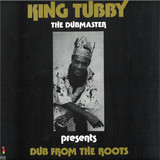
Tubby did three original dub albums, “Dub From The Roots, “The Roots Of Dub” and the third is “Brass Rockers” with Tommy McCook ’pon the flying cymbals. Where he mixed it with the horn going in and out in a dub way and one named “Shalom Dub” you can call Tubby’s too because he mixed the versions as they were off the forty fives.
King Tubby and Producer Bunny “Striker” Lee are intertwined in the birth of Dub Music. After discovering a mistake that made a “serious joke” (more of which later…) they went on to release the first pressings of this new musical genre namely “Dub Music”. Tubby’s vast knowledge of electronics and Bunny’s vast catalogue of rhythms would lay the foundations of what today is taken as a standard…. The Remix / Version cuts to an existing vocal tune.
Osborne “King Tubby” Ruddock was born in Kingston, Jamaican the 28th January 1941 and grew up in the High Holborn Street area of downtown Kingston. He studied electronics at Kingston’s National Technical College and also on two correspondence courses from the USA. When he had qualified, Tubby began repairing radios and other electrical appliances in a shack in the back yard of his mother’s home. His work in the early days included winding transformers and building amplifiers for Kingston’s Sound Systems. Tubby built his first Sound System in 1957 playing jazz and Rhythm and Blues at local weddings and birthday parties His reputation as a man who knew and understood both electronics and music grew steadily and as the sixties drew to a close. Tubby purchased his own basic two track equipment. He installed this alongside his dub cutting machine, a homemade mixing console and his impressive collection of Jazz albums in the back bedroom of his home at 18 Dromilly Avenue which he christened his music room.
Dynamic Sounds upgraded to sixteen track recording in 1972 and Tubby purchased, again with the help of a deal brokered by Bunny Lee. The old four track equipment and the MCI console from their Studio B. The four tracks now gave him far wider scope to work with and he began to create a new musical form where the bass and drum parts were brought up while the faders allowed Tubby to ease the vocal and rhythm in and out of the mix. It was only a matter of time before Tubby’s dub plate experiments began to make it on to vinyl and the first ever long playing King Tubby releases would feature a collection of his mixes to a selection of Striker’s rhythms. So please sit back and enjoy this historic set of sounds. Lovingly restored and with a few extra gems added to the CD editions. These releases were the first to carry the name of King Tubby and the first to credit the great musicians that contributed so much to the rhythms that made these albums possible.
Hope you enjoy the set……
The Deacon had been in exile from
the following crimes committed
faith and sonic soul saving
using the Holy Ghost as the
weapon of choice.
Last known whereabouts Mt Fuji Japan.
but since then a virus has infected the world
it also has affected the soul in music
and prevented people from gathering,
dancing and living normal everyday lives.
So the deacon returns from exile
to fight and do battle with the faithless,
un soulful sounds created by the fear
of the global pandemic by using
faith,hope and the "Holy Ghost" to
restore the faith and soul in the hearts
and minds of people through music
and bring order back to the global
dance community...
- A1: Nankyoku, Decky & Imocky - The Battle
- A10: Nankyoku, Decky & Imocky - Showdown
- A11: Nankyoku, Decky & Imocky - Conclusion
- A12: Nankyoku, Decky & Imocky - Sutakora, Sassa!
- A13: Nankyoku, Decky & Imocky - Game Over
- A2: Nankyoku, Decky & Imocky - Wilderness
- A3: Nankyoku, Decky & Imocky - Battlefield
- A4: Nankyoku, Decky & Imocky - Thief's Theme
- A5: Nankyoku, Decky & Imocky - Old Map
- A6: Nankyoku, Decky & Imocky - Turtle Village I
- A7: Nankyoku, Decky & Imocky - Fiend's Path
- A8: Nankyoku, Decky & Imocky - Turtle Village Ii
- A9: Nankyoku, Decky & Imocky - Death Adder
- B1: Naofumi Hataya - Chapter Select
- B10: Naofumi Hataya - The Castle Gate
- B11: Naofumi Hataya - Castle Of Dark Guld
- B12: Naofumi Hataya - Death Adder Ii
- B13: Naofumi Hataya - All Clear
- B14: Naofumi Hataya - Staff Roll
- B15: Naofumi Hataya - Result
- B16: Naofumi Hataya - Game Over
- B2: Naofumi Hataya - Ravaged Village
- B3: Naofumi Hataya - Boss
- B4: Naofumi Hataya - Magician Stage
- B5: Naofumi Hataya - Crystal
- B6: Naofumi Hataya - Ancient Ruins
- B7: Naofumi Hataya - Enemy’s Headquarters
- B8: Naofumi Hataya - Dragon's Throat
- B9: Naofumi Hataya - Boss
For their seventh release in partnership with SEGA of Japan, Data Discs is delighted to bring together the complete music from the classic Mega Drive games, Golden Axe (1989) and Golden Axe II (1991), in one special package. This release features the unforgettable artwork from both games, supplied on two thick lithographic prints, with the record itself pressed on heavyweight translucent gold vinyl. The outer sleeve features rare artwork from the 1989 Japanese edition, sourced from the SEGA archives and presented on 425gsm cardstock with gold flood printing. As always, the audio has been carefully restored and mastered using the original console as the source, ensuring these memorable soundtracks are preserved for many quests to come!
Mondo, Backlot Music and Howe Records are proud to present the a soundtrack nearly 40 years in the making: the complete restored score album to David Cronenberg's 1983 masterpiece VIDEODROME.
Released in 1983 on a miniscule run of 300-self-financed LP’s, Dennis Taylor’s ‘Dayspring’ remains a lost masterwork of transcendental instrumental guitar. An important missing link between the 60’s folkloric experimentalism of John Fahey and Robbie Basho, and the new age atmospherics mined by William Ackerman and Michael Hedges in the early 80’s. Though Taylor’s guitar playing remains crisply unadorned on these 10 tracks, his technique and his compositions stretch beyond the folk roots of the genre. He crafts a soundworld that is both immersive and familiar. His pastoralism has a spaciousness - a pianistic drift - that feels truly timeless.
Taylor cut his musical teeth through the 60’s and 70’s playing with garage rock bands, and later finding his footing in the world of jazz/folk fusion. Sometime in the early 70’s, Taylor found his most profound inspiration to date when he witnessed a live performance from Takoma Records luminary, Leo Kottke. Enraptured by Kottke’s ability to fill the room so completely, with the sound of just one instrument, Taylor was determined to follow a similar path. Thus, he began composing music for solo guitar. He spent nearly a decade writing and honing his pieces, finally entering a studio in 1982 to commit them to tape. Taylor likened the recording experience to “a living room concert.” He recorded each song in a single take, in the order they appear on the album. Paying out of pocket for the recording sessions, studio time was at a premium, so Taylor had arrived prepared. And the results speak for themselves.
Dennis Taylor’s guitar playing is clean, precise, and masterfully proficient. And yet, ‘Dayspring’ is not merely a document of technical ability. His compositions are deeply
expressive. Taylor’s deft fingerpicking is married to achingly beautiful melodicism. His arpeggios chime and roll with painterly expression. Across the breadth of ‘Dayspring’, Dennis Taylor strikes a perfect balance between wistful nostalgia and bold expansion. Though Taylor initially hoped to release his album with new age progenitors Windham Hill, he ultimately decided to release the album on his own. He self-financed a pressing of 300 LP’s, which were largely distributed locally in his hometown of Lincoln, Nebraska. And now, Morning Trip is supremely proud to bring this album back to light. An important missing piece in the expansive tapestry of instrumental guitar music, finally restored.
High Roller Records, reissue 2022, clear/ red marbled vinyl, ltd 150, lyric insert, poster, bonus track, remix version, remastered & restored
Forever on My Mind, the new album of previously unreleased Son House recordings from Easy Eye Sound, the independent label operated by Dan Auerbach of The Black Keys, is the premiere release from Dick Waterman’s personal cache of ’60s recordings by some of the titans of Delta blues. His collection of quarter-inch tapes — which are being restored to remarkable clarity by Easy Eye Sound — have gone unreleased until now. The collection is due out March 18, 2022.
Released in conjunction with the reissue of the Raintears EP, Quindi is proud to present further archival finds from Italian experimental project Cabaret du Ciel. Like a Fool / Inside Loneliness is a single shining a light on the brief collaboration between Andrea Desidera, Gian Luigi Morosin and singer Barbara Volpato.
After years working as an instrumental outfit, the sessions with Volpato from 1991 were the first time Desidera and Morosin's project had welcomed in a vocalist. Of the many tracks written and recorded at that time, the best two were selected and carefully restored from the original tapes, now immortalised on vinyl and expanding the public impression of Cabaret du Ciel.
'Like A Fool' re-imagines the hazy serenity of Cabaret du Ciel in a dream pop context, injecting the soft-focus synth work with the energy of bold drums to provide a suitable framework for Volpato's voice. The crisp twang of new wave guitar completes the picture, while the trademark progression intrinsic to Cabaret du Ciel lends itself to the traditional song structures of pop.
'Inside Loneliness' is a natural companion to the A side, redolent with the heavy-hearted synth-pop romanticism of the late 80s and early 90s. The DIY sound on the track conveys an intimacy that can only come from artists recording in their own private environment, pouring their hearts and souls into a four-track recorder without a conceit other than pure, honest expression.
**LTD BLACK AND RED MARBLE**
As humans, we are aware of our inner beast and should therefore be able to control it. We understand our hard-wired primal urges and why they exist in an evolutional sense. We understand the relationship between mind and body. Highly evolved and intelligent, we should be able to recognize these genetic hangovers and control them as a means to act positively and move forward as a compassion-ate species. Unfortunately, this is not the case. Recent global events have proven this. The human race is consuming itself.
World Eater, the new album by Benjamin John Power's Blanck Mass project, is a reaction to this. There is an underlying violence and anger throughout the record, even though some of these tracks are the closest Power has ever come to writing, in his words, actual love songs.'
Maybe subconsciously this was some kind of countermeasure to restore some personal balance,' Power explains.
On World Eater, Power further perfects the propulsive, engrossing electronic music he has created throughout his impressive decade-plus career, both under the Blanck Mass moniker and as one-half of Fuck Buttons, as he elaborates upon the sound of 2015's brilliant double album Dumb Flesh. As massive as the sonic world of the new record often feels, its greatest achievement is in its maximization of a limited set of tools, a restriction intentionally set by Power himself.
As an exercise in better understanding myself musically, I found myself using an increasingly restricted palette during the World Eater creative process. Evoking these intense emotions using minimal components really put me outside of my comfort zone and was unlike the process I am used to. Feeling exposed shone a new light on this particular snapshot. I feel enriched for doing so.'
(A) 1. John Doe's Carnival of Error
(B) 2. Rhesus Negative
(C) 3. Please
(D) 4. The Rat
(E) 5. Silent Treatment
(F) 6. Minnesota / Eas Fors / Naked
(G) 7. Hive Mind
The sole, full length album from Loney Hutchins's most productive era in
the 1970's- Tracked over 3 days in '79 at Lee Hazen's Studio by the Pond
by Jack 'Stack-a-Track' Grochmal - the resulting country rock album was
too folksy for LA and too electric for Nashville
Featuring a rhythm section from Dolly Parton's live band during her 'Jolene'
period, and searing hot country licks, this reissue is restored from the original 2"
multitrack tapes, including two never before heard tracks. CD comes in digipak
format.
- A1: New Memories Of Machines
- A2: Before We Fall
- A3: Beautiful Songs You Should Know
- B1: Warm Winter
- B2: Lucky You Lucky Me
- B3: Change Me Once Again
- C1: Something In Our Lives
- C2: Lost & Found In The Digital World
- C3: Schoolyard Ghosts
- D1: At The Centre Of It All
- D2: Dreamless Days (Outtake)
- D3: Someone Starts To Fade Away
THE 10TH ANNIVERSARY EXPANDED EDITION OF TIM BOWNESS &
GIANCARLO ERRA'S 2011 ALBUM 'WARM WINTER' - NOW ISSUED AS
MEMORIES OF MACHINES
An expanded & remixed 10th Anniversary version of Tim Bowness & Giancarlo
Erra's 2011 album 'Warm Winter' (now issued as 'Memories Of Machines', the
original project name).
Featuring contributions from Robert Fripp, Peter Hammill, Julianne Regan, Jim
Matheos, Colin Edwin, Huxflux Nettermalm, Peter Chilvers, Aleksei Saks &
members of Nosound & Tim Bowness's live bands, the album contains 10
sweeping & majestic songs (culminating in the epic "At The Centre Of It All").
The 2 disc - CD/DVD-A/V version includes hi-res stereo & 5.1 Surround mixes in
addition to two 2020 recordings - an album outtake & a new version of the
Nosound piece "Someone Starts To Fade Away" - created especially for this
release.
Featuring a 2021 remix from the original tapes by Giancarlo Erra, this new edition
emphasises the textural nature of the music & restores the pieces to their original
arrangements & track lengths (resulting in a different listening experience).
The artwork has also been overhauled for this release by Giancarlo Erra &
Caroline Traitler.
- A1: The Moonlight Duel
- A2: Determination: Father's Message
- A3: The Dragon Ninja
- A4: Mysterious Woman
- A5: Bravery: On The Clutches
- A6: Reminiscence
- A7: A Sudden Development
- A8: Like A Howling Gale
- A9: In Hiding: Pursuing The Nightmare
- A10: Eyecatch
- A11: The Cia
- A12: The Sanctuary Of Shadows
- A13: The Amazing Ryu
- A14: Crisis
- A15: Surprise Attack: The Wicked God's Secret Maneuvers
- B1: Malth The Crimson Terror
- B2: The Truth Concealed
- B3: Melancholy Destiny
- B4: Requiem
- B5: The Truth Concealed (Reprise)
- B6: The Menace Of Jaquio
- B7: Showdown: At The Portal Of Death (Battlefield) (Battlefield)
- B8: The Demon's Incantation
- B9: In A Pinch: The Ordeal Of Battle
- B10: At The End Of The Battle
- B11: Irene: Overture Of Dawn (Prelude)
- B12: Credits
- B13: Game Over
- B14: Cinema Display Sound Attack 1
- B15: Cinema Display Sound Attack 2
- B16: Sound Effects
- C1: Insert Coin
- C10: Las Vegas Stage Boss
- C11: Round Clear 3
- C2: Game Start
- C3: La Stage
- C4: La Stage/Grand Canyon Stage Boss
- C5: Round Clear 1
- C6: Ny Stage
- C7: Ny Stage/Transcontinental Railroad Stage Boss
- C8: Round Clear 2
- C9: Las Vegas Stage
- D1: Grand Canyon Stage (Japan) (Japan)
- D2: Grand Canyon Stage (Usa) (Usa)
- D3: Round Clear 4
- D4: Transcontinental Railroad Stage
- D5: Round Clear 5
- D6: Final Stage
- D7: Final Stage Boss
- D8: Time's Up
- D9: Game Over
- D10: Credits
- D11: High Score Screen
- D12: Round Clear 1 (Usa) (Usa)
- D13: Round Clear 2 (Usa) (Usa)
- D14: Round Clear 3 (Usa) (Usa)
- D15: Round Clear 4 (Usa) (Usa)
- D16: Round Clear 5 (Usa) (Usa)
- D17: Game Over (Usa) (Usa)
Ninja Gaiden, of the most iconic and beloved 2D action game series ever created, was first released in the arcades in 1988, while making its console debut on the Nintendo Entertainment System (NES) later in the same year. At the time of the console release, Ninja Gaiden was renowned not only for its deep storytelling beautifully visualized by TECMO’s unique “cinema scenes,” but also through its legendary chiptune soundtrack, whose unique rock-’n’-roll sound and drum beat instantly became a formative musical experience for players who were only just getting into video games.
Ninja Gaiden: The Definitive Soundtrack is divided into volumes. The first, Ninja Gaiden Vol. 1, features the music of both the NES title and the Arcade game, both titled Ninja Gaiden. These legendary soundtracks have been digitally restored under the supervision of Keiji Yamagishi, one of the original series composers. The booklet includes a comprehensive roundtable discussion among several members of the original development team, including the director, producers, artist and composers; an essay by game historian Ray Barnholt; and original archival artworks.
NEW REPRESS (SAME COLORS) - RELEASE SEPTEMBER 24th
Ninja Gaiden, of the most iconic and beloved 2D action game series ever created, was first released in the arcades in 1988, while making its console debut on the Nintendo Entertainment System (NES) later in the same year. At the time of the console release, Ninja Gaiden was renowned not only for its deep storytelling beautifully visualized by TECMO’s unique “cinema scenes,” but also through its legendary chiptune soundtrack, whose unique rock-’n’-roll sound and drum beat instantly became a formative musical experience for players who were only just getting into video games.
Ninja Gaiden: The Definitive Soundtrack is divided into volumes. The first, Ninja Gaiden Vol. 1, features the music of both the NES title and the Arcade game, both titled Ninja Gaiden. The follow-up, Ninja Gaiden Vol. 2, features the music of both Ninja Gaiden II: The Dark Sword of Chaos and Ninja Gaiden III: The Ancient Ship of Doom. This bundle includes BOTH Vol. 1 and Vol. 2 at a special price. These legendary soundtracks have been digitally restored under the supervision of Keiji Yamagishi, one of the original series composers. The booklet includes a comprehensive roundtable discussion among several members of the original development team, including the director, producers, artist and composers; an essay by game historian Ray Barnholt; and original archival artworks.
Trouble’s classic debut album from 1984 with faithfully restored audio represents everything that Doom Metal should be.
The third release on U-TRAX in 1993 was also a third debut, this time by Natasja Hagemeier and Jeroen Brandjes. Early in their career, they used several artist names, but became most commonly known as The Connection Machine. With their debut mini-album The Dream Tec Album they more or less described their style: dreamy techno. It became an instant Dutch techno classic and U-TRAX is proud and delighted to offer a fully remastered re-release, including three never before released bonus tracks (one of which is digital-only).
Natasja and Jeroen resided in Utrecht back in the 90s. In 1991 they assembled all their ideas and recorded the track "24 Hours" with DJ Paradize. Soon after this experience, they started to buy their own gear, all strictly MIDI (which wasn't too obvious in those days). In their early recording years, they had three producer-names (Syndrome, The Connection Machine and Bitch&Bites), that were all collected under the The Utroid Machine Missions umbrella, which was used for their debut on U-TRAX.
All tracks on The Dream Tec Album are The Connection Machine's earliest works, from the 1991/1992 years.
"An Overflow of the Mind" is a beautiful, dreamy track with almost divine sounds and strange voice-samples that serves perfectly as an introduction to their entire repertoire.
Their first production was "24 Hours", and what a brilliant one it is! A well-known jazz-musician talks about a "24 hour party going on", on top of a sinister and trancey rug, woven of sampled sounds from pioneers in electronic music and nailed down to the floor with a deep pounding bassdrum. At the time they made this track, 141 bpm was unbelievably fast...
"Evilish Cosmos" is all about a very sad and personal emotion, so everything we say about it will be absolutely wrong. Just listen to the meandering piano line, distorted voice samples - and feel it.
The first bonus track on this release is "Recognized Pain", which was intended to be part of the original The Dream Tec Album. It had appeared on the Phuture Classical Section C cassette in 1993, on the famous Drome Tapes label that formed the roots of U-TRAX. It truly is an amazing track: pure sonic terror with haunting rhythms, psychedelic synth lines and shards of voice samples that make the listener feel slightly uncomfortable.
"X_Manray" is many electronic music lover's favorite track. It is sooo deep that it is hard not to get hypnotized by it. Warm strings are coupled with deep beats that show up and disappear every now and then. Could serve perfectly to start off any DJ's set, as long as she or he has the guts.
Though "Braindrain" is probably the most danceable track on this album, it is carefully designed to tease the listener. Everything in this track drops in too late and every tone, melody or loop last exactly a few bars too long. Designed as a DJ-teaser and so it is.
The second bonus track, "Cafe d'Anvers", is another previously unreleased work, of which unfortunately no master recording was saved. All that is left, as far as we know, was an old VHS Hifi tape from the U-TRAX Archives. And that is where this bonus track was taken from. Mastering engineer Thee J Johanz managed to restore the quality of the recording somewhat, while at the same time maintaining its dark, clubby sound, a tribute to the famous club of the track's name in Antwerp, Belgium.
"Dream Affected Dream" is one of the most recent productions on this album. It was recorded with CNN playing live on top of it. At this exact moment, CNN was having an interview with David Koresh, the leader of the infamous Branch Davidians sect from Waco, Texas, while they were under siege by an armed police force. Natasja and Jeroen were just ready to record Dream Affected Dream, and spontaneously decided to mix in the audio from CNN. Not very long after that, the cult members set fire to themselves. A very strange and oddly funky track, that also serves as a time-document.
The final track is another bonus track. Like Cafe d'Anvers, "Voight-Kampff" is taken from on old U-TRAX VHS Hifi tape and masterfully mastered into a lovely relaxed dreamtech piece. Very suitable to start the Sunday after a long night of clubbing. This track is available for free to buyers of the complete digital album only.
Original release date: July 1993.