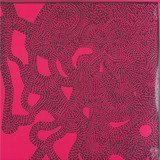
This is the first ever vinyl release of the now defunct Parisian formation None, whom have left very few traces of their recordings apart from a furtive tape appearance; keeping true to their name by favoring the intensity of their live performances to conventional sound fixations. Although only one single recording remained following the band’s dissolution back in 2019, the oddly titled Khneï Khneï Thnacapata Thnacapata is a compelling demonstration in self-restraint as well as one of the very few relics left to cherish of the short lived group. Arranged as a forty minute long movement, the posthumous album swallows us through free improvisation, jazz and post-punk in a composed mayhem that echoes their equally intense live conduct where steadfast drums and far out cassette manipulation meet head-on with troubled saxophone blows, lonesome crippled guitar action and unintelligible vocals in which to lose one’s mind.
Search:restraint
The different seeds that have been planted throughout the life of Croatian Amor come to bloom on 'All In The Same Breath,' affirming an equilibrium that's all its own. Spiralling through the half-light electronics are gentle bumps and breaks that are layered into moments of elevation. A coarse edge remains just an arm's length away, but there is an unmistakable element of celebration throughout the album's 10 tracks. As the syncopated terrains ring out, their perpetual rhythmic motions call a medley of human voices that speak in security. They sing to everyone just as they sing to themselves. In the years since the seminal Croatian Amor album 'Love Means Taking Action' Loke Rahbek has strode a twofold path. There are the delicate, meditative compositions that he has made with Frederik Valentin; setting acoustic instrumentation against affecting digital treatments, each of their collaborative albums are an exercise in the magnificence of subtle restraint. And with the sharpest of turns you'll find Rahbek's parallel universe of rave-shocked rhythms and kinetic helixes that eddy through genre and tempo with few constraints. Collaborations with Varg²™ have yielded the wildest of this, and remain ongoing, yet the traces were already apparent across much of the previous Croatian Amor album 'Isa' with its treated vocalizations and cascading rhythmic mechanics. 'All In The Same Breath,' arrives as a steady handed synthesis of these divergent instincts. Elaborating the distinct techniques and themes that form the wistful essence of the project, the album's quiet composure is a sign that these familiarities have been set adrift to settle into their own private ecosystem.Small vessels travel in a perfect array. Light following shadows, following light. Every movement a signal, every second is camouflage. 'All In The Same Breath' is perhaps more than anything an invitation to be open to wonder.
Linda “Babe” Majika’s insanely brilliant Don’t Treat Me So Bad is a tight six tracks of blistering electro-flavoured bubblegum and synth-drizzled solar-powered machine-funk. It has become increasingly hard to find, with copies currently moving for over £200. But this is definitely a case of eye-watering price equalling heart-thumping quality.
Once of the Hot Soul Singers, Don’t Treat Me So Bad was Linda’s debut LP as a solo artist. It was produced by Ace Mbuyisa of boogie-funk maestros Freeway and was originally released on Umkhonto Records in South Africa in 1988.
The enormous “Let’s Make A Deal” is probably the best known track here, and it’s definitely the best one if you ask us. Linda’s vocals drip with attitude over warm, breezy synths and an urgent, edgy electro beat to create a timeless club-ready bomb that sounds as fresh as ever. But the rest of the album is far from filler.
Opening track “Kunzima (Tabalaza Mjita)” instantly brings the sunshine vibes, strutting out the gate with that unmistakable South African steppers groove. It’s a deceptively simple song, with multiple instrumental elements arriving and taking leave with admirable restraint.
“It’s Our Home” is a powerful showcase for Linda’s vocals, enhanced by some life-affirming call and response backing vocals throughout. In fact they’re a joyous presence on the whole album. The insistent pipes and swirling, bubbling synths of title track “Don’t Treat Me So Bad” follow. A spacious proto-piano house banger that closes out the first side in phenomenal fashion.
Arriving as track two on the second side, “Unga B’Omthemba Umuntu” has the unenviable task of following the huge “Let’s Make A Deal”. It does the job with class, bringing the tempo down to a mid-paced tropical bounce with lilting harmonies and welcome traces of hi-life guitar. Wonderful stuff. “Playboy” is is another unbeatable head-nod groover rounds out the set wonderfully. That bassline high in the mix is to die for, and the chorus will make any dancefloor smile.
As ever, Simon Francis on mastering duties elevates this release, adding heft and elegance in all the right places with his customary deft touch. The memorable cover art, in which Linda appears straight out of the 1950s with her polka dot skirt and butter-wouldn't-melt pose, has been faithfully restored. But don’t let the innocent styling fool you - Don’t Treat Me So Bad is the work of one badass woman who can hold her own, and then some.
Nils Frahm, born in 1982, had an early introduction to music. During his childhood he was taught to play piano by Nahum Brodski a student of the last scholar of Tschaikowski. It was through this that Nils began to immerse himself in the styles of the classical pianists before him as well as contemporary composers. Today Nils Frahm works as an accomplished composer and producer in Berlin. In early 2008 he founded Durton Studio, where he has worked with Peter Broderick and Dustin O' Halloran amongst other fellow musicians.
The three instrumentals, which make up his debut release 'Wintermusik' are piano led pieces, coloured with occasional celeste and reed organ parts. The record's equal measures of sorrowful refrains and uplifting passages, combined with a real intimacy that makes for an album you'll want to return to again and again.
The songs were originally intended as a Christmas present for friends and family, hence its winter release via London-based cinematic music label Erased Tapes. As the curator of the Swedish boutique label Kning Disk's Piano Series, Peter Broderick invited Nils to record a new Nils Frahm, born in 1982, had an early introduction to music.
During his childhood he was taught to play piano by Nahum Brodski a student of the last scholar of Tschaikowski. It was through this that Nils began to immerse himself in the styles of the classical pianists before him as well as contemporary composers. Today Nils Frahm works as an accomplished composer and producer in Berlin. In early 2008 he founded Durton Studio, where he has worked with Peter Broderick and Dustin O' Halloran amongst other fellow musicians.
The three instrumentals, which make up his debut release 'Wintermusik' are piano led pieces, coloured with occasional celeste and reed organ parts. The record's equal measures of sorrowful refrains and uplifting passages, combined with a real intimacy that makes for an album you'll want to return to again and again. The songs were originally intended as a Christmas present for friends and family, hence its winter release via London-based cinematic music label Erased Tapes.
As the curator of the Swedish boutique label Kning Disk's Piano Series, Peter Broderick invited Nils to record a new album of piano improvisations the result is 'The Bells', which will now be released on Erased Tapes in the UK, Ireland and North America. Perhaps the most stunning aspect of what on the surface appears to be an entirely pre-planned and composed body of work comes with the discovery that these pieces were in fact improvised.
These two friends share a common affinity in that they both possess an absolute mastery of melody, composition and performance able to deliver with devastating effect. The modest Mr. Broderick states 'I remember thinking to myself as I lay there stunned, that I could spend ten years trying to write an amazing piece of piano music, and still it would never be half as good as these improvisations!'
Recorded in a rented, beautiful old church in the heart of Berlin over two nights, Nils 'just played' with the occasional instruction from Peter 'I spouted "Make a song using only the notes C, E, and G", or "Make a song that you could imagine me rapping over the top of" (Track 8 'My Things'). At one point I was even inside the piano, laying on the strings, asking him to make a song called 'Peter Is Dead In The Piano'. The resultant work 'The Bells' shares the same excitement and air of playfulness.
For a musician this early in his career, Frahm displays an incredibly developed sense of control and restraint in his work. As the recognition continues to grow for both, 'Wintermusik' and 'The Bells', we are pleased to announce that 2010 will also see his next album release on Erased Tapes.
We instantly fell in love with Razen the first time we saw them live in September 2018. It was during a unique Sunday morning mass at the Friedenskirche (which translates literally to mean ‘the church of peace’), as part of the Meakusma Festival. Slightly sleep deprived and still euphorically intoxicated from the night before, their performance in front of a full mass of devotees had a biblical aura to it from the first note they played. They delivered a stunning set which was somehow, paradoxically, both relaxing and formidably tense.
Two years later and the group are now bringing their talent for restraint and slow tension-building to the fore on “Robot Brujo”. Each of the six improvisations on this double LP is made up of the barest of materials, with the three musicians relying on a limited combination of tones. They lay their focus on small variations in timbre, timing, articulation and vibration, which creates a narrowing of consciousness, and feels something a bit like staring meditatively at the minute changes of leaves blowing in the wind.
Recorded over two sessions, in what Razen themselves refer to as their detached playing style, "Robot Brujo" stands as an auditory magnifying glass of concentration, in all its uncanny and minimal glory.
It is yet another new step up from the deep listening ensemble from Brussels, after 10 years exploring music together.
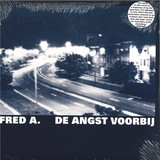
Fred A. was a two-faced act. His musical grasp to the new wave-movement was countered by his lyrical love for Flemish and Dutch ‘kleinkunst’, and his progressiveness as a composer was in stark contrast with his restraint as a performer. ‘De Angst Voorbij’ is an anthology of those remnants, with eight songs derived from the most fertile period in the musical career of Fred A. The record translates how Gerry opened up again to his late musical endeavours, recalling the 30-years younger version of himself. “The music on this record is a testimony of my life back then. It is delimited in time, that’s why this whole feels coherent to me. It shows who I was back then and what I stood for. And that’s worth cherishing
- A1: Haruna Ishola & His Apala Group - Ewure Ile Komoyi Ode
- A2: Adebukonla Ajao & Her Group - Aboyin Ile
- A3: Rapheal Ajide & His Apala Group - Adura Fun Osiwowo
- A4: Haruna Ishola & His Apala Group - Orin To Mo Gbon Wa
- A5: Ra Tikalosoro & His Group - Agilinti Lomu
- B1: Adebukonla Ajao & Her Group - Abd Alawiye
- B2: Haruna Ishola & His Apala Group - Asa Ko Gbodo Wole Gbeiyele
- B3: Adeleke Aremu & His Group - Egbe Arowolo
- B4: Haruna Ishola & His Apala Group - Rufai Baolgun
- B5: Ra Tikalosoro & His Group - Kiniun Kuro Leran Amu Sere
- C1: Haruna Ishola & His Apala Group - S Aka
- C2: Adebukonla Ajao & Her Group - Lekele Bale
- C3: Kasumu Adio & His Apala Group - Odale Ore
- C4: Ayisatu Alabi & Her Group - Oko Lolomo
- D1: Jimoh Agbejo Bo Ogun & His Group - Oriki Ibeji
- D2: Ayisatu Alabi & Her Group - Omo Olobi
- D3: Rapheal Ajide & His Apala Group - Orin Aje
- D4: Adebukonla Ajao & Her Group - Sunday Babayemi
Soul Jazz Records new ‘Apala: Apala Groups in Nigeria 1964-69’ is the first ever collection of Apala music ever to be released outside of Nigeria. The album focusses on a wide selection of recordings made in Nigeria in the 1960's, a time when Apala music was at the height of its popularity. Apala is a deeply rhythmical, hypnotic and powerful
musical style that combines the striking nasal-style vocals and traditions of Islamic music, the Agidigbo (thumb piano), and the equally powerful drumming and percussion rhythms and
techniques of the Yoruba of Nigeria.
The most significant figure in Apala music is undoubtedly Haruna Ishola who features throughout this album. Ishola holds an almost mythological status in his role as populariser of Apala music in
Nigeria. Ishola’s singing was believed to be so powerful that, without proper restraint, it could kill the recipient of his music.
Apala is a popular music that also functioned as a form of cultural resistance – Apala music involved no western instrumentation and is sung in the Yoruba language, its aesthetic an implicit cultural
rejection of the British Empire’s colonial rule over Nigeria which lasted from 1901 until independence in 1960. Apala music was popular and widely accepted in Nigeria due to its philosophical and profound
lyrical content alongside the complex rhythmic patterns of this heavily percussive style, which highlighted many of the percussion instruments of south-west Nigeria.
He's one of a number of popular urban styles of music that came out of Nigeria in the 20th century and sits alongside the more well-known (in the West) styles of Fuji, Highlife, Juju and Afrobeat. Of these modern forms Apala remains perhaps the most ‘roots’ style (sometimes described as ‘neo-traditional’) due to the authenticity of its sound. It has similar Islamic roots to other neo-traditional styles of Nigeria – including Waka and Sakara – examples of which are also
included on this collection contextualising the music of Apala.
These recordings were originally made and released locally by Decca and EMI Records as well as a variety of independent labels in Nigeria and have never been released outside of the country before. Soul Jazz Records are releasing this album as a deluxe double gatefold vinyl (download code), CD, slipcase and booklet, both containing full text and photography.
Repress
Kali Malone presents a quietly subversive new album featuring almost two hours of concentrated, creeping organ pieces governed by a strict acoustic and compositional code. It’s a major new work with ultimately profound emotional resonance.
‘The Sacrificial Code’ takes a more detailed approach to ideas first sketched out on last year’s ‘Organ Dirges’, which featured canon exercises spontaneously captured without much prior technical planning. By contrast, the recording of ‘The Sacrificial Code’ involved the more careful micing up of several organs in such a way as to eliminate acoustic impurities as far as possible - essentially removing the large hall reverb so inextricably linked to the instrument. The pieces were then performed free of gestural adornments and without expressive impulse - an approach that
flows against the grain of the prevailing musical hegemony, where sound is so often manipulated,
and composition often steeped in self indulgence. The question posed; can this strict methodology still speak to the listener in meaningful terms?
The answer is both obvious and entirely surprising; with its slow, purified and seemingly austere qualities ‘The Sacrificial Code’ guides us through an almost trance-inducing process where we
become vulnerable receptors for every slight movement, where every miniature shift in sound becomes magnified through stillness.
As such, it’s a uniquely satisfying exercise in transcendence through self restraint - a stunning realisation of ideas borne out of academic and conceptual rigour which gradually reveals startling
personal dimensions. It has a perception-altering quality that encourages self exploration free of signposts and without a preordained endpoint - the antithesis to the language of colourless musical platitudes weíve become so accustomed to.
RAVE026 is a double hammer of blitzkrieg gabber and seething acid trance/schranz from Service
Animal (Vereker) and Crime Unit, featuring material previously issued on impossible-to-find
tapes by the cult, DIY label; Live Adult Entertainment
The punkish reputation of Live Adult Entertainment precedes them as one of the underground’s
keenest yet elusive operations to emerge in recent years. Based in Thessaloniki, a port city in
northern Greece, they’ve released some 28 tapes, CDR’s and lathe cut vinyl of musick ranging from
psy-trance to industrial noise and concrète since 2017, and always in editions ranging from zero
to 20 tops, leading to feverish and frustrated reactions from those listeners who’ve chanced upon
their YouTube videos before they get taken down. Finally, this 12” features the first readily available
and properly mastered LAE material on a physical format.
On the A-side, Endangered Species label boss Oliver Vereker adopts his gabber alias Service
Animal for his first outing proper since appearing as Renoir on his label’s 2017 CD, ‘Death Always
Follows’. Revolving material originally available on tape in edition of 20 copies, it boots off with
the 12-hp hoof and dive-bombing drones of ‘Core Of Reality’ next to the evil Arcardipane styles of
‘F.T.W’, which are both produced with the same, powerful conviction in charred black metal, noise
and hardcore techno that made his 2015 releases as Restraint and Grace so vital, only with added
acceleration and syncopation.
The B-side follows with a pair of seething workouts from the ‘Cyber Afterbirth Vol.1’ mix by
LAE co-owner, Crime Unit. Hearkening back to a sound that was ubiquitous between Hackney
Warehouses and small-town UK/European techno clubs in the late ’90s/early ‘00s, they are
ravenous examples of the LAE aesthetic, applying scuzzy DIY principles to gnashing German
schranz and adrenalising acid trance with ruthlessly direct results that pack one of the meanest
breakdowns you’ll hear this year. Trust they will mercilessly sort the dancers from the posers.
One of the original catalysts of Latinx music in New York City, MAKU Soundsystem has been the connective tissue for several creative projects, bands and community roots for over a decade. As a group with a rotating membership, they've recorded multiple albums both DIY and for worldwide labels. Throughout their various iterations, the heart and mission of the ensemble has consistently built bridges, rather than tearing them down, remaining a remarkable beacon of positivity in a consistently competitive environment. The inspiring atmosphere has nurtured several notable musicians and acts over the years, including members of Combo Chimbita, Dilemastronauta, Bulla en el Barrio, Leon Brothers and Prince of Queens. Now down to a core group of three musicians, alongside percussionist Moris Cañate, MAKU and Names You Can Trust have finally teamed up for a vinyl edition after many years of collaborative shows and connections.
Perhaps their rawest and darkest recordings to date, this stripped down quartet is an ode to the creative source of their core members, lead singer & bassist Juan Ospina, drummer Andres Jimenez and guitarist Camilo Rodriguez. The A-side, "Culebra Coral" is a snakebitten taste ofla cumbia, played with an experience and restraint that only enhances the end result. It's a free driven approach born from familiar experimentation, rather than modern day trends — a singular jam, refined from years of playing together. Part psych, part cumbia, total MAKU. The B-side, "Contra Tambor," is emblematic of the group's roots in the traditional sounds of thetambora, a drum-forward percussive arrangement that follows Jimenez and Cañate on a free-driven approach to the ritualistic movements of the drums, this time drowned with an antidote of analog FX, synthesized glitches and atmospheric coros.
- A1: Thore Pfeiffer - Urquell
- A2: Max Würden - Diminish
- A3: Yui Onodera - Cromo 4
- A4: Joachim Spieth - Meteor
- B1: T Raumschmiere - Notre-Dame
- B2: Klimek - All The Little Horses
- B3: Morgen Wurde Feat Maria Estrella - Lässt Los
- B4: Markus Guentner - Clade
- C1: Thomas Fehlmann - Liebesperlen
- C2: Gen Pop - Iron Woman
- C3: Klimek - Requiem For A Butterfly
- C4: Leandro Fresco - Brenda
- D1: Max Würden / Pepo Galan - Stay
- D2: Leandro Fresco / Thore Pfeiffer - Neo
- D3: Thore Pfeiffer - Alles Bleibt Anders
- D4: Andrew Thomas - Song 9
- D5: Andrew Thomas - Sleep Fall
20 years of Pop Ambient. Already? One didn’t notice. It’s an anniversary which comes quietly. An anniversary with quiet tones.
In the spirit of the special restraint of pop-elegance, it has no reason to drawn attention to itself with a big „Tam-Tam“. Or better: „Bum-Bum“. The bass drum stays outside. Nevertheless, in fast-paced, overstimulated times of moving forward, it’s a joyful occasion to look back.
What strikes most by putting or listening to 20 years of pop ambient in a row is the central theme that holds together the dense aesthetic concept like the pearls of a necklace.
Floral beauty for digital naturalists. Music like flowers, that don’t wilt. Timeless. Ageless. But with all of the conceptual unity and resolution, Pop Ambient would not be Kompakt without the break, the friction, the expansion of musical boundaries in between tradition and innovation, in between conspiracy and the openness of the discourse.
Aestheticism, escapism, acting in the spirit of „nevertheless“. Swans drifting by, clouds pass over, everything is floating and: „Boredom is a stylistic device“ (Andy Warhol).
Pop Ambient Music is medicine against illnesses, that you don’t even suffer from. It’s giving everything, demanding nothing.
Musical lotus leafs, off which the virtual wastewater of our time is rolling like the reality is dripping off the matrix.
In this sense, we’re happy about the pop-ambient anniversary greetings from new and old companions like Thore Pfeiffer, Max Würden, Yui Onodera, Jörg Burger, Thomas Fehlmann, Morgen Wurde, Leandro Fresco aswell as contributions from T.Raumschmiere, Andrew Thomas and, after a long break, from friends from early days like Joachim Spieth, Markus Guentner und Klimek.
Pop Ambient 2020 is released digital, as CD and of course as a chic double vinyl. Also included in the package: The whole distinctive cover-series as an art book of 44 pages. And for all of the old and young fans and collectors there is the Pop Ambient 2001 in a overhauled original version out on vinyl for the very first time.
Breath in. Breath out. Thank you.
Wolfgang Voigt, September 2019.
20 Jahre Pop Ambient. Schon? Hat man gar nicht gemerkt. Ein Jubiläum auf leisen Sohlen. Ein Jubiläum der leisen Töne. Und ganz im Sinne pop-eleganter Zurückhaltung, kein Grund, großes Tam-Tam zu machen. Oder besser gesagt: Bum-Bum. Denn die Bassdrum bleibt ja draußen. Dennoch freudiger Anlass genug, in reizüberfluteten, schnelllebigen Zeiten auf dem Weg nach vorne einen Blick zurück zu werfen. Wenn man 20 Jahre Pop Ambient Platten hintereinander legt / hört, sticht einem zunächst der sprichwörtliche rote Faden ins Auge und ins Ohr. Der Faden, der das dichte, ästhetische Konzept zusammenhält wie die Glieder einer Perlenkette. Florale Schönheit für digitale Naturalisten. Musik wie Blumen, die nicht welken. Zeitlos. Alterslos. Aber Pop Ambient wäre nicht Kompakt, wenn nicht bei aller konzeptionellen Ge- und Entschlossenheit, auch der Bruch, die Reibung, das Ausweiten musikalischer Genregrenzen zwischen Tradition und Innovation, zwischen Konspiration und Diskursoffenheit, inkludiert wäre. Ästhetizismus, Trotzdemismus, Eskapismus. Schwäne treiben, Wolken ziehen, alles fließt – und: »Langeweile ist ein Stilmittel« (Andy Warhol).
Pop Ambient Musik ist Medizin gegen Krankheiten, die man gar nicht hat. Gibt alles und verlangt nichts. Musikalische Lotusblätter, an denen das virtuelle Schmutzwasser der Zeit abperlt, wie die Realität an der Matrix.
In diesem Sinne freuen wir uns über pop-ambiente Jubiläumsgrüße von neuen und alten Weggefährten wie Thore Pfeiffer, Max Würden, Yui Onodera, Jörg Burger, Thomas Fehlmann, Morgen Wurde, Leandro Fresco sowie Beiträge von T.Raumschmiere, Andrew Thomas und nach langer Pause, von Freunden aus frühen Tagen wie Joachim Spieth, Markus Guentner und Klimek.
Pop Ambient 2020 erscheint Digital, als CD und natürlich als schickes Doppelvinyl. Mit im Paket: Die gesamte unverwechselbaren Cover-Serie als 20-seitiges Kunstbuch. Und für alle neuen und alten Fans und Sammler, erscheint zeitgleich Pop Ambient 2001 erstmalig auch auf Vinyl, in generalüberholter Originalversion. Das Ganze gibt es zudem im schicken Jubiläumsschuber in limitierter Auflage und farbigem Vinyl, exklusiv erhältlich nur auf kompakt.fm …
Einatmen. Ausatmen. Danke.
Wolfgang Voigt, September 2019
Back with a vengeance, Cimm returns to the imprint with a highly anticipated succession to his Sentry debut from last year, stamped on a irresistible 2 x 12" vinyl release. Infernal halftime beats and top-notch Dubstep shells, firmly entrenched at the frontier of sound system music and its invaluable heritage. The London-based producer and DJ rose to swift and significant acclaim in the last few years with releases on institutions like Tempa, J:Kenzo's Artikal and Wheel & Deal as well as notable residencies at Rinse FM and the renowned Fabric night club, among other recent achievements. Now coming to a turntable near you, Cimm delivers four bespoke cuts, primed for the dance and your enjoyment, battle-tested by the scene's foremost tastemakers.
Diving into unidentified transmissions, 'Unknown Caller!!' sets the pace with eerie reverberations and filtered resonance. Amid the faint hiss of machinery, larger-than-life drums set up shop alongside subterranean pressure emissions. Hefty breaks, hold tight! Retro synth melodies keep us on track within the monstrous switch-ups and unquestionably meticulous arrangement, sure to shut down any dance in style. Cutting no corners with the B-Side, Cimm teams up with veteran vocalist Rider Shafique for a dystopian sub-bass onslaught, swaggering militant chants and the apocalyptic ambience to go with it. Steaming low-frequency oscillations bubble and hurl their weight, stripped of all restraints, coveted in freezing harmonies and ethereal atmosphere. Vibrating in a more uplifting spirit, the dedication to the Jamaican roots of sound system culture unfolds in the Londoner's signature style - dubbed out soundscapes ahead. 'Tosh Dub' keeps it a laid back, with vintage instrumentation, scattered skanks and swirling organ chimes. Taking an ultimate trip through unremitted grit and off-kilter grooves, 'I Am Jack Travis' lures us in with rainy undertones and hypnotic foley sampling. Promptly revealing its true nature with plenty of pressure and scrupulous syncopation, a ghostly heavyweight ensues and closes the deal.
Clear Vinyl
BNJMN returns to Bright Sounds with Sensei; following on from the foundations laid by his "Final Network" EP released in the spring of 2018 he again showcases the melodic, yet hypnotic and pulsating side of his sound that he has become renowned for.
Starting with the almost house-like "Soared Above" synths fly over syncopated rhythms which build and then descend into something harsher and earthier.
"Intercellular" goes somewhat harder, yet still retaining the hypnotism and lightness of touch which will suit most hours in the club.
The title track is an exercise in restraint, one for the early hours when everything blurrs and only the space in between the sounds carry you along.
"Walking Into Yourself" showcases the dreamiest side of BNJMN, in slowing down the BPM the producer shows the intricate details of his sound, letting the listener in on a dense forestlike journey.
Like many Canadians, Joseph Shabason and Ben Gunning like to untangle themselves from urbanity and disappear up north a few times a year. Unlike other cottage-goers, Ben and Joseph don’t while away the ur-time on jet-skis and lounge on docks reading pulpy mysteries. Instead, they bring a car full of synths, drum machines, saxophones, guitars, samplers, effects, and recording equipment to jam the days away in a cabin-fever inducing haze of wood smoke, cedar musk, hot wires and jazz sweat.
Muldrew, recorded on the northern Ontario lake by that name, is the culmination of several years of this collaborative tradition. Resisting their penchant for composition and arrangement, the duo embarked on this project with only an open framework that encouraged restraint. The result is a sparse and improvisational album, hung on enough structure for each song to evoke a distinct, albeit ambiguous mood. Space is paramount and even the most digital elements breathe with the resonance of the room and mingle with creaking floors. The resulting album is steeped in the placid stillness and northern ambience of a lake at dawn, and the emotive expanse of a forest at dusk. Imagine an ECM cottage-series, or Jon Hassell and John Martyn scoring a Bela Tarr film set in rural Canada. This is the future-proof music of metropolitan polyglot minds invigorated by nature’s mute refusal to follow a click-track.
DMM Pressing. Limited Edition of 500.
Repress
Nina Kraviz' TRIP presents the debut album Am I Who I Am by Alina Izolenta and Kamil Ea, the duo more formally known as PTU. Across twelve tracks PTU cut and chop their way through frenetic marching drums and spiralling acid leads, awakening an army of malfunctioning robots as they go. Whilst Am I Who I Am boasts a vast spectrum of bizarre ideas - often introduced at high velocity - each one is executed with a skillful dose of restraint, summoning energy from microscopically detailed arrangements. From the angular maximalism of 'Castor & Pollux' to the eerie polyrhythms of 'After Cities' and the relentless hammer drills of 'Sirocco', PTU find life in the most extraordinary of places.
This is the companion to Disco 3000, made on the same classic Italian quartet tour with John Gilmore, Michael Ray (trumpet) and the minimal but perfect Luqman Ali (drums). Ra himself plays piano and electronic keyboards, including the mysterious Crumar Mainman, which Ra describes as 'like a piano, organ, clavichord, cello, violin and brass instruments' and which also, importantly, has a facility for pre-programmed bass-lines and electronic percussion, which Ra uses constantly and to great effect in this small ensemble setting and seldom, if ever, elsewhere. The best of this collection (most of CD1) is luminous: very electronic, often rhythmical and melodic, always economical and making every sound count. These tracks are like no other jazz ensemble and, although recognisable as Ra - who else could think of, and then get away with, this - unlike any other Ra ensemble either. Ra makes the machines do amazing, visionary things while the band exercises restraint, remaining always in focus. In between, there are piano, saxophone, trumpet and drum vignettes, fresh and perfectly judged; this real was a fine band. This places the original vinyl release (and related releases, Sound Mirror and Disco 300) back into the context of the concerts, from which they were drawn. An important addition to the Sun Ra canon, since it is a rare document of an unusual Ra project that produced three classic late '70s LPs. Beautifully packaged and well annotated.
Bastet is the second album of LCC (Ana Quiroga and Uge Pañeda).
Bastet is a ritual study gliding the path from the rites of the ancient to the realm of the modern.
Bastet is the name of the ancient Egyptian goddess closely linked to music and female power who coerced humans to entertain her in order to keep her untamed animalistic side in check. Whilst absorbing this legend the second LCC release presents itself as a vast canvas of ritual, restraint and spacious sonorities. Stark and unnerving Bastet is not reliant on pure electronics as abstract theatre but rather utilises these tools to conjure a world circling the spheres and planes of symbolic human activity.
Recorded throughout 2016 among residencies at the legendary studios EMS of Stockholm, the Inter Arts Center of Malmö and their own studio in Gijón, Bastet is a rich experience: cryptic, visionary and utterly compelling. 8 tracks laying forth a deep listening journey into the netherworlds of human experience, movement, ritual and space.
Norwegian artist Tarjei Nyga°rd first touched on the ESP Institute spectrum in 2016 with a limited red flexidisc of Bleusa that accompanied issue 21 of New York City's acclaimed Love Injection fanzine, and since then, his poetic music has been a staple in our arsenal (especially during Summer), for its ability to effectively direct moods is second to none. Across the four tracks on this debut EP, Tarjei paints quite viscerally using the most fundamental of tools—melodic and rhythmic hooks—and as obvious as this may sound on paper, its his deliberate approach to songwriting that brings these productions to life. Bleusa is literally dripping with a sense fantasy and adventure—island pads, golden bent notes, even a cameo bird-call from the infamous Acid House loon—yet Tarjei exhibits a mature level of restraint, a highly sophisticated sleaze recognizable to refined pleasure-seekers. Forus Echo furthers this notion but expands into full-blown rapids of ecstasy, rolling over soft-thumping percussion that mimics the human heart while smothering the listener in euphoric waves of pads and delays. Side B shifts us from the melodic dynamic heard thus far over to a strong rhythmic palette, not acknowledging any specific reference point but loosely hearkening back to early-era turntablism, the demented title track Lost In Lindos is a aquatic beat thats both deep and buoyant, the type of liquid tool that works at any BPM. Øylie closes the EP with a signature ESP vibe that has us lying on our backs, drawing finger pictures in the opium smoke above, feeling the warm embrace of collective consciousness while telepathically harmonizing our plans for a bright utopian future.
Skin Town's unexpected return with their new album 'Country' finds the duo upping the already high bar set on their striking dark pop gem debut 'The Room' with a dauntless artistic statement that trades clever posturing for vulnerability. Yielding their prowess with more restraint, Skin Town's 'Country' hits harder and cuts deeper - doubling down on their narcotic cocktail of strong R&B hooks, spacious bewitching productions, and marked sense of melody that puts vocalist Grace Hall and multi-instrumentalist Nick Turco in a class of their own.
Many saw that potential on their debut with support from Dazed, Interview, The FADER, KCRW, as well as artists like Tinashe shouting out Skin Town. Lamenting on the duo's unmistakable chemistry, Pitchfork says, "Turco's synthscapes are huge and scene-stealing, while Hall's husky voice strikes a glorious medium between Abel Tesfaye and Sade." Their latest is even more potent, a particular strain of sad dance music that feels timeless and raw.
'Country' refines Skin Town's minimal framework of tethering hip-hop/R&B rhythms to Hall's smoky, precise phrasing exploring richer atmospheres and darker concerns. Written and recorded over 3 years, the album touches upon depression, loss, hedonism, poverty, rebellion, sex work, empowerment, and love's contradictions. The album's completion was sidetracked many times with Hall suffering a string of life-threatening mysterious immune system ailments, as a result there is a lot of pain and joy in this record, made with literal blood and tears.
The opener "Bad" signals at this departure from their upbeat predecessor stripping away the beats, relying on the interplay between Turco's ringing chords, the enveloping synthwork and Hall's melancholic, rhythmic intonations. "Mute" brings back the drums, couched in a slinking hip-hop beat and a creeping synth lead. Throughout the record, Turco's productions glean from an eclectic, disparate mix: melodic Amiga tracker music, Metro Boomin', New Age, The-Dream while Hall seems ever more comfortable exploring syncopation and half-rap/half-sung excursions. This is inventive, uncanny pop music where Enya, Offset, Zola Jesus, and Future inhabit the same space.
Skin Town's unerwartete Rückkehr mit ihrem neuen Album "Country' hebt die sowieso schon recht hohe Messlatte ihres markanten Dark-Pop-Juwelen-Debüts "The Room' noch ein wenig höher. Skin Town's - Country" schlägt härter zu und schneidet tiefer - und verdoppelt ihren narkotischen Cocktail aus starken R&B-Hooks, einer großzügigen, betörenden Produktion und einem ausgeprägten Sinn für Melodie. Das ist erfinderische, unheimliche Popmusik, bei der Enya, Offset, Zola Jesus und Future im selben Raum leben.
Viele sahen dieses Potenzial bei ihrem Debüt und so gab es reichlich support von Dazed, Interview, The FADER, KCRW sowie Künstlern wie Tinashe. Pitchfork hob die unverwechselbare Chemie des Duos vor und sagte: "Turcos Synth-Landschaften sind riesig und szenenraubend, während Halls heisere Stimme eine Klasse für sich ist, angesiedelt zwischen Abel Tesfaye und Sade.'
Country' verfeinert den minimalen Rahmen von Skin Town, Hip-Hop/R&B-Rhythmen mit Hall's rauchigen, präzisen Vocals, die weitere Atmosphären und dunklere Anliegen erforschen. Das Album behandelt verschiedenste Felder von Depressionen, Verlust, Hedonismus, Armut, Rebellion, Sexarbeit, Empowerment bis zu den Widersprüchen der Liebe. Die Fertigstellung des Albums wurde mehrmals aufgeschoben, wobei Hall eine Reihe von lebensbedrohlichen, mysteriösen Immunsystem-Krankheiten erlitt, was dazu führte, dass viel Schmerz und Freude auf dieser Platte zu finden sind, die sprichwörtlich mit Blut und Tränen gemacht wurde.
Reclaiming her original moniker of Kittin, electroclash pioneer - formerly known as Miss Kittin - presents Cosmos, a continuous twelve-track LP of organic, leftfield electronica due 2 November on Dark Entries. Throughout her illustrious career, Kittin has carved a considerable niche for herself, assimilating references from New Wave and 90s techno to form an inimitable sound that resonates with electronic music fans the world over. Despite being most recognizable with 'Miss' before it, Kittin was in fact her original artist name - the prefix often added without her consent at promoter's will and eventually becoming the norm.
Cosmos is her most spiritual release yet, influenced by her time in the French countryside after a bout of touring exhaustion. She gives up any formulas from her past; verses/chorus, pop or club beats, to come to the essence of chords and textures, peeling away the non-essential to find joy in music yet again. In retrieving her chosen name from more than 20 years ago, Kittin also returns to the essence of her musical journey. By liberating herself from the constraints of formal structure she opens the door to a new set of aesthetics, exploring her influences without restraint. Sonically, the voice acts a central instrument, whilst the album drives continuously forward with no breaks, paying homage to her love for ambient and electronica whilst wandering calmly into the unknown. 'With Cosmos everything is energy. We go back to the core with curiosity and freedom.' - Kittin