Pacific Northwester Drew Sullivan is the man behind the Slow Dancing Society and on his latest album, he interrogates nostalgia with clearer eyes while sculpting analogue glow, treated guitar and patient ambience into scenes that breathe. Tracks drift like headlights through snow - hums, howls, bass rumbles, rain-veiled keys all feature, each motion subtle, deliberate and devastating. The record's power lies in restraint: chord changes feel meteorological, melodies arrive as messages, then vanish. It's ambient music with a spine, grief without spectacle. By the time 'Blue Suburban Skies' lifts into Twin Peaks-levels of ache, Sullivan has rebuilt a world you want to hide away in forever.
Cerca:restraint
Fides Records pushes further into its 10-year anniversary journey with X3, the third chapter of the series. Staying true to the label’s decade-long commitment to forward-minded underground techno, this new instalment sharpens the focus with five cuts that move between peak-time impact, melancholic tension, and dubwise pressure—each one a different angle on the Fides aesthetic.
Side A opens with Dustin Zahn’s “Madness”, a no-nonsense peak-time weapon built on stomping momentum, immersive pressure, and relentless drive—proof of why the US veteran remains a constant reference point. Marco Bruno follows with “Aura”, where melancholic leads and detuned synths shape an introspective yet heavy-hitting groove, capturing the Italian producer’s emotional weight and versatility. Closing the side, JANEIN (co-founder of Seelen Records) delivers “Polaris”, a spatial, bleepy roller that leans into darkness while keeping the propulsion locked forward.
Flipping to Side B, Yant’s “Fractured” shifts the palette: playful yet precise, kinetic in motion, with textures that keep mutating as the rhythm snaps into place. DHÆÜR “Sealand” captures the mood of a young Italian artist carving a new lane in minimal, elegant, unapologetic techno—energized and raw, yet defined by clean design, confident restraint, and a sharp personal signature. The record concludes with Hadone’s “No Longer Observed”, a dub-tinged stomper rich in detail and low-end depth; club-weight with an emotional undercurrent, balancing elegance and power in a way that feels unmistakably Fides.
WRWTFWW Records is thrilled to unveil the limited edition vinyl reissue of Natural Sonic, the groundbreaking 1990 environmental percussion album by Japanese composer and performer Yoshiaki Ochi. Long a hidden gem of the kanky? ongaku movement, Natural Sonic finally returns in its full analog glory, housed in a heavyweight sleeve with obi and carefully remastered from the original archives of Wacoal Art Center / Spiral's visionary NEWSIC label.
Originally released only in Japan at the dawn of the 1990s, Natural Sonic is a mesmerizing exploration of earthly sound and rhythm - a sonic tapestry woven from wood, water, and stone, and skin. Ochi, who at the time was the in-house composer and performer for world-renowned designer Issey Miyake, created a series of elemental pieces that blur the line between avant-garde percussion, ritual music, and environmental sound art. The result is both deeply physical and profoundly meditative - an album that breathes with nature itself.
Echoing the organic minimalism of Midori Takada's Through the Looking Glass and the ecological grandeur of Geinoh Yamashirogumi's Ecophony Gaia, Ochi's compositions open portals into primal landscapes, evoking forests, rivers, and stones in flux. Part of NEWSIC's celebrated experimental catalog - alongside Yoshio Ojima's Une Collection des Chaînons, Motohiko Hamase's #Notes of Forestry, and Satsuki Shibano's Rendez-Vous - Natural Sonic now finds new life for contemporary listeners seeking sound that feels both timeless and vital.
A singular album of resonance and restraint, Natural Sonic is a treasure from the golden age of Japanese environmental music, finally available again over three decades later.
- A1: Les Limites
- A2: L'autre Banc
- A3: Ce Que Tu Me Fais
- A4: Tout Pour Moi
- A5: Le Pardon Et L'oubli
- B1: Le Jour Où Tu M'as Regardé
- B2: The Cycle
- B3: Motion (Feat Tony Stone)
- B4: The Love
- B5: Toute Crue
Five years after her bossa nova single "Tes petites fesses" and a notable appearance at the Colors studio in 2023, singer LYNN releases her debut album: La vie me va si bien. Comprising eleven tracks, it blends French neo-soul, smooth R&B, and minimalist pop, with a confident and sincere approach. For LYNN, each song explores the fragility of moments when tenderness shifts into doubt, expressing the fatigue of loving, the fear of losing oneself, and the beauty of longing. Her writing, precise and nuanced, focuses on detail and restraint. Accompanied by guitars, pianos, and layered voices, she tells stories between childhood and lucidity, in an organic and harmonious soundscape. The album exudes a controlled sincerity, meant to be listened to in calm, establishing LYNN as a distinctive voice, ready to mix gentleness with truth in a hurried world.
The record captures the raw electricity of their live performances while revealing surprising moments of melody and restraint. Tracks like "Bastard," "Reptilian Brain" and "Professionalism Debunked" showcase the band's volatile edge, while "Holy Building Tourist" offers a brief but memorable shift in tone. The result is a cohesive and unpredictable debut that positions Volk Soup as one of the most inventive underground bands emerging from Leeds
Ston Elaióna is John Also Bennett’s first album for Shelter Press since his 2019 solo debut Erg Herbe. The American born, Athens, Greece, based flautist, synthesist, and composer weaves a strikingly singular electroacoustic excursion for bass flute and Yamaha DX7ii, largely recorded in the golden haze of the early morning hours - bending time at the otherworldly juncture of consciousness and place. Translating from Greek as “in the olive grove”, Ston Elaióna is permeated with the ambiences of the ancient and present world, guided into form by a playfully rigorous approach to sound.
Initially emerging during the mid 2000s as part of Columbus, Ohio’s noise scene, before relocating to NYC around 2010, Bennett’s diverse activities picked up an increasing sense of pace over the following decade - performing and recording as a solo artist (JAB), with the trio Forma and with CV &JAB, his prolific duo with his partner Christina Vantzou, as well as playing in Jon Gibson’s ensemble among many other multifaceted collaborations. However, since 2020 the flautist and electroacoustic composer has existed in a semi nomadic state: drifting between Brooklyn, Brussels, extensive tours, and Greece, where he finally came to rest in Athens last year.
Drawing upon a carefully honed attentiveness to the environments and experiences of everyday life, Ston Elaióna is a suite of nine pieces (with an additional track exclusive to physical formats), many of them composed and played live as the early morning sun touched the Parthenon, in full view from Bennett’s studio window in Athens. Bennett’s refinement and restraint, honed over his years adrift, led him to adopt a limited palette focused on his primary instrument, the bass flute, and a Yamaha DX7ii synthesizer tuned to just intonation scales. Alongside a handful of other keyboards, digital oscillators triggered by his flute, and occasional field recordings, this simple palette is reflected by the deeply emotive sense of minimalism that permeates the album’s two sides. Following two solo albums defined by outward facing temperaments - 2022’s Out there in the middle of nowhere (Poole Music), which used a lap steel guitar and generative oscillators to evoke the surreal landscapes of the South Dakota badlands, and the largely synthetic atmospheres of the 2024 anthology Music For Save Rooms 1 & 2 (Editions Basilic) - the shift in Bennett’s worldly circumstances offered an intuitive return to the calm, inward states of creative exploration that have historically defined JAB’s sound. In parallel, context provided clear sources of inspiration for many of the album’s themes, as well as sources for some of its sounds. The aura of Greece, from the ancient to the present, from its stones and olive groves to its traffic, figures heavily across Ston Elaióna’s two sides. John Also Bennett’s Ston Elaióna forms an elegantly rigorous world of electroacoustic sonority, bridging the expanse of time with the immediacies of environment and happening in the here and now: a profound sonic mediation on the countless dimensions unlocked by life in Greece.
Joel Shearer’s Listening Immerses Itself in Ambient Guitar, Restraint, and the Beauty of Repetition
With guitarist and ambient composer Joel Shearer’s new album, Listening, he took the path of repetition, subtle movement, and pure sound rather than conventional songwriting. What began as a disciplined experiment — limiting himself to just electric guitar — soon expanded. At various points, he introduced piano, cello, and trumpet, allowing the record to evolve organically. "I didn’t know I was making another record,” Shearer says. “I was experimenting, wanting to do something beyond just the electric guitar. So, I started these other tracks, and that’s how Listening came about.”
Unlike albums built around hooks or dramatic shifts, Listening unfolds gradually, moving with patience and restraint. There are no choruses, no obvious climaxes — just sound evolving over time. “Instead of a traditional song structure with a verse, chorus, or B section, it’s one continuous movement that grows and dissolves,” Shearer explains. “It’s not about anticipating the next moment—it’s about sitting inside the sound, getting comfortable with patience.” A Topanga-based session musician, composer, and producer, Shearer’s previous solo albums, Morning Loops and Hours, explored the manipulation of only the electric guitar, using texture and repetition to push beyond conventions. Listening continues that journey, offering music that resists distraction and rewards deep attention.
Shearer recorded Listening without a click track, working in long, freeform takes. His shimmering, clean guitar tones—often unrecognizable, processed through looping pedals and effects—became a foundation, with layers of sound building around it. “I love making the guitar sound like anything but a guitar,” he says. “I might play for just a minute, but once the sound enters the effects chain, it takes on a life of its own. The music keeps evolving, stretching time in ways I couldn’t predict.”
The opening piece, “Big Sur,” is an 11-minute meditation that drifts in slow, hypnotic waves, its layered guitar textures sparkling like light over water. The piece moves without urgency, subtly transforming as it pulls the listener deeper into its atmosphere. “Threshold” features a delicate piano melody that gradually unfurls, allowing its essence to fully settle before the next emerges. Subtle layers of ambient guitar weave around the piano, stretching and dissolving into the background, creating a sense of stillness and slow expansion.
At nearly 15-minutes, “The Clear Light of the Void” is a slow-burning study in sustain and resonance. Layers of guitar stretch and dissolve into an open, drifting soundscape, each note lingering and shifting like a breath held in suspension. Subtle tonal variations emerge over time, creating a sense of vastness—an expanse where sound is less about movement and more about presence.
“The world is noisy—so much information, so much distraction,” Shearer says. “I wanted to create something that allows people to just be present with the sound, without expectation.” It’s an album that demands nothing from the listener but offers space — to focus, to drift, to listen without waiting for what comes next.
The Finnish imprint Vuo Records continues its exploration of deep dub techno textures with Split Dubs Vol. 2, an essential follow-up to the series that bridges timeless atmospheres and dancefloor-focused grooves. This time, Gradient, Star Dub, and label-head Tm Shuffle join forces for four heavyweight cuts that perfectly capture the label’s raw, analog spirit.
Gradient opens the record with “Stone Jungle”, a masterclass in restraint and tension, the kind of dub techno that feels alive in its own pulse, crafted from only the bare essentials yet rich in texture and movement. Tm Shuffle’s Housedubreshapes the original with reverb-soaked accents and elastic low-end energy, turning it into a deep, head-nodding trip tailor-made for late-night systems.
On the flip, Star Dub delivers “Rubber Dub”, a funk-infused roller driven by breaky percussion, floating echoes, and a deep-rooted bassline that vibrates straight through the chest. Once again, Tm Shuffle takes the controls for the remix, pushing the dub dimension even further: thick layers of delay, washed-out atmospheres, and sub-heavy pressure built for those endless outdoor jams and sweaty basement sessions.
Split Dubs Vol. 2 embodies everything Vuo Records stands for, authentic, handcrafted dub techno from Finland’s underground. Warm, analog, and irresistibly groovy, this record continues the label’s commitment to pushing deep frequencies into new, soulful territory.
- 1: The Weed (.5)
- 2: Carnaval De Barranquilla (7.0)
- 3: Archie Et John Feat Archie Shepp (4.26)
- 4: The Movie Critic (3.2)
- 5: La Naissance De La Comédie (2.4)
- 6: Wonderful World Leaders (.03)
- 7: Pacifiques Biches (5.25)
- 8: Only Fan Feat Iggy Pop ( 2.10)
- 9: Où C’est ? Qui Sait ?Feat Djeuhdjoah ( 5.55)
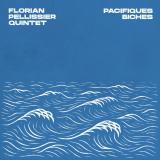
Wild by nature, the Does of the Florian Pellissier Quintet could never be contained in a creative pen that would have forced them never to cross potential geographical limits. Travelers, spending their energy without restraint to let the hard bop of their jazz wander and export itself wherever the groove guided them, they went as far as Africa or South America, from the Cape of Good Hope to Rio. Rio, precisely where, for their last appearance, exposure to a brief electric current had carried them into outer space. A revelation.
Furious strides, exhausting gambols, the Does had done so much that they could not escape the obvious call of calm and serenity. Freed from distances, and after a stop in Colombia to mingle with the crowd at the Barranquilla carnival, it was California and its Pacific coast they reached, to rest before the peaceful immensity of the ocean.
One hundred sixty-five million square kilometers, an infinite expanse to contemplate in order to fling wide open the gates to an even vaster space. A spiritual domain conducive to the search for new sounds. That of the open sea, where measuring miles is neither relevant nor meaningful, and where the only compass becomes the musical tracks the Does follow.
Beneath their coppery hooves, to the crystalline sound of the Fender Rhodes and the sweep of electric layers, the path to take revealed itself in this meditative and abstract realm they had never before explored. Invited to join the purely organic textures, the synthetic notes distilled a few aromas of sweetness into an album of ten tracks, where the FPQ abandoned written scores on some pieces in order to be guided only by the inspiration born of a newfound freedom.
Blue when they began their journey five albums ago, their coat has now taken on the colors that illuminate the Pacific coast. That moment when, as you gaze at the horizon swallowing the sun, only glowing shades filter through—reddish, orange, violet.
Departing without haste or frenzy from one of the shores bordering the ocean, the voices of Archie Shepp, Iggy Pop, and DjeuhDjoah still resonating in their antlers, the Does may now be on the opposite shore. Carried all the way to the Japanese coast by Hokusai’s wave…
Wild by nature, the Does of the Florian Pellissier Quintet could never be contained in a creative pen that would have forced them never to cross potential geographical limits. Travelers, spending their energy without restraint to let the hard bop of their jazz wander and export itself wherever the groove guided them, they went as far as Africa or South America, from the Cape of Good Hope to Rio. Rio, precisely where, for their last appearance, exposure to a brief electric current had carried them into outer space. A revelation.
Furious strides, exhausting gambols, the Does had done so much that they could not escape the obvious call of calm and serenity. Freed from distances, and after a stop in Colombia to mingle with the crowd at the Barranquilla carnival, it was California and its Pacific coast they reached, to rest before the peaceful immensity of the ocean.
One hundred sixty-five million square kilometers, an infinite expanse to contemplate in order to fling wide open the gates to an even vaster space. A spiritual domain conducive to the search for new sounds. That of the open sea, where measuring miles is neither relevant nor meaningful, and where the only compass becomes the musical tracks the Does follow.
Beneath their coppery hooves, to the crystalline sound of the Fender Rhodes and the sweep of electric layers, the path to take revealed itself in this meditative and abstract realm they had never before explored. Invited to join the purely organic textures, the synthetic notes distilled a few aromas of sweetness into an album of ten tracks, where the FPQ abandoned written scores on some pieces in order to be guided only by the inspiration born of a newfound freedom.
Blue when they began their journey five albums ago, their coat has now taken on the colors that illuminate the Pacific coast. That moment when, as you gaze at the horizon swallowing the sun, only glowing shades filter through—reddish, orange, violet.
Departing without haste or frenzy from one of the shores bordering the ocean, the voices of Archie Shepp, Iggy Pop, and DjeuhDjoah still resonating in their antlers, the Does may now be on the opposite shore. Carried all the way to the Japanese coast by Hokusai’s wave…
For our ninth offering we have ventured out of our small but fertile swamp in search of another source of magick. Meandering across boggy pastures new, we crossed paths with Steevio, who sat hovering serenely in the fern covered shade of a nearby valley. Instantly recognising the singular vision of this fabled artist, we hastily gathered our nets and cast them under Steevio’s branches, capturing four beautiful offerings as they wriggled towards us. Upon the return to our mulch, it became clear that we could not contain Steevio’s creations, so willful was their vitality. It was therefore all we could do to release them back to the universal dance from whence they came.
The dance germinates with the writhing polyrhythmic ‘Apricity’. Hearing the crunch of frost laden grass beneath our webbed toes, we look above us to search for the sun. Angular beams of light escape over the horizon, as the warmth of Steevio’s machines coalesce. A glistening hi hat breaks through the membrane to bind his creation and anchor its ever shifting arms.
‘Octopus’ glides gracefully through a sun-dappled kelp forest. Sub frequencies rumble up from the shadowy darkness below, rippling along the fronds as they ascend. As the ocean begins to churn, a wriggling melodic tentacle parts the foliage, gleaming with primordial energy. Its joyful visit to the surface realm leaves us with a brief yet powerful reminder of the mystery beneath.
The glow of the midwinter sun warms our bones on ‘Apricity (Sunrise Mix)’. Percussive elements bubble out of the depths, forming intricate cascading patterns as they grow over the perfectly formed kicks. The moog filter tames the brew with Steevio’s intuitive restraint , until he releases its mighty power upon the gleeful forest dwellers, to their rapturous gratitude.
With ‘Adref’ we return home. The sedate tempo provides oceanic space for a melody which inhales and exhales over a familiar landscape of perfectly tuned percussion. With each breath the melody seems to increase its reach, until it’s buried deep within our bones, its memory resonating on long after it’s gone.
Steevio’s music reflects the universal moments where seemingly chaotic and disparate elements are suddenly revealed to be perfectly harmonious. Of course examples of this are always universally present in nature, and have been eternally, but we have to be reminded to appreciate them. In the same way that a wave deposits a perfect line of shells on a beach, dew freezes on grass, or individual strands of mycelial hyphae bind together to form incredible patterns, Steevio’s music is likewise; effortlessly considered. For us, it has more in common with the unrelenting flow of a river than it does with dance music. It is psychedelic music in the same sense that nature is intuitively psychedelic; without ever leaning into any tried tropes of what is culturally considered ‘psychedelic’ music.
Where music resists becoming personal confession, it creates its own narrative - abstract, precise, and unbound by outside noise. Vibraform by Berlin-based hardware and live artist Peryl provides an analytical yet deeply instinctive view on music. It reflects the duality between flow and restraint, between self-exploration and the healthy act of setting limits. At its core lies a certain nonchalance - a refusal to act on voices and trends while maintaining full commitment to sound itself. Meticulous sound design, unpredictable, morphing basslines and an intentional timeless aesthetic offer a rare window into Peryl's creative state of mind. Even as he tries to sidestep personal narratives, emotions inevitably surface in the music, subtly shaping its character. The result is not a confessional piece of work, but an abstraction that remains universal rather than private, while still carrying a trace of personal truth. Four tracks that are striking a rare balance between novelty, grace and aggressive functionality, including a remix by R?dh?d, offer to find purpose in the act of believing that sooner or later art reveals a logic of its own. ? 2025 The Third Room All tracks written & produced by Dennis Strobel B2 remixed by Mike Bierbach Mastered by Ahmet Sisman Artwork by Daniel Bornmann & Lennard Makosch (STUEDIO.XYZ) Distribution by Clone Pressing by Matter Of Fact
Dutch based producer Ivna Ji, originally from Croatia, and Mexican artist G13ck (Daniel Vela) introduce their joint imprint Parcela Sound with Archways, a six track release moving through complex rhythm structures, shadowy atmospheres, and deep low frequency currents.
The record balances wide melodic sweeps and distorted textures, building tension between restraint and intensity. Collaborations with Düsseldorf based saxophonist/vocalist Amber Pine and Italian/Dutch producer Riccardo Izzo (Fatalist/Flooder) bring vocals and lyrics into the record, giving it a more direct emotional pull.
The project was shaped mainly in Ivna Ji’s home studio with just a few instruments, including Moog’s DFAM and her favorite DSI Evolver, alongside sessions at Zarkoff’s Sensorium Studio, where she focused on mixing and heavily relied on the Sequential Prophet 6, which ultimately proved to be the key ingredient every track was missing.
Mastering was handled by Filip Motovunski, whose sharp ear and precision brought the record to life with clarity and impact, giving the low end full weight without losing the finer details.
Parcela Sound grew out of more than a decade of friendship and collaboration between Ji and Vela, first sparked by a casual exchange of thoughts and admiration developed over years of sharing ideas and supporting each other’s projects, including releases on Vela’s labels Aztlán and Baox. With Parcela, they created a platform that supports emerging and often overlooked artists, some of whom have become close friends over the years.
The artwork by Croatian designer Ugruv Smek, featuring a gecko motif, ties the launch to their shared roots and playful approach.
Archways marks the first chapter of Parcela Sound, a platform for music created with curiosity, care, and connection.
- A1: Displacement (Kmru Rework) Feat Kmru
- A2: Reprisal (Penelope Trappes Rework) Feat Penelope Trappes
- A3: Empire Systems (Kevin Richard Martin Rework - Iced Mix) Feat Kevin Richard Martin
- B1: Ausencia (Mabe Fratti Hiatus Rework) Mabe Fratti
- B2: Persistence (Abul Mogard Rework)Feat Abul Mogard
- B3: Secretly Wishing For Rain (William Basinski & Gary Thomas Wright Rework)
A decade after its release, A Fragile Geography returns transformed. This limited edition cassette accompanies the AFG10 anniversary reissue, offering an inspired re-envisioning of Rafael Anton Irisarri’s landmark compositions. Reworks presents distinctive readings of these pieces, with each artist leaving their personal mark on the material. The titles remain unchanged, with the sole exception of “Hiatus,” reborn here as “Ausencia.” Together, these reimaginings extend the emotional cartography of the album into new terrains.
KMRU reframes “Displacement” with expansive, glimmering layers that open into meditative ambient landscapes. Nairobi born and Berlin based, he is known for morphing field recordings into vivid aural experiences, often capturing the texture of footsteps, foliage, and distant city life and weaving them into contemplative soundscapes. In this version he introduces subtle new sounds, including stringlike synths that trace and heighten the piece’s emotional arc. The result invites close listening, offering enveloping tones where the organic and the synthetic gently collide and flow.
Penelope Trappes renders “Reprisal” as a voice-led invocation of the delicate and the intimate. Her wistful vocals bloom with fragile sorrow, rising over shimmering strands of strings to create a sound world at once sacred and shadowed. She is adept at channeling inherited grief into music that is transcendent and otherworldly. The interplay of her voice, the strings, and her use of space and depth draws those qualities into Irisarri’s orbit, imbuing “Reprisal” with the same spiritual weight and clarity that define her most powerful work.
Kevin Richard Martin (a.k.a. The Bug) transforms “Empire Systems” into a cavernous “Iced Mix,” driven by polyrhythmic double bass motifs and sculpted from subterranean pressure and negative space. Known for pushing sound to its physical limits, Martin brings the stark intensity of his dub and noise infused practice into Irisarri’s architecture. The track seethes with harmonic distortion and erupts in white noise rhythms, its brooding low end depth and icy reverberant textures amplifying the tension. Vulnerability and force are set in stark relief, as silences feel as heavy as the bursts of sound themselves. The result is a stark study in atmosphere, restraint and impact, reframed through Martin’s singular lens of sonic mass and low end intensity.
On Side B, Mabe Fratti opens with a cinematic, dreamlike, Lynchian reimagining of “Hiatus” in her native Spanish (“Ausencia”). She threads cello and voice so wondrously that her rendering feels at once hauntingly beautiful and disquieting. Emotionally charged melodies shift in unexpected directions, while her soft, intimate vocals hover above Irisarri’s brooding synth textures. Fratti’s gift for blending experimental and avant pop sensibilities with visceral, emotionally powerful expression shines resplendently here. She gives voice to Irisarri’s reflections on the passage of time and his growing desire to reconnect with his familial roots.
Abul Mogard stretches “Persistence” into a vast drone elegy. A master of patient sound sculpting, Mogard layers evolving waves of analog synths into a dense shroud that radiates its own internal light. Gradual surges of tone and subtle harmonic shifts emphasize the piece’s endurance and inevitability. Irisarri’s original composition, in Mogard's hands, becomes a rumination on time’s unrelenting flow. Melancholy and transcendence coexist in equal measure in this engulfing, cathartic rework.
William Basinski and Gary Thomas Wright close the cycle with a spectral version of “Secretly Wishing for Rain.” Basinski’s field recordings of Reseda rainfall and birdsong, which open and close the rework, add a personal touch and evoke the imagined sound of a grainy film reel flickering to life. The piece suspends Irisarri’s yearning for the Pacific Northwest, lodging it hazily between memory, place and an unreachable dream. It feels like a fading recollection, half forgotten and half felt. A final gesture that dissolves the album into vapor, leaving the listener adrift in its lingering afterglow.
Mastered with great care by Stephan Mathieu and featuring a remixed version of the original artwork by Daniel Castrejón, this edition refracts the language of the original through new prisms. Less a return than a passage, across time, across interpretation, into uncharted emotional realms.
Sophisticated, immersive, and built for the heads. Primary Colours delivers a refined exploration of deep, dub-influenced house with Dislocation by Stelios Vassiloudis. Crafted with precision and restraint, the EP flows through hypnotic rhythms and subtle atmospheres. Ohm & Kvadrant rework the title track into a spacious dreamscape, while Stefan Gubatz closes with a timeless dub-tech excursion.
Returning with its final instalments, Die Schachtel's Decay Music series extends its explorations of inspired contemporary experimental efforts of the ambient, ethereal, and emotively abstract with Luigi Turra and Elio Martusciello’s “Liminale” and Sergio Armaroli and David Toop’s “And I Entered Into Sleep”, two astounding electroacoustic gestures of blurred space and time, plumbing complexity of meaning bound to sonority. Creatively groundbreaking and inspired, radically rethinking the terms of what ambient music can be perceived to be, they stand among the most striking efforts to appear within the series to date.
An aural bridge between two distinct generations of Italian experimental musicians, “Liminale” is the debut collaborative outing from the creative partnership of Luigi Turra and Elio Martusciello. Active within the context for roughly two decades, Turra (b. 1975) is a reductionist/electroacoustic composer, noted from his tense deployment of concrete and acoustic sources — particularly small sounds and noises — whose work threads the balance between silence, tactile auditory perception, and aleatoric music. Martusciello (b. 1959), on the other hand, is a musician and composer working across the fields of acousmatic and electroacoustic composition, sound installation, multi-media and audiovisual art, and computer music improvisation, who is widely celebrated for both his solo efforts and his collaborations with Eugene Chadbourne, Mike Cooper, Alvin Curran, Chris Cutler, Rhodri Davies, Iancu Dumitrescu, Michel Godard, Tim Hodgkinson, Lawrence D. "Butch" Morris, Jérôme Noetinger, Tony Oxley, Evan Parker, Z'EV, and others.
A single, nearly 40 minute work, extending across the two sides of the LP, “Liminale” — as its title eludes — is an exploration of the liminal through sonic means: “places that exist on the threshold, transitional spaces suspended between a before and an after, between the real and the evanescent” conceiving the soundscape as “a liminal place, a space to be inhabited without the certainty of where it leads.” Unfurling like a labyrinth navigated in darkness, the piece’s first half is marked by sparseness and restraint, as slow-paced guitar tones and harmonics thread silences and resonant ambience within a sprawling sense of space, delicately populated by tiny sounds, fleeting punctuations drawn from undeterminable sources, vocal utterances, and the unexpected appearance of intoxicating piano tones.
As “Liminale” progresses into its second half, Turra and Martusciello enter a more densely populated notion of the in between. No less defined by the presence of space and mystery, discreet textures rustle and writhe within passages of pure concrete abstraction and a fragmented, stretched sense of musicality: long-tones, metallic pulses, minimal vibrations, processed vocalizations, guitar harmonics, and deconstructed piano melodies, buried in spectral, gauzy hazes drifting from beyond arm’s reach within an imagistic and immersive landscape of profoundly meditative scope, where each sonic element flirts the line between emergence and disappearance.
Intimate, fragile, and achingly beautiful, “Liminale”, Luigi Turra and Elio Martusciello’s debut collaboration, is a masterstroke in sound-craft and composition, revealing the potency of meaning locked within transitional spaces and the undefined, and imbuing silence with monumental gravity and weight. Mastered for vinyl by Giuseppe Ielasi, and taking electroacoustic minimalism to an etherial extreme, “Liminale” is issued as the ninth entry in Die Schachtel’s Decay Music series, highlighting inspired contemporary experimental efforts of the ambient, ethereal, and emotively abstract.
Ostinato as resistance: Rafael Anton Irisarri’s landmark work reimagined. Marking the tenth anniversary of the American composer’s critically acclaimed album 'A Fragile Geography', this new edition arrives renewed, both sonically and visually.
First released in 2015 (Room40) during a period of personal upheaval and creative reinvention, it endures as a testament to resilience, transformation, and the connection we hold with the places that shape us.
Written in the aftermath of a devastating theft, A Fragile Geography was born out of loss. Just days before a cross-country move to New York, Irisarri’s entire Seattle-based studio was wiped out. Instruments. Recordings. Archives. Gone without a trace. He arrived on the East Coast to an empty room and the daunting task of starting over.
“This album wasn’t just a record; it was a lifeline,” Irisarri reflects. “It became a way to process the emotional chaos that followed: uprooting, instability, and ultimately, the slow, intuitive rebuilding of a life.”
Composed and recorded in the rural woods of the Hudson Valley, the album took shape in seclusion, surrounded by nature, and through a process guided by improvisation. Embracing limitations, Irisarri wove textural layers of field recordings with half-remembered melodies from his Seattle years, piecing them together like fragments of memory. Tracks like “Displacement,” “Hiatus,” and “Persistence” juxtaposed haunting stillness with restless momentum, mapping an inner terrain of grief, catharsis, and rebirth.
Among its defining sounds is “Empire Systems,” a monumental centerpiece built around a simple four-chord progression, organ textures, and guitar drones. Gradually, the track expands into layers of immersive loops and thick, enveloping distortion that wash over the listener like a rolling wave. Often cited as the album’s most majestic passage, it captures Irisarri at his most sonically ambitious. With a harmonically saturated structure crafted from restraint and repetition, it remains one of his most recognizable compositions: an exercise in the art of maximal minimalism.
From the outset, “Reprisal” received praise from BBC’s Mary Anne Hobbs, who championed the track on her radio show. Her support played a key role in introducing Irisarri’s work to wider audiences and solidifying his place within the lineage of electronic, drone, and experimental sound artists. A slow-burning elegy, the piece emerges from a haze of distortion and sub-bass, with dense, unrelenting drones carrying a sense of mounting tension. Just as it seems to collapse under its own weight, flickers of guitar emerge like distant light through fog. It’s a meditation on dissonance, resolve, and the elusive possibility of release.
The closing track, “Secretly Wishing for Rain,” is steeped in saudade: a longing for Seattle’s dour grey skies, lush green landscapes, and desaturated sunsets. Through it, Irisarri mourns a vanished chapter of life bound to the city, a time documented in scattered mementos and cherished collections, now permanently gone. A reflection on what could never be recovered: an era lost to time. Julia Kent’s looped cello motifs added a melancholic warmth to the track, marking the first collaboration between the two artists and sparking a musical dialogue that would keep growing in the years that followed.
More than a career highlight, A Fragile Geography has laid the foundation for Black Knoll studio, which Irisarri rebuilt from the ground up. The studio has since grown into a creative hub for countless projects, with Irisarri engineering records for iconic music figures like Terry Riley, Ryuichi Sakamoto, William Basinski, MONO, Devendra Banhart, Grouper, Emeralds, Steve Hauschildt, Julianna Barwick, and many others. Carried by its lasting influence, the album has quietly captured the ear of a younger generation, its sound and emotional arc finding new listeners in unexpected corners.
The album’s new visual language was reimagined in collaboration with Mexico City–based designer Daniel Castrejón. Irisarri captured ghostly images at Gaztelugatxeko Doniene, a historic coastal site in Bermeo, Euskal Herria. Castrejón then treated the photographs with distressed textures and spectral overlays. The final artwork channels the rugged, elemental forces that shaped both the music and Irisarri’s aesthetic, renewing his ties to ancestral ground inspired by the Basque homeland of his bloodline.
Mastered by Stephan Mathieu with exceptional attention to detail, this anniversary edition uncovers every nuance in the sound design, enhancing clarity and presence. With each listen, new elements emerge, inviting discovery and reconnection.
“I don’t experience this album as a document of grief anymore,” says Irisarri. “I hear adaptation and I'm reminded that when everything falls apart, something meaningful, maybe even beautiful, can emerge.”
Ostinato as resistance: Rafael Anton Irisarri’s landmark work reimagined. Marking the tenth anniversary of the American composer’s critically acclaimed album 'A Fragile Geography', this new edition arrives renewed, both sonically and visually.
First released in 2015 (Room40) during a period of personal upheaval and creative reinvention, it endures as a testament to resilience, transformation, and the connection we hold with the places that shape us.
Written in the aftermath of a devastating theft, A Fragile Geography was born out of loss. Just days before a cross-country move to New York, Irisarri’s entire Seattle-based studio was wiped out. Instruments. Recordings. Archives. Gone without a trace. He arrived on the East Coast to an empty room and the daunting task of starting over.
“This album wasn’t just a record; it was a lifeline,” Irisarri reflects. “It became a way to process the emotional chaos that followed: uprooting, instability, and ultimately, the slow, intuitive rebuilding of a life.”
Composed and recorded in the rural woods of the Hudson Valley, the album took shape in seclusion, surrounded by nature, and through a process guided by improvisation. Embracing limitations, Irisarri wove textural layers of field recordings with half-remembered melodies from his Seattle years, piecing them together like fragments of memory. Tracks like “Displacement,” “Hiatus,” and “Persistence” juxtaposed haunting stillness with restless momentum, mapping an inner terrain of grief, catharsis, and rebirth.
Among its defining sounds is “Empire Systems,” a monumental centerpiece built around a simple four-chord progression, organ textures, and guitar drones. Gradually, the track expands into layers of immersive loops and thick, enveloping distortion that wash over the listener like a rolling wave. Often cited as the album’s most majestic passage, it captures Irisarri at his most sonically ambitious. With a harmonically saturated structure crafted from restraint and repetition, it remains one of his most recognizable compositions: an exercise in the art of maximal minimalism.
From the outset, “Reprisal” received praise from BBC’s Mary Anne Hobbs, who championed the track on her radio show. Her support played a key role in introducing Irisarri’s work to wider audiences and solidifying his place within the lineage of electronic, drone, and experimental sound artists. A slow-burning elegy, the piece emerges from a haze of distortion and sub-bass, with dense, unrelenting drones carrying a sense of mounting tension. Just as it seems to collapse under its own weight, flickers of guitar emerge like distant light through fog. It’s a meditation on dissonance, resolve, and the elusive possibility of release.
The closing track, “Secretly Wishing for Rain,” is steeped in saudade: a longing for Seattle’s dour grey skies, lush green landscapes, and desaturated sunsets. Through it, Irisarri mourns a vanished chapter of life bound to the city, a time documented in scattered mementos and cherished collections, now permanently gone. A reflection on what could never be recovered: an era lost to time. Julia Kent’s looped cello motifs added a melancholic warmth to the track, marking the first collaboration between the two artists and sparking a musical dialogue that would keep growing in the years that followed.
More than a career highlight, A Fragile Geography has laid the foundation for Black Knoll studio, which Irisarri rebuilt from the ground up. The studio has since grown into a creative hub for countless projects, with Irisarri engineering records for iconic music figures like Terry Riley, Ryuichi Sakamoto, William Basinski, MONO, Devendra Banhart, Grouper, Emeralds, Steve Hauschildt, Julianna Barwick, and many others. Carried by its lasting influence, the album has quietly captured the ear of a younger generation, its sound and emotional arc finding new listeners in unexpected corners.
The album’s new visual language was reimagined in collaboration with Mexico City–based designer Daniel Castrejón. Irisarri captured ghostly images at Gaztelugatxeko Doniene, a historic coastal site in Bermeo, Euskal Herria. Castrejón then treated the photographs with distressed textures and spectral overlays. The final artwork channels the rugged, elemental forces that shaped both the music and Irisarri’s aesthetic, renewing his ties to ancestral ground inspired by the Basque homeland of his bloodline.
Mastered by Stephan Mathieu with exceptional attention to detail, this anniversary edition uncovers every nuance in the sound design, enhancing clarity and presence. With each listen, new elements emerge, inviting discovery and reconnection.
“I don’t experience this album as a document of grief anymore,” says Irisarri. “I hear adaptation and I'm reminded that when everything falls apart, something meaningful, maybe even beautiful, can emerge.”
Inner Zone returns to space•lab with an immersive EP exploring the meeting point of deep techno and progressive minimalism, shadowy rhythms and spatial resonance.
Folded Realm opens the release with a hypnotic pulse, drawing from the darker edges of the Inner Zone sound with precision and restraint. Goa’s Kohra steps in on remix duties, transforming the original into a tunnelling techno weapon — dense, focused, and primed for the floor.
Spiral Form is a slow-burn evolution, unfolding in layers of submerged textures and flickering synth work. Closing the EP, Fallout breaks formation with a menacing, breakbeat-driven excursion through scorched sonic terrain.
2025 Repress
Founded by Rene Wise, Moving Pressure is a record label aimed to explore the immersive dialogue between soundsystem music and the human body, celebrating the profound connection of sound and movement.
As the inaugural release, Moving Pressure 01 serves as a sonic diary showcasing Rene Wise's music storytelling. Each track on the EP contributes to a harmonious blend of innovation and restraint, inviting listeners to embark on a captivating journey through the artistry of sound and rhythm. Sometimes, it's the space between the notes that resonate the loudest.