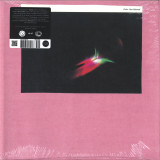
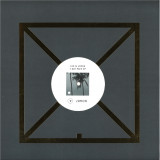
Imaginary friends Akka & BeepBeep share the third release on their label: Floral Ancestors by Raduns. The 12” offers blooming ambient rooted in dub, lush drone and hand-picked cosmic that’s all grown deep in Detroit.
Spacious sonic arrangements vividly swell yet keep grounded within a sculptural rhythmic core. Raduns sows synth basslines and wispy pads next to harmonious guitars and muted field recordings. Grooving propulsion drives throughout. Rhythms appear, in negative space, like outlines between leaves. Recorded with machines direct to SD card, the compositions represent ephemeral blessings of experience. As if strolling into a verdant conservatory, the layered and diverse sensations blend into one cohesive revelatory experience.
On their first record, Raduns draws an ancestral line in Detroit as inspiration. A time when you could ride a streetcar from Dexter-Linwood to Belle Isle. A time before freeway expansion demolished vibrant Black neighborhoods. A time before the rebellion, motown and white flight. A time when Raduns’ great-grandparents were florists in the city, serving the community in times of celebration and times of grief. This melancholic circle shapes the project in which Raduns summons these Floral Ancestors, stretching upward from the darkness of the earth into the light of the world back down once more.
AKKA’s Side: “Grass Boulevard” exhales a luscious soundscape that develops through wave-crashing synths and circulated guitars to a transplanted acid lead. “Spread” lays out a decoration of blended sample and hold synth with kosmische styled guitar licks. Tracked as a single take in a Detroit community studio, the tune intuitively reseeds the symbiotic sprout between krautrock and Detroit techno.
BEEP’s Side: “Metrograde Bouquet” submerges you into the bulb of a handcrafted vase. Dub techno roots grow out into murky water with energy that is subtle yet profound. “Oldest of Arrangements” textures breaths of misty air cascading ventilating in on itself. The track’s time seems to stretch and disappear within a dark and deep undercurrent. A harmonic and reverberant resonance closes the record in a flowering of beauty and peace.
“You’re a flower child. Put this music out.” - Someone Important in Detroit
Поиск:reve recordings
Все
- A1: Afterworld
- A2: Japanese Medicine
- A3: All These Things
- A4: Hibernation
- A5: Voiceprint
- B1: The Day Before
- B2: Deep Below
- B3: Nature Breaks
- B4: Sleepwalking
Rats on Rafts descend further into the brooding wasteland on their new album ‘Deep Below’, a darker, slower, eroded sound from the Rotterdam band. Highlighting different shades within the monochrome landscape compared to their previous, more colourful albums: they dive deeper into their psyche, questioning our relationships with nature, religion and each other. Echoes of The Cure, Cocteau Twins and Slowdive seem present yet so many different influences make up an album that only they could create. It sees Rats on Rafts coming of age whilst raising their heads from the underground. Forever drifting into new territory, ‘Deep Below’ is certainly their darkest and most cohesive work to date. True to their analogue recording process, the tape machines, reverbs, echoes and vital new ingredients: the Soundcraft 1s mixing desk (Used by Lee Perry) and the eerie sounding Eminent String Ensemble synth all amplify the authentic sounds of the 1980’s without sounding like a relic. ‘Japanese Medicine’ is a haunting minor chord piece driven by debris of icy chiming guitars, galloping drums and waves of lush synths. lyrically it gathers memories of teenage friendship, littered with cigarettes, life-changing records, punctuated with the dark thoughts and the demons they summon up. Though the band have kept the songs relatively slow-paced and sparse, deeper ruminations of mortality and alienation creep through the cracks. ‘Nature Breaks’, the most propulsive song on the record, thematically locks into this notion, as Fagan meditates on human impulse in the face of abject survival, and how those situations often unlock one's true self. You may conclude Rotterdam’s Rats on Rafts relationship with the past is complicated. ‘The Moon Is Big’ (2011) ‘Tape Hiss’ (2015) and ‘Excerpts From Chapter 3’ (2021) are truly gripping analog timestamps of a band refusing to give in to the supposed ‘progress of the world’ instead forging their own way each time. ‘Deep Below’ is Rats on Rafts’ most minimalist work since their 2011 debut. Where the latter album was fuelled by a brash bravado, these recordings meditate on sentiments of doubt, loss, and ageing. “One of the great contemporary European rock bands” Louder Than War
’之 / OF is a word that can be used as a preposition to express the relationship between a part and a whole. It is an unfinished tone, a broken sentence, a start and a whole. It is sustainable, full of potentials and longings.’’
London based performance and sound artist Li Yilei shared an experience familiar to many migrants during the past year of COVID-19 chaos. With their UK visa set to expire, and family back in China, Li made a last-minute dash to return to their nation of birth. Able to board one of the last few flights to China during the initial turmoil of the coronavirus outbreak, Li made it back to Shanghai for a two-week stint in a quarantine hotel.
Though Li had already begun creating OF, the reality of the pandemic began to seep into the recordings. Each of the 12 tracks is a study in horology, using metaphorical sound transcriptions and atmospheric extractions to focus on the temporal relationship between experience and surroundings. Li’s awareness of their own understanding of time became increasingly heightened during quarantine and the emotional involvement found within these new realities informed many of the sounds created.
‘’I tried to portray each song as a short, scattered poem - a moment that I captured to represent each hour.’’
Composed using analogue synthesisers, vocal samples, field recordings and string instruments such as the violin and guqin, Li indulges in moments of grief, panic, healing, cessation, melancholy, vastness, hope, joy and emptiness as they explore the acoustic relations between humans and the many forces of nature.
The art of the Song Dynasty, with its ancient traditions of poetry and timekeeping, were also great sources of inspiration for the album - whilst paintings from the period, specifically those of flowers and birds, are common themes throughout the tracks. Indeed, it is within the vastness of time that the album artwork comes to relevance. The eighth emperor of the Song Dynasty, Huizong, was a revered artist and a scene from his work ‘Finches and Bamboo’ adorns the album cover.
- A1: Home
- A2: The Plan
- A3: How Does It Feel?
- B1: All To Blame
- B2: This Is Me Trying
- B3: Revenge
- C1: One By One
- C2: You’ve Ruined Everything
- C3: I Hate You
Das französische Rock-Quartett Last Train aus Lyon kündigt sein drittes Studioalbum 'III' für den 31. Januar 2025 an! Aufgenommen wurde das Album mit dem langjährigen Produzenten und quasi fünften Mitglied Rémi Gettliffe in einem verfallenen Schloss mitten in Frankreich mitten im Winter. Dementsprechend düster, aber vor allem wütend klingt die neue Platte. In den letzten Jahren konnte sich die Band nicht nur eine engagierte und leidenschaftliche Fangemeinde aufbauen, sondern verdienten sich auch die Anerkennung von Bands wie Muse und Placebo, die beide Last Train einluden, sie auf Tour zu begleiten. Ähnlich wie die beiden britischen Rockgiganten hat Last Train mit 'III' ein Album voller atemberaubender Kontraste geschaffen, mit einer rohen Dynamik, die einen direkt fesselt. Von ungezügelten, lauten Gefühlsausbrüchen bis zu ruhigeren - manchmal packenden, manchmal bedrohlichen Momenten, leben die neun Songs auf 'III' von einer Leidenschaft und Intensität, die ihresgleichen sucht.
- A1: On Green Dolphin Street
- A2: Fran-Dance
- B1: Stella By Starlight
- B2: Love For Sale
Mastered by Matthew Lutthans at The Mastering Lab from a new 30 ips quarter-inch stereo master tape transferred from the original 3-track session tapes. Plated and pressed at Quality Record Pressings for flawless production and superior fidelity! Stoughton Printing Old Style tip-on gatefold heavyweight jacket with scuff-resistant matte finish.
Miles Davis's Kind of Blue was the number-one jazz album in history. It totaled five songs. There are four more songs from that same historic group, recorded in the same time period and at the same studio. And here they are. These songs deserve to stand on their own with artwork to highlight the quality of the music and that matches the time period of the recording. This is a rare opportunity to have a smash follow-up to what many consider the greatest jazz record ever!
Through the years, these four remarkable performances — all from a single recording session in 1958 and all exemplary of the sound of Miles Davis' legend-loaded sextet of that year — have not been served well. They have been largely treated as add-ons for other compilations. Now, for the first time, Analogue Productions, the audiophile in-house reissue label of Acoustic Sounds, Inc., together with Quality Record Prssings, has deservedly given these tracks a stellar stand-alone release for jazz fans to savor!
The once-in-a-generation lineup that recorded these tunes is the very same that would be immortalized for the enduring classic they would record almost a year later, Kind of Blue. Davis played trumpet sublime with his ensemble sextet featuring pianist Bill Evans, drummer Jimmy Cobb, bassist Paul Chambers, and saxophonists John Coltrane and Julian "Cannonball" Adderley.
Undervalued since their recording, the tunes on this album reflect historial and musical significance. They offer early glimpses into the modal jazz that Kind of Blue would bring to the forefront. Using modes common in modern classical music, rather than the chords of popular songs, Miles had begun to experiment with the new approach on the Milestones recording sessions previously.
Analogue Productions is proud to present Birth of the Blue in an exclusive first-of-its-kind stand-alone release that reflects our reputation for meticulous production, capturing authentic sound with clarity, depth and fidelity that exceeds the audiophile standard.
For this release, we started with the original 3-track recording session tapes that were mixed down to a brand-new 30 ips quarter-inch stereo master tape by senior mastering engineer Vic Anesini at Battery Studios. From that stereo master tape, Matthew Lutthans at The Mastering Lab cut the lacquers at 33 1/3 RPM utilizing the legendary Doug Sax's custom all-tube system and cutting lathe. The lacquers were plated and pressed on 180-gram vinyl at Quality Record Pressings. Lastly, the Stoughton Printing tip-on gatefold jacket with a deluxe scuff-resistant matte finish is the highest quality available. The artwork has an incredible spot-on look to a 1959 Columbia records release!
Features:
• Pioneering Ensemble: Captured the same rare and short-lived alignment of jazz legends including Miles Davis, John Coltrane, Cannonball Adderley, Bill Evans, Paul Chambers, and Jimmy Cobb, as heard on the historic Kind of Blue.
• Innovative Sound: The session represented a crucial transition in jazz, blending elements of hard bop with early modal jazz influences, showcasing the ensemble's experimentation and forward-thinking approach.
• Undervalued Legacy: Despite its historical and musical significance, the session's recordings have been historically overlooked, often relegated to being add-ons in compilations rather than recognized as standalone masterpieces.
• Modal Jazz Precursor: Offered early glimpses into the modal jazz that would later be fully realized in Davis's groundbreaking album "Kind of Blue," laying the groundwork for future jazz innovation.
• Impact on Artists: Served as a critical point of development and confidence for the musicians involved, particularly Bill Evans, who noted the significant impact of this experience on his own identity and style.
• Historical Context: Occurred at a peak moment in Miles Davis's career, following his signing with Columbia Records and his critical and commercial successes with albums such as ‘Round About Midnight and Miles Ahead.
• Revealed backstory: Extensive liner notes by the Grammy Award-winning author Ashley Kahn, who also penned the estential book, Kind Of Blue — The Making Of The Miles Davis Masterpiece
Born and raised in Argentina, Morita Vargas is an experimental artist and producer based in Buenos Aires. She manipulates her voice through reverbs, delays and whispers, singing in a self-invented 'language'. The sound of Morita’s voice is a portal into her thriving, dreamlike world brimming, shimmering and beating with unrefined natural sensations which stimulate something primordial yet strangely contemporary.
As far back as 2014 she began work on her first productions - early sketches which later became the basis for ‘8’. It all started off as voice memos on her phone (recorded while roaming the streets and riding the trains of Greater Buenos Aires). Later on, Morita introduced various instruments into her vision: kalimba, harmonica, keyboard, flute, tambourine, chajchas, and cajón. Composed and performed from that period until its original release in 2018, ’8’ features 10 original voice-led compositions that in scope recall evocative portraits of synthesized landscapes and rainforests, attuned to a vibrant modern pulse and enchanting vocals. Morita Vargas “8” has achieved a kind of polyphonic soundscape which evokes unfamiliar realities through voyages within and between the realms of ambient and experimental music.
In numerology the number 8 symbolizes the transition between heaven and earth, the illumination of our infinite capacity for various metamorphoses. Tackling ideas of transformation, mutation, cyclical processes, death, creation, melancholy, and joy, the album you are holding is a monumental and deeply personal statement. You are invited to walk barefoot down the mystical path and indulge in the process of spiritual expulsion and renewal that is ‘8’. The path lies along the route of infinite meanings, somewhere on the border between dream and reality.
On his third album as Etelin, Alex Cobb explores the intricacies of separation and belonging using field recordings and electronics, reconfiguring the dividing line between what is artificial and natural in the process. Maintaining a sense of playful reverence and lurking melancholy in its glitchy pastoralism, Patio User Manual hums with a meticulous and singular energy. From the loops and static pulses of "The Chemistry of Cobalt" to the tension and release of "Electrical Sailing," the listener is pulled into a sound world at once ambivalent and radiant, reaching its denouement in the lovely melody that closes the final track, "Picnic at Gas Station Park". Although the album might bring to mind the nuanced and imaginative ambient music published by labels such as Mille Plateaux, Sonig, and Silent Records in the 1990s, it is, in the end, a world of its own and very much of today. The patio as a stage for alienated life, pyrrhic in its isolation, deceptive in its promise of distinction. Orientation as disorientation, often unseen inside the frame but felt in the bones. What is out there, anyway, other than the thing we fear the most?
"Another day of weird weather and screens. What type of perfume did Philip Johnson wear when he designed Glass House? Is it actually possible to flee to the country when you’ve internalized a lifetime of intellectualized urban living? When you buy a DIY patio kit, you get instructions for how best to embed concrete or brick or flagstone into the natural world. The patio will make you enjoy your environment more. It will become yours. You can stand on it and think “this is Mine.” The structuralists talked about the importance of fixed camera position, but didn’t properly interrogate it because to do so would be impossible. It’s hard to believe that it really wasn’t long ago that computer music seemed exciting, novel, even radical. We’re now thoroughly estranged from eating what’s in season. Walking around the woods in southern Ohio in spring, I thought about the curious imperative of the patio, how my kids get excited about picking oyster mushrooms, the dynamics of switched capacitor filters, and how adequacy is tethered to doubt." - AC, May 2024
- Limehouse Blues
- Stars Fell On Alabama
- Wabash
- Grand Central
- You're A Weaver Of Dreams
- The Sleeper
Cannonball Adderley Quintet in Chicago is revered among jazz aficionados as an essential document of late 1950s hard bop
It captures two of the greatest saxophonists in jazz, Adderley and Coltrane, at a time when they were both at a creative peak. The album is a vital recording from a golden era in jazz, featuring a rare and electric partnership between two saxophone giants. Its hard bop foundation, infused with hints of modal jazz, places it among the most important recordings of its time. The album was recorded the February 3, 1959 during a time when Adderley was playing as part of Miles Davis' group, and it captures the quintet during a pivotal moment in jazz history. On Cannonball Adderley Quintet in Chicago, you can hear Coltrane at a transitional stage, balancing between his earlier bebop style and the modal, more avant-garde approaches he would later pursue. His interaction with Adderley is fascinating because it blends his dense harmonic language with Adderley's more traditional, bluesy approach.Cannonball Adderley had been recruited by Miles Davis in 1957, joining what would become one of the most influential jazz groups of all time. Adderley's style was deeply rooted in the blues, and he brought a strong sense of soulfulness and swing to the Davis group. While Davis' style was often cool and restrained, Adderley's alto saxophone was the opposite: robust, fiery, and emotional. Adderley's command of the instrument was remarkable, and his ability to balance technical prowess with a highly accessible, bluesy feel is on full display throughout Cannonball Adderley Quintet in Chicago . His solos are expressive and lyrical, often imbued with a sense of joy and exuberance. This makes for a perfect contrast to Coltrane's playing, which at this point was becoming more dense and harmonically complex
DJ Support: Sharam, Hot Since 82, Cid Inc, Groove Armada, Shadow Child, Technasia
In 2015, two remixers on their respective thrones in techno and house were contacted to rework the classic.
Matador and Shiba San both delivered compelling renditions that capture the original's darkness, paired with their unique styles of delivery.
Matador's remix extends the dark subversiveness of the original, incorporating sweeping, reverb-drenched textures and ominous synth patterns. The looming mix is a sure-tobe room filler at this year's ADE.
The second remix is exactly what you'd expect from Shiba San a distinctly G-house groove built around gigantic bass and a distinct sexiness that will resonate with crowds regardless of their appreciation for house music.
On FORGIVENESS, SLIM0 sets the scene with a scream tearing apart the silence. “Stars! I’m Coming!” introduces the Danish/Montegrinian/Iranian trio's debut album in mere 1:11 mins; it’s disruptive, energetic, almost scornful. The stage is filled with a multitude of characters at high pace, but are we witnessing a comedy or a tragedy? The opening soon gives way to a much gloomier mood throughout, revealing a full body of work conveyed through personal takes on classic rock tropes with SLIM0 as the omniscient narrator.
FORGIVENESS came to life through long live session jams and recordings melted into their rawest essence by the enigmatic artist and producer Aase Nielsen, who has closely collaborated with the group in forming their first full length release. Urgency, noise and desire characterise the musical and artistic expression on the record, where hardcore rock lives side by side with pop cultural references. On previous releases, SLIM0 have drawn upon choir, alternative indie, prog rock and grunge (EPs ‘sol i øjet’ and ‘lifespan’ as well as multiple singles). FORGIVENESS sees them cultivating all of these elements while stepping into an even meaner space, and which better place to go to for this than the world of punk, rock, doom.
Cassette[14,08 €]
Awesome Tapes From Africa the label began over 10 years ago with the reissue of Nahawa Doumbia’s Vol. 3. The recording kicked off a successful run of classic and new recordings from artists across Africa, being made available for the first time in the international marketplace. ATFA makes it possible for artists to expand their fanbases and revenues streams with legally licensed recordings and a 50/50 profit split. For its 50th release, ATFA presents iconic Malian singer Nahawa Doumbia’s beloved Vol. 2
"This is the time that we, who have benefitted from the Last Poets shouldbe able to say, 'it's the Last Poets. It's them we should be honouring, because we did not honour them for so many years_"
KRS One wasn't just addressing the hip hop fraternity when he uttered
those words by way of introducing the video for Invocation - a poem
written thirty years ago, around the time of the Last Poets' last significant comeback. He was speaking to everyone who's been affected by the word, sound and power issuing from the most revolutionary poetry ever witnessed, and that the Last Poets had introduced to the world outside of Harlem at the dawn of the seventies.
In 2018 the two remaining Last Poets, Abiodun Oyewole and Umar Bin
Hassan, embarked on another memorable return with an album -
Understand What Black Is - that earned favourable comparison with theirseminal works of the past, whilst showcasing their undimmed passion andlyrical brilliance in an entirely new setting - that of reggae music. Trackslike Rain Of Terror ("America is a terrorist") and How Many Bullets demonstrated that they'd lost none of their fire or anger, and their essential raison d'etre remained the same.
"The Last Poets' mission was to pull the people out of the rubble o f their lives," wrote their biographer Kim Green. "They knew, deep down that poetry could save the people - that if black people could see and hear themselves and their struggles through the spoken word, they would be moved to change."
Several years later and the follow-up is now with us. The project started when Tony Allen, the Nigerian master drummer whose unique polyrhythms had driven much of Fela Kuti's best work, dropped by Prince Fatty's Brighton studio and laid down a selection of drum patterns to die for. That was back in 2019, but then the pandemic struck. Once it had passed, the label booked a studio in Brooklyn, where the two Poets voiced four tracks apiece and breathed fresh energy, fire and outrage into some of the most enduring landmarks of their career. Abiodun, who was one of the original Last Poets who'd gathered in East Harlem's Mount Morris Park to celebrate Malcolm X's birthday in May 1968, chose four poems that first appeared on the group's 1970 debut album, called simply The Last Poets. He'd written When The Revolution Comes aged twenty, whilst living in Jamaica, Queens. "We were getting ready for a revolution," he told Green. "There wasn't any question about whether there was going to be one or not. The truth was many of us still saw ourselves as "niggers" and slaves. This was a mindset that had to change if there was ever to be Black Power." He and writer Amiri Baraka were deep in conversation one day when Baraka became distracted by a pretty girl walking by. "You're a gash man," Abiodun told him. The poem inspired by that incident, Gash Man, is revisited on the new album, and exposes the heartless nature of sexual acts shorn of intimacy or affection. "Instead of the vagina being the entrance to heaven," he says, "it too often becomes a gash, an injury, a wound_" Two Little Boys meanwhile, was inspired after seeing two young boys aged around 11 or 12 "stuffing chicken and cornbread down their tasteless mouths, trying to revive shrinking lungs and a wasted mind." They'd walked into Sylvia's soul food restaurant in Harlem, ordered big meals, then bolted them down and run out the door. No one chased after them, knowing that they probably hadn't eaten in days. Fifty years later and children are still going hungry in major cities across America and elsewhere. Abiodun's poem hasn't lost any relevance at all, and neither has New York, New York, The Big Apple. "Although this was written in 1968, New York hasn't changed a bit," he admits, except "today, people just mistake her sickness for fashion." Umar is originally from Akron, Ohio, but had arrived in Harlem in early 1969 after seeing Abiodun and the other Last Poets at a Black Arts Festival in Cleveland. That's where he first witnessed what Amiri Baraka once called "the rhythmic animation of word, poem, image as word- music" - a creative force that redefined the concept of performance poetry and stripped it bare until it became a howl of rage, hurt and anger, saved from destruction by mockery and love for humanity. When Umar's father, who was a musician, was jailed for armed robbery he took to the streets from an early age where he shined shoes and raised whatever money he could to help feed his eight brothers and sisters. By the time he saw the Last Poets he'd joined the Black United Front and was ready to join the struggle. Once in Harlem, Abiodun asked him what he'd learnt in the few weeks since he'd got there. "Niggers are scared of revolution," Umar replied. "Write it down" urged Abiodun. That poem still gives off searing heat more than fifty years later. In Umar's own words, "it became a prayer, a call to arms, a spiritual pond to bathe and cleanse in because niggers are not just vile and disgusting and shiftless. Niggers are human beings lost in someone else's system of values and morals." And there you have it. It's not just race or religion that hold us back, but an economic system that keeps millions in poverty and living in fear - a system born from political choice and that's now become so entrenched, so bloated on its own success that it's put mankind in mortal danger. It was many black people's acceptance of the status quo that inspired Just Because, which like Niggers Are Scared Of Revolution, was included on that seminal first album. Along with their revolutionary rhetoric, it was the Last Poets' use of the "n word" that proved so shocking, but it would be wrong to suggest that they reclaimed it, since it never belonged to black people in the first place. There's never any hiding place when it comes to the Last Poets. They use words like weapons, and that force all who listen to decide who they are and where they stand. Umar's two remaining tracks find him revisiting poems first unleashed on the Poets' second album This Is Madness! Abiodun had left for North Carolina by then where he became more deeply enmeshed in revolutionary activities and spent almost four years in jail for armed robbery after attempting to seize funds related to the Klu Klux Klan. Meanwhile, the 21 year old Umar was squatting in Brooklyn and had developed close ties with the Dar-ul Islam Movement. A longing for purity and time-honoured spiritual values underpins Related to What, whilst This Is Madness is a call for freedom "by any means necessary," and that paints a feverish landscape peopled by prominent black leaders but that quickly descends into chaos. "All my dreams have been turned into psychedelic nightmares," he wails, over a groove now powered by Tony Allen's ferocious drumming. Those sessions lasted just two days, and we can only imagine the atmosphere in that room as the hip hop godfathers exchanged the conga drums of Harlem for the explosive sounds of authentic Afrobeat. Once they'd finished, the recordings and momentum returned to Prince Fatty's studio, since relocated from Brighton to SE London. This was stage three of the project, and who better to fill out the rhythm tracks than two key musicians from Seun Anikulapo Kuti's band Egypt 80? Enter guitarist Akinola Adio Oyebola and bassist Kunle Justice, who upon hearing Allen's trademark grooves exclaimed, "oh, the Father_ we are home!" Such joy and enthusiasm resulted in the perfect fusion of Nigerian Afrobeat and revolutionary poetry, but the vision for the album wasn't yet complete. He wanted to create a new kind of soundscape - one that reunited the Poets with the progressive jazz movement they'd once shared with musicians like Sun Ra and Pharoah Sanders. It was at that point they recruited exciting jazz talents based in the UK like Joe Armon Jones from Mercury Prize winners Ezra Collective, also widely acclaimed producer/remixer and keyboard player Kaidi Tatham, who's been likened to Herbie Hancock, and British jazz legend Courtney Pine, whose genius on the saxophone and influence on the UK's now vibrant jazz scene is beyond question. The instrumental tracks on Africanism are in many ways as revelatory and exciting as the Last Poets' own. It's important to remember that the kaleidoscope of styles and influences we're presented with here aren't the result of sampling but were played "live" by musicians responding to sounds made by other musicians. That's where the magic comes from, aided by Prince Fatty's peerless mixing which allows us to hear everything with such clarity. Music fans today have grown accustomed to listening to all kinds of different genres. Their tastes have never been so broad or all- encompassing, and so the music on this new Last Poets' album is as groundbreaking as their lyrics, and perfectly suited to the era that we're now living in. John Masouri
- Isn't She Lovely (Stevie Wonder)
- Wonderwall (Noel Gallagher)
- Ben (Donald Black And Walter Scharf)
- Message In A Bottle (Gordon Summer)
- Smells Like Teen Spirit (Kurt Cobain, Dave Grohl, Krist
- Here, There And Everywhere (John Lennon And Paul Mccart
- Another One Bites The Dust (John Deacon)
- Redemption Song (Bob Marley)
When a musician with the extreme technique, versatility, and immense sensitivity of Gabriel Grossi sets out to rediscover new paths for songs deeply ingrained in the emotional memory of diverse generations, one thing is certain: beyond surprising the audience, he can easily enchant the original artists themselves by revealing musical possibilities they never imagined. That"s exactly what happens when we listen to the Gabriel Grossi Quartet"s album "Re-Disc-Cover" - each track brings a fresh surprise. Internationally recognised as one of the greatest harmonica players in the world, Gabriel and his quartet take us on a completely original journey through absolute classics of pop rock from the "60s, "70s, "80s, and "90s, reinventing true gems of universal music. "Re-Disc-Cover" unfolds across various "R"s": reinterpretation, reinvention, rediscovery, remembering, resignification, reharmonization, rearrangement.
- I'll Never Be The Same 05:06
- Barbados 05:13
- You Won't Forget Me 05:11
- Just In Crame 05:51
- Very Early 05:40
- Last Night When We Were Young 05:35
Critically-acclaimed German pianist Pablo Held announces TRIO PLAYS STANDARDS, the seminal new trio album which captures Held and his comrades Robert Landfermann & Jonas Burgwinkel paying tribute to the rich legacy of Jazz.
Reflecting on the album’s theme, Held shares:
"On our previous 14 recordings, Robert, Jonas, and I have explored a wide range of musical realms: my original compositions, classical pieces, works by my father Peter Held, and occasional tunes by some of my favorite artists. Delving deeply into each of these musical environments has played a pivotal role in shaping the trio's sound over these years. Now, we've finally fulfilled a dream: recording an album of standards."
The album showcases Pablo Held’s unique arrangements of broadway classics as I’LL NEVER BE THE SAME, YOU WON’T FORGET ME and LAST NIGHT WHEN WE WERE YOUNG, reworkings of Charlie Parker’s BARBADOS and Bill Evans’ VERY EARLY, alongside Held’s own JUST IN CRAME - a contrafact on the old standard JUST IN TIME - each imbued with the trio's signature improvisational spirit and collective synergy.
Pablo Held, who’s not only known as a revered pianist and composer, but also a musical researcher, knows the value of deep study and cherishes its effect on his work: "The more I study this music, the more it propels me forward," says Held, echoing the sentiment of his personal hero Wayne Shorter about the past being “the flashlight that guides the way into the future”.
The trio recorded the album at Jazz Campus Basel’s pristine studio facilities on October 29th 2023 in front of a live audience of attentive students who witnessed the trio’s explorations first handedly in this intimate setting.
TRIO PLAYS STANDARDS was recorded and mixed by recording engineer Daniel Dettwiler and mastered by Christoph Stickel, who mastered the majority of Pablo Held’s expansive discography as a leader.
Legendary vocalist Norma Winstone penned the liner notes, and its timeless cover design is by Christian Schäfer, featuring captivating photos by Linghuan Zhang.
TRIO PLAYS STANDARDS marks the 6th release on Held’s own label HOPALIT RECORDS.
After the success of the previous trio album WHO WE ARE, Held favors a double-release method for his records going forwards: a 6 month pre-release period, where the album is exclusively available via Bandcamp and on live shows, leading into the official release in stores and streaming platforms.
As an additional incentive every (physical & digital) copy includes the bonus album TRIO PLAYS STANDARDS - LIVE, recorded during Held’s own curated festival STANDARDS WEEK at the LOFT Köln in 2022.
Tommy Boy reissues exclusive limited edition pressing of Afrika Bambatta & Soulsonic Force's "Planet Rock” Considered one of founding fathers of rap, Afrika Bambaataa has long been considered a revolutionary, both within the music business and beyond. Raised in the South Bronx, Afrika Bambaataa made his name as a DJ, rapper and songwriter, eventually becoming the foremost DJ, event organizer and promoter of the large block parties that rocked the neighbourhood during the mid-to-late 70's. Leading into the 80's, Bambaataa had found acclaim for releasing countless genre-defining tracks, infusing Hip Hop and Electronic elements into a sound that would influence other artists for years to come. With the groundbreaking release of Soulsonic Force assisted, "Planet Rock," in 1982, Afrika Bambaataa forever cemented his place in the history books as one of the most revered and innovative artists of his time. Since its release, "Planet Rock" has gone on to be recognized as one of the earliest Hip Hop hits and remains one of the genres most pioneering recordings. A long-time favourite amongst break-dancers, DJ's and music lovers alike, "Planet Rock" was ranked by Rolling Stone magazine at #240 on its list of the 500 Greatest Songs of All Time and has received Gold certification by the RIAA. Originally released in 1986 as a collection of previous singles, this highly sought after record has long since been out of production, until now. Ranked at #84 by Slant Magazine on their "Best Albums of the 1980s" list and was also included in the book, "1001 Albums You Must Hear Before You Die".
Lex first grabbed our attention following his brilliant release on B2 Recordings which became a staple vibe setter in Jimpster’s DJ sets and Sofa Sessions streams in 2021. Gaining his deep musical knowledge through his own revered record store Radical Soundz, the Greek DJ and producer has been immersed in dance music for over 20 years and considered one of the key figures in the Athens underground house scene. With releases and remixes on labels such as Leng, Samosa, King Street and Black Riot, Lex is making waves internationally with a unique sound that fuses live elements and expansive arrangements taking influence from masters such as Ron Trent but adding a warm, cosmic glow. Fellow Greek artist Locke joins pro- ceedings for this EP bringing his own psychedelic sound garnered from his years playing crazy events taking in South American jungle parties, burning hot African desert raves, the underground clubs of Berlin to the sparkling coastal shores of Baja California. Locke is more than just a DJ. He is a connector, educator and traveler whose soulful music has the crowds chasing the sun as he brings love and celebra- tion to the events he plays.
On title track 7 Day Path we’re treated to a beautiful spacious jam which unfolds across 7 minutes, driving, live percussion keeping the energy high whilst Herbie- esque synth leads help to create a beautifully paced and dynamic arrangement.
Next up we have Italian legend DJ Rocca onboard for a remix of 7 Day Path. The prolific producer and DJ has been a tour de force since the late 90’s collaborating with the likes of Howie B, Dimitri From Paris, Chris Coco, Daniele Baldelli and Jazzanova producing singles, remixes and albums for labels such as Sonar Kollekt- iv, Compost, Classic, Rekids, Futureboogie, !K7, Tirk, International Feel, Defected, Rotters Golf Club and Faze Action Recordings. Here he adds his trademark dubby disco wiggle pushing the original in a jazzy direction with live flute. Definitely one to be heard under the stars on a Croatian beach for maximum Adriatica effect!
Flipping over, things head deeper and darker with See No Ball featuring Locomot- ives, a more straight-up heads-down stripped back club jam with a repeated vocal, funky guitar chops and a smattering of improvised synth and Hammond B3 keeping things jazzy and musical.
Closing out this brilliant EP we have Catch Up With The Sun which drops the BPM’s for a low-slung cosmic jam loaded with good vibes.
Red Brut’s third album, "On Bare Ground", is a sonic tapestry woven from the final threads of her Rotterdam existence. Entirely composed of soundscapes captured during her last two years in the city, the album evolves into a poignant farewell as its creation mirrors the passage of time, culminating in a profound departure from her life there.
A Coherent States, Dead Mind Records and Econore co-release. 200 copies on white vinyl, comes with obi-strip.
“On Bare Ground” is a sculptural work blending its lo-fi with haunting melodies, field recordings, and ethereal soundscapes. Uncompromising in its approach, the album evokes the echoes of experimental music from a spectrum that ranges from dark bedroom pop to rhythmic noise, crafting a cloudy and dreamlike atmosphere. With meticulous attention, it unfolds as a strong hypnotic journey, where intricate sounds emerge from a hidden center, while, in a parallel narrative, they gradually expose On Bare Ground’s underlying deep melancholic core.
Red Brut is the artistic alias of Dutch artist Marijn Verbiesen, who recently moved to Groningen and has been a vital force in Rotterdam's art scene. Her work reveals a particular sensitivity to everyday sounds, the soundscapes of cassette music, musique concrète, and spontaneous sound collage, combining these elements into a unique and truly personal avant-garde expression. This expression is present in various forms, in a wave of releases that began with limited-edition underground cassette releases in the mid-2010s and culminated in her two full-length albums, "Red Brut" (2018) on the Belgian label (K-RAA-K)³ and "Cloaked Travels" (2020) on the Finnish labels Lal Lal Lal and Ikuisuus. She has appeared at many important European festivals such as Rewire, KRAAK festival, Inversia, Colour Out Of Space and in numerous smaller venues worldwide. In addition to her career as Red Brut, Marijn is a member of the free improv/weirdo electronic pop duo Goldblum and before in the experimental no wave/noise trio Sweat Tongue.
“On bare Ground works as like an homage to self discovery amid urban malaise” The Wire
- 1: Waste It With You
- 2: Long Way Down
- 3: Reach You
- 4: Forbidden Fruit
- 5: Sad Eyes
- 6: Anonymous In New York
- 7: The Golden Fleece
- 8: I Want More
- 9: Blue Ribbon
Recorded by long-time collaborator and producer Elliot Heinrich at the band’s own Pony Studios in East London, it’s clear that Tempesst spent time developing a sound tailored to the subject matter. Parallels can be drawn from the great alternative writers of the nineties (Stipe, Buckley, Cocker) by way of the storied lineage of the dark narrators (Cohen, Waits, Cave). “My process is mostly reactive, like writing a journal and reflecting on what I watch, read and listen to,” says Lyricist Toma Banjanin, citing “The Myth of Sisyphus” by Albert Camus as an influence of the record. Forbidden Fruit showcases a new sound, shedding their previous Spector-esque production for a modern hi-fi approach. Tempesst maintain a surrealist soundscape with precision, conjuring images of René Magritte: layered sounds within sounds to draw the listener deeper. They lean into chaos, with fuzz-infused, reverb-laden guitars that drone through the record indifferent to harmony, restrained by a swampy rhythm section. Tempesst reach for the bright lights of the expressionist late eighties while descending into the rawness of the early nineties.
Rome’s very own Electro-Psych outfit, Big Mountain County, is set to release their third LP ‘Deep Drives’ on November 29th via Sister 9 Recordings. After unveiling their latest EP, ‘Klaus’, at the New Colossus Festival in New York and SXSW in Austin, the band took a year-long studio break, honing and redefining a distinctive sound that bridges primitive Garage Rock and Neopsychedelia with Electroclash, Kraut and Disco. Stay tuned for updates as we’ll reveal more details and the release date in the coming weeks. Big Mountain County was formed in Rome in 2013 after four southern boys, two from the slopes of Mount Etna and two from the Adriatic Coast, came together. They instantly bonded over their mutual love for The Stooges, MC5, The Velvet Underground, and Joe Spencer, leading to the release of a 7-inch record brimming with raw Garage Rock & Roll. This debut propelled them into an exciting tour across Eastern Europe, hitting countries such as Hungary, Serbia, Croatia, and Bosnia-Herzegovina. They soon moved beyond Garage Rock to immerse themselves in the European Neopsychedelic resurgence and spent the following years carving out a reputation in the vibrant continental live scene. They dropped two LPs—Breaking Sound (Gas Vintage Records, 2015) and Somewhere Else (Porto Records, 2020)—along with two live albums. After relentlessly touring across Europe and the UK and opening the Italian tour for the U.S. band Cloud Nothings in 2019, they finally hit the US in 2023, gracing six different venues at SXSW and sharing stages with Osees and Os Mutantes. By the time they returned to Italy, they had secured summer opening slots for the likes of Brian Jonestown Massacre and La Femme. That year’s EP ‘Klaus’ marked a bold new chapter, showcasing a thrilling shift, diving into a more dance-driven and electronic sound. Featuring collaborations with electronic psych producer and LEVITATION DJ in residence Al Lover, along with the distinguished Roman producer Hugo Sanchez, the making of ‘Klaus’ provided the band with a revitalizing spark, steering them into a new musical direction