"Even God Has A Sense Of Humor" is the long-awaited follow up album to Maxo's critically acclaimed 2019 release Lil Big Man. Across the 14-tracks, Even God Has A Sense Of Humor pays tribute to the mercurial nature of life and includes features from Liv.e, keiyaA, LastNameDavid, and Melanie Charles along with the previously released singles "Free!," produced by Dev Morrison and "48," produced by Madlib and featuring Pink Siifu. The FADER recently sat down with Maxo to discuss the album, which they described as having "a defiant glow, like a bronze statue still standing after an intense tornado."
Born Maxamillian Allen, Even God Has A Sense Of Humor finds Maxo earnest, full-hearted, and lyrically agile. His delivery punches as he poetically unpacks the trials and blessings that have marked the last three years since Lil Big Man, his stirring and meditative debut album. “Life is always gonna be life-ing,” Maxo says, speaking to the spiritual lessons that inspired this new project and an album process that has revealed to him the many ways in which he’s divinely protected.
The album’s striking cover features three casted sculptures of Maxo by legendary NYC-based artist artist John Ahearn, photographed by the rapper’s friend Steven Traylor. The image both preceded the music and set the tone for the record’s overall aura. Experiencing the casting process—which required long periods of stillness for form, and breathwork to avoid claustrophobia—became a metaphor about ego death for Maxo. “I had to go to a space where I was just not there,” he says. As the molding was poured over his body and the voices of those in the room became distant, Maxo’s inner world came into focus. “By the time it hardened, it seemed like the sculpture had risen to be 20 feet above where it was first— almost like it grew tall,” he explains. EGHASOH, in its aural ebbs and flows, honest questioning, profound revelations, and elegant verse, is Maxo standing spiritually tall following a period of challenges with family and friends.
Maxo’s writing process has always been rooted in imagery, observation, and capturing moments. Growing up in Southern California, Maxo spent a lot of time combing through old family photo albums, some of whose contents have become the artwork for prior releases. But his fascination with visual memento is less about nostalgia or remembering, and more about exploring concepts of growth, healing, and cycles. His artistry is intentional and deeply sensitive: “If I’m not feeling it, I’m not gonna record.” While his past records openly grappled with emotional turbulence, anger and depression, EGHASOH is Maxo’s acceptance stage: “I can't really judge nothing. I can't sit up and be mad at shit because everything is, everything is kind of coexisting,” he says.
Musically, EGHASOH is an impressive evolution from Maxo’s earlier, unornamented lo-fi projects. With an emphasis on jazzy instrumentalism and soothing, intricate vocals from both the artist and featured chanteueses Liv.e, Melanie Charles, and keiyaA, EGHASOH is a welcome and beautifully complex sonic effort. Its contributors include a range of musicians: Pink Siifu, LastNameDavid, Madlib, GrayMatter, Karriem Riggins, Beat Butcha, Lance Skiiiwalker, and more. The album was executive produced by Mount Kimbie’s Dom Maker.
“Nobody talks about the fact that we’re changing as we get older... Everybody just acts like you supposed to know,” Maxo says on album standout, “Face of Stone”. It's moody bassline meets a cinematic accordion melody that paradoxically both broods and uplifts—a fitting production choice that mirrors the song’s story. “I’m seeing how this world is chipping you and withering your bones,” Maxo says. “I’m talking about myself, talking about my bro. But it’s never nothing you gonna do that’s a one stop shop in this life. You gotta keep staying diligent and consistent.” For Maxo, Even God Has a Sense of Humor is nothing more than another moment on the timeline of his offerings of self-expression as an artist—one whose sole intention is to, in his words, develop as a human being and heal.
Buscar:reveal
THE SINISTER DEBUT ALBUM OF PURE NORWEGIAN BLACK METAL
FEELING,FEATURING MEMBERS OF AURA NOIR, OBLITERATION &
CONDOR."Underground metal the way it should sound returns to
Kolbotn!" - Fenriz (Darkthrone)From the depths of Norway looms a new
rising beast of hate & misanthropy in the form of Avmakt
Featuring the duo of Kristian Valbo & Christoffer Brathen - known for their work
with such acts as Aura Noir, Obliteration & Condor - their debut album, 'The
Satanic Inversion of....', is a grim & revelatory offering. Primitive in a way that
captures the early magic of Kolbotn's metal kings, Darkthrone, as well as the stark
chaos of early-era Bathory along with their very own distinguishable stamp on the
genre, 'The Satanic Inversion of....' is a masterclass of real Black Metal feeling,
wrapped up in a hypnotic frenzy of ice-cold riffing.
Though both members had played in bands covering different genres since their
early teenage years, Black Metal had always been one of the most important as a
vehicle for an honesty & fierceness that resonated deeply within the duo, without
the need for extravagant clothing or pretentious concepts. And so Avmakt itself
was born as the vessel for channelling this stripped-down raw feeling.
Formed in 2020 & with their one & only demo release gaining traction in the
underground, the Norwegians quickly came to the attention of Darkthrone's Fenriz
& Peaceville Records & Avmakt was swiftly included on Peaceville's Black Metal
Compilation, 'Dark Side Of The Sacred Star' which launched at the end of 2022.
Avmakt itself means "powerlessness", the sense of being overwhelmed & not
able to have any influence - without choice, voice, or hope. And so, it is from far
down in this psychological abyss that Avmakt's ideas & expressions manifest
with the completion of their debut studio release; 6 sprawling epic tracks
recorded with the assistance of Arild Torp, also of Obliteration & encapsulating
such themes as emptiness, desolation & alienation in a powerful display of
sinister, uninhibited Black Metal.
- A1: Thats How It All Is (Feat Kevin Mark Trail)
- A2: Dumplings For Dinner (Feat Omar)
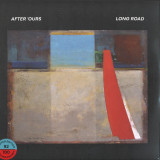
- A3: Long Road
- B1: No Crime To Try
- B2: Work It Out (Feat Ange Williams)
- C1: Clearer Skies (Feat Kevin Mark Trail)
- C2: Sherwood Ave (Kitchen Party)
- C3: Everything I Have To Give
- D1: That Love (Feat Louis Baker)
- D2: Some Kind Of Blockage
Color Vinyl[35,71 €]
The records is released in two options. Both hvae 180g vinyl records. The first version has two black vinyls and the second limited edition (numbered 100 pieces) has one turquoise vinyl and the other red.
Over the last three decades, Auckland, New Zealand, has given birth to several generations of musicians, DJs, and producers who operated within the interzone between jazz, blues, soul, funk, Latin music, hip-hop, house, boogie, and broken beat. Across two slow-cooked albums that sit at the intersection of machine funk and vivid live instrumentation, Odyssey (2016) and their forthcoming sophomore release Long Road (2024), After 'Ours - the group project of pianist and composer Michal Martyniuk and drummer, guitarist and producer Nick Williams - have comfortably located themselves within this antipodean tradition.
Born and raised in Auckland, Nick Williams grew up surrounded by music from a young age. At home, his mother, Mary Anne, a record collector and DJ with deep, diverse vinyl crates, kept his ear sharp. By the time he was eight years old, he was regularly joining his musician father on stages across Australia in his blues rock band Slippery Sam. In his early twenties, Nick began leading the eleven-piece Auckland Latin-dub-funk fusion big band Tangent, who performed regularly until the late 2000s.
Michal Martyniuk, on the other hand, grew up on the opposite side of the world in Szczecin, Poland. After playing classical music for twelve years and attending jazz school, he relocated to New Zealand with his family in his teens. While studying at Auckland University Jazz school, Michal came into the orbit of the legendary New Zealand saxophonist, composer, producer, and band leader Nathan Haines, who brought him into the same world as future collaborators like Tama Waipara, Batacada Sound Machine, Sola Rosa and Nick.
Inspired by the rich stories of jazz, neo-soul, electronica, and dance music from both sides of the Atlantic Ocean and the open-eared Auckland scene they emerged from, After 'Ours formed in 2011. Born out of a friendship cultivated through playing together at bars and nightclubs around town and home studio sessions. "Nick had family and work, so I had to wait all day," Michal says. "We'd come to the studio at 10 PM and go till 3 AM. That's how we came up with the name.
Session by session, After 'Ours revealed itself to be a creatively fertile meeting of minds. "We both have our angles, but it works well in the end," Nick reflects. "It takes the music to a place we can't get to by ourselves."
Between 2011 and 2016, they wrote and recorded Odyssey with a cast of musical collaborators that included KP, Sharlene Hector & Kevin Mark Trail (UK), Matt Nanai, Nathan Haines, Jakub Skowronski, Nick's partner Ange Williams (nee Saunders) and British producer Mike Patto from the lauded UK future jazz group Reel People. Influenced by the smooth yacht rock of Steely Dan and Donald Fagan, the warm midtempo bounce of A Tribe Called Quest and J Dilla, and the complex jazz/RnB bop of Robert Glasper, Odyssey was a labour of love that emphasised community, warm-hearted hospitality, and care.
Seven years on, they're finally ready to return with Long Road, an album that contains some of their best work yet. As well as reconnecting with past collaborators Kevin Mark Trail and Ange Williams, Long Road sees After 'Ours calling on assistance from Louis Baker, Jakarta-based saxophone player Kuba Skowroński, bassist Dan Antunovich, Los Angeles-based drummer Chris Bailey and the journeyman British soul artist Omar Lyefook.
Across ten songs that plot a stargazed course through their antipodean spin on UK broken beat, jazz, modern soul, and blues rock, Nick and Michal build on everything they learned while writing and recording Odyssey. In the process, they take their joyful musical visions to sublime new heights.
- Satellite
- Dayton, Ohio-19 Something And 5
- Is She Ever?
- My Thoughts Are A Gas (Fucked Up Version)
- Knock ?Em Flyin?
- The Top Chick?S Silver Chord
- Key Losers
- Ha Ha Man
- Wingtip Repair
- At The Farms
- Unbaited Vicar Of Scorched Earth
- Optional Bases Opposed
- Look, It?S Baseball!
- Maxwell Jump
- The Stir-Crazy Pornographer
- 158: Years Of Beautiful Sex
- Universal Nurse Finger
- Sadness Is To End
- Reptilian Beauty Secrets
Color Vinyl[27,52 €]
Originally released in 1996 as a limited fan-club pressing for Rockathon, Guided By Voices’ Tonics And Twisted Chasers has always existed as an anomaly in Robert Pollard’s vast discography. In many ways, the album serves as the tail of a creative comet that in just two years included the “classic line-up” trilogy of Bee Thousand, Alien Lanes, Under the Bushes, Under the Stars and countless singles that crammed endless hooks in their grooves. In the intervening space, Tonics And Twisted Chasers has taken on a mythic status. It’s arguably Pollard’s strangest, gnarliest, most enlightened record and also the fans first chance to see the stitches that bind his galaxy of songs. It’s like peering at the caliber inside a watch, responsible for making the whole enterprise tick. This nineteen-song collaboration with guitarist Tobin Sprout could be interpreted as spontaneous sketches, late-night improvisations, ideas that blossomed later in the timeline (“Knock ’Em Flyin’” and “Key Losers”), but as with anything in Pollard’s orbit, its intention is clear when heard as a cohesive whole. The Pollard tenet that “less is more” is on full display here. The songs rarely creep past ninety seconds and coalesce much like Pollard’s collage-styled visual art. Arena anthems in miniature (“158 Years Of Beautiful Sex”) bash up against eerie piano laments (“Universal Nurse Finger”) without any time to breathe, acoustic lullabies that sound like a Midwestern summer’s twilight (“Look It’s Baseball”) segue into monochromatic post-rock (“Maxwell Jump”). The euphoric joy and obtuse melancholy in Pollard’s voice is so palpable on the album’s standout, “Dayton, Ohio 19 Something & 5” (which has since become a live staple), that it’s impossible to find a more autobiographical yarn in his catalog. The album’s closest analog is 1993’s Vampire On Titus, as it contains that album’s prickly, dark and shimmering obfuscation that only reveals its beauty after repeated listens. Tonics And Twisted Chasers maintains the lore because the melodies are so strong. Using a primitive drum machine, Radio Shack effects, minimal instrumentation and the DIY spirit that guided them in the first place, Pollard and Sprout constructed a masterpiece of pop that could only come from a basement in north Dayton, Ohio. Anyone in that hallowed era who happened upon it, kept it as a secret.
- Satellite
- Dayton, Ohio-19 Something And 5
- Is She Ever?
- My Thoughts Are A Gas (Fucked Up Version)
- Knock ?Em Flyin?
- The Top Chick?S Silver Chord
- Key Losers
- Ha Ha Man
- Wingtip Repair
- At The Farms
- Unbaited Vicar Of Scorched Earth
- Optional Bases Opposed
- Look, It?S Baseball!
- Maxwell Jump
- The Stir-Crazy Pornographer
- 158: Years Of Beautiful Sex
- Universal Nurse Finger
- Sadness Is To End
- Reptilian Beauty Secrets
Black Vinyl[27,69 €]
Originally released in 1996 as a limited fan-club pressing for Rockathon, Guided By Voices’ Tonics And Twisted Chasers has always existed as an anomaly in Robert Pollard’s vast discography. In many ways, the album serves as the tail of a creative comet that in just two years included the “classic line-up” trilogy of Bee Thousand, Alien Lanes, Under the Bushes, Under the Stars and countless singles that crammed endless hooks in their grooves. In the intervening space, Tonics And Twisted Chasers has taken on a mythic status. It’s arguably Pollard’s strangest, gnarliest, most enlightened record and also the fans first chance to see the stitches that bind his galaxy of songs. It’s like peering at the caliber inside a watch, responsible for making the whole enterprise tick. This nineteen-song collaboration with guitarist Tobin Sprout could be interpreted as spontaneous sketches, late-night improvisations, ideas that blossomed later in the timeline (“Knock ’Em Flyin’” and “Key Losers”), but as with anything in Pollard’s orbit, its intention is clear when heard as a cohesive whole. The Pollard tenet that “less is more” is on full display here. The songs rarely creep past ninety seconds and coalesce much like Pollard’s collage-styled visual art. Arena anthems in miniature (“158 Years Of Beautiful Sex”) bash up against eerie piano laments (“Universal Nurse Finger”) without any time to breathe, acoustic lullabies that sound like a Midwestern summer’s twilight (“Look It’s Baseball”) segue into monochromatic post-rock (“Maxwell Jump”). The euphoric joy and obtuse melancholy in Pollard’s voice is so palpable on the album’s standout, “Dayton, Ohio 19 Something & 5” (which has since become a live staple), that it’s impossible to find a more autobiographical yarn in his catalog. The album’s closest analog is 1993’s Vampire On Titus, as it contains that album’s prickly, dark and shimmering obfuscation that only reveals its beauty after repeated listens. Tonics And Twisted Chasers maintains the lore because the melodies are so strong. Using a primitive drum machine, Radio Shack effects, minimal instrumentation and the DIY spirit that guided them in the first place, Pollard and Sprout constructed a masterpiece of pop that could only come from a basement in north Dayton, Ohio. Anyone in that hallowed era who happened upon it, kept it as a secret.
The Circus is a place of lights and colors, but also of shadows, even darkness. Admittedly, it delights children and makes adults laugh. But you only need one rainy autumn evening near a circus tent and the smell of fodder to think of the sadness of the clowns, the endless training of the animals and the freaks who are hidden in some caravan... cinema, the essence of the circus – movement, light, danger and burlesque – will have been admirably rendered in Notes on the circus by Jonas Mekas (1966), one of the inventors of the filmed diary. With Cirque, Michèle Bokanowski does similar work, entirely dedicated to spinning, in the musical field.
She distinguished herself in particular in the composition of musique concrète, among others Tabou and Trois chambres d'inquiétudes, after having studied with Pierre Schaeffer and Éliane Radigue. The latter, great lady of drone and minimalism, fell under the spell of Cirque and wrote the booklet for the piece as a poem.
The piece, divided into five movements, is based on the handling and editing of recordings captured within one or more circuses (this is not specified and is of no importance) between 1988 and 1993. The initial allegro reveals the gallop of a horse joined gradually by other images. The idea of the circular space of the circus tent is immediatly and magnificently rendered and will be constantly recalled by an insistent use of the loop technique. Children's laughter, applause and drum rolls are thus sheared, repeated before being brutally interrupted. Accordion interludes and the distortion of sounds create a dreamlike atmosphere. This beautiful nightmare reminds us, to quote Éliane Radigue, the "Magic of childhood still living in the heart of man even beyond its abrupt end."
Words by Alexandre Galand, from the book “Field Recording – L’usage sonore du monde en 100 albums” (ed. Le mot et le reste, 2012)
Major member of the french musique concrète scene, Michèle Bokanowski was born on August 9, 1943 in Cannes, FR, to a musician mother and a writer father. She now lives and works in Paris.
Music lover since adolescence, it was relatively late, at the age of 22, that Michèle Bokanowski decided to study composition. Reading In Search of a Concrete Music by Pierre Schaeffer was decisive. After classical training on harmony, she met Michel Puig, a student of René Leibowitz, who taught her writing and analysis based on the Treatise of Schönberg. In September 1970 she began a two-year internship in the ORTF Research Department under the direction of Pierre Schaeffer. She takes part in the same time in a research group on sound synthesis, studies musical computing at the Faculty of Vincennes and electronic music with Éliane Radigue.
Her main works are intended for concert: Pour un pianiste, Trois chambres d’inquiétude, Tabou, Phone Variations, Cirque, L’étoile Absinthe, Chant d’Ombre, Enfance, Rhapsodia, Cadence, Elsewhere. She has also composed for theater (with Catherine Dasté), dance (with choreographers Hideyuki Yano, Marceline Lartigue, Bernardo Montet) and cinema: music for the short films of Patrick Bokanowski and his two feature films L'Ange ( 1982) and A Solar Dream (2016).
"Vanatühi" by Kiwanoid is a technopagan concept album. Track titles refer to the word "nothing" in various languages.
The sonic landscape is crafted using deprecated tools: a first-generation 4-bit laptop, the DOS operating system, and a tracker program. Inspired by glitch aesthetics, the sound palette includes clicks, error noises, and low-bitrate techno sounds. Initially, the structures of the pieces may appear complex and chaotic. This electronic thicket might seem abstract, cold, and inaccessible, yet upon closer examination, it reveals a plethora of diverse species, coming across as somewhat nostalgic and warm, evoking surreal associations. From beneath towering sequoias peek pixelated ferns, LED eyes are blinking from below the undergrowth, and against the backdrop of a crackling campfire and cave paintings, a lively stomping of microchips unfolds.
Sudden contrasts, sharp cutting edges, a tachycardic bass drum engine, and irregular polyrhythms make themselves physically felt. Elsewhere, haunting lo-fi textures, hidden ambient drones, mysterious hums, and obscurely garbled samples offer introspective breathers. The dynamic range of the music is favourably extensive, and the raw imperfections of the sound are unmasked by reverb effects or other generic tools. Interwoven throughout are outsider rhythm loops, which could find a home at an alien rave party or a hobgoblin honky-tonk. Various human voice samples build a bridge to the listener, allowing them to embody a cyborg-like experience.
While each twist and turn remains unpredictable, these diverse approaches align in complementary patterns and stochastic regularities, making the whole surprisingly coherent, despite its chaos. The album doesn't bore the audience with intentionally irritating compositions or pseudocomplexity - it demands attention, but doesn't try to outrun its listeners.
Following a string of releases on a who’s who of top labels such as Planet Euphorique, Salt Mines, Haws and Craigie Knowes, prog-trance pioneer Lisene drops a full-length LP on his On Rotation imprint. With 8 hyper-detailed tracks ranging from club-focused techno, progressive and electro to slo-mo downtempo, Lisene brings his A-game to an album sure to cement his place as one of the most exciting producers and DJs in the UK’s underground music scene.
Created over several years with a perfectionist’s attention to detail, “Science Friction” flits between moods and sonic environments with ease while retaining the cohesion of Lisene’s inimitable production style. Despite being an album, this is still very much a record for the DJs, featuring heads-down club tracks and bass-heavy electro crafted with precision and a cinematic sense of scale. For the home listeners, expansive slo-mo soundscapes and cerebral synth odysseys float high above the clouds, with widescreen details revealing themselves ever further with each re-play.
“This album has been 15 years in the making and represents a culmination of everything I’ve worked towards in defining my own sound and style without letting myself be pigeonholed. I’m immensely proud of each track - it really reflects where I was at musically while making this, while giving a glimpse into my future sound. This is a record that deserves to be played on the finest sound systems and hi-fis, and I couldn’t be more happy with how it’s turned out. Dive in and enjoy!”
Combining influences from across the spectrum of dance music with a cinematic sense of psychedelia and his own inimitable production skills, “Science Friction” is sure to see a lot of airtime across the festivals, after-parties and living rooms of the world this summer and beyond.
On Rotation is a Leeds based label, event & mix series run by Chris I’Anson, Lisene & Adam Pits. Artwork illustrated and designed by Patch D Keyes.
Steve Marion, the critically acclaimed-and completely wordless-songwriter and guitarist known as Delicate Steve, has unveiled a new album called Delicate Steve Sings. Is the album title a reference to the instantly recognizable "voice" of his guitar? Does he actually sing this time? Has he not been singing all along? That"s the crux of Sings-Marion is the rare guitarist where you can put on any of his records and know exactly who"s playing. In an indie rock landscape stuffed end-to-end with guitars and amplifiers, nobody else sounds like this. That unique voice has kept Steve busy in an unpredictable variety of settings. The sheer spread of his work outside his own records-collaborating with Miley Cyrus and Paul Simon, playing in Amen Dunes and the Black Keys, and being sampled by Kanye - doesn"t mean Steve"s a chameleon. It means he"s singular. Delicate Steve Sings is a record centered on channeling iconic voices with his guitar. In doing so, Marion is casting himself in the role of iconic singers like Willie who make standards their own. In the process, he reveals just how singular (dare we say iconic) that voice is. The guitar sings these songs-smoothly, sweetly, boldly, and on its own terms. Recorded with Jonathan Rado on bass, Kosta Galanopolous on drums, Renata Zeiguer providing strings, and co-writer Elliot Bergman, the album features both original songs with titles that suggest they might be new recordings of classics. "I"ll Be There" is smooth like a lost Bill Withers track; "Easy for You" isn"t the Elvis song of the same name, but there"s a hint of the king in there, in addition to Marion"s own takes onclassics such as the Emersons" "Baby," The Beatles" "Yesterday" and Otis Redding"s "These Arms of Mine." "You"re tapping into something universal and in the consciousness of pop music," Steve says-tacit permission for his guitar to drift into vocal expressions he"s internalized through years of close, repeated listening. Just like all the great singers.
Considered by many fans to be the best album from Livingston Taylor, Ink pays homage to pop songwriting with a collection of richly-realized interpretations, including Gerry Rafferty's "Baker Street" and the great Ray Charles' "Hallelujah, I Love Her So". With his rich vocals, exceptional guitar skills, and meticulous production Ink reveals itself as a document of a man who knows what makes a song a memorable and moving experience.
This album, a favorite with audiophiles, will be released on vinyl for the first time, as a 180 gram LP, on the 2nd August, 2024.
Biomes are little worlds of organic relationships, full of struggles, symbiosis, and sheer obsolete noise. In "De Silenti Natura," Henrique Vaz is meticulously crafting synthetic auditory biomes, sprouting from their own fuzzy logic. Unfolding across two distinct acts, the Brazilian artist interprets and replicates the complex, often ambiguous sounds of (un)natural environments, creating imaginary systems to inhabit over two sides of tape. The soundscape of the first side and title track is entirely algorithmically synthesized, with no samples used, leveraging Supercollider for real-time sound generation. The environment thus built is a flourishing one, seemingly unable to escape its own grandeur as insect-like buzzing and crackles expands into mountain ranges and forests of erupting sonorous drama. The second side introduces 'hydrophone' water synthesizers, submerged in a goldfish bowl to interface with the unfurling waves of electronic chords, creating a unique blend of damp and unwieldy sloshing movements, prismatically scattered into a luscious soundscape, and resembling everything from the bridge of a starship to the echoed drip-drip of stalactites.
Both sides of the album slowly unwrap and uncrinkle, revealing layers of hisses, distant digital choirs, warm enveloping chords, and juddering bleeps. Despite their unwieldy and strange nature, myriad elements convey a familiar sense of environment, flitting between the blossoming of new (manmade) life and the doom and destruction of the (real) world.
As the ringing of bells (fully synthetic; no samples were used) hove into view during the closing movement of side one, a simulacrum cacophony of voices is ushered in. It’s a reminder of the holy nature of sound itself, beamed into our heads intangibly. The flipside’s water ritual, frantically dunking ‘water synthesizers’ to birth swooping melodies and yawning tones, is jabbing at sleeping giants. It’s pushing and pulling the stars in the night sky into place. It’s both a simple act of beautiful creation, and a storm in a teacup.
Version[36,93 €]
Midwestless is the fifth and newest album from St. Louis, Missouri rock failures The Conformists. Once again recorded with Steve Albini at the majestic Electrical Audio, this album marks their first recorded output as a trio. Formed in November of 1996 deep within a basement bedroom somewhere between the corn fields and strip malls of Southern Illinois, The Conformists began as four teenagers with a desire to create Ugly Rock Music. Eventually, they grew up and now dabble in moments which could even be described as quite beautiful and melodic. Elsewhere, elements of insistent repetition with an initial appearance of stasis reveal — with multiple listens — intricate details under the surface.
Collaboration between Kilbey (The Church) and Kearns (Cactus World News), compiling before unfinished recordigs from late 1990s up to 2016. Initially issued as a 500 run CD available by mail order only in 2016, this is the very first time being released through global distribution, packaged in deluxe gatefold sleeve and containing two unreleased bonus tracks. Kilbey's The Church have returned to a high-profile status with both current albums 'The Hypnogogue' & "Ezra..." being critically acclaimed globally. The two new bonus songs are tracks 11 and 12, which were recorded in 2022. Kilbey and Kearns dive deep into atmospheric soundscapes and vocals and mysterious, yet revealing lyrics as Speed of the Stars. Easy Action will be issuing Steve Kilbey's solo and collaboration albums over the coming years.
Black Truffle is thrilled to announce a reissue of Chico Mello and Helinho Brandão’s self-titled release from 1984, the first return to vinyl of this classic of Brazilian experimental music with its original cover art and complete track listing. An under-recognised figure whose work inhabits a singular terrain where radical new music techniques and music theatre meet musica popular brasileira, Mello has lived and worked in Berlin since the late 1980s. A student of Dieter Schnebel, Mello played in the 90s iteration of Arnold Dreyblatt’s Orchestra of Excited Strings alongside compatriot Silvia Ocougne, with whom he produced a radical and hilarious deconstruction of MPB classics on Musica Brasileira De(s)composta (an early and rather atypical release on Edition Wandelweiser).
On this release, his only recording predating his move to Europe, Mello works with the alto saxophonist Helinho Brandão, who appears to be otherwise unknown outside Brazil. The record’s six tracks range from solo saxophone improvisation to densely layered ensemble works bridging minimalism, acoustic sound art and a plaintive melodic sensibility that calls up Edu Lobo or Milton Nascimento. Beginning with a dramatic, dissonant wind and string surge from which emerge ominously pounding piano chords, opener ‘Água’ slowly builds in intensity, a halo of clustered vocal harmonies gradually closing in on Brandão’s squealing sax until the piece opens up to reveal a gorgeous passage of melodic singing. The piano accompaniment reduces to tolling bass notes as the voice begins a repeated incantation, suggesting a ritualistic atmosphere reminiscent of parts of Xenakis’ setting of Oresteia. Dissonant, sawing tremolos on the strings climb to a crescendo before disappearing into the sounds of water being poured and splashed into metal vessels, presented not as a field recording but as a percussive element performed by the ensemble. A child’s voice then appears, singing to piano accompaniment the same melody heard earlier in the piece. After a brief solo alto improvisation from Brandão, working with the guttural pops and fleeting melodic gestures of Braxton or Roscoe Mitchell, the remainder of the first side is dedicated to the leisurely unfolding of ‘Baiando’ over the course of twelve minutes. A trio for Brandão on soprano saxophone, Mello on a very period-appropriate phased nylon string guitar and Edu Dequech on bongos, the performance eases its way hypnotically through subtle variations on a set of rhythmic and melodic patterns, almost derailed at points by Brandão’s wild forays into extended technique but held together by Mello’s droning guitar notes.
The second side opens with another multi-part epic for a larger ensemble, ‘Matraca’, which makes use of strings, electric guitars and a wide range of South American percussion instruments. Rasping violin harmonics hover as drum hits, repeated guitar notes and triangle accompany a slowly descending bass glissando. A sudden change in direction introduces a thrumming, incessantly repeated bowed bass tone, beginning a series of episodes of minimalist phasing and pattern variation, the combinations of electric guitars and orchestral instruments giving the ensemble an ad hoc charm like the early Penguin Café Orchestra but with more percussive drive. Eventually the piece is overrun by a cacophony of the titular matracas (a kind of ratchet/cog rattle). Following a lyrical trio improvisation by Mello, Brandão and Gerson Kornin on bass, the final ‘Danca’ focuses entirely on Mello’s layered acoustic guitars and vocals, using this restricted palette to build up a haunting piece of almost orchestral density, reminiscent of the 70s work of Egberto Gismonti in how it thickens a folkish ambience with harmonic sophistication.
Arriving in a starkly beautiful gatefold sleeve and sounding better than ever in its new remaster, one might call the stunning music contained on Chico Mello/Helinho Brandão ahead of its time. But what (other than some of Mello’s own work) produced in the years since its initial release has really touched the organic fusion of minimalism, free improvisation, radical instrumental technique and popular song achieved here? Forty years after its first release, Chico Mello/Helinho Brandão remains music of the future.
Itʼs been five years since the last BELONG long player, as the duo works slowly to organize their sound works. Both the time invested, and the wait, have been well rewarded with this return.
Common Era shows extraordinary progression from that first album of dense, scorched earth instrumentals, hints of a new direction having been revealed on the Colorless Record EP from 2008 which contained covers of four should-have-been classics from the original psychedelic era.
The new material has such common pop elements as “songs”, vocals and drum machines, but the results could hardly be called conventional and are like little else happening on the current “scene”. The songs themselves are akin to radio transmissions received from another time and place, just as likely to be the future as the past, or even from a contemporary alternate universe.
They are both passionate and dispassionate, grey yet technicolor, ghostly and palpable, distant yet immediate, grainy and focused. Upon listening these conceptual contradictions are dismissed with ease, as the recordings reveal that they fit all of these descriptors simultaneously, an extraordinary balancing act.
- A1: Impact
- A2: No Reward
- A3: Mence (Feat. Conway The Machine)
- A4: Living Proof (Feat. Benny The Butcher)
- B1: Value Of A Check
- B2: Power Steering (Feat. Jadakiss)
- B3: Fell In Love
- B4: Socialize
- C1: Murda One
- C2: Don't Switch (Feat. Tony Yayo)
- C3: Dead Roses
- D1: Trapped
- D2: Traffic (Feat. Vado, Dave East)
- D3: On My Way
Following last year's ground-breaking return with "The Course of The Inevitable", Lloyd Banks is back with more hunger on this 2nd instalment! Featuring guest appearances by Jadakiss, Dave East, Vado, Conway The Machine, Benny The Butcher and Tony Yayo.
In this musical journey, Banks weaves together a compelling storyline, sharing pieces of his own pain and struggles, inviting listeners to connect with his authenticity. With Method Man's signature lyrical prowess, Cormega's poetic finesse, and the raw energy of 38 Spesh, the album boasts a stellar lineup of features that enhance its impact.
Banks' sharp lyricism and introspective storytelling shine throughout the album, exploring themes of resilience, triumph over adversity, and the complexities of life. Each track serves as a piece of his soul, revealing layers of vulnerability and strength. With the collaborative efforts of his fellow artists, "The Course of the Inevitable 3: Pieces of My Pain" delivers an immersive and powerful listening experience, solidifying Lloyd Banks' position as a master in the rap game and the one and only Punch Line King.
- A1: The Original Way (Feat. Freddie Foxxx)
- A2: Duck Down
- A3: Drug Dealer • A4. Like A Throttle
- B1: Build And Destroy
- B2: Ruff Ruff (Feat. Freddie Foxxx)
- B3: 13 And Good
- B4: Poisonous Products
- C1: Questions And Answers
- C2: Say Gal
- C3: We In There
- C4: Sex And Violence
- D1: How Not To Get Jerked
- D2: Who Are The Pimps?
- D3: The Real Holy Place
- D4: 13 And Good (Remix)
In the early 1990s gangsta rap was becoming more popular. KRS-One took to the mic and continued to write socially conscious raps resulting in the hard-hitting 1992 album Sex And Violence which would be the fifth and final studio album under the Boogie Down Productions name. Produced by KRS-One, Pal Joey, Kenny Parker, D-Square, and Prince Paul, the album explores the darkest sides of the American urban landscape and psyche, with KRS as narrator, detailing all sides of the matrix. While singles like the alarming drum-driven "Duck Down" and the funky-as-hell "We In There" got most of the attention in ‘92, the deeper sequence reveals plenty of additional gems: the history lesson of the dark and dusty "Drug Dealer"; "Ruff Ruff", with scowling MC favorite Freddie Foxxx (aka Bumpy Knuckles); the grooving "Questions and Answers," and the frantic record industry track "How Not To Get Jerked." The album kicks off with an intro skit featuring KRS-One as a DJ in panic needing vinyl which at the time was a dying format while cassettes and CDs became the dominant format. Thirty-two years later vinyl DJs and Hip-Hop vinyl collectors no longer need to panic. Get On Down in partnership with Sony Music's CERTIFIED is proud to bring back to vinyl this underrated gem in the BDP catalog. Featuring one of the dopest album covers by American artist Robert Williams, Sex and Violence is pressed on colored vinyl and packaged in a gatefold jacket with full lyrics.
- Resonance
- Right Now
- That's The One
- Heads Up High
- Heavyweights (Feat. Kyza, Klashnekoff, Tony D, Reveal, Doc Brown, Persia, Devise & Nay Loco)
- Sweet
- Sick (Feat. King Kashmere)
- Back Around (Feat. Karizz & Brotherman)
- Presence (Feat. Brotherman)
- Almost There (Feat. Brotherman)
- Run It Back
- Seasoned
- All For The Love (Feat. Karizz)
First Word Records is proud to bring you 'Resonance'; a full-length album from Essa & Pitch 92. A lyricist, lawyer and a Londoner, Essa initially released music under the name Yungun in the early noughties, in the midst of UK hip hop's own "golden era". He earned praise from artists such as Nas and Mark Ronson, and performed and recorded with such luminaries as De La Soul, Wu-Tang Clan, Guru, Slum Village and Pharoahe Monch. His classic debut album 'The Essance' originally dropped whilst he was at law school, 20 years ago (which was recently given a full re-issue on First Word). This was followed with a collaborative album with DJ Mr Thing ('Grown Man Business'), then some years later with 'The Misadventures of a Middle Man' in 2014. Essa also released a track on Juneteenth 2020 entitled 'Justice', as a powerful reaction to George Floyd and the BLM movement. It saw support from the likes of Gilles Peterson, and raised money for an assortment of access-to-justice organisations. ...
In the night, the cadenced orientation of the strobe lights sketches geometric trajectories in the dark room. The icy condensation from the cocktail glass drips onto her fingers, caresses her nail polish, grazes the side slit of her evening dress, and evaporates before it touches the floor, the dance floor.
Her body, that of a femme fatale, stands between the clenched bodies of the dance floor. A beam of light pierces the darkness. It illuminates a Mediterranean chest – stronger than the bridle imposed by the buttons of his shirt – adorned with golden necklaces: symbols of faith turned into instruments of seduction. Sin is the antechamber to holiness.
She turns around, that’s him: Marcelo. She had long heard about him. Their gazes, perfect diagonals, get locked in the crowd. A cheeky smile reveals a golden tooth, the lights a shrouded sex bursting forth. His wink is a magnet. Often, words are a mere formality. Let’s make out.
Que rico.
Que lindo.
Te quiero.
I needed to do some recording to cheer myself up. The studio I usually use was booked all month, but before the disasters of Brexit & Covid I’d met pianist Yves Meerschaut in Gent, and he’d shown me his recording studio, Room 13, and that did have a couple of days free in January… I decided to make a record of old songs that other people have liked, and / or that I play differently now, and / or that haven’t appeared on vinyl before. So, here, there’s: “Pennypot Lane”, a fox song that people like, “Winter Turns to Spring” that was Tony Benn’s favourite song, “The Blue Sea Says Yes”, a song about how the sea welcomes us all, heroic or fragile, equally in our mortality (something like that anyway) , that I had forgotten about till people started saying how much they liked it, “More Than Enough”, that Roy Bailey and Martin Simpson have kindly rescued from the obscurity of its previous appearance on a CD in 1992, “Babbecombe at the Closing of the Day”, a song about going to Babbecombe model village, “At the Siege of Madrid” which quite a few people like, but is one of those songs that always somehow eludes a definitive performance, “A True History of Couscous”, a song I like that is more or a less fictionalized autobiography, and lastly.. “You Don’t Have to Say Goodbye”. This is a song from my first CD; Thames Valley folk-stalwart Terry Silver used to enjoy performing it so that afterwards he could shock audiences who’d been happily singing along to it by revealing it had been written by that dreadful lefty Robb Johnson, It’s also, more recently, a song our son Arvin likes very much too, and he graces this version with his characteristically modest tasteful Spanish guitar playing. He also nagged me into doing the artwork for the cover. Three of these songs are lucky enough to have Yves’s breathtaking, exquisite piano playing embellishing them, and Sian Allen gifts “Madrid” some beautiful trumpet accompaniment too. But primarily, for good or ill, it’s mainly me with an acoustic guitar. Robb Johnson, May 24. “in my view one of the best songwriters this country has produced in many a year… the appellation National Treasure is often over-used, but in Robb’s case it is entirely appropriate (St Edith’s Folk) // “an English original”, (Robin Denselow, the Guardian) // “a national treasure” (Mike Harding) // “one of this country’s most important songwriters (no argument!)