Bliss Point is proud to welcome the Bogotá born, New York based Matük to the label with Sendero, a collection dripping with life, with lust, with joy in the face of it all.
Birthed from weekend-long studio sessions in the heat of New York summer, Sendero is luscious and visceral party music, crackling with the spontaneous possibility that runs through city streets as temperatures peak, asses throw and emotions run high.
Hailing from Colombia and deeply immersed in the New York underground, Matük’s influences collide into an ecstatic tapestry on Sendero, blending the rich traditions of Afro-Caribbean musics with experimental and club sonics, long the sounds of joy as defiance from deep within the imperial core.
Many paths cross on Sendero. “Ricotta” features vocals from BRAVA, the Basque DJ and MC whose raw, infectious spirit has injected new energy into the international bass and footwork scene. She is joined by Argentinian-Colombian artist FEDRA on synth and vocals, transforming voice notes the trio sung into their phones over a long weekend of dancing into a party anthem of their own. “Lio”, the EP opener, pairs Mexico’s Renn Loop with Matük himself, trading sultry, heated frustrations over latinx futurist production. Things slow down on “De; Dioses y Pantallas”, a yearning, introspective plea to the night sky, before returning to the party with the bouncing, acid-fueled remix of “Ricotta” from Mexico City’s Soos.
Sendero is a snapshot of a scene in motion, a document of serendipity and collaboration, music made in the long tradition of enjoyment as a revolutionary act.
Поиск:revolution
Все
Chris Liberator & Sterling Moss have produced some classics of the Acid Techno genre and now hope to add to that roster with this their first LP 'Culture Of Acid' on the seminal Stay Up Forever label. 8 banging tracks covering a multitude of Acid Techno/Techno styles including their collaboration with punk performing arts legend Doghouse on 'The Freaks' which has already been causing havoc on underground dancefloors.
- Raga Bhairavi
- Raga Lalit
- Raga Bhupali
- Raga Todi
- Raga Madhuvanti
- Raga Meghmalhar
- Raga Yaman
- Raga Kalavati
- Raga Malkauns
- Raga Bairagi
Color Vinyl[54,58 €]
Light in the Attic präsentiert die lang erwartete Neuauflage von ,Synthesizing: Ten Ragas to a Disco Beat", dem revolutionären Album von 1982 vom Komponisten und Musiker Charanjit Singh. Er hat klassische indische Ragas mit den damals modernsten Roland-Synthesizern und Drumcomputern kombiniert und so ein elektronisches Meisterwerk geschaffen, das seiner Zeit weit voraus war. Bei den Live-Aufnahmen in den HMV-Studios in Mumbai verband Singh die Vergangenheit mit der Zukunft - er mischte die alte indische Tradition der Ragas (ein melodisches Gerüst, ähnlich einer Tonleiter, aus dem Musiker improvisieren oder komponieren können) mit pulsierenden elektronischen Dance-Beats. Das Album wurde ohne großes Aufsehen veröffentlicht, geriet in Vergessenheit und Singh zog sich aus dem Musikgeschäft zurück, um sich auf private Konzerte zu konzentrieren, aber damit fängt die Geschichte erst richtig an...
"Black & 'Pearlescent Transcendent Future'"-farbiges Vinyl. Light in the Attic präsentiert die lang erwartete Neuauflage von ,Synthesizing: Ten Ragas to a Disco Beat", dem revolutionären Album von 1982 vom Komponisten und Musiker Charanjit Singh. Er hat klassische indische Ragas mit den damals modernsten Roland-Synthesizern und Drumcomputern kombiniert und so ein elektronisches Meisterwerk geschaffen, das seiner Zeit weit voraus war. Bei den Live-Aufnahmen in den HMV-Studios in Mumbai verband Singh die Vergangenheit mit der Zukunft - er mischte die alte indische Tradition der Ragas (ein melodisches Gerüst, ähnlich einer Tonleiter, aus dem Musiker improvisieren oder komponieren können) mit pulsierenden elektronischen Dance-Beats. Das Album wurde ohne großes Aufsehen veröffentlicht, geriet in Vergessenheit und Singh zog sich aus dem Musikgeschäft zurück, um sich auf private Konzerte zu konzentrieren, aber damit fängt die Geschichte erst richtig an...
- 1: Spoken
- 2: Blister
- 3: Decade
- 4: Paradise Lost
- 5: Revolution
- 6: Static
- 7: Inquisition
- 8: Ideal
- 9: Love
- 10: Firecracker
- 11: Industry
- 12: Obscene Jigsaw Puzzle
- 13: Brothers And Sisters
- 14: American As Apple Pie
- 15: Simply By The Book
- 16: Things Can Turn Around
- 17: Promise
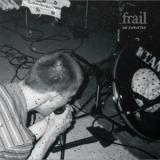
Post-Hardcore nach Philly-Art. Unzufrieden mit dem metallischen Youth-Crew-Format, verfolgte Frail die wilde, lärmende Wut der Generation X gegen alles und jeden im rasanten Tempo von San Diego. ,No Indus Try" - die erste und einzige Vinyl-Compilation des Quintetts - enthält wichtige Singles für die Labels Yuletide, Bloodlink und Kidney Room sowie seltene Compilation-Tracks aus ihrer Zeit von 1993 bis 1995. Kommt mit 24-seitigen Zine, das die Band in Notizen, Zitaten, Fotos, Flyern und revolutionärer Literatur dokumentiert. Make Your Own Noise.
Indiana Jones never dug this deep.
Church – the brainchild of Joe Washington – were a band both lucky and cursed to come up in the seventies. Lucky, because they rode a wave of community activism, uplifting messages and a moment when music truly mattered. Cursed, because those same times meant their tight, heartfelt output went overlooked.
Mid-sixties to circa 1980 soul and funk were extraordinarily rich. The era’s big releases have aged like fine wine, yet countless hidden gems remain buried. Church’s only single was one of them. Their hypnotic 1976 release “How Long” b/w “Da Da Song” arrived the same year as Stevie Wonder’s Songs in the Key of Life, Marvin Gaye’s I Want You, Diana Ross’s Diana, and at a time when Black mainstream music was shifting toward disco. Church, however, sounded like Sly & The Family Stone in an alternate timeline — gritty, focused, stripped of additives.
“Da Da Song” is pure grits and gravy: furious, tight drums and lyrics that sound like both a plea to DJs to play their record and an insistence to keep the party alive, noticed or not. It cooks from start to finish in just two and a half minutes.
“How Long” is its own universe. Where “Da Da Song” is skeletal, “How Long” blends key strands of Black music in under three minutes: touches of spiritual jazz with a Gary Bartz-like sax, gospel-blues undertones, and echoes of the era’s flower-power-tinged Black creativity — The Undisputed Truth, The Family Stone, even the poetic freedom of Nikki Giovanni. The lyrics are a timeless plea for love.
Church formed in the Bay Area in the early seventies, shaped by the movement, culture and activism of the time. Joseph Washington, based in San Jose, never chased a music career — for him, music was a way to bring people together. Before Church, he led a backing band called Wash, then added gospel singer Linda Williams (née Stephens) and New York–born Joel Como on xylophone to complete the group.
They rehearsed in Joe’s garage, spread through word of mouth and played every gig they could: Black colleges, opening slots for The Whispers, neighbourhood house parties. Some members studied at Nairobi Junior College in East Palo Alto, then a hotbed of Black community activism, with revolution in the air and messages woven naturally into the music.
This single is a message from that era, resurfacing at last — ready to be sampled just as another Joe Washington track, “Look Me in the Eyes”, was on Drake and J. Cole’s “First Person Shooter”. These rare, spirited tunes are begging for new life through samplers, again and again.
- A1: Design - Premonition
- A2: Vision - Lucifer’s Friend
- A3: Richard Bone - Alien Girl
- A4: John Howard - I Tune Into You
- A5: Ian North - We’re Not Lonely
- A6: Selwin Image - The Unknown
- B1: Harry Kakoulli - I’m On A Rocket
- B2: Rich Wilde - The Lady Wants To Be Alone
- B3: Billy London - Woman
- B4: Alan Burnham - Science Fiction
- B5: The Microbes - Computer
- B6: The Goo-Q - I’m A Computer
- C1: Gerry & The Holograms - Gerry & The Holograms
- C2: The Warlord - The Ultimate Warlord
- C3: Die Marinas - Fred From Jupiter
- C4: Dee Jay Bert & Eagle - I Am Your Master
- C5: Peta Lily & Michael Process - I Am A Time Bomb
- C6: Sole Sister - It’s Not What You Are But How
- D1: Alasdair Riddell - Do You Read Me?
- D2: Karel Fialka - Armband (The Mystery Song)
- D3: John Springate - My Life
- D4: Idncandescent Luminaire - Famous Names
- D5: Disco Volante - No Motion
- D6: Dream Unit - A Drop In The Ocean
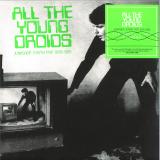
2025 REPRESS ON TRANSPARENT GREEN VINYL
Compiled by Philip King “And then came the rise of synth pop : blokes with dodgy haircuts hunched over keyboard-operated machines stuffed with wires and do-it-yourself tone oscillators making sounds like a brood of geese passing gas in a wind tunnel. Whoopee! This is the way the ‘70s ended : not with a blood-curdling bang bang but with a cheap, synthesized, emasculating whimper.” NICK KENT, NME. All The Young Droids: Junkshop Synth Pop 1978-1985 is a new compilation that charts the underbelly of the epoch-defining sound of the synthesiser in 80s popular music. Compiled by Philip King (previously seen compiling All The Young Droogs, Glitterbest and Boobs - The Junkshop Glam Discotheque), the music here connects the dots between DIY synth enthusiasts grappling with new, cheap synthesisers at the tail-end of punk and wannabe, jobbing songwriters enthral to the new music pioneered by Gary Numan, Depeche Mode and Daniel Miller’s Mute Records. Featuring rare tracks of auto-didactic progressive pop music, proto-techno punk, shoot-for-the-stars-land-in-the-gutter chart flops and heralded, underground synth classics, School Daze paints a picture of beautiful failure. Complete with extensive sleeve notes written by King and never before seen imagery, all 24 tracks were remastered by RPM in-house engineer Simon Murphy, many from vinyl copies due to lost master tapes. The story told on All The Young Droids is one of the dawning opportunity presented by both the emergence to the market of cheaper analog synthesisers and the distribution networks plus indie labels that exploded with the advent of punk music in 1976. While the music that sprouted out all over the globe in the wake of these factors was decried as fake, plastic, a refutation of punk’s guitar-led revolution, it’s telling that much of the music on All The Young Droids.. was created in bedrooms, ramshackle studios and home-made set ups with often borrowed equipment. In the era of record labels jumping to capitalise on the success of The Sex Pistols, The Clash (both on major labels, of course) these artists struggled to stand out from a new gold-rush with next to no budget or PR team. With radio and labels desperate for the new Yazoo, what resulted was a testament to necessity being the mother of invention. At the time, the synthesiser was the music of the future, a shiny new machine that could paint like an orchestra with a single finger and a 4-track. In the hands of Manchester avant-pranksters Gerry & The Holograms it’s a pulsing, sardonic weapon.. the only instrument on the Messthetics classic lampooning of New Wave fashion. In Hamburg, a 16 year old Andreas Dorau used it to write and record (with his female classmates on vocals) a global smash in Fred Vom Jupiter (later licensed to Mute Records). The hard-to-find English version (Fred From Jupiter, natch) is included here. Many artists with alreadystoried careers caught the bug and recorded synthesiser-fuelled peons to space, computers, the future and, of course, love-interests. Harry Kakoulli, late of Squeeze, recorded a solo album in 1979 that included the incredible power-synth-pop smash-that-never-smashed I’m On A Rocket. Similarly, Ian North of Neo and American Power Pop stalwarts Milk ’n’ Cookies bought a Korg MS20 and used a tape machine to record We’re Not Lonely, an absolute lost-classic of minimal synth pop. We’re Not Lonely also features on the Junkshop Synth Pop sampler 7” twinned with John Howard unreleased track You Will See, released April 12th 2025. There are plenty of compilation debuts in evidence. Sole Sister were a mysterious trio who were featured on the Scaling Triangles compilation of female-fronted, queer-adjacent post-punk / underground music that also featured The Petticoats. Selwin Image were from San Francisco and featured members of the recently defunct power pop/punk group The Pushups. Their stupidly catchy The Unknown fizzes with New Wave energy - think XTC to Sparks but remains unreleased until now. Dream Unit’s A Drop In The Ocean is an early synth wave cut, positively teaming with Joy Division instrumentation, previously only released on a long-forgotten and super rare, self-released EP. Incandescent Luminaire’s Famous Names belies an archetypal struggle of a small-town trying to make it in a cruel industry but is a thrilling New Romantic-Synth Wave cross over with a OMD gloominess that’s a joy to hear. Feminist Minimal Wave track I Am A Time Bomb by performance artist Peta Lilly and Michael Chance is a revelation destined for new found cult status. It was released on 7” and lost until now. The flipside to the subterranean, never-made-it synth pop mentioned above are the ambitious, even fruity attempts at success that have a perennial elegance to their confidence. New Jersey-ite Billy London (real name Ed Barth) tried to cash in on the synth boom with Woman, released by a major label, a lurching new wave track built on the Louie Louie rhythm and a wonderfully camp Lou Reedstyle sleazy vocal before exploding in the synthesised chorus. The song bombed but with a chorus like this, you have to wonder why? Ex-Glitter Band member John Springate’s My Life is truly epic, with doomed chord progressions and massive sounding drums turning into at least 3 different songs in the course of the track. Before you wonder what’s going on the song resolves with a glorious return to the main refrain. The dry-ice-dressed dance floor is well catered for too. Design’s Premonition and Vision’s Lucifer’s Friend are stone-cold minimal synth bangers, well loved but given a new lease of life here. The Warlord’s The Ultimate Warlord was released in 1978, a homespun proto Hi NRG banger that was later re-recorded by The Immortals in Canada who had a club hit with it. One-man- band Disco Volante’s No Motion was re-issued by Synth wave label Medical in 2012 but makes its first vinyl compilation appearance here. Close your eyes and you can imagine what Lawrence of Felt would have sounded like with some cheap Korgs a little earlier in his career. Gibraltar-based trio The Microbes imagined a computer programming people to dance - how prescient - and ended up with a propulsive, robo-funk track with splendid rubbery bass playing over a tectonic drum machine. Previously picked up by Belgian label Stroom TV, Dee Jay Bert & Eagle’s heavily Euro-accented I Am Your Master demands the listener to “come to paradise!” In a frankly terrifying manner. All The Young Droids is the first compilation to peel away from the narrative that dour, Minimal Synth and Cold Wave were the only musical children of the first rush of synth pop. Philip King and School Daze Records describe a much more complicated world: along with the austere, Brutalist children of Daniel Miller (who produced Alan Burnham’s Bowie-Low-influenced Science Fiction here) was a plethora of desperate cash-ins, accidental mainstream hits, ambitious pop dramas and major label punts that went nowhere. Crucially, the compilation blurs the line between junk and treasure. What if the two things are interchangeable. What if it’s all science fiction?
- B2: Grazia Vitale – Poi (1975)
- D4: Daniel Sentacruz Ensemble – Vivo Solo Con Te (1982)
- A1: Cinzia Peloso – Sciogli Le Catene (1980)
- A2: Linda’s Night – Cucciolona (19??)
- A3: Daniela Guerci – Non Ti Resisto Più (1979)
- A4: La Comune Idea – Cuore Di Serpente (1981)
- B1: Tony Ferri – Stella D’oriente (1979)
- B3: Sara Bongiovanni – Casablanca (1985)
- B4: Solimar – Veliero (1980)
- B5: Coscarella & Polimeno - Station To Station 2025 (2025)
- C1: Cap – Alla Porta Del Tempo (1982)
- C2: Francisca – Non Dico No (1983)
- C3: Hyper Drive Band – Hyper Mix (1985)
- C4: Linnel Jones – We’ll Cry Out (1986)
- D1: Jairo – Night Woman (1985)
- D2: Ilaria Berlato – Vincerò (1985)
- D3: Alex P.i. – Free Love (1985)
- D5: Miro – Tu Non Lo Sai (1984)
Everyone knows the story of American disco.
But few are aware that, between the late 1960s and the late 1980s, Italy wrote a parallel one — spontaneous, surprising, and incredibly creative.
It is a story that spans two distinct seasons: the Italian disco of the 1970s — melodic, handmade, sometimes naïve yet always original — and the emerging Italo Disco of the 1980s, electronic, futuristic, and lightheartedly projected toward the future.
Two different languages, yet both driven by the same desire for freedom and modernity. Discoteca Sound — Italian Discoteca Underground 1975–1986 brings together 18 rare tracks — including two previously unreleased — that tell this story of transition: from the orchestral and sentimental disco of Italian dance halls to the synthetic and visionary sound of the first drum machines.
A journey through private archives, local labels, regional studios, and forgotten voices — the sonic map of a country that has always danced, but to its own rhythm. From Mediterranean disco to the first Italo Disco, from the dim lights of provincial dance halls to the early home synthesizers, each track opens a window onto an Italy that dreamed of the dance floor as a universal language of connection during the brief season of revolutionary utopias.
This compilation celebrates ten years of work by Disco Segreta — a decade dedicated to the research, recovery, and appreciation of Italian disco and electronic culture. An act of justice owed to all those artists who had their moment yet were never remembered by history — bringing back to light an essential, still too little known part of our musical heritage.
Because dancing today remains, more than ever, a living act of memory.
Limited edition 2LP, features 2 previously unreleased tracks and a new 2025 version of Coscarella & Polimeno – Station to Station.
f Grazia Vitale – Poi (1975) Previously Unreleased
q Daniel Sentacruz Ensemble – Vivo Solo Con Te (1982) Previously Unreleased
f Grazia Vitale – Poi (1975) Previously Unreleased
q Daniel Sentacruz Ensemble – Vivo Solo Con Te (1982) Previously Unreleased
f B2. Grazia Vitale – Poi (1975) Previously Unreleased
q D4. Daniel Sentacruz Ensemble – Vivo Solo Con Te (1982) [Previously Unreleased]
[f] B2. Grazia Vitale – Poi (1975) [Previously Unreleased]
[q] D4. Daniel Sentacruz Ensemble – Vivo Solo Con Te (1982) [Previously Unreleased]
[f] B2. Grazia Vitale – Poi (1975) [Previously Unreleased]
[q] D4. Daniel Sentacruz Ensemble – Vivo Solo Con Te (1982) [Previously Unreleased]
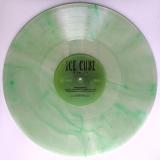
This holiday season, global hip-hop icon Ice Cube makes a powerful return with Man Up — a brand-new album from a cultural trailblazer whose influence spans music, film, and activism. With over 10 million albums sold and six Platinum plaques, Cube’s legacy is undisputed, from his revolutionary work with N.W.A. to timeless solo anthems like “It Was a Good Day.” Now, sharper and more unapologetic than ever, he’s back to deliver a project that fuses his raw lyrical power with a message rooted in resilience and authenticity.
To mark the release, Man Up will be available exclusively as an ultra-limited vinyl drop this holiday season. Each record features a one-of-a-kind hand-crafted cover — a unique blend of artisanal design and proprietary technology (created without A.I.) — alongside city- and country-specific sleeves that pay homage to Cube’s global impact in places like LA, Tokyo, London, and France. The campaign will be amplified through a global social media rollout, city-focused influencer activations, and Ice Cube’s upcoming North American tour. Major press coverage and podcast appearances will further elevate the conversation, making Man Up not just an album, but a collector’s piece and cultural moment fans won’t want to miss.
Originally released in 1972, Toni Tornado's self-titled debut is a landmark in Brazilian soul and funk - a gritty, groovy record that helped define the sound of the Black Rio movement. Blending deep soul, psychedelic funk, and bold orchestration, this album channels the revolutionary energy of James Brown with the tropical swagger of Rio's streets. From the urgent rhythms of 'Torniente' to the undeniable strut of 'Mané Beleza' and 'Tornado,' Toni's music pulses with a fierce sense of pride and liberation. It's the sound of a new cultural identity taking shape - where African-American soul met Afro-Brazilian reality. Often compared to the legendary Tim Maia, Tornado brought his own explosive edge to Brazil's growing soul scene. By the 1970s, other Brazilian musicians, such as Banda Black Rio, Cassiano, Gerson King Combo, Jorge Ben and Gilberto Gil, began making soul records. DJs started throwing soul-only parties. Toni Tornado's voice carries grit and passion, his grooves hit hard, and his message is crystal clear - Black is beautiful, and the funk is real. Back on vinyl for a new generation, this reissue is more than a collector's gem - it's a time capsule from an era when music moved bodies and minds. Essential listening for fans of vintage soul, global funk, and revolutionary sounds. Reissue on 180g vinyl.
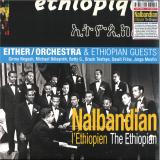
The Éthiopiques series returns! Essential archive recordings from an extremely fruitful period in Ethiopian music.
Before “Swinging Addis” took over the world, there was Moussié Nerses Nalbandian — the Armenian-born composer who shaped modern Ethiopian music. Mentor, arranger, and pioneer, he laid the foundations of Ethio-jazz.
This Éthiopiques volume revives his forgotten legacy, recorded live by Either/ Orchestra First issue ever with new exclusive photos and in depth liner 8-page insert.
“Ethiopian jazzmen are the best musicians that we have seen so far in Africa.
They really are promising handlers of jazz instruments.”
Wilbur De Paris
(1959, after a concert in Addis Ababa)
አዲስ፡ዘመን። *Addis zèmèn* **A new era.**
The time is the mid-1950s and early 1960s, just before "Swinging Addis" bloomed – or rather boomed – onto the scene. Brass instruments are still dominant, but the advent of the electric guitar, and the very first electronic organs, are just around the corner. Rock’n'Roll, R’n’B, Soul and the Twist have not yet barged their way in. Addis Ababa is steeped in the big band atmosphere of the post-war era, with Glenn Miller's *In the* *Mood* as its world-wide theme song, neck and neck with the Latin craze that was in vogue at the same period. Life has become enjoyable once again, with the return of peace after the terrible Italian Fascist invasion of Ethiopia (1935-1941). The redeployment of modern music is part and parcel of the postwar reconstruction. *Addis zèmèn* – a new era – is the watchword of the postwar period, just as it was all across war-torn Europe.
The generation who were the young parents of baby boomers** were the first to enjoy this musical renaissance, before the baby boomers themselves took over and forever super-charged the soundtrack of the final days of imperial reign. Music is Ethiopia's most popular art form, and very often serves as the best barometer for the upsurge of energy that is critical for reconstruction. Whether it be jazz in Saint-Germain-des-Prés or the *zazous* who revolutionised both jazz and French *chanson* after the *Libération*, be it Madrid's post-Franco Movida, or Dada, the Surrealists and *les années folles* that followed World War I, the periods just after mourning and hardship always give rise to brighter and more tuneful tomorrows. Addis Ababa, as the country's capital, and the epicentre of change, was no exception to this vital rule.
**Two generations of Nalbandian musicians**
Nersès Nalbandian belonged to a family of Armenian exiles, who had moved to Ethiopia in the mid-1920s. The uncle Kevork arrived along with the fabled "*Arba Lidjotch*", the** "*40 Kids*", young Armenian orphans and musicians that the Ras Tafari had recruited when he visited Jerusalem in 1924, intending to turn their brass band into the official imperial band. If Kevork Nalbandian was the one who first opened the way of modernism, pushing innovation so far as to invent musical theatre, it was his nephew Nersès who would go on to become, from the 1940s and until his death in 1977, a pivotal figure of modern Ethiopian music and of the heights it. Going all the way back to the 1950s. Nothing less. And it is Nersès who is largely to thank for the brassy colours that so greatly contributed to the international renown of Ethiopian groove. While the younger generations today venture timidly into the genealogy of their country's modern music, often losing their way amidst a distinctly xenophobic historiographical complacency, many survivors of the imperial period are still around to bear witness and pay tribute to the essential role that "Moussié Nersès" played in the rise of Abyssinia's musical modernity.
Given the year of his birth (15 March 1915), no one knows for sure if Nersès Nalbandian was born in Aintab, today Gaziantep (Turkiye/former Ottoman Empire) or on the other side of the border in Alep, Syria... What is certain is that his family, like the entire Armenian community, was amongst the victims of the genocide perpetrated by the Turks. Alep, the place of safety – today in ruins.
Before Nersès then, there was uncle Kevork (1887-1963). For a quarter of a century, he was a whirlwind of activity in music teaching and theatrical innovation. *Guèbrè Mariam le Gondaré* (የጎንደሬ ገብረ ማርያም አጥቶ ማግኘት, 1926 EC=1934) is his most famous creation. This play included "ten Ethiopian songs" — a totally innovative approach. According to his autobiographical notes, preserved by the Nalbandian family, Kevork indicates that he composed some 50 such pieces over the course of his career. This shows just how much he understood, very early on, the critical importance of song as Ethiopia's crowning artistic form. Indeed, for Ethiopian listeners, the most important thing is the lyrics, with all their multifarious mischief, far more than a strong melody, sophisticated arrangements or even an exceptional voice. (This is also why Ethiopians by and large, and beginning with the artists and producers themselves, believed for a long time — and wrongly — that their music could not possibly be exported, and could never win over audiences abroad, who did not speak the country's languages).
Last but not least, one of Kevork's major contributions remains composing Ethiopia's first national anthem – with lyrics by Yoftahé Negussié.
Nersès Nalbandian moved to Ethiopia at the end of the 1930s, at the behest of his ground-breaking uncle. Proficient in many instruments (pretty much everything but the drums), conductor, choir director, composer, arranger, adapter, creator, piano tuner, purveyor of rented pianos,... he was above all an energetic and influential teacher. From 1946 onwards, thanks to Kevork's connexion, Nersès was appointed musical director of the Addis Ababa Municipality Band. In just a few years, Nersès transformed it into the first truly modern ensemble, thanks to the quality of his teaching, his choice of repertoire, and the sophistication of his arrangements. It was this group that would go on to become the orchestra of the Haile Selassie Theatre shortly after its inauguration in 1955, which was a major celebration of the Emperor's jubilee, marking the 25th anniversary of his on-again-off-again reign.
At some point or other in his long career, Nersès Nalbandian had a hand in the creation of just about every institutional band (Municipality Band, Police Orchestra, Imperial Bodyguard Band, Army Band, Yared Music School…), but it was with the Haile Selassie Theatre – today the National Theatre – that his abilities were most on display, up until his death in 1977. To this must be added the development of choral singing in Ethiopia, hitherto unknown, and a sort of secret garden dedicated to the memory of Armenian sacred music, and brought together in two thick, unpublished volumes. Shortly before his death (November 13, 1977), he was appointed to lead the impressive Ethiopian delegation at Festac in Lagos, Nigeria (January-February 1977).
His status as a stateless foreigner regularly excluded him from the most senior positions, in spite of the respect he commanded (and commands to this day) from the musicians of his era. Naturally gifted and largely self-taught, Nerses was tirelessly curious about new musical developments, drawing inspiration from the very first imported records, and especially from listening intensely to the musical programmes broadcast over short-wave radio – BBC *First*. A prolific composer and arranger, he was constantly mindful of formalising and integrating Ethiopian parameters (specific “musical modes”, pentatonic scale, and the dominance of ternary rhythms) into his “modernisation” of the musical culture, rather than trying to over-westernise it. It even seems very probable that *Moussié* Nerses made a decisive contribution to the development of tighter music-teaching methods, in order to revitalise musical education during this period of prodigious cultural ferment. Flying in the face of all the historiographical and musicological evidence, it is taken as sacrosanct dogma that the four musical modes or chords officially recognised today, the *qǝñǝt* or *qiñit* (ቅኝት), are every bit as millennial as Ethiopia itself. It would appear however that some streamlining of these chords actually took place in around 1960. It was only from this time onward that music teaching was structured around these four fundamental musical modes and chords: *Ambassel*, *Bati*, *Tezeta* and *Antchi Hoyé*. A historical and musical “details” that is, apparently, difficult to swallow, especially if that should honour a *foreigner*. Modern Ethiopian music has Nersès to thank for many of its standards and, to this day, it is not unusual for the National Radio to broadcast thunderous oldies that bear unmistakable traces of his outrageously groovy touch.
- A1: Man Power
- A2: What You Gonna Do About It?
- A3: Freedumb
- A4: Guess What?
- B1: Forget Me If You Ain’t Wit Me
- B2: Before Hip Hop
- B3: Act My Age (Feat. Scarface)
- C1: Ratchet Ass Mouth
- C2: Respect My Space
- C3: California Dreamin
- C4: That Salt And Pepper
- D1: Bring Everybody
- D2: It’s My Ego (Feat Scarface & Quake Matthews)
- D3: All Work No Play
LTD. Germany Exclusive LP[45,59 €]
This holiday season, global hip-hop icon Ice Cube makes a powerful return with Man Up — a brand-new album from a cultural trailblazer whose influence spans music, film, and activism. With over 10 million albums sold and six Platinum plaques, Cube’s legacy is undisputed, from his revolutionary work with N.W.A. to timeless solo anthems like “It Was a Good Day.” Now, sharper and more unapologetic than ever, he’s back to deliver a project that fuses his raw lyrical power with a message rooted in resilience and authenticity.
To mark the release, Man Up will be available exclusively as an ultra-limited vinyl drop this holiday season. Each record features a one-of-a-kind hand-crafted cover — a unique blend of artisanal design and proprietary technology (created without A.I.) — alongside city- and country-specific sleeves that pay homage to Cube’s global impact in places like LA, Tokyo, London, and France. The campaign will be amplified through a global social media rollout, city-focused influencer activations, and Ice Cube’s upcoming North American tour. Major press coverage and podcast appearances will further elevate the conversation, making Man Up not just an album, but a collector’s piece and cultural moment fans won’t want to miss.
- A1: Scratch Pad 1
- A2: Messij Received
- A3: God's Gift
- A4: Tentative
- B1: Canada 2048
- B2: Wiped Out
- B3: Body In Motion (Body Plus Mix)
- B4: Onyx (Dark Side Of The Moon)
- C1: Messij Received (Wstwgbe Mix)
- C2: Canada (Drunken Auslander Mix)
- C3: Tentative (Woffenfum Mix)
- D1: Messij (Bobbing Boat Mix)
- D2: Body In Motion (Timeless Techno Mix)
- D3: Doh-T (Am / Fm Mix)
- E1: 95 Future Echoes
- E2: Turbine
- E3: Pencil Neck
- E4: Messij 2005 (New Science Mix)
- F1: Canada (Tim Reaper Remix)
- F2: Messij (Sherelle's Messij In A Bottle Hardcore Remix)
- F3: Doh-T (Mantra Remix)
- F4: Canada (Niknak Remix)
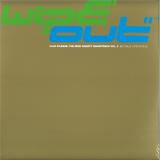
The legacy of wipE′out′′ has transcended time and cemented itself as a true transgenerational phenomenon. Launched in 1995, it didn’t just revolutionise the gaming industry, it created a bridge between the gaming ecosystem and the raver community. Its futuristic aesthetics and forward-thinking sound left a mark not only on mainstream audiences but also on the most demanding corners of the underground.
Decades later, the game’s impact is still alive. The release in 2023 of The Zero Gravity Soundtrack on Lapsus Records proved once again that wipE′out′′’s accompanying audio will go down in history as much more than just an anti-gravity racing game soundtrack.
This is why we decided to go deeper into the slipstream and build the second volume you’re now holding in your hands. Drawn from the original archives of Tim Wright, aka CoLD SToRAGE, this new collection surfaces unreleased cuts, pieces that couldn’t fit on the first edition, and a suite of self-authored ambient reworks that translate pure velocity into wide-screen atmospherics engineered for the long straights, the drone of airbrakes, the blue hour between checkpoints. It also reconnects the circuit, gathering selections and variants tied to later chapters of the saga — wipE′out′′ HD and wipE′out′′ Pure — plus alternative mixes that, until now, only existed in the Sega Saturn dimension of the franchise.
Finally, the material takes a leap into the future in the hands of four remixers especially chosen for this release: Tim Reaper, SHERELLE, Mantra, and NikNak, who collectively forge links between CoLD SToRAGE’s pioneering musical vision, the sound world of the game, and the contemporary breakbeats and drum & bass vanguard.
Expect the DNA you remember — accelerated breaks, trance-vector synths, jungle influences, sub-bass rumbling neatly beneath the craft’s hull, and at times even echoes of classic hardstyle — now revealed with new angles and air. The previously unheard material carries the same aerodynamic design sense that made these tracks feel faster than the track map itself, while the ambient versions open the field of view with melodies hovering at the lip of overdrive. Without a doubt, here you’ll find a strong sense of nostalgia. But this isn’t just nostalgia; it’s also proof that this sound world continues to evolve when you ease off the throttle.
For the faithful — crate-digging ravers, speed-run obsessives, and design nerds — this is an essential expansion pack: compiling rarities, restoring context, and reframing the emotional core of wipE′out′′ for late nights and early mornings alike. Bridging memory and momentum, club and console, rush and afterglow. Strap in.
Detailed tracklist, with annotations by Tim Wright aka CoLD SToRAGE
· Scratch Pad 1: “This track was composed using incomplete tracks that were developed around the time of the first wipE′out′′. It’s so long because it was used for a marathon-length Psygnosis promotional video.”
· Messij Received: “Messij was a firm favourite with wipE′out′′ fans, so it made sense that there’d be more where that came from — this was one of those re-workings.”
· God’s Gift: “I was always very fond of Erasure’s track Love to Hate You with the canned crowd FX sounds. God’s Gift was a tongue-in-cheek reference to how some musicians think they are just that. This was way before I even played live as CoLD SToRAGE.”
· Tentative: “I wasn’t sure about introducing some wacky beats and distorted sounds into one of the tracks, because it was kinda heading away from the other tracks, hence Tentative — but it turned out OK.”
· Canada 2048: “When wipE′out′′ 2048 was launched I decided to re-make Canada as a kind of tribute, but in a slightly new-tech, laid-back way, using Propellerhead Reason and all software synths.”
· Wiped Out: “Based on a few riffs from a MIDI file unused at the time of the original wipE′out′′ game compositions, this featured on my debut album MELT.”
· Body in Motion (Body Plus Mix): “A more trippy interpretation of Body in Motion that featured on non PlayStation versions of the game e.g. Sega Saturn.”
· Onyx (“Dark Side of the Moon”): “Onyx was my sole contribution to wipE′out′′ Pure on the Sony PSP handheld gaming console. This version was something I developed in a darker style, that eventually erupts into a crescendo.”
· Messij Received (WSTWGBE Mix): “Like I say, Messij was a hit with most wipE′out′′ fans, so when I was asked to compose more music for non-PlayStation versions, I adapted this tune into a parallel-universe version for PC and Sega Saturn. By the way, WSTWGBE refers to Who Said This Was Going To Be Easy?”
· Canada (Drunken Ausländer Mix): “In early 2018 I released a fresh album called Ch'illout′′, a re-working of many of my wipE′out′′ tracks in an ambient, Sunday-morning vibe style — it was a few years’ work, here and there.”
· Tentative (Woffenfum Mix): “Another chilled re-working of one of my wipE′out′′ tracks, the mix named with a nod to a good friend of mine, Carl Woffenden — someone who I've worked with for many years in the games industry.”
· Messij (Bobbing Boat Mix): “A nice cheesy computer blip-blop start belies its deep and upbeat chilled-out melodic finale.”
· Body in Motion (Timeless Techno Mix): “Another classic track given the chilled-out vibe mix, as featured originally on my Ch'illout′′ album. This one’s a really trippy, deep-space take on the original.”
· DOH-T (AM / FM Mix): “The idea with this chilled-out mix was to imagine all the melodic parts of this varied track being broadcast on terrestrial radio, so each theme drifts in and out through the radio static.”
· ’95 Future Echoes: “Originally developed as a companion album for wipE′out′′ HD, this track actually has its roots in a tiny loop of a song that never progressed to anything special back in the mid-’90s when I was composing for the original game.”
· Turbine: “Also from my wipE′out′′ HD album, it leans heavily into the upbeat, uplifting tunes from the original game, but also steals a bit of vibe and energy from The Prodigy, with those distorted flute sounds.”
· Pencil Neck: “This excerpt from my wipE′out′′ HD album features lots of sounds centre-stage and forward from Propellerhead Reason’s Subtractor virtual synth. I learned to love this more than my JD-800!”
· Messij 2005 (New Science Mix): “Yet another take on the track that still raises a smile, this time through a mix of samples from the original and Propellerhead Reason — the ‘new science’ when compared to an Amiga 1200 running Bars and Pipes.”
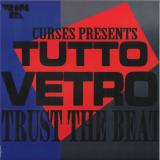
Luminary and guiding light of the Wave and Italo resurgence, Curses returns to Wrong Era Records under the veil of Tutto Vetro, presenting the mechanical masterpiece ‘Trust The Beat’ in this fresh form. A master of cinematic body music, Tutto Vetro ignites the release with 'Trust The Beat,' a slamming and enigmatic proto cut. 'Wild Things' delves deeper into his talent for infectious melodies and commanding percussion.
- A1: Shahrokh - Man Va Tou ("Me And You")
- A2: Shahram Shabpareh, Shohreh Solati - Ghesmat ("Fate")
- A3: Farzin - Eshgheh Man ("My Love")
- B1: Aldoush - Vay Az In Del ("Woe To This Heart")
- B2: Fataneh - Mola Mamad Jan ("Mola Mamad Jan")
- B3: Ebi - Kolbeh Man ("My Cottage")
- C1: Sattar - Khaak (
- C2: Susan Roshan - Nazanin ("Sweetheart")
- C3: Delaram - Gharibeh ("Stranger")
- D1: Black Cats - Rhythm Of Love
- D2: Leila Forouhar - Hamsafar ("Fellow Traveler")
- D3: Hassan Shojaee - Nazi Joon ("Dear Sweetheart")
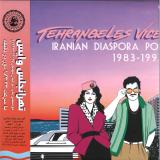
Discotchari is delighted to release a first-of-its-kind various artists compilation: Tehrangeles Vice (Iranian
Diaspora Pop 1983–1993), fully licensed from Taraneh Enterprises. The album is a groundbreaking exposé of
the vibrant subcultural hub of Tehrangeles (portmanteau of Tehran + Los Angeles), and the action–packed, true
story of the Iranian diaspora music industry. Featuring 12 tracks remastered by award–winning Osiris Studio,
lyrics and translations to all featured songs, original cassette covers, a 20+ page album note booklet by Dr.
Farzaneh Hemmasi and more! Sprawling from Westwood to Glendale across the San Fernando Valley, the
Tehrangeles scene was cultivated by the same producers and artists who industrialized the “golden age” of
entertainment in pre–revolution Iran and fled from the 1979 Islamic Revolution along with millions of Iranian
citizens. Through music and visual media, Iranian producers and artists working out of Tehrangeles have
engaged in what the Iranian government calls a “cultural attack” against the Islamic Republic for over 40 years.
The album title Tehrangeles Vice underscores the illicit nature and daring circumstances from which
Tehrangeles pop music was born and compares its legacy within Persian media to one of the most significant
crime–drama TV shows of all time. In the same manner that Miami Vice and its aesthetics had a dynamic
impact on sonic, visual and cultural trends in the United States and around the world, Tehrangeles media was a
shock to the systems of Islamic Republic ideology and Iranian expatriate communities. Listening to these songs
in hindsight, the contribution of Tehrangeles can be better understood as a triumphant effort to preserve Iranian
identity by realizing it in conjunction with prevailing music genres of the ‘80s and ‘90s, and to rebel against the
oppressive regime of the Islamic Republic of Iran through the most seductive of means: dance music.
g C1. Sattar - Khaak ("Home Land")
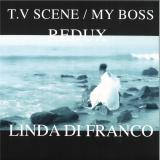
Updated remixes of two big Balearic classics on Best Record! "Describing Linda Di Franco is no easy task: a reserved, sometimes elusive artist with a career that is difficult to define. From an early age she was interested in various artistic fields. Working as a DJ in clubs, then on the radio, she took the opportunity to record her first musical demo, Stage, obtaining international recognition which quickly took her to England and to the States, where she recorded her first compositions, My Boss and T.V. Scene. The songs are of great value and achieve unexpected success, also included in The Rise Of The Heart, a milestone in the nascent revolution of club culture, a Balearic classic supported by DJs in love with the indefinable sound of Ibiza. But Linda is extraordinarily ahead of her time and despite the enormous fame has gained with her songs she is already oriented towards a career as a music video director. For this reason the Turin singer-songwriter turns out to be one of the least fruitful artists of her time, while her CV in Hollywood is impressive in various roles which she holds, in addition to that of actress and director, that of impeccable sound technique. Intelligent artist, full of good and positive feelings and certainly also ambitious, but extremely scrupulous by subjecting sounds in cinema to careful review. Yes! The "sound" is an investigative tool for her, a way of understanding art. Linda Di Franco is - willy-nilly - still the undisputed queen of the Balearic sound today. So, she decided to produce Redux, a limited edition album published by Best Record, in which her most intrepid and famous songs are re-proposed in the jazz versions edited by her friends from Turin and Los Angeles. Then she had to give in to the boundless passion of Danilo Braca, the Italian DJ based in New York, who deserves credit for the successful combination of refined and ethereal songs with the disco genre. TV. Scene - Epic Remix, TV. Scene - Costa del Sol Mix and My Boss - Remix are Danilo's pearls, created with the help of excellent international musicians who with more defined and current sounds have added their art to that of Linda."
- A1: Born In The Usa (Lp1 Nebraska Outtakes Demo Version 1982)
- A2: Losin' Kind
- A3: Downbound Train
- A4: Child Bride
- B1: Pink Cadillac
- B2: The Big Payback (Single B-Side 1982)
- B3: Working On The Highway
- B4: On The Prowl
- B5: Gun In Every Home
- C1: Nebraska (Lp2 Electric Nebraska)
- C2: Atlantic City
- C3: Mansion On The Hill
- C4: Johnny 99
- D1: Downbound Train
- D2: Open All Night
- D3: Born In The Usa
- D4: Reason To Believe
- E1: Nebraska (Lp3 Nebraska)
- E2: Atlantic City
- E3: Mansion On The Hill
- E4: Johnny 99
- E5: Highway Patrolman
- F1: State Trooper
- F2: Used Cars
- F3: Open All Night
- F4: My Fathers House
- F5: Reason To Believe
- G1: Nebraska (Lp4 2025 Remaster)
- G2: Atlantic City
- G3: Mansion On The Hill
- G4: Johnny 99
- G5: Highway Patrolman
- H1: State Trooper
- H2: Used Cars
- H3: Open All Night
- H4: My Father's House
- H5: Reason To Believe
Bruce Springsteen's statewide ode Nebraska '82 is given ample extra space with a new expanded edition, as his 1982 acoustic masterwork is cast in renewed light by its use the forthcoming biopic Deliver Me From Nowhere, which documents the conception of the original album. Now with an extra 17 solo outtakes, including demos of 'Born In the USA' , 'Pink Cadillac', and 'Downbound Train', as well as the fabled Electric Nebraska sessions with the E Street Band, the new dubs illuminate the breadth of Springsteen's vision for a reconciled America, where Springsteen found much inspiration in the folk, literature and short stories of the heartland, particularly in those of Flannery O'Connor, childhood and young-adult memories. Notably, it was deemed by PopMatters to beo one of the first every DIY records made by a major artist, and soon sparked a DIY revolution by folk musicians the globe over.
2025 repress
After the re-release of Drexciya's 'Neptune's Lair' and Transllusion's 'The Opening of the Cerebral Gate', 'Harnessed the Storm' is the third album in Tresor Records' great Drexciya reissue program.
Originally released in 2002, 'Harnessed the Storm' was conceived as the opening chapter of the legendary Seven Storms - a series of seven albums created within a single year and released via several labels under different names. 'Harnessed the Storm' was the sole one in the series credited under the main Drexciya project.
The album, which is considered to be one of the pair's darkest, was produced in a time of creative outbreak and emotional turbulence. The duo's confidence was at a peak, new techniques revolutionized musical production, but the duo also had to face Stinson's severe health issues. This led to a radical shift of pace in producing and releasing music. For the Detroit pair it was time to move on from their ground-breaking past. It was time for some shape shifting and wave jumping to occur, in Drexciya's terms.