"Awaken the Legacy" is the first EP to be released in early September 2020 on the Berlin Techno Label INHERIT. The four-track release spotlights two original tracks from the founders of INHERIT Daniel Heinrich & Disguised as well as two remixes by MORBECK & YA.
The original tracks "Awaken the Legacy" & "Power" perfectly demonstrate why Daniel Heinrich & Disguised decided to take their collaboration to the next level and to found INHERIT at the beginning of 2020. The sound of both original tracks is straightforward and shakes your body to a melodic mix of trance tunes combined with hard drum sessions.
MORBECK from Berlin, founder of "Code is Law" & "Low Life Club" brings with his first and unique driving remix a death melody interpretation of "Power" to the EP. The re-mix stands out with a playful and forward-driving rhythm and can be called the most danceable track on the EP.
YA from Paris, founder of Mainmise Records and Pulse perfectly completes the first release with his remix of "Awaken the Legacy'. His typical YA sound, as well as the mix of trance & hard techno elements, energizes you and lifts off the track to a different level. No time to rest, this remix should be part of every driving DJ set.
quête:rhythm code
- A1: Kid Montana - Cabs Ambush
- A2: Tristes Tropiques - Untitled #1
- A3: Prothese - Tumeurs
- A4: Rel Rex - Program
- A5: Digital Dance - Human Zoo
- B1: Polyphonic Size - Kyoto
- B2: Satin Wall - Dans Les Profondeurs
- B3: Tristes Tropiques - Untitled #2
- B4: Pseudo Code - Around Midnight
- B5: Slim Jack - So Sah Gelleck Tissah
- C1: The Names - Spectators Of Life
- C2: Siglo Xx - Individuality
- C3: Marine - Life In Reverse
- C4: The Neon Judgement - Factory Walk
- C5: Nausea - Vocal Expression
- D1: Isolation Ward - Lamina Christus
- D2: Front 242 - Principles (Instrumental)
- D3: Allez Allez - Allez Allez
- D4: Berntholer - Emotions
- D5: Jung - The Real Thing
LTM presents a limited double vinyl gatefold edition (500 copies only) of B9, the definitive collection of cold wave and minimal electronica from Belgium, recorded between 1979 and 1983.
Originally released on Sandwich Records in May 1981, B9 featured 10 exclusive tracks by luminaries such as Digital Dance, Polyphonic Size, Kid Montana, Pseudo Code and Prothese, the latter the first recording project by Daniel Bressanutti of Front 242. Now digitally remastered, with 10 additional tracks on the second disc, this new deluxe vinyl edition also features Front 242, The Names, Marine, Siglo XX, The Neon Judgement, Berntholer, Allez Allez, Isolation Ward and more.
Cover op-art by Victor Vasarely. Design by Benoît Hennebert, based on a poster for The First Belgian Rhythm Box Contest (1981). Liner notes by James Nice. The existing CD version of B9 is also still available (LTMCD 2486)
- A1: Samurai Masu Biitsu
- A2: Kimi
- A3: Ahou Jiko
- B1: Iai
- B2: I Cry, Bai Bai
- B3: Sayounara Tsutara
- B4: Nan No Tame Ni Boku To
- C1: Miso Shiru
- C2: Nihon De Homuresu
- C3: Are Igai Imi Ga Nai
- C4: Kimi Wa Tsumannai, Boku O Iranai
- D1: Yari Chuu, Kyouroku Isuu
- D2: Gaijin Sabetsu, Gaikoku Hakuchuumu
- D3: Why Why
- D4: Ahou Bouken
Reissue des zweiten von drei Alben des US-polnischen Braindance-Produzenten Bogdan Raczynksi, die 1999 auf Rephlex erschienen. "Samurai Math Beats" lag irgendwo zwischen dem Drill'n'Bass von Aphex Twin und Squarepusher und sonnengetränkter Electronica von Plone oder Boards Of Canada. Die Kollision aus hyperkinetischen Rhythmen und Spielhallenmelodien wies einer Vielzahl zukünftiger Mutationen den Weg, von den frenetischen BPM des Footwork bis zum dekonstruierten Pop von Mica Levi. Neu geschnitten auf schwarzem Doppelvinyl samt Download-Code und 4c-Poster. Die LP ist der zweite Raczynski-Release auf Disciples nach dem Sampler "Rave 'Till You Cry" (2019) mit unveröffentlichtem Material.
- "Classic braindance" - Hardwax
- "Bogdan was a massive inspiration for some of my tracks on the Drukqs album, the fact he was doing it all on a shit PC tracker… totally amazing. This was before 99.9 percent of people used the computer for everything. His records are so underrated." - Aphex Twin
- A1: Garou Densetsu Title (Neogeo)
- A2: Garou Densetsu Title (Mvs)
- A3: Fatal Fury Title (Neogeo)
- A4: Fatal Fury Title (Mvs) Ver.1
- A5: Three Heads Are Better Than One (Player Select)
- A6: Fight! (Battle Start)
- A7: The Hooligan Of Downtown (Duck King's Theme)
- A8: Haremar Faith Capoeira School - Song Of The Fight Believers Will Be Saved (Richard Meyer's Theme)
- A9: The Sea Knows (Michael Max's Theme)
- A10: Four Thousand Years Of Chinese History (Tung Fu Rue's Theme)
- A11: Results Are Everything (Battle Results)
- A12: Suspicious Guy (Interrim Demo)
- A13: The King Cobra Is Coming (Hwa Jai's Theme)
- A14: The Hero Raiden (Raiden's Theme)
- B1: Let's Start (Bonus Game Start)
- B2: Keep Going Until The Ends Of Hell (Bonus Game Main Bgm)
- B3: You Are Great! (Bonus Game Victory)
- B4: Failure Is The Key To Success (Bonus Game Defeat)
- B5: Hit By A Stick If You Walk Along The Bridge (Billy Kane's Theme)
- B6: Kidnapping (Geese's Subordinates Demo)
- B7: Desperate Awakening (Geese Appearance Demo)
- B8: A Kiss For Geese (Geese Howard's Theme)
- B9: Just A Little Smart Fighting Fellow (2P Battle Bgm)
- B12: I Won't Give Up! (Continue)
- B13: Beyond Despair (Game Over)
- B14: Enter Your Name (Battle Records Display)
- B15: Fatal Fury Title (Mvs) Ver. 2
- B16: The Hero Raiden -Rof Arrange Ver
- B10: In The Shadows Of Victory (Victory Demo)
- B11: If You Gaze At Reality (Ending)
SNK, Brave Wave Productions and Limited Run Games are proud to reveal their fifth collaboration, Generation Series 012: Fatal Fury for both CD and vinyl. Known as Garou Densetsu (餓狼伝説) in Japan and originally released for NEOGEO in 1991, Fatal Fury is one of SNK’s earliest, but also most popular 2D fighting games. The soundtrack, composed by TARKUN (Toshikazu Tanaka), features catchy and exciting tunes for each character in the iconic SNK fighters lineup.
This release marks the first time the soundtrack of Fatal Fury will be made available on vinyl. As with all Generation Series and other Brave Wave releases, this release will be remastered specially for vinyl, CD and digital (via a free download code included with the vinyl edition) and restored to the highest possible quality. The rest of the package will include our usual offerings, including high-resolution artwork and liner notes contained in a full-color booklet.
As a special bonus, Side B of the vinyl (the final track on the CD) will contain the track The Hero Raiden -ROF Arrange ver.-, which was originally featured in the 2015 mobile title The Rhythm of Fighters. The bonus track, an arrangement of the original song from Fatal Fury, was composed by TARKUN.
- A1: East Man & Streema - Know Like Dat
- A2: East Man & Mic Ty - Everybody Knows
- A3: East Man & Fernando Kep - Ouroboros
- A4: East Man & Lyrical Strally - Ten Ton Riddim
- A5: East Man & Ny Ny - Boys
- A6: East Man & Whack Eye - Who Am I?
- B1: East Man & Eklipse - East Man Theme (Reprise)
- B2: East Man & Darkos Strife - Wow How?
- B3: Ease Up
- B4: Look & Listen (Part 2)
- B5: Machine Gun
- B6: Hi Tek Theme
'Prole Art Threat' is producer Anthoney Hart's second LP for Planet Mu under his East Man alias, after 2018's well received debut 'Red White & Zero'. It brings together a set of MCs from all over London, Darkos and Eklipse from East London and Lyrical Strally from near Feltham who were on the first album, Ny Ny and Mic Ty also from East London, Streema and 'Vision Crew' member Whack Eye from Lewisham plus Fernando Kep, an MC from the burgeoning Brazil grime scene. They work across a cohesive set of tight riddims forged from thoughtful amalgams of grime, dancehall and drum & bass. The album takes its name from a Fall song/mission statement of the same title, the band being self-consciously working class and led by a brilliant autodidact in Mark E Smith. East Man relates that the title is to be taken as “a reflection of working-class creativity and how the establishment marginalise us and (perhaps on a subconscious level) see us as a threat.” Les Back, author of 'The Art of Listening' and 'Out of Whiteness: Color, Politics and Culture (with Vron Ware)' contributes liner notes to the record: East Man understands the force and the democracy of the mic. Listening to Prole Art Threat is like being at a dance. As the mic is passed between each of the MCs, a different tale is ‘elevated... off the map’ as Ny Ny puts it. We hear instalmentsfrom Forest Gate, Lee, Lewisham and Manor Park as these ‘lyrical gaffers’ and ’top boys and girls’ tell tough stories of life under the scrutiny of the ‘Feds’ in a brutal and divided city. The bars and rhymes document what it means to live here; from the double standards applied to the sexuality of young girls and boys to the corrosive violence of everyday life. All this is dissected without compromise. This is not just aLondon story though, the inclusion of Fernando Kep from the burgeoning Grime scene in Brazil is evidence of the outernational reach of the music. The tracks on East Man’s album explode the wilful ignorance of those who see ‘the working class’ in contemporary London as code for whiteness. This is the sound of a proletarian urban multiculture, made from Caribbean and African influences, sound system culture, pirate radio and the inexorable rhythms of Grime, Drum & Bass, Techno and Dancehall. It is the stirring of the "white" & "black" working classes who are living together and coming together on their own terms in sound. ‘Making music because you love it... what the fuck else could you do?’ as East Man says. The tracks and voices you are holding in your hands are, as a result urgent, vital, as hard nails and twice as sharp.
- A1: Kosei Fukuda - ?? - Enso (4 18)
- A2: Uchi - Zro (6 42)
- A3: Ypy - Circulation (6 44)
- B1: Recent Arts - My Default Emotion (5 43)
- B2: Renick Bell - Organize And Unite (4 09)
- B3: Ma + Kosei Fukuda - ????(????)- Enso No Ma (Furutsuki) (1 30)
- B4: Yvesdemey - The Chosen Home (6 11)
- C1: Tobias - He Turned Into Him (5 52)
- C2: Katsunori Sawa - The Stonewall (5 21)
- C3: Yuji Kondo - Zenith (6 09)
- D1: Rabih Beaini - Circle (8 03)
- D2: Ena - 42 1 (4 36)
- D3: Lemna - Moments In Eternal Recurrence (5 00)
Japanese sound artist and producer Kosei Fukuda’s presents a collaborated vision of the first edition of ENSo¯, a two-day audio-visual event collated around the REITEN label. The ENSo¯ Festival invites its artists and audiences alike to appreciate the merging of the improvisational, with the contemplation of rhythmic cycles, based around the conception of enso¯ – ?? – meaning a hand-drawn circle created by one uninterrupted stroke. Now, with an elongated stretch of time in front of us before the next edition of the festival, the compilation stands to provide a sustained glimpse into the world imagined by Fukuda. Blending spontaneity and gravity alike, the record features an array of idiosyncratic artists set to play ENSo¯, all purveyors of their own shaped sound-worlds.
For the A-side, we have Fukada’s own contribution ‘?? – ENSo¯’; a slice of ambient techno dotted somewhere within a faraway galaxy. Venezuelan noise artist UCHI crafts a fourth-world hymn with tribal percussion on the expansive ‘ZRO’, and Osaka based experimentalist YPY aka Korshiro Hino shapes an elusive polyrhythmic ambience on ‘Circulation’. The B-side presents a colossal improvisational track ‘My Default Emotion’ from Berlin based duo Recent Arts. Formed of Chilean artist Valentina Berthelon and German musician Tobias Freund, the duo are masters in audio-visual experimental performances that both surprise and challenge an audience. Renowned artist, programmer and teacher Renick Bell is noted as a pioneer for live coded performance, conducting mutated rhythms that cut across the landscape of electronic sound. His addition to the compilation is a luminescent IDM piece, titled ‘Organize and Unite’. A polished ambient club track from Fukada and MA titled ‘????(????)’ provides a state of organized tranquility, whilst the track ‘The Chosen Home’ from Belgium artist YvesDeMay, whose move from breakbeat to experimental producer has produced gratifying results for all, is a welcome slice of pensive dub- techno.
The C-side brings us a textured and haunting techno track ‘He Turned Into Him’ with revered German artist Tobias, veteran mainstay with an expert hand in shimmering sound design; Kyoto based 10 Label heads Katsunori Sawa and Yuji Kondo brings sample-heavy rushes of sound, the former with ‘The Stonewall’ and the latter with ‘Zenith’, both multi-faceted in their reference points. The D-Side presents the grainy and expansive ‘Circle’ from Lebanese producer Rabih Beaini, who expertly combines club tropes and avant-gardism in his DJing and music. Hypnotic skeletal beats circulate on the pulsating ‘42.1’ by Tokyo artist ENA. Japanese composer Lemna, the alias of Maiko Okimoto rounds it off with a dreamy noise ambience on ‘Moments In Eternal Recurrence’. Released on vinyl July 24th, the compilation stands as a traversable artefact of the festival, rich in spontaneous beauty.
Gwendoline is the project from Micka (a.k.a. Mikoune) and Pierre (a.k.a. Daniel). Based in Rennes, musically influenced by the classic cold wave which originated in their country, precarious and aimless, they shape Gwendoline to their own image. Pure DIY ethics, quick recordings at their home studio. Dark lyrics, self- mockery, criticism, sarcasm derived from the world’s mediocrity.
“Après c’est gobelet!” is their first album. Melodic but dark, ironic but direct, sophisticated but absolutely minimalistic. A testimony of today’s world viewed under a grey prism of sarcasm and wrapped around beautiful melodies and rhythms.
We are really happy to present you this very special record on a limited, hand numbered edition of 140 copies, housed in a matt finish sleeve and including a download code. The digital download includes two bonus tracks.
- A1: Tape Seq 17
- A2: Codertrax Seq.x
- A3: E H. 5000 Pulse
- B1: Alpha 1 1 Copy
- B2: Future Love-Ec-280 Seq 09
- B3: Drumtraks-Spacetip
- B4: The Mechine's Frequency Memory
- C1: Slowon Edit 02
- C2: Esq-1-Cr8000 (Guitar Mix)
- C3: Cs1-Effectrons
- D1: Rds3600-565 Filter Beat 1
- D2: Madd-Init Edit
- D3: Madd 04-Daruma Mix
- D4: Slowon X-Edit
Across two 12" slabs come long buried vignettes, motorik experiments and sketches from deep within the SVN archives. A continuation from his previous EP of the same name (c. 2017), this latest collection's smoked-out ambience, skeletal stuttering rhythmic workouts and smudged stoned melodies are some of the myriad parts that make up this most mysterious 'Mechine'.
Recorded at the now infamous Neues Deutschland Studio in Berlin, this collection of tracks continues the unique sonic explorations that SVN is known for and has deftly showcased through various respected electronic outlets including Apollo, Acido, Sex Tags Mania and more. An essential collection of DIY and contemporary German electronics.
2x12"
Having made initial waves on Cold Recordings and Osiris, Eric Baldwin returns now to Tectonic to release his eponymous album ’Cocktail Party Effect’, bringing his South London roots to Berlin for an all-weekender, under strobe lights.
Drawn by his appetite for powerful rhythmical forms and inspired by the likes of Daphne Oram, The Residents and Captain Beefheart - Eric takes uses background in sound design, knowledge of hacking VST software and adapted spring reverbs and other hardware, to create a truly unique vision of contemporary electronic music. It sits somewhere between Jeff Mills, Aphex Twin & Squarepusher - held together by a connective UK Bass Music spinal chord. A weird but intriguing beast.
We open the track with Japanese cocktail recipes, before moving into the only vocal track of the album, ‘Talking To Bricks’ featuring Bristol vocalist Redders on fine form - charged with disjointed energy and run ragged across a technologically charged dancehall style beat. The LP progresses through the rolling breaks and bleeps of ‘For The Memory Exchange’, into an IDM side-step in the shape of ‘Brutalism’, moving into the gentle, beautiful flickering glitches of ‘PDA’, before we get to the hyperactive twitching alien charge of ‘War On Codex’.
Taking a leap in another direction, we reach ‘Cause For Bad Shelving’, which sounds a bit like Squarepusher when he was on late 90s, immaculate form - taking the tempo up a few notches, while building melancholy. ‘Lack Of Wrong Format’ then gives us a moment to breathe, before diving into ‘Deerhorn’ which brings us right back to the dancefloor. Things are then turned inside out with the jittery wonder of ‘I Get It (Lost Banknote)’, redirected via the industrial clangs of ‘Low_Rise’, before rounding off our sonic adventure with the ponderous tones of ‘Loner’ - which leave you glowing and drifting off into space.
A bold album that’s just brim with a strong sense of originality, direction and grand narrative. From international dancefloors to post-clubbing ear-worms, Cocktail Party Effect is just getting started and you’ll be hearing his name more and more now.
A winter evening after leaving a nightclub. On my way home freezing winds numbed my skin. „Kalt, so kalt“ was pulsing in my mind. I thought about Neo‘s replication scene from The Matrix where he felt so cold. With my phone I recorded the vocals and caught this moment as a base for this track.
The title track „enigmatic 1999“ lifts you you up in space with a Lo-fi drum setting that drives your emotions into something enigmatically while the upcoming melody scratches the atmosphere like a skyscraper.
Zion X forms a ritual environment with a complex rhythm structure, followed by a human-like drone voice, before it twists into a minimalistic rave hymn for a few seconds to stoke up the hunger for more.
Residual-Self-Image invites you to dream with its resolving character, truly water shaped beat and breakdown rhythm.
- 01: Lord Beginner - Sons And Daughters Of Africa
- 02: The Lion - Royal Wedding
- 03: The Mighty Terror - The Hydrogen Bomb
- 04: Dai Dai Simba - Modern Telephone
- 05: Willie Payne & The Starlite Tempos - Wa Sise
- 06: The Mighty Terror - The Emperor Of Africa
- 07: Louise Bennett - Bongo Man
- 08: Marie Bryant - My Handy Man
- 09: Nigerian Union Rhythm Group - Tortoise Mambo
- 10: Calypso Rhythm Kings - Boul Ve Se
- 11: The Mighty Terror - Life Is Like A Puzzle
- 12: The Mighty Terror - Chinese Children
- 13: Bill Rogers - Hungry Man From Clapham
- 14: Lili Verona - Underground Train
- 15: The Lion - Highway Code
- 16: Billy Sholanke - Kana Kana
- 17: Calypso Rhythm Kings - L’année Passée
- 18: Lord & Lady Beginner - One Morning
- 19: West African Rhythm Brothers - Ema Foju Ana Woku
- 20: Trinidad Steel Band - Caroline
part 8[26,01 €]
Still deeper forays into the musical landscape of the Windrush generation. A dazzling range of calypso, mento, joropo, steelband, palm-wine and r’n'b. Expert revivals of stringband music, from way back, alongside proto-Afro-funk. An uproarious selection of songs about the H-Bomb and modern phones, prostitution and Haile Selassie, mid-life crisis and the London Underground, racism and solidarity, the Highway Code and a 100% West Indian Royal Wedding.
For example some frantic British-Guianan joropo music-hall about Eatwell Brown from Clapham, who starts out biting off a piece of his mother-in-law’s face at a party, then devours everything in his path… a chunk of Brixton Prison, a Union Jack, a policeman’s uniform. Or Marie Bryant — collaborator of Lester Young and Duke Ellington — taking time off from skewering the South African PM Daniel Malan at her West End revue, to contribute some arch, swinging filth about uber-genitalia. Superior sound, courtesy of Abbey Road, D&M and Pallas; lovely gatefold sleeve; full-size booklet, with full notes, and fabulous previously-unseen photographs, including a set from the family archive of Russ Henderson (who led the first, impromptu Notting Hill Carnival march, in 1966).
- A1: Haruna Ishola & His Apala Group - Ewure Ile Komoyi Ode
- A2: Adebukonla Ajao & Her Group - Aboyin Ile
- A3: Rapheal Ajide & His Apala Group - Adura Fun Osiwowo
- A4: Haruna Ishola & His Apala Group - Orin To Mo Gbon Wa
- A5: Ra Tikalosoro & His Group - Agilinti Lomu
- B1: Adebukonla Ajao & Her Group - Abd Alawiye
- B2: Haruna Ishola & His Apala Group - Asa Ko Gbodo Wole Gbeiyele
- B3: Adeleke Aremu & His Group - Egbe Arowolo
- B4: Haruna Ishola & His Apala Group - Rufai Baolgun
- B5: Ra Tikalosoro & His Group - Kiniun Kuro Leran Amu Sere
- C1: Haruna Ishola & His Apala Group - S Aka
- C2: Adebukonla Ajao & Her Group - Lekele Bale
- C3: Kasumu Adio & His Apala Group - Odale Ore
- C4: Ayisatu Alabi & Her Group - Oko Lolomo
- D1: Jimoh Agbejo Bo Ogun & His Group - Oriki Ibeji
- D2: Ayisatu Alabi & Her Group - Omo Olobi
- D3: Rapheal Ajide & His Apala Group - Orin Aje
- D4: Adebukonla Ajao & Her Group - Sunday Babayemi
Soul Jazz Records new ‘Apala: Apala Groups in Nigeria 1964-69’ is the first ever collection of Apala music ever to be released outside of Nigeria. The album focusses on a wide selection of recordings made in Nigeria in the 1960's, a time when Apala music was at the height of its popularity. Apala is a deeply rhythmical, hypnotic and powerful
musical style that combines the striking nasal-style vocals and traditions of Islamic music, the Agidigbo (thumb piano), and the equally powerful drumming and percussion rhythms and
techniques of the Yoruba of Nigeria.
The most significant figure in Apala music is undoubtedly Haruna Ishola who features throughout this album. Ishola holds an almost mythological status in his role as populariser of Apala music in
Nigeria. Ishola’s singing was believed to be so powerful that, without proper restraint, it could kill the recipient of his music.
Apala is a popular music that also functioned as a form of cultural resistance – Apala music involved no western instrumentation and is sung in the Yoruba language, its aesthetic an implicit cultural
rejection of the British Empire’s colonial rule over Nigeria which lasted from 1901 until independence in 1960. Apala music was popular and widely accepted in Nigeria due to its philosophical and profound
lyrical content alongside the complex rhythmic patterns of this heavily percussive style, which highlighted many of the percussion instruments of south-west Nigeria.
He's one of a number of popular urban styles of music that came out of Nigeria in the 20th century and sits alongside the more well-known (in the West) styles of Fuji, Highlife, Juju and Afrobeat. Of these modern forms Apala remains perhaps the most ‘roots’ style (sometimes described as ‘neo-traditional’) due to the authenticity of its sound. It has similar Islamic roots to other neo-traditional styles of Nigeria – including Waka and Sakara – examples of which are also
included on this collection contextualising the music of Apala.
These recordings were originally made and released locally by Decca and EMI Records as well as a variety of independent labels in Nigeria and have never been released outside of the country before. Soul Jazz Records are releasing this album as a deluxe double gatefold vinyl (download code), CD, slipcase and booklet, both containing full text and photography.
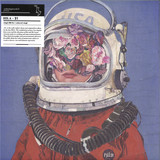
"21" is the well-crafted, sharp and original first album by the duo HILA, composed by American cellist Artyom Manukyan (who already worked with Kamasi Washington, Daedalus, Flying Lotus, Run DMC, Gretchen Parlato, Raphael Saadiq, Clive Lowe Mark...) and french producer Dawatile.
The combination of jazz, Los Angeles beat-scene and the vibrations of 80s and 90s Soviet Armenia make it a striking and unprecedented fusion. These kind of nostalgic and unconventional references forcefully shake the codes of mainstream culture to create a sincere, raw and intimate expression.
"HILA" was born from a spontaneous and intense creative impulse between Artyom Manukyan, a Los Angeles-based Armenian celloist and his partner in crime, David Kiledjian aka Dawatile, a French multi-instrumentist of Armenian descent. This project is proving to be a true master stroke given that it only took 21 days for the duo to make it a reality.
"HILA" was made in less a moon cycle but captivates and electrifies audiences upon its first outings. "H.I.L.A" colors the warmth of the Californian "High" with Armenian vibes. The artists chose this name for their creation since both have a close and valuable connection to these locales. This journey began in 2007, on the day Dawatile went to Yerevan, the capital of this small country in the Caucasus mountain to realize a first fusion project centered around local folkloric music genres.
There he was introduced to local musicians including the Armenian Navy Band, one of the country's foremost groups in which Artyom played the bass and cello. In this context, he also met many musicians such as Tigran Hamasyan and Norayr Kartashyan. This will be the beginning of connections between Lyon, Yerevan and Los Angeles. The following year, the two artists will be be seen performing next to Taylor Mc Ferrin at the Jazz à Vienne festival. More recently, they partnered up again when the cellist, who had freshly relocated in California, invited Dawatile to produce his album. As soon as the studio’s threshold was crossed, they decided to postpone this record and create a joint project: Hay (as the Armenians call themselves) / High In Los Angeles. HILA was born at the end of these 21 days of intense creation. The association of Artyom Manukyan and Dawatile is the combination of two visions, two versions of Armenia, two personalities, the reunion of the Eastern and Western blocs.
One grew up nurtured by the sounds of hip-hop and jazz in Europe and the other by art music and Russian-influenced 1980s Armenian folkloric music before moving to L. A., Ca. The cornerstone of it all, the glue that unites everything : Armenia and music. They generate a new identity synthesizing two perceptions, their complicity transcending these cultural discrepencies. To achieve this, they will scour through images of Artyom’s childhood, within the popular culture of Soviet Armenia. Together, they revisit this decidedly retro vibe, based on the work of Caucasian groups inspired by African American music. This background is rehashed and fused with ancestral Armenian sounds. The DNA of the album "21" is molded by these dear influences.
We can also hear the ancestral sounds of Armenia, a country at the edges of both Europe and Asia. The presence on two tracks of Armenian music Master Norayr Kartashyan, infuses the languor of past melodies and traditions. These purposeful anachronistic sounds offer a fantastic depth to this powerful opus. Listening to the album, one can appreciate the successful fusion of styles and influences. Those combinations, however, manage to preserve individual identities only to enhance the art through an adamant musical dialogue.
Being driven by the urge to transpose Armenian musical traditions into a unique universe, the daring artists, offer an innovative combination by blending, for the first time, these ancestral sounds with the world of Los Angeles beat-scene and jazz. An invention largely fueled by the magic strings of Artyom and maestro Miguel Atwood-Ferguson, a pillar of the genre in Los Angeles combined. These associations resonate with a triumphant equilibrium. HILA is musical uncharted territory in which Artyom's cello strings intertwine to ignite the harmonies of keyboards, the machines, the vocals and electronic layers Dawatile pieced together. HILA plays the soundtrack of an adventure set between Armenia around the end of the Soviet era and a mysterious near future.
Artyom Manukyan grew up in Armenia in the 90s. At the time, he studied Russian classical music while learning jazz with assistance by his father, a music journalist. Being an unconditional music lover, he went on to sharpen his skills at the prestigious Berkelee College of Music. Subsequently, he’s been lucky enough to travel the world touring with numerous acts and mainly with the Armenian Navy Band. The group has fostered alacritous success honored by a BBC Award as a crowning achievement. He moved on 10 years ago and made his way to L.A. with his cello on his back. In the City of Angels, he quickly became a popular figure of the jazz and hip-hop scenes thanks to his first album "Citizen". He’s accompanied prestigious musicians such as Kamasi Washington, Melody Gardot, Daedalus, Flying Lotus, Run DMC, Gretchen Parlato, Raphael Saadiq, Clive Lowe Mark, or Vulfpeck. He released his solo album on the cello, "Alone" in October 2019.
Dawatile is a bold producer and multi-instrumentist as well as a passionate and resolute musician molded by jazz. As a versatile artist, he handles and juggles the saxophone, the keys, the bass and composition. Simultaneously, Dawatile produces cross-over projects and soundtracks for the movie industry. He, as well, has had the opportunity to be a part of many tours, including with his electro hip-hop band, Fowatile and more recently with the "Future Kreyol" trio, Dowdelin. Being the ever workaholic, he has under his belt a string of prestigious collaborations with the likes of Talib Kweli, Foreign Beggars, Roy Ayers, Tigran Hamasyan, Mathieu Boogaerts, Voodoo Game and Piers Faccini. His taste for developing new musical recipes and his know-how in production make him a much sought-after album producer. In concert, the HILA duo offers a sober, precise and rhythmic performance. "21" is an aerial and lively album taking the audience on an at times joyous and sometimes melancholic dreamlike journey. The magic of "HILA" operates at the speed of light and positions it already as an avoidable group.
- A1: Sceechie Dan - We A Don
- A2: Lone Ranger - My Number
- A3: Dennis Alcapone - Riddle I This
- A4: Kentrus - It A Fi Bun
- A5: Lone Ranger - Apprentice Dentist
- B1: King Sporty - Dj Special
- B2: Prince Jazzbo - Little Joe
- B3: Jim Brown - Ragga Muffin
- B4: Mad Roy - Universal Love
- B5: King Sporty - Choice Of Music
- C1: King Stitt - Rhyming Time
- C2: Prince Jazzbo - Fire Coal Version
- C3: Dillinger - Fountain On The Mountain
- C4: Michigan & Smiley - Thank You Jah
- D1: Prince Garthie - Raindrops
- D2: Jah Buzz - Automatic Clapping
- D3: Dennis Alcapone - El Paso
- D4: Big Joe - Nanny Version Skank
Featuring Prince Jazzbo, Dillinger, Dennis Alcapone, Lone Ranger, Michigan & Smiley and many more. Soul Jazz Records’ new Studio One DJ Party is the latest installation from the mighty Studio One Records catalogue, a wicked new collection of the finest DJs and toasters ever to inhabit the world of reggae – seminal Jamaican artists including Prince Jazzbo, Dillinger, Dennis Alcapone, Michigan & Smiley, Lone Ranger as well as a host of lesser known artists and rare cuts from Studio One. From the earliest days when Clement ‘Sir Coxsone’ Dodd ran his Downbeat soundsystem up and down the length of Jamaica, DJs and toasters such as King Stitt and Count Machukie were always a part of the sound of Studio One, introducing new records and exciting audiences with catchphrase lines such as: “No matter what the people say these sounds lead the way It's the order of the day from your boss deejay” King Stitt So when DJ emerged as a distinct reggae style at the start of the 1970s, Studio One was, as always, way ahead of their competitors. Legendary artists of the calibre of Dillinger, Dennis Alcapone and Prince Jazzbo all queued up to record for the equally legendary label. At the end of the 1970s, as dancehall exploded onto the island, Clement Dodd was once again able to maintain Studio One’s position on the throne as the number one sound in the Jamaica, fighting off upstart competitors such as Channel One and Joe Gibbs who tried to replicate Studio One’s unique sound. During this period Clement Dodd released a series of stunning dancehall releases from young DJ/dancehall artists at the label including Lone Ranger and Michigan & Smiley. This selection spans the early 70s up until the mid-1980s, from the earliest days of deejay toasting right up until digital dancehall, ground-breaking tracks over the finest selection of the ultimate Studio One rhythms and tracks. Who could ask for more? Studio One DJ Party includes specially commissioned sleevenotes by Chris Lane, founder of the legendary British reggae label Fashion Records, as well as fantastic original artwork commissioned by the illustrator Ski Williams. The album is released as double heavyweight vinyl (+download code), and distinctive Soul Jazz Records CD with slipcase
- A1: Geraldo Pino - Shake Hands
- A2: Sonny Okosunds Ozziddi - Dance Of The Elephants
- A3: The Wings - We'll Get Home
- A4: Alhaji (Chief) Prof. Kollington Ayinla - E Ye Ika Se
- B1: Colomach - Kassa Kpa Sama Kpa
- B2: Geraldo Pino - Heavy Heavy Heavy
- B3: Mfb - Beware
- B4: Tony Grey And The Ozimba Messengers - You Are The One
- C1: Sonny Okosuns - Oba Erediauwa I
- C2: The Wings - Single Boy
- C3: Geraldo Pino - Power To The People
- D1: Original Wings - Igba Alusi
- D2: Don Bruce And The Angels - Sugar Baby
- D3: Geraldo Pino - Africans Must Unite
Soul Jazz Records’ Nigeria Soul Power 70 album showcases the influence of funk, rock and disco on Nigerian music during the 1970s. Originally released as a now-long-out-of-print collectors’ 7” RSD box, this fully expanded album release now also includes extra tracks from Sonny Okosuns, Wings, Chief Kollington Ayinla and more. While for many people the fusion of funk and jazz music with Nigerian rhythms and aesthetics began with Fela Kuti and his afro-beat sound, in fact this can be traced further back to the phenomena of the 1960s Nigerian artists and house bands in nightclubs and hotels who interpreted US soul and pop music with a local flavour and none more so than Geraldo Pino, the ‘African James Brown’ who features heavily in this collection. Other similarly inspired Nigerian funk and soul artists featured here included Tony Grey and his Ozimba Messengers and Don Bruce and The Angels. Nigeria Soul Power 70 includes a number of tracks from the group Wings originally known as BAF (Biafran
Air Force) Wings, an army band formed during the Biafran civil war in Nigeria. The groups’ heavy mixture of funk, rock and African styles was popular among many Nigerian groups at the time.
Beneath the shadow of the few Nigerian artists who signed international recording deals in the 1970s – Fela Kuti, King Sunny Ade, Chief Ebenezer Obey – lies of vast wealth of largely undiscovered musical transmutation and cultural cross-pollination, and included here are heavy afro-funk/rock and disco tracks
from artists such as the legendary Sonny Okosuns as well as rare cuts from little-known outside of Nigeria - groups such as Colomach and MFB. Most of these obscure artists signed to major labels in Nigeria in the commercial slipstream that opened up as Philips, Decca and EMI tried to emulate the international
success of the big three international Nigerian artists. Finally featured here is Kollington Ayinla, one of the co-founders of Nigerian Fuji music, who gives us perhaps the heaviest of all tracks on this album. Ayinla is the great moderniser of the Fuji sound and in the late 1970s began adding Bata drums and synthesizers to his authentic music to create a powerful and heavy new fusion of traditional and modernist aesthetics, embracing both new technology and experimentation while rooted firmly in Nigerian historical lineage. Nigeria Soul Power 70 is released as a heavyweight gatefold double vinyl LP (+ free download code),
deluxe slipcase CD and digital album.
- A1: Friendly Fires
- A2: Dirty Disco
- A3: C.p
- A4: Loose Talk (Costs Lives)
- A5: Inside Out
- A6: Melt Close
- B1: Hit
- B2: Babies In The Bardo
- B3: Be Brave
- B4: New Horizon
- C1: Knew Noise
- C2: Up To You
- C3: Girls Don’t Count
- C4: After Image
- C5: Human Puppets
- D1: Charnel Ground
- D2: Haunted
- D3: Je Veux Ton Amour
- D4: One True Path
- E1: Loose Talk (Costs Lives) (Live)
- E2: Human Puppets (Live)
- E3: Knew Noise (Live)
- E4: Friendly Fires (Live)
- E5: Girls Don’t Count (Live)
- F1: New Horizon (Live)
- F2: Haunted (Live)
- F3: You’re On Your Own (Live)
- F4: One Step Backward (Live)
- G1: Always Now
- G2: Visitation
- G3: Regions
- G4: The Wheel
- G5: No Abiding Place
- G6: Once Before
- H1: There Was A Time
- H2: Wretch
- H3: Sutra
- I1: Fallen Monument
- I2: Are You There?
- I3: Virtually Everything
- I4: Tape Loop
- I5: Subferior
- I6: In The Garden Of Eden
- I7: Cry
- J1: Red Voice
- J2: Floating
- J3: Reading Uni Jam With New Order 1981
Factory Benelux is proud to present a deluxe 5 disc vinyl box set edition of Always Now, the debut album by cult Factory Records group Section 25, produced by legendary sonic architect Martin Hannett and sleeved by Peter Saville.
All tracks are newly re-mastered from the original quarter-inch tapes. The first 1000 copies of the box set are pressed in coloured vinyl: disc 1 (black); disc 2 (clear); disc 3 (yellow); disc 4 (red); disc 5 (silver). The outer case in printed in PMS 123 with spot varnish.
The 16 page booklet features unseen images by noted photographer Philippe Carly and texts by founder members Larry and Vin Cassidy. Also included is the first ever interview with guitarist Paul Wiggin, whose sudden departure in late 1981 saw Tony Wilson try (and fail) to recruit pre-Smiths teenager Johnny Marr as replacement.
Recorded as a trio at Pink Floyd’s Britannia Row studio in London in January 1981, Always Now combined austere post-punk rhythm and noise with elements of Can, Krautrock and modern psychedelia. Key tracks include Friendly Fires, Dirty Disco and New Horizon, along with C.P. (a collaboration with Hannett) and Hit (extensively sampled by Kanye West for the track F.M.L. on his 2016 album The Life of Pablo).
Disc 2 gathers together several non-album singles from 1980 and 1981, including Charnel Ground, Je Veux Ton Amour and debut EP Girls Don’t Count – the latter produced by mentors Rob Gretton and Ian Curtis (of Joy Division).
Disc 3 offers a complete live show professionally recorded at Groningen (Netherlands) on 26 October 1980, as part of a Factory package tour.
Disc 4 is part-improvised second studio album The Key of Dreams, recorded and produced by the band themselves a few months after Always Now, and released by Factory Benelux in June 1982.
Disc 5 consists of further experimental material recorded in 1981 and self-released on a cassette called Illuminus Illumina. This final disc closes with an extended (and previously unreleased) live encore jam recorded with all four members of New Order at Reading University on 8 May 1981.
“One of the best albums Britain's second city has unleashed” (Uncut);
“In 1980 their bass-driven mantras were thoughtlessly dismissed as second-rate Joy Division, but hindsight judges them more kindly. The wind-dried skeins of their blasted guitar harmonics and skimped electronics gauntly cling to the songs’ skeletal frames. With telltale titles like Babies in the Bardo their Buddhist interests hang heavy over these early stirrings. But, combining a bass-led drone with a characteristic groaning vocal, Charnel Ground succinctly pins down Section 25's pre-disco appeal” (The Wire)
incl. Download Code
- A1: Crazy Stockings On The Moon - The Swinging Astronauts
- A2: The Moon Man Is Back (Feat. Moon Man)- La La Wilson Band
- A3: Baby As Time Goes By - The Moon-Dawgs
- A4: Wir Fliegen Weiter (Mondsong) - Hase Cäsar
- A5: Walking On The Moon (Men Are Starving) - Rev. Jamel & Bob Johnson
- A6: Sputnik (Feat. North South Connection) - Sidney Owens
- B1: Moon Child - Ernest & D.l. Rocco
- B2: Mondgesicht - Orchester Ambros Seelos
- B3: Moon Child - Scott Cunningham Band
- B4: Voyage To The Moon - Black Fox
- B5: Mars In 75, Pt. 1 - Sunny Man Kado
When the Tramp Records crew read the internet-sweeping spam/story of Nigerian Astronaut and Air Force pilot Abacha Tunde, they knew that they had to spring into action to help this unfortunate fella out. Dr. Bakare Tunde, the cousin of Abacha Tunde explained the situation as follows: "My cousin was the first African in space when he made a secret flight to the Skylab Space Station in 1979, shortly before it crashed to Earth. 19 years later he was on his second spaceflight, this time to a secret Moon Base located on the far side of the Moon. In 1999 his crew members returned to earth, but his place was taken up by return cargo. There have been occasional supply flights to keep him going since that time. Although he is in good humor, he wants to come home, now, after 20 years in space."
After this hilarious story the idea of a compilation album was born - and "Trip To The Moon" is the result. The goal to raise three million dollars to cover the cost of Abacha Tunde's return flight may never be achieved. Nevertheless, a 41 year experience in the music business is the basis for a fantabulous track listing of 11 amazing and highly underrated Rare Grooves about the Moon!
The Swinging Astronauts open the set, followed by La La Wilson's equally great rhythm & blues rocker "The Moon Man Is Back". With The Moon-Dawgs, this album makes a slight turn into the 1960s garage rock era while Hase Cäsar (backed by none other than the famous Ingfried Hoffmann and his orchestra!) contributes one of two songs of german origin. Now it's time for some funk: Rev. Jamel & Bob Johnson's "Walking On The Moon (Men Are Starving)" criticizes the US government for spending millions of dollars for their space program instead of supporting their own people. "Mars in 75" is deepfunk at its best although some may lament the lack of production. Sidney Ownen's breakbeat-laden "Sputnik" is sought after in collector's circles and needs no justification as to why it is included on this album. Ernest & D.L. Rocco's "Moon Child" is our personal favourite, closely followed by the hypnotic groove of "Mondgesicht" by legendary german saxophonist Ambros Seelos. Scott Cunningham's name should ring a bell as he was featured on several Tramp compilations over the past few years. Finally, the album closes with a psychedelic folk track titled "Voyage To The Moon".
Tramp Records is absolutely convinced that this album will surely be the best way to shorten the wait for Abacha until a rescue space mission finally brings our African soul brother back home.
Key selling points:
- deluxe gatefold LP with detailed liner notes and unseen photographs
- the vinyl LP comes with a full album download code
- most of the songs appear on a 12" album for the very first-time
Detailed, smart, commanding, groovy. These are just a few words to describe the Assorted Pieces 2 compilation. This strictly in-house production by Friendship & Decadence contains tracks from such producers as Kade, Mirage Man, Poly Sone and Waltteri. Which is a intriguing mixture indeed.
Poly Sone’s “Home killing is taping music” is a rugged and fast paced take on nordic techno. As the track was recorded on a four track cassette recorder the saturation on this cut is immense, yet pleasant. Definitely not your everyday cheapo lo-fi tune.
Deep, quirky and playful bottom heavy roller, “Calm” by Waltteri has a hint of spanish roast in its blend. Waltteri’s debut on the imprint can be perfectly paired with a fun loving crowd during midnight or even around early mornings. Psychedelic multipurpose tool.
Kade’s raw and unconventional track “Sanko” is a treat for the adventurous mind. Haunting arpeggios and vocal chops will give you the creeps, while the unrefined saturated rhythms will sooth you into a trance. Eccentric and hypnotic dance music.
“This track never starts” by Mirage Man lives by its name as it is a slowly unraveling and cinematic number. Regardless of its thick lower end, in the club environment this track might send the restless to acquire a beverage from the bar, but for the grounded minds who enjoy ambient this just might be the ticket. Play it yourself and see what happens.
Limited press of 150 pcs. 12” record includes a download code.
Soft Machine is a surreal wander through the mystical sonic forest. A vision curated and designed by Chicago native Justin Aulis Long. A Cyclopian point of view while gazing through a wide lensed scope, which exists in the liminal spaces where light meets dark and angelic forces bath in the sludge and stardust of unfiltered eroticism.
Eye of the Minotaur - collage 001 is a collection of artists working in varying musical practices that are channeling the solitude of mutantness, strolling through the familiar yet unfamiliar halls of the uncanny, refusing ordinary structures of the mundane, grasping the cold humor of cynicism, basking in the dichotomy of cosmos and chaos, and invoking the energies of Eris and Eros.
Setting the ground is Ciarra Black, a Berlin based New Yorker who makes no apologies for her bare knuckled soundscapes. DuPont Street is a ritualistic unification of discordant entities that summons visions of Pazuzu (lord of the demons) and Inanna (goddess of love) fornicating beneath The Tree of Life. Razor edged synthesizers slice through the atmosphere with the precision of an avenging angel’s flaming sword, while a psychedelic drum code activates ritual movement of the body.
As the needle passes beyond the next threshold it is met by a towering totem, bristling with the illuminated light of the sonic astral plane. Erected from the foundational matter that birthed the Detroit electro punk sound, Eyes Up continues to add to the narrative that is drenched in deranged electronics intuitively mangled in a post punk tradition. Dystopian percussive rhythms generate an unorthodox domain where muffled utterances present an aural Rorschach test. Could this be the riddle of the Sphinx, or an ancient spectral being that possesses secret knowledge? Only its creator, Stallone the Reducer, holds the key.
Fixed at the axis of the journey, Perfect Headache Forever, a mystic operating within the DIY spaces of Chicago, levitates on a transcendental mass that is equally melancholic and optimistic. Her voice hosts a strength equal to a pantheon of titans. Armed with a magical electronic musical box, she weaves narratives that are prophetic. Itself Ecstatic is a voyage through a misty soundscape that begins at one point, but ends in a distant other, in accordance with a system of divination.
Gazing into the murky waters of the oracle’s cauldron, Circling Vultures, (a collaborative effort by Justin Aulis Long and Kenneth Zawacki) channel and evoke the spirits of Antonin Artaud and Geroges Bataille. The poet’s voice, engaged in an act of mutilation and self cannibalization, howls while projecting visions of sacred conspiracies, sensations of vertigo while peaking over the edge of the abyss, and the looming weight acquired from the solitude of the Minotaur alone, sitting silently at the center of the labyrinth. Accompanying the mystical bard’s verbal declaration is a triggered mechanized synth that roars with the vitality of Cold War era Wave music, which is then juxtaposed against applications of loose keyboard playing. The artist’s hand is revealed against the calculated actions of machines.
Bringing the document to its finale, Libby Del Barrio, a multi disciplinary artist based in San Antonio, performs a closing ritual in a manner that only she knows. Setting fire to the Elysium Fields while personified as Moze Pray, Del Barrio rejects plastic narratives that aim to pacify. No Tears, is an unapologetic account of life’s feedback loop around the Wheel of Fortune. Sacrificial actions through ceremonial performance reveals a gateway founded on truth and torment. Moze Pray’s ability to combine musical production, poetic vocalization and ritualistic body performance is charged by chaos and amalgamates into a product of pure expression that defies the rose colored filters aiming to conceal harsh realities.
Eagerly awaited debut album from oft-cited UK's most out-there band, features in the works with The Quietus and Wire already.
180GM PRESSING - 500 COPIES ONLY.
Difficult times required difficult music, my Yarns, that's why we had Guttersnipe; with its own sort of energy-kind there then.Reiner: A singular yield, a singular yield now.Barns: A whot
Reiner: A singular yield mate! Rich guitar strang, flow motive pounding underneath.Vox like Death come winding through the fields. Barns: Hell of a way to describe a vocal style.
Me: Nah but for real my Donny, Have you read a presser 1 sheet lately It's the most
They say the PR era, circa late 80's killed the golden age of music journalism:
They say Guttersnipe have continuously melted all the forms that they come up against. They are right. Because Guttersnipe is not part of a tradition we know well. You will identify the departure from it though, immediately, upon hearing My Mother The Vent. This LP, the promotional version of which, likely sits in your hands (disk, whatever). The innovation here is a FIRM commitment to the flowmotive polyrhythm underwriting the seared, nay fried, tonal rainbow and de-reasoned vox.
Not Nate Nelson, nor John the masseuse dude from Sightings but TIPULA CONFUSA. Don't want to put the captain obvious pants on so tight I can't jump around the yard because why waste a good yard hang. I'll put on my blighty nighty instead. UROCERAS GIGAS has bridged so many gaps, finally unlocked the AxeWeld CODE and is really playing the thing. Not to mention bringing forth a world-view so utterly unique. Good luck finding anything like it.
Finally some REAL disjunction in the music; clear and intended. In an age when most computer music composers use stochastic systems and still manage to drop some linear pathground shit, the brawler drums and slanky guitar constructions on My Mother The Vent are a genuine treat. I've spent too much of my adult life so far hearing too much of this shit to not recognize REAL GAME. And here it crawls out of the grey shadows of ol' BLIGHTY.
Our post-music age: after the fine human endeavour known as music, the result of letting the cybernetic run ITS horrible game on us. I'm not waxing confusingly in a rarefied tone here. Nor running the boring sci-fi script. I really think that is were we is. We left the human-music-on-a-human-scale behind and much to our detriment. Here we sit in our crumbling reality. But Guttersnipe come paleo, like the rhapsodes with long ass memories rattling off Homeric verse well into the age of manuscript culture, but here, with future tones. Luckily. Otherwise, me and the record label here wouldn't be wasting our time and yours with a 1 sheet for My Mother The Vent.
So a proper first time on wax for these amazing creatures is a welcome addition to the world of things. These drums and these guit-lines are so cranké, as they say here in my odd neighborhood. These voices are so utterly expressive without even the damn language at hand ; like the great horns. We'll rinse this record out, I'll put on my old blighty nighty and go dance in the street. Alex Moskos, Montreal, August 2018Guttersnipe is:UROCERAS GIGAS - Guitar, Analog Synth, VoxTIPULA CONFUSA - Drums, Drum Synth, Vox
Napolitan Techno DJ and heavyweight producer Davide Carbone releases on the French Rave Or Die Records for the very first time! Multiplying records and collaborations just like Mike Tyson was multiplying uppercuts, the co-owner of Repitch Recordings, Cosmo Rhythmatic and 3TH Records and owner of Carbone Records starts with "Dive Or Die" on the A-side: a speedy yet straight to the dancefloor tune based upon trancey acid lines a la Steve Stoll or Leo Anibaldi and aerial melodies. Combined with dark effects, this nostalgic song Made in Italy appears as an authentic Rave anthem from back in the glorious days!
On the flip side, ROD mastermind and dancefloor veteran Umwelt (Voitax, Return To Disorder) delivers a shaking, hefty and tremendous cut. Named with suitability "Tremblements", the jam signs a fascinating ode to smoking warehouses and illegal parties. Metallic pads over no mercy beats fused into industrialized synths and screaming atmospheres characterize this this dark as hell cut interspersed with counter breaks a la The Mover.
Dark, groovy and noisy at the same, two massive absolute bangers with old school roots on ROD twelve release! By the way, if you wonder the significance of the signs on the Rave Or Die logo in the labels, they are taken from the Hobo Code and mean "Keep away, Cops Active, Unsafe Area". You'll be warned.
apologia /ˌapəˈləʊdʒɪə/ noun: apologia; plural noun: apologias ● a
formal written defence of one’s opinions or conduct Introducing you the
name of the third release of Insulin. 3 original tracks made by
Damaskin. An artist who comes from Belgium. He is also known as
Seraphym Rhythm, his ambient side-project. This talented genius
offers here a real homeric journey, a travel through the abyssal depths
of his mind and the darkness of his music, thank to those hypnotic and
granular sounds with an incredible sound design, fabricated and melted
at perfection. In already hostile and tumultuous places, Codex Empire
is bringing the last hint of an overwhelming and chimerical
environment.
- Limited vinyl only release - Including postcard with download code for another new album from Jacek Sienkiewicz.
IMOW, or 'In My Own Wave' - Atmospheric, cinematic, stirring and utterly engaging, this is surely Sienkiewicz's most personal work to date and very possibly his best!
IMOW, or 'In My Own Wave' is a moody record. Although overtly experimental in form, it's quite different to Sienkiewicz's abstract, improvisational albums recorded with Max Loderbauer or AtomTM. Clocking in only 35 minutes and comprising of eight tracks, 'IMOW' is several years of work distilled into a dense, concise whole. Atmospheric, cinematic, stirring and utterly engaging, this is surely Sienkiewicz's most personal work to date and very possibly his best: his constant struggle to find a perfect balance of flesh and machine, or to translate human emotions to sound by means of a modern studio is manifested here in its purest, most consistent and, surprisingly, very accessible form. From subtle drones, through chants and rhythms echoing in mountainous chambers, to innumerable insect-like sounds and tiny details, it's an encephalogram recorded to tape (or disk). With all its complexity, it's not overwhelming: the meticulously constructed compositions leave both space for the sounds to breathe, and for the listener to fully experience it, without being bored, tired, wishing for less or being hungry for more. And there's beauty in this record, and hope - in the world of overpowering darkness and constant noise 'IMOW' feels like a peaceful trip into the untouched nature with all its wonders - offering in equal parts rest, strength and inspiration.
DJ Dex aka Nomadico has written and produced 10 new unreleased tracks for this double LP 'The Code Switcha'. It features a range of tempos and sonic dynamics; from the slow burns of 'RTD 60' and '909 Soto Street' to the full on energy of 'Machine Learning for Homeboy' and 'HustLA'. There are also electro funk tracks like 'Still Cruisin', 'Radio 3031323' and 'Backyard Trippin'. Meanwhile, the moods and textures of 'Introversion', 'Innermission' and 'Staring Problem' are for deep listening. All of these are fused together by atmospheric pads, touches of acid and a veteran DJ's sense of rhythm and timing.
For this album, the legendary Congolese band Konono N°1 has joined forces with acclaimed Angolan/Portuguese artist Batida aka Pedro Coquenão. Deluxe double LP with colour innersleeves and download code.
Along with producer Vincent Kenis, they convened in Batida's garage-cum-studio in Lisbon with a series of collaborators and friends of Batida's, reflecting the city's vibrant, cosmopolitan music life: guitarist Papa Juju (the leader of Lisbon's foremost Afro-fusion band Terrakota), vocalist Selma Uamusse (one of the best young African singers currently residing in Portugal) and MC AF Diaphra, a distinguished slam poet and an artist/producer in his own right.
As we all know by now, Konono N°1 are based in Kinshasa, DRC, but originate from the Bakongo ethnic group, which lives in a region straddling the border between the Congo and Angola. Hence certain similarities between Konono's rhythms and some types of Angolan music from which Batida has drawn inspiration for his albums and shows.
This encounter was obviously bound to happen... but was nevertheless quite an adventure: blending the worlds of electronics beats and organic grooves was a challenge to which the parties have risen beautifully to create this exciting, unheard-of new strain of Afro-electro music. The album was jointly produced by Vincent Kenis and Pedro Coquenão.
- A1: Mahy - Antilles Méchant Bateau
- A2: Guy Conquete - Ban Moin Clé A Titine
- A3: Dolor - A Dardonnel
- A4: Joseph Lacides - Yo Ka Biguiné Joseph
- A5: Tino Saint-Val Mam\'Zelle Cancan
- A6: Dolor - Ki Vino
- A7: Dolor - Socié Cabrite
- B1: Gaby Siarras - Moana
- B2: Joseph Lacides - Citation Créole
- B3: Casimir Letang - Ménage Chalviré
- B4: Manuela Pioche - Pas Ban Moin Coup
- B5: Gerard Valton - Bel Mè A Présent
- B6: Beaujour - Ti Té Ya
- B7: Josianne Saint-Louis - Jeines Gaçons
- B8: Dolor - Vini Sauvé Moin
Fifteen track completion of deep biguines and Gwo Ka from the '60s French West Indies. The vinyl edition included a 4 page booklet + download code.
Biguine is a rhythmic style of music that originated in Guadeloupe and Martinique in the 19th century, which fuses 19th-century French ballroom
dance steps with African rhythms. Gwo Ka is found among all ethnic and religious groups of Guadeloupean society.
It combines responsorial singing in Guadeloupean Creole, rhythms played on the Ka drums and dancing. Gwo Ka is the musical and cultural product of the
region's African ancestry, forcibly brought to the Caribbean through slavery. Gwo Ka exists only in Guadeloupe, which is a very different island from much of
the Caribbean, in that it remains a 'department' of its original colonial master, France. Here the currency is the Euro and the baker sells croissants and café
au lait. This constant 'European-ising' of the island means that Gwo Ka plays a fundamental and important role in the defining of Guadeloupean identity.
'Antilles' Méchant Bateau', a low-tempo number with a bolero feel, indeed a pure case of the blues, and a terrific saxophone solo. What else would you
expect to set the tone for this selection, in which beguine regains its original colours, in the darkness of the Gwo Ka drums. This 45 by André Mahy, released
under the Aux Ondes sublabel, was recorded in the 1960s at Célini's, one of Guadeloupe's two main houses. Through its drum rolls and harrowing chant, it
recalled how, long before the mid-1960s, the Antilles' history was written in an ocean of teardrops - namely the Black Atlantic.
Antechamber's debut explores the ghost architecture of industrial music, etheric and oppressive in its suspension.
The newest alias from Mahk Rumbae a.k.a. Codex Empire and one half of Industrial act Konstruktivists, Antechamber sees a spacious almost dub influenced realm being explored, a dark-ambient nether in which lurching rhythmic giants consume the fragments of their composition, as though some military exercise had arrived at the collapsed edge of history and remained forever there suspended, war-games in the ether, anodic purgatory.
The LP is at times drone-scape, at times big-room stepping; white noise carved into shuddering rhythms & barrel bomb impacts; Antechamber's debut shows a producer who is able to both summon and resuscitate worlds with only the bare minimal elements, a contained violence and a violent restraint.
Pyramids. Jagged Teeth Pushing Through Immaculate Skies. The Ever-changing Light. The Expansive Sense Of Freedom. The Wide Open Spaces. The Textured Landscape Seen From Above. Mountains. Watchful And Immobile For Thousands Of Years, Weathering Seasons, Transcending Change.
It's December 2016. I've Left The London Madness To Hit The Reset Button And Compose New Music In A Tiny Village In The Swiss Alps. I'm Over 10,000 Feet High, It's Minus 15 Degrees And The Snow Is Scintillating Under A Rich Blue Sky. I Turn Around And Suddenly This Gigantic Pyramid-shaped Peak Is Towering Over Me, Staring Me In The Face. Mind Blown. Senses Overwhelmed. Perspective. Lightbulb Moment. I Have My Album Concept.
I Wanted To Put Into Sound My Cathartic Experiences Of The Mountains. Every Track Title Was Chosen Before Composing. The Title Would Be A Catalyst For Visual Memories, Narrative And Overall Vibes. I Continued Developing The Tracks On Occasional Trips To Switzerland, But Mainly Back In The Gritty Habitat Of London's Hackney Wick. The Urban-nature Contrast Had An Impact On The Music Too.
I Use A Lot Of Found Sound, Stuff I Have Collected Over The Years, And A Lot Of Resampled Guitar Sounds And Textures. I Love Imperfections In Sound. Detuned Synths. Distortions And Glitches. Rhythmic Flutters And Percussive Frenzy. 'manual' Cut-ups. I Love Moving To House And Disco And Getting Lost In The More Melodic Side Of Techno. I Love Polyrhythms And Melodic Counterpoints. I Love The Energy And Rawness Of A Live Rock Band. I Channel All This To Create My Own Sonic Palette.
Artwork By Jimmy Turrell, Graphic Artist And Video Director Who Combines A Love Of Handmade Collage, Drawing, Screen Printing And Painting Alongside Digital Techniques. He Has Worked For Universal Music, Nike, Lexus, Levis, Mtv, The New Yorker, Intro, Capitol Records, The New York Times, Green Peace, Beck, The Prodigy/xl Recordings, Channel 4, The Guardian, Gq, The Times, La Times, Newsweek, Getty Images, Adidas, Sony Music, New York Magazine, Wired, Glastonbury Festival, And Vanity Fair Amongst Others.
The Debut Album 'pyramids' Comes Out Worldwide On Limited Double, Green Vinyl (including Download Code).
June 2018, Amsterdam, Nl: 12 Months Ago We Concluded A Series Of Experiments With A Test Subject Named Ben Penn. A Year On, We Decided To Repeat This Experiment At His Tilburg Base. Once Again, The Results Were Starting.
.
After Being Provided With A Sizeable Dose Of An Enhanced And Notably Stronger Derivative Of 4-ho Met (codenamed St011), Penn Not Only Reported Intense Hallucinations But Also Enhanced Music Production Capabilities. With The Aid Of Electronic Instruments And Hardware, He Worked Quickly, Producing Both His Trademark higher Level Inter-dimensional Funk' And Compositions That Defied Our Previous Expectations.
During The Early Stages Of His St011 Experience, Penn Completely Ignored The Provided Rhythm Composer And Instead Crafted A Colourful, Humid, Jazzy And Beat-free Track Entitled nix', Which Boasted Loose And Fluid Synthesizer Motifs. As His Hallucinatory Experience Intensified, Penn Giddily Tapped Out Tropical Rhythms On The Provided Beat-making Device, Smothering Them In Alien Electronics And Sticky Melodies. When We Asked What This Devilishly Good Cut Was Called, He Simply Replied: not Important'.
As The Test Went On And The Most Intense Symptoms Died Down, Penn Was Much Like His Old Self. Before The St011 Wore Off Completely, He Was Able To Finish Two Examples Of His Trademark inter-dimensional Funk': The Skewed, Introspective, Bassline-driven Wooziness Of ben' And The Mazy, Kaleidoscopic Goodness Of people'. The Latter Composition Was Particularly Potent And Ear Pleasing, Suggesting That His St011 Experience Had Finished On An Intense High.
If you want to know what Gabe Gurnsey's debut album
'Physical' sounds like, the first thing you should do is forget all
about Factory Floor, the group he co-founded 13 years ago.
Gone are the cold, lengthy, stripped back deconstructions of no
wave electronica and industrial techno, abandoned in favour of
something altogether warmer, torrid and succinct.
'It's a real departure from Factory Floor,' he explains. 'Yeah,
that was the intention. There's only one track over six minutes
long! There's only one crossover point on the song 'Night
Track', which is 6'33' - that's probably as close to Factory Floor
as it gets. What I wanted to get into with 'Physical' had more to
do with exploring songwriting and structure. The album is very
escapist in one sense even though I don't want to escape from
Factory Floor but what I do on my own has to be separate and
it has to explore new avenues.' Gurnsey started writing tracks in his downtime from the group early 2017 and by the start of that Summer he had 30 demos ready for work. He admits he worked very quickly initially but then gave the tracks 12 months to develop fully into a new sound.
And that new sound - a 21st Century take on muscular electro,
Balearic synth pop, EBM, proto-Hacienda militant funk, early
Chicago house and minimal, Neptunes-referencing beats - can
be experienced in full on 'Physical' the album released on Erol
Alkan's Phantasy label. The album features additional production from Erol Alkan, who also mixed the record.
Double LP format includes printed inner sleeves and digital
download code. Press - Reviews in Q, Loud & Quiet, The Quietus, Record Collector, Uncut.
Features in Loud & Quiet, Electronic Sound, Q, Clash, The Quietus, Gigwise, Silver Soundz.
[]I C2 | I Get
[]J C3 | Version
Den Hague's Dazion (who previously released a 12" on MFM's Second Circle imprint), with a 2 tracker for Safe Trip.
.
Label say:
''URGENT: THE SAFE TRIP ORGANISATION HAS TAKEN TO THE WATER IN A BID TO SPREAD THEIR CODED MUSICAL MESSAGES FAR AND WIDE. THEY HAVE RECRUITED A YOING OPERATIVE KNOWN AS DAZION, A KEEN WINDSURFER, TO DEVELOP A METHOD OF BROADCASTING THEIR ADDICTIVE AND MIND-ALTERING MUSICAL MISSIVES WHEREVER THERE IS A SUITABLE BODY OF WATER.
OUR OPERATIVES TRACKED DAZION TO A REMOTE SPOT ON THE DUTCH COAST, WHERE HE WAS SPOTTED TRIALLING THIS NEW TECHNOLOGY WITH HIS FAVOURED F2 DRAGON BOARD. AS HE RODE THE CHOPPY WAVES, WE WERE ABLE RECORD THE RHYTHMICAL ELECTRONIC MUSIC BROADCASTING FROM WITHIN THE BROAD. THIS MUSIC FEATURED THE KIND OF TRIBALISTIC, DELAY-LADEN DRUMS, SWELLING ELECTRONICS AND EXOTIC MELODIC REFRAINS THAT ARE KNOWN TO INSPIRE FRENZIED DANCING IN MEMBERS OF THE PUBLIC. WE HAVE CHRISTENED THE RECORDING DRAGON WAVE'.
WE LATER TRACKED DAZION TO A LIGHT INDUSTRIAL UNIT ON THE OUTSKIRTS OF AMSTERDAM. THERE HE CONTINUED TO TINKER WITH THE TECHNOLOGY, TESTING IT OUT BY BROADCASTING ANOTHER MUSICAL COMPOSITION. THIS WAS MORE POIGNANT AND MELANCHOLIC IN TONE, UTILISING SPAACEY ELECTRONIC MELODIES, GENTLY BOBBING CHORDS, HEART-ACHING GUITAR FLOURISHES AND A TOUGH BUT BROKEN RHYTHM TRACK. THE RECORDING - CODE NAME VX LTD' - HAD A HUGE IMPACT ON US EMOTIONALLY AND EVEN REDUCED ONE OPERATIVE TO TEARS.''
Quarion is back on Drumpoet with an enchanting new EP that leaves nothing to be desired. Cobblestone takes the dancer on a deep sensual journey, builds up continuously and subtly into a truly emotive peak. Sunday Night Pt. 2 tops it by captivating with rhythmic chords, which remind of the early 90ies. Jamaican Morse is a driven drum track, spiced with dubby sounds and a higly addictive beat. Once again, Quarion proves his outstanding quality.
- A1: Heron Dance
- A2: Twilight Song
- A3: Yes—Singing
- A4: Dragonfly Song
- A5: A Homesick Song
- A6: The Willows
- A7: Lullaby—Lahel
- B1: Long Singing
- B2: The Quail Song
- B3: A Teaching Poem
- B4: A River Song
- B5: Sun Dance Poem
- B6: A Music Of The Eighth House
Music and Poetry of the Kesh is the documentation of an invented Pacific Coast peoples from a far distant time, and the soundtrack of famed science fiction author, Ursula K. Le Guin's Always Coming Home In the novel, the story of Stone Telling, a young woman of the Kesh, is woven within a larger anthropological folklore and fantasy. The ways of the Kesh were originally presented in 1985 as a five hundred plus page book accompanied with illustrations of instruments and tools, maps, a glossary of terms, recipes, poems, an alphabet (Le Guin's conlang, so she could write non-English lyrics), and with early editions, a cassette of field recordings' and indigenous song. Le Guin wanted to hear the people she'd imagined, she embarked on an elaborate process with her friend Todd Barton to invoke their spirit and tradition.
For Music and Poetry of the Kesh, the words and lyrics are attributed to Le Guin as composed by Barton, an Oregon-based musician, composer and Buchla synthesist (the two worked together previously on public radio projects). But the cassette notes credit the sounds and voices to the world of the Kesh, making origins ambiguous. For instance, The River Song' description reads, The prominent rhythm instrument is the doubure binga, a set of nine brass bowls struck with cloth-covered wooden mallets, here played by Ready.' According to writer and long-time friend of LeGuin, Moe Bowstern (who pens the liners for the Freedom To Spend edition of Kesh), Barton built and then taught himself to play several instruments of Le Guin's design, among them the seven-foot horn known to the Kesh as the Houmbúta and the Wéosai Medoud Teyahi bone flute.' Barton's crafting of original instruments lends an other-worldly texture to the recordings of the Kesh, not unlike fellow builders Bobby Brown and Lonnie Holley. Bowstern notes, Other musician / makers have crafted their own Kesh instruments after encountering the earlier cassette recordings that accompanied some editions of the book.' Both Barton and Le Guin are sensitive to the sovereignty of indigenous Californians and were careful not to trample the traditions of the Tolowa people who lived in the valley long before the Kesh. You research deeply, and then you bring your own voice to the table,' said Barton. Within the Kesh culture, the numbers four and five shape the lives, society and rituals. Barton composed loosely around these numbers, patiently listening to the land of Napa Valley for signs and audio signals from the natural elements. Todd incorporated ambient sounds of the creek by Le Guin's house and a campfire they built together. The songs of Kesh are joyful, soothing and meditative, while the instrumental works drift far past the imaginary lands. Heron Dance' is an uplifting first track, featuring a Wéosai Medoud Teyahi (made from a deer or lamb thigh bone with a cattail reed) and the great Houmbúta (used for theatre and ceremony). A Music of the Eighth House' sends gossamer waves of the faintest sounds to float on the wind.' Like the languages invented in the vocal work of Anna Homler, Meredith Monk, and Elizabeth Fraser, the Kesh songs and poems play with the shape of voice.
The Music and Poetry of the Kesh cassette was meant to accompany and enhance the experience of reading Always Coming Home. Presented in this edition as a long-playing album, where only traces of the book linger (the jacket offers some of Le Guin's illustration, and a letterpressed bookmark featuring the the narrative modes of western civilization and the Kesh valley is included), the music alone breaking the silence of what might be. It can transport—offering a landscape for imagining a future homecoming. One in which we are balanced, peaceful, and tend to the earth and its creatures. A line from the Sun Dance poem reminds us, We are nothing much without one another.' Freedom To Spend gives new life to the recordings of the Kesh people in the first ever vinyl edition of Music and Poetry of the Kesh, out on LP, and digital formats on March 23, 2018. The LP will include a deluxe spot printed jacket with illustrations from Always Coming Home, a facsimile of the original lyric sheet, liner notes by Moe Bowstern, multi-format digital download code and a limited edition bookmark letter pressed by Stumptown Printers in Portland, OR.
This past Monday, January 22, Ursula passed from this realm to another leaving a life spent building and exploring other worlds while challenging social concepts of the real word she inhabited.
Freedom To Spend had been working under Ursula's enthusiastic endorsement and with Todd Barton, her musical collaborator on Kesh, to give the music that accompanied her 1985 epoch a new life. With the Le Guin family's encouragement to move forward with our planned release, we are humbled to play this small role in sharing Ursula's work.
As Pete Swanson, one third of Freedom To Spend, stated, Ursula's legacy is her work which transformed the world, and this is another piece of the universe that her imagination birthed becoming real.' Listen to A Teaching Poem / Heron Dance' below.
Two dark, adventurous and intense mid tempo mind benders by the mysterious producer K100 SIGNAL.
.
(...The signal was lost along ago. A "slowtard" rhythm surfaced. as you get deeper into alignment you discover the deconstructed beats from another decay. K100 signal is an elusive project produced in the pitch black code of indulgence...)
he 30D Records machinery does not stop. A new stylistic adventure has been concretized in the new label's series 'Eyes Have It', which will be conducted by the well-known Sonar and 30D's resident DJ, Angel Molina, as A&R.
The Lucio Fulci's movies iconic scary-eyes synthesizes the series essence perfectly. 'Eyes Have It' builds the fundamentals for the boundless experimentation, lightlessness, cold and mechanical dynamics.
The EP 'Shelter' is the very first result of this new proposal, an incontestable work signed by Isolated Lines. The Swiss artist has a solid background in underground music throughout various projects, in and outside of electronics.
That means a wider creative resources that can be easily noticeable, for instance, in the music harmonies. Avant-garde, solid sound and savoir-faire, that is what defines the Isolated Lines production.
'Shelter' EP stylistic codes are crystal clear, brazen obstinacy of the rhythm base which sets the basis for epic distorted textures, that may become deeply emotional, like in the cases of 'Onshore' and 'Landfall'. Steadfast rhythmic cycles on slamming sound mantras.
Furthermore, the EP includes an industrially nervous revision of 'Onshore' constructed by 30drop.
Isolated Lines' 'Shelter' EP is an utterly flawless starting point for this strongly promising new 30D series. So henceforth, keep always an eye on 'Eyes Have It'!
Arandel 'Turbatrix' (Computer Club)
'Turbatrix', the eighth release on Sheffield's Computer Club imprint, is provided by mysterious French artist Arandel. No newcomer to the musical spectrum, Arandel has long been associated with the French label InFiné, alongside global names such as Carl Craig and Apparat.
'Locus I' surprises as analogue rasps and pings spar with lush synths and a driving 4/4 rhythmic code. Key track 'Locus II' is a siren to the ghosts of Sheffield's electronic musical heritage, with relentless bleeps and a concrete sub-bass.
'Locus III' is a midnight romp through a neon-tinged city where only the holograms know your name. The fourth and final track, a blissed-out ambient piece soaked in celestial sounds, is a meditative end to a thrilling journey of invention and musical mastery.
Sonic Groove Records presents the advent of a new strain of contemporary techno for 2018 and advancing electronic music culture further into the future with this release. This is a document of the convergence and alliance of two distinct artistic visions, that of veteran and pioneer Thomas P Heckmann under his Drax moniker and current dedicated activist Blush Response. The results of this cutting edge collaboration are pure dance floor revelations of the infectious and mind expanding kind. Four cryptic transmissions initiating a sequence of combined sonic DNA output.
This is an interpretation of techno rooted in radical experimentation and upgraded to the next level with compelling innovation. Side A initiates the drama with mysterious analog machine signals of both purist and experimental dark techno that are composed of elements crafted at the molecular level. Side B continues with intensity delivering more of the combined audio expression of the artists. The intense coded communication weaves through in waves of perfectly balanced synthesis that is reinforced with heavy percussion and complex intertwined and engaging rhythms. A new key to other dimensions in sound. Essential
2x12" Repress
Answer Code Request returns with his sophomore album Gens on Ostgut Ton, entering darker but equally bass-heavy territory.
Answer Code Request's 2014 debut LP Code was an exciting moment for electronic music in Berlin - one that offered a break from the eternal hall and monolithic 4/4 kicks that ruled the city's club landscape. As a hybrid gesture, the album's spirit recalled an especially fruitful era in the German capital from the mid-90s to early 2000s, when dub and paddriven Detroit techno cross-pollinated with Berlin's industrial aesthetic to create one of the city's most exciting musical chapters.
Today the musical vision offered by Berghain resident Answer Code Request, real name Patrick Gräser, has proved far-sighted. While at first glance electronic music in 2018 seems increasingly balkanized, borders between genres have once again become fuzzier.
Now, on his follow up LP Gens, Gräser looks beyond the bass euphoria of Code toward darker horizons and a desolate atmosphere befitting of current global circumstances.
In a sense, Gens (Latin for tribe or lineage) reverses the notion of the hardcore continuum as proposed by music journalist Simon Reynolds: embedded in a tradition of US andcontinental European techno, Gräser seeks its disruption through hardcore outgrowths, from ambient jungle to later variations of British bass music and IDM. It's an interesting twist when seen in the larger biographical context of Gräser who, born and raised outside of Berlin in early 1980s, jumped from East German youth radio DT64 to American hip-hop, acid and early UK hardcore - a radical shift of musical interest born of a radical shift in political circumstances. On Gens, the unsettling atmosphere is established early on with the fading rave opener of the album's synonymous title track, and continues through the scrambled military communications and post dubstep rhythms of 'Sphera'. From there, sci-fi pads, heavy phasing and alien syncopation lead explorative third track 'Ab Intus' out into space. Aglimmer of otherworldly positivity arrives with the warm, distorted breakbeats and interwoven synth melodies of album standout 'knbn2', while Gräser's most dancefloororiented melds jungle and techno, Amen and 4/4 kicks, on 'Cicadae'.
The band project Drums Off Chaos was one of the central and on-going projects of the recently deceased drummer Jaki Liebezeit (who is normally associated first and foremost with the Cologne-based band CAN). In the early 1980s he had initiated an - at first - loose collective of drummers, who created a rhythmic concept on the basis of simple, strictly binding codes that enabled expansive improvisations.
Over the years the ensemble became smaller and refined its collaboration marked by repetitive patterns and their variation. You have to play monotonous,' a membr of the audience had already told Liebezeit in the 1960s. He took this to heart and there was hardly any other formation where he could bring this concept to life as regularly and with as much inspiration as in Drums Off Chaos.
During a development spanning more than three decades, this extra-ordinary band, which never saw itself as such, made numerous recordings but rarely any releases. However, in the last few months of his life Jaki Liebezeit, with colleagues Reiner Linke, Maf Retter and Manos Tsangaris, earmarked some tracks for imminent release on vinyl and CD - on different compilations. Liebezeit's death is all the more reason to go ahead with this plan.
As the head of Grounded Theory and MANHIGH, Henning Baer has since 2009 presented his downcast, experimental interpretation of modern electronic music to wide critical acclaim, establishing his forceful presence on Berlin's scene with immaculate curatorial skills and equally imposing DJ abilities. His discography so far, concentrated on Adam X's legendary Sonic Groove imprint and his own K209 and MANHIGH imprints, amongst others, keeps step with his formidable reputation and wide-ranging tastes, moving across the spectrum of hard-edged, aggressively modern techno. With 'Shatterproof', his long-germinating debut album for MANHIGH, he offers for the first time his unified vision in extended format, a varied exploration into the outer limits of the genre. At its centre a work of dark minimalism, he sets and maintains the pensive tone on ambient pieces like 'Angel Dust', 'All Over', and 'MIL-STD 461', which foreground the exploratory electronics that maintain their presence throughout. The corroded textures of the sounds, enveloped in decaying reverb, bring life to pieces like 'Never Ending' or 'Bliss', which sit between rhythmic interludes and the stricter dancefloor material found on the remainder of the album. Once he shifts into techno, he does it unremittingly, from the uptempo fury of 'Code Buster' and 'Burning Chrome', whose starkness only heighten the tension, to denser pieces like 'Drama Sky' or closer 'Vermillion Red', where the cavernous impacts of drum hits punch holes through beds of seesawing synthesizers. Shatterproof like its title suggests, Henning Baer's first album unifies and strengthens the work of an artist whose legacy is already assured.