
Search:rhythm composer

- A1: Les Masques - Il Faut Tenir (1969)
- A2: Isabelle Aubret - Casa Forte (1971)
- A3: Christianne Legrand - Hlm Et Ciné Roman (1972)
- A4: Jean Constantin - Pas Tant D'chichi Ponpon (1972)
- A5: Billy Nencioli & Baden Powell - Si Rien Ne Va (1969)
- B1-: Marpessa Dawn - Le Petit Cuica (1963)
- B2: Jean-Pierre Sabar - Vai Vai (1974)
- B3: Sophia Loren - De Jour En Jour (1963)
- B4: Isabelle - Jusqu’à La Tombée Du Jour (1969)
- B5: Sylvia Fels - Corto Maltesse (1974)
- C1: Frank Gérard - Comme Une Samba (1972)
- C2: Ann Sorel - La Poupée Des Favellas (1971)
- C3: Charles Level - Un Enfant Café Au Lait (1971)
- C4: Andrea Parisy - Les Mains Qui Font Du Bien (1970)
- C5: Audrey Arno - Quand Jean-Paul Rentrera (1969)
- C6: Aldo Frank - T’as Vu Ce Printemps (1970)
- D1: Christianne Legrand - Cent Mille Poissons Dans Ton Filet (1972)
- D2: Clarinha - Lemenja (1970)
- D3: Hit Parade Des Enfants - Aquarela (1976)
- D4: Jean-Pierre Lang - Tendresse (1965)
- D5: Magalie Noël - Une Énorme Samba (1970)
- D6: Françoise Legrand - La Lune
Ever since the late 1950s bossa-nova revolution, Brazil’s influence on French music has been undeniable. Pierre Barouh, Georges Moustaki and a vast array of lesser known artists, all made the Musica Popular Brasileira (MPB) an axis of promotion at the service of a cool and metaphysical, modern and mixed Brazilian lifestyle. Some were seduced by the poetic languors of the bossa, some were looking for fun, and others just loved the American hybridization of jazz-bossa, jazz-samba.
What is bossa nova? One of its creators, Joao Gilberto said: "Its style, cadence, everything is samba. At the very start, we didn't call it bossa nova, we sang a little samba made up of a single note - Samba de uma nota so .... The discussion around the origins of bossa nova is therefore useless”. It is nevertheless useful to remember that these magnificent Brazilian songs, which the guitarist describes as samba, were shifted and balanced around improbable chords. "I like things that lean, the in-betweens that limp with grace," said Pierre Barrouh, quoting Jean Cocteau.
With emotion, arrangements for violin and supple guitar licks, bossa nova rapidly changed. A transformation that can be heard in the Tchic, tchic, French Bossa Nova 1963-1974 compilation, the result of a cultural reappropriation, which traveled through the United States and supplemented itself in France.
A musical revolution that has remained significant, bossa nova was born in Rio. From 1956 to 1961, Brazil lived through its golden years. In five years, the country had invented its modernist style. Elected president in 1956, Juscelino Kubitschek de Oliveira, an elegant man with a broad forehead, brandished a promising slogan: "Fifty years of progress in five years". He quickly got to work. Not worried about increasing debt, he launched the project for a new federal capital, Brasilia, designed by the communist architect Oscar Niemeyer. Volkswagen opened state-of-the-art factories and created the “fusquinha”, the Beetle. In Rio, the Vespa made its first appearance. The Arpoador Surf Club crew run into the “girl” from Ipanema, Helô Pinheiro - the tanned garota ("chick"), between a flower and mermaid, who at 17 walked by the Veloso bar, where the fiery author and composer, Tom Jobim and Vinicius de Moraes, were getting drunk on whiskey. From then on, bossa symbolized cool.
In 1958, Joao Gilberto recorded Chega de Saudade, which the directors of Philips denied, calling it "music for fagots". The marketing director, who believed in it, secretly pressed 3000 78-inch vinyls and distributed them at schools around Rio, creating a tidal wave.
American jazzmen then took over. In particular, trumpeter Dizzy Gillespie and guitarist Charlie Byrd. In November 1962, the Brazilian Ministry of Foreign Affairs funded a "Bossa-Nova" concert at Carnegie Hall in New York, inviting the genre’s pioneers. Unprepared, the show soon turned to disaster. But the troupe was invited to the White House by Jackie Kennedy. The first lady loved "the new beat" and in particular Maria Ninguem, a song by Carlos Lyra, later covered by Brigitte Bardot.
In Brazil, the 1964 military coup quickly ended this euphoria. The destructive atmosphere that ensued pushed many Brazilian musicians to leave, if not to exile. Thus, Tom Jobim, Sergio Mendes and Joao Gilberto arrived to the United States. In New York, Joao Gilberto met saxophonist Stan Getz. At the time, he was married to the Bahianese Astrud Weinert Gilberto, who had a German father. She had never sung before, but she knew how to speak English. Getz therefore asked her to replace her husband on The Girl From Ipanema. The Getz/Gilberto record with Tom Jobim on piano, was released in March 1964. Phil Ramone, the "pope of pop" was in charge of sound.
Bossa nova arrived in Paris through the classic “guitar-voice” channel (Pierre Barouh, Baden Powell, Moustaki…) But France loved jazz and Paris had already welcomed its American contributors. All these good people were to pass through Saint-Germain-des-Prés. The cabaret l'Escale became the Mecca of Latin American sound where one could find Pierre Barrouh and his friends, such as the Camara Trio, samba-jazz aces, whose only record was published by the Saravah label. With a band strangely called Les Masques (a band that included Nicole Croisille and Pierre Vassiliu, among others), the Camara Trio recorded an interesting Brazilian Sound, including the track Il faut tenir which is present on this tasty compilation of rarities.
Other enlightened musicians can also be found on the compilation, such as Jean-Pierre Sabar (songwriter for Hardy, Auffray, Leforestier ...) and the French pop rock organist Balthazar. In 1975, Sabar recorded Aurinkoinen Musiikkimatka on a Finnish label, which featured the crazy Vai, Vai, included on this record. We are now following the footsteps of Brazilian electronic musicians such as Sergio Mendes, Eumir Deodato or Marcos Valle who created funk and disco sounds on their keyboards and synthesizers. A style that influenced Véronique Sanson when she wrote Jusqu’à la Tombée de la nuit in 1969 for Isabelle de Funès, the niece of Louis and a great friend of Michel Berger - Sanson did end up singing this track on her 1992 Sans Regret record.
The pinnacle of exoticism and travel, Sylvia Fels’ Corto Maltese includes bongos, sea mist and ocean sounds. The title was taken from Jacky Chalard’s concept album written in 1974, Je suis vivant, mais j’ai peur (I am alive, but I am scared), based on Gilbert Deflez’s science fiction novel.
However, bossa nova extended the scope of popularity. "In the 1970s, I was a fan of Sergio Mendes, Getz / Gilberto. I fell in love with this music that I knew because I had been an orchestral singer, " explained Isabelle Aubret, who in 1971 delivered a composite record of covers by the very funky Jorge Ben, Orfeu Negro, Tom Jobim, Vinicius de Morais and Jean Ferrat. "I recorded this album for Meys Records in Paris, far from Brazil, with wonderful musicians, François Raubert, Roland Vincent, Alain Goraguer...". The latter wrote the arrangements for Casa Forte, a very percussive title borrowed from Edu Lobo, one of the initiators of the bossa who spent time in California. "Jazz and bossa came together and produced very rhythmic music. I love singing, it allows me to dream, to have fun, to feel a high on stage, and these songs brought me joy, made me swing, my singing felt like a dance.”
The world tours of French singers and their desire for the tropics, often brought them to Rio with its hills, forests, caipirinhas and tanned bodies. There are surprises though, like this Iemenja (Iemenja is the goddess of the sea in the Afro-Brazilian candomblé religion). Not unlike the composer and musician Jean-Pierre Lang, based in Sao Paulo, Claire Chevalier taught Brazil to Brazil. In 1970, the singer and painter published a 45-inch vinyl, Mon mari et mes amants (My husband and my lovers), under the improbable pseudonym of Clarinha (little Claire). She was then living in Rio, with her husband, Joël Leibovitz, who founded a band called Azimuth, and who owned a record label specialized in "sambas enredos" songs for samba school parades.
For its B side, she asked Pierre Perret to come up with lyrics for a song composed by Carlos Imperial: "Oh goddess of the sea, o goddess Iemenja, I bring a white rose to adorn your long hair ..." . "Perret came to see us, and we had fun, remembers Joël Leibovitz. We wrote Lemenja for fun, we recorded it at the Havaí studio, behind the Central do Brasil the central station. Erlon Chaves, the arranger who worked with Elis Regina, joined us" adding his share of Afro-Brazilian percussions and funky brass to the mix.
There is a common misunderstanding in Franco-Brazilian history: that bossa, admittedly hedonistic, is perceived as funny, even though the poets who wrote the texts are often philosophizing on the human condition. Its French interpreters pull it towards a carnival inspired universe, far removed from its fundamental essence. Thus, Jean Constantin covered the famous Samba da minha terra, an ode to the art of samba written by the classic Bahian composer Dorival Caymmi, renaming it with the enticing title of Pas tant de tchi tchi pompon: "On your pier there is no tchi tchi / when you arch your back, you know everything is alright ”(lyrics by Gérard Calvi). This expedited bossa aims for the absurd, but retains a certain elegance.
Indeed, Jean Constantin was not an idiot, the rather large man had a huge mustache and liked fantasy, (Les pantoufles à papa, Le pacha, inspired by cha-cha-cha-cha, salsa and jazz) but he was also the lyricist of Mon manège à moi interpreted by Edith Piaf, the composer of Mon Truc en plume by Zizi Jeanmaire and the soundtrack of François Truffaut’s 400 Blows. Le Poulpe, published in 1970, from which this bossa is extract, was arranged by Jean-Claude Vannier, an accomplice of Serge Gainsbourg’s Melody Nelson. In short: "There is enough of samba / By looking at the parasol / Because my poor cabeza / Is going to die in the sun".
Even the American actress Marpessa Down, who was at the heart of the bossa nova revolution with her role as Euridyce in Marcel Camus’ film Orfeu Negro, winner of the 1959 Cannes Palme d'or, fed the clichée with Je voudrais parler au petit cuica - "Tell me how you manage to always make people want to dance / It's true, I must admit that I cannot resist your magic" - in consequence, once can hear the cuica, a little drum inherited from the Bantu.
But bossa nova had many angles. Societal, of course, pushing actresses who were symbols of women's liberation like Brigitte Bardot, Jeanne Moreau, or Sophia Loren to engage in the exercise of accelerated bossa. In February of 1963, Sophia Loren made a record in French in Rome, Je ne t'aime plus, featuring the song De jour en jour, a bossa written by two Italians, Armando Trovajoli and Tino Fornai, which was released a little later by Barclay. Bossa accompanied the 1960s, a decade of moral liberation. Ann Sorel, who interpreted La Poupée des favellas, caused a sensation with L’amour à plusieurs, a provocative song written by Frédéric Bottom and Jean-Claude Vannier. As for the actress Andrea Parisy, she displayed her bourgeois cheekiness in Marcel Carné's Les Tricheurs before interpreting Les mains qui font du bien. And Magalie Noël, the friend of Boris Vian, who sung Johnny fais-moi mal, was hired to sing Une énorme Samba, composed by Alain Goraguer (arranger to Gainsbourg, Bobby Lapointe and Jean Ferrat) with lyrics by Frédéric Botton.
But in the end, of what wood is bossa nova made of? The answer is given by Christianne Legrand, daughter of Raymond the conductor, and sister to Michel the composer: "With me, with jà" - jà means "immediately" in Portuguese. In 1972, the singer, an expert in vocal jazz and a member of the Double Six, published Le Brésil de Christianne Legrand. Two songs included on the Tchic Tchic compilation that demonstrate how bossa, jazz, funk, rock, etc. work like a swiss army knife: the music is used to denounce broken systems, or miracles, HLM et ciné roman, Cent mille poissons dans ton filet, two songs from the O Cafona soundtrack, a successful telenovela broadcast, at the time in black and white, on TV Globo. The first was adapted in French by the fighter and friend of the Legrand tribe, Agnès Varda. The second is content with a play on words, jostling them into a summer fun.
Véronique Mortaigne

7
A few words for the album
Moment’s Aeternity:
a 12/8 composition celebrating the raw power of the “moment”, marked by whirling improvised moments between drums, bass clarinet and Harris P’s Armenian duduk.
Pajko, fire in the forest on the mountain:
in Sokratis own words: “I have a really vivid memory as a child. I was staring at the Djena mountain from my window in Archangellos which sits on the Pajko mountain. A little beam of light shone far in the horizon; it was a fire that in my little eyes looked as if the giants of Almopia were trying to communicate with each other using phryktoria (a way of contacting through fire in Ancient Greece).”
Footprints of some Giant Steps:
While the classic compositions of two true Jazz Giants- Wayne Shorter and John Coltrane- are certainly different, they do both connect in a mystical way. Rearranged in 5/8 combining half of each melody and half of each one’s chord progression, keeping the form of the piece for improvisation, still in 5.
Oson Zeis Fainou (Seikilo’s Epitaph):
found in a tomb stone in the Northeast of Greece, this is the only melody saved from the ancient times. It is accompanied by lyrics contemplating the meaning of life:
Ὅσον ζῇς φαίνου
μηδὲν ὅλως σὺ λυποῦ πρὸς ὀλίγον ἐστὶ τὸ ζῆν τὸ τέλος ὁ xρόνος ἀπαιτεῖ.
‘’While you live, shine
don’t feel blue for anything because our life is short and time demands an end.’’
Here is to Oghene K:
’’Hey man, where is the groove?’’, he would say, just to trigger another wave of inspiration for Sokratis. Oghene was a true force of nature, a well of kindness, a masterful artist that left this world too early. This one is for him.
Balkan Riff (for Milcho Leviev):
Milcho Leviev (1936-2019), was a long-time friend and collaborator and a true inspiration for expression, creativity and colorfulness. Expressing the deep sentiments evoked by the Balkan sound and history, this is a sorrowful dialogue between bass clarinet and contrabass.
Spirits of Djena:
one of the most esoteric and personal moments of the album. Composed and recorded during the challenging times of the COVID-era, you can hear the baritone and tenor saxophone firmly grounded on a crispy, hypnotizing contrabass groove.
Sokratis Votskos Quartet
Kostas Anastasiadis / Giorgos Klountzos - Chrysidis: Drums
Leandros Pasias: Piano
Vaggelis Vrachnos: Contrabass
Sokratis Votskos: Soprano Saxophone, Bass Clarinet and Compositions
Sokratis Votskos is a jazz saxophonist, clarinetist, composer, educator, and bandleader from Greece. Deeply invested in unearthing the folk sounds and heritage music of Greece and Eastern Europe, he weaves these into modern jazz compositions though the use of melodies, polyrhythms, and his reedy, timeless tone. He leads the Sokratis Votskos Quartet, he is one half of Kolida Babo and member of the Reggetiko Project. A highly regarded sideman and ensemble player, he has worked extensively with renowned jazz musicians with several highly acclaimed releases (MiC, Jazzman, Walt Disney and now Fair Weather Friends Records).
He has performed his music in numerous venues and festivals worldwide from Vinterjazz in Copenhagen, to the EFG London Jazz Festival where he performed at the legendary Ronnie Scott’s alongside Greg Foat.
He is also an archaeoacoustics researcher and enthusiast, having completed his Master studies on the field of ancient ritualistic caves of Greece research.
Leandros Pasias was born in Thessaloniki, Greece. At age 10 was introduced to piano, continuing his studies at the Modern Conservatory of Thessaloniki and later at the Conservatorium van Amsterdam in the department of jazz piano.Ηe holds a classical harmony diploma and a BA at the Department of Music Studies at the Aristotle University of Thessaloniki. In 2020 he received jazz improvisation lessons from Aaron Parks.
With a series of appearances in multiple international jazz festivals, Leandros has collaborated with a wide range of musicians from Nicolas Masson and James Wylie to Marina Osk, Ivo Papasov and Haris Lambrakis, among others.
A member of the Yako Trio, he released “OdesSea” on Fair Weather Friends Records (2021).
Vangelis Vrachnos was born in Thessaloniki, Greece, in 1989. While he started playing the bass at the age of 12, alongside his brother, his studies would commence a few years later. Introduced to double bass at the age of 23, he undertook jazz double bass studies at the Codarts Αcademy of Rotterdam. He has participated in several festivals such as the Technopolis and Odessa international jazz festivals. Since returning to his hometown, in 2015, he has been a founding member of Mordana and Yako Trio and has collaborated with a series of musicians like James Wyllie, Sokrates Votskos and Dimitis Agelakis, among others.
Kostas Anastasiadis is a tireless researcher, that has been diligently studying Tradition and its evolution, creating a fresh amalgam of sound moods. His mature improvisational virtuosity highlights a uniquely individual artistic expression and was recognized with the ̈Unique Individual Stylist" award by the PIT (Percussion Institute of Technology) in Los Angeles, California. He has been associated with various ensembles that have garnered significant interest in the global music scene. As an educator, he is the founder of "The Harmony of Rhythm" musical method, which aims to explore and establish the elements that constitute the concept of rhythm.
Giorgos Klountzos-Chrysidis was born in Thessaloniki in 1991. Following studies at the Modern Conservatory of Thessaloniki, he moved to France and the Conservatoire de Nice. With performances at well-known festivals like Nice Jazz Festival, Nuits du Sud and Jazz à Vienne, he had the opportunity to meet the American drummer Leon Parker, who encouraged him to move to Paris, where he spent the next two years under his tutoring and guidance.
In 2016, came a defining moment in his career as he traveled to New York for the first time. He participated in the quartet of saxophonist Diego Rivera for a series of performances and attended lessons by Rodney Whitaker and Randy "Uncle G" Gelispie at Michigan's State University.
Collaborations include Xavier Davis, Ricky Ford, Nicolas Masson, Diego Rivera, Craig Bailey, Baptiste Herbin, Marc Abrams, Pantelis Stoikos, Antonis Anissegos, David Lynch, Ziad Rajab and Ivo Papasov, among others.

4
Two jewels in the crown of the soulful electronic music scene in NYC unite for a spellbinding EP on Rhythm Section International. ”Full Circle” is a brand new body of work from Musclecars & Toribio.
To call this 12” simply epic would almost be doing it a disservice. The breadth of musicality and execution of ideas contained across 3 compositions is nothing short of miraculous. I use the word composition intentionally: these are not merely tracks - these are 3 movements making up a concerto - with a dub thrown in for good measure!
The record kicks off with a soulful house behemoth, “ That’s My Story” featuring NJ legend Roland Clark on vocals giving sweet sweet testimony. In many ways, this track feels like a coming together of the trios influences. The lyrics contextualise it, giving it this intimate, confessional feel. The latin drums shuffling amidst the 909 kick drive it forward and the organ swimming freely amongst it all takes us to church. It’s a timeless track - paying homage to the various New York traditions laid down by Louis Vega, Timmy Regisford, Joaquin Claussell , Ron Trent et al - all heroes and collaborators of the composers who - with this effort - have surely now earned their place in the pantheon of American Soul Music.
‘
Be Honest’ maintains the confessional tone with the lyrics but takes things right back down in terms of tempo. Is it a love song, an ultimatum or a cry for help? Whichever way you interpret it, this track is Toribio’s time to shine as a lead vocalist and he hits all the notes, leaving not a dry eye in the house. This is a delicate tour de force, delivered with such raw emotion and vulnerability it allows the instrumentation takes a back seat - just a gentle groove, swelling strings and some unresolved chords are all that’s required to transform us to the main character of this story. We’re left hanging, and it’s oh so relatable.
Agua De Florida serves as an uplifting, fast paced finale to the concerto and this one’s all about the trumpet - masterfully performed by Melbourne born, London based virtuoso Audrey Powne. If Herb Alpert was making house music - I imagine this is what it would sound like. Throbbing bass and noodling synths join the melee and crank the joy up to 11. If the EP is a story arc over 3 tracks, then we’re definitely not left hanging with this one. All is resolved, things are moving onwards and upwards and the circle is complete.

Accomplished trumpeter, composer, bandleader and educator, Kamal Abdul-Alim has been actively involved in creative music for decades. He has toured Africa, Europe, the Caribbean and the United States. He has recorded with all kinds of bands, large and small, and performed in festivals all over the world. “He takes the postbop of the 50s and free-form jazz of the 60s and turns it into an even balance of fine textures. Alim, who is highly underrated, has one of the most beautiful tones and concepts of jazz. A master of improvisation, he knows the art of weaving different ideas, whether they stem from Manhattan’s lower East Side or Europe” (Hugh Wyatt, New York Daily News). “Dance” was recorded in 1983 but first released on vinyl in 1987. Rhythm section includes drummer Idris Muhammad. Original pressings are extremely rare and expensive. “Brotherhood” is a much sought after track on the jazz dance scene. There is a high demand for this title again on vinyl and pressings are limited to 1000 copies, all individually hand numbered.

11
Niagara return to Discrepant with Buxtehude, a new work bending the legacy of Dietrich Buxtehude into their own fractured, electro-organic language.
Rather than a tribute, Buxtehude feels like an abstract dialogue with the Baroque composer’s sense of structure and flow—reimagined through Niagara’s raw synth work, off-grid rhythms and subtly warped melodic cycles. The trio let the music grow from the inside out: patterns expand and contract, harmonies tilt slightly off their axis, and small details accumulate until each piece reveals its own internal gravity.
There’s a clarity to Buxtehude that feels carved rather than composed. Tracks move with a quiet insistence, like mechanical organisms finding coherence through repetition and drift. Melodic fragments surface briefly, disappear, then return transformed, lending the album a strange balance between austerity and warmth.
With Buxtehude, Niagara continue to refine their unmistakable approach—playful yet rigorous, minimal yet full of life— remaining entirely their own.
3
Faitiche welcomes a new artist: Christina Kubisch belongs to the first generation of sound artists. Her practice ranges from performances, concerts, to works with video and visual art, but she is best known for her sound installations and electro-acoustic compositions.
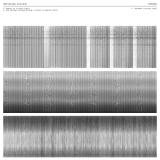
TUNING brings together three pieces by Christina Kubisch from different periods of her oeuvre. What they have in common is the way they transform sound phenomena originally considered “non-music” into compositions.
Jan Jelinek: Gaming in Silence (2024) is the most recent work on this compilation. It’s a collage of electromagnetic waves, voice, and abstract sound textures. How did this combination come about?
Christina Kubisch: Gaming was commissioned as a fixed-media composition for the Sound Dome at ZKM Karlsruhe. Since Resonances: The Electromagnetic Bodies Project (2005), I’ve been making recordings in the old and new server rooms at the ZKM and in their permanent collection of historical computer games. Computer games like Asteroids (Atari, 1979) and Poly-Play (VEB Polytechnik, 1986) have specially generated analogue electromagnetic waves that interest me in particular on account of their density, rhythms and textures. I originally studied painting and to me the work of composition often feels like painting an abstract picture. I alter my source material as little as possible, layering and overlapping until a distinctive sound space emerges. In recent pieces, I sometimes combine magnetic waves with field recordings or live instruments. In Gaming it’s my recording of a Chinese song about silence.
JJ: Two persons walking through a street in Madrid (2004) is a recording from your Electrical Walks series. Here we should give a brief explanation of one of your best known works: participants in an Electrical Walk move through public spaces wearing prepared headphones that allow them to receive electromagnetic waves from their surroundings – for example from security gates, ATMs or neon signs. They discover a situation that normally is inaudible to the human ear and they can actively shape it by choreographing their movements. I really admire this piece, not least because there’s no clear dividing line between participants and artist. What exactly do we hear in Two persons walking through a street in Madrid (2004)?
CK: With this early work, I wanted to understand what is heard by people participating in an Electrical Walk in the same place but moving in different ways. The Spanish composer Miguel Alvarez-Fernàndez and I set off from opposite ends of a major shopping street in Madrid, met briefly in the middle, and then continued to the end. We both recorded our walks and I then layered them over one another. You might call it a work of electromagnetic conceptualism.
JJ: Diapason (2009 version) is an installation that plays a composition based on sounds from fifteen tuning forks. This setting is audible in the recording: there’s no dramatic arc, no beginning or end – instead, it recalls a piece of aleatoric music focussing on the decay phase. How did you come to make this work and could you tell us something about your compositional method?
CK: Diapason is part of a series of three pieces that deal with “non-instruments” or instruments that no longer exist: electrical mine bells used to send signals to the workers underground; a historical glass harmonica originally used for medicinal purposes; and tuning forks that were used by doctors to test people’s hearing. All of these methods are no longer in use. The sound of the tuning forks, audible only if held close to the ear, was recorded at the electronic studio at Berlin’s Technical University in such a way that even their decay remained audible. The frequencies range between 64 and 2048 Hertz and they can be adjusted at micro-intervals using small movable weights. The sequence and the duration of the pauses are dictated by chance and were not defined in advance. The 2009 version was created for an installation in the historic Holy Cross Church (Korskirken) in Bergen. Visitors could enter and leave the space at any time, deciding for themselves where and for how long they wished to listen to the sounds played back over an array of small loudspeakers placed on the floor of the apse.
Credits:
Gaming in Silence: commission of the ZKM/Hertzlab, Karlsruhe 2023
elektronic sound processing: Tom Thiel
sound engineering and mixing: Eckehard Güther
Diapason: produced at Elektronisches Studio of TU Berlin
rearrangement: Eckehard Güther
Christina Kubisch, published by Edition Christina Kubisch / Random Musick Publishing
image front: Transitionen 2021 by C. Kubisch, sonagrams of electronic waves (courtesy: Galerie Mazzoli Berlin)
image back: Diapason Tuning Fork, property of Folkmar Hein, Photo: Archiv Christina Kubisch
design by Tim Tetzner
mastered by Giuseppe Ielasi
Thanks to Miguel Álvarez-Fernández, Folkmar Hein, Dominik Kautz and Mario Mazzoli

8
Alcides Neto is a Brazilian composer and multi-instrumentalist based in Narrm/Melbourne. Drawing inspiration from the folk traditions of his homeland, Alcides offers a fresh perspective on Brazilian music by blending traditional rhythms with contemporary Brazilian jazz, samba, bossa and more. Known for his distinctive percussive guitar playing and warm, soothing vocals, he brings an authentic Brazilian vibe to every performance. Alcides is set to release his debut album Amú via the Music in Exile label in early 2026, featuring eight original compositions recorded at Head Gap Studios, Melbourne. For fans of Gilberto Gil, Jorge Ben Jor, and all the Brazilian samba greats.

For her new and most radical album »Electroacoustic Works for Halldorophone«, Martina Bertoni used the electronic instrument at EMS Stockholm to create four pieces that are massive in scale and incredibly intimate, sonically restrained and emotionally overwhelming—almost ambient and always demanding your full attention.
Martina Bertoni returns to Karlrecords with »Electroacoustic Works for Halldorophone,« her most radical album yet. The foundation for the four electroacoustic pieces was laid during a residency at Stockholm’s legendary Elektronmusikstudion (EMS) that the Berlin-based cellist and composer used to explore the curious instrument, originally designed by Halldór Úlfarsson in 2008, as an algorithmic system in order to examine tunings and the mathematical relationships between Aiming to analyse and understand their interaction beyond the composer’s control, Bertoni sought to engage more deeply with the concepts of time, tuning, and, most importantly, control. Accordingly, her four »Electroacoustic Works for Halldorophone« seem both massive in scale and incredibly intimate, sonically restrained and emotionally overwhelming— almost ambient and always demanding your full attention.
While the halldorophone—famously used by Hildur Guðnadóttir for her »Joker« score—roughly resembles a cello and can be played like one, it is an electronic instrument. The vibration of its strings is being picked up, amplified, and then routed through a speaker. This creates a feedback loop that becomes increasingly complex depending on how much gain is added to individual strings. Úlfarsson gave Bertoni a carte blanche for how to handle the instrument, but she stresses that she relied on »minimal interventions—some string strumming and plucking« that set the interactions of different sounds and frequencies into motion. »I decided to not approach it like a cellist would,« she explains. »Instead I used it as a kind of generative organ by turning it into a feedback machine, with tuned feedback triggering more feedback depending on the tuning, which was based on tetraphonic scales that I could apply on the four main strings as well as the sympathetic group of strings.«
Bertoni recorded the material in the EMS studio, later composing and arranging the four complex pieces in her home in Berlin, after which they were mixed and mastered by Ciaran O’Shea. While this can be considered a compositional abstraction process, traces of her concrete work as a performer are firmly ingrained in the music. »The halldorophone doesn’t have a line output, just a double set of speakers, which is why I recorded all sounds with two microphones in the EMS studio,« she explains. »That’s why there’s plenty of breathing sounds here and there—label owner Thomas Herbst and I jokingly refer to the album as my ›chamber music record‹.« And indeed, there is a striking sense of intimacy to these four pieces throughout which individual sounds, harmonic frequencies, and even subtle rhythmic figures seem to move both on their own accord but also according to a underlying vision that steers their interplay.
Indeed, »Electroacoustic Works for Halldorophone« is an album built on and marked by contrasts. The soothing polylogue of single sounds in the higher register on opener »Omen in G« is counterpointed by massive bass drones, while the second piece, »Nominal in D,« plays a cunning game of repetition and difference by combining thick textures with all kinds of rhythmic elements. »Fades in C«—the longest of the four pieces, clocking in at 17 minutes—unlocks the emotional potentials of the sonic qualities of the halldorophone, sounding at once serene and anthemic, and »Organon in D« closes the album by underscoring how Bertoni’s unconventional approach allows her to seamlessly transform simple, quiet tones into complex, towering walls of sound.

- A1: Enchanted Mirror 04:00
- A2: Summertime Love 03:00
- A3: Reflections 02:42
- A4: Concerto For Guitar 03:15
- B1: Rain 02:40
- B2: Leque 01:50
- B3: Missal (Estudo) 03:46
- B4: Adventure In Space 05:17
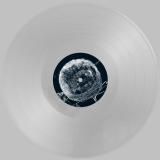
Introspection is a 1972 cult-favorite solo guitar album by Brazilian composer and guitarist Luiz Bonfà. Unlike his more famous bossa nova recordings, this album presents Bonfá in a deeply personal, almost meditative setting. Recorded primarily as a set of intimate solo guitar pieces, Introspection showcases Bonfà’s signature combination of classical technique, Brazilian rhythm and emotive melodic phrasing. Initially overlooked, Introspection later gained recognition as one of Bonfà’s most admired and distinctive works outside the mainstream bossa nova canon. This reissue is the first ever on vinyl after 1972.
11
Saxophonist, producer and composer Brian Allen Simon explores darker hues, transposing waking and altered states under his studio veil Anenon. On the deeply evocative new album 'Dream Temperature', he shifts electronic processing to the foreground, introducing digitized wind instruments and unworldly atmospherics, not heard since his innovating mid-late 2010s output.
A longtime Los Angeles resident, born and raised, Brian Allen Simon has expressively operated under the moniker Anenon, releasing the highly revered 'Petrol' (2016), 'Tongue' (2018) and the viscerally beautiful 'Moons Melt Milk Light' (2023), in a line of unwavering musical dialogues. While the penultimate album was a deliberate, reductive, entirely acoustic detour that was born out of a want to unplug, 'Dream Temperature' sees Brian primed with a newly discovered wind synthesizer as his central compositional tool, alongside acoustic piano and tenor saxophone. The entirety of the album's electronics are triggered by Brian's lungs, generating otherworldly synths modulated by expressive breath control, channelled through the laptop as the core processing chamber for added textural components and field recordings.
A free floating and heavy emotional resonance marks 'Dream Temperature' from beginning to end, invoking the feeling of waking up, still heavy from a night of half-remembered dreams, and continuing one's day in this state. Simon maps out the album's spatial voice early on the statement title track, a deep, yet compact cut, generated from digital saxophone rasps that whistle by in close proximity, along with haze filled textures and sub bass. There is a sonic oscillation of urban grit and pastoral drift throughout as tracks pass by like introspective thoughts, fueling both a tense and ethereal quality that underpins the album. Interluding solo and part-solo piano improvisations 'Last Sun 1' and '2' are positioned adjacent to the buffering digital soundscapes. Their softer, still processed timbres pierce the melancholic exterior, offering a contrasting tenderness that could echo the grace of Ry?ichi Sakamoto, the spiritualist rigor of ECM's Keith Jarrett and a touch akin to Aphex Twin's piano miniatures. 'Nulle Part 1+2' signals the first appearance of an acoustic wind instrument, as tenor saxophone flourishes are juxtaposed against noisy drones, all shouting at the void, with notes resurfacing like lost digital data.
The album was recorded at home during either sunset or nocturnal hours between September of 2024 and October of 2025, a period in which Brian found himself craving more lengthy and intimate studio time as he searched for more pronounced textural qualities amidst his new sonic ambitions. 'When The Light Appears, Boy' shows further evidence of this deeper universe, revealing a grittier edge as the album's essential blueprint is sonically inked. A sprawling expanse of wind synths rhythmically encircle the listener before a dreamy, ghostly ambience blankets 'Toyama'. The sound is evocative of the productions of post dubstep era luminaries such as Burial or the productions of HTRK's Nigel Yang. More isolating and enveloping than the previous all acoustic record, this is music both disorienting and yet warmly inviting all at once. A sonic diarist at heart, personal field recordings were also taken from Sardinia, Japan, Big Sur and LA which intersect at unexpected moments throughout the album's 31-minute play time.
'Dream Temperature' is a vital coalescence of both Simon's electronic and acoustic practices with repositioned electronics akin to earlier works, both haunting and elegant, yet still profoundly personal. Simon continuously resonates as an experimental outlier treading an enthralling, non-linear musical path. This music resolutely glows with an unknowing aura, like an untapped energy source waiting to be discharged.

Three years after the release of Volume 1, Innershades returns to home turf with a second entry in his Heritage series. The New Beat territory that its predecessor tackled serves as the starting point for the A-side of Volume 2 as well. The glistening arpeggios and choir patches on "Mind State", alongside the unyielding kicks, alarm-like synth lines and plodding tempo of "System Breakdown," reaffirm how the genre's hallmarks smoothly align with the artist's own inclinations. The B-side draws from the broad spectrum of styles that emerged a bit later, in the beginning of the nineties, when it seemed the dance floor would move unimpeded between and bridge genres, its boundaries often not as firmly established. "Fuse Memory" nudges the pace forward, driven by the 909 and a staple hypnotic lead. When the drums come to a halt, a 303 emerges to flesh out the break. "Rhythm Composer" continues in a similar early techno vein, but pulls the track into outer space via its formant-heavy leads and Detroit-tinged sci-fi sweeps. On ALT023 Innershades appears in fine fettle, providing another batch of up-front club tracks that approach history as motion rather than memory, translating the past into forward momentum.

- A1: Dog Stream Connects
- A2: All For Nothing
- A3: The Emperor's Lapdog Part 1 - The Sultan's Pavillion
- A4: The Emperor's Lapdog Part 2 - Venusian Vip
- A5: The Emperor's Lapdog Pt 3 - The Bold Dragoon
- A6: Nothing Is Dead
- B1: Rise In A Thicket Of Thorns
- B2: The Shriek Of Pan
- B3: We Are The Asteroid
- B4: The Creak Of Insects' Knees
- B5: Dream In A Collapsing Sun
11
Renowned producer, dj, artist and author Justin Robertson fresh from the success of his Five Green Moons project joins forces with composer and Stone Club co-founder Matthew Shaw on their tribute to mythical band MineralTail. An 11 track cosmic trip through krautrock, weird ambience and loose-limbed grooves that accompanies the story contained in Justin's new novel of the same name. Expect hypnotic electronics and ritualistic rhythms, swirling melodies and glorious riffs.
'Critics agree that the greatest album ever recorded is the self-titled debut by the MineralTail. Recorded after the extinction of humanity by the combination of a Megalithic stone and two dogs, the record remains peerless in its ingenuity, passion and inventiveness. An album that consistently remains at the top of all rankings and charts. Though all such accolades are meaningless, nonetheless its enduring appeal is obvious. Here, at last is the first reliable account of how that record was made. The recording techniques, the creative disputes, the true source of the sound. It is a story of sublime inspiration, skulduggery, time travel, beauty and conflict. But most importantly it is the story of music itself. Because held within the grooves of the MineralTail's breathtaking debut is the voice of God's most dazzling accident. Music.'
12
Tip on sleeve.
Latin Grammy-Winning Producer Pupillo Unites Global
Artists on his new album
Co-produced by Mario Caldato Jr. (Beastie Boys), featuring collaborations with Rodrigo
Amarante, Carminho, Adrian Younge, Gaslamp Killer, Cut Chemist, Hervé Salters, and more
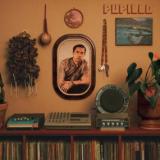
Drummer, percussionist and producer Pupillo, one of the most influential figures in Brazilian
music and a four-time Latin Grammy winner, releases his first original album through the Los
Angeles–based label Amor in Sound. The record brings together an impressive and diverse
group of collaborators from Brazil and abroad. Amor in Sound is run by Samantha Caldato,
the project’s executive producer and creative director, and Mario Caldato Jr. (Beastie Boys),
who co-produced the album alongside Pupillo. The project was developed in a free,
experimental environment, allowing the artist to explore the many rhythmic and sonic
territories that have shaped his career — from Northeastern Brazilian traditions to jazz, hip
hop, and cinematic soundscapes. Listen here.
The album features special appearances by Brazilian artists such as Céu, Rodrigo Amarante,
Agnes Nunes, Amaro Freitas, Davi Moraes, Alberto Continentino and Pedro Martins,
alongside a strong roster of international collaborators, including Carminho, Gaslamp Killer,
Loren Oden, Adrian Younge, Cut Chemist and Hervé Salters (known for his work with
General Elektriks). The album’s 12 tracks were further enriched by contributions from
Jeremy Gustin, Roberto Schilling, and other musicians who make Amor in Sound Studios in
Los Angeles a place of creative exchange.
Beyond his work as the drummer of Nação Zumbi, Pupillo has built a prolific career as a
producer and collaborator with some of the most important names in Brazilian music,
including Gal Costa, Nando Reis, Erasmo Carlos, Céu, and Otto, helping to shape the sound
of multiple generations. This trajectory has earned him four Latin Grammy Awards.
From Pernambuco, Pupillo is also an acclaimed composer for cinema, having written
soundtracks for films such as Arido Movie and Blue Blood (directed by Lirio Ferreira), The
Assailant (directed by João Daniel Tikhomiroff), among others. This cinematic sensibility
permeates the album, which unfolds like a film, moving through richly textured soundscapes
that cross continents and musical traditions.
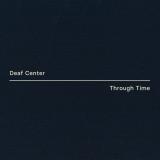
Deaf Center travel through quiet pathways and grand boulevards in their fourth studio album “Through Time”.
Since their last full-length LP, “Low Distance” (2019), the duo has gradually shifted towards a more long-form electroacoustic sound which perhaps makes for their most immersive listening experience so far. Otto A Totland’s piano travels in less frequent rhythms than before, yet is felt even more as a relief in the quieter moments that contrast with Erik K Skodvin’s deep atmospheric worlds. There’s a searching quality within the record which feels like slow movements on the way towards something meaningful, capturing a sense of both peace and awe.
The latter part of the album takes a different turn: fluctuating electronic rhythms over deep strings create an ecstatic yet haunting duality. It is the first time a guest musician appears on a Deaf Center record: British composer and musician Simon Goff joins with violin and viola in the finale, “Further”, a hypnotising piece submerged in layers of strings and drones.
The subject of time is an ambitious one, yet Deaf Center manage to balance the humble with the grand in great warmth as seconds become minutes, hours become days and time seemingly freezes as a still-life moment.
Deaf Center travel through quiet pathways and grand boulevards in their fourth studio album “Through Time”.
Since their last full-length LP, “Low Distance” (2019), the duo has gradually shifted towards a more long-form electroacoustic sound which perhaps makes for their most immersive listening experience so far. Otto A Totland’s piano travels in less frequent rhythms than before, yet is felt even more as a relief in the quieter moments that contrast with Erik K Skodvin’s deep atmospheric worlds. There’s a searching quality within the record which feels like slow movements on the way towards something meaningful, capturing a sense of both peace and awe.
The latter part of the album takes a different turn: fluctuating electronic rhythms over deep strings create an ecstatic yet haunting duality. It is the first time a guest musician appears on a Deaf Center record: British composer and musician Simon Goff joins with violin and viola in the finale, “Further”, a hypnotising piece submerged in layers of strings and drones.
The subject of time is an ambitious one, yet Deaf Center manage to balance the humble with the grand in great warmth as seconds become minutes, hours become days and time seemingly freezes as a still-life moment.

Reissue of a lost hit by the British composer Kevan Frost, now championed and given a brand-new Dub Mix by Mark Grusane. Up for pre-order now and due late-March on our RSS series!
Kevan Frost grew up in Jos, Nigeria where he became a self-taught musician and developed a deep understanding of rhythm and melody. In the 90's, Frost was a session musician for many studios in London, one of these was unable to pay him so they gave him a few free days in the studio and the result was "Give It Up" as he explains:
"I went in and recorded all the music in a day, and the vocals and mix on day two. This was the days of only having 24 tracks available on tape so I programmed the drums, bass and keyboard parts on C-Lab which was only available on the Atari computer and the samples I made on my Akai S-1000 sampler. Full of floppy disks I went in early on day one and printed all of this on tape. I then recorded the guitar parts. Day two was me layering the lead vocals and Backing vocal parts as quick as I could before starting to mix."
However, the track fell into obscurity with no major label backing or marketing budget. A friend of Mark Grusane’s came across it in Brooklyn at the African Record Centre and it eventually ended up in Mark's hands and from there he edited the original track to a more stripped-back dub mix and began playing it out to great effect on dancefloors.
After a bit of digging, we tracked down Kevan and a fully licensed reissue is due on Rush Hour in late March 2026, including a brand new ‘Dub Mix’ from Mark Grusane.
9
DJ Support: Garnier, Opolopo, Worldwide FM, Marcia Carr, Bill Brewster, Timeout Moscow, Craig Smith, Delfonic, Tony Nwachukwu, Marcel Dettmann, DJ Rocca, Shuya Okino, Borrowed Identity, Titonton Duvante, Alex Attias, Rainer Truby, Sol Power All-Stars, Kyri R2, Robert Luis, Severino Panzetta, Lars Behrenroth, Kassian, Alkalino, Getdown Edits, Moodymanc, Gerd, Lea Lisa, Young Pulse, Mark de Clive-Lowe, Mark Grusane, Alex Barck….
International dance music heavyweight, producer and DJ Alexander Lay-Far returns with a powerful new chapter - Lay-Far Dance Orchestra (LFDO) - a fully-fledged live band project that reconnects him with his jazz-funk and fusion DNA while pushing dance music forward with unmistakable groove, musicianship and emotional weight. Formed in early 2024, LFDO is no nostalgia exercise. With Lay-Far at the helm as bassist, bandleader, composer, arranger and sound engineer, the orchestra has already been turning heads with explosive live performances, reinventing classic Lay-Far cuts, and now unveil their first album “Skybreak” with all new and original material written and produced by Lay-Far together with his bandmates and star guests, including Lipelis, Antoha MC and Seven Davis Jr. This work shows the departure from the predominantly electronic sound of Lay-Far's previous solo albums in favour of live instrumentation recorded to analogue tape and effortlessly bridging the gap between Jazz, Library Music, Disco-Funk, House, Broken Beat and Drum’n’Bass. “Skybreak” is dynamic, passionate, spiritual, cinematic, playful, heartfelt, life-affirming, dreamy and deeply romantic. Ultimately, there’s something profoundly romantic in recording and releasing such music in this day and age!
“Take Flight (Part 1)” is opening the album with style. It takes us on a beautifully orchestrated journey, blending the sensuality of Library Music with high-octane Jazz-Funk and raw b-boy breaks, propelled by breathtaking flute and Rhodes solos of Timur Nekrasov and Maxim Glonti. This aural symbiosis of “beauty and the beats” will become more and more prominent as the album unfolds.
It’s time for “Aquarius Love” created with the inimitable artist and vocalist Seven Davis Jr. (Secret Angels, Ninja Tune). In this composition cinematic soul and heavy jazz meet the restless energy of live drum & bass with deep and heartfelt vocals - timeless sound combined with a timeless message about love and life!
Next is “Head In The Clouds” - a theme for an imaginary rom-com, an ode to all the dreamers - sweet, light, naive and heartwarming. Space-Disco-Funk at its best!
“Where You From” is a fiery Soulful House number with heavy Afro-Latin influences recorded in collaboration with Lipelis. It’s full of Sun, joy and passion. Its irresistible rhythm is emphasised by funky octave bass, wah-wah guitar, catchy piano riffs, guitar solo by Lipelis and seemingly light conscious message delivered by Lay-Far and Maryag. Summer is here!
Now the album takes an unexpected twist in the form of “The Harp of Boom” which at first glance appears to be a classic-sounding Boom-Bap banger. Yes, It’s loud, raw, and gritty, yet it gradually evolves into something delicately-touching and deeply-soulful thanks to a memorable flute melody and lush string arrangement. Definitely recorded with tongue in cheek.
Next is “Feel The Moment” a remarkable collaboration with one of the most recognisable and distinctive Russian artists, singer, trumpeter and cultural icon Antoha MC. It’s a feel-good song, hopeful, life-affirming and bittersweet. A stylish excursion into Brit-Funk and Soviet Jazz-Fusion sound, drawing inspiration from the likes of Atmosfear, Light Of The World or Soviet Jazz bands like Allegro and Arsenal, but reimagining the influences through the modern West London broken beat lens.
The spectacular music journey continuous with “Take Flight (Part 2)” - it’s all about the deep infectious jazz-funk groove, heavy beats, rolling percussion and the glory of the soloing instruments - saxophone and flute by Timur Nekrasov, demonstrating the wide range of emotions from thoughtful and lyrical to restless and borderline vicious. One for freestyle dancing!
As the album draws to an end a vibrant musical triptych “Soul Constant” awaits, mixing together the deep and sensual mood of spiritual jazz with heavy syncopated drum’n’bass rhythms by Michail Fotchenkov, lush orchestration, expressive saxophone solos and the ending which can simply be described as “aural bliss”. It’s breath-taking!
A pleasant bonus is the exclusive version of “Where You From” by Lipelis himself, who is taking it into dub territories, further enhancing the rhythm section and enriching the song with his trademark playful synth flourishes and dreamy guitar solos for maximum effect (and appeal).
The album “Skybreak” by Lay-Far Dance Orchestra is the work of real artistry and craftsmanship with timeless sound that’s not only deeply-rooted but also forward-thinking.
- A1: Passage I (Small, Soft Feet Running Across Wooden Floors In The Morning)
- A2: Passage Ii (Listening To Lullabies While Holding Hands)
- A3: Passage Iii (Slow Days Of Togetherness)
- A4: Passage Iv (Watching You Quietly Eat An Apple In The Shade)
- B1: Passage V (Sounds From Your Rituals Playing In The Garden Near The Old Tree Which Has Witnessed Your Childhood)
- B2: Passage Vi (While You Slept, The Thought Of Not Yet Knowing How To Braid Your Hair Brought Quiet Tears)
- B3: Passage Vii (When You Learned To Stand In Your Own Light)
- B4: Passage Viii (Fifteen Years Passed And A Full Circle Moment Surrounded Us, Where The Ocean Meets The Mountains)
8
Passages in Time, the third album from Kasper Bjørke Quartet, traces the contours of a blend of spiritual jazz reverence and the calming grandeur of '80s ambient. Inspired by Christopher Nolan's observation that "time is the most fundamental part of our human experience," the compositions are approached as fragments of time and memory. Meditations on the elusive nature of time form the heart of the work, merging freeform jazz improvisations with cyclical synthesizer patterns that mirror its quiet undulations.
Dreamy synths intertwine with guitar, harp, trumpet, flugelhorn, saxophone, and flute, creating a spacious environment for contemplation. The music invites reflection on the choices that shape our lives and the lives of those closest to us, and on the quiet weight of our priorities within the brief span we call life on this planet. Each passage unfolds as a fleeting moment suspended in time. The subtitles hint at fragments from someone's diary, tender observations of love, parenthood, and connection. Together, the passages form a musical memoir of sorts, where memory and emotion are gently woven into the compositions.
Passages in Time does not impose structure or meaning, it reflects them, offering an open space as the instruments drift in and out of focus, tracing time's subtle rhythms and inviting the listener to infuse their own memories and meaning into these passages.
The album also marks a transformation for the Quartet project itself. Langstrakt (Claus Noreen), part of the original ensemble, continues to operate the synthesizers alongside Bjørke, while the wider constellation of contributing musicians has evolved. Strings and piano give way to flute and saxophone by Oilly Wallace, guitars by Danish ambient composer Anna Roemer, trumpet and flugelhorn by Malthe Kaptain, and cascading orchestral harp by Katie Buckley, principal harpist with the Icelandic Symphony Orchestra.
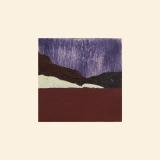
The cover painting is by American artist Marcus Leslie Singleton, courtesy of V1 Gallery, and reflects the meditative and timeless atmosphere of the music.
Passages in Time is released on Bjørke's own imprint, Sensitive Records, following the two previous Quartet albums released on Kompakt Records: The Fifty Eleven Project (2018), a debut that introduced Bjørke's ambient and neoclassical explorations, and Mother (2022), which expanded the ensemble's sound with emotive choir compositions and guest appearance by Sofie Birch (Unsound / Stroom). Together, these three albums trace a journey of artistic growth, from introspective experimentation to a fully realized, contemplative expression of time, memory, and human connection.

Primordial Mind forms the mysteries and intensity of inner life into eight mandalic instrumentals where Mas Aya and Khôra, artists who share 15 years of music making, orchestrate an inspired, prismatic palette of percussive and melodic sources. Each composition presented stages a vigorous meshwork of colours and textures, contrasting riveting polyrhythms with towering arrangements for flutes, synths, and processed acoustic instruments. Tendencies which the artists trace in their solo practices are amplified, blended, and refracted sublimely in unison, serving as energetic portals to the collective awareness.
Combining trans-ethnic scaling alongside a heady brew of rhythmic influences and advanced electronic processing, the recordings on this album operate with a tactility that vaults between free jazz, dub, raga, ambient, and ritual music. Assimilated powers of primal drum patterning and psychoactive, ceremonial melodies, invoke fourth world adjacencies with the work of Don Cherry, Jon Hassell, Popol Vuh et al. There is an alchemical, Buddhist/Taoist/Hindu inflection that guides the record’s narrative, formed through dialogue between the artists over lifelong shared interest in spiritual modalities generally and the tantric approaches of the global east in particular. The album title is derived from an unexcelled esoteric work known as the Kalachakra (Wheel of Time)Tantra and its associated commentary the Ornament of Stainless Light which detail forms of inner and outer transubstantiation within its complex cosmology and metaphysiology.
Mas Aya is the moniker of Brandon Miguel Valdivia, acclaimed Nicaraguan-Canadian composer, producer, and musician whose electronic and jazz inspired works creatively interlace Colombian, Cuban, and a wide array of traditional music. Khôra is the name of the occult entity that uses multi-instrumentalist, producer, and writer Matthew Ramolo to pronounce itself. Returning to Marionette following 2024's monumental Gestures of Perception, Primordial Mind reinforces the rigorous and magical approach to creation which defines Khôra’s two decades of sonic output. Brandon and Matthew met back in 2011 and the pair toured around eastern Europe with Toronto band Picastro in 2013, also performing as a duo with Brandon contributing drums to Khôra's opening sets. After a short spate composing and playing in the ensemble Bespoken together, they continued to discover shared inspiration in psych/art rock, jazz, experimental and electronic music, providing a fertile soil for friendship and collaboration resulting in their collaged, lo-fi album Tangled Roots in 2017. Mythic and talismanic, the duo's Marionette debut weaves a luminous tapestry of organic pulses, offering itself as a support for resonant meditation and a motor for lucid action and intuition.
Brandon Miguel Valdivia: Percussion, Flutes, Log Drum, Korg Lambda, Angklung, Tambor Alegre, Udu
Matthew Ramolo: Modular Synth, Archival Samples, Angklung, Guitar, Duduk, Bass, Percussion, Arrangements and Mix
