Search:rhythm composer

Styles
All
Jason Dungan (aka Blue Lake) / Johan Carøe - Routine LP

Jason Dungan (aka Blue Lake) and Johan Carøe find beauty in the rhythms
and repetitions of domestic life for collaborative album, 'Routine' - out September 25

Copenhagen-based multi-instrumentalists Jason Dungan and Johan Carøe didn't set out to make an album. Instead, as the title 'Routine' suggests, they found their way there through a process of habitual making and listening, developing an intuitive musical language to reflect the dreamlike meanderings and creative play of life's quiet moments. 'Routine' blends pop orientated sounds, Avant-garde minimalism, folk and new age with the emotive depth of film-score.

Their meeting was not entirely coincidental. Previously in bands such as Squares and Triangles, Jason Dungan has since recorded multiple albums under the moniker Blue Lake, including the lauded 'Sun Arcs', pursuing his passion for self-built percussion and multi-string instruments. Johan Carøe meanwhile is a composer whose film soundtrack work has seen him collaborate with Angelo Badalamenti, Arp, and Sofie Birch, at whose Andersabo residency (curated by Dungan) the pair first met, resulting in the highly praised album 'Repair Techniques' written by Birch and Carøe.

'Routine' emerged organically over many years against the backdrop of great personal change. As Carøe said goodbye to his father and welcomed his first child, the pair sent each other fragments of melodies and patterns, working up responses when time allowed to assemble a sonic palette that combined acoustic instrumentation of zither, clarinet, cello, saxophone (among others) with the textures of tape, drum machine and Yamaha DX7 synth. Inspired by the vulnerability and DIY ethos of Arthur Russell's home recordings, the vision of labels like Disques de Crepescule, and the art pop, experimentation inherent to late '70s and early '80s recordings from NYC and Japan alike, Dungan and Carøe conjured new forms for their folk, leftfield pop and avant garde influences from the low-lit living rooms of Copenhagen and rural Sweden. "I'm very interested in the ways in which music and art emerge from our wider experiences as people, workers, parents and in the daydreaming activity of making music," Dungan explains of a process which allowed the duo's individual styles to drift apart and merge together seamlessly. "I think the process was definitely capturing moments in time, but over a long time," Carøe adds. "It was a bit like improvisation, but with time stretched."

The music floats with grace and humility, remaining sophisticated yet acutely introverted.
Whether on 'Clouds', where soft layers of zither and clarinet are moved along by a featherlight bass riff and the hypnotic clip-clop of the primitive groovebox, or the gentle grandeur of cello rising and falling through 'Routine 1', the album reveals itself over 10 instrumental tracks, evoking the ineffable calm that descends when the light changes and the world turns inwards. The act of time passing became a key creative ingredient to the evolution of the album, enriched with the exciting challenge to transform their passing rounds of home recordings via a slow release musical dialogue. Jason found creative moments in the twilight hours to lay down zither, melodica, acoustic guitar to name but few, while Johan utilising "line-in and headphones" would manipulate, stretch and pitch Jason's melodic pathways during newly born naptimes.

Carøe rhythmically plucks and slides the stringed cello instrument, leaving palpable foundations on 'Hymn' and 'Chords', in a treated, stylistic approach akin to Mabe Fratti, while 'Silence' draws to a close with a gospel touch. Dungan's harp-motion zither flourishes reveal more classical connotations on 'Reunion' with inspiration of Bedroom Community's Nico Muhly as organs rise with Moogs, culminating with a climatic choral outro from friend, mezzo-soprano Anna Caroline Olesen.

'Routine' then is their first collaboration, an album of deep and sincere reflection with inviting overtones that gesture with unrushed authenticity. A document of a new-found friendship that opens a window into the most personal of spaces, where the daily practices of music and life exist side-by-side to wondrous effect.

pre-order now25.09.2026

expected to be published on 25.09.2026

22,48 €
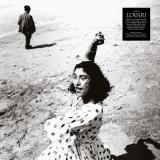
Raphael Loher - Figuren LP

Radically exploratory, Raphael Loher’s Figuren is an album shaped by process and experimentation. Guided by intuition, listening, and a deliberate distancing from his primary instrument—the piano—, the LP marks a decisive step in the Swiss pianist and composer’s artistic development, expanding his sonic vocabulary while maintaining a distinct and personal language.

Figuren draws on ten intimate concert recordings from Keemuun—Loher’s debut for Three:four Records—created during the pandemic and performed in his studio for just one or two listeners. This source material was subsequently developed during a residency in the Blenio Valley, where Loher deconstructed melodic elements, isolated individual tones, and extracted resonances, reassembling them into new configurations. The process generated around 30 initial pieces and also informed his sophomore album, Hug of Gravity, released by Hallow Ground in 2025.

In a further stage of transformation, Loher processed these fragments through a Revox B77 tape machine, subtly altering their pitch before digitizing and reshaping them once again. This iterative cycle of manipulation and recombination forms the core of Figuren’s sonic language.

Departing from the more structured frameworks of his earlier work, Figuren foregrounds experimentation as both method and aesthetic. The compositions range from finely layered rhythmic microstructures to sparse, evolving melodic fragments, each unfolding with a precise sense of restraint.

pre-order now25.09.2026

expected to be published on 25.09.2026

21,81 €
Martina Bertoni - Electroacoustic Works for Halldorophone LP 2x12"

For her new and most radical album »Electroacoustic Works for Halldorophone«, Martina Bertoni used the electronic instrument at EMS Stockholm to create four pieces that are massive in scale and incredibly intimate, sonically restrained and emotionally overwhelming—almost ambient and always demanding your full attention.

Martina Bertoni returns to Karlrecords with »Electroacoustic Works for Halldorophone,« her most radical album yet. The foundation for the four electroacoustic pieces was laid during a residency at Stockholm’s legendary Elektronmusikstudion (EMS) that the Berlin-based cellist and composer used to explore the curious instrument, originally designed by Halldór Úlfarsson in 2008, as an algorithmic system in order to examine tunings and the mathematical relationships between Aiming to analyse and understand their interaction beyond the composer’s control, Bertoni sought to engage more deeply with the concepts of time, tuning, and, most importantly, control. Accordingly, her four »Electroacoustic Works for Halldorophone« seem both massive in scale and incredibly intimate, sonically restrained and emotionally overwhelming— almost ambient and always demanding your full attention.

While the halldorophone—famously used by Hildur Guðnadóttir for her »Joker« score—roughly resembles a cello and can be played like one, it is an electronic instrument. The vibration of its strings is being picked up, amplified, and then routed through a speaker. This creates a feedback loop that becomes increasingly complex depending on how much gain is added to individual strings. Úlfarsson gave Bertoni a carte blanche for how to handle the instrument, but she stresses that she relied on »minimal interventions—some string strumming and plucking« that set the interactions of different sounds and frequencies into motion. »I decided to not approach it like a cellist would,« she explains. »Instead I used it as a kind of generative organ by turning it into a feedback machine, with tuned feedback triggering more feedback depending on the tuning, which was based on tetraphonic scales that I could apply on the four main strings as well as the sympathetic group of strings.«

Bertoni recorded the material in the EMS studio, later composing and arranging the four complex pieces in her home in Berlin, after which they were mixed and mastered by Ciaran O’Shea. While this can be considered a compositional abstraction process, traces of her concrete work as a performer are firmly ingrained in the music. »The halldorophone doesn’t have a line output, just a double set of speakers, which is why I recorded all sounds with two microphones in the EMS studio,« she explains. »That’s why there’s plenty of breathing sounds here and there—label owner Thomas Herbst and I jokingly refer to the album as my ›chamber music record‹.« And indeed, there is a striking sense of intimacy to these four pieces throughout which individual sounds, harmonic frequencies, and even subtle rhythmic figures seem to move both on their own accord but also according to a underlying vision that steers their interplay.

Indeed, »Electroacoustic Works for Halldorophone« is an album built on and marked by contrasts. The soothing polylogue of single sounds in the higher register on opener »Omen in G« is counterpointed by massive bass drones, while the second piece, »Nominal in D,« plays a cunning game of repetition and difference by combining thick textures with all kinds of rhythmic elements. »Fades in C«—the longest of the four pieces, clocking in at 17 minutes—unlocks the emotional potentials of the sonic qualities of the halldorophone, sounding at once serene and anthemic, and »Organon in D« closes the album by underscoring how Bertoni’s unconventional approach allows her to seamlessly transform simple, quiet tones into complex, towering walls of sound.

pre-order now21.09.2026

expected to be published on 21.09.2026

23,11 €
Volodja Brodsky - Whispering Ln. Vol. II
  • Green Spring Gardens
  • Bethanie’s Salt Water Taffy
  • Low-Tide Observations
  • Monteluka
  • Wind Clock
  • Slow Turn to Port
  • Rehoboth
  • Deep-Brain Stimulation

Whispering Ln. Vol. II was recorded between 2018 and 2019 in America, alongside the pieces that formed the first album. These recordings belong to the same time and space, shaped by the same quiet focus and slow attention to sound.

While remaining rooted in minimalism, this album introduces several more rhythmic pieces, drawing inspiration from early electronic music – echoes of composers such as Tom Dissevelt and Raymond Scott.

Movement and stillness coexist throughout this record. Rhythms and patterns shift and occasionally dissolve. The music asks for little and offers even less explanation, inviting listening without urgency – to slow down and remain present. May it offer a moment of calm, where time loosens, and attention gently settles.

pre-order now18.09.2026

expected to be published on 18.09.2026

23,95 €
TELECTU - OFF OFF LP 2x12"

TELECTU

OFF OFF LP 2x12"

2x12inchZAM012
Holuzam
18.09.2026

Remastered limited edition double vinyl with double-sided screenprinted poster-cover (sleeve folds out to be one huge poster). A real collectors item!

When Off Off came out around June 1984, one couldn’t speak of an independent music scene in Portugal. Warm Records’ vague existence didn’t have any impact and Dansa do Som’s inaugural release appeared only in December. 10 years after the revolution, after two IMF interventions, a lot of political instability (not to say turmoil, in the first couple of years) and the natural excesses of a sudden burst of freedom, the Portuguese consumer had more choices but a generally poor standard of living. There was no entrepreneurial culture and serious second thoughts about investing private money in risky ventures.

After many complaints about the whole music scene (institutions, critics and record label executives, popular and classical music alike), something that would continue well beyond the end of the decade, Telectu decided to finance, record, produce, release and sell an album with complete independence from outside structures. Their karmic reward was profit. According to Vítor Rua, Off Off was the only album fully payed by the duo and the only one that really payed off. Not an easy accomplishment for a double LP housed in a large (also double-sided) screenprint with complicated cuts and folds. The artwork was conceived by António Palolo, a friend and multidisciplinary artist. It was based on a collage of heavily saturated and xeroxed polaroids framed in shocking pink and green. Palolo was considered the third member of Telectu, regularly producing slides, video and other visual support for their shows. The inspiration for the type of cover came from GRM’s Gramme series.

Off Off is divided in four distinct sides, each one corresponding to a “theme” or “function” related to Telectu’s manifold artistic interests and interactions. The titles are also gateways to influences and a small portion of Portuguese cultural life:

- Side 1 / “Diagonale” is dedicated to Egídio Álvaro, art critic and gallery director (he opened Diagonale in Paris). Performance art was arguably his main artistic concern over the years, so the music on this side is suggested for use by one or more performers in live or playback situations. The three tracks segue into each other, linked by a synth arpeggio much in the same way as Telectu’s previous “Belzebu” álbum (1983);

- Side 2 / “Anarké” is dedicated to the composer Filipe Pires, one of Jorge Lima Barreto’s recurring invocations when asked about worthwhile contemporary music in Portugal. It is subtitled “concert music”, proposing «a new form of listening». Three tracks also, and these are separated by “clap interludes”, which basically consisted in the following: JLB and VR each had a pair of headphones on, and they clapped their hands according to the rhythm of the music each one was listening. Both musicians were interacting with a different Steve Reich piece: Vítor with “Music for Mallet Instruments”, Jorge with “Six Pianos”. The result is disjointed clapping, an awkwardly deliberate celebration of their own music. Telectu applauded themselves.

- Side 3 / “Cornucópia” is subtitled “music for theatre” and dedicated to Luís Miguel Cintra and Luís Lima Barreto (JLB’s brother), both connected to the Cornucópia theatre company. The side consists of several short pieces previously used as interludes in the Cornucópia staging of “Mariana Espera Casamento” (1983). Field recordings, mood pieces, ambience and a numeric poem (“Soneto Soma 14x”, by E.M. de Melo e Castro) read by João Perry, a quite well-known stage actor. His voice is treated with a flanger effect;

- Side 4 / “Palolo” is “video music”. It’s a one-take mix recorded from cassette sources (Telectu studio experiences) and done live while watching António Palolo’s Om film (1978) projected on the living room wall. It’s a deep, immersive, quasi-mystical 20-minute piece perfectly suiting the meditative, abstract, fluid images created by Palolo by mixing paint and water inside a bathtub. One imagines the Cosmos, hardly suspecting the technique. The film is 90 minutes long, so the music on the LP is of course edited.

The six titles on sides 1 and 2 evoke demons, all of them with conflicting symbolism, since it varies from culture to culture, religion to religion. No explanation is given and Vítor Rua has no idea where this imagery comes from. During virtually the whole stretch of the 1980s, Jorge was the one in charge of titles and concepts, and Vítor didn’t bother too much even reading the liner notes :) In any case, when you synchronize the listening experience with the imagery, a powerful impression emerges, a feeling of being in the presence of these entities while placing yourself inside the sonic narrative.

Off Off is undoubtedly a seminal album in the history of electronic music, as much Heldon as Fripp & Eno, jazz and American minimalism, cosmic out-thereness, mantric miniatures. Telectu at the height of their powers, still very early on, delivering an album-manifesto advocating intermedia art and the fierce independence of Portuguese musicians «from the scum of capitalist music industry monopolies. It’s a path to follow, albeit one that requires enduring hardships and retaliation from music industry gangsters.» Despite a few journalists deemed «capable of being free», the media are «enslaved by the dominant and fascist imbecility of the speculators of light music.» Off Off is addressed to those journalists «and to an audience angry at the cultural misery imposed upon us ..., certain that this music will open new horizons of musical pleasure in the conception of Portuguese avant-garde music, and in the open consciousness of us all. OFF OFF repeats Freedom.»

Those two words are a direct lift from Alberto Arbasino’s 1968 book Off Off, the basis of which is a critical analysis of Theodor Adorno’s and Dwight MacDonald’s ideas concerning the stratification of culture in different levels (high, mid and low) and the pervasiveness of mass culture in the form of a culture industry. In very simplistic terms, and that is precisely the point that inspired Jorge, Arbasino argued that it was possible and desirable to effect a revolution from below, cultivating alternative circuits completely cut-off from what he termed the in-in reality. Telectu’s record was a deliberate demonstration that it could be done, displaying Freedom in the face of all the gatekeepers and other human obstacles.

pre-order now18.09.2026

expected to be published on 18.09.2026

63,45 €
Jembaa Groove - Be A Lover

Jembaa Groove

Be A Lover

12inchAR212VL
Agogo Records
18.09.2026
  • 01: Be A Lover
  • 02: Obi
  • 03: No Pain No Gain
  • 04: Waka

From Berlin to Lagos: Jembaa Groove expand their sound on "Be A Lover"

Berlin-based outfit Jembaa Groove return with "Be A Lover", a four-track EP set for full release on 18 September via global soul imprint Agogo Records. Following two critically acclaimed albums and an intensive period of touring across Europe and the US — including a SXSW showcase and a widely acclaimed KEXP session — this latest release marks a new chapter in the band’s trajectory. Built around highlife rhythms and shaped by Afro-jazz and the more organic edges of Afrobeats, "Be A Lover" unfolds with a warm, languid and deeply soulful feel, capturing different strands of today’s multifaceted Afrofusion scene.

Here, the band strips back from a seven-piece ensemble to its two founding members, while at the same time opening outward into a deeply collaborative space. At its centre is a close creative partnership with celebrated Nigerian highlife revivalists The Cavemen., alongside contributions from London-based, Nigerian born soul artist Azekel, Lagos vocalist Tim Lyre, and Malian icon Fatoumata Diawara.

“This record has a different flavour,” says Owusu. “It’s really about collaboration — different feelings, different thoughts, different energies coming together.” While centred around the Lagos contemporary scene, the record is shaped by a wider diasporic network stretching across London, Lagos, Berlin and Amsterdam, cities producer and bass player Yannick Nolting describes as “the pillars where everything that is happening in today’s highlife and Afro-fusion scene.”

Formed in Berlin in 2020, Jembaa Groove began after a chance meeting between bassist, producer and composer Yannick Nolting and percussionist, vocalist and songwriter Eric Owusu. Drawing on their respective musical journeys — Nolting’s years working with Lusophone artists in Lisbon and Owusu’s deep roots in Ghana’s highlife tradition, including work with Pat Thomas and late highlife legend Ebo Taylor — the project quickly took shape: their debut album Susuma established a powerful, poly-rhythmic sound grounded in highlife, jazz and soul, while 2024’s "Ye Ankasa | We Ourselves" expanded that vision through collaborations with artists across Ghana and its diaspora, including UK based Ghanaian singer, rapper, percussionist, and arranger K.O.G and legendary Ghanaian highlife musician Gyedu-Blay Ambolley.

The collaborative spirit continues on "Be A Lover", most of which grew out of a meeting with sibling duo The Cavemen. at Supersonic Jazz Festival in Amsterdam in 2023, leading to a sustained exchange of ideas between Berlin and Lagos. With two acclaimed albums behind them, The Cavemen. have emerged as central figures in both Lagos’ alternative music scene and the wider contemporary highlife revival, bringing the genre to a new generation through a stripped-back, melody-driven sound. “There was some kind of magnetism towards Lagos,” says Nolting; for Owusu, who is Ghanaian but spent much of his life in Nigeria, the connection runs even deeper. “I feel lucky to be able to bring different cultures together and make something really beautiful,” he says. A key part of that process was a close working exchange between Nolting and The Cavemen.’s Kingsley Okorie, who effectively stepped into a co-producing role on three out of four of the tracks.

The one exception is opener No Pain No Gain, which features Nigerian-born, East London-based Azekel, whose smooth, R&B-leaning vocal moves through a slow-burning arrangement of bright keys, gently rising horns and atmospheric synths, anchored by Owusu’s organic percussion.

The title track Be A Lover, featuring Afro-fusion Lagos artist Tim Lyre, distills the EP’s central message into its most immediate form. Backed by syncopated percussion and a gently smouldering arrangement, Lyre’s voice moves with a laid-back, melodic ease, delivering a simple refrain: “be a lover, not a fighter.” “It’s a very simple message,” says Nolting, “It’s about showing more love, on a personal level but also more broadly… just show love.” That same sense of warmth runs throughout the record, reflecting its core idea.

On Obi, The Cavemen. take centre stage, with Kingsley Okorie leading through melancholic, plaintive vocals rooted in classic highlife. In contrast, his brother Benjamin James punctuates the track with high-pitched vocal interjections, heightening the emotional tension against a backdrop of slow, restrained instrumentation.

Waka follows with a more melodic, hook-led refrain from Eric Owusu, whose loose, almost conversational delivery creates a striking contrast with Fatoumata Diawara’s unmistakably powerful, raspy vocal. The collaboration grew out of a chance meeting while Owusu was on tour, with ideas exchanged quickly and Diawara returning a finished vocal within days. “We are so proud to have her. It’s a privilege” says Owusu. "Be A Lover" is a record shaped by connections like these — between people, scenes, and cities. “It was partly intention, partly destiny,” says Nolting. “We met these people along the way, and somehow Lagos was meant to come into our path.”

pre-order now18.09.2026

expected to be published on 18.09.2026

21,22 €
THE SOUL SURFERS - THE SOUL SURFERS PRESENT: IGOR & ROMEO'S SOUND EXPERIMENT

After meeting and working with Janko Nilovic - the extraordinary French library maestro - on a new album, while traveling and performing together around the world for almost 10 years, Igor Zhukovsky & Romeo Miussky - the multi-instrumentalist production duo, and rhythm core of The Soul Surfers - were inspired to make a record of free, spiritual, esoteric sounds which blended together on tape and made Sound Excitement happen.Drawing on their experience as soundtrack composers and using heavyweight Soviet analog equipment, including a few vintage personal instruments belonging to some legends of the Soviet leftfield music scene, Igor & Romeo started experimenting with genre-blending music. The outcome of their recordings are a mixed bag of different moods and genres."It's something similar to a library record or more like a compilation of many different library records on one LP for a good decade if you know what I mean? It's the work which we're really excited about and excited to share with you! ...oh that's hell of a wordplay!"

out of Stock

Order now and we will order the item for you at our supplier.

Last In: 19 days ago
22,48 €
JACK WYLLIE - ETERNAL SPRING

Jack Wyllie, a composer, multiâÇ`instrumentalist, and co-founder of the Mercury Prize nominated Portico Quartet, debuts under his own name. The album radiates hope, mirroring nature s beauty and cyclical rhythms while weaving through contemporary jazz, ambient, classical, and postâÇ`rock. Collaborators include Hania Rani and Duncan Bellamy.

pre-order now11.09.2026

expected to be published on 11.09.2026

24,33 €
JEAN VERNHERES - Héritage Mélodies LP

Héritage Mélodies is the meeting point between saxophonist and composer Jean Vernhères and Black Stamp Music, brought together by a shared passion for the warm colors of music, groove, and the beauty of sound.

Nurtured from an early age by jazz and African-American music—from blues and soul to hip-hop—Jean Vernhères also ventured into Highlife, Afrobeat, and Funk, exploring the fertile “Black Atlantic” that runs throughout his musical journey.

For his first album as a bandleader, he brings together Pierre Bauzerand on Steinway piano, Laurent Vanhée on double bass, Guillermo Roatta on drums, and, as a special guest, Alfio Origlio on Fender Rhodes and piano. Six original compositions where Soul Jazz, Latin Groove, Afro-Caribbean rhythms, spirituality, and intimate melodies come together.

Recorded at Bernard Estardy’s legendary Studio CBE and mastered in Berlin at East Side Mastering, Héritage Mélodies embraces a true audiophile aesthetic: from the breadth and spaciousness of Haumea City, a nod to CTI Records, to the delicacy of Marion.

More than a jazz record, Héritage Mélodies is a story of lineage, travel, and transmission: a personal tribute to all those who have carried forward a musical heritage that transcends time.

pre-order now10.09.2026

expected to be published on 10.09.2026

21,81 €
JACK WYLLIE - ETERNAL SPRING

Jack Wyllie, a composer, multiâÇ`instrumentalist, and co-founder of the Mercury Prize nominated Portico Quartet, debuts under his own name. The album radiates hope, mirroring nature s beauty and cyclical rhythms while weaving through contemporary jazz, ambient, classical, and postâÇ`rock. Collaborators include Hania Rani and Duncan Bellamy.

out of Stock

Order now and we will order the item for you at our supplier.

Last In: 27 days ago
22,27 €
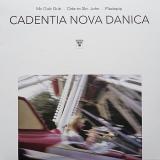
Cadentia Nova Danica - Mc Gub Gub / Ode To Skt. John / Pladepip

John Tchicai (1936 – 2012) was one of the most important free improvising saxophonists of the 20th Century: an artist of rare vision and aptitude whose lines soared and stood out even in the most hallowed company, and whose body of work as a leader / composer is among the most singular and distinct within the entire canon of that music. But Tchicai’s importance doesn’t end there. Born in Copenhagen, Denmark, to a Danish mother and a Congolese father, his life and career represent a crucial bridge between the European and American traditions of free jazz. Initially trained on violin as a child, Tchicai shifted his focus to the clarinet and alto saxophone during his mid-teens, and began touring Europe as a professional musician by his early 20s, which landed him at a socialist youth festival in Helsinki, Finland, where he met the trumpeter Bill Dixon and saxophonist Archie Shepp. Impressed by what they heard, Dixon and Shepp encouraged the young saxophonist to move to New York, and in so doing changed the history of jazz forever.

Tchicai’s arrival in New York marks the rare occurrence of a European player joining the intimate circle that was first wave of American free jazz. Following his landing in the city in November of 1962, in addition to regularly sitting in with Don Cherry’s group, Tchicai began playing with Bill Dixon's band alongside Archie Shepp and Roswell Rudd, forming the nucleus of the foundation of the New York Contemporary Five - one of the most important groups of the era - which counted Tchicai, Shepp, Cherry, Don Moore, and J. C. Moses as its members. From the ashes of this group, Tchicai would go on to found the legendary ensemble, New York Art Quartet, with Roswell Rudd, Milford Graves, and Lewis Worrell, as well as working within Albert Ayler's band, recording “New York Eye and Ear Control”, Shepp’s band, recording “Four for Trane”, the ensemble that recorded John Coltrane's “Ascension”, and the Jazz Composer's “Orchestra”.

By the time he decided to return to Denmark in 1966, had Tchicai chosen to record little else, his legacy within the history of music would have been ensured. Incredibly ambitious, his arrival home marked the beginning of an incredible period of activity which saw him radically expanding his creative explorations, which by the end of the decade would include becoming a founding member of Amsterdam's Instant Composers Pool and helping to record John Lennon and Yoko Ono's “Unfinished Music No.2: Life with the Lions”. This, however, was proceeded the formation of a new orchestra, Cadentia Nova Danica, led by Tchicai, dedicated to radical cross-disciplinary exploration. Remaining together between 1966 and 1971, the group and its shifting membership regularly fell into collaboration with artists and composers, notably Musica Elettronica Viva, who existed beyond the realms of jazz, as well as participating within multi-media events that incorporated the visual realms.

Cadentia Nova Danica’s only two LPs - “Cadentia Nova Danica” (Polydor, 1968), and “Afrodisiaca” (MPS, 1969) - are effectively Tchicai recorded efforts as a leader, and are legendary. There’s little mystery, once heard, why the later landed on Thurston Moore’s iconic “Top Ten from the Free Jazz Underground”, published by Grand Royal in 1996. Sadly, despite playing extensively during their five year run, with exception of a CD documenting a performance at Jazzhus Montmartre, in 1966, until now there has been no other publicly available recordings that allow us to capture a glimpse of this astounding band at work. Alga Marghen / Formalibera’s vinyl pressing of a never before released body of recordings, made in Copenhagen between 1969 and 1970, changes that in the most exciting of ways.

Comprising three pieces - “Mc Gub Gub, (I–VIII)”; “Ode to Skt. John”; and “Pladepip” - the material on this stunning LP comes from two specific events. The first, which encompasses the first side, “Mc Gub Gub, (I–VIII)” was recorded by Cadentia Nova Danica - in this instance, Tchicai, Sune Weimar, Theo Rahbek, Christian Kyhl, Niels Holt, Jørgen Thorup, Michael Schou, Morgens Bollerup, Allan Gregersen, Ole Matthiessen, Pierre Dørge, Willy Jaegert, Anthony Barnett, and Jon Finsen - on May 29th, 1969, at the ABC-Theatre in Copenhagen. Penned by Tchicai, the piece is a sprawling, evolutionary composition at the outer reaches of free jazz, rooted in large blocks of colliding tonality and rhythm - a sound only accessible to larger ensembles - that push territories explored by Charles Mingus to previously unimagined heights, threaded by moments of hard blown fire. Writhing like a stormy sea - skronking and devilish - “Mc Gub Gub, (I–VIII)” is a work of profound complexity that singlehandedly illuminates not only Tchicai’s singular vision as a composer, but also the power and uniqueness of Cadentia Nova Danica during the band’s most vital period.

The two pieces - “Ode to Skt. John” and “Pladepip” - taking up the flip side, were recorded on February 21st, 1970, at the Danish Broadcasting Corporation’s Radio House, and are the outcome of Cadentia Nova Danica’s extended residency there between 1969 and 1970. In many ways, these two recordings offer some of the best insights into the broad collaborative approaches that defined the band, in this case encountering them working with Danish experimental composer, Svend Erik Werner, who was among the earliest in his country to embrace stylistic pluralism and the use historical forms within a modern context. “Ode to Skt. John” - based on aspects of Gregorian music - was penned by Werner, incorporating heady improvisation by the members of Cadentia Nova Danica, this time made up by Tchicai, Sune Weimar, Hugh Steinmetz, Theo Rahbek, Christian Kyhl, Michael Schou, Morgens Bollerup, Ole Kühl, Torben Enghoff, Mauritz Tchikai, Kjeld Ipsen, Willy Jaegert, Ole Matthiessen, Ole Thilo, Pierre Dørge, Steffen Andersen, Jon Finse, and Clause Bøje. The piece is a fascinating binary of the composed and improvised, utilising the band’s large scale to introduce a remarkable sound within its slow progressions and furious, driving free moments, in this incredible meeting of worlds.

The album’s final piece, “Pladepip”, is arguably its most historically significant: an entirely singular piece, unlike anything in Tchicai’s recorded canon as his foray into musique concréte. Drawing upon two recordings of full-band improvisations by Cadentia Nova Danica, for its creation Tchicai also gouged the surfaces of 78rpm records in his collection to skip and create repeated phrases and patterns, creating a stunning sound collage of hard angles and abrupt phrase, that creates a striking counterpoint to the band’s flowing improvisations that bookend those passages. The result is an engrossing listen and easily one of the most unique and culturally important gestures in the entire history of musique concréte.

Truly incredible, Alga Marghen / Formalibera’s vinyl pressing of this never before released body of recordings, made by John Tchicai’s Cadentia Nova Danica, in Copenhagen between 1969 and 1970, offers an unprecedented window into one of the most important groups working in Europe during that period, significantly expanding their rare and slim discography to date. Accompanied by extensive exploratory liner notes by veteran jazz writer, Ed Hazell, this is easily one of the most historically important archival releases of the year and is impossible to recommend enough. Absolutely essential on every count.

pre-order now28.08.2026

expected to be published on 28.08.2026

28,15 €
NURSE WITH WOUND - ROCK 'N' ROLL REDUX
  • 1: REMIX
  • 1: 2REMIX 2
  • 1: 3REMIX 3
  • 1: 4REMIX 4

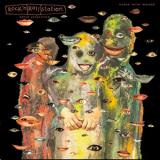
A long-overdue return to one of the most singular moments in Nurse With Wound's sprawling discography. Originally issued in 1994, Rock 'n' Roll Station marked a turning point - the album where Steven Stapleton's decades-long engagement with collage, musique concrète, and the outer limits of post-industrial sound first met the hypnotic, rhythm-driven studio sensibility of Colin Potter. What began as a request to rework some of the more percussive sections of 1992's Thunder Perfect Mind mutated, under Potter's hand, into something else entirely: an hour of swivelling grooves, warped exotica, and looping psychedelia, channelling the ghosts of Pérez Prado, Graham Bond, Joe Meek, and Jacques Berrocal into the most rhythm-conscious work the group had ever made. Three decades on, it remains one of the most beloved entries in the NWW catalogue. Issued by United Dirter as a limited LP, this new VIP edition reframes the album through four extended remixes and reworkings, each running close to or beyond ten minutes - a deep re-engagement with the source material by the extended Nurse With Wound family. Joining the usual suspects of Colin Potter, Matt Waldron, Andrew Liles, and Diarmuid MacDiarmada is an unexpected and historically significant presence: Jean-Jacques Birgé, the French composer, filmmaker, and co-founder of Un Drame Musical Instantané, whose GRRR imprint (founded 1975) famously appeared on the original Nurse With Wound List nearly half a century ago. A quiet circle, closing. The LP arrives as forerunner to a more ambitious project still to come: The Iron Lung Gives Way To The Surgical Stocking, a 5CD set due later in 2026, of which these reworks offer a first glimpse. Housed in striking new full-colour artwork by Babs Santini - Stapleton's longstanding visual alter ego. 500 ww copies in black & orange vinyl. Genre/Style: Electronic / Dark Ambient / Experimental / Drone

pre-order now21.08.2026

expected to be published on 21.08.2026

28,78 €
Michaela Turcerová - šumum

Michaela Turcerová’s compositions unfold in slow motion. The saxophonist and composer’s glacial music zeroes in on the granularities of each note as it rings, soaking in every subtle shift in texture and pitch.

Šumum exemplifies this patient approach to writing music, branching out from themes of loss and togetherness into an intricate tapestry of introspective sound. These four pieces invite deep collaboration between performers, who together shape the music through the shared process of listening and interpreting Turcerová’s relatively open scores. And while these works often grow from long, stretched-out tones, they also foreground forward direction: no note stays in one place, no melody is without action. Instead, Šumum chronicles how the tiniest shifts can lead to major transformation.

Šumum builds from Turcerová’s longheld interests in place and minimalism. Many of the composer’s works explore perception: how a room can shape the music we hear, and how repetition alters a melody. Like the music of Éliane Radigue, Šumum embraces the rainbow of colors that appear when close listening with the wave-like flow of looped melodic and rhythmic patterns. All the album’s pieces observe the subtle changes that happen as music grows.

Group communication yields the constant evolution that defines Šumum. The album feels like a conversation, with each instrumentalist swapping phrases or trading places when the moment feels right. “Straty” builds from a series of strongly accented drones that appear as quickly as they fade away; underneath them is a perpetual rhythm that drives the color of each long held note, from melancholy into radiance and back again. With “Vlny,” pitch eventually disappears, leaving a delicate rhythm, and with “Masy,” a matrix of brassy tones link together and eventually burst. No matter where the music goes, one thing remains true: Šumum invites close listening, and in the process, reveals the beauty of continual motion.

pre-order now14.08.2026

expected to be published on 14.08.2026

23,95 €
Isaiah Collier - Joy

Isaiah Collier

Joy

12inchBWOOD455LP
Brownswood Recordings
03.08.2026
 
3

In a world currently defined by unrest, uncertainty, and cultural fracture, acclaimed saxophonist, composer, and bandleader Isaiah Collier returns with Joy, a 5-track EP that reframes one of humanity’s most nuanced emotions both as a devotional grounding and political act.

Collier’s deeply personal compositions present joy as an act that isn’t rooted in escapism or abstraction, but rather, as something hard-won rooted in lived experience, shaped by transformation, and sustained through connection. Throughout the album’s five compositions, Collier positions joy as a guiding light during challenging times, an expression of challenging yourself to utilize your gifts, an affirmation of love and discovery, and as an affirmative source of reassurance.

“We are in a paradoxical time, where so much is being revealed to us,” Collier shares. “Everything feels political from every scope… our collective hearts feel the heaviness in the air. Yet I say to you all—don’t despair. For right now, the most political thing we can do is share joy.”

That ethos is made clear in the opening title track and lead single “Joy.” A pulsing rhythmic motif anchors the melody with a sense of both searching and certainty. Collier conceived the piece around 3 years ago reflecting on a time where many people in his life were experiencing loss of family and friends and experiencing profound life transitions. “Everything just felt like it was falling apart with no aim in sight,” he reflects. “Yet, there is a light at the end of it all.”

As he played the chords with a sense of urgency, he could feel the vibration of yellow in the piece. That initial triplet motif serves as the guiding light on the piano and the only word Collier could hear was Joy. In addition to Collier at the helm singing and playing piano and tenor sax on the track, it features an expansive 11-piece ensemble with a full horn and string section allowing Collier’s propensity for composition and arrangement to shine with an eclectic sonic palette.

“Landscape of Dreams” finds Collier serendipitously leaning into utilizing his gifts as a multi-instrumentalist. While he had a sketch of the piece going into the studio, a traffic delay caused musicians to be late arriving at the studio. Never one to waste time in the studio environment, Collier stepped into new creative territory and took up the challenge of executing playing all instruments himself as an act of trust and experimentation. “I’ve never done this before, and so it was a leap of faith for me,” he asserts. “I always dream of doing stuff like this, and being part of the small percentage of people who can do it like Prince, Steve Lacy, Frank Zappa, and Stevie Wonder. The end result finds Collier immersed in a hypnotic soundscape playing layered flutes, drums, Metatron, Wurlitzer, and auxiliary percussion.

Another layer of joy is revealed in “Where I’m Loved” that serves as a love letter and leaning into the process of stepping into the willingness to explore life and love with a partner. On the intimate meditation of vulnerability and connection, Collier's vocal prowess is on full display, exerting effortless falsetto reminiscent of D’Angelo over soulful Wurlitzer and guitar as he crosses over into more R&B-inspired realms. “I believe everyone deserves this feeling or to honor the memories of it. Furthermore, I believe you should also go where you’re celebrated and not tolerated.”

“When the Dust Settles” captures the electricity of live collaboration and Collier further steps out of being confined to any specific genre. He had just gotten a microKORG keyboard from co-producer Sonny Daze and was exploring the vast array of sounds on the instrument. Collier plays synth bass on the microKORG joined by the electrifying improvisation of Cole Runge on guitar and the combustible rhythm of his brother Jeremiah Collier on drums with additional post-production work from Sonny Daze.

The album’s final track “God’s By Your Side” reflects on perseverance and artistic legacy, directly inspired from the passing of D’Angelo, whose life’s work was a huge part of Collier’s childhood growing up in the late 90s and early 00s. With gospel flavor and direct influence both from D’Angelo’s vocal and instrumental arrangements, the track speaks to resilience and persistence in the face of obstacles—an affirmation of source and reassurance. “And what’s better than having God by your side, right?” asserts Collier.

Joy is a through-and-through expression of the arc of joy in its truest form. Joy transcends fleeting happiness and is conscious gratitude shaped by taking chances, leaning into your gifts, fostering community, and lived experiences.

“Joy is partially happiness,” Collier explains. “But to me it means happily being grateful for family, friends, lovers, teachers, and good times. These are the things that anchor us.”

The release of Joy comes off the heels of significant momentum for Collier, whose work continues to garner accolades and resonate across cultural spheres. He was featured on the cover of DownBeat’s April 2025 issue, where he was named “The Next Sax Giant,” and profiled on NPR’s Jazz Night in America for his ambitious 13-movement interdisciplinary suite The Story of 400 Years, that traces 400 years of Black American History. He released two full-length albums in 2024 with The World Is on Fire highlighted in The New York Times’ Fall Arts Preview and The Almighty named among the publication’s Best Jazz Albums of the year.

Beyond performance and recoding, Collier’s influence is recognized in broader cultural and intellectual spaces as he was the recipient of the Jazz Journalists Association’s 2025 Up and Coming Artist of the Year Award, the 2024 Chicagoan of the Year in Jazz, and was named a Steve Jobs Archive Fellow joining an elite cohort of the next generation of artistic visionaries through a yearlong program.

In addition to the release of Joy, Collier is touring his “Collier Plays Coltrane” program throughout 2026 in honor of John Coltrane’s centennial. Rather than presenting Coltrane’s expansive catalog as repertory, Collier approaches this music as something living, reshaping it in real-time with a sense of space and improvisational dialog reflecting both reverence to the past and present times.

out of Stock

Order now and we will order the item for you at our supplier.

Last In: 57 days ago
23,95 €
Firas Zreik - Tarabesque LP

Firas Zreik

Tarabesque LP

12inchLPMQM003
MAQAM RECORDS
31.07.2026

With Tarabesque, his powerful new album, Firas Zreik delivers his boldest and most visionary work to date. Fearlessly placing the kanun—the shimmering Mediterranean harp—at the center of a jazz quartet, a hybrid ensemble, and an Arab Takht ensemble, Zreik reimagines the instrument as both a rhythmic engine and melodic force. He builds a world of Maqam-driven melodies woven through rich harmonic and modal landscapes that feel fresh, organic, and defiantly new.

Based in New York City, Zreik is a Palestinian composer and kanunist who recently received Grammy recognition as a songwriter and performer on Residente's award-winning album Las Letras Ya No Importan, and composed The Art of Kanun, a film music album commissioned by Universal Music Production France. He is an official showcase artist at WOMEX 2022, a MacDowell Fellow, and has performed at Lincoln Center, Joe's Pub, and The Jazz Gallery.

With Tarabesque, Zreik signals the emergence of a new musical language—merging Tarab, the ecstatic listening state central to Arab musical traditions, with global influences to create a sound timeless, urgent, and entirely his own.

pre-order now31.07.2026

expected to be published on 31.07.2026

25,42 €
Various - Tchic Tchic: French Bossa Nova 1963-1974  Colored Edition LP 2x12"
 
22

Ever since the late 1950s bossa-nova revolution, Brazil’s influence on French music has been undeniable. Pierre Barouh, Georges Moustaki and a vast array of lesser known artists, all made the Musica Popular Brasileira (MPB) an axis of promotion at the service of a cool and metaphysical, modern and mixed Brazilian lifestyle. Some were seduced by the poetic languors of the bossa, some were looking for fun, and others just loved the American hybridization of jazz-bossa, jazz-samba.


What is bossa nova? One of its creators, Joao Gilberto said: "Its style, cadence, everything is samba. At the very start, we didn't call it bossa nova, we sang a little samba made up of a single note - Samba de uma nota so .... The discussion around the origins of bossa nova is therefore useless”. It is nevertheless useful to remember that these magnificent Brazilian songs, which the guitarist describes as samba, were shifted and balanced around improbable chords. "I like things that lean, the in-betweens that limp with grace," said Pierre Barrouh, quoting Jean Cocteau.


With emotion, arrangements for violin and supple guitar licks, bossa nova rapidly changed. A transformation that can be heard in the Tchic, tchic, French Bossa Nova 1963-1974 compilation, the result of a cultural reappropriation, which traveled through the United States and supplemented itself in France.

A musical revolution that has remained significant, bossa nova was born in Rio. From 1956 to 1961, Brazil lived through its golden years. In five years, the country had invented its modernist style. Elected president in 1956, Juscelino Kubitschek de Oliveira, an elegant man with a broad forehead, brandished a promising slogan: "Fifty years of progress in five years". He quickly got to work. Not worried about increasing debt, he launched the project for a new federal capital, Brasilia, designed by the communist architect Oscar Niemeyer. Volkswagen opened state-of-the-art factories and created the “fusquinha”, the Beetle. In Rio, the Vespa made its first appearance. The Arpoador Surf Club crew run into the “girl” from Ipanema, Helô Pinheiro - the tanned garota ("chick"), between a flower and mermaid, who at 17 walked by the Veloso bar, where the fiery author and composer, Tom Jobim and Vinicius de Moraes, were getting drunk on whiskey. From then on, bossa symbolized cool.

In 1958, Joao Gilberto recorded Chega de Saudade, which the directors of Philips denied, calling it "music for fagots". The marketing director, who believed in it, secretly pressed 3000 78-inch vinyls and distributed them at schools around Rio, creating a tidal wave.

American jazzmen then took over. In particular, trumpeter Dizzy Gillespie and guitarist Charlie Byrd. In November 1962, the Brazilian Ministry of Foreign Affairs funded a "Bossa-Nova" concert at Carnegie Hall in New York, inviting the genre’s pioneers. Unprepared, the show soon turned to disaster. But the troupe was invited to the White House by Jackie Kennedy. The first lady loved "the new beat" and in particular Maria Ninguem, a song by Carlos Lyra, later covered by Brigitte Bardot.

In Brazil, the 1964 military coup quickly ended this euphoria. The destructive atmosphere that ensued pushed many Brazilian musicians to leave, if not to exile. Thus, Tom Jobim, Sergio Mendes and Joao Gilberto arrived to the United States. In New York, Joao Gilberto met saxophonist Stan Getz. At the time, he was married to the Bahianese Astrud Weinert Gilberto, who had a German father. She had never sung before, but she knew how to speak English. Getz therefore asked her to replace her husband on The Girl From Ipanema. The Getz/Gilberto record with Tom Jobim on piano, was released in March 1964. Phil Ramone, the "pope of pop" was in charge of sound.

Bossa nova arrived in Paris through the classic “guitar-voice” channel (Pierre Barouh, Baden Powell, Moustaki…) But France loved jazz and Paris had already welcomed its American contributors. All these good people were to pass through Saint-Germain-des-Prés. The cabaret l'Escale became the Mecca of Latin American sound where one could find Pierre Barrouh and his friends, such as the Camara Trio, samba-jazz aces, whose only record was published by the Saravah label. With a band strangely called Les Masques (a band that included Nicole Croisille and Pierre Vassiliu, among others), the Camara Trio recorded an interesting Brazilian Sound, including the track Il faut tenir which is present on this tasty compilation of rarities.

Other enlightened musicians can also be found on the compilation, such as Jean-Pierre Sabar (songwriter for Hardy, Auffray, Leforestier ...) and the French pop rock organist Balthazar. In 1975, Sabar recorded Aurinkoinen Musiikkimatka on a Finnish label, which featured the crazy Vai, Vai, included on this record. We are now following the footsteps of Brazilian electronic musicians such as Sergio Mendes, Eumir Deodato or Marcos Valle who created funk and disco sounds on their keyboards and synthesizers. A style that influenced Véronique Sanson when she wrote Jusqu’à la Tombée de la nuit in 1969 for Isabelle de Funès, the niece of Louis and a great friend of Michel Berger - Sanson did end up singing this track on her 1992 Sans Regret record.


The pinnacle of exoticism and travel, Sylvia Fels’ Corto Maltese includes bongos, sea mist and ocean sounds. The title was taken from Jacky Chalard’s concept album written in 1974, Je suis vivant, mais j’ai peur (I am alive, but I am scared), based on Gilbert Deflez’s science fiction novel.


However, bossa nova extended the scope of popularity. "In the 1970s, I was a fan of Sergio Mendes, Getz / Gilberto. I fell in love with this music that I knew because I had been an orchestral singer, " explained Isabelle Aubret, who in 1971 delivered a composite record of covers by the very funky Jorge Ben, Orfeu Negro, Tom Jobim, Vinicius de Morais and Jean Ferrat. "I recorded this album for Meys Records in Paris, far from Brazil, with wonderful musicians, François Raubert, Roland Vincent, Alain Goraguer...". The latter wrote the arrangements for Casa Forte, a very percussive title borrowed from Edu Lobo, one of the initiators of the bossa who spent time in California. "Jazz and bossa came together and produced very rhythmic music. I love singing, it allows me to dream, to have fun, to feel a high on stage, and these songs brought me joy, made me swing, my singing felt like a dance.”


The world tours of French singers and their desire for the tropics, often brought them to Rio with its hills, forests, caipirinhas and tanned bodies. There are surprises though, like this Iemenja (Iemenja is the goddess of the sea in the Afro-Brazilian candomblé religion). Not unlike the composer and musician Jean-Pierre Lang, based in Sao Paulo, Claire Chevalier taught Brazil to Brazil. In 1970, the singer and painter published a 45-inch vinyl, Mon mari et mes amants (My husband and my lovers), under the improbable pseudonym of Clarinha (little Claire). She was then living in Rio, with her husband, Joël Leibovitz, who founded a band called Azimuth, and who owned a record label specialized in "sambas enredos" songs for samba school parades.


For its B side, she asked Pierre Perret to come up with lyrics for a song composed by Carlos Imperial: "Oh goddess of the sea, o goddess Iemenja, I bring a white rose to adorn your long hair ..." . "Perret came to see us, and we had fun, remembers Joël Leibovitz. We wrote Lemenja for fun, we recorded it at the Havaí studio, behind the Central do Brasil the central station. Erlon Chaves, the arranger who worked with Elis Regina, joined us" adding his share of Afro-Brazilian percussions and funky brass to the mix.

There is a common misunderstanding in Franco-Brazilian history: that bossa, admittedly hedonistic, is perceived as funny, even though the poets who wrote the texts are often philosophizing on the human condition. Its French interpreters pull it towards a carnival inspired universe, far removed from its fundamental essence. Thus, Jean Constantin covered the famous Samba da minha terra, an ode to the art of samba written by the classic Bahian composer Dorival Caymmi, renaming it with the enticing title of Pas tant de tchi tchi pompon: "On your pier there is no tchi tchi / when you arch your back, you know everything is alright ”(lyrics by Gérard Calvi). This expedited bossa aims for the absurd, but retains a certain elegance.

Indeed, Jean Constantin was not an idiot, the rather large man had a huge mustache and liked fantasy, (Les pantoufles à papa, Le pacha, inspired by cha-cha-cha-cha, salsa and jazz) but he was also the lyricist of Mon manège à moi interpreted by Edith Piaf, the composer of Mon Truc en plume by Zizi Jeanmaire and the soundtrack of François Truffaut’s 400 Blows. Le Poulpe, published in 1970, from which this bossa is extract, was arranged by Jean-Claude Vannier, an accomplice of Serge Gainsbourg’s Melody Nelson. In short: "There is enough of samba / By looking at the parasol / Because my poor cabeza / Is going to die in the sun".

Even the American actress Marpessa Down, who was at the heart of the bossa nova revolution with her role as Euridyce in Marcel Camus’ film Orfeu Negro, winner of the 1959 Cannes Palme d'or, fed the clichée with Je voudrais parler au petit cuica - "Tell me how you manage to always make people want to dance / It's true, I must admit that I cannot resist your magic" - in consequence, once can hear the cuica, a little drum inherited from the Bantu.


But bossa nova had many angles. Societal, of course, pushing actresses who were symbols of women's liberation like Brigitte Bardot, Jeanne Moreau, or Sophia Loren to engage in the exercise of accelerated bossa. In February of 1963, Sophia Loren made a record in French in Rome, Je ne t'aime plus, featuring the song De jour en jour, a bossa written by two Italians, Armando Trovajoli and Tino Fornai, which was released a little later by Barclay. Bossa accompanied the 1960s, a decade of moral liberation. Ann Sorel, who interpreted La Poupée des favellas, caused a sensation with L’amour à plusieurs, a provocative song written by Frédéric Bottom and Jean-Claude Vannier. As for the actress Andrea Parisy, she displayed her bourgeois cheekiness in Marcel Carné's Les Tricheurs before interpreting Les mains qui font du bien. And Magalie Noël, the friend of Boris Vian, who sung Johnny fais-moi mal, was hired to sing Une énorme Samba, composed by Alain Goraguer (arranger to Gainsbourg, Bobby Lapointe and Jean Ferrat) with lyrics by Frédéric Botton.

But in the end, of what wood is bossa nova made of? The answer is given by Christianne Legrand, daughter of Raymond the conductor, and sister to Michel the composer: "With me, with jà" - jà means "immediately" in Portuguese. In 1972, the singer, an expert in vocal jazz and a member of the Double Six, published Le Brésil de Christianne Legrand. Two songs included on the Tchic Tchic compilation that demonstrate how bossa, jazz, funk, rock, etc. work like a swiss army knife: the music is used to denounce broken systems, or miracles, HLM et ciné roman, Cent mille poissons dans ton filet, two songs from the O Cafona soundtrack, a successful telenovela broadcast, at the time in black and white, on TV Globo. The first was adapted in French by the fighter and friend of the Legrand tribe, Agnès Varda. The second is content with a play on words, jostling them into a summer fun.


Véronique Mortaigne

out of Stock

Order now and we will order the item for you at our supplier.

Last In: 89 days ago
27,31 €
Zsela, Daniel Aged, Taul Katz - 4 Dreams LP

Zsela, Daniel Aged, Taul Katz

4 Dreams LP

12inchLTNCLP37
Latency
26.06.2026
  • 1: Dream
  • 2: Dream
  • 3: Dream
  • 4: Dream

R&B outsider Zsela joins forces with inc. no world's Daniel Aged and film composer Taul Katz on '4 Dreams', a billowing ambient-neoclassical hallucination that'll tickle fans of Mary Lattimore, Malibu, Nala Sinephro, Gigi Masin. If you only know Zsela thanks to her dramatic 2024 debut album 'Big For You', the mostly beatless, fully reflective '4 Dreams' might come as a surprise. But look a little further back in her catalogue and things will fall into place; remember 'Angels Pharmacy' and Remembrance' from Actress's 'Karma & Desire'? That was Zsela on vocals, so she's got priors. '4 Dreams' started life as the soundtrack to 'Seven Heavenly Senses', an art exhibition from last year at Paris's Hôtel de la Marine, but has since taken on a life of its own. Zsela's breaths are stretched and sculpted into warm, washing biomechanical pads on the opening dream, left to weather tinny arpeggiated FM synths and muggy bass drones. So far, so predictable. But Zsela muddles proceedings with her confident delivery, layering her voice into jazzy, R&B inflected key changes that keep you guessing. Imagine an astral plane answer to Dawn Richard's ambient-inflected pop and you'll have some idea of where this is headed.
Then 'Dream 2' takes an unexpected diversion, the vocals replaced by swirling harp flourishes and the kind of floating synth stabs that draw a core logic from classic Ambient - Harold Budd, Laraaji et al - then adding extra colors just where necessary. And on 'Dream 3', faint, almost folk-y strings enter the frame, calling out from beyond the horizon, almost blotted out by a synth part that's in the thrall of Gigi Masin's legendary 'Clouds' - the track that ended up being repurposed by Björk on 'It's In Our Hands'. Zsela, Katz and Aged keep that momentum for the final track, too, letting cinematic strings echo around subtle synths and vanishing rhythms, hitting those hypnagogic, tranquil notes that so much contemporary ambient music seems to avoid. 'Cause at its heart, '4 Dreams' is deeper than that, a record that's entrenched in jazz, soul and classical minimalism rather than throwaway numbing music, of the contemporary variety.

pre-order now26.06.2026

expected to be published on 26.06.2026

22,65 €
HIRO AMA - Booster Pack EP

Japan-born, London-based composer-producer Hiro Ama releases his new EP Booster Pack, out now via PRAH Recordings. Where his previous record Music For Peace & Harmony explored spacious, meditative soundscapes, Booster Pack is an energetic, groove-driven statement, a deliberate move toward music designed to get the body moving while retaining the textural detail that defines his work.

Opening track “Booster” sets the tone: a percussive, rhythm-first piece that builds into propulsive, rave-leaning momentum. It was the seed that shaped the rest of the EP, establishing a new direction rooted in groove, movement and physicality.

On the EP, Hiro explains that “After releasing ‘Music for Peace and Harmony’ I wanted to create something completely opposite. Something dancy, something intense. A total 180-degree flip. The album was all about stillness, subtlety, and emotional resonance. This time I wanted to lean fully into energy, fast paced songs, and groove. Create something that I never created and something that could shake you awake rather than calm you down.

“Instead of beginning with piano or harmonic ideas which is usually my starting point. I focused purely on beats and rhythms in the beginning. I didn't add any chords or melodies until I felt happy with the drums and groove layers. It was a new approach for me and it pushed me to think about music more physically and less emotionally.”

The EP features earlier single “Lava”, a rave-inspired, rhythmically intense track built from pulsing bass and a siren-like synth, designed to create tension, energy and movement while keeping the groove at the forefront.

Across the rest of the Booster Pack EP, Hiro leans into percussion, deceptive rhythmic patterns and taut bass to create forward drive; each track begins with groove before melodic elements arrive, resulting in a record that trades reflective stillness for kinetic urgency while maintaining his compositional precision.

out of Stock

Order now and we will order the item for you at our supplier.

Last In: 3 months ago
26,01 €
LEROY HUTSON - LUCKY FELLOW (’94 MIX) / REALITY
  • A1: LUCKY FELLOW (’94 MIX)
  • B1: REALITY

The fourth instalment in the Hutson Sevens 7‑inch series finds Home of the Good Groove Records taking a slight detour away from the vaults of unreleased material this time, but back to a pivotal moment in LeRoy Hutson’s creative journey.

Fear not: more unheard gems are on the horizon. But for this chapter, the label rewinds to 1994, a year that marked a meaningful renaissance for the soul legend.

After years of legal battles and persistence, Hutson finally reclaimed partial ownership of his catalogue in 1989 — a hard‑won victory that opened the door to a new era. Though celebrated as a musician, composer, lyricist and performer, the world of publishing was uncharted territory for the musical legend. By 1994, Hutson stepped confidently into that new chapter, signing his first licensing agreement with a Japanese label and publisher.

From that landmark agreement come two recordings now making their debut on 7‑inch vinyl, presented with the care and reverence they deserve.

The A‑side brings us “Lucky Fellow (’94 Mix)”, a track with a storied lineage. First recorded by Maurice Jackson in 1971, it became one of Hutson’s signature moments when he released it on his 1975 album Hutson — a version that remains a fan favourite to this day.

Nearly two decades later, Hutson returned to the studio to revisit the song once more, applying his unmistakable production finesse to craft a fresh, radiant mix. Initially released in Japan on Lucky Fellow: The Best Vol. 2 and then later resurfacing on a Deepbeats Hutson compilation album in 1997.

Now, for the first time, this ’94 version arrives on 7‑inch vinyl — a lovingly curated snapshot of Hutson’s evolution, and a reminder of just how timeless his artistry remains.

Hutson’s “Lucky Fellow” gets a striking reimagining here, trading the warmth of the original for a brighter, crisp production, lifting the melody into sharper focus. While the added vocal riffs don’t just embellish the track — they give it a fresh, expressive identity.

Think of “Lucky Fellow (94 Mix)” as the cool cousin who shows up uninvited and immediately steals the spotlight. It tightens the groove, brightens the melody, and sprinkles in a handful of sly vocal riffs that flip the familiar tune into something delightful and freshly polished.


The flip side of this release digs a little deeper into Hutson’s 1994 chapter, bringing the track “Reality” to the 7‑inch format for the very first time — a moment many collectors and soul devotees have been waiting on.

Originally recorded in 1982, the track spent twelve quiet years on the shelf before finally surfacing on a 1994 P‑Vine CD Hutson compilation. It reappeared twice again on CD throughout the following years and made its first vinyl appearance on a Deepbeats Hutson compilation in 1998.

Nearly two decades later, in 2017, French record label Saph Records reintroduced the track to a new wave of listeners as part of its Unreleased Boogie Tracks 12‑inch series, cementing somewhat of a cult status among Hutson boogie fans.

Cut during the sessions for Hutson’s Paradise era, “Reality” carries the unmistakable sheen of early‑’80s soul — a buoyant, melodic groove wrapped in Huston’s recognisable warmth.
Now freshly remastered in 2026 by UK’s Phil Ward, the track gains an added depth and clarity that enhances its rhythmic glide without losing its vintage charm.
It’s a notable moment in Hutson’s catalogue and a killer selection to finally receive the 7‑inch treatment — a long‑overdue spotlight for a track that has spent far too long in the 7-inch shadows.

out of Stock

Order now and we will order the item for you at our supplier.

Last In: 3 months ago
18,07 €
Nidia & Valentina Magaletti - Estradas (Versions) LP
  • 1: Andiamo (Dj Anderson do Paraiso Version)
  • 2: Rapido (Rosa Pistola Version)
  • 3: Sicilia (DJ Plead Version)
  • 4: Mata (BADSISTA Version)
  • 5: Nasty (FAUZIA Version)
  • 6: Estradas (SHERELLE 10 Version)
  • 7: Estradas (Yu Su Version)
  • 8: No Promises (Fergus Jones Version)
  • 9: Ta A Bater Ya (Kelman Duran Version)
  • 10: Ta A Bater Ya (Cosmic Analog Ensemble Version)

French label Latency presents ‘Estradas (Versions)’ - a dynamic reimagining of the acclaimed collaboration between drummer-composer Valentina Magaletti and Afro-Portuguese producer Nídia. Following Estradas’ recognition as one of 2024’s Best Albums by Pitchfork, The Wire, Resident Advisor, Artforum, Bandcamp, and more, ‘Estradas (Versions)’ invites a diverse lineup of producers and DJs to deconstruct and reimagine the raw percussive language initially crafted by Magaletti and Nídia. Where the original Estradas channeled their distinct rhythmic sensibili- ties into a bold sonic statement, this collection pushes those ideas further - opening the material to radical transformation across tempo, genre, and mood.

One of the leading baile funk innovators from Belo Horizonte, Dj Anderson do Paraíso opens the release by transforming “Andiamo” into a slow-burning, hallucinatory drift. Mexico-based Rosa Pistola and Freebot follow with “Rapido,” infusing it with syncopated, raw heat drawn from the pulse of underground Latin dancefloors. Lebanese-Australian producer Dj Plead pares “Sicilia” down to its core, distilling its essence into stripped-back, polyrhythmic ten- sion. On “Mata,” Brazilian DJ and producer BADSISTA delivers a fierce, bass-heavy version driven by slicing synths and unrelenting club pressure. Multidisciplinary artist FAUZIA sharpens the rhythmic intricacy of “Nasty” with her signature blend of speed and emotion.

London-born DJ, producer, and label founder Sherelle - known for her high-octane 160bpm mix of footwork and jungle - injects “Estradas” with blistering breakbeat energy, reframing its urgency through a razor-sharp UK lens. Chinese musician and sound artist Yu Su offers a fluid, atmospheric reinterpretation of the same track, softening its edges while preserving its momentum. Scottish composer and producer Fergus Jones pulls “No Promises” into hypnotic new rhythmic terrain. Dominican producer and multidisciplinary artist Kelman Duran stretches “Ta A Bater Ya” into a shadowy, reverberant space, while Lebanese composer and multi-instrumentalist Charif Megarbane and its Cosmic Analog Ensemble reimagines it with layered, cinematic textures echoing vintage library music and psych-jazz soundtracks.

These artists treat Estradas as raw material - reframing its structures and reactivating its rhythmic possibilities through entirely new prisms. What emerges is not a conventional remix album, but a vibrant constellation of versions : a response to Estradas’ percussive provoca- tions, and an extension of its spirit of exploration - all while keeping its pulse alive.

pre-order now12.06.2026

expected to be published on 12.06.2026

23,11 €
Eva Novoa - Solo (I)

Eva Novoa

Solo (I)

12inch5988-1
577 RECORDS
30.05.2026

'Brooklyn-based pianist and composer Eva Novoa presents Eva Novoa Solo (I), her first solo piano recording and seventh album with 577 Records. Recorded at the legendary Sear Sound Studios in Manhattan, the album captures Novoa alone in the studio, embracing the artistic challenge of vulnerability, introspection, and creative freedom that defines the solo piano format.
'After several years working primarily within piano trio settings and other ensemble configurations, Novoa turned inward, embarking on a deeply personal sonic journey. Solo (I) marks a pivotal moment in her artistic evolution and establishes the foundation for a new series of solo recordings.
'An active and respected member of New York’s experimental and creative music community, Novoa prepared extensively for this session through months of solo performances - mostly in Brooklyn - leading up to the recording. These included a standout solo concert at the Brooklyn edition of the New York Forward Festival, where her approach to the solo format fully crystallized.
'On Solo (I), Novoa expands the traditional piano vocabulary. While the grand piano remains her primary instrument, she also performs on Fender Rhodes and electric harpsichord (the latter to be explored further in upcoming volumes), incorporating Chinese gongs, additional percussion, vocals, and even whistling on select tracks. The result is an intensely intimate and sonorous experience - raw, cinematic, and emotionally charged.
'Eva Novoa Solo (I) is the first installment in a planned trilogy of solo recordings. Across six original pieces, Novoa approaches the solo piano format with boldness, rhythmic fire, and fearless energy. Her percussive use of the instrument, expansive dynamic range, and deep command of tone transform the piano into both an emotional soundscape and a cinematic narrative.
'Recorded in Fall 2024, Eva Novoa Solo (I) captures an intimate session and deeply emotive music shaped by mature technical mastery and a highly compositional approach. Novoa dazzles on piano, Fender Rhodes, electric harpsichord, Chinese gongs, vocals, and whistle, revealing an expansive and deeply personal sonic universe.
'Originally from Barcelona, Spain, Eva Novoa has cultivated her distinctive musical voice since childhood. Now firmly rooted in New York, she has performed internationally and collaborated with some of the most adventurous voices in jazz and beyond.'

pre-order now30.05.2026

expected to be published on 30.05.2026

22,06 €
Noveller - I Am The Weather

Multi-instrumentalist Sarah Lipstate brings her innovative music to life under the name Noveller. Forming unexpected sonic routes, her songs are vivid and cinematic. Following several years spent collaborating with Iggy Pop, and touring the world as his guitarist, Lipstate returns with a new album of her own. I Am The Weather further expands her inventive explorations, creating what Pop once described to Jim Jarmusch as “symphonies for people that don’t have a lot of time.”

Sarah’s work as a composer, notably for the HBO Docuseries Breath Of Fire, as well as the Anthony Bourdain documentary Roadrunner, has greatly influenced her new constructions, incorporating piano, percussion and a new studio filled with excitement into her signature guitar sculpting. It is the baby grand at the center of her studio that welcomes you to the record on “Sunday in Copenhagen” before ceding to a celestial six string swell. The percussive rhythms of “Divining Dance” awaken a new morning in "The Way of Our Flood” and walk towards the bowed grace of “Otherside of Mountainside." Surging into the sky, “Portmerion” allows “Beyond the Fells” to glide back down to Earth, revealing the album’s biggest surprise - a vocal track!

It seems fitting given their past, that the first vocals on a Noveller record would be delivered by the legendary Iggy Pop. Written specifically for The Godfather of Punk, a noir-ish tale of a man over-matched by a femme fatale, “The Girl Who Was Death” builds with tension and release. Following their collaboration on the title track to Iggy’s album Free, (also used in a global campaign for PETA) and their interpretation of Dylan Thomas’ “Do Not Go Gently Into The Night”, Iggy was eagerly awaiting the opportunity to add vocals to another Lipstate composition. A scene set as if on opposite ends of a corner booth at the Double R Diner in Twin Peaks, he delivers each line with the weight of a thousand lives lived. The result is a song so vivid that you can see it projected ten feet tall on the walls all around you.

I Am The Weather is the first new release for the Experimentia label, which will soon be the home for the entire Noveller catalogue.

pre-order now29.05.2026

expected to be published on 29.05.2026

23,49 €
Sanea Ima & Vanja Sturno - CANALS

Sanea Ima & Vanja Sturno

CANALS

12inchOF05LP
OFNOT
22.05.2026

Shaped from fragile, emotionally charged piano motifs that distort, disappear and transform into dense, cinematic textures, 'CANALS' is a debut that's finely matured, the result of years of friendship and growth. Italian artist Vanja Sturno and Montréal-based Belgian-Spanish composer Pablo Geeraert (aka Sanea Ima) have worked together extensively on various projects up until now, but 'CANALS' is their first official release as a duo. Having both studied music academically, the pair were eager to work more intuitively, so applied their well-honed set of skills to sound that, instead of fitting into a conceptual box, reflected more personal experiences.

Back in 2023, Geeraert travelled to Rome to support his friend at a difficult time and, during the trip, received some bad news of his own. The complicated feelings unconsciously surged through a series of delicate Ryuichi Sakamoto-inspired piano improvisations and a new project began to coalesce. They didn't realize it at the time, but once the record was finished, Sturno and Geeraert began to understand that the entire process had been a form a joint catharsis - a release of pressure. They were able to function so effortlessly and swiftly because they had already provided the space for each other to resonate emotionally and the music flowed from that point.

So the album's title, while remaining ambiguous, suggests its formation: a sequence of eight interconnected channels that feed a creative whole. On the first segment, Sturno and Geeraert's initial recordings can be perceived most nakedly, the melancholy, Satie-like phrases floating peacefully for a moment before the tranquility is agitated by stormy distortions and swelled into thick waves of harmony. The piano provides the record with its emotional anchor, offering focus and clarity as multi-dimensional noise wells up around it before inevitably dissipating, leaving gentle, unadorned sounds once again.

And the familiar instrument is reshaped into a wheezing artificial organ on the animated 'CANALS III', punctuated by percussive, tape-warped pitch fluctuations that seem to bite into its very essence. Gauzy acoustic granulations snowball into a powerful, bass-heavy crescendo on the fourth part, setting the tenor for the album's second half. But after the crushing 'CANALS VI', possibly Sturno and Geeraert's heaviest track, a brief tremolo-heavy vignette that ripples through experimental rock and ambient music's braided history, the duo clear the air with a jazzy diversion, introducing soft woodwind blasts as a palate cleanser before an epic, widescreen finale.

It's an album that's best absorbed as a whole, a vortex of ritualistic, rhythmic repetitions that Sturno and Geeraert appropriately refer to as "spiral listening".

pre-order now22.05.2026

expected to be published on 22.05.2026

23,49 €
ANTHONY JOSEPH - THE ARK LP 2x12"

Time To Get On Board A New Black Universal Express.

With each new recording Anthony Joseph presents an imaginative, personal vision of contemporary black culture, and The Ark is yet another compelling album by the award-winning Trinidadian poet and musician. This second part of a sequence of two albums launched with last year’s Rowing Up River To Get Our Names Back, finds Joseph giving full vent to his desire to explore many thought-provoking themes. However, there is a specific thread running through the glorious offering of sounds.

”I was especially interested in the idea of using Afrofuturism as a means of using the future in order to correct the wrongs of the past,” explains Joseph. “And so a lot of lyrics reimage or imagine an alternate black history. At the same time there are elements of autobiography.” The aforesaid cultural phenomenon, a view of the black experience through the prism of science fiction and ancient Egypt and Africa, as mapped out by visionaries from music and literature such as Sun Ra, Parliament-Funkadelic and Octavia E. Butler, has previously inspired Joseph. His 2006 novel The African Origins Of UFOs was a multi-hued work, and the new music shows how Joseph

has, much like all significant artists, gone on to broaden his conceptual palette, creating beguiling new stories and images set to startling rhythms and tones. Tracks such as ‘James’, with its taut, crisp bass and dubbed-up brass, and ‘Transposition Of Space (Glissant)’, a potent evocation of the influential Martiniquan theorist set in a haze of jazz guitar and ambient synthesizers, are marvels of text-sound painting.

As for ‘Baron Samedi’, shaped by a languid, almost wounded guitar line and slow rise of horns that frame Joseph’s journey to the ‘mountain of fire, almost touching the sky’ it is an epic blend of commanding vocal delivery and dramatic sonic tapestry.

Joseph led the Spasm band in the early 2000s and recorded well-received albums such as Bird Head Son and Time, in which songs were largely based on spirituals or chants enhanced by improvisation. But his musical curiosity has naturally led to collaborations, and the new work is produced by Dave Okumu, the prodigiously talented guitarist-vocalist-composer known as the leader of Mercury Music Prize-nominated The Invisible, and who was also a member of the seminal band Jade Fox.

Having first performed together at a show curated by influential saxophonist-flautist Shabaka Hutchings at the storied Total Refreshment Centre In London during lockdown, Joseph and Okumu struck up a rapport that further developed when the former guested on he latter’s album. With the connection made Joseph knew Okumu was the ideal producer for this latest project, which has a freewheeling, almost black psychedelic thing. After sifting through demos and loops the guitarist made on pro-tools the poet started to live with the music. Many months later words began to take shape. Joseph then went into the studio with Okumu’s band and set about creating a magnum opus. Boasting a stellar cast such as vocalist Eska Mtungwazi, trumpeter Byron Wallen and keyboardist Nick Ramm, The Ark is a highly intricate musical mosaic framed by simmering funk grooves, wily jazz improvisation and haunting dub effects. Through the use of many genres the music has simply become its own genre.

The Ark can be perceived as a vessel or means of transport to new worlds, along the lines of Sun Ra’s Ark or Funkadelic’s Mothership, and the material it contains is a unique blend of who Anthony Joseph is and how he sees the world and society in these stimulating, challenging times. “It balances the personal with the universal in a much more vulnerable, accessible way than on previous albums,” Joseph explains.

“It has become less about a personal experience and more about a collective, communal experience in which the artist is conduit, messenger, urban griot.”

pre-order now22.05.2026

expected to be published on 22.05.2026

22,65 €
Titi Robin - Lovari LP

Titi Robin

Lovari LP

12inchHTML012
Hot Mule
22.05.2026

An improvisational musician, composer and poet, Titi Robin has travelled extensively since the early 1980s – from Brittany to Catalonia, India to Morocco – crafting his own musical aesthetic. Throughout his journey, he has built bridges between his native Anjou, where he still resides, and the Gypsy cultures of many lands. Neither a compilation nor a mere summary, this selection offers a certain perspective on his body of work, which has earned him praises by luminaries like Peter Gabriel or Brian Eno.

Despite his many travels, it would be a mistake to view Titi Robin as an explorer of the "elsewhere". While he plays the guitar, the bouzouq, or the oud, he does not seek to imitate a Gypsy, Syrian, or Greek style; rather, he plays in a voice that is uniquely his own—a syncretism of his personal journey, from his teenage years playing at Moroccan community celebrations to his collaborations with Gypsy musicians from Southeast France and India. In Angers, in the Roseraie neighbourhood, he was immersed in the rhythms of Moroccan chaabi from an early age. Later, he frequented the gypsy neighbourhood of Saint-Jacques in Perpignan. These encounters nourished an aesthetic territory he likes to call ‘Titistan’, which includes Perpignan and Rajasthan. He views Mediterranean culture as "a bridge, a crossroads, a network of long-standing links woven between North and South, East and West." In this selection, you will hear the palmas marking the compas of the Catalan rumba; strings enveloping the melody of the bouzouq, answered at times by the clarinet or the kaval flute popular in the Balkans and Anatolia.

Produced between 1993 and 2011 these songs have been fully remastered and are presented here for the first time on vinyl, with extensive liner notes.

pre-order now22.05.2026

expected to be published on 22.05.2026

23,95 €
Martin Denny - Quiet Village - The Exotics Sounds Of Martin Denny LP
  • Stranger In Paradise
  • Hawaiian War Chant
  • Coronation
  • Sake Rock
  • Paradise Found
  • Firecracker
  • Stardust
  • Misirlou
  • Quiet Village
  • Martinique
  • My Little Grass Shack In Kealakekua, Hawaii Cha Cha Cha
  • Tune From Rangoon
  • Happy Talk
  • Pagan Love Song
  • Laura
  • Quiet Village
  • Manila

The complete album + 5 bonus tracks - limited edition pressing on 180g vinyl American piano player and composer Martin Denny developed a new musical genre in the mid-'50s by combining lounge jazz, Hawaiian music, Latin rhythms, bird calls, and ethnic instruments from around the world (such as koto, gamelans, Burmese temple bells) into a sound that became known as Exotica. Best known as the "Father of Exotica," Martin Denny was responsible for the genre's biggest hit of all time with his 1956 single version of Les Baxter's 'Quiet Village', the title of the album presented here, and with the single included as a bonus track.


[i] Quiet Village [1956 Version]

pre-order now22.05.2026

expected to be published on 22.05.2026

21,64 €
Various - Utopia or Oblivion LP

Constructive is pleased to announce, 'Utopia or Oblivion', a new compilation featuring ten artists inspired by the pioneering work of R. Buckminster Fuller, with each track inspired and in response to Fuller's work specifically Utopia or Oblivion', first published in 1963.

From the irregular glitch pop scintillation of 'How Would I Be? What Would I Do' by German artist & founding member of To Rococo Rot, Robert Lippok, to the heartfelt ambient and seraphic voices of 'Afterimage' by Japanese artist Tujiko Noriko (Editions Mego, PAN, Room40), through to the tensile, eruptive, dub-contoured emittances of 'Tensegrity Rhythms' by Peruvian experimental composer Ale Hop (Karlrecords).

Elsewhere, there are appearances from the Bafta-nominated composer Adam Janota Bjowski (Saint Maud OST), musician & Constructive co-founder Adrian Corker, London-based experimentalist No Home, Italian artist & NTS Radio resident Silvia Kastel (Blackest Ever Black, Palto Flats, Youth), British sound artist David Prior, and a unique collaboration between the British DIY experimental musician Richard Skelton & Corey Fuller, a descendant of R. Buckminster Fuller.

out of Stock

Order now and we will order the item for you at our supplier.

Last In: 4 months ago
26,26 €
Peter Thomas Sound Orchester - The Tape Masters Vol. 2 - Soul Power West Germany (2x10")

The second installment of The Tape Masters series by German film music maestro Peter Thomas. Audiophile pressing in deluxe 2x10" vinyl set, limited to 500 copies.
While volume one of the series compiled Thomas' dopest library music cuts, this album dives deep into the soulful side of the Peter Thomas Sound Orchester, featuring the mystique house band of Afro-American Munich GI club Tabarin Bar, Donna Summer's first solo recordings, stunning cinematic funk instrumentals and a healthy amount of breaks and beats.

Out of the 20 scorching tunes on this compilation, only three were released at the time of their recording and are nearly impossible to find on the 2ndhand market, ten have never been released anywhere before, others celebrate their first outing on vinyl or in stereo.

Peter Thomas is widely acknowledged as Germany's most inventive film music composer of the 1960s and 1970s, best known for his iconic soundtracks. Today, his work is cherished not least for its incredible groove factor. The story of this compilation traces the origins of the Peter Thomas Sound Orchester's rhythm section and its soul music background, shines a light on unsung heroes like singer Joe Quick and unearthes nuggets that have been lying dormant on tape for decades.

All music was carefully transferred from Peter Thomas' private master tapes and cut in full dynamics, housed in a beautiful fold-out cover with liner notes and private pictures. The compilation is released in cooperation with Peter Thomas' son Philip who represents the Peter Thomas Sound Orchester catalogue since his father's passing in 2020.

out of Stock

Order now and we will order the item for you at our supplier.

Last In: 5 months ago
28,78 €
Khôra & Mas Aya - Primordial Mind

Khôra & Mas Aya

Primordial Mind

12inchMARIONETTE29LP
Marionette
08.05.2026

Primordial Mind forms the mysteries and intensity of inner life into eight mandalic instrumentals where Mas Aya and Khôra, artists who share 15 years of music making, orchestrate an inspired, prismatic palette of percussive and melodic sources. Each composition presented stages a vigorous meshwork of colours and textures, contrasting riveting polyrhythms with towering arrangements for flutes, synths, and processed acoustic instruments. Tendencies which the artists trace in their solo practices are amplified, blended, and refracted sublimely in unison, serving as energetic portals to the collective awareness.

Combining trans-ethnic scaling alongside a heady brew of rhythmic influences and advanced electronic processing, the recordings on this album operate with a tactility that vaults between free jazz, dub, raga, ambient, and ritual music. Assimilated powers of primal drum patterning and psychoactive, ceremonial melodies, invoke fourth world adjacencies with the work of Don Cherry, Jon Hassell, Popol Vuh et al. There is an alchemical, Buddhist/Taoist/Hindu inflection that guides the record’s narrative, formed through dialogue between the artists over lifelong shared interest in spiritual modalities generally and the tantric approaches of the global east in particular. The album title is derived from an unexcelled esoteric work known as the Kalachakra (Wheel of Time)Tantra and its associated commentary the Ornament of Stainless Light which detail forms of inner and outer transubstantiation within its complex cosmology and metaphysiology.

Mas Aya is the moniker of Brandon Miguel Valdivia, acclaimed Nicaraguan-Canadian composer, producer, and musician whose electronic and jazz inspired works creatively interlace Colombian, Cuban, and a wide array of traditional music. Khôra is the name of the occult entity that uses multi-instrumentalist, producer, and writer Matthew Ramolo to pronounce itself. Returning to Marionette following 2024's monumental Gestures of Perception, Primordial Mind reinforces the rigorous and magical approach to creation which defines Khôra’s two decades of sonic output. Brandon and Matthew met back in 2011 and the pair toured around eastern Europe with Toronto band Picastro in 2013, also performing as a duo with Brandon contributing drums to Khôra's opening sets. After a short spate composing and playing in the ensemble Bespoken together, they continued to discover shared inspiration in psych/art rock, jazz, experimental and electronic music, providing a fertile soil for friendship and collaboration resulting in their collaged, lo-fi album Tangled Roots in 2017. Mythic and talismanic, the duo's Marionette debut weaves a luminous tapestry of organic pulses, offering itself as a support for resonant meditation and a motor for lucid action and intuition.

Brandon Miguel Valdivia: Percussion, Flutes, Log Drum, Korg Lambda, Angklung, Tambor Alegre, Udu
Matthew Ramolo: Modular Synth, Archival Samples, Angklung, Guitar, Duduk, Bass, Percussion, Arrangements and Mix

pre-order now08.05.2026

expected to be published on 08.05.2026

24,79 €
Marcos Valle - O Compositor e o Cantor
  • A1: GENTE
  • A2: PRECISO APRENDER A SER SÒ?
  • A3: SEU ENCANTO
  • A4: PASSA POR MIM
  • A5: SAMBA DE VERÃO
  • A6: A RESPOSTA
  • B1: DEUS BRASILEIRO
  • B2: DORME PROFUNDO
  • B3: VEM
  • B4: MAIS AMOR
  • B5: PERDÃO
  • B6: NÃO PODE SER

Marcos Valle is one of those artists you simply can’t overlook if you have even a passing interest in Brazilian music. Whether your taste leans toward bossa jazz, samba, psychedelic folk, or modern soul, Valle has surely recorded a great album for you.

By the late 1960s he had already released enough outstanding records to secure a place among the greatest Brazilian artists of all time, but fortunately his career didn’t stop there. He has continued recording fabulous albums over the following decades, right up to the present day.

This second album by Marcos Valle (1965) is one of the foundational works of bossa nova. In fact, the record includes one of the most widely heard and covered Brazilian songs in history: ‘Samba de Verão.’ In addition to his work as a composer—alongside his brother Paulo Sergio—Marcos Valle also begins to reveal himself here as a great singer, with a soft, almost fragile voice, while his acoustic guitar recreates the same intimacy of the nighttime atmosphere in which he composed most of the songs.

The arrangements were co-written with Eumir Deodato, with the participation of other renowned Brazilian musicians, and they surround Valle’s compositions with elegant string orchestrations, bossa rhythms, and jazzy touches of swing. Highlights include the sophisticated beauty of songs like ‘Preciso Aprender a Ser Só,’ the rhythmic 3/4 feel of tracks such as ‘Seu Encanto,’ and the powerful ‘Deus Brasileiro.’

First vinyl reissue in over 50 years!

pre-order now08.05.2026

expected to be published on 08.05.2026

27,31 €
VLMV - THERE WILL COME SOFT RAIN
  • 1: TRIBAL (A HEART, SELF-TAUGHT)
  • 2: WE ARE ALL EXPLORERS NOW
  • 3: THE PILOT
  • 4: BODIES GROWN, PT.1
  • 5: IN ABSENTIA
  • 6: I AM AN OFFICER
  • 7: PHILISTINE! (RECLAIM THE SKY!)
  • 8: BODIES GROWN, PT.2
  • 9: SOMNOLENCE IN REVERSE
also available

RAINY DAY ED.[24,79 €]


Pete Lambrou, the visionary composer and multi-instrumentalist behind VLMV (pronounced "Alma"), is one of the most singular voices emerging from the ambient, post-rock, and experimental scenes in the UK. With a career that spans atmospheric solo work, film and television scoring, and evocative live performance, Lambrou has carved out a distinctive sonic universe he describes as "ambient-ish post-something" (Pete Lambrou) a playful yet accurate summation of a sound that is at once genre-fluid and deeply immersive. The album takes its title from Sara Teasdale's 1918 poem and Ray Bradbury's later short story, both of which imagine a world continuing quietly after humanity's disappearance. This idea became the gravitational centre around which the record formed. Written during a period of deep engagement with climate fiction and ecological thought, `There Will Come Soft Rains` reflects on humanity's legacy, its technological ambition, and its uneasy relationship with the natural world. A century on from Teasdale's poem, the balance of power feels less certain, and Lambrou's music inhabits that tension with remarkable subtlety. "The initial ideas stem mostly from chaos, randomness or sound exploration and then get shaped as I go. Typically, and certainly for this album. It's evolved since album 1, which was more song / chord based. It's a fun process of finding the sound and then working out whether it's speaking to me - or merely just a cool noise. That's fun, but it sometimes can't evolve or progress, so then begins the long journey of shaping it into some sort of song format - which doesn't have to be a-typica,l but whatever feels right to me. The subject matter and overall theme is important too - it's got to all make sense within itself. There's no point having a slowly creeping theme and then rush the music." (Pete Lambrou) VLMV embody an emotional honesty that works with patience and nuance. Whether you're encountering his music for the first time or returning to its quiet depths, VLMV offers an aural space that resonates long after the final note fades. Lambrou's singular sonic language sits at the intersection of ambient, post-rock, modern classical, and experimental electronic music, while remaining unmistakably human at its core. "Instrumentally it's far more synth based - as soon as I had the concept, I wanted to make sure technology clash and marry with traditional instruments (at different times) in a sort of slow-moving dance I suppose. One is nature, one is human development and technology. Sometimes working together and sometimes in opposition. On my previous albums I'd say that at least half of the tracks started life as songs, whereas with `There Will Come Soft Rains` I think the majority (if not all) started as experiments in sound." (Pete Lambrou) Sonically, the album is VLMV at its most cinematic and textural. Warm, intimate piano figures and elegiac string arrangements are set against unstable modular synthesis, fractured rhythms, and evolving sound design. The organic and the artificial are locked in a slow, shifting dialogue, mirroring the album's central themes. At times the music feels tender and nostalgic, at others unpredictable and mournful, yet it never tips into despair. Instead, a quiet resilience runs throughout the record. "The album is slightly unusual in that it was mixed in Dolby Atmos before being mixed down to stereo. Most, if not all, do it the other way round. That's because I got to work with a superb mix engineer who just happens to live opposite. It was extremely random and lucky, moving to a tiny hamlet in the South of England and there being a Dolby Atmos studio opposite with a genius of an engineer. We had in mind that we would do it this way round and enjoy the mix process and give everything its own space - it still had issues when folding down to stereo, but overall a more pleasurable mix!" (Pete Lambrou) There Will Come Soft Rains has a geological sense of time: themes creep, expand, erode, and reform, resisting conventional structures in favour of something more patient and immersive. Each sound exists because it needs to; they move, recede, and emerge with a three-dimensional clarity that enhances the music's cinematic quality, giving each element room to breathe while maintaining an enveloping sense of cohesion. Lambrou's unique voice is Intimate and fragile, his vocals hover above the instrumentation, a guiding thread through the expansive soundscapes, drawing listeners closer into the emotional core of each piece. "Long time vocal collaborator Anja Madhvani did lots of harmonies on the album - I wanted to include her voice as much as possible on this album. In terms of string players - 3/4 have been long term collaborators with me. Marie Schreer actually recorded all strings on my first album ALMA, and Fraser & Clodagh have worked on every album (and occasional live shows) since Stranded Not Lost. In terms of art - Joel Cammarata designed the cover, and accompanying art - he designed Sing With Abandon and I absolutely adore his work, but also - he's so great at understanding and developing and capturing the concept." (Pete Lambrou) Layered harmonies drift through the music like distant signals or half-remembered voices. Madhvani's presence adds a human fragility to the album's vast soundscapes, reinforcing the sense of memory and longing that runs beneath the surface. The strings, performed by a close circle of trusted collaborators, further ground the record in warmth and physicality, acting as a counterweight to the synthetic elements that threaten to unravel it. "Despite the heavy subject matter, I wanted to create an album that imparts hope and optimism, marrying traditional instrumentation as nostalgia, with technological innovation through the randomness of modular synths." (Pete Lambrou) The partnership with Pelagic Records feels both organic and significant. Known for championing artists who value emotional weight, sonic ambition, and artistic integrity, the label provides a natural home for VLMV's work. Lambrou's music shares Pelagic's ethos: immersive, patient, and unafraid of scale whether intimate or vast. With There Will Come Soft Rains, Pete Lambrou has crafted a work that feels timely without being didactic, expansive without being overwhelming. It stands as a quiet, but powerful statement that lingers long after the final notes fade. FOR FANS OF Sigur Ros * Olafur Arnalds * Radiohead * Keaton Henson * This Will Destroy You

pre-order now08.05.2026

expected to be published on 08.05.2026

22,65 €
VLMV - THERE WILL COME SOFT RAIN

Pete Lambrou, the visionary composer and multi-instrumentalist behind VLMV (pronounced "Alma"), is one of the most singular voices emerging from the ambient, post-rock, and experimental scenes in the UK. With a career that spans atmospheric solo work, film and television scoring, and evocative live performance, Lambrou has carved out a distinctive sonic universe he describes as "ambient-ish post-something" (Pete Lambrou) a playful yet accurate summation of a sound that is at once genre-fluid and deeply immersive. The album takes its title from Sara Teasdale's 1918 poem and Ray Bradbury's later short story, both of which imagine a world continuing quietly after humanity's disappearance. This idea became the gravitational centre around which the record formed. Written during a period of deep engagement with climate fiction and ecological thought, `There Will Come Soft Rains` reflects on humanity's legacy, its technological ambition, and its uneasy relationship with the natural world. A century on from Teasdale's poem, the balance of power feels less certain, and Lambrou's music inhabits that tension with remarkable subtlety. "The initial ideas stem mostly from chaos, randomness or sound exploration and then get shaped as I go. Typically, and certainly for this album. It's evolved since album 1, which was more song / chord based. It's a fun process of finding the sound and then working out whether it's speaking to me - or merely just a cool noise. That's fun, but it sometimes can't evolve or progress, so then begins the long journey of shaping it into some sort of song format - which doesn't have to be a-typica,l but whatever feels right to me. The subject matter and overall theme is important too - it's got to all make sense within itself. There's no point having a slowly creeping theme and then rush the music." (Pete Lambrou) VLMV embody an emotional honesty that works with patience and nuance. Whether you're encountering his music for the first time or returning to its quiet depths, VLMV offers an aural space that resonates long after the final note fades. Lambrou's singular sonic language sits at the intersection of ambient, post-rock, modern classical, and experimental electronic music, while remaining unmistakably human at its core. "Instrumentally it's far more synth based - as soon as I had the concept, I wanted to make sure technology clash and marry with traditional instruments (at different times) in a sort of slow-moving dance I suppose. One is nature, one is human development and technology. Sometimes working together and sometimes in opposition. On my previous albums I'd say that at least half of the tracks started life as songs, whereas with `There Will Come Soft Rains` I think the majority (if not all) started as experiments in sound." (Pete Lambrou) Sonically, the album is VLMV at its most cinematic and textural. Warm, intimate piano figures and elegiac string arrangements are set against unstable modular synthesis, fractured rhythms, and evolving sound design. The organic and the artificial are locked in a slow, shifting dialogue, mirroring the album's central themes. At times the music feels tender and nostalgic, at others unpredictable and mournful, yet it never tips into despair. Instead, a quiet resilience runs throughout the record. "The album is slightly unusual in that it was mixed in Dolby Atmos before being mixed down to stereo. Most, if not all, do it the other way round. That's because I got to work with a superb mix engineer who just happens to live opposite. It was extremely random and lucky, moving to a tiny hamlet in the South of England and there being a Dolby Atmos studio opposite with a genius of an engineer. We had in mind that we would do it this way round and enjoy the mix process and give everything its own space - it still had issues when folding down to stereo, but overall a more pleasurable mix!" (Pete Lambrou) There Will Come Soft Rains has a geological sense of time: themes creep, expand, erode, and reform, resisting conventional structures in favour of something more patient and immersive. Each sound exists because it needs to; they move, recede, and emerge with a three-dimensional clarity that enhances the music's cinematic quality, giving each element room to breathe while maintaining an enveloping sense of cohesion. Lambrou's unique voice is Intimate and fragile, his vocals hover above the instrumentation, a guiding thread through the expansive soundscapes, drawing listeners closer into the emotional core of each piece. "Long time vocal collaborator Anja Madhvani did lots of harmonies on the album - I wanted to include her voice as much as possible on this album. In terms of string players - 3/4 have been long term collaborators with me. Marie Schreer actually recorded all strings on my first album ALMA, and Fraser & Clodagh have worked on every album (and occasional live shows) since Stranded Not Lost. In terms of art - Joel Cammarata designed the cover, and accompanying art - he designed Sing With Abandon and I absolutely adore his work, but also - he's so great at understanding and developing and capturing the concept." (Pete Lambrou) Layered harmonies drift through the music like distant signals or half-remembered voices. Madhvani's presence adds a human fragility to the album's vast soundscapes, reinforcing the sense of memory and longing that runs beneath the surface. The strings, performed by a close circle of trusted collaborators, further ground the record in warmth and physicality, acting as a counterweight to the synthetic elements that threaten to unravel it. "Despite the heavy subject matter, I wanted to create an album that imparts hope and optimism, marrying traditional instrumentation as nostalgia, with technological innovation through the randomness of modular synths." (Pete Lambrou) The partnership with Pelagic Records feels both organic and significant. Known for championing artists who value emotional weight, sonic ambition, and artistic integrity, the label provides a natural home for VLMV's work. Lambrou's music shares Pelagic's ethos: immersive, patient, and unafraid of scale whether intimate or vast. With There Will Come Soft Rains, Pete Lambrou has crafted a work that feels timely without being didactic, expansive without being overwhelming. It stands as a quiet, but powerful statement that lingers long after the final notes fade. FOR FANS OF Sigur Ros * Olafur Arnalds * Radiohead * Keaton Henson * This Will Destroy You

pre-order now08.05.2026

expected to be published on 08.05.2026

24,79 €
PUPILLO - PUPILLO

PUPILLO

PUPILLO

12inchAIS005
AMOR IN SOUND
05.05.2026

Tip on sleeve.

Latin Grammy-Winning Producer Pupillo Unites Global
Artists on his new album

Co-produced by Mario Caldato Jr. (Beastie Boys), featuring collaborations with Rodrigo
Amarante, Carminho, Adrian Younge, Gaslamp Killer, Cut Chemist, Hervé Salters, and more
Drummer, percussionist and producer Pupillo, one of the most influential figures in Brazilian
music and a four-time Latin Grammy winner, releases his first original album through the Los
Angeles–based label Amor in Sound. The record brings together an impressive and diverse
group of collaborators from Brazil and abroad. Amor in Sound is run by Samantha Caldato,
the project’s executive producer and creative director, and Mario Caldato Jr. (Beastie Boys),
who co-produced the album alongside Pupillo. The project was developed in a free,
experimental environment, allowing the artist to explore the many rhythmic and sonic
territories that have shaped his career — from Northeastern Brazilian traditions to jazz, hip
hop, and cinematic soundscapes. Listen here.

The album features special appearances by Brazilian artists such as Céu, Rodrigo Amarante,
Agnes Nunes, Amaro Freitas, Davi Moraes, Alberto Continentino and Pedro Martins,
alongside a strong roster of international collaborators, including Carminho, Gaslamp Killer,
Loren Oden, Adrian Younge, Cut Chemist and Hervé Salters (known for his work with
General Elektriks). The album’s 12 tracks were further enriched by contributions from
Jeremy Gustin, Roberto Schilling, and other musicians who make Amor in Sound Studios in
Los Angeles a place of creative exchange.

Beyond his work as the drummer of Nação Zumbi, Pupillo has built a prolific career as a
producer and collaborator with some of the most important names in Brazilian music,
including Gal Costa, Nando Reis, Erasmo Carlos, Céu, and Otto, helping to shape the sound
of multiple generations. This trajectory has earned him four Latin Grammy Awards.
From Pernambuco, Pupillo is also an acclaimed composer for cinema, having written
soundtracks for films such as Arido Movie and Blue Blood (directed by Lirio Ferreira), The
Assailant (directed by João Daniel Tikhomiroff), among others. This cinematic sensibility
permeates the album, which unfolds like a film, moving through richly textured soundscapes
that cross continents and musical traditions.

out of Stock

Order now and we will order the item for you at our supplier.

Last In: 50 days ago
25,42 €
Deaf Center - Through Time

Deaf Center

Through Time

12inchSP039LP-STD
Sonic Pieces
29.04.2026

Deaf Center travel through quiet pathways and grand boulevards in their fourth studio album “Through Time”.

Since their last full-length LP, “Low Distance” (2019), the duo has gradually shifted towards a more long-form electroacoustic sound which perhaps makes for their most immersive listening experience so far. Otto A Totland’s piano travels in less frequent rhythms than before, yet is felt even more as a relief in the quieter moments that contrast with Erik K Skodvin’s deep atmospheric worlds. There’s a searching quality within the record which feels like slow movements on the way towards something meaningful, capturing a sense of both peace and awe.

The latter part of the album takes a different turn: fluctuating electronic rhythms over deep strings create an ecstatic yet haunting duality. It is the first time a guest musician appears on a Deaf Center record: British composer and musician Simon Goff joins with violin and viola in the finale, “Further”, a hypnotising piece submerged in layers of strings and drones.

The subject of time is an ambitious one, yet Deaf Center manage to balance the humble with the grand in great warmth as seconds become minutes, hours become days and time seemingly freezes as a still-life moment.

out of Stock

Order now and we will order the item for you at our supplier.

Last In: 5 months ago
24,79 €
Anenon - Dream Temperature (LP)

Saxophonist, producer and composer Brian Allen Simon explores darker hues, transposing waking and altered states under his studio veil Anenon. On the deeply evocative new album 'Dream Temperature', he shifts electronic processing to the foreground, introducing digitized wind instruments and unworldly atmospherics, not heard since his innovating mid-late 2010s output.

A longtime Los Angeles resident, born and raised, Brian Allen Simon has expressively operated under the moniker Anenon, releasing the highly revered 'Petrol' (2016), 'Tongue' (2018) and the viscerally beautiful 'Moons Melt Milk Light' (2023), in a line of unwavering musical dialogues. While the penultimate album was a deliberate, reductive, entirely acoustic detour that was born out of a want to unplug, 'Dream Temperature' sees Brian primed with a newly discovered wind synthesizer as his central compositional tool, alongside acoustic piano and tenor saxophone. The entirety of the album's electronics are triggered by Brian's lungs, generating otherworldly synths modulated by expressive breath control, channelled through the laptop as the core processing chamber for added textural components and field recordings.

A free floating and heavy emotional resonance marks 'Dream Temperature' from beginning to end, invoking the feeling of waking up, still heavy from a night of half-remembered dreams, and continuing one's day in this state. Simon maps out the album's spatial voice early on the statement title track, a deep, yet compact cut, generated from digital saxophone rasps that whistle by in close proximity, along with haze filled textures and sub bass. There is a sonic oscillation of urban grit and pastoral drift throughout as tracks pass by like introspective thoughts, fueling both a tense and ethereal quality that underpins the album. Interluding solo and part-solo piano improvisations 'Last Sun 1' and '2' are positioned adjacent to the buffering digital soundscapes. Their softer, still processed timbres pierce the melancholic exterior, offering a contrasting tenderness that could echo the grace of Ry?ichi Sakamoto, the spiritualist rigor of ECM's Keith Jarrett and a touch akin to Aphex Twin's piano miniatures. 'Nulle Part 1+2' signals the first appearance of an acoustic wind instrument, as tenor saxophone flourishes are juxtaposed against noisy drones, all shouting at the void, with notes resurfacing like lost digital data.

The album was recorded at home during either sunset or nocturnal hours between September of 2024 and October of 2025, a period in which Brian found himself craving more lengthy and intimate studio time as he searched for more pronounced textural qualities amidst his new sonic ambitions. 'When The Light Appears, Boy' shows further evidence of this deeper universe, revealing a grittier edge as the album's essential blueprint is sonically inked. A sprawling expanse of wind synths rhythmically encircle the listener before a dreamy, ghostly ambience blankets 'Toyama'. The sound is evocative of the productions of post dubstep era luminaries such as Burial or the productions of HTRK's Nigel Yang. More isolating and enveloping than the previous all acoustic record, this is music both disorienting and yet warmly inviting all at once. A sonic diarist at heart, personal field recordings were also taken from Sardinia, Japan, Big Sur and LA which intersect at unexpected moments throughout the album's 31-minute play time.

'Dream Temperature' is a vital coalescence of both Simon's electronic and acoustic practices with repositioned electronics akin to earlier works, both haunting and elegant, yet still profoundly personal. Simon continuously resonates as an experimental outlier treading an enthralling, non-linear musical path. This music resolutely glows with an unknowing aura, like an untapped energy source waiting to be discharged.

pre-order now24.04.2026

expected to be published on 24.04.2026

22,48 €
Niagara - Buxtehude (TAPE)

Niagara

Buxtehude (TAPE)

CassetteSUC75
Sucata Tapes
17.04.2026

Niagara return to Discrepant with Buxtehude, a new work bending the legacy of Dietrich Buxtehude into their own fractured, electro-organic language.

Rather than a tribute, Buxtehude feels like an abstract dialogue with the Baroque composer’s sense of structure and flow—reimagined through Niagara’s raw synth work, off-grid rhythms and subtly warped melodic cycles. The trio let the music grow from the inside out: patterns expand and contract, harmonies tilt slightly off their axis, and small details accumulate until each piece reveals its own internal gravity.

There’s a clarity to Buxtehude that feels carved rather than composed. Tracks move with a quiet insistence, like mechanical organisms finding coherence through repetition and drift. Melodic fragments surface briefly, disappear, then return transformed, lending the album a strange balance between austerity and warmth.

With Buxtehude, Niagara continue to refine their unmistakable approach—playful yet rigorous, minimal yet full of life— remaining entirely their own.

pre-order now17.04.2026

expected to be published on 17.04.2026

13,03 €
Christina Kubisch - TUNING

Christina Kubisch

TUNING

12inchFAIT-41LP
Faitiche
17.04.2026

Faitiche welcomes a new artist: Christina Kubisch belongs to the first generation of sound artists. Her practice ranges from performances, concerts, to works with video and visual art, but she is best known for her sound installations and electro-acoustic compositions.

TUNING brings together three pieces by Christina Kubisch from different periods of her oeuvre. What they have in common is the way they transform sound phenomena originally considered “non-music” into compositions.

Jan Jelinek: Gaming in Silence (2024) is the most recent work on this compilation. It’s a collage of electromagnetic waves, voice, and abstract sound textures. How did this combination come about?

Christina Kubisch: Gaming was commissioned as a fixed-media composition for the Sound Dome at ZKM Karlsruhe. Since Resonances: The Electromagnetic Bodies Project (2005), I’ve been making recordings in the old and new server rooms at the ZKM and in their permanent collection of historical computer games. Computer games like Asteroids (Atari, 1979) and Poly-Play (VEB Polytechnik, 1986) have specially generated analogue electromagnetic waves that interest me in particular on account of their density, rhythms and textures. I originally studied painting and to me the work of composition often feels like painting an abstract picture. I alter my source material as little as possible, layering and overlapping until a distinctive sound space emerges. In recent pieces, I sometimes combine magnetic waves with field recordings or live instruments. In Gaming it’s my recording of a Chinese song about silence.

JJ: Two persons walking through a street in Madrid (2004) is a recording from your Electrical Walks series. Here we should give a brief explanation of one of your best known works: participants in an Electrical Walk move through public spaces wearing prepared headphones that allow them to receive electromagnetic waves from their surroundings – for example from security gates, ATMs or neon signs. They discover a situation that normally is inaudible to the human ear and they can actively shape it by choreographing their movements. I really admire this piece, not least because there’s no clear dividing line between participants and artist. What exactly do we hear in Two persons walking through a street in Madrid (2004)?

CK: With this early work, I wanted to understand what is heard by people participating in an Electrical Walk in the same place but moving in different ways. The Spanish composer Miguel Alvarez-Fernàndez and I set off from opposite ends of a major shopping street in Madrid, met briefly in the middle, and then continued to the end. We both recorded our walks and I then layered them over one another. You might call it a work of electromagnetic conceptualism.

JJ: Diapason (2009 version) is an installation that plays a composition based on sounds from fifteen tuning forks. This setting is audible in the recording: there’s no dramatic arc, no beginning or end – instead, it recalls a piece of aleatoric music focussing on the decay phase. How did you come to make this work and could you tell us something about your compositional method?

CK: Diapason is part of a series of three pieces that deal with “non-instruments” or instruments that no longer exist: electrical mine bells used to send signals to the workers underground; a historical glass harmonica originally used for medicinal purposes; and tuning forks that were used by doctors to test people’s hearing. All of these methods are no longer in use. The sound of the tuning forks, audible only if held close to the ear, was recorded at the electronic studio at Berlin’s Technical University in such a way that even their decay remained audible. The frequencies range between 64 and 2048 Hertz and they can be adjusted at micro-intervals using small movable weights. The sequence and the duration of the pauses are dictated by chance and were not defined in advance. The 2009 version was created for an installation in the historic Holy Cross Church (Korskirken) in Bergen. Visitors could enter and leave the space at any time, deciding for themselves where and for how long they wished to listen to the sounds played back over an array of small loudspeakers placed on the floor of the apse.

Credits:

Gaming in Silence: commission of the ZKM/Hertzlab, Karlsruhe 2023
elektronic sound processing: Tom Thiel
sound engineering and mixing: Eckehard Güther

Diapason: produced at Elektronisches Studio of TU Berlin
rearrangement: Eckehard Güther

Christina Kubisch, published by Edition Christina Kubisch / Random Musick Publishing

image front: Transitionen 2021 by C. Kubisch, sonagrams of electronic waves (courtesy: Galerie Mazzoli Berlin)
image back: Diapason Tuning Fork, property of Folkmar Hein, Photo: Archiv Christina Kubisch

design by Tim Tetzner
mastered by Giuseppe Ielasi
Thanks to Miguel Álvarez-Fernández, Folkmar Hein, Dominik Kautz and Mario Mazzoli

pre-order now17.04.2026

expected to be published on 17.04.2026

27,31 €
B. Fleischmann - Music for Shared Rooms LP 2x12"

»Music for Shared Rooms« is B. Fleischmann’s eleventh solo album and his first since 2018. It is also not an album, or at least not in the conventional sense of the word. These 16 instrumental pieces provide a kaleidoscopic glimpse of a forward-thinking musician at home in many different musical worlds, including experimental and abstract music, pop and more classically-minded compositional forms. These pieces were culled from an archive of roughly 600 compositions for theatre pieces and films written throughout the past twelve years. The Österreichischer Filmpreis-awarded composer, however, aimed for more than simply documenting his extensive work in and with different media. To do so, he edited and re-mixed the individual recordings for this release, taking them out of their contexts and reworking them for an audience who can experience them in a different setting. »Music for Shared Rooms« makes it possible for its listeners to engage with the sounds and to fill the spaces they open up with their own imagination.

Roughly speaking, music for theatre or film can serve two functions: it either takes the lead, or underscores what is happening on stage or screen. The marvelous thing about these pieces is that they manage to do both. Fleischmann’s work as a prolific producer has always drawn on contrasts, at times combining pop sentiment with rigid experimentation, the seemingly naive with the intricate and complex. This approach also marks the tracks collected here: bringing together acoustic elements and electronic sounds, at times working with conventional structures but always de- and re-contextualising them, Fleischmann constructs a vivid dramaturgy out of discrete singular compositions, letting them interact across the record.

Take, for example, the opener »Träumerei« and the following »Brenne«: after the soothing acoustic sounds of the former, the latter quickly picks up speed with hard-hitting drum machine rhythms. It’s a stark contrast sonically and stylistically, however both tracks are tied together by a certain harmonic sensibility. This sort of dramaturgical interconnectedness of varied musical materials is the thread that runs through »Music for Shared Rooms«. A droney piece for string instruments like »Sehnsucht« is followed by a trip-hop beat, before »Schock« lives up to its title with skittering beats and piercing high frequencies. The differences between the pieces may be striking, but the progression from one to the other is subtle. It goes on like this through different moods and tempos. There’s soothing-yet-eerie piano pieces like the »Für Elise«-inspired »Der Lärmkrieg«, gentle house grooves, joyful synthesizer excursions and, finally, »Die Erde ist mir fremd geworden«, a collage of abstract textures and concrete sounds.

All these pieces create distinct situations through the juxtaposition of diverse musical elements, but are also bound together by a single vision. Writing music for theatre pieces or film requires a composer and his pieces to engage with people and their movements in space, which is exactly what Fleischmann offers on this record. He breaks down the fourth wall and invites his listeners into his world, a wide-ranging musical panorama. »Music for Shared Rooms« is indeed not an album in the conventional sense of the word, but more like a photo album in which each page opens up a new space to get lost in; recreates different scenes in which you can immerse yourself. These are shared rooms indeed.

out of Stock

Order now and we will order the item for you at our supplier.

Last In: 5 months ago
28,53 €
BNNYHUNNA - PSALM FUNK LP

BNNYHUNNA

PSALM FUNK LP

12inchSDBANULP48
SDBAN ULTRA
10.04.2026

On Psalm Funk, Bnnyhunna deepens the artistic language he first articulated on his celebrated debut Echoes of a Prayer. Rather than retracing familiar ground, the Amsterdam-based composer and producer expands his palette, allowing rhythm and space to carry as much narrative weight as harmony and lyricism.

While Echoes of a Prayer felt personal and devoted, Psalm Funk opens things up. Gospel harmonies stay central to his music, but now they are energized by smooth funk rhythms and heightened by the flexibility of jazz improvisation. Bnnyhunna moves between styles effortlessly, in a way that nothing seems borrowed, but everything feels lived in.

At the center of the record is an understanding of space. Silence acts not as an absence but as a structure. Breath, restraint, and patience shape the music just as much as basslines and backbeats. This awareness of dynamics allows the album to grow without losing its focus. It signifies a subtle but important change in Bnnyhunna as an artist, moving from inward reflection to forward momentum, from prayer as personal dialogue to prayer as a physical expression. The clarity, discipline, and emotional depth that marked his debut remain, now directed into something more rhythmically confident and spiritually uplifting.

Fusing gospel, funk, jazz, and African rhythmic traditions, Psalm Funk serves as both a meditation and an outpouring. It invites deep thought while demanding a physical response.

The album includes collaborations with American saxophonist Braxton Cook, trumpeter Sheila Maurice-Grey of Kokoroko, 3DDY, and Reggie Dartey, among others. The singles "Sorry Not Sorry" and "Waiting For You" have already hinted at the project's range, while the latest single, "The Heart Part 2," further expands on the album's dynamic and emotional scope.

To celebrate the release, Bnnyhunna will tour the Netherlands in April, with performances in Amsterdam, Rotterdam, and Nijmegen before heading to the UK for a show at The Great Escape.

Released in October 2024, Bnnyhunna's debut album Echoes of a Prayer was created as a dialogue with God, a personal call expressed through sound. The record resonated both with fans and media, gaining support from platforms like 3voor12, Rolling Stone Africa, and Afromixx. It reached the airwaves of BBC Radio 1 in the UK, KEXP in the US, J-Wave in Japan, and 3FM in the Netherlands, and landed in playlists such as BUTTER, Morning Rhythm, and Vanguard.

In 2025, Echoes of a Prayer earned the Edison Pop award for Soul/R&B/Funk and received Grammy consideration for Best Alternative Jazz Album. On stage, Bnnyhunna established his presence with performances at festivals such as Lowlands, Couleur Cafe, Brick Lane Jazz Festival, Dour, and Super Sonic Jazz, as well as his first tour in Japan.


Upcoming live shows:
10/04/26 - BIRD, Rotterdam (NL)
11/04/26 - Doornroosje, Nijmegen (NL)
12/04/26 - Tolhuistuin, Amsterdam (NL)
13/05/26 - The Great Escape, Brighton (UK)

pre-order now10.04.2026

expected to be published on 10.04.2026

23,95 €
Innershades - Heritage Volume 2

Three years after the release of Volume 1, Innershades returns to home turf with a second entry in his Heritage series. The New Beat territory that its predecessor tackled serves as the starting point for the A-side of Volume 2 as well. The glistening arpeggios and choir patches on "Mind State", alongside the unyielding kicks, alarm-like synth lines and plodding tempo of "System Breakdown," reaffirm how the genre's hallmarks smoothly align with the artist's own inclinations. The B-side draws from the broad spectrum of styles that emerged a bit later, in the beginning of the nineties, when it seemed the dance floor would move unimpeded between and bridge genres, its boundaries often not as firmly established. "Fuse Memory" nudges the pace forward, driven by the 909 and a staple hypnotic lead. When the drums come to a halt, a 303 emerges to flesh out the break. "Rhythm Composer" continues in a similar early techno vein, but pulls the track into outer space via its formant-heavy leads and Detroit-tinged sci-fi sweeps. On ALT023 Innershades appears in fine fettle, providing another batch of up-front club tracks that approach history as motion rather than memory, translating the past into forward momentum.

out of Stock

Order now and we will order the item for you at our supplier.

Last In: 12 days ago
16,77 €
Items per Page:

Language