Renowned for their boundary-pushing sonic explorations, Klein Zage and Joey G ii join forces to deliver a captivating fusion of spoken word and electronic beats in their latest collaborative EP, ‘From New Cross To Ridgewood’ inspired by their time living together in South London. The EP promises an immersive auditory experience that transcends genre boundaries featuring remixes from Local Artist, DJ Python and Ariel Zetina.
The EP marks a return to the stripped back musical style Sage became known for early in her career on Orphan Records, such as Womanhood EP and the sensational ‘The Sayers’ on the 2022 edition of Shouts.
The record effortlessly blends the ethereal spoken word prowess of Klein Zage with the electronic breaks wizardry of Joey G II. The duo's ability to seamlessly merge spoken word poetry with innovative electronic soundscapes creates a unique and compelling listening journey that captivates from start to finish. Adding to the allure of the EP are the remix contributions from three distinct artists, each bringing their own perspective to the project.
quête:rhythm ii rhythm
- A1: Levzon - Intense
- A2: Roll Dann - That Will Never Happen
- A3: Hemka - Fragrance
- B1: Chlär - Inside Us
- B2: Alarico - Push To Select
- B3: Glaskin - Cutta
- C1: Slv - Liminal Space
- C2: Lars Huismann - Conductor
- C3: Selective Response - Reality Unfolds
- D1: Dax J - Celestial Dub
- D2: Colin Benders - Siren
- D3: Alpharisc - Spiral Down
- E1: Seelow - Instant Welfare
- E2: Lds - Maxidub
- E3: Blawan - Don't You Dare Squawk At Me
- F1: Regent - Cyberian
- F2: Annē - Outrun
- F3: Sera J - Machinery
- G1: Chontane - Pyrax
- G2: The Advent - Randomized
- G3: Stigmata - Mortal Vados
- H1: Gary Beck - Fold
- H2: Non Cycling - Nothing Left
- H3: Measure Divide - Lemm
- I3: Sonic Propaganda - White Paper
- J1: Invexis - Artefakt
- J2: Jancen - Voluptuous
- J3: Z I.p.p.o - Broken Game
- I1: William Artist - Form
- I2: Raffaele Attanasio - Pointbreak
- 2026 repress / hot foil printed sleeve -
Limited Edition: Box with holographic hot foil logo print and five printed inner sleeves - No Repress
SHDW's label, Mutual Rytm hits a notable milestone at the start of 2024 as it turns two years old and hits its 20th release. To mark the occasion, the carefully curated compilation 'Federation Of Rytm III' arrives on February 2nd with a 30-track 5 x 12" boxset vinyl release and a further 6 digital bonus tracks.
Mutual Rytm is synonymous with serious, no-frills techno. It is a go-to for the world's most influential DJs and a home to some of the scene's most innovative producers. Over the last two years, it has explored several shades of sound, always with high-quality production and forward-thinking styles. A fine balance has always been struck between new and emerging talents and established names with plenty more to say, and that is the case on this collection which features the legendary likes of Blawan, Gary Beck, Colin Benders, The Advent and Dax J next to ANNE, Alarico, JakoJako, Chlar, LDS and many more.
Founder SHDW says, "I've poured my heart into curating a compilation of 36 tracks, a reflection of my deepest musical passions. The lineup is stacked with incredible artists, and it captures the label's essence - a fusion of artists spanning generations, united by a shared spirit and aesthetic, creating a seamless 'mutual rhythm'."
Although all 36 tracks stand alone as high-grade and club-ready dynamite, they also collectively form a versatile listening experience thanks to how they've been carefully assembled into a perfectly sequenced journey.
Each one dives into a different nuance within the world of techno and there is a range of moods from dark and driving to more energising and uplifting. The collection not only shows how far Mutual Rytm has come in a short space of time but also that it remains in a constant state of evolution and has a bright future ahead in 2024 and beyond.
SHDW's vision at Mutual Rytm was always to present a cohesive yet varied musical experience, and Federation Of Rytm III does exactly that.
For its 9th release after its relaunch, Apnea Records proudly presents another ERP record, this time in the form of a 2x12" Album "Faded Caprice" is a mesmerizing journey into the heart of summer's fading glow. Crafted with meticulous attention to detail, each track is a sonic tableau, capturing the essence of hot afternoons and wistful sunsets. E.R.P.'s signature blend of deep, cosmic funky electro gems resonates with emotional depth, inviting listeners to lose themselves in its hypnotic embrace. From the pulsating rhythms of "Miami Nice" to the introspective melodies of "Cape Earl "Faded Caprice" is a testament to E.R.P.'s artistry and vision. A testament to Gerard Hanson's music landscape, offering audiences a glimpse into the boundless possibilities of sound and emotion.
KITCHEN. LABEL is proud to present AGATE, the latest album by Japanese artist MEITEI, marking a deepening of the world he first shaped through his Kofū trilogy released between 2020 - 2023.
Named after the mineral agate, a stone formed through slow accumulation, pressure, and time, the album reflects MEITEI’s patient approach to sound. AGATE brings together extended and newly rearranged works from across the Kofū cycle alongside new compositions and passages, refining material developed through years of performance and sustained practice.
The album presents seven tracks:
HAŌ (Previously unreleased track)
SHIN-OIRAN (Remodeled from Oiran I, Kofū 2020)
SHIN-SADAYAKKO (Remodeled from Sadayakko, Kofū 2020)
SHIN-WAROSOKU (Remodeled from Wa-rōsoku, Kofū III 2023)
KYŪGEKI (Remodeled from Shinobi and Akira Kurosawa, Kofū II 2021)
SHIN-OIRAN II (Remodeled from Oiran II, Kofū 2020)
SHIN-EDOGAWARANPO (Remodeled from Edogawa Ranpo, Kofū III 2023)
Across these works, MEITEI expands the musical vocabulary first introduced in Kofū, a sound he once described as “lost Japanese mood.” While Kofū drew from fragments of folklore, theatre, ghost stories, and forgotten urban memory, it was never an act of historical reconstruction. Rather, it reflected a sensibility of the past observed from the present. With AGATE, this worldview is clarified as Shinpu, a process of discovery in which historical awareness becomes a foundation for contemporary creation rather than a constraint.
During five years of Kofū tours across Japan, Europe, and Asia, MEITEI performed this material in a wide range of spaces, from underground live houses and listening rooms to culturally significant sites. These environments influenced pacing, dynamics, and structure, shaping how the material evolved over time. AGATE is therefore not only a studio album, but the result of material refined through repeated performance.
If the Kofū albums were windows into forgotten eras, AGATE explores what lies beneath, sediment and strata formed through time and pressure. MEITEI’s approach to sound mirrors the nature of agate itself. Grains become texture. Texture becomes narrative. Voices drift through decaying layers of sound, while ancient instruments are used in non-traditional ways, forming distinctive percussive rhythms and melodies that appear and vanish without fixed resolution.
The album’s visual materials were developed under MEITEI’s direction through physical art-making processes. The cover artwork originates from a letterpress print created by Kamisoe, a Karakami atelier in Nishijin, Kyoto, using Kyo-karakami paper. The original artwork, produced through traditional woodblock techniques on handmade washi, was subsequently reproduced on print for the album edition. Kamisoe continues to reinterpret this historical Kyoto craft with a contemporary sensibility.
The title calligraphy was created by Bio Xie, whom MEITEI personally invited to participate in the project. During his performances abroad, MEITEI encountered in Taiwan a lingering atmosphere reminiscent of “Shitsunihon” — a sense of old Japanese memory that quietly endures beyond time. He was deeply drawn to Bio Xie’s distinctive use of Chinese characters, which resonated with this experience, and asked him to contribute to the visual expression of AGATE.
In parallel, MEITEI continues to reinterpret Japanese sensibility through his concept of “Shitsunihon,” presenting it as a contemporary musical language. The refined Kyoto motifs envisioned by Kamisoe and the distinctive calligraphic expression by Bio Xie intersect with MEITEI’s singular artistic direction, weaving together a newly articulated worldview.
The accompanying visual imagery, including the liner photographs, was created by photographer Hiroshi Okamoto, who was also responsible for the visual direction of MEITEI’s previous work, “Sen'nyū.” It draws from MEITEI’s lived experiences of winter seas, solitary cliffs, and breaking waves. These scenes symbolize the inner conflicts of the ten years he spent living in Hiroshima, and his confrontation with solitude and the sounds he creates.
AGATE will be released on 17 April 2025 via KITCHEN. LABEL on 180g vinyl, CD, and digital formats. The album is mastered by Kelly Hibbert, known for his work with Flying Lotus, Madlib, and J Dilla.
With AGATE, MEITEI returns to the material of Kofū with greater focus and discipline, continuing an ongoing process of working forward with inherited material.
repress !
On his latest offering, &ME is delivering quite the achievement. Co-produced with Black Coffee, the a-side „The Rapture Pt. III” obviously continues the narrative of its predecessors. But unlike in the motion picture business, where sequels tend to be watered down rehashes of the original, those Raptures are just getting better and better.
It’s all here, the dense and gentle build-up, the tender piano lines, the just overwhelming emotion. Safe bet, we’re dealing with a future classic here.
On the flipside you’ll find L.I.F.E, yet another score for the emotive peak of a clubnight. And that tune is brimming with life for sure, be it pulsating within its rhythmic architecture or it’s inhaling and exhaling dynamics. It salutes the children of planet earth and that message
lucidly comes through as it’s written in &ME’s distinctive, but utmost universal sonic language.
DJ Support: Ashley Beedle, Phil Mison (Ibiza legend), Nick The Record, Kenneth Bager (Music For Dreams), Ross Allen (NTS, Worldwide FM), Simon Dunmore, Cedric Woo (Beauty & the Beat), Ban Ban Ton Ton, The Mighty Zaf (Love Vinyl), Femi Fem (Young Disciples), Jay Negron (NYC legend), Bruce Forest (Better Days, NYC), Bruce Tantum (NYC), Colleen “Cosmo” Murphy, Mr Shiver, Hugh Mane, Eccentrics Disco, Eclectics Disco, Fannoire Ge, Percebes Records (Lisbon), For Mankind (Pikes, Ibiza), S/A/M (Cafe Del Mar, Ibiza).
Winner of the 2020 Bob James “Black Lives Matter” remix competition on François Kevorkian’s World Of Echoes Facebook page, Love For Black Lives is available on vinyl for the first time, alongside 2 brand new mixes, on this 4-track EP. It is the debut release on Hobbes Music’s new sub-label Noetic Rhythm, dedicated to releasing music that brings people together on the dancefloor.
Leonidas debuted in 2012 with Sequential EP on Kay Suzuki's Round In Motion label, gaining praise from industry legends. He has collaborated with Hobbes on several releases, including the Balearic hit Web of Intrigue, which topped Bill Brewster’s 2017 DJ poll. His music has appeared on compilations like DJ Harvey’s The Sound of Mercury Rising Vol II, as well as BBC Radio 1 & 6 music.
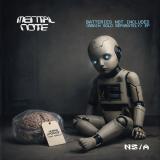
‘Batteries Not Included (Brain Sold Separately)’ EP Arrives Via No Static Automatic
No Static Automatic is proud to announce the new EP from UK Electro legend Phil Klein under his Mental Note alias. Titled “Batteries Not Included (Brain Sold Separately),” this release marks the dynamic follow-up to the acclaimed 2020 debut “Voices In My Head (Noises In My Pants).”
Few authentic Electro producers from the UK can wear the badge ‘legend’ with the same level of justification as Phil Klein, aka Bass Junkie. Active since the late 80s, Klein has tirelessly shaped his distinct vision of Electro, both as a solo artist and through storied collaborations with icons like Dynamix II, Keith Tenniswood (Radioactiveman), and Si Brown (Dexorcist). As a DJ, remixer, live act, and the driving force behind the seminal Battle Trax label, his influence is woven into the fabric of the genre.
With essential releases on labels including DMX Krew’s Breakin’ Records, Andrea Parker’s Touchin’ Bass, and Billy Nasty’s Elektrix, the Bass Junkie sound seamlessly bridges the old-school beats of Electro’s origins with a potent, borderline-industrial edge. As noted by Andy Barton of Bass Agenda: “From funky to ferocious, Bass Junkie’s discography is a must-have for anyone claiming passion for the genre – influential, individual, and infectious with every beat.”
Now, as Mental Note, Klein continues his exploration of electronic psychedelia. The new EP, “Batteries Not Included (Brain Sold Separately),” is a four-track expedition through the Electro cosmos:
“Brainwash” immerses the listener in swirling, hypnotic synths.
“They're Not Blue, They’re Purple” delivers a masterclass in crunchy, textured drums.
“Primordial Soup” showcases frantic, intricate programming.
“Kluster Funk” offers a moment of deep, sonic relief and groove.
Each track reinforces Mental Note’s signature: a journey that is cerebral, raw, and irresistibly rhythmic.
About Bass Junkie/Mental Note:
Phil Klein, operating primarily under the alias Bass Junkie, is a cornerstone of the UK Electro scene. For over three decades, his work has defined and evolved the sound, earning him a revered status among peers and purists. His Mental Note project is a focused outlet for a deeper, more experimental strand of his production genius, further solidifying his legacy as an electronic music innovator.
Budapest-based concept label, Blue Sun is launching their new line of vinyl focused releases, aimed primarily on DJs and collectors: the Blue Series. A counterpart to the Orange Series launched last year that showcases a more upbeat side of the label, the new collection presents a darker, more experimental, and introspective musical vision.
The first release in the Blue Series is a six-track EP by Budapest based multimedia artist, Virág Réti. Choosing her legal name as her artist persona (“Flower of the Meadow" in Hungarian) also with the track titles capturing the folk names of local fauna, Peremidő evokes the artist's innate connection to nature as a place of refuge from the noise of Eastern European urban life.
The EP’s motifs point back to early memories of sitting by a river, simply observing time flowing by. The arc of the songs follow the passage of a day, beginning with the hesitant sounds of early morning, gradually moving on toward more defined, rhythm-driven forms. As the airy textures slowly give way to structure and percussion comes to the forefront, the sense of direction becomes clearer, letting moments of gentle disorder and unexpected sounds to surface.
Virág previously appeared on the label’s Blue Sun VA II compilation with her track Bíbic. Since launching her ambient music project in the fall of 2024, she has become one of the promising newcomers in the Hungarian experimental electronic music scene. Her debut EP, Minden Ami Megmaradt (All That Remains), was released last November as the final offering of temporary nites label (2023–2025). She is also the founder and organizer of the Budapest-based experimental electronic event series Still Places.
With 'Tangkoa II', Belgian producer and multi-instrumentalist Dijf Sanders invites listeners into a vibrant and immersive sonic world shaped by travel, collaboration and instinct. Released via Unday Records, the album grew out of field recordings captured during a journey through Vietnam, later transformed into rhythmic, colourful compositions that feel both intimate and expansive.
Rather than building tracks piece by piece on a screen, Sanders approaches music as something alive and unfolding. Sounds are performed and reshaped in real time, giving the album a spontaneous energy, as if the music is discovering itself while you listen. Together with drummer and producer Simon Segers, he creates a fluid dialogue between electronic sounds and human rhythm, balancing precision with freedom.
Improvisation lies at the heart of 'Tangkoa II'. Contributions from Vitja Pauwels (guitar), Viktor Perdieus (saxophone) and Louise van den Heuvel (bass) bring a subtle jazz sensibility to the music, pushing it toward hypnotic grooves and unexpected turns.
The result is an album that feels warm, physical and constantly in motion. Electronic music that breathes, pulses and draws you fully into its atmosphere.
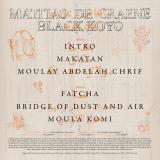
With Black Koyo, Mattias De Craene enters a sound world at once intimate and vast. Born from journeys in Morocco and Brussels, the project traces the rhythms, chants, and spirits of the Gnawa tradition, revealing a quiet resonance that echoes De Craene's own search for depth and presence. Guibri, qraqueb, call-and-response chants, saxophone, loops, and electronics come together in a trance-induced dialogue - ritualistic, elemental, and dreamlike - creating a space where listening becomes immersion, tradition meets imagination, and music unfolds as a shared act of reflection and wonder.
About Mattias De Craene
Mattias De Craene's artistic path is marked by rare coherence. As a central voice in Nordmann and MDC III, he developed a physical, rock-inflected jazz language driven by propulsion, volume, and trance-like collective energy. Over time, a period of personal rupture - burnout, tinnitus, depression - shifted his focus inward. The saxophone became a breathing, textural presence, and in his solo work, he weaves saxophone, electronics, loops, and minimal forms into a cinematic, hushed world where repetition, resonance, and silence slow perception. Rooted in ambient and introspection, his music prizes attention over impact, precision over excess - a quiet intensity recognized with a nomination as Musician for the Music Industry Awards (MIA's).
About Black Koyo
Black Koyo is a Brussels-based ensemble and one of the most compelling voices of the Gnawa tradition outside Morocco. Led by maalem Hicham Bilali, the group brings guibri, qrraqueb, and call-and-response chants to life with trance-like intensity and ritual precision. Their music is both rooted and contemporary, weaving earthbound rhythms and vocal invocations into ecstatic, immersive soundscapes, creating a space where ancestral resonance meets present-day imagination.
About Jan Bang
Jan Bang is a pioneering Norwegian producer and musician, celebrated for his mastery of live sampling and his ability to merge electronics with improvisation, rhythm, and texture in real time. He mixed the album and occasionally joins live performances, bringing his signature approach to sound as co-founder of the influential Punkt Festivaland collaborator with artists such as Jon Hassell, David Sylvian, Arve Henriksen, and ECM Records' roster. As a performer and sound architect, Bang creates immersive, trance-like sonic textures where silence and sound carry equal weight. Within Mattias De Craene ftBlack Koyo, his live sampling becomes an organic instrument, weaving saxophone, electronics, and Gnawa rhythms into hypnotic, physically charged soundscapes.
Line-up & credits
Mattias De Craene - sax, electronics | Hicham Bilali - guibri, vocals, qraqueb |Ismael Akhraz - vocals, qraqueb | Marwan Abantor - vocals, qraqueb
All tracks are original gnawa traditionals played by Black Koyo and arranged by Mattias De Craene.
Album produced & recorded by Mattias De Craene in Essaouira, Morocco and hometown Ghent, Belgium 2025.
Text by Hicham Bilali.
Mixed by Jan Bang at Punkt Studio
Mastered by Lieven Van Pee
Artwork by Marina Sviridova
Design by Benoit Van Geel
Manufactured and distributed by N.E.W.S.
Executive production by W.E.R.F. records
Supported by Flemish Government, Jazzlab, nona, HA Concerts, Aubergine artist Management,
KAAP, La Bestia (Wout Van Putten) & mdcmu.sic vzw.
2026 (c) W.E.R.F. records
- A1: Passage I (Small, Soft Feet Running Across Wooden Floors In The Morning)
- A2: Passage Ii (Listening To Lullabies While Holding Hands)
- A3: Passage Iii (Slow Days Of Togetherness)
- A4: Passage Iv (Watching You Quietly Eat An Apple In The Shade)
- B1: Passage V (Sounds From Your Rituals Playing In The Garden Near The Old Tree Which Has Witnessed Your Childhood)
- B2: Passage Vi (While You Slept, The Thought Of Not Yet Knowing How To Braid Your Hair Brought Quiet Tears)
- B3: Passage Vii (When You Learned To Stand In Your Own Light)
- B4: Passage Viii (Fifteen Years Passed And A Full Circle Moment Surrounded Us, Where The Ocean Meets The Mountains)
Passages in Time, the third album from Kasper Bjørke Quartet, traces the contours of a blend of spiritual jazz reverence and the calming grandeur of '80s ambient. Inspired by Christopher Nolan's observation that "time is the most fundamental part of our human experience," the compositions are approached as fragments of time and memory. Meditations on the elusive nature of time form the heart of the work, merging freeform jazz improvisations with cyclical synthesizer patterns that mirror its quiet undulations.
Dreamy synths intertwine with guitar, harp, trumpet, flugelhorn, saxophone, and flute, creating a spacious environment for contemplation. The music invites reflection on the choices that shape our lives and the lives of those closest to us, and on the quiet weight of our priorities within the brief span we call life on this planet. Each passage unfolds as a fleeting moment suspended in time. The subtitles hint at fragments from someone's diary, tender observations of love, parenthood, and connection. Together, the passages form a musical memoir of sorts, where memory and emotion are gently woven into the compositions.
Passages in Time does not impose structure or meaning, it reflects them, offering an open space as the instruments drift in and out of focus, tracing time's subtle rhythms and inviting the listener to infuse their own memories and meaning into these passages.
The album also marks a transformation for the Quartet project itself. Langstrakt (Claus Noreen), part of the original ensemble, continues to operate the synthesizers alongside Bjørke, while the wider constellation of contributing musicians has evolved. Strings and piano give way to flute and saxophone by Oilly Wallace, guitars by Danish ambient composer Anna Roemer, trumpet and flugelhorn by Malthe Kaptain, and cascading orchestral harp by Katie Buckley, principal harpist with the Icelandic Symphony Orchestra.
The cover painting is by American artist Marcus Leslie Singleton, courtesy of V1 Gallery, and reflects the meditative and timeless atmosphere of the music.
Passages in Time is released on Bjørke's own imprint, Sensitive Records, following the two previous Quartet albums released on Kompakt Records: The Fifty Eleven Project (2018), a debut that introduced Bjørke's ambient and neoclassical explorations, and Mother (2022), which expanded the ensemble's sound with emotive choir compositions and guest appearance by Sofie Birch (Unsound / Stroom). Together, these three albums trace a journey of artistic growth, from introspective experimentation to a fully realized, contemplative expression of time, memory, and human connection.
- A1: Intro
- A2: La Danse De L’esprit (Feat. Lalin St.juste)
- A3: Share Your Love (Feat. Nina Miranda)
- B1: Got To Find The Way (Feat. Siya Makuzeni)
- B2: Astral Vision Of Light
- B3: Africa Tribale
- C1: Galaxy Bloom
- C2: Praise To The Sunshine
- C3: Song Of Liberation (Feat. Siya Makuzeni)
- D1: The Shango Cult
- D2: Shaman’s Prophecy
- D3: Macumba De Oxala Ii (Feat. Toco)
Nicola Conte and Nico Lahs’ Tema Due project finally comes to full realization in a double LP entitled “Universo Astratto”,adding a wealth of new musical shades and ideas to the two EPs released on Schema Records in 2025. The albumrepresents not only the natural evolution of their artistic dialogue, but also a statement of intent in terms of sound.Fans of the most sophisticated and refined club music, elevated by the fusion of exquisite electronica with spiritual jazz (it isno coincidence that the opening track evokes the baseline of “A Love Supreme”), African-American rhythms and tribalpercussion, will be thrilled by this complex and multi-layered album, which unveils new hidden details upon each listen.A meticulous selection of exceptional musicians contributes in a distinctive and significant way to broadening the scope ofthe project: Giovanni Guidi, Pietro Lussu, and Dario Bassolino on keyboards, Gabriel Prado and Abdissa Assefa onpercussion, Magnus Lindgren on wind instruments and Hammond organ, and Pasquale Calò on saxophone. On vocals wehave Lalin St. Juste, Siya Makuzeni, Nina Miranda - for what is probably the best track on the album, “Share Your Love”- and Toco - for a new and previously unreleased version of the track “Macumba de Oxalà” featured on the first EP.In “Universo Astratto”, Tema Due’s vision is finally fulfilled: a world of ancestral grooves, cosmic jazz, and electronic musicconceived for clubs as a type of “active experience” in which one is transcended by music. This record is an invitation—tomove, to feel, to elevate—and a manifesto for those who see the dance floor not just as a location, but as a shared experience of awareness and rhythm
The rare and deeply funky LP "Yoga – Be An Enlightened Soul – Stay Young And Pure With Yoga"
by Osunfisan Brothers & Sisters is set to return to vinyl in an official reissue, marking the first
authorized repress of one of Nigeria’s most elusive spiritual records.
Originally released in limited circulation, Yoga occupies a unique place in many collectors grail list.
According to Mr Femi Osunfisan, the album was conceived by his senior brother and bandleader, "We
chose yoga to as a concept to channel our music, but it was not intended to practise yoga with the
music". Neither pop record nor conventional boogie LP, the album is highly sought-after for the amazing
production by the Sound master Odion Iruoje and for the heavy afro-disco workouts.
At a time when Nigerian music was dominated by Afrobeat, highlife, and disco, Osunfisan Brothers &
Sisters charted a more introspective path—using rhythm, voice, and repetition as tools for enlightenment
and personal grounding.
2026 Repress
Glaskin is the alias of two brothers, Jonathan and Ferdinand, based in Munich. The pair have emerged as key figures in the citys electronic music scene as longtime residents of the renowned Blitz Club, standing out a homegrown talents amongst its vibrant electronic landscape. Bringing a unique, forward-thinking techno style, as evidenced by their contributions to Mutual Rytms Federation Of Rytm II and III compilations in previous years, they now mark a new chapter and open 2025 in style with their debut 12 on the label, Inertia Of Motion. Each cut on the EP has been handcrafted with analogue gear, reflecting their distinctive artistic and sonic vision. The release is a direct outcome of the creative process behind their live set, which has become an integral part of the duos identity and shows a natural evolution of their singular sound.
Hush Up kicks things off with deep, rubbery and rolling techno rhythms. The drums are stripped back and laced with pulsing synth patterns and spoken word snippets that add a freaky edge. Double Tap ups the anti with classic, pumping deep techno with smart filters adding movement to the track as urgent leads hurry onwards. Inertia bring a more anxious atmosphere with tightly coiled drums and perc and eerie bell sounds ring out over the fat, twisted bassline. The brilliant Tank brings mind-melting loopy techno with dubby chords and textured leads warming their way between the beats to great effect, while Motion is suspenseful techno that locks you into a high speed groove peppered with thumping hits and kicks. Last of all, digital bonus Blushed Blue explores a moody, minimal, late night techno sound that is warm, stylish and hypnotic to close the show
Shaped from fragile, emotionally charged piano motifs that distort, disappear and transform into dense, cinematic textures, 'CANALS' is a debut that's finely matured, the result of years of friendship and growth. Italian artist Vanja Sturno and Montréal-based Belgian-Spanish composer Pablo Geeraert (aka Sanea Ima) have worked together extensively on various projects up until now, but 'CANALS' is their first official release as a duo. Having both studied music academically, the pair were eager to work more intuitively, so applied their well-honed set of skills to sound that, instead of fitting into a conceptual box, reflected more personal experiences.
Back in 2023, Geeraert travelled to Rome to support his friend at a difficult time and, during the trip, received some bad news of his own. The complicated feelings unconsciously surged through a series of delicate Ryuichi Sakamoto-inspired piano improvisations and a new project began to coalesce. They didn't realize it at the time, but once the record was finished, Sturno and Geeraert began to understand that the entire process had been a form a joint catharsis - a release of pressure. They were able to function so effortlessly and swiftly because they had already provided the space for each other to resonate emotionally and the music flowed from that point.
So the album's title, while remaining ambiguous, suggests its formation: a sequence of eight interconnected channels that feed a creative whole. On the first segment, Sturno and Geeraert's initial recordings can be perceived most nakedly, the melancholy, Satie-like phrases floating peacefully for a moment before the tranquility is agitated by stormy distortions and swelled into thick waves of harmony. The piano provides the record with its emotional anchor, offering focus and clarity as multi-dimensional noise wells up around it before inevitably dissipating, leaving gentle, unadorned sounds once again.
And the familiar instrument is reshaped into a wheezing artificial organ on the animated 'CANALS III', punctuated by percussive, tape-warped pitch fluctuations that seem to bite into its very essence. Gauzy acoustic granulations snowball into a powerful, bass-heavy crescendo on the fourth part, setting the tenor for the album's second half. But after the crushing 'CANALS VI', possibly Sturno and Geeraert's heaviest track, a brief tremolo-heavy vignette that ripples through experimental rock and ambient music's braided history, the duo clear the air with a jazzy diversion, introducing soft woodwind blasts as a palate cleanser before an epic, widescreen finale.
It's an album that's best absorbed as a whole, a vortex of ritualistic, rhythmic repetitions that Sturno and Geeraert appropriately refer to as "spiral listening".
- 1: Weight Of Words
- 2: Shadow Purposes I. Patterns Of Goodbye
- 3: Shadow Purposes Ii. Path To An Unlit Horizon
- 4: Shadow Purposes Iii. New Tectonics
- 5: Shadow Purposes Iv. The Blue Cascades
- 6: Shadow Purposes V. A Sea Lit By Stars To Swallow Us
- 7: Blood And Black Ink
- 8: Decision Tree
Christopher Tignors ,Bleeding Past the Edges" ist ein bewusster Kontrapunkt zur heutigen, von KI geprägten Musiklandschaft und stellt die menschliche Hand fest in den Mittelpunkt des Schaffensprozesses. In einem kleinen Studio voller Geigen, Stimmgabeln, Pedalen und maßgeschneiderter Software hat Tignor ein Performance-System entwickelt, das sich weniger wie eine Maschine, sondern eher wie ein lebendiges Instrument verhält. Anstatt sich auf Loops oder Backing-Tracks zu verlassen, generiert er jedes Stück in Echtzeit und fängt Klänge ein und formt sie um, während er spielt. Geigenstreichmelodien erweitern sich zu vielschichtigen Mustern, perkussive Schläge lösen sich entwickelnde Strukturen aus, und selbst eine einzelne Stimmgabel kann sich zu einem ganzen harmonischen Feld entfalten. Das Ergebnis ist ein immersiver, orchestraler Klang, der live von einem einzigen Interpreten erzeugt wird, der sich durch ein eng verwobenes System aus Gestik, Timing und Code bewegt. Jedes Element beginnt als physische Handlung und bleibt damit verbunden, was der Musik ein Gefühl von Unmittelbarkeit, Risiko und Präsenz verleiht, das sich durch das gesamte Album zieht. Auf dem Album bewegt sich Tignor fließend zwischen rhythmisch geprägten Kompositionen, die das Instrument als perkussiven Motor behandeln, und melodischeren Werken, die im expressiven Kern der Violine verwurzelt sind. Die Lead-Single ,Weight of Words" unterstreicht diese Balance und entfaltet sich mit einer narrativen Klarheit, die Tignors Kompositionsansatz widerspiegelt. Er beschreibt diese Stücke oft als ,Kurzgeschichten", in denen Melodien als roter Faden dienen und jedes Werk durch wechselnde Strukturen und emotionale Bögen führen. Der Titel ,Bleeding Past the Edges" verweist auf Momente, in denen die Musik über ihr ursprüngliches Konzept hinausgeht, in denen sich die Struktur lockert und der Klang nach außen fließt. Tignor vergleicht den Prozess mit ,einem Seiltänzer", bei dem sorgfältige Vorbereitung auf die Möglichkeit einer Transformation in Echtzeit trifft. Obwohl die Systeme streng ausgearbeitet sind, behält jede Aufführung ein Element der Unvorhersehbarkeit, wodurch sich die Musik ständig weiterentwickeln kann. Im Laufe von zehn LPs, die über Western Vinyl und New Albion erschienen sind, hat sich Tignor in klassischen und experimentellen Kreisen breite Anerkennung erworben. The Guardian bezeichnete ihn als ,absurd talentiert", während Bandcamp seine ,schiere technische Meisterschaft" hervorhob und The New York Times seine seltene Fähigkeit lobte, Computer bei Live-Auftritten nahtlos mit akustischen Instrumenten zu verbinden. The Wire lobte seine Kompositionen zudem für ihre fließenden, sich entwickelnden Strukturen. Über seine Soloarbeit hinaus hat Tignor mit Künstlern wie Rachel Grimes, Helios, Jefre Cantu-Ledesma, John Congleton und This Will Destroy You zusammengearbeitet. Sein Hintergrund verbindet verschiedene Disziplinen: Er hat einen Doktortitel in Komposition von der Princeton University, einen Master in Informatik vom NYU Courant Institute und einen Bachelor vom Bard College, wo er bei dem Dichter John Ashbery studierte. Mit ,Bleeding Past the Edges" führt Tignor diese Stränge zu einem Werk zusammen, das sich sowohl streng konstruiert als auch lebendig anfühlt - ein Album, das Performance, Körperlichkeit und die anhaltende Ausdruckskraft menschengemachter Klänge in den Vordergrund stellt.
- A1: Return Of The Knödler Show 2 52
- A2: The Frogs Of Miwa - Cho (1) 4 52
- A3: Waiting (I) 5 38
- A4: An Old Friend Passes By 3 46
- A5: Coco Bolo Strip (1) 5 25
- B1: Peace And Pipe Utopia 3 14
- B2: Unidentified Dancing Object 1 44
- B3: The Call (I) 2 41
- B4: Wenn Das Rohr Dommelt 4 03
- B5: Mariahilf (Live Version) 3 36
- B6: Watching The Shades (I) 2 59
- B7: Playing The Table Music (Ii) 2 43
- C1: Could Be Nice Too 5 29
- C2: Ox Of Inner Depth 4 51
- C3: Ymir Shows Up 3 58
- C4: Could Be Nice 5 24
- C5: Playing The Table Music (I) 4 23
- D1: Coco Bolo Strip (Ii) 4 52
- D2: Locusts Looking Like Men 5 55
- D3: Waiting (Ii) ︎ 3 36
- D4: No Stove 2 29
- D5: An Old Friend Passes By Again 3 00
- D6: Heimkehr Der Holzböcke 3 16
Black Truffle is thrilled to announce Dalbergia Retusa, an extensive double LP selection of the solo guitar music of Hans Reichel, compiled by Oren Ambarchi. Last heard on Black Truffle as one quarter of the joyously anarchic Bergisch-Brandenburgisches Quartett, Hans Reichel (1949-2011) is one of the great figures of experimental guitar music. Though perhaps lesser known than peers like Derek Bailey, Fred Frith and Keith Rowe, Reichel’s rethinking of the instrument was in some ways the most radical of all. Early on, he dispensed with existing guitars to build a series of his own that explored the use of additional strings and fretboards, moveable pickups, extra bridges, special capos, and other innovations documented in the extensive booklet accompanying this release.
Reichel was a long-term resident of Wuppertal, the small Western Germany city that became an unlikely centre of European free jazz in the late 1960s, also home to Peter Brötzmann and Peter Kowald. His solo debut Wichlinghauser Blues was an early entry into the FMP discography and began a relationship with the label that stretched into the 1990s; all the solo performances heard here were first released on FMP. As Reichel says in the charming archival interview with Markus Müller included here, he was ‘always a cuckoo’s egg at FMP’, a label that began as an outlet for roaring European free jazz. What strikes the listener right from the opening selection on Dalbergia Retusa—‘Return of the Knödler show’, from 1987’s The Dawn of Dachsman—is the extraordinary beauty of Reichel’s music, at once alien in the shimmering sonorities and unconventional pitch relationships made possible by his invented instruments, and deeply lyrical, even romantic in its harmonic content. Growing up in West Germany in the 1960s, Reichel’s formative influences were mainly British and American rock bands, a background that shines through in many of the pieces included here: ‘An old friend passes by’ is haunted by the ghost of Hendrix’s rhythm guitar, and the wild closer ‘Heimkehr der Holzböcke’, taken from a rare 1975 7” and the only piece to use overdubbing, layers errant hammer-on and slide tones over a Canned Heat boogie chug.
Reichel was an important source for the development of Oren Ambarchi’s own extended approach to the electric guitar. Appropriately enough, his selection opens with the very first piece by Reichel he ever heard, on a flexidisc included with a 1989 issue of Guitar Player magazine. Though Reichel collaborated with others extensively in many settings and also performed on violin and his other major contribution to instrument invention, the daxophone, his music for solo guitar remains at the core of his oeuvre. Focusing exclusively on solo pieces recorded between 1973 and 1988, the 23 pieces on Dalbergia Retusa showcase the range and consistency of Reichel’s work, allowing the listener to see how his performances developed hand-in-hand with his instrumental inventions. On a piece from his very first LP, played on an 11-string instrument (partly strung with piano strings and using a schnapps glass a slide), we hear his intensive exploration of fret-hammering to create zither-like, chiming tone, which Reichel would hone further in later years with a double fretboard guitar specifically designed to be hammered rather than fretted and picked. On a piece from 1979’s Death of the Rare Bird Ymir, Reichel uses two steel-string acoustic guitars at once, with beautiful results: ‘some even say too beautiful’, he jokes in the interview included here. Many of the pieces from the 1980s make use of varieties of the ‘pick behind the bridge guitar’, instruments of uncanny harmonic richness primarily designed to be played on the ‘wrong’ side of the bridge. At times the unexpected behaviour of attacks, resonance, and decay can almost seem electronic, conjuring up the technology-assisted work of Henry Kaiser or even Fennesz, but realised solely through Reichel’s unorthodox techniques on his invented instruments. Extensively illustrated with photos and Reichel’s own plans and drawings of his instruments, Dalbergia Retusa is an essential introduction to the unique world of Hans Reichel. Rarely has music been at once so strange and so beautiful.
Mood II Swing are bona fide legends of early house who fomented their own uniquely raw, dark, but soulful and swinging sound. They have got a ton of classics to their name, one of which is 1996's 'Do It My Way', which now gets reworked by a selection of talented house peers on Ira James' Vessel Recordings. The opening Andrew Macari mix keeps it deep and loopy with many original motifs left in place. The Do It Sneaks Way mix leans into the trackiness of the drums, then Joshua Iz turns up the dubby low end for a gliding groove with garage-y percussion. Nonfiction strips away some of the swing and goes for a big, driving wall of drums and Natural Rhythm offers the most playful take with wobbly synths and plenty of air in the drums.
On Y-3004, Solitary Dancer wade into the depths of their sonic palette for Y-3's Fall/Winter 2026 Presentation, an occasion marked by the sportswear label's turn into the world of motorsport, unveiling a partnership with Mercedes-AMG Petronas F1 Team. Dark, moody, and measured, the score reflects on the early era of automotive industrialization. Inspired by the factories which captured the sounds of nascent processes operating at their own rhythm, the vast physical potential of the Palais d'Iena allowed the space to further explore such repetition. The composition proved a masterful exercise in tension & restraint, ascending from hypnotic, low-end pulsations to brightly shimmering, metallic delays and a decidedly techno finale.