Dishwasher_ are the latest disciples of yet another new wave of talent in the fertile Belgian groove and jazz scene. It would, however, be a shame to limit them to the constraints of any given musical style. Ever since their formation in 2019, the Ghent-based trio have been experimenting with all possible genres to create a contemporary sound they can now rightfully call their own. With their self-titled debut album, to be released in April 2023 via Sdban Ultra, they are closing off an impressive first chapter, delivering a unique and diverse yet coherent collection of groove-driven cuts.
While labeling Diswasher_ as a jazz band wouldn’t do them enough justice, it is a fact that improvisation and a certain free approach turn out to be key in the creation and performance process of the album’s tracks. Werend, Louise and Arno specifically aim to capture their live energy and synergy on the album by experimenting with structures and textures, playing with song lengths and implementing influences from various other styles — electronic music in the first place, but as well traces from (Middle-)Eastern and Balkan music, next to dance, hip-hop and even metal.
As a result, the record tends to be a pure and honest representation of Diswasher_’s musical identity and artistic quest over the past years — both as individual musicians and as a band. Saxophones drenched in effects, diverse layers of synthesizers, a bass guitar hopping from fingerpicking licks to deep and drone-like bass tones, drums can sometimes sound like drum computers, and sometimes as subtle rhythmic chords: it’s pretty clear how deep this trio have dived to search and find something totally fresh and new.
Members of the band are Arno Grootaers, Werend Van Den Bossche and Louise van den Heuvel. Their debut album is coming out on Sdban Ultra, the innovative label of Black Flower, ECHT! and Compro Oro (among others). In 2023 they will fully focus on new talent, by signing Dishwasher_, but also KAU (formerly KAU trio) and Schroothoop. Apart from that, you can expect debut albums or EPs by LũpḁGangGang, Bandler Ching, KVR trio and Adja coming out this year. Stay tuned.
Cerca:rhythm is rhythm
Futuristic electronics by Niels Luinenburg (Delta Funktionen) under his new guise Immediate Proximity - in collab with Diana Napirelly. Ambient, Bass, Electro and Techno are the main identifiers for their output. Deep and emotive is the mood, but at the same time the music is playful and has a robust and confident character. This distinct direction, which was laid-out on the pair's debut LP '2334', has now led to the start of their own label: IMPROX - on which they'll release a series of EPs. On IMPROX, the duo experiments vivaciously with color, rhythm, space and tempo. Hi-tech, yet tribalistic rhythms are interlaced with elusive sci-fi themes. Big stage anthems are comfortably combined with cinematic ambient excursions. And through self engineered audio-gen modules, backed by a stark focus on sound design, the IMPROX series marks a powerful upgrade to Luinenburg's production capabilities.
12" + 7" !
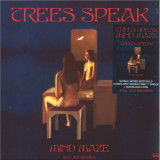
Mind Maze is, amazingly, Trees Speak’s fifth album to be released on Soul Jazz Records in the space of little over two years– an output matched only by the intensity of their music created during this short time.
The first pressing only of the album comes with a bonus seven-inch single containing two tracks that are not available on vinyl anywhere else.
As with all their previous releases, ‘Mind Maze’ is a mind-boggling tightrope walk across an array of musical influences that seamlessly create the unique present-day world of Trees Speak.
The band’s sound is characterized by a combination of German krautrock motoric-beat rhythms, angular New York post-punk attitude, 60s spy soundtracks, psych, rock, jazz, and 70s synthesizers and vocoders. There is also a cosmic spatial awareness to their sound; both personal inner space and galactic outer space, as well as a wilful pushing of sonic boundaries.
Trees Speak are a musical duo based in Tucson, Arizona, composed of Daniel Martin Diaz and Damian Diaz. Their music is heavily influenced by the cosmic magic of the natural desert landscapes of Arizona, creating a unique and captivating sound that is both experimental and innovative.
Here you will find the myriad sounds of 1970s German electronic music (everything from Can to Cluster, Popul Vuh to Tangerine Dream); 1980s New York post-punk and synthcore (from No Wave to Suicide); John Barry’s 1960s movies, John Carpenter’s 1970s horror. You will also hear the influences of French and Italian progressive rock (Magma, Goblin) as well as cosmic, new age and experimental space soundscapes …. an almost endless list of diverse influences that ebb and flow like an ocean of sound, in the process creating a truly unique soundscape that Trees Speak have made wholly their own.
The name Trees Speak reflects their interest in the concept of using future technologies to store information and data in trees and plants, with the idea that trees communicate collectively. This interest in nature and technology, combined with their passion for experimentation, has led Trees Speak to create a truly one-of-a-kind listening experience that is both unique and engaging.
If you ever wanted to hear Can, Neu!, Destroy All Monsters, Pere Ubu, electric eels, John Cage, Liquid Liquid, Tangerine Dream, Suicide, Laurie Spiegel, Art Ensemble of Chicago, John Barry, Mother Mallard’s Portable Masterpiece Company, Sun Ra, Stockhausen, John Carpenter, Electro-Acoustic and Musique Concrete and Mars in one band - then this is it! Trees Speak are a band that defies categorization and offer an eclectic listening experience, both exciting and memorable.
The two bonus tracks (‘Seraphim’ and ‘Orpheus’) included with the album give us a further window into the complex mind maze of the group - two stunning acoustic tracks that explore a distinct early 70s sound of Yes, Argent and other progressive rock accolytes.
After 6 years, label boss Ewan Jansen circles back to Red Ember’s main with a new EP.
A concept journey equally for the mind and the dancefloor that strays from his house roots with themes of mysticism pushing wider rhythm palettes and creative synthesis.
The opener ‘Solanoid’ marches over the horizon; a solid progression of sun-scorched chords, goaded by some distinctive chanting synths and driving bass.
‘Caravania’ answers as a stomping IDM-esque fable, joined by bubbling rhythms on the ground and a central writhing serpentine synth guided from high above by voices unknown.
The flip side quickly de-camps from the physical, with the organic ‘Mistik’ seeing elements of rave and tribal electronica driven by tuned kicks, sub-bass and resonant rhythms.
Lastly, a stoic tome of stone and water is left with ‘Gecko’ – a skittish chunky groove, with isolated melancholic tones that find harmony in the end.
Detroit house and techno fans with their ear to the ground are well tuned to the sounds of Brian Kage. He's shown his skills on the likes of Omar S' FXHE, Carl Craig's Planet-E and Rob Modell's Echospace. Now it is his own label Michigander where he appears with a new EP that kicks off with Taho and Kage combining forces once more. There is acid to start with next to uplifting piano notes underwritten by deep chords on the opener, 'Warehouse Vibes' then brings driving kicks and dubby techno bliss. Things step up again on 'JAX' which is a full-body workout with first pumping rhythms. This is another EP that adds to the rich heritage of Motor City musical magic.
Angelo is an LP, named after a car, featuring nine songs Brijean have crafted and carried with them through a period of profound change, loss, and relocation. It finds percussionist/singer Brijean Murphy and multi-instrumentalist/producer Doug Stuart processing the impossible the only way they know how: through rhythm and movement. The months surrounding the acclaimed release of Feelings, their full-length Ghostly International debut in 2021 which celebrated tender self-reflection and new possibilities, rang bittersweet with the absence of touring and the sudden passing of Murphy’s father and both of Stuart’s parents. In a haze of heartache, the duo left the
Bay Area to be near family, resetting in four cities in under two years. Their to-go rig became their traveling studio and these tracks, along with Angelo, became their few constants. Whereas Feelings formed over collaborative jams with friends, Angelo’s sessions presented Murphy and Stuart a chance to record at their most intimate, “to get us out of our grief and into our bodies,” says Murphy. They explored new moods and styles, reaching for effervescent dance tempos and technicolor backdrops, vibrant hues in contrast to their more somber human experiences. Angelo beams with positivity and creative renewal — a resourceful, collective answer to “what happens now?”
Angelo the car is a 1981 Toyota Celica they got off Craigslist during their first stint in Los Angeles, where Murphy and Stuart have since settled. “Such a bro-y, ‘80s dude car, it’s been super fun to drive around in a new town,” Murphy says. “He’s older than us, he’s a classic, he’s got a story.” It is a spiritual vehicle with a cinematic appeal, first dropping them off in an alleyway for the scene-setting intro, “Which Way To The Club.” The question is quickly resolved by “Take A Trip” as a cruising bassline mingles with crowd sounds, hand-claps, cuíca hiccups, whip-cracks, even a horse neigh. Brijean have found some club on this cross-dimensional trip — the kind of
imagined space or chamber within one’s self capable of “shifting a fraction of who you are,” says Murphy. They wrote the track with the simple intention to be “as free as we could be,” adds Stuart, likening the flip on the B section to a realm unlocked: ”What if the world changed completely? You open the door to a new room.”
Next is “Shy Guy,” a motivational anthem for the wallflowers among us. Murphy sets up the daydream: “We are in junior high, we’re on the dance floor, what’s going down, who is dancing, who is not, how are we gonna make them dance?” The narrator, the MC, hypes up the room as conga-driven rhythms bounce between languid synth and guitar lines. “Show me how to move...I feel something...I know you feel it too,” Murphy sings sweetly, calling back to the opening lines of Feelings, and this time the audience chants it back. It is easy to picture Brijean performing this one — something they only got to do a handful of times until more recently, opening shows for Khruangbin and Washed Out, an experience they found informative. Murphy explains, “It was inspiring to be out there and let loose more. To see how people can expand their expression on stage gave me more liberty with how I viewed my musicianship. My role for so long was to be a backup percussionist, so why would I ever leave the drums, you know? But then after playing all these runs, you see these artists and realize you can, you have permission.”
“Angelo” and “Ooo La La” deliver the danciest stretch in Brijean’s catalog to date. The title track adopts a deep house pulse replete with strings, hi-hats, and kicks. The latter opts for a funkier groove that foregoes verses in favor of warbled hums and extended breakdowns. What follows is perhaps the duo’s dreamiest run, a comedown initiated with the honey-hued interlude “Colors” drifting into “Where Do We Go?”, a tropicália reverie where Murphy contemplates the passage of time and space.
It all culminates in “Caldwell’s Way,” a fond farewell to their Bay Area community — “a part of my life that I knew couldn’t come back,” says Murphy. Above shimmering organ sounds, lush strings, and the birdcall of their former neighborhood, she wistfully articulates the uncertainty of moving on by remembering the characters dear to them. There’s the wisdom of their neighbor, Santos, who refused payment when helping them move out: “I’d rather have 100 friends than 100 dollars.” And the song’s namesake, Benjamin Caldwell Brown, a friend and club night cohort for many years. “I’m only miles away, maybe I’m just feeling lonely,” the line resigns to warm nostalgia, and “Nostalgia” runs the closing credits to this healing and transportive collection.
On April 7th electronic luminary Nathan Fake presents the new longplayer ‘Crystal Vision’ on his own Cambria Instruments imprint, which features collaborations with Clark and Wizard Apprentice.
This is music for music’s sake – recorded without angles, agendas and themes – so Fake was free to simply continue honing his craft and express himself non-literally. Aptly titled, there’s a clarity of execution and ambition, and a peak effectiveness to the record that just sounds right.
Continuing to set a personal bar higher and topping his own best, the mark of master craftsperson is everywhere, but that doesn’t mean it’s polished; There’s plenty of rawness evident, with spiky sonics keeping ears on high alert – full of endorphin-flooded rave energy.
Following a short, scene-setting ‘Arrival’ – a simple major chord arpeggio played on a Jupiter 6 which sounds like curtains opening at dawn, things begin apace with ‘The Grass’, which hurtles like a precision-tuned bullet train through Arctic tundra. The undulating effect of compression is emphasised by the classic techno trope where 2 rhythms jar yet interlock, creating an exquisitely disorientating strobe-like flutter. On the track’s guest, Fake comments, “I fell in love with Wizard Apprentice's ‘I Am Invisible’ and felt our musical styles were similar. Their vocals are smooth and clear and sharp at the same time. They’re like a calm within the storm.”
Inspired by Italo disco but sounding wholly alien and futuristic, ‘Vimana’’s fizzing buzzsaw arpeggiated bassline, popping snares and bright whirling melody are equally an electro trance melange, with an effervescent major chord Arp that kicks in midway.
Reminiscent of what used to be called ‘funky techno’ but with sparklier sounds, ‘Boss Core’ blinds like sunshine bouncing off ice. Using his trusty Boss DR550 drum machine, and inspired by Autechre's ‘Vose In’, the track peaks by reaching that melancholic/euphoric axis for which he is loved.
With chugging slow breakbeats not a million miles from Board Of Canada or trip hop, ‘Crystal Vision’ rolls along, with the melody opening up, revealing more hidden notes as it progresses, building into a fractal, kaleidoscopic mosaic.
An emotional outpouring with serotonin surging through the circuitry, classic breakbeats and layers of lazers, ‘Bibled’ has all the hallmarks of a classic. This is a bonafide festival-set closing, hugging-your-mates, moment – or, with its guitar solo, “a power ballad” – as Nathan calls it.
A minimalistic moment of calm midway through the album, ‘CMD’’s gently comforting dreamscape is conjured with FM stacked and detuned sine waves which are left to breathe, whilst the chunky Chicagoan house jack of ‘Hawk’ brings to mind classic Relief records, but even more detuned and wibbly, and laden with synths.
As the title suggests, ‘Amen 96’ is in Fake’s own words, “me having a go at jungle. I grew up listening to it, and I remember as a teenager it sounded like the most intense and otherworldly music ever. It still does. This track is an experiment to see how my melodic style works against amen breaks”. Closer to the braindance end of the spectrum than ‘proper’ jungle (and all the more interesting for it), Fake channels the spirit of Squarepusher but makes it his own, brimming with melodious twinkle.
A collaboration with Nathan’s close friend and genuine musical hero Clark. ‘Outsider’ finds this dream team alchemising pure gold that’s bigger than the sum of their parts. Skittering, intense, far-reaching end epic, the pair close proceedings on a grandly dramatic note. In 2020 Nathan released the album ‘Blizzards’, which was described by The Quietus as “his best work”, and “his best LP yet” yet by Resident Advisor. The equally well received ‘Blizzards Remixes’ EP which featured Afrodeutsche and Irene Dresel followed in 2021, as did a nationwide UK tour.
An in-demand remixer, Fake has added his magic to tracks by Radiohead, Clark, Perc, Jon Hopkins, GoGo Penguin, Dominik Eulberg, Christian Löffler and Damian Lazarus, working for labels including Ninja Tune, Domino, Warp, Blue Note and Kompakt.
Free-roaming French techno talent Angioma lands on Lady Tazz's Mind Medizin with a new single that comes remixed by the legendary Kaiser, Fixon and Toru Ikemoto.
Angioma does it all from peak time and hypnotic techno to jacking house, all with his own signature exotic twist. He is currently Berlin-based and has released on Made of Concrete, but also co-runs with BLANKA the Room Trax label and Room Lab, contemporary local art and networking space. With increasingly high-profile sets in clubs like Egg London and Anomalie Berlin, Angioma is an ever more crucial part of the modern techno landscape.
The brilliant 'Unusual Suspect' is darkly seductive with its high-pressure techno rhythms and silky synth lines. Pulsing keys bring late-night hypnosis, and the icy hi-hats draw you in further to this shadowy and tunnelling groove. It's a warm, Mills-inspired sound that is stylish and dynamic.
The A Side also features a heart stopping Detroit infused remix courtesy of Mexican based Fixon (part of the Illegal Alien crew). On the flip and Gianluca Caiati aka Kaiser has been tearing up the techno scene for 15 years. His superb remix pairs things back but the pummeling, rubbery drums remain the focal point as whip-snapping snares lash about up top, incendiary hi-hat pressure grows, and the sleek synths intensify the trip. Finally, Japanese Techno hero Toru Ikemeto delivers an off-kilter slice of driving take on the original.
DJ Eddie Fowlkes created the techno genre alongside Derrick May, Juan Atkins and Kevin Saunderson. Now the 'Godfather of Techno Soul' uses his extensive knowledge and experience to create a dynamic wax release drenched in Motor City inspiration - this four-track vinyl package is both a love letter to his musical roots and an inspired representation of the left-of-centre house that Classic is known for. For the lead track, 'AHYEE', Eddie carves out his own sound in a low growl as distorted percussion whirs over a four-on-the-floor beat. 'Blow' goes tougher, with an undulating bass that adds a wonky unease to the rhythmic kick and syncopated decoration. On the B-side, ‘Talking To Me’ makes use of a distinctive spoken-word vocal over an expansive and rhythmically intricate accompaniment, celebrating the culture through expert sampling and production techniques, whilst ‘Complex’ is more beat-focused with driving synth rhythms. Coming from producing some of the first techno records nearly 40 years ago, unique releases like this continue to prove Fowlkes' status as a constant innovator, and his ear for house music is undeniable.
Two years after their previous effort, regular as clockwork, Swiss throbbing synth pop duo Veil Of Light is back with a new album and what can we say? These guys keep on getting better and better.
If you have followed the Zurich-based outfit over the past few years, you must have noticed the constant moving towards 80’s FM new wave and synthpop tones – without losing their electro/body music outline – that have marked the band’s parable, especially since their latest Landslide LP.
Sundancing is their sixth full-length and it stays the course, bringing what we’ve just said to the next step. Nine new dancy and bright tunes with emotional depth that blend lush instrumentation and robust rhythms, guided by funky and rubbery basslines. Syncopated rhythm sections match suburban cool synths in the lead single Apricot Kiss and Hypersleep, while Raindancing and Tonight summon a sinuosity long gone since the mid Eighties. The musical backdrop here serves as the fundament for emotional vocals delivering lyrics dealing with the fragility of love, joy and loneliness.
There’s some subtle addictiveness to these songs, one that will gently grab you by the collar of your coat and stick the refrains from Sundancing inside your head for good.
Veil Of Light might make it look easy to keep it neat without being minimalist, intimate without being depressing, romantic in the most true sense of the word, but we know that’s possibly the hardest thing to do.
Hot on the heels of their sophomore release with DJ Rocca, Cyphon Recordings welcome Tijuana’s Cyborg Nerve to the family for the third installment in their busy label schedule.
A new project helmed by the Cedillo brothers - also known for their work under the monikers Soul of Hex and Mano De Fuego - Cyborg Nerve’s sound tips the hat to the roots of Detroit electro and techno.
The Vicario Musique Recordings bosses have already made a mark under their Soul of Hex alias, pushing their cosmic, vibrant take on deep house. It’s caught the ear of labels and artists across the world; the likes of Delusions of Grandeur, Freerange Records and Quintessentials have shared their music and they’ve even earned the Larry Heard seal of approval, with the legendary Chicago producer stepping up to remix their 2014 track ‘Lip Reading’. As Mano De Fuego they’re also getting their music into the hands of pioneering figures in the American dance music scene - summer of this year saw them release a shamanistic debut via the inimitable Underground Resistance.
For their debut outing as Cyborg Nerve, the pair deliver four tracks of old school electro grooves. Title track ‘Cristalizacion’ kicks things off. A slice of intergalactic electro; celestial pads soar above warm bass and staccato drum rhythms. Their eponymous track follows and takes the energy levels up a notch: a warbling bass line drives the track forward, whirring and revving while crisp hats fizz overhead.
‘Tijuana 3000’ is another cut that's custom-made for the dance floor. As with the title track, the duo call to mind the interstellar jazz-tinged electronics of Detroit outfit Galaxy 2 Galaxy, as they pair cosmic twinkling melodies with a hypnotic acid line that takes centre stage. ‘Machine Effect’ brings the EP to a close. Like its name suggests the track is powered by a raw, machine funk groove and precise drum programming - no bells and whistles, just pure cosmic vibrations to move your body.
- A1: Golden Skies (Feat Lydia Waits)
- A2: It's Never Late In Neon Signs (Feat Lydia Waits)
- A3: Fake Fur (Feat Helle Larsen)
- A4: Hold That Thought (Feat Helle Larsen)
- A5: Sandcastles (Feat Helle Larsen)
- B1: Today's Tales Of Tomorrow
- B2: This Kitty Got Claws (Feat Helle Larsen)
- B3: Rhythm Cast A Spell On Me (Feat Lydia Waits)
- B4: Not Supposed To Be Me (Feat Lydia Waits)
- B5: Let's Stay Right Here (Feat Helle Larsen)
Beatservice Records are beyond thrilled to announce the arrival of Kohib's hotly anticipated studio album 'Today's Tales Of Tomorrow'.
DJ, producer and club organiser Øivind 'Kohib' Sjøvoll has been in truly dazzling form of late, serving a series of mesmerising singles that served as a tantalising taster to his latest album – the third he's crafted for Beatservice. Actively producing immaculately crafted sounds for over two decades, sonic alchemist Kohib continues his deft aptitude for sculpting genre-defying compositions, with 'Today's Tales Of Tomorrow' playing host to some of his most compelling material to date. From pitch black introspection to rousing dancefloor abandon, the album is every bit as far-reaching as we've come to expect from this singularly talented artist.
The collection bursts into life via the club-focused thrust of 'Golden Skies', featuring the seductive vocals of enigmatic songstress, Lydia Waits, whose stirring performance shines like a beacon as it soars over Kohib's slick four/four groove. Crisp drums drive the hypnotic rhythm over a subaquatic bass line, as icy pads and pitched synth percussion combine to stunning effect, effortlessly building to Waits' rousing chorus section. Subtly shifting the mood, we arrive in the heads-down throb of 'It's Never Late In Neon Signs', where glistening arpeggios and snarling bass caress Lydia Waits' honeyed vocal, the pristine instrumentation undulating over a mesmerising, radio-friendly arrangement.
'Fake Fur' arrives with deliciously brooding intent, with (Kohib's High Heeled Giants bandmate) Helle Larsen's bewitching vocal gliding over immersive instrumentation and otherworldly textures. Evocative harmonics combine with ethereal synth leads and dramatic aural waves, the hypnotic percussion gently driving the groove deep into the half-light of a crisp autumnal haze. Next, 'Hold That Thought' mischievously switches the rhythm, as thick sub bass and searing synth motifs power over broken drums while Helle Larsen's affecting vocal rises from delicate verse into dramatic chorus bursts.
'Sandcastles' once again sees Helle Larsen grace the stage, lacing waves of cinematic pads glide and live bass as scattered percussion forms an alluring rhythm. Sparse and precise, the evolving music ebbs and flows as the tides, gorgeously caressing Larsen's emotion-rich vocal as she weaves her seductive lyrical metaphors. The album's title track 'Today's Tales Of Tomorrow' sees sinister lead synths exploding over deviant bass as the pulsating rhythm drives the cut through distant vocals, the low-slung groove proving magnetic as the nocturnal melody works its magic.
The tempo rises rapidly, with the pounding bass arpeggio of 'This Kitty Got Claws' purposefully marching through cascading synth textures, euphoric chords, and self-assured lead vocals. Expertly displaying his expansive production finesse, the rhythm once again switches as we sashay into the utterly bewitching 'Rhythm Cast A Spell On Me', with Lydia Waits' indelible vocal providing a profoundly atmospheric moment. A sublimely constructed bed of neatly woven keys, xylophone strikes and haunting bass clarinet elegantly embrace the ethereal lead vocal.
The mystical melodies of 'Not Supposed To Be' echo over a misty woodland landscape, with Lydia Waits' unfeigned vocal flowing over jagged synth textures and gently broken rhythms, before Helle Larsen returns with the sensual swansong 'Let's Stay Right Here'. Sumptuous keys shimmer over a steady tempo, with warm bass and sugary melodies supporting the intoxicating lead vocal for a gorgeously heartfelt finale.
Vividly illustrating Kohib's unthinkably vast sonic repertoire, 'Today's Tales Of Tomorrow' looks set to further enhance the Norwegian producer's already glowing reputation, with each exquisitely-formed track combining to create a collection that's at once powerfully memorable and profoundly coherent.
- A1: Intro (Pan Dynamit) (Pan Dynamit)
- A2: Get Wicked
- A3: Untitled_Raw
- A4: Doom Majesty
- A5: Metro Redneck
- A6: Czarne Buty
- B1: No Melody
- B2: Prune
- B3: Bouncers (Rework)
- B4: Sogood
- B5: Rock Da Rhythm
- B6: Talkin' About
- C1: Sunra Prisoner
- C2: Msb (Shorty) (Shorty)
- C3: Rock Steady
- C4: C-Mon Drummer
- C5: Bum Bum Clap
- C6: Park Jammin
- D1: Street Donuts
- D2: Cts
- D3: Sixfeetdeep
- D4: Half Amazing
- D5: Szmal
- D6: Last (Heroin Song) (Heroin Song)
Metro is one of the most recognized underground rap producers. He has already collaborated with Guilty Simpson, Wildchild, MED, Oh No, Rakaa, DJ Babu and Percee P to name just a few.
The album "Blunted Fusion" 2LP is his most refined album. This time without guests - only sophisticated samples, cuts and fat beats.
Plus amazing graphics designed by SewerX. This is the most beautifully released album in the 21-year history of JuNouMi Records.
El Choop makes a welcome return to Echocord this March with the ‘Closing Motif’ EP, Deadbeat and Luke Hess step in on remix duties.
Harvey Jones, better known to most as El Choop, is a London based producer and DJ most notably known his Dub leaning House and Techno output for the likes of Greyscale, Ornate Music, Ranges, Etui Records and of course Echocord where he returns here following the 2021 ‘Insane Sends’ EP.
Leading the way on this new project is the original mix of ‘Faith’, a six-minute journey through cascading dub stabs, fluttering low-end pulsations, dynamically evolving percussion and intricate nuance throughout. Deadbeat’s ‘In The Chapel Dub’ mix of ‘Faith’ follows next, stripping things back to a swaying, heavily dubbed out feel via heavy sub bass swells, a bouncy rhythmic drive and echoing elements of the original composition. Title-cut ‘Closing Motif’ is up next on the b-side, employing a murky, plucked bass melody which ebbs and flows around hazy atmospherics, rattling hi-hats and muted drums. Luke Hess then steps in on remix duties for ‘Closing Motif’ to round things out, the Detroit native delivers a typically classy interpretation, taking the core of the original and twisting it into an IDM tinged cut via crunchy broken drums and shimmering synth textures.
After the recent Experiments re-issue with 90's off-style unclassifiable tracks composed by the legendary Dub producer - The Disciples - Androo (NS Kroo) sets out to re-create and freely adapt this material. The fact that Sound Metaphors chose Androo to re-construct these works in to new material is not random. Androo has been producing Dub since he was a teenager but he quickly turned to all kinds of musical experiences, mixing styles and influences. Once past the intimidation of working with material from one of his favorite and revered producers, Androo tried to pay homage to the free spirit that this Disciples album contains. Between reference and irreverence, the album is woven with a playful, DIY, and also serious weave. As you listen, a sometimes very harmonious and controlled landscape takes shape, then suddenly steep slopes and raw ridges appear. Almost like an art of sound drawing. A line in permanent oscillation between supposedly antagonistic registers. Danceable pieces cut for dancefloor brush against strange, problematic, and voluntarily irrecoverable elements. Consensual pop chords rub shoulders with sizzling blurred contours and sounds that are sometimes too loud. 4/4 rhythms get jackhammered out of the tempo with opulent delay effects. The “Dubmix” is here, constantly at work. It is, above all, an art of the hands, fingers handling the console which from then on becomes an instrument in its own right - for Androo Dub is experimental music.
repressed !
From samba and bossa nova through to baile funk, with carioca expressions of jazz, rock and hip hop in between, the sound of Rio de Janeiro, while continually evolving, has always held an unnameable quality which reflects the magic and mystique of the city itself. Multi-instrumentalist and arranger Antonio Neves is the city’s newest trailblazer: the enfant-terrible of Rio’s music scene, leading a vital and diverse constellation of both emerging and well-known artists advancing the city’s musical legacy.
“It all started one sleepless night, after watching a Quincy Jones documentary”. Inspired by the legendary music magnate, Neves began writing a list of artists residing in Rio de Janeiro “people that I admire, that I consider geniuses of their instruments, who share with me affinities, anxieties and projects.” The list included some of Brazil’s most revered living musicians who Neves has worked with in recent years: Hamilton de Holanda, Leo Gandelman and Dorival Caymmi. Neves also called on some of Brazil's most exciting emerging talents including Alice Cayymii and Ana Frango Eletrico.
A Pegada Agora É Essa (The Sway Now) is Neves’ second album: a vibrant portrait of the current Brazilian music scene. From the regional to universal, popular to erudite, samba to rap, Latin rhythms to jazz, MPB and pop to good old rock'n'roll, Neves walks with fluency and mastery amongst all the musical genres that Brazil has to offer.
“My offer to the musicians was complete freedom to express themselves through the songs I proposed – classics like “Summertime”, “Luz Negra” and “Noite de Temporal”, and compositions of my own – creating a space of authorship for the band and the guests. A space for inventions, purges, delusions, laughter. The idea was to bring the freedom of jazz crossed by Brazilian rhythms, such as the traditionals Partido Alto (A Pegada Agora É Essa) and Jongo (Jongo no Feudo and Luz Negra); rhythms of African-Brazilian religions like Candomblé (Noite de Temporal) and Umbanda (Forte Apache); and a tribute to newest Rio de Janeiro’s contribution to Brazilian music, the Funk Carioca (Simba)”.
Coming from a musical family, Antonio’s father, Eduardo Neves, was a renowned conductor and a professor at Juilliard School of Music and the California Jazz Conservatory. In the bohemian neighbourhood of Lapa, aged 14, Antonio began his career as a drummer, before experimenting with brass. He would soon become a skilled trombonist and arranger achieving the recognition of his teachers and peers. It wasn’t long before he would be playing with some of the biggest names in Brazilian music, such as Hamilton de Holanda, Leo Gandelman, Moreno Veloso, Kassin and Elza Soares.
His debut album as a trombonist was PA7 (2017, Rock It), released at the same time he was travelling the world playing with artists like Moreno Veloso, Kassin and Leo Gandelman, and recording the albums Jobim, Orquestra e Convidados (2017, Biscoito Fino), with Mário Adnet and Paulo Jobim; and Elza Soares Canta e Chora Lupi (2017, Coqueiro Verde Records). More recently, Neves was the arranger for the acclaimed Little Electric Chicken Heart album, by Ana Frango Elétrico, which has been nominated for a Latin Grammy and voted 2019’s ‘Brazilian Music Revelation’ by The Art Critics Association of São Paulo.
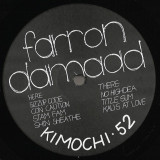
The talented producer and sound designer that is Farron is an artist also known as Lachriz, Quiem and Twuan and has made notable moves on Forbidden Planet, Renascence, and his own Shaw Cuts label. The good folk at Kimochi sign up his widescreen sounds here on a gorgeous 7 track 12" that mixes up plenty of slick techno & ambient styles. There are spacious and jittery rhythms with moody ambient pads, immersive and beatless dreamscapes, dubbed out rhythms and body-popping broken beat workouts with war undercurrents of sub-bass. It's a stylish record that is captivating throughout and looks as good as it sounds with its hand-sprayed sleeve.
In 1975, under the oppressive air of military dictatorship in Brazil, brothers Lelo and Zé Eduardo Nazario invited bassist Zeca Assumpção to join their musical experiments in a basement under Sao Paulo’s Teodoro Sampaio Street. As teenagers, the trio had already been playing together in Hermeto Pascoal’s Grupo, alongside guitarist Toninho Horta and saxophonist Nivaldo Ornelas, and it was while working together under Hermeto’s direction that the Paulista rhythm section (as they were then known) began to realise their own potential.
With many nightclubs and venues closed in the mid-70s and government censors dictating the output of radio, TV and art galleries, many Brazilian artists fled during the years of dictatorship. But underground, Grupo Um were fusing avant garde ideals with contemporary jazz and Afro Brazilian rhythm; making phenomenally free and expressive music - in stark contrast to the sterile, conservative conditions being imposed above ground.
Just like Hermeto Pascoal’s Viajando Com O Som from the following year, Starting Point was recorded over two days at Vice-Versa Studios, by revered engineer Renato Viola. The studio was one of the best in Sao Paulo and musicians communicated with engineers through cameras and a monitor, allowing the group complete immersion in the process. They also made use of the studio’s hemispherical tiled room, which served as an acoustic reverberation chamber.
The album begins with Zé Eduardo Nazario’s thunderous drum solo on “Porão da Teodoro”, before clearing the clouds with the lone Berimbau which opens “Onze Por Oito”. Built around a hypnotic electric bass line, heady Fender Rhodes improvisations, and more rip-roaring drums, it’s a rapturous, electrifying freak-jam in 11/8.
Like some invertebrate deep-sea curiosity, the free-form “Organica” is made up of Lelo Nazario’s playfully eerie prepared piano, with Zé Eduardo’s percussion flurries darting around Assumpçao’s double bass. The equally non-conformist, percussion-only piece “Jardim Candida” features many of Zé Eduardo’s home-made instruments, including a long saw blade played with vibraphone sticks and violin bow. While working with Hermeto, Zé Eduardo famously built his own all-in-one percussion set-up known as the “Barraca de Percussão” (Percussion Tent) - the first of its kind in Brazil, which he would also use on Hermeto Pascoal’s Viajando Com O Som and throughout his career.
“Suite Orquidea Negra'' (Black Orchid Suite) was written by Lelo Nazario as the score for an imaginary movie - the story of a rare, black orchid which produced a substance meant to cure all diseases, but which had mysteriously disappeared from the laboratory… “As a screenplay it’s not very good” reflects Lelo in jest, “but the music ended up being very interesting, the way its parts are chained to one another carries a little of the mystery I imagined for the movie.”
The album closes with the triumphant “Cortejo dos Reis Negros” (Procession of Black Kings) - a groovy variation on the Maracatu rhythm, with a two-note bassline underpinning piano improvisations, exultant wordless vocals, cuicas, slide-whistles and a very special guest appearance from Zé’s dog Bolinha.
Starting Point was to mark the inception of one of Brazil’s most daring instrumental groups. Their debut now sits in the lofty echelon of otherworldly 70s Brazilian music, alongside the likes of Marcos Resende & Index’s self-titled debut, Cesar Mariano & Cia’s Sao Paulo Brasil, Azymuth’s debut and indeed Hermeto Pascoal’s Viajando Com O Som. But just like all of those titles, which were either shelved or largely ignored at the time, Grupo Um - so radically ahead of their time - struggled to find a label to release their debut album. So Lelo kept the tapes safe in his archives, which is where they sat for almost half a century. Finally, almost fifty years later, this mesmerising piece of history is here, and it was only the beginning...
Grupo Um’s Starting Point will be released by Far Out Recordings, on vinyl LP, with an insert featuring unseen photos and liner notes by the Nazario brothers, as well as a CD on 17th February 2023.
There’s more than a hint of ambition on the double LP sophomore effort from Sam Austin Rabede, the producer known as DJ Black Low. Pretoria, South Africa-born and based, the young man makes amapiano with new ways of expressing this local turned-global style of dance music.
In DJ Black Low’s musical imagination, the songs manage to smoothly vacillate between dreamy and firmly-grounded. Adorned with vocalists across most of the twelve tracks, there’s a new dimension to Black Low’s now-signature approach to abstract, angular deconstruction of the rhythmic developments in his songs.
The album references influences and ambitions in its song titles and lyrics while the music itself is anthemic in its sonic and structural aspirations. On many of the songs a slow-burning tension transforms into something unexpected until you’re somewhere else as the track concludes. There is an emotional and compositional maturity that builds on his earlier work. Vocals and lyrics are in focus.
Production collaborators among Black Low’s Gauteng Province circle add to the constantly churning array of ideas that populate this consistently surprising release. Despite being a relative newcomer, DJ Black Low is onto something here.