Born in 1989 in Bamako, Mali, Nfaly Diakité is a member of the Donsow, Bambara animist hunters. Nfaly Diakité is named after his grandfather, the late Nfaly Diakité, one of Mali’s most respected donso chiefs. His grandfather did not play, but as a leading figure in the donso brotherhood, he was always accompanied by musician Yoro Sidibé. Nfaly grew up alongside Yoro Sidibé, who became his first master of the donso ngoni, a type of eight-stringed antelope skin harp. After leaving school to devote himself to his instrument, Nfaly continued his apprenticeship with Diakaria Diakité and Oumar Sidibé, two donso masters from the Wassolo region.
He quickly made a name for himself in the donso community and was much asked to play at the traditional ceremonies of his brotherhood. He then met percussionist Ibrahim Sarr and joined the BKO Quintet, with whom he recorded an album and toured Europe and the United States. His virtuosity on the donso ngoni soon attracted attention, and he took part in numerous music and dance festivals in Mali and abroad, with the aim of raising awareness of this little-known traditional instrument.
Nfaly Diakité is also a Kônô, meaning that he is responsible for passing on the history and culture of the Bambara people through music and song. He pursues his mission by combining tradition with more contemporary sounds and by collaborating with artists from a wide range of musical backgrounds. For him, music is a means of conveying messages of peace, love and harmony, and his compositions evoke the values of respect, tolerance and open-mindedness.
‘Tribute to Toumani Koné’ is Nfay Diakité’s first solo album, recorded in Bamako in June 2020. On the album, Nfaly is the only singer, providing backing vocals and playing the donso ngoni and keregne. The album is a tribute to the storyteller and poet Toumani Koné, the greatest donso ngoni player since N’gonifo Bourama. Nfaly Diakité is a representative of the new generation of donso ngoni players and he wishes to pay tribute to Toumani Koné, who throughout his long career has been a symbol of courage, daring, loyalty and honesty.
The nine-track of this solo album leaves no room for hesitation. Three instruments (donso ngoni, voice and keregne) manage to carry one into another dimension without ever tiring. The fitting and precise rhythm is a deep but melodious transe. Nfaly’s voice plays between expressive urgency and calm wisdom, and the choruses with his own voice multiply the planes of dimension of the music. The donso n’goni, of which Nfaly is an excellent player, sounds rough and earthy but always clear and sharp. All the strength of a music that does not belong to a single musician but to a long cultural tradition of which he is the spokesman is expressed here. The young Nfaly, thanks to his experience and sensitivity, succeeds on his own in pushing us into this world without feeling the weight of tradition but only the liberation of music that sounds all the more contemporary. This album is to be listened to in its entirety as one tight journey between repeated formulas, highlights and moments of rest within the same relentless rhythm. The densest moment is probably found in the heart of the album, between the tracks Nankama (the predestined one) and Mogote Diabeye (no one can please everyone). Here, the message, which can be deciphered from the translation of the lyrics, seems to transcend language barriers and intepret us directly about our human condition, urging us to move our bodies to the dense rhythm of life.
Search:rhythm is rhythm
The album SATO was made by the Ukrainian Crimean Tatar pianist and composer Usein Bekirov.
SATO was created during the difficult wartime for Usein’s motherland Ukraine and for the author himself.
Despite circumstances, the compositions of SATO express the ideas of the beauty and revival of Ukrainian music, a part of which is Crimean Tatar folklore.
The uniqueness of the release is caused both by the concept of the album and by the performers' star crew.
The jazz sound of the compositions of SATO is directed to the stylistic course of ethno-jazz and world music.
Rhythms and melodies of colorful Crimean Tatar folk music became the main source of inspiration in the creation of the album.
We can find both Usein's original author's themes, skillfully stylized to the oriental sound,
and referenced to the classic jazz vocabulary in its juicy riffs and grooves with features of fusion and funk music.
The name of the album reflected the inheritance of generations through music.
Sato is not only a folk instrument but also the name of the first Crimean Tatar jazz band, which made the first jazz arrangements of Crimean Tatar songs.
The music of this band became the basic musical experience of Usein Bekirov, because one of the members of the group was his father Riza Bekirov, to whom the album is dedicated.
The author and producer of the album is Usein Bekirov - Ukrainian pianist, composer, arranger, sound producer, and author of music for a number of films and theater performances.
Usein Bekirov cooperates with both foreign and Ukrainian musicians of the highest rank.
This is evidenced by the participants of the album Sato: Dennis Chambers, Randy Brecker, James Genus, Mike Stern, Ada Rovatti (USA), Hadrien Feraud (France), and Cenk Erdogan (Turkey).
Each performer reinterprets the author's material of Usein Bekirov through the prism of his own experience, character, and manner of performance, which was expressed in the daring stylistic combinations within a jazz style.
A special role in the creation of the album was taken by the participants of the recordings, especially, legendary jazzmen Dennis Chambers, Randy Brecker, James Genus, Mike Stern.
Their ideological and creative support became an important part of the creativity process.
Musicians expressed their impressions in small addresses for the audience.
One of the reviews of the musicians:
"The process of recording compositions was really exciting! This music reflects Usein's national origin and sense of his native culture.
It is full of real emotions. Actually, this music is quite difficult, but it is very well written and produced!
I sincerely hope you will notice this album, which also took part in Dennis Chambers, James Genus, Mike Stern, Ada Rovatti, and others.
I think it's going to be a really special album, can't wait to hear the final version.
When you hear about the premiere, I highly recommend listening to this new album created by Usein Bekirov.
It will be great!" Randy Brecker
Get ready for a fresh approach into Indonesia's mysticism through GUNAGUNA by Abadi Records. This EP is strongly built on world music rhythms and obscure samples. Enchanting and atmospheric melodies that have 80’s horror movie feel blend with 90’s electronica and vintage Indonesian musical instruments/chants/spokenwords. Each track is designed to deliver a touch of house and is executed in a progressive style.
As a debut, Abadi Records presents LMS, Munir, Haydr, Satta Fire, Herta, and Aldous for the first series of GUNAGUNA. The record is made via a collaboration with La Munai Records; containing six original tracks which aim to set mood in the club and bring vibes to the digger's living room.
Imagine a nocturnal rendezvous between the lyrical playfulness of Serge Gainsbourg and the infectious yet smooth danceability of Daft Punk. Tormento is a sexy soft disco odyssey that weaves a contemporary fantasy where dilemmas and desires—torments of the heart and flesh—are bathed in the sultry glow of classic erotic cinema.
Recorded in Los Angeles and Paris, the song is a collaborative effort between composer and multi-instrumentalist Louis Fontaine, DJ and music supervisor Alix Brown, and lyricist and writer Margo Fortuny. This sonic tale of longing and uncertainty, ignited by the trio's shared love for 1970s sounds, cinema, and style, draws inspiration from the cinematic soundscapes of François de Roubaix and from French and Italian chanson.
Tormento pairs a haunting, nostalgic melody with a late-70s disco arrangement featuring a mix of vintage synthesizers, driving basslines, and rhythmic percussion. Alix Brown's ethereal vocals convey the electrifying thrill of an immediate, magnetic attraction.There's seduction, mystery, the poetry of a moment, the allure of transgression, indecision, and all the things that happen late at night. When faced with temptation, what do you do? Perhaps, yousurrender to the sweet, intoxicating rhythm of the forbidden.
Adance song for night owls, loners, and romantics, Tormento is out on 7" and digital on February 14th, 2025, courtesy of Four Flies.
Legendary French DJ and producer The Hacker debuts on Radio Slave’s Rekids with the ‘Laser & Smoke’ EP on 21st February 2025. The two-track ‘Laser & Smoke’ EP harkens back to The Hacker’s early 90s roots in Detroit-inspired Electro & Techno. First, he starts with ‘Turborave’, a tasteful, bleepy cut with an unignorable bassline and muted dub chords that wash over its snappy groove. ‘Turborave’ is the kind of heads-down, lose-yourself dancefloor moment for the later hours before ‘Harmonia’ sees The Hacker play with high-voltage cables on the B-side. Charged-up zaps and zippy acid call and respond while bodied drum hits keep the rhythm moving, whistles and pads occasionally joining in.
Pioneering DJ and producer The Hacker is renowned for being a leading proponent of Electroclash in the early 2000s, his Techno and EBM-infused sound, and iconic collaborations with Miss Kittin. With releases on labels like Dark Entries, Mannequin Records, and Turbo, as well as remixes for Air, Soft Cell, Dave Clarke, and Front 242, The Hacker remains a vital force in electronic music. He now adds Radio Slave’s Rekids to his extensive discography for the first time via the ‘Laser & Smoke EP.
Radio Slave’s Rekids was founded in 2006 and has since spawned successful offshoots with the Techno-focused Rekids Special Projects in 2017 and its newest sublabel, REK’D, in 2024. With Matt Edwards as the sole A&R, Rekids has been crucial in developing early artist careers and has become a haven for established acts operating in House and adjacent genres, having recently featured the likes of Harry Romero, Hilit Kolet, William Kiss, Bushwacka, Mathias Kaden, Tiger Stripes, Tal Fussman, and many more.
Define: Global Bass Culture. What initially started out as a remix request from the South African Sneja Recordings label for a tune written by Colombian artist Juan Diego Pedroza a.k.a. Iam JDP ended up as the second limited edition vinyl release on the German underground label Freebreakz.FWD. Embracing influences from Chicago's Footwork x Juke sound as well as UK Bass Music, IDM and other electronic subcultures Sascha Müller and baze.djunkiii deliver a sparse, tense and wildly hypnotic take on the 160 bpm freeform movement, continously fusing and layering intermingling rhythmic patterns with ethereal vocal snippets, Trap- and Drill-infused hi-hats, an ever floating minimalist synth motif and deadly low end attacks for some of the most advanced dancefloors out there. This is crime scene music. Mastered by Frederic Stader.
Since launching her own club night, “Motivation,” back in 2018, B.AI has played a key role in bringing the underground’s club sounds to her home country, China. While introducing some of the scene's most exciting artists to her local audiences, she emerged as one to look out for as well: first as a DJ and quickly thereafter as a producer. Her original takes – a sensitive, highly personal approach to melody and a knack for playing with expectations – crystallized in a slew of A+ releases and a couple of international tours. This trajectory, shaped by taking matters into her own hands and self-empowerment, now sees a logical next step, with the inception of a label that will also operate under the “Motivation” banner and features her own “Hope” EP as its first release.
Sparkling mallets, with synth-pop quality catchiness, open the title track. Rather than further evolving, their two-bar arrangement gets looped over and again, serving as the foundation for a slick FM bass rhythm and a variety of hooks. Although these incline to the bright, the overall vibe is melancholic. In vintage B.AI style, the aptly titled “Hope” is more ambiguous than its patches suggest. Similarly, the vocal this type of palette would call for ultimately comes in the form of aloof, covert musings. A bit buried in the mix, they are most efficient – just like the tension that keeps brooding underneath the surface.
“Murderbot Diaries 1991” turbocharges four-to-the-floor synthetic drums with an arpeggiated rolling bass. The blue note melody on top feels sequenced via a pocket calculator, and the dissonant, electroclash-reminiscent stabs that follow might sound even more angular. The tune is frantic, sinister – and perhaps above all tongue in cheek. It reaches fever pitch with the arrival of a tubular bell theme between the two breaks.
“Once”’s slomo cutoff modulation on the 16th note mid-bass instantly creates a sultry atmosphere that meshes greatly with the pastel cool of the gently delayed DX7 leads. The energy drifts between effortless control and uncertain outcome. These contrasts are amplified as the drums alternate amidst moderation and beat-repeat rendered havoc.
On “Only We Know,” a progressive sine lead lays out the central motif. Yet as briskly as it appears, it makes way for detuned, gliding square waves taking on the same theme. This outlines the track’s structure: as slightly morphed repetitions keep getting introduced almost haphazardly, a dreamlike, mesmerizing ambience unfolds. Techy drum rhythms and a 101-type bass make sure everything stays fuelled. Within the ingenious tapestry of melodies and new twists, it never loses touch with the dance floor. It illustrates B.AI’s club savvy neatly and is therefore a perfect closer for this EP.
The Birgan project is all about melding diverse musical words - ambient, techno and Afro-inspired polyrhythms - into something that is utterly unique. Many artists set out with this intention but few achieve it as successfully as this one, as this sensational EP shows. It is an immersive and escapist five-track work of stunning sound designs and inventive rhythm that feels both organic and natural yet synthetic and futuristic. The tracks explore deep, mysterious sonic landscapes that are both tranquil yet complex and make for an immersive, thought-provoking listen from the dubscapes of 'Beats Of The Congo Cosmos' to the more psychedelic realms of 'Subaquatic Sonic Voyage'.
Dajusch unleashes the 'Ambition EP', a raw and uncompromising statement of techno tradition. Berlin-based producer, DJ and sound engineer Dajusch returns with his latest four-track EP, a high-powered offering that channels the essence of Detroit and Chicago techno while pushing the boundaries of contemporary club sound. Known for his deep connection to electronic music's pioneering roots and his work behind the scenes as a mastering engineer, Dajusch brings an intense and refined energy to this release. The EP opens with the single 'No Mas', a relentless percussive workout where hypnotic synths intertwine with driving drum patterns, setting the stage for an unyielding ride. The title track 'Ambition' follows suit with a high-octane groove, combining raw machine-funk aesthetics with a pulsating bassline and intricate, evolving textures that command the dance floor. On the flip side, 'Split' takes a darker and more cerebral turn, layering industrial-tinged sonics over a tight, rolling beat, blurring the line between peak-time energy and introspective depth. Closing out the EP is '36g', a heady, propulsive cut that builds into a whirlwind of syncopated rhythms and distorted stabs, rounding off the record with a powerful, no-holds-barred climax. With Ambition, the Spandau20 artist Dajusch reinforces his position as a purist and innovator, delivering a release that feels both timeless and forward-thinking. Whether experienced in the heart of a sweaty warehouse or through the pulse of a late-night drive, this EP stands as a testament to the raw, unfiltered power of techno.
Control 333 is the E.P. of Uruguayan artist Leo Mendez a.k.a Jardines Sin Explorar, who has left this earthly plane at the beginning of 2024.
This release features 2 super powerful EBM tracks, with infernal bass lines and melodies that achieve a rave atmosphere, 2 pieces of music that takes us on a ride to the true essence of the Underground culture of electronic music.
"Heridas", a track with a classic Ebm sound with a strong bass that marks the hypnotic of the track, accompanied by melodies in their leeds with influences of the punk sound that characterized Jardines, a track loaded with many feelings that are transformed into pure fire. "Turbio" is the second track of the ep, which is more characterised by the electro industrial sound with post punk influences, rhythmic leads and break drums with crashing vocals that lead you to explore your darker side.
Dmitry Krylov is a musician and sound artist exploring the landscape between acoustics and electronics. His latest project, After All, is centred around the poetics of electronic music and offers a meditation on the end of times. The album's dramatic structure demonstrates a gradual transition from the spacious oscillations of bowed instruments to plasmatic noise rhythms, which dissolves in an area of uncertainty.
A substantial proportion of the album is made up of smooth vibratory canvases created by the bowed instruments, urban noises and liminal synths.
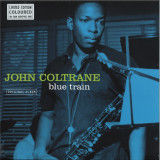
This album was recorded September 15, 1957, in Hackensack, New Jersey. The personnel includes Coltrane's Miles Davis bandmates, Paul Chambers on bass and Philly Joe Jones on drums - both of whom had worked before with pianist Kenny Drew - and trumpeter Lee Morgan and trombonist Curtis Fuller, who were then up-and-coming jazz musicians and would go on to join Art Blakey's Jazz Messengers. All of the compositions were written by John Coltrane, with the exception of the standard "I'm Old Fashioned". The title track is a long, rhythmically variegated blues with a sentimental theme that gradually shows the major key during Coltrane's first chorus. "Locomotion" is also a blues riff tune, in forty-four-bar form.
Colombian afro-cumbia sensation Wganda Kenya has been a staple on discerning dancefloors for decades. PANORAMA is thrilled to present 'Shakalaode', back on a 7 inch for the first time in a long time, from their 1976 release, blending afro-beats with irresistible rhythms. A side, a cover of Fela, B side - a cover of The Fatback Band, all in a colombian afrobeat style —a true double sided dancefloor weapon.
Presented as a reissue by London-based record label, PANORAMA Records, on their 'DISCOS PANORAMA' series 'Shakalaode' reflects the label's commitment to rediscovering musical treasures with a fresh perspective. Early support by DJs like such as Gilles Peterson, Patrick Forge, the Mr Bongo Crew and Zag Erlat (My Analog Journal), PANORAMA Records aims to reintroduce this Colombian Afro-Cumbia classic to a new generation of music lovers on the 7inch format.
Focus On Egoless proudly presents its eighth release, a meticulously crafted record made by Moray for vinyl enthusiasts and underground dancefloors. This 12-inch features 4 distinctive tracks that explore various shades of house music, blending hypnotic rhythms with raw, deep textures—perfect for high-energy and immersive DJ sets.
Each track tells a story: from minimalist grooves that captivate from the first beat to melodic passages that lift the spirit, this EP embodies the label’s essence: authentic, unpretentious, and entirely focused on egoless grooves.
1. Moray - The Emperator: A reflective journey of pounding basslines and ethereal pads.
2. Moray - My Soulmate: Driving rhythms with relentless acidic percussion.
3. Moray - Nasty Selector: Pure, bold bassline and classic house with a contemporary twist chord.
4. Moray - Sexometria: The perfect closer—deep and atmospheric.
Pressed on high-quality vinyl, this release is a must-have for collectors and DJs seeking to add a touch of authenticity to their sets. With this reference, Focus On Egoless continues to cement its reputation as a cult label for underground music enthusiasts.
Stay focused, stay egoless.
People believe that the magic of Muslimgauze works best with looong tracks. Think the same? Then “Al-Zulfiquar Shaheed” is exactly for you! 75 minutes of mellow eastern-style hypnotism. Consisting of only five parts, the album shows Bryn’s ability to create lengthy and detailed compositions filled with Arabic percussion, droning keyboards, vocal samples and ethereal atmospheres.
A strong rhythmic, yet melodic album, that should be in the collection of every Muslimgauze fan. Definitely one of Bryn’s best ever albums!
2026 Repress
Oscar Mulero keeps busy in his studio facilities as usual. His musical output keeps growing and always wandering into new directions and flavors while preserving his artistic integrity. For this Ep on his very own Pole Group imprint he showcases his combative side after some excursions into more profound and intricate territories.
Poisonality EP is about the wise use of distortion on techno, is about non conforming with the seasonal standards, about investigating new rhythms, new types of arrangements and new boundaries in sound design, always remembering the roots.
Aroma de Falso Amor is the first exercise, exploring the abrasive power of broken distorted beats, overdriven drones and textures and hyper dynamic song structures. The result is a non conventional techno workout, essential to give spice to any set.
Poisonality gives name to the EP and works with asymmetry combined with the right dose of crispiness, creating a super shuffled hi tech jam. Chaotic, hypnotic and mental.
Iris Malicioso opens the B side with an eye on the funkier Detroit tradition combined with the power of the best British influences from the nineties. Here drums and stabs are the main ingredients, interleaving, mutating and constantly evolving. Hi tech funk in its purest expression.
Dos Pequeños Zorros closes the tracklist, again focusing on the dancefloor and keeping the ingredients minimal, continuous and obsessive with a rugged, constantly twisted sequence running over a precise groove, keeping things busy through all the structure
This year marks the 75th anniversary of the release of John Lee Hooker’s ‘Boogie Chillen’. Recorded in Detroit in September 1948 by Bernard Besman – who had his own Sensation label – it was licensed to Modern Records in Los Angeles and released on 3rd November. The flip side was ‘Sally May’.
To say that the single caught fire is an understatement. It is believed that ‘Boogie Chillen’’ shifted in the region of a million copies in 1949 placing Hooker on the map as a blues guitarist and singer of the first rank – where he stayed until his death in 2001.
The original was, of course, released as a 78rpm single. In 2020 we issued ‘Boogie Chillen’ with ‘Boogie Chillen’ #2 on the flip as a limited edition of 500 copies that played at 78rpm.
We now present ‘Boogie Chillen’’ and ‘Boogie Chillen’ #2’ as a limited edition 7” single that plays at 45rpm. Despite being 75 years old, this classic recording still sounds so fresh and rhythmically propulsive it is hard to believe that you are listening to one man and his guitar playing live and stomping his feet in a room. Besman caught lightening as it flashed, just like Sam Philips did some years later with Elvis Presley in Sun Studios.
There are classics. There are stone cold classics. And there is ‘Boogie Chillen’’.
Scanning Backwards, Phase Fatale’s second full-length album originally released on Berghain’s in-house label Ostgut Ton in 2020 is now reissued via his label BITE on limited edition pink marble vinyl after being long sold out and sought after. Using the connection between weaponized sound and psychological manipulation as a conceptual foundation, Hayden Payne explores the ways in which music – and sub frequencies in particular – are used to influence thinking and to synchronize emotions and behavior: from military technology to sound systems and the physicality and sexuality of queer techno culture.
Known for his innovative post-punk takes of dance music as featured on EPs for unterton and Ostgut Ton, the Berghain resident draws on his background as both a guitarist and sound engineer to create a heady mix of broken rhythms, noise-, and shoegaze-inflected techno, often at slower tempos. The result is music with space and pace to expand, highlighting the intense rushes of frequencies found in both sonic warfare and functional dance music. Over eight tracks named after a combination of historical and fictional narratives from literature and science fiction, Payne’s rhythmic excursions explore different manifestations of sound as power – specifically within the context of seeing Berghain as an instrument itself. This is also reflected in the album artwork, taken from an early flyer for the SNAX party series and an obvious ode to the fetishization of power dynamics.
In his own words: “All tracks on the album, no matter the style, were tailored to sound a certain way in Berghain – something I figured out through years of dancing in the middle of the floor, DJing as a resident and investigating what frequencies really penetrate the body. This includes speech and high-frequency, brain-penetrating instrumentation and drilling textures that I had not utilized so often before, but which I think also have an effect on thought and memory. It’s especially true in a space where gay and fetish roots combine with music in unexpected ways, almost in a cultish manner. A musical and physical deprogramming and reprogramming, psychic driving and de-patterning, the erasing and replacing of memories.”
Ultimately, Scanning Backwards surveys not only the manipulative properties of electronic music (mantras, loops, subliminal messages) but also how rhythm facilitates both moving and thinking in synchrony; a pulse of coordinated sound- and brainwaves.
Torn Hawk is no newcomer…he’s been lurking in the corners, creeping in and between various arts worlds for well over a decade: spoken word slice of life narrations as heard on NTS Radio and Trilogy Tapes; more guitar-oriented song structural work on Mexican Summer; extensive videography (PPU Party Volumes One and Two along with music videos for Torn Hawk as well as Bicep, Xosar, and more); and more beat-focused work as seen on Unknown To The Unknown and as is featured here on his 12” for Fixed Rhythms.
Euphoria in a concrete rainforest. The joys of plumbing the depths of your own inner darkness. 80s synth sounds with soaring guitars and police sirens and rhythmic vocal snips. Distorted bass line bombers. S l o w e d down breakbeats. Offkilter, stomping grooves for the seasoned freaks. Mid-tempo heavy hitters fit for those thirsty for slime and hungry for grit. Step inside and get your fill!
Credits:
Mastered by Dietrich Schoenemann.
Design by Nick Owen.
Distributed by One Eye Witness.
Círculo Cerrado welcomes its first sub-label, E.T.D.G., where sound becomes a story.
Aniano invites you to an immersive auditory experience with Una Serie de Crímenes Sonoros. This first concept EP, weaving between fiction and reality, is predominantly driven by Techno, following the sonic direction previously explored in El Terror De Gáldar on Time To Panic. Naturally, it also features the hints of Electro and Minimal that have become hallmarks of Aniano’s music.
The record’s mysterious and spatial atmospheres draw heavily from 1980s sci-fi cinema and retro video game aesthetics. Rhythms from the iconic TR-909 and intricate synth work from the Nord Lead 2 crown this 12-inch release.
More than just a collection of tracks, Una Serie de Crímenes Sonoros is an exploration of human darkness through electronic soundscapes—a must-have for collectors of conceptual and boundary-pushing music.