Somewhere long ago in a vinyl galaxy near you We Play House Recordings released an E.P. called ‘This Is Still Belgium Vol 1’. The release was called like that because the music on it could only have been made by Belgians. Vol 2 never happened…until now. Label boss Red D has always been inspired by the rich Belgian club music of the 90’s and inevitably those influences have sneaked into his own productions, but never as clear as on the three tracks you are reading about now.
And so the original WPH series has been revived with WPH 024.5, aptly called ‘This Is Still Belgium Vol 2’. The music is situated somewhere between house, progressive house and early trance music, basically club music with soul & melody at its core.
On the A-side we find Red D teaming up with his friend Mona Lee, a soul sister who has been making waves in recent years in soulful house circles and who comes up with the vocal prowess to match Red D’s emotional trip of a track and heartfelt lyrics. Can you handle the break?
The B-side opens up with ‘Tides’, a deep hypnotic builder for late night eyes-closed dance floors and closes with ‘Papillon’, a track that came to life long ago in the minds of Telepaticos (Marcos Salon & Sandro Valcke). When Red D heard a demo version of this one the melody got stuck in his head and never really left him. Many moons later he rediscovered the parts of this one on a hard drive and got to work on his interpretation that features on this E.P. Safe to say the track holds a special place in Red D’s heart and we’re sure you’ll feel it as well!
quête:ri lo ve
- A1: Fatboy Slim - Retox - Tino Remix
- A2: Fatboy Slim - Retox - Sweely Remix
- B1: Fatboy Slim - Gangster Trippin - Make A Dance Remix (Jackin Mix)
- B2: Fatboy Slim - Gangster Trippin - Lockey Remix
One of the UK’s most iconic DJs Fatboy Slim celebrates 40 years in the industry with a blockbuster tour - Acid Ballroom. Alongside the tour comes the 12” single squarely aimed at what’s actually happening in the clubs right now. Enlisting the talents of Tino, Sweely, Make A Dance and Lockey (all with great vinyl culture followings and making big waves in the house music scene). This 12” will has light up dance floors in iconic venues and festivals around the world.
Igor Tamerlan is a stranger in his own land. Born in 1954 the Hague and spent most formative years in Paris, Igor suddenly had the urge to relocate to Bali in 1986. “I want to settle in Indonesia and marry a local girl,” he told his sister shortly before flying out.
His next journey would be as audacious as his time in the Fifth Republic. Born from a prominent Indonesian expatriate family in Paris with ties to Indonesia’s first prime minister Sutan Sjahrir, Igor earned a degree in architecture at Ecole nationale supe´rieure d’architecture de Paris-La Villette.
He could have been a brilliant architect or a political scientist (he was accepted to Sciences Po), but his passion for music distracted him from his academic works. He was after all named after Russian composer Igor Stravinsky.
During his brief stint at Sciences Po, Igor spent most of times hanging out at recording studios and rub shoulders with the likes of singer-songwriter Jean-Jacques Goldman and Michel Polnaref. He had a brief encounter with The Rolling Stones at the Cha^teau de Thoiry studio in the early 1970s.
But Igor’s musical education and his occidental eyes appeared to be ill-suited for Indonesia. His first record, titled Langkah Pertama (First Step) on the mainstream label Musica was met with a shrug and was a commercial dud. An experimental record blending the influence of Spanish motifs, Francophile production and a whiff of hip hop and ska was seen by critics as being too alien. His sarcasm-laden lyrics and his biting critique of excessive materialism among the upper tier of Indonesia’s nouveau riche in the album was met with confusion from the audience. He was just too far ahead of his time.
He left the label Musica – or may had been dropped – soon after Langkah Pertama and decided to go independent. He then relocated to Bali and set up a state-of-the-art recording studio in Sanur, across the street from Southeast Asia’s first boutique hotel where luminaries like Mick Jagger, David Bowie, Sting, Yoko Ono and Ringo Starr stayed for their holiday.
From the studio, Igor recording everything from the sounds waterfalls, geckos, minibuses to motorized rickshaw and mix them with hip hop, jazz, electronica, dub and Balinese gamelan. A visionary, Igor was the first musician to use MIDI, which started to be available globally in the early 1980s.
On paper, songs like “Bali Vanilli” should not work, a mish mash of disparate elements mentioned above, sung in three languages, Balinese, English and Bahasa Indonesia while tackling the subject of overtourism. The song was also the first to introduce rap to an unsuspecting audience. But for some strange reason “Bali Vanilli” became a sensation and overnight Igor became household name. And in 1987, long before overtourism was an issue, Igor broached the subject to a national audience in Indonesia on the possible destruction of nature and culture from tourism.
Ever an iconoclast, Igor decided to step out of the limelight following the success of “Bali Vanilli” and in early 1990s he relocated to Indonesia’s cultural capital, Yogyakarta. Here, he worked on some more experimental music while juggling as music video director. He passed away in 2018 at the age of 64.
The 10 songs in this compilation, Bali Vanilli: Experimental Pop from Paradise Island (1987-1991), are some of Igor’s best works, music that would have gone into obscurity had it not been for the diligent work of film director Alfred Pasifico Ginting, who managed to track down some of the master tapes while researching on a documentary on the musician.
These recordings have never before been released outside of Indonesia. Igor would have been proud with this reissue project.
- Casual Bunker
- Alright Javier
- After You've Gone
- Ordinary Times
- Den Den
- Field Recording
- Bone Trade
- The River Is A Scar Made Of Glass
- Maggots
- Financial Placeholder
- Better Than
- Weed King
Bei einem aktuellen Auftritt von DREAM_MEGA stand Joel Kyack allein auf der Bühne und schickte einen Soundstrom auf das Publikum los. Überwältigt von den gruseligen Frequenzen, den eindringlichen Rhythmen und den wilden, verstimmten Vocals, flüsterte ein Besucher seinem Nachbarn zu: ,Ich glaube, der Typ hat Kontakt zu Dämonen." Ob aus Angst oder Bewunderung gesagt, diese Anschuldigung ist angesichts des zweiten Albums von DREAM_MEGA, ,Control / You Are Not the Center", durchaus zutreffend. Die Platte ist voller Bedrohung. Man hört es in den mutierten Kriegsmarschen, im Dancehall-Reflux, im dröhnenden Bass. Man hört es in den kristallklaren Melodien und den sehnsüchtigen Aufstiegen. Man hört es sogar in dem Cover von Guided by Voices. Joels Beziehung zu verstörenden Klängen - dem Channeling von Dämonen - besteht nun schon seit Jahrzehnten. Seine langjährige Tätigkeit bei Landed, der Band, die er 1997 mitbegründet hat, verläuft parallel zu Joels Beiträgen zu Six Finger Satellite, Men's Recovery Project, Megafuckers, Dos Mega und Street Buddy. Diese unermüdliche Hingabe führt direkt zu dem fieberhaften Verfall seiner heutigen Arbeit, aber Dream Mega ist etwas ganz Besonderes. Entstanden aus Joels Nahtoderfahrung im Jahr 2020 - einer Woche der Schwäche, die er isoliert in Thailand verbrachte, Blut hustete und seine Bettlaken durchnässte - erobert DREAM_MEGA einen einzigartigen Raum an der Schnittstelle zwischen Konfrontation und Hingabe. Aufbauend auf seinen eigenen Erfahrungen bei Hardcore-Shows und Straßenauftritten treibt Joel DREAM_MEGA in einen antipodalen Zustand, in dem Hyperbewusstsein und befreiende Transzendenz koexistieren. Die Songs auf ,Control / You Are Not the Center" starren unerschrocken auf unsere dumme, gefährliche Welt, ähnlich wie es ein Song von Dropdead tun würde, aber gleichzeitig heben sie die Last dieser Katastrophe und drängen auf eine luftige Atempause. Ein Teil davon ist Joels kompositorischer Ansatz, bei dem er alte Holzblasinstrumente gegen digitale Synthesizer setzt und unnatürliche Schaltkreise mit menschlichem Atem kreuzt. Aber im Kern geht es um Joels dringendes Bedürfnis, mitten in der Nacht seine Angst und Traurigkeit und die Funken der Hoffnung anzusprechen und sie in etwas zu verwandeln, das sein Herz trotz allem weiter schlagen lässt. Es ist ein Akt der Klarheit und Selbsterhaltung, der so geschickt inszeniert ist, dass jeder Zuhörer die Dämonen spüren kann, die in seinem eigenen Herzen wirken. ,Control / You are Not The Center" enthält Klangbeiträge von Ryan Weinstein (Coffi n Prick), Cordey Lopez und Lisa Anne Auerbach. Es ist empfehlenswert für Fans von Hassell & Enos ,Fourth World, Vol.1: Possible Musics", Houstons Chopped-and-Screwed-Szene und Captain Beefheart.
Calvin Love is a Canadian singer-songwriter, composer, and producer from Edmonton, Alberta, now based between Edmonton and Los Angeles. With a sound that blends noir-tinged folk‑pop, crooning rock ’n’ roll, and cinematic storytelling, Love has become a distinctive voice in the international indie landscape. His music has drawn comparisons to Roy Orbison, Leonard Cohen, and Bryan Ferry, with Aquarium Drunkard describing his work as “a crestfallen soundtrack of near‑escape… like Chris Isaak trapped in a David Lynch film.”
Since his debut New Radar (2012), Love has released a run of acclaimed records including Super Future (Arts & Crafts, 2015), Highway Dancer (2018), Night Songs (2020), and Lavender (2021). Along the way, he has collaborated with renowned producers and artists such as Gus Seyffert (Beck, Roger Waters, Black Keys) and the late Richard Swift (The Shins, Damien Jurado), while earning coverage from outlets including SPIN, The Fader, Interview Magazine, and Stereogum.
A seasoned live performer, Love has toured extensively across North America, Europe, and Asia, appearing at festivals such as SXSW, Pop Montréal, Strawberry Festival (China), Endless Daze (South Africa), and Sled Island. He has shared stages with Morrissey, Mac DeMarco, Courtney Barnett, Jonathan Wilson, The Divine Fits, and Jim James, performing in iconic venues like Carnegie Hall, The Troubadour, and Hollywood Forever Cemetery.
In early February 2026, Love releases his seventh studio album, Throw My Shadow To The Sun — a bold, visceral statement that captures him at a new creative peak. Self‑produced and recorded by Reverend Baron at The Ladder Factory in East Los Angeles, the album channels raw, unfiltered energy into a late‑night rock ’n’ roll atmosphere built on moody grooves, gritty textures, and Love’s unmistakable croon.
The sessions brought together a formidable live band: Josh Da Costa (Drugdealer) on drums, Brent Randall (Vanity Mirror) on bass, Davey Chegwidden (De La Soul, Ghostface Killah, Raekwon, Too Short) on percussion, Jeremy Brian Gill (Curtis Harding) on tenor saxophone and flutes, Daniel E. Garcia (Reverend Baron) on lead guitars, and multi‑instrumentalist Laena Myers (White Fence, Orville Peck, El Mariachi Bronx) on violin.
From the hypnotic sway of “Underneath It All,” to the reverb‑drenched sax of “Forever Feels,” to the heavy sludge‑rock crush of “Setting Sun,” Throw My Shadow To The Sun draws from the lyrical storytelling of Dire Straits, the laid‑back blues of JJ Cale, and the timeless melodic drama of Roy Orbison. The result is a cohesive, lived‑in record that transforms fleeting moments and late‑night impressions into something enduring and cinematic.
LUKE COMBS ist einzigartig - eine seltene Kombination aus Nahbarkeit und außergewöhnlicher Kunstfertigkeit. Bodenständig, authentisch und mühelos echt, ist er ein Künstler, der einem vom ersten Moment an vertraut erscheint, dessen Stimme, Vision und Erfolge jedoch unverkennbar einzigartig sind.
Mit nur 35 Jahren hat Combs bereits die Rekordbücher neu geschrieben: 20 aufeinanderfolgende Nr. 1-Singles, der erste Country-Künstler, der mehrere Nächte im Wembley-Stadion headlined - alle drei Termine sind ausverkauft und aufeinanderfolgend- der erste Country-Künstler, der sowohl beim Bonnaroo als auch beim Lollapalooza headlined, und der erste, der zwei Songs mit über einer Milliarde Streams auf Spotify und vier RIAA-Diamond-zertifizierte Singles vorweisen kann. Selbst inmitten solcher Meilensteine behält Combs sein seltenes Talent, Vertrautes neu erscheinen zu lassen - mit Songs, die mit überraschender Klarheit und emotionaler Ehrlichkeit überzeugen.
The Way I Am, das am 20. März via Sony Nashville erscheint, ist eine Sammlung von 22 Songs, die alles zeigt, was Combs so unverwechselbar macht: von seiner rauen, resonanten Stimme und seiner meisterhaften Erzählkunst bis hin zu Songs, die herzliche Verletzlichkeit mit hymnischer Energie verbinden. Das Album taucht tiefer denn je in das Leben hinter den Kulissen ein und erkundet die Herausforderungen der Vaterschaft und die Balance zwischen Familie und Karriere, Selbstvertrauen, die stillen Kämpfe um die psychische Gesundheit und die Klarheit, die entsteht, wenn man sich daran erinnert, was wirklich wichtig ist. "The Way I Am" zeigt Luke Combs als ein Generationstalent auf dem Höhepunkt seines Schaffens und als eine globale musikalische Kraft, wie sie nur einmal im Leben vorkommt.
- A1: Celui Qui Ne Fait Rien
- A2: Dormir Le Restant De Ma Vie
- A3: Tu Parles En Dormant
- A4: Elle Veut Pas Se Lever
- A5: J’ai Rêvé Que Tu M’aimais Encore
- B6: Une Tisane Et Au Lit
- B7: Une Belle Après-Midi D’été
- B8: Une Mouche Sur Ma Bouche
- B9: Dans Ma Chambre
- B10: Le Grand Sommeil
- B11: Nocturne
Ten years after their last collaboration, Jacques Duvall and Benjamin Schoos return with Plein Sommeil, a duo album that is at once melancholic, ironic, and tender—a poetic mirror of the fatigue of the modern world.
The legendary lyricist for Lio, Chamfort, and Daho meets the indie pop producer and sonic adventurer of Freaksville, in a generational union as improbable as it is natural.
Between Brussels and Paris, they weave songs about slowness, worn-out love, and resistance through gentleness.
Blending original compositions and delicate covers (The Kinks, Higelin, Daho), the album evokes a sensual and lucid refuge amid the overheating of everyday life.
Recorded with Bertrand Burgalat, The Loved Drones, and lush string arrangements, Plein Sommeil embraces a handcrafted, timeless aesthetic.
Its motto: “Slow business” — a manifesto against the speed and emptiness of contemporary times.
Each song, balancing irony and elegance, celebrates fragility and humanity.
- 1: Norna
- 2: Norna
- 3: Norna
- 4: Worms
- 5: Speedball
- 6: Major Motion
From the cold North of Sweden, NORNA and LEGBITER deliver a six-track document of contrast, convergence, and uncompromising heavy music. Bringing together two distinct voices, the release explores the many shapes heaviness can take_stretching from crushing, slow-moving atmospheres to sharp, volatile bursts of aggression. Formed by musicians with deep roots in the European underground, Norna approach heaviness as a vehicle for emotional gravity. Their sound is expansive and deliberate, built on massive low-end, tectonic rhythms, and an acute sense of restraint. Legbiter approach heavy music as direct, confrontational, and unrelentingly physical. Rooted in hardcore and metal's most ferocious intersections, the band thrives on immediacy and impact. Legbiter compress time, delivering short, explosive bursts that hit with the force of a live wire. Their sound is lean, aggressive, and unapologetically raw. "Even though we sound very different sonically I think we all have a lot of common ground, not only in being parts of the 90's scenes, but also musically in the somewhat dissonant and harsh guitar parts", says Legbiter guitarist (Rickard Nordström. "Personally, I love splits with bands that don't sound exactly the same, but share some common traits and vibes." "Contrast is everything, we have always tried to flow between despair and beauty. Dynamics are important to us. This split will give you that contrast", comments Norna guitarist and vocalist and former Breach vocalist Tomas Liljedahl. FOR FANS OF Handsome * Quicksand * Fireside * Breach * Helmet * Superheaven * Narrowhead * Metz
- A1: Shield Your Eyes
- A2: Equalized
- A3: Caroline
- A4: Better Half
- A5: Split
- B1: Gutless
- B2: With Or Without U2
- B3: Fantastic Planet
- B4: Rich
- B5: Peel It The Fuck Down
- C1: Pretty Persuasion
- C2: Kiss The Bottle
- C3: First Step
- C4: Friends Back East
- D1: Sea Foam Green
- D2: Housesitter
- D3: Into You Like A Train
- D4: Sister
- D5: Friendly Fire
- D6: Boxcar
RE-PRESSED ON CLEAR VINYL!!! The long-anticipated collection of rare A-sides, B-sides, covers and unreleased outtakes from influential punk rock favorites and emo granddaddies JAWBREAKER. A twenty-track Alpha-Omega of rare and previously-impossible-to-find songs presented chronologically from their first demo in November of '88 (before they were even named Jawbreaker ) to their final studio recording, a version of "Boxcar" re-worked at the end of the DGC Dear You sessions. Beautifully packaged with inviting artwork and track-by-track commentary and lyrics (printed courtesy of AARON COMETBUS). 24-Hour Satisfaction Therapy, indeed.
- A1: ) Colour Chant
- A2: ) Still & Moving
- A3: ) The Reader’s Lamp
- A4: ) Sun In My Room
- A5: ) Carry A River In Your Mouth
- B1: ) Catch Up, Isobel
- B2: ) A Ship In The Sky
- B3: ) Some Circling
- B4: ) There Was Always A Golden Age
London quartet The Leaf Library return with their bold new album After The Rain, Strange Seeds. A luminous collection of pastoral indiepop, drawing inspiration from suburban isolation, unreliable memories and the surreality of the weather. Their most immediate and melodic work to date, the richly evocative songs brim with chiming guitars, buzzing organs and warm, dulcet strings, evoking Yo La Tengo’s more contemplative moments, The Clientele’s autumnal jangle pop and early Stereolab’s motorik melodicism. The sound of the album is defined by mixer John McEntire, whose work with Stereolab and Yo La Tengo (as well as a member of Tortoise/The Sea And Cake) have been major inspirations to the band.
The album explores themes of memory and place, albeit through an abstract haze – returning again and again to specific moments frozen in time: midsummer bright hot days in the Chilterns (“Sun In My Room”), meteorology and the strange movement of the weather (“Colour Chant”), red kites circling over suburban motorways (“Some Circling”), and the uncanny feeling of dusk and nighttime creatures on “The Reader’s Lamp” (titled by celebrated film director Peter Strickland). The lyrics are vivid yet elliptical, strung with abstract ideas and imagery, conjuring a gently unsettling, though never unwelcoming atmosphere. Not quite trusting your own recollection of things, while marvelling at the oddness of the natural world, the album’s title a good summation of the mix of strangeness and hope contained within.
As on past albums the band - founded by singer Kate Gibson and ex-Saloon guitarist Matt Ashton in the mid 2000s, and now completed by drummer Lewis Young and bassist Gareth Jones - have involved their extended musical family, including guitarist Mike Cranny (of fellow drone pop travellers Firestations) and keyboardist Irina Shtreis, both members of the Leaf Library live band. The album also sees the return of James Underwood’s Iskra Strings, a quartet that features on 4 tracks, with sumptuous arrangements by Daniel Fordham, as well as regular contributor Melinda Bronstein on vocals and Will Twynham (Dimorphodons) on harpsichord. They also welcomed Paddy Milner (on Hammond organ) and Scott McKeon (guitar) – both current members of Tom Jones’ band – for a startlingly delicate rolling crescendo to closing track “There Was Always A Golden Age”.
After The Rain, Strange Seeds is their 4th studio album. The result is The Leaf Library’s most accomplished and affecting work, John McEntire’s mix bringing a bold clarity to the band’s meticulous arrangements – closer to how they sound live than anything they’ve done before.
- I Want Candy
- Go Wild In The Country
- Do You Wanna Hold Me?
- Cowboy
- Aphrodisiac
- Chihuahua
- Baby, Oh No
- The Man Mountain
- Lonesome Tonight
- Love, Peace And Harmony
- See Jungle! (Jungle Boy)
- Rikki Dee
- (I'm A) Tv Savage
- Elimination Dancing
- Mile High Club
- Prince Of Darkness (Sinner, Sinner)
"Love, Peace & Harmony - The Best of Bow Wow Wow is a compilation of the iconic new wave group Bow Wow Wow, released in 2008. The band was formed by Malcolm McLaren, the manager of the Sex Pistols. McLaren recruited members of Adam and the Ants to form the band, featuring 13-year-old Annabella Lwin on lead vocals. Over the next four years, the band dominated the British charts, with nine singles entering the UK Top 100. ""Go Wild in the Country"" and ""I Want Candy"" even made it into the top 10. Their success didn't stop in the UK; they also enjoyed success in Australia, the US and the rest of Europe. This version of the compilation includes the song “The Man Mountain”, which reached the top 10 in Belgium and the Netherlands. Love, Peace & Harmony - The Best of Bow Wow Wow is available as a limited edition of 1000 individually numbered copies on slightly gold coloured vinyl. "
- A1: Langsam Wirst Ma Fremd 3:49
- A2: Kassiber 4:54
- A3: Vaschwindn 3:35
- A4: De An Und De Aundan 4:16
- A5: Taxitänzer 3:05
- A6: Da Dings 3:29
- B1: Guade Stubn 3:36
- B2: Gschnas 2:10
- B3: Da Zweifl 4:02
- B4: Somnambulen 3:28
- B5: Ka Ruah 3:10
LP (inkl. Downloadcode & Poster)
Release: 20.03.2026
"Gschnas" ist das vierte Voodoo Jürgens-Album.
Drei Jahre nach dem Meisterwerk "Wie die Noch noch jung wor" meldet er sich darauf als Popstar wider Willen zurück. Letztes Jahr gewann er für die Hauptrolle in Adrian Goigingers Kinohit "Rickerl" den österreichischen Filmpreis als bester Hauptdarsteller. Für die Alben davor gab es reihenweise Amadeus Awards, sprich Austro-Grammys und all seine Touren im gesamten deutschsprachigen Raum sind regelmäßig ausverkauft.
Nun war es Zeit für eine neue Standortbestimmung. Das Biotop "Beisl" war gestern. Gerade weil die zahlreichen Voodoo-Epigonen damit seit Jahren so gern haussieren gehen. Jetzt geht's um die weite Welt die da draußen wartet. Und die kleine da drinnen: die in der eigenen Seele. In Text und Sound geht es auf "Gschnas" für Voodoo um die eigene Autonomie, die Wiedergeburt der Inspiration, das freistrampeln von der typisch österreichischen Enge die einen nach unten drückt. Kurzum: es geht um alles. Mit welcher Energie er und seine on fire agierende Band dieses Husarenstück von einem Album reiten, mit welcher Spielfreude und welchem Selbstvertrauen hier ein Künstler neu denkt ohne dabei von sich erschlossenes aufzugeben und sich dabei selbst revitalisiert. Bist du (österreichisch für: nicht übel)! Dazu seine besten Melodien, seine wahrhaftigsten Texte, seine dringlichsten Performances, und eine Wolfgang Lehman (AKA Möstl)-Produktion, die für alle Involvierten nach Magnum Opus riecht. Das kann was. Und nicht nur das. Ein Album aus Zweifel geboren, für das es am Ende Faschingskrapfen regnet. Ein Album als Ereignis, in einer Zeit die sich selbst vergessen hat. Voodoo Magie die wirkt.
The first resonant space Zosha Warpeha played in was the Emanuel Vigeland Museum in Oslo, Norway. Built as a mausoleum, its walls reach up into a gradual archway, creating an environment where sound expands and reverberates for twelve seconds before decaying into silence. Warpeha was greeted only by dim lights when she entered, and it wasn’t until she had spent several minutes listening that she was able to make out the frescoes that covered every inch of the room: graphic depictions of the cycle of life from conception through death. As the sound of her Hardanger d’amore encountered the walls and these slowly emerging scenes, they obscured its point of origin in both time and space, augmenting its own life cycle. The experience sat in the back of her mind over the next several years as she developed her own patient style of composition and performance, one that comes into full bloom on her new album I grow accustomed to the dark.
When Warpeha was selected as an artist in residence at Brooklyn’s ISSUE Project Room in 2025, she saw it as an opportunity to more intentionally explore how her music might fill a room with ample natural reverb. I grow accustomed to the dark documents two single-take solo performances for Hardanger d’amore and voice at IPR, with both pieces composed in a unique tuning system developed to interact with the space itself. Listeners can trace resonance from the contact of the bow on gut strings into the body of the instrument, its five sympathetic strings offering another layer of refraction, before the sound is thrown about the cavity of the room. The echoes emerge like a photographic double exposure, or wisps of smoke that linger in the air, creating ghostly harmonic convergences that blur the line between what is there and not-there. Sound begins to act like light, a synesthetic alchemy that transforms drones into beams and ornamental trills into flickers.
Both side-long compositions, “filament” and “visual purple,” exemplify a duality that animates Warpeha’s music: an expressive, individualistic style that draws on extensive knowledge of her instrument’s history in folk traditions, and an austere, devotional quality maintained by focus and precision. Though very different in character and structure, both pieces evolve slowly through numerous repetitive phrases, passages of stillness, and bursts of intensity. “filament” opens with a cycle of delicate melodic fragments played and sung around a drone before blossoming into an outpouring of swooping arpeggios, harmonics flying from the strings like sparks off a bonfire. The disorienting pulsation of harmonic beating forms the core of “visual purple,” the close-tone dissonance building to a swarm of open strings ringing boldly throughout the space. After the knotty tones reach their climax, the piece collapses into studied quietude, hushed, but without any drop in intensity.
When Warpeha first visited the Vigeland Museum in 2019, she was in Oslo to deepen her relationship to the Hardanger fiddle through the study of Norwegian traditional music, which is primarily passed down aurally. The experience of learning songs by ear, not only internalizing the tune but also absorbing the techniques and tonalities by listening, was a crucial step in her development as a composer. The years since have seen her sharpen those skills as a prolific member of the New York avant-garde and improvised music communities. Warpeha’s music encourages listeners to join her in this journey, to listen closely with each repeated phrase and through each dramatic shift. Like the frescoes on Vigeland’s walls, with time and intention, the depth of I grow accustomed to the dark comes on like a revelation.
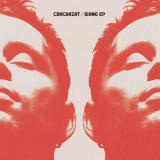
Crackazat returns to Freerange for his latest EP entitled Shine, and sees the artist in his finest form to date! An absolute anthem in the making the title track appears here in Club Mix and Mana’s Dub form, plus an amazing flip of Crouching Tiger from Baltimore legend Karizma Shine is a soulful, jazz-inflicted epic which will have any dance floor worth it’s salt fully locked in. Crackazat’s own vocals bring hints of Jamiroquai whilst his production calls golden era MAW and Blaze to mind. Add an incredible arrangement, live horns, bass and drums to this already heady concoction and you get an idea of why we’re so excited about this release. These kind of club tracks are few and far between these days! Next up we have one of Crackazat’s own Mana’s Dubs of Shine.
A chance for Ben to strip things back, loop things up and dub things out. Keeping the funk intact, we’re treated to a feelgood party-starting house track which has a classic sound that can’t fail to warm the cockles! Flip over for a proper curve-ball from everyone’s favourite Baltimore house hero Karizma who turns Crouching Tiger into the kind of twisted, rolling, jazzy and leftfield workout we love him for. A driving force of the city’s underground, he always comes with the raw energy and fearless creativity. A staple of the dance floor and a leader beyond it, Karizma represents the past, present, and future of Baltimore House and once again proves why he’s such a don.
Drop this one and run for cover whilst the dancers throw crazy shapes! Closing out the EP we have Crackazat’s Mana’s Dub take on previous single Watchu Say. Looping up the killer piano hook and his live bass line, Ben manages to craft the kind of warm, uplifting slice of house music which simply works. And for those who love a big drop, this one should fit the bill with a trademark Mana’s Dub seratonin-boosting build that hits all the right buttons.
ESCAPE-ISM — the found-sound dreamdrama— are back in action & out in front. And this time, they’re leading a “Charge of the Love Brigade. ”This “charge” isn’t the traditional scramble across a muddy, bloody field though, like in the days of yore. This one is a furtive insinuation into the senses of the tuned-in listener.
Their fifth record, and fourth “sound” record — (the third one was “A Protest Against Sound”- an entirely silent LP) — “Charge of the Love Brigade” is revolutionary in its own right. Besides being packed with tunes — super-hits such as “Black Gold,” “Last Of The Sellouts,” “The Rebel Outlaw,” & “Fire in Malibu,” for exam- ple, Charge of the Love Brigade proposes a reformation of the traditional notes and scales; an entire new sound alphabet!
That’s right, ESCAPE-ISM —the “act of musical vandalism”— famous for their development of new prototypes for stomping & smashing, are reforming the scales, chords, & notes (e.g. A, B, F#, etc) that comprise musical literacy to achieve the group’s primary aim: the repurposing of music as we know it. Though many musicians of note have operated their instruments with "alternative tunings," up until now no one has obliterated tuning absolutely or abolished letter-notes for the destruction of bourgeois society.
According to ESCAPE-ISM, this will have a very profound effect: “Music will no longer be cordoned off from the rest of experience as a commodified, specialty freak show, but instead be a pastime which can be prac- ticed and enjoyed –not only by non-musicians and amateurs– but also by plant life, wild animals, and even inanimate objects such as rocks.
“The violent overthrow of musical conventions will lead to the reintegration of humanity into the natural order, the reordering of life itself into a cosmic congruity. This means the convention of time itself will be ended.” Like so-called nature itself, the ESCAPE-ISM group is also on a “loop.”
Play “Charge of the Love Brigade” and listen as ESCAPE-ISM go “over the top” against the note-letters of accepted musicality in a world premiere of a new upside-down antiscale.
For their fourth release, Australian label Lunatic Music welcomes Chris Stoker (UK) and Jamie Blanco (UK born, AUS based) to the fray for a dubbed out analogue synth workout that is indisputably Ess O Ess.
Fusion unfolds in Simply Nothing. Analogue synths intertwine with exquisitely programmed percussion and George Humes' chorus-drenched, draped in a veil of spectral vocals by Sarah-May Brown. The result is a retro-futuristic sonic whirlpool that is as memorable as it is delicate.
A waterfall forms in The Lotus & The Banksman. An otherworldly mutant breakbeat techno floor filler. Ethereal pads and dubby textures ripple across the surface whilst the resonant bassline churns below. Gentle currents give way to surging momentum as the percussion kicks in wth the repetitive chant of Time Travelling Man throughout, again by Sarah-May Brown.
On Remix duties, Hybrid Man applies their refined proto-trance formula to Simply Nothing, drawing out its hypnotic core.
Mayurashka fractures The Lotus & The Banksman, sifts through the pieces, and assembles a mind-melting, wonky techno drum work-out from the fragments.
- A1: Hold The Line Feat. Mr. Lex & Santigold
- A2: When You Hear The Bassline Feat. Ms. Thing
- A3: Can’t Stop Now Feat. Mr. Vegas & Jovi Rockwell
- B1: Lazer Theme Feat. Future Trouble
- B2: Anything Goes Feat. Turbulence
- B3: Cash Flow Feat. Blakkamoore
- C1: Mary Jane Feat. Mr. Evil & Mapei
- C2: Bruk Out Feat. T.o.k & Ms. Thing
- C3: What U Like Feat. Amanda Blank & Einstein
- C4: Keep It Going Louder Feat. Nina Sky & Ricky Blaze
- D1: Pon De Floor Feat. Vybz Kartel
- D2: Baby Feat. Prince Zimboo
- D3: Jump Up Feat. Leftside & Supahype
Original 13 track album on Deluxe packaged Double LP Gatefold : printed inners, collector stickers .
Released in 1967, Open marked a bold debut for Brian Auger & The Trinity, featuring the dynamic vocals of Julie Driscoll. Music and its makers were rapidly evolving in ‘67, the UK's Jazz and R&B scenes were being influenced by pop and psychedelia and socially, musicians of many styles found common ground in London’s clubs like The Cromwellian and The Scotch Of St James where the The Beatles, US legends Wilson Pickett and Jimi Hendrix mingled with the capitals jazzers and pop stars, often loudly jamming together in even louder 'Lord Byron' shirts. 'Open' fully embraced this spirit by fusing together those genres and attitudes of the era. From the outset Auger displays his jazz rooted approach on the A side with 'In and Out' and 'Isola Natale' (later covered by one of his American jazz heroes Richard ‘Groove’ Holmes). Both showcase the Trinity's musicianship and Brian's improvisational flair. Auger himself takes on vocal duties on the raucous ‘Black Cat’, a track that became a club hit. Open is marked by its eclecticism; 'Lament for Miss Baker' is a tender, piano ballad influenced by Duke Ellington, reflecting Auger’s jazz and classical influences whilst 'Goodbye Jungle Telegraph' is a wild and crazy percussive freak out. Brian displayed not only his virtuosity but also his surrealist sense of humour with bizarre sound effects, inspired by Spike Milligan's The Goons' radio show interspersed between the tracks.
Julie Driscoll’s arrival on the album’s B side brings a sharp shift in tone. Her smoky, emotive vocals inject a soulful depth, notably on covers of Otis Redding & Carla Thomas hit 'Tramp', Aretha's 'Save Me' and The Staples Singers ‘Why Am I Treated So Bad". With original numbers 'Break It Up' and 'A Kind Of Love In' we hear the Auger / Driscoll pop infused R&B at its very best, whilst the version of Donovan’s 'Season of the Witch' stretches out into a slow-burning epic. In 2025, Open is viewed as a cult classic and testament to a unique period when genre boundaries were fluid and artistic risk-taking was the norm. Brian Auger & The Trinity’s debut captures the adventurous energy of the late 1960s. 58 years later, its importance in the development of British jazz fusion and progressive bands that followed is undeniable, with The Charlatans Tim Burgess recently commenting on Auger's Instagram that The Trinity were a 'huge influence'.
Strut Records presents a fresh look at Oblivion Express, the 1971 album that marked Brian Auger’s shift into a new musical frontier. After years spent shaping the sound of British jazz-soul with the Trinity, Auger stepped into the new decade with a leaner, electrified ensemble and a renewed sense of purpose. This record captures the moment that transformation took shape.
Oblivion Express introduced a sound that was distinctly Auger’s own. Rather than echoing the fusion emerging in the United States, Auger developed a language rooted in the UK’s jazz underground, culminating in a spaced out jazz- rock / prog-fusion album awash with larger than life drum fills and Auger’s virtuosic organ playing. Between bassist Barry Dean and drummer Robbie McIntosh the album moves effortlessly between tight, articulated phrases and broader, improvisational passages. The trio’s interplay forms the backbone of the album and sets the tone for the sound that would define the early years of the Express.
Album opener “Dragon Song” launches with a restless drive that immediately signals Auger’s new direction. Auger chose to record this version of John McLaughlin’s piece (his friend and former bandmate in 'The Niddy Griddys') after hearing McLaughlin’s album Devotion during its mix at New York’s Record Plant Studios. Auger was blown away, recalling, “Oh my god, this is amazing. I wanted to record that myself - and I did!”. Pieces like “Total Eclipse” demonstrate the Oblivion Express’ command of dynamic contrast, and title track “Oblivion Express” explores the cinematic and compositional prowess of the group through stripped back, building moments vs. explosive melodic breakdowns. Riff-heavy “The Sword” later became known through Madlib’s usage in 2014 tracks “Yeti Movie” and “Parodies”.
In retrospect, Oblivion Express stands as a jazz leaning, prog-rock masterpiece and foundational moment in Auger’s catalogue. It captures the starting point of a new sound that is more focused, more urgent, and fully committed to the possibilities of jazz-rock at the dawn of the seventies. The album remains a vivid document of a band discovering its identity and setting the stage for the further array of influential releases that would follow.
For the first time in more than a decade, Paul St. Hilaire (AKA Tikiman) presents a solo album – 100% Tiki.
Over his 30-plus year career, St. Hilaire has become one of dance music’s quietly legendary figures. Born and raised in Dominica, he moved to Berlin in 1994 and has lent both his voice and his musicianship to some of the most iconic electronic music from the German capital – and beyond. Renowned for his collaborations with Moritz von Oswald and Mark Ernestus (AKA Rhythm & Sound), he has also appeared on records with Deadbeat, Rhauder, Larry Heard aka Mr. Fingers and Stereotyp (G-Stone Recordings), amongst others.
However, few know the extent of St. Hilaire’s compositional and technical mastery. From his home studio in Kreuzberg, which includes an extensive collection of vintage hardware, self-built instruments and notebooks scribbled with endless lyrics, he has created a vast archive of material spanning ambient dub, avant-jazz, lush techno and lovers rock.
Tikiman Vol. 1 is a heady, downtempo tour de force of patois metaphors on education, displacement and personal vs. global histories, as is evident on slippy album opener “Bedroom in My Bag”: Mister, mister / Where are you going? / I’m heading for a faraway land / What are you having in the bag in your hand? / Help us to understand / He said, I’ve got my bedroom in my bag.
Overall, the album’s lyrics reflect on life between Berlin and Dominica, specifically St. Hilaire’s hometown of Grand Bay, where he has worked with various musicians famous for the island’s different genres of carnival music. St. Hilaire himself always favoured the island’s more “discrete” music, developing a sonic synergy between two different geographical strains of groove and minimalism, and combining them with foundational Caribbean mixing techniques, which provide the basis for his songwriting and distinct
baritone.
Tikiman Vol.1 offers a rare insight into St. Hilaire’s complex artistry, from the eyes-down grooves of “Little Way” and the guitar-heavy digi dancehall experiment “Keep Safe,” to the subtle hypnosis of “Ten to One” and the softly crashing synth waves of closer “Three And A Half”, evoking not only beaches but also coasts and borders. It’s a fitting expression of both the breadth of St. Hilaire’s work, as well as his history as one of the few black, Berlin-based artists who, despite remaining largely overlooked, has influenced the city’s electronic music culture since its beginnings.
Credits
Written & Produced by Paul St. Hilaire
Mastered by Stefan Betke
Artwork by Grant Gibson
Kynant Records was founded in 2015 by Richard Akingbehin, a British-Nigerian radio programmer (Refuge Worldwide), music writer and DJ. Originally specialising in deep techno and featuring artists such as Cio D’Or, Terrence Dixon and Donato Dozzy, Kynant has since launched a sub-label Kynant EX which focuses on ambient, dub and experimental electronics.