
- A1: Ways
- A2: The Shelf
- A3: Obsession
- A4: Infinity
- A5: New As Dew
- B1: Killers
- B2: Misery
- B3: As Bad As I Am
- B4: Sing To Me
- B5: Ring Around
pre-order now19.09.2025
expected to be published on 19.09.2025
18,28 €
expected to be published on 19.09.2025

expected to be published on 19.09.2025

Für sein treffend betiteltes Solo-Debütalbum "Introducing..." hat Aaron Frazer mit Dan Auerbach von The Black Keys zusammengearbeitet. Soft spoken und mit dem Aussehen eines leicht unzufriedenen Matinee-Idols aus den 1950er Jahren gesegnet, besitzt Frazer eine einzigartige Stimme, die sowohl zeitgemäß als auch zeitlos klingt. Der in Baltimore aufgewachsene, zurzeit in Brooklyn lebende Songwriter wurde als Schlagzeuger und Co-Vokalist von Durand Jones & The Indications bekannt. Jetzt tritt er mit "Introducing..." als Solist hinter dem Drumkit hervor und demonstriert nicht nur seine beeindruckenden stimmlichen Qualitäten, sondern auch sein Können als hochklassiger Songschreiber. Schon die erste Single "Bad News" sorgte für Aufsehen ("a gorgeous piece of vintage R&B" - CLASH), die sich anschließende Lead-Single "Over You" ist inspiriert von elektrisierenden Northern Soul 45s der 60er Jahre. Nur zwei Belege der erfolgreichen Zusammenarbeit zwischen Frazer und Auerbach. Die zwölf Songs auf "Introducing..." verbinden gekonnt den Soul der 70er Jahre mit Dan Auerbachs besonderer Sensibilität für Vintage-Sounds im neuen Gewand. "Introducing..." enthält klassische Message-Songs im Stil von Künstlern wie Gil Scott-Heron sowie motivierende Liebeslieder, die von Disco-, Gospel- und Doo-Wop-Einflüssen durchzogen sind. Das gesamte Album wurde innerhalb nur einer Woche in Auerbachs berühmten Nashville-Studio nach einer schnellen und produktiven Songwriting-Session aufgenommen. Auerbach holte auch den legendären Songwriter und Falsettspezialisten L. Russell Brown (schrieb früher Hits für Frankie Valli von The Four Seasons) an Bord, der den wunderschönen Opener "You Don't Wanna Be My Baby" auf dem Album mitkopmponierte. Für "Introducing..." rekrutierte Frazer eine beeindruckende Schar alteingesessener Session-Musiker aus Nashville. Darunter Mitglieder der legendären Memphis Boys (die in Dusty Springfields "Son of A Preacher Man" und Aretha Franklins "You Make Me Feel Like A Natural Woman" mitspielten), den Perkussionisten Sam Bacco sowie diverse Musiker aus dem Daptone/Big Crown Records-Umfeld.
expected to be published on 19.09.2025

expected to be published on 19.09.2025

expected to be published on 19.09.2025

expected to be published on 19.09.2025

expected to be published on 19.09.2025

Unearthing old gems, remastering and bringing them back to the forefront is what Private Parts are up to for release number 07 in the catalog. Original London Tech masters Rob Pearson & Dave Mothersole originally released Wanting You in the early 00’s, but with the extreme prices on Discogs it seemed like the right choice to get this re pressed for your pleasure.
Wanting you is everything you ever wanted from those timeless sounds of London Tech. Dubbed out vocals, tribal rhythms, pulsating acid lines and a groove to keep you locked right in.
Flipping to the B, and the biggest thank you to Rob himself for spending weeks searching old DAT tapes in his loft to find the original pre master of the driving remix from the late Iteration X. They don’t come more heads down, and hypnotic than this. Throbbing bass stabs, luscious chords and in true Iteration X style, a roller that you could keep you shaking for days on end.
It only seems fitting to dedicate this re issue to Simon Copleston, Mr Iteration X. Thank you for the music!
Order now and we will order the item for you at our supplier.

Tin Fingers takes on a darker, melancholic direction on their second full album. Felix Machtelinckx' weeping vocals, preaching, searching, and trying to understand God, form the leitmotif. With rich melodies, haunting piano sounds, improvisations, first takes and no overdubs, Tin Fingers is searching for pureness and keeping things human and simple. The band is playing together intuitively, without a computer, without ego, just for the sake of music
The creation of the album was very fluent and spontaneous. Singer Felix wrote the backbones of the songs and the lyrics on acoustic guitar and piano. He wanted to have songs ready in order to be able to record and write arrangements fast. With an eye for details but without overthinking, keeping the ideas fresh. 'I wanted to stay in love with the music.' he explains. 'It needed to go fast, very fast, in just two weeks the entire album was recorded and ready to be mixed.'
In the studio, the band especially focused on picking the right mood rather than playing the right notes.
They were fed up with working on a computer for many hours, overthinking production choices, and adding instruments on top of each other as if they were Lego blocks. This time they decided to work in a more traditional way, going for first takes, jams, and essentially working with analog gear. No computers, no screens, no distractions. Only four humans in a studio trying to make a sound together by keeping things spontaneous and raw. They said goodbye to perfection and worked towards an unfinished product, a snapshot.
Tin Fingers also didn't want to sound like any other artist on this record. They decided not to listen to music during the sessions, and to never express ideas by referencing other bands. Just before the studio session, however, bass player Simen Wouters broke the rules and shared Bonnie 'Prince' Billy's, I See Darkness. Its dark and searching sound ended up inspiring the band unmistakably.
Once the recording was finished, the band decided to keep the volatile rhythm going and asked reputable NYC-based mixer and producer D. James Goodwin to finish the job. Goodwin, known for his analog folk productions with a real American punchy sound but a tender touch, proved the right man for the job. He opened up the songs and kept things poetic, minimal but impressive.
Order now and we will order the item for you at our supplier.

Leila Gamal’s ‘Abaleeh Abalingi’
At the height of Pan-Arabism, when the United Arab Republic fused Egypt and Syria in a fleeting but bold experiment, a new wave of popular music was emerging—vibrant, infectious, and universally danceable. Among its lesser-known stars was actress Leila Gamal, whose voice—delicate yet rich with longing—embodied the golden era of Egyptian cinema. Born in Alexandria to Syrian roots, Gamal’s vocals were a magnetic blend of sweetness and passion, with a timeless allure that echoed the silver-screen sweethearts of her time.
Abaleeh Abalingi pulses with the hypnotic drive of funky organ riffs, reminiscent of the blind visionary Ammar El Sheriyi, creating a sound both cinematic and undeniably catchy. The delicate lyrics by Khairi Fouad place the track firmly in the lineage of the Middle East’s most iconic pop divas, from Angham to Nawal El-Zoughbi who he subsequently wrote for. This reissue, lovingly remastered, brings this long-lost gem back to life, where it belongs—spinning on turntables, teasing dance floors, and transporting listeners to Egypt in the late sixties.
Adel Osman’s “Oriental Eyes”
Oriental Eyes captures the essence of the 60s Egyptian Franco-Arab movement, blending Western (often jazz) influences with Arabic melodies to mesh mystique with sensuality. Osman’s commanding yet delicate vocals deliver the bilingual lyrics with captivating sincerity, his voice effortlessly gliding over the swells of the arrangement. The trumpet, possibly connecting him to Zaki Osman of Salah Ragab’s legendary Cairo Jazz Band, adds a layer of flair, enriching the track’s Tarantino-esque eclecticism. Now remastered, ‘Oriental Eyes’ is not only a nostalgic gem but a timeless reminder of the boundary-defying spirit that defined the 1960s musical landscape.
Given the ongoing war efforts against Israel, this record wasn’t pressed by Sono Cairo till much later in 1975 once Egypt had recaptured the Sinai and restored national pride. Sono Cairo (Sawt el-Qahira) was the first Arab-owned and by far the largest record label in the Middle East, amassing an unmatched catalogue of music. With exclusive rights over much of Umm Kulthum’s works, Sono Cairo played a crucial role in disseminating the sounds of Arab Nationalism and projecting Egypt’s soft power across the region.
Muhammad Al-Najjar
London, April 2025
credits
Audio restoration and vinyl mastering: Colin Young
Lacquer cut: Timmion cutting lab
Sleeve and label artwork: Grotezk Studio
Under License of Sono Cairo
Order now and we will order the item for you at our supplier.

This new album you hold in your hands, Sleep Circle, is this newly recorded, abridged version of Sleep informed by those concert experiences and focusing on the movements within the composition that are more in the foreground. This way Sleep Circle becomes a hallucinatory 90-minute trip into the hypnagogic state. For Max, the approach offered new insights into his epic composition: “Some of these compositions, such as Dream 11, Moth-like Stars or Non-Eternal, are so rich in their poetic core that I wanted the music to be experienced in a more traditional way. I first wrote a structure for a concert performance. The new version we’ve recorded now is based on these performances, which also means that it has a slightly different architecture. It's like Sleep distilled.”
Order now and we will order the item for you at our supplier.

Book[37,40 €]
In the final month of 2024, Meitei arrived in Beppu, a city long steeped in vapor, myth, and mineral memory. Invited to create onsen ambient music commemorating Beppu’s 100th anniversary, he immersed himself in the city’s geothermal psychogeography, where sound rises from the ground and time clings to mist.
Known for his Lost Japan (Shitsu-nihon) works, which channel forgotten eras into flickering auditory relics, Meitei took residence in the warehouse of Yamada Bessou, a century-old inn perched by the bay. Over two weeks, he listened intently to steam, to stone, to the atmosphere itself. The resulting work, Sen’nyū, traces the inner spirit of onsen culture. Like water finding its path, the music emerged with quiet inevitability, shaped by Meitei’s synesthetic sensibility and deep attunement to place.
Equipped with a microphone, he wandered Beppu’s sacred sites: Takegawara Onsen, Bouzu Jigoku, Hebin-yu, and the private baths of Yamada Bessou. There, he captured the breath of the springs, bubbling mud, hissing vents, wind against bamboo, and the murmurs of daily visitors. These field recordings became the sonic bedrock of Sen’nyū, an act of deep listening that attempts to render even the rising mist and shifting heat into sound.
Unfolding as a single, continuous piece, Sen’nyū drifts like fog through sulfur and stone. It traverses the veiled madness of Bouzu Jigoku, the spectral resonance of Yamada Bessou’s inner bath, and the hushed voices of Takegawara Onsen. It is a gesture of quiet reverence, for water’s patience, the land’s memory, and the hands that have bathed here for generations.
Where Meitei’s earlier works conveyed his personal impression of a fading Japan, Sen’nyū is grounded in tactile presence, music not imagined but encountered. Here, his practice moves closer to the spirit of kankyō ongaku, environmental music born from place, shaped by it, and inseparable from it.
As part of the project, Meitei conceived a two-day public sound installation inside Takegawara Onsen, culminating in a live performance. Bathers soaked in mineral-rich waters while submerged in sound, an embodied ritual of place, body, and listening.
Sen’nyū marks Meitei’s first full-length work centered entirely on onsen and opens a new chapter of his Lost Japan project under the expanded title 失日本百景 (One Hundred Lost Views of Japan), a series exploring extant sites of longing still quietly breathing within contemporary life. The album will be accompanied by Meitei’s first photo book, a visual document of his time in Beppu. A new layer is added to the world he has, until now, built only through sound.
Sen’nyū continues Meitei’s devotion to Japan as subject, while opening new terrain: both ritual and remembrance, an immersion into the mineral soul of Beppu.
Order now and we will order the item for you at our supplier.
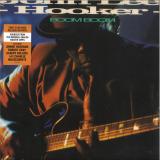
Nach seinem Comeback mit „The Healer“ (1989) begab sich John Lee Hooker zu Russian Hill Recording in San Francisco und The Record Plant in Sausalito, um einige seiner bekanntesten Songs neu zu
interpretieren, darunter „Boom Boom“, das diesem Album seinen Titel gibt. Eine Starbesetzung zeitgenössischer Bluesgrößen nahm an den Sessions teil, darunter Charlie Musselwhite, Jimmie Vaughan, Robert
Cray und Albert Collins.
Order now and we will order the item for you at our supplier.

Bodhi, the Cardiff-based production team, return to Hotflush Recordings with a follow-up to last year’s standout Laurus Ascending extended play.
Having emerged in 2012 with a slew of breathlessly-received edits and subsequent releases on labels including Future Classic and Rinse, the pair took a 4-year hiatus in 2017, returning with an invigorated sound in 2022. Recent releases on Hotflush and dh2 have brought the duo back to the forefront of the UK’s cutting edge music scene.
‘Corrupta’ is six tracks of bass-inflected, garage-influenced beat science. Opener ‘dwndwn’ sets the stage with a genuine wtf beat-drop moment. That vibe is continued on the shuffling ‘Silian Rail’.
Dancefloor smasher ‘Okinobi’ is a hat-tip to the recent Speed Garage revival, while T.O.P. is a classic slice of 2-step bassline pressure. Bodhi’s techno influences are also present with electro breaks hybrid of ‘Without You’ and the 8am Berghain vibes of ‘Bellcurve’.
This is another long-form statement of intent from some of the most inventive club producers in the game right now.
Support from Jamie xx, Lee Gamble, I.Jordan, dBridge, Machinedrum, DJ Haus +++
Order now and we will order the item for you at our supplier.

Candido Cameron was a Cuban percussion maestro who had played with luminaries such as Dizzy Gillespie, Buddy Rich and Count Basie throughout his illustrious musical career which started in 1952. Fast forward to 1979 and Candido finds himself caught up in the Disco boom that had engulfed his adopted New York City. Feeling he could add his trademark quick-fire Conga and Bongo playing to Disco's straight 4 x 4 syncopated rhythm he cut some records with legendary NYC label Salsoul. The fruits of this partnership were 2 full length LP's and a handful of 12" singles that changed the face of underground Disco."Jingo" is an all-time classic dance record, sampled, edited, re-configured and coveted by too many names to mention! It's a killer funky Disco version of master Nigerian drummer Olatunji's 1969 percussion suite of the same name, Salsoul style, while over on the flip we have one of the deepest Disco records of all time; "Thousand Finger Man" a testament to Candido's percussion prowess and a spacey, beautiful voyage that has left more than an indelible mark on modern House music, often being cited as a huge influence by artists such as Masters At Work and more. Essential stuff basically, every collection should have a copy!
This 12" has got to be one of the toughest Salsoul records to find. Changing hands for up to £300 a time for a used copy. Now it has been re-mastered, re-pressed and made available again with all original label artwork intact with the permission of Salsoul Records, New York City.
Order now and we will order the item for you at our supplier.

Part II[13,24 €]
Following the release of his fifth studio album ‘Magickal’ at the start of the year, Damian Lazarus now opens a new chapter in the project’s evolution with ‘Magickal Remixed (Part I)’, this first instalment of the two-part series features bold reimagining’s from Harry Romero, Jonathan Kaspar, THEMBA and Mëstiza, offering four fresh takes on standout cuts from the acclaimed long-player.
The package opens with Harry Romero’s ‘Raw Dog’ remix of ‘R U Dreaming?’, originally a deeply introspective cut featuring Canadian maestro Mathew Jonson. Here, the New York favourite dials up the low-end pressure and rhythmic weight, bringing raw tribal energy and heavyweight swing to the original’s dreamlike tones. Jonathan Kaspar’s ‘Sunrise Remix’ of ‘Falling Down’, Lazarus’ collaboration with TEED and A-Trak, comes next. Channelling radiant euphoria through rising pads and sweeping melodic phrasing, it leans into the emotional intensity of the original while transforming it into a full-blown moment of sunrise transcendence.
On the B Side THEMBA delivers striking remix of Damian Lazarus and Jem Cooke’s ‘Searchin’.
THEMBA’s remix builds on that foundation and takes it into expansive, Afro-infused club territory, layering hypnotic percussion, deep rolling grooves, and subtle atmospheric shifts that heighten the emotion and push the track into new late-night spaces. Closing out the release, Spanish duo Mëstiza return to reinterpret their collaboration with the Crosstown head honcho, ‘La Hija De Juan Simón’. Expanding on the track’s flamenco-inspired roots, they layer hand-played percussion, haunting vocal flourishes, and dense atmospheres into a hypnotic, slow-burning groove, bridging folklore and futurism in their unmistakable style.
Order now and we will order the item for you at our supplier.

Three sanguine slices of dub techno from Glasgow-based wunder Conna Haraway. And featuring XENIA REAPER providing vibes and synths on the lush long elevation "Redirect" that sits on the record’s A side.
Shifted follows on from Spatial Fix; Conna’s first solo 12” in March ’25 that released on Theory Therapy. Where that EP was a dense and rich web of texture and atmosphere across the two long sides, this one focuses in on forms of propulsion and a patient, silvery endlessness.
A side track "Redirect" was cut from a longer Sunday night session with XENIA REAPER. Two laptops Ableton linked, chilling in the flat in Glasgow. The amazing synth line is all XENIA, everything else is Conna; looping the synth & bass for about an hour and bringing other elements in and out. The final tune is gorgeous, floating in the blissful ether before the sub and pulse kicks through. Eleven and a half minutes of enveloping pressure, refreshment and delight.
"Detach" and "Duration" both turn to a rediscovered love for 4x4 techno and an experiment in a more classic and subtle sound from the perspective of a producer who might be expected to take bigger emotive and experimental swings that follow the patterns of contemporary ambient and bass. The result is beautiful and delicate vectors of music, satisfyingly easy to slide into a set. Swung techno filled with detail and poise. Tunes that can scale and transform and sit in a sort of home listening club track zone. After hours nrg.
Order now and we will order the item for you at our supplier.

2025 Repress
Hypnotic Mindscapes unearths fragments from the temporal abyss with the 1998-2000 Compendium, a re-issue of selected works from LA based, Hawaii-born producer Matt K.Turner aka Kamahele. 4 deep cuts fitting for versatile use. Recorded 26 years ago, Kamahele‘s creations linger in a space where futuristic visions and dystopian longing intertwine, their relevance evading the decay of time.
Artwork painting by Abbas Rizvi.
Order now and we will order the item for you at our supplier.


It's dedicated to the 1988 Experimental / Electronic masterpiece by the Italian contemporary guitarist Riccardo Giagni, originally released on Stile Libero (Italy) + a special Balearic Remix by SIMON PETER.
Archeo Recordings is a reissue record label that regenerates old, lost, obscure and forgotten rare gems of mostly Italian music but also all over the world of the 70s, 80s and 90s.
All outputs are licensed by the artists and the vintage labels; audio tracks are remastered in their original form; the sleeves and center labels are graphically recreated for today but all based on the original images.
Archeo would like to make the music available to a wider audience of collectors, DJs, music lovers of a forgotten time.
All releases are hand-numbered limited edition vinyl. The first copies of each release are pressed in coloured vinyls.
Order now and we will order the item for you at our supplier.
