The two separate double vinyl sets are now available that correlate to the triple CD released earlier this year. TMTCH stumbled into existence onstage at the Alternative Country Festival, Electric Ballroom, Camden on Easter Sunday in 1984; after a long afternoon busking and drinking in a Hammersmith subway. They knew three chords and a hundred songs all of which sounded a bit the same, a frenzied skiffle that was exciting to jump around and drink snakebite to. If they thought about longevity at all, a lifespan of 40 days seemed most likely. It's forty years later and they are still running. Since those early days, and without much of a game plan other than always stepping onward, TMTCH have released around 20 albums plus many side projects, bootlegs, curios and an unknown number of T shirts. They've toured constantly, whether in dingy pub backrooms or Grand Ballrooms and Festival Stages. From Cairo to Reykjavik and all points in between, the TMTCH roadshow has shambled and thrilled through the decades, always passionate, always literate, occasionally dishevelled. Forty years of recording has spawned a vast back catalogue, well represented here by songs from each album, style and era; a tapestry of human stories and vibrant characters. So there are the fast sprints like early folk hoedown 'Ironmasters', the frantic shanty 'Raising Hell' and the amphetamine punk blues of 'Going Back to Coventry'. Then there are the waltzing folk ballads, from their impassioned version of the anti war standard 'Green Fields Of France' to the bitter regret of 'The Bells' and the righteous testimony of 'Our Day'. Elsewhere there are anthems galore; 'The Crest' a swirling gaelic chant, 'Rosettes', a fast marching assault of drums, fiddles and mandolins; historical epics such as 'Ghosts Of Cable Street', 'Shirt of Blue' and 'The Colours'; romantic ballads like the wistful 'Parted From You' and 'Island in The Rain'. All the eras are here; from the wiry lo fi of the first album, through the eighties into full blown MTV ready multi trackers with vast charging drums; the initial simplicity of their recipe deepening and darkening. And then on through the nineties, noughties and tens; always the double pronged vocals drifting between harmony and unison, always the celtic, folk and country tones vying for attention, the emotive fiddle, the top end mandolin above the thundering rhythm section. On through bouffant hair, spiky hair, dyed hair, thin hair and hats; on through Grunge, Baggy, Madchester, Rave, Britpop. On through the Miner's Strike, Poll Tax, New Labour, Iraq and Brexit. On through marriage, children, loss and revival. Forty years at the working end of rock and roll is a feat achieved by very few bands. It requires tremendous chemistry, a deep catalogue; both panoramic and miniature, a vital and irrepressible energy, all of which is on resplendent display in this sprawling 3 disc compilation. But most of all it requires an intense resilience, something that TMTCH possess in spades. Forty years on the run; was ever a band so aptly named?
Поиск:righteous
Все
Moon White Vinyl. All her life, Emma Hardyman has wrestled with contradictions. After all, she was practically rendered a living, breathing contradiction the moment she was born into her half-Peruvian, half-white working-class Mormon family. In young adulthood, Hardyman became increasingly disillusioned with Mormonism's righteous black-and-white thinking, as well as its exclusionary elitism, and decided to leave the church. But she also acknowledged that the institution's all-or-nothing philosophy had become a part of her, resulting in a considerable test of grace and unlearning. As the singer-songwriter behind Little Moon, the Tiny Desk Contest-winning, Utah-based avant-folk project, Hardyman uses music as an outlet to illuminate contradictions of all kinds. Following the release of her 2020 debut LP Unphased, Hardyman set out to write a romantic album about her newlywed husband Nathan (who also sings and plays guitar in Little Moon), but the universe had other plans. After Nathan's mother tragically passed away, Hardyman recalibrated her vision and started work on a love-as-grief, grief-as-love album titled Dear Divine. The record serves as a mirror for the darkest parts of ourselves, allowing us to examine our ego_not to dismantle it, but to better understand how we love, process adversity and move through the world. Centering the classical music, folk, video game soundtracks and Tabernacle Choir hymns she grew up with, as well as ephemeral snapshots of personal significance, Dear Divine is an abundant tapestry of Hardyman's life. As enlivening melodies radiate from a string trio, you can envision the classical music that thrums from her parents' radio 24/7, as Hardyman sings in an otherworldly coo, you can imagine her younger self swooning over the tranquil records of Vashti Bunyan and Joan Baez, and as arpeggiated synths twinkle, you can visualize the enchanting kingdom of Hyrule from The Legend of Zelda: Ocarina of Time that she still adores. Songs like "now" and "messy love" embrace the gloriously jumbled stew of life, with the former chronicling Hardyman's arduous quest for love and trust and the latter patiently navigating the ways romantic partners can mirror each other's shortcomings. As Dear Divine attests, Emma Hardyman may not have it all figured out, but that's kind of the point. Through grief, faith crises and all-encompassing love, she's found the most wisdom in life's maddeningly consistent inconsistencies, as well as the subtle ways one can cultivate a feeling of home. Dear Divine doesn't take a red pen to life, it brings an open heart, an open mind and achingly beautiful, opulently weird folk songs.
Released on October 25th as a limited-edition double AA 7” on limited edition “Death Grey” vinyl, "Death Grip Kids" is The Lovely Eggs at their most punk rock. Kicking and screaming and stamping their way through three minutes of righteously pissed off fury. With more out of this world artwork by illustrator Casey Raymond, the Double AA features a re-release of their digital single “Memory Man” (which has not been previously available on 7” vinyl until now). ‘Memory Man’ shows the Eggs at their hypnotic, Can-like best. David’s drums lock into a flawless Krautrock inspired groove, whilst Holly’s vocals hang ethereally over the song’s swirling, mesmerising psychedelia. The strictly limited edition 7" also features one of the band’s first ever songs “True Grit” from 2005 which will not be available digitally and can only be heard by buying this vinyl. Both A-sides come from the band’s new album Eggsistentialism, released in May 2024. Recorded by the band at home in Lancaster with production work from Flaming Lips producer Dave Fridmann, the results are without doubt the most expansive, mind-melting ten songs the band have delivered yet. They head out on the final leg of their Eggsistentialism tour in October with support from Psych Poppers ‘British Birds’ as well as performance poet ‘Violet Malice’
Emotive and raw, British (St. Albans) punk band returns with fourth album “Heaven Can
Wait.” With “Heaven Can Wait.”, the band effortlessly blend punk rock and post-hardcore;
shining melody and searing lyricism. New album includes features from Eric Vanlerberghe
of I Prevail on single “Be Someone” & Kenta Koie of Crossfaith on single
“filthy//RIGHTEOUS”.
The group formed by the legendary Joseph Hill, accompanied by his two acolytes Albert Walker and Kenneth Dayes, delivers an album recorded at Mixing Lab and mixed at the Lion & Fox studio (reference studio for the RAS label) in 1989.
Recorded with 3 brass instruments, bass, drums, keyboards and percussion, it's in the pure roots tradition, with a few interesting dub twists. There's also a tribute to Bob Marley entitled ‘Psalm of Bob Marley’ and the excellent ‘Cousin Rude Boy’.
This is a pure roots album remastered to the highest standards, with a 350g cardboard sleeve showing off the full extent of Mitch Goldberg's graphic design. Never reissued on vinyl since its release, and only once on CD in the 90s.
What an unbelievable record. From the wild cover to the iconic breakbeats, Roots from Ian Carr’s Nucleus is one of the dopest albums we know. This is seriously thick, funky-prog jazz-rock heaven. Originally released on Vertigo in 1973, other than a couple of versions at the time for other territories, Roots was never re-pressed since so it’s gone on to become another one of those impossible to find records.
Maybe it was a little too out there for the time, but it’s aged very, very well indeed and this Be With re-issue, re-mastered from the original analogue tapes, shows off just why this deserves to be back in press.
Genius trumpeter and visionary composer Ian Carr was one of the most respected British musicians of his era. He was a true pioneer and saw the potential in fusing the worlds of jazz with rock, just as Miles Davis and The Tony Williams Lifetime did in the US. In late 1969, following the demise of the Rendell-Carr quintet, and tiring of British jazz, Carr assembled the legendary Nucleus. Regarding music as a continuous process, Nucleus refused to “recognise rigid boundaries” and worked on delivering what they saw as a “total musical experience”. We can get behind that.
Under bandleader Carr, Nucleus existed as a fluid line-up of inventive, skilled musicians. This constant evolution and revolution was all part of the continuous musical exploration and discovery that took jazz to new levels.
Working together with producer Fritz Fryer and engineer Roger Wake, the seven compositions by Carr, Brian Smith and Dave MacRae that make up Roots flirt with perfection, and Nucleus at that time made up of the cream of 1970s UK jazz with Brian Smith on tenor saxophones and flutes, Dave MacRae on piano and electric piano, Jocelyn Pitchen on guitar, Roger Sutton on bass, both Clive Thacker and Aureo De Souza on drums and percussion, Joy Yates delivering the vocals and of course Carr on trumpet.
The spellbinding title track immediately renders the album indispensable. Riding the illest of loping breakbeats, “Roots” is low-slung, doped-out heist-funk. An absolute monster. If it sounds familiar then that’s likely down to it being sampled by Madlib for Lootpack and Quasimoto’s “Loop Digga”, as well as by a whole host of beat manipulators. “Roots” conjures prime instrumental hip-hop / beat music, only 20 years ahead of its time. Truly, these are the roots. Through sinuous bass, twinkling keys and a hypnotic guitar riff, a smoky brass motif weaves its way into a gloriously deep haze around Carr’s solos. “Roots” is over 9 minutes long, but there’s not a single wasted second, not surprising given that this is a condensed version of an originally 40 minute long commissioned composition.
The soothing vocal fusion delight of “Images” follows. Meticulously constructed, with gorgeous flute work from Brian Smith, with Joy Yates’ silky vocals and Dave MacRae’s Rhodes never sounding better. The cool, driving “Caliban” closes out the first side. Originally the third movement in a four part commission to celebrate Shakespeare’s birthday it stands up on its own, all robust rhythms and blended brass. Keyboard colour and Carr’s trumpet are splashed across the funk drums and basslines (and there’s even some bamboo flute). This really is fusion: the elements of jazz and rock coming together in beautifully synthesis.
Side two opens in riotous fashion with the short, thrilling samba of “Wapatiti”. Next up, “Capricorn” forms a smoothed-out, jazzy constellation. Mellow and dreamy, its twinkling percussion and languid horns slowly build the vibe before head-nod drums and a killer bassline enter the fray. With a distinct heaviness that Black Sabbath would’ve envied, “Odokamona” is a venomous slice of riff-soaked jazz metal (yes, you read that right), elevated by Carr’s wah-wah horns.
The album closes with MacRae’s exceptionally cosmic “Southern Roots and Celebration”. Very much in conversation with Weather Report, it opens as a languorous, spiritual jazz of chiming keys and serene guitar that turns slowly, gorgeously into a mid-paced, brass-laced banger. It’s another sure-fire party starter and the sound of the band having a righteous blast, building an ecstatic chaos that ends with Yates screaming.
And of course we need to talk about Keith Davis’ cover for Roots. Perhaps the coolest record cover of all time? Certainly one of the most bonkers. Just your run-of-the-mill high-gloss, acid-tinged airbrush dystopian/utopian living-room party scene. Consider this your chemical flashback trigger warning.
Front-and-centre the hip-to-death green robot holds court with their giant ball of yellow barbwire wool, hooked up to… something(?) being teased out from under the stairs (probably best not to ask). A thoroughly zoned-out, long-legged Pop Art party-goer lounges half-plugged in to the painting behind her as a pair of legs flail into shot from the the top of the stairs opposite. We won’t even begin to guess what the chap’s up to in the middle, but the view out of the windows is rather nice, and someone’s already got the hoover out ready to tidy up. All of the Nucleus sleeves are something special, but this particular one? Crikey.
This Be With edition of Roots has been re-mastered from the original Vertigo master tapes, Simon Francis’ mastering working together with Pete Norman’s cut to weave their usual magic with these wonderful recordings. The crazy cover has been restored at Be With HQ as the finishing touch to this long overdue re-issue.
- A1: Count Ossie And The Rasta Family - Africa We Want Fe Go (1 27)
- A2: Johnny Clarke - None Shall Escape The Judgement (3 37)
- A3: Laurel Aitken - Haile Selassie (3 14)
- A4: Count Ossie And The Mystic Revelation Of Rastafari - Tales Of Mozambique
- A5: Ras Michael And The Sons Of Negus - Booma Yeah (5 39)
- B1: Mutabaruka - Say (1 13)
- B2: Bongo Herman And Jah Lloyd - African Drums (3 32)
- B3: Ashanti Roy - Hail The Words Of Jah (3 49)
- B4: Count Ossie And The Mystic Revelation Of Rastafari - Sam's Intro (3 36)
- B5: Bongo Herman, Les And Bunny - Salaam (3 05)
- C1: Winston And Ansell - Zion I (3 44)
- C2: Techniques All Stars - Zion I Version (3 21)
- C3: Lord Lebby And The Jamaican Calypsonians - Ethiopia (2 59)
- C4: Count Ossie& Leslie Butler - Soul Drums (2 47)
- C5: The Heaven Singers - Rasta Dreadlocks (3 02)
- C6: Rod Taylor - His Imperial Majesty (3 12)
- D1: Q Q. - Betta Must Come (3.48)
- D2: Earth & Stone - Jah Will Cut You Down (3 22)
- D3: Count Ossie& The Mystic Revelation Of Rastafari - Narration (9 03)
- D4: Ronald Downer And Count Ossie - A Jujuwa (3 34)
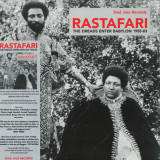
Soul Jazz Records’ are releasing their classic release ‘Rastafari – The Dreads Enter Babylon 1955-83’ in a new one-off pressing limited edition blue coloured double vinyl edition. The album includes new tracks and is fully remastered from the original edition.
Spanning nearly 30 years of revolutionary music and featuring the music of Count Ossie, Johnny Clarke, The Mystic Revelation of Rastafari, Bongo Herman, Earth & Stone and many more, this is an in-depth look at some of the heaviest and righteous music ever made!
Soul Jazz Records' Rastafari: The Dreads Enter Babylon charts the many links between reggae music and Rastafarianism. The album comes complete with full gatefold and bespoke inner sleeves, containing stunning exclusive photography and extensive sleevenotes.
Rastafarianism had its roots at the start of the 20th century and became widespread in Jamaica following the visit of Haile Selassie, the King of Ethiopia, to Kingston in 1966. By the 1970s Rastafarianism become practically synonymous with reggae, as many roots reggae artists became known throughout the world, notably spearheaded by the success of Bob Marley and The Wailers.
As ‘roots reggae’ artists in the 1970s continued to spread the word of Jah (God) in their music, Rastafari reggae became the ultimate rebel sound throughout the world.
Crime In Australia follows 2022's The Real Work, the first Party Dozen record that (some) people were actually waiting for; the one that Nick Cave sang on; the one that had a track that billy woods jumped on for a rework; the one that took them to the USA, Europe (twice), Japan, China and New Zealand; the one that saw Party Dozen hook up with a cool US label (Temporary Residence Ltd.); the one that made Bandcamp, Stereogum, Brooklyn Vegan and a whole swathe of Australian radio stations declare it their Album of the Day/Week/Epoch; and the one that made KEXP invite the band in for a live session, and made Sub Pop add to their hallowed Singles Club. The Real Work was not the first Party Dozen record, but it was in many ways where Party Dozen really started to put it all together. Crime In Australia continues to build on their arc, and elevates their ascent with a slew of new songs that are simultaneously more focused and more feral than anything they've ever done. And there are no guests on this one.
DJ support: J:Kenzo, Kahn, Rob Smith and Don Letts. This includes BBC Radio, SWU FM (part of the Rinse network)
Bay Area producer Dubamine returns to Dub-Stuy with yet another sureshot featuring the label’s own JonnyGo Figure on vocals. The title track, Bulletproof, is a classic Dubamine tune: a ghostly, flute melody riding over a deceptively minimalist riddim that showcases his skills in crafting compelling beats. Jonny comes correct on this one, mashing up the dance in his own trademark style. The flipside is another Dubamine banger, this time sampling the unmistakable voice of an iconic British DJ, over a rolling riddim with righteous horn lines that channel Aswad. Mastered by Joker for maximum weight.
‘The Oakland band’s wide-ranging debut is a whirlwind of biting critique, nervy post-punk guitars, and absurdist humor. Rarely does a first record speak with such a trenchant voice.’ 7.5 PITCHFORK
‘Post-punk lovers have a new act to follow" - PASTE
Fake Fruit’s visceral indie rock operates so firmly in the present that it’s transportive and unmooring. The Oakland trio’s songs careen with volatile energy and lead singer Ham D’Amato’s lyrics are enveloped with acerbic humor and resonant perceptiveness. Though their new LP Mucho Mistrust is a sly reference to a beloved Blondie lyric, the title encapsulates both the anxieties of daily life, a bloodless music industry, and global capitalism as well as the clear-eyed skepticism needed to rebel against it. Across 12 propulsively unpredictable tracks, the album is both their most collaborative and most immediate yet.
Following the 2021 release of Fake Fruit’s self-titled debut LP, the band’s personal lives hit a turbulent and transformational period. “There were big life changes and I was so close to boiling over,” says D’Amato. “I left a bad relationship, entered a more stable and loving one, got diagnosed with alopecia, and I'm turning 30 soon too.” This personal upheaval was channeled into the explosive lead single “Mucho Mistrust.” The track is simultaneously disorienting and direct, with clanging guitars from Alex Post, off-kilter drums from Miles MacDiarmid, and D’Amato snarling, “How you gonna blame me / when you could’ve done something about it / it’s not right / How you gonna marinate me / in shitty things overnight.” She explains, “This song was a snapshot of how I got through a difficult year.”
Recorded live at the Bay Area’s Atomic Garden studio with producer Jack Shirley (Deafheaven, Home Is Where), the band’s palpable ferocity shines throughout the record. Single “Más o Menos” is searing punk, with buzzsaw guitars and surging bass. It’s a clenched-fist song, one where D’Amato sings, “I decided to assert myself / After I lost all my sense of self.” Later in the track, D’Amato, who is Chicana, sings in Spanish, “¡No me hables! / ¡No escuchare!” While some of these songs deal in heartbreak, they are charged with way bigger themes. “There's also wanting to break up with capitalism and feeling upset about things politically,” says D’Amato.
For the band, these themes are personal. “I'm managing us while I'm in between changing diapers in my day job as a nanny,” says D’Amato. “Everyone in the band still believes in it and is motivated to keep wading through the bullshit.” On this album, they had no choice but to bet on themselves and each other. No track broadcasts their evolution better than the single “Cause of Death,” which morphs from a gorgeous sax-laden banger to something cathartic and anthemic.
As adventurous and righteous as Mucho Mistrust gets, there’s still an inviting core that never takes itself too seriously. From the ripping “Cause of Death,” which self-deprecatingly takes aim at anxiety and indecision, to the searing title track, Fake Fruit imbue their songs with humor and heart. “Our band is fun,” says D’Amato. “My number one coping mechanism for all of life is to joke about it. Even when the album talks about serious things, I am proud of how funny it can be.”
It’s been said before - in my house, at least - but all the best punk music right now hails from the land Down Under. Stiff Richards, Split System, C.O.F.F.I.N., Polute… that’s before we even get into that ‘Smoko’ band and a whole heap of other mullet-wearing reprobates. To this stack of names, we must add another: Cutters. It’s a raucous squall they make, that’s for sure. Much like setting off rockets at a petrol station, they’re beautifully, terrifyingly explosive - ‘Psychic Injury’ is their second album, following 2021’s gleefully cacophonic ‘Modern Problems’. Much like their aforementioned fellow Aussies, you can trace some of their stomp back to the UK’s 70s pub rock scene, a good chunk of their chutzpah to Chris Bailey and Kim Salmon, and even more to the fact that hardcore feels once more like a re-energised scene filled with purpose and drive (...and other words that rock hacks use to make it clear that certain noises are Really Fucking Important Right Now). They’re among the finest exponents of this stuff and it’s a joy to hear it. With titles like ‘Landlord Nation’ and ‘An Ode To Shoplifting’, it doesn’t take a genius to identify their targets; with lyrics like ‘I’m the first of many suckers’ you can tell they’re not above self-deprecation, even as they rage gloriously about a system that’s rigged against us. The album drips - like an icicle in the Sahara - with righteous rage, and even when that anger feels knowingly futile (“I hate the public / Get away from me”), it’s delivered with such wide-eyed venom that it still feels potent as fuck. Whether operating a top velocity or through brutal rifferama, ‘Psychic Injury’ delivers in spades. Apply it to your ears forthwith
3 cuts of the classic rhythm from Yabby You. ‘King Pharoah’s plague is coming down on the land’, righteous soulful rendition of old testament doctrine. Yabby always delivered his lyrics with authenticity and passion. This 3 track EP comes with the Tommy McCook cut and a thumping Tubbys dub. One of Yabby's most essential rhythms. Comes in a Pressure Sounds house disco bag. Rocking time is here!
Repressed for the first time in 2 years, Note price change. Sermonizing Black Nationalism, Pan-Africanism and the benefits of a healthy and just lifestyle during the height of the Bad Boy/Roc-AFella era of nihilistic excess in the late 90's, Dead Prez also signed to a major label (Loud/Columbia) despite leaning much more towards the burgeoning indie aesthetics of the day. But this was a good thing – using major label muscle to wake up righteous hip-hop fans who might have fallen asleep at the wheel. The group itself – consisting of MCs stic.man and M-1, who produced or co-produced most of the duo’s music – was formed in Tallahassee, Florida in the early 1990's.
By later that decade, the duo had started making significant waves, having their music heard on the soundtracks to “Soul In The Hole” and “Slam,” as well as appearing on albums by Big Pun and The Beatnuts. By 1998, they released their first official single, the serious, stark “Police State,” on Loud, appropriately brought to the label by Lord Jamar of Brand Nubian. After building a solid rep over the next two years with fiery live performances, in 2000 they unleashed their debut album, Let’s Get Free.
The album was a welcome return to provocative and often radically political rhetoric that hearkened back to hip-hop forebears including The Coup, Public Enemy and KRS-One (as well as poetic descendants like the Last Poets and Watts Prophets). Let’s Get Free was critically acclaimed and benefited from multiple singles, including the infectious, thick analog drive of “Hip-Hop” “It’s Bigger Than Hip-Hop,” with a remix co-produced by a young Kanye West; “Mind Sex” (with Abiodun Oyewole of the Last Poets); and the poignant “I’m An African.”
But the singles weren’t the only worthy songs, as just about every cut here has deeper meaning than most full albums by their early 2000's peers. Highlights: the thought-provoking, anti-drug album opener “Wolves”; “We Want Freedom” “They Schools” and “Propaganda” . All in all, this is one of the more underrated and possibly Top 5 fully-realized political hip-hop albums of all time.
Richard Ashcroft"s fourth solo album "These People" became a fan-favourite in 2016, receiving great reviews and becoming a #3 album in the Official UK Albums Chart. His reunion with Wil Malone, who had previously worked on the string arrangements for The Verve"s seminal albums "A Northern Soul" and "Urban Hymns" added depth and emotional resonance to the album"s sound. Ashcroft demonstrated his continued relevance and creative prowess as a solo artist, reaffirming his status as one of Britain"s most enduring and influential musicians. Released on his Righteous Phonographic Association label via Cooking Vinyl, and now available on vinyl again in a 2LP special edition Clear and Blue Marble Vinyl effect, housed in a Gatefold sleeve.
- A1: Mr Righteous (Intro)0 35
- A2: You Need Knowledge 3 45
- A3: 88 Soul 3 12
- A4: Black Shakespeare 3 02
- B1: For My People ..It's Spiritual 2 55
- B2: Lonely At The Top 3 56
- B3: Just Listen 4 05
- B4: California Dreamin' 4 33
- C1: Purity 3 59
- C2: Kunta Kente 4 20
- C3: 1993 Shit 3 49
- D1: We Got Plots 3 38
- D2: Do Win-Dis 4 11
- D3: Hope She Remembers Me 3 15
A Gilles Peterson-approved deep jazz-rap classic.
2024 first time vinyl release, 140g double vinyl, remastered audio with restored artwork.
Limited and Non-Returnable.
Holy grail hip-hop alert! Superstar Quamallah's Invisible Man was never released on wax so, to celebrate the 15th anniversary of this astounding record, we present the first ever vinyl edition. A stunning record which gained accolades upon its initial release, such as a prominent feature on Gilles Peterson's renowned Best Of 2009 show, it's one of the most essential jazz rap albums of all time.
Deep jazz rap on that mellow-melodic tip, Invisible Man is an unforgettable album with nothing but dope beats and dope bars. There's a strong chance this album has passed you by but we truly believe it to be a lost hip-hop masterpiece. It supremely captures the essence of a golden age classic without being slavish to the past. No, this ain't some facile throwback rap. It's a fresh and deeply soulful, original album shot through straight from the heart. Perfect to chill to, Invisible Man is profoundly jazz-oriented and captures with simplicity and sincerity the essence of hip-hop circa 1983-1994. It sounds like vibing with your nearest, dearest and oldest friends on a long hot summer night as the tantalising thought that anything is possible fills the air. You know what, we can just call this "magic hour rap" and we think you'll know what we mean. It's just beautiful. Just Listen.
Brooklyn-born, California-based emcee, DJ, and producer Superstar Quamallah was active in the West Coast underground scene throughout the 90s and recorded extensively with such revered names as Defari and Tajai. His parents were some serious artistic heavyweights, too; his father was soul organist Big John Patton, a giant in the jazz world known for his releases on Blue Note whilst his mother was an active designer. However, he remains relatively unknown. Invisible Man, named ostensibly after the classic Ralph Ellison novel, could also refer to how he is viewed by the public at large. With close affiliations to the Hieroglyphics, Dilated Peoples and Likwit crew, his debut EP "Don't Call Me John" arrived in 1999 on ABB Records, after which he took a sabbatical from recording which included graduate school, travelling, teaching at Inglewood High and eventually a professorship of African Studies at Berkeley.
With a laidback flow and deep, relaxing presence on the mic, Superstar Quamallah is equal parts Big Daddy Kane, Rakim and Guru. Invisible Man is refined, soulful, feel-good hip-hop of the old school. Its wise, spiritual and literate sound, combined with the summertime vibes projected by the smooth beats and the nostalgia-inducing samples and vocal scratches, created jazzy boom-bap rap reminiscent of prime De La Soul, A Tribe Called Quest and Gang Starr.
Irresistibly bouncing opener "You Need Knowledge" loops sparkling pianos, horns and a nagging whistle refrain with scratched vocal refrains from Slick Rick, Mobb Deep and Guru. The super-smooth head-nod classic "88 Soul" also utilises a beautifully swelling piano line and dusty breaks whilst Quamé reminisces about his childhood in NYC. Deeply moving, the silky, sultry "Black Shakespeare" is built around an elegant piano loop and goes hard on the superman lover tip whilst "For My People...It's Spiritual" is transcendental rap in conversation with Rakim and older gods. The "Moment Of Truth"-sampling "Lonely At The Top" is striking for its undiluted boom-bap stylings and the staccato flute-hop of "Just Listen" is riddled with soulful refinement. The deeply-affecting, wistful-yet-triumphant bells and horn-drenched single "California Dreamin'" is top-tier rap of unimpeachable quality. What a flow!
Another highlight is the rich melodic piano-rap of "Purity", a beautiful ode to the foundations of rap and those keeping the culture authentically alive. Beautifully played instruments and spiritual jazz samples elevate the deep thinking present on "Kunta Kente" whilst the darker jazz-tinged battle-rap of "93 Shit" goes super hard both in a lyrical sense and with its no-holds drum punches. The breezy Rhodes and string loops that serve as the sonic backdrop to the slinky jazz rap of "We Got Plots" are just gorgeous as our hero evokes Common's "I Used To Love H.E.R." with a head-spinning tale of crime, deception and double crossing. And some twist! "Do Win-Dis" has a tense crime-funk backing and rolling beats which complement Quamé's flow perfectly before the record is rounded out by the tough yet jazzy brilliance of rap confessional "Hope She Remembers Me". Just sensational.
Upon its original release, Quamallah himself declared: "My favorite time period for Hip Hop music was definitely between 1983 and 1994 with 1988 and 1993 being two years that standout as extremely impressive years musically and culturally. The fashion, slang, movies, TV shows and vibe during those years was incredible. While totally submerged in the feelings and music of that entire time period, I went to work on Invisible Man and I am excited for people to hear the result! It is an album that I would want to hear from some of my favorite artists of the past and present today. This is not a RETRO trip for me; this is me at my best lyrically and spiritually using the accessories of the 80s and 90s to fuel me. I am a 88 soul as the song states!"
This album goes deep. It goes all in. When Invisible Man first came out it had a real hold on us here at Be With HQ. We couldn't stop listening to it. We'd venture to say it's one of the top 25 rap records of the 2000s. In the years since its release, it has remained a criminally underrated record, an increasingly hidden gem. We sincerely hope this first time double LP release will go some way to correct this.
It's been mastered for vinyl by Simon Francis, cut by Cicely Balston and pressed at Record Industry. Finally available on the format it should always have been on, it must never be rendered invisible again.
- Tracing Hallmark
- Pulling Quotes
- Pallor Tricks
- Albatross
- Down To Size
- Keys Down If You Stay
- Reprise
- Nice Try
- Bell Wheel
- Bitter Melon
The Gloss is the second album from Cola. From their inception Cola have expanded on the d.i.y. ethic of the Dischord and SST eras, creating potent sounds from a minimal palette of drums/bass/guitar and lacing their songs with winsome one-liners and societal commentary. What’s another word for commentary? Gloss, apparently. Never basic, the lyrics reward repeated listening for deeper meanings. David Berman’s poetry-via-garage light pennings are an inspiration, as equally so are the lighter side of UK first-wave New Wave and the Dunedin sound. The results are in the pudding: at times sparse and poetic, at others a thrilling, hook-laden good time, as with the cheeky romantic sketch of a one-night stand that is so overflowing with innuendo-cum-journalism talk that it almost teeters over into self-parody. But the results are the right combination of lightheartedness and sincerity. Romanticism is never far from laughter, and equally never far from righteous anger in the music of Cola: “Pulling quotes now in the dark/Our outlook is restrained/Your tongue might weaken to be-fit your smile/Til nothing ill remains.” ‘nuff said. It's an album bursting with energy and wit and ideas–filled to the margins.
French house music crew Kumquat is thrilled to team up with the unstoppable Atree for their first release. The EP kicks off with sun-soaked "Happy Bout That" hitting the perfect blend of vintage synths and flowing tension. Huerta is up next on remix duties, dubbing down the title track for maximum groove. On the flip "Handshake" is sure to elicit maximum stank face with its growling bassline and "Righteous Funk" hits that future-retro aesthetic in a way only Atree can pull off.
Available on Neon Orange vinyl, limited to 200. Early coverage from No Echo, BrooklynVegan, Destroy/Exist. Just damn good raw punk music. RIYL: Hot Snakes, Pissed Jeans, Marked Men, Dag Nasty, War on Women. Totally Slow offers up razor sharp, no-frills punk music, with angry lyrics that show how the personal is inseparable from the political when the country is on the brink of chaos. The band has combined the melodic anthems of 1980s SoCal bands like The Adolescents, Agent Orange and The Faction, with the skewed rawk of '90s San Diego bands Drive Like Jehu and Truman's Water, and the righteous conviction of classic DC hardcore like Dag Nasty, Gray Matter and Fugazi. "...finds the middle ground between Adolescents' snotty SoCal punk and the harder sounds of DC post-hardcore, and it manages to induce nostalgia and feel fresh and urgent all at once