Perhaps a drum is a space wrapped in material.
With some excitement the space and the material interact to produce vibrations, which we hear. Separately, yPLO prepared some sounds in advance of a performance based on the components of a speculative drum kit
ob TRU was performed and recorded live on 6/8/18 at Cafe OTO. During this live performance yPLO used amplified mylar, floor tom bass drum, mixers, audio recordings and microphones.
The recordings were mixed and edited into 8 discrete tracks.
----
yPLO (Paul Abbott & Michael Speers) is a project about imaginary drums and rhythms, using acoustic percussion and synthetic sounds.
Michael Speers is a musician from Northern Ireland who works with various sound materials — using drums, computer, microphones, feedback — in performance, installation and composition. Other collaborators include John Wall, Louise Le Du, Olan Monk, Niklas Adam, Lee Fraser and Seijiro Murayama.
Paul Abbott is a writer, sound and performance artist. He has played at venues and festivals internationally and was a resident at Cafe OTO. He completed a PhD at the University of Edinburgh under the supervision of Florian Hecker and Nikki Moran, and is currently undertaking research at Royal Conservatoire in Antwerp. He is also the co-founder and editor of Cesura//Acceso, a journal for music, politics and poetics.
Cerca:ro moran
Zu seinem 87. Geburtstag trat der legendäre Jazz-Saxofonist und Flötist Charles Lloyd im März 2025 mit
neuem Trio im Lobero Theater in Santa Barbara auf. Direkt im Anschluss ging er mit Pianist Jason Moran
und Gitarrist Marvin Sewell ins Studio, um sein zwölftes Blue Note-Album, ”Figure In Blue”, aufzunehmen.
Das Doppelalbum gibt Lloyd Raum für eine musikalische Reise zu den Personen und Einflüssen, die seine
Karriere geprägt haben, mit wunderschönen Balladen und rohem Delta-Blues bis hin zu tief empfundenen
Hommagen an Duke Ellington, Billie Holiday und Zakir Hussain.
MEMOTONE, aka Will Yates, has announced details of a new 12-track album, smallest things, set for release on World of Echo on 1 August 2025 on vinyl and digitally.
The album launches today with first track, ‘Time Is Away Theme’, a live favourite that is finally available on album. Watch the video HERE Talking about the release, Will has said, “Staring at a square inch of neglected concrete, I recognise the beauty of existence. Quietly hysterical. While humanitarian catastrophes bubble across the planet, the tides remain in constant and disinterested motion. Your money is worth less than the dusty moss that powders this pavement.
It's certainly not worth a life. We are the smallest things, along with everything else." Will Yates has made music as Memotone since 2007. He operates in the tradition of what Robert Fripp has called 'a small, independent, mobile, and intelligent unit.' If you book him, he will come. When he arrives, he will have everything he needs to make his complex, engaging music: a clarinet, a guitar, synths, samplers and pedals, quickly unpacked in the corner of a club, gallery or village hall. Starting small, he will build layer upon layer of melody, accompanying himself and cutting across himself, creating a music that avoids cliche and moves beyond easy description. His recordings have followed the same trajectory. Moving quickly, he has released fifteen or so albums across various labels (including Trilogy Tapes, Discrepant, Soda Gong). Taken together, these recordings are the sound of a skilled, inventive composer pushing at the edges of what he wants to listen to himself. It is possible to hear a variety ofinfluences in his music: folk and jazz forms, the textural inventiveness of British DI electronica and Chicago post-rock and the blurred sci-fi brass of Jon Hassell are all discernible. But mostly, Will's work seems to stem from a constant drift between long hours in his home studio, and time spent outside in the woods and hills around his home in Wales.
Listening to the album, lushness creeps in at the edges, tiny green shoots appear on what might at first appear to be bare soil. smallest things sheds the skin of Will's previous recordings, removing the electronics and the looping and layering of previous work, to create something almost entirely acoustic. But don't be fooled into imagining music that's folksy, pastoral or twee. Opening track 'I Could See the Smallest Things' is a statement of intent. Widely spaced guitar is underpinned by earthy cello and sleepwalking clarinet, making a gorgeous threadbare pattern, which recalls a Morton Feldman miniature or a Morandi still life.
Beyond the skill involved and the years of self-taught music making that have gone into putting this record together, it is Will's close, careful attention and his talent for existing, observing and creating in the moment that make his work special. Memotone will perform at World of Echo’s annual birthday celebration on 8 Nov Expected Music, when they take over Walthamstow Trades Hall for an inter-genre, day-long investigation into some of the more outré manifestations of the contemporary worldwide underground.
Ria Moran steps into a bold new chapter with Cubico, her debut solo album set for release in July 2025 via DeepMatter Records. A deeply personal and sonically rich project, Cubico sees Ria stepping forward as a producer and instrumentalist, blending R&B, neo-soul, and jazz with introspective songwriting that explores love, self-discovery, and emotional growth. The 12-track album moves fluidly between smooth R&B grooves and darker alternative tones, embodying the full spectrum of her artistry—sweet, emotional, moody, quirky, and fun. Ria made her long-awaited return in November 2024 with Take It or Leave It, a collaboration with Nubiyan Twist that showcased her evolving artistry and set the stage for Cubico and finding support from BBC Radio 6, Radio 1, Rinse Fm, Jazz FM, Worldwide FM, and more. Prior to this, her 2019 EP Moving into the Light gained widespread recognition from BBC Introducing, BBC Radio 6, and Worldwide FM, placing her among the UK’s most exciting contemporary soul voices. Her music sits at the juncture of forward-thinking UK soul music and nu-jazz, placing her alongside contemporaries including Ego Ella May, Yazmin Lacey and Cleo Sol, whilst also nodding to pioneers like Sade and Erykah Badu. Beyond her solo work, Ria has built an impressive career as a collaborator. Her contributions to Nubiyan Twist’s Freedom Fables earned a MOBO Award nomination, and she later appeared on Blue Note Records’ Blue Note Re:Imagined series, performing a BBC Radio 2 live session at the legendary Maida Vale Studios. She also worked with bassist Daniel Casimir on his acclaimed Boxed In album, joining a roster of UK jazz heavyweights including Nubya Garcia and Moses Boyd. Since 2019, she has been a touring vocalist with Gotts Street Park, sharing stages with Celeste, ENNY, and Pip Millett. With Cubico, Ria Moran is fully stepping into her own as an artist, delivering a debut album that is as raw as it is soulful, as vulnerable as it is empowering—a must-hear for fans of innovative and heartfelt music..
- A1: Montego Bay - Everything (Paradise Mix) 04 59
- A2: Atelier - Got To Live Together (Club Mix) 06 06
- A3: Golem - Music Sensations 04 56
- B1: The True Underground Sound Of Rome Feat. Stefano Di Carlo - Gladiators 05 26
- B2: Eagle Parade - I Believe 04 26
- C1: Dj Le Roi - Bocachica (Detroit Version) 05 28
- C2: Green Baize - Synthetic Rhythm 01 41
- C3: M.c.j. Feat. Sima - Sexitivity (Deep Mix) 05 30
- D1: Kwanzaa Posse Feat. Funk Master Sweat - Wicked Funk (Afro Ambient Mix) 06 31
- D2: Progetto Tribale - The Bird Of Paradise 06 29
- D3: Mbg - The Quite 06 59
Vol 1[28,99 €]
Googling “paradise house”, the first results to pop up are an endless list of European b&b’s with whitewashed lime façades, all of them promising “…an unmatched travel experience a few steps from the sea”. Next, a little further down, are the institutional websites of a few select semi-luxury retirement homes (no photos shown, but lots of stock images of smiling nurses with reassuring looks). To find the “paradise house” we’re after, we have to scroll even further down. Much further down.
It feels like yesterday, and at the same time it seems like a million years ago. The Eighties had just ended, and it was still unclear what to expect from the Nineties. Mobile phones that were not the size of a briefcase and did not cost as much as a car? A frightening economic crisis? The guitar-rock revival?! Certainly, the best place to observe that moment of transition was the dancefloor. Truly epochal transformations were happening there. From America, within a short distance one from the other, two revolutionary new musical styles had arrived: the first one sounded a bit like an “on a budget” version of the best Seventies disco-music – Philly sound made with a set of piano-bar keyboards! – the other was even more sparse, futuristic and extraterrestrial. It was a music with a quite distinct “physical” component, which at the same time, to be fully grasped, seemed to call for the knotty theories of certain French post-modern philosophers: Gilles Deleuze, Félix Guattari, Paul Virilio... Both those genres – we would learn shortly after – were born in the black communities of Chicago and Detroit, although listening to those vinyl 12” (often wrapped in generic white covers, and with little indication in the label) you could not easily guess whether behind them there was a black boy from somewhere in the Usa, or a girl from Berlin, or a pale kid from a Cornish coastal town.
Quickly, similar sounds began to show up from all corners of Europe. A thousand variations of the same intuition: leaner, less lean, happier, slightly less intoxicated, more broken, slower, faster, much faster... Boom! From the dancefloors – the London ones at least, whose chronicles we eagerly read every month in the pages of The Face and i-D – came tales of a new generation of clubbers who had completely stopped “dressing up” to go dancing; of hot tempered hooligans bursting into tears and hugging everyone under the strobe lights as the notes of Strings of Life rose up through the fumes of dry ice (certain “smiling” pills were also involved, sure). At this point, however, we must move on to Switzerland.
In Switzerland, in the quiet and diligent town of Lugano, between the 1980s and 1990s there was a club called “Morandi”. Its hot night was on Wednesdays, when the audience also came from Milan, Como, Varese and Zurich. Legend goes that, one night, none less than Prince and Sheila E were spotted hiding among the sofas, on a day-off of the Italian dates of the Nude Tour… The Wednesday resident and superstar was an Italian dj with an exotic name: Don Carlos. The soundtrack he devised was a mixture of Chicago, Detroit, the most progressive R&B and certain forgotten classics of old disco music: practically, what the Paradise Garage in New York might have sounded like had it not closed in 1987. In between, Don Carlos also managed to squeeze in some tracks he had worked on in his studio on Lago Maggiore. One in particular: a track that was rather slow compared to the BPM in fashion at the time, but which was a perfect bridge between house and R&B. The title was Alone: Don Carlos would explain years later that it had to be intended both in the English meaning of “by itself” and like the Italian word meaning “halo”. That wasn’t the only double entendre about the song, anyway. Its own very deep nature was, indeed, double. On the one hand, Alone was built around an angelic keyboard pattern and a romantic piano riff that took you straight to heaven; on the other, it showcased enough electronic squelches (plus a sax part that sounded like it had been dissolved by acid rain) to pigeonhole the tune into the “junk modernity” section, aka the hallmark of all the most innovative sounds of the time: music that sounded like it was hand-crafted from the scraps of glittering overground pop.
No one knows who was the first to call it “paradise house”, nor when it happened. Alternative definitions on the same topic one happened to hear included “ambient house”, “dream house”, “Mediterranean progressive”… but of course none were as good (and alluring) as “paradise house”. What is certain is that such inclination for sounds that were in equal measure angelic and neurotic, romantic and unaffective, quickly became the trademark of the second generation of Italian house. Music that seemed shyly equidistant from all the rhythmic and electronic revolutions that had happened up to that moment (“Music perfectly adept at going nowhere slowly” as noted by English journalist Craig McLean in a legendary field report for Blah Blah Blah magazine). Music that to a inattentive ear might have sounded as anonymous as a snapshot of a random group of passers-by at 10AM in the centre of any major city, but perfectly described the (slow) awakening in the real world after the universal love binge of the so-called Second Summer of Love.
For a brief but unforgettable season, in Italy “paradise house” was the official soundtrack of interminable weekends spent inside the car, darting from one club to another, cutting the peninsula from North to centre, from East to West coast in pursuit of the latest after-hours disco, trading kilometres per hour with beats per minute: practically, a new New Year’s Eve every Friday and Saturday night. This too was no small transformation, as well as a shock for an adult Italy that was encountering for the first time – thanks to its sons and daughters – the wild side of industrial modernity. The clubbers of the so-called “fuoriorario” scene were the balls gone mad in the pinball machine most feared by newspapers, magazines and TV pundits. What they did each and every weekend, apart from going crazy to the sound of the current white labels, was linking distant geographical points and non-places (thank you Marc Augé!) – old dance halls, farmhouses and business centres – transformed for one night into house music heaven. As Marco D’Eramo wrote in his 1995 essay on Chicago, Il maiale e il grattacielo: “Four-wheeled capitalism distorts our age-old image of the city, it allows the suburbs to be connected to each other, whereas before they were connected only by the centre (…) It makes possible a metropolitan area without a metropolis, without a city centre, without downtown. The periphery is no longer a periphery of any centre, but is self-centred”.
“Paradise house” perfectly understood all of this and turned it into a sort of cyber-blues that didn’t even need words, and unexpectedly brought back a drop of melancholic (post?)-humanity within a world that by then – as we would wholly realise in the decades to come – was fully inhuman and heartless. A world where we were all alone, and surrounded by a sinister yellowish halo, like a neon at the end of its life cycle. But, for one night at least, happy."
The debut recording from one of jazz music's most revered pianists! First U.S. vinyl release!
All-analog remastering by Bernie Grundman.
"Byard is absolutely brilliant...highly recommended." - All Music
Originally recorded in 1960, briefly released in Japan in the early ’70s, it wasn’t until 1988 that Jaki Byard’s solo debut, Blues For Smoke, was widely released. Even then it was more of a secret handshake among fans than the catalog cornerstone it should have always been. Now, Candid has finally created the definitive edition of this lost masterpiece for all to experience.
Byard backed generations of jazz icons, including Charles Mingus, Art Blakey, Roland Kirk, and Quincy Jones.
As a bandleader and soloist, he went on to build his own catalog of iconic recordings across three decades while establishing himself as an educator and mentor to the next generation of artists, most notably, Grayson Hugh, Fred Hersch, and Jason Moran. Blues For Smoke is where it all began.
Recorded as a solo-piano showcase for Byard’s incredible gifts as a player, composer, and jazz historian, the exquisitely engineered session is given new life by Bernie Grundman’s sensitive remastering. With this release, Candid is hoping to make Jaki Byard’s very first album the rosetta-stone of jazz piano it was intended to be.
- A1: Progetto Tribale - The Sweep
- A2: Onirico - Echo Giomini
- A3: Open Spaces - Artist In Wonderland
- B1: Alex Neri – The Wizard (Hot Funky Version)
- B2: M C.j. Feat. Sima - To Yourself Be Free - Instrumental Mix Energy Prod
- B3: Mato Grosso - Titanic Expande
- C1: Dreamatic - I Can Feel It (Part 1)
- C2: Carol Bailey - Understand Me Free Your Mind (Dream Piano Remix)
- C3: The True Underground Sound Of Rome - Secret Doctrine
- D1: Don Carlos - Boy
- D2: Lazy Bird – Jazzy Doll (Odyssey Dub)
Vol 2[28,99 €]
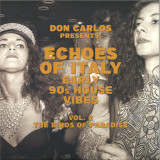
Volume 1 of this expertly curated project of 90s Italian House - put together by Don Carlos.
If Paradise was half as nice… by Fabio De Luca.
Googling “paradise house”, the first results to pop up are an endless list of European b&b’s with whitewashed lime façades, all of them promising “…an unmatched travel experience a few steps from the sea”. Next, a little further down, are the institutional websites of a few select semi-luxury retirement homes (no photos shown, but lots of stock images of smiling nurses with reassuring looks). To find the “paradise house” we’re after, we have to scroll even further down. Much further down.
It feels like yesterday, and at the same time it seems like a million years ago. The Eighties had just ended, and it was still unclear what to expect from the Nineties. Mobile phones that were not the size of a briefcase and did not cost as much as a car? A frightening economic crisis? The guitar-rock revival?! Certainly, the best place to observe that moment of transition was the dancefloor. Truly epochal transformations were happening there. From America, within a short distance one from the other, two revolutionary new musical styles had arrived: the first one sounded a bit like an “on a budget” version of the best Seventies disco-music – Philly sound made with a set of piano-bar keyboards! – the other was even more sparse, futuristic and extraterrestrial. It was a music with a quite distinct “physical” component, which at the same time, to be fully grasped, seemed to call for the knotty theories of certain French post-modern philosophers: Gilles Deleuze, Félix Guattari, Paul Virilio... Both those genres – we would learn shortly after – were born in the black communities of Chicago and Detroit, although listening to those vinyl 12” (often wrapped in generic white covers, and with little indication in the label) you could not easily guess whether behind them there was a black boy from somewhere in the Usa, or a girl from Berlin, or a pale kid from a Cornish coastal town.
Quickly, similar sounds began to show up from all corners of Europe. A thousand variations of the same intuition: leaner, less lean, happier, slightly less intoxicated, more broken, slower, faster, much faster... Boom! From the dancefloors – the London ones at least, whose chronicles we eagerly read every month in the pages of The Face and i-D – came tales of a new generation of clubbers who had completely stopped “dressing up” to go dancing; of hot tempered hooligans bursting into tears and hugging everyone under the strobe lights as the notes of Strings of Life rose up through the fumes of dry ice (certain “smiling” pills were also involved, sure). At this point, however, we must move on to Switzerland.
In Switzerland, in the quiet and diligent town of Lugano, between the 1980s and 1990s there was a club called “Morandi”. Its hot night was on Wednesdays, when the audience also came from Milan, Como, Varese and Zurich. Legend goes that, one night, none less than Prince and Sheila E were spotted hiding among the sofas, on a day-off of the Italian dates of the Nude Tour… The Wednesday resident and superstar was an Italian dj with an exotic name: Don Carlos. The soundtrack he devised was a mixture of Chicago, Detroit, the most progressive R&B and certain forgotten classics of old disco music: practically, what the Paradise Garage in New York might have sounded like had it not closed in 1987. In between, Don Carlos also managed to squeeze in some tracks he had worked on in his studio on Lago Maggiore. One in particular: a track that was rather slow compared to the BPM in fashion at the time, but which was a perfect bridge between house and R&B. The title was Alone: Don Carlos would explain years later that it had to be intended both in the English meaning of “by itself” and like the Italian word meaning “halo”. That wasn’t the only double entendre about the song, anyway. Its own very deep nature was, indeed, double. On the one hand, Alone was built around an angelic keyboard pattern and a romantic piano riff that took you straight to heaven; on the other, it showcased enough electronic squelches (plus a sax part that sounded like it had been dissolved by acid rain) to pigeonhole the tune into the “junk modernity” section, aka the hallmark of all the most innovative sounds of the time: music that sounded like it was hand-crafted from the scraps of glittering overground pop.
No one knows who was the first to call it “paradise house”, nor when it happened. Alternative definitions on the same topic one happened to hear included “ambient house”, “dream house”, “Mediterranean progressive”… but of course none were as good (and alluring) as “paradise house”. What is certain is that such inclination for sounds that were in equal measure angelic and neurotic, romantic and unaffective, quickly became the trademark of the second generation of Italian house. Music that seemed shyly equidistant from all the rhythmic and electronic revolutions that had happened up to that moment (“Music perfectly adept at going nowhere slowly” as noted by English journalist Craig McLean in a legendary field report for Blah Blah Blah magazine). Music that to a inattentive ear might have sounded as anonymous as a snapshot of a random group of passers-by at 10AM in the centre of any major city, but perfectly described the (slow) awakening in the real world after the universal love binge of the so-called Second Summer of Love.
For a brief but unforgettable season, in Italy “paradise house” was the official soundtrack of interminable weekends spent inside the car, darting from one club to another, cutting the peninsula from North to centre, from East to West coast in pursuit of the latest after-hours disco, trading kilometres per hour with beats per minute: practically, a new New Year’s Eve every Friday and Saturday night. This too was no small transformation, as well as a shock for an adult Italy that was encountering for the first time – thanks to its sons and daughters – the wild side of industrial modernity. The clubbers of the so-called “fuoriorario” scene were the balls gone mad in the pinball machine most feared by newspapers, magazines and TV pundits. What they did each and every weekend, apart from going crazy to the sound of the current white labels, was linking distant geographical points and non-places (thank you Marc Augé!) – old dance halls, farmhouses and business centres – transformed for one night into house music heaven. As Marco D’Eramo wrote in his 1995 essay on Chicago, Il maiale e il grattacielo: “Four-wheeled capitalism distorts our age-old image of the city, it allows the suburbs to be connected to each other, whereas before they were connected only by the centre (…) It makes possible a metropolitan area without a metropolis, without a city centre, without downtown. The periphery is no longer a periphery of any centre, but is self-centred”.
“Paradise house” perfectly understood all of this and turned it into a sort of cyber-blues that didn’t even need words, and unexpectedly brought back a drop of melancholic (post?)-humanity within a world that by then – as we would wholly realise in the decades to come – was fully inhuman and heartless. A world where we were all alone, and surrounded by a sinister yellowish halo, like a neon at the end of its life cycle. But, for one night at least, happy.
- A1: Music Not Numbers (Feat London Contemporary Orchestra & Chris Maddock)
- A2: Balance (Feat London Contemporary Orchestra & James Beckwith)
- A3: I`ll Take My Chances (Feat London Contemporary Orchestra, Ria Moran & Binker Golding)
- A4: Believe (Feat London Contemporary Orchestra)
- B1: Just A Little Bit (Feat London Contemporary Orchestra)
- B2: In Search For Goldilocks (Feat London Contemporary Orchestra & James Beckwith)
- B3: You Know (Feat London Contemporary Orchestra, Zola Marcelle & Nubya Garcia)
Jazz re:freshed are proud to present the third studio album by bassist and composer Daniel Casimir.'Balance'encapsulates 'Big Band Energy', with his signature combination of Classical, Jazz and cinematic sounds.
The albumpays homage to the traditions of big band composition and historical significance whilst illustrating contemporary sensibilities.
This ambitious project explores the balance between two large and full sounds of a big band and a string section and is inspired by icon Wayne Shorter's album'Emanon'which made a deep impression on Casimir during the process of creating the album.
An organic development of Casimir's last critically acclaimed album'Boxed In'which featured a jazz quintet alongside a mini chamber Orchestra and was comprised of a woodwind, brass, with a string quartet,'Balance'is a self produced album that takes his musical vision to the next level in his most ambitious body of work to date, leading 26 musicians.
Recorded in November 2022 at Livingston Studios, in a very conscientious recording process which saw piano, bass, and drums recorded together first, followed by trumpet, trombone, saxophone, and the string section and an all star band that consists of figures from the UK Jazz scene, Cassie Kinoshi, Binker, Nubya Garcia, Rosie Turton, Sheila Maurice-Grey and Jay Phelps to name a few alongside a stunning string section performed by the London Contemporary Orchestra.
The final day of recording enlisted the powerful vocal prowess' of Zola Marcelle and Ria Moran to finesse the masterpiece. The track'Music Not Numbers'is an encouraging call to all musicians to not allow streaming culture to affect their creative process and to continue expanding the intrinsic nature of music. Whereas track,'Search for Goldilocks'explores the second meaning behind the album title 'Balance', which is to seek balance within and discover the qualities in life that are "just right".
Orange Vinyl[34,03 €]
”Dieses Album ist nur ein kleiner Teil der riesigen Menge an unveröffentlichtem Material, das wir hoffentlich in naher Zukunft veröffentlichen werden, anstatt es in irgendeinem Archiv verstauben zu lassen.
Die Bigband-Stücke wurden 2014 aufgenommen, die Duette erst kürzlich. Chris White und Paul Moran
haben die Songs, für die sie neue Bandarrangements machen wollten, individuell ausgewählt. Die Stücke
von Willie Nelson und Kurt Elling wurden 2018 und 2019 aufgenommen, die von Curtis Stigers und Joss
Stone 2018.” (Van Morrison)
Van Morrison, zu gleichen Teilen blauäugiger Soul-Shouter und wildblütiger Poet-Zauberer, gehört zu
den wahren Erneuerern der populären Musik, ein rastlos Suchender, dessen beschwörender Gesang und alchemistische Verschmelzung von R&B, Jazz, Blues und keltischem Folk das vielleicht spirituellste Werk im
Rock & Roll-Kanon hervorgebracht hat. Seine Aufnahmen, die nur den Launen seiner eigenen Muse unterworfen sind, decken ein außerordentliches stilistisches Terrain ab und bewahren dennoch eine Konsistenz und
Reinheit, die unter seinen Zeitgenossen praktisch unerreicht ist. Sie sind verbunden durch die mythische
Kraft seiner einzigartigen musikalischen Vision und seines feurigen Gesangs: spiralförmige Wiederholungen von Wehklagen und Flüstern, die die Grenzen der Sprache umgehen, um emotionale Wahrheiten zu
artikulieren, die weit über den Rahmen der wörtlichen Bedeutung hinausgehen.
Saxophonist Walter Smith III pays homage to his hometown of Houston, Texas on his sophomore Blue Note album, three of us are from Houston and Reuben is not, the follow-up to 2023’s return to casual. The album’s wry title signifies the lineup, which includes fellow Houston natives – pianist Jason Moran and drummer Eric Harland – while bassist Reuben Rogers, who hails from the Virgin Islands, rounds out the quartet. Together they enliven 10 compelling Smith originals and an imaginative rendering of a Sam Rivers composition – all of which speaks to Smith’s ascending status as one of modern jazz’s most engaging talents of his generation.
Black Vinyl[36,01 €]
”Dieses Album ist nur ein kleiner Teil der riesigen Menge an unveröffentlichtem Material, das wir hoffentlich in naher Zukunft veröffentlichen werden, anstatt es in irgendeinem Archiv verstauben zu lassen.
Die Bigband-Stücke wurden 2014 aufgenommen, die Duette erst kürzlich. Chris White und Paul Moran
haben die Songs, für die sie neue Bandarrangements machen wollten, individuell ausgewählt. Die Stücke
von Willie Nelson und Kurt Elling wurden 2018 und 2019 aufgenommen, die von Curtis Stigers und Joss
Stone 2018.” (Van Morrison)
Van Morrison, zu gleichen Teilen blauäugiger Soul-Shouter und wildblütiger Poet-Zauberer, gehört zu
den wahren Erneuerern der populären Musik, ein rastlos Suchender, dessen beschwörender Gesang und alchemistische Verschmelzung von R&B, Jazz, Blues und keltischem Folk das vielleicht spirituellste Werk im
Rock & Roll-Kanon hervorgebracht hat. Seine Aufnahmen, die nur den Launen seiner eigenen Muse unterworfen sind, decken ein außerordentliches stilistisches Terrain ab und bewahren dennoch eine Konsistenz und
Reinheit, die unter seinen Zeitgenossen praktisch unerreicht ist. Sie sind verbunden durch die mythische
Kraft seiner einzigartigen musikalischen Vision und seines feurigen Gesangs: spiralförmige Wiederholungen von Wehklagen und Flüstern, die die Grenzen der Sprache umgehen, um emotionale Wahrheiten zu
artikulieren, die weit über den Rahmen der wörtlichen Bedeutung hinausgehen.
Im Rahmen der BLUE NOTE CLASSIC VINYL EDITION erscheinen in der neuesten Staffel zwei moderne Klassiker. Beide Alben gab es bisher nicht auf Vinyl und diese Doppel-LPs enthalten nun auch die bislang nur in Japan veröffentlichen Bonustracks . Stereo, von Kevin Gray von den Original-Masterbändern gemastert, bei Optimal auf 180g-Vinyl gepresst, Gatefold-Sleeves. Nachdem er zuvor auf drei Blue-Note-Alben des Trompeters Terence Blanchard auf sich aufmerksam gemacht hatte, erhielt Pianist Aaron Parks 2008 die Chance, mit “Invisible Cinema” sein erstes eigenes Album für das Label einspielen. Zu hören ist er hier mit einem exzellenten Quartett und einem Programm von durchweg eigenen Kompositionen, die allerdings musikalische Einflüsse von Wayne Shorter bis Radiohead verraten. Jetzt erscheint “Invisible Cinema” zum ersten Mal als Doppelalbum auf Vinyl. Mit “Ten”, seinem achten Album für Blue Note, feierte der Pianist Jason Moran 2010 das zehnjährige Jubiläum seines Trios The Bandwagon. Das noch heute in unveränderter Besetzung spielende Trio hat - ähnlich wie z.B. The Bad Plus oder das Robert Glasper Trio - das Image des klassischen Piano-Trios radikal modernisiert. Auf “Ten”, das nun erstmals als Doppelalbum auf Vinyl veröffentlicht wird, bietet The Bandwagon neben Originalen von Moran auch einzigartige Interpretationen von Stücken aus der Feder von Thelonious Monk, Jaki Byard und Conlon Nancarrow.
WHITE COLORED VINYL
9-piece powerhouse Nubiyan Twist embark on a fresh musical odyssey with their vibrant fourth album "Find Your Flame". Over 12-track the band seamlessly weaves together global grooves, soul and jazz; expertly intertwined with electronic elements, horn-led melodies and spontaneous improvisation. The album marks a significant evolution for the group as they welcome Sheffieldbased vocalist Aziza Jaye to the forefront, adding a fresh dimension of Patois and RnB to their sound.
Back in stock!
The Italian proto-house bomb from Masarima on Clone Royal Oak gets a well deserved remix treatment! Originally produced by Mystic Jungle and Whodamanny, this one gets a work over by The Egyptian Lover who gets his freak on and delivers in his inimitable style...You know what's up!!! Pure west coast 808 electro funk bliss. Luca Lozano also comes correct with two remixes where he takes it another route on both. On the 'Breakbeat Guy Remix' the early 90s inspire him to a uk breakbeat version. And Karlos Moran joins him for the Tribal Workout Dub not unlike NY's garage era... This is the rebound of Masarima's ''Freak Like U'' we all have been waiting for!
MidnightRoba is Roba El-Essawy, the voice of UK trio Attica Blues. Golden Seams marks Roba's return to music, this time both as vocalist and producer. Recorded during lockdown of 2020, Golden Seams features artists Jason Moran, Ben Williams, Edward Wakili-Hick, Junius Paul, David Mrakpor, Robert Mitchell, Tony Nwachukwu, Artyom Manukyan, Bubby Lewis, Mike King, Alec Harper, Dezron Douglas and Tommaso Cappellato. The album's foundation is firmly inspired by jazz, but in a style of her own. From electronic tracks such as Safe With Me, Self Doubt and Shelter Within, to the ballads Don't Let This Change, Reminded and jazz ballad Be Still, to the spiritual Bitter Boy (ft Jason Moran) and the classical title track Golden Seams.
The album was supported by Gilles Petterson on both BBC Radio 6 (as a feature artist) and Worldwide FM and by Kevin Le Gendre on BBC Radio 3's J to Z; by Tony Minvielle, Anne Frankenstein and China Moses on Jazz FM, where Don't Let This Change featured as Track of the Week, as well as by Kev Beadle, Alexander Nut, Leanne Wright, Charlie Dark, etc on NTS, Totally Wired Radio and Worldwide FM.
- 1: Believe
- 2: The Power
- 3: Runaway
- 4: All Or Nothing
- 5: Strong Enough
- 6: Dov'e L'amore
- 7: Takin' Back My Heart
- 8: Taxi Taxi
- 9: Love Is The Groove
- 10: We All Sleep Alone
- 11: Believe (Almighty Definitive Mix)
- 12: Believe (Club 69 Future Anthem Mix)
- 13: Believe (Phat ?N' Funky Club Mix)
- 14: Strong Enough (Club 69 Phunk Mix)
- 15: Strong Enough (Male Version)
- 16: Strong Enough (Pumpin' Dolls Radio Edit)
- 17: All Or Nothing (Almighty Radio Edit)
- 18: All Or Nothing (Austrian Version Metro Mix)
- 19: All Or Nothing (Danny Tenaglias Inchermental)
- 20: Dov'e L'amore (Emilio Estefan Jr. Extended Mix)
- 21: Dov'e L'amore (Tony Moran's Anthem 7? Mix)
- 22: Dov'e L'amore (Tee's Radio One Instrumental)
- 23: Dov'e L'amore (Ray Roc's Latin Soul Instrumental)
Cher celebrates 25 years of "Believe" : On November 3, the Grammy Award-winning masterpiece will be released in a new, expanded " BELIEVE (Deluxe Edition) " that adds a whopping 13 remastered remixes to the mega-seller's original track listing (11 million worldwide!). The deluxe edition will be released in 3LP/2CD/Download & stream formats via Warner Records. "Believe" was an album full of dancefloor perennials - a fact that the assembled remixes in the new mastering underline once again.
"Tee's Radio One Instrumental? & "Ray Roc's Latin Soul Instrumental" from "Dov'e l'Amore?" are included here in one package for the first time, for example, along with remixes of the empowerment anthem "Strong Enough," "All or Nothing," "Dov'è l'amore" and the title track "Believe," a worldwide smash hit that sold over 10 million copies and reached #1 in 23 countries, including Germany, where it now has 5x gold status.
Cher is one of the most successful artists in history, selling over 100 million records during her unparalleled career. To date, she is the only artist:in to record a #1 single on the Billboard charts in six consecutive decades.
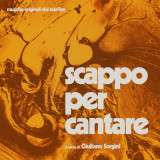
Another dream coming true! One of Giuliano Sorgini's finest and most sought-after titles is finally available as an official LP reissue – the first ever – remastered from the original tapes.
Originally released in 1971on the small library music imprint FAMA, which operated as a sub-label of RCA Italy, the record contains the original music written for Scappo per cantare, a small, pseudo-psychedelic 'musicarello' (musical comedy film) broadcast on RAI television and starring, among others, Italian singers Gianni Morandi and Mauro Lusini.
The only credited album artist is Sorgini, but it's impossible not to perceive, in this record, the hand of his close friend and colleague Alessandro Alessandroni.
This should not come as a surprise. In the early 70s, the two composers and multi-instrumentalists had a fruitful collaboration that saw them, under the monikers Braen (Alessandroni) and Raskovich (Sorgini), produce an abundance of works together, most of which have now gained the recognition they deserve. These include, among others, two 7" singles from their band The Pawnshop, three records in the series Alle sorgenti delle civiltà (Folkmusic), the crime/noir library albums Quarta pagina (Usignolo) and Inchiesta giudiziaria (Octopus Records), as well as the LP Tempo Libero (Panda Records), which was released shortly after the record presented here and in some ways drew rhythmic inspiration from it.
While their collaboration remained unacknowledged on the original release of Scappo per cantare (this was not uncommon at the time, especially in the field of library music), the record sounds perfectly in line with other works composed by Alessandroni in the early 70s, such as Complesso Gisteri's Mostra Collettiva (co-written with Oronzo De Filippi), or even a landmark album like Spontaneous, where Sorgini contributed to a handful of tracks.
So, yes, the sheer beauty of Scappo per cantare is the result of an incredible synergy between two heavyweights of Italian library music! Airy and sweeping melodies à la Zoo Folle, psychedelia à la Under Pompelmo, and various percussion instruments played by Sorgini seamlessly blend and fuse with elements and touches provided by Alessandroni.
More specifically, we find Alessandroni's signature, melancholy whistle in "Desolazione"; the peaceful and dreamy sound of his 12-string guitar in "Scogliere" and "Con Amore"; the trademark harmonies of his vocal ensemble Cantori Moderni in the last two tracks mentioned and in "Per cantare"; and his ingenious use of distortion on his Fender Stratocaster in the suspenseful transitions "Concentrazione" and "Fantocci", as well as in the frantic/hypnotic hippie numbers "Mordente" and "Fendente" (as a side note, it is worth remembering that Alessandroni experimented extensively with distortion in the rock-infused album Underground, co-written with De Filippi and released in 1971 under the moniker Braen's Machine, probably a reference to British psychedelic band Soft Machine).
The creative relationship between Sorgini and Alessandroni was so symbiotic that it would be useless to try to identify in more detail their respective contributions to the sound of Scappo per cantare. The alchemy between these two musical geniuses is the key to the album's exquisitely Italian mixture of cheerful lounge, sweet psychedelia and smooth easy listening.
To do justice to the quality of the music, this remastered reissue is enriched by a new artwork by Eric Adrian Lee, who drew inspiration from the psychedelic visual culture of the period in which the album was written and recorded.
The ninth issue of We Jazz Magazine, "Oisters" for Petter Eldh. 128 pages, 170 x 240 mm in size and printed on 140g Edixion paper with laminated 300g Invercote covers.
All articles presented IN ENGLISH.
Petter Eldh by Peter Margasak, Oren Ambarchi by Daryl Worthington, Sven Wunder by Markus Karlqvist, Robyn Steward by Dave Waller, Jason Moran by Rui Miguel Abreu, Darius Jones by Stewart Smith, Carlos Garnett by Andy Thomas, Discaholic column by Mats Gustafsson, Black Fire by Danny Veekens, reviews, plus more.
Country of printing: Finland
• It was standard practice in the 1960s for British beat groups to pepper their repertoires with American R&B songs. Formed by five music-loving schools from Blackpool, the Missfits were no exception. Although they group released no records during their time together, for two brief years they were the toast of Blackpool clubland. They played at the same veues as local bands such as the Rockin’ Vickers, including some gigs at the famous Oasis Club in Manchester and at the short-lived Blackpool branch of the Twisted Wheel.
• In February 1964, they won a recording test in a talent competition and travelled to London that summer to commit some of their favourite songs to tape. The tape reel was soon forgotten and thought lost but Janet had thankfully kept it safe, enabling the appearance of the four tracks on this 60s-style vinyl EP. Drummer Janet Baily provides lead vocals on their version of John Lee Hooker’s ‘Dimples’, and bass player Pauline Moran sang lead on Bo Diddley’s ‘You Can’t Judge A Book By The Cover’, Chuck Berry’s ‘I’m Talking About You’ and Ray Charles’ ‘What’d I Say’, with guitarists Andrea Hine, Carola Daish and Liz Hall joining in on backing vocals.
- A1: Georgia Ave (Feat. Josh Johnson)
- A2: An Invitation
- A3: Call The Tune
- 4: A | Good Good (Feat. Jade Hicks, Josh Johnson)
- A5: Omnipuss
- A6: Clear Water (Feat. Deantoni Parks, Jeff Parker, Sanford Biggers)
- B1: Asr (Feat. Jeff Parker)
- B2: Gatsby (Feat. Cory Henry, Joan As Police Woman)
- B3: Towers (Feat. Joel Ross)
- C1: Perceptions (Feat. Jason Moran)
- C2: Tha King (Feat. Thandiswa)
- C3: Virgo (Feat. Brandee Younger, Julius Rodriguez)
- C4: Burn Progression (Feat. Hanna Benn, Ambrose Akinmusire)
- C5: Onelevensixteen
- C6: Vuma (Feat. Thandiswa, Joel Ross)
- D1: The 5Th Dimension (Feat. The Hawtplates)
- D2: Hole In The Bucket (Feat. The Hawtplates)
- D3: Virgo 3 (Feat. Oliver Lake, Mark Guiliana, Brandee Younger, Josh Johnson)
Meshell Ndegeocello grooved jetzt bei Blue Note Records!
Die GRAMMY-prämierte Multiinstrumentalistin, Sängerin und Songwriterin gibt ihr Blue-Note-Debüt mit einem vielschichtigen Funk-Jazz-Album, das den Beginn eines neuen Kapitels in ihrer Karriere markiert.
Nach ihrem Coverversionen-Album „Ventriloquism“ (2018) kehrt Meshell jetzt mit 100% neuem, eigenem Material zurück, das ein breites Spektrum ihrer musikalischen Wurzeln abdeckt. „The Omnichord Real Book“ wurde von Josh Johnson produziert und präsentiert eine vielseitige Familie von Gastkünstlern, darunter Jason Moran, Ambrose Akinmusire, Joel Ross, Jeff Parker, Brandee Younger, Julius Rodriguez, Mark Guiliana, Cory Henry, Joan As Police Woman, Thandiswa und andere.