- A1: Lathe In Reverse
- A2: One Too Many Times
- A3: Society Of Men
- A4: What's Your Name
- A5: Roaming Around
- A6: Joke's On You
- A7: Parasite
- A8: End Of The Day
- A9: Bottom Bell
- A10: O Your Name
- B11: Lost In The Glare
- B12: Laughing In My Sleep
- B13: Not Even Touch It
- B14: See If It Lasts Longer
- B15: Animal Diseases
- B16: Eyes So Clear
- B17: I'll Walk
- B18: O Delight
- B19: Night Time
- B20: I'm Such A Fool
- B21: Children
Buscar:roaming
It's 2022. The world lockdown is finally over. Imagine a picturesque lake in Tuscany. Now imagine a floating state of the art studio on that lake with two maverick rock icons creating a wild, alchemical concept album: Hugo Race, frontman of Australian post-punk legends The Wreckery and guitarist for the Bad Seeds and leader of True Spirit and Fatalists, and Gianni 'Marok' Maroccolo, producer of Italian alternative music and film soundtracks since the 1980s Florence darkwave scene with Litfiba, CSI & CCCP. Together, they fuse an existential narrative made up of individual stories in the style of Boccaccio's Decameron with psychedelic soundscapes framed by experimental electronica, rock instrumentation and decades of experience as cutting edge musicians and studio producers to bring you an album that defies categorization - The Vigil… "We all knew the situation was inauspicious, the planets lined up overhead like a firing squad and this empty silence roaming around our town, cut off from the other mountain towns by an electrical blackout. Without power, there was no way of knowing what was happening anywhere else. Left alone with our thoughts until help came from outside, a group of us gathered around a blazing fire in the abandoned city hall, feeding it with documents and broken furniture. Scientific progress had long told us we were parcels of dumb atoms and that consciousness and the soul were merely human projections. Now science had failed itself..."
Born and raised in Argentina, Morita Vargas is an experimental artist and producer based in Buenos Aires. She manipulates her voice through reverbs, delays and whispers, singing in a self-invented 'language'. The sound of Morita’s voice is a portal into her thriving, dreamlike world brimming, shimmering and beating with unrefined natural sensations which stimulate something primordial yet strangely contemporary.
As far back as 2014 she began work on her first productions - early sketches which later became the basis for ‘8’. It all started off as voice memos on her phone (recorded while roaming the streets and riding the trains of Greater Buenos Aires). Later on, Morita introduced various instruments into her vision: kalimba, harmonica, keyboard, flute, tambourine, chajchas, and cajón. Composed and performed from that period until its original release in 2018, ’8’ features 10 original voice-led compositions that in scope recall evocative portraits of synthesized landscapes and rainforests, attuned to a vibrant modern pulse and enchanting vocals. Morita Vargas “8” has achieved a kind of polyphonic soundscape which evokes unfamiliar realities through voyages within and between the realms of ambient and experimental music.
In numerology the number 8 symbolizes the transition between heaven and earth, the illumination of our infinite capacity for various metamorphoses. Tackling ideas of transformation, mutation, cyclical processes, death, creation, melancholy, and joy, the album you are holding is a monumental and deeply personal statement. You are invited to walk barefoot down the mystical path and indulge in the process of spiritual expulsion and renewal that is ‘8’. The path lies along the route of infinite meanings, somewhere on the border between dream and reality.
Verrazzano continues with the second issue in our summer EP series! This time Type-303 is really ”Lost In Paradise” with this four-track EP to suit all sophisticated tastes.
The first track hitting your nerves is ”Acid Disco Time”. Have you ever wondered how it feels to go to a disco with a slight ”acidy” taste in your mouth and realize that something is familiar, but at the same time, somehow… out of place? You hear a Seinfeld bass slapping a classic groove, then a bubbling energy starts rising under the surface and now your armpits sweat in your blazer! Add some glitter dust shimmering in smoke, and the whole thing goes off to a spacey gallop! Is this now so-called ”Cosmic-Business” dance music?
The story continues with ”Lost In Paradise”, and takes us to the deep end of turquoise-colored waters. If you found a seashell from the beach and listened to its stories carefully, could you handle the tempting whispers of mermaids, and resist the melodies from those happy days of ancient Minoan Paradise? To get a taste of such delights, this track delivers a glimpse!
How do our ancestors teach us lessons long after their earthly existence? By roaming the Earth in cosmic fashion, of course!
”Spirit Dance”, with its ethereal flute and otherworldly harmonies puts the listener in a place where one is the question mark and the answer too… Deep? It should be.
When the spirits have done their hypnotic dance and the dizziness has vanished, it is time to wander on a field and look at some beautiful ”Wild Horses”. Basking in the evening dawn, you appreciate that some energies are not fully tamed, but are glorious as wild beings and should be kept as such. It’s the same with music, nurture the wild sides of sounds and energies!
Das Chaos ist zurück: Hier kommt das Vinyl zum vierten Teil von Lloyd Banks' Halloween-Havoc-Mixtape-Serie. Auf "Halloween Havoc IV: The 72nd Hr" droppt der Rapper aus Southside Jamaica Queens 15 neue Tracks samt Features von Vado und Sy Ari Da Kid. Die erste "Halloween Havoc" erschien 2008 und wurde 2015/16 mit den Teilen zwei und drei fortgesetzt.
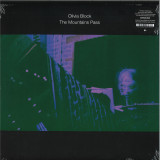
Black Truffle is pleased to announce The Mountains Pass, a major new work from Olivia Block. A key player in Chicago’s vibrant experimental music scene since the late 1990s, Block has developed an extensive body of work grounded in a personalised, at times emotive approach to the studio-based practices of the musique concrète tradition, while also encompassing improvisation, orchestral pieces, sound installations, and a sustained engagement with the piano. On The Mountains Pass, recorded by Greg Norman at Steve Albini’s Electrical Audio and meticulously edited and constructed over the course of three years, Block pushes into new terrain, introducing her singing voice and drums played by Jon Mueller into flowing assemblages that move seamlessly from ruminative organ tones and fragmented piano airs to explosions of sizzling synths and thundering percussion. Like many of Block’s past works, which include, for example, a sculptural installation using the sound of oyster beds, The Mountains Pass draws inspiration from nature and the animal world. Time spent in a particular mountain range in Northern New Mexico informs this suite of pieces, whose lyrics and titles refer particularly to animal life in the area. Beginning with bursts of white noise and delicate synthetic pops and squeaks, opener ‘Northward’ very soon reveals the special direction the album will take, as lyrical piano lines are joined by Block’s fragile voice, singing words written from the perspective of f2754, an endangered Mexican gray wolf who wandered more than five hundred miles from Arizona to New Mexico in 2022. The fragment of song quickly breaks off, leaving us with a ghostly electronic hum. ‘The Hermit’s Peak’ follows, one of two epic pieces at the album’s core. Beginning with chiming, almost harpsichord-like tones, it moves through episodes of spacious, ruminative piano, Jon Mueller’s sparkling cymbals, stuttering cut-up piano sounds, and a climax of keening organ and trumpet tones (performed by Thomas Madeja). Continuing the exploration of vintage keyboard and synth tones heard on Block’s Innocent Passage in the Territorial Sea (Room 40, 2021), the music sometimes suggests the great outer-limits works of 70s Italian prog figures like Franco Battiato or Arturo Stalteri in the languorous drift of synthesizer, organ, and piano tones and the meticulous yet organic flow of its construction. ‘Violet-Green’ opens the second side with another epic journey, its lyrical content concerning ‘a mysterious bird die-off and a forest fire’. Block’s crystalline voice and rich piano chords at times call up the restrained chamber songs of Janet Sherbourne, but fragmented and threaded through passages of woozy pitch-bent keyboards, hypnotic distant thuds, tinkling bells, and searing distorted synth tones. On ‘f2754’, the freedom of the roaming wolf surges through dense layers of rapid keyboard attacks and long organ tones over a propulsive drum performance straight out of Animal Magnetism-era Arnold Dreyblatt. This distinctive sound world is then reencountered in a darkened mirror image in the uneasy, metallic shimmer of the closing ‘Ungulates’, named in reference to a heard of elk roaming through the mountains. Like Battiato’s Clic or Gastr del Sol’s Upgrade & Afterlife, The Mountains Pass inhabits the underexplored terrain where the beauty of song coexists with a radical formal openness, illuminating the deep musicality and warmth that have been present in Block’s work all along.
Having built a loyal local Antwerp following off of the success of their 2019 debut self released album, ‘Forgotten Kingdom’, and growing reputation for electrifying stage performances, Kolonel Djafaar achieved worldwide recognition in 2021 for the ‘Cold Heat’ EP on Batov Records, attracting praise from Music Is My Sanctuary (“triumphant), and support from Gideon Coe on BBC 6 Radio Music, and DJs across Worldwide FM, Soho Radio, Le Mellotron, and KEXP.
The group overcame busy schedules and frequent quarantine periods to hit the studio in February 2022 to lay down four tracks. However, the creative itch persisted, leading to an intense writing session in August, deep in the heart of a tranquil forest. From noon until midnight, the band immersed themselves in the creative process, embracing the freedom to make noise without restraint.
Fueled by hearty breakfasts, unwavering focus, and the ambient clucking of chickens roaming the studio, Kolonel Djafaar crafted the majority of ‘Getaway’. This period marked a pivotal shift as a number of new band members joined just in time for the August sessions.
Membership changes, including Emiel Lauryssen joining on trumpet, alongside guitarist Philip Matthhijnssens, the band's palette has broadened and new sounds are able to break through. From psychedelic rock and soul influence of the Daptone Records’ affiliated Budos Band, surf rock (“Urban Dweller”), Morricone Spaghetti Western guitar, and Afro Cuban (“Kelmendi”), alongside the brassy Afrobeat and Ethio jazz vibes the group have been known for.
The broader dynamics of ‘Getaway’, and the band’s more cinematic and experimental approach, is particularly apparent on "Siren’s Glitch" and "Phil’s First Tear". The latter, first conceived by drummer Anton Van Hove, features the lead guitar doubling up with the bass guitar for added impact. Whilst the origins of "Convoi Exceptionnel", a brass & synths stomper of a march, trace back to a jam session during the band's Hungarian tour, another vital period of prolonged time together, capturing the organic essence of their experiences on the road.
Each track on ‘Getaway’ holds a unique connection to at least one band member, and all benefit from a collaborative approach to songwriting. "Sparking Clover'', an Ethio-inspired psych & soul groover penned by tenor saxophonist Doyin Smith, carries a poignant undertone inspired by personal loss, while psych rock leaning tracks like "Apologies in Advance" showcase the band's evolution and increasing professionalism in crafting a distinct sonic experience.
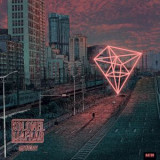
The curious cover art depicts a lone individual heading down an empty city street towards a large mysterious glowing object, evoking the common emptiness and struggle of urban life, and the search for meaning or just something better. The band envision the object to represent this album, offering a beacon to like-minded listeners. Kolonel Djafaar invite music enthusiasts on an immersive journey, to ‘Getaway’ from the daily grind of life, on an album reflecting diverse influences and marking a new chapter in their musical exploration.
- A1: Glimlip, Mad Keys, Solomon ‘Stay’ (2:26)
- A2: Flozigg ‘Guarded Woman’ (3:08)
- A3: Kiefer, Sara Kawai, Miamore ‘Plum Blossoms’ (4:12)
- A4: Flozigg, Adia ‘One Night’ (3:35)
- A5: Mad Keys, Kaelin Ellis, Miamore ‘Kiatus Haiote’ (1:47)
- A6: Tom Doolie, Dao, Deovi ‘One Of Those Days’ (Ft. Kiefer) (1:56)
- A7: Sebastian Kamae, Joe Bae, Paul Grant ‘30 Minutes’ (1:44)
- A8: Glimlip, Søren Søstrom, Sara Kawai ‘Ta Ta Tee’ (Ft. Loyae & Miamore) (3:05)
- B1: Deovi, Nokiaa, Miamore ‘Deovi’ (2:09)
- B2: Joe Bae, Paul Grant, Loyae ‘Volo’ (2:18)
- B3: Joe Bae, Loyae, Miri ‘Ease The Sky’ (Ft. Tom Doolie) (1:52)
- B4: Kaelin Ellis, Saltyyyy V, Molly Mcphaul ‘For The Year’ (1:42)
- B5: Tom Doolie, Burrito Eats, Miamore ‘Poolday’ (2:10)
- B6: Elaquent, Joe Bae ‘Stay A While’ (1:31)
- B7: Flozigg, Miamore, Dhanya ‘Surrender’ (3:34)
- B8: Kaelin Ellis, Paul Grant, Louk ‘Lemon Soda’ (2:05)
Twentysix artists, lots of wine and pizza, no agenda. This compilation is a collection of vibes and memories from our PLYGRND Beat Retreat in Tuscany, Italy, wrapped in songs. Featuring tracks by Kiefer, Sara Kawai, Flozigg, Adia, Kaelin Ellis, Molly McPhaul, Burrito Eats, DAO, Desh, Dhanya, Elaquent, Elijah Fox, Glimlip, Joe Bae, K Le Maestro, Louk, Mad Keys, miamore, Miri, Nokiaa, Paul Grant, DEOVI, Relyae, Saltyyyy V, Sebastian Kamae, and Tom Doolie. Driving up a hill lined with pine trees and grapevines, arriving at a beautiful arrangement of terracotta colored houses embedded in an unreal scenery made of grapevines and verdurous greens. Roaming this area, worrying about nothing but the day that lies ahead. Bumping into fellow creatives who share the same passion for music and art. Collaborative energy coming out of this; exploring new sounds with new souls. You capture yourself getting lucky, and think to yourself: Don’t take it too seriously, it’s not that deep. But also, make some beautiful stuff, if you can. This year's compilation is a testament to the rich diversity of talent on display. The PLYGRND Beat Retreat Compilation 2023 is not just a collection of tracks; it's a celebration of the artists who brought their A-game to our event. Get your hands on this exclusive gatefold-vinyl, and immerse yourself in the sounds that defined the PLYGRND Beat Retreat 2023. Limited edition, high-quality, and a must-have for any music enthusiast.
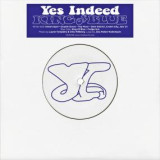
King Of Blue by Yes Indeed sees Laurie Tompkins and Otto Wilberg take their eclectic stance on cosmic jazz and electronics to further uncharted and dreamlike territory, encompassing a unique logic of what is harmoniously absurdist.
King of Blue by Yes Indeed sees members Laurie Tompkins and Otto Willberg further dive into their melismatic take on cosmic jazz and new electronics, by way of their highly eclectic and at times nonsensically sensical modus operandi. Their work is defined by an eloquent flurry of ideas, spheres, and signifiers, creating a musical universe of surprising longevity and depth. Treating musical convention with gentle disdain, Yes Indeed take on a variety of genres and moods and switch them around into a beautifully melismatic and dreamlike state of being. King Of Blue is a mini- album of fragmented beauty and warmth. It puts the illogical center stage and gives space to abruptly miniaturist musical ideas, allowing them to take on a meaning bigger than one would expect. It is cosmic music for modern times. A brazen descent into the execution of a fundamentally diversified musical stance.
'Yes Indeed' are Laurie Tompkins & Otto Willberg. Live, they play keys, bouncy bass and sing over tactile, emotive samples. Their music is epic and also somehow wrong, with space for delicacy, straight-up joy and soaring licks. Since 2022’s ‘Rotten Luck’ - their first proper album, on Bison - YI have played across the UK and Europe. Solo, Laurie co-ran the Slip label and has put out CDs on Entr’acte, 33-33 and Hyperdelia. Otto is a roaming bassist in groups like Historically Fucked and Abstract Concrete and his LP of “wildly singular, wickedly trippy and sensual set of fusion jams” (Boomkat) was recently out on Black Truffle.
The fledgling Detach label continues to show it means business with a new 12" in a lovely screen-printed sleeve. Romanian artist Dyl is the one in charge and has been serving up consistently excellent and innovative sounds now for serval years. All of these cuts mix up great sound design with languid rhythms - the first is eerie, with watery droplets and glassy tinkles hanging in the air, while 'Glasshouse 2' has a percolating rhythm down low. 'Glasshouse 3' gets a little more dynamic with a shimmering low end and freaky abstract life forms and 'Glasshouse 4' layers in more intense and ever-shifting synth lines while the closer sounds like it's roaming through a deserted factory long after it shut down.
The title of Staś Czekalski’s debut translates as ‘Adventures’. It’s fitting for an album that invokes feelings of exploring, roaming, ambling through bustling cities and changing seasons, around castles and swaying fields, down the pixelated paths of old computer games, and all the way home.
We get the sense of being on some carefree yet critical quest, with Staś taking on the role of narrator as much as composer. Part fable, part Moomins, part seek and you shall find, these boppy, wide-eyed and reflective tracks set imagination in motion.
These are sonic adventures in a more literal sense too, at once quietly bold and intricately arranged. Bouncing around a playful gamut of references, from the whimsically lo-fi electro-acoustic pop of Anne Laplantine through trip-hoppy bedroom ambient and indietronica, Staś sets this blend twinkling with his singular form of magical thinking.
Three years on from the desolate beauty of their debut, Quindi Records is proud to present the second album from Dead Bandit. The ghosts of their past endeavours still haunt their guitars, but on Memory Thirteen the duo's delicately dishevelled Southern gothic feels tonally distinct from their prior outing.
Dead Bandit is Ellis Swan and James Schimpl - the former a noted solo singer-songwriter from Chicago with a penchant for eerie, witching hour murder ballads and the latter an accomplished Canadian multi-instrumentalist with a bias towards heartworn, roaming soundscapes. Their instrumental collaboration has an open, lyrical quality which says as much as any spoken line, and on this album they've especially embraced the power of contrast as we're guided between scenes, sometimes within the confines of one track.
'Peel Me An Orange' is especially instructive in this regard, beginning as a blown-out paean to sonic degradation and the acute sense of hopelessness it projects, only to yield to a lilting tape loop of twanging guitar before entirely widening out in an emphatic burst of post-rock optimism.
Post-rock isn't noted for its banal cheeriness as a genre, and Dead Bandit aren't about to lay down feel-good drive-time anthems, but the sense of pulling at extremes of energy and introspection show Swan and Schimpl to be testing the emotional limits of their weatherbeaten sound. The cautiously sentimental mood of 'Blowing Kisses' hints at the hard-won light which can be encountered while pointedly driving into darkness.
Sometimes noise is a subtle device - a looming bed of unease under the forthright pluck of Swan's distinct guitar tone or the cracking round the edges of a beaten up drum machine. On 'Memory Thirteen' the distortion on the bass becomes a central figure in its haggard waltz, while 'Staircase' and 'Perfume' leave the signal wet until the delay feedback becomes the body of the riff. Either way, the sound is never left untouched as Swan and Schimpl grow more comfortable in their exchange, blurring their respective sonic languages as they expand their shared vocabulary to create an album of depth, difference and devoted distortion.
Music On Hold's second album raises to its climax an altogether well-cultivated ambiguity between new ambitions and the waiting posture of a band which has never lived up to its name so well. Produced in a cellar in the 7th arrondissement of Paris, supported by Ray Jane and "surrounded by a group of people who manage to concentrate on something for more than 15 minutes", "MOH4Ever" is one of the most personal things that Emile Cartron-Eldin delivers today, "from the salt-dough workshops in kindergarten". Opening, "His Master Voice" transforms the tribute to a recently deceased loved one into a sad clown's dancing homily. With no surprise follows "Wander" and roaming in a Paris traveled up and down at least ten thousand times already. "Music On Hold 4 Ever" then releases the title of this album in a cry accompanied by an invitation to "unplug" his singer. We hear a bit of the group's very first single, "Bread", taken through the prism of Beck's "Up all night". "Citadel", 6'30" end of side A, loudly proclaims as a chain-breaking the nostalgia of truant school and a desire not to die (at least not like Darby Crash). Mixed in - like this entire album - are the versatile ingenuity of LCD Soundsystem and Gorillaz with Italo-disco arrangements from Roberto Zanetti (aka Savage). With "Over", "Home", "Taming a Tiger" and "Last Laugh", side B prolongs the tightrope walker's delirium by summoning in no specific order, memories in Vienna, resumption of excessive consumption, the fact that "the director of the US Federal Reserve is a real fake-ass" and the cynical humo(u)rous swings of a guy overwhelmed by them in an everlasting after-party. From the first LP, "30 Minutes Of..." and its already delayed release, its chopped tour, "Music On Hold 4 Ever" digs a refined pop, no longer as "solar" as some could have described it when everything seemed to be going quickly. Retaining a semblance of immediacy, the 8 pieces of this second album open up new perspectives with their elegant sophistication, in a quite French and truly original touch of DIY and experimentation that the group can pride themselves on. " I'm twenty-nine, and i don't wanna die ".
Mount Maxwell returns with another full-length journey into memory, melody, and geography - this time roaming beyond the BC environs of his previous records into a stranger, less knowable country. While still woozily nostalgic in the vein of Only Children and The People’s Forest, this outing feels more exploratory and wide ranging in scope, with a denser mixture of influences at play. The somnambulistic drift of Sea of Milk sets the stage with a series of wavering synth pulses that push us languidly toward land, eventually setting us down on the sands of Maze Crete, where a shadowy latticework of hand drums, flutes and synths await. From there we ascend to the aptly named Sky Eye, a rolling mixture of acoustic beats and analog string machines that gives us our first bird’s eye view of the album’s landscape. A Long Road pushes the acoustic instrumentation further, with shimmering tambourine marking time for a collection of hand drums and shakers, while Ages summons up an occult-like dream of glacial arpeggios and whispering synths. Slow Moves and Tree Motion float effortlessly along on beds of lazy congas and woodblocks before finally giving way to the title track - a heady juggernaut of distorted synths and trundling rhythms that propels us through the album’s second half like a locomotive through darkening hills. Drawing the record to a close, the gently repeating keyboard phrase of Mist blooms unexpectedly into a rainbow of human voices before evaporating into the oceanic swells of Hi Traveller. And there Littlefolk leaves us as it found us; adrift in a rolling sea.
- Neath The Shadow, Down The Meadow
- Leaves Lying On Each Side
- By The River, Flowers Shiver (Fading Dying In Their Pride)
- Someone Straying, Long Delaying
- Sad The Parting Down The Lane
- I Must Leave You Someone's Saying
- Till The Roses Come Again
- As I Wander, I Will Ponder (On A Happy By And By)
- On A Summer Over Yonder (With Joy To You And I)
- Sunshine Over Clover Blossom On The Meadow Wide
- Summer's Fingers Sweetly Linger (Everywhere On Every Side)
- Someone's Roaming In The Gloaming
- Happy Hearts That Feel No Pain
- All Their Sadness Turned To Gladness
- Now The Roses Come Again
Red Vinyl[26,77 €]
Bachman has a dedicated fan base who is tightly focused on his next steps. While he has always been restless with his art, his stylistic changes in 2020's "Axacan" demonstrated - and excited - many within that fan base as to how transformative his work and vision can be for "traditional" music in these modern times. This fresh work continued with 2022's "Almanac Behind". "When The Roses Come Again" is a perfect next step to this trendline, a synthesis of tradition and abstraction. In other words, it is yet another vivid reimagining of what a "traditional" album can be in modern times. On this LP Bachman takes acoustic guitar, banjo, fiddle and mouth harp alongside oscillators, drum apps and more to construct one-man string band compositions. Integrating technology as a tool for collage, as well as acoustic instruments that pre-date all of us, Bachman excitingly creates an album that has as much to do with Terry Riley, Laraaji, Eno’s late 70’s ambient albums, and 75 Dollar Bill, as it does the Carter Family, Stanley Brothers, and Hobart Smith. "When The Roses Come Again" is destined to thrill those who have been so enamored with Bachman's past exciting turns as well as pull new folks into the folks who are excited by new sounds.
- Neath The Shadow, Down The Meadow
- Leaves Lying On Each Side
- By The River, Flowers Shiver (Fading Dying In Their Pride)
- Someone Straying, Long Delaying
- Sad The Parting Down The Lane
- I Must Leave You Someone's Saying
- Till The Roses Come Again
- As I Wander, I Will Ponder (On A Happy By And By)
- On A Summer Over Yonder (With Joy To You And I)
- Sunshine Over Clover Blossom On The Meadow Wide
- Summer's Fingers Sweetly Linger (Everywhere On Every Side)
- Someone's Roaming In The Gloaming
- Happy Hearts That Feel No Pain
- All Their Sadness Turned To Gladness
- Now The Roses Come Again
Black Vinyl[30,67 €]
Bachman has a dedicated fan base who is tightly focused on his next steps. While he has always been restless with his art, his stylistic changes in 2020's "Axacan" demonstrated - and excited - many within that fan base as to how transformative his work and vision can be for "traditional" music in these modern times. This fresh work continued with 2022's "Almanac Behind". "When The Roses Come Again" is a perfect next step to this trendline, a synthesis of tradition and abstraction. In other words, it is yet another vivid reimagining of what a "traditional" album can be in modern times. On this LP Bachman takes acoustic guitar, banjo, fiddle and mouth harp alongside oscillators, drum apps and more to construct one-man string band compositions. Integrating technology as a tool for collage, as well as acoustic instruments that pre-date all of us, Bachman excitingly creates an album that has as much to do with Terry Riley, Laraaji, Eno’s late 70’s ambient albums, and 75 Dollar Bill, as it does the Carter Family, Stanley Brothers, and Hobart Smith. "When The Roses Come Again" is destined to thrill those who have been so enamored with Bachman's past exciting turns as well as pull new folks into the folks who are excited by new sounds.
The popularity of speed/thrash metal in the late 80's and early 90's is undeniable.
After the demise in the late 80's of cult speed metal band BLOODLUST, Sandy K and John Lisi embarked on a new project, remaining true to their roots in fierce and fast metal. With the addition of Jeff Mohr and A.J. Cavalier to the group, LAST RITES emerged, wanting to assert themselves as a "schizophrenic speed metal" band.
And that's exactly what we can expect from LAST RITES! In this vinyl release, where we put together the band's two cassette recordings ("Don't Be Denied" from 1990 and "Agony" from 1991), we can find a perfect example of the speed/thrash of the turn of that decade: fierce, intense and uncompromising, roaming on themes of personal despair and social criticism
The most potent memories I have of music are from my early childhood listening to the oldie's station, riding in the back of my Pops' 1975 Cadillac Seville to work alongside him moving plants in Sacramento at the now long gone Capitol Nursery during white hot summer afternoons, and then the drives back home in the purple twilights and oily blue-oranged nights. I'm talkin' The Temptations, War, Earth Wind and Fire, Al Green, Sly and the Family Stone, The Delfonics, Stevie Wonder, Chaka Khan...soul music. I loved the melodrama of it all. The world outside refracted and transmuted through the crackling speakers past Pops' thumping thumb and my tiny whirring mind and left whatever road behind us fundamentally changed in our wake. Through the years other sounds too left its imprint well before I picked up a guitar. Rap, Punk, hardcore, dub, R&B--and a little later in middle school, blues, folk and country. But those early Cadillac memories always remained the bedrock. With folk and blues music, I fell in love with the immediacy of it and found the acoustic guitar economical for all the solitary roaming of my early 20's. All the while I knew that one day, when I had something I felt like I could add, I wanted to incorporate the sound of those early Cadillac memories. But only after I felt established as a songwriter in its most simple form, banging on a wooden guitar and yodeling up some melody did I feel comfortable exploring other sounds and only recently did I find the time and space to do that. The pandemic trapped all the world in their rooms. While recording my last record in the height of it and at the behest of my friend and You, Yeah, You producer Brad Cook and his friend Justin Vernon, I bought my first keyboard. A Roland Juno DS. I started tinkering on it throughout the past couple of years and as I became more stationary started writing songs on different instruments that I accumulated. Layering sounds on garageband in my apartment writing bass and horn parts, making drum loops, adding synth... I became pretty obsessive with the endless possibilities it brought and got quicker and quicker at making songs that way. It was just so fun and limitless.
Boy Harsher, Portishead, Thom Yorke, Radiohead, Beak>, ERAAS, SUUNS. Over the past seven years, Public Memory's distinctive use of analog synthesizers, electronic beats mixed with organic percussion, lo-fi sound design, and gritty ambience has created a singularly eerie and shadowy world. The first seconds of Public Memory's new record, Elegiac Beat, thrust us immediately into that world. We are in media res, with a feeling of sudden movement from a sensible point A to B. Given some time however, we realize that there is something askew–a bit of brightness here, some shadows pushed aside, some jazz and funk amongst the dub and Krautrock. This is an unfamiliar, ambiguous mood that pushes Public Memory towards new ground. We still drift past the clouded lights and hollowed out buildings of previous albums, but with an occasional bounce in our step now, a bit of golden haze around the edges. First single "Savage Grin" cements this clearly. The track has a jazzy, trip-hop flavor, albeit filtered through Public Memory's narcotic, hazy lens. We could be in a hotel lounge in the alps somewhere on holiday, or out of time in a majestic, sparkling ballroom. But we still have the feeling of being haunted, or perhaps even hunted in some way. This feeling intensifies and comes to a head towards the ever-darkening end of the track, leading directly into "Afterimage", in which someone almost imperceptibly sings "I hear them coming" in a twisted, auto-tuned flail. Second single "7 Floor" begins with flanged drums and damaged synthesizer stabs, evoking a kind of apparition floating towards us in the mist. As the track moves on there is, similarly to "Savage Grin", a contrast in feeling between a cold exterior roaming and an interior, warmer, human place. This time however, we move from the colder to the warmer as the synths from the track's beginning make way for a Rhodes-style organ and backing string synth, infusing an unexpected sense of peace. But like "Savage Grin", the track moves to its end through an in-between place beyond the haze. Faded and distant synthesizers meld with voices–human, or perhaps otherwise–that beckon us, or perhaps warn us. We can't be sure which. Third single "Far End Of The Courtyard" brings us closest to classic Public Memory territory with hip-hop beats, chopped and screwed samples, lo-fi ambience, and ghostly electric pianos complementing the vocals. There is darkness, perhaps more here than in the previous two singles, but with a crucial moment of uplifting lightness so subtle it may be missed upon first listen. As an inverse to both "Savage Grin" and "7 Floor" we end with brightness, the jazzier side of the record pushed to the forefront as the track fades away on that golden haze. In the end though, the haze may be just that: a vapor, a mist, a slight dusting of some other world on top of the degraded one Public Memory so effectively portrays. Elegiac Beat is between two places, and as it straddles the line between the two, we are uncertain if the light it brings shines directly from the sun, or if it is dimly reflected through that majestic ballroom world. For fans of 1990s Bristol trip hop, coldwave, and Thom Yorke's The Eraser