quête:rob fender

Genres
Tout
Stu Chapman & Rob Fender - Nice Shootin EP

Stu Chapman has been one of the most well regarded producers in the old skool and hardcore breaks scene for many years, and teaming up with legendary Perth Dj Rob Fender, he drops this awesome debut EP. Three tracks loaded with a deep underground sound for the proper raves from back in the day.

pas en stock

Commandez maintenant et nous commanderons l'article pour vous chez notre fournisseur.

8,19

Last In: 5 years ago
Robohands - Oranj LP

Robohands, das Projekt des Londoner Schlagzeugers/Komponisten Andy Baxter, gilt mit seiner experimentellen Erkundung des Jazz, Krautrock, Ambient und cineastischer Soundscapes als aufstrebender Name der internationalen Jazz/Ambient-Szene - mit über 10.000 verkauften LPs seiner fünf Alben und Auftritten bei den London Jazz, Montreal Jazz und Waking Life-Festivals. Die neue LP "Oranj" ist eine Hommage an die Pioniere der analogen Aufnahmetechnik mit Röhrenverstärkern, einem 1960er Fender Jazz-Bass, Fender Twin Reverb-Verstärkern und einer Vintage-Hammond-Orgel. Die Tracks vereinen die Wärme der 1960er/70er Jazz-Fusion und Soundtracks der Spät-1970er/80er mit modernen Einflüssen von Boards Of Canada bis Robert Glasper. Frenetische Uptempo-Nummern balancieren mit besinnlichen und experimentellen Momenten. Teils auf Tonband für zusätzliche Klangsättigung aufgenommen, ist es das bisher rohste und spontanste Album von Robohands.

En stock

Disponible en stock et prêt pour l'expédition

25,17
Unity - Erude Jambo

Unity

Erude Jambo

12inchVOOM003
Voom Voom Records
18.06.2024

1981. A new South African band is making waves. Produced by the team “Van Blerk/Roos & Greg Cutler", it includes succulent voices and melodies, psychedelic Moog, Fender Rhodes surrounded by some Afro-folky guitars. This album is definitely a winner.

Between 1972 and 1973 Poy-Poy Makhubela appeared on 4 singles with The Young Movers produced by David Thekwane.
In 1975, as a lead guitarist, he decided to bring together four musicians to form the band Unity. Jeff Radine (Fender Rhodes, Moog), George Legobye (bass), Edward Modiselle (percussion) and Robert Moema (drum). The members were all from the group The Sound Jaws, except Jeff Radine who was with Rugare and played with Harari, Chicco, The Black Five or Prince Nico.
In 1978, after hearing Unity playing in a club, Mike Tswai joined the band as a manager.
Poy-Poy has gone on to have a long career, touring the world and playing with some of the South African’s greats including Brenda Fassie, Don Laka, Blondie & Pappa, Dorothy Masuka as well as Kwaito bands like Alaska, Boom Shaka or Trompies.

En stock

Disponible en stock et prêt pour l'expédition

19,96
JAMES MATTHEW SEVEN FT. FABIO SANTANNA - JAMES MATTHEW SEVEN
 
2

Beijinho do Brasil announce their second release with the highly anticipated follow-up from LA-based producer and multi-instrumentalist James Matthew Seven, featuring guest vocals on the A-side by Rio de Janeiro's Fabio Santanna.

Recorded in a small studio on the beach in Oaxaca, Mexico, "Feels Good, Do It" brings to mind a lost recording from Marcos Valle's time with Leon Ware. Funky and soulful with warm Fender Rhodes and a horn section reminiscent of Banda Black Rio, the tune is a breezy, mid-tempo ode to embracing life's pleasures. Originally with vocals in English, the track was translated and re-recorded in Rio de Janeiro by Fabio Santanna. Fabio has a long-established reputation in Brazil as a torchbearer of modern funk and boogie, continuing in the lineage of artists like Robson Jorge and Lincoln Olivetti. But with his releases on labels like Onda Boa and Dippin' Records (which sold out nearly instantly), his international reputation is steadily growing. He has a new 7" due out on Dippin' Records on October 10th, pushing his name to the forefront once again, right on time to generate more buzz for our next 45!

About the flip side, "Ilha Racional" (a nod to Tim Maia's Racional era):
I had this dream where I was in a dive bar discotheque somewhere in the Caribbean. A thick cloud of smoke hung in the air as the selector dropped this bass-heavy bop that had the whole crowd vibing. Then, out of nowhere, in walked Tim Maia with a bag of mushrooms. He proceeded to grab the mic and preach about this alien world of rational energy. Shit was bugged out. When I woke up, James Matthew Seven had sent me this track to check out.

pas en stock

Commandez maintenant et nous commanderons l'article pour vous chez notre fournisseur.

11,35

Derniere entrée: 55 jours
SAM WILKES - 104, 3

Sam Wilkes

104, 3

7"-VinylPSYLP65
PSYCHIC HOTLINE
07.11.2025
  • I Know I'm Not Wrong
  • Learning To Fly

Los Angeles-based artist Sam Wilkes is known for his genre-defying solo work and collaborations in the experimental and jazz community. His debut release for Psychic Hotline, 104.3 is part of the label's ongoing Singles Series. Stepping away from his bass guitar, Wilkes explores new territory on a borrowed Fender Stratocaster, lent to him by longtime friend Brian Robert Jones (Paramore, Vampire Weekend). On the very night he brought the guitar home, Wilkes recorded a live, loop-based version of Tom Petty's "Learning to Fly" in a single take, later layering in bass and background vocals. The whole thing started as an experiment; more about exploring an instrument than making a record. A few weeks later on his last night with the Strat, Wilkes recorded what would become the A-Side: his reimagining of Fleetwood Mac's "I Know I'm Not Wrong." "I just wanted to document what was happening without any other intention. Half of my time on bass is spent trying to make it sound not like a bass, so actually getting to play a different instrument felt incredibly liberating," says Wilkes. Both arrangements are intuitive and spontaneous. Captured without pretense, the result is a pair of understated songs, perfect for a summer drive. This release is the latest installment in our long-running Psychic Hotline Singles Series, which has featured standout tracks from artists like Kieran Hebden, Sam Gendel, Blake Mills, Flock of Dimes, Anjimile, and Bartees Strange. With each new entry, the series continues to showcase boundary-pushing work from across our extended creative family.

pré-commande07.11.2025

il devrait être publié sur 07.11.2025

10,71

Last In: 2026 years ago
Loleatta Holloway - Can't Let You Go (Louie Vega Remixes)

Like sneaking an extra scoop (or two) of ice cream for dessert, what do you do when you know something’s bad for you, but its vice-like nature makes it all the more irresistible? Vega Records explores this conundrum in its latest release, “Can’t Let You Go” by the late, great Loleatta Holloway.

“Can’t Let You Go” is one of the last unreleased recordings Loleatta completed before her passing in 2011. In the main mix, she addresses a relationship she knows she should end but can’t bring herself to leave because the lovin’ is just too good: “I keep coming back time and time again,” she ruminates with raw emotion. “We got to make things better or we got to do whatever to make it right… oh, let’s make it right, ‘cause I can’t let you go.”

For the unfamiliar, Loleatta Holloway, a.k.a. the “Queen of the Night,” is a bona fide disco and soul icon. The singer behind successful singles such as “Hit and Run” and “Love Sensation,” she is one of the most sampled artists from the disco era.

The posthumous single was written and produced by prolific artist Yvonne Turner, whose resume includes production and remix credits for music greats such as Whitney Houston, Willie Colon, and Jeffrey Osborne; as well as mixes for Lenny Kravitz, Lalah Hathaway, Mica Paris, and more. Providing subtle, smooth background vocals for the track, she allows Loleatta’s belting vocals to be the star of the percussive house groover; while Vega Records boss Louie Vega offers a “Roots” mix and emotion-charged “Soul House” mix. Louie Vega also invited his vocalist friends Tawatha Agee (of seminal R&B and soul group Mtume) and Cindy Mizelle (Louie Vega’s longtime collaborator) to add powerful hooks and new background arrangements, enhancing the track with some call and response to Loleatta's adlibs during the vamp. Gene Perez on Bass, Axel Tosca on Fender Rhodes, and Roberto Quintero on percussion. In all, the record is club-ready catharsis made for dancing all your troubles away.

“Loleatta Holloway was one of the most dynamic vocalists of our time,” says Yvonne Turner. “She was blessed with the gift of song and her energy was electric! Loleatta's passion and artistry is on full display as she masterfully interprets a lyric then delivers her signature adlibs, which never disappoint. To describe her in a few words, Loleatta Holloway was the truth... my friend... extraordinary!”

Adds Louie Vega, “Loleatta Holloway has had a huge impact in my life as a DJ, producer, and clubber. She touched me in many ways through my music-making and even style of DJing; to this day, I still play many of her songs and acapellas. This is just our little way of saying thank you so much for what you've done for so many lives with your beautiful voice, you've affected us all!!!”

The record’s cover artwork is a mural of Loleatta Holloway created by Richard Wilson, a London-based artist who takes inspiration from DJs and producers from the house music and disco scene. Last month, Louie traveled to Liverpool, England for the mural’s unveiling.

pas en stock

Commandez maintenant et nous commanderons l'article pour vous chez notre fournisseur.

22,48

Last In: 3 months ago
E. Lundquist - Art Between Minds LP

LA-based composer/arranger E. Lundquist (aka Eric Borders) returns with ‘Art Between Minds’. Having cut his teeth in the LA hip-hop and beats scene and explored realms of cosmic-funk under previous monikers, E. Lundquist’s music displays a rich tapestry of influences including the cinematic & experimental jazz-infused library music that influenced his previous LP ‘Multiple Images’. Now he is back with another ample helping of his hallucinogenic sonics, utilizing a bevy of vintage gear to replicate that warm glow of ’70s jazz-funk. From the Fender Rhodes MKI to the ARP Odyssey, to the Mellotron, the keys and synths he employs on these tracks display a genuine appreciation for the groove-driven music of The ‘Me” Decade.

The album plays like the score to a cult classic B-movie. The sun-drenched haze of “Soliloquy” could easily be what you hear during the calm before the storm in a Blaxploitation flick and the laidback crawl of “Euphoria” seems ripped right out of a fuzzy ‘70s blue movie. But there is a certain sophistication here, like the way the horn section, slinky guitar, and trippy synths combine on “Escape” to sound like liquid one moment and like a summer breeze the next.

While E. Lundquist’s artistry will eventually take him to new plateaus of sound, where he is right now is undoubtedly a high watermark in his career. He has become a torchbearer for jazz-funk in a new jazz revolution, updating the sub-genre with his delicate balance of digital and analog elements that will easily appeal to fans of Kamaal Williams, Surprise Chef, BADBADNOTGOOD, Khurangbin, Robohands and similar.

pas en stock

Commandez maintenant et nous commanderons l'article pour vous chez notre fournisseur.

26,85

Last In: 6 months ago
Kid Koala - Carpal Tunnel Syndrome (25th Anniversary Edition) (Lp)
  • A1: Strut Hear
  • A2: Nerdball
  • A3: Fender Bender
  • A4: Drunk Trumpet
  • A5: Roboshuffle
  • A6: Barhopper 1
  • A7: Music For Morning People
  • A8: Naptime
  • B1: A Night At The Nufonia
  • B2: Temple Of Gloom
  • B3: Scurvy
  • B4: Like Irregular Chickens
  • B5: Barhopper 2
  • B6: Roll Credits
  • Flexidisc A1. Chaos At The Chicken Factory
  • Flexidisc B1. Bonus Chicken + Saxophone

Gold-braunes Farbvinyl (140g) mit zusätzlicher schwarzer Flexidisc mit zwei neuen Tracks in braunem Sleeve.

Carpal Tunnel Syndrome - die verrückte Soundcollage / 2000er Skratch-Odyssee des Musikgenies Kid Koala - wird zum 25-jährigen Jubiläum von Ninja Tune neu aufgelegt. Als wahrer musikalischer Visionär kombinierte Eric San alias Kid Koala eine sinnliche Herangehensweise an sein Handwerk mit wildem Humor und verlieh seiner Kunst damit eine völlig unnachahmliche Qualität. Als leidenschaftlicher Turntablist (Turntablism": die Kunst, Plattenspieler als Musikinstrument zu benutzen, um originelle Sounds, Mischungen und Rhythmen zu kreieren) nahm San Carpal Tunnel Syndrome ausschließlich mit Plattenspielern auf, indem er Vinylplatten von Hand auf einen Achtspurrekorder aufspielte. Das Ergebnis ist ein exzentrischer, fröhlicher Streifzug durch seinen einzigartig verdrehten und brillanten Verstand. Die neue Auflage ist erstmal auf Single LP mit umgedrehtem Artwork erhältlich inklusive einer Flexidisc mit zwei neuen Songs.

pré-commande22.08.2025

il devrait être publié sur 22.08.2025

30,67

Last In: 2026 years ago
Stimulator Jones - Cool Green Trees (1999-2005) (LP)

"Chasing the funky symphonies that filled my head and my dreams..."

December 25th, 2023 - an Instagram post. Stimulator Jones shared half a dozen FIRE tracks from his beat tape archive. We were immediately drawn to the rough hewn boom bap.

"I'd release that", Rob commented.

Hours of material was shared and the result is this: Cool Green Trees (1999-2005). A collection of beats and loops Stimulator Jones created between the ages of 14-20 at home in his basement, bedroom and computer room in Roanoke, Virginia.

You will not believe the profound soulful genius contained within these naive schoolboy melodies.

December 25th, 1998 - 25 years ago to the day and his much-coveted Yamaha SU10 sampler was finally bestowed upon young Stimmy AKA Sam Lunsford: "I immediately hooked up a CD Walkman to the input jack and looped the beginning two bars of Grover Washington Jr.'s "Mercy Mercy Me". I don't know what exactly was so thrilling about hearing two measures of music repeating over and over but it was so infectious and hypnotizing and enthralling to me. I'll never forget that ecstatic rush of making my first loop - an uncontrollable, gleeful smile plastered all over my face." When you hear the pocket breakbeat symphonies featured here on Cool Green Trees, you'll feel the same sense of frisson.

In the wake of his Stones Throw breakthrough - Exotic Worlds & Master Treasures - Stimulator Jones was pegged by many as a 90s throwback artist. However, he literally IS a 90s artist. He's been recording music most of his life and he's now 40. He created the bulk of Cool Green Trees as a teenager. Everything before 2004 was recorded when Sam was still in school. He was in 8th grade when he made the 1999 tracks - he didn't even have his learner's permit. This album is a snapshot of a young man in a simpler time. Things were still mysterious back then and he was flying blind, relying on his ears and having to figure things out for himself: "I had no road map for becoming a beatmaker. I have been collecting music since I was a kid, I am a lifelong digger and seeker of cool and interesting sounds. I was there in the golden age of Hip Hop, and while I may have been a suburban white kid in Roanoke, Virginia, I was tuned in and I bought so many classic albums when they came out. I was attracted to Hip Hop because of the musical and poetic quality. I was hypnotized by the rhythms, partially because I was a drummer. I didn't brag about collecting my breakbeat records or making beats - it was something I did in isolation. It wasn't something I generally wanted to bring attention to and it didn't really score me any cool points. I certainly wasn't flexing on social media about it."

Hell, he can do that now!

Opener "Pharoah Jones" was inspired by Yesterday's New Quintet and Madlib's ability to capture that classic 70s sound whilst playing all the instruments. Sam created this one stoned afternoon by laying down a 2 bar loop and a shaker loop on his Yamaha SU700 sampler. He hung a microphone from the ceiling and played his Yamaha Stage Custom drum kit over the top before adding ender Rhodes and playing his dad's Selmer tenor sax through an Electro Harmonix Memory Man echo pedal. Yes! Up next, "Ghost Gospel" utilises a dope loop from a gospel record and adds some soul-funk drums overtop, whilst working that filter knob. Says Sam: "The loop reminded me of something Ghostface would rap over. The sample was in 3/4 waltz time but I flipped it for a 4/4 groove, a technique I picked up from RZA. "Ill Feeling" uses sped-up pieces from a dusty old funk record and putting them over a classic NOLA drum loop; gain chopping up a slow, bluesy 3/4 time signature and bending it to a 4/4 groove. Classy shit. "Capital Punishment" features drums tapped in live, inspired by MF Doom's Special Herbs series. "Do Not Adjust" consists loops found on a compilation of 70s French music at Happy's Flea Market, a classic Roanoke digging spot.

The sublime, evocative title track, "Cool Green Trees" was created when Sam was still living at home. He dumped samples off his SU10 into the family desktop and arranged them in a demo version of Pro Tools: "This track was sort of my ode to the DJ Shadow style of sample based production. Super spacey, slow, and moody. The heavily filtered drums were inspired by Alec Empire's 'Low on Ice' album. I later added some scratches and sounds from a Spider Man storybook record." "Chill Scratch" snags the final bit of a bossanova record and pairs it with a drum loop before adding experimental scratching run through an Electro Harmonix Memory Man echo pedal. "Poisonous Fumes" was made using a sampler, mixer and a turntable; a kind of mixtape beat collage with added scratches and sounds from various records. Using dialogue from superhero records was a nod to Madlib. "Welcome Aboard The Starship" is dark, downtempo trip-hop with a spooky bent. Sam paired a slow, hard drum loop with a guitar sample grabbed off a psychedelic rock record. To finish, he added various backwards sounds and weird atmospheric effects and a little scratching. Swoon.

Side B opens with "Keep On Runnin", made on a borrowed Roland SP202 sampler. Having always loved the sound of the Lo-Fi filter on those machines, reminiscent of the Emu SP1200, Sam always imagined Del or another of the Hieroglyphics crew rapping over this beat. You can certainly hear why. "Sounds Impossible" sees Sam experimenting with layering multiple kick samples at different volumes to create patterns similar to those heard by Showbiz and Lord Finesse during their God-level 1995 period. "Painted Faces" was made by chopping up a REDACTED record which he had gotten from Happy's Flea Market and paired it with a REDACTED drum loop. By the time Sam recorded "The Knew Style", he had acquired a shitty old 1960s portable turntable off eBay. It didn't function properly when he bought it but his brother opened it up, cleaned it out and got it working: "I remember he told me that there was a bunch of sand inside of it when he opened it up, as if its previous owner had taken it to the beach. I would take that turntable on my Happy's Flea Market digs so I could preview records...that's how I found this loop."

"Chicken Wing Blues Sauce" loops up a classic blues joint and pairs it with some REDACTED drums. A bit of filtering and arranging et voilà! "Kool Breeze", from 1999, is one of Sam's oldest surviving beats, as is "Sexx Bullets". The Roots sampled the same record, leaving Sam frustrated yet vindicated. "Soul Child" was an early SU10 creation, looping a dusty old Soul Children 45 and pairing it with 70s rock drum loops to great effect. "Take Off Runnin" was another loop found digging with a portable turntable. Paired with some boom bap drums it makes for a hypnotic head-nod groove. "Centurian" was intended to be a little beat interlude a la Pete Rock. The sample is from a sun-dappled soft-psych record and it's paired with a Robin Trower drum loop that just happens to fit perfectly. Sometimes you slap things together kind of haphazardly and magic happens. "Bozack" was the first beat Sam made using Pro Tools, his first foray into using chopped sounds instead of loops, an exciting new world. "Church" is beat interlude using a Phil Upchurch loop with the "Long Red" drums - a favourite break of Dilla et al. Sam was really on a tear in late 2004, probably because he was unemployed and phoneless and able to just make beats all day. He made "Splash One" on a borrowed Yamaha SU700 and again was experimenting with tapping the drums in live with his fingers, instead of using a loop or sequenced pattern. Channeling 9th Wonder, Sam used a water splash sound effect from a Batman record as a percussive element, hence the title (also a 13th Floor Elevators reference). The main loop is a backwards portion of one of his favourite Roy Ayers songs.

"Hank" is another fun little beat interlude thing, created on a borrowed Roland SP202 sampler with the fantastic Lo-Fi effect that resembled the Emu SP1200 at a fraction of the price. "73 goatee", from 99, is another of his oldest surviving beats, created in his bedroom with his Yamaha SU10 and his brother's Vestax MR-300 4-track recorder: "This one will always feel special. I can remember having a feeling all the way back then on the night that I created it that this was a solid beat with a catchy loop. There was something in the Fender Rhodes melody that resonated with me emotionally, and I had never heard a producer sample that portion before. I felt like I had found my own unique sound, my own unique loop. It came from an Ahmad Jamal '73. I actually even recorded myself rapping and scratching over this beat way back then, I still have that version in all its imperfect sloppy glory."

Sam explains just how much these tracks mean to him: "They all have immense historical and sentimental value and I'm proud of them. These beats come from an innocent, simple time when I was just figuring out how to craft these sounds. They're something very personal to me. They are the initial part of a journey that I really was taking *alone*. There was no YouTube. I couldn't Google shit. I didn't even know any other beatmakers, producers or DJs in my town that could teach me anything. It was always just me, alone, in a room with some equipment - chasing the funky symphonies that filled my head and my dreams. What I was doing wasn't cool. Most of my peers thought I was a weirdo and couldn't care less. Creating these sounds was an anti-social endeavour. In a sense, I felt like it was me against the world, and all I had to instruct and assist me were the recordings produced by my heroes - RZA, DJ Premier, Erick Sermon, Beatminerz, Showbiz, Diamond D, Beatnuts, Prince Paul, The Bomb Squad, Pete Rock, Q-Tip, E-Swift, Mista Lawnge, DJ Shadow, Cut Chemist, Peanut Butter Wolf, El-P and so many more...I dedicate this collection to them, and to my older brother Joe who has always been a musical and technical guiding light for me.

This was a time before every kid was a self-described producer and beatmaker, before everyone had a DAW, before Kanye and "chipmunk soul", before Red Bull beat battles, before there was any social media beyond chat rooms and AOL Instant Messenger, before Soundcloud, before SP-404 mania, before lo-fi beats to study to, before Splice, before targeted ads for MIDI chord packs, etc. In 99 when I told people that I had a sampler and made beats I was mostly met with bewildered confusion and indifference. Kids and adults alike would wonder why I got this weird machine for Christmas instead of something worthwhile like a Playstation or a mountain bike or even a guitar for that matter because at least that could be used to make "real music". Back then, sampling was still not widely respected as an art form - it was seen as lazy, talentless and unoriginal at best and outright criminal theft at worst. I had gotten respect for playing drums and guitar and things of that nature but this was a step in the wrong direction in the eyes of many."

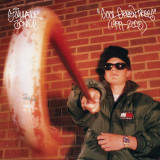
The cover photo is a picture of Sam standing on his back porch in the latter part of 1998, just before he got his first sampler. He was 13 years old, in 8th grade. His dad took the picture with his 35mm film camera: "I actually wanted to be pointing my dad's .22 pistol at the camera lens but he wouldn't let me. He gave me an old walking cane to use instead. The Tommy Hilfiger puffer jacket came from the lost and found at William Fleming High School where my mom worked as a secretary. I was thrilled when she brought it home because we never spent money on expensive name brand clothing like that - we were for the most part strictly a sale rack, bargain bin, thrift store, yard sale, flea market kind of family when it came to clothes. My watch is some cheap off-brand fake gold department store watch." Mastering for this vinyl edition was overseen by Be With regular Simon Francis and it was cut by the esteemed Cicely Balston at Abbey Road Studios to be pressed in the Netherlands by Record Industry.

pas en stock

Commandez maintenant et nous commanderons l'article pour vous chez notre fournisseur.

25,63

Last In: 9 months ago
Robin Trower - Come And Find Me

Robin Trower

Come And Find Me

12inchPRD77431
Provogue
16.05.2025

Even now, as he reaches his eighth decade, with a lifetime of accolades and a
seminal body of music behind him, Robin Trower is still chasing the biggest
high he knows
It always starts the same way, with a road-scuffed Fender Stratocaster and a revvedup Marshall amplifier, those skilful fingers exploring the fretboard until a riff sticks and
a new song ignites. And from the cultural flashpoint of Sixties London with Procol
Harum, through 1974's stadium- filling Bridge Of Sighs, right up to this year's
acclaimed Come And Find Me, it's these addictive moments of creation that have kept
the guitarist vital, relevant and contemporary while his peers trade on past glories.
"Some people say I'm driven, but I think it's just the love of doing it," reflects Trower of
a multi- million- selling solo catalogue fast approaching thirty releases (and that's
before you compute his collaborations with everyone from Jack Bruce to Bryan Ferry).
"I play guitar every day and just through messing around, ideas happen. I can never
feel the songs coming. But all of a sudden, you get a sliver of an idea and you think,
'Oh, what's this...?'"

pré-commande16.05.2025

il devrait être publié sur 16.05.2025

30,88

Last In: 2026 years ago
Web Web - Plexus Plexus (LP+MP3)

Web Web mit ihrem sechsten Album in sieben Jahren und mit einem neuen Touch. Mehr psychedelisch, mitunter krautiger als zuvor.

Dazu haben sich WEB WEB diesmal (wieder) in Originalbesetzung (ohne Max Herre) einen besonderen Gast ausgesucht: JJ Whitefield (The Poets Of Rhythm / Karl Hector & The Malcouns / Syrup), der den fantastischen Gitarrensound beisteuert. Seine Riffs sind manchmal funky wie bei den Poets Of Rhythm oder Syrup, oder psychedelischer wie bei Karl Hector & The Malcouns oder seinen vielen Live- und Studioaufnahmen mit Embryo. Die Soundfarbe seiner Gitarre gibt dem Album den Schub in die wunderbare Atmosphäre spaciger Jazz-Kraut Bands der Siebziger. Das Konzept des Albums sollte das exakte Gegenteil zum vorigen WEB MAX Album (WEB MAX II) darstellen: Wieder zurück zu den (WEB WEB-) Wurzeln, mit spontanen, improvisierten Stücken, Fragmenten, Ideen, die größtmögliche Freiheit und Live Spirit bedeuten. Und genauso unvorhersehbar und improvisiert war auch die Idee, JJ Whitefield mit ins Boot zu holen: Einen Tag vor der Session dachte sich Roberto Di Gioia: "JJ und ich leben seit jeher in München. Wir sind uns aber leider nie wirklich über den Weg gelaufen. Ich bin ein großer Bewunderer seiner Kunst, seiner Musik, seiner Art zu spielen. Er ist so inspirierend, weil er keine Kompromisse eingeht. Er spielt auf seine so eigene Art und Weise, er ist keine Kopie von irgendwem und irgendwas."

Die 14 Kompositionen entstanden an zwei Tagen, aufgenommen von Jan Krause (Beanfield) in München. Die energetische Live-Session ging über zweimal 10 Stunden, und alle - Roberto Di Gioia (Rhodes, Fender Precision Bass, Moog, Mellotron, Percussion), Christian von Kaphengst (Fender Precision Bass, Rhodes), Peter Gall (Drums, Percussion, Fender Rhodes), Tony Lakatos (Tenorsaxophon, Querflöte) - waren bis ins Mark "on fire". Dabei wechselten die Musiker die Instrumente, um einen vollkommen anderen Gesamtklang zu erzeugen: Kaphengst am Fender Rhodes klingt anders als Roberto, sein Spiel hat einen anderen harmonischen Aufbau, und Roberto am Bass kennt man von zahlreichen Max Herre Aufnahmen, oder von Till Brönners Album "Till Brönner", und natürlich auch bei dem von ihm produzierten "Let Yourself Be Loved" von Joy Denalane, das auf Motown Records erschienen ist.

pas en stock

Commandez maintenant et nous commanderons l'article pour vous chez notre fournisseur.

19,96

Last In: 11 months ago
Alain Meunier - Voyage Aux Fonds De La Mer

Issued on le Kiosque d'Orphée in 1979, Voyage aux fonds de la Mer is the only LP by Alain Meunier (not to be confused with French classical music cellist of the same name), and is one of the most elusive collector pieces of the 1970s electronic experimental French scene.

This rare sought after album starts with an instrumental guitar introduction but from the second track onwards it becomes a totally electronic experimental psychedelic trip that can be aligned with the most kosmische side of kraut rock, and of course also with other works by French experimentalists of the era like Pascal Comelade's Fluence or Richard Pinhas' production (including Heldon). Guitar comes in now and then showing also a certain Robert Fripp influence.

Instruments used according to the insert sheet that came with the LP are a Korg 800 DV synthesizer, a K.O. Welson Clavinet, effects like a Fender Echo or a Electroharmonix Small Stone phaser and a fuzz pedal, plus Meunier also used a Gibson Les Paul Custom Guitar, a 12 string acoustic Eko guitar and a 6 string Morris guitar.

First ever vinyl reissue. Limited edition to 500 copies only. Remastered sound.

pas en stock

Commandez maintenant et nous commanderons l'article pour vous chez notre fournisseur.

24,16

Last In: 12 months ago
KID LOCO MEETS SOUL SUGAR - KRAFT "DUB" WERK

When dub and dope beats entered into an open relationship in the mid-nineties and created a casual hybrid with trip hop, Jean-Yves Prieur aka Kid Loco was one of the first French people to be there. With singles like "She"s My Lover" and "Love Me Sweet" and the album A Grand Love Story, the producer proved himself to be a loverman indeed, with a knack for bedroom moods, charming little melodies and a comforting balance between minimalism and lush arrangements . As a keyboard all-rounder, Guillaume Méténier aka Soul Sugar has been featured on numerous Kid Loco productions for more than twenty years. From the synthesizer to the clavinet, from the Fender Rhodes to the Leslie organ, the "Funky Frenchman" is no stranger to any keyboard instrument. The Hamburg label Echo Beach, which has already issued dub commissions for a number of pop and new wave classics, thought it was time to change that. Dub masters such as Rob Smith, Noiseshaper, Dubmatix, Paolo Baldini and many others remixed for the label. Songs by Martha & The Muffins, The Police, David Bowie, Grace Jones and Robert Palmer, among others. In order to honor the music of Florian Schneider, Ralf Hütter and their respective fellow Kraftwerkers with a dub set, they turned to Kid Loco, who has now established himself as a musical all-rounder, and who immediately invited his long-time accomplice Soul Sugar brought on board. The calculation really worked out.

pas en stock

Commandez maintenant et nous commanderons l'article pour vous chez notre fournisseur.

19,87

Last In: 13 months ago
Giant Sand - Returns To Valley Of Rain

Limitiertes farbiges Vinyl, 2024 Pressung! Valley of Rain ist das Debütalbum von Giant Sand, das 1983 von Howe Gelb (Gesang, Gitarre) und Winston Watson (Schlagzeug), Tommy Larkins (Schlagzeug) und Scott Garber (Bass) aufgenommen und schließlich 1985 veröffentlicht wurde. Zum Zeitpunkt der Aufnahme war Howe Gelb mit den Möglichkeiten von Röhrenverstärkern nicht vertraut und hatte den Großteil des Albums mit einem Roland JC120 in den wunderbaren 8-Spur-Studio The Control Center in Korea Town, Los Angeles zusammen mit Ricky "Mix" Novak produziert. Gesamtkosten der eineinhalbtägigen Aufnahme betrugen $400. Als Enigma Records anbot, das Album zu veröffentlichen, baten sie um weitere 15 Minuten Musik, um es zu einer vollständigen LP zu machen. Ron Goudie wurde dann hinzugezogen, um die zusätzlichen Aufnahmen in einem Studio in Venedig, CA namens Mad Dog mit Eric Westfall Engineering zu überwachen. Es war dort, als Howe sich einen Verstärker auslieh, der im Studio gelagert worden war, dass er das Polster eines Röhrenverstärkers entdeckte und seine Welt sich veränderte. Der Verstärker war ein leicht modifizierter Fender Twin Reverb von Robbie Krieger von The Doors. 30 Jahre später, nachdem die Band auf unbestimmte Zeit eingeschläfert worden war, begannen sich die ersten Songs in die letzten Giant Sand Tourneen einzuschleichen. Irgendwie schien es angebracht, ihnen einen weiteren Versuch mit dem richtigen Verstärker zu geben, nur um zu sehen, was sie hätten sein können. Was die Idee zugänglicher machte, war die Verfügbarkeit der beiden ursprünglichen Schlagzeuger, die in Tucson lebten. Der erste Versuch kam letzten Sommer mit Winston & Tommy und Thoger Lund am Bass, sowie den beiden neuesten Mitgliedern, dem 29-jährigen Gabriel Sullivan und der 23-jährigen Annie Dolan an Doppelhalsgitarren. Das Geräusch war wahnsinnig. Der lustige Teil war Gabriel, der die Session entwickelt und gemischt hat und ihr einen absichtlichen 80er Jahre Produktionssound gab. Howe erklärte ihm später, dass er sich seit den ersten Originalaufnahmen im Krieg mit diesem Produktionstrend befand. So versuchten sie es alle noch einmal zur Weihnachtszeit, diesmal mit einem neu entdeckten Fender 30 Amp, der von 1980 - 1983 in Produktion war. Diese neue Neuaufnahme des ersten Albums klingt jetzt so, wie es hätte klingen sollen. Es wurde für $400 und am selben Tag und in der halben Sessionzeit wie das Original neu gemacht. Scott Garber kam sogar von Austin TX mit seinem Fretless Bass, so dass das Album buchstäblich die ursprüngliche Besetzung für mindestens die Hälfte der Songs zusammen hat. Giant Sand sind an den Anfang zurückgekehrt.

pré-commande31.07.2024

il devrait être publié sur 31.07.2024

24,58

Last In: 2026 years ago
Giant Sand - Returns To Valley Of Rain
également disponible

Color Vinyl[24,58 €]


Valley of Rain was Tucson’s Giant Sand’s debut album recorded in 1983, and eventually released by 1985. It included Howe Gelb on vocals, guitar and Winston Watson on drums for most of it, Tommy Larkins on drums for some of it and Scott Garber on fretless bass for all of it. At the time of the recording, Howe was unacquainted with the possibilities of tube (valve) amps and had recorded most of the album with a Roland JC120 at the miraculous 8 track facilities of The Control Center in Korea Town, Los Angeles by Ricky “Mix” Novak. This impromptu recording had occurred because the band refused to cancel their first Los Angeles live gig, at Madame Wong’s, when the band (Giant Sandworms) had broken up days before in Tucson. Instead, Howe headed out anyway with Scott, the newest member who’d only been in the band for about a year, after band mainstays Billy Sed and Dave Seger reasonably decided ‘enough was enough’ following a rough and tenuous year spent in the lower east side of NYC attempting to further the band circa 1981/82. Tucsonan Winston Watson, (who would go on to tour with Bob Dylan in the 90s, as well as Alice Cooper, Warren Zevon etc ) was already living in Los Angeles and was brave/kind enough to jump in for the live date with no rehearsal. The result was so sparked with adrenalin, that the trio set up an impromptu studio session the next day to attempt to capture the sonic thrust on tape. The total cost of the day and a half recording was $400 including one 1” reel of 30 minute tape. When Enigma Records offered to release the album they requested another 15 minutes of music to make it a full LP. Ron Goudie was then called in to oversee the extra recordings at a Venice, CA studio called Mad Dog with Eric Westfall engineering. Tommy Larkins, who had been on the previous country punk album of Howe’s “The Band of ... Blacky Ranchette” came in to drum for those last 3 songs. It was there when Howe borrowed an amp that had been stored at the studio did he discover the bolster of a tube amp and his world changed. The amp was a slightly modified Fender Twin Reverb owned by Robbie Krieger of The Doors. 30 some years later, now that the band had been put to sleep indefinitely, those very first songs had begun creeping into the last Giant Sand tours. It somehow seemed appropriate to give them another shot with the proper amp just to see what they could’ve been. What made the idea more approachable was the availability of both original drummers living back in Tucson. The first attempt came last summer with both Winston & Tommy and Thøger Lund on bass, as well as the 2 newest members, 29 year old Gabriel Sullivan and 23 year old Annie Dolan on double neck guitars. The sound was insane. The funny part was Gabriel, who engineered and mixed the session, gave it an intentional 80s production sound. Howe later explained to Gabe he had been at war with that production trend since those first original recordings. So they all tried it again at Christmas time, this time with a newly discovered Fender 30 amp that had only been in production from 1980 – 1983. This new re-recording of that first album now sounds like it should’ve sounded. It was re-done for $400 and the same day and a half session time as the original. Scott Garber even drove up from Austin TX with his fretless to play so that the album is literally the originally line up for at least half of the songs. And yes, no pedal boards were used too. The band intends to tour this summer playing only those Valley of Rain songs. Giant Sand Returns To Valley Of Rain.

pré-commande10.07.2024

il devrait être publié sur 10.07.2024

25,17

Last In: 2026 years ago
VARIOUS - NOHO EP: TURNING THE CRANK

very dope.

With this EP an attempt is made at documenting the vibrant action happening during the late 1970s and early 1980s in the Pioneer Valley area of Western Massachusetts, US. The story is richer than the snapshot we present here, and a more detailed account is to be found in the accompanying book that can be purchased separately.

The Five Colleges in Hampshire County congregated a vast student population that inevitably interacted with the towns in the area. Bars, music and record stores, live music and a lot of experimentation and free thinking. Hampshire College, especially, promoted new approaches to teaching, subjects that might be considered radical by some even today, although a more favourable context would now surely exist for openly debating such topics as American Indians, Kayak Design, Black Oral Tradition, Food Management, etc. And the music? The immediate "punk effect" motivated the creation of numerous bands, many short lived, others evolving into New Wave / Power Pop territory, eventually crossing into Post-Punk experimentation. What is captured in "Noho EP" is a more electronic disposition, favoured by the existence of EMS gear and other equipment at Hampshire College and University of Massachusetts. We chose to focus on a group of musicians who, for a time, played together in different combinations under the loose umbrella of the Tekno Tunes label and the structure around it.

These musicians come from very different backgrounds and the nucleus portrayed here consisted of Christopher Vine, Elliott Sharp, James Whittemore and Nicholas Brown.

Of the several line-up changes The Scientific Americans went through, it was actually only the duo of Chris Vine and Jim Whittemore who recorded "Among Bodge Watt". Never before released, it is a companion piece to their track "El Salvador" available on the 1981 ROIR tape-album "Load & Go!". The Sci Ams were founders of the Tekno Tunes label and also created the Tekno Tours "concert promotion agency", under which name they exposed local audiences to bands such as The Stranglers, The Slits, Pylon, Pere Ubu, The Psychedelic Furs, The Bush Tetras, Steel Pulse, etc. Their own sound kept progressing but at its best there's a solid dub undercurrent, pretty obvious in "Among Bodge Watt".

Human Error was born out of a collective jam by Chris Vine, Elliott Sharp, Jim Whittemore and Nick Brown. Elliott Sharp had moved to Northampton in August of 1978 and naturally became involved in the local music scene, hooking up first with Whittemore at a hi-fi audio store where he worked at the time. Basement jams followed stimulating conversations, and other musicians joined the sessions. "Clandestinator" sounds gorgeously loose, an effortless groove coming from a quasi-dub set-up. Nothing here seems calculated, the music just flows, contagious and irregular as the handclaps in the mix.

The Higher Primates later evolved into a "proper" band but started as Nick Brown's solo project. The Primates only ever released a (now sought-after) 7" single in 1980 (on the Tekno Tunes label, precisely). Both tracks on "Noho EP" were recorded the following year and never released until now. "Auto Music in the Disco Dub Style" is self-explanatory, with a steady, mid-tempo TR808 beat running through, supporting synth squelches, echoes and reverbs, a fat bassline, dissonant melodic lines and odd vocal snippets. Kind of a DJ tool when the concept was barely in place. The more uptempo "Teresa Variations" adds a Fender Jazz bass and Selmer sax to the electronics. It actually sounds more "Disco", even with the robotic, unintelligible vocals. On top of this, the vibe is sealed by the overall Radiophonic Workshop analogue strangeness applied to a dance beat.

pré-commande01.06.2024

il devrait être publié sur 01.06.2024

18,28

Last In: 2026 years ago
ROY BUCHANAN - LIVE AT ROCKPALAST (HAMBURG 1985) LP 2x12"

Roy Buchanan gilt bis heute als "der beste unbekannte Gitarrist der Welt". Die Rolling Stones wollten ihn als Nachfolger für Brian Jones, Eric Clapton als Gitarrist bei Derek & The Dominos - beides Angebote, die er ablehnte. Roy Buchanan war ein Meister auf der Fender Telecaster-Gitarre, sein Spiel beeinflusste Musiker wie z.B. Gary Moore, oder Jeff Beck maßgeblich. Roy Buchanan wuchs in Kalifornien auf, wo er auch Gitarre lernte. Als Teenager zog er nach Los Angeles und spielte mit Spencer Dryden (später der Drummer von Jefferson Airplane) in der Band Heartbeats. Danach tourte er mit Dale Hawkins und spielte mit Robbie Robertson (The Band), der Buchanan später als einen seiner Haupteinflüsse bezeichnete. In den 60er Jahren heiratete Roy Buchanan, zog nach Washington DC und arbeitete als Studiomusiker an mehr als 100 Produktionen, vornehmlich für Freddy Canon und Leiber/Stoller. Erst 1971 erschien sein erstes Solo-Album, was dazu führte, dass er und sein unnachahmliches Spiel auf der Fender Telecaster von Größen wie John Lennon, Eric Clapton oder den Rolling Stones als Geheimtipp gehandelt wurde. Die ab 1985 aufgenommenen Alben "When A Guitar Plays The Blues" (1985), "Dancing On The Edge" (1986) und "Hot Wires" (1987) gehören zu den Highlights seiner Karriere. Nur drei Jahre vor seinem tragischen Selbstmord wurde dieses Rockpalast-Konzert am 24. Februar 1985 in der Markthalle in Hamburg aufgenommen. Ein Auftritt, bei dem Roy Buchanans Genie als Gitarrist in einzigartiger Weise überzeugt - nicht zuletzt durch seine kongenialen Cover-Versionen u.a. von Jimi Hendrix oder Don Gibson. Es ist kein Geheimnis, dass Roy Buchanan seine Qualitäten vor allen Dingen bei seinen Auftritten ausleben konnte, von denen nur wenige aufgezeichnet wurden. Ein beeindruckendes Vermächtnis!

pré-commande26.04.2024

il devrait être publié sur 26.04.2024

28,36

Last In: 2026 years ago
Mark Knopflers Guitar Heroes - Going Home

This is a charity recording of Mark Knopfler's instrumental "Going Home (Theme From Local Hero)", produced in aid of Teenage Cancer Trust and Teen Cancer America. The recording features today's biggest and best-known guitarists, accompanied by an all-star band. Artists: Joan Armatrading, Jeff Beck, Richard Bennett, Joe Bonamassa, Joe Brown, James Burton, Jonathan Cain, Paul Carrack, Eric Clapton, Ry Cooder, Jim Cox, Steve Cropper, Danny Cummings, Duane Eddy, Sam Fender, Guy Fletcher, Peter Frampton, Audley Freed, Vince Gill, David Gilmour, Buddy Guy, Tony Iommi, John Jorgenson, Mark Knopfler, Joan Jett, Albert Lee, Greg Leisz, Hank Marvin, Brian May, Robbie McIntosh, John McLaughlin, Orianthi, Nile Rodgers, Mike Rutherford, Joe Satriani, John Sebastian, Connor Selby, Slash, Bruce Springsteen, Ringo Starr and Zak Starkey, Sting, Susan Tedeschi and Derek Trucks, Ian Thomas, Pete Townshend, Keith Urban, Steve Vai, Waddy Wachtel, Joe Louis Walker, Joe Walsh, Ronnie Wood, Glenn Worf and Zucchero.

pré-commande15.03.2024

il devrait être publié sur 15.03.2024

37,77

Last In: 2026 years ago
Theodor - Theodor

Theodor

Theodor

12inchTHEODOR001
Broc Recordz
05.03.2024

THEODOR is a psychedelic sweet soul band formed by members with diverse musical backgrounds.

Whilst on a road trip to Italy Rob and Lui were listening to tapes of contemporary soul music. The idea was born to record an album channeling a moody and relaxed soundscape. „Right after our trip we called up our good friends Max and Greg, who were immediately on board. We wrote and recorded deep in the pandemic. Those weekend sessions captured this peaceful solitude“ The outcome was their self-titled debut album which will be released in February 2023 on the french label Broc Recordz.

The rich sonic texture and unconventional arrangements of their very first single SHEPARD’S LULLABY gives a hint on what is to be expected on their forthcoming LP. THEODOR created a perfect soundtrack for a hot and humid summer day having a magic dash in your twelve o’clock tea. Playful melodic bass lines and the soulful acoustic drums build the playground for the warm and dreamy keys such as farfisa organs, fender rhodes and 80's synths. The lush instrumentals are spiced by the very different yet complementary voices of Max and Lui.

pas en stock

Commandez maintenant et nous commanderons l'article pour vous chez notre fournisseur.

23,66

Last In: 10 months ago
Robert Forster - Beautiful Hearts

Das 4. Remaster der Serie um den australischen Singer-Songwriter Robert Forster.
Erstmals erscheint Beautiful Hearts“ hier mit Bonusmaterial auf Vinyl im Gatefold mit zusätzlicher 7".

pré-commande02.02.2024

il devrait être publié sur 02.02.2024

38,87

Last In: 2026 years ago
E. Lundquist - Art Between Minds LP

LA-based composer/arranger E. Lundquist (aka Eric Borders) returns with ‘Art Between Minds’. Having cut his teeth in the LA hip-hop and beats scene and explored realms of cosmic-funk under previous monikers, E. Lundquist’s music displays a rich tapestry of influences including the cinematic & experimental jazz-infused library music that influenced his previous LP ‘Multiple Images’. Now he is back with another ample helping of his hallucinogenic sonics, utilizing a bevy of vintage gear to replicate that warm glow of ’70s jazz-funk. From the Fender Rhodes MKI to the ARP Odyssey, to the Mellotron, the keys and synths he employs on these tracks display a genuine appreciation for the groove-driven music of The ‘Me” Decade.

The album plays like the score to a cult classic B-movie. The sun-drenched haze of “Soliloquy” could easily be what you hear during the calm before the storm in a Blaxploitation flick and the laidback crawl of “Euphoria” seems ripped right out of a fuzzy ‘70s blue movie. But there is a certain sophistication here, like the way the horn section, slinky guitar, and trippy synths combine on “Escape” to sound like liquid one moment and like a summer breeze the next.

While E. Lundquist’s artistry will eventually take him to new plateaus of sound, where he is right now is undoubtedly a high watermark in his career. He has become a torchbearer for jazz-funk in a new jazz revolution, updating the sub-genre with his delicate balance of digital and analog elements that will easily appeal to fans of Kamaal Williams, Surprise Chef, BADBADNOTGOOD, Khurangbin, Robohands and similar.

pré-commande19.01.2024

il devrait être publié sur 19.01.2024

26,01

Last In: 2026 years ago
The Sword - Apocryphon

The Sword

Apocryphon

12inchCR00633
Craft Recordings
30.11.2023

Apocryphonis the fourth studio album by American heavy metal band The Sword and featuring The Veil of Isis, Cloak of Feathers, Arcane Montane and The Hidden Masters Recorded at Magpie Cage Studios in Baltimore, Maryland with producerJ Robbins, it was released by New York label Razor & Tie in October 2012.Apocryphonis the band's first album without original member Trivett Wingo, and the first to feature his replacement Santiago "Jimmy" Vela III, who took over from interim touring drummer Kevin Fender in October 2011; it is also the first of the band's albums to be released by Razor & Tie, with whom the group signed in early 2012 after seven years with Kemado Records. Remastered and pressed on 180 gram vinyl. Housed in a gatefold jacket featuring artwork by the award-winning comic book artist and penciller, J.H. Williams III. "Heavy metal distilled to its purest form." - Consequence

pré-commande30.11.2023

il devrait être publié sur 30.11.2023

28,15

Last In: 2026 years ago
PIERRE OMER'S SWING REVUE - TROPICAL BREAKDOWN

Neo Noir Swing! The modern Les Paul from the Dark Side! PO and his band catapult you right into a ball room filled with misfits and goons and smack you with 12 songs including the terrific cover version of Niagara's 80's disco hit L'amour a la plage Pierre Omer was born in London of an Indian father and a Swiss mother. He is a founder member of the legendary Swiss funeral Rock'n'Roll band The Dead Brothers (guitars and accordion). In 2009 he started several solo projects along with Robert Butler (the Shit, the Miracle Workers), Roland Bucher and Christian Aregger (Blind Butcher) in 2013 the Swing Revue was born, along with: Pierre Omer: vocals, guitar Julien Israelian: drums, Géraldine Schenkel: Fender Rhodes, Christoph Gantert: vocals, trumpet, and the one and only Lalla Morte: Sings Fakir and Dances. They played many shows and festivals such as: Binic Folk Blues Festival, Montreux Jazz Festival, Buskers Bern, Festival Les Athénéennes, Pod'Ring Biel, Vinelz, Le Cirque Electric Paris etc. This new album is recorded by the band itself in true DIY-style - Pierre already produced some Voodoo Rhythm Records (mama rosin) in the past - and was mixed in Berlin's Big Snuff Studio with Nene Baratto (movie star junkies, black lips, Heat, Jimi Tenor, King khan, Black Mass Rising. The whole album Stands out with Pierre's amazing song writing skills, the lazy laid back dark vocal and his irritating guitar playing, along with Christop Gantert's devil possessed trumpet playing. The Music of the swing era of the 30's and 40's, combined with a garage spirit and an eye for everything else make for a special album. Classic black vinyl with dlc and printed inlay, CD as gatefold wallet with 12page booklet.

pré-commande03.11.2023

il devrait être publié sur 03.11.2023

19,29

Last In: 2026 years ago
RAINBOW GENERATOR - DANCE OF THE SPHERES LP

Rainbow Generator are Australia’s first true experimental electronic music group. Consisting of David Labuschagne AKA Mojo, and Rob Greaves AKA Ras. Starting in the mid-70’s, the pair took it upon themselves to begin exploring the possibilities of the sonic dimension and with an ‘open mind’ began investigating the interface between psyche and sound.

In 1976 David established the ‘Lectric Loo’ studio in Woolloomooloo, Sydney. Known to the ‘heads’ as simply the “Loo”, the 3-story building was owned by the Department of Main Roads, and slated for demolition. So, it was that the entire block became a haven for squatters, and while Mojo had the main 3-story building to himself, the rest of the buildings were taken by a hotch-potch of people that included Anarchists, a Clown School and a collection of other random squatters.

Recording in the ‘Lectric Loo’ provided them the ability to record freely. In 1975 they began to experiment, putting Mojo’s Fender Strat through effects pedals, playing with sounds while manipulating shortwave radio stations and also challenging convention by playing the insides of instruments. By 1976 they had built a kit synthesizer and shortly after purchased a full Roland 100 Synthesiser set-up and were on their way.

In 1978, with little resources, or any form of distribution they released their sole LP ‘Dance of the Spheres’. As Mojo puts it, “we were intent on making music with whatever we could beg, borrow, buy, and liberate. Albeit with scant regard for the rules or conventions or niceties of the game. Ultimately, it was all an act of love, of joy. Not just an adventure; it was a musical odyssey”.

This odyssey continued their exploration of the interface between psyche and sound.
Fusing genres and boundaries, Dance of the Spheres incorporates elements of 70’s psych and folk with spoken-word and of course the emerging sounds of the synthesizer and drum machines. Furthermore, the addition of traditional instruments such as the didgeridoo and the classical Indian instrumentation technique of a Raga add a timeless layer, all seamlessly complementing the other elements and launching the album to another dimension.

pas en stock

Commandez maintenant et nous commanderons l'article pour vous chez notre fournisseur.

28,53

Last In: 2 years ago
ROBOHANDS - SHAPES

ROBOHANDS

SHAPES

12inchKU072
King Underground
29.06.2023

Repress!

‘Shapes,’ the third album from London-based multi-instrumentalist, Robohands, fuses elements of jazz, krautrock, hip hop and ambient music. For fans of Khruangbin, Yusef Dayes, CAN, Coltrane and 70s library music moods.

Shapes is the solo project of London based composer, instrumentalist and producer Andy Baxter. His debut LP Green was released on Village Live Records in 2018 and was received with much love and acclaim in the UK Jazz, hip hop and surrounding scenes.

His follow up full-length, 'Dusk’, dropped in 2019, combining soul, funk, Latin & experimental moods. It featured vocalists & musicians from around the world including legendary New York French horn player, John Clark, who has worked with Isaac Hayes, Gil Evans Orchestra, McCoy Tyner, Jaco Pastorius, Ornette Coleman and many more greats.

'Shapes' is inspired by 1970s library music and their legendary composers including Piero Umiliani, David Axelrod, Brian Bennett and co. The album builds on these influences and incorporates modern motifs, contemporary jazz/hip hop drumming styles with a nod to 1990s Mo Wax artists such as DJ Shadow. The theme for the record is future/nostalgia, mixing vintage & modern instruments and production techniques.

Much of ‘Shapes’ was recorded with JB Pilon at Buffalo Studios in Limehouse, London. Due to the COVID restrictions that changed everything in 2020, the remaining parts were recorded in Andy’s flat using a collection of old mixing desk preamps and instruments.

For the heads – ‘Shapes’ features an array of vintage snares, including a 1960's Ludwig Pioneer and a mono, overhead ribbon mic on the drum kit provided extra old school points! The kick drum was re-amped through a huge vintage bass amplifier on a couple of tracks to give it some real character: “My favourite guitar sound achieved on this LP project is a Sontronics Sigma ribbon microphone in front of a WEM Dominator amp, which you can hear on the track 'Odysea'. The bass sound for all the tracks is a 1973 Fender Precision into an old Altec valve preamp, the one used on most Motown recordings."

pas en stock

Commandez maintenant et nous commanderons l'article pour vous chez notre fournisseur.

25,17

Last In: 2 years ago
Bob Dylan - Fragments - Time Out of Mind Sessions (1996-1997): The Bootleg Series Vol. 17 4x12"

Die neue Ausgabe der Bootleg Series von Bob Dylan, "Fragments - Time Out Of Mind Sessions (1996-1997): The Bootleg Series Vol. 17" erscheint als 5 CDs umfassendes Deluxe Boxset sowie als Standard-Version auf 2 CDs oder 4 LPs. Sie enthält in der Standardversion das Album "Time Out Of Mind" in einem 2022er Remix sowie zwölf ausgewählten Outtakes und Alternativversionen. Volume 17 der gefeierten Dylan-Reihe wirft 25 Jahre nach seiner Erstveröffentlichung einen neuen Blick auf das Meisterwerk "Time Out Of Mind" und zeichnet dessen Entstehung nach. Angefangen bei den bislang unveröffentlichten Song-Fassungen aus den 1996er Teatro-Sessions mit Dylan (Gesang, Gitarre, Piano), Daniel Lanois (Gitarre, Orgel), Tony Garnier (Bass) und Tony Mangurian (Schlagzeug, Percussion) bis hin zu (ebenfalls unveröffentlichten) Live-Mitschnitten aus den Jahren 1998-2001. Anfang 1996 begann Dylan, der seit der 1990er LP Under The Red Sky kein Album mit Eigenkompositionen veröffentlicht hatte, mit der Arbeit an neuen Songs. Von August bis Oktober ging er mit Daniel Lanois, der sein 1989er Album Oh Mercyproduziert hatte, ins Teatro Studio in Oxnard/CA, um dort Demos für eine mögliche neue LP aufzunehmen. Als die Songs im Januar des Folgejahres Form angenommen hatten, zog man ins Criteria Studio in Miami/FL um. Die Studiobesetzung wurde aufgestockt, und so fand sich in Florida ein illustrer Mix aus Session-Musikern und Mitgliedern von Dylans Tourband ein: Bucky Baxter (Akustikgitarre, Pedal Steel), Duke Robillard (E-Gitarre/Gibson L-5), Robert Britt (Martin Akustikgitarre, Fender Stratocaster), Cindy Cashdollar (Slide Gitarre), Tony Garnier (Bass, Kontrabass), Augie Meyers (Vox Orgel, Hammond B3, Akkordeon), Jim Dickinson (Keyboards, Wurlitzer E-Piano, Pumporgel) sowie die Schlagzeuger Jim Keltner, Brian Blade und David Kemper. Das Album "Time Out Of Mind", der schließlich aus diesen Sessions entstand, avancierte zu einem Dylan-Klassiker. Songs wie "Love Sick", "Can't Wait" oder "Not Dark Yet" wurden zu Lieblingsstücken der Fans. Mit "Make You Feel My Love" gelang Dylan sogar das Kunststück, dem Great American Songbook einen neuen zeitgenössischen Standard hinzuzufügen. Zahllose Künstler, darunter Billy Joel, Neil Diamond oder Adele, haben diesen Song gecovert. Bei den Grammy Awards 1998 gewann "Time Out Of Mind" in den Kategorien 'Album of the Year' und 'Best Contemporary Folk Album'.

pré-commande27.01.2023

il devrait être publié sur 27.01.2023

109,20

Last In: 2026 years ago
Thomas Fiorini, Brussels Philharmonic, Robert Groslot - Groslot: Concerto for Bass Guitar and Orchestra

Robert Groslot's Concerto for Bass Guitar and Orchestra represents the
next step in the evolution of the bass guitar
Groslot's composition pushes the instrument to its technical limits, while creating
a unique symbiosis between the soloist and the orchestra. Although he may not
be the first composer to write for the bass guitar in a symphonic setting, Groslot
brings a level of artistry and sophistication to the composition that will continue
and accelerate the legitimation of the bass guitar within contemporary classical
music. "The idea of a concerto for bass guitar is something that I have been
dreaming of for decades. Since its invention, the bass guitar has firmly
established itself as an essential and integral part of practically every genre of
music. The bass guitar, as we now know it, was invented and produced by Leo
Fender starting in 1951. The more portable bass guitar, in comparison to the large
and unwieldy double bass, was capable of playing at higher volumes via
amplification and satisfied the new sonic demands created by the widespread
use of electrification in popular music. By increasing the overall scale of the
electric guitar and only using the lowest four strings (E, A, D, G), Fender gave birth
to a new instrument. Traditional double bassists could quickly adapt, with the
added benefit of more accurate intonation due to the frets. Hence the original
name: The Precision Bass. At the same time, guitarists could also become bass
players when called upon. As a result, many of the early bass guitarists began
their musical life as guitar players, with the most well-known example being Paul
McCartney of The Beatles.
The fact that the bass guitar had no direct lineage like the evolution of the piano
or violin over time, led to a variety of disparate playing styles without any
fundamental methodology. Unlike the more traditional instruments, the bass
guitar does not sit upon a foundation of centuries of proven methods and
established schools of playing. The evolution of the bass guitar has been a
patchwork of trial and error by active musicians. This has led to a plethora of
personal approaches and hybrid-styles, effectively leading to the rapid evolution
of bass guitar technique. Given its relatively young history, it is remarkable how
the bass guitar has grown from being an instrument taken up out of necessity, or
as an afterthought, to being as respected and vital to modern music as any of the
older, more established instruments." - Thomas Fiorini

pré-commande11.11.2022

il devrait être publié sur 11.11.2022

17,23

Last In: 2026 years ago
ROBIN JONES QUINTET - DENGA LP

First time reissue from this essential latin jazz album from 1971 !

Often affectionately referred to as the "Godfather of British Latin music" Robin Jones was truly one of the great performers on the international Latin scene.

Denga, his first recording from 1971 is a scintillating fusion of Afro-Cuban and Afro-Brazillian rhythms laden with heavy Fender Rhodes sounds and no less than three Afro-Latin Percussionists. The hard-to-find album has now been reissued by legendary London jazz DJ Paul Murphy's Jazz Room Records imprint. It should be an essential purchase for anyone who loves Latin jazz.

Feature's Robin's personal favorites including "Goodbye Batucada" which rightfully lays claim to be the first Brazilian Jazz Samba tune recorded in the UK and the Worldwide Sound standard setters "Denga" and "Africa Revisited".

pas en stock

Commandez maintenant et nous commanderons l'article pour vous chez notre fournisseur.

20,38

Last In: 3 years ago
Robin Trower - No More Worlds to Conquer

Few would dispute that the title of Trower's latest album – No More
Worlds To Conquer – is a fair summary of the thumbprint he has left on the musical universe


But as he reminds us, it should not be misinterpreted as his mission being accomplished. "I definitely feel like I'm still reaching," he considers, "with the guitar, and the songs, and everything else."
Turning once again to his trusty toolkit of Fender Stratocaster and Marshall amp, Trower's guitar work is ageless, whether that's the tough chop of Ball Of Fire, Losing You and Cloud Across The Sun, or the slower-burn wah squalls of the title track and Deadly Kiss.
On Waiting For The Rain To Fall, Trower's playing is crystalline as a dew drop, while the aching finale, I Will Always Be Your Shelter, offers a solo whose masterful touch is compelling as anything in his catalogue.

pré-commande29.04.2022

il devrait être publié sur 29.04.2022

21,81

Last In: 2026 years ago
Robert Stillman - Portals LP

Robert Stillman's much-loved, homespun collection of Fender Rhodes improvisations receives the vinyl treatment from Kit Records.

Recorded to tape in the solitude of Robert's Kent studio, PORTALS is truly a candid window into the trance-like process of making: melodies, ideas and themes are added folded, concealed and revealed like layers of paper and paint, combining to form an intimately transportive sonic mural.

Most startling are the shifting voices of the Rhodes - from careening, glassy pads to strident basslines, curveball jazz breakdowns or kaleidoscopic marimba flutter. Keys players take note: PORTALS is a masterclass in restricted virtuosity. Quite how so many worlds are conjured from one instrument across the 35 minute duration of this record, we're not sure.

Recommended if you like Beverly Glenn-Copeland, Arthur Russell, Kali Malone. This vinyl edition of Portals features a previously unreleased track, 'PORTAL 8'.

Robert Stillman is a composer and multi-instrumentalist from the northeast United States. His music juxtaposes the archaic with the futuristic, incorporating influences of Jazz, Minimalism, American Folk music, and experimental electronic music to create a sound described by the Guardian as "lending an avant-garde shimmer to pre-modern American sounds."

pas en stock

Commandez maintenant et nous commanderons l'article pour vous chez notre fournisseur.

16,77

Last In: 4 years ago
ALEX MALHEIROS - TEMPOS FUTUROS LP

Stargazing from the sands of the Niterói beach, Tempos Futuros is low-end-led Brazilian futurism from one of Brazil’s most prolific and influential bassmen. As one third of legendary trio Azymuth, Alex Malheiros has pioneered a unique fusion of space-funk, samba and jazz since the early seventies. His playing can be heard on the records of Jorge Ben, Milton Nascimento, Roberto Carlos, Marcos Valle, and Mark Murphy (to name a few), and he’s performed and toured with everyone from Stevie Wonder to Chick Corea.

Written and recorded in Niterói, Brazil, overlooking Guanabara and the beaches, mountains and forests of Rio de Janeiro, Tempos Futuros has deep roots in Brazilian soil. The rhythms of Malheiros’ homeland have always permeated his music. But just like the Oscar Niemeyer designed Niterói Contemporary Art Museum which stands spaceship-like over the water, Tempos Futuros - while inspired by terrestrial forms, reaches out, deep into the great unknown.

Produced by acclaimed London-based producer Daniel Maunick, who has worked with Marcos Valle, Azymuth, Terry Callier, and Ivan Conti, the funk comes full circle. Daniel’s father Jean-Paul “Bluey” Maunick and Alex Malheiros shared a reciprocal stream of influence throughout the 80s, between London and Rio; Azymuth and Incognito; brit-funk and samba-funk. But just as with Azymuth’s music, you can also hear the influence of stateside jazz-funk masters like Roy Ayers, Weather Report, Lonnie Liston Smith, Mtume and Pleasure.

Tempos Futuros features Alex’s daughter, a Brazilian star in her own right, vocalist Sabrina Malheiros, Brazilian percussion master Sidinho Moreira, London based saxophonist Sean Khan, Marcos Valle’s go-to drummer Massa, and Brazilian keyboard player Dudu Viana. Featuring the late Azymuth keyboard maestro Jose Roberto Bertami on Fender Rhodes, the title track “Tempos Futuros” was originally recorded as a demo in 1995. On this finished version, Alex Malheiros used Bertami’s original keyboard take, explaining the posthumous release.

pas en stock

Commandez maintenant et nous commanderons l'article pour vous chez notre fournisseur.

21,81

Last In: 4 years ago
Manfredo Fest - Brazilian Dorian Dream (1976)

Legally blind from birth, Brazilian keyboard player, composer and bandleader Manfredo Fest learnt to read music in braille and began studying classical music at a young age. By 17 he had fallen in love with jazz (particularly the music of fellow blind pianist George Shearing) before becoming swept up in Rio's emergent bossa nova movement in the sixties. Moving to the States in 1967 where he would go on to work with fellow countryman Sergio Mendes, Fest recorded and self-released Brazilian Dorian Dream in 1976, enlisting Thomas Kini (bass), Alejo Poveda (drums, percussion) and Roberta Davis (vocals).

Like a turbo-powered, intergalactic elevator ride, Brazilian Dorian Dream builds on the principle of the modal diatonic scales of the Dorian mode, with influences of Brazilian rhythms, North American jazz and funk, and music of the European baroque and romantic era. The coming together of these intergenerational and intercontinental styles coupled with Fest's visionary use of the Fender Rhodes, Clavinet, Arp and Moog synthesizers (plus a whole load of effects units), makes for an album light years ahead of its time.

The miraculous wordless vocals of American jazz singer Roberta Davis are nailed so tightly alongside Manfredo's keys and mind-bending synths that it sounds almost alien. On the album's liner notes, Fest preaches Davis' ability highlighting how hard it is to sing such precise intervals so accurately. One of the tracks on which the vocals shine brightest is space funk stepper "Jungle Cat", which features hard funky drums, freaky synth lines and expert Rhodes comping. The track builds up and up before releasing into the unmistakable scat melody in the chorus.

A few years after releasing Brazilian Dorian Dream, Fest recorded and released his Manifestations album in 1979, featuring 'Jungle Kitten'': a new dancefloor focused variation on "Jungle Cat". At around 140 BPM 'Jungle Kitten' was possibly deemed too fast for statside dance floors, which explains why it never got a US 12" release. But the track became something of an underground hit at jazz dance clubs and all-dayers across the UK in the 80s and as a result it has probably become Fest's most well known track since.

pas en stock

Commandez maintenant et nous commanderons l'article pour vous chez notre fournisseur.

22,48

Last In: 4 years ago
Dougie Stu - Familiar Future

Dougie Stu

Familiar Future

12inchHVNLP194
Heavenly
22.06.2021

Heavenly Recordings announce the debut solo album from
acclaimed Bay Area multi-instrumentalist, producer and
composer Dougie Stu.
Dougie grew up outside of Chicago and his early education
began in jazz clubs and festivals as a teenager - frequenting
sessions with Jeff Parker, Fred Anderson, Nicole Mitchell and
other members of the AACM. Left exceedingly inspired, he
continued on to the University of Michigan, studying bass
under Detroit jazz royalty Robert Hurst and Geri Allen, where
he deepened his practice in Jazz and Contemplative
Studies.
Now, based out of Oakland and Los Angeles, Stuart
collaborates within many Jazz, Hip-Hop, and Experimental
music scenes. His works include compositions for the NPR
podcast Snap Judgement, along with co-writes and
production with various groups including: Brijean, Bells Atlas,
Meernaa, Luke Temple and Jay Stone.
Dougie Stu’s ‘Familiar Future’ is a uniquely jazz-attuned
album that is soulful and ethereal. It draws inspiration from
artists and producers like Lonnie Liston Smith, Charles
Stepney, David Axelrod and Alice Coltrane. Stuart has
arrived at a sound that harkens back to the golden era of
soul jazz and R&B, while still sounding contemporary.
The band feature the immediately recognizable guitar
stylings of Jeff Parker (Tortoise), who was one of Stuart’s
biggest influences growing up in Chicago, Maya Kronfeld
(Georgia Anne Muldrow, NYEUSI) on Fender Rhodes, Steve
Blum (Bells Atlas) on synthesizer, percussionists Brijean
Murphy (Toro Y Moi, Poolside), John Santos (Tito Puente,
Dizzy Gillespie) and drummer Hamir Atwal (tune-yards).
Special guests include Marcus Stephans on flute, Shaina
Evoniuk on violin and Crystal Pascucci on cello. The album
was engineered and mixed by Rob Shelton at Tiny
Telephone and he also appears on synthesizer on one song.

pré-commande22.06.2021

il devrait être publié sur 22.06.2021

25,17

Last In: 2026 years ago
Enzo Carniel & Filippo Vignato as Silent Room - Aria

Silent Room, the duo formed by Enzo Carniel and Filippo Vignato is a conversation.
Between the piano of the first and the trombone of the second, two living forces of the
European jazz scene; between France and Italy; between acoustics and electronics. A
patient dialogue initiated on the benches of the conservatory in Paris, which was nourished
by the music of German trombonist Albert Mangelsdorff (to whom the duo paid homage for a
concert at the Cité des Arts in 2014), musical moments shared as a group (Enzo Carniel's
sextet at the Jazz à la Villette festival in particular) and in pairs - for numerous concerts
given on both sides of the Alps - before perfecting their common grammar, giving birth to
their own repertoire, creating their own space.

This first album, Aria, released on the Franco-Japanese label MENACE, was recorded in the
setting of the Villa Cicaletto in Tuscany, whose Silent Room the duo made their own in
September 2019. Carniel had just released Wallsdown, the third elegiac disc of his House of
Echo project (Jazz & People, 2020) and Vignato of an intense live duo recorded with
American cellist Hank Roberts (Ghost Dance, on CamJazz in 2019).

The album is carried by simple melodies, tenuous threads on which the two improvisers who
have slowly got to know each other crisscross and let their voices express themselves. Aria
can refer to the opening of Bach's Goldberg variations, to sung opera arias, but above all to
any expressive melody that develops the imagination. Aria is also the air in Italian: the air
that comes from the breath, the air that fills the room, the air that vibrates and is transformed
into sound. The repertoire is therefore this collection of Arias composed by Enzo Carniel and
Filippo Vignato.

If the duo advocates with this album its jazz heritage - that of improvisation and
conversation, of freedom and virtuosity - and claims to be Carla and Paul Bley, Keith Jarrett,
Gary Valente, Albert Mangelsdorff, Ornette Coleman or John Surman; it also explores the
contemporary colors of electronic music, ambient and Japanese minimalism. The use of the
prepared piano, Fender Rhodes and synthesizers colors the sound space of the acoustic
piano and trombone. The eponymous composition that opens the album in acoustic, closes
it in an electronic version, illuminating the path of the duo between the two universes.

In the almost plant-like composition "In All Nilautpaula", Enzo Carniel evokes the water lily
(in Sanskrit) coming to purify the water around him. On "Babele", Filippo Vignato invokes the
great question of language: thanks to Arias, and therefore melodies, language becomes
universal through music, and only the sensory experience counts.

Born from Carniel and Vignato's desire to create a sound space that would be filled with as
many melodies as silence, a place for listening, dialogue and meditation, Aria is one of those
rare records that contain entire worlds.

pas en stock

Commandez maintenant et nous commanderons l'article pour vous chez notre fournisseur.

20,46

Last In: 4 years ago
Azymuth - As Curvas da Estrada de Santos/ Zé e Paraná

Following 2019’s release of Azymuth’s Demos (1973-75), two more home-recorded demo tracks by the Brazilian psychedelic jazz-funk masters have surfaced from a tape in drummer Ivan Conti’s private archive. These five-decade old recordings by the young band show the maturity, musicianship and distinctive style that saw Azymuth become one of the most important groups in Brazilian history.

Featuring an instrumental take on Roberto and Erasmo Carlos’ 1969 Jovem Guarda hit “As Curvas da Estrada de Santos”, and spacey psych-folk oddity “Zé e Paraná”, the new 7” release via Far Out Recordings shines yet more light on this critical period for Azymuth.

As is the case with many of Brazil’s pop icons, Roberto and Erasmo Carlos had been backed by Bertrami, Malheiros and Conti either on stage, in the studio, or with compositions (in Bertami’s case) since the late sixties. Conti notes that “As Curvas da Estrada de Santos” was a big hit in Brazil when it came out in ‘69 and had already been covered by Elis Regina a year later.

But where both Elis’ version and the original were grand pop-rock ballads, Azymuth’s take is a moody, melodic jazz excursion, featuring Bertami’s incredible Hammond organ, Fender Rhodes and grand piano juggling, Ivan Mamao Conti’s distinctively tough drums, and unusually, Alex Malheiros plays a double bass instead of an electric one.

As the title suggests, “Zé e Paraná” is guitarist João Américo (Paraná) playing alongside Bertami’s Rhodes comping, synth embellishments and dreamy wordless vocals. While credited as the composer and guitarist on “Linha do Horizonte” a track from Azymuth’s debut album which would become the theme tune for a famous novella, Paraná has to this day, remained relatively unknown.

Both tracks were recorded in Jose Roberto Bertrami’s house in Rio de Janiero at some point between 1973-75. These tracks were not recorded in a professional studio, meaning the sound quality differs from other Azymuth releases. At Far Out we take great pride and extreme care in ensuring our releases and reissues are produced to the best possible sound quality. In this case the original source material had not aged well and was considerably damaged. The sound has been restored to the best possible condition but there is still some noticeable tape hiss and slight distortion on ‘Zé e Paraná’. For this reason, we strongly advise listening to preview clips before buying this release.

Keyboards: José Roberto Bertrami

Guitar: João Américo ‘Paraná’

Produced by Azymuth and José Roberto Bertrami

Recorded at José Roberto Bertrami’s home studio in

Laranjeiras, Rio De Janeiro, Brazil 1973

Issue and project co-ordinator: Joe Davis

Additional tape restoration by Daniel Maunick at the Sugar Shack

Mastered by Frank at Carvery Cuts

pas en stock

Commandez maintenant et nous commanderons l'article pour vous chez notre fournisseur.

13,74

Last In: 5 years ago
EZRA FEINBERG - RECUMBENT SPEECH

Recumbent Speech, Ezra Feinberg’s second album, opens with a lament. Named for the Robert Frost poem, “Acquainted with the Night” was written during one of the many devastating spectacles of injustice under our current regime. Repeating flutes and synths beam out of a low-end darkness, reflecting a collective sense of loss and alienation. Rising slowly, thickening with guitars and strings, “Acquainted with the Night” lifts off, and so too does the album from there. The second track, “Letter to my Mind,'' features the dynamic interplay of Feinberg's guitar with the loose and playful drumming of Tortoise's John McEntire, both pushing and pulling atop a looping bass figure. "Palms Up" begins with a lockstep pulse recalling early Terry Riley before jumping into an Ashra-like jam with Afrobeat accents. Side B opens with "Ovation," a tryptic with McEntire on drums which sets a wide lens onto a sweeping landscape, with soaring flutes, wordless vocals, and a hypnotic bassline played on a humming fretless that recalls classic ECM jazz-fusion. The piece plunges into an ambient, interior space before reemerging with a guitar solo fried through an old Space Echo effects processor, conjuring lidded Pompeii-era Pink Floyd. The album's title-track finale, "Recumbent Speech," features the magical pedal steel of Chuck Johnson. Unwinding atop a Balearic analog synth pattern, Feinberg stretches textures of Fender Rhodes and acoustic guitar around Johnson’s lyrical steel, with nods to Japanese ambient legend Hiroshi Yoshimura, as well as Cluster & Eno. Recumbent Speech refers to the possibilities, pleasures, fears, and fantasies that occur the moment the noise dies down, when we are recumbent, in repose but still awake, still speaking, and still aware of ourselves as part of the maddening world. Ezra Feinberg is a guitarist, composer, and psychoanalyst living in Jackson Heights, NY. Feinberg was the founding member of the San Francisco psychedelic rock collective Citay, releasing albums on Important Records and Dead Oceans throughout the 2000s. After relocating to NYC, he issued his first solo record, Pentimento and Others, on his imprint Related States and on cassette on Stimulus Progression in 2018. The release, his first since Citay folded in 2012, earned praise from numerous music outlets including Paste Magazine, The Wire, Stereogum, Vice, and Aquarium Drunkard. In recent years, Feinberg has performed and toured near and far with Jefre Cantu-Ledesma, Steve Gunn, Alexander Turnquist, Cruel Diagonals, Daniel Carter, Jonas Reinhardt, Christopher Tignor, Kath Bloom, Robbie Lee, High Aura’d, Glasser, Ava Mendoza, Buck Curran, Real Estate, and many others, and has ongoing studio collaborations with Jefre Cantu-Ledesma and Arp, contributing both guitar and songwriting to the last Arp album Zebra.

pas en stock

Commandez maintenant et nous commanderons l'article pour vous chez notre fournisseur.

27,77

Last In: 5 years ago
Various - THIS IS MAINSTREAM! 2x12"

Wewantsounds continues its collaboration with Bob Shad's grandchildren, Mia and Judd Apatow, to present a 2LP selection of 13 turntable-friendly Mainstream Records tracks recorded between 1970 and 1973 and showcasing the label's superb blend of Funk, Soul and Jazz. All tracks remastered from the original tapes, most of them released for the first time since their original release with a few highly sought-after ones. Liner notes by UK journalist Paul Bowler. The Mainstream sound is unmistakable: earthy, rich and funky, it's the signature sound of producer Bob Shad. After working with such geniuses as Charlie Parker, The Platters, Billie Holiday and Janis Joplin over three decades, Shad decided to go back to producing Great Black Music in the early 70s through his label Mainstream Records and started releasing a formidable series of jazz albums known as the 300 series. Released between 1971 and 1974, these albums are the main source of this set. Coincidentally, it opens with one of the two tracks on the tracklist not produced by Shad himself. Saundra Phillips' "Miss Fatback" is nonetheless fascinating as it's one of cult disco producer Greg Carmichael's earliest productions from 1975 (before he went on to produce Inner Life, Bumblebee Unlimited, Universal Robot Band with fellow producer Patrick Adams). The other track not issued by the Shad sound factory is Almeta Lattimore's 7" single "These Memories," a truly great soulful track from 1975 and now a sought-after classic on the international Soul scene. Shad's forte was Jazz, and the sessions usually used the best musicians you could think of, including Bernard Purdie, Billy Hart, Stanley Clarke, Dom Um Romao, Joe Sample, Freddie Robinson, Gordon Edwards, Larry Willis, Wilbur Bascomb to name just a few. Filled with gorgeous Fender Rhodes chords and heavy basslines, they define the unmistakable Mainstream sound which had one foot in the great jazz and bop tradition and the other in the sonic jazz explorations of the early 70s. Oscillating between jazzed-up covers of soul hits like Jay Berliner’s "Papa Was A Rolling Stone" or Afrique’s "Kissing My Love" and more introspective originals such as Hal Galper's "This Moment" or Dave Hubbard's "T.B.'s Delight", They all have this perfect balance between groove and depth. One perfect example is Pete Yellin's "Bird and The Ouija Board," a superb 12 min opus starting off with a deep abstract improvisation before switching to an up-tempo funk beat fueled by drummer Billy Hart and bass player Stanley Clarke.

pas en stock

Commandez maintenant et nous commanderons l'article pour vous chez notre fournisseur.

26,85

Last In: 6 years ago
AZYMUTH - DEMOS (1973-75) VOL. 2

Celebrating its 25th anniversary, Far Out Recordings proudly presents two albums of previously unheard Azymuth demo recordings from 1973-75

Since their debut album release in 1975, Azymuth have risen to rank alongside the world’s greatest jazz, funk and fusion artists. As young men in Rio de Janeiro, they stood out for both their exceptional talent as musicians, and their wild rock ‘n’ roll antics in the predominantly middle-class worlds of bossa nova and jazz. Their signature ‘Samba Doido’ (crazy samba) sound ruptured the tried and tested musical structures of the day, resulting in what can only be described as an electric, psychedelic, samba jazz-funk hybrid.

Before they became Azymuth, José Roberto Bertrami (keyboards), Ivan ‘Mamão’ Conti (drums), Alex Malheiros (bass) and Ariovaldo Contesini (percussion) played backing band to just about every major artist in Brazil. Bertrami was also contracted as an arranger and songwriter at some the biggest labels of the era: Polydor, Philips, Som Livre, and EMI being just a few. Azymuth’s name can be found on record sleeves by the likes of Jorge Ben, Elis Regina, Marcos Valle, Ana Mazzotti and countless others. But at the dawn of the seventies, fascinated by developments in improvisational music - from jazz in the US, to progressive rock in the UK and of course samba, bossa and tropicália on home turf - the energetic young group were inspired and ready to move forward. Any spare moment in which they weren’t in sessions and writing music for other artists, they would be carving out their own sound.

These previously unheard recordings took place between 1973-75 at Bertrami’s home studio in the Laranjeiras district of Rio de Janeiro. At the time of recording, there was nothing in Brazil, less the world that sounded anything like them, so perhaps it’s unsurprising that when Bertrami presented his demos to the record companies he had been working for, he was turned away, and told in effect that the music was ‘wrong’.

One of the demos ‘Manhã’ would be picked up by Som Livre and Azymuth released their seminal debut album in 1975. Throughout the late seventies and eighties, the group released a series of now classic albums for Milestone Records, before taking an indefinite hiatus to pursue their individual careers.

When English producers Joe Davis and Roc Hunter arrived in Brazil in 1994 to record the first Azymuth album in over a decade, Bertrami dug out the demos which had sat virtually untouched for over twenty years. Joe recalls how he was “blown away by the freedom and intensity of the music, as well as the genius of the ideas musically.” Beginning a long and fruitful relationship, ‘Prefacio’ would be the first track Azymuth recorded for Far Out Recordings and was released on the Carnival album (1996).
Along with ‘Manhã’ and ‘Prefacio’, only a handful of these demos were ever professionally recorded and released, making this the first opportunity to hear many of these early Azymuth compositions in their raw, original form.

On every track the frenetic energy in the studio is palpable, giving the recordings a beautifully personal feel and a sense of the phenomenally creative vision Bertrami, Malheiros and Conti were realising at the time. Fifty years on, Azymuth’s earliest recorded music retains an ineffable, futuristic quality, standing amongst their most captivating and moving work.

Credits:

Keyboards: José Roberto Bertrami (Mini Moog Series One, Arp Omni, Arp 2600, Arp Solina Strings, Fender Rhodes 88, Hammond B3 with box speaker, Clavinet with Wah Wah)
Drums: Ivan ‘Mamão’ Conti
Bass: Alex Malheiros
Percussion: Ariovaldo Contesini
Produced by Azymuth and Jose Roberto Bertrami
Recorded at José Roberto Bertrami’s home studio in Laranjeiras, Rio De Janeiro, Brazil between 1973–1975.
Issue and project co-ordinator: Joe Davis
Tape transfers by Roc Hunter (thanks to Simon Hitner)
Mastered by Daniel Maunick at the Sugar Shack, Lanark, Scotland
Mastered by Frank at Carvery Cuts
All tracks published by Far Out Music Publishing/Westbury Music LTD

pas en stock

Commandez maintenant et nous commanderons l'article pour vous chez notre fournisseur.

27,52

Last In: 4 months ago
AZYMUTH - DEMOS (1973-75) VOL. 1

Celebrating its 25th anniversary, Far Out Recordings proudly presents two albums of previously unheard Azymuth demo recordings from 1973-75

Since their debut album release in 1975, Azymuth have risen to rank alongside the world’s greatest jazz, funk and fusion artists. As young men in Rio de Janeiro, they stood out for both their exceptional talent as musicians, and their wild rock ‘n’ roll antics in the predominantly middle-class worlds of bossa nova and jazz. Their signature ‘Samba Doido’ (crazy samba) sound ruptured the tried and tested musical structures of the day, resulting in what can only be described as an electric, psychedelic, samba jazz-funk hybrid.

Before they became Azymuth, José Roberto Bertrami (keyboards), Ivan ‘Mamão’ Conti (drums), Alex Malheiros (bass) and Ariovaldo Contesini (percussion) played backing band to just about every major artist in Brazil. Bertrami was also contracted as an arranger and songwriter at some the biggest labels of the era: Polydor, Philips, Som Livre, and EMI being just a few. Azymuth’s name can be found on record sleeves by the likes of Jorge Ben, Elis Regina, Marcos Valle, Ana Mazzotti and countless others. But at the dawn of the seventies, fascinated by developments in improvisational music - from jazz in the US, to progressive rock in the UK and of course samba, bossa and tropicália on home turf - the energetic young group were inspired and ready to move forward. Any spare moment in which they weren’t in sessions and writing music for other artists, they would be carving out their own sound.

These previously unheard recordings took place between 1973-75 at Bertrami’s home studio in the Laranjeiras district of Rio de Janeiro. At the time of recording, there was nothing in Brazil, less the world that sounded anything like them, so perhaps it’s unsurprising that when Bertrami presented his demos to the record companies he had been working for, he was turned away, and told in effect that the music was ‘wrong’.

One of the demos ‘Manhã’ would be picked up by Som Livre and Azymuth released their seminal debut album in 1975. Throughout the late seventies and eighties, the group released a series of now classic albums for Milestone Records, before taking an indefinite hiatus to pursue their individual careers.

When English producers Joe Davis and Roc Hunter arrived in Brazil in 1994 to record the first Azymuth album in over a decade, Bertrami dug out the demos which had sat virtually untouched for over twenty years. Joe recalls how he was “blown away by the freedom and intensity of the music, as well as the genius of the ideas musically.” Beginning a long and fruitful relationship, ‘Prefacio’ would be the first track Azymuth recorded for Far Out Recordings and was released on the Carnival album (1996).
Along with ‘Manhã’ and ‘Prefacio’, only a handful of these demos were ever professionally recorded and released, making this the first opportunity to hear many of these early Azymuth compositions in their raw, original form.

On every track the frenetic energy in the studio is palpable, giving the recordings a beautifully personal feel and a sense of the phenomenally creative vision Bertrami, Malheiros and Conti were realising at the time. Fifty years on, Azymuth’s earliest recorded music retains an ineffable, futuristic quality, standing amongst their most captivating and moving work.

Credits:

Keyboards: José Roberto Bertrami (Mini Moog Series One, Arp Omni, Arp 2600, Arp Solina Strings, Fender Rhodes 88, Hammond B3 with box speaker, Clavinet with Wah Wah)
Drums: Ivan ‘Mamão’ Conti
Bass: Alex Malheiros
Percussion: Ariovaldo Contesini
Produced by Azymuth and Jose Roberto Bertrami
Recorded at José Roberto Bertrami’s home studio in Laranjeiras, Rio De Janeiro, Brazil between 1973–1975.
Issue and project co-ordinator: Joe Davis
Tape transfers by Roc Hunter (thanks to Simon Hitner)
Mastered by Daniel Maunick at the Sugar Shack, Lanark, Scotland
Mastered by Frank at Carvery Cuts
All tracks published by Far Out Music Publishing/Westbury Music LTD

pas en stock

Commandez maintenant et nous commanderons l'article pour vous chez notre fournisseur.

27,52

Last In: 4 months ago
Alice Coltrane - Radha-Krsna Nama Sankirtana

Radha-Krsna Nama Sankirtana was the first of two albums Alice Coltrane released in 1977 (the other being Transcendence). Coltrane's music during this period grew out of an epiphany in which she would renounce secular life and don the orange robes of a swamini (spiritual teacher in the Hindu tradition). Musically, this meant leaving jazz behind (at least partially) and embracing the chants and rhythms of devotional music.

The first half of Radha-Krsna is mostly filled with simple arrangements of bhajans (Hindu devotional songs) and features the singing of students from the Vedantic Center, the Ashram that Coltrane founded in 1975. The group bounces with the joy of a gospel choir (not coincidentally, some had backgrounds in Southern Baptist churches).

A rapturous aura permeates opener "Govinda Jai Jai" with Alice leading on Fender Rhodes. On "Prema Muditha," she returns to acoustic piano (her main instrument in the early part of her career) to deliver a powerful and poignant theme.

Sidelong "Om Namah Sivaya" beams with probing organ improvisations accompanied by the drumming of her 13-year-old son Aruna John Coltrane, Jr. This closing track offers a strong indication that even if Alice Coltrane was turning toward new traditions for inspiration, her music was still something that only she could make.

pré-commande26.04.2019

il devrait être publié sur 26.04.2019

24,16

Last In: 2026 years ago
Articles par page:
N/ABPM
Vinyl