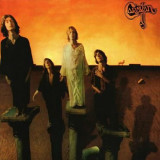
For their first album, Caravan was surprisingly strong. While steeped in the same British psychedelia that informed bands such as Love Children, Pink Floyd, and Tomorrow, Caravan relates a freedom of spirit and mischief along the lines of Giles, Giles & Fripp or Gong. The band's roots can be traced to a British blue-eyed soul combo called the Wilde Flowers. Among the luminaries to have passed through this Caravan precursor were Robert Wyatt, Kevin Ayers, and Hugh Hopper and Brian Hopper (pre-Soft Machine, naturally). The Caravan album never sold in serious numbers, and for much of 1968 and early 1969, the members were barely able to survive -- at one point they were literally living in tents. Suddenly, Caravan was an up-and-coming success on the college concert circuit, even making an appearance on British television's Top of the Pops. With national exposure and a growing audience, the group was at a make-or-break moment in their history. They rose to the occasion with their second Decca LP, In the Land of Grey and Pink, which showed off a keen melodic sense, a subtly droll wit, and a seductively smooth mix of hard rock, folk, classical, and jazz, intermingled with elements of Tolkien-esque fantasy.
Поиск:robert m
Все
Recorded in London in the summer of 1971 by Austrian singer/songwriter Bobby Haumer and an English pick-up band, Zakarrias was issued on the highly collectable Deram label. However, Deram withdrew the album almost immediately when they discovered that Haumer didn't have a work permit. Mysteriously sounding heavy progressive with sensitive folk-psych moments. Great dynamics with contrasting guitar leads. The results have been compared to outtakes from the third Led Zeppelin album, but while the lead vocals are certainly reminiscent at times of Robert Plant, the overall sound and general air of quiet pretension is probably closer to Van der Graaf Generator leader Peter Hammill's early solo work.
Originally recorded in 1983
A Never Before Released Studio Album
featuring Horace Tapscott with Flautist Aubrey Hart
and Saxophonist Kafi Roberts
Direct From the 1/4” MASTER TAPES (All Analog Cut)
Tip-On Sleeve
Insert with Liner Notes by Mark Weber
Recorded in October of 1983 - Horace Tapscott accompanied by only flute and sax, a sparse and beautiful album containing some of Horace Tapscott’s best playing (the Tapscott solos are among his finest on record)- Two sidelong tunes- Cut directly from the original Master Tapes- Tip-on sleeve - Insert with photos of Kafi Roberts (Sax) and Aubrey Hart (Flute) and a new essay by Mark Weber
Horace Tapscott : piano / Aubrey Hart : flute / Kafi Roberts : soprano saxophone
During the course of quarantine, while doing multiple live streams to support Blue Note Tokyo and New York, Hiromi composed the 'Silver Lining Suite'. It is a piece for piano, two violins, viola, and cello which is separated into four movements: 1. Isolation 2. The Unknown 3. Drifters 4. Fortitude. In the past Hiromi has recorded all of her studio records in the US but given the pandemic and nature of this work, the 'Silver Lining Suite' is her first album recorded in Japan. The album was recorded by Mick M. Sawaguchi of Mick Sound Lab, mixed and mastered by Robert Friedrich at Five/Four Productions. In addition to the 'Silver Lining Suite' the album includes five other songs all composed by Hiromi, two of which are completed versions that originally where part of Hiromi's 'One Minute Portrait' video series that showcased one minute duets with artists such as: Avishai Cohen, Steve Smith, Simon Phillips, Robert Trujillo, and more.
Maxi Lp[10,04 €]
2021 repress on black vinyl, first released in only 50 copies in the legendary Bunker Mantra Box, but now for a short time available to the general public. Dark and manic house from the Acid Coloniae of Cologne, by Andreas Gehm (aka The Minister), whos profile has been raised recently with a ton of hyped releases and remixes for o.a. Snuff Traxx & Robert Ownes. First part of a two parter.
From deep Electro to Downtempo, Cheap Records is back with a new release by legendary Austrian producer Erdem Tunakan who runs Cheap Records together with his buddy Patrick Pulsinger. Being there from the early '90s these guys are front runners in the European techno scene and built a label with classic releases by Pulsinger, Robert Hood, Sluts Strings & 909, Potuznik, Louie Austin, and many others always pushing the boundaries and finding the right balance between the dancefloor, the livingroom and the laboratory!
The vanguard of the Polish psychedelic heavy rock scene returns
with a brand new album! Continuing to defy expectations and
challenge what it means to be a “stoner” band, Weedpecker have
crafted a new masterpiece. After several fundamental lineup
changes in the past years, fans of
Weedpecker were left wondering
what might become of the band’s
newest incarnation. “III”, their
last outing from 2018, was the
final one with longtime bandmates
Bartek Dobry, Robert Kulakowski
and Grzegorz Pawlowski (the first
of whom is remaining founding
member Piotr Dobry’s brother).
In 2019, the band gave a very brief
glimpse into their new lineup featuring
members of Dopelord, Major
Kong and Belzebong while on
a short tour. The most surprising
change was the switch from dual
guitars to a full-time keyboardist.
So much for history, where does
this take us to now with the new
album?
“IV” is a deep, vividly textured IV” is a deep, vividly textured psychedelic
rock record with tons of
layers begging to be picked apart
upon multiple spins. Beginning
with the driving opener “No Heartbeat
Collective”, the song immediately
beings new elements into
the mix. Etherial keys and twisting
guitar lines meld in harmony,
giving way to chunky riffs. Moving
forward, “IV” continues to surprise
with mellow psychedelic gems
reminiscent of early Tame Impala,
blistering Oh Sees-esque rock
bursts and of course the trademark
melodic heavy riffage.
Former co-lead guitarist Bartek
has teamed up with the band
in the position of engineer and
producer, while also lending his
arrangement skills. This combination
of new input and experimentation
has led to the most radical
Weedpecker record thus far, a
killer album which will doubtless
make a late entry for 2021’s album
of the year.
Available on 180gr. transparent
yellow LP including download card
and on CD.
- A1: Schweben 03 46 Min
- A2: First Visit (Skit) 00 10 Min
- A3: Fliegender Teppich 03 34 Min
- A4: Spuren 04 52 Min
- A5: The Father (Skit) 00 15 Min
- A6: Welk 03 51 Min
- A7: Zwischenzeit 01 35 Min
- A8: I Like This Picture (Skit) 00 06 Min
- A9: Repeater Rptr Theme 04 34 Min
- A10: Dead (Skit) 00 13 Min
- B1: Wanderlust 05 10 Min
- B2: Weichen 04 18 Min
- B3: Two Fathers (Skit) 00 11 Min
- B4: Interlude #1 (For Robert) 02 41 Min
- B5: Zugvögel (For Pascal) 04 50 Min
- B6: Tell Me Something (Skit) 00 11 Min
- B7: Karavanserai 05 18 Min
Simon Lovermann's debut album "Handwerke - Songs for my fathers" is focused around the piano, both as a harmonic and a percussive instrument. It is influenced by Jazz, Electronica, Hip Hop and Minimal Music. The beats are created with the piano and are enriched with body-percussion and beatbox to create an idiosyncratic atmosphere and distinctive sound.
The album deals with the personal story of the artist. Simon's biological father, Robert, was a Jazz musician and died before his birth. Simon was raised by his father Christian. This album is therefore a vividly emotional way for him to explore topics like death, fatherhood, family, identity and belonging.
"Handwerke" comes with a special artwork and cover design, featuring contributions by 16 artists printed on individual postcards and assembled in a 20-page booklet.
The release is a collaboration of Der Greif and Squama Recordings.
Mainly known to DJs for the funk groover "Te Queria", Rota-Mar is the first solo album by the charismatic Zéca do Trombone. During a vertiginous career which started in the late 60s, Zéca was a permanent member of Wilson Simonal's band, toured with Luiz Eça's Sagrada Família (alongside Joyce, Naná Vasconcelos, Nelson Angelo and others), recorded the seminal Brazilian funk "Coluna do Meio" for his joint effort with Roberto Sax, and played and recorded for some of the big names of Brazilian music such as Tim Maia or Martinho da Vila. Particularly for samba artists such as Alcione, Leci Brandão or Moreira da Silva, Zéca do Trombone was the trombonist of choice.
Rota-Mar displays the work of an established musician who has nothing to prove. Impregnated with Zéca's characteristic voice, the songs draw inspiration from the sea, love and bohemian life, and let us all dream of what life in Rio the Janeiro was during that time. "Te Queria", penned by Zéca's childhood friend Elízio de Búzios (known for his highly collectable funk/boogie single "Tamanqueiro") is the obvious highlight, although we believe the real beauty of the album lies in the relaxed sea-side groove and MPB in the rest of the songs, including Zéca's superb take on Martinho da Vila's "Manteiga de Garrafa".
Founded by the pianist Robin Notte (from the former electro-jazz band WISE) Panam Panic is one of the best Jazz-Groove french band. Influenced by Musician like Yussef Dayes, Robert Glasper, Roy Hargrove or Christian Scott, Panam Panic mix up Jazz with groove, Hip hop and electronic textures. Love Of Humanity is their last album.
Robin Notte's gamble is to create a Jazz which is sufficiently sophisticated to delight the most demanding experts, yet also accessible enough to initiate neophytes.
As such, Panam Panic defends a resolutely actual Jazz, open with no borders or blinders, combining powerful organic grooves with tidy melodies, delicate harmonies and frenzied solos.
The Ethiopians are one of the great vocal groups to come out of Jamaica. Singing songs of life and times as they found them, themes that resonated with the people of the Island that made them such a treasured group. Lenard Dillon (b. 9 December, 1942, Port Antonio, Jamaica) the founding member of the Ethiopians began his singing career at Clement 'Coxonne' Dodd's Studio One. Initially he recorded under the name of Jack Sparrow, and backed by the Wailers, cutting 'Ice Water' and 'Suffering In The Land'. Under The Wailers encouragement, he went on to form his
own vocal group. Recruiting singers Stephan Taylor (b.1944, Portland, Jamaica) and Aston 'Charlie' Morris to become The Ethiopians. They cut 'Live Good', 'Why You Gonna Leave Me Now' and 'Owe Me No Pay Me'. Although receiving favourable response, Aston Morris decided to leave the band and the remaining pair carried on and cut 'I'm A Free
Man' and 'Don Dead Already' and 'For You'. On meeting contract builder Leebert Robertson who had recently returned to live in Jamaica, ashad he wanted to get into the music business, a session was booked for Treasure Isle Studios. The session produced their seminal 'Train To Skaville' track, which became an immediate hit in Jamaica and in the UK, when in 1967 it reached number 40 in the charts. They also cut 'Engine 54', which became the title of their debut album. Its
follow up 'I Need You / Do It Sweet', did not fare so well and the band moved over to Sonia Pottinger's stable, where they cut 'The Whip / Cool It Amigo' which revived their fortunes and proved another big hit for the band. Two more hits followed 'Stay Loose Mama' and 'The World Goes Ska', after which the band decided to return to a trio, adding
Melvin 'Mellow' Reid to the line up. The band now hit another run of successes with producer JJ Johnson 'Everything Crash, 'Gun Man', 'Hong Kong Flu' and 'The Selah'. Many hits followed leading the band to work with a variety of Jamaican producers. Such tracks as 'I Want To Be a Better Man, ' Conquering Lion', 'Fire A Mus Mus' Tail', and the timeless 'Reggae Hit The Town' to name a few. Two albums 'Reggae Power' (1969) and 'Woman Capture Man' (1970), pulled a lot of these tunes together. Sadly Taylor was killed in 1975 after been struck by a van in a road accident. Dillon returned to Port Antonio till 1977, when he was persuaded to return to Treasure Isle studios with producer Niney The
Observer and cut the Rasta based album 'Slave Call'. Additional members who joined for this album were Bro Fatty, Bro Ewing, Bro T, Mello and Hychi Dread. An album that showed all the Ethiopians magic had not been lost.
For this release we have included the full 'Slave Call' set, 'Ethiopian National Anthem', 'Slave Call', 'Guilty Conscience', 'Hurry On', 'Mus Follow Babylon'(on CD Edition), 'Train To Skaville (1977 version, on CD Edition), 'Culture', 'Obeah Book', 'Let It Be' and 'I Love Jah'. Alongside some of the bands early hits including the original version of 'Train To Skaville', 'Engine 54', the great and poignant 'Everything Crash', 'Reggae Hit The Town' and 'The Selah'. An interesting set to remind us what a great group the Ethiopians really were.
- A1: Fog (Devil's Island Mix)
- A2: A Day At The Beach
- A3: Meadowlark
- A4: Heteromorph
- A5: Nautilus
- A6: Java Head
- A7: Prelude
- A8: Tuxedo Moonlight
- A9: Moonlight Marimba
- A10: Red Skies At Night
- B1: Dof Downie Woot
- B2: Open Season
- B3: The Rain On Mars
- B4: Music Box
- B5: Brothers Grimm
- B6: Rear Window
- B7: Time & Tide
- B8: Rue Du Poisson Noir
- B9: Interlude
- B10: Wireless
- B11: Bossa Nova
Composer, electronic music innovator, and Pere Ubu's original synthesist Allen Ravenstine returns to Waveshaper Media with the diptych LP (comprised of 1 EP per side) Nautilus / Rue De Poisson Noir, the final two parts in Raventine’s Tyranny of Fiction series. Waveshaper Media first came into contact with Ravenstine when we interviewed him in 2012 for our modular synthesizer documentary I Dream Of Wires.
Nautilus / Rue De Poisson Noir brings together 21 of the prodigious composer’s recent lyrical and abstract compositions collectively comprised of the sounds of analogue and digital synthesizers, alongside traditional acoustic instruments. The first 10 recordings, subtitled Nautilus, are found on Side A of this LP while the second 11, Rue Du Poisson Noir, comprise Side B.
Using a singular blend of acoustic and electronic instrumentation, each track on Nautilus, weaves its own wayward travelogue amidst stray bits of audio verité and wafting musical fragrances—by turns tropical and foreboding. Rue De Poisson Noir takes cues from its fragmentary companion both in palette and approach, slithering between cinematic intrigue, off-brand jazz, avant-garde mischief, and fried electro without ever batting an eye. Together they form a beguiling collection of hyperrealist miniatures that remains strange, restless, inquisitive and — most of all — evocative throughout.
For those in the know, Allen Ravenstine has been one of the most creative synthesizer players of the past forty-plus years. Ravenstine started out in the mid-1970s experimenting in his Cleveland apartment with an analogue EML 200 synthesizer, eventually creating a piece in 1975 that became known as Terminal Drive. While he had no intention of releasing his compositions, word got out about the kind of sounds he was experimenting with, which led to an invitation to join pioneering “avant garage” group Pere Ubu for the recording of the group’s first 45, “Thirty Seconds Over Tokyo.” He soon joined Pere Ubu full-time, bringing to the band’s sound unpredictable textures, effects, bleeps, squalls, pulsating washes of sound—whatever he felt could enhance the soundscape of the band’s performances and recordings.
By the early 1990s, Ravenstine had grown sick of the road, band infighting and the music industry in general. Deciding a change was needed, he opted to forego music altogether, making his living as an airplane pilot. His music career remained in limbo until 2012, when an interview for the I Dream Of Wires documentary, alongside Robert Wheeler who had succeeded him as Pere Ubu’s synthesist, turned into a recording session for the duo, leading to a series of collaborative releases. As well as having his 1975 Terminal Drive recordings released to great acclaim in 2017, Ravenstine has been prolific in recent years, with Nautilus / Rue De Poisson Noir now marking his 4th solo full-length.
A new LP collection of incredible performances by the virtuosa of theremin, Clara Rockmore, accompanied by her sister Nadia Reisenberg on piano.
160 gram vinyl comes in old school tip-on jacket and includes an 8-page full-size booklet of interviews, photos, and insights with Clara Rockmore, Nadia Reisenberg, Robert Moog, and more.
Recorded in 1975 and never before released on vinyl, this compendium features stellar performances of compositions by Bach, Chopin, Schubert, Gershwin and more, and even features a cello ensemble on a few songs!
Some of the finest examples of Clara Rockmore’s unrivaled art - rich with bittersweet moments of air, electricity, human grace and emotional composition all merging into some new thing that is transcendent of time.
- A1: Mexican Rhapsody
- A2: Savannah River Holiday
- A3: Kentucky Mountain Portraits
- B1 1: Cindy
- B2 2: Ballad
- B3 3: Shivaree
- B4: Joe Clark Steps Out
Long a collector favourite, this early stereo recording presents a set of lively American light classics: ‘Mexican Rhapsody’ (Robert McBride); ‘Savannah River Holiday’ (Ron Nelson); ‘Kentucky Mountain Portaits’ (Lyndol Mitchell); ‘Joe Clark Steps Out’ (Charles G. Vardell Jr.). Recorded in the Eastman Theatre, Rochester NY, October 28, 1956 with a Schoeps M201 microphone in the centre and Neumann U-47’s on the left and right sides.
Gatefold double LP. Black Vinyl. No DL Code is out in January, 1000 copies available. Since 2006 Maybeshewill have released four full-length albums of towering, cinematic instrumental music. After a decade long career that saw them tour across four continents they bowed out in 2016 with a sold out show at London’s Koko. Having reformed briefly in 2018 at the request of The Cure’s Robert Smith for a show at Meltdown Festival, 2021 sees the band return with their first new material since 2014’s Fair Youth. Having worked on ideas separately in the intervening years, it was the sketches of music that would become ‘No Feeling is Final’ that pulled the band back together. Building on the songs that they felt needed to be heard, together. ‘No Feeling is Final’ was born from a place of weary exasperation. From the knowledge that we’re living in a world hurtling towards self-destruction. We watch as forests burn and seas rise. As the worst tendencies of humanity are championed by those in power; rage, fear, greed and apathy. We see every injustice, every conflict, every catastrophe flash up on our screens. We stay complacent and consume to forget our complicity in the structures and systems that sustain that behaviour. As the world teeters on the edge of disaster, we sigh and keep scrolling, the uneasy feeling in our stomachs eating away at us a little more each day. However easy it would be to switch off and pretend all is lost, there’s no choice but to remain engaged. To set that feeling of hopelessness aside and use the fear and frustration as fuel to make something positive. ‘No Feeling is Final’ is a message of hope and solidarity. It’s a story of growing grassroots movements across the world that are rejecting the doomed futures being sold to us, and imagining new realities based on equality and sustainability. It’s a reckoning with the demons in our histories and a promise to right the wrongs of the past. It’s a plea to take action in shaping the world we leave for future generations. It’s a simple gesture of reassurance to anyone else struggling in these troubled times: “Just keep going. No feeling is final.” Continuing and building on the self-sufficient, do-it-yourself ethos that has been core to their existence, ‘No Feeling is Final’ was once again recorded and produced by bassist Jamie Ward, and released on the bands own Robot Needs Home Collective Label, in collaboration with close friends Wax Bodega (North America), New Noise (Asia) and Birds Robe (Australasia).
Spoken word recordings from Gregory Corso, Tina May Hall, Sam Lipsyte, Christine Schutt, Gary Lutz, Allen Ginsberg, Dawn Raffel, Jason Schwartz, Kathryn Scanlan, Scott McClanahan, & Terry Southern. About 40 years ago, in a record shop on Long Island during a weekend visit there to see my parents, i found a double-LP that looked like something i should definitely buy. It was called "BIG EGO", by the The DIAL-a-POEM POETS. On the cover was a picture of John Giorno (a great poet Ed Sanders had turned me on to) on a NYC rooftop with Philip Glass, Meredith Monk, and two kids. It cost $2. I bought it and rushed back to my parents house, where i still had my old turntable in the basement, not far from my Jimi Hendrix and Zappa Crappa posters, and my framed portrait of John Cage. My copy of Eno's "Discreet Music" was still on the turntable, having been left there years before, when i'd fled Long Island for good. I lifted it from the platter, gently slid it back into its sleeve, like a priceless religious artifact, and put Side A of the Dial-a-Poem LP on. I almost lost my mind while listening to it. The next day i went back to the same record shop looking for more DIAL-A-POEM LP's. i found two. One had a long list of names on the back, some famous, and some i'd never heard of before. I bought both LP's, and an hour later, for the first time in my life, i was exposed to the art of Laurie Anderson, whom i'd never heard of before. This was 1978. Her contribution was a piece called "Time To Go". It changed my life. Or at least, that’s how I remember it. I was just a kid, so there were a lot of moments like that, around then. Nowadays, these moments can be had in seconds, with a click of the cursor. That evening, as i sat alone by my imaginary campfire (ie; that record player in my parents basement), i promised myself that someday, somehow, i would embark upon a WORDS & MUSIC project that might move people the same way i was moved when i first heard Laurie, and Robert Wilson & Christopher Knowles, and Burroughs, and Ginsberg, and Corso, and Anne Waldman, and John Ashbery, and the great Charles Olson, and so many others. Words, for the very first time, had wielded the same power as music. And it was visceral. Just like music. It ran deep. It was a FEELING. John Giorno died in 2019, but he kept poetry alive like nobody's business. I was lucky enough to have spent some time with him in the early 1980's, when i was briefly a member of The Fugs, and often found myself surrounded by those Ginsberg called, "...the greatest minds of my generation". Ed Sanders (who'd ushered me into that scene) once told me that when he came to NYC, it was easy to go to a cafe, or to St Marks Church, and hear Burroughs, Corso, Ginsberg, and all the greats, reading their poetry. He said that even if you were just a bum on the street, you could just walk right up to them, and start a conversation. They were totally accessible, if they were in the right mood at that particular moment. So i was shocked when Sanders told me he didn't approach any of them, not even once, til he'd been going to their readings for nearly ten years. "For almost a decade, I went to every reading, every lecture, every panel discussion. But I never went near them. Never approached them. Not even once", Sanders told me. "For ten years, all I did, was listen." It took me four decades, but ... better late than never. I finally made WORDS & MUSIC, Book One.
Debut studio album by legendary American singer/songwriter/artist. Originally released on November 10th 1975 by Arista Records. When she emerged Smith's music was hailed as the most exciting fusion of rock and poetry since Bob Dylan. Produced by John Cale with a Robert Mapplethorpe cover - a raw combination of poetry, shamanistic chant and rock ‘n’ roll thrills.
Long a collector favourite, this early stereo recording presents a set of lively American light classics: ‘Mexican Rhapsody’ (Robert McBride); ‘Savannah River Holiday’ (Ron Nelson); ‘Kentucky Mountain Portaits’ (Lyndol Mitchell); ‘Joe Clark Steps Out’ (Charles G. Vardell Jr.). Recorded in the Eastman Theatre, Rochester NY, October 28, 1956 with a Schoeps M201 microphone in the centre and Neumann U-47’s on the left and right sides.
Stargazing from the sands of the Niterói beach, Tempos Futuros is low-end-led Brazilian futurism from one of Brazil’s most prolific and influential bassmen. As one third of legendary trio Azymuth, Alex Malheiros has pioneered a unique fusion of space-funk, samba and jazz since the early seventies. His playing can be heard on the records of Jorge Ben, Milton Nascimento, Roberto Carlos, Marcos Valle, and Mark Murphy (to name a few), and he’s performed and toured with everyone from Stevie Wonder to Chick Corea.
Written and recorded in Niterói, Brazil, overlooking Guanabara and the beaches, mountains and forests of Rio de Janeiro, Tempos Futuros has deep roots in Brazilian soil. The rhythms of Malheiros’ homeland have always permeated his music. But just like the Oscar Niemeyer designed Niterói Contemporary Art Museum which stands spaceship-like over the water, Tempos Futuros - while inspired by terrestrial forms, reaches out, deep into the great unknown.
Produced by acclaimed London-based producer Daniel Maunick, who has worked with Marcos Valle, Azymuth, Terry Callier, and Ivan Conti, the funk comes full circle. Daniel’s father Jean-Paul “Bluey” Maunick and Alex Malheiros shared a reciprocal stream of influence throughout the 80s, between London and Rio; Azymuth and Incognito; brit-funk and samba-funk. But just as with Azymuth’s music, you can also hear the influence of stateside jazz-funk masters like Roy Ayers, Weather Report, Lonnie Liston Smith, Mtume and Pleasure.
Tempos Futuros features Alex’s daughter, a Brazilian star in her own right, vocalist Sabrina Malheiros, Brazilian percussion master Sidinho Moreira, London based saxophonist Sean Khan, Marcos Valle’s go-to drummer Massa, and Brazilian keyboard player Dudu Viana. Featuring the late Azymuth keyboard maestro Jose Roberto Bertami on Fender Rhodes, the title track “Tempos Futuros” was originally recorded as a demo in 1995. On this finished version, Alex Malheiros used Bertami’s original keyboard take, explaining the posthumous release.
With endless Afro-latin percussion & drums patterns woven throughout ten tracks of tropical dance floor heaters, Italian multi-instrumentalist and master percussionist, Worldwide FM presenter and director of the Yoruba Soul Orchestra, Gabriele Poso is to release his seventh LP, Tamburo Infinito, via New York record label Wonderwheel Recordings. Recorded in Lecce in the south of Italy and almost entirely on his own (unlike previous productions), the undisputed star of the show is once again the drum and the percussion, the Tamburo Infinito.
Although born in Italy, Gabriele has always looked across the Atlantic for inspirations and rhythms, and this album is no different. This time his sonic adventures took him to the French West Indies and the French Caribbean island like Guadeloupe Martinique, "I'm in love with everything about the sound of their drums, it's very unique warm and deep sound."
The album kicks off with the hot & sticky Ritmo, setting the tone for the record with a kaleidoscope of tropical rhythms and influences. First single La Bola is jammed full of exultant horns and syncopated drum beats carried on the back of a driving, funky bassline. By the time the horns drop in on the aptly named Party People the carnival is in full swing over jubilant percussion and spaced out synths.
Gabriele Poso's musical passion has taken him around the world, initially to Rome, then to Puerto Rico, Cuba, and most recently, Berlin. Between 1998 and 2001, Gabriele delved deep into the study of Afro-Cuban percussion, first at the "Timba" School Of Music in Rome, under the guidance of the most important representative of Afro-Cuban culture in Italy, Roberto "Mamey" Evangelista. Later in 2001, he moved to San Juan, Puerto Rico to attend the "Universidad Interamericana De Puerto Rico" to continue his studies, finally culminating in a masterclass at "Escuela Nacional De Arte" in Havana, Cuba.
2008 saw the release of Poso's debut solo album, From The Genuine World, released on Yoruba Records, Osunlade's label, which sparked a career performing around Europe and the rest of the world. His second solo album, Roots of Soul arrived in 2012 on the German label INFRACom!, his third solo album entitled Invocation in 2014, on the German label Agogo Records with other full length efforts released on renowned British labels, Barely Breaking Even (Awakening - 2018) and Soundway Records (Batik - 2019), culminating in an impressively deep and diverse catalogue of solo work.


