Rare debut LP by the eccentric Peruvian singer Jean Paul "El Troglodita", known for his wild performances and extreme way of life. Enrique Roberto Tellería made his Peruvian television debut in 1965 under the stage name Jean Paul El Troglodita and wearing an imitation leopard skin suit. He would switch from melodic calm to shouting wildly or suddenly drop to the floor on his knees and smash the furniture like crazy. At the age of 19, DisPerú signed him to the label on the strength of these early performances. His first single included a freely translated version of 'Secret Agent Man' in Spanish. He began to work on the eleven cover versions that would feature on his first LP immediately, writing all his own lyrics and accompanied by the beat band Los Steivos. Despite the predominance of English beat music in Peru, the album only included three songs directly related to the British invasion: 'Bus Stop' by The Hollies, also played in raga rock style; 'Paint it Black' by The Rolling Stones; and 'The House of the Rising Sun', which follows the arrangement recorded by The Animals. So most songs come the American songbook. Apart from 'Tema de El Troglodita' (a versión of 'Secret Agent' by The Challengers), we find the bluesy 'Mustang Sally' (Sir Mack Rice). Two other US numbers, originally performed with orchestral accompaniment, were adapted to fit the rock band format: 'Poor Side of Town' (Johnny Rivers) and 'Take Me to the Moon' (Kaye Ballard). 'El verdadero amor' ('True Love'), an uncredited version is in a similar vein. The Spanish song 'Negro es negro' (Los Bravos) and the Brazilian track 'Que todo se vaya al infierno' (Roberto Carlos) also feature on the LP. El Troglodita's association with the so-called nueva ola, indicated on the back cover, needs clarification. In Peru, nueva ola was a mixed bag rather than a specific musical style and encompassed slow rock, twist, bossa nova and all the styles that the record industry produced to tame the wild rock 'n' roll impulses of teenagers in the early sixties. The Peruvian artists that performed these inoffensive Spanish adaptations of Paul Anka, Neil Sedaka or Frankie Avalon, were presented as successful models of youth culture. This was until 1964, when the Beatles with their mop-top haircuts hit the charts, vindicating rock 'n' roll and imposing the group format over the soloist model. Meanwhile the press continued to call any youth music recorded during the rest of the decade nueva ola. Jean Paul noted these distinctions early on and distanced himself from it in several statements. He saw his performance more in a style as a solo artist as following in the footsteps of e.g. Los Saicos. His 'hippie' lifestyle got him arrested by the new de facto military government in 1968, who accused him of promoting drug consumption and corrupting the Peruvian youth. The charges were soon dropped but his reputation was tarnished, and he ended up emigrating to Central America. The album includes Spanish sung versions of British beat songs and covers of the American songbook as well as various international hits.

Search:robert pain
- Deux Angoisses 13' 00
- Yi-King 9' 04
- In Hora Conjunctionis 11' 49
- Firmament V 9' 52
- Aurora 13' 41
- Oiseaux Mécaniques 7' 38
- Et Il Créa 13' 35
- Canada 6' 02
- Het Breken Van Jef 11' 43
- Je Ne Retournerai Jamais À Tournai 8' 00
- Une Apocalypse De Jean 12' 10
- Escale 8' 25
- La Perte Du Temps 5' 00
- Missa Tenebrae 8' 27
- Co Atmosphère 5' 32
- Brouillard Face À La Mer 13' 19
- Consolation 8' 50
An anthology of the intensely arresting work of Robert Fesler (1936-2023), revealing many of his compositions (1975-1987) created with his self-built synthesizers, with as pinnacle the μP RPF78. All music composed and recorded by Robert Fesler at his home on rue Cour Boisacq in Bierges, Belgium. Except one, all tracks are previously unreleased.
With profound simplicity and devotion, Fesler paints a hermetic inner world with strong emotions of confronting solitude, sensual alienation and traumatic angst. His music was as much a therapeutic treatment as an artistic expression. Fesler quotes, »Building my synthesizers and working with them enabled me to sublimate my anxieties.« Most tracks were played and recorded real time, often with two synthesizers (the Synthese 756 and the μP RPF78), capturing the heat of the moment in one take, without multitracking. The austere and reductionist approach reinforces the overall spirit of his work, resulting in an engaging, mysterious solitary journey. It’s quite incredible how one person can put so much technical cerebral content in the development of a machine and use it in such an emotional way.
The music of Robert Fesler might be considered as very Belgian. To situate it within a close entourage, one can say it has: The endurance of Baudouin Oosterlynck The purity of Dominique Lawalree The mysticism of Arsène Souffriau
Seit 2013 arbeitet Douglas Dare im Spannungsfeld zwischen Klassik und Chamber Pop, Folk und Avantgarde-Experimenten immer neue verblüffende Perspektiven heraus - und singt dazu mit einer Ausnahmestimme, die einen regelrecht umhauen kann. So hat er sich im zurückliegenden Jahrzehnt u.a. bereits die Bühne mit Größen wie Nils Frahm, Perfume Genius und Olafur Arnalds geteilt und wurde zudem von David Lynch und Robert Smith von The Cure für die von ihnen kuratierten Festivals nach Manchester (MIF) bzw. London (Meltdown) eingeladen. Mit seinem vierten Album Omni schlägt Douglas nun jedoch ein ganz neues Kapitel auf. Alles klingt nach Aufbruch, alles ist elektrisiert. Vor allem Robert Raths, der Gründer von Erased Tapes, ermutigte Douglas dazu, die angestammten Instrumente hinter sich zu lassen, alles Akustische auszuklammern. So löste er sich auch vom Klavier, mit dem er aufgewachsen war, und beschäftigte sich stattdessen intensiv mit Synthesizern und Drum Machines. Tatsächlich erinnern die neuen Aufnahmen vielfach an das Werk von Arca oder auch die Aufnahmen der verstorbenen SOPHIE - zwei Künstler:innen, für die der künstlerische Ausdruck vor allem ein Akt der Befreiung ist bzw. war. "Wir haben auch zusammen im Studio abgehangen", sagt Douglas über letztere. "Ihre ganze Herangehensweise als Musikerin hat mich extrem beeindruckt." Und doch ist auch Omni durchzogen von jenem intelligenten Storytelling, dem Schwung der Streicher, dem eleganten Kontrastreichtum und den fast schon märchenhaften Stimmungen, die man von Douglas kennt - und die seine künstlerische Handschrift so einzigartig machen. Passiert sonst ja nicht so oft, dass man einen massiven Electro-Banger hört, der auch aus dem Soho der Neunziger stammen könnte, und darüber Vocal-Loops, die von den experimentellen Sounds der US-Pionierin Meredith Monk inspiriert sind. Letzten Endes versucht Douglas mit Omni, all diese unterschiedlichen Facetten seiner Persönlichkeit - Songwriter, Raver, Beobachter, Lover - unter einen Hut zu bringen. Das Ergebnis klingt maximal queer: verführerisch und sexy, lüstern und vollkommen frei vom Korsett binärer Kategorien. "Selbst Matrosen begegnet man auf diesem Album!", sagt Douglas abschließend und muss lachen. "Noch queerer geht"s echt nicht."
You get older, you have a family, and you start to slow down-that's how things are supposed to go, right? Not for Montreal band Corridor, who have returned on their fourth album, Mimi, with a sound and style that's more widescreen and expansive than anything that's preceded it. The follow-up to 2019's Junior is a huge step forward for the band, as the members themselves have undergone the type of personal changes that accompany the passage of time; even as these eight songs reflect a newfound and contemplative maturity, however, Corridor are branching out more than ever with richly detailed music, resulting in a record that feels like a fresh break for a band that's already established themselves as forward-thinkers. Mimi immediately recalls the best of the best when it comes to indie rock-Deerhunter's silvery atmospherics immediately come to mind, as well as the spiky effervescence of classic post-punk-but despite these easy comparisons, Corridor remain impossible to pin down from song to song, which makes Mimi all the more thrilling as a listen. "The goal was to work differently, which is the goal we have every time we work on a new album-to build something in a new way," Robert explains. "This time, we took our time." And so in the summer of 2020, Corridor's members-Robert, vocalist/bassist Dominic Berthiaume, drummer Julien Bakvis, and multi-instrumentalist Samuel Gougoux-holed away in a cottage to engage in the sort of creative experimentation that would lead to Mimi's ultimate creation. Corridor tinkered with the songs' raw parts digitally and remotely over the next few years, with co-producer Joojoo Ashworth (Dummy, Automatic) lending their own specific talents in the theoretical booth. The process was a byproduct of not having access to their rehearsal space due to the COVID-19 pandemic, but also a result of the four-piece leaning harder into incorporating electronic textures than on previous records. "For a long time, we identified as a guitar-oriented band, and the goal of making this whole record was trying to get away from that," Berthiaume states. Berthiaume also describes Mimi as a record about "getting older" and "figuring out new parts of life"-but despite any claims of transitional growing pains from the band, Mimi is a record bursting with new energy and life, a vibrance that's owed in no small part to Gougoux joining the band full-time after pitching in on live performances in the past. "I come more from a background of electronic music, so it was nice to involve that with the band more," he explains, and Mimi contains a distinct rhythmic pulse reminiscent of classic era-post-punk's own melding of dance and rock textures. Over bright, chiming guitars and ascending synths, Robert addresses his looming mortality on "Mourir Demain": "I wrote it when my girlfriend and I were shopping for life insurance," he laughs. With our little daughter growing up, we also considered making our will. I said to myself, 'Oh shit, from now on I'm slowly starting to plan my death." Don't mistake this as music about dead ends, though, as Mimi embraces and champions unfettered creativity while paving a way for Corridor's own bright future. "We just focused on making a record that sounded the way we wanted," Gougoux exclaims while discussing the band's aims. "There were no limitations when it came to what was possible."
nit is the genius underdog of the current French chanson scene. After playing along with Sébastien Tellier or Juliette Armanet (a huge success in France), after remixing Phoenix, Myd, Dita Von Teese, Cola Boyy, Tony Allen or Jane Birkin, here he comes with his debut album. The balearic sound is always a big nit influence, feel good electronics & lush acoustic chords.
Spotted by French label Record Makers (Sébastien Tellier, Kavinsky, AIR, Cola Boyy) with his 2017 “Dessous de plage” first EP, nit has since grown from funky DIY library music to a lush and complex groovy sound. The magic of this debut album “Big Bang Puzzle” is a keen sense of composition and an innate affinity for 90’s European electronica.
It’s a playful album, the work of an artist at the peak of his craft, determined to twist styles and references (Daft Punk, Ennio Morricone, Robert Miles, Vangelis...) in order to give them a new form.
“Big Bang Puzzle” is a tangle of psychedelic and cartoon-esque pieces, an abstract modernist painting of sounds inspired by vintage pop music. The cover, created by Swiss artist Flora Mottini, offers a first glimpse of his brand new universe.
But it’s also by collaborating with French iconic design studio H5 that nit suddenly enters the French Touch genealogy. nit takes the shape of an n that grows legs and arms to become a cheeky cartoon character traveling through a real space-time continuum. Parisian H5 studio has been involved since the end of the ‘90s in the design of strong visual concepts for French Touch’s elite (Etienne de Crécy, AIR, Mirwais). French music at its best from which nit is a direct descendant. And one who expands and opens even further: pop, italo-disco, trip-hop impulses, Morriconian cavalcades, lo-fi aesthetics, Caribbean music. Producer and mixer Lucien Krampf (Oklou, Ascendant Vierge, Casual Gabberz, CRYSTALLMESS) was the person in charge of mixing this ambitious record.
nit is both a question and an answer, and a musical enigma that pushes us to explore the far reaches of our imagination…
FIRST 100 ORDERS COME WITH A DOUGLAS DARE OMNI CONDOM, ON A FIRST COME FIRST SERVED BASIS**First Pressing on Limited Translucent Red Vinyl**British artist Douglas Dare announces the release of his fourth album Omni. Seen by Douglas himself as a bold rebirth and embrace of the electronic, Omni is all at once a throbbing, avant-garde, queer, dark and cinematic record imbued with a love of rave culture and sense of fearless storytelling that’s deeply evocative. Omni will be released on May 10 via Erased Tapes. To mark the announcement, Douglas today shares the first taster of the record with ‘Mouth To Mouth’, a pulsing, synth-laden track that begs to be played loud. ‘Mouth To Mouth’ sees a collaboration with label mate Daniel Brandt who appears on production duties, with beats supplied by Rival Consoles. Speaking on the track, Douglas says, “life, death, fate and orgies; this is the heartfelt club track I always wanted to write.” Since 2013, Douglas has blurred classical, chamber-pop, folk and avant-garde to dazzling effect, with a startling voice that can stop you in your tracks. It’s why he’s played with luminaries like Nils Frahm, Perfume Genius and Ólafur Arnalds, and was selected by David Lynch and The Cure’s Robert Smith for their respective cultural festivals in Manchester (MIF) and London (Meltdown). But Douglas’s fourth album, Omni, is a fresh awakening. Encouraged by Erased Tapes founder Robert Raths, he decided to step away from acoustic instruments, especially the piano he grew up playing, and swapped them for synths and drum machines. His new music has much in common with Arca and the late SOPHIE, two artists for whom self-expression meant liberation. “I got to hang out in the studio with her,” says Douglas of the latter musician, “the way she made music made a big impression on me.” And yet Omni is steeped in the kind of deft storytelling, sweeping strings, elegant contrasts and fairytale atmosphere that marks Douglas out as a crucial and singular voice. It’s not often you hear a strutting electro banger that could have been straight out of 90s Soho, with vocal loops inspired by US experimentalist Meredith Monk. For Douglas, Omni is about reconciling all those different sides of himself – the songwriter, the raver, the lover, the observer. It’s a hugely queer record: seductive, sexy, lusty, untethered from the genre binary. “It’s even got sailors on it!” laughs Douglas. “You don’t get more queer than that.
- Dodge The Rain|The Gentle Spring (Previously In The Field Mice)
- Just Who Are The Cockleshell Heroes?|Action Painting!
- Alone Tonight|The Catenary Wires (Previously In Heavenly)
- Apple Tree|The Hit Parade
- Look Alive!|Jetstream Pony (Previously In Aberdeen)
- Everything Is Real|Soundwire (Previously In The Sweetest Ache)
- The Branch Line|Leaf Mosaic (Previously In The Springfields)
- Captivate This Broken Love|Secret Shine
- Beauty, You Will Break Us All
- Double Ninth|Gnac (Previously In St Christopher)
- Chemistry|Tufthunter (Previously In Heavenly)
- In This, The...|Useless Users (Previously Action Painting/Secret Shine)
- A Final Love Song| The Orchids
- Wake The Silver Dancing Waves|Wandering Summer (Previously In Boyracer)
- Open Your Eyes|Mystic Village (Previously In The Sea Urchins)
- Unknown Frequencies|Boyracer
- Pamela|Robert Sekula (Previously In Fourteen Iced Bears)
- Laugh...|Vetchinsky Settings (Previously The Orchids/St Christopher)
- Burnout '23|St Christopher
- June In Her Eyes|Sepiasound (Previously In Blueboy)
Second Compilation Of New Music By Ex-Sarah Records Bands! Under The Bridge 2 is the sequel to the celebrated 2022 compilation album that reunited groups and songwriters who had once recorded for cult label Sarah Records. The new album showcases the continuing creativity of a special group of musicians who have never rested on their laurels. Bigger and more expansive than the first album, Under the Bridge 2 is a double LP, containing twenty brand new tracks. There is a huge range of material here, from intense, dark chamber pop to dense shoegaze to out-and-out indiepop. Exciting new groups are unveiled: The Gentle Spring (a new project by Michael Hiscock of The Field Mice); Vetchinsky Settings (a collaboration between Mark Tranmer and James Hackett of The Orchids); and Mystic Village (which features new songs by Robert Cooksey of The Sea Urchins). You will also see familiar starry names like Even As We Speak, The Orchids and Secret Shine - bands whose line-ups have remained mostly unchanged since the 1990s. And there are established bands who didn't appear on the first album but are now represented - bands like Action Painting! and The Hit Parade. Most of the tracks are exclusive and unreleased: there's the first new song from The Catenary Wires since 2021, a brand new fizzbomb from Jetstream Pony, a haunting instrumental from GNAC. The emphasis of Under The Bridge is on the new. The bands' shared history means they have a shared aesthetic, even a shared ethos - they all believe that the future is more important than the past. They are as independent and as uncompromising as ever, but they are still uncynical - and still excited about what Pop Music can be. Under The Bridge 2 is available as ltd vinyl double LP, CD and digital download. It will not be on streaming sites. CDs and LPs include a 12 respectively 24-page illustrated colour booklet.
The space between every love is filled with vigilance in preparation for future threat. This threat is not so much pain as failure and, above all, fatigue. Even the beginnings, when love seems at its most accessible, are disturbing. In spite of this we advance into the turmoil because we are inebriated with love.
Dominik Suchy's third album admits all this as a quality of love. Disembodied and denied to be gloom or bliss, love is revealed to be a raw process at full length. This makes for emotionally hypercharged music that is more inevitable than tense. The record unfolds, for all its ruptures and weight, as familiar. It is a music of pathos, because it benefits from the emotional knowledge that already resides in you.
The universality of this angle allows for compositions that are less than opulent. A focus on the mass of sound // verticality leads to a bareness that sets "Every Love..." apart from Suchy's previous works. At times sonically overwhelming and rhythmically ambiguous, it should be approached as free jazz rather than post-club.
Every Love Is an Exercise in Depersonalisation on a Body Without Organs Yet to Be Formed does not submit to the weariness of love // Weltschmerzen does not submit to the weariness of the world.
“In places harrowing and emotionally charged, in other places quite inconspicuous, you feel that you are standing in front of something big, transcending everything, which you observe with sacred reverence. Maybe it's the eye of the storm or that love which is the origin of everything.”
Peter Dolnik, 34.sk —
“One of the most distinct electronic artists in our geographical area.'”
Roberta Tothova, Pravda.sk —
“Everything happens with deep apprehension, the atmosphere and its variations are executed on a masterly level””
Richard Kutej, Fullmoon Zine —
“An album full of incessant soundscapes, undulations and sound-design based portrayals of magnificence.”
Mikulas Hamerla, Alterecho.cz —
The entity known as ALTERNATIVE TENTACLES, would like to express its excitement to be working with the Seattle, WA based BAND Sandrider, and enjoyed the previous relationship of Damm and Weisnewski in their former entity known as AKIMBO. ALTERNATIVE TENTACLES is very much a fan of previous work from the BAND on Satanik Royalty Records and highly recommend new listeners investigate the discography further. The upcoming 2-song single by BAND, hereafter referred to as AVIARY/BALEEN has a limited-edition initial pressing on blue and white splatter vinyl pressing of 300 copies, and successive runs will not be as colorful. Immediate orders are encouraged. This cheeky duality of Sandrider is also captured perfectly in the subject matter of the EP’s two tracks: The explosive first track, “Aviary,” portrays the modern hellscape of social media as sinister, soulless mama bird, willfully vomiting disinformation into the eager mouths of enthusiastically consenting participants. “PLEASE MOTHER, FEED THEM YOUR BILE. DOUSE THE BABES WITH YOUR WHOLESOME RETCH,” vocalist/guitarist Jon Weisnewski wails over massive, frenetic riffs, rounded out by bassist Jesse Roberts’ warm low end and drummer Nat Damm’s ultra-hard, punch-like beats. The song concludes in a frenzy of danceable beats, with Weisnewski doing his best Painkiller-era Halford screams as he commands you to flood the whole damn thing – drown those who wish to destroy us. As pissed off as the song is, you’ll feel triumphant by the end anyway. Side B’s “Baleen” on the other hand (while ironically the angrier-sounding song of the two), is about a lighter thought that keeps Weisnewski up at night: Do you ever think about how fucking weird whales are? They’re enormous floating creatures that can't handle gravity, and they hang out in the deepest oceans. Yet they can’t breathe underwater, so they have to stay near the top and come up for air all the time. Seems inconvenient. And you’d think that the biggest mammal that ever lived would be a brutal carnivore, right? But no. They eat the tiniest creatures, through a bunch of hair in their mouths. What the fuck? Anyway, ponder on that while you bang your head along with Sandrider’s signature primal, hypnotizingly heavy riffs.
- A1: Melt Session #1 Feat Robert Glasper Lyrics
- A2: Walkin
- A3: Worst Come To Worst
- A4: John Wayne Feat Buzzy Lee
- A5: The Last Lyrics
- A6: Mental Feat Bridget Perez & Saul Williams
- B1: Troubles Feat T-Pain
- B2: Ain’t No Way Feat 6Lack, Jasiah, Jid & Rico Nasty
- B3: X-Wing
- B4: Angelz
- B5: The Smell Of Death
- B6: Sanjuro Feat 454
- B7: Zatoichi Feat Slowthai
- B8: The Ills Lyrics
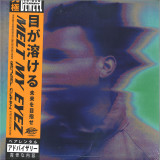
„Melt My Eyez See Your Future“ ist das bisher reifste und ambitionierteste Album von Denzel Curry. Aufgenommen im Laufe der Pandemie, zeigt Denzel sein Wachstum als Künstler und Mensch. Die Tracks, die aus einer Fülle von Einflüssen entstanden sind, unterstreichen seine Vielseitigkeit und seinen breit gefächerten Geschmack, der alles von Drum’n’Bass bis Trap umfasst.
Um diese Vision zu untermauern und die Bandbreite seines künstlerischen Schaffens zu zeigen, hat Denzel eine Vielzahl von Kollaborateuren engagiert und sich als einer der bahnbrechendsten Rapper der Szene etabliert.
‘Double Pink’ is the debut album by And Is Phi (Andrea Isabelle Phillips), a multidisciplinary artist from Norway and the Philippines now based in South East London. ‘Double Pink’ is a nuanced world that draws on colours and texture; with influences of Joni Mitchell and Frank Zappa, 90's R&B and Madlib’s ‘Shades Of Blue’ blending languidly to produce a base for uncovering layers of self, a deep release, and fragile new form.
Written by Andrea and co-produced with Fiona Roberts and Lorenz Okello over a nine month period; ‘Double Pink’ thematically explores the many movements of internal change, speaking from a deep inner voice inside the body. The title track is an invitation to be as unapologetically hungry as you please after a long absence of life giving passion and trust in oneself. ‘White Noise’ is a recovery song playing in your soul the first time you made it back out to the dance floor after a heart break so massive it laid rest to the person you used to be. Songs like ‘Working’ and ‘Staaar’ come from a candid and contemplative aspect. Stages of grief and resilience and wonder and wisdom are all touched upon.
“The album explores metamorphosis, liminal spaces, and the multiple faces of love”, says Andrea. “I mention love as a key ingredient, because anyone who has had to push and pull and hold and yield themselves through great loss and transformation knows it ain’t gonna happen without love. Tough times ask for double love, a stronger heart, something like a double pink”.
Andrea’s story dots between periods spent living in Norway, the Philippines and England - experiencing joy and beauty battling corruption and violence in Manila, DJing in Oslo, losing her sizable record collection in a warehouse fire before making friends and family in the jazz scene in London. Every story needs a scene, a landscape, an environment; all things Andrea visualises when writing songs.
“At my heart I am emotional and imaginative, searching for freedom for my spirit. What grounds it all is coming from a family of storytellers. My father played drums and percussion, he was a great dancer and a true collector and connoisseur of music from everywhere. My wise mother instilled in me a sense of faith and grace”.
Andrea is far from new to the scene, having performed with Steamdown, Emma Jean Thackray, Hector Plimmer, Scrimshire, William Florelle and many more as a valuable and inspiring creative force within the South London music scene. Andrea also created the album’s artwork and music videos: musicality and painting evolved from her initial creative languages of drawing and dance. All aspects are dialects of her common language: singing what can’t be painted and painting what can’t be sung.
King Tree & the Earthmothers is Henry James, Adam Ditt & Derek Eglit
Guitarist/singer Henry James (Robert Jon & The Wreck) and bassist
Adam Ditt (Balto, Gethen Jenkins) met in high school and were always
performing around and touring with different bands
There was a lot of chaos and inconsistency, but the constant would be after
school improvised jam sessions which would inspire the name and core concept
of the project. There was a certain freedom involved in performing as a trio that
always seemed to spark inspiration. Over the years James would find himself
working on psychedelic and progressive rock-influenced bedroom demos. Some
of these can be heard on 2020's "King Tree & The Earthmothers", an effort
performed, produced and recorded entirely by Henry James.
There were various incarnations of King Tree as a live band (as far back as 2016),
but the full potential of the group would not be realized until the addition of
drummer Derek Eglit (Painted Wives, Pinkly Smooth) in 2021. With an undeniable
and explosive chemistry, the trio became locally known in Southern California for
eclectic and virtuosic live performances. They brought a collection of songs to
the studio as a band in 2022 and are now preparing to release their true debut
album in 2023 and hit stages across Europe for the first time in October and
November.
King Tree & the Earthmothers is the "other" band for Henry James, guitarist for
Robert Jon & The Wreck - They will be touring Europe in October/November 2023
Recently reformed Swedish death metal pioneers DISMEMBER are proud to announce that they have once again joined the ranks of NUCLEAR BLAST RECORDS, where they released their demo, Reborn In Blasphemy (1990), their 1991 debut album, Like An Everflowing Stream, as well as the four records that would follow. Between 1988 and 2011 DISMEMBER earned a notorious reputation as the “Motörhead (version) of death metal”, through eight classic albums and furious live shows around the globe. The band was formed by Robert Sennebäck, David Blomqvist and Fred Estby in Stockholm, Sweden, in 1988 and has long since been regarded as one of the originators of the trademark Swedish death metal sound, next to other pioneering bands such as ENTOMBED, GRAVE and UNLEASHED. DISMEMBER recorded a couple of self-released demos before their 1990 demo cassette, Reborn In Blasphemy, with Matti Kärki on vocals and ENTOMBED's Nicke Andersson taking over most lead guitar parts, got picked up for a wider release by NUCLEAR BLAST RECORDS. In 1991, their first full-length, Like An Everflowing Stream (Nuclear Blast Records), saw the light of day, which was recorded by Tomas Skogsberg at the now legendary Sunlight Studios, and featured Richard Cabeza (UNANIMATED) on bass. DISMEMBER released their acclaimed sophomore album, Indecent & Obscene, in 1993, which to this day remains their most successful output.
Released in 1997, the fourth studio album by Sweden's DISMEMBER totally lives up to its title, and provides a harsher, more aggressive sound than its predecessor. Including a barrage of great tracks like 'Misanthropic', 'Of Fire', 'Silent Are The Watchers', it also marked the debut of drummer Fred Estby as producer. This remaster by Patrick W. Engel adds an impressive additional punch resulting in the ultimate version of this classic.
Dreams are made and displaced on Mark Fell & Rian Treanor’s oneiric electro-acoustic inception 'Last Exit', borne from long days in the family garden, and assembled into a mesmerising masterpiece of minimalist modal rhythm and atmospheric exploration, into rapt smallsound detailing in breathtaking form. It’s a bit like listening to Virginia Astley’s ‘From Gardens Where We Feel Secure’, with washes of Autechre seeping into the mix from outside.
‘Last Exit…’ originally appeared in a different form as a cassette release for our Documenting Sound series in 2021, and was edited this year by Mark and Rian for this new expanded and altered edition, mastered by Rashad Becker. It renders a painterly,psychedelic, and diaristic depiction of sublime atmospheric tension, occasionally ruptured by their typical, asymmetric rhythm impulses in a form that rudely transcends their respective aesthetics. Across four parts, they kern, juxtapose and diffract synthesised percussion and field recordings into polymetric arrangements riddled with timbral nuance of a highly unpredictable nature.
While patently inflected with nods to Indonesian gamelan, Ugandan folk, Indian Carnatic classical, Morton Feldman-esque minimalism, free jazz improvisation and a sort of rhythmic cubism that speaks to their mutual, voracious listening habits and tastes, the results are arguably without direct compare. Attentive listeners will recognise, however, that ‘Last Exit’ effortlessly transcends their respective styles, achieving a new high watermark of imaginary future-hyperfolk expressed in a sort of personalised but highly relatable meta-musical language.
Seriously, they’re working beyond known conventions here; opening to a sublime frisson of Feldman-esque keys, birdsong and distant car engines, and closing to a combo of just-intoned drone and wafts of distant ballroom music. The 80 minutes in between feel like returning to a dream, with flashes of FM strings dabbed to sloshing rhythms and domestic detritus, tilting into a nervously tentative tension ruptured with abstract dance dynamism and angular free jazz ballistics.
The rejigged recordings also reflect the fidelity of memory recall, expressing an altered perspective on their time spent in the multigenerational family’s Rotherham garden during spring/summer 2020, replete with their mum/grandmother on piano and overheard singing and in convo, but now fraught with a more melancholic, distempered quality that makes for a genuinely unforgettable listening experience. A long-form isolationist fantasy, consider it crucial listening if yr into Robert Ashley's 'Automatic Writing', Graham Lambkin, Autechre or Nuno Canavarro.
Die südkalifornischen Bluesrocker Robert Jon & The Wreck melden sich mit einem brandneuen Studioalbum zurück. Sie engagierten dazu die Produzentenlegenden Don Was, Dave Cobb und Kevin Shirley, zudem wurden zwei Tracks von Joe Bonamassa und Josh Smith produziert. Auf 'Ride Into The Light' kommt ihr knallharter, purer Rock'n'Roll in Hülle und Fülle zum Einsatz.
Made when mono was still king, Bob Dylan's self-titled 1962 debut is as understated of an entrance as any significant musician as ever made. Already well-versed in American roots music, Dylan simultaneously pays homage to tradition and extends it by putting his own stamp on classic material that metaphorically functions as the soil of our contemporary songs and styles. Free of ego, and performed with masterful conviction, Bob Dylan ranks with the debut efforts of similar artistic giants Elvis Presley and the Rolling Stones.
Mastered from the original master tapes, pressed at RTI, and limited to 3,000 copies, Mobile Fidelity's restored 180g mono 45RPM 2LP version brings the contents of this seminal release as closest as they've ever come to master tape-quality in the original mono configuration. Transparent to the source, the simple sounds of Dylan's voice, acoustic guitar, and harmonica take on lifelike perspective and directness – the "husk and bark" to which Robert Shelton referred in his now-legendary New York Times review of a Dylan appearance at Gerde's Folk City. MoFi has made possible an inexpensive time-traveling trip back to the Greenwich Village coffeehouses and folk clubs in which Dylan cut his teeth, albeit in much better fidelity and without any annoying background chatter. Wider grooves mean more information reaches your ears.
As the preferred mix at the time of the recording, the mono version presents Dylan as he and his producers originally intended. Since the separation of the stereo versions isn't as sharp, the mono edition places Dylan's vocals in the heart of the musical action and as one with the accompaniment. It paints listeners an incredibly accurate portrait of the attention-getting, concrete mass of sound that features no artificial panning and straight-ahead immersion into the music. This is how almost everyone first heard this timeless album – making the mono mix all the more historically valuable and truthful.
Much has been made of the commercial indifference that greeted the album upon its low-key release. Yet focusing on sales figures and the reaction of a public not yet hip to Dylan's name or music is to miss the forest for the trees. Distinguished from the era's other folk efforts by way of the determination, brazenness, and lived-through-this worldliness Dylan approaches the material and sings the songs, Dylan lays the groundwork for the path he'd soon trailblaze and everyone else would follow.
By nodding to Woody Guthrie at the same time he completely re-imagines a sobering tune such as Blind Lemon Jefferson's "See That My Grave Is Kept Clean," Dylan straddles the past and future. He also displays, with challenging authority and savant-like expertise, the ability to handle weighty topics such as death, sorrow, and lamentation with the vaudeville flair, bluesy mannerisms, and poignant command of an artist three times his age.
As Dylan scholar and pop-culture critic Greil Marcus observed in 2010, "Everybody knew Joan Baez and the Kingston Trio; if you knew Bob Dylan, you knew something other people didn't, something that soon enough everybody had to know. Within a year, an album could put an adjective in front of the singer's name as if it were already common coin." It all starts here.
Track List
Blue/Black Marble Vinyl, limitiert auf 100 Exemplare. NYHC-Schlagzeuger Legende "Will Shepler" (früher bei Agnostic Front, Madball) und Sick Of It All-Bassist Craig Setari (ebenfalls früher bei Agnostic Front) hatten die Idee eine neue Punk Rock Band zu gründen. Will rief seinen langjährigen Freund, den Gitarristen und Sänger Scott Roberts (früher bei Biohazard, The Spudmonsters, Bloodclot!) an, der Biohazard nur wenige Wochen zuvor verlassen hatte. Für Scott war es das perfekte Timing, denn er wollte weitermachen und etwas Neues von Grund auf mit völliger kreativer Freiheit und Leidenschaft schaffen. Bald darauf begannen Scott und Will mit der Arbeit an dem selbstbetitelten Debütalbum von The Take. Craig war mit dem hektischen Tourneeplan von Sick Of It All beschäftigt, also rekrutierte Scott seinen Freund Eric Klinger (ehemals Pro-Pain), um das Line-up zu vervollständigen.
- 1: Helplessly - Moment Of Truth
- 2: After You've Had Your Fling - The Intrepids
- 3: Welcome To The Club - Blue Magic
- 4: I Can't Move No Mountains - Margie Joseph
- 5: Supernatural Thing Part 1 - Ben E King
- 6: Mellow Me - Faith, Hope & Charity
- 7: Georgia's After Hours - Richard "Popcorn" Wylie
- 8: Date With The Rain - Eddie Kendricks
- 9: Just As Long As We're Together - Gloria Scott
- 10: Wendy Is Gone - Ronnie Mcneir
- 11: Got To Get You Back - Sons Of Robin Stone
- 12: Night Of The Wolf (Tema Del Lupo) - Ivano Fossati
- 13: Good Things Don't Last Forever – Ecstasy, Passion & Pain
- 14: Tell Me What You Want - Jimmy Ruffin
- 15: Keep It Up - Betty Everett
- 16: Free & Easy - Satyr
- 17: Each Morning I Wake Up - Major Harris
- 18: It's The Same Old Story - Act I
- 19: You Can't Hide Love - Creative Source
- 20: The Whole Damn World Is Going Crazy – John Gary Williams
- 21: If That's The Way You Feel - White Heat
- 22: Wake Up Everybody - Harold Melvin And The Bluenotes
Before there was Saturday Night Fever there was underground disco. DJs across America went out and found the music to play; dancers went out and found the clubs. At this point, in the early seventies, the disco was the venue and not a genre of music.
By the time Nik Cohn’s short story Tribal Rites of the New Saturday Night was published by New York magazine in June 1976, disco was the biggest genre of music on the charts and was about to get bigger still, becoming an all-enveloping cultural phenomenon. Cohn sold the film rights to Robert Stigwood, and his classic club yarn became Saturday Night Fever.
“Tribal Rites Of The New Saturday Night” is the soundtrack to Cohn’s story, where disco began; a 1975 score for the underground clubs of Brooklyn and Queens that played R&B, soul and Latin beats to people who lived for the weekend.
Bob Stanley has put this collection together, sourcing what was actually played in Brooklyn discos in 1974 and 1975. Only a few specific records were mentioned in Cohn’s feature, but two of them – Ben E King’s ‘Supernatural Thing Part 1’ and Harold Melvin’s ‘Wake Up Everybody’ - were cosmically great and both are included here, alongside underground favourites like Moment Of Truth’s Four Tops-like ‘Helplessly’ and Gloria Scott’s Barry White-produced modern soul classic ‘Just As Long As We’re Together’. Ivano Fossati’s incredible ‘Night Of The Wolf’ has fans in northern soul, disco and prog circles.
Without Cohn’s original story, it’s quite possible that disco would have remained an underground phenomenon – “Tribal Rites Of The New Saturday Night” paints a scene in full flower. Saturday Night Fever would eventually, if unintentionally, wreck the underground nature of this scene, and clubs like Studio 54 would destroy the democracy of the party, but for two or three years the scene was largely undocumented and magical. This album is the sound of disco before it was captured.
The Healer is a critically acclaimed album by the legendary blues musician John Lee Hooker. Released in 1989, it stands as a testament to Hooker's profound influence on the genre and his ability to evolve his sound while staying true to his roots. The album showcases his distinctive guitar style, gritty vocals, and masterful storytelling, creating an immersive and emotionally charged musical experience.
The Healer features an impressive array of guest artists, each bringing their unique talents to the table. Renowned musicians such as Carlos Santana, Bonnie Raitt, Robert Cray, Canned Heat, and Los Lobos join forces with Hooker, creating a rich tapestry of blues, rock, and soul.
On the title track Hooker's deep, resonant voice combined with Santana's searing guitar work creates an unforgettable blues anthem that speaks to the power of music as a healing force. The lyrics are introspective, introspective, and poignant, reflecting on the struggles of life and the solace found in the blues.
Throughout the album, Hooker explores a range of themes, from love and loss to societal issues and personal introspection. Tracks like "I'm in the Mood" and "Baby Lee" exude a raw sensuality, showcasing Hooker's ability to infuse his music with passion and desire. Meanwhile, songs like "Cry Baby" and "The Healing Game" delve into deeper emotional territory, capturing the pain and resilience of the human spirit.
Hooker was 73 years of age when The Healer came out and earned his first — of many future — Grammy accolades, winning Best Traditional Blues Recording for "I'm In The Mood." This edition features lacquers cut by Bernie Grundman, and pressing on 180-gram vinyl at Quality Record Pressings, for superior sound.
With its exceptional musicianship, thought-provoking lyrics, and powerful collaborations, The Healer remains a standout album in John Lee Hooker's discography.