Cerca:robert quine

Generi
Generi
Applicare
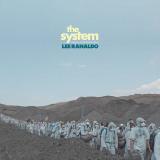
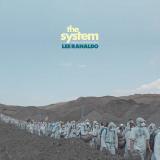
Lee Ranaldo - The System (OST)
  • Tajikistan (Nice To Meet You)
  • Pippi Sailing (Cimbalom)
  • No More Slogans
  • Berlin Blockade
  • Bergelmir
  • Something Beautiful To Live For
  • The Conference
  • An Exploding Dandelion
  • Telefoongesprek Henk
  • Both Ends Of The Spectrum
  • Instruments Of Violence
  • A Just Collapse
  • Tadzio Wild Congress
  • The Cusp Of The Change
  • Cool Water
disponibile anche

Sea Glass Vinyl[32,35 €]


SC65LP
SILVER CURRENT RECORDS
12inch09.10.202609.OTT.26

PopAlternativeRockBeatsAmbientTechnoDrone

A quick scan of the world’s favourite crowdsourced discography reveals that Sonic Youth co-founder Lee Ranaldo was not a total stranger to crackling electric experimentation in the years following his songwriting turns of the 20-teens. Yet »The System«, ingeniously culled and sequenced from Ranaldo’s soundtrack work for Dutch filmmaker Joris Postema’s ›eco-doc‹ of the same name, nonetheless feels like a reawakening. Quietly released in a vastly different (and much more ›filmic‹) form by Doxy Music/Riva Media Records in 2025, this LP reimagines and reconfigures the initial release, including unreleased material written and recorded for the film, to lend it new stature as both a return to drone-improv form and a reunion with introspective Downtown angst.

Given the state of the world, it’s not surprising that the film Ranaldo scores – a documentary on three climate activists bruising their fists on the black iron prison of techno-fascist deathkultur – is a study in despair and futility. But rather than wallowing in navel-gazing doom and gloom, the film documents the unstoppable spirit that has animated human resistance since the time of the Pharaohs.

As it turns out, the gorgeous scope of Lee Ranaldo’s guitar palette is a perfect manifestation of the hope and despair that animates the film. But like other high-water marks in the guitar-centric soundtrack canon – the high plains raga of Bruce Langhorne’s »Hired Hand«, Neil Young’s sparse and ghostly solo transmissions on »Dead Man«, or the monolithic mantras of Popol Vuh’s »Nosferatu« – its devotion to spectral gestures and meditative song forms launches it firmly outside of the OST orbit into a universe fully its own.

It might seem like a long journey from the Lower Manhattan rhythmic grime of the album’s opener »Tajikistan (Nice to Meet You)« (reminiscent of guitar opuses like Robert Quine and Jody Harris’s »Escape«) to the ringing cowboy chords of the final track, but the narrative logic of the LP pulls the listener along as solidly as a pack horse. As the LP unwinds, and collaborators like Jim Jarmusch, cellist Leila Boudreil, Yeah Yeah Yeahs snare shaman Brian Chase, and guitarist Yonatan Gat take their places, new vistas unfurl: the ritualistic thrum of »Berlin Blockade«, the haunted overtone palaces of »Bergelmir«, and the cavernous acoustic strumming of »Instruments of Violence«. It all winds up with the high lonesome standard »Cool Water«, each unhurried note trailing off into long-tail reverb, layers of shifting vocal harmonies pulling everything skyward – a hopeful note in an album where existential dread never lurks too deeply below the surface.

In the end, »The System« functions both as a film score and a hallucinatory (mostly) instrumental guitar record, revealing a sensibility not too often spotted in the 21st century – a liminal space where the song, the jam, and the meditation merge into a blurred whole. »The System«’s expansive fabric, emerging from a collective sound circling around Ranaldo’s signature tones, envelops and ampl amplifies the contributions of its community of creators – the perfect antidote to narcissistic despair. Much like the subjects of the film light the way towards intra-generational resistance, the music of »The System« reveals a path through gathering darkness. The world could be yours if you follow.

– Tom Carter

pre-ordina ora09 ott

dovrebbe essere pubblicato su 09 ott

28,15 €
Lee Ranaldo - The System (OST)
SC65LPX
SILVER CURRENT RECORDS
12inch09.10.202609.OTT.26

TechnoDroneBeatsAmbient

A quick scan of the world’s favourite crowdsourced discography reveals that Sonic Youth co-founder Lee Ranaldo was not a total stranger to crackling electric experimentation in the years following his songwriting turns of the 20-teens. Yet »The System«, ingeniously culled and sequenced from Ranaldo’s soundtrack work for Dutch filmmaker Joris Postema’s ›eco-doc‹ of the same name, nonetheless feels like a reawakening. Quietly released in a vastly different (and much more ›filmic‹) form by Doxy Music/Riva Media Records in 2025, this LP reimagines and reconfigures the initial release, including unreleased material written and recorded for the film, to lend it new stature as both a return to drone-improv form and a reunion with introspective Downtown angst.

Given the state of the world, it’s not surprising that the film Ranaldo scores – a documentary on three climate activists bruising their fists on the black iron prison of techno-fascist deathkultur – is a study in despair and futility. But rather than wallowing in navel-gazing doom and gloom, the film documents the unstoppable spirit that has animated human resistance since the time of the Pharaohs.

As it turns out, the gorgeous scope of Lee Ranaldo’s guitar palette is a perfect manifestation of the hope and despair that animates the film. But like other high-water marks in the guitar-centric soundtrack canon – the high plains raga of Bruce Langhorne’s »Hired Hand«, Neil Young’s sparse and ghostly solo transmissions on »Dead Man«, or the monolithic mantras of Popol Vuh’s »Nosferatu« – its devotion to spectral gestures and meditative song forms launches it firmly outside of the OST orbit into a universe fully its own.

It might seem like a long journey from the Lower Manhattan rhythmic grime of the album’s opener »Tajikistan (Nice to Meet You)« (reminiscent of guitar opuses like Robert Quine and Jody Harris’s »Escape«) to the ringing cowboy chords of the final track, but the narrative logic of the LP pulls the listener along as solidly as a pack horse. As the LP unwinds, and collaborators like Jim Jarmusch, cellist Leila Boudreil, Yeah Yeah Yeahs snare shaman Brian Chase, and guitarist Yonatan Gat take their places, new vistas unfurl: the ritualistic thrum of »Berlin Blockade«, the haunted overtone palaces of »Bergelmir«, and the cavernous acoustic strumming of »Instruments of Violence«. It all winds up with the high lonesome standard »Cool Water«, each unhurried note trailing off into long-tail reverb, layers of shifting vocal harmonies pulling everything skyward – a hopeful note in an album where existential dread never lurks too deeply below the surface.

In the end, »The System« functions both as a film score and a hallucinatory (mostly) instrumental guitar record, revealing a sensibility not too often spotted in the 21st century – a liminal space where the song, the jam, and the meditation merge into a blurred whole. »The System«’s expansive fabric, emerging from a collective sound circling around Ranaldo’s signature tones, envelops and ampl amplifies the contributions of its community of creators – the perfect antidote to narcissistic despair. Much like the subjects of the film light the way towards intra-generational resistance, the music of »The System« reveals a path through gathering darkness. The world could be yours if you follow.

– Tom Carter

pre-ordina ora09 ott

dovrebbe essere pubblicato su 09 ott

32,35 €
BASIC - THIS IS BASIC
NOQLP93
No Coincidence Records
12inch06.09.202406.SET.24

PopRock

BASIC is a mind-meld between Chris Forsyth, his frequent running partner (and formidable 6-string thinker) Nick Millevoi, and Mikel Patrick Avery (Natural Information Society). "This Is BASIC", their debut album, is a complex and entrancing instrumental LP recasting forgotten scraps of guitar history into a moving mosaic of strings, skins and electronics. Taking inspiration (and their name) from the 1984 Robert Quine/Fred Maher album ("Basic"), Forsyth and Millevoi got together for a run of low-key jam sessions using an Alesis drum machine for rhythm tracks and forging a collaborative language from angular polyrhythms, pulsing baritone-guitar lines, and shimmering chorus-pedal washes (another stylistic nod, this time to the glistening post-punk of the Durutti Column and numerous 4AD bands). Avery was soon enlisted on drum kit_a setup that quickly morphed into a single drum, bell, and a bespoke electronics rig of his own creation. The trio quickly flowered into an improvisational swirl of disorienting electronics, hypnotic throb, and dense flanged-guitar harmonics: three unique voices spinning a complex conversation of textures and rhythms.

pre-ordina ora06 set 2024

dovrebbe essere pubblicato su 06 set 2024

21,22 €
MILES DAVIS - A Tribute To Jack Johnson LP
LMF516SV
Mobile Fidelity Sound Lab
12inch15.03.202415.MAR.24

PopJazz

Miles Davis' A Tribute to Jack Johnson is the best jazz-rock record ever made. Equally inspired by the leader's desire to assemble the "greatest rock and roll band you have ever heard,” his adoration of Johnson, and Black Power politics, Davis created a hard-hitting set that surges with excitement, intensity, majesty, and power. Bridging the electric fusion he'd pursued on earlier efforts with a funkier, dirtier rhythmic approach, Davis zeroes in on concepts of spontaneity, freedom, and identity seldom achieved in the studio — and just as infrequently accepted by the mainstream.

Sourced from the original analog master tapes, pressed on MoFi SuperVinyl, and housed in a Stoughton jacket, Mobile Fidelity's 180g LP reissue brings it all to fore with startling realism. Benefitting from SuperVinyl’s nearly inaudible noise floor, superb groove definition, and clean, ultra-quiet surfaces, this 180g LP showcases everything — from the bold tonality of the headliner's white-hot trumpet solos to the decay of crashing cymbals, carry of wiry guitar notes, and echoes of the studio — in reference fashion.

Bristling with exuberance, Davis' high-register passages explode with authority and commanding presence. Around him, a barrage of urgent backbeats, knifing riffs, and supple bass lines emerge amidst black backgrounds. One of the most prominent differences long-time fans will notice is how much more aggressive, immediate, and vibrant the music sounds, with those aspects central to the composer's original desires.

Utilizing wah-wah and distortion, the go-to instrumentalist of the performances— guitarist John McLaughlin — attacks with a nasty edge, slashing style, and vicious streak that allows A Tribute to Jack Johnson< cross the until-then-impenetrable divide between rock and jazz. Davis puts both feet in the former camp and erases any gap. The stories of the record’s creation are nearly as legendary as the sounds within: Two sessions, multiple jams, different sets of musicians (several uncredited), and near-miraculous production perfectionism that made it all appear cohesive.

The least-well-known masterpiece of Davis' career, the 1971 record — seamlessly assembled and spliced together by producer Teo Macero — was a victim of limited record-label promotion. Audiences also didn’t immediately know what to make of its original cover art — faithfully replicated here. In addition, the powers that be at Columbia Records were directing the public’s attention to Miles at Fillmore, a completely different kind of album guided by two keyboardists. A Tribute to Jack Johnson practically lives in a different universe, one from the future. To many listeners who did manage to hear it — among them critic/musician Robert Quine, Stooges leader Iggy Pop, and renowned critic Robert Christgau — it surpassed everything that came before.

Indeed, Davis treated it as a personal manifesto: An opportunity to salute the Black championship boxer admired for his threatening image to the establishment and impeccable taste in clothes, cars, women and music. Davis explains in the liner notes his affinity for Johnson — a stance mirrored by the defiant music, which hits with a prize fighter's force and reflects the graceful elegance with which a pugilist navigates the ring — and closes the album with a Johnson quote read by Brock Peters.

Inspired not only by Johnson but by Jimi Hendrix and Sly Stone, Davis changed his approach and his band. He surrounds himself with a cadre of musicians in their 20s and, in the case of bassist Michael Henderson, a 19-year-old fresh from touring with Stevie Wonder. Henderson gives Davis what he requested: boogie-based grooves that don’t lose shape or direction. Soprano saxophonist Steve Grossman, drummer Billy Cobham, and organist Herbie Hancock adhere to a similar aesthetic that prizes brazenness, innovation, and energy.

In that vein, during a portion of “Yesternow,” Davis segues into a separate performance (which became known in its entirety as “Willie Nelson”) played by guitarists McLaughlin and Sonny Sharrock, bass clarinetist Bernie Maupin, keyboardist Chick Corea, bassist Dave Holland, and drummer Jack DeJohnette. Dig it!

Talking with jazz scholar Bill Milkowski — who himself noted how McLaughlin’s unrestrained style, decibel-forward volumes, and rapid-fire power chords engendered himself to the rock crowd at the same time that his harmonics and syncopation still definitely made him a jazz player — guitarist Henry Kaiser summed up part of the appeal of A Tribute to Jack Johnson as well as anyone, saying: “It’s a jazz record that way way more open than other jazz records at the time, but still not free jazz. McLaughlin’s rhythm guitar playing on ‘Right Off’ — the use of different chords in a rock shuffle than what anybody had used before — was revolutionary.”

And to think that’s just one aspect of a record that contains multitudes. “Never let them forget it.” Indeed.

pre-ordina ora15 mar 2024

dovrebbe essere pubblicato su 15 mar 2024

75,21 €
Teenage Jesus & The Jerks - Teenage Jesus & The Jerks LP
RRS216
Radiation Records
12inch14.03.202414.MAR.24

PopRockAlternative

During the late 1970s, after No Wave pioneer Lydia Lunch met saxophonist James Chance, she began setting her angry and disjointed poetry to anti-music, founding her ground-breaking band Teenage Jesus and The Jerks with Lunch’s shouted lyrics matched by her non-conventional use of electric guitar. The group’s self-titled debut EP is a fast and furious affair, produced by Robert Quine of the Voidoids/Lou Reed, with future Nick Cave drummer Jim Sclavunos on bass and Bradley Field on minimalist percussion; steeped in aggression and audacity, it’s an awesome disc that rebuffs punk’s easy cliches and refuses to be categorized. This reissue also includes the ‘Pre’ EP and the tracks from the legendary No New York compilation.

non in magazzino

Ultima consegna 2 anni fa
riordinabile senza garanzia

17,86 €
Lydia Lunch - Queen Of Siam LP
RRS218
Radiation Records
12inch15.06.202315.GIU.23

PopRockAlternative

After the demise of Teenage Jesus and the Jerks, Lydia Lunch launched her solo career with Queen Of Siam, arguably her greatest LP. In true No Wave style, the album is a mishmash of irritants, but her palette is far broader here, lurching from slow dirges, excessive feminist exhortations, and raucous personal purges to a touch of disco and lounge music exoticism, as conjured by Voidoids/Lou Reed guitarist Robert Quine, Contortions bassist Jack Ruby, and John Cale’s drummer, Douglas Browne. Spirited, surprisingly broad and defiantly dissonant, Queen Of Siam’s dense layers were designed to provoke and inflame; listen closely to fully decode.

pre-ordina ora15 giu 2023

dovrebbe essere pubblicato su 15 giu 2023

23,40 €
Brian Eno - Nerve Net
WAST031LP
ALL SAINTS
2x12inch14.12.202014.DIC.20

BeatsElectroExperimental

Repress der 2014er Reissue von Brian Enos Album "Nerve Net" (1992). Auf "Nerve Net" kehrte Eno zum mehr rockorientierten Sound zurück. An dem Album wirkten Robert Fripp, Robert Quine und John Paul Jones mit. Der beiliegende Downloadcode enthält das legendäre 'lost' Album "My Squelchy Life", das für September 1991 geplant war, dann aber zurückgezogen und zum Mythos wurde.

non in magazzino

Riordinabile senza garanzia

21,47 €

Language