UILTY RAZORS, BONA FIDE PUNKS.
Writings on the topic that go off in all directions, mind-numbing lectures given by academics, and testimonies, most of them heavily doctored, from those who “lived through that era”: so many people today fantasize about the early days of punk in our country… This blessed moment when no one had yet thought of flaunting a ridiculous green mohawk, taking Sid Vicious as a hero, or – even worse – making the so-called alternative scene both festive and boorish. There was no such thing in 1976 or 1977, when it wasn’t easy to get hold of the first 45s by the Pistols or the Clash. Few people were aware of what was happening on the fringes of the fringes at the time. Malcolm McLaren was virtually unknown, and having short hair made you seem strange. Who knew then that rock music, which had taken a very bad turn since the early 1970s, would once again become an essential element of liberation? That, thanks to short and fast songs, it would once again rediscover that primitive, social side that was so hated by older generations? Who knew that, besides a few loners who read the music press (it was even better if they read it in English) and frequented the right record stores? Many of these formed bands, because it was impossible to do otherwise. We quickly went from listening to the Velvet Underground to trying to play the Stooges’ intros. It’s a somewhat collective story, even though there weren’t many people to start it.
The Guilty Razors were among those who took part in this initial upheaval in Paris. They were far from being the worst. They had something special and even released a single that was well above the national average. They also had enough songs to fill an album, the one you’re holding. In everyone’s opinion, they were definitely not among the punk impostors that followed in their wake. They were, at least, genuine and credible.
Guilty Razors, Parisian punk band (1975-1978). To understand something about their somewhat linear but very energetic sound, we might need to talk about the context in which it was born and, more broadly, recall the boredom (a theme that would become capital in punk songs) coupled with the desire to blow everything off, which were the basis for the formation of bands playing a rejuvenated rock music ; about the passion for a few records by the Kinks or the early Who, by the Stooges, by the Velvet mostly, which set you apart from the crowd.
And of course, we should remember this new wave, which was promoted by a few articles in the specialized press and some cutting-edge record stores, coming from New York or London, whose small but powerful influence could be felt in Paris and in a handful of isolated places in the provinces, lulled to sleep by so many appalling things, from Tangerine Dream to President Giscard d’Estaing...
In 1975-76, French music was, as almost always, in a sorry state ; it was still dominated by Johnny Hallyday and Sylvie Vartan. Local rock music was also rather bleak, apart from Bijou and Little Bob who tried to revive this small scene with poorly sound-engineered gigs played to almost no one.
In the working class suburbs at the time, it was mainly hard rock music played to 11 that helped people forget about their gruelling shifts at the factory. Here and there, on the outskirts of major cities, you still could find a few rockers with sideburns wearing black armbands since the death of Gene Vincent, but it wasn’t a proper mass movement, just a source of real danger to anyone they came across who wasn't like them. In August 1976, a festival unlike any other took place in Mont-de-Marsan – the First European Punk Festival as the poster said – with almost as many people on stage as in the audience. Yet, on that day, a quasi historical event happened, when, under the blazing afternoon sun, a band of unknowns called The Damned made an unprecedented noise in the arena, reminiscent of the chaotic Stooges in their early adolescence. They were the first genuine punk band to perform in our country: from then on, anything was possible, almost anything seemed permissible.
It makes sense that the four+1 members of Guilty Razors, who initially amplified acoustic guitars with crappy tape recorder microphones, would adopt punk music (pronounced paink in French) naturally and instinctively, since it combines liberating noise with speed of execution and – crucially – a very healthy sense of rebellion (the protesters of May 1968 proclaimed, and it was even a slogan, that they weren’t against old people, but against what had made them grow old. In the mid-1970s, it seemed normal and obvious that old people should now ALSO be targeted!!!).
At the time, the desire to fight back, and break down authority and apathy, was either red or black, often taking the form of leafleting, tumultuous general assemblies in the schoolyard, and massive or shabby demonstrations, most of the time overflowing with an exciting vitality that sometimes turned into fights with the riot police. Indeed, soon after the end of the Vietnam War and following Pinochet’s coup in Chile, all over France, Trotskyist and anarcho-libertarian fervour was firmly entrenched among parts of the educated youth population, who were equally rebellious and troublemakers whenever they had the chance. It should also be noted that when the single "Anarchy in the UK" was first heard, even though not many of us had access to it, both the title and its explosive sound immediately resonated with some of those troublemakers crying out for ANARCHY!!! Meanwhile, the left-wing majority still equated punks with reckless young neo-Nazis. Of course, the widely circulated photos in the mainstream press of Siouxsie Sioux with her swastikas didn’t necessarily help to win over the theorists of the Great Revolution. It took Joe Strummer to introduce The Clash as an anti-racist, anti-fascist and anti-ignorance band for the rejection of old-school revolutionaries to fade a little.
The Lycée Jean-Baptiste Say at Porte d’Auteuil, despite being located in the very posh and very exclusive 16th arrondissement of Paris, didn’t escape these "committed" upheavals, which doubled as the perfect outlet for the less timid members of this generation.
“Back then, politics were fun,” says Tristam Nada, who studied there and went on to become Guilty Razors’ frontman. “Jean-Baptiste was the leftist high-school in the neighbourhood. When the far right guys from the GUD came down there, the Communist League guys from elsewhere helped us fight them off.”
Anything that could challenge authority was fair game and of course, strikes for just about any reason would lead to increasingly frequent truancy (with a definitive farewell to education that would soon follow). Tristam Nada spent his 10th and 11th unfinished grades with José Perez, who had come from Spain, where his father, a janitor, had been sentenced to death by Franco. “José steered my tastes towards solid acts such as The Who. Like most teenagers, I had previously absorbed just about everything that came my way, from Yes to Led Zeppelin to Genesis. I was exploring… And then one day, he told me that he and his brother Carlos wanted to start a rock band.” The Perez brothers already played guitar. “Of course, they were Spanish!”, jokes their singer. “Then, somewhat reluctantly, José took up the bass and we were soon joined by Jano – who called himself Jano Homicid – who took up the rhythm guitar.” Several drummers would later join this core of not easily intimidated young guys who didn’t let adversity get the better of them.
The first rehearsals of the newly named Guilty Razors took place in the bedroom of a Perez aunt. There, the three rookies tried to cover a few standards, songs that often were an integral part of their lives. During a first, short gig, in front of a bewildered audience of tough old-school rockers, they launched into a clunky version of the Velvet Underground's “Heroin”. Challenge or recklessness? A bit of both, probably… And then, step by step, their limited repertoire expanded as they decided to write their own songs, sung in a not always very accurate or academic English, but who cared about proper grammar or the right vocabulary, since what truly mattered was to make the words sound as good as possible while playing very, very fast music? And spitting out those words in a language that left no doubt as to what it conveyed mattered as well.
Trying their hand a the kind of rock music disliked by most of the neighbourhood, making noise, being fiercely provocative: they still belonged to a tiny clique who, at this very moment, had chosen to impose this difference. And there were very few places in France or elsewhere, where one could witness the first stirrings of something that wasn’t a trend yet, let alone a movement.
In the provinces, in late 1976 or early 1977, there couldn’t be more than thirty record stores that were a bit more discerning than average, where you could hear this new kind of short-haired rock music called “punk”. The old clientele, who previously had no problem coming in to buy the latest McCartney or Aerosmith LP, now felt a little less comfortable there…
In Paris, these enlightened places were quite rare and often located nex to what would become the Forum des Halles, a big shopping mall. Between three aging sex workers, a couple of second-hand clothes shops, sellers of hippie paraphernalia and small fashion designers, the good word was loudly spread in two pioneering places – propagators of what was still only a new underground movement. Historically, the first one was the Open Market, a kind of poorly, but tastefully stocked cave. Speakers blasted out the sound of sixties garage bands from the Nuggets compilation (a crucial reference for José Perez) or the badly dressed English kids of Eddie and the Hot Rods. This black-painted den was opened a few years earlier by Marc Zermati, a character who wasn’t always in a sunny disposition, but always quite radical in his (good) choices and his opinions. He founded the independent label Skydog and was one of the promoters of the Mont-de-Marsan punk festivals. Not far from there was Harry Cover, another store more in tune with the new New York scene, which was amply covered in the house fanzine, Rock News (even though it was in it that the photos of the Sex Pistols were first published in France).
It was a favorite hang-out of the Perez brothers and Tristam Nada, as the latter explained. “It’s at Harry Cover’s that we first heard the Pistols and Clash’s 45s, and after that, we decided to start writing our first songs. If they could do it, so could we!”
The sonic shocks that were “Anarchy in the UK”, “White Riot” or the Buzzcocks’s EP, “Spiral Scratch” – which Guilty Razors' sound is reminiscent of – were soon to be amplified by an unparalleled visual shock. In April 1977, right after the release of their first LP, The Clash performed at the Palais des Glaces in Paris, during a punk night organised by Marc Zermati. For many who were there, it was the gig of a lifetime…
Of course, Guilty Razors and Tristam were in the audience: “That concert was fabulous… We Parisian punks were almost all dressed in black and white, with white shirts, skinny leather ties, bikers jackets or light jackets, etc. The Clash, on the other hand, wore colourful clothes. Well, the next day, at the Gibus, you’d spot everyone who had been at this concert, but they weren’t wearing anything black, they were all wearing colours.”
It makes sense to mention the Gibus club, as Guilty Razors often played there (sometimes in front of a hostile audience). It was also the only place in Paris that regularly scheduled new Parisian or Anglo-Saxon acts, such as Generation X, Siouxsie and the Banshees, the Slits, and Johnny Thunders who would become a kind of messed-up mascot for the venue. A little later, in 1978, the Rose Bonbon – formerly the Nashville – also attracted nightly owls in search of electric thrills… In 1977, the iconic but not necessarily excellent Asphalt Jungle often played at the Gibus, sometimes sharing the bill with Metal Urbain, the only band whose aura would later transcend the French borders (“I saw them as the French Sex Pistols,” said Geoff Travis, head of their British label Rough Trade). Already established in this small scene, Metal Urbain helped the young and restless Guilty Razors who had just arrived. Guitarist for Metal Urbain Hermann Schwartz remembers it: “They were younger than us, we were a bit like their mentors even if it’s too strong a word… At least they were credible. We thought they were good, and they had good songs which reminded of the Buzzcocks that I liked a lot. But at some point, they started hanging out with the Hells Angels. That’s when we stopped following them.”
The break-up was mutual, since, Guilty Razors, for their part, were shocked when they saw a fringe element of the audience at Metal Urbain concerts who repeatedly shouted “Sieg Heil” and gave Nazi salutes. These provocations, even still minor (the bulk of the skinhead crowd would later make their presence felt during concerts), weren’t really to the liking of the Perez brothers, whose anti-fascist convictions were firmly rooted. Some things are non-negotiable.
A few months earlier (in July 1978), Guilty Razors had nevertheless opened very successfully for Metal Urbain at the Bus Palladium, a more traditonally old-school rock night-club. But, as was sometimes the case back then, the night turned into a mass brawl when suburban rockers came to “beat up punks”.
Back then, Parisian nights weren’t always sweet and serene.
So, after opening as best as they could for The Jam (their sound having been ruined by the PA system), our local heroes were – once again – met outside by a horde of greasers out to get them. “Thankfully,” says Tristam, “we were with our roadies, motorless bikers who acted as a protective barrier. We were chased in the neighbouring streets and the whole thing ended in front of a bar, with the owner coming out with a rifle…”
Although Tristam and the Perez brothers narrowly escaped various, potentially bloody, incidents, they weren’t completely innocent of wrongdoing either. They still find amusing their mugging of two strangers in the street for example (“We were broke and we simply wanted to buy tickets for the Heartbreakers concert that night,” says Tristam). It so happened that their victims were two key figures in the rock business at the time: radio presenter Alain Manneval and music publisher Philippe Constantin. They filed a complaint and sought monetary compensation, but somehow the band’s manager, the skilful but very controversial Alexis, managed to get the complaint withdrawn and Guilty Razors ended up signing with Constantin with a substantial advance.
They also signed with Polydor and the label released in 1978 their only three-track 45, featuring “I Don't Wanna be A Rich”, “Hurts and Noises” and “Provocate” (songs that exuded perpetual rebellion and an unquenchable desire for “class” confrontation). It was a very good record, but due to a lack of promotion (radio stations didn’t play French artists singing in English), it didn’t sell very well. Only 800 copies were allegedly sold and the rest of the stock was pulped… Initially, the three tracks were to be included on a LP that never came to be, since they were dropped by Polydor (“Let’s say we sometimes caused a ruckus in their offices!” laughs Tristam.) In order to perfect the long-awaited LP, the band recorded demos of other tracks. There was a cover of Pink Floyd's “Lucifer Sam” from the Syd Barrett era – proof of an enduring love for the sixties’ greats –, “Wake Up” a hangover tale and “Bad Heart” about the Baader-Meinhof gang, whose actions had a profound impact on the era and on a generation seeking extreme dissent... On the album you’re now discovering, you can also hear five previously unreleased tracks recorded a bit later during an extended and freezing stay in Madrid, in a makeshift studio with the invaluable help of a drummer also acting as sound engineer. He was both an enthusiastic old hippie and a proper whizz at sound engineering. Here too, certain influences from the fifties and sixties (Link Wray, the Troggs) are more than obvious in the band’s music.
Shortly after a final stormy and rather barbaric (on the audience’s side) “Punk night” at the Olympia in June 1978, Tristam left the band ; his bandmates continued without him for a short while.
But like most pioneering punk bands of the era, Guilty Razors eventually split up for good after three years (besides once in Spain, they’d only played in Paris). The reason for ceasing business activities were more or less the same for everyone: there were no venues outside one’s small circuit to play this kind of rock music, which was still frightening, unknown, or of little interest to most people. The chances of recording an LP were virtually null, since major labels were only signing unoriginal but reassuring sub-Téléphone clones, and the smaller ones were only interested in progressive rock or French chanson for youth clubs. And what about self-production? No one in our small safety-pinned world had thought about it yet. There wasn’t enough money to embark on that sort of venture anyway.
So yes, the early days of punk in France were truly No Future!
quête:roc c
THE RAPPER ANDPRODUCER"S NEW ALBUM
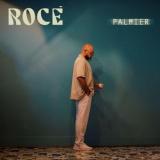
Palmier is producer and rapper Rocé"s new album. At the crossroads of Sade and Rakim, the album unfolds an impeccable flow over gentle melodies, the mellow sound of the saxophone softening the sharpness of the spoken truths. Rocé delivers a melody of hope, and appreciation of determination in the face of the impossible. "La Voie Lactée" features the captivating voice of Natacha Atlas and the sublime orchestrated violins of Samy Bishaï, the whole thing wrapped up in the style reminiscent of Isaac Hayes" soul and Portishead"s trip-hop. "Laisse les enfants courir" reveals a soulful hip-hop,between powerful groove and relentless flow, where Rocé blends political lucidity and poetic verse while Cisko"s subtle arrangements sculpt an organic, sensitive landscape, poised between tension and serenity. On "Lunaire", Rocé surprises us right away, with a sharp and melodic flow. Driven by powerful imagery and sharp lyrics, the track transforms anger into creative energy. It portrays an artist outsidethe mainstream, awareof the world"s failings but determined to create his own haven. Palmier embodies the melancholy of unfinished struggles, perseverance, and the promise of a brighter dawn.
- 1: Ragebait
- 2: Love's Underrated
- 3: Greed Battalion
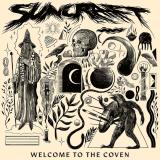
- 4: Welcome To The Coven
- 5: Wizards Of The Anger Magic
- 6: Charlatan Killer
- 7: High On Silence
- 8: Forgotten Goddess
RED VINYL[23,11 €]
Suncraft is an underground rock band from Oslo, Norway. After appearing on the scene with their debut in 2021, they"ve ratcheted up their sound a notch in every conceivable way with their furious and fun new album Welcome To The Coven. Formed in Oslo in 2017, Suncraft built their early identity on mid-tempo stoner rock, but Welcome to the Coven shows the band has broadened their foundation significantly. The album channels classic rock swagger, punk urgency, and flashes of blackened intensity without settling into pastiche or genre collage - think Turbonegro meets Venom with the odd helping of blast beats thrown in and you"re on your way. The album"s eight tracks move fluidly between heavy riffing, hook-forward choruses and sudden shifts in mood, giving the record a restless, forward thinking character that keeps its 40-minute runtime lean and engaging. Welcome To The Coven is a confident step forward for a promising band which emphasizes their sharpened songwriting and willingness to push beyond scene expectations. The album is available on red or black vinyl from Norwegian purveyors of heavy rock label All Good Clean Records.
- A1: Fkj - Ylang Ylang
- A2: Nightbirds - U&I
- A3: Dabeull - I Can’t Stop (Feat. Reva De Vito)
- A4: Kartell - All In (Feat Che Lingo)
- A5: Cherokee - Don’t Matter (Feat. Darianna Everett)
- B1: Darius - Espoir
- B2: Didi Han - Wake Up
- B3: Wayne Snow - Nina
- B4: Dune X Crayon - Slowdiving (Feat. Lossapardo)
- B5: Fkj - Vibin Out With (((O)))
- C1: Kartell - All I Have (Feat. J-Rican)
- C2: Darius - Cherie (Feat. Darianna Everett)
- C3: Cezaire - The Answer (Feat. Adele)
- C4: Dune X Crayon - Blue Window
- C5: Karma Kid - Like Im On Fire (Kartell Remix)
- D1: Cezaire - Nirvana (Feat. Leven Kali)
- D2: Crayon - After The Tone
- D3: Zimmer - Wildflowers (Feat. Panama)
- D4: Katu - Home Is Not A Place (Feat. Chester Watson & Solv)
- D5: Kartell - Space Odyssey
To celebrate over ten years of groove and sonic elegance, Roche Musique presents its “BEST OF” compilation, available exclusively on vinyl. A handpicked selection of 20 essential tracks tracing the label’s DNA — a refined blend of modern soul, nuanced electronics, and timeless groove.
Featuring the label’s cornerstone artists — FKJ, Darius, Kartell, Zimmer, Cezaire, Crayon, Dabeull, Lossapardo — alongside acclaimed collaborators such as Reva De Vito, Darianna Everett, Ayelle, Leven Kali, Panama, Chester Watson, Sølv, and more. From “Vibin’ Out” to “Espoir”, through “Wildflowers” and “I Can’t Stop”, this compilation captures the very essence of Roche’s sound: warm, heartfelt, and endlessly groovy. A pure analog listening experience designed for true music lovers and vinyl collectors — every groove telling the story of a decade of passion and sound.
We’ve all experienced that feeling when a song instantly transports us back to the moment we first heard it and became completely hooked. For Linda & Norm, “Moments to Want You” by the Jerry Lillard Band carried the warm vibes of a Parisian summer in 2019. Fast-forward to 2025, they revisited the track with a complete twist, nudging it toward an AOR resurgence for the label’s Soft Rock for Hard Times series.
The original version by the Jerry Lillard Band was released in 1981 on a German rock sampler, created in protest against the closure of their rehearsal space in an old school building. “Moments to Want You” stands out for its haunting melody, heartfelt lyrics, and compelling arrangements. Inspired by these elements, Linda & Norm cast the song in a new light, leaning into ’80s-tinged guitar pop à la Trevor Horn, with hints of psych bedroom pop in a distinctly Californian fashion.
Joining the release are two favorite artists of theirs, further expanding the song’s potential into dancefloor territory. Sydney’s own DD Mirage delivers the smoky, dubby disco blend we’ve admired since their debut album, while seasoned producer Justin Van Der Volgen brings the B-side magic, echoing the authentic stripped-back dub approach in the vein of Pettibone and Baker. To round it out, an instrumental version, along with an extended mix courtesy of Justin, complements the release, making it a 12” worth pulling out whenever the moment calls.
- 1: Silver Smile
- 2: Nightmares
- 3: My Paper Heart
- 4: Fall In Fall Out
- 5: Stuck In The Melancholy
- 6: Golden Sands
- 7: Magic Sleep
- 8: I'm Breaking Out
- 9: Cut The Eyes Out Of The Photographs
- 10: A Black Moon
- 11: Sadness, Don't You Worry
- 12: Head Over Heels
Graphite Vinyl[29,37 €]
Tigercub are a UK alternative rock trio known for their dark, cinematic sound that blends heavy riffs with melodic depth. Fusing elements of grunge, alt-rock, and post-punk, the band delivers emotionally charged songwriting and powerful live performances. Praised for their balance of aggression and atmosphere, Tigercub have toured with acts like Royal Blood, Chevelle, and Highly Suspect, cementing their reputation as one of the most dynamic bands in modern rock.
- 1: Grow Or Pay
Hard rock paired with a pinch of cowpunk and hearty Danish gruffness: This unique mix has earned D-A-D a passionate fan base whose loyalty and devotion extends far beyond Scandinavia. A bond just as deeply rooted, as that between Hamburg dark rock giants MONO INC. (whose current album Darkness once again conquered the top spot on the German charts) and their raven family. Back in 2008, MONO INC. paid tribute to D-A-D with a cover version of “Sleeping My Day Away” and today, what belongs together rocks together, as MONO INC. plays D-A-D! What's more, in MONO INC.'s version of Grow or Pay, their epic, melancholic dark rock meets the unmistakable raspy voice of D-A-D singer Jesper Binzer.
“We've adored D-A-D since we first saw them live in the early 1990s,” explains MONO INC. mastermind Martin Engler. “The fact that we were able to get Jesper Binzer on board for our version of ”Grow or Pay“ and that D-A-D will also be joining us as special guests on our 2026 tour in Bremen and Munich is almost too much of an honor.”
Green Vinyl[28,36 €]
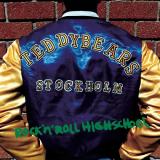
Teddybears is a Swedish music group formed in Stockholm in 1991. The group consists of members Patrik Arve, Joakim Åhlund, and Klas Åhlund - with the latter two being known from their work with artists such as Robyn, Ghost, Katy Perry, Charli XCX, Madonna, Chrissie Hynde and many many more. Rock ‘n’ Roll Highschool was released in 2000 and was the band’s big breakthrough album, winning four Swedish Grammys and featuring the original “Punkrocker” version and “Yours to Keep”.
Since then, the band has been a household name in Scandinavia, but have also reached international success with hits such as “Cobrastyle” and most recently when “Punkrocker (feat. Iggy Pop)” was featured in the latest Superman movie, helping the track go viral and reach 80 million streams.
In 2026, Rock ‘n’ Roll Highschool is being pressed on vinyl for the very first time.
Black Vinyl[28,36 €]
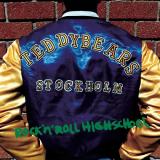
Teddybears is a Swedish music group formed in Stockholm in 1991. The group consists of members Patrik Arve, Joakim Åhlund, and Klas Åhlund - with the latter two being known from their work with artists such as Robyn, Ghost, Katy Perry, Charli XCX, Madonna, Chrissie Hynde and many many more. Rock ‘n’ Roll Highschool was released in 2000 and was the band’s big breakthrough album, winning four Swedish Grammys and featuring the original “Punkrocker” version and “Yours to Keep”.
Since then, the band has been a household name in Scandinavia, but have also reached international success with hits such as “Cobrastyle” and most recently when “Punkrocker (feat. Iggy Pop)” was featured in the latest Superman movie, helping the track go viral and reach 80 million streams.
In 2026, Rock ‘n’ Roll Highschool is being pressed on vinyl for the very first time.
A deeply hypnotic and beautifully crafted statement from one of the true masters of subtle groove and atmosphere. Playedby‘s label boss himself, returns to his very own imprint Tripsi Records with a stunning new vinyl release. Pure hypnotic brilliance, essential for selectors, collectors, and lovers of deeply crafted electronic music.
Tripsi Records is more than just a label. It is an audio-visual world created by Cristi Klebleev, where sound and image come from the same hand. Every release features only his own music, accompanied by original artworks painted by Cristi himself on canvas, making each record a fully personal expression, both sonically and visually. A perfect example of why Tripsi Records continues to stand out in a crowded world. Finest mastering and Cut, 180g Vinyl!
- 1: Old Big Eye
- 2: The Bliss
- 3: Carver
- 4: Truce
- 5: Masterflow
- 6: The Gorgon
- 7: Gath
- 8: Bad Horse
- 9: Goin' Home
Zum ersten Mal seit einem Jahrzehnt sind die lebenden Fuzz-Legenden Truckfighters mit brandneuem Material zurück und entfachen die Rockszene erneut mit ihrer rohen Energie.MASTERFLOW - das Gleichgewicht zwischen Disziplin und Freiheit. Eine vibrierende Resonanz auf mehreren Ebenen - Körper, Geist, Raum, Zeit und Publikum in perfekter Harmonie.Tauche ein in MASTERFLOW und lass dich von den donnernden Klanglandschaften mitreißen, die nur Truckfighters erschaffen können.Das neue Album entfesselt eine unerbittliche Welle aus fuzz-getränkten Hymnen, massiven Riffs und hypnotischen Grooves, die die Desert-Rock-Wurzeln der Band widerspiegeln und ihren Sound zugleich in neues, weitläufiges Terrain vorstoßen lassen.Ganz im klassischen Truckfighters-Geist ist die Musik auf MASTERFLOW sowohl dynamisch als auch reich an Variationen - sie wechselt mühelos zwischen erdrückender Schwere und ausgedehnten, psychedelischen Passagen. Von erdbebentiefem Bassfundament bis hin zu aufsteigenden, melodischen Spannungsbögen balanciert die Band meisterhaft rohe Kraft mit Feingefühl und Flow. Jeder Track atmet, entwickelt sich und trifft mit klarer Absicht - eine nahtlose Reise, angetrieben von Schweiß, Fuzz und dem rein verzerrten Geist des Rock 'n' Roll.Dieses Album ist gemacht für überfüllte Clubs, endlose Highways und Lautsprecher am Limit - ein klangliches Monolith, das noch lange nach dem Verklingen des letzten Tons nachhallt.Eine große Europa-Release-Tour startet Mitte April und zieht sich durch den gesamten Mai, bevor sie nahtlos in den Festival-Sommer übergeht. Ob im Studio oder live auf der Bühne: Truckfighters liefern ein unvergessliches, überwältigendes Klangerlebnis.
- 1: Calm Before The Storm
- 2: Hawkshaw
- 3: The 1
- 4: Gehenna
- 5: The Contract
- 6: Fiend
- 7: Storyline
The re-issue of Truckfighters' album V marks a fresh celebration of this iconic record, It has been sold out for years but finally we're offering fans a chance to revisit the band's signature desert rock sound and collectible packaging. Originally released in 2010, V is praised for its heavy riffs, hypnotic grooves, and raw energy, solidifying Truckfighters' reputation in the stoner rock scene. The re-issue allows both longtime fans and new listeners to experience the album in a renewed format, highlighting its enduring influence and the band's distinctive style.
- 1: Prolog
- 2: Gigantos
- 3: Epos
- 4: Awen
- 5: El Monstro
- 6: Odjuret
- 7: Flod
- 8: Tale Of Squidman
- 9: Mothra
- 10: Epilog
Ten years ago, Norrköping's own Skraeckoedlan released their second full-length album, Sagor (Fairy Tale/Stories). Spring 2026 marks its 10th anniversary, and the band is celebrating with a newly remastered edition along with a special tour that once again invites listeners back into their myth-filled universe. Rooted in the Riff-driven heaviness of stoner rock and the storytelling spirit of progressive rock, Skraeckoedlan craft sonic worlds where myths, cosmic beings, and the forces of nature feel as alive as the guitars driving them. Back in 2015, they released the concept album Sagor, weaving together their love of grand narratives with their massive, immersive sound - a musical journey through Nordic legends, timeless natural mysticism, and entirely original realms. It became a landmark release, firmly establishing Skraeckoedlan as one of Sweden's most ambitious and imaginative heavy bands. Today, they stand as one of the Nordic region's most distinctive and celebrated fuzz acts-musicians who don't just write songs, but entire stories. In 2026, the band will take Sagor back on the road, celebrating another major milestone together with their fans! But wait, there's more from our friends in Skraeckoedlan..!
- Pon De Dungle
- Equatorial Forest
- Brothers On The Slide
- Changes
- Breezeman
- Promised Heights
- Losin' Ground
- Leavert
- The Recluse
- Sheshamani
2024 marked the 50th anniversary of Cymande’s ‘Promised Heights’, a record that closed out an historic three album run of seminal early 1970s Afro-soul that also included their 1972 self-titled debut and 1973’s ‘Second Time Round’
Promised Heights’ solidified Cymande’s place in music history and contains some of their most- beloved and often-sampled tracks such as ‘Brothers On The Slide’.
As children of the Windrush Generation, Cymande were part of the first wave of innovators and originators of the fledgling Black British music scene.
Taking influences from their Guyanese and Jamaican roots, the band fused reggae basslines, Afro-tinged Nyabinghi percussion, psychedelic rock touches, and American style funk instrumentation into a unique sound they dubbed as ‘Nyah-rock’.
‘Promised Heights’ was recorded following the band’s US tour with Al Green, which had firmly planted Cymande in the ears of an adoring American audience.
Broadside has never been a band to stay in one place for too long—musically or otherwise. The Richmond, Virginia-based band has spent the past decade carving out their own space in the pop rock scene. Drawing influence from The Killers, AFI, Kings of Leon, and Taking Back Sunday, their sound seamlessly fuses nostalgic rock energy with a fresh, modern edge. Their evolution has been nothing short of remarkable, taking them from underground favorites to genre staples, all while embracing the idea that growth and change are not just inevitable but necessary. With Oliver Baxxter (vocals), Domenic Reid (guitar), and Patrick Diaz (bass/backup vocals) at the helm, Broadside has built a career on crafting music that feels both deeply personal and universally relatable.
Their last full-length album, Hotel Bleu, served as a bold chapter in their story, using the transient nature of hotel stays as a metaphor for self-reflection, fleeting moments, and personal reinvention. The album marked a significant milestone in their career, amassing over 100 million streams and standing as their boldest, brightest, and most ambitious work to date. Now, as they prepare to enter their next era, the band is gearing up to release their most dynamic music yet, continuing to evolve while staying true to the energy and authenticity that first captivated listeners.
Broadside has never been a band to stay in one place for too long—musically or otherwise. The Richmond, Virginia-based band has spent the past decade carving out their own space in the pop rock scene. Drawing influence from The Killers, AFI, Kings of Leon, and Taking Back Sunday, their sound seamlessly fuses nostalgic rock energy with a fresh, modern edge. Their evolution has been nothing short of remarkable, taking them from underground favorites to genre staples, all while embracing the idea that growth and change are not just inevitable but necessary.
With Oliver Baxxter (vocals), Domenic Reid (guitar), and Patrick Diaz (bass/backup vocals) at the helm, Broadside has built a career on crafting music that feels both deeply personal and universally relatable. Their last full-length album, Hotel Bleu, served as a bold chapter in their story, using the transient nature of hotel stays as a metaphor for self-reflection, fleeting moments, and personal reinvention. The album marked a significant milestone in their career, amassing over 100 million streams and standing as their boldest, brightest, and most ambitious work to date. Now, as they prepare to enter their next era, the band is gearing up to release their most dynamic music yet, continuing to evolve while staying true to the energy and authenticity that first captivated listeners.
Recycled Cherry" (Red/Black) Vinyl[28,53 €]
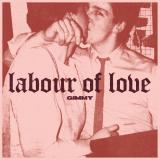
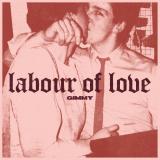
Australian indie and garage-rock firebrand, GIMMY unveils her new EP Labour of Love — a raw, emotionally charged collection that fuses gritty indie rock, post-punk bite and tender poetic expression, all powered by Gemma Owens’ unmistakable vibrato and fiercely honest songwriting.
Where her 2024 debut Things Look Different Now was a slow-burn, two-to-three–year voyage of change and introspection, Labour of Love hits with an entirely new force: intuitive, immediate and deeply connected to Owens’ emotional world. Written over six months and captured in an intense 4–5 day studio burst with producer Sam Joseph (King Gizzard), the EP moves with the urgency of something that needed to be felt and heard, right away.
Across seven compelling tracks, GIMMY dives into social anxiety, grief, falling in love and the chaotic beauty of everyday life, with each song arriving “on its own terms” — born from late-night home writing sessions, snippets of inspiration while travelling and moments of full-band electricity. Sonically, Labour of Love nods to Soft Play, Nick Cave, Fontaines D.C., The Preatures and The Smiths, yet remains unmistakably GIMMY: expressive, gritty, vulnerable, cheeky and alive in every moment.
Ultimately, the EP is an unfiltered snapshot of emotional truth, celebrating life’s highs, lows and everything in between, and showcasing GIMMY at her most dynamic, powerful and compelling to date.
Black Vinyl[27,31 €]
Australian indie and garage-rock firebrand, GIMMY unveils her new EP Labour of Love — a raw, emotionally charged collection that fuses gritty indie rock, post-punk bite and tender poetic expression, all powered by Gemma Owens’ unmistakable vibrato and fiercely honest songwriting.
Where her 2024 debut Things Look Different Now was a slow-burn, two-to-three–year voyage of change and introspection, Labour of Love hits with an entirely new force: intuitive, immediate and deeply connected to Owens’ emotional world. Written over six months and captured in an intense 4–5 day studio burst with producer Sam Joseph (King Gizzard), the EP moves with the urgency of something that needed to be felt and heard, right away.
Across seven compelling tracks, GIMMY dives into social anxiety, grief, falling in love and the chaotic beauty of everyday life, with each song arriving “on its own terms” — born from late-night home writing sessions, snippets of inspiration while travelling and moments of full-band electricity. Sonically, Labour of Love nods to Soft Play, Nick Cave, Fontaines D.C., The Preatures and The Smiths, yet remains unmistakably GIMMY: expressive, gritty, vulnerable, cheeky and alive in every moment.
Ultimately, the EP is an unfiltered snapshot of emotional truth, celebrating life’s highs, lows and everything in between, and showcasing GIMMY at her most dynamic, powerful and compelling to date.
- A1: Of The Sea
- A2: I Don't Live Today
- A3: Five Six
- A4: Blue Gold
- A5: Foggy Night
- A6: Empty Of Your Possession
- B1: What A Way To Be Laughing
- B2: Let It Alone
- B3: Never With You (Acoustic Version)
- B4: To Catch The Sun
- B5: Don't Move Girl
Born into a musical family Al Manfredi started writing songs when he was child. As a teenager in 1965, he formed the Nuts & Bolts in the small beach town of San Clemente, California. Inspired by the Kinks, the Beatles and the Byrds, the group separated themselves from the pack by also performing original material written by Manfredi and band mate Mike Ingram. In late 1966 they changed their name to the Lost & Found and relocated to Phoenix, Arizona, where they cut a rare single, “Don’t Move Girl” b/w “To Catch the Sun,” which now commands high coin from ‘60s garage collectors. When they returned to San Clemente in early 1967 their music had taken a more psychedelic direction. The Lost & Found were riding high that year, until tragedy struck. Ingram was found hanged under suspicious circumstances and soon after Lost & Found drummer Mike Ryer died of cancer at the age of 19. Heartbroken, Manfredi gave up on the band scene completely and moved to Garden Grove to teach at his family’s music store. But alone, behind closed doors, he kept writing songs and working on his music, recording hours of tapes, often tracking all the instruments himself. In 1973 he chose six of his best songs, some of them written back in the Lost & Found days, and had them custom-pressed as an LP. Only a handful of copies were pressed, and most of these were sent out to various record companies in the hope of landing a deal. Despite the outstanding quality of the music, there were no takers. But decades later, collectors discovered the Al Manfredi album and hailed it a West Coast rock masterpiece. In his Acid Archives book, Patrick Lundborg called its discovery a deus ex machina and compared it to David Crosby’s first solo album and Hawaii-era Merrell Fankhauser, “not just the acutely captured mellowness, but the self-confidence and the talent.”This little-known West Coast rock masterpiece was rediscovered and celebrated by Acid Archives founder Patrick Lundborg and others around the time that Manfredi died in 1995. This version of the album, overseen by Manfredi’s son Exile, and with Manfredi’s story told by Ugly Things’ founder Mike Stax, presents the complete package of an incredible lost and found artist. Contains the album, as originally issued, on side A with unreleased music on side B.