With Panorama, Frank Maston pays homage to the classic era of library records and Italian soundtracks of the 70s. A blissed-out, grooving collection of filmic cues, it continues the unique brilliance of Tulips and Darkland. Elegant and easy, subtle and stylish, breezy and beautiful; this is his Maston-piece. Commissioned by legendary label KPM, Panorama cements Maston as a master of modern classics and the most mesmeric of contemporary composers.
In early 2020, Be With suggested to Frank that he should make a KPM record. He wasn't aware that they were still putting out new library records - but he was super keen: "It was completely surreal and it still hasn't fully sank in that I have a record in that catalog, sitting alongside those incredible albums that were so influential to me."
Frank was visiting family in his hometown of LA in March 2020 when the world ground to a halt so the KPM project arrived at a fortuitous moment. Having fantasised about committing to a record with no distractions, with a proper budget, access to his gear and space to work in - to really dig in and try to write and arrange the best work he could possibly make - it was a real "be careful what you wish for" moment. But, as Frank explained, "it completely saved my year and sanity to have something to focus on and get excited about. It was my lifeline." He spent seven months on it, working almost every day.
Maston had already been making library-influenced music so when KPM outlined the criteria for the tracks it was exactly what he had been doing all along. He thought the best approach would be to make a follow-up to Tulips that had a parallel life as a KPM record. Enjoying complete creative freedom, “gave me the drive to power through and dig in deep. I'm not sure if I could have kept myself on such a rigorous recording schedule under my own steam, and I think the momentum I had writing and recording it is part of the strength of this record."
Maston’s sleek retro-groove instrumentals emulate the classic KPM “Greensleeve” reel-to-reel recordings that provided mood-setting music for mid-century cinema, television, and radio programs. Apparently in close conversation with the John Cameron-Keith Mansfield KPM pastoral masterclass Voices In Harmony, Maston's Panorama could be heard as that record's funky follow-up. Yes, it's *that good*. Another reference point from the hallowed library would be Francis Coppieter's wonderful Piano Viberations.
Opener "First Class" is a blissed-out groove, featuring the soothing vocals of Molly Lewis and a glistening harp over drums, a two-note bass motif (from Eli Ghersinu of L'Eclair) and an assemblage of guitars, synths, French horn and glowing vibraphone. Acid Lounge, anyone? The irresistibly funky "Easy Money" is a gorgeous cut led by more of Molly's vocals, pastoral flute and Rhodes, underpinned by drums and percussion, grooving bass, chilled guitars and synth strings. Kicking the tempo up, the percussive "Storm" is a vibin' filmic-fusion jam where psychedelic guitars (courtesy of Pedrum of Allah Las/Paint) organ, jazzy flute, Rhodes and vibes all compete for a place in the sun, over drums and walking bassline.
The heavenly "You Shouldn't Have" is a delicate, melancholic wonder; a dreamy instrumental where the melody is shared by a whistle, harpsichord and celeste, over a cyclical piano chord sequence and bass, synths, guitars, organ and distant French horn. The tempo rises again with the passionate, sticky "Fling", a summery, nostalgic groove with skipping drums and percussion, warm bass and electric guitar, yearning flute and synth strings. The brilliantly titled "Fool Moon" has that Voices In Harmony sound down pat. A romantic slow-mo dreamscape of Rhodes and harpsichord, piano, light drums and softly strummed acoustic guitar.
Side B opens with "Medusa", a hopeful, mellowed-out track with shuffling drums, feel-good flute, muted horns, glowing Rhodes and synth strings. The soft and gentle "Morning Paper" is an elegant way to start the day; a beatless blend of flute, guitar, percussion, ambient synths and vibes. The upbeat head-nod jam "Scenic" has that widescreen car-chase feel, uptempo drums and percussion, grooving bass, piano, synths and ambient electric guitar. "Adieu" is a smooth summer vibe, relaxing with brushed drums, Rhodes, flutes and horns. Molly Lewis's gorgeous vocals steal the show, alongside vibes, jamming organ and synth strings.
"Hydra" is another laid-back 70s-sounding retro cinema cue with light drums and percussion, walking bass, spacey synths, clavinet, glowing vibraphone, vintage organ and electric guitar. Closer "Jet Lag" is a laconic bow out; bass-driven drum machine soul, featuring hand percussion, Rhodes, vibes, synths and organ.
Multi-instrumentalist Frank played a bit of everything across Panorama. Yet, humble as ever, he believes the time, energy, and enthusiasm of all of the musicians invited to the sessions helped him realise his vision: "There were two Italian flautists who really understood what I was going for. Two french horn players, cor anglais, a vibraphonist and a flügel horn player. I've never involved this many people in my projects before, and yet the result is the most "me" record I've ever made."
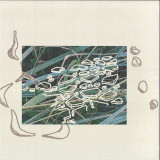
Musically, a strong Italian theme runs through the record. Frank is fascinated by ancient Rome and both his parents are Italian (Maston was originally Mastrantonio before anglicisation). So, it felt natural to fully embrace these strands and tie everything together with the striking artwork. The Romans were influenced by Greek culture, emulating their art and architecture, which, in turn, influenced Renaissance era artists. Frank acknowledged this tradition when reflecting on his place in the lineage of library and soundtrack composers. He then asked his friend Mattea Perrotta, a painter and sculptor, for some sketches. What he received was exactly what he had in mind: "Especially the theater mask, which really captures the range of moods on the album". Frank arranged them as per the cover and it soon felt right: "I wanted to make a cover that was reminiscent of the classic KPM albums without making it too pastiche - so it has its own identity and looks at home alongside other library records, while still fitting in nicely in the KPM catalogue." The last step was for us to introduce Frank to Be With-KPM’s Rich Robinson, who helped put together the back and centre labels and align it all within the KPM standard.
Panorama is a perfect title for the album. With no opportunity to travel for tours or recording projects, Frank arranged postcards from his collection on his desk with beautiful views of the mediterranean coast, the Roman Colosseum and Cinque Terre. These also served as visual prompts: "That was part of the sonic concept - imagining myself driving down the mediterranean coast with this music on, with the top down." Additionally, the range of moods and vibes - "I tried to make each song very different from the previous one in terms of tempo and arrangement and feeling" - speaks to the idea of a Panorama of music and sounds and emotions. The last track was originally called Panorama, but KPM already had that title in their catalogue so it was changed to "Jet Lag", which, as Frank notes, "is perhaps even more fitting, since the trip is over".
quête:roman flugel
In the vast musical archive that is Roman Flügel’s discography, Ro70 holds a special place. Written, performed and produced between January and July 1995, it is his debut album as a full-fledged solo artist. Enquired and inspired by a certain David Moufang from Heidelberg, who used to share a classroom with Jörn Elling Wuttke at the SAE Institute and revealed himself to be an Acid Jesus fan and also of the Roman IV 12“ project, it seemed like a good fit for his (and Jonas Grossmann’s) Source Records label.
In the days before file sharing that meant going back and forth with various DATs in his mom’s Volkswagen Polo Fox for actual listening sessions between Darmstadt and Heidelberg. The time was as special and idiosyncratic one as was the sound of Source Records and of course Ro 70 itself. While the rave-olution was ready to eat its kids with the commercial outlook of former underground phenomena looked bright and the scene’s prophecy seemed grim, enterprises like Source and artist like Roman Flügel were defying any competition out of those corners with their own means.
Listening back to the ten tracks of Ro 70, it proves them, their taste and artistic vision right. Probably still being put into the ambient, downtempo, electronica or chill out sections of most record shops, this music could have been made, relished and cherished anytime between 1995 and now. Made in Roman’s home studio in his parent’s house or in the Klangfabrik studio in Egelsbach, this was made for before or after the rave – or for people who din’t want to have to do anything with it at all. His signature is all over it. Well balanced soundscapes with an almost uncanny presence and clarity. Bittersweet symphonies that doesn’t seem to be in an inferior position to modern classical or electronic studies.
It is also a very personal testament to a time in the artists’s life that was ready to get caught in the maelstrom of the oscillating techno city called Frankfurt am Main and its halcyon days between the Delirium record shop, Sven Väth’s marathon sets, the early days of the label triumvirate Playhouse, Klang & Ongaku. In a musical journal without lyrics, those memories will have to stay pantomimic and private. All for the better, that we can at least still listen to them.
Hugo Massien is a synthesizer engineer at Novation with high profile singles on XL Recordings and a stellar 2021 album "Metamorphosis" which caught the ear of Claude VonStroke. He is a fixture in the sets of Roman Flugel, TEED, and Ben UFO to name a few. We are more than thrilled to welcome him to the Dirtybird white label series with “Fast Forward”.
Hugo delivers four vinyl gems from melodic break of "Fast Foward" to the dream state mood of “Dynamic Symmetry”, the lo-fi bass of “Quantum Mechanics”, and sublime “Astral State”.
For a number of years now, A Guy Called Gerald has largely made music only for himself. But this special EP is borne from Gerald’s unique and long-lasting friendship with Analog Room founders Mehdi Ansari, Siamak Amidi and Salar Ansari. They first met in 2013 when Siamak booked Gerald to play his Analog Room party in Dubai – a leading underground light in the UAE’s then emergent scene. Away from the glossy VIP hotels and expensive bottle service parties
typically associated with Dubai, Analog Room only deals with quality bookings of the caliber of Move D, Roman Flügel, Moritz Von Oswald and the likes. Gerald immediately fell in love with the party. Its strict music-first, no-nonsense policy appealed to him and he’s returned many times over the years.
By then, of course, A Guy Called Gerald’s musical legacy was already assured. The Manchester icon is best known for his 1988 hit single Voodoo Ray – the touchstone of his hometown’s dawning acid house scene. As well as being an early member of 808 State, Gerald embraced breakbeat and jungle, ran his own Juice Box Records label and worked with the likes of Columbia, Perlon, K7! and many other vital labels. His skills on everything from synths to keys, samplers to
drum machines stood him apart then – and still do today.
“This release is based on a real friendship,” Gerald explains. “I feel part of the Analog Room family. Back in the early days, that’s how it was. These days, it’s like, ‘Oh, you’re famous, let’s do something.’ I’m not interested in that. I’m not interested in being a celebrity or living that life. I’m the same as I was 30 years ago, all I care about is the music. With Mehdi, we have spent hours jamming in private in Dubai, we have partied together. We’ve vibed together for so long and he’s shown me new parts of the world I should be making and playing music in, away from the trendy scenes in other places. So this is an exclusive just for him.
I’m not looking at doing anything else with anyone, and the music is just about celebrating individuality rather than trying to fit in anywhere.”
When Iranian-born Mehdi decided to start Moozikeh Analog Room – which translates from Farsi as “the music of the Analog Room” – Gerald was one of the first artists he asked to release on the label. It might have taken some time for Britain’s Dirty Little Secret to materialize, but boy it’s been worth the wait.
Says Mehdi, “The magic comes through proper relationships and friendships.
That’s why Analog Room worked. It was a great room, an amazing sound system, with amazing artists doing their thing. Bookings were so on-point because we had agents around the world, on the dancefloors, spying up artists who were killing it,
and Gerald was one of them. He was a perfect fit from the first gig and our friendship grew from there. He’s always been very kind to me. We have this common language of music without any bullshit, and that is where this EP comes from.”
The EP is a mixture of different things. Some of it is unreleased material from the vaults revisited, some of it is brand new. It opens up with the devastating Old Skool – a writhing, physical track with naughty bass. The drums hark back to Gerald’s early days of making jungle but reimagined through a modern perspective. As the synths spray about the mix and the percussion bounces atop the jostling drums, muttered vocals draw you in deeper. Sugoi is an experimental
track that fuses ambient synth design with the spacious and eerie atmospheres of jungle. Nimble drums get you on your toes as the spangled synths twist and turn in all directions. It is a thrillingly original, impossible to define track.
Flash Fight is built on a captivating rhythm that sits in the area where house, techno and jungle intersect. It is warm and cavernous, physical yet elegant as it bounces on rubbery kicks and lithe synths roam in and out of earshot. Perfect for those sweaty, cozy back rooms, it’s another masterclass from Gerald. Closing out the EP is False Religion, a deep-rooted house track with elastic drums and
haunting, wispy pads. As a subtle acid bassline rises and falls way down below,
Gerald’s own mystic whispers leave listeners hypnotized.
Following on from Analog Room co-founder Salar Ansari’s debut release on the label, this EP is a statement of intent. More releases will follow from some of Analog Room’s most frequent international guests, but only when the time is right. Moozikeh Analog Room is a label of love, one that is focused on putting out the best possible music at all times rather than chasing hype.
A timely reminder of why A Guy Called Gerald is one of the world’s most enduring electronic artists.
UK label Wisdom Teeth returns with its third long-form offering - Sculpturegardening: a new LP by Mexico City-based artist and producer, Tristan Arp. Incorporating elements of ambient, glitch, microhouse and downtempo, it’s an otherworldly record populated by knotty modular textures, blossoming floral melodies, tight pointillist rhythms and glossy acoustic instrumentation. The record was born from a process of “collaborating with machines”: using modular synthesisers to generate probabilistic melodies and rhythms, with the artist taking on the role of sculptor and curator. Throughout, the boundaries between the organic and digital are playfully blurred: we hear synthesisers played by guitars; emotive and distinctly human melodies generated by modular circuits; digital percussion drummed by hand; and live cello processed with a digital finish. The results sometimes recall Roman Flügel at his most colourful, or Benge’s meandering synth workouts, and even at times echo the dubbed-out cello experiments of Arthur Russell.But really sculpturegardening occupies a sonic world of its own, born from a unique web of happy accidents and incidental arrangements. The record’s bright colours and subtle rhythms make it a fitting follow-up to K-LONE’s 2020 LP Cape Cira and Facta’s 2021 LP Blush, and place it neatly alongside the work of label mates Duckett, Benoit B, Steevio and Iglew.
“With sculpturegardening, my concept was to approach music like gardening. I collaborated with machines inspired by the way a gardener collaborates with the earth. A gardener creates the conditions for the plants to come to life and develop on their own. In a similar way, I created a set of conditions and probabilities for the music to make itself. Who is making the music here? “A sculpture garden to me can be a really beautiful environment of balance between randomness and order––between nature and human interaction. Things that are either extremely organized or completely random tend to not resonate with us. On the other hand, something very interesting happens when a balance between the randomness and organization is struck. I invented this verb sculpturegardening to represent creating with the aim of this balance, and the with the aim of building a world in which each piece is a zone, or a sculpture in a garden.” The record will be twinned with a physical iteration - a sound installation at an exhibition curated by Tristan Arp titled Nada Se Pierde; Todo Se Transforma. The show opens on 9th October in Mexico City at Avant.dev. The physical sculpture garden will be a collaboration with Mexican sculptor Pablo Arellano. The sound installation will centre around a 4-channel audio system that gives voice to different sculptures and allows visitors to create a mix of the sounds depending on their position in the garden.
Roman Flügel and Radio Slave remix KUSP ft Pablo:Rita on Rekids this November.
Arriving on Radio Slave’s vital Rekids imprint following 2020’s ‘Freedom of Fear EP’ on Rekids Special Projects, British duo KUSP deliver the captivating ‘Folding’, featuring vocals from Pablo:Rita and remixes from label boss Radio Slave and electronic music luminary Roman Flügel. A deviation from the duo’s upfront techno records, which have been supported by likes of Luke Slater, Regal, Truncate, and more, KUSP have crafted an emotive breakbeat jam featuring vocals from West London-based Pablo:Rita, the Crosstown Rebels affiliated duo formed of Annabel Simpson and Liz Cass.
Following the A1 is the ‘After Dark’ mix, which sees the duo head to heavier territories, stripping away the vocals and going for the jugular with crisp, pounding drums under the original’s melodic touch. On the flip, Roman Flügel brings his years of clubland experience to the table, introducing a wonky electro-esque
pattern, arpeggiated synth lines, before an ecstatic breakdown takes hold. For the final version, Radio Slave returns to his use of breaks and delicate atmospherics with his evocative, early-rave referencing ‘New Age Of Love’ remix.
TOTAL turns 21 this year, and Kompakt’s venerable compilation series couldn’t have asked for a more auspicious coming-of-age collection. If TOTAL 20 was consolidation against the odds, the Kompakt crew producing for a dreamt-of dancefloor in an uncertain future, then TOTAL 21 feels abuzz and alive with possibilities. Significantly, it’s the first TOTAL in some time that’s streamlined down to a single disc; this makes TOTAL 21 even punchier than usual, a joyous, reflective, and always thrilling 75-minute audio scan of the world according to Kompakt.
As with every instalment of TOTAL, there’s a deft balancing here of Kompakt regulars and new blood. Of the latter, there’s a first appearance by KOLLMORGEN, remixed by PATRICE BÄUMEL into an astral torch song; Amsterdam’s NICKY ELISABETH, offering up ROMAN FLÜGEL’s pulsating, arpeggiated remix of “Celeste”; and CAPTAIN MUSTACHE swoops down into view, PLAY PAUL in tow, with the dream-like electro lift-off that is “Everything”. JONATHAN KASPAR also drops by with a new track, “Von Draussen”, a stealthy and lethal floor-hugger with prowling bass.
Elsewhere, there’s the lead track to MICHAEL MAYER’s astonishing recent EP, “Brainwave Technology”, which not-so-gently spears the tech-futurist babble of AI, transhumanism and posthumanism, soundtracked by one of Mayer’s typically lush, glimmering soundscapes. JOHN TEJADA reaches back to the heyday of glitch and dub techno with the gorgeous “Spectral Progressions”, while the brothers VOIGT & VOIGT, on “Nicht Mein Job”, seem reinvigorated by the interwoven patterns and funky minimalism of the Profan days. Not to be outdone, JÜRGEN PAAPE kicks TOTAL 21 with “La Guittara Romantica”, a chiming and lilting lullaby for woozy late-night reflection.
Throughout, it feels as though Kompakt are taking a moment to both breathe in the dust of the past and look forward to a bright future. Perhaps that’s why, on “Fasson”, SASCHA FUNKE seems so confident, with pinprick melodies bouncing around a hall of audio mirrors, or why THE BIONAUT returns with “Blue Sky Motor Lodge”, a song so moistly melancholy, so enduringly lovely, it’ll make you weep tears of joy. ROBAG WRUHME gets a little delirious on the ticking, twisting “No”, and then GUI BORATTO mops everything up with the bubbling, bumping glam-stomp “Wake Up”.
That’s not all – spring for the digital and/or vinyl edition and you’ll get a new cut, “Happy”, from MICHAEL MAYER, and MARC ROMBOY & C.A.R.’s “I Am A Dancer”. But however you choose to play it, now TOTAL’s turned 21, it’s your duty to throw it the celebration to end all celebrations. Let the party begin, and don’t forget to bring a party favor…
- A1: The Mental Traveller Takes Off 00 01:06
- A2: The Mental Traveller Theme (Feat Nardo Says) 00 05:05
- A3: Train Ride (Feat Miles Bonny) 00 03:21
- A4: Seeds Of Labor (Feat Shamir Of Wolm) 00 03:14
- A5: Microsleep 00 03:09
- A6: Longitude (W/ S Fidelity) 00 04:13
- B1: Calmility 00 02:41
- B2: Second Nature Of The Beast (Feat Count Bass D) 00 01:54
- B3: Square (Feat Nardo Says) 00 02:07
- B4: Uncertainty 00 02:58
- B5: Shapes 00 02:33
- B6: Damn It's Sunny (Feat Robot Orchestra) 00 04:33
The Mental Traveller - A Soundtrack by Noa Erni
If music can take our mind to any imaginable place, on endless individual journeys, Noa Erni's "The Mental Traveller" is the infinite soundtrack. A soundtrack for mental wandering and soul searching, a blend of rap, jazz and hip-hop beats. "The Mental Traveller", an album assembled like a literary anthology, offers musical arrangements and unique narratives where epilogue and prologue of each track merge seamlessly. Far beyond the horizon of compiling single tracks, "The Mental Traveller" is a journey of sound and unity. Inspired by David Axelrod and William Blake, Ahmad Jamal and Flying Lotus - just to name a few - this work aims to be a tribute to these legends' legacies of past, present and future, detached from trends, norms and classical narrative structure.
Swiss-born producer and computer conductor Noa Erni has been crafting obscure jazz and hip-hop behind closed curtains (a.k.a. his flat in Berlin, Germany) for years - free from external pressure and as an adjunct to his day jobs as sommelier and co-owner of local fine wine store "Friedenauer Weinhandlung". On April 30th, 2021, Kommerz Records will release Noa Erni's debut album "The Mental Traveller" on 12" vinyl as well as on all digital platforms. The project features internationally renowned artists such as Count Bass D (alternative rap pioneer, who worked with Snoop Dogg, MF Doom (R.I.P.) and Retrogott), Miles Bonny (New Mexico-based singer and trumpeter), S. Fidelity (hip-hop producer signed to German tastemaker label Jakarta Records) and more. Erni's guests meld seamingly with this unapologetic and experimental album showcasing stand out performances on vocals, instruments and production.
While the album sounds like it was played by a jazz outfit with years of stage experience, the truth surprises and is even more exciting: Noa crafted the songs in countless hours of experimenting with a midi keyboard, various instrument plugins and perfected reverb settings. It was not one and the same band but one and the same person. Just a few tracks include actual live instruments: drums by Max von der Goltz on "The Mental Traveller Theme" and "Uncertainty", bass by Roman Klobe on "Longitude" and flugelhorn by Miles Bonny on "Train Ride".
Support by: Anja Schneider, Karotte, Steve Lawler, Nic Fanciulli, Darin Epsilom, Claptone, Damian Lazarus, Magit Cacoon, Robbie Akbal, Paco Osuna, Chris Fortier, Noah Pred, Mihai Popoviciu, Pathaan, Spektre, Niconè, Click + Click, James Flavour, Gary Beck, can "Khan"Oral...
For the 10th release on LOK Recordings, we prepared something truly exquisite. Welcome Skiclub Toggenburg and Roman Flügel aboard!
SCT provided two energetic house tracks full of driving basslines, vocal fun and analog synths. In addition to the originals “Cocolocobye” and “Zmorge mit Pascal” we added a smashing remix by Roman Flügel.
Having studied the complicated art of dreaming on Live At The Robert Johnson earlier this year, DC Salas returns with another remarkable clutch of cosmic excursions. Linking up with long-standing Parisian chic beat connaisseurs Slowciety, it's time for Salas to show us a little 'Exquisite Chaos'…
Presentation (long version)
The clue is in the title; 'Exquisite Chaos' is smooth, classy, hi-definition piece of intergalactic drama. Sweeping synths, rocket-fuelled kicks and a bassline that could circumnavigate the universe many times over without needing to refuel, it's a classic DC Salas trip, the likes of which we've soaked up on labels such as Correspondant, Nein, BPitch and beyond.
It's backed up by the poignantly titled 'Undivided'. A call for unity, it's rattled with acid and sinewy synth lines all thrusting upwards with the positivity we missed for so long this year. Finally 'Forgotten Memories' if a full-on march into a neon unknown. Complete with flying flurries of breakbeats and rasping acid missives, it wraps up Salas's chaos theory exquisitely…. And it's backed by a remix from Roman Flügel.
Ensuring the EP climaxes with a fitting bang Flügel divides 'Undivided' into three movements, each one more bulldozing than the last. Supercharged with venomous acid and neck-snap breakbeats, it's Flügel at his most chaotic. And Slowciety at their most exquisite. We wouldn't expect anything less from DC Salas.
‘Borderline’ is the debut single from hotly-tipped Jamaican-Canadian artist and musician, SeeMeNot. Released on 18 September, 2020 and accompanied by a remix from Roman Flügel, ‘Borderline’ is available via SeeMeNot’s own imprint, Brainstream. Her debut will be followed by the release of ‘Invisible Me’ produced by Peace Division’s Justin Drake, and ‘Chez Renee’, remixed by Joe Goddard, all in the coming months. A 21 st century house anthem, ‘Borderline’ is a stunning debut that shows the power of both SeeMeNot’s voice and her lyrics, and has been championed so far by Skream, Anja Schneider, Solomun, Adriatique, TSHA, Erol Alkan, Adana Twins, Monika Kruse, Andhim, Tim Sweeney, Chloé, Marco Carola, Digitalism, and many more.
‘Borderline’ was sampled on SeeMeNot’s July 2020 debut mixtape ‘Long Overdue: The Sound Of A Revolution’ along with an excerpt of the powerful speech by Tamika Mallory in the wake of the death of George Floyd.
Reclaiming house music as a form of protest, ‘Long Overdue: The Sound Of A Revolution’ was SeeMeNot’s first creative work. Released via her Soundcloud page, ‘Long Overdue’ featured SeeMeNot singing a cappella over a mix from DJ Oliver Baptiste. The 30 minutes of music is the sound of a Black female artist detailing the journey of Black people from Fight to Flight, channeling the pain she’s experiencing – and experienced – into something beautiful that pays respect to her ancestors but serves as a contemporary reinterpretation of traditional healing through singing and music. Influences from country music to gospel are joined through a shared history of hymnals as both protest and healing music. SeeMeNot recently released a PSA on her YouTube featuring an acapella from the mixtape – “a childhood cover” of the late Ray Charles – paying homage to Black Lives Matter.
- A1: Kink - Machine Funk
- A2: Session Victim & Iron Curtis - Abalone (Gerd Janson Edit)
- B1: Genius Of Time - Network Labyrinth
- B2: Katerina - Sincerely, G
- B3: Robert Dietz - Isn’t It Nice
- C1: Roman Flügel - Feel The Heat (String Mix)
- C2: Dinky - This Ain’t No
- C3: Bella Boo - L A. Magic
- D1: Tiger & Woods - Lonely Toad
- D2: Todd Osborn - Friendly
When Bandcamp announced that they will be holding a special fundraiser on June 19th „that is specifically focused on racial justice, equality, and that they will donate their „share of revenues that day to the NAACP Legal Defence Fund“, we thought to put out a special sampler that contributes to that cause. All profits of the sales of „Music for the NAACP“ will go exactly there. Due to the lack of time, it might seemed knocked together, but old and new friends, from near and far alike did their best, to set it up. So, special thanks to everyone involved: especially to Lopazz at Mixmastering, Heidelberg, Rand Muzik Leipzig and the SST cutting house in Frankfurt, who did their part to also make this available on a 2x12“ compilation (same destination for its profits). Thank you for listening, helping and donating.
Sincerely,
Gerd Janson
Brigitte Barbu's Muzak pour ascenseurs en panne (Muzak for broken lifts) marked a bold new addition to the Circus Company repertoire. In a gilded haze of resonant tones conjured by traditional and non-traditional methods, Brigitte Barbu created an inviting sound world brimming with life and doffing its cap to 1970s signal processing. Out of such sonic research and development comes a wealth of material for other artists to sink their teeth into, and so we proudly present an accompanying remix EP that takes Brigitte Barbu's distinctive stamp into new territory.
Roman Flügel makes a first appearance Circus Company with two versions of "Dae-Boj DeMoya" that showcase this constantly versatile lynchpin of European techno. First up is his "kraut remix", which unsurprisingly channels the grainy beauty of Neu! and early Kraftwerk, before his "synth remix" dials back the drums and diverts our attention towards an expansive arrangement of melodious flourishes from classic synthesisers.
John Tejada and Reggie Watts reunite as Wajatta following their triumphant LP Don't Let Get You Down on Brainfeeder to deliver a particularly inventive, soul-stirring vocal techno version of "Couvre chef en peau de taupe". Watts soars over the signature warmth of Tejada's production, while Brigitte Barbu's mysterious tones linger in every fold of the mix.
Matthew Herbert offers up a "Butter Dub" version of the album interlude serie "Trou Vert" that pits his signature stark sampling methods against Brigitte Barbu's material and creates a fruitful dialogue of crooked 4/4 mechanics with all the playful curiosity of the original and a strong dose of Herbert's inimitable musical personality.
“When I was asked to put my hands on the original tracks of Blancmange I was instantly excited. They were one of my favourite Bands when I grew up as a teenager in the 80’s. Listening to their music walking around with my Walkman back then was adventurous. Mainly because I was already in love with the aesthetics of synthesisers and drum machines. But also because it was unusual pop music with an extraordinary energy that made it in the charts. Remixing a favorite Band is challenging but I’ve tried to keep the free spirits and playfulness in my mix that makes Blancmange still so special after all these years” – Roman Flügel
Roman Flügel remixes the cult 1980s classic that is ‘Living On The Ceiling’, and the result is a killer, off-kilter slice of club-focussed machine funk that contains the same wonderfully bizarre cocktail of traits, that Blancmange always boasted in spades. Eerie and schizophrenic but also both bright and triumphant. Also features the original and sought after extended mix.
The first in a new series of ‘London Records Remixed’ releases on 12” and digital. Now at its new home as part of the Because Music Group the London Records catalogue is being revisited by pioneering, contemporary electronic producers.
From the moment of its release, Iñigo Vontier’s El Hijo del Maiz has become one of the most gripping albums of the moment. With South American and Middle Eastern sounds and his conception of music as ritual, the Mexican DJ keeps electronica in check as a valid mix of influences. The EP El Hijo Del Maiz (Remixes) marks the end of an episode which started, in good company, last autumn on the Lumière Noire label. The second track of his album, Bo Ni Ke, is distinguished by its original - almost implausible - universe, with a Japanese-inflected vocal filter and oriental flutes taking the beats into a crazy trance. Leaning on the 4/4 rhythm, Simple Symmetry’s remix of the track is also very playful (Iñigo Vontier recently remixed Nar for Simple Symmetry). The Moscow duo, noted in particular for the brilliant EP Plane Goes East released on Disco Halal (the Moscoman label which makes the link between east and west), pulls the track over to another - less terrestrial more psychedelic - universe, in their well identified ethno-underground style.
The remix of Bo Ni Ke by Nicola Cruz, French-born Ecuadorian producer, enlivens the track by playing on the sounds of voices and South American percussion. Also present in his fascinating album Siku released a year ago on the ZZK Records label, they overlap with the demonological whims of Iñigo Vontier but also those of Nicolas Jaar, who was revealed to him as he was starting out.
The inaugural track of the album Xu Xu (subject of the previous EP, only released as a digital version) has been remixed by Roman Flügel, allowing a vinyl release of this incredible track. You could pick out the science of this headliner in a million. Flügel has been on the electronic scene since the early days, learning the ropes under the aegis of prestigious labels Playhouse, Dial and Klang.
He has recently enhanced some emblematic tracks signed Daniel Avery, Koze, Âme, Radio Slave and C.A.R. and here once again the pioneer of techno is working miracles to create a more cerebral version of this track.
Concluding the EP with Thomass Jackson, his co-founder of the label Calypso Records, who we will soon be able to find on the compilation / family portrait of the label Lumière Noire From Above Vol. 2, Iñigo Vontier offers up a genre-busting version of the title Marijuana, like an ataxic play time, deliberately smoky for an explicitly licentious title.
"3x12" - Vinly Only.
The second instalment of minimood's multidisciplinary fusion series features Die Wilde Jagd with an extensive rework of the neo-romantic ’Morgenrot’ as well as a vast array of diverse remixes by Ancient Methods, CV313, Luigi Tozzi, Roman Flügel, Rude 66, Steve Bug, The KVB, Vactrol Park, and Variant. This gatefold 3x12" vinyl only release is visually enhanced with intricate hand-drawn artwork including inlay by Dusseldorf based artist Susanne Giring. Written and recorded by Sebastian Lee Philipp with his Uhrwald Orange studio collaborator Ralf Beck, ’Morgenrot’ originally appeared on Die Wilde Jagd's debut album in 2015.
For this release, Philipp and Beck re-visited the song: the ensuing ‘Fangschuss Version' enjoys an augmented arrangement, additional instrumentation and a haunting guest vocal by New- Zealand based singer Nina Siegler. In Philipp’s words, the 'Fangschuss Version' constitutes “a venture to capture the spirit that has been guiding this fusion release - a desire to explore the concepts of friendship, time, distance and memory. An attempt to unveil fragments of the unseen and to reveal the surge of a distant remembrance in an embracive listening experience." 'Morgenrot' subsequently gets a highly varied remix treatment by a range of carefully selected artists.
While Vactrol Park navigate the original audio material into beautiful ambient territory, Ancient Methods showcase an epic masterpiece of enchanting medieval-vibed techno. The KVB turn the track into a dreamy cold-wave trip and Rude 66 dives into a dark, primetime, anthemic dimension. For Roman Flügel, it’s a slow, organic, starry-eyed approach and Luigi Tozzi transforms 'Morgenrot' into hypnotic & loopy, minimal, deep techno. The rework by Steve Bug plays with the original's melody and a danceable kosmische-infused house cut emerges.
The final two remixes are both crafted by legendary Echospace Detroit mastermind Stephen Hitchell: absorbing deep trips into mesmerizing dubtechno by CV313 and into foggy lo-fi ambient by Variant.
A key player in the New York scene and boss of her own Dusk & Haze label, it was Francis Harris' Kingdoms that initially released Sophie Saze's standout two-part album, and that is where this forward looking package of highly original remixes lands. First up is German artist Roman Flügel, who’s responsible for a myriad of musical aliases and just as many different sounds. Here he is in experimental electronic mode and reworks 'Cure' into an elongated groove with twisted synth lines layering up over the shimmer, shadowy beats. It's a ghoulish track with a creepy atmosphere.
Swede Anthony Linell makes tripped out, heady techno on Northern Electronics, always with a stylish aesthetic. That continues here as he reimagines 'Aliens' as an absorbing cosmic soundtrack. Supple, rubbery drums bubble down low while broad pads and astral motifs colour the airways above and sink you into a state of trance. New York beat maker and Blueberry Records boss FaltyDL then steps up with a remix of 'Self'. It is a typically off-kilter groove that seems to float on post-jungle drums while distant synth details make for a dreamy atmosphere. Closing out this killer package is Saze's original track 'Dreams', an intense techno cut where coarse textures peel off the industrial clatter of the drums.
“A genius” - Nai Palm
“One of the most incredible live performances I’ve seen” - Gilles Peterson
“He's like a human centipede sewn out of all the greatest musicians from the past 80 years” - Liam Pieper
Emerging from Brisbane’s music-art bohemian West End in 2008, self-taught, prodigious musician Lachlan Mitchell aka Laneous, began his eclectic and colourful journey in music as the leading member of funk band KAFKA, stamping his trademark falsetto croon on an Australian music landscape that wasn’t quite ready for an artist whose standout influence was D’Angelo’s ‘Voodoo’. Word of their talent soon reached UK’s perennial tastemaker Gilles Peterson who featured the band on his compilation, Brownswood Bubblers Four alongside other breakthrough acts at the time, Mayer Hawthorne, Floating Points and Lone. A world-class guitarist, vocalist, composer, visual artist and – significantly - muse, Mitchell’s unique ability to shine, create and inspire across genres was his obvious forte, even then. Regularly sought after to provide features for other bands and cover art for Hiatus Kaiyote albums Tawk Tomahawk and Choose Your Weapon, he worked diligently to support his community. But while Hiatus’ Nai Palm told media Laneous was “a genius” he often credited music and drawings to pseudonyms.
In 2016, after 8 years of humbly dominating the Australian underground art, soul and jazz scene [with ‘mutant-soul/croon punk’ cult group Laneous & The Family Yah, reggae band Kooii and improv-jazz-beat trio, Vulture Street Tape Gang] Mitchell relocated to Melbourne - a move that would instigate and inspire the long-awaited debut solo LANEOUS record that fans and peers had been craving for nearly a decade. Excited to create new music with an artist they’d previously referenced as an inspiration, Paul Bender and Simon Mavin (Hiatus Kaiyote) came on board swiftly, joined by Hudson Whitlock (Cactus Channel) on drums and Donny Stewart (Jazz Party) on vibraphone and flugelhorn - a key element in bringing Mitchell’s vision of an exotica/soul infused album to life. In classic Laneous fashion, the musical references for the record run deep, winding through an eclectic array of artists from Martin Denny, Burt Bacharach and The Beach Boys to Shuggie Otis, Wild Cookie and Wu-Tang.
The debut single Modern Romance was unleashed in October 2018 with a kinky, captivating visual accompaniment that marked the return of the Laneous legacy. After selling out the Melbourne launch of the single, the band was invited to headline Gilles Peterson’s Worldwide FM x Northside Records live Melbourne broadcast, teasing exclusive album cuts and drawing high praise from Peterson, stating it was “..one of the most incredible live performances I’ve seen’.
Out May 10 via Soul Has No Tempo, Mitchell’s MONSTERA DELICIOSA stands as a sublime genre work, peerless in Australia - his magnum opus bears the name that’s backed him from day one:
Eduardo De La Calle s recent Distortion Theory III EP on Abstract Reasoning was another impressive piece of work from the prolific producer. Now come four diverse remixes of the title track, each with their own unique twist on the warped machinations of the original.
J - Keel kicks off proceedings with a droning, tense interpretation which toughens up the original considerably. Reversed chord stabs pitch up and down as ominous bass bores a steady course through the track s underbelly, with ticking percussive elements ensuring a motorik pulse.
The masterful Roman Fl gel teases out the chime motif of the original and supplements them with muted marimba-esque arpeggios for a soothing, underwater feel. The beats are kept to a succinct minimum, with subtle swathes of strings bringing a majestic, dreamlike tinge to this refined, minimalistic production.
Fellow Spaniard ORBE brings an ambient feel to the hazy, delicate melodics of his mix, with the delayed, warped synth patterns that struggle to be heard and beautiful atmospherics recalling Carl Craig. Moments of distorted pressure seep through and remind us of the buggedout flavour of the original.
Holland s Conforce rounds things off with plump low end throbs and sparse synth pulses reminiscent of Basic Channel, with gently shuffling hi-hats underpinning the murky yet warm textures and broad, heavily reverbed swathes of chord drama.