After blazing a trail with 2020's critically acclaimed Good Luck Seeker, The Waterboys waste no time in delivering again with the announcement of their brand new record All Souls Hill on Cooking Vinyl. First track 'The Liar' is a creeping, groove-laden masterpiece, taking a powerful, descriptive swipe at Trump and the lies and deceit that infest those in power. The video, featuring a haunting image by satirical collagist Cold War Steve, leaves nothing to the imagination and amplifies its subject matter in a dark, eerie fashion. "The Liar is a comment on recent and still-current events, and both the song and video speak for themselves." says frontman Mike Scott. "We were proud to work on this video with the brilliant Cold War Steve." All Souls Hill is nine tracks of Waterboys brilliance, all mixed by Scott himself. Announced off the back of the band's recent sold out UK tour and latest box set 'The Magnificent Seven: The Waterboys' Fisherman's Blues/Room To Roam Band, 1989-1990 ', All Souls Hill is current, on the money social commentary, but with an air of hope. "All Souls Hill is mysterious, otherworldly, tune-banging and emotional." comments Mike. "I made it with Waterboys old and new and my co-producer, brilliant sonic guru Simon Dine. Its nine songs tell stories, explore dreamscapes, and cast a cold but hopeful eye on the human drama."
Buscar:room e
After blazing a trail with 2020's critically acclaimed Good Luck Seeker, The Waterboys waste no time in delivering again with the announcement of their brand new record All Souls Hill on Cooking Vinyl. First track 'The Liar' is a creeping, groove-laden masterpiece, taking a powerful, descriptive swipe at Trump and the lies and deceit that infest those in power. The video, featuring a haunting image by satirical collagist Cold War Steve, leaves nothing to the imagination and amplifies its subject matter in a dark, eerie fashion. "The Liar is a comment on recent and still-current events, and both the song and video speak for themselves." says frontman Mike Scott. "We were proud to work on this video with the brilliant Cold War Steve." All Souls Hill is nine tracks of Waterboys brilliance, all mixed by Scott himself. Announced off the back of the band's recent sold out UK tour and latest box set 'The Magnificent Seven: The Waterboys' Fisherman's Blues/Room To Roam Band, 1989-1990 ', All Souls Hill is current, on the money social commentary, but with an air of hope. "All Souls Hill is mysterious, otherworldly, tune-banging and emotional." comments Mike. "I made it with Waterboys old and new and my co-producer, brilliant sonic guru Simon Dine. Its nine songs tell stories, explore dreamscapes, and cast a cold but hopeful eye on the human drama."
- A1: They All Run After The Carving Knife
- A2: Areas
- A3: Churches
- A4: This World Of Walter
- B1: Luxury
- B2: While You Wait
- B3: Changing Minds
- B4: Peace
- C1: Design
- C2: Traps
- C3: Division
- C4: Back To Room One
- D1: The Office (Bonus Track)
- D2: While You Wait (12” Mix) (Bonus Track)
- D3: From The Village (Bonus Track)
- D4: Guitars (Bonus Track)
The English synthpop, new wave group formed in 1977 in London and was led by Tony Mansfield, who later worked as a producer for furthermore Naked Eyes, a-ha and the B-52’s. Their success already kicked off with the first single, “Straight Lines” entered the UK Singles Chart within no-time.
Their second studio album Anywhere was originally released in
1981 and contained 12 tracks. The expanded edition contains 4
bonus tracks; “The Office”, “From The Village”, “Guitars” and the
12” version of “While You Wait”.
This expanded edition of Anywhere includes the corrected D-side and is available as a limited edition of 1500 individually numbered copies on blue marbled vinyl.
Das Album ist eine skurrile Jazz/Hip-Hop-Fusion (Miles Davis' On The Corner meets J Dilla's Donuts) und enthält eine Reihe hochtalentierter Gesangsgäste wie Saba, Phoelix, Braxton Cook, Femdot und Malaya. Cisco Swank ist ein 21-jähriger Multi-Instrumentalist, Sänger und Produzent aus Brooklyn, NY, der sich schnell zu einer festen Größe in der R&B-, Jazz- und Hip-Hop-Szene seiner Stadt entwickelt hat. Cisco hat mit Künstlern wie Brasstracks, Maurice Brown, Kenneth Whalum, Malaya, Julius Rodriguez und CARRTOONS zusammengearbeitet. Luke Titus ist ein 24-jähriger Multi-Instrumentalist, Sänger und Produzent aus Chicago, der derzeit in LA lebt. Er ist der jüngste Musiker der Blue Man Group (Schlagzeug) und hat für Noname (Room 25), Ravyn Lenae, KAINA, SMINO, SABA und viele andere produziert. Das Magazin FADER hat Titus als einen "brillanten" Schlagzeuger und Produzenten tituliert.
"Half a Klip" is a Vinyl Reissue of Kool G Rap's first solo release It was originally released in 2007: As is to be expected, G Rap fills out the lyrics sheet here with banana clips and stacks of body bags -- certainly not a disappointment (he played a big part in inventing this agenda after all), though the MC's steady, workmanlike approach and topical sameness leaves a lot of responsibility on the shoulders of his producers. t's open to debate as to whether there has ever been a rapper more influential, yet somehow less celebrated, than Kool G Rap. From his seminal work on Marley Marl's Juice Crew productions and Cold Chillin' Records, to the major contributions he gave to the blueprint of gangster storytelling in rap, the Kool Genius has remained relevant and consistent despite heaps of record label drama and the ever-diminishing attention span of the listening public. It's unlikely that the new Chinga Chang Records EP Half A Klip will do much to elevate G Rap's legacy, but there are still shining moments to remind us why the legendary MC is more than deserving of the little reverence he receives.IThus, the EP's best moments come when he is united with a strong hand behind the boards. Marley Marl's sinister keys and kettle drum composition for "With A Bullet" (inexplicably buried at track eight on this 11-track offering) is probably the best canvas for Rap's gangster mentality. DJ Premier contributes a strong track (merely serviceable by Premier standards, but a standout here) and the lesser-known Domingo also seems to be able to give G Rap room to run. Unfortunately, the rest is just middling with one true mistake, Critical Child's dismal "Turn It Out", which sounds like a cast-off from a Jim Jones studio session. In any event, this collection of new and unreleased material is not the next Road to the Riches. On the bright side, the MC behind Road to the Riches is still here (in every sense) and still doing it 20 years later.
Spectacular live recording from 1986 of two seminal figures of the Japanese avantgarde - Akira Sakata on saxophone and Takeo Moriyama on drums. Mitochondria captures the reunion of the two free jazz masters, who started playing together in the Yosuke Yamashita Trio in 1972 until 1975. For both, the experience with the trio was an important step in the development of their own career and musicianship. The recordings are a remarkable performance in which each successfully highlights the essential elements of his playing while giving of room for the other musician. Recorded at Kashiwa Church Chiba Pref. In Japan on 24 May 1986 by Yukio Tezuka on Sony stereo cassette recorder. Mixed by Jim O'Rourke, Mastered by Martin Siewert. Graphic design/cover photo by Lasse Marhaug. Liner notes by Kazue Yokoi
The second installment in Fu Manchu’s 30th Anniversary vinyl 10” series, Fu30, Pt.2, includes 2 new original Fu Manchu songs, as well as a cover of Surf Punks’ “My Wave.” The band will be releasing 1 more edition in this 10” series, making a total of 30” of new Fu Manchu music for the Fu30 anniversary. Each release includes 2 new original compositions and a newly recorded cover. Like the band’s most recent album, Clone Of The Universe, and Fu30, Pt. 1, Fu30, Pt. 2 was recorded at The Racket Room in Santa Ana, California by Jim Monroe (Adolescents, Ignite) and co-produced with Fu Manchu. This limited edition 2500 unit run is pressed on pink neon vinyl at 45 RPM for maximum heaviness with a package design that pays homage to the cover of Surf Punk’s original single. Tracklist: 1. “Strange Plan” 2.“Low Road” 3.“My Wave”
Numbered limited pressing of The Craps Game from Double Dee and Steinski! 300 Green colored vinyl!
Our latest is now available on VINYL! Yes friends, Double Dee and Steinski return to vinyl -The Craps Game is now here on limited edition vinyl from new label Slamboyant!
The pressing is a short one, 300 numbered records, in jacket matching green vinyl! And also included is a brand new bumper sticker! Announce to the world your appreciation of our great works while performing double duty hiding those unsightly scratches and graffiti on your car (or home).
In addition to The Craps Game, and Stone Cold Crazy from ADA, is a brand new track “Let the Twenty Ride”, riffing on a bite in The Craps Game. It’s a loving tribute to JB, The Godfather, and c
- A1: The Raiders March
- A2: The Map Room / Dawn
- A3: The Basket Game
- A4: Marion's Theme
- A5: Airplane Fight
- B1: The Ark Trek
- B2: Raiders Of The Lost Ark
- B3: Anything Goes
- B4: Nocturnal Activities
- B5: The Mine Car Chase
- C1: End Credits
- C2: Indy's First Adventure
- C3: X Marks The Spot / Escape From Venice
- D1: No Ticket / Keeping Up With The Joneses
- D2: End Credits
- D3: Anything Goes
Die Essenz der epischen John Williams-Orchestrierungen für die ersten drei Filme der 'Indiana Jones' Kinosaga aus 1981-1984-1989, die von George Lucas geschaffen und von Steven Spielberg inszeniert wurde. 16 Aufnahmen, eingespielt von den weltberühmten Prager Philharmonikern, inklusive des über die Filmreihe hinaus bekannten Themas 'The Raiders March' als Opener. Gatefold-Auflage auf rotem Doppelvinyl.
DJ Stingray 313's highly-praised FTNWO LP returns to heed its sonic warnings and powerful messages on his own label, Micron Audio. Originally released on WeMe Records in 2012, FTNWO displays the high-tempo, ever forward production DJ Stingray 313 is known world around for. DJ Stingray 313 says "FTNWO was conceptually centered on conspiracy theory, science, prepper doomsday preparation / survivalism and social commentary," and the foreboding introduction of "Evil Agenda" sonically explains just what lies ahead for the listener. The stark warning leads into DJ Stingray 313's stomping "Dark Arts", beginning the FTNWO experience. "Room Clearance" gets straight to business with raw, gritty and true-to-the-art Detroit electro sounds, along with a heavy, quivering lead to piece the track together.
FTNWO's cyber-explorations continue with "Denial Of Service". "I NEED a computer!" shouts a destitute voice throughout the track, as a hypnotic siren lead weaves through pounding 808s. The uptempo onslaught continues with "Interest Rate" - pads that give a feeling of falling accompany samples lamenting the realities of debt in modern society. These statements in the samples permeating the aptly titled track eerily foretell many present-day situations in 2022, as well as prove testament to DJ Stingray 313's ahead-of-the-curve production techniques. "No Knock" also carries on with arpeggiated square waves and dissonant FM stabs laced intricately over thundering drums. "Outsourced" has a call and response feel, with lush, bright tiny synths talking with each other over a thundering rhythm akin to a drum & bass arrangement.
DJ Stingray 313's sound also stretches to more melodic planes, as "Reverse Engineering" displays. Brooding pads and icy percussion engage in a sonic dance. In the same on "Image Search", cold drums and riffs intertwine the warmer layering pads and leads. Both create two powerful compositions on FTNWO that move unlike any other. "Remote Viewing" only moves lower in tempo compared to the rest of FTNWO, DJ Stingray 313's keen ear to melody still burning brightly. F.T.N.W.O. remains an ageless album - an ominous piece from a near-distant past, back again as part of the Micron Audio catalog to soundtrack the new and uncertain times we live in.
It's all about hooking up our music to the emotional world of electronic music at the beginning of the Nineties, however, without falling for nostalgic references. We don't want to do cowardly Zeitgeist Techno, we want to have the heart to dare big sounds and more melodies. Sunrise scenarios, energy, revolution and kaput-ness, all these are parts of the Extrawelt.' (Extrawelt, 2008) However, don't panic: even if the aesthetics of the debut album of the two Hamburg born artists Arne Schaffhausen und Wayan Raabe is affected by the attentive observation of electronic dance music over the last fifteen years, the 'Schöne Neue Extrawelt' is above all this: Premium Techno 2008! The Hamburg-based producer team has been unmistakably imprinting the last three years' club sound with widely noticed releases on Border Community ("Sooper Track"), Traum Schallplatten ("Doch Doch") and Cocoon Recordings ("Titelheld") as well as with remixes for Gregor Tresher, Minilogue or Alexander Kowalski - last but not least due to an excellent live presence, that resulted in the second rank in the Groove Live Act Charts, even still without the accompanying long player. The work on 'Schöne Neue Extrawelt' started more than two years ago for Schaffhausen and Raabe. 'The initial idea was to present an album covering all styles of electronic music between Ambient, Breakbeats and Techno. When we had 25 tracks for the album ready, we had to realize that this approach did not work for us. Insofar, we finally decided to use the 4/4 bass drum in all tracks except in the little intermezzo 'Kurt Curtain". We have tested all tracks live over the last three months and constantly re-interpreted them. So, the 'danceability' is clearly in our focus, but the sound spectrum and the dramaturgy of the titles should not be solely functioning in the club. Our intention was definitely not to deliver an album full of superficial peak time hits.' Those nine tracks on 'Schöne Neue Extrawelt", all unreleased, are
Following widespread acclaim for his recent LP ‘Always Inside your Head’, on March 4th / April 8th Matt Cutler AKA Lone releases four re-works of tracks from the album, entitled ‘Natural Aerials’.
On ‘Natural Aerials (Mouth of God Part Two)’, Lone utilises a similar sound palette as album track ‘Mouth Of God’, but rebuilds it into a brand new banger. Energetic, deep, trancey and driven by jungle-schooled breakbeats, with bassbin shuddering low-end, he delves deeper into the vortex. Whereas the album was made predominantly using software, Cutler has since been buying hardware – and this marks the first track made on these newly acquired synths.
Based around a version from Lone’s recent sold-out live show at London’s Village Underground, on ‘Inlove2 (One Thirty Mix)’ he ups the original’s BPM count, with sights set firmly on the dancefloor. Taking cues from the ‘Ambivert Tools’ series, this is a high-grade, proggy, main room acid rush.
On ‘Visited By Astronauts (SHERELLE Had A Groove Remix)’, the fast-rising star takes an ambient interlude from the album, and gives it what she calls “a space age, footwork jungle twist”. Her first released remix, Sherelle continues an impeccable purple patch, with a re-rub that’s both airy and light, but also heavily percussive, full of propulsive forward motion. She states, "it’s a pleasure and honour to remix for Lone, as being a long time fan, it's a beautiful thing to be able to collaborate. I really wanted my first remix to be special and also for someone who I hugely admire, so Matt asking me to be involved in this process wastruly magical!”
‘Echo Paths Ebb And Flow’ takes a downtempo album highlight, strips it back to just the synths, then unfurls them into a blissful ambient work that’s melodic, warm and fuzzy, swaddling the listener in candy floss clouds.
7 years after debut album “Universes” on Ninja Tune, Seven Davis Jr. returns with the official follow up titled “I See The Future” on his own Secret Angels imprint.
The 11 song adventure provides a fun concentrated blend of deep house, soul, disco, funk, electronica and underground textures. The album brings together Sev’s different flavors into a finely aged familiar yet new atmosphere.
First two tracks “Records” featuring L3ni (member of Natasha Diggs Soul In The Horn collective in New York) and “U Already Know” featuring bassist Neil White (half of Canadian Rock duo The Carps), were originally produced in London early 2016 at a studio provided to Jr. by Domino Publishing located in the basement of a run down home rumored to formerly belong to The Rolling Stones.
Title track “I See The Future” was produced in Houston Texas early 2017 and features fellow Texan Oye Manny (Sure Shot, Secret Angels), who co-produced the track. “Figure It Out” featuring LA soulful house DJ Juliet Mendoza (Dusk Recordings), was recorded early 2021 post-lockdown. While “Escape The Matrix” was a demo produced around 2013 then reworked in 2020.
“Share Your Toys” featuring Toribio (front man of NYC live band Conclave), “Boys & Girls” and “N’Joy” were all produced in Los Angeles late 2019 pre-covid. “Mission Completed” was produced during 2020 in Seattle Washington, where Sev spent lockdown. “Let’s Travel...” the most recent of the recordings, was produced in Houston Texas over the summer of 2021 in a hotel room during a road trip.
Closing track “New Life, Who Dis” was produced in early 2019 and has a different origin. The moody instrumental was first made for a celebrity that Sev had been invited to ghost produce for. We cannot mention said celeb (because, NDA). After many sessions it became clear the celeb only wanted criminally watered down and copy cat ideas. So Sev respectfully declined the invitation and decided to save this track for something special.
All vocals were recorded between 2020 and 2021 after Sev recovered from Covid, gratefully with no long term damage. A situation that caused him to retrain his vocals and breathing skills. An experience that he considers to have had a rejuvenating effect on his life.
Cover art by Carlos Parra (a.k.a Kako, Sure Shot, Secret Angels)
“The album’s called *I See The Future* because it’s mostly a collection of songs I’d been keeping in my vault for whatever reason. Instrumentals I’d been really sitting on, letting cook longer than usual. Songs that needed more time, in this case years, to form. Usually it hasn’t taken too long to get ideas out but for this project I wanted different results. Plus so much happened in the world it’s made me become a different person/artist. So my process is different. All in all it’s fun uplifting vibes about enjoying life and moving on to better, hope people pick up on that. ” - Sev
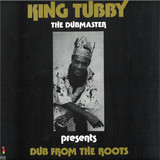
Tubby did three original dub albums, “Dub From The Roots, “The Roots Of Dub” and the third is “Brass Rockers” with Tommy McCook ’pon the flying cymbals. Where he mixed it with the horn going in and out in a dub way and one named “Shalom Dub” you can call Tubby’s too because he mixed the versions as they were off the forty fives.
King Tubby and Producer Bunny “Striker” Lee are intertwined in the birth of Dub Music. After discovering a mistake that made a “serious joke” (more of which later…) they went on to release the first pressings of this new musical genre namely “Dub Music”. Tubby’s vast knowledge of electronics and Bunny’s vast catalogue of rhythms would lay the foundations of what today is taken as a standard…. The Remix / Version cuts to an existing vocal tune.
Osborne “King Tubby” Ruddock was born in Kingston, Jamaican the 28th January 1941 and grew up in the High Holborn Street area of downtown Kingston. He studied electronics at Kingston’s National Technical College and also on two correspondence courses from the USA. When he had qualified, Tubby began repairing radios and other electrical appliances in a shack in the back yard of his mother’s home. His work in the early days included winding transformers and building amplifiers for Kingston’s Sound Systems. Tubby built his first Sound System in 1957 playing jazz and Rhythm and Blues at local weddings and birthday parties His reputation as a man who knew and understood both electronics and music grew steadily and as the sixties drew to a close. Tubby purchased his own basic two track equipment. He installed this alongside his dub cutting machine, a homemade mixing console and his impressive collection of Jazz albums in the back bedroom of his home at 18 Dromilly Avenue which he christened his music room.
Dynamic Sounds upgraded to sixteen track recording in 1972 and Tubby purchased, again with the help of a deal brokered by Bunny Lee. The old four track equipment and the MCI console from their Studio B. The four tracks now gave him far wider scope to work with and he began to create a new musical form where the bass and drum parts were brought up while the faders allowed Tubby to ease the vocal and rhythm in and out of the mix. It was only a matter of time before Tubby’s dub plate experiments began to make it on to vinyl and the first ever long playing King Tubby releases would feature a collection of his mixes to a selection of Striker’s rhythms. So please sit back and enjoy this historic set of sounds. Lovingly restored and with a few extra gems added to the CD editions. These releases were the first to carry the name of King Tubby and the first to credit the great musicians that contributed so much to the rhythms that made these albums possible.
Hope you enjoy the set……
Deliciously seasoned with a more than a little kick! Following up his 2020 debut, TYPE returns to SweetBox with two fiery jungle cuts built on his Akai MPC X.
Known as the MPC Jedi, TYPE is the tech wiz behind the Tubedigga YouTube channel, where he serves up music production and sound design tutorials from his hoard of MPCs and other vintage and modern tech. As a hardware devotee, he performs live on MPC rather than DJing, and it was during one of these live sets, for the launch of his previous SweetBox EP in 2020, that Dexta and the Diffrent crew first heard ‘Cherry Bomb’ and ‘Eclipse’ and immediately snapped them up.
‘Cherry Bomb’ is a quintessential junglist workout, pushing a combination of four sampled and homemade breaks to their limits over an otherworldly sound bed. With kicks that land like a mortar strike and the explosive militancy of a supercharged drill sergeant, this one’s ideal for peak-time switch-ups and ready to send any dancefloor into a frenzy.
‘Eclipse’ shuffles and steps with the South London producer’s signature precision, though the percussion takes something of a backseat this time. Front and centre instead are an array of monstrous technoid rasps, elasticated subs and an LFO-esque, earworm bleep repurposed from TYPE’s days as a video game sound designer. This is heavyweight business screaming out for a dark room and a big rig.
Mitch Stahlmann's solo debut release Into The Wish is a kaleidoscopic adventure in sound. Resulting from the Oakland-based musician's personal practice of experimenting with ways to process and reintroduce the flute, the music on this record draws inspiration from the instrument's everlasting breath. Paying respect to its archaic history as well as leaving room for more strange, clownish impersonations, Into The Wish is a varied collection of flute-inspired pieces. The album traverses seamlessly between what sounds like ancient, sacred incantations and more playful, chaotic collage pieces where the flute is processed, reprocessed and performed using samplers.
Each piece offers a glimpse into a whole world that could be explored in depth, but Stahlmann's curiosity is ceaseless. The opening “Petrified Cloud” is a gentle piece, a velvety, digital introduction, whereas “Moon Arch” follows with more mystery and tropical drama. “Flat Earth” offers sonic depth and channels Hassell's fourth world music ideas into immersive, winding flute passages. “Paris 2107”, “Mega Mart” or “Real Life Drama”, on the other hand, move largely beyond the sound of the flute, burying it in layers of digital processing and (re)sampling. While extremely diverse, Stahlmann's Into The Wish is a fascinating, colourful exploration of his instrument.
"We’ve reached book IV in Rupert Clervaux’s series of “Zibaldone” audio diaries, at which point we find him telling a different kind of story.
“The first three all had very specific themes, while this one feels a little bit looser and doesn’t have just one thematic thrust,” he tells me, which maybe explains why listening feels a bit like annotating. I’m underlining, emphasizing, drawing arrows from here to there, highlighting symbols and noting motifs, realising, questioning, eureka-ing. An impressionistic meaning’s been encoded in and we’re lucky to be given the space to play that most poetic and boundless of all mental games: narrativization.
There are no wrong answers, but Rupert offers some clues either way. If there’s any cipher here it’s “something like a meditation on the concept of ‘depth’––in all its connotative forms.” Think below the surface, (the) underground, yawning oceans, being ‘down in the dirt’, soil, roots, rootlessness, pulling at the dregs, collapse, profundity, stable and unstable horizons, distance, perspective, intuition, not to mention relative opposites: to be shallow, to be above, to be beyond.
It’s got me thinking of Bresson’s “Bring things together that have as yet never been brought together and did not seem predisposed to be so.” His: “Dig deep where you are. Don't slip off elsewhere.” Rupert has realized these—two favourite goals of mine!—here.
This is music that catches you at your own periphery, gives pause, has you offering a little “huh” to, asking “I wonder why” to. Again, it’s got me musing on another mindworm, this time from New York publisher and multi-sensory reading room Dispersed Holdings: “Feeling-making-knowing feedback loop; cartography of feeling; water as text, read to know the land beneath and around it, and body as reader.”
Is it ok to offer up these other contexts out of context? I think so, because Zibaldone IV articulates a similarly swirly tone. Like, we’ve got Rebecca Solnit talking through Kropotkin’s “Mutual Aid” and later calling out to Michael Ruppert a ways away, and “Easy Rider” is playing in the wings. We’ve got Susan Sontag magically contextualizing Mariah Carey with poet Thylias Moss triangulating in order to sketch out (Rupert again) “something a little more interesting than wilful eclecticism or that laboured and patronising kind of pop-savvy.”
Are we following? Whether yes or no Vanessa Bedoret follows on with a performance of a performance of Moss’s 'Water Road’: to be once or twice removed, via strange transitions, purposeful confusions, and, suddenly, seagulls. We’re on a boat with Ingeborg Bachmann—and how I wish I could actually be! But maybe thanks to this music I can as literature, films, friends, lethargy, coincidences, little mental links, eternal wormholes, lingering notions come together to imagine something better."
Text by Natalia Panzer
In the vast musical archive that is Roman Flügel’s discography, Ro70 holds a special place. Written, performed and produced between January and July 1995, it is his debut album as a full-fledged solo artist. Enquired and inspired by a certain David Moufang from Heidelberg, who used to share a classroom with Jörn Elling Wuttke at the SAE Institute and revealed himself to be an Acid Jesus fan and also of the Roman IV 12“ project, it seemed like a good fit for his (and Jonas Grossmann’s) Source Records label.
In the days before file sharing that meant going back and forth with various DATs in his mom’s Volkswagen Polo Fox for actual listening sessions between Darmstadt and Heidelberg. The time was as special and idiosyncratic one as was the sound of Source Records and of course Ro 70 itself. While the rave-olution was ready to eat its kids with the commercial outlook of former underground phenomena looked bright and the scene’s prophecy seemed grim, enterprises like Source and artist like Roman Flügel were defying any competition out of those corners with their own means.
Listening back to the ten tracks of Ro 70, it proves them, their taste and artistic vision right. Probably still being put into the ambient, downtempo, electronica or chill out sections of most record shops, this music could have been made, relished and cherished anytime between 1995 and now. Made in Roman’s home studio in his parent’s house or in the Klangfabrik studio in Egelsbach, this was made for before or after the rave – or for people who din’t want to have to do anything with it at all. His signature is all over it. Well balanced soundscapes with an almost uncanny presence and clarity. Bittersweet symphonies that doesn’t seem to be in an inferior position to modern classical or electronic studies.
It is also a very personal testament to a time in the artists’s life that was ready to get caught in the maelstrom of the oscillating techno city called Frankfurt am Main and its halcyon days between the Delirium record shop, Sven Väth’s marathon sets, the early days of the label triumvirate Playhouse, Klang & Ongaku. In a musical journal without lyrics, those memories will have to stay pantomimic and private. All for the better, that we can at least still listen to them.