Released via Cactus Jack/Epic/RCA UK. Travis Scott brings us the self titled debut pack from his Cactus Jack label/creative collective. Originally released digitally in December 2019, the project includes the remix to the Billboard Hot 100 #1 Smash “Highest In The Room” as well as features from Cactus Jack label mates and guest artists including Sheck Wes, Don Toliver, Chase B, Rosalia, Pop Smoke and Quavo. Specialist promo/marketing activity.
Cerca:room e
Listening to Linja’s debut LP makes one think of Polish director Yuri Norstein’s gloomy melancholic (yet playful) movies, or perhaps just of a rainy day, or Chopin.
Velvet Noise is a collection of 7 experimental pieces made by Linja sometime around 2016-2017, using drum ma- chines and a lot of modular synthesisers. The album is woven with Simple melodies that crack through the squeaks and the bleeps, eery pads that fill the voids all sorts of FX. The atmosphere becomes filled with tension when it is playing in the room, as if something is clearly about to happen. Linja’s album is not so easy to describe, and yet due to its coherence and storytelling it has a certain feel and per- sonality of a good book rather than just a record. “It transcends its existence as a record”.
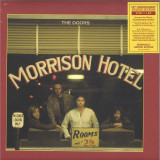
The Doors returned to their roots and were reborn a rock ’n’ roll band on Morrison Hotel, the group’s fifth studio album. Completed in only a few weeks and released in February 1970, the hard-charging album took its name from the Skid Row hotel in downtown Los Angeles that’s featured in the iconic cover photo taken by Henry Diltz.
Morrison Hotel: 50th Anniversary Deluxe Edition includes the original album newly remastered by The Doors’ longtime engineer and mixer Bruce Botnick, plus a bonus disc of unreleased studio outtakes, and the original album on 180-gram virgin vinyl. The music will also be available from digital and streaming services the same day.
For this new collection, the original album has been expanded with more than an hour of unreleased recordings taken from the sessions for Morrison Hotel. These 19 outtakes transport listeners into the studio with Jim Morrison, John Densmore, Robby Krieger, and Ray Manzarek for an unprecedented perspective on the making of the album. Botnick says: “There are many takes, different arrangements, false starts, and insightful studio conversations between the band – who were in the studio – and producer Paul Rothchild – who was in the control room. It’s like being a fly on the wall.”
Several of these unheard recordings spotlight how Queen Of The Highway and Roadhouse Blues evolved across multiple sessions. It’s especially interesting to hear how the band played with different bass players on Roadhouse Blues. Early versions include Harvey Brooks, who played on the band’s previous album, The Soft Parade. Later takes feature guitar legend Lonnie Mack on bass along with The Lovin’ Spoonful’s John Sebastian on harmonica who, due to contractual restrictions at the time, had to be credited as G. Puglese.
Among the treasure trove of unreleased outtakes are also rough versions of Morrison Hotel tracks Peace Frog and Blue Sunday, as well as The Doors rarity I Will Never Be Untrue. The collection also captures some incredible session outtakes of the band jamming on cover versions of the Motown classic Money (That’s What I Want) and B.B. King’s Rock Me.
"Vapor City" ist das gefeierte Debütalbum von Travis Stewart als Machinedrum welches erstmals 2013 erschien und seit einigen Jahren nicht mehr erhältlich ist. Anlässlich der Veröffentlichung seines neuen Albums “A View Of U” veröffentlicht Ninja Tune eine limitierte Neuauflage des Klassikers auf goldenem Doppelvinyl mit Artwork von Dom Flannigan and Eclair Fifi.
"Vapor City" ist ein Moloch, eine Metropole entstanden in Travis Stewarts Träumen, die ihn schon ein Leben lang verfolgen. Immer wiederkehrende Träume brachten ihn so oft in diese imaginäre Stadt, so dass er diese Viertel für Viertel beschreiben kann und das illusorische Metropolis auch für seine Hörer endlich erfahrbar macht. Das Album ist eine detaillierte Stadtkarte aus Sound-Landschaften, die es jedem ermöglichen sich in "Vapor City" zurechtzufinden - oder auch darin verloren zu gehen. Nach Veröffentlichungen auf LuckyMe, Planet Mu, und Hotflush Records und seinem hochgelobten Album "Room(s)" aus 2011 bastelte Stewart nicht nur an Nebenprojekten wie JETS (mit Jimmy Edgar) oder etlichen Remixen, sondern auch an der Vertonung seiner Vision.
Meda Fury is so gassed to welcome Silvestre back for a virtual hug and a 5 track EP of new jams and remix fire! The Lisbon boy done good has been enjoying some well earned praise for his last few releases - his '...is boss EP' on Secretsundaze, 'Girar' on Diskotopia, and 'Yeah' via yours truly. Gigs in Amsterdam, Bristol, Porto, London and Lisbon followed - including his debut on Boiler Room. For this new EP we are served 3 brand new Silvestre tracks and 2 huge remixes from one of the most respected labels in Lisbon - Príncipe! 'Todos Bem' starts as an organ led scratch-fest, with a tight auto-tune vocal from Silvestre himself, before mutating into an anthemic/hedonistic 303 acid and whistle banger! This euphoric string-laden track equally at home in Ibiza or Notting Hill Carnival! 'Paga O Que Deves' is up next; Joao's love of grime and UK bass culture is evident from the drop, twisted synths and breaks recall everyone from Eastman to Wiley. On the flip we find serious remix pressure from Silvestre's friends and contemporaries - the Lisbon crew of Príncipe! DJ Firmeza is up first, pushing the tempo way up on 'Yeah', turning it into a banging kuduro rave monster, propulsive batida drums upping the temperature. DJ Lilocox follows with an intense remix of 'Demónios Na Cabeça', converting it into a percussive trancey big-room bomb. Layers of mixed afro/gqom drums follow a strict samba-like rhythm forcing hands and possibly the ceiling higher.
House music connecting people! Feuilleton is back with a 5-tracker of short stories by the imprint‘s usual suspects and a bunch of new but well known artists from New York, Newark, Munich, Hamburg and Mainz.
Tilman & Will Buck deliver a smooth opener with discoish moments on A1, followed by a classical, dubby house roller by the label heads Fossar and Tim Eder, spiced up with some vocals by US house veteran Tony Rodriguez aka Brothers’ Vibe. Feuilleton’s regular RR presents a cinematic mélange of breaky jazz vibes with a maximum
organic sound impression. The B-Side is clearly dedicated to the dancefloor. Melina & Jakob Seidensticker created an uplifting floor filler with outstanding vocal action. The twisted shuffle will lift the crowd to the next level! Thomas Stieler is rounding up the compilation with an energetic morning jam, shifting back from the extrovert peak time moment to a deeper, more intimate feel. One for the sunrise, that’s for sure.
No Tengas Miedo' es un disco que se gestó durante los recientes tiempos de pandemia y que nos hace recordar que no debemos de tener miedo de vivir ni de morir, que tenemos que replantear las formas de vida que teníamos antes de que todo el mundo se detuviera pero que sigue siendo un privilegio seguir vivos. Creemos que esta es
una nueva oportunidad de remediar todos los daños que le hemos hecho a la Madre Tierra, a nuestro cuerpo, a nuestra alma, a nuestros semejantes. Creemos que debemos de tener fe y esperanza en el humano, aún cuando nuestros gobernantes nos dan demasiados motivos para creer lo contrario gracias a sus acciones (y sus inacciones). Todos enfrentamos diferentes obstáculos en nuestras vidas, pero debemos de saber que no estamos solos, que nos tenemos los unos a los otros, todos como hermanos y hermanas, sin banderas ni fronteras. Muchas veces pensé en no realizar este disco por el miedo que la sociedad y gobiernos nos inculcan a siempre esperar los peores escenarios, pero estoy harto de vivir con miedo, de vivir aguantándome las ganas de averiguar lo que puede ser o no ser. Además, desde que yo recuerdo, mis abuelos ya hablaba de crisis, mis padres también, y siempre hemos sabido salir adelante, porque nuestro espirítu es más fuerte que todos sus intentos por derribarnos. He decidido que no voy a parar de luchar por lo que quiero hasta el último día de mi vida. Queremos que todo aquel que compre este disco sienta el mismo espíritu con el que fue hecho y quenos ayude a esparcir la esperanza y fe que tanta falta le hace al mundo. Queremos salir adelante junto con todos ustedes, hombro a hombro, corazón con corazón.
Repress!
For its second release, Radiant Love sticks to family values. Paying homage to the party and label’s co-director and resident Byron Yeates, Byron’s Theme comes from the likes of Vani-T (one half of Berlin’s forceful, femme party Climax) and D. Tiffany (who threw down a ruthless remix on the label’s first release by Fio Fa). Together, they take the name of Pillow Queen – a semi-pejorative term for the kind of sub who expects to receive pleasure like a well catches rainwater. No reciprocation, just a reign of sexual passivity.
Their tracks, however, give plenty. “Byron’s Theme” presents a rich palette in its 2-minute buildup: a dry trance hook, high-end synths buzzing and wavering, pitch-shifted voice samples and a pan-flute ran through with tremolo. Throbbing, the 303 bassline picks up after a breakdown at the 4-minute mark, and only then does one realise the song’s still building. There’s still room in the last 40 seconds for some percussion modeled on a breakbeat loop – which is to say, the track is incredibly cheeky and hard-hitting – all that I would hope for in any lover.
While the EP’s first track feels wide, rangy, “Estrel Nights” opens the EP’s B-side in a much closer, tighter space. The build is percussive: bongo taps, claps, cowbell; then a hi-hat snaps things into shape, and in lopes the kick drum. And rhythm remains the central player here. It’s not until 3 minutes in that the percussion finds a melodic backdrop – a dreamy, detuned pad, choral, like a moan.
Ex-Terrestrial’s remix of “Byron’s Theme” repositions some of the elements and ratchets up the tempo of the original, but maintains its respiration: the energy and erotics flow into a different structure, closer to traditional trance, with sharp hi-hats and loopy arpeggios that phase in and out of syncopation, measure to measure. Diagonal, we incline to a climax that dizzily plateaus at 6 minutes, de-escalates and breaks down over the next 2, glows until it’s just a kick drum, slower, slower still; we’re catching our breath.
- A1: L'aventurier (Feat Helena Noguerra & Louis Ronan Choisy)
- A2: Putain Putain (Feat Camille)
- A3: Marcia Balla (Feat Adrienne Pauly)
- A4: Sandy Sandy (Feat Soko)
- A5: Ou Veux-Tu Qu'je R'garde (Feat Emily Loizeau)
- A6: Two People In A Room (Feat Cocoon)
- A7: Dereglee (Feat Melanie Pain)
- A8: Oublions L'amerique (Feat Nadeah Miranda)
- B1: Voila Les Anges (Feat Coeur De Pirate)
- B2: Week-End A Rome (Feat Vanessa Paradis)
- B3: Mala Vida (Feat Olivia Ruiz)
- B4: Anne Cherchait L'amour (Feat Julien Dore)
- B5: Ophelie (Feat Yelle)
- B6: Amoureux Solitaires (Feat Hugh Coltman)
- B7: So Young But So Cold (Feat Charlie Winston)
- B8: Je Suis Deja Parti (Feat Coralie Clement)
The 80s owed everything to the punk revolution ... and betrayed it time and again.
ln 76-77, the incredible explosion of English-speaking bands focused the energies of a whole generation of Western youth - rebels ready to pick up a guitar and use it like a weapon. Yet more than punk music itself, it was the creative burst it triggered that radically shaped 80s pop and heralded an unending stream of inspired performers.
Although we often speak of the British and American golden age of post-punk from 78 to 84, with artists that included Talking Heads, Joy Division, PIL and Devo, France (together with Switzerland and Belgium) joined the movement too. Today, on a new album, the group Nouvelle Vague have paid tribute to this sumptuous "Frenchy" period clothed in the nihilism of punk, along with bitterness fuelled by the economic crisis and, paradoxically, the bewitching spirit of pop.
lts title, Couleurs sur Paris (Colours on Paris) is based on both a famous postcard collection and Oberkampf's 1981 punk anthem, and reflects the period, which oscillated between elation and despair. Written by artists sometimes known as "the modern young people" and including faux naïf electropop nursery rhymes by Elli & Jacno ("Anne cherchait l'amour", 1979), Lio ("Amoureux solitaires" , 1980)
and Etienne Daho ("Week-end à Rome", 1984), along with Lili Drop ("Sur ma mob", 1979) and Taxi Girl ("Je suis déjà parti", 1986), the songs clearly express the hopes and disappointments of the day.
The sense of melancholy suggested by the disenchanted lyrics of "Déréglée" - performed in 1977 by Marie-France, an icon of Paris nightlife - is even more noticeable on the 1981 hit by The Civils, who cynically sang, "Tonight, they're dying in Chad, but l'm buying my dream Walkman" before taking it to the chorus: "The economic crisis is fantastic, decadence is the right feel".
The punk shockwave con also be felt in the music of bands who radically shaped French culture and song. Like Rouen, with Les Dogs ("Sandy, Sandy", 1982), every provincial town and city in France began to produce bands at the end of the 70s and the start of the 80s. Wunderbach's 1983 punk pamphlet "Oublions l'Amérique" was a foretaste of what is now called alternative punk, a genre that won acclaim in 1988 with Mano Negra's "Mala Vida". Indochine, French pop legends for the last thirty years, also encouraged the trend in the summer of 1983 with "L'aventurier", after a first single brimming with the spirit of rebellion, "Dizzidence Politik".
Rita Mitsouko, the duo that emerged from the underground Parisian punk scene of the late 70s, rocketed to stardom in 1984 with "Marcia Baïla". Equally baroque, TC Matic - the first band fronted by Belgian singer Arno - released an ironic, political underground hit in 1983: "Putain, putain". Other artists fuelled a post-punk movement that explored the romanticism of machines and the darkness of new wave, including the cult, much-neglected duo from Nancy, Kas Product ("So Young but so Cold", 1982) and Switzerland's Stephan Eicher, whose "Two People ln A Room" (1985) followed on from "Eisbaer", a hit in a more underground style written with Grauzone in 1981. However, the genre's most influential practitioners were certainly Noir Désir. From their first single in 1987 ("Où veux-tu qu' je r'garde?"), they won mainstream success with their unique fusion of 80s gloom and power rock. Beyond from the meteoric success of Bordeaux's Gamine ("Voilà les anges", 1988) and the subversive spirit of Jad Wio ("Ophélie", 1989), French post-punk reached its climax with the success of Noir Désir, Rita Mitsouko, Stephan Eicher and Manu Chao, whose albums reigned supreme in the 90s French charts. From the underground scene to gold records: the eternal story of pop.
Lysergic DIY acid house from Estonia, ca. 1995/1996. Cheap machines, romantic literary inspirations (the record is actually inspired by Saint-Exupéry), not a lot of air in the room but enough to keep on dreaming. Loud pressing for serious brain melting. For fans of Irdial, Stroom, rubber hammers and queens that are simply lost in fog or drowned in dust.
Marilyn Manson returns with his eleventh studio album WE ARE CHAOS via Loma Vista Recordings. Co-produced by Manson and GRAMMY® Award winner Shooter Jennings Brandi Carlile, Tanya Tucker, the ten-track opus was written, recorded, and finished before the global pandemic. Manson heralds the record’s arrival with the title track and lead single “WE ARE CHAOS.”
Manson’s painting, Infinite Darkness, which can be seen on the album cover, was specifically created to accompany the music. His fine art paintings continue to be shown all over the world, including gallery and museum exhibitions from Miami to Vienna to Moscow.
Manson says of the album, “When I listen to WE ARE CHAOS now, it seems like just yesterday or as if the world repeated itself, as it always does, making the title track and the stories seem as if we wrote them today. This was recorded to its completion without anyone hearing it until it was finished. There is most definitely a side A and side B in the traditional sense. But just like an LP, it is a flat circle and it’s up to the listener to put the last piece of the puzzle into the picture of songs.
“This concept album is the mirror Shooter and I built for the listener - it’s the one we won’t stare into. There are so many rooms, closets, safes and drawers. But in the soul or your museum of memories, the worst are always the mirrors. Shards and slivers of ghosts haunted my hands when I wrote most of these lyrics.
“Making this record, I had to think to myself: ‘Tame your crazy, stitch your suit. And try to pretend that you are not an animal’ but I knew that mankind is the worst of them all. Making mercy is like making murder. Tears are the human body’s largest export.”
Triangulating a slinky signal to a square mile off the Swan River, Glowing Pin bring us ‘Pentagon Palette’, a master blast of frequency adjusted house, swamp stomp and chakra charmers from Australian newcomer Jonus Eric.
Though opening brace ‘The Cult’ and ‘Collect’ made first contact back in 2014, a loose connection between Perth and Hamburg hindered progress before ‘Mirrors’, ‘Emulator’ and ‘Waterfall’ walked across the web in 2019 to round out a dope debut release from this house auteur. Specialising in mind altering sound design and melodic flair, Jonus generates a neon swamp on ‘The Cult’, serving up a psychoactive roller caked in radioactive fuzz and insectile fizz. Thick bass swells and circular marimba make for a hypnotic rhythm, while a shapeshifting vocal and moody keyboard riff drag us back towards terra firma. The paradisiac refrain of ‘Collect’ soon sounds out through the jungle with a euphoric haze,
its sub-tickling bass and acid gurgle riding hyperactive drum programming as the track warps in the humidity. Soaked in serotonin and brisk at 137 BPM, ‘Mirrors’ burns off the mist to offer an airy update on the French Touch template. Though frazzled circuitry and dislocated vox serve this one with a twist, the chiming pianos and bouncy beat are still best enjoyed in a Golf GTI in the summertime. Jonus reaches for the lasers via the restless rhythm and rave sirens of ‘Emulator’, a fresh take on the funky house of the late nineties updated with unexpected breaks, squealing feedback and treated vocals usually found on a Four Set banger.
Next it’s off to the chillout room for ‘Waterfalls’, a fourth-world tone poem describing crystal caves, undiscovered wildlife and a holographic waterfall. Ditching the doof, and letting those colours tesselate, Jonus offers a +2 bump to your mana, before the post punk bassline, growling EBM vocal and off key organs of ‘YR Mind’ combine for a confrontational bonus track, only available in digital format.
Catastrophe’s second studio album, GONG! will be released on September 11, 2020 by Tricatel. After Dernier Soleil (EP 2016), La nuit est encore jeune (Album 2018) and Fizzy (vinyl compilation 2020), Catastrophe returns with an album / musical comedy about forests, smartphones and the passing of time. Directed by David Sztanke (aka Tahiti Boy), this ambitious and teeming album propels us into a forty-minute marriage between Kendrick Lamar and Jacques Demy. Catastrophe locked the six of them in the same room, and made music inspired by everything they love: from Orelsan to Gilberto Gil via Brigitte Fontaine or Arcade Fire.
Isolating is the industrial solo alter ego of London-based, Stephen Hindman, one half of The Golden FIlter. Coming off of their moody 2020 debut EP on Optimo Music, On August 28th, Isolating will release an analog, lo-fi, gritty full-length LP called Perennial on their own 4GN3S label. Disquieting and dystopian, the album shifts from the beatless drone of ‘Mortification’ to the IDM inspired electro in ‘Sacrament’, each track melding into each other with an unsettling anxiety.
The LP mirrors the concepts behind ’Perennial Philosophy’ by Aldous Huxley. Solitarily created in London room on a Modular system, ‘Perennial’ tackles the perspective in spirituality that views all of the world's religions as sharing a single, metaphysical origin, with a nod to the Lucretius quote; “To such heights of evil are men driven by religion.” The album photography of Stephen is by Agnes Haus.
Truth is stranger than fiction they say, 2020 has proven it. This is not the year we asked for, but it's the year we received. Remarkably, even as clubs and social events across the world shuttered, the spirit of Techno remained alive in living rooms, bedrooms, and basements planet-wide. We hope you still draw inspiration, and excitement in the culture we've collectively nurtured for so many years. Before long we will see each other again, hug and kiss one another, and reconnect under more auspicious stars. For now, we wait. Luckily, we have new music for you to pass the time. We present our latest vinyl 12” record release: 'Life Under Lockdown', featuring tracks by Kessell (1/2 of the legendary Spanish duo, Exium), Joton (founder of Newrhythmic Rec.), HD Substance (co-founder of Sub_tl, and teacher at the Bass Valley), and JX-216 (co-founder of From 0-1). Modern, syncopated Techno for the new world.
We're glad to be back with our latest reissue, a couple undercover soul gems from the Midwest originally self-released in 1984: LaVerne Washington's "The Promise" and "I Found What I've Been Searching For".
LaVerne has dedicated her life to the arts in every possible way. As an artist herself but also behind the scenes, helping and supporting her contemporaries fulfil their callings. Charlie Parker, Count Basie, Ella Fitzgerald, Mary Lou Williams - LaVerne grew up in Kansas City listening to the all time jazz greats, and soon discovered she was blessed with a keen sense for playing music by ear, playing the piano to what she would hear on the radio. In her teens whilst the 60s transitioned to the 70s' disco and funk era, LaVerne was there to witness it all, and she would go on to study music at the Charlie Parker Academy where she was inspired to become an entertainer.
At Langston University, LaVerne kept studying music where her career blossomed, founding and touring the US with the gospel group "Emery Shaw and the Voices of Praise", singing in several college bands and with her choir "The Voices Of Bethel". LaVerne would go on to perform notably with her bands "LaVerne Washington and Rococo" and the "LaVerne Washington Quartet", and record several songs in KC including "The Promise" and "I Found What I've Been Searching For" in 1984 before moving to Washington DC.
In DC, LaVerne was offered a position as a Program specialist with the National Endowment For The Arts where she started supporting other artists through her work. Over the next couple decades, LaVerne became an associate producer for the Rhythm and Blues Foundation and the Pioneer Awards Ceremonies held in New York, Philadelphia and Los Angeles, which saw the likes of Prince, Aretha Franklin and Jerry Butler attending among others. She has also managed and was mentored by DeeDee Sharp and consulted with artists including Bonnie Raitt (who acted as a mentor to Laverne as well), Kim Weston, Kathy Sledge (SisterSledge), Smokey Robinson and G.C Cameron (Spinners). During that time, LaVerne has kept singing, on her own and as a backing vocalist for DeeDee Sharp and Freda Payne and has never stopped her lifelong dedication to music and the Arts.
The Promise original 7" was LaVerne's last recording in Kansas City before her move to DC and the beginning of her involvement behind the scenes. Channelling her gospel roots - with impeccable arrangement, a contagious drum machine led rhythm section, soaring vocals and relatable lyrics, "The Promise" is guaranteed to bring back smiles to dancefloors and living rooms alike! "I Found What I've Been Searching For" on the flip is a beautiful soul ballad which really showcases the strength and emotion in LaVerne's voice.
Back again in it's original 7" format, we've had the audio transferred and restored from the original 24 track tape provided by LaVerne, and got the recordings re-mixed for the best possible sound! Floating Points behind the mixing desk for this new iteration of a lost classic, comes with a 14"x14" poster of the original picture
THE KILIMANJARO DARKJAZZ ENSEMBLE are a project which has always been tied to films. Films are luxurious because they dispose of all these boring, unimportant, and trivial parts of our lives. This allows them to fully control our sensations, to put us in a very specific mood. Joy and sadness are occasionally OK, endless joy or endless sadness are clinical. But there is one sensation which can be persistent and unconditionally bearable at the same time. In the absence of a better alternative, let's call it "the mood". The mood is what TKDE are aiming at. The mood.
The mood is infinite and illimitable, but not uniform and unique. On "From The Stairwell", TKDE deliver eight new incarnations of the mood. Stairwells have always been intriguing. They appear to unavoidably lead you to your destination, but they only disclose the path bit by bit. What lies far ahead of you and far beyond you is hidden in the shadows. The stairwell could just as well be infinite. You climb up this murky stairwell, passing by many doors. Every door contains a variation of the mood, a short film, a song. You open the first one, "All Is One". The evaporating mist discloses a large and empty room with a barstool in the middle. On the barstool, a chanteuse from the roaring twenties. Her voice starts to trigger vibrations of the ground, the walls start spiralling around her, but she remains untouched in the eye of the storm. Second room, "Giallo". Sly guy, telling smile, nice suit. Walking down the streets in the dusk. The ambience starts to get out of phase, the guy stumbles in horror while blending with the surrounding to a brown soup. Fourth room. "Cocaine". Naked people with pig heads crawl on the floor, on the walls, on the ceiling. They try to hopelessly suck up the white dust which covers every single piece of this room and is constantly spit out by tubes coming out of the walls. Dissonant sounds accompany the work of this desperate hive. As the people manage to counteract the tubes, fragile melodies start to overpower the dissonances. Sixth room, "Cotard Delusion". Baby morphing into a black fluid morphing into an old man which turns his eyes inwards and finds his inside to be completely empty. The journey up the stairwell, down the stairwell, continues. The pictures fill your head and make you forget where you wanted to go in the first place.
"From The Stairwell" is a surprise and a logical step at the same time. It is a surprise because the songs are far less beat-driven in comparison to TKDE's earlier works, and even contain a few hopeful tints here and there. It is a logical step because in the end each song turns to have a very diverse dramaturgic flow. This could raise the conjecture that TKDE, initially started out to make music for existing and non-existing films, wanted to incorporate the audiovisual impression completely into songs, making the films superfluous. At times, "From The Stairwell" makes you think of 60's soundtracks, but the organic feeling of those is always interwoven with mechanical elements. Altogether, every single of the numerous details present in TKDE's new songs feels to be at the right place and you can either just dive into the mood or pick one of the many aspects and enjoy it on its own - be it Gideon Kiers' beats & fx, Jason Köhnen's bass & piano, Hilary Jeffery's trombone, Charlotte Cegarra's voice & piano, Eelco Bosman's guitar, Nina Hitz' cello, Sarah Anderson's violin, or - appearing as guest musicians - Eiríkur Óli Ólafsson's trumpet and Coen Kaldeway's saxophone & bass clarinet.
For Farsight, California’s bucolic San Geronimo Valley was the space that allowed for the creation of this handpicked selection of artistic output. Following a period of deep interest in abstract painting and its relationship to music, the artist found this lush and sparsely populated region to be an ideal location for contemplation and composition.
Although the majority of the work was executed in the first two months of 2020 in this forested setting, some of the pieces were based upon drafts created as early as Summer 2017. United in their eclecticism, the six cuts that comprise “Not Here, But Somewhere'' reveal a broad spectrum of musical influences. They are statements in an age in which influence is omni-directional, and in which the pace of artistic invention outstrips the ability of observers to identify and reify sub-genres. Although each track presents a unique approach, “Cadena,” “Sans Titre,” and “Door to the River'' reflect the continuing global suffusion of Latin American and Carribean styles such as reggaeton and dancehall. Simultaneously, the duo of “While” and “Hot Half” suggest the ongoing dialogue of techno, electro, and industrial music and the interstices between them. “Mid-Winter Burning Sun”
invokes the intensity of American trap music with its booming bass while touching equally upon the feel of early dubstep.
Ultimately, the idea that there is a “space for each artist” can be taken both in a literal sense— One’s physical environment— And also in the figurative sense that there is room enough for the ideas of all artists, who are kindred spirits in the endeavor of radical self-expression. In this way, “Not Here, But Somewhere” exists as an acknowledgement and gesture of goodwill towards every artist daring enough to explore the unknown.