Riotvan opens 2026 pulsating with drama in the form of a sad Valentine and a special collaboration: Hard Ton, joined by New York City icon Amy Douglas. “How am I going to fill the hours now?” It’s an emotion we’ve all known; and one we all dread, the raw burning haunting ache, when left alone with ourselves after loss. Hard Ton and Amy take us on a soul scorching journey through hollowed out earlymorning emotions, set to a raw, early-2000s house energy—somewhere between Berlin and New York, without drifting into nostalgia. Adding a layer of raw intimacy is a stripped-back piano interpretation shaped by Hard Ton together with maestro Matteo Baroni, whose freestyle takes became the emotional backbone of this version. From there, the release branches out: Massimiliano Pagliara stretches the original into a deep, slow-burning piece of late-night elegance, while Sylvio B flips the energy entirely, firing it back onto the floor with bold grooves and big-room confidence.
Cerca:room e
- A1: Another Night (It's Just) Ft. Theo Croker, Daru Jones & Oli Rockberger
- A2: Another Night (It's Just) Coda Ft. Theo Croker, Daru Jones & Oli Rockberger
- A3: I Can Be Happy (I Can Be Blue)Ft. Marvin Sewell
- A4: My Part Of Town (For Mama) Ft. Daru Jones
- A5: It's Okay (I'm Not Alone) Ft. Marvin Sewell
- B1: Silence (Sirens) Prelude Ft. Daru Jones
- B2: Silence (Sirens) Ft. Daru Jones
- B3: Broken (For Alberte)
- B4: Nowhere To Hide (Inside)
- B5: Better (It Is What It Is)
You may be excused if, seeing the dazzling China Moses on stage, online, or on-air, you thought that she, fabulous and French, an orchestra trailing her, with one of those light-up-a-room smiles you only hear about in myth, was someone who might only be singing cheery songs about her glamorous musical life. Not so. It’s complicated… vibrates with the joy, wistfulness, ambivalence, and wisdom of a woman who’s been on many journeys, down many paths, and landed here, in your ears, on purpose, with something to say.
Through these songs, China captures the many hues of grown Black womandom: her choices, her regrets; her place in society as both citizen and observer. Her voice is girlish and playful; gritty and growly; truly prismatic, as Anthony Peyton Young’s cover art suggests, to reflect the many lives she’s lived. And she does all this with vulnerability, a quality that transcends and supersedes genre, taste, or ability. Of all the tools a singer-songwriter could possess, it might be the most important one. Though there is bravado here (“I can be happy”, the song and the video, are the best example), this is an album that taps into the full, resplendent spectrum of human experience, its many facets hewn into these 10 gems before you.
It’s complicated… and it’s complex. How could it be anything else?
— Kyla Marshell
Mark Flash returns on DTFA with two late-night transmissions built for the floor and the mind. "Interstellar Dreams" opens the space. Warm textures, deep chords, uplifting strings, and floating atmospheres drift into Detroit's futurist side, combining Hi-Tech Jazz with a funky bassline by Jon Dixon.
"Midnight Scanner" moves with purpose—pulsing synth lines and restless energy cutting through the dark, like signal traffic across the city after hours. Direct, mechanical, and locked-in, it's a peak-time tool designed to drive the room forward.
Together, the two tracks capture both ends of the spectrum: street-level grit and cosmic lift-off—classic Mark Flash territory where funk, techno, and movement meet. Functional. Emotional. Built for DJs.
- 1: When Hamlet Left Town 0:32
- 2: Radio Four 05:45
- 3 34: E 03:34
- 4: Solid Ground 0:25
- 5: Arc 04:37
- 6: Aelita 03:12
- 7: All Tomorrows Past Part Ii 04:26
- 8: Interlude 03:26
- 9: Henry & The Ghosts 03:22
- 1: Space Minor 03:22
- 2: Loop D 03:36
- 3: Tomorrows Past Part I 0:11
- 4: Modest Farewell 03:5
- 5: Nordlead 03:3
- 6: Momo 03:12
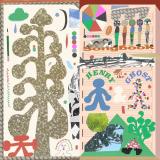
On his new album, Micha Acher rearranged compositions for bands such as Tied & Tickled Trio and Ms. John Soda from previous years.
Why are we interested in ghosts? What fascinates us about the eerie? According to cultural theorist Mark Fisher, the allure that the eerie possesses is not captured by the idea that we „enjoy what scares us“. It has, rather, to do with a fascination for the outside. For that which lies beyond standard perception, cognition or experience, as he writes in his book „The Weird and the Eerie“.
In fact, also none of the 15 pieces from Henry and the Ghost is really scary. On the contrary, they all feel strangely familiar. Like revenants or doppelgängers, which in fact they are. They have all been released before. But in a different form. In different line-ups. With different band projects such as Tied & Tickled Trio, The Notwist or the Alien Ensemble.
With the „Songbook“, Micha Acher's aim was, as he says, to find out how the familiar pieces sound in a chamber music instrumentation. Therefore he met with Theresa Loibl (bass clarinet, piano), Timm Kornelius (bassoon), Markus Rom (guitar, banjo, electronics) and Simon Popp (drums, percussion) in his living room for a musical séance in the summer of 2022. The séance lasted two days. Afterwards, Markus Rom (Oh No Noh), added some haunting electronical ideas.
The mood of most of the pieces is melancholic. There are surprising twists and siren-like melodies. Just as ghost stories should be. However, most of the songs sound very light-footed. With their feet in pop, folk, jazz and classical music. Pieces such as „Johanna“ with its wheezing harmonium and spooky piano, or the dreamy „Modest Farewell“ on the other hand have a cinematic flair. Immediately faces and scenes arise in the mind. But at the beginning, there is „Hamlet“. It starts with ghostly electronics and merges into a calm, almost classical guitar piece. Could it be that the ghost of Hamlet's father is hiding between the strings?
„34E“ begins with a banjo. Then the deep humming of Micha Achers sousaphone and the other brass instruments kick in. In the slow, solemn „Aelita“, the sousaphone starts a dialogue with a children's piano. With the banjo and the other wind instruments acting as mediators. The title of „All Tomorrow's Past“ brings Velvet Undergrounds „All Tomorrow's Parties“ to mind. Another ghost from the past. What connects the two pieces is free-floating percussion, which accompanies the sumptuous melodies.
„Arc“ takes us on an exhilarating voyage at sea, with the sousaphone providing powerful propulsion. Towards the end, things get quite turbulent. With the clarinet stirring up the water, before the sea calms down again. „Henry and the Ghost“ is characterised by a ghostly mood change between major and minor. In „Radio Four“ the banjo with its stoic chords keeps the lively brass section in check. „Solid Ground“ is imbued with melancholy. „Space Minor“ takes us into outer space, with the power of sousaphone and percussion.
„Tomorrows“ is filled with cautious optimism. And the concluding „Nordlead“ turns out to be a revenant of the instrumental „N.L.“ from The Notwist's legendary album „Shrink“ from 1998. In the new version, the piece sounds like a distant echo. One that also brings to mind how Micha Acher's music has evolved. Which new worlds he explored and opened up since the nineties. And yet Acher's signature is recognisable in every single note of this fascinating „Songbook“.
- 1: Testcard
- 2: Horizontal Hold
- 3: Not Waving
- 4: Water
- 5: Twilight Furniture
- 6: 24 Track Loop
- 7: Diet Of Worms
- 8: Music Like Escaping Gas
- 9: Rainforest
- 10: The Fall Of Saigon
- 11: Testcard (Locked Groove)
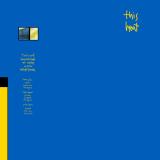
‘They went beyond punk before punk had properly started…the entire album is a controlled explosion of ideas. Nearly fifty years on, This Heat’s debut is something the world has still not completely caught up with.’ - Simon Reynolds
‘Over the years, there have been bands to play as aggressively, or even as strangely, but very few have been able to rise from their collective influences and histories to create music so singularly distinctive and inspiring.’ – Pitchfork 9/10
‘This Heat sounded like the future then ... and still do now.’ - Dan Snaith (Caribou)
Although widely considered to be Post-Punk’s finest, This Heat actually began performing and recording their music in 1976, the early days of London’s punk era. Within their two albums and an EP they perfected a strange and volatile new strain of avant-garde rock that time has proved to be massively influential, a blueprint for much that would follow: post-rock, math rock, homemade musique concrète, experimental electronica.
Numerous critics have recognised the band's influence on the music of Sonic Youth, Glenn Branca, Steven Wilson, Public Image Ltd., Radiohead, Swans, Shellac, Young Knives, Black Dice, Lightning Bolt and numerous other experimental and post-rock bands. Disbanding in 1982 they have left an undeniable legacy that has only continued to grow in stature and relevance.
The album This Heat, also known to fans and critics as the ‘Blue and Yellow’, was their eponymous debut release, recorded in sessions between February 1976 and September 1978 in a variety of studios including their own Cold Storage, a converted cold storage room in the Acme Studios complex. Innovating throughout, they combined loops and tape manipulation (producing for example the proto-drum and bass ‘24 Track Loop’) with live performance and haunting vocals to a complex, dissonant whole. The band recorded everything they ever did – including gigs – and tracks such as “Water” were entirely improvised in the studio.
Having recently passed the 50 year anniversary of their first gig, and the recording of material that appears on their debut album, the group’s surviving members Charles Bullen and Charles Hayward, true to their DIY roots, have set up an imprint to release their recordings for their growing fan base that is increasingly recognising their influential place in music history.
- A1: Al Lark
- A2: Premier Contact
- A3: Verba Aliena
- A4: Breach
- A5: La Baleine Et Le Musicien
- A6: Speaker
- A7: Caudale
- A8: Cap Lahoussaye
- B1: Insomnia
- B2: Zodiac
- B3: Lingua
- B4: Breathe In Feat. Yael Naim
- B5: Megaptera Novaeangliae
- B6: Panimal
- B7: Try Again
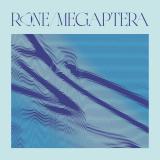
MEGAPTERA, the scientific name of the humpback whale, is also the title of the new album by French producer and composer Rone.
Born from an ambitious film project, the record was largely composed at sea, off the coasts of Brittany and Réunion Island, using a modular synthesizer and melodic sketches developed for an almost unreal proposition: attempting to resonate with whales through music.
Following Room With a View—a soundtrack to a performance created with the alternative dance company La Horde, exploring collapse and rebirth—Rone continues his investigation into new imaginaries. If that earlier work emerged from reflections on ecological, social, and technological tipping points, MEGAPTERA marks a shift: away from the city, toward the sea.
Gradually, he moved away from performance toward a more craft-based approach, extending his practice beyond the studio into a wider space of listening, exchange, and fieldwork. Early footage of sailors broadcasting his work into open water—seemingly answered by whale presence—circulated online, generating fascination, but also a growing unease for the artist regarding what these projections might imply.
This tension became the starting point for a longer period of field experimentation, developed in dialogue with scientists, environmentalists, sailors, and bioacousticians. The resulting 15-track album reflects this open-ended inquiry — not only into whether human-made sound can reach whales, but also into how this process can shape a new form of electronic music, and open it towards new deep-sea soundscapes.
Rather than seeking imitation, Rone works with reduction. Drawing on research into cetacean vocalisation, he pares back his language—focusing on frequency bands, repetition, and suspended structures. Minimalism appears less as reference than as natural convergence.
Posh End Music boss Fear-E returns with his second album ‘Descent into Ascension (Snapshots of a Mental State)’ this February. Recorded during a period of withdrawal and isolation, the release serves as a diary of a mental state as the producer worked through a period of challenging mental health. Here, he hones in on his primary love of techno bringing in influences of Bangaltar-ish French house and disco and also pays homage to EBM originators Nitzer Ebb.
Cedofeita Records returns with CDFT004, a limited run of 150 numbered 12”s cut for DJs who like their records to do the work: five tracks across house, electro and breaks, sequenced with a clean sense of tension and release. Based in Porto, the label stays close to a simple rule — not where artists are from, but where the work happens. These tracks were written and shaped while the artists were living in the North of Portugal, tied into the local circuit and its night-time pace.
Miguel Rendeiro opens with “Love Me Too” — direct, fast and warm at the bottom end. Mike Morales follows with “Outta Shine”, modern and controlled, built on crisp rhythm and a steady forward push. On the flip, Bruno, Erp & Rompante hit heavier with “Parking Place” — bold stabs, sampling grit, room-holding weight. Sector Relay shifts the colour with “Social Distortion”, stripped electro pressure for late hours. Tasc’oTau feat. João Pedro Dias closes with “Magnificent City” — liquid break swing and soft detail, a final chapter that resets the room without losing the thread.
NYC's Afro-Latin house player Doug Gomez, who was also half of the defunct Drrtyhaz, leans into club weight and musical detail on Signals 3, a confident new drop built on persuasive rhythms. 'The Space Between Us' introduces his vocal production with Fe Malefiz, who has a sultry, stylised tone that drifts between deep house and Afro-soul with great control. 'The Red Room' shifts gears into peak-time territory with a groove shaped by late-night exchanges with DJ Loka. Closing cut 'To Do Good Na Em Dem Pay' widens the palette further, pulling from Afrobeat's restless rhythmic energy and layering in some bold and brassy horns.
Whatever The Reflex is on at the moment, we want some - he's rolling out the jams left, right and centre across several different styles. For this drop, he has revisited his own revision: ten years after first dropping this and without countless plays from legends like Kerri Chandler, he retouches a disco-house fusion classic that rides big vocal hooks and smooth, breezy grooves. On the B-side he takes aim at another soulful gem and go-to DJ favourite with real invention. 'Nobody' has persuasive drum breaks and slithering synths that shimmer like heat waves and allow the acing, singalong vocal room to work its magic up top.
Dark Entries returns to the steam room with Coatshek’s Sound Bath. For their SoundBaths series, now-defunct poppers brand Double Scorpio commissioned artists to make mixes for an imaginary queer bathhouse. When asked to contribute, San Francisco-based artist Coatshek aka Sheki Cicelsky took the opportunity to create original compositions. The resulting album, Sound Bath, serves as a masterclass in slow and sultry ambient techno. Taking inspiration from Pink Floyd, Manuel Göttsching’s E2-E4, and his friend’s DJ mixes (particularly Nick Moss and Matthew Paul’s for “Por Detroit”), Coatshek landed on 107 bpm as the optimal speed for sauna sex. With just a few synths, his Telecaster, and “lots of delays, reverb, and weed,” he sculpted stunning cuts like the effortlessly grooving “Softest” and the psych-laced “Triple Virgo.” The cover for Sound Bath was designed by Coatshek’s fiancé Nate Sprecher, and features photographs by Luke Kraman taken at The Ever Afters campout. The album also includes an insert featuring the Double Scorpio SoundBaths series artwork by Blake Wright. Equally hypnogogic and sexually supercharged, Sound Bath situates the bathhouse as a liminal dreamspace of unbounded erotic potentiality.
‘Perfect We Are Not’ the latest track from Soulwax, emerges directly from the band’s recent Abbey Road After Hours project - a unique collaboration with the iconic London studio that saw Soulwax take over the building for a series of recording sessions and a landmark live event.
Working across Abbey Road’s historic spaces - from Studio Three, to Studio Two, to Studio One - the band used all three rooms as a continuous creative environment, moving fluidly between them in pursuit of new material. It was within these sessions that ‘Perfect We Are Not’ was written and recorded with their full live band (including three drummers).
The track was cut using the studio’s vast array of analogue equipment before being pressed direct to vinyl and played as the opening moment of their 2manydjs set inside Studio One
Now released as a standalone single, ‘Perfect We Are Not’ carries that immediacy forward — a driving, full-bodied track that reflects the band’s instinctive, performance-led approach in the studio, and will also be released as a limited edition 12” via DEEWEE.
Globally adored Spanish techno protagonist Indira Paganotto releases her debut album 'Arte Como Amante' via ARTCORE / PIAS Électronique. It brings together thirteen fearless tracks that stretch way beyond any one genre. It's high-pressure, high-energy, and deeply personal. A full-spectrum dive into the world of one of electronic music's most dynamic artists.
It follows a huge 2025. She debuted at Coachella. Played her first ever b2bs with Armin van Buuren at Sonar and Sara Landry at EXIT. She became the first woman to close Monegros. She held down her first Club Room residency at Hï Ibiza for 14 weeks, and even launched her own creative studio space, ARTOPIA, in Santa Eulalia. Her label ARTCORE the home of this special album also took their presence in the dance world to the next level with their own curated stages at Tomorrowland, Mysteryland and Dreambeach.
Now, she's telling her story. The title 'Arte Como Amante' means 'art as a lover'. For Indira, that's not just a phrase. It's her life. This album has been 14 years in the making. It began in Madrid in 2012, when she was 19, and was completed in 2024. She waited for the right moment. She lived life. She collected experiences. She built the sound. "I know to take 14 years to make an album seems crazy," she says, "but without living those experiences, how could I have made the music about them?"
The result is a diverse, adrenaline-fuelled body of work that hits hard and moves deep.
Early DJ Support: Massimiliano Pagliara, Paranoid London, Logan Fisher, Terry Farley, James Holroyd, Rocky (X Press 2), Francois K, Marcel Vogel, Sean Johnston, Austin Ato, Ron Basejam, Richard Rogers, Oliver Dollar, Crazy P and many more
Creating an international name for itself over the past decade as a sample pack label, Samples From Mars made its inevitable venture into the music world originally as a home for founder Teddy Stuart’s work. Long before making samples, Stuart garnered credits working as a grammy-nominated recording engineer in the hip hop world, and DJing / producing with Justin Strauss as A/JUS/TED, for labels such as DFA, Domino Records and Southern Fried Records. Now the label is set to release a variety of genres - house, disco, techno, ambient, all with a vintage tinge and a focus on high quality, analog production.
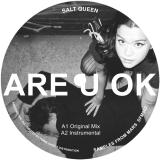
Enter Salt Queen. Visual artist and musician Magali van Caloen together with Samples From Mars founder, Teddy Stuart. Based in New York, the duo combine hardware dance aesthetics with dry, salty takes on familiar club moments into music that sits somewhere between funny, raw and unpredictable.
Salt Queen’s debut ‘ARE U OK’ is an acid-laced, deadpan spoken word track with an opening line that snaps any room to attention. A disorienting club encounter unfolds over Italo-inflected 808s and a relentless 303 bassline. There are no chords and no melodies - just a skeletal groove and an intimate voice circling the dancefloor. Drifting between concern and provocation, the vocal runs through cliché club conversations before destabilizing completely into a siren-laden crash out. The ‘Freak Nasty Club Mix’ ditches the plot and lets the hardware breathe, with a thick SH-101 bassline anchoring the first half before a sudden switch into an unrelenting acid pattern that refuses to settle. Two versions of the same wild night out.
The first chapter of a new series exploring identity, temporality and the many dialects of contemporary techno. Four tracks, four distinct approaches, yet bound by a shared pursuit of tension, texture and transcendence.
Chronicles Diary introduces its identity with WAYF VOL1, the first entry in a series asking when, not where, this music belongs. The answer comes in four club pieces that favour impact over ornament, tracing tension, texture and a sense of forward movement.
Boyd Schidt & Uvall's "Bullet Train" is tensile 4/4, serrated hats and a tunnelling bassline pulling the room into a tight zone. Commissar Lag's "Battle Rites" ups the pressure, all offline bass and percussive rhythm. MMSS pares things back on "Aion_01," a looping, hypnotic figure that blurs time without dropping energy. Time Traveller (UK) closes with "Stud," glitched and driving, a roughcast groove that breathes between the hits. Four perspectives, one intent: functional, underground Techno that works.
DJ Tennis expands the universe of his recent single ‘Playa Paradiso’ featuring vocals by multifaceted British artist Eliza with a deep-diving Club Mix, retooling “Playa Paradiso” into a darker, longer-burning version aimed squarely at the dance floor.
Stripping back the sun-kissed gloss of the original, the Club Mix leans into his precision production instincts; elongating the groove, tightening the rhythm, and letting the low-end shine. With the vocal weaving in and out like a guiding light through the haze, it’s a hypnotic take that trades coastal charm for heady club
elevation. A masterclass in tension and release, the Club Mix underscores DJ Tennis’s ability to balance emotional depth with dance floor functionality. The remix is a reframing of “Playa Paradiso” for the night shift: smoke-filled rooms, peak-time crescendos, and sunrise afterglows. Both versions capture different corners of the
same world, one that basks in the Balearic sun, and the other pulsing in the strobe.
Together, they mark a full-circle return for DJ Tennis’s first solo material in three years as an artist whose sonic world has always defied simple categorization.
Arizona-based producer Kareem Ali returns with Renewal, his second EP on the French label Noire & Blanche, a luminous blend of deep house, jazz, and Afrofuturism that captures both personal and collective transformation. Praised by Rolling Stone, Pitchfork, and Boiler Room for his visionary sound, Ali continues to expand the language of modern electronic music with a project rooted in emotion, movement, and hope.
Across five tracks, Feel Everything All At Once, On My Heart, Procession, Wake Up My People, and Want, Kareem Ali invites listeners to experience the full spectrum of feeling. Opening with the warm, jazz-infused pulse of Feel Everything All At Once, the EP unfolds into the hypnotic rhythms of Procession and the heartfelt refrain of On My Heart. The soaring horns and urgent groove of Wake Up My People capture the project’s spirit of resilience, before closing on Want, a meditative reflection on desire and renewal.
Drawing inspiration from Sun Ra, Miles Davis, and Underground Resistance, Kareem Ali continues his pursuit of what he calls Future Black Music — a sound that merges the spiritual depth of jazz with the cosmic potential of electronic music. With Renewal, he offers not just an EP, but a vision: music as liberation, rebirth, and awakening.
Yeong Die would typically be described as DJ, musician, or “experimental” composer, but in reality she is a sculptor. Between the rapidly disintegrating boundaries of composition and sound design, her work employs a hunting and gathering of intangible material—bursts of memory, fragments of liminal space, interstitial banalities—materializing as boundless expressions that evade genre constructs. As an integral presence among Seoul’s most forward thinking sound artists, Yeong is in a constant uphill battle rejecting the reverence that so quickly creeps in and infects contemporary craft, that relegates even the most audacious attempts of her peers to pigeon-hole pastiche. Given this style-agnostic starting line, her ESP Institute debut 'Uncapturable' exudes non-urgency, an unfettered pace that allows breathing room, affording the listener freedom to mentally isolate and explore elements without fear of missing a “bigger picture.” There is a warm and welcoming feeling that invites repetitive, even studied listening. While half the work is somewhat singular in presentation—'1km', 'Like Your Flaw', or 'Burnt'—there are moments of meticulous complexity—'Morning Rum Punch' (featuring vocals by Cifika) and 'Did' (featuring a smattering of spoken words by icecream drum), both underground Korean peer artists. These moments feel more of like an acute focus on execution that compliments the overall shape of the album, rather than a dynamic contrast. Cifika’s vocals, in particular, command the listener’s periphery in a playful and refreshing way, exaggerating negative space and in-between moments that not only the paint an arresting stereo field but a remarkable sense of depth, not easily achieved without production sorcery. It is, without a doubt, these beautiful fleeting moments that we describe as 'Uncapturable'.
Melbourne / Naarm strongholdButter Sessionsclock 15 years in the game with a trilogy of 12"s, sustaining their uncompromising streak of peak-form electronics. The family-style V/A binds friends, collaborators, former studio neighbours and DJ booth allies, capturing a label that exists as community as much as catalogue.
Disc Three entrantRBIserves up a tweaked-out psy-not-psy cut with a built-in spin-back upending the room, beforeUnsolicited Joints- siblingsCousinandBen Fester- slide in with a deep dub techno shuffler. Tokyo mainstayHarukaseals the side withEventide, a serotonin-tipped house curveball made in collaboration with Rotterdam'sCharlton Bakeliet, one of the last internationals to grace the Mercat X booth.
The B-side blooms withOK EG's zoned, psychoactive techno, handing over toHybrid Manto diffuse the tension with their morphing dubwise excursion.Yuzo Iwatacontinues his uncategorisable strain, self-described as EPM (Electronic Psychedelic Music), marked by Japanese ingenuity and free of genre boundaries. Finally,Sleep Dround out the set with a rogue link-up withPosseshot, a raw and adrenalised raver laced with a vocal that snarls closer to The Prodigy than hip-hop.
Whether taken alone or folded into the three-disc triptych, each instalment stands as a bag-ready constant, charged with Butter Sessions' curatorial finesse.