Lost Futures is a new label that explores experimental and often radical approaches to dance music from the past. In a musical landscape that increasingly claims to seek and reward new forms and ideas, Lost Futures delves into the recent past to revisit forward-thinking, optimistic projects that, owing to the social, musical or outright political climate, perhaps struggled to find an audience. Allowing only time to re-contextualise these leftfield, sometimes misunderstood and ultimately human bodies of work, Lost Futures taps into the inherent idealism of rave.
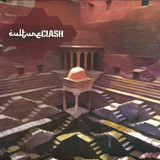
LF001 trips back until the early nineties to revisit the alternative scene emerging from the Dutch city of Utrecht. Here, three young men - DJ Zero One (Sander Friedeman), TJ Tape TV (Arno Peeters) and DJ White Delight (Richard van der Giessen) - joined forces to form 'The Awax Foundation'. Inspired by the transcendent and revolutionary electronic music arriving on their shores imported from Chicago and Detroit, combining their knowledge, gear and ever-expanding vinyl collection allowed additional freedom in paying sincere tribute to these intoxicating sounds, while also developing their tastes in a more personal, eclectic direction.
The musical flavours of Awax initially leaned toward acid house and the roots of techno. However, with three different mindsets in the mix, their tastes were rarely fixed. One thing each shared in common was a devotion to collecting rare sounds, specifically more adventurous and international samples than those emanating from the increasingly-hard, masculine dance music emerging from the Netherlands during the period. Inspired by the cross-over global sound of bands like Suns of Arqa, or 'World Music', as it was perhaps patronisingly termed at the time, the trio became interested in the idea of making techno with 'ethnic instruments'.
Of course, this being 1992, none of The Awax Foundation had access to such instruments, instead, they had a vast, collective library of samples from all over the world. There were no collaborations and no clear plan. Instead, they set to work using a Yamaha TX16W sampler, the legendary Atari 1040ST computer, a cheap mixing desk and a couple of low-end synths and FX machines. When Richard mentioned the project to his friend, Akin Fernandez, the London DJ and owner of cult label Irdial Discs, Fernandez was intrigued enough to invite the trio to record a one-hour show for his 'Monster Music Radio' series on London's then-burgeoning Kiss FM.
Forced to come up with a name, 'CultureClash' seemed like the obvious choice, even if the members of Awax were only creatively sparring among themselves. Along with the term 'ethno-techno', slightly dubious to a hopefully more conscious Western audience in 2017, these were the only guiding principles to the quietly ambitious project that soon combined cutting-edge machine rhythms with samples sourced from everywhere from Bolivia to Togo, and inspired by everything from Ravi Shankar's epic soundtrack to the Oscar-winning movie Ghandi, to the technical limits of their own setup requiring a dazzling degree of cut-and-paste work. Some tracks even emerged out of academic studies within the ethnomusicology department at The University of Amsterdam.
The show aired on October 2nd, 1992, recorded in one blistering take and without any rehearsals, traversing a huge variety of tempos and styles. If the performance wasn't seamless, it was undeniably thrilling, fresh and ambitious. As such, several labels, including Fernandez's aforementioned Irdial Discs expressed an interesting in commercially releasing CultureClash, while another imprint proposed a series of twelve-inches and an album. But the sheer complexity of the project meant that it never saw the light of day, while the trio embarked on different journeys ahead, both creative and personal.
Twenty five years later, and the original CultureClash lineup and founding members of The Awax Foundation provide the sound of the first release from Lost Futures. An otherworldly, ambitious and optimistic compilation, accompanied by extensive sleeve notes from the trio, CultureClash is a timeless ode to experimentation in dance music's ever-overlapping culture.
Suche:roots n future hi fi
North East duo Forriner are back with their third and final instalment in the samurai trilogy on their eponymous 'Forriner Music' imprint. Following a couple of impressive showings with previous EP's 'Condor' and 'In the B' they return for their hattrick with '17:17 Neon'. A four tracker of experimental club music for powerful dance floor experiences that offers two originals as well as a banger from Bird Of Paradise and a mouthful of mathematics from Legget and Suade for the remixes.
First up, 'The Jungle Is Deep' which immediately sets off at a rate of knots! Its sharp pace is tempered by the sound of the drums: dull kick, wooly clap, rattling hi-hats while its bassline bleeds in slowly as a dark repeating tone and subtle chord swell and a haunting, cautious vocal reminds you that 'The jungle is dark and deep'. The second half of the track balances its steamrolling kick with an intricate, hypnotic lead as a growling synth line shuffles and recombines over its rumpled techno groove. It's feeling is transportive, the kind of music that makes you close your eyes on the dance floor.
Fellow Northeast alumni take up the remix for 'The Jungle Is Deep'. Steve 'Four Hands' Legget and Suade Adapted hammer a hefty slice of future dub techno from the skeletal remains of the original! Its chunking, discordant drums and manic echo chamber combine with a lilting bassline making sure you know that this is tough music but that it also has a tender heart. Clipped vocals squelch and flutter throughout but these are more textural than melodic, adding extra depth to the track. This trip is all about striking, psychoactive grooves, pushing the swing settings to extremes. Equal parts sinister as it is are playful. Fitting the typical tradition of winsome, weird dance music.
Over on the flip is the title track '17:17 Neon' featuring vocalist Louis Adams and violinist Late Girl (Laura Stutter Garcia) Breathy melancholic vocals and pitched down, endorphin flooded electronica. This is techno in a state of dewey eyed delirium. The neon of the title is very much instructive here, with the vocal being the scattered, shining light that the track playfully hangs itself from.
Jo Howard aka Bird of Paradise takes the reins for the final remix delivering a charging peak-time club tool with relentless batteries of percussion setting the stage for a trippy soundscape. Other than their Northern roots, what these producers have in common is a distinctive approach to rhythm. The restlessness of the sharp stabs of static perfectly guiding the darkly pulsing mood.
- 1: Runway
- 2: Righteous
- 3: Do You Like Music
- 4: Val In Time
- 5: One And Two And
- 6: Without A Doubt
- 7: Even
- 8: Favourite Truth
- 9: Ne (Good En)
- 10: Take Me To Brasil
- 11: Mirage
- 12: Oh Dara
- 13: Groovin Sweet
- 14: Training
- 15: Jeff's Piano
- 16: Dr Slump
- 17: What Was On Your Mind
- 18: Super Moon
- 19: Feeling Connected
- 20: Tape's Rolling
- 21: Between Piano
- 22: By The Sea
- 23: Uploading
- 24: Slow Down
- 25: In Plane Astral
- 26: The Best Good
- 27: Time Is The Greatest Teacher
- 28: Our Future
We head into the final quarter of the year with a very
welcome return to First Word from London producer,
musician, engineer and DJ, Eric Lau. Following on
from his acclaimed early 2017 album, 'Examples',
we proudly present the second volume - another
delectable 28-track beats opus.
'Examples Volume Two' is Eric's fourth
instrumental album, and ably continues where he
left off with an assortment of sonics, ranging through
hip hop, jazz, funk, soul & Brazilian beats. An
elaborate sketchpad of ideas and grooves, this again
gives a taste of the genius production skills of 'The
Commissioner', Mr. Lau.
A mixdown perfectionist, his services have been
drafted into service on a number of albums over the
past few years, including Yussef Kamaal's 'Black
Focus', Mansur Brown's 'Shiroi', The Playlist's
'Chasing Goosebumps', DJ Jazzy Jeff's 'M3',
Masego's 'Lady Lady', and Kaidi Tatham's 'It's A
World Before You', released on First Word recently.
It's through these recent collaborations that we have
a few unique ingredients peppered through this
project, the track 'Jeff's Piano' is based on a sample
taken from Eric's iPhone, capturing a moment when
Kaidi was teaching Masego a few chords at Jeff's
studio. Both integral players to the Playlist Retreat,
Eric and Kaidi have also provided remix duties for
Moonchild, Omar and Leon Ware, and Kaidi Kat also
lends his key playing talents to a few tracks here.
Eric has also worked as a producer for artists like
Oddisee, Guilty Simpson, Dego, Tawiah, Rahel and
Fatima, whilst his DJ skills have seen him tour the
globe with luminaries such as Erykah Badu, Robert
Glasper and Questlove. He's received props over the
years from tastemakers across the world, including
Rich Medina, 9th Wonder, Bobbito, Dam Funk, Phonte, Gilles Peterson, James Poyser (The Roots) and Ali Shaheed
Muhammad (A Tribe Called Quest).
Farrago created a name for himself in this short time taking back the real roots of techno and rave and putting them in a new context... we said new, not different. This is his 3rd record on the label, and this time he goes beyond the idea of reminiscing the past, 'Hard Light' shows how the rave can be alive in everyone of us, and absolutely not changing the formula he gives us this beautiful feeling of being back in the past, while you dig in a record shop and you find something that hits you, in our past was that record that gave us memories. In this case the work of this record is almost double, the record itself reminisces the past, but gives good hope for the future of genuine rave music without compromises.
The music on this EP was conceived in China, between 1989 and 1993. The original tracks were mixed to DAT in real time, in a small neighbour-proof studio inside my apartment in Macau, a 19th floor with a view to the hurricanes. There's a small, unexpected or improbable story behind each track, some little magic fused with the local atmosphere, certainly guaranteeing their lasting authenticity 25 years later.
TAIPEI DISCO
Late 80s Guangzhou was an exotic city where the traditional past coexisted in harmony with the present and even already with the future.
I'd rather spend my weekends in Guangzhou than diving into Hong Kong consumerism - as most ex-pats in Macau did. I took a cab at the border and travelled 150 Km through chaotic roads with family and friends until reaching the hot, humid, mega South China metropolis.
We ate on street joints in the evenings, went on to a karaoke bar and ended up at Taipei Disco, the only proper club in town. All the others were inside hotels and played generic music or they were seedy, sleazy, smoky cabarets.
Taipei Disco used to be a cinema and played cantonese pop music and anglo-saxon pop/rock (that was new). The spacious dance floor was generously lighted, the atmosphere was airy and modern. Boys and girls were in the habit of dancing in pairs, one in front of the other, observing a respectful yet sensual distance. When the girl took a few steps back, the boy went along and vice versa. With legs and feet (more than the upper bodies) synchronized with the music, they never exceeded in extroversion. Cool.
I always carried a MicroComposer and a portable DAT recorder in my travels through China and weekends in Canton. Any spontaneous musical idea was imediately recorded and memorized. The MicroComposer allowed multitrack recording, which was very handy on the road. Based on the emphatic choreography of Taipei Disco's dancers, i started to compose a rhythm track while sitting at a table, with headphones, listening to Cantopop in the background. As if by magic - not a rare occasion in music - everything began fitting together. Odd as it may seem, the track ended up sounding more germanic (Kraftwerkian) than Cantonese pop.
The story ends in a circle: the cantonese DJ at Taipei Disco, whom i used to ask to play certain records, wanted to play my music at the disco when it was basically only just a rhythm track and little else. From a cupboard under his set up he took out a battered keyboard (unrecognizable brand) and invited me to play over the track with the available sounds on the keyboard. The circle was complete, with Cantonese clubbers happily dancing forwards and backwards, as if it were another Cantopop hit.
I didn't get payed but the house offered us free ice cream cups in which little Portuguese flags were sticked.
The track would be finished later, in studio, with vocoder strings ensemble and synth solos.
TAIPEI DISCO (LIVE)
The live version of 'Taipei Disco' was recorded during a live set at the China Pop venue, in Macau, 1993. China Pop was a rock club built in the ample space of an old fishing warehouse, located in the labyrinthic Inner Harbour area. It was decorated with large Mao Zedong and Cultural Revolution posters and memorabilia and had a unique atmosphere, fusing Pop Art with film noir. We began our performance at 1AM, pretty early for Macau's nightlife standards. We were lucky. An audience showed up. And in Macau there were always several friends among the audience, which tranformed a musical performance into a relaxed party.
The atmosphere was particularly surreal on that night. The front row was dominated by French Crazy Horse dancers, a sort of Oriental Moulin Rouge. The girls had finished their last performance of the evening at the Crazy Horse and were still energized from their show. During our performance, right in front of us and perfectly synched, we could hear the famous irreverent screams of can-can dancers. You always had to expect the unexpected in Macau.
RED MAMBO (IMPROMPTU)
I was familiar with the Portuguese-speaking African countries well before having lived in China. I found myself returning several times to one in particular, always attracted by its magic and very distinct, identitary culture and music: Cape Verde.
During the early years of DWART a lot of the inspiration for drum machine rhythms (Roland's TR series) came from African music, especially from new musical trends that gained full autonomy with Cape Verde's independence from Portugal, as was the case with funaná.
I had the privilege of having known and befriended some of the greatest Capeverdian composers, musicians and singers during the 70s and 80s, such as Bana, Luís Morais, Cesária Évora, Paulino Vieira, Chico Serra, Tito Paris, and historical bands such as Bulimundo (ambassadors of funaná) and Os Tubarões (great innovators of morna, coladera and funaná, with the sonic impact of an afro-beat big band).
When Luís Filipe de Barros began playing Os Tubarões for the first time on Portuguese radio, that was the turning point for African music in Portugal. The 'Tabanca' album was so widely heard and talked about that it quickly got a Portuguese release through one of the big labels of the time.
The mystic of this band from the Santiago Island would reach the East. Os Tubarões played to a packed room in Macau in 1992, and after the bombastic gig we arranged a dinner and party at my place.
We ate and drank generously and the moment came for a jam session at the small studio on the 19th floor. Because Os Tubarões didn't all fit in the studio, we recorded an impromptu with only three of the musicians: Tótó Silva (electric guitar), Mário Russo Bettencourt (bass) and Zeca Couto (piano). And there we were improvising without barriers, suddenly detached from cultural roots, labels and constraints, a truly unique moment. The track is now being released exactly as it was recorded, imbued with the real communion between the musicians. And it could only be titled 'Red Mambo'. I wish to dedicate it to the memory of Ildo Lobo and Jaime do Rosário, founders of Os Tubarões, sadly and too soon departed from the land of music.
The Moment We've Been Waiting For. Youngsta's Sentry Records Continues To Set The Pace And Raise The Standard With One Of The Most Sought-after Artists In The Current Dub And Dubstep Scene. After Releases On Institutions Such As Deep Medi, System And Zamzam Sounds - Egoless Is Back For Another 12' Shell. Revealing The Next Masterpiece Of The Croatian Heavyweight, The Prolific Imprint Welcomes Its Next Family Member And Two Mammoth Tracks. From Vintage Fx To On-the-fly Arrangements And Live Instruments - Egoless' Production Style Encapsulates The Jamaican Roots, Transferring Its Spirit Into The Modern Era.
Heading Straight Into The Abyss Of 'decolonize', We're Being Greeted With Tastefully Overdriven Tape Hiss, Obscured By Reverb. Oriental, Sitar-esque String Plucks Take Form, Wielding An Increasingly Inquisitive Nature. Alongside The Organic, Percussive Swing The String Plucks Cease For A Moment - A Fierce Vocal Statement Excites The Air As The Full Intensity Of This Sonic Weapon Hits The Speakers And Every Last Fibre In Your Body. The Superbly Orchestrated Arrangement Flows In A Continuous Groove, Led Onward By Haunting Surges And Psychedelic Flute Arpeggios. On Top Of The Stomping Foundation, Longing Spheres Conclude The Anthem And Leave Us Crave For A Rewind.
Turning To 'global' - The Alarm Bells Of An Apocalyptic Future Reverberate Into To Your Ears. Gargantuan Drone Pulses Lead The Way For Tribal, Acoustic Drums To Stir The Dance. A Daunting Swing Hurls Its Monumental Weight. Deeply Imbued With Rhythm - The Meticulously Crafted Sound Design Leaves Us Dancing In Awe. Life-like, Vibrant Flute Performances Form A Harmonic Composition Of Exceeding Quality, Sure To Fire Up Any Dance. Polished By Creative Vocal Sampling And Egoless' Fine-tuned Sense Of Controlling Tension & Release - These Tracks Will Stand The Test Of Time - For This Year And Beyond.
Taking a turn to some of its roots, Emotional Rescue offers a reissue of Ramjac Corporation's UK house/breaks anthem Cameroon Massif!. First released on the increasingly cult-status Irdial Discs in 1990, this was very much the sound of the big bang explosion of Acid House morphing and splintering, as subsequent multi-genres developed, formed, imploded and reformed in new ways that still subsists today.
Within the melting pot of anything goes, chemically-enhanced optimism that spread across the UK during that return to the summers of love from 1987 onwards, the nascent sounds coming from Chicago and Detroit were mixed with a hybrid of 80s British influences, taking in European synth pop, US electro, new beat, hip hop and reggae. Out of this appeared a new sound, mixing that love of techno and house with dub bass and break beats into a proto-jungle swirl.
Like many growing up through the ever-evolving 60, 70s & 80s British music scene, Paul Chivers' early years of learning piano and guitar, moved from Beatles era pop to take in punk, jazz and anything an eager musical mind could explore. Developing a long-term interest and study of Cuban and Afro-drumming, his acquisition of an Atari and sampler soon moved to programming of both drum machines and TB303 and with that, Ramjac Corporation was born.
Playing live at some of the earliest raves in 1988, as often through luck and "right time, right place", including the infamous Back To The Future and Energy parties, Ramjac went from playing from 50 to 10,000 ravers in a matter of months, as the nation was gripped, depending on your cultural standing, by either a mixture of drug apocalypse paranoia or ecstatic celebration.
It was a meeting with Akin Fernandez, founder of Irdial Discs, that led some of the first studio experiments and creation of Cameroon Massif!. Utlising Akin's in-house studio and production skills, alongside Chivers' jazz influenced outlook of improvisation over arrangement, the track took shape, mixing the live programmed percussion, heavy doses of phase, delay and reverb and Sun Ra inspired keys that resulted in a number of mixes of Massif!.
Collected here are the original 12" "Massive" and "Massing" mixes, plus a special live version taken from the "Live At The Brain" reunion gig of 2009. The sought after 1990 versions and original Live mix are taken a step further with this 13 mins + mix, in essence a resampling and remixing reversion with didgeridoo and live on mic MCing, that gives a real glimpse of those early live sets. With more Ramjac Corporation material upcoming and a live reel-to-reel show appearing soon, the return of Cameroon Massif! is now.
Red Hare's roots run all the way back to the Washington D.C. music scene of the 80's and 90's, where Shawn Brown, Jason Farrell and Dave Eight immersed themselves in the braids and tangles of that city's unique strain of hardcore.
In 1987, Brown (the original (and current) singer of Dag Nasty) and guitarist Farrell founded Swiz— a harsher take on melodic hardcore released via Dischord's sister-label Sammich and their own freshly-minted label Hell- fire. Eight joined Swiz on bass in 1989 and remained until the band wrapped it up in 1990.
By 1995, Farrell and Eight reconvened to immerse themselves in the angular post-hardcore stylings of Bluetip, yet found enough juice to again tap Brown for the short-lived Swiz reboot, Sweetbelly Freakdown. Meanwhile, Joe Gorelick was living a parallel existence drumming in the band Garden Variety. A fortuitous string of circum- stances led him down the Jersey turnpike straight into Bluetip's empty drum chair. Although Gorelick did not record with the band, his prowess was nonetheless noted and cataloged for future missions — first in 2002 with Farrell in Retisonic and now with Brown, Farrell, Jason and Eight in Red Hare.
Red Hare are set to release their second album Little Acts of Destruction on May 11th through a joint effort with Dischord and their own label Hellfire. Like their debut Nites of Midnite (2013) and their stop-gap 7', Lexicon Mist (2016), the album was recorded and mixed by longtime collaborator and friend J.Robbins. These 14 songs are a heady/hearty mix of the familiar and new that bristle with the energy of the hometown sound they helped shape.
"After a deceptively quite 2017, Especial picks up the pace pace by welcoming back the peroxide, youth filled Fairplay (re)version and a 2nd EP of old-skool-meets-the-new-school flavoured House and Breaks to lock, jock and spin.
After the criminally overlooked 'How Do You Like Me Now' EP - how is Classic Version not a...classic...version - Junior gets back on the (lino) floor. The EP starts with a look north to the 'other city of 7 hills' that birthed a Warp'd British retake on House in his bleep-dub ode, End Of Love. The autobiographical title belies a forward approach with his trademark echobox kick'n'hats underpinning uplifting keys and nodding bleep finger solo.
Who to join the party then, than another man of mystery, Roy Of The Ravers. After his debut EP on sister label Emotional Response became a most played from Aphex et al, it is only right bring him to E'Special. His brooding, hoover rush Remix 1 heightens the vibes with a heads down bleeping half-steppa. Righteous!
The flip is given over to Junior's roots, bringing the hip-hopper back with the anthemic The Shazsquatch Goes Back Into The Woods. No shoc(k) horror here, just more upwardly mobile breakbeat meets UK techno licks. You can hear Fairplay at one with man and machine, pushing a sound that looks back but most definitely goes forward with 'Sunrise' on the mind.
To close is the swagger of EP title cut, Faxes From The Future. Hair of the (black) dog fuses a swinging break with proto-dub-meets-Giallo stylings to rework the senses and say, now is (still) the time!
A return to making the noise while keeping tongue planted firmly in cheek. What are u like Top. Buzz."
Prairie is the project of multi-instrumentalist and producer Marc Jacobs, hailing from Brussels with roots in The Netherlands. He previously released an EP (I'm so in love I almost forgot I survived a Disaster - 2013) and an LP (Like a Pack of Hounds - 2015) on the Berlin imprint Shitkatapult. On stage, Prairie plays with two or three musicians and together they re-create a free association of musical ideas and atmospheres. Prairie has played in selected venues and festivals across Europe and toured with Apparat in 2016.If the apocalypse was painted in several layers of pastel gouache, its soundtrack might be PRAIRIE's Flash Flood. Listening to the album, we drift through a series of frozen landscapes that gesture at a post-apocalyptic ambience. This is a kind of blackened music that has been left to sediment, excavated from traces in ice core samples. Flash Flood showcases a deep sensitivity to narrative and rich cinematic textures as Marc Jacobs returns with palimpsestic sonic layers. It has been three years since PRAIRIE's last release—the 2015 Cormac McCarthy-inspired Like a Pack of Hounds—and it is clear that it has been several years of pensive reflection. Now, PRAIRIE takes the sentiment of his 2012 debut, I'm So In Love I Almost Forgot I Survived A Disaster, several steps further: it is after the apocalypse, and no one has survived. And yet with Flash Flood, we can hear the hum of this impossible future.
'After the Flash Flood' introduces the sonic ruins of distorted guitars, field recordings, drum programming and synths that create the textures of the entire album. The melancholic and subdued black metal churn of 'Raindeath' becomes the cold backdrop for unnerving, paranoiac speech. The third track, 'Sisters', foregrounds this coldness while slowly moving away toward alternate vistas where the acoustic timbres of the saz-driven 'A Permanent War Economy' take over. 'Underwater Body Hunting' and 'Rabid Ibrahim' are hard hitting beat-oriented tracks that insist on burning slow. There is a patience with PRAIRIE's FLASH FLOOD that is difficult to deny. The lamentation of 'Elephants Will Rise Again' perhaps signals that it is not only the human that is lost after catastrophe. The album closes with 'Hard Water: Cracked Ice' and 'Hayashi Clock'. The former is a beautiful coalescence of clean harmonious tones and softly overdriven drums, while the latter brings us back to a meditative state, drifting through the final pastel tapestry.
"... his cosmos is located somewhere between Bohren & der Club of Gore and Sunn O))), ambient is as familiar to him as brachial sounds, and he is as much acquainted with guitars as with synths and modern technology" (GROOVE)
"... Like Ben Frost, (Prairie) exudes a certain harshness while tempering his work with moments of sublime beauty. This isn't club material, it's music for the hammer in one's hand, the confrontation of the demon, the soul-shattering revelation." (A Closer Listen)
Scottish producer & DJ Graeme Clark AKA The Revenge releases his second album 'When The Thrill Comes' on his own Roar Groove imprint on 11th May 2018.
'When The Thrill Comes' is a demonstration of a producer achieving a point of maturity in their work, able to exercise a sense of restraint, to allow for their sound to have space. It is also the opportunity for The Revenge to explore his own electronic music roots with a deeper pared-back sound more in touch with his earliest production experiences in house and techno.
Clark is no novice to the art of production and the sweaty alchemy of animating bodies on dance floors. He has been producing and playing electronic music since 1995, in many forms, though is well known for 'some of finest modern disco dubs and re-edits on the block' (DJ Mag). This passion for dusty disco and deep cuts is reflected in his long-standing collaboration with Craig Smith as 6th Borough Project which has yielded 3 albums and provided the foundation for the influential but now defunct Instruments Of Rapture label.
2015 was a momentous year for Clark with the release of his debut album 'Love That Will Not Die' on his own Roar Groove imprint. The LP picked up 'Best British Album' from DJ Mag, was shortlisted for Scottish Album Of The Year and drew support from leading DJs including Jackmaster, John Talabot, Solomun, Craig Richards, Axel Boman amongst others. Recent production work has both cemented and extended his reputation; with his future-facing remix for Auntie Flo being re-touched by Dixon for the Philomena label and his two EP's for Berlin's Dirt Crew Recordings reinforcing his love for solid club jams
Since the early 1990s, keyboard player Jessica Lauren has been a familiar part of London's alternative music scene. Jessica's keyboard skills have augmented the live performances and studio recordings of world renowned artists such as Jean Carne, Tom Browne, Dexter Wansel and James Mason, Japan's United Future Organisation, and UK soul diva Juliet Roberts.
Her previous Freestyle album 'Jessica Lauren Four' (2012) highlighted Jessica's minimalist approach, something rare and refreshing in the jazz world: she instills her compositions and playing with a refined sense of space which makes her music as much about what she doesn't play as what she does.
The albums' opener - Kofi Nomad is a deeply percussive afrocentric epic, featuring the beautiful baritone saxaphone of Tamar 'Collocutor' Osborn, one of the most in demand woodwind players working today, underpinned by a powerful foundation of percussion courtesy of Richard látúndé Baker, Phillip Harper and drummer Cosimo Keita Cadore.
Jessicas' amazing skill for writing simple, understated yet superbly memorable and catchy hooks remains undiminished. Highlights in this new collection are almost too numerous to mention, but Amalfi is a breezy bossa, which conjures up images of easy living days and sun dappled Mediterranean coastlines, whilst the angular and brooding Simba Jike has something of an Eddie Harris style deep, dark groove over which Jessica riffs and solos beautifully on grand piano - and Tamar once again blows freely, whilst 'level' Neville Malcolms' upright bass figure roots the entire thing in a solid, almost primeval sound.
The albums closing statement Argentina is a masterpiece of pathos and perfectly demonstrates Jessicas' approach which is almost akin to a minimalist architecture style of composing and playing, such is the strength of its atmosphere and subtlety.
The Bug goes head to head with Burial for two bass-bin heaters that is Flame 1, cementing the first release on his freshly formed label PRESSURE. Following on from The Bug's recent sidewinding 12"s for Ninja Tune and a colossal album recorded with Earth, Fog / Shrine is possibly Kevin Martin's most soundsystem decimating collaboration yet, joining forces with the most elusive figure within the UK underground and
Hyperdub mainstay, Burial. 'Fog' rolls along at half-speed steppers tempo, submerged deep within the roots 'n' future aesthetic of The Bug's signature beats, yet perfectly balanced by Burial's hollowed out and haunted night vision. 'Shrine' delves deeper inwards with the beats slowed to a crawl, the bassline hanging heavy in an atmosphere thick with smoke. Description: 12' in thick grey card discobag. Includes DL Card.
The current resurgence of jazz in all its' forms has certainly been impossible to ignore in recent times - from the chart-bound, mainstream crooning of Gregory Porter, to the left field 'jazz not jazz' soundscapes of Kamasi Washington, Moses Boyd, Nubya Garcia and Snarky Puppy proves this is a worldwide phenomenon. One artist who has been been ploughing this furrow in the southern hemisphere for longer than most is Lance Ferguson. As the driving force behind The Bamboos, Cookin' On 3 Burners, Lanu, and the Black Feeling series, these are the varied and versatile projects on which he has built an enviable reputation.
Menagerie 'They Shall Inherit' saw the light of day in 2012 (Tru Thoughts Records) and established the fact that jazz of the contemporary type could reach back to it's essential roots and present itself, refreshed and vital for a contemporary audience.
Lance himself explains: "The Arrow Of Time' draws its inspiration conceptually from the themes of space exploration, human evolution and the future of humankind. It's pretty big stuff to be underpinning an album of modal Jazz tunes - but the main message is one of hope, and I hope that comes across in the music"
Late 2017 saw the 2 track album sampler 'Evolution/Arrow Of Time' create a genuine buzz of anticipation, being playlisted on Jazz FM, and also supported by Jamie Cullum (BBC Radio 2) and both Don Letts & Gilles Peterson on their BBC 6 Music shows - having as it does the spirit of deep jazz, but combining an accessible sound that reached way beyond the usual jazz hungry audience - due in one part to Evolution's immensely catchy hooks, with the voice of Fallon Williams focusing the listeners attention on the philosophical themes Lance highlighted above. Now the album, laid out in its' entirety can be experienced, attempting to encapsulate the music with the written word feels like a somewhat futile exercise, so it is best to consider Lance Fergusons' final thoughts about its inspiration, influences and ongoing appeal.
"The sound of record labels like Strata East, Tribe and Black Jazz has been a massive influence on Menagerie. To me that sound is timeless, exciting and just as vibrant as a musical format in 2018 - and the proof is that we're hearing more and more young musicians embracing it"
- A1: Violinbwoy - Fyetisov
- A2: Violinbwoy - Moonspel
- B1: Violinbwoy - Dubplate
- B2: Violinbwoy Feat. Marina P - Gone
- C1: Violinbwoy Feat. Junior Dread - Sound System
- C2: Violinbwoy - Rig Alert
- D1: Violinbwoy Feat. Dan I - Wanted
- D2: Violinbwoy - Run & Hide
- E1: Violinbwoy - Død
- E2: Violinbwoy Feat. Rider Shafique - Find The Way
- F1: Violinbwoy Feat. Sis I-Leen - Babylon
- F2: Violinbwoy - Surfacing
Brewing another supremely heavy release on the horizon, Moonshine Recordings is stealing the spotlight once again. Proudly presenting Violinbwoy's first solo album, unadulterated sound system pressure at its finest. Slavic chants and drum rhythms meet the unrivaled power of Violinbwoy's eccentric take on modern bass music 'Fyetisov' kicks off the stellar 3x12" release with a high-powered Stepper emission. Setting the tone with a rumbling bassline and supremely energetic lead instrumentation, full force sound system music down to its core. Shining in a different light, 'Moonspell' reveals its melancholic nature gradually intensifying through otherworldly percussion and anthemic vocal sample placements. Stripped down to its bare bones,'Dubplate' unleashes its detuned, percussive shackles for a massive onslaught of four-to-the-floor, while keeping true to Jamaica's music roots. Warbling tape echo spheres and excellence in emotive expression Violinbwoy's collaboration with singer Marina P turns out to be an anthem by itself enthralling, whoever gets caught into the midst of this hymn of a track. Not backing down one step from the established level of quality, 'Sound System' featuring Junior Dread excels once more in a crystal-clear demonstration of modern roots music mandatory repeat listening. Rejoicing in simplicity, 'Rig Alert' holds true to what the name suggests - cinematic bass meditation, fluidly scaling with the size of its speaker counterpart. Moving on to Dan s vocal skills in 'Wanted': Rastafarian wisdom chanting along a skanking rhythm and orchestral atmosphere. Ethereal bells being submerged in moving air and scattered white noise, 'Run & Hide' demonstrates a more experimental side within the LP exhibiting Downtempo/Ambient inclinations in a magnificent combination with Dub characteristics, only increasing in energy to the call of the dub siren. Ready for more, the title track 'dod' captures us within the expressive, introductory playing of the violin, deserting it for echoes and sub oscillations alike. Calling upon the prowess of Rider Shafique, his harmonic toasting is being escorted by a forward-minded halftime groove in 'Find The Way'. Topping the LP off with Sis' excellence in telling a story through song on a hypnotic instrumental. The nature of last tunes is often powerful, serving to concede with an explosion, appropriate of the session as is the case with 'Surfacing' closing off the monumental EP with visceral lead movements, setting the tone alongside driving drums and one more murderous bassline, sure of receiving countless rewinds in the near future. Encompassing a plethora of current Roots- Dub- and Steppa- influenced styles, Moonshine's next LP installment is sure to be received for what it is: a definitive, quality expedition of what's firing up dance floors around the globe.
* As it's first full length release, Love What You Feel is proud to present Chicanismo, the debut album by Santiago Salazar. Known for his work with Underground Resistance, ICAN Productions, as well as solo releases on many notable labels, Santiago brings his working man's house and techno into the world in its most pure form on this album. His use of a variety of rhythms and beautiful melodies puts him in the upper echelon of dance music producers today, and the results here are just as satisfying at home as they are in on the dancefloor.
* By mixing his Chicano roots with his time spent in Detroit, Santiago has created a timeless musical statement on behalf of the underdogs whose contributions to house and techno are often paid lip service to, but are much more rarely realized. The groove here is just as important as the harmonies, and they work together to achieve something very special on Chicanismo. This is music that lifts the spirit to a higher plane, the true definition of soul music.
Touching down for the inaugural release on the newly formed label, North of 7 Sounds, is the mighty Rumbleton - a true heavyweight with over 2 decades immersed in sound system culture, running the Stand Firm Hi-Fi label and releasing music on Scientific Wax, Rupture LDN, Outsider, and Samurai Music to name but a few. A true master of his sound, we are extremely proud to have Rumbleton set the bar for future North of 7 excursions. A New Day' takes you on a journey filled with haunting pads, razor-sharp drum kit clashes, and infinite amounts of low-end. Bottomless swathes of atmospherics respire in and out of the mix, culminating in a breathtaking breakdown - crafted with utmost devotion to the Godfather of Soul himself. A truly honourable homage to jungle's roots in sample culture and breakbeat science.Conscience' on the flipside is weightiness refracted in minimalism. Rumbleton fully submerges your mental space in a cavernous, dubwise fog, while militant, scorched-earth drums power the tune forward. A warm, subterranean bassline churns endlessly beneath, all the elements occasionally exhaling and collapsing under their own weight, only to regenerate once again...
- A1: Pastor T. L. Barrett - After The Rain
- A2: Camille Doughty - Elijah Rock
- A3: The Howard Lemon Singers - For The Children
- A4: The Fantastic Family Aires - Tell Me
- A5: Jean Austin & Company - Spirit Free
- B1: The Jordan Singers - Will You Save Me
- B2: The Phillipians - Never Say What You Want
- B3: The Fabulous Luckett Brothers - Help Me To Carry On
- B4: Bright Clouds - I've Got To Make A Change
- C1: The Fantastic Family Aires - Troubled Mind
- C2: The O'neal Twins - Wake Up Everybody
- C3: Rev. T.l. Barrett - Said It Long Time Ago
- C4: The Fantastic Family Aires - The Color Of God
- C5: The Brooklyn All Stars - Blessed Be The Name Of God
- D1: The Original Sunset Travelers - On Jesus' Program
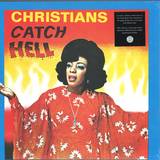
- D2: Reverend Edna Isaac And The Greene Sisters - Christians Catch Hell
- D3: The Fountain Of Life Joy Choir - Thank You
- D4: The Fantastic Family Aires - Glory
Utterly magnificent, sublimely soulful survey of the Gospel Roots label, subsidiary of the mighty TK Records at the height of the Miami Sound. Beautifully presented... the LPs with a 12"-square, full-colour, sixteen-page album of photos and original artwork. Check!!
A&R was co-ordinated by Gospel legends Ira Tucker — from the Dixie Hummingbirds — and Ralph Bass, veteran producer with Savoy, King and Chess. The label was run by Timmy Thomas, who had recently smashed with Why Can't We Live Together, for another TK spin-off, Glades. Operations were overseen by Henry Stone himself, unlikely King of Disco, who had recorded a young Ray Charles, and pushed forward James Brown. They drew in artists from all over the US, from St. Louis, Columbus, Memphis, Brooklyn, Cabrini Green in Chicago: unknowns like Camille Doughty, reluctant to jeopardise her job at GM ('Generous Motors') in Detroit, and huge-sellers like the revered Brooklyn All Stars, who started out on Peacock in 1958.
Choral belters, deep ballads, harmony quartets, epic city-blues, gritty funk, powerhouse female soul... Killer-diller Philly like a scorching version of Harold Melvin & The Blue Notes' Wake Up Everybody, and Jean Austin's raw Spirit Free, co-written by Ronnie Dyson, produced by Jesse James at Future Gold. Chicago Sound like The Fantastic Family Aires — named after the family's furniture store on North Cicero, but reminiscent of the Staple Singers at their best — through to the full-blown glory of The Fountain Of Life Joy Choir, led by Marvin Yancy from The Independents, and featuring Natalie Cole... Singers like Versie Mae Gibson, from the Jordans, by rights up there with Irma, Etta and Ree... Bangers 100%-guaranteed to find their way into Theo Parrish sets, and mortal delirium for the prissiest of soul and gospel purists.
Deconstructed EBM from the Nous affiliate Spoiled Drama kicks off the new Science Fiction compilation - 10 tracks of crazed machine grooves further diversifying the Science Fiction's exploration into synthetics. The opener driven simply by an obnoxiously saturated digital drum machine and a mechanical body music bass loop simultaneously hints to late 80s darkside Chicago roots with hard flanged hi-hats and a detuned string machine.
- A1: Abayomy - Obatala (Pd)
- A2: Zebrabeat_Zebrabeat Afro - Amazônia Orquestra (Zebrabeat)
- A3: Burro Morto - Lúcifer Colômbia (Daniel Jesi/Burro Morto)
- A4: Ive Seixas - Cervejas Populares (Ive Seixas)
- B1: Iconili - O Rei De Tupanga (Iconili)
- B2: Zulumbi - Zulumbi (Rodrigo Brandão / Lúcio Maia / Pg / Dengue)
- B3: Passo Torto - Faria Lima Pra Cá (Kiko Dinucci / Rodrigo Campos)
- B4: André Sampaio E Os Afromandinga - Ecos De Niafunke (André Sampaio)
- B5: Fabrício - Feito Tamborim, Pará Céu (Fabrício.)
Over the past few decades, there has been a seismic shift in Brazil's musical landscape. A plethora of varying musical undergrounds has developed across the nation. While Rio and São Paulo have been overwhelmed with networks of talented musicians for a long time, creative life is now bursting all over the country. Amplificador exists to document and propagate the wonderfully diverse music currently blossoming from Brazil's vivacious and geographically varied musical undergrounds. Presenting an up-to date insight into Brazilian music, this compilation draws together some of the components of 'Novíssima Música Brasileira' (brand new Brazilian music), ranging from afro-grooves to rock, to modern samba and MPB. The music reaches back across Brazil's incredibly rich musical and cultural traditions, while also taking in influence from other movements around the globe.
Having begun life in 2012 as a Brazilian music blog run by Marcelo Monteiro, Eduardo Rodrigues, Mateus Campos, and Ricardo Calazans, the aim of Amplificador is to document and propel to wider audiences, Brazilian music of the '00s and '10s generation. This is a task made more significant by obvious changes in the way music is consumed. 'People are no longer obliged to listen to what the radio and TV are presenting. There is a whole new generation that wants to listen to new bands and new sounds and we try to connect those bands with other bands, producers, fans and even the mainstream.' These changes in technology and the way music is discovered and shared have developed parallel to the proliferation of these emerging scenes. The ostensible decentralization of the music industry means the promoting and filtering work of journalists and blogs, like Amplificador, have become increasingly important, as people try to keep up with the tsunami of new music and media flooding the country on a daily basis.
Marcelo uses the example of the Mangue Beat movement to explain a trend in contemporary Brazilian music that looks both inwards, to Brazil's own musical traditions and outwards, to movements around the world to create a novel, localised identity: 'The 90's Pernambuco art-social movement was inspired by Coco, Maracatu and Forró all mixed with modern riffs and grooves. The mythical
revolutionary Chico Science, his Nação Zumbi, Mundo Livre, Siba, and many others do this blend perfectly. There are also the references to the older generations and masters - Gil, Caetano, Luiz Gonzaga, João Gilberto, Tim Maia, Jorge Benjor - as a constant inspiration for all bands.' This is very much the case for the Brazilian artists of today.
Music is unquestionably informed by place. Brazil has always been famed for its regional differences in this sense. Indeed there are still pronounced variations between the scenes of Rio, Sao Paulo, Natal, Goiânia, Belo Horizonte and Belém for example, there are also great divergences within cities and while technology has brought changes to the way musical influences are shared, there are cultural differences, rooted in folkloric traditions, that aren't going away. Expressing his appreciation for this fact, while highlighting the potential of Brazil's spread of musical flavours, Marcelo explains that 'what we have now is new ingredients to make an even better mixture.'
This compilation heavily features music from a scene in Brazil's current musical make-up, which draws inspiration from African music, particularly Afro-beat music. Abayomy Afrobeat Orchestra from Rio formed because of their shared love of the music of Fela Kuti, uniting initially in 2009 for a jam session in his honour. But what sets Abayomy apart from other groups of a similar nature, is the fact that their sound also brings with it the songs and rhythms of candomblé. In this sense, Abayomy was the first band of its kind. The thirteen members of the orchestra have a palpable current of Rio's musical heritage - its rhythms and culture - running through them. So while their sound is distinctly African, it is also inherently Brazilian. Similarly, Zebrabeat Afro-Amazônia Orquestra draw upon traditional guitarradas and carimbos from the state of Pará and fuse these with the poly-rhythms of Afrobeat to create another regional hybrid, which stays true to both its Amazonian and African roots, yet which results in a very fresh, Brazilian sound. From Belo Horizonte (capital of Minas Gerais), Iconilli are another key band on Brazil's Afro-groove scene. With influences as varied as funk, jazz and psychedelic rock, congado, mining harmonies, maracatu, coco, ijexá, carimbó, Iconilli somehow manage to balance all of these sounds in such a way that makes it impossible to pin them down. From the Northeastern city of Joao Pessao, Parayba, Burro Morto's pshychadelic afro sound leans more towards rock and funk influences, with hint of regional Brazilian rhythms such as frevo and forro. They add another flavour to the Brazilian afro-groove scene: just one of the many exciting facets of Novíssima Música Brasileira.
While African-inspired music features heavily on the compilation, it is just one of the many styles within. Ive Seixas has a fresh approach to MPB, based on traditional rhythms and instrumentation, punctuated by a pop sensibility, coupled with a powerful female vocal. As an artist she is a product of a 'Do It Yourself' outlook to creativity, taken from her love of rock growing up. In 2013 she embarked on a project of street performance: wandering, like a lonely troubadour with just her guitar. Ive and her project began to gain notoriety and shortly after, her first EP was recorded, featuring some important names of South Rio's underground scene. 'Cervejas Populares' taken from the EP, is a beautiful, sombre piece of modern Brazilian pop, with a traditional samba rhythm. Another artist of the new MPB scene is Fabricio, from the city of Vitoria, who's 'Feito Tamborim' melds rock and funk and is also clearly reminiscent of the old Brazilian masters. It's an appreciation for the national musical heritage, alongside a keen ear for melody and an acceptance of foreign influences that results in these promising new sounds of Brazilian MPB.
Sao Paulo's super group of the underground 'Passo Torto' have been at the helm of an emerging scene in the city: an innovative approach to samba which draws in and experiments with afro grooves, jazz melodies and rock structures. Their sound is naturally very Brazilian, but the nylon twang of Faira Lima Pra Ca, interspersed with ominous strings and light rolling percussion, seems reminiscent of Captain Beefheart or Tom Waits, as the band lament their frustrations with their native city through their music.
The Future of Novíssima Música Brasileira looks very bright. The main challenge (and purpose of this album) is to get the music beyond Brazil's underground and into view of international audiences. In the last 10 years this goal has become somewhat more attainable, as the Brazilian government has begun to see the internationalisation of the nation's culture as a strategic objective, with public projects gaining increased investment and backing. The continuing project of Amplificador is to reinforce this international bridge by writing, filtering and promoting the scene as a whole. There is a wealth of great music currently blooming in Brazil and using new media tools, Marcelo and the team, alongside many others, will passionately continue to get the voices of Brazil's underground heard.