When Welsh twins Stewart & Paul Summers (Ten Benson / The Sharp Tongues) started some experimental recordings combining psychedelia, poetry and punk rock, the resulting songs got them thinking….
Recruiting old touring comrades Sam Mansbridge (The Rumblestrips) on bass, Hanna Edgren (Tits Of Death) on keys and vocals and Gui Rujao (Los Pepes) on drums, DaemöniK Fonce were fully formed and some gigs hastily arranged.
Cerca:rüben
Das Album fühlt sich an, als höre man einem Storyteller zu, doch wenn man genau hinhört, sind es eigentlich eher Bilder, die der alte Ruhrpott-Indianer mit der sonoren Stimme im Kopf entstehen lässt. Der Ton macht die Musik, aber eben auch die Musik!
Sie treibt schon mitunter seltsame Blüten, diese Pandemie. Da haut ein nunmehr 65-jähriger Gitarrist und Songschreiber nicht nur ein hochgelobtes Album mit seiner 43 Jahre alten Band Extrabreit raus, das sogar nach heutigen Zeitmaßstäben durchaus als Comeback bezeichnet werden kann, sondern bastelt innerhalb von zwei Jahren noch zwei Soloalben zusammen. Mitnichten weil er musste.
Tief verwurzelt im sehr geschmackvollen Classic Rock sind die musikalischen Einflüsse nicht zu überhören. Gleichzeitig überfordern aber weder die Sounds noch die Texte den geneigten Hörer, so dass sich dieses zeitlose „Alterswerk“ problemlos in einem Rutsch durchhören lässt. Und über welches Album kann man das heute schon noch sagen.
Songs schreiben, Songs singen und vor allem Geschichten erzählen ... das kann er, dazu ist er auf der Welt. Deren Wirrungen Kleinkrieg nicht nur wahrnimmt, sondern in ihrer Absurdität und Melancholie schamlos für seine Lieder verwendet. Man sollte sich Stefan Kleinkrieg und sein Werk „Die Sonne scheint für alle" anvertrauen. In „Alte Liebe" heißt es: „Es wäre schön, wenn es schön gewesen wär‘." Dieses Resümee muss man hier nicht ziehen - Treffer versenkt. (Seb Hinkel)
Die experimentierfreudigen US-Metaller EIGHT BELLS aus Portland, Oregon haben ihr Songwriting im dritten Anlauf stark gestrafft und verfeinert. Dieser Soundtrack für das Ende der Welt unter dem Namen "Legacy of Ruin" bietet aber auch Kontinuität der besten Elemente wie die für das Trio typischen Gesangsharmonien, die zusammen mit mal schrillen, mal impressionistischen Gitarrenriffs eine eindringlich berauschende Atmosphäre aus Licht und Dunkelheit schaffen. Inhaltlich liegt der Fokus von "Legacy of Ruin" auf Themen wie die Natur des Menschen, Umweltzerstörung, Tod,, Verlust, Bösartigkeit und Rache.
EIGHT BELLS wurden im Jahr 2010 als Songwriting-Projekt von Melynda Jackson gegründet. Die Gitarristin und Sängerin benannte ihre neue Band nach dem letzten Album ihrer vorherigen Wirkungsstätte SUBARACHNOID SPACE. Nachdem bei dem Trio zu Anfang die Besetzung mehrfach wechselte, wird Melynda mittlerweile von Sänger und Bassist Matt Solis (CORMORANT, URSA) und Brian Burke (NO SHORES, CAVE DWELLER) am Schlagzeug unterstützt.
Nach der amerikanischen Veröffentlichung der "Isosceles"-EP (2011) erlangten EIGHT BELLS bald auch internationale Anerkennung für ihr Debütalbum "The Captain's Daughter (2013)". Das Trio tourte anschließend als Support für SUBROSA durch Nordamerika. Mit ihrem zweiten Album "Landless" (2016) festigten EIGHT BELLS ihren Ruf als heißer Underground-Tipp. Die folgenden Einladungen von VOIVOD für eine US-Tour an und zum Psycho Las Vegas Festival nahm das Trio gerne an.
Nun sind EIGHT BELLS reif für den nächsten großen Schritt auf der Karriereleiter und die weite Welt. "Legacy of Ruin" wurde von keinem Geringeren als Billy Anderson (AMENRA, BELL WITCH, LEVIATHAN, SWANS) produziert, wodurch sich dem Trio eine neue Dimension der Klangqualität eröffnet hat.
"Legacy of Ruin" bestätigt eindrucksvoll, dass zeitgenössischer Metal sowohl künstlerisch anspruchsvoll als auch gleichzeitig frisch und eingängig in seinem Ausdruck sein kann. Höchster Zeit, um sich zurückzulehnen, die Augen zu schließen und sich mit EIGHT BELLS eindringlichem Abgesang auf einen sterbenden Planeten von wundervollen Klangwellen überrollen zu lassen.
There seems to be something in the water down in Hastings as a veritable hive of electronic music artists have been busy making beats in ever growing numbers down there - including Kim Cosmik.
Kim's debut on 20/20 Vision is an impressive and highly original mix of techno, electro, broken beats and industrial sounds, destined to destroy the long-anticipated dance floor revival. Although overall the record is abrasive, hard-hitting and takes no prisoners - beneath the surface, in tracks like 'Drifting' we also find nuances of emotional musicality that shed vast streams of light on the proceedings. The record does indeed kick off with intent though with 'Night Flight' - a blistering techno workout that would resonate magnificently in the mighty Berghain hall. There's no holding back the menacing bass line, fortified tough jacking groove on this one as strong synth lines and strings embellish and complete the soundscape.Over to 'Ore' which cranks up the gears into an industrial techno slammer packed with abstract outer-planet sound design finished off with pounding overdriven drums programmed with military precision.
On the flip side is a gem called 'Nocturnal'- this is the cut that first really caught our attention at 20/20 Vision, with it's merciless industrial dubstep kick drums and brutal precision. It's a simple, stripped back workout held in place beautifully by a discordant string - there's just no escaping this fierce ruling diva. Not for the faint-hearted but those who dare will be rewarded.
Kim's final track 'Drifting' is the jewel in the crown that provides the light after the storm. It's a blissful, cosmic, jazz fused musical tapestry driven by break beats, while compassionate strings infused with Kim's own vocal harmonies and subtle piano motifs glisten and glide over the track adding soothing layers of harmonious quality. Drifting is the perfect close to a truly stunning debut EP.
Sammy Burdson/Klaus Weiss/Larry Robbins Backgr Ound Rhythms
Dramatic Tempi / Larry Robbins Background Rhythms
- A1: Pop Waves (1:49)
- A2: Cyclodrom (1:10)
- A3: Devils Drive (1:28)
- A4: Crime Ways (2:06)
- A5: Is It Hip (2:00)
- A6: The Camp (3:29)
- A7: Tomorrow (1:53)
- A8: Rhythm Trip (4:28)
- B1: Vox Pop (1:22)
- B2: Rock Pop (2:47)
- B3: Pop Phase (2:46)
- B4: Pop Twang (0:55)
- B5: Canned Pop (1:40)
- B6: Percussion Take 1 (1:24)
- B7: Percussion Take 2 (1:08)
- B8: Percussion Take 3 (1:16)
- B9: Percussion Take 4 (1:10)
- B10: Percussion Take 5 (0:52)
- B11: Percussion Take 6 (1:54)
- B12: Percussion Take 7 (1:24)
C-L-A-S-S-I-C library breaks and beats set of heavy drums and louche funk.
One of two Be With forays into the archives of revered British library institution Conroy, we present one of our favourites on the label - the super in-demand Dramatic Tempi / Larry Robbins Background Rhythms, originally released in 1975. Rare and sought-after for many years now, this is one of those cult library LPs that rarely turns up on even the deepest dig.
As a single LP, Dramatic Tempi / Larry Robbins Background Rhythms is two distinctly different collections of music. The first side, Dramatic Tempi, is made up of four tracks each from Sammy Burdson and Klaus Weiss.
Sammy Burdson was one of the many, many aliases of the mighty Austrian composer, arranger and conductor, Gerhard Narholz. Founder of adored library label Sonoton in 1965, and a classically trained composer, his work runs from easy listening through pop, jazz and electronic, to avant-garde.
About as cult as it gets when it comes to library music legends (German or otherwise) Klaus Weiss produced essential records on German library labels Coloursound, Selected Sound and Sonoton, as well as making two essential entries in the Conroy catalogue. Having started his career at the age of 16 as a jazz drummer, the Klaus Weiss trademark electronic sound is unsurprisingly built on top of sometimes funky, sometimes frenetic, but always hard-hitting drums.
The second side is both titled and also credited to Larry Robbins Background Rhythms. We have to admit to being stumped as to who Larry was, but we don’t think it’s too much of a stretch to assume it might well be yet another incarnation of Gerhard Narholz’s.
First up from Dramatic Tempi are the phased, gargantuan hip-hop beats of Sammy Burdson’s impeccable “Pop Waves”. This is otherworldly funk on a whole new level. Hearing is believing. The magnificently titled “Cyclodrom” is up next, a beast of booming bass and wah wah guitars over frenetic funk drums. “Devils Drive” is dramatic, blaxploitation street funk with rolling, pounding drums. “Crime Ways” is an acid-squelch, slow-pace neck-snapper.
Klaus Weiss starts by askings us “Is It Hip” and we can only answer “yes it is!” to the clean, skipping drums, booming bass and proto-hip-hop bells, layered beneath laconic and melodic guitar shredding. This is just horizontal soul perfection. “The Camp”, propelled by jazzy guitar à la Joe Pass over fast drum and conga breaks, gives way to the dark guitars and cymbal crashes of “Tomorrow”. It sounds like an early New Order jam session. Closing out a pretty startling side of library greatness, “Rhythm Trip” presents early stuttering funk before easin' on in to a jazzy, soulful groove; all breezy guitar and warm keys. Lush.
Larry Robbins Background Rhythms is a lighter, poppier affair, but it’s not without its drum-heavy bangers. “Vox Pop” and “Pop Phase” each have clean, open-ish drum breaks, ripe for sampling or more daring DJ sets. “Pop Twang” is a short and sweet beat-heavy number that gives way to the fantastically out-there “Canned Pop”. We‘d love to know if this was ever actually licensed for something! The final seven tracks are a set of 1-to-2 minute “Percussion Takes”. All compelling, and all equally useful for any number of production needs. Get sampling.
The British library label with those instantly recognisable “orangey-red” sleeves, Conroy began releasing production music in 1965. A sub-label of Berry Music Co, its catalogue typified the library industry’s strange mixture of tradition and experimentation from the start. Conroy’s early releases included work by big band stalwarts like Eddie Warner as well as early electronic recordings by the likes of Belgian experimental pioneer Arséne Souffriau. With Berry Music Co working as a distribution partner to the German library label Sonoton, it was through the Conroy that a great deal of German library music found its way into the UK market.
Conroy stopped putting out new music in the 1980s, but its history and its catalogue offer an excellent window into the trends and eccentricities of a highly unique industry at the height of its international appeal.
This re-issue of Dramatic Tempi / Larry Robbins Background Rhythms has been mastered for vinyl by Be With regular Simon Francis from audio from the original tapes. Richard Robinson has handled reproducing the iconic, hypnotic original Conroy sleeve. Essential.
- 1: Toyboat – Sharon Van Etten
- 2: Who Has Seen The Wind? – David Byrne With Yo La Tengo
- 3: Dogtown – Sudan Archives
- 4: Waiting For The Sunrise – Death Cab For Cutie
- 5: Yellow Girl (Stand By For Life) - Thao
- 6: Born In A Prison – U.s. Girls
- 7: Growing Pain – Jay Som
- 8: Listen, The Snow Is Falling – Stephin Merritt
- 9: No, No, No - Deerhoof
- 10: Don’t Be Scared – We Are King
- 11: Mrs. Lennon – The Flaming Lips
- 12: Nobody Sees Me Like You Do – Japanese Breakfast
- 13: There’s No Goodbye Between Us – Yo La Tengo
- 14: Run Run Run – Amber Coffman
Curated by Death Cab For Cutie’s Ben Gibbard, Ocean Child: Songs of Yoko Ono is various artist project covering songs of Yoko Ono compiled here by a generation-spanning group of musicians for whom her work has meant so much. It will feature contributions from David Byrne, Deerhoof, Death Cab For Cutie, The Flaming Lips, Japanese Breakfast, Jay Som, Stephin Merritt, Sharon Van Etten, Yo La Tengo & more and will be out on vinyl & CD on the February 18th 2022 with a portion of proceeds to go to WhyHunger.
On an album born out of both love and frustration, Ben evokes “the seemingly bottomless well of inspiration and enjoyment” that Yoko Ono’s music has provided, both for him and everyone else present on this compilation. “As an advocate, the tallest hurdle to clear has always been the public’s ignorance as to the breadth of Yoko’s work” he continues, as “she has consistently created melodies as memorable as those of the best pop writers”. It is his sincere hope that a new crop of Yoko Ono fans fall in love with her songwriting due in small part to this album that they have put together.
Influential house and techno titan wAFF is branching out with his own new label, Nature. As well as donating a portion of profits to animal charities, the label will become a platform for music that in some ways heals us, just like nature itself. The innovative DJ and producer kicks it off with his own new three tracker, Colours.
You name it, wAFF has done it. The UK artist has headlined every major club and festival in the world, has released for labels like Cocoon, Hot Creations, Desolat and Moon Harbour Recordings and always brings his own flavours every time he steps out. It is now almost a decade since he broke through, so is the perfect time to start his own imprint.
Says wAFF, "There’s so much that’s happened over the past two years that I really wanted to create a platform of expression and creativity that would be meaningful not just for me but for everyone. I hope the label will be something that brings us back down to earth, to ground us. Nature is so important to me so I wanted something that felt like an extension of myself and what I care about so much. Nature, provides all life with what we need, nature heals us and that’s something I like to think of with this label. By providing the best quality of music for everyone, it can help with healing."
The stylish Colours is a taught, driving house track with slinky hi hats and rubbery drums. The monstrous bassline bobbles away down low and is sure to lock in any crowd. Django is another inventive groove, with lush claps and a knotted bassline that drives the track along beneath infectious percussion and silky smooth synths. Switchin is the most raw of the lot with its busy leads, razor sharp tech house drums and glitchy effects. Add in some turbocharged chords and you have a sleazy and standout banger.
These are three vital tunes that start off this label in fantastic fashion.
- A1: Tyrell (2021 Remaster) 03 42
- A2: Take The Bus (2021 Remaster) 05 14
- A3: Rollen Rink (2021 Remaster) 06 09
- A4: Close, But Not Quien (2021 Remaster) 06 01
- A5: The Official Gm Ski-Wm Theme (2021 Remaster) 01 07
- B1: Temko (2021 Remaster) 05 20
- B2: Boom (2021 Remaster) 06 33
- B3: Madshoes (2021 Remaster) 05 38
- B4: Obvious (2021 Remaster) 03 36
- C1: No Ketting (2021 Remaster) 05 30
- C2: Blob Return (2021 Remaster) 02 12
- C3: Bonden (2021 Remaster) 04 54
- C4: Mimi (2021 Remaster) 01 41
- C5: 11 25 (2021 Remaster) 04:40
- D1: Die Mondlandung (2021 Remaster) 11 00
First time vinyl issue of this 1997 Mego classic. General Magic, the duo of Ramon Bauer and Andi Pieper, who, alongside Pita, first pioneered the classic Mego sound on the Fridge Trax 12” in 1995. The following year proved to be formulative when Mego released Frantz alongside a slew of game changing releases from Farmers Manuel, Pita and Fennesz.
Originally released as MEGO 010 Frantz presented a thrilling digression from what was in vogue in music at the time. This was the advent of portable computing and the Vienna based label was at the forefront of harnessing the potential of audio within this new technology.
At once smart and playful these releases reconfigured once disparate genres such as industrial, techno, glitch and the avant garde, folding them into a bright, audacious and euphoric new system of sound. The music on Frantz (named after the Austrian skier, Franz Klammer) still pushes the boundaries of acceptable audio constructions with it’s startling fried electricity and twisted sensibility. The sense of joy in the audio discovery is palatable as techno laced explorations unfold a variety of unexpected and unprecedented sonic manoeuvres.
Tyrell launches proceedings as schizophrenic stuttering handclaps simultaneously slice into pieces as it propels forward. The bending of the brain is on display with the likes of ‘Obvious’ and ‘Close, But Not Quien’. Temko skewers digital debris in which a ghost melody comes to the fore. Brazen rhythms mobilize the tracks ‘No Ketting’ and ‘Bonden’ whilst the Official GM Ski-WM Theme is a short stab of priceless pop wizardry skittering about a strange exhilarating melody in homage to the finest of winter activities.
This reissue also includes ‘Die Mondlandung’ which was released as a 12” in 1995 (MEGO 002), and has never been released anywhere, physical or digital, since. This track is based on the live German TV coverage of the moon landing. An apt theme for the abundance of exploration contained within this classic release.
--
About Frantz ... and Peter (by Ramon Bauer & Andi Pieper, November 2021):
Listening to the test pressings of the remastered Frantz album for the first time on vinyl, 25 years after the original release on the then still young Mego label in 1997, felt like uncovering an ancient artefact. In those exciting days during the mid-1990s, together with the late Peter Rehberg, we founded a label called Mego to further explore the wonders of electronic music. And that is what we did for the next 10 years until everything became too much with the label in somewhat rough waters. So we dropped out of music business and pursued different things. It was Peter who continued producing and releasing music with the restarted label, now called Editions Mego. Until his unexpected death in July 2021, he developed Editions Mego into the grown-up and much acclaimed outfit for which it is known today. We will forever miss Peter’s inspiring personality and his uncompromising creativity. His legacy will live on in his music and in the vast and rich Mego and eMego catalogues. We are humbled and proud to have played a role in those formative years of the label.
Peter approached us in October 2020 with the idea to do a vinyl reissue of Frantz, just in time for the 25 year anniversary of its release. That came as a complete surprise for us, General Magic had not released any music or performed live for over 15 years. Anyway, we were delighted with the prospect of having that General Magic "classic" remastered (by the exceptional Russell Haswell) and released for the first time on vinyl on Editions Mego.
Frantz is a collection of tracks that we produced in 1995 and 1996 right after recording “Fridge Trax” (with Peter) and “Die Mondlandung” (which comes as a bonus track on this reissue). At that time, we started to migrate our analogue gear to 64 MB RAM computers and used almost every other digital thing that yielded a sound by any means. We even deliberately crashed our then so-called "Powerbooks" and scratched self-produced CD-Rs until they produced previously unheard sounds. Real time audio processing with computers was barely a thing back then (before SuperCollider was released), but cheerful massaging of sound files yielded interesting results and the future looked bright. Listening to Frantz today, with decades of distance, there are some parts that might appear dated by modern standards, but the energy and the general magic of that period is well captured.
All Frantz tracks were produced in Andi's studio in Berlin and at Mego Vienna. The Mego studio/office was a vivid place located in an old factory on the outskirts of Vienna. We shared the place with Tina Frank, who created most of the early Mego covers and videos. Other artists, musicians and friends were hanging out there almost every day. Many ideas on Frantz are a product of that particular environment. “Mimi”, for example, is based on a field recording in the backyard of the factory, where we also shot the video for “Tyrell”. “11.25” contains sounds from the Prague train station we regularly passed through on the night train travelling between Vienna and Berlin. Other sounds were sourced from the early internet and mangled on the computer, carefully preserving those early audio codec artefacts. While working on the Frantz tracks at the Mego Vienna studio, Peter was usually around, as he was literally working and living there. And so, of course, he also made an impact on that album: It might not be widely known but Peter even appeared on Frantz contributing his voice to the choir on “The Official Ski WM Theme”.
Let there be Frantz!
"Laurel Hell" ist ein Soundtrack zur Transformation. Eine Landkarte für den Ort, an dem Verletzlichkeit und Widerstandsfähigkeit, Trauer und Freude, Fehler und Transzendenz in unserer Menschlichkeit Platz finden und als würdig angesehen werden können - um letztendlich anerkannt und geliebt zu werden. "I accept it all," verspricht MITSKI. "I forgive it all." Auf "Laurel Hell" festigt MITSKI ihren Ruf als Künstlerin, die die Kraft besitzt, unsere wildesten und zwiespältigsten Erfahrungen in ein heilendes Elixier zu verwandeln. "I wrote what I needed to hear. As I've always done." Nach der Veröffentlichung von "Be The Cowboy", einem der meistgelobten Alben des Jahres 2018, das von Outlets wie Pitchfork (u.a.) zum Album des Jahres gekürt wurde, stieg MITSKI vom Kultliebling zum Indie-Star auf. Mit spürbaren Folgen: Die Schinderei des Tourlebens und die Fallstricke die mit der erhöhten Sichtbarkeit einhergingen, beeinflussten ihre Musik ebenso wie ihren Geist, die sich in der ersten Single "Working For The Knife" niederschlägt. Ein Song, wie ein Prüfstein für das Gesamtgefühl von "Laurel Hell": "I start the day lying and end with the truth / That I'm dying for the knife." "Be The Cowboy" wurde von weiblicher Stärke und Trotz angetrieben, lebte jedoch von seinem Spiel mit Masken. Wie der Berglorbeer bzw. die "laurel hell", nach dem das neue Album benannt ist, kann die öffentliche Wahrnehmung, wie das berauschende Prisma des Internets, eine verlockende Fassade bieten, hinter der sich eine tödliche Falle verbirgt. Die sich immer enger zieht, je mehr man sich anstrengt. "I got to a point, where I just knew that if I kept going this way, I would numb myself to completion." Erschöpft von diesem verzerrten Spiegel und unserer Sucht nach falschen Binaritäten, begann MITSKI, Songs zu schreiben, die die Masken abstreifen und die komplexen und oft widersprüchlichen Realitäten dahinter offenbaren. MITSKI dazu: "I needed love songs about real relationships that are not power struggles to be won or lost. I needed songs that could help me forgive both others and myself. I make mistakes all the time. I don't want to put on a front where I'm a role model, but I'm also not a bad person. I needed to create this space mostly for myself where I sat in that gray area." Die daraus entstanden Songs verkörpern genau diesen Raum. Wie die zweite Single des Albums, "The Only Heartbreaker", die gemeinsam mit Dan Wilson geschrieben wurde und der erste Song dieser Art in ihrer Diskografie ist. "The Only Heartbreaker" verbindet treibenden 80er-Pop mit einem trügerisch einfachen Text, dessen aufrichtiger Refrain ins Ironische kippt, sobald dieser "the person always messing up in the relationship, the designated Bad Guy who gets the blame," beschreibt und sich zugleich fragt, ob "the reason you're always the one making mistakes is because you're the only one trying." MITSKI schrieb viele Songs für "Laurel Hell" während und teilweise vor 2018. Das Album wurde allerdings erst im Mai 2021 final abgemischt. Es ist die längste Zeitspanne, die MITSKI jemals für ein Album gebraucht hat und für die Musikerin inmitten einer radikal veränderten Welt endete. MITSKI nahm "Laurel Hell" mit ihrem langjährigen Produzenten Patrick Hyland in der Zeit der Isolation während der Pandemie auf, als einige der Songs "slowly took on new forms and meanings, like seed to flower." Das Album als Ganzes entwickelte sich "to be more uptempo and dance-y. I needed to create something that was also a pep talk" erklärt MITSKI. Die Spannung, die zwischen ihren raffinierten, aber wehmütigen Texten und dem sprudelnden Pop-Sound der 1980er Jahre entsteht, ist eine dringend benötigte Infusion in Zeiten wie diesen und das Werk einer reifen wie unwiderstehlichen Künstlerin, die auch zu fröhlich ansteckenden Dance-Beats immer noch etwas Profundes beizutragen hat.
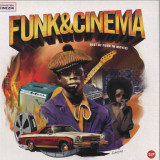
- A1: Isaac Hayes - The End Theme "Shaft
- A2: The Blackbyrds - The One-Eyed Two-Step
- A3: The Meters - Tippi-Toes
- A4: Melvin Van Peebles - Hoppin John
- A5: Joe Simon - Theme From "Cleopatra Jones" (Feat The Mainstreeters)
- B1: Lalo Schifrin - Bullitt (Main Title)
- B2: Don Julian - Lay It On Your Head
- B3: Isaac Hayes - Main Title "Truck Turner
- B4: Dyke & The Blazers - Let A Woman Be A Woman (& A Man Be A Man) (& A Man Be A Man)
- B5: Jerry Butler & Jerry Peters - Speak The Truth To The People (Frankie's Theme)
- C1: Dyke & The Blazers - We Got More Soul
- C2: Gil Scott Heron - Home Is Where The Hatred Is
- C3: Don Julian & The Larks - Shorty The Pimp
- C4: The Quantic Soul Orchestra - Pushin On (Feat Alice Russell)
- C5: George Benson - On Broadway
- D1: New Paradise - I Love Video
- D2: First Choice - Let No Man Put Asunder
- D3: Frankie Smith - Double Dutch Bus
- D4: The Sugarhill Gang - Rapper's Delight
- D5: Grandmaster Caz - South Bronx Subway Rap
Pressed on 140g Black Vinyl Including a signed print from Eddie Piller, limited to 750.
Demon are proud to release “Eddie Piller Presents British Mod Sounds Of the 1960s”, the follow up the “The
Mod Revival”. Featuring 100 original tracks across 6LPs, its a deep dive into the Mod scene in '60s Britain.
Including a selection of classic and rare tracks, tracing the scene from its R&B rootsto a soulful finale
Curated by Acid Jazz Records and Modcast founder Eddie Piller, and featuring new sleeve notes from
respected author and broadcaster Paul 'Smiler' Anderson.
As Eddie Piller points out in the forward to the extensive sleeve notes that accompany this collection, he
chose the word 'Sounds' carefully, reflecting the variety of talent contained here, from uncool session
musicians without an ounce of style in them, acts who saw an opportunity to jump on the Mod bandwagon
and bands who whole heartedly embraced Mod way of life.
And so this new collection mixes the Mod mainstays (Small Faces, The High Numbers The Action, The Fleur
De Lys), with a generous selection of future superstars (David Bowie, Rod Stewart, Elton John, Marc Bolan,
Jeff Beck and Graham Gouldman of 10cc are all represented here), and a few artists so obscure, so rare, that
they never got to release a record in the '60s, but Eddie has tracked down the tapes nonetheless.
"Be in with the In Crowd once more."
Every great youth cult deserves a great soundtrack, and when the '60s Mods adopted classic American R&B,
with a side order of hip Jazz, they undoubtedly found the right music for their exuberant and stylish way of
life. And yet, buying expensive imports, hoping for a local release or praying for a rare visit from overseas
talent was never going to be enough to satisfy British youth with a thirst for the latest sounds. Certainly not
those on the dancefloor and definitely not those with their own musical ambitions.
It was a music scene that began with imitation, before skill and imagination lead curious minds to innovation,
a scene that evolved from average (at best) copies of releases on the Chess, Motown and Stax labels, to
become something more sophisticated,something quite unique, something very British.
All formats are stylishly packaged (of course) and include new sleeve notes by Paul 'Smiler' Anderson, author
of the best-selling and highly regarded books'Mods: The New Religion' and 'Mod Art'.
Today New York based singer, songwriter and producer Amber Mark announces details of her long-awaited debut album ‘Three Dimensions Deep’, out January 28th via EMI/PMR Records. The announcement of the album is accompanied by a sultry R&B instant-grat track ‘What It Is’ as well as a huge UK, EU and US spring tour announcement including London’s O2 Shepherd’s Bush Empire in March
Amber’s debut album arrives almost 4 years after the release of her second EP ‘Conexão’, an extended process that has proved central to its thematic development. The 17 track album can be divided into three main acts that follow the arc of Amber’s personal and musical development; WITHOUT, WITHHELD and WITHIN. Beginning by acknowledging her insecurities and anxieties before reflecting on her time in denial and spent processing them in all the wrong ways, Amber eventually widens her focus by seeking answers to the world’s negativity and trauma on a cosmic scale. Finding peace and a form of inherent spirituality in the world of astrophysics while writing the album led to a fresh perspective on life and a renewed sense of self. Amber’s debut album is simultaneously a profound concept album and a love letter to herself, richly intertwining messages of self-worth and reflections on the universe beneath a veneer of shimmering pop. In true Amber Mark style, ‘Three Dimensions Deep’ is a kaleidoscopic melting pot of influences and genres, drawing from funk and R&B, soul and hip-hop with international accents influenced by a nomadic childhood spent travelling the world with her late mother.
“Three Dimensions Deep is a musical journey of what questions you begin to ask yourself when you start looking to the universe for answers.” says Amber; “I can only go as deep as the third dimension as that’s how we see the world, but what about when you start looking to the universe within for answers.”
“‘What It Is’ low key is the title track of the album without it actually being the title track” explains Amber; “It comes from going through negative experiences which end up being the gateway to a question I think I’ll be asking for the rest of my life. What is the meaning of life,the universe and everything?”
The three official singles already released from the album ‘Worth It’, ‘Competition’ and ‘Foreign Things’ marked Amber’s first official singles since 2020’s ‘Generous’, though 2020 was still a hugely productive year for Amber. With her hometown of NYC hit hard in the first wave of the pandemic and placed under strict lockdown, Amber turned to her simple home studio to create an acclaimed series of home-produced covers and originals titled ‘Covered-19’, each accompanied by a homemade video and artworks. The series was followed by a collaboration with longtime friend Empress Of on the protest song ‘You’ve Got To Feel’, earning Annie Mac’s Hottest Record, ‘Tune Of The Week’ and a spot on the Radio 1 playlist. Earlier this year Amber was featured on legendary DJ Paul Woolford’s new piano-house track ‘HEAT’, again snagging Annie Mac’s Hottest Record and a long run across the Radio 1 and 2 playlists. Having already amassed over 300 million streams since the release of her breakout debut EP 3:33AM in 2017, Amber has built a global fanbase eager to hear her debut full length -
Black Vinyl, DL Card. Following Lucy Gooch’s acclaimed ‘Rain’s Break’, her first release on Fire Records earlier this year, the artist’s acclaimed debut EP ‘Rushing’ is revisited with new artwork and a brand new track, ‘Orthione’. “Lucy’s sound marries the etheral qualities of ambient music with buoyant, effortless pop” Crack ‘Rushing’ in its original shorter five-track incarnation was heralded as a touchstone beneath the cascading torrent of modern times and an oasis for turbulent times. An intimate collection of songs built around Lucy’s emotive vocals and unique ambient dream pop, the newly added stand-out track ‘Orthione’ trips into the esoteric world of Laurie Anderson and Philip Glass; here her voice is the grounding force that travels to a space that heals and grows. “For an artist whose favourite trick is the seemingly infinite crescendo, she clearly knows the value of restraint” Pitchfork // “Expansive, upfront, spectral pop” KEXP // “The pastoral element of the music resonates more as you tune in to Lucy’s unique vocal.” Loud And Quiet
There’s an ancient Japanese legend in which a horde of demons, ghosts and other terrifying ghouls descend upon the sleeping villages once a year. Known as Hyakki Yagyō, or the Night Parade of One Hundred Demons, one version of the tale states that anyone who witnesses this otherworldly procession will die instantly—or be carried off by the creatures of the night. As a result, the villagers hide in their homes, lest they become victims of these supernatural invaders.
Such is the inspiration for the latest album from EARTHLESS. “My son is really into mythical creatures and old folk stories about monsters and ghosts,” bassist Mike Eginton explains. “We came across the ‘Night Parade of One Hundred Demons’ in a book of traditional Japanese ghost stories. I like the idea of people hiding and being able to hear the madness but not see it. It’s the fear of the unknown.”
Whereas 2018’s Black Heaven featured shorter songs and vocals from guitarist Isaiah Mitchell on much of the album—an unprecedented move for the San Diego power trio—their latest is a return to the epic instrumentals EARTHLESS made their unmistakable name on. Night Parade Of One Hundred Demons is comprised of two monster songs—the 41-minute, two-part title track and the 20-minute “Death To The Red Sun.”
The scenario that allowed for this kind of exploration was a stark contrast to that of Black Heaven. At that point, Mitchell was living in the Bay Area, which made it difficult for the band to get together and work on the type of long instrumental pieces they’re known for. But in March 2020, the guitarist moved back to San Diego. More specifically, he moved back the night the pandemic lockdown kicked in. Bad timing, perhaps—or maybe perfect timing.
Plus, they were all on the same page about not wanting to do another record with vocals. “In a way, I think this album was a reaction to our last record,” Eginton says. “Black Heaven was outside our comfort zone. I think it was a good record, but it was challenging to write songs in a more traditional verse-chorus-verse format. This one was more enjoyable. I’m sure we’ll do more vocal tracks in the future, but for the time being I see that album as a one-off.”
Given the record’s inspiration, it should come as no surprise that Night Parade of One Hundred Demons strikes a more sinister tone than the rest of the band’s catalogue. “It definitely has a darker, almost evil kind of vibe compared to stuff we’ve done in the past,” Rubalcaba says. “There’s more paranoia and noise, and some of Isaiah’s whammy-bar stuff kind of reminds me of these Jeff Hanneman moments in Reign In Blood, where it just seems like everything is going to hell. It’s pretty fun.”
Night Parade of One Hundred Demons was recorded in San Diego with Rubalcaba’s childhood friend Ben Moore, who’s worked with everyone from DIAMANDA GALAS and BURT BACHARACH to CEREMONY and HOT SNAKES. When Eginton wasn’t tracking his bass parts, he worked on the album’s incredible sleeve art. “He really dedicated himself to the project,” Rubalcaba says. “He’d be drawing in the studio with, like, a coal-miner’s lamp on his head while we were doing overdubs. He really knocked it out of the park.”
All told, Night Parade of One Hundred Demons isn’t just a return to the band’s traditional format—it’s a return to their very beginnings. “This album actually has the very first Earthless riff in it,” Eginton reveals. “We just recorded it 20 years after we wrote it. But we’re really happy with how this record came out. We feel it might be our finest to date.”
Take the freaked-out punked up soul of The Stooges and MC5 mix that with 60s garage trash, blend in Sabbath, AC/DC and heavy rock n roll and then hot wire that sound to a handful of freaks located in Fredericton, New Brunswick. Here it is that The Angered Wrecks were located - in an old Victorian style house in downtown Fredericton. It was here they set up a permanent rehearsal space on the main floor taking up the dining room and living room area with a full P.A. system and the long parties would begin as the Angered Wrecks cranked out an unholy primal serving of mind-numbing, eyeball-popping guttural pure rock and roll.
Lucky for us the Angered Wrecks had a primitive DIY recording set up as they recorded live off the floor with one cardioid mic taped to the ceiling to capture the entire room sound and straight into a cheap Alpine cassette deck. The results of these previously unheard recordings capture the essence of trashy rock’n roll at it’s finest, delivered with pure dereliction, and always a side of extra sleaze.
Keeping warm in the winter at another old salt box style house they would later rehearse and play gigs in, a large circle was cut in the floor so that the rising heat from the pottery kiln downstairs would (along with the right mixture of beer and ‘Purple Jesus’, weed and often speed and hot dogs) keep these boys fuelled long enough in sub zero temperatures to keep pumping out the rock’n roll savagery.
The last show they played was in the fall of ’81 at the Bug Shack after the household was served an eviction noticed with the house to be entirely demolished (just like Stooge Manor aka The Fun House).
They got a gig together the weekend before demolition, packed the bottom floor and played a blazing set. At the very end, walls were kicked apart, old cans of paint strewn about, general wanton destruction to furniture, doors, windows etc…insane. The bug shack had come to an end and shortly thereafter, The Angered Wrecks.
That these tapes have survived to this day is all thanks to John Westhaver’s archival hoarding (even though the loss of a 90 minute session of the Angered Wrecks still haunts John to this day).
So CRANK these tracks as loud as you can – these audio tapes are not for the faint of heart
- A1: Class Compliance – Cuadro
- A2: Cotonete – Super Vilain Wants Love (Dj Deep & Romain Poncet Remix)
- A3: James Holden & The Animal Spirits – The Neverending
- B1: Bantu Clan Vs. Sarabi – Africa Ni Leo (Esa & Nonku Phiri Kaap Mix)
- B2: Shina Williams & His African Percussionists – Agboju Logun
- C1: Lucas Croon – Türkischer Tee
- C2: Mille & Hirsch – Pentagon Flow
- D1: Typesun – Last Home (Dj Nature Remix)
- D2: Brandi Ifgray – Bones (Maurice Fulton Vibe Mix)
- D3: Ben Sturm – Francebeat
- E1: Toshio Matsuura Group – At Les
- E2: Marni – Floor Of Soul
- E3: Oliver Kieser – Oscura Serenata
- F1: Aera – Line Of Conception
- F2: Martin Buttrich – Meeting Dave Dish
- F3: All Is Well – Day Two
- G1: Arnau Obiols & Kayyak – Tunacheza
- G2: Kevin Yost – Another World (Original Mix)
- G3: Ron Deacon Feat. Johanna Jaeremo – Untitled B2
- H1: Don Carlos – Mediterraneo
- H2: Rudoulpho – Sunday Afternoon
2024 Repress
Cool - gelassen - überraschend: Volume 15 dieser superlativen Serie wurde wieder von Compost’s Mentor Michael Reinboth zusammengestellt. Das pralle Paket birgt 21 Tracks, davon 8 exklusive unveröffentlichte Delikatessen und gibt es als 4-LP / 2xCD. Viel Vergnügen.
Die exklusiven Tracks kommen von: Area (schätze, man kennt seine brillianten Innervisions Veröffentlichungen), Arnau Obiols & KAYYAK (schwer von Gilles Peterson gefeatured, ihre EP “Chang‘an” war in seiner 2021 top 5 Liste), Ron Deacon (gehört zur Workshop-Crew mit Move D, Even Tuell and Kassem Mosse), Class Compliance, oh man was für ein Hammer Track, Mille & Hirsch (Operatoren des feinen Polish Records - Labels), All Is Well (dahinter steckt natürlich Fred Everything), Ben Sturm (ein neues Talent aus Leipzig’s viraler Underground Szene) und Oliver Kieser (bestens bekannt als Teil von Kieser & Velten mit einigen Platten auf G-Stone).
Gut, schön, wie immer, fast alle Tracks sind wunderbare Hybride, perfekt für jedes eklektische Set, aber auch für den entspannten Genuss von Wein, Bier, härterem oder grünem Zeug. Vielleicht besonders zu erwähnen wäre der Esa Williams Remix von Bantu Clan Vs Sarabi and Kevin Yost’s Original Mix von “Another World”, die gab es so in den Versionen bisher nicht auf Vinyl.
Diverse Magazine haben die Future Sounds Of Jazz als eine der besten Compilation - Serien aller Zeiten gewählt. Wir sind geschmeichelt. Mit dem Start der Reihe 1995 wurde das Genre Future Jazz quasi aus der Taufe gehoben, unetabliert.
ACCIDENT IN HEAVEN was originally released in 1987 as a hand-made micro-edition of about 40 cassette tapes. It was only the third ever release on the short-lived now near legendary SDV label which had been established that same year by Konrad Kraft, Bernd Sevens and Dino Oon in Düsseldorf.
Finally finding a more substantial and appreciative audience on vinyl over 30 years after its original limited release, ACCIDENT IN HEAVEN is a strong testament to the explorative experiments of Detlef Funder a.k.a. Konrad Kraft, whose homebuilt studio sound attempted to bridge the clinical roughness of Severed Heads and the psychedelia of Coil with the density and force of industrial, post-punk and prototechno. Concurrent with his ever-expanding production skills, KONRAD KRAFT's sound work in the second half of the 80s stayed firmly rooted within a highly stylised underground spirit. Both his music and also the freshly launched SDV label first and foremost served as a medium for communication. The vital urgency of ACCIDENT IN HEAVEN underlines the record's core narrative which arguably sounds even more futuristic today than it did 30 years ago.
Hallmarks of ACCIDENT IN HEAVEN are an 8-track tape recorder, a Yamaha DX7 synth and a Roland 707 drum computer and the late 80s’ internationally ubiquitous shift from analogue to digital music production. Whilst its predecessor ARCTICA (another cassette-only release from 1986/87, previously reissued on TAL in 2018) was significantly more experimental and almost an in-between-states affair, ACCIDENT IN HEAVEN was the point at which Konrad Kraft really began to experiment with beat structures, sequenced synth pads and the framework of 'dance' music. However, the rhythmic elements are submerged so far beneath his expertly crafted drones it's almost impossible to label these sounds as “dancefloor oriented” work at all, as the tracks on the album joyfully disrespect the rules and boundaries of that or indeed any other genre.
ACCIDENT IN HEAVEN also epitomizes the decade's ending energy and sharp momentum with its successful merging of highly individual production and irresistible rhythm tracks.
The rich wealth of references is mirrored within the silhouettes and the graphics of the album’s unique artwork, which was created by Dino Oon. The new mastering has all sounds on ACCIDENT IN HEAVEN emerge in fresh shades and three dimensional plasticity, inviting the listener not to merely revisit the full palette of KONRAD KRAFT’s creation but offering an entirely new sound experience.
Emigrate. The one-time project has become more than that. Much more. The three studio albums, EMIGRATE (2007), SILENT SO LONG (2014) and A MILLION DEGREES (2018), prove that squarely behind Emigrate stands Richard Zven Kruspe – an extremely creative mind who needs the freedom to explore his music and his vision in ways outside of Rammstein. With Emigrate there are no limits, no barriers. Everything is possible, nothing held back, and it’s this ethos that underlines THE PERSISTENCE OF MEMORY, the new studio album, set for release on November 5th. THE PERSISTENCE OF MEMORY is a special jewel indeed, with the nine featured songs bringing together ideas that Richard has collected across the last two decades. Industrial Rock, Rock with electronic elements, however you choose to describe it, there’s no question that the songs here always contain a strong sense of melody, as rousing as they are deep. At one stage, it seemed that the tracks might be part of a bigger project – a vinyl box set of the first three albums with an additional LP included. On this bonus LP would be a selection of unreleased songs dating from 2001 right through to 2018. In the end, however, this material was considered too precious to sit beneath the ‘bonus’ heading, so THE PERSISTENCE OF MEMORY was born... Richard reacquainted himself with his hard drives, coming across ideas, songs and lyrics that deserved to be brought into the light, material too good to remain in the archives. He threw himself fully into the task at hand, as he always does, working on the basis that "A good idea remains a good idea”, and if he felt that there was more to be gained he was open to taking another look at the arrangements and the lyrics; new parts were also recorded here an’ there, after which the entire mix was given a fresh polish, ensuring that the nine songs have a contemporary yet timeless coat of paint. This time, Richard tried to keep things as simple as possible, allowing the creativity to flow, keeping his sights firmly set on pure, raw Emigrate songs. Says Richard: "These songs were created at a certain point in my life, but ideas don't have an expiration date. Sounds, lyrics and themes, on the other hand, do." "Freeze My Mind", for example, is one of the first Emigrate songs ever written, going right back to 2001. Now, 20 years later, it sounds fresh, of the moment, yet Emigrate through & through, something that is true of the album as a whole. Some of the elements are forged in a familiar heat, but these are married to new ways of working, new influences and challenges.