Warehouse Find!
Janeret makes his FUSE debut as the Paris-based talent serves up a selection of cuts across ‘Quasar’.
When it comes to artists at the forefront of France’s rich house and minimal scene, a name at the top of most people’s lists would have to be Janeret. A core figure at the heart of Paris’ electronic landscape and a key part of the Yoyaku family, a flag-bearer of the country’s now globally renowned minimal landscape, the Joule boss has grown and evolved to bring his unique take on the genre to the masses with a selection of diverse releases via the likes of Up The Stuss, Berg Audio and Rutilance Recordings. Having featured on line ups for London mainstays FUSE while also playing for their sister label LOCUS, March welcomes the Frenchman’s first music on the label as he makes his debut with five slick productions across his expansive EP, ‘Quasar’.
Title track ‘Quasar’ is a bumping peak-time affair as skipping drums meet sweeping pads and echoed vocals, while ‘Elevated’ brings a warping, tunnelling bassline accented by breaks-influenced drums and spiralling electronics for yet more energy-charged output. On the flip, vinyl-only effort ‘Murk’ is driving late-hours effort armed with punchy kicks, further vocal interjections and hefty low-ends, with tight drum and fluctuating synths guiding the groove of ‘Spire’. Closing proceedings, digital exclusive ‘Pitch’ showcases signature Janeret sonics old and new, merging snaking grooves with dubby chords for a rich and peppy journey through soundscapes.
Suche:rüfüs
Swirl People revisit their roots with a nostalgic four track EP from their early days as Fortune Cookie. This collection - which is their third release on L.I.T.S. - features carefully selected tracks from their original 1996 releases on Marguerite, a small label run by a friend. Nearly three decades later, these still much sought-after tracks are finally being reissued. The EP opens with 'Glitter Girls,' which is characterised by a catchy bassline, followed by the deep groove of 'Um Bongo.' On the B-side, 'Galactic Snackbar' offers a retro-futuristic feel, while 'Frisko Heaven' wraps up the EP with classic disco-filtered house energy. Timeless tackle, for sure.
For Greg Mendez, reflection doesnüft mean a static image in a mirror, or even a face he recognizes. Itüfs more a kaleidoscopic mirage, where paths taken shapeshift with the prospect of paths untread, and the subconscious merges with the intentional. On his self-titled new album, the Philadelphia-based songwriter and multi-instrumentalist investigates the shaky camera of memory, striving to carve out a collage that points to a truth. But there isnüft a regimented actuality here; instead, Mendez highlights the merit in many truths, and many lives, and how even the hardest truths can still contain some humor. While this is technically Mendezüfs third full-length album, his back catalog boasts an extensive range of EPs and live recordings. Heüfs a prolific and thoughtful songwriter, understanding the joy in impulse, and shying away from the clinical sheen of overproduction. 2017üfs ügüP/ _(c)_ /üPüh and 2020üfs Cherry Hell garnered acclaim for their quiet, lo-fi urgency, exploring themes of addiction and heartbreak with an intentional, authentic haze, and itüfs this approach that has solidified Mendez as a staple in the DIY community for years. Greg Mendez was written in fragments, some stretching across more than a decade, with Mendez reworking old ideas and arrangements, and others blossoming much more recently. The weight of time..and perhaps the anxiety in running out of it..clouds the album, as Mendez prods at some painful experiences from his childhood and early adulthood. The common thread connecting the characters is their evident imperfections, and the various degrees of damage they cause, both knowingly and unknowingly. But where do we draw the line between a good person and a bad person? For Mendez, itüfs never been that easy. Greg Mendez is an intimate dialogue between the chapters weüfve experienced, and how they can inform the reality we perceive. Itüfs a reminder that we are constantly shifting, ever-changing selves and that if we ruminate too long, we may find ourselves stuck in the seriousness of it all. Here, Mendez allows us to take the time to notice what happens outside of the framework we may have built for ourselves, and the beauty that can occur when we finally do.
Debut collaborative album from Troth, the Nipaluna-based duo of Amelia Besseny and Cooper Bowman, and kindred spirit and legendary Mancunian free-form guitarist Jon Collin. A lavish dreamscape conjuring the dramatic beauty of uncharted mountains and streams, it documents both the crystilisation of ideas first shared during an Australian encounter in early 2023 and years of mutual appreciation.
Troth’s sonic universe, a constellation of drifting atmospherics, bedroom pop impulse and modern classical motifs, is deeply intimate and never rushed. Recent sides Forget The Curse and Idle Easel and live performances supporting the likes of Maxine Funke and Treasury of Puppies have seen Besseny’s soaring, celestial voice take centre stage, delicately adorned with Bowman’s synthesiser flourishes and homespun instrumentation. At their heart lies Bowman’s tireless collaborative instinct: his decade-long involvement in the Australian underground and his countless musical outfits (including contemporary trio Th Blisks, with Besseny and Yuta Matsumura).
Summer 2023 saw the duo host two shows for Collin in their former home of Mulubinba, regional New South Wales. Collin is perhaps best known for his playing, deconstructing and reconfiguring of the guitar and other stringed instruments, realised in solo works on his own Early Music and Winebox Press imprints, and collaborations on a trio of albums with Demdike Stare and live sessions with Sarah Hughes and Bill Nace. His unique style of playing, sometimes delicate, at other times frictional, refutes expectations of traditional instruments and fits perfectly within both Troth’s ethos and their lush sonic mise-en-scène.
The objects of devotion perhaps symbolise the group’s devotion towards each other during their music-making process, and the fruits from which they are borne. “I think, any music I have a hand in, is a dialogue with by the people I'm making it with. It's an ongoing conversation between people and sound”, reflects Bowman. The sacredness and ominousness of remote Tasmania is just as affecting, the interplay of Besseny’s haunting vocal washes, Bowman’s sparse instrumentation and Collin’s ritualistic strum evoking the eeriness that lurks beneath the seemingly limitless Australian landscape. “When I think about it, it sounds like being together at the bottom of the Earth. Watching, listening and playing together with no-one else in sight."
- The Year I Lived In Richmond
- The Tooth Fairy
- Big Chris Electric
- How You Got Your Picture On The Wall
- Rene Goodnight
- The One About The Rabbit In The Snow
- Brian's Golden Hour
- Little Sable Point Lighthouse
- Andrew & Meagan
- Premonition
- Richmond
Horrible Occurrences is the title of the new Advance Base album, and there is truth in advertising. In these songs_all centered around a fictional town called Richmond and featuring an interlinked cast of characters_you will hear stories of death and disappearance, climactic confrontations and unsolved mysteries. "Richmond is just this place where all the bad memories live," Owen Ashworth explains, and nearly 30 years into his songwriting career, none of his records have packed quite the emotional intensity of this one. And yet something alchemical happens in the telling of these tales. Like a masterful short story collection, Horrible Occurrences is inspiring and alive, idiosyncratic and electric, pulling you closer with each word. In the six years since his last full-length collection of originals, 2018's Animal Companionship, Ashworth gathered ideas from performing live and traveling around the country, returning to cities that he once called home and revisiting old ghosts, memories, and fragments of unfinished ideas. Blending truth and fiction into a dreamlike composite, the songs convey the winding path our memory takes as the years go by, giving voice to a subconscious that is still unpacking old memories for new wisdom. Drawing inspiration from the otherworldly loneliness depicted on '80s masterpieces like Arthur Russell's World of Echo and Bruce Springsteen's Nebraska, the music never crowds Ashworth's detailed storytelling but it also never feels auxiliary. These are beautiful songs, but they stick with you for their ability to strike dissonant, unforgettable emotional chords. It is this pervasive empathy in Ashworth's songwriting_along with his writerly gift for clear settings and complex characters_that has made him a guiding light for so many independent artists. The things that happen throughout Horrible Occurrences are what we tend to call "unspeakable"_events that draw gut-level responses just from acknowledging that they could happen. But part of the triumph of the record is how simply and generously Ashworth finds the language to share them. For the characters in these songs who make it out okay, these are the types of memories they will be tossing and turning their whole lives, waiting for quiet moments to confide them among the people they trust. For the rest of us, they are signs of life along the highway on a dark, snowy night: reminders that, as isolated as we may feel, we are not alone on the road.
- A1: Sugar Minott - Run Things
- A2: Beres Hammond - Full Attention
- A3: Sanchez - Man With The Handle
- A4: Capleton - Almshouse
- A5: Cocoa Tea & Buju Banton - Too Young
- B1: Dirtsman - Strive
- B2: Ini Kamoze - Hotstepper
- B3: Sanchez - Forever
- B4: Beres Hammond & Sugar Minott & Tony Rebel - Where Is The Love
- B5: Charlie Chaplin - Swing Low
- C1: Luciano & Sizzla - Jah Line
- C2: Luciano - Chant Out
- C3: Sizzla - No White God
- C4: Mikey General - Sinners
- C5: Cocoa Tea & Tony Rebel - Grow Your Locks
- D1: Luciano & Mutabaruka - Psalms 24
- D2: Capleton - Stand Tall
- D3: Luciano & Marcia Griffiths - Hold On Natty
- D4: Prince Malachi & Turbulance - We Praise Jah (Lp Bonustrack)
- Tomte - Für Immer Die Menschen
- Thees Uhlmann - Zugvögel
- Tomte - Der Letzte Große Wal
- Tomte - Korn & Sprite
- Thees Uhlmann - Danke Für Die Angst
- Tomte - Ich Sang Die Ganze Zeit Von Dir
- Thees Uhlmann - Im Sommer Nach Dem Krieg
- Tomte - In Köln Und Dann In Meinem Zimmer
- Thees Uhlmann - Ich Bin Der Fahrer, Der Die Frauen Nach
- Tomte - Die Schönheit Der Chance
- Thees Uhlmann - Die Toten Auf Dem Rücksitz
- Tomte - Pflügen
- Tomte - Geigen Bei Wonderful World
- Thees Uhlmann - Zum Laichen Und Sterben Ziehen Die Lach
- Thees Uhlmann - Kaffee & Wein
- Thees Uhlmann - Römer Am Ende Des Roms
- Thees Uhlmann - Fünf Jahre Nicht Gesungen
- Thees Uhlmann - Egal Was Ich Tun Werde, Ich Habe Immer
- Thees Uhlmann - Das Hier Ist Fußball
- Tomte - New York
- Tomte - Schreit Den Namen Meiner Mutter
- Thees Uhlmann - Es Brennt
- Tomte - Wie Sieht's Aus In Hamburg
- Tomte - Was Den Himmel Erhellt
- Thees Uhlmann - & Jay-Z Singt Uns Ein Lied
- Tomte - Von Gott Verbrüht
- Thees Uhlmann - Avicii
- Tomte - Wilhelm, Das War Nichts
Black Vinyl[31,05 €]
Autobahn, Feldwege, Landstraßen. Thees Uhlmann ist längst sein eigener Road Movie. Doch erst dieses Album zeichnet den Trip mitreisetauglich nach. Er führt vom AJZ bis ins Stadion, von Hemmoor bis nach New York, durch mehr als drei Jahrzehnte wiedervereinigtes Deutschland. Rock, Indie, Punk und was nicht sonst noch alles. Lichthupe aber nur im äußersten Notfall. "Sincerely, Thees Uhlmann!" ist eine Best Of Zusammenstellung der Tomte Years (1994 - 2010) und Thees Solo Years (2011 - Present).
- Tomte - Für Immer Die Menschen
- Thees Uhlmann - Zugvögel
- Tomte - Der Letzte Große Wal
- Tomte - Korn & Sprite
- Thees Uhlmann - Danke Für Die Angst
- Tomte - Ich Sang Die Ganze Zeit Von Dir
- Thees Uhlmann - Im Sommer Nach Dem Krieg
- Tomte - In Köln Und Dann In Meinem Zimmer
- Thees Uhlmann - Ich Bin Der Fahrer, Der Die Frauen Nach
- Tomte - Die Schönheit Der Chance
- Thees Uhlmann - Die Toten Auf Dem Rücksitz
- Tomte - Pflügen
- Tomte - Geigen Bei Wonderful World
- Thees Uhlmann - Zum Laichen Und Sterben Ziehen Die Lach
- Thees Uhlmann - Kaffee & Wein
- Thees Uhlmann - Römer Am Ende Des Roms
- Thees Uhlmann - Fünf Jahre Nicht Gesungen
- Thees Uhlmann - Egal Was Ich Tun Werde, Ich Habe Immer
- Thees Uhlmann - Das Hier Ist Fußball
- Tomte - New York
- Tomte - Schreit Den Namen Meiner Mutter
- Thees Uhlmann - Es Brennt
- Tomte - Wie Sieht's Aus In Hamburg
- Tomte - Was Den Himmel Erhellt
- Thees Uhlmann - & Jay-Z Singt Uns Ein Lied
- Tomte - Von Gott Verbrüht
- Thees Uhlmann - Avicii
- Tomte - Wilhelm, Das War Nichts
Orange Vinyl[35,92 €]
Autobahn, Feldwege, Landstraßen. Thees Uhlmann ist längst sein eigener Road Movie. Doch erst dieses Album zeichnet den Trip mitreisetauglich nach. Er führt vom AJZ bis ins Stadion, von Hemmoor bis nach New York, durch mehr als drei Jahrzehnte wiedervereinigtes Deutschland. Rock, Indie, Punk und was nicht sonst noch alles. Lichthupe aber nur im äußersten Notfall. "Sincerely, Thees Uhlmann!" ist eine Best Of Zusammenstellung der Tomte Years (1994 - 2010) und Thees Solo Years (2011 - Present).
Eddie 9V hat einen endlosen Vorrat an coolen Geschichten - und zwölf davon fi ndet man auf seinem neuen Studioalbum. Es ist ein Werk, das sowohl Neulinge als auch Fans, die Eddie von Anfang an verfolgt haben, begeistern wird. Es zeigt seinen frischen, feurigen Spin auf Südstaaten-Soul, Blues, Rock und Funk, mit seinem unverkennbaren Witz und scharfen Beobachtungen des modernen Amerikas, die ihn direkt ins Hier und Jetzt versetzen.
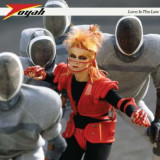
Toyahs fünftes Studioalbum wurde von der Single "Rebel Run" angekündigt und schaffte es seinerzeit auf Platz 28 der UK-Charts. Während die neu gemasterte LP-Version die Original-Trackliste beibehält, enthält die Deluxe 2CD+DVD-Edition Unmengen an Bonusmaterial, darunter B-Seiten, alternative Aufnahmen und 20 bislang unveröffentlichte Tracks. Die DVD enthält neue Interviews mit Toyah sowie acht Livemitschnitte aus den BBC-Archiven.
- Cold Outside
- Nick Of Time
- Lonely One
- It's My Time
- Left Unsaid
- Try Try Try
- Hall Of Mirrors
- Much Too Much
- Your Kinda Thing
- New Questions
- Kill City
- I'm Not Gonna Do It
- Don't Wanna Play
- Nashville Nights
- Today I Shot The Devil
- Tell Me Things
- Live With Me
- Just Another Day
The Fluid are arguably the great unsung band from the fertile underground rock scene of the late '80s and early '90s. The Denver five-piece - John Robinson (vocals), James Clower (guitar), Matt Bischoff (bass), Garrett Shavlik (drums), and the dear departed Ricky Kulwicki (guitar) - fused the fire of '80s hardcore with crunching Detroit protopunk, '60s garage rock, and '70s rock swagger. Think MC5, Faces, '70s Stones, all cranked up and really high on Sex Pistols and Black Flag singles. Rising from the ashes of early-'80s Denver bands Frantix (whose "My Dad's a Fuckin' Alcoholic" is a true gem of American punk) and White Trash, The Fluid were the first non-Seattle band to sign to Sub Pop, and Clear Black Paper was the second full-length album the label ever released. The label honchos were fans of Frantix, and happily got involved with The Fluid when the opportunity arose via the label's European licensing partner, Glitterhouse. Witnessing The Fluid's dominant live presence helped - a particularly fiery early show at Seattle's Central Tavern featured The Fluid, Mudhoney, Mother Love Bone, and Soundgarden all trying to outdo one another on stage. The band fit right in on Sub Pop's nascent roster of acts who, wherever they stood on the spectrum of punk/rock/metal, shared a commitment to thunderous riffs and explosive live shows. Legendary for their ferocious stage presence, The Fluid toured all over the US and Europe, holding their own and then some on bills with Mudhoney, Nirvana, Soundgarden, Dinosaur Jr., and other powerhouses of the era. From 1986 to 1993, The Fluid put out four albums and a number of EPs and singles, including a split 7" with Nirvana in 1991, before doing one album for a major label and promptly disbanding. Yet, while their partners-in-crime bulldozed into the mainstream, The Fluid remained something of a cult band, their audience confined to those who got hip during the band's existence, and crate diggers who nabbed original vinyl or CDs, which had quickly become rarities after selling through their original runs. Why? Record industry machinations? The fickle finger of pop culture? Being from Denver, not Seattle? Who the hell knows_ and who cares! The point is the band ripped, and the world deserves to hear them again. The Fluid took influences they shared with their contemporaries and ran in their own direction, focused on ass-shaking grooves more than misanthropic sludge. Rock anthems like "Cold Outside" sit alongside Stooge-oid rhythmic poundings ("Black Glove"), bluesy romps ("Leave It"), the occasional grungy dirge ("Wasted Time"), and raw punk bangers ("Is It Day I'm Seeing?" from the seminal 1988 Sub Pop 200 compilation). The band wasn't shy about their inspiration, either: scattered through their catalog are covers of The Troggs, The Rolling Stones, MC5, Iggy Pop and James Williamson, and Rare Earth. The Fluid stand out as champions of a feral, urgent, exuberant approach to rock 'n roll. As it turns out, that wasn't a recipe for stardom in the era of hyper-slick pop, boomer dinosaurs crying tears in heaven, and hair-metal power-ballads. But someone had to do it. To set things right, Sub Pop, The Fluid, and producer Jack Endino (Nirvana, Soundgarden, High on Fire, Mudhoney) teamed up to refresh and reissue The Fluid's entire indie-label catalog: their 1986 debut, Punch N Judy; 1988's Clear Black Paper; 1989's Roadmouth; the 1990 Glue EP (produced by Butch Vig, of Nevermind fame); and a treasure trove of rarities and previously unreleased material. All the music has been remastered from original tapes by Endino and JJ Golden, and the bulk of it has been meticulously remixed by Endino and the band, righting some sonic quirks that diminished the impact of the original records. Now, with their definitive material sounding better than ever, it's high time The Fluid get their due.
- You
- Goin' Away
- Saccharine Rejection
- Mouse Trap
- Turn Away
- Static Cling
- Preacher Man Blues
- My Future
- Madhouse
- 13: Th Nite
- Graveyard Tramps
The Fluid are arguably the great unsung band from the fertile underground rock scene of the late '80s and early '90s. The Denver five-piece - John Robinson (vocals), James Clower (guitar), Matt Bischoff (bass), Garrett Shavlik (drums), and the dear departed Ricky Kulwicki (guitar) - fused the fire of '80s hardcore with crunching Detroit protopunk, '60s garage rock, and '70s rock swagger. Think MC5, Faces, '70s Stones, all cranked up and really high on Sex Pistols and Black Flag singles. Rising from the ashes of early-'80s Denver bands Frantix (whose "My Dad's a Fuckin' Alcoholic" is a true gem of American punk) and White Trash, The Fluid were the first non-Seattle band to sign to Sub Pop, and Clear Black Paper was the second full-length album the label ever released. The label honchos were fans of Frantix, and happily got involved with The Fluid when the opportunity arose via the label's European licensing partner, Glitterhouse. Witnessing The Fluid's dominant live presence helped - a particularly fiery early show at Seattle's Central Tavern featured The Fluid, Mudhoney, Mother Love Bone, and Soundgarden all trying to outdo one another on stage. The band fit right in on Sub Pop's nascent roster of acts who, wherever they stood on the spectrum of punk/rock/metal, shared a commitment to thunderous riffs and explosive live shows. Legendary for their ferocious stage presence, The Fluid toured all over the US and Europe, holding their own and then some on bills with Mudhoney, Nirvana, Soundgarden, Dinosaur Jr., and other powerhouses of the era. From 1986 to 1993, The Fluid put out four albums and a number of EPs and singles, including a split 7" with Nirvana in 1991, before doing one album for a major label and promptly disbanding. Yet, while their partners-in-crime bulldozed into the mainstream, The Fluid remained something of a cult band, their audience confined to those who got hip during the band's existence, and crate diggers who nabbed original vinyl or CDs, which had quickly become rarities after selling through their original runs. Why? Record industry machinations? The fickle finger of pop culture? Being from Denver, not Seattle? Who the hell knows_ and who cares! The point is the band ripped, and the world deserves to hear them again. The Fluid took influences they shared with their contemporaries and ran in their own direction, focused on ass-shaking grooves more than misanthropic sludge. Rock anthems like "Cold Outside" sit alongside Stooge-oid rhythmic poundings ("Black Glove"), bluesy romps ("Leave It"), the occasional grungy dirge ("Wasted Time"), and raw punk bangers ("Is It Day I'm Seeing?" from the seminal 1988 Sub Pop 200 compilation). The band wasn't shy about their inspiration, either: scattered through their catalog are covers of The Troggs, The Rolling Stones, MC5, Iggy Pop and James Williamson, and Rare Earth. The Fluid stand out as champions of a feral, urgent, exuberant approach to rock 'n roll. As it turns out, that wasn't a recipe for stardom in the era of hyper-slick pop, boomer dinosaurs crying tears in heaven, and hair-metal power-ballads. But someone had to do it. To set things right, Sub Pop, The Fluid, and producer Jack Endino (Nirvana, Soundgarden, High on Fire, Mudhoney) teamed up to refresh and reissue The Fluid's entire indie-label catalog: their 1986 debut, Punch N Judy; 1988's Clear Black Paper; 1989's Roadmouth; the 1990 Glue EP (produced by Butch Vig, of Nevermind fame); and a treasure trove of rarities and previously unreleased material. All the music has been remastered from original tapes by Endino and JJ Golden, and the bulk of it has been meticulously remixed by Endino and the band, righting some sonic quirks that diminished the impact of the original records. Now, with their definitive material sounding better than ever, it's high time The Fluid get their due.
"This is the time that we, who have benefitted from the Last Poets shouldbe able to say, 'it's the Last Poets. It's them we should be honouring, because we did not honour them for so many years_"
KRS One wasn't just addressing the hip hop fraternity when he uttered
those words by way of introducing the video for Invocation - a poem
written thirty years ago, around the time of the Last Poets' last significant comeback. He was speaking to everyone who's been affected by the word, sound and power issuing from the most revolutionary poetry ever witnessed, and that the Last Poets had introduced to the world outside of Harlem at the dawn of the seventies.
In 2018 the two remaining Last Poets, Abiodun Oyewole and Umar Bin
Hassan, embarked on another memorable return with an album -
Understand What Black Is - that earned favourable comparison with theirseminal works of the past, whilst showcasing their undimmed passion andlyrical brilliance in an entirely new setting - that of reggae music. Trackslike Rain Of Terror ("America is a terrorist") and How Many Bullets demonstrated that they'd lost none of their fire or anger, and their essential raison d'etre remained the same.
"The Last Poets' mission was to pull the people out of the rubble o f their lives," wrote their biographer Kim Green. "They knew, deep down that poetry could save the people - that if black people could see and hear themselves and their struggles through the spoken word, they would be moved to change."
Several years later and the follow-up is now with us. The project started when Tony Allen, the Nigerian master drummer whose unique polyrhythms had driven much of Fela Kuti's best work, dropped by Prince Fatty's Brighton studio and laid down a selection of drum patterns to die for. That was back in 2019, but then the pandemic struck. Once it had passed, the label booked a studio in Brooklyn, where the two Poets voiced four tracks apiece and breathed fresh energy, fire and outrage into some of the most enduring landmarks of their career. Abiodun, who was one of the original Last Poets who'd gathered in East Harlem's Mount Morris Park to celebrate Malcolm X's birthday in May 1968, chose four poems that first appeared on the group's 1970 debut album, called simply The Last Poets. He'd written When The Revolution Comes aged twenty, whilst living in Jamaica, Queens. "We were getting ready for a revolution," he told Green. "There wasn't any question about whether there was going to be one or not. The truth was many of us still saw ourselves as "niggers" and slaves. This was a mindset that had to change if there was ever to be Black Power." He and writer Amiri Baraka were deep in conversation one day when Baraka became distracted by a pretty girl walking by. "You're a gash man," Abiodun told him. The poem inspired by that incident, Gash Man, is revisited on the new album, and exposes the heartless nature of sexual acts shorn of intimacy or affection. "Instead of the vagina being the entrance to heaven," he says, "it too often becomes a gash, an injury, a wound_" Two Little Boys meanwhile, was inspired after seeing two young boys aged around 11 or 12 "stuffing chicken and cornbread down their tasteless mouths, trying to revive shrinking lungs and a wasted mind." They'd walked into Sylvia's soul food restaurant in Harlem, ordered big meals, then bolted them down and run out the door. No one chased after them, knowing that they probably hadn't eaten in days. Fifty years later and children are still going hungry in major cities across America and elsewhere. Abiodun's poem hasn't lost any relevance at all, and neither has New York, New York, The Big Apple. "Although this was written in 1968, New York hasn't changed a bit," he admits, except "today, people just mistake her sickness for fashion." Umar is originally from Akron, Ohio, but had arrived in Harlem in early 1969 after seeing Abiodun and the other Last Poets at a Black Arts Festival in Cleveland. That's where he first witnessed what Amiri Baraka once called "the rhythmic animation of word, poem, image as word- music" - a creative force that redefined the concept of performance poetry and stripped it bare until it became a howl of rage, hurt and anger, saved from destruction by mockery and love for humanity. When Umar's father, who was a musician, was jailed for armed robbery he took to the streets from an early age where he shined shoes and raised whatever money he could to help feed his eight brothers and sisters. By the time he saw the Last Poets he'd joined the Black United Front and was ready to join the struggle. Once in Harlem, Abiodun asked him what he'd learnt in the few weeks since he'd got there. "Niggers are scared of revolution," Umar replied. "Write it down" urged Abiodun. That poem still gives off searing heat more than fifty years later. In Umar's own words, "it became a prayer, a call to arms, a spiritual pond to bathe and cleanse in because niggers are not just vile and disgusting and shiftless. Niggers are human beings lost in someone else's system of values and morals." And there you have it. It's not just race or religion that hold us back, but an economic system that keeps millions in poverty and living in fear - a system born from political choice and that's now become so entrenched, so bloated on its own success that it's put mankind in mortal danger. It was many black people's acceptance of the status quo that inspired Just Because, which like Niggers Are Scared Of Revolution, was included on that seminal first album. Along with their revolutionary rhetoric, it was the Last Poets' use of the "n word" that proved so shocking, but it would be wrong to suggest that they reclaimed it, since it never belonged to black people in the first place. There's never any hiding place when it comes to the Last Poets. They use words like weapons, and that force all who listen to decide who they are and where they stand. Umar's two remaining tracks find him revisiting poems first unleashed on the Poets' second album This Is Madness! Abiodun had left for North Carolina by then where he became more deeply enmeshed in revolutionary activities and spent almost four years in jail for armed robbery after attempting to seize funds related to the Klu Klux Klan. Meanwhile, the 21 year old Umar was squatting in Brooklyn and had developed close ties with the Dar-ul Islam Movement. A longing for purity and time-honoured spiritual values underpins Related to What, whilst This Is Madness is a call for freedom "by any means necessary," and that paints a feverish landscape peopled by prominent black leaders but that quickly descends into chaos. "All my dreams have been turned into psychedelic nightmares," he wails, over a groove now powered by Tony Allen's ferocious drumming. Those sessions lasted just two days, and we can only imagine the atmosphere in that room as the hip hop godfathers exchanged the conga drums of Harlem for the explosive sounds of authentic Afrobeat. Once they'd finished, the recordings and momentum returned to Prince Fatty's studio, since relocated from Brighton to SE London. This was stage three of the project, and who better to fill out the rhythm tracks than two key musicians from Seun Anikulapo Kuti's band Egypt 80? Enter guitarist Akinola Adio Oyebola and bassist Kunle Justice, who upon hearing Allen's trademark grooves exclaimed, "oh, the Father_ we are home!" Such joy and enthusiasm resulted in the perfect fusion of Nigerian Afrobeat and revolutionary poetry, but the vision for the album wasn't yet complete. He wanted to create a new kind of soundscape - one that reunited the Poets with the progressive jazz movement they'd once shared with musicians like Sun Ra and Pharoah Sanders. It was at that point they recruited exciting jazz talents based in the UK like Joe Armon Jones from Mercury Prize winners Ezra Collective, also widely acclaimed producer/remixer and keyboard player Kaidi Tatham, who's been likened to Herbie Hancock, and British jazz legend Courtney Pine, whose genius on the saxophone and influence on the UK's now vibrant jazz scene is beyond question. The instrumental tracks on Africanism are in many ways as revelatory and exciting as the Last Poets' own. It's important to remember that the kaleidoscope of styles and influences we're presented with here aren't the result of sampling but were played "live" by musicians responding to sounds made by other musicians. That's where the magic comes from, aided by Prince Fatty's peerless mixing which allows us to hear everything with such clarity. Music fans today have grown accustomed to listening to all kinds of different genres. Their tastes have never been so broad or all- encompassing, and so the music on this new Last Poets' album is as groundbreaking as their lyrics, and perfectly suited to the era that we're now living in. John Masouri
- A – Desert Rose
- B- Tnt
On their debut 45 for Batov Records, Indonesia-based BABON deliver two irresistible jams, cooked from a recipe full of Indonesian flavours, Afro Latin funk, Morricone grooves, Bollywood breaks and blues, they call “Tropical Desert Music”. A must-hear for fans of Surprise Chef, Khruangbin, or Sababa 5.
Drummer Wahyudi T. Raupp and multi-instrumentalist Rayi Raditia, friends since high school in Jakarta, via university life in Melbourne, formed BABON in 2023 to address environmental issues through instrumental music, thus combining
two mutual passions.
Working in their home studio free of time restraints, Babon developed their “Tropical Desert Music’’ sound, mixing the energy and influences of Melbourne’s vibrant music scene, with traditional Indonesian forms, from the pulsating rhythms of dangdut, and gamelan, the ritualistic percussion ensemble music native to Java and Bali, to keroncong, a popular and melodic folk style; while addressing environmental concerns and societal complexities, such as the
impact of ruthless exploitation on tropical regions.
On the A-side, “Desert Rose” is a spaghetti blues dedicated to the widows marginalised and objectified by mine workers. Rayi’s electric guitar gently wails with the cinematic effect akin to a Tarantino soundtrack, over a hypnotic groove that never grows tired.
On the flip, “TNT” explores the moral dilemma faced by a miner torn between the destructive nature of his occupation and the dire financial needs of his family, leading to a downward spiral of alcohol abuse. Slowly raising tension levels,
BABON pit somber organ riffs over bass guitar fuzz and Indonesian-sounding guitar motifs, leading to a final explosion
of guitars and drums. BABON’s “Tropical Desert Music” perfectly complements Batov Records’ rich catalogue of Middle Eastern grooves and is an irresistible sound its own right with a poignant message.
After an extensive tour of the UK at the end of 2022, the band decided to head into the studio to record their first long form offering. Following a passion for storytelling, they pulled together influences from Pulp Fiction to Fleabag, from Zadie Smith to Edward Hopper. They wrote relentlessly during 2022, diligently crafting what was to become this debut album. Released independently on their own Life and Times Recordings, Exit Strategy is a 13-track labour of love, recorded at Abbey Road Studios and Love Electric, enlisting the production smarts of Bernard Butler. The album is in two halves (divided literally by the two sides of the vinyl edition) entitled Galway and London and presents a multifaceted band, pushing themselves and exploring the limits of their philosophy.
Exit Strategy centres around a protagonist who moves from Galway to London in search of meaning, certain that, as the main character in the film of his own life, the solution lies in changing his surroundings and acting as someone he’s not. Both a mirror and a portal, the album promises encounters with manipulative bosses, evil ad agencies, a broken pact to flee to Australia, run-ins with the law, cheating boyfriends, drug fuelled youths, heartache, paranoia, social media anxiety and a drunk singer dressed as Jesus. Thematically the album races between emotions, between irony and sincerity, between soul searching and tongue-in-cheek finger pointing and ends where it all started, both musically and in terms of single rollout, with the nostalgic/euphoric first single Westway.
Explaining the album’s genesis and cinematic influence, James McGregor says: “We were always sure we wanted the album to be greater than the sum of its parts, so decided to create the world of a film, entitled Exit Strategy. We envisaged the record as a series of snapshots, telling the story of a group of characters trying to navigate through life.”
Hallmarked more by a philosophy than a sound, The Clockworks weave pop sensibilities with noisy, post-punk, rock-influenced stylings. The songs seem swaggering and dark yet often have an epic, nostalgic quality. They sit poetic introspection beside witty, kitchen sink drama to create something intense but playful.
With the release of Exit Strategy, The Clockworks have created a world to be explored, to be analysed and to be deciphered, but most importantly to be felt.
Recorded one and a half years after his magnum opus Music For Animals—described by PopMatters as “a musical waterfall of monumental proportions”—Nils Frahm shares a new live album, due for release by his LEITER label on December 6. In what’s becoming a tradition, it follows 2013’s Spaces, a Pitchfork Album of the Year taped at shows over the preceding 18 months, and 2020’s Tripping With Nils Frahm, also released as a film. The latter, arriving in the wake of 2019’s All Melody and its 2020 companion, All Encores, was recorded during shows in Berlin’s grandiose Funkhaus Saal 1, once the largest studio in the former GDR’s radio complex. Paris, nonetheless, is Frahm’s first live album from a single night, March 21, 2024, and contains ten tracks over a running time of 84 minutes
Control Freak is delighted to present Medici Daughter's ‘113’ – an exercise in expansive musical worldbuilding from a uniquely talented & multifaceted artist.
Medici Daughter has been a close CF collaborator since the earliest days of the label. Now, the new album-length continuous piece ‘113’ sees them expanding their musical focus, exploding the constraints of any boundaries set by the titular BPM into a myriad of possibilities.
With a sound palette influenced by dub techno, minimalism & outsider house, the release is anchored in a series of continuously evolving rhythmic motifs, washed out in a sea of hazy texture – engineered for deep home listening & late-night ambient-room sessions.
The digital release of ‘113’ is accompanied by a highly limited run of tapes, presented in a clear case & sealed with a holographic RFID sticker.
For Fans Of: Actress, Huerco S., Loraine James