Search:rüfüs

On his fourth EP on Studio Barnhus, Falty DL’s causing a ruckus again. This time with theeeee house two-tracker of the season, hauntingly sweet harmonics and feverish vocal outbursts on side A, while the flip delivers a flirtatiously discoid stomper full of hidden trapdoors for the deep listener.

Trelik is an A-grade label for minimal heads and now the founder, Baby Ford, welcomes back fellow micro-house specialist Ion Ludwig for vital two-tracker. 'It Broke With Speed' starts with jittery rhythms and blurts of synth as the rubbery bass rolls on and the percussion is spindled lightly up top. It's a more fulsome sound than you might expect from this producer but the art is in the intricacies of its layers. 'Archa Edel' on the B is quick and deep, speedy but tightly controlled with fluttering snares peeling off the groove and cosmic whimsy existing in the pads. Classy cuts as always.

8
Maria is the debut album from renowned Brazilian electric bassist and composer Moyses Dos Santos. A homecoming for the London-based artist, Moyses’ debut reconnects him with his North-Eastern roots while assembling an international cast of collaborators including legendary Brazilian arranger Arthur Verocai, US trumpet sensation Theo Croker and London-based vocal star Lynda Dawn.
After relocating from Brazil to London in the early 2000s, Moyses dos Santos quickly became one of the capitals’ most in-demand players, sharing stages, studios, and writing credits with best-selling artists including Nile Rodgers, Janelle Monáe, Emile Sandé, Gregory Porter and Omar.
In 2022, Moyses toured with Brazilian jazz-funk legends Azymuth, completing the rhythm section alongside Brazilian drumming master Ivan "Mamão" Conti. "It felt like he was my wise Brazilian grandfather figure." Moyses recalls. "When you spend so many years working internationally, you unconsciously start to leave certain parts of yourself behind. Mamão encouraged me to reconnect with Brazilian music, and that's where this record really began."
Brazil’s North-east, where African, indigenous and European traditions collided and fused most intensely, produced a musical heritage unlike anything else on earth, Moyses dos Santos is a product of this syncretism. On Maria, named after his mother, Moyses brings the musical vocabularies of his youth to the fore. From the soul of the church band where he began to learn his trade as a musician, to the rolling batucadas – maractus, baiaos, sambas and frevos – which he played throughout his teenage years.
Drawing on the lineage of North American electric bass giants like George Duke, Jaco Pastorius, and Stanley Clarke, Moyses runs Brazilian musical traditions through jazz, funk, soul and disco: his sound charged with the cosmopolitan energy of London's contemporary jazz scene.
Lead single and album opener “Boa Viagem’ is joyous, carnivalesque dancefloor jazz: a timeless groove for the nightclub and street party alike. Calling directly to a higher power “Brazilian Spirit” is an astral-jazz phenomenon, featuring the transcendent trumpet playing of Grammy nominated Theo Croker. On “Saudade” Moyses calls upon iconic Brazilian maestro Arthur Verocai, whose signature string arrangements cascade around the divine vocals of ascendant London artist Lynda Dawn.
With impeccable style, charisma, warmth and virtuosity, Moyses steps forward with his stunning debut Maria: out on vinyl, LP, CD and digitally on the 12th June 2026.

- Alternative Universe
- Cherish The Way
- Got Away
- Holding On To Nothing
- Dying To
- Cut Me In Two
- Ghost To A Ghost
- Tangled Strings
- Lessons In The End
- Another Love Song
- Keep Me
To Cherish zeigt Northcote, das Projekt des kanadischen Singer-Songwriters Matt Goud, in einer Phase persönlicher und kreativer Erneuerung. Seit 2008 bekannt für seine warme Stimme, seine aufrichtigen Texte und energiegeladenen Live-Shows, hat Northcote durch Touren in Nordamerika und Europa sowie gemeinsame Auftritte mit Künstlern wie The Gaslight Anthem, Frank Turner und Hot Water Music eine treue internationale Fangemeinde aufgebaut. Das Album entstand in den Rain City Studios in Vancouver unter der Leitung von Produzent Jesse Gander, der den Songs eine kraftvolle, unmittelbare Klarheit verleiht. To Cherish spiegelt eine Zeit des Umbruchs wider - das Ende einer langjährigen Beziehung, eine wichtige spirituelle Übergangsphase und die kreative Aufbruchsstimmung nach der Rückkehr auf die Bühne. Musikalisch knüpft das Werk an die intime Dynamik der Duo-Tourneen an. Langzeitpartner Stephen McGillivray trägt mit seinem charakteristischen Gitarrenspiel maßgeblich zur Atmosphäre bei, unterstützt von Paul Rigby, Percussionist Mike Battle und Bassist Eric Paone. Die Songs vereinen lyrische Tiefe mit emotionaler Intensität und laden dazu ein, die Höhen und Tiefen des Lebens bewusst wertzuschätzen.

- 1: Give
- 2: Napoleon
- 3: The End
- 450: Ft
- 5: New Self
- 6: All I Got
- 7: Got Me Good
- 8: Red Hot
For The Bobby Lees, their fourth album and Epitaph debut New Self marks a thrilling new chapter for the band while doubling down on what"s always made them so magnetic. The Bobby Lees don"t need much in the way of introduction. Within a few seconds of exposure to their furnace-blast live shows or their bottled-lightning studio records, it"s easy to hear why they"ve earned fans in legendary musicians like Iggy Pop, Debbie Harry, and Henry Rollins. They"re as uncompromising in their sound and generous with their energy as any of their punk ancestors who first rewrote the rules of engagement back in the 1970s. Led by singer and guitarist Sam Quartin, drummer Macky Bowman, and bassist Kendall Wind, The Bobby Lees bring wildness and danger back into punk rock. You can hear the band easing into a new confidence -- one that"s both looser and more towering -- all throughout New Self, from the seething, fiery "Napoleon" to the rambunctious, offbeat take on PJ Harvey"s "50ft Queenie." This is the sound of a band who"s scrambled over shaky ground only to come back stronger than ever: more confident, more connected, louder and fiercer and secure in their own skin.
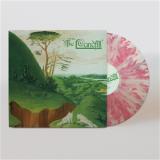
Der Mittlere Westen, insbesondere der Teil, aus dem Eric D. Johnson stammt, ist eine weitgehend flache Weite. Wenn man auf der Autobahn hindurchbraust, sieht man Städte und Ortschaften in der Ferne aufragen, doch wenn man blinzelt, verpasst man andere von Menschenhand geschaffene Gegenstücke zum Leben in der Ebene, die die Landschaft prägen: Hügel um Hügel, erbaut aus den Abfällen der Vergangenheit: Mülldeponien. Einige dieser Hügel eignen sich hervorragend als Schlittenhügel, Parks und Wanderwege. Andere verwandeln organische Abfälle in Kompost. ,The Landfill" ist etwas ganz anderes: ein Berg, der die Landschaft in Johnsons Herzen dominiert. Im Laufe seiner mittlerweile 25-jährigen Karriere unter dem Namen Fruit Bats war der Großteil von Eric D. Johnsons Schaffen das Ergebnis von Geduld und Feinschliff. Seine Songs sind, um einen Ausdruck zu verwenden, Langzeitprojekte, die auf Alben zum Leben erweckt werden, welche lange Zeiträume und Erinnerungen umfassen. "Baby Man" änderte das - er verbot sich, auf Material zurückzugreifen, an dem er vor der Aufnahme des Albums gearbeitet hatte. Es war sowohl ein atemberaubendes Dokument von Johnsons Können als Singer-Songwriter als auch ein ungeschönter Bericht über die zwei Wochen, in denen er das Album aufnahm. "Diese Session war vorbei", erklärt er, "aber es gab noch viel mehr zu erkunden. Mir gefiel die Unmittelbarkeit davon, und ich wollte sehen, wie sich das auf ein Fruit-Bats-Album mit voller Bandbesetzung übertragen lassen würde." Innerhalb weniger Wochen war er wieder im Studio, diesmal mit seiner Band: David Dawda (Bass), Josh Mease (Gitarren, Synthesizer), Frank LoCrasto (Klavier, Synthesizer) und Kosta Galanopoulos (Schlagzeug). Wenn man sich "The Landfill" anhört, stellt man fest: Diese Band rockt. Johnson produzierte die ersten Aufnahmesessions in den Bear Creek Studios in Washington und machte sich daran , "den Sound dieser Band einzufangen, die mich immer wieder in Staunen versetzt - das Gefühl, in einem Raum mit Musikern zu sein, die man liebt und denen man genug vertraut, um sie einfach machen zu lassen." Sie nahmen das meiste davon in einem Durchgang auf - ohne Click-Tracks, ohne zusammengestellte Gesangsparts und mit minimalen Overdubs, wobei der häufige Mitwirkende Thom Monahan zurückkehrte, um zusätzliche Produktionsarbeit zu leisten und den finalen Mix von ,The Landfill" zu erstellen. "So machen wir es auch mit meiner anderen Band, Bonny Light Horseman, und ich war neugierig, wie es bei den Fruit Bats funktionieren würde", bemerkt Johnson. "Es ist sowohl ein sehr persönliches Album als auch mein bisher kollaborativstes." Es ist zudem das live-orientierteste Album der Fruit Bats seit "The Ruminant Band" aus dem Jahr 2009, und durch die Reduzierung der Spuren, die einen Song einer kompletten Band normalerweise ausmachen, ist die psychedelische, technicolorartige Verträumtheit ihres Sounds lebendiger denn je. Die Songs auf "The Landfill" zeichnen sich sofort als einige der besten in Eric D. Johnsons Werk aus, Suchende und Hymnen gleichermaßen. Es ist der bisher gewaltigste Gipfel, den er erklommen hat.

- 1: The Saddest Part Of The Song
- 2: All Wounds
- 3: Think Aboutcha
- 4: That Goddamn Sun
- 5: Silverfish In The Sink
- 6: Wild Pony Tower Moment
- 7: Fishin' For A Vision
- 8: Perhaps We're A Storm
- 9: Hummingbird Sage
- 10: The Landfill
also available
PINK SPLATTER IN CLEAR VINYL[22,27 €]
Der Mittlere Westen, insbesondere der Teil, aus dem Eric D. Johnson stammt, ist eine weitgehend flache Weite. Wenn man auf der Autobahn hindurchbraust, sieht man Städte und Ortschaften in der Ferne aufragen, doch wenn man blinzelt, verpasst man andere von Menschenhand geschaffene Gegenstücke zum Leben in der Ebene, die die Landschaft prägen: Hügel um Hügel, erbaut aus den Abfällen der Vergangenheit: Mülldeponien. Einige dieser Hügel eignen sich hervorragend als Schlittenhügel, Parks und Wanderwege. Andere verwandeln organische Abfälle in Kompost. ,The Landfill" ist etwas ganz anderes: ein Berg, der die Landschaft in Johnsons Herzen dominiert. Im Laufe seiner mittlerweile 25-jährigen Karriere unter dem Namen Fruit Bats war der Großteil von Eric D. Johnsons Schaffen das Ergebnis von Geduld und Feinschliff. Seine Songs sind, um einen Ausdruck zu verwenden, Langzeitprojekte, die auf Alben zum Leben erweckt werden, welche lange Zeiträume und Erinnerungen umfassen. "Baby Man" änderte das - er verbot sich, auf Material zurückzugreifen, an dem er vor der Aufnahme des Albums gearbeitet hatte. Es war sowohl ein atemberaubendes Dokument von Johnsons Können als Singer-Songwriter als auch ein ungeschönter Bericht über die zwei Wochen, in denen er das Album aufnahm. "Diese Session war vorbei", erklärt er, "aber es gab noch viel mehr zu erkunden. Mir gefiel die Unmittelbarkeit davon, und ich wollte sehen, wie sich das auf ein Fruit-Bats-Album mit voller Bandbesetzung übertragen lassen würde." Innerhalb weniger Wochen war er wieder im Studio, diesmal mit seiner Band: David Dawda (Bass), Josh Mease (Gitarren, Synthesizer), Frank LoCrasto (Klavier, Synthesizer) und Kosta Galanopoulos (Schlagzeug). Wenn man sich "The Landfill" anhört, stellt man fest: Diese Band rockt. Johnson produzierte die ersten Aufnahmesessions in den Bear Creek Studios in Washington und machte sich daran , "den Sound dieser Band einzufangen, die mich immer wieder in Staunen versetzt - das Gefühl, in einem Raum mit Musikern zu sein, die man liebt und denen man genug vertraut, um sie einfach machen zu lassen." Sie nahmen das meiste davon in einem Durchgang auf - ohne Click-Tracks, ohne zusammengestellte Gesangsparts und mit minimalen Overdubs, wobei der häufige Mitwirkende Thom Monahan zurückkehrte, um zusätzliche Produktionsarbeit zu leisten und den finalen Mix von ,The Landfill" zu erstellen. "So machen wir es auch mit meiner anderen Band, Bonny Light Horseman, und ich war neugierig, wie es bei den Fruit Bats funktionieren würde", bemerkt Johnson. "Es ist sowohl ein sehr persönliches Album als auch mein bisher kollaborativstes." Es ist zudem das live-orientierteste Album der Fruit Bats seit "The Ruminant Band" aus dem Jahr 2009, und durch die Reduzierung der Spuren, die einen Song einer kompletten Band normalerweise ausmachen, ist die psychedelische, technicolorartige Verträumtheit ihres Sounds lebendiger denn je. Die Songs auf "The Landfill" zeichnen sich sofort als einige der besten in Eric D. Johnsons Werk aus, Suchende und Hymnen gleichermaßen. Es ist der bisher gewaltigste Gipfel, den er erklommen hat.

- 1: Premonition
- 2: Brutalist With Filigree
- 3: Loose Canon
- 4: Pulse
- 5: Index Of Memories
- 6: It Ignites
- 7: Union Pool Melody
BASIC - das Trio aus Chris Forsyth (Gitarre), Mikel Patrick Avery (Percussion, Drumcomputer, Elektronik) und Douglas McCombs (Fender Bass VI) - hat sein neues Album mit sieben Titeln innerhalb von zwei Tagen in den Electrical Audio Studios in Chicago aufgenommen und die Overdubs sowie den Mix zusammen mit Je Zeigler in Philadelphia fertiggestellt. Die Aufnahmen sind groovig, aber leicht und locker, wobei die Songs viel größer klingen, als man es von einem Trio erwarten würde. Für reichlich Detail sorgen die ineinandergreifenden Gitarren und Averys einzigartige Kombination aus elektronischen Beats und akustischer Percussion, die er live mit verschiedenen selbstgebauten elektronischen Prozessoren bearbeitet und manipuliert. Kurz nach der Veröffentlichung ihres Debüts (This Is BASIC, 2024) stieß Bassist McCombs (Tortoise, Brokeback) zu der Gruppe, und zusammen mit den in Philly ansässigen Kernmitgliedern Forsyth (Solar Motel Band) und Avery (Natural Information Society) tourte die Band mit dem Album die Westküste rauf und runter sowie durch den Nordosten und Mittleren Westen der USA und machte Halt bei einflussreichen Festivals wie Sound & Gravity und Big Ears. Die Chemie zwischen den dreien führte fast sofort zur Entwicklung von neuem Material, und die ,Dream City"-EP erschien im Frühjahr 2025.

13
As the so-called “Latin boom” becomes a new anchor for hard-swung club sounds, it is crucial to recognize that the region’s musical culture extends far beyond dembow edits and the pop-trap hybrids that have edged into the mainstream. Monterrey-born, New York City-based producer and DJ Delia Beatriz, aka Debit, returns to NAAFI with Potpourri, a generous and kinetic collection of dancefloor-oriented tracks filled with percussive flourishes, squelching 303 basslines, and rhythmic mutations that actively challenge the status quo. Rather than rebuilding “Latin sounds” as a fixed category, the album rethinks their internal logic, tracing the evolution of techno and house in cities like Detroit, Chicago, and New York alongside parallel innovations emerging in Mexico, Colombia, and across the wider Latin world. Positioned on the bridge between Mexico and the US, Potpourri does not seek synthesis as a gesture of smooth fusion, but as a site of disruption.
The album can be heard as a loose follow-up to System (2018), Debit’s NAAFI-released EP that expanded the sonic potential of tribal guarachero through triplet-driven rhythms, industrial pressure, and noisy reconstruction. Potpourri retains guaracha as a structural backbone while drawing further influence from veteran DJ and producer Javier Estrada—who also appeared on System—and particularly from his fast-paced, nonlinear style of mixing. That approach becomes a formal principle here: canonical structures are dismantled, repetition is avoided, and tracks evolve without sacrificing propulsion. Coming after the introspective temporal inquiry of Desaceleradas and the speculative historical acoustics of The Long Count, Potpourri arrives as a deliberate surge of energy. As Beatriz explains: “It’s a manifesto for rethinking form and sound in dance music. By stepping outside traditional structures and embracing the potpourri approach, I’m creating new meaning with familiar rhythms. I’ve also been applying this to my DJ sets, using it as a tool to break free from established norms and explore new narrative possibilities.”
Years in the making, Potpourri imagines an alternate timeline in which the psychedelic squelch of acid—echoing pioneers such as DJ Pierre and Mr. Fingers—and the dub-inflected atmospheres of Basic Channel entered into direct and sustained contact with Latin American club mutations. Those references are legible, but never merely quoted. Instead, they are folded into syncopated hi-hats, overdriven kicks, and unstable arrangements that absorb both the intensity of the parties Beatriz remembers from Monterrey and the abrasive edge she sharpened at DIY noise shows in New England. The result is unmistakably a dancefloor record—heard in tracks as forceful as “Pero like” and the peak-time pressure of “tuvesuerte”—but one saturated with grotesque, psychedelic atmospheres, where sounds dissolve into hoarse croaks, acidic smears, and anxiety-inducing growls. Here, the rave becomes not simply a site of release, but a platform for navigating identity, hybridity, and artistic formation across borders. Moving through peaks and ruptures, Potpourri reveals a party narrative that is not linear but multidimensional.
By folding together the fluidity of DJ culture, the experimental charge of acid, and the rhythmic vitality of guaracha, Potpourri proposes a space of formal and political innovation within Latin America’s rapidly expanding electronic music landscape. It is a record that refuses containment, pushing against the templates through which Latin electronic music is often consumed, and insisting instead on friction, instability, and transformation as generative conditions for the dancefloor.

Visionary producer Ilija Rudman confidently lands into the Black Jukebox catalogue with a truly mesmeric 2-tracker.
Based in Zagreb, Ilija has carved a legacy over more than two decades in the game throughout which he's released over 100 vinyl EPs and 8 studio albums, collaborating with the likes of Robert Owens, Greg Wilson, Faze Action and Ron Trent.
'Euphonia' opens up with a suave slice that melds deep Detroit shades with the flexible Electro funk of Morgan Geist and Clatterbox. A sawtooth bass climbs steps in the low end while gorgeous synths bend and glide at the groove's core. Crisp, delicate drums kick, snap and shuffle as they guide a low-slung, retro-futuristic trip to the moon.
'Late Checkout' draws for a similar sound palette as rich analogue pads form a magic carpet for Prelude-era synth phrases and another sneaking bass line. The tone is elegant and nothing feels forced as Ilija Rudman traverses the vast sonic territory between Salsoul-era Disco and modern Electro-funk in the most fluent and stylish manner.
14
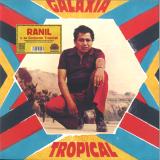
This release documents the legacy of Ranil, the Amazonian singer and bandleader who shaped a distinctive regional style blending cumbia, psychedelic textures and local rhythmic traditions. Born Jorge Raul Llerena Vasquez in 1935, Ranil rose from rural beginnings to front Los Silver's in the early 1970s before founding his own label, Producciones Llerena, to independently record his imaginative, genre-blurring music. His catalogue, long scattered across mismatched pressings, remains a vivid record of Amazonian creativity. Following his later career as a radio voice in Iquitos, this collection preserves key recordings and supports archival efforts that continue to highlight his cultural impact. Check the frisky percussion and euphoric vocals of 'Pueblo', the scratchy guitar and bustling funk of 'Bahia' or the lilting 'Albores De Mi Selva' for proof of just how irresisitble it still sounds today.

While Toronto producer Demuir regularly features on a wide variety of house labels, it's always worth keeping an eye on his Purveyor Underground label and its' limited-edition offshoot. He's back on the latter label for this outing, where he shares vinyl space with long-serving Parisian producer (and Robsoul founder) Phil Weeks. Demuir handles side A, delivering two passes on 'The Spark': the lightly funk-fuelled original mix, where woozy jazz samples dance atop a rubbery bassline and vintage Masters at Work style beats, and the more bumpin', cut-up and sub-heavy swing of the 'Some Too Suspect remix'. On side B, Weeks delivers 'Party Time', a typically low-slung and analogue-rich deep house number where classic boogie-era vocal samples and occasional chords wrap around loose-limbed machine drums and a killer TB-303 acid bassline.
defaultbox returns with its 20th release entitled "020".
This various artists compilation brings together five carefully selected tracks by Karenz, Gockel, TIKOA, 10.000 BC, and aem.aze, each rooted in a shared vision of deep, functional techno rhythms and subtle dub-infused textures.
The release comes on a limited run of 50 transparent blue splatter copies alongside the regular black pressing.

- A1: Super Boiro Band - So I Si Sa
- A2: Bembeya Jazz National - Armée Guinéenne
- A3: Kaloum Star - Maliba
- A4: Balla Et Ses Balladins - Nyo
- B1: Quintette Guinéenne - Douga
- B2: Le Simandou De Beyla - Festival
- B3: Horoya Band - Zoumana
- C1: Kaloum Star - Gbassikolo
- C2: Sombory Jazz De Fria - Nana
- C3: Syli Authentic - Fabara
- D1: Balla Et Ses Balladins - Paulette
- D2: 22 Band Kankan - Deny
12
On October 2 1958, after over 60 years of colonial rule, Guineans voted overwhelmingly for their independence, and Guinea was declared a Republic with Sékou Touré as President. Guinea was the first of West Africa’s Francophone colonies to gain independence. To free Guinea from its colonial legacy, president Touré sought to restore dignity to his nation and give cause for Guineans to take pride in their culture, history and newfound freedom. To achieve this, he instructed his government to implement new cultural policies that were intended to revitalise and celebrate indigenous culture. The focus of these new policies was on music.
In 1961, President Touré launched authenticité, the name of his new cultural policy for Guinea. One of its first acts was to assemble the best Guinean musicians into a new state-sponsored orchestras that were tasked with presenting traditional Guinean music in a new and modern style. All musicians in Guinea’s orchestras were officially designated as members of the public service. During the years of Sékou Touré’s presidency (1958 – 1984), the government’s cultural policy of authenticité was applied strictly to the creative arts. Guinea’s sole political party, the Parti Démocratique de Guinée exercised complete authority over artistic production. The scale of the Guinean government’s commitment and efforts to invigorate its indigenous musical cultures was unmatched in Africa, and it presented a clear contrast to the minimal endeavours undertaken by Guinea’s former colonial rulers.
From 1967 to 1983, Guinea’s government presented selections of songs from the Voix de la Révolution catalogue on its own recording label, Syliphone. These recordings were described as ‘the fruit of the revolution’. Syliphone was revolutionary in many aspects: it was the first recording label to feature traditional African musical instruments such as the kora and balafon within an orchestre setting; it was the first to present the traditional songs of the griots within an orchestre setting; and it was the first government-sponsored recording label of post-colonial Africa. Syliphone represented authenticité in action, and over 750 songs were released by the recording label on 12-inch and 7-inch vinyl discs. All are highly sought after by collectors worldwide.
This is the second of a two-volume release which presents a selection of the best songs from Guinea's Syliphone recording label. This volume focuses on recordings from the 1970s, when Guinea’s authenticité policy had transformed the nation's music through a network of over 30 orchestras, each representing their local region, and each presenting Guinean musical traditions alongside the influences of Cuban music, jazz and funk.
4
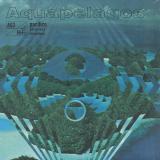
Presenting the third thematic volume on the “Aquapelagos" series - a collection of split LPs where selected artists offer their own take into water surrounded cultures and communities. After the initial release of the Anthology compilation Aquapelago in 2022 (Discrepant ,CREP91) and the split LP Atlantico by Lagoss & Banha da Cobra (Keroxen, KRXN027) as well as the direct collaboration LP Índico by Mike Cooper & Pierre Bastien we proudly introduce an the third volume in the series in the shape of no other than two inspiring artists, Vica Pacheco and Pak Yan Lau. Two different sound journeys inspired by the majestic and peaceful Pacific Ocean, the vastest, largest and deepest ocean of our planet.
Vica Pacheco’s composition takes a calm meditation approach where water flutes and synths brush shoulders to create a ever expanding mind journey whereas Pak Yan Lau’s ambitions Neo classical piece, The Ocean in Us, talks about that grand overwhelming feeling, that vast space deep under, on the bottom of the Pacific. Both compositions were recorded and created with the particular wet acoustics of the Tank in Santa Cruz de Tenerife in mind.
From Philip Hayward and Matt Hill’s liner notes: ‘’The Pacific is a complex space, comprising a third of the Earth’s surface. A cascade of islands runs along its eastern flank, down from the Kamchatka peninsula, through Japan, Taiwan, The Philippines, Melanesia and on to Australasia. In its watery heart the islands of Micronesia and Polynesia stretch across huge distances, north-east to the Hawaiian archipelago, south east to Rapa Nui and south west to Aotearoa and Chatham island. Closer to the shores of the Americas lie Tierra del Fuego, the Galapagos Islands, Haida Gwaii and the Aleutians. This is a space that resists easy characterisation. The Pacific laps the shores of Japan and Chile, the beaches of Australia’s East Coast and the cold, damp coasts of British Colombia and Alaska alike. Indeed, the space is so vast that it is a world in itself and one rarely navigated in its entirety. In this manner, strands of genres and the songs that reflect them are components in an intricate mesh of associations.‘’ Philip Hayward and Matt Hill, April 2022
7
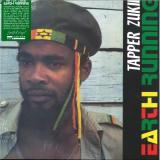
Earth Running, originally released in 1979 on the Tappa's Stars label, can be considered the Jamaican's toaster's maturity album. Lyrics here are rooted in the "ghetto life" as always. A work with an international flavour: On Side B, two convincing dance tracks, the anthemic funkfest "Freak" and "One More Chance", often championed by DJs in the following years. A work that explored new territories, a mandatory re-issue for all authentic reggae lovers.

2
Water can retain or wash away memory; flowing or freezing. It gives life and shapes earth, while frozen imprints of an ancient past are waiting to melt – back into sound or fluid motion, or simply to dissipate and disappear. For their split release, Yoichi Kamimura and Olli Aarni offer two distinct reinterpretations of a performance recorded live at the Temppeliaukio Kirkko – a church in Helsinki built directly into solid rock and bathed in natural light – meditating on glacial landscapes and water cycles, using shared field recordings that bifurcate into two sonic visions of “ice journey”.
Yoichi Kamimura’s extensive recordings formed the bedrock of the original performance, notably from time spent on Suomenlinna Island just outside Helsinki in 2021, aiming to capture the remnants of the glacial movements that formed the area’s geology. Elsewhere, the voices of ringed seals, underground waterways of Kyoto, and icy rivers in Lapland from Kamimura’s library float in as well. “The small, charming, and gentle islands floating in the Baltic Sea—some with little cottages and restaurants—reminded me of the drifting ice in the Sea of Okhotsk between Japan and Russia,” describes Kamimura. Fragments of a Christmas choir creep in too, recorded at the church on Suomenlinna Island. Titled Kōri no ryokō , Kaimimura’s reinterpretation of the performance emphasises a shared future across all icy sea regions of the world: thawing ancient memories and the threat of disappearing entirely.
On Jäämatkailu, Olli Aarni presents his own expansive reworking of the same source material, heavily processed alongside his own field recordings from Vantaanjoki river and Suontee lake in Finland. “I was thinking about the processes of erosion, water carving rock, the prehistoric glaciers over the landscape in my own environment,” explains Aarni. The soundscape hums with both intimate details and macrocosmic flow, and a submersible bass rumble hinting at an iceberg far below the tip, morphing at time scales beyond human comprehension.
Side A is composed by Yoichi Kamimura using field recordings of drift ice (Shiretoko, Hokkaido, 2019–2022), the Lake Biwa Canal (Kyoto, 2020), the Therme Vals baths (Vals, 2017), spring water (a fountain next to Saint Benedict Chapel, 2017), a Christmas choir (Suomenlinna Church, Helsinki, 2021), ice in the Juutuanjoki River (Inari, 2021), and recordings from Yoichi’s and Olli’s concert (Temppeliaukion kirkko, Helsinki, 2021), KORG iPolysix, and KORG minilogue xd.
Side B is composed by Olli Aarni using the aforementioned sounds + field recordings of the river Vantaanjoki and the lake Suontee, sampled sounds, and a computer.

12
Accepting the darkness can be a liberating experience. Realising, and struggling with just who we are and what world we live in requires it. By further complicating the fractured sense of beauty found on his droning 2022 release, ‘I dreamt we found a way’, Bristol-based composer, Rob Winstone creates a language that encapsulates the lifelong reach for our own personal heavens, along with the darkness and fear on which those foundations are built.
Winstone’s instrumental palette continues to reach out far from behind his keyboards, however the sound of ‘sifting through heaven’ is stripped back and pared down, putting melody front and centre. 'postcards and loose tea', a love song written for Winstone’s partner during a period coming to terms with health difficulties had previously self-released with heavy spectral and granular manipulation from the artist. Here Winstone re-presents the original: “the stripped back recording I made in my old damp and cold studio that was in a building that has since been demolished”. It reflects the composer’s own journey, doing away with veils and histrionics, and embracing emotional bliss wherever it can be found, warts and all. Even the rumbling dark ambience of ’hospital corridor’ - where distant chimings, groans, and droplets synthesized from field recordings made nervously in a hospital waiting for test results coalesce - harbours a sacred-seeming beauty and aseptic warmth within its very bleak sense of dread.
There’s no better way to describe Winstone’s method than ‘sifting through heaven’. The hymnal organ chords, sketched out acoustic guitar phrases, scattering drum thuds, and meditative field recordings may flit between tenebrous to incandescent, but his focus is always on the embrace of love; “a view of life that embraces positive growth, yet doesn't deny immense suffering,” as he puts it. The album is bookended by two of Winstone’s most outright peaceful moments, summarising his core message: 'in spite of it all...' '...love finds a way'.

